
Latest News

Campus Spotlight, Student Life

News of a policy change comes out of the Blues

Blues Pub is one of the several student-run bars on campus, providing cheap beverages, delicious food—the grilled cheese is top-tier—and entertainment. While Blues is run by the Engineering Undergraduate Society (EUS), it has made the McConnell Engineering Building basement a classic Friday night pit-stop for students from all faculties. One of Blues’ distinguishable features is that it offers live musical performances from bands and DJs, creating an authentic vibe and welcoming environment—which might explain the reaction of students after being hit with news of an amendment to Blues’ policy. 

On Feb. 11, Instagram was turned upside down when Blues announced that only students with a Faculty of Engineering McGill ID would be allowed entry. Engineering students would still be allowed two 18+ guests. The announcement resulted in a swift public outcry from unhappy students. While the rationale behind the decision was not made public, students speculated that overcrowding at Blues may have been a driving factor.

Pinak Ghosh, a recent graduate from the Faculty of Engineering and a regular at Blues for years, commented on the bar’s crowd evolution since the pandemic.

“I remember the first Blues back from COVID, during E-Week Feb. 2022. Since then I’ve been a regular [….] When I first went it really was just engineers, only the graduating students really had an attachment to Blues [….] Since they introduced live music many more people from other faculties started coming,” he wrote in a statement to The Tribune.

Though the spacious McConnell basement’s circular area can fit a large crowd, it has its limits. According to Álvaro Tomassoni, U2 Engineering, the growing popularity of Blues has recently led to overcrowding issues that could explain the introduction of the policy—though he considers it a bit extreme. 

“The lineups at Blues have gotten significantly longer than what I’m used to, especially compared to last year [….] I don’t think [Blues] should be closed to other faculties of course, but I think there should be an order of people who can go in first,” Tomassoni said in an interview with The Tribune

The following day, Blues Pub deleted its initial publication and subsequently posted another announcement apologizing for the policy change, revoking it, and stating that the upcoming Friday night Blues would continue as usual, with no priority for engineers. They also announced the formation of a working group “in order to better hear the engineering community.” While some cheered on student activism, others highlighted how quickly things can escalate on social media. The comments on the initial announcement were filled with students sharing their opinions—both support for the policy and critiques of its consequences were expressed blatantly.

Other student bars on campus took this as an opportunity to promote their own activities. On the same day, Bar des Arts (BdA), 4à7, Detention Den, and MUSA Bar posted a joint statement in a humouristic video intended to “condemn [Blues Pub’s] protectionist policies” and welcome students from all faculties to attend their events.

Though the ban was lifted, the overcrowding issue remains salient. Tomassoni offered a potential solution which would allow Engineering students to take advantage of their priority access while still accommodating students from other faculties—therefore making everybody happy.

“I think a good idea to [prioritize people in Engineering] would be to make it so that from 4 to 6, which is happy hour, […] you can only go in if you’re an engineer and you can have one guest. And then from 6 p.m., it’s open to everyone else,” he suggested. 

Looking forward, the creation of a working group will foster discussion about other ways to manage Blues’ crowd, allowing students’ voices to be heard and Blues to remain a welcoming environment for all. As Blues’ second commandment states: “Thou Shalt Bring Engineers and Friendgineers Alike.”

Student Life, Student of the Week

Student of the Week: Khadijatu-Dimalya Ibrahim

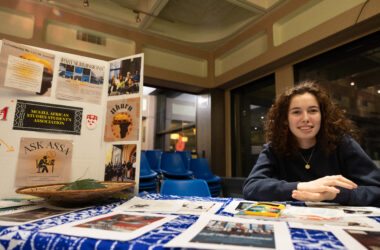
Khadijatu-Dimalya Ibrahim is driven by a simple yet powerful belief: Change starts at home. Before tackling global issues, she prioritizes uplifting and supporting those immediately around her. A U2 student in Software Engineering and Islamic and African Studies, Ibrahim is a source of positivity and kindness, dedicated to leaving a lasting impact on and off campus. 

As co-founder of the Black Muslim Association (BMA), Ibrahim has helped create space for Black Muslim students to find community, education, and self-empowerment. Her impact has not gone unnoticed; this year, she received the Centre Culturel Islamique de Québec (CCIQ) Memorial Award, which honours the six men who lost their lives during the 2017 Quebec City mosque attack. The award recognized her work advocating for Muslim inclusion, particularly for Black Muslims.

Ibrahim’s advocacy began well before her time at McGill. As President of Dawson College’s Muslim Student Association (MSA), she led initiatives combining activism and community care. In 2021, she spearheaded a bake sale that raised $4,000 CAD for the Nisa Foundation, a non-profit organization providing shelter, financial assistance, and resources for Muslim women and families in need. Ibrahim also hosted an event called  “Try the Hijab,” inviting non-Muslims to experience wearing the hijab to challenge misconceptions and humanize the experience of women wearing the hijab.

Her desire to embrace intersectionality and create spaces for others to do so in a world that often forces compromise led her to co-found BMA at McGill. 

“It’s wanting to balance both of my identities without having to forego any of them,” she shared with The Tribune. “In certain spaces, it’s more my ethnicity that takes precedence; it just so happens that there are some activities I can’t do. There is a cognitive dissonance where you pick, [and] either leave your faith at the door [or your ethnicity], and I wanted both activities that deal with my faith and people that look like me too.”

Through the BMA, Ibrahim seeks to educate Black Muslim students about their rich history, culture, and religion, all while challenging stereotypes around African culture. The association hosts events fostering unity and support for Muslim communities in Montreal, including a recent food drive on Feb. 1 for the Sister Sabria Foundation. While she aims to challenge anti-Muslim prejudice, her primary focus is on building a strong community for Black Muslims on campus, with hopes of expanding her reach internationally, particularly to the U.S. and African countries. 

“Black spaces are important for ourselves​​—for us, by us,” she told The Tribune. “We really want to […] allow people to enjoy who they are.” 

However, her work is not limited to the Black Muslim population. While balancing academics and extracurriculars, Ibrahim also finds time to volunteer at the Bilal Islamic and Cultural Center of Quebec in Montreal, organizing local events to strengthen bonds and representation.

Receiving the CCIQ Memorial Award on Jan. 3 was deeply meaningful for Ibrahim. It highlighted the importance of remembering the 2017 tragedy, combating Islamophobia, and humanizing Muslim communities. Ibrahim shared how her father, a devout man who attends mosque each morning, is constantly subject to the lingering fear of Islamophobic violence. 

“I saw my dad in these men. And, even if I didn’t see my dad in these men, they are human lives,” she explained.

Appearing on CityNews Montreal to discuss her award was another milestone in her advocacy, allowing Ibrahim to reach an audience beyond social media.

Looking ahead, Ibrahim hopes people take away from her experience that university degrees, personal interests, and even hobbies can play an important role in helping local communities and creating cultural spaces.

“University is the only place where you’re sheltered but also an adult. You can easily protest, and while it can be a process where you are lonely, university makes you navigate with [like-minded people],” she said. Ibrahim’s work exemplifies the power of leadership and self-empowerment. By embracing her intersectionality and challenging the barriers that come with it, she has created a space for others to do the same.

“The main point is […] equipping us with the knowledge we need to be proud and confident whether it comes to our culture or our faith as well.”

Campus Spotlight, Student Life

Queer McGill’s Black History Month event calls for year-round activism

Black History Month is a time to reflect on, honour, and uplift Black voices—but the work does not stop when March begins. This was the core message of Queer McGill’s Black History Month event, where attendees were encouraged to consider how they can support and celebrate Black communities every day of the year. 

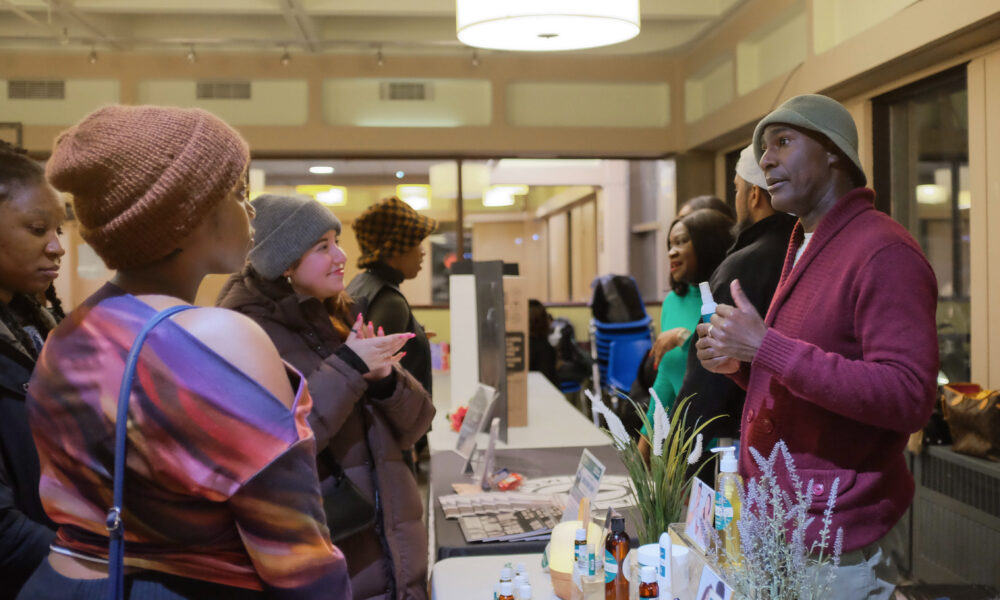
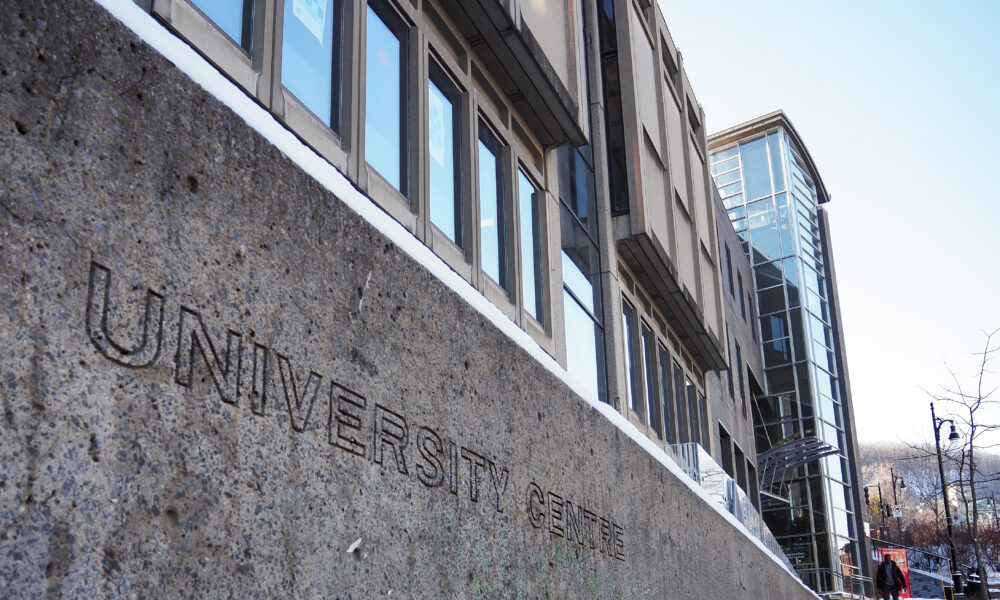
Held in the University Center on Feb. 18, the event featured a mini-market showcasing Black-owned businesses and artists, followed by a panel discussion with community leaders and activists. Panelists spoke on allyship, systemic issues, and the intersections of Black history and 2SLGBTQIA+ culture.

Panelist Joan Lee, president of the West Island Black Community Association, highlighted the importance of community attendance.

“When there’s events like this, people need to really come out and celebrate each other,” Lee shared. “Come to the event and learn: Learn about different ways of life, learn about different cultures.”

Panelist Lee-Anne Millaire Lafleur, owner of Caribbean restaurant Resto Palme and mother of three, further highlighted the need for collective responsibility, noting that conversations about systemic issues should not fall solely on the Black community.

“I have to have a conversation with my boys about [how they have to act when they] meet a police officer, [but] if we really want change […] everybody has to have that conversation with their sons,” she explained. “Our community has to know our history, […] but for the future, it can’t just be us [….] If my sons are out with other boys who aren’t Black, those boys need to understand that their actions could have consequences on my sons because of the system we live in.”

Jaqq Strapp, a performer and writer, noted the significance of Queer McGill’s event—not just because it celebrated Black History Month, but because a non-Black group organized it.

“Something about this event that I want to bring forth is the fact that those that organized it are not Black, and the fact that there was still intention to actually put together a Black History Month [event is] pretty significant,” he said. “What happens [often] in February is that everything gets dropped on the shoulders of Black people, and it can actually be, in all honesty, a very tiring month for us.”

Strapp asked the audience members to internalize a key question, encouraging attendees to reflect on their role in meaningful allyship: “How can I be more intentional with including and not tokenizing Black people 365, or 366 if there’s a leap day, days a year?” 

Anushka Manoj, U3 Arts and one of Queer McGill’s Events Coordinators, acknowledged the historical lack of BIPOC representation within the organization.

“Historically, Queer McGill has been dominated by white people within the queer community who come from more privileged communities, so as women of colour, when [Valeria and I] got elected, our whole agenda for this year was to do more for marginalized communities […] at McGill,” she told The Tribune.

Valeria Muñoz, a Master’s student in Educational Leadership and another Events Coordinator for Queer McGill, echoed this sentiment in a statement to The Tribune.

“This is not a one-off thing—this is something deeply rooted in what we should all advocate for,” Muñoz wrote.


Manoj and Muñoz also planned a South Asian Pride Film Festival on Feb. 23, featuring four South Asian short films by queer filmmakers. Looking forward, they hope to continue sparking conversations about race, queerness, and activism beyond designated heritage months. 

Queer McGill’s Black History Month event was more than a celebration—it was a call to action. By fostering conversations on activism, allyship, and intersectionality, the event emphasized that Black history and voices should be uplifted all year round, not just in February.

Commentary, Opinion

President Deep Saini owes McGill students more than his own partisan renditions

McGill President and Vice-Chancellor Deep Saini’s recent messaging surrounding the on-campus pro-Palestine protests against investments and ties to Israel have repeatedly characterized those involved as violent and vandalizing, leaving little mention of the intent behind their actions. His language does not merely criticize the breaking of windows—to me, it paints the protestors as threats to order itself, erasing the political urgency that led to their demonstration.

This fear-mongering language—referencing mob rule, cacophony, and terror—functions to spread antagonism towards the protestors’ destruction of property, both on the night of Feb. 5, when protestors smashed the windows of various McGill buildings, and prior. Saini’s brief mention of the university’s resolute stance on Boycott, Divest, and Sanction (BDS) regarding the State of Israel hints that the property damage stood for more than vandalism; however, his critical language suggests the contrary.

These evident biases in the frequent messages to the McGill community beg the question of the president’s obligations. On the one hand, he speaks on behalf of the administration, representing those at whom the damages were directed. However, he is also addressing the McGill community directly, and therefore owes his audience a comprehensive and nonpartisan truth that avoids the demonizing language he employs. In the latter regard, Saini’s rhetoric strays far from the mark.

Given the growing antagonism between the administration and the protestor body, Saini’s rhetoric only fosters further division, rather than bridging the divide. His duty, rather than offering his own vision of the protestors, should be to service the broader McGill community with information and resources such that individuals may draw their own conclusions. His position as President of McGill means that his language does not merely inform the McGill community—it actively influences their perception. When such communication is dismissive of the central motivation behind the political activism it condemns, Saini’s audience must contend with the blurred lines between fact and presidential opinion. Saini thus fails his presidential duty to the McGill community, which notably demands a leadership role in promoting McGill’s broad well-being. In assuming such a role, he obligates himself to each constituency of the university—the administration, the faculty, and the student body—in equal part. As such, his commitment to community well-being calls for constituents who are, if not in agreement, then in decorum; Saini’s harsh rhetoric definitively harms this presidential ideal.  

This is not to say that Saini ought to promote the protestors’ actions as noble or well-meaning. On the contrary, doing so would fail his imperative in equal measure to his reductive condemnations. Rather, the notices Saini issues to the McGill community are obliged to fact and incontrovertible truth—or as close to this as such a memo can manage. That is, it is his imperative to present the community not with an argument, but the firm basis on which his audience may construct one, be it for or against those in question. The president’s current language, describing the Feb. 5 protestors as violent vandals, disrupting peace and education, serves no purpose but to curate the information reaching his audience, and thus influence student-held views; or perhaps it only serves to alienate the student body. His rhetoric reminds me of what I saw in the mainstream media, demonizing pro-Palestinian protestors rather than truly listening to their demands, engaging with their arguments, and walking a moderate line between the parties in dispute. 

This being said, it is crucial that students turn their attention to the motives behind Saini’s presentation of student protest. As it stands, Saini presents the McGill community with a highly curated and reductive view of events focused on the physical destruction of property while ignoring the pressing message behind the protests. This stands firmly against the McGill community’s right to unambiguous, axiomatic truth on which to form its own decisive opinion. As such, his imagery and language deserve at once criticism and skepticism. Indeed, Saini’s communications—while riddled with notions of antagonism and presumption in line with the administration’s ongoing use of disparaging language surrounding the BDS goals—are not to be completely neglected. However, they cannot be taken as a source, nor even a cross-section, of truth. Rather, Deep Saini’s words are best regarded as they are: Another divisive, albeit reputed, man’s opinion.

Basketball, Cross-Country / Track, Hockey, Sports

Game changers on and off the field—the stories of four Black Canadian women athletes

Black athletes have consistently pushed boundaries in both sport and civil rights to further opportunities for others. In many cases, the success or popularity of a sport can largely be attributed to the hard work and dedication of Black competitors. It is especially crucial to recognize the contributions of these trailblazers during Black History Month, to fully acknowledge their impacts. Alongside the modern superstars growing their respective sports, it is equally important to thank past athletes who may not have been as popular or well-known during their time, but whose advocacy has led to greater opportunities for modern Black athletes.

Kingston, Ontario’s Aaliyah Edwards may only be a 22-year-old rookie, but she has proven that she can hang with the best. The sixth overall selection in last year’s WNBA draft by the Washington Mystics, Edwards was Team Canada’s youngest player at the Tokyo Olympics at 18 years old, and was a two-time U.S. Basketball Writers Association All-American during her time at the University of Connecticut. Her community in Kingston remains incredibly important to her. This past summer, she ran a co-ed basketball development camp in Kingston intended to inspire young hoopers across the province. The camp helped athletes realize that their basketball dreams may be reachable.

Some athletes have the chance to shine, only to have the opportunity to compete on the world stage swept out from underneath them. What sets them apart is how they respond. While Canadian Sports Hall of Fame inductee Barbara Howard’s time in the spotlight may have been short, her 40 years off the track are the greatest part of her lasting legacy. Howard first gained attention when, in a time trial, she set a mark in the 100-yard dash that was good enough to break the Commonwealth Games record. 

In 1938, Howard became the first woman athlete of colour to represent Canada in an international sporting competition. However, she never got the opportunity to compete again, as the Second World War derailed plans for future competition. Undeterred, Howard returned to Vancouver to teach at an elementary school for four decades. She continued to break barriers, being the first member of a visible minority to be hired by the Vancouver School Board.

Sarah Nurse has become one of the biggest hockey superstars in the nation. A decorated forward with two Olympic medals and five World Championship medals for Team Canada, Nurse is a dominant force for the Toronto Sceptres in the Professional Women’s Hockey League (PWHL). Few athletes can claim as much responsibility for their sport’s success as Nurse. As the creator of the Professional Women’s Hockey Players’ Association, Nurse was part of the team that founded the PWHL itself, an incredible achievement. She then joined the executive committee for the league’s labour union, advocating for her fellow PWHL athletes.

Like Nurse, Angela James had no equal on the ice. The current crop of PWHL stars owe much of their success to James, a women’s hockey pioneer. In a time when women’s professional hockey leagues were few and far between, James showed her true dominance on the international stage. She won four World Championships as the team captain, and was one of the first three women to be inducted into the Hockey Hall of Fame. In her international career, James recorded 33 goals and 21 assists for a total of 54 points. She was inducted into the Order of Hockey in Canada in 2021.

These athletes should be lauded for their continuous efforts to grow women’s athletics across the board. Their influence in their sports, coupled with their advocacy away from the playing field, makes them perfect role models for young athletes. James and Howard did not receive nearly enough attention in their playing days, and their inductions into the Canadian Sports Hall of Fame show a renewed effort in ensuring that their legacies are preserved forever. For Nurse and Edwards, their work away from competition may be the most important aspect of their careers, and should be given an enormous amount of credit for being a driving force in the popularity of women’s sports.

Local Stories, Student Life

Flipping the lens: A look at the influencers of McGill University

The number of social media influencers has ballooned in recent years, with TikTok alone reporting over a million creators. But which McGillians are joining the trend? Who among the student body documents campus construction, fieldhouse exams, and library crash-outs? The Tribune interviewed three students who post their daily lives—and more—online, getting to the heart of what compels them to share their stories with the world. 

Sheng Qi, U4 Engineering, known online as The Potential Dropout, began his page as a way to cope with the struggles of being a STEM student. He started posting day-in-the-life videos and comedic content in Fall 2021, during his first semester at McGill. In an interview with The Tribune, he explained how his first video sparked his career online.

“I was filming my calculus final and having a mental breakdown,” Qi said. “The next day, the video had half a million views.”

Similarly, Anna Bistour, U2 Arts, garnered unexpected success overnight.

“I started posting [on TikTok] during COVID and doing short videos on YouTube,” Bistour said. “When I went to the U.S. [on exchange], I thought it would be cool if people were interested in what I do. I was sitting in the airport, [and] when I arrived in the U.S., a video I posted reached 500k views.”

Bistour—who came to Canada from France—makes content sharing her daily life in North America with her inquisitive French followers. However, she emphasizes that her overall goal is to uplift students worldwide.

“I aspire to make relatable videos, so I answer a lot of questions and show people what they want to see about North America—then America, now Canada—so that they can have a closer idea of what life is [like] as an international student,” she said.

Amanda Round, a first-year Master of Science student, who became known for her educational videos on different university programs in Canada, expressed a similar goal.

“I was super type A as a student so when I was looking at programs I went out and talked to alumni and professors and I had all this random knowledge and I wanted to fill that gap,” she shared.

While Qi started with relatable content, he has also dabbled in more educational videos, including chemistry tutorials on YouTube. He also launched his own tutoring and events start-up, which is currently in the hiring phase. In his interview with The Tribune, he mentioned Khan Academy as one of his dream collaborations. 

Bistour was also interested in pursuing collaborations.

“I’ve always been into studying and school […], so my dream collaboration would be with an organization like UNESCO,” Bistour said. “School takes up a big part of my life, so I want to show people that it’s cooler than it sounds.”

Round spoke about her upcoming side account, where she plans to explain pertinent science topics to the Canadian public.

“I’m trying to do content related to scientific literacy and trying to make these topics, which are important to the Canadian public, accessible,” Round said.

When asked to share some wisdom for anyone interested in starting a public media account, Bistour warned that TikTok can often be a black hole of endless scrolling. However, she appreciates the platform for the community she’s made on it, and the impact you can make on others by using the app.

“Social media is a tight-knit group. I’ve met a lot of people on it,” Bistour said. “Especially people from France [who] have become interested in McGill. One girl told me that she got here because of me, so it’s very rewarding. I know I’m not the only one who does that, but it’s really cool to connect and have shared experiences.”

Round gave a few words of encouragement for anyone aspiring to share their perspectives online.

“I encourage you to get on social media and create content,” Round said. “Only you can communicate in your own way. If you have something to say, you should do it.”

Science & Technology

CogSURF connects minds, empowering the next generation of cognitive scientists

The Cognitive Science Undergraduate Research Forum (CogSURF), Montreal’s first undergraduate-led conference of its kind, will host its inaugural event on Feb. 27 at the University Centre. This event aims to showcase undergraduate talent and break down the barriers to open science for undergraduate students across Montreal. With over 340 registrations, CogSURF will offer a day filled with presentations, networking opportunities, and showcases of research disciplines across the cognitive sciences.

Le Thuy Duong Nguyen, a U3 student in McGill’s Honours in Cognitive Science program and executive chair of CogSURF, began developing the conference in July 2024, where she assembled an executive board of undergraduate students from McGill.

“I personally found my passion for science and research through going to open conferences,” Nguyen said in an interview with The Tribune. “This was really a big mission of mine—to create something that would be accessible to all levels, universities, and disciplines to converge at one big event.”

Maria Lagakos, CogSURF’s executive co-director of partnerships and fellow U3 Honours in Cognitive Science student, explained some of the difficulties in the early stages of developing CogSURF.

“We really did this from the ground up,” Lagakos said in an interview with The Tribune. “As undergraduate students, we’ve had limited experience with conferences [….] It’s a little bit harder usually for undergrads to get involved in these large-scale conferences.”

Nguyen also discussed the development of CogSURF’s slogan: Connecting Minds, Making Waves.

“It’s been a really fun experience coming up with our slogan, which is really integral to our mission,” Nguyen said. “The logo itself has been a long process in the making. We went through so many iterations, and converged on this one where different waves represent different disciplines that are converging at this one conference.”

The event will open with a speech by Nguyen, followed by a presentation from keynote speaker Nancy Kanwisher, a professor of Brain and Cognitive Sciences at MIT.

“[Kanwisher] is my absolute role model and scientific hero,” Nguyen expressed, reflecting on how Kanwisher presented at one of the very first conferences Nguyen attended, sparking her interest in cognitive science research.

Afterward, there will be a flash talk session, where undergraduate students showcase their research in three-minute thesis-style presentations. Following lunch, CogSURF will hold a poster presentation session where 30 committee-selected undergraduate students will present their innovations, after which another flash talk session will take place. The day will also include a panel discussion featuring experts from a wide range of disciplines and institutions, including Ian Gold, Karim Jerbi, Doina Precup, Stevan Harnad, and Charles Reiss.

“I think we have top-notch speakers. This is my ideal panel scenario, and I’m really excited for it,” Nguyen said.

The closing ceremony will then announce the award recipients, and to commemorate the evening, CogSURF will host a ‘5 à 7’ networking event at the McGill Faculty Club.

Benjamin Lévesque-Kinder, a third-year undergraduate student in McGill’s Neuroscience program and executive co-director of partnerships at CogSURF, spoke about the future of the organization.

“Right now we’re hosting [CogSURF] at McGill, but we would really love to see it hosted by UdeM, Concordia, and UQÀM, in a way that most conferences do, where they jump around [locations],” Levesque-Kinder said in an interview with The Tribune. “The host institution brings their own perspective and intellectual background into it.”

The executives emphasized the importance of inter-university collaborations, which they believe is essential for CogSURF to become an annual conference attracting students from across Canada and beyond. CogSURF serves as an important step for undergraduate students to get involved in open science research, increasing accessibility and transparency in the cognitive sciences field.

News, SSMU

SSMU BoD approves motions seeking to increase UGE funding, change executive roles

The Students’ Society of McGill University (SSMU)’s Board of Directors (BoD) debated fee increases for the Union for Gender Empowerment (UGE), purchasing access to a grammar service, Antidote, for more students, and proposed changes to the executive committee roles at their Feb. 18 meeting. 

The meeting began with a public report from Parliamentarian Jessica Bakar regarding the hiring for the Nominating Committee’s Alumni Representative position. 

Following the report, Director of Clubs and Services Hamza Abu Alkhair presented the Motion Regarding the Increase of the Referral Services Fee—an opt-outable semesterly fee split among the UGE and four other SSMU services. This change would increase the total referral services fee from $6.03 CAD per semester to $7.28 CAD, with the UGE’s share raising from $0.75 CAD to $2.00 CAD. The UGE expects this would result in a $45,000 CAD increase in revenue, allowing the group to offer a broader variety of products and keep up with rising costs. 

Director and Arts Undergraduate Society President Sofia Garofolo asked why the UGE fee was going up when the Menstrual Health Project fee was also being increased. Keith Bellec-Warrick, a post-graduate member of UGE in the Faculty of Education, responded, explaining the difference between the two services.

“There are a couple differences that are fundamental to our functioning that differentiate what the UGE offers as services and supplies versus what the Menstrual Health [Project] does,” Bellec-Warrick said. 

While the Menstrual Health Project focuses exclusively on providing menstrual health products, the UGE also provides gender-affirming products, safe sex supplies, workshops, and educational resources. Bellec-Warrick also called attention to the rising cost of menstrual health products since 2020, further justifying the fee increase.

General Manager Maya Marcus-Sells voiced her support for the motion, as well as her concern that it could be too late to include it in the Winter 2025 referendum. SSMU President Dymetri Taylor noted that there was “no guarantee” that the motion would meet the deadline even if approved.

Abu Alkhair motioned to approve the motion and send it to McGill “expeditiously.” The motion did not, however, appear in the Winter 2025 referendum.  

The meeting also saw the approval of the purchase of an additional 800 subscriptions to the French version of Antidote—a bilingual grammar software. Taylor reported that SSMU had hit the cap on the number of seats in this service, leaving about 1,600 students who had registered for Antidote barred from access. 

Taylor thus proposed buying the remaining 800 additional seats for a total cost of $22,400 CAD, pulled from student support fees. Abu Alkhair added further support for the purchase.

“It’s especially worth noting that Antidote was founded and headquartered in Montreal, so it’s a Canadian company, and it always feels good to support local tech.”

The motion passed unanimously. 

VP External Hugo-Victor Solomon then brought forward a two-part motion from the Legislative Council. This motion would reduce the Executive Committee from seven positions to six by assigning the duties of the VP Operations and Sustainability to the VP Internal, and make the role of VP Finance a hired position as opposed to an elected one. 

Solomon clarified that even if the VP Finance role was appointed, the candidate would have to be selected by a hiring committee and approved by students through a referendum. Director Fawaz Halloum said that he had reservations about making the VP Finance position an appointed role, citing the difficulty in finding a sufficiently qualified candidate. The motion to add this question to the Winter 2025 referendum passed.

Moment of the meeting:

The BoD also approved the addition of the SSMU Musicians Collective (MUSCO) fee increase for the Winter 2025 referendum ballot. Abu Alkhair noted that this fee increase would also go towards subsidizing instrument rentals to make instruments more accessible. This motion ultimately did not appear on the referendum ballot.

Soundbite

“To have someone who’s already familiar with accounting principles, you’re looking for someone who’s in their third or fourth year, and it’s just going to be a very narrow slice of students, and we already struggled to have people run.” — Director Fawaz Halloum regarding the process of finding a qualified candidate for the VP Finance position.

Arts & Entertainment, Theatre

Fairies square off against lords in ‘Iolanthe’

From Feb. 14-22, the McGill Savoy Society brought Gilbert and Sullivan’s 1882 comic opera, Iolanthe, to life at Theatre Plaza. The show follows young shepherd Strephon (Matthew Erskine, BA 2022), and his beloved Phyllis (Aniela Stanek, U0 Arts). After he joyfully announces their engagement, a few wrinkles become apparent: She is a ward of the state, and he is just a lowly shepherd (even if he is secretly a fairy). When the engagement is rejected by parliament, he does what any half-fey suitor would do, and calls in his mother’s company of fairies. The company—that apparently is the collective noun for fairies—in turn does what any company of fairies would do, and infiltrates the British House of Peers.

“What makes Iolanthe special is its magic,” Erskine told The Tribune. “It’s a show about fairies, half-fairy, half-mortal shepherds, and sneering peers. It’s just imbued with such magic and wonders.”

The story unravels from there, by turns tragic and comic, chronicling the rising and falling fortunes of our star-crossed lovers. 

“Iolanthe is a really amazing operetta because it threads that line between a really great comedy and also some dark and tragic bits that you don’t see in a lot of comic operas,” Michael Quinsey, BA 2022 and Stage Director of the production, commented. “You have some nice dark music that’s a lot of fun to work with, and on top of that, there’s some huge energetic ensembles that are just so much fun to put together on stage.”

Unfortunately for Strephon, while he is scheming how to gain permission for the engagement, Phyllis spots him with his fairy mother—who looks much younger than she really is—and assumes that he is flirting with her. 

“She’s a girl’s girl. I feel like she’s very in love with both herself and Strephon,” Stanek said about her character. “She’s in her own little world, […] but by the end of the show, she’s become a lot more accepting of other people.”

A particularly energetic turning point comes towards the end of the first act, as Strephon is inducted into the House of Peers, as part of the fairies’ master plan. In an eerily current turn of events, our hero is suddenly vested with complete control to both make and approve laws. But fear not! Rather than slashing foreign aid budgets, he directs his unbridled executive power towards the noble aims of more lenient sentencing for criminals and support for the poor. 

Unfortunately, even the satisfaction of a well-implemented social welfare policy is not enough to fill the woman-sized hole in Strephon’s heart, and he pines after Phyllis hopelessly.

As it turns out, Strephon is not the only one pining away—the Lord Chancellor (Samuel Valentim-Gervais) also has eyes for Phyllis. When she rejects him (and all of her other suitors, for that matter), the Chancellor spirals into despair, delivering a truly impressive patter song on a timeless theme: Bedrot. Reassuringly, it seems that even the Victorians couldn’t get out of bed, as he bemoans his unrequited love with his faithful teddy bear. 

The second act culminates with an aria from Strephon’s fairy mother, Iolanthe, strikingly moving after the comedic first act, in which she sacrifices her own life in a selfless plea for her son’s marriage rights. Luckily for the characters, her tragic sacrifice is brief, and the Fairy Queen (Ashley Bissonnette) collaborates with the House of Peers to revise all necessary rules in order to save Iolanthe’s life, approve the marriage between Strephon and Phyllis, and pair up all the rest of the fairies with parliamentarian partners. 

With all of the conflicts simultaneously resolved by the Fairy Queen, whose bouncy incompetence is a perfect equal and opposite to the pomp and circumstance of the Lords, they all dance off stage in a fittingly whimsical finale for a thoroughly whimsical production. 

Iolanthe was onstage at Theatre Plaza from Feb. 14-22.

Science & Technology

How simulation learning is shaping inclusive healthcare

Simulations are becoming a more and more common training method for medical students. In a typical simulation, students resolve a medical case presented by an actor, and then participate in debriefing sessions led by a supervisor to analyze and critically review their experience and performance. This process commonly follows the “Promoting Excellence And Reflective Learning in Simulation” (PEARLS) framework, developed by Adam Cheng and Walter Eppich in 2015. While this protocol has been effective in safely preparing medical students for interactions with real patients, work remains to be done on incorporating diversity, equity, and inclusion into the trainings. 

In a recent paper published in the journal Advances in Simulation, Niki Soilis, a doctoral student at McGill’s Institute of Health Sciences Education, presents an altered version of the PEARLS protocol which examines the impact of social structures on healthcare and explores ways to mitigate systemic inequalities.

Soilis, now completing her doctoral studies, previously worked as the education manager at McGill’s Steinberg Centre for Simulation and Interactive Learning at the Faculty of Medicine and Health Sciences for eight years. During that time, she noticed a significant underrepresentation of marginalized communities in medical training—an issue she is now tackling through her research.

“That became kind of the driver of, ‘How do we, as a program, start to integrate more inclusive and diverse perspectives in our curriculum?’ I started to look at the ways we can go more mainstream and make it into the culture of our programs,” Soilis said in an interview with The Tribune.

To address this gap, Soilis collaborated with other professionals to incorporate the Community Links Evidence to Action Research (CLEAR) toolkit into medical simulations. Developed at McGill, the CLEAR toolkit helps healthcare practitioners integrate advocacy and awareness of social determinants of health into their daily practice. 

Initially tested by frontline healthcare workers who attested to its efficacy, the toolkit was subsequently integrated into the PEARLS approach to debriefing, ultimately leading to the creation of the PEARLS Debriefing for Social Justice and Equity (DSJE) tool. Implementing the PEARLS DSJE tool is more cost-effective as compared to creating separate simulations programs specifically for diversity and inclusion.

“So we kind of merged two worlds, hoping that they would be more accessible,” Soilis said. “It was a way of allowing people to really have dialogue on a consistent basis, rather than making programs that are just dedicated to that. Simulation is one of the most expensive educational modalities—it’s known as highly effective, but it’s much more expensive than classroom-based teaching—so this became a way of making [diversity, equity, and inclusion] more incorporated.”

The PEARLS protocol underwent further refinement after consultations with Cheng and Eppich, its original creators. One of the key additions was an “Activism” phase, which encourages discussions on how systemic inequalities affect patient care and how practitioners can address these barriers.

This phase prompts medical trainees to consider how follow-up care should be handled while recognizing the complex intersectional realities of medical treatment.

“My research is specifically in [houselessness], and one of the interventions that we’ve discussed in groups is, when a person comes in, doing an analysis of their psychosocial profile and understanding their context,” Soilis said. “Where do they get to sleep? Are they on a substance? So sometimes it’s not these grand changes: It’s just having an awareness of a bigger picture, not just the person.” 

Another key update to the PEARLS DSJE framework is its emphasis on community engagement. In practice, this means incorporating discussions about systemic inequalities within healthcare, the marginalization of certain communities, and strategies for fostering a more supportive and inclusive medical environment.

Soilis and her team hope that by implementing this new version of the framework, healthcare professionals can actively work towards reducing harmful biases in medical practice.

“It shouldn’t be the only way. It should still [be part of] a better-integrated curriculum, but this is one way, and we’re hoping that through our experience in implementing it, others will see its value,” Soilis said.

Soilis offered some advice for current and future medical students at McGill. “Just stay open, in practice, to reflecting on [yourself] continuously,” Soilis said. “Look at why we are the way we are, with a nonjudgmental stance, and reflect on how it affects how we deliver care.”

Read the latest issue

Read the latest issue