


Latest News

Arts & Entertainment, Film and TV

2021 Golden Globes were more controversial than glamorous

After Hollywood decided to push back the 2021 awards season to accommodate delayed releases due to COVID-19, it finally began last week with the broadcast of the 78th Golden Globe Awards. The Globes, long associated with bizarre nominations and even more bizarre winners, did their best to recreate the same glamorous vibes over two cities—New York City and Beverly Hills—while hosting their presenters and nominees through Zoom calls. 

In some ways, the attempt at a virtual awards show was successful: Tina Fey and Amy Poehler returned for their fourth year as hosts, and celebrities casually interacted with each other—albeit in what appeared to be Zoom breakout rooms. There were several unexpected winners throughout the night, such as Jodie Foster (The Mauritanian) for Best Supporting Actress in a Motion Picture and Andra Day (The United States vs. Billie Holiday) for Best Actress in a Motion Picture – Drama.

The virtual ceremony, however, was filled with technical inconsistencies and awkwardness. While the show’s opening monologue was lively and fun, the physical distance between Fey and Poehler, who hosted from New York City and Los Angeles respectively, hindered their electric comedic timing and chemistry. The first winner of the night, Daniel Kaluuya (Judas and the Black Messiah) for Best Supporting Actor in a Motion Picture, was accidentally muted while he began his acceptance speech. As Laura Dern awkwardly offered congratulations while shifting to the next segment, Kaluuya’s audio cut back into the broadcast midway through her speech.

Equally awkward, the show often had nominees conversing in small groups just before cutting to commercial breaks. Most groups sat in confusion and stared at each other, with some actors trying to start conversation to varying degrees of success. While the Best Actress in a Television Show nominees charmed viewers when gushing over the pets of Sarah Paulson (Ratched) and Emma Corin (The Crown), most of the night’s bits ultimately felt like a sad and uncomfortable reminder of our next Zoom meetings. Additionally, some of the glamour of the show suffered with some of the attendees’ wardrobe, with Jason Sudeikis (Ted Lasso) accepting his award in a tie-dye hoodie

To add insult to injury, the clumsiness of the broadcast was overshadowed by the recent controversies surrounding the Hollywood Foreign Press Association (HFPA), the organization that produces the Golden Globes. A recent investigation from the Los Angeles Times revealed a lack of representation amongst the HFPA’s voting body, as none of their 87 members are Black, which led to many celebrities on social media demanding more transparency and diversity from the organization. The HFPA has also been accused for many years of accepting bribes as well as nominating and awarding individuals and films based on the amount of schmaltzing and wooing rather than the quality of the work. 

In light of the recent coverage of their indiscretions, the HFPA attempted to do some damage control during the show, with several senior members of the organization making statements about rectifying their failures in diversity and membership issues. Ultimately, cramming accountability and self-promotion into a two-hour window did not work. It came off as disingenuous for the HFPA to try to call themselves out on-air and for winners to call for change all whilst participating in and upholding that same organization. 

With many questioning if awards shows hold any value at all, it feels tedious to hold onto the HFPA’s mostly inconsequential voting body when there are other, more prestigious—though equally problematic—broadcasts to put stock into, such as the Academy Awards. Although the HFPA hoped that the 2021 show would demonstrate its value, it ended up furthering the narrative for its potential obsolescence. 

Features

Let’s go for a walk

Before the pandemic, I relieved my stress by chugging beer from a regulation Sleeman cup. Now, I go for walks. Which one is healthier? I couldn’t tell you. 


Whether I am sad, happy, overwhelmed, or lonely, I go for a walk. These days, all I do with my free time is go for walks, exploring the city until my wanderlust is satisfied. Although I enjoy strolling the icy streets in solitude, sometimes I hope for company––I would love for you to join me today.

If you were not here, I would plug in my headphones and put on some music or a podcast to avoid being left alone with my thoughts. I especially enjoy listening to podcasts about mental health and music that reminds me of a night out with friends before the pandemic. Sometimes, I wonder if TikTok dances will dominate the post-pandemic club scene––I sure hope not. Well, I am glad you are here today so I am not dwelling on the haunting memories of Tuesdays at Café Campus.

We begin our journey by wandering through the unique and artistic Plateau neighbourhood. This community captures the best of Montreal: Beautiful snow-capped streets, incredible street art, and eccentric coffee shops. Between the beautiful architecture and the intricate murals, one feels transported to an art gallery.

Inevitably, one of us slips and fallsit is winter in Montreal, after all. We also try to avoid all the icicles about to fall and end our lives. The weather may be unforgiving, but our face masks, although hard to speak through, help keep us warm. As we continue walking, we find ourselves at Parc La Fontaine, which––surprise, surprise––is under construction. 

To avoid the construction, we walk towards the skating rinks. Although we did not bring skates, we stop for a moment to watch the skaters. We watch children trying to imitate their parents, friends crashing into each other, and couples sharing tender moments. We reminisce about when we could skate with our friends and family until our toes froze. We notice more and more people lacing up their skates and we decide to leave before we lose our minds over people gathering in big groups during a pandemic. We get hungry from all this walking, so at our next stop, we decide to get some food. 

Creative, Video

Tribune X Musicians Collective Present: Pomegranate Planet

The Multimedia team virtually joined forces with the SSMU Musicians Collective to bring you a fun and energetic performance by Pomegranate Planet.

Pomegranate Planet is a jam band from Montreal, with Sacha L’Heveder on bass, Jackson Foellmer on guitar, and Marc Maalouf on drums. You can find their music on Spotify, Apple Music, Youtube and more. They are working on a second EP which will be released soon.


Science & Technology

From the BrainSTEM: The ocean is scary but deserving of love

Despite covering more than two thirds of Earth’s surface, the ocean remains notoriously unexplored. In fact, the American budget for ocean exploration is 150 times smaller than that for space exploration, which has successfully captured cultural and public imagination for decades. While the moon’s surface has been mapped to a resolution of seven metres and that of Mars to six metres, the best maps of the ocean only have a resolution of slightly over one kilometre. 

There are a host of reasons limiting ocean exploration. From the technological challenges of mapping the ocean floor through kilometres of water to a common fear of the dark abyss, the Earth’s waters rarely receive the same level of enthusiasm as deep space exploration. However, the ocean is far more significant to modern human life and its sheer size holds great potential for discovery. 

The health of the ocean is essential for human well-being. From an atmospheric standpoint, plankton in the ocean produces between 50 and 80 per cent of the oxygen on Earth. One species known as Prochlorococcus produces 20 per cent of Earth’s oxygen, more than all of the tropical rainforests on land combined. The ocean also absorbs 25 per cent of the carbon dioxide humans emit every year. 

Earth’s oceans have a large impact on weather and climate, playing major roles in the distribution of precipitation and moisture around the globe, and storing solar radiation. Additionally, it distributes heat throughout the planet, which is essential for temperature and weather regulation, even on dry land.

The flora and fauna of the ocean are also of great importance. Seafood has been a part of the human diet for millennia, and the increased demand has put a strain on fish populations. The ocean hosts an incredible array of biodiversity: 91 per cent of the 2.2 million marine eukaryotic species have yet to be identified. Marine eukaryotes make up a quarter of all species on the planet, and more than half of them may be on the verge of extinction by 2100.

A better understanding of the effects of climate change on the oceans can allow scientists to mitigate environmental damage. Additionally, gathering data on the oceans  is essential for developing sustainable management of marine natural resources, from sustainable shrimp and salmon farming to deepwater drilling.

Scientific progress in a variety of fields benefits directly from ocean exploration. Underwater sediments can reveal the history of tectonic activity, and researchers can predict tsunamis and their impacts by using computer models of the ocean floor

Natural products found in the ocean also have numerous applications in the medical industry. Substances found in plants and animals have been used for treating illnesses throughout human history and still have their place in modern healthcare. Marine substances also provide essential compounds used in modern medicine, such as chronic pain medication developed from cone snail venom and herpes treatment developed from sea sponges.

It is impossible to predict what strange organisms remain to be discovered in Earth’s oceans, considering the surprises of “immortal” jellyfish, and Jurassic era microbes that would need to be observed for a thousand years to ensure they are alive. Even the giant squid, which had long been mythologized as the beastly Kraken, was only caught on camera in the depths of the ocean in 2004. 

The ocean is likely filled to the brim with valuable discoveries. Learning more about the depths of Earth’s waters and the innumerable forms that life can take is a worthy pursuit. Human curiosity has driven the discovery of our planet’s hidden expanses for millennia and the ocean is worthy of our time, effort, and passion.

Features

Isolated nights

In March 2020, many McGill students unwittingly set off on what would be their last night out for a very long time. Students currently sequestered at home often long for nights spent in dimly lit, sweaty spaces. Even for those who abandoned the Saint-Laurent club scene after their first year at McGill, the loss of Montreal’s 2SLGBTQIA+ and alternative nightlife spaces, along with the unique sense of community fostered within, has been deeply felt. 


As lockdowns swept across the globe, most will remember where they were when restrictions first affected them directly. Drag queen Uma Gahd was midway through a drag brunch. 


“During the brunch, the staff had to get up and lock the doors because […] the lockdown was put in place in the middle of our show,” Gahd said. “So we basically looked at the audience and we were like, ‘You’re allowed to leave if you want, but we can’t let anyone in. And this is the last thing you’re going to be doing for a while.’” 


The beating heart of Montreal’s nightlife was quickly quieted as fears mounted about the spread of the virus. Everything appealing about nights out—the anonymity of crowds, the promise of encounters with strangerswas antithetical to the measures now required to curb viral spread. 


Will Straw, a professor in McGill’s Department of Art History and Communication Studies, is researching the urban night and the structures that govern it. He recounted the near-instant impact of the pandemic on nighttime culture across the world.   


“Between […] March 7 and March 15, 2020, you had this massive shutdown of nightlife around much of the world,” Straw said. “So we can really say the culture of the night was one of the first non-human victims of the pandemic, because it was believed [that you had to] begin by controlling what people do at night.” 


Montreal has long been known for its nighttime thrills. During the prohibition era, the city’s proximity to east coast cities in the U.S. earned it a reputation as a party haven for parched Americans. This reputation persisted throughout the 20th century, as Montreal became internationally recognized for its jazz and nightclub scene even as organized crime and police corruption rendered the city’s nights uncontrolled and dangerous.

More recently, some feel that Montreal’s nights have become overly controlled through increased police presence and prohibitive licensing restrictions, stifling some of the freedom that previously defined it. Although attempts to monitor nightlife predated the pandemic, nighttime culture remains a significant—and somewhat unavoidable—casualty of the last year. This loss was well-documented across the internet, from Peter McCabe’s eerie Empty Montreal photo series to YouTube videos pronouncing the city’s nightlife dead and gone.

Research Briefs, Science & Technology

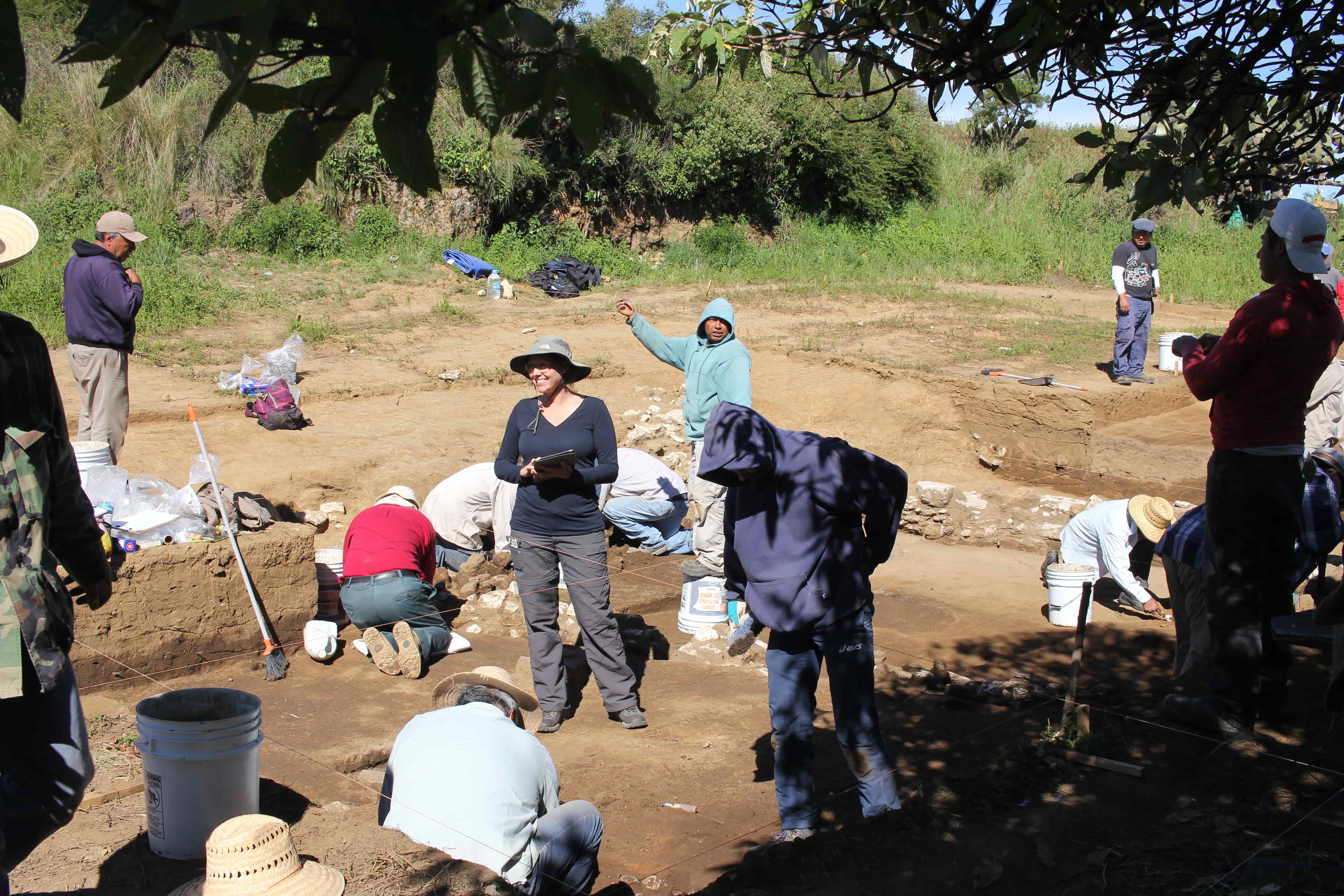
Study finds gender gap continues to persist in archaeology

For centuries, women have fought to have their scientific contributions recognized, and the challenge to secure tenure-track positions in academia is no different. Despite women representing two-thirds of all Canadian doctorates in archaeology today, they only comprise one-third of the country’s tenured faculty. 

Lisa Overholtzer, an assistant professor of archaeology in McGill’s Department of Anthropology, and Catherine Jalbert, a member of the advisory board of the Canadian Archaeological Association, conducted a study that examined gender disparities in academia, probing four main areas: Doctorates earned, research awards received, tenure-stream faculty, and the placement of PhDs.

Using data from Statistics Canada, Overholtzer and Jalbert analyzed PhD recipients by gender over the past 15 years. They found that women received 58 per cent of archaeology doctorates during the 15-year period, and that two-thirds of all archaeology PhD recipients in the last five years were women. The current representation in faculties, however, does not reflect these statistics, with women composing only 33 per cent of archaeology faculty members across Canada.

Overholtzer and Jalbert found that some women leave academic positions due to its “chilly climate,” a term that refers to the subtle practices that stereotype, exclude, and devalue women in the workplace. These actions include gender stereotyping, dismissing women-led research accomplishments, perpetuating sexual harassment, and ignoring the disproportionate care responsibilities of women. 

According to the study, obstacles facing women in the field became more prominent when the representation of women reached a level considered threatening by men—somewhere between 20 and 35 per cent. Such obstacles pushed women out of the discipline, a trend the study termed the “leaky pipeline.” 

“The biggest leak in the ‘pipeline’ happens precisely at the moment we are close to breaking the glass ceiling—that is, entering as assistant professor,” Overholtzer said in an interview with The McGill Tribune. “The point that we saw most women leaving was right after getting a PhD and before getting a tenure-track job.” 

The study shows that women’s lower success rates in grant competitions, tenure-track job searches, and tenure-track hiring in archaeology all contribute to poor retention of women in the proverbial pipeline of archaeology.

“Given that these women are doing so well on the market in the U.S., I do not think you can say that all women archaeologists are unqualified, poorly trained, or [are] leaving academia entirely,” Overholtzer said.

While this study focusses on gender disparities within archaeology, the findings closely mirror sexism in other fields. 

“As it turns out, archaeology in Canada fairly closely approximates the average for all the professoriate overall,” Overholtzer said. “Malinda Smith, [a Canadian political scientist], demonstrated how despite the increasing number of women as PhD recipients, the faculty representation remains stalled at one third. That is exactly the number we found for archaeology overall.”

These gender disparities are often more pronounced for women with other marginalized identities. 

A recent survey by the Canadian Archaeology Association (CAA) of Canadian archaeology faculty found that between 87 and 90 per cent of the 551 respondents self-identified as white. The Indigenous and Latin American scholars were represented in similar numbers to the Canadian population, at 5.3 and 1.1 per cent respectively. However, Black and Asian archaeologists were starkly underrepresented in the survey, at zero and 2.7 per cent.

Overholtzer hopes this research will prompt people to think critically about hiring practices to identify where biases must be addressed. She aims to use her position as an assistant professor to open doors for more women and people from underrepresented communities. 

“Part of the reason we talk about needing to diversify higher education [is because] faculty serve as role models,” Overholtzer said. “If you see yourself represented in the professoriate, then you see a place for you.”

Know Your Athlete, Sports

Know Your Athlete: Juliano Cobuzzi

McGill Redbirds Soccer centre-back Juliano Cobuzzi, U4 Engineering, spends most of his spare time on the soccer pitch and in the kitchen, two places central to his upbringing.

Cobuzzi’s soccer career began under the watchful eye of his father, his first coach. Some of his earliest memories centre around his time playing soccer. Cobuzzi realized his love for the sport from a young age, when he noticed that game cancellations affected his mood. 

“I distinctly remember games being cancelled because it would rain and getting super upset about it,” Cobuzzi said in an interview with The McGill Tribune

Cobuzzi developed his love of the game into a skill, competing in high-level club soccer throughout his youth and playing with the Montreal Impact Development Academy, an elite soccer program. After training with Impact, Cobuzzi even considered playing professionally.

“I was a part of the Impact Academy from 13 or 14 to 19 years old,” Cobuzzi said. “I went to a couple of national team camps and was a part of the provincial team. My original goal was to play professionally in some capacity, but that never really worked out. I had a lot of injuries, and obviously, it is difficult.”

After high school, Cobuzzi knew he wanted to go to university while continuing his soccer career as well. As a chemical engineering major and a computer science minor, Cobuzzi currently serves as a machine learning research assistant. In March 2020, he was granted the Eugenie Ulmer-Lamothe (EUL) Award, a scholarship awarded to fund summer research projects for undergraduate chemical engineering students.

Outside of academics, Cobuzzi cited the camaraderie amongst his teammates as the best part of his experience at McGill. Most of his friends are either current or former members of the program, and they have developed lasting bonds while on the team together. Cobuzzi enjoys spending time with his teammates, whether it be on pre-season trips or away games in Quebec City.

“That is another reason why I really love the game,” Cobuzzi said. “It is not a solo game, it is with a team, and I really excel at that. That is the main part I enjoy.”

Team bonding is critical to team success; however, the COVID-19 pandemic has made it difficult, forcing the team to carry out all bonding activities virtually. Although many members of the men’s soccer team are not currently in Montreal, Cobuzzi believes that his team has improved in communication since the start of the winter semester.

“We have Facebook chats and the coach sets up Zoom meetings sometimes,” Cobuzzi said. “Once a week, we get together for a run, and […] we even went snowshoeing.”

Cobuzzi remembers being raised in two foundational places: The field and the kitchen. Cobuzzi, who was born into a 100 per cent Italian family, said his heritage and culture are big parts of his life. His favourite dishes to cook include chicken stir fry and the Italian classic: Baked rigatoni.

“A big part of my upbringing is being in the kitchen with the family cooking Sunday lunch,” Cobuzzi said. 

All four of Cobuzzi’s grandparents were born in Italy. With such a strong Italian heritage comes a rich culture passed down through the generations. For him, that culture is best expressed through cooking. 

“I feel like most stories and traditions are passed down at the dinner table,” Cobuzzi said. 

Cobuzzi is looking forward to being an independent adult once he graduates from McGill this spring.

“Hopefully, the things I learned at McGill can be used in the future and the rest of my life.”

Off the Board, Opinion

Anti-Asian racism was rampant before COVID-19-related hate

Since the onset of the COVID-19 pandemic in Canada, incidents of anti-Asian racism across the country have surged. In Montreal, several statues at Quan Am temple were defaced, the main gates of Chinatown were vandalized, and a Korean man walking to a market was stabbed in the city’s Notre-Dame-de-Grâce neighbourhood. Between March and December 2020, the Montreal Police Service (SPVM) recorded 30 crimes targeting Asian-Montrealers, a five-fold increase from 2019. These statistics are disheartening, but they still do not reflect the underreported racial slurs and stereotypes that Asian-Canadians face every day in the workplace, at school, or simply while minding their own business in public. Often, anti-Asian racism is dismissed as harmless, which only normalizes discriminatory behaviour and undermines the severity of these issues.

Walking through the streets as an Asian person in Montreal or even on McGill campus, it is not unusual to hear a racial slur directed my way. A significant part of my racialized experience is not necessarily being a target of racism but constantly anticipating when it will come next. That is why I plug in my AirPods, hit shuffle on Spotify, and turn up the volume to avoid hearing any racist remarks hurled my way. When asked where I am from, no one is satisfied with my answer of “Vancouver”—where I was born and raised—and often go on to ask where my parents are from, only content when I reply with “Hong Kong.” Time after time when I rebuke these remarks, I am told by a non-Asian person that their behaviour is not racist and that their “Ni Hao” just meant that they wanted to say hello. These incidents are hostile and enraging; I remember every one, and I dwell on some for months.  

The recent spike in hate crimes towards Asians in North America has been attributed mainly to the rhetoric purposely used by the previous U.S. President, who referred to COVID-19 as the “Chinese virus.” While the former President’s large platform amplified his remarks, they are still no different from the derogatory slurs that have long been casually tossed around by individuals. These remarks encourage hate, and their widespread use normalizes anti-Asian racism to a point where the damage to Asian people is overlooked. As a result, I often shove aside my experiences of racism, believing that they are less important because there are other BIPOC facing more severe forms of oppression.

Anti-Asian racism is not limited to harmful rhetoric—these beliefs also perpetuate discriminatory behaviour. Common stereotypes labelling Asian people as smart and hardworking have portrayed them as one-dimensional, reducing their chances of getting hired or promoted to managerial positions. A report presented by Ascend Pan-Asian Leaders found that, of minority groups, Asians were the least likely to be promoted to executive positions in Silicon Valley—even though they are the most likely to be hired by tech companies. The pandemic has only surfaced how harmful these attitudes can become, and yet anti-Asian racism is still swept under the rug until a videotaped assault grabs our attention.

As McGill students return to campus for the Fall 2021 semester, many Asian students will be doing so in fear of becoming the victims of COVID-19–related hate. As social distancing and quarantine have instilled a sense of loneliness in all of us, the additional xenophobia rampant towards Asian Canadians adds to feelings of ostracization. Asians are not the carriers of coronavirus, and rhetoric blaming us for the pandemic must stop. While vaccines can snuff out the pandemic, Canadians must dismantle the discrimination that faces Asian-Canadians and continue to examine under-platformed forms of racism.

Arts & Entertainment, Pop Rhetoric

Accessing local arts scenes—TikTok style

Most Montrealers are familiar with the vibrant, animated entertainment cornucopia that is its arts scene. With safety restrictions suspending live performances, artists have had to adjust to the hindrance of lockdown life. Creatives, however, are by no means taking a break from showcasing their art; from comedy to dance to drag, artists have adapted to virtual performances. Yet, there is a digital sphere ripe for the taking—and one that a few Montreal performers have recently started onboarding: Everyone’s favorite procrastination guilty pleasure, TikTok.

What makes TikTok stand out amongst other social media apps is its notoriously addictive, algorithm recommendations. Unlike other competing platforms, the app does not prioritize showing users content from accounts that they already follow, but rather promotes new videos based on viewer preferences collected from user data. The subsequent result is an endless self-reinforcing stream of content that digitally bewitches any unsuspecting user.

But it is possible to use this algorithm to work for you, not at you. Recently, I embarked on a quest to discover the Montreal side of TikTok. Several “mtl” hashtag searches later, my feed figured out what I wanted.

Indeed, the Montrealers of TikTok have fostered a community on the app, sharing inside jokes about the city’s various neighbourhoods, its penchant for ongoing construction, and its pre-pandemic nightlife. Recently, one TikTok that features a comedic, faux-French-accent voiceover assigning various Montreal icicles ratings from one to 10 went viral, amassing 4.3 million views. The user who posted the video, Maryze, is a Montreal-based alt-pop artist, whose TikTok follower count grew by 20,000 within the first few days of posting the video. In an interview with The McGill Tribune, Maryze admitted that she did not anticipate going viral, but was particularly pleased with how many TikTok followers became listeners of her music.

“I received a lot of messages from people who [wrote], ‘We came for the icicles but we stayed for the music,’” Maryze said. “I was getting about 50 song plays a day, but when the icicle video came out, my music was up to [about] 500 plays a day.”

As Maryze noted that when she was inundated with icicle-related comments, fellow Montreal artist and TikToker Eve Parker Finley reached out to offer support and encouragement. 

Musician, singer, and sketch comedian Eve Parker Finley observed how, like many millennials, she downloaded TikTok at the start of the pandemic to pass the time. Eventually she ended up making short comedy videos in October 2020, inspired by the TikTok culture and the medium itself. 

“I was so enthralled by its intense energy,” Finley said. “[Making TikToks] turned into a way to connect with people and also grow an online community. People discover me through comedy, but then also come to see my music, and vice versa.”

As an entertainment platform, TikTok does not limit the scope of its creators’ videos. Finley’s content ranges from showing off her instrumental abilities—her repertoire includes violin, viola, piano, and saxophone—to reacting to viral videos, to lovingly poking fun at Montreal life. Yet, the platform appears to function beyond simply connecting artists to audiences. Finley recalled one of her videos, in which she films a mattress on the street, with “Je reste debout jusqu’à la fin” spray painted on it. 

“People are always like, ‘The Montreal art scene is dead,’” Finley says in the video. “And I’m like, ‘Oh really? Take that.’”

 It only took a few hours for this video to make its way over to Lorem Ipsum, the very art collective that spray-painted the mattress. Through the power of the algorithm alone, artists are able to connect on TikTok, signalling an evolution toward digital collaboration. 

Montreal drag queen Matante Alex also enjoys the sense of community she has found through TikTok. Her content largely consists of makeup and drag outfit videos, masterfully edited to emphasize transformations with sassy voiceovers peppered throughout. 

“I like replying to [commenters and] being sarcastic with them,” Alex says. “On Instagram, there is no interaction.”

TikTok’s sense of community permeates the platform from a local to a worldwide scale. Fans can gain an authentic, personality-driven perspective of an artist while also engaging in more personal interactions. 

“People don’t follow you for that one specific thing you do,” Alex says. “They follow you because of you.”

Much of Alex’s content is in French. She noted that while the TikTok Francophone community is smaller than the Anglophone one, local Francophones can still quickly build a following and community. 

Increased viewership can build a community, but it can also result in the need to remain consistent in maintaining one’s brand. Professional drummer and TikToker Domino Santantonio has gone viral from her drumming videos, which have garnered over 650,000 TikTok followers and even scored her an invite to TikTok’s “It Starts On TikTok” campaign. Santantonio, with her signature high-ponytail, has created a brand for herself covering well-known songs on her drum set out of her home studio. Now, collaborating with brands from all over the world, Santantonio felt the pressure to post everyday, a common sentiment among artists on TikTok. 

“I try to post every day, but sometimes it’s hard to be regular,” Santantonio said. “You have to be creative and sometimes you just don’t feel it.”

For Domino, however, this pressure acts as a compelling force to produce quality content and keep fans engaged. Consistently posting content is simply becoming an alternate career.

In the wake of the pandemic, Cirque du Soleil temporarily laid off the majority of its staff, leaving many performers stageless. No longer performing in Axel, Cirque’s ice show, Abadi Al-Obaidi, skater and artist, began performing on TikTok, posting ice skating and acrobatics trick videos daily. Al-Obaidi, however, is no stranger to performing digitally. He has garnered over 600,000 TikTok followers not only through sheer talent, but also from his pre-existing fan bases on Flipagram and Musical.ly, which later became TikTok. The content creator veteran has encouraged his performer friends to join the app, pointing to the potential it holds for the art community.

“I keep telling all my artist friends, ‘You need to get on TikTok,’” Al-Obaidi said. “There are no rules. You will find people who like what you’re doing and you can focus on your art.”

Slowly but surely, the app is proving to be a looking glass into the Montreal art community. Many Montreal artists have yet to join the platform, but the momentum is building: Noted singer and comedian Tranna Wintour recently joined, as well as band La Fièvre. Artists are beginning to realize that the platform stands out among other social media networks. Users can attempt to localize their For You page to their respective communities, and they may ultimately find that discovering new artists during a pandemic is not as impossible as it seems. 

Presave Maryze’s upcoming single here

Buy Eve Parker Finley’s latest album, Chrysalia, here.

Check out Matante Alex’s drag here, and music here.

Check out Domino Santantonio’s drumming here.

Check out Abadi al-Obaidi’s content here.

Editorial, Opinion

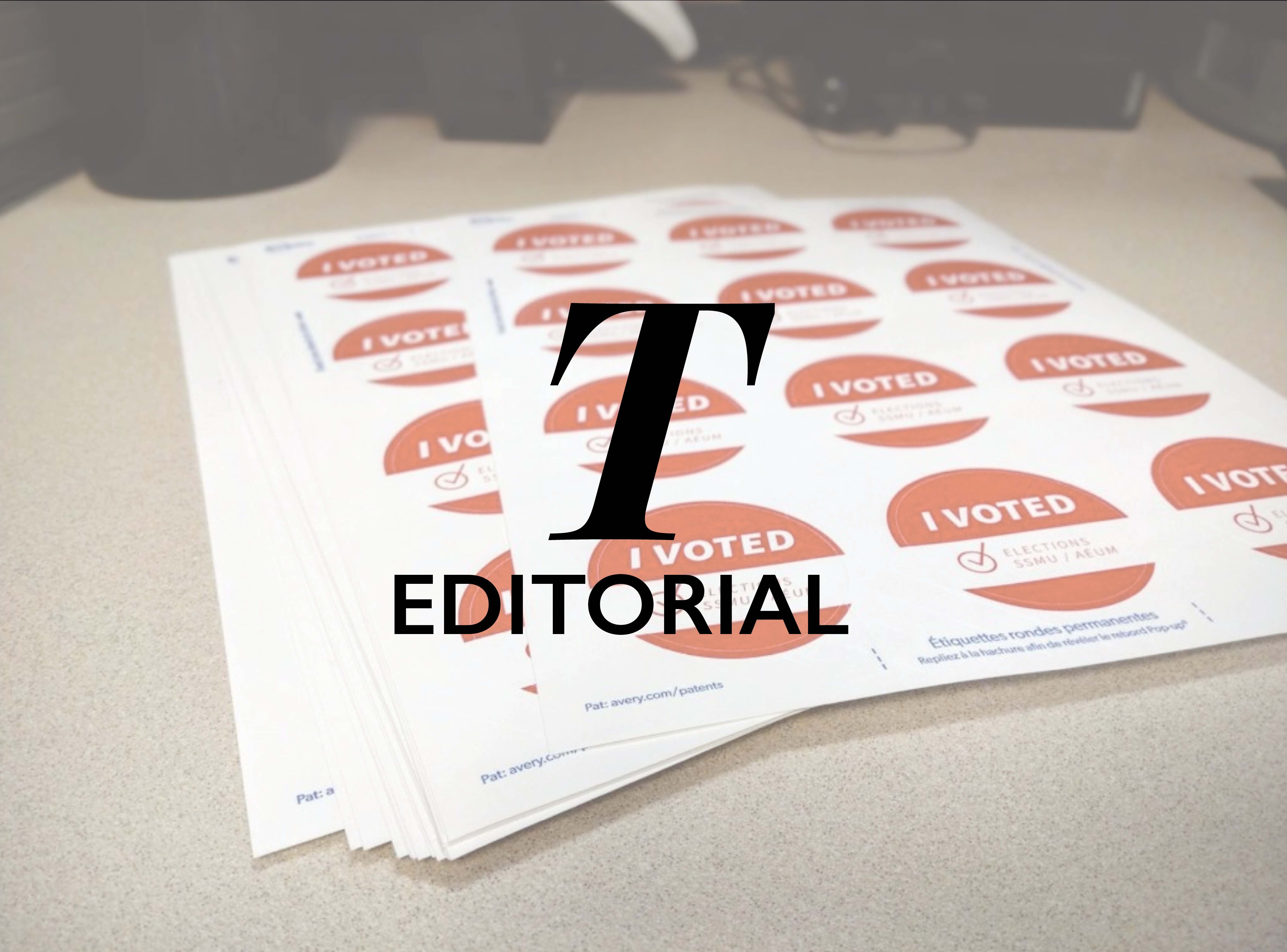
Virtual student government elections offer a more accessible framework

As the Students’ Society of McGill University (SSMU) executive election campaign period takes off this week, this year’s candidates will migrate to virtual platforms and social media to campaign. Online elections present new challenges to student engagement and require innovative approaches to campaigning. But if harnessed properly, the remote circumstances could serve to expand election accessibility in the long term. SSMU can take this opportunity to reflect on the barriers of past elections and maintain the benefits of a virtual campaign period even after the pandemic. 

With Zoom fatigue worsening as the pandemic drags on, student leaders must think outside the box to engage students. Remote learning has made it more difficult than ever for students to remain connected to the community, ultimately decreasing their likelihood of participating in student politics. For instance, SSMU’s September 2020 special referendum saw a meager 12.8 per cent voter turnout, the lowest in five years. Engagement in this year’s election is of particular importance, considering McGill’s plans to return to in-person learning for the Fall 2021 semester, which will surely present unique obstacles for incoming representatives. 

To make better use of online tools, SSMU could help candidates reach more students by allowing them to campaign on more platforms, in line with the Science Undergraduate Society’s Feb. 17 decision to allow candidates to campaign beyond Facebook. Additionally, the implementation of online resources like recorded information sessions and condensed versions of official SSMU election documents could remove the red tape around running for a position. Reading through SSMU’s lengthy election bylaws is daunting––the Internal Regulations of Governance is 54 pages alone and is only one of five internal regulation documents candidates are charged with reviewing. Making condensed online materials available can encourage students to run for positions that may have otherwise intimidated them, promoting accessibility. 

Some of the potential advantages of this new format are already evident. For individuals who are well-suited to a role, but who may be uncomfortable approaching strangers in-person about their platforms, expanded online campaigning can facilitate community outreach. Online flexibility also allows candidates to diffuse their election platforms easily. While corruption regarding unsolicited online messaging has been a concern in the past, SSMU can create a more equitable legislative framework to facilitate online campaigning. For instance, election rules must be updated to eliminate hostile or exclusive environments, setting a positive precedent for years to come.

Despite the benefits of online platforms, the merits of in-person information dissemination about SSMU elections cannot be ignored. Candidates may have trouble reaching those to whom they have no prior connection, as their social media posts tend to be seen only by their friends. One possible solution is to require that all Facebook campaign pages link all the other candidate’s pages to ensure easy access to each platform. And although it appears unlikely that elections will take place entirely online past this exceptional year, virtual platforms like Gathertown and Glimpse that mimic in-person booths can further complement existing election norms. 

When students return to campus, SSMU must find ways to maintain the accessibility of this virtual election while transitioning back to in-person events. In-person campaigning techniques like handing out flyers and approaching people on campus are integral to the campaign process and should not be abandoned, but giving candidates more campaigning tools will improve engagement in student government. 

While many students will want to be rid of any reminders of life during the most isolated stages of the pandemic upon their return to campus, SSMU should think about how it can use lessons learned throughout this tumultuous year to make student politics more welcoming and engaging in years to come.  Despite the drawbacks, this new online experience will result in overdue technological updates to the in-person election regulations currently in place. SSMU’s mission statements enshrine accessibility for the diverse needs of students. Now that new campaigning options have been unearthed, SSMU can act on its mission by adjusting elections to be as equitable as possible. 

Read the latest issue

Read the latest issue