

Latest News

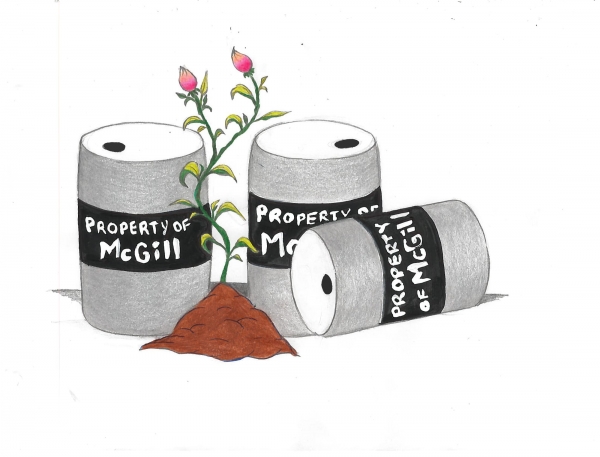
Divest McGill Illustration
Montreal, News

Student activists host virtual rally calling for divestment from Line 3 pipeline

Content warning: Human trafficking

Nearly 350 students across Canada and the United States attended a virtual student-led rally on March 5 to call for the defunding of Line 3, a tar sands pipeline project set to run from Alberta to Minnesota. The featured keynote speaker Tara Houska, a tribal attorney, Indigenous rights activist, and Couchiching First Nation citizen, along with other student speakers from across North America, called for universities to divest from the project and for students to take action against the pipeline. During the rally, representatives from Divest McGill provided resources for McGill-specific student action.

The Line 3 project is managed by Enbridge Inc., an energy company based in Alberta. Stine Myrah, a student from the University of Minnesota Duluth, detailed the pipeline’s impact on  Indigenous peoples and climate change. 

“Line 3 harms people, particularly the Anishinaabe people whose land the pipeline is being constructed through,” Myrah said. “[The pipeline’s construction] violates treaty rights and ignores Indigenous sovereignty by threatening their lands, food, cultural resources, and traditional ways of life. Pipeline construction is also directly correlated with increased human trafficking in neighbouring communities, particularly impacting Indigenous women, girls, and relatives.”

Myrah also argued that Enbridge showed a lack of accountability surrounding the sex trafficking that the pipeline has instigated.

“Enbridge and state regulators are aware of this direct link between Line 3 construction and human trafficking, but they don’t care,” Myrah said. “They do not value human well-being or human life.” 

The Line 3 pipeline will require 227 surface water crossings in Minnesota. Myrah noted that Enbridge has a track record of oil spills, having been the culprit of the largest ever oil spill in the state in 1991.

During the rally, attendees were invited to sign petitions and participate in calendar jams, which involves spamming bank CEOs with calendar invites to pressure their divestment from the project. Divest McGill also called on McGill students to sign its petition supporting the boycott of Metro Inc. The boycott aims to put pressure on Maryse Bertrand—Vice-Chair of McGill’s Board of Governors (BoG) and a key member refusing for the university to divest from fossil fuels—by targeting her personal investments in Metro Inc.

Houska highlighted the importance of divestment from industries complicit in abuses of Indigenous people and exploitation of the land.

“Divestment […] is a very effective thing,” Houska said. “Morality is just not something that the banking industry, the tar sands industry, the big oil industry, the mining industries are really interested in [….] They are the destroyers of the planet, the destroyers of life.”

Houska claims that universities cannot truly be committed to inclusivity if they are investing in unethical companies.

“[It is important to bring] these arguments forward to your colleges and your universities, especially [in] places that are really proud of their social justice programming,” Houska said. “[Universities are] always bragging about their ‘space that is inclusive of all’ [….] Well, why are you a space that is investing in the destruction of Indigenous peoples’ homelands? Why are you a space that is investing in the destruction and theft from my future [and] our futures?”

In an email interview with The McGill Tribune, Zahur Ashrafuzzaman, U1 Arts & Science and Divest McGill representative, detailed McGill’s investments in the project and called on students to take direct action

“We know about the impacts of these extractive projects on climate as well as their effects on missing and murdered Indigenous women, girls, and two-spirit people,” Ashrafuzzaman wrote. “McGill must end its complicity in this violence by ending their investments in [the] extractive industry. Beyond that, we can all commit not to bank with the big banks that are funding these projects.”

McGill, News

Tribune Explains: McGill’s changes to campus building ventilation

In preparation for the in-person Fall 2021 semester, the McGill administration is working to upgrade campus heating, ventilation, and air-conditioning (HVAC) systems. Denis Mondou, associate vice-principal (VP) of Facilities Management and Ancillary Services, maintained that all changes will be made in accordance with recommendations from Canadian public health agencies. 

Why are new ventilation units being installed?

Ongoing renovations of the Stewart Biology Building has made it the centre of McGill’s ventilation upgrades. In addition to various HVAC projects that were planned prior to the pandemic, the building will contain new state-of-the-art laboratories and boast new interior and exterior facades. New HVAC system upgrades have been installed on campus since 2017, notably in Burnside Hall, the University Centre, and the Education Building. As students and staff return to school, the new ventilation units will serve to make campus safer for everyone.

The Canadian government and public health agencies have consistently emphasized the importance of good ventilation and have created guidelines for maximizing the circulation of clean air in indoor spaces. Proper building ventilation is essential for mitigating COVID-19 outbreaks because constant air exchange moves viral particles out of rooms, replenishing spaces with filtered air. 

“In response to COVID-19, McGill has implemented [several] measures regarding the operation of its HVAC systems,” Mondou said.“These [measures] are focussed on maximizing fresh air intake [by] extending the operating hours of the systems.”

How will ventilation systems change on campus?

A major change to ventilation in buildings on campus will entail extending operating hours of the filtration systems. HVAC systems will be turned on “high output” two hours before the school day begins until two hours after the day ends; exact times will vary between building to building. During after hours, HVAC systems will be kept on a lower setting since there will be fewer people in the buildings. 

The new HVAC systems being installed will also have the rating MERV-13, which ranks highly on the Minimum Efficiency Reporting Value (MERV) scale. MERV-13 rated filters are highly effective at trapping smaller particles in the air, including airborne viruses, and will be replaced regularly.

How will McGill fund their ventilation projects?

Conversations on how to fit these ventilation projects into McGill’s annual budget are still ongoing as approval for exceptional COVID-19 expenditures depends on trends that the university notices in monthly spending and revenue. In an email to The McGill Tribune, McGill’s Associate Director of Media Relations Cynthia Lee explained that McGill will consider the expectations of different academic and administrative units when finalizing the 2021-2022 budget. The upcoming university budget will be discussed and put to vote on April 22 by the Board of Governors (BoG).

What do these changes mean for students?

According to Students’ Society of McGill University (SSMU) VP University Affairs Brooklyn Frizzle, student associations and representatives have allegedly been excluded in the conversations or decisions regarding COVID-19 safety on campus. Frizzle expressed concern over the feasibility of a full-scale return to in-person classes this fall despite the new ventilation installments. 

“I am unconvinced that ventilation upgrades [and changes] are anywhere near enough to compensate for the university’s aggressive plans to return to in-person learning in the Fall,” Frizzle said.

The McGill administration is confident that along with the new ventilation systems, the COVID-19 vaccine rollout is sufficient to keep the university’s community safe when students return to in-person classes.

“The health and wellbeing of our community will […] remain a top priority,” Lee said on behalf of the university. “All necessary health and safety measures will continue to be implemented to ensure that our campuses remain safe places to learn and to work in the coming year.”


Basketball, Sports

Sylvia Sweeney: Trailblazer, leader, visionary

Montrealer Sylvia Sweeney has had a career that is nothing short of extraordinary. As a member of the Canadian Basketball Hall of Fame, World Championship MVP and bronze medalist, an original board member of the Toronto Raptors, member of the Order of Canada, and Canada’s “First Lady of Basketball,” Sweeney has proved to be a tremendously talented athlete. Since retiring in 1984, Sweeney has continued to make an impact outside of the world of sports, telling stories in documentaries and spreading cultural awareness through the arts. It is no wonder that U SPORTS and TSN have honoured her with the creation of the Sylvia Sweeney Award, presented every year to a women’s basketball student-athlete who is well-rounded and dedicated to both athletics and academics.

Sweeney’s first experience with basketball was facing off against boys in her neighbourhood. She would bet them a quarter that she could beat them one-on-one and would happily accept her coins when they underestimated her. Years later, she made waves in the world of Canadian university sports when she set the record for most points scored in a game playing for the McGill Martlets in 1973. Sweeney later played for the Concordia Stingers in 1977 and the Laurentian Lady Vees from 1978 to 1979, taking home the national championship in her final year with the Vees.

When women’s basketball was first introduced to the Montreal Olympics in 1976, Sweeney played for Team Canada. She was made captain in 1979 and led her team to a fourth-place finish at the 1984 Los Angeles Summer Olympics, which remains the team’s best showing to this day. At the 1979 Pan American Games in Mexico, Sweeney received the honour of bearing her country’s flag at the opening ceremony. The Canadian Olympic Hall of Fame recognized Sweeney’s achievements in 1996, making her the first woman inducted into the Hall for excellence in basketball.

After her basketball career, Sweeney turned her talents to media. She worked as a researcher, journalist, anchor, and sportscaster for CBC and CTV. Sweeney founded Elitha Peterson Productions Incorporated, a motion pictures production company and studio in Toronto. Sweeney also produced several award-winning documentaries, and was eventually named an executive producer of the National Film Board of Canada in 2002. One of her 1992 documentaries, In the Key of Oscar, told the story of her uncle, the legendary jazz pianist Oscar Peterson.

In addition to sports and media, Sweeney also holds a clear passion for the arts. She studied classical piano in the Department of Performance during her time at McGill, and managed the funk/R&B band Tchukon while working at CBC. She has continued to combine her love for arts and sports, most notably in her production of the 2008 Marriage of Excellence concert series, which featured disabled artists in performances that occurred between the Olympic and Paralympic Games. She recently directed her efforts toward ArtsGames, a global competition that she founded to celebrate artistic achievement in media arts, literature, visual arts, dance, and music. During her 20 years working for the ArtsGames, Sweeney staged several concerts and festivals, including the 1999 Blueprints Arts & Entertainment Festival in Toronto and performances at the 2004 and 2008 Paralympic Games.

Sweeney’s mission, whether in her athletic career, media work, or artistic endeavours, has always been to build bridges between communities and foster connections. She believes that excellence should be visible and celebrated, and used as a tool for promoting cultural awareness, acceptance, and education. Her presence as one of the first Black players on the Canadian National Team and one of the first Black women on CBC television has led to a greater platform for Black women in sports and the media, and has opened doors for those yet to come.

Sports

The many exclamations of professional sports commentators

Any sport can have its defining moments, be it a buzzer-beating shot or a record-breaking win. While some moments are more awe-inspiring than others, many of the most popular are defined by the sports commentators that bring them to life. The McGill Tribune highlights its favourite sports commentator moments to celebrate the memorable dialogues of the the wordsmiths of the sporting world.

“Touch em all Joe” – Tom Cheek

Blue Jays radio announcer Tom Cheek delivered one of the most iconic calls in sports history during Joe Carter’s famous belt to left field that won Toronto the 1993 World Series. Leading up to the moment, the defending champion Blue Jays were down by a single run heading into the ninth inning after the Philadelphia Phillies had taken a 6-5 lead late in the game. Phillies reliever Mitch Williams was called in to secure the win and send the Fall Classic to Game 7. After two batters reached base safely, All-Star outfielder Joe Carter arrived at the plate as the winning run. Carter, who had recorded the final out of the 1992 World Series the year prior, took a 2-2 pitch to deep left field and ended the World Series with a walk-off home run for only the second time in Major League Baseball history. As Carter rounded the bases, Tom Cheek delivered a line that will forever be etched in Canadian sports and baseball history: “Touch ‘em all Joe, you’ll never hit a bigger home run in your life!” 

“We will see you… tomorrow night!” – Joe Buck

Joe Buck famously delivered this line after the St. Louis Cardinals escaped elimination in the 2011 World Series by winning Game 6, one of the greatest games in Fall Classic history, on a walk-off home run by third baseman David Freese. The line was a perfect homage to his late father, who also commentated and used it 20 years earlier during the 1991 World Series. The Cardinals trailed the World Series three games to two at home, and were down to their last strike before David Freese tied the ball game in the bottom of the ninth inning. As the game continued into extra innings, Freese led off in the bottom of the 11th. The Cardinals’ third baseman took a 3-2 pitch to dead center field, homering to end the ball game and having Buck proclaim, “We will see you.. tomorrow night!” 

The Cardinals would defeat the Texas Rangers in Game 7 the following day to win the 2011 World Series. 

“The Canadiens win the Stanley Cup!” – Bob Cole

On June 9, 1993, the Canadiens beat the Los Angeles Kings 4-1 in the last game of the Stanley Cup Finals. Even 29 years later, the call from Bob Cole at the end of this game will forever live in the memories of Montreal Canadiens fans: “And now, a 24th Stanley Cup banner will hang from the rafters of the famous Forum in Montreal! The Canadiens win the Stanley Cup!”

The Canadiens have not won a Cup since 1993, but fans still hold out hope. One can only imagine what the call would be when they win their elusive 25th championship.

“Down goes Frazier!”- Howard Cosell

This call by Howard Cosell is nearly as iconic as the event where it occurred: “The Sunshine Showdown” in Kingston, Jamaica. The 1973 face off saw then-undefeated boxing legends George Foreman and Joe Frazier go head to head in one of the most anticipated fights in boxing history.

The fight lasted only two rounds, with Foreman coming out confidently in the opening moments of the fight. Less than two minutes in, he knocked Frazier down with a right uppercut, and did so six more times in the next round. Foreman ended the fight with an overhand right followed by a powerful right hook. Sport commentating legend Howard Cosell was so shocked by the show of dominance that he exclaimed, “Down goes Frazier!” three times in a row. 

Foreman defended his title two more times, eventually losing to Muhammed Ali at the famed “Rumble in the Jungle.”

ozy.com

“Do you believe in miracles?” – Al Michaels

In perhaps the most famous Olympic hockey game, the “Miracle on Ice” saw a team of mostly amateur U.S. players face off against the heavily favoured Soviet team composed of professionals. The teams met in the first medal round, and at the end of the first period, the score was tied at 2-2. The Soviets went up in the second period 3-2, but blew their lead in the final period when the U.S. scored two goals. The gravity of the win struck Al Michaels in the final seconds of the game. His voice grew more excited, and with three seconds to go, Michaels shouted, “Do you believe in miracles?” 

At the 2008 International Ice Hockey Federation (IIHF) gala, the “Miracle on Ice” was honored as the best international ice hockey story of the past 100 years. 

“Bang! Bang!” – Mike Breen

NBA superstar Stephen Curry has hit some of the most improbable clutch shots of the last decade, and his game winner against the Oklahoma City Thunder in overtime on May 30, 2016 takes the crown. 

The Warriors came into the game with a 52-5 win-loss ratio, and would eventually set the record for the most regular season wins at 73-9. Curry scored an astounding 46 points, 31 of which came after halftime. He also set the record for most three pointers in a game, the last of which was one of the most audacious 35-foot shots with two seconds remaining on the clock. Commentator Mike Breen could not believe his eyes, gasping before shouting, “Bang! Bang! Oh, what a shot from Curry!” 

After the game, Breen commented further on the shot. 

“The team took your breath away some nights. And to cap it off with that shot, I just kind of lost it.” 

This shot will go down as one of the most emblematic game winners for one of the greatest basketball teams of all time. 

“Look at Mills! Look at Mills!” – Dick Bank

Two years after almost taking his life, Billy Mills, an Oglala Lakota U.S. Olympic runner, won the gold medal for the 10-kilometre race in the 1964 Tokyo Olympics. The victory was one of the biggest upsets in Olympic history as Mills, unknown in the running world at the time, outsprinted Australian Ron Clarke, the then world record holder. The historic race was even more memorable because of Dick Bank’s announcing.

When Bank, who was working as a spotter with NBC’s Bud Palmer, saw Mills coming towards the finish and, started cheering enthusiastically when Palmer did not mention Mills’ name:

“Look at Mills! Look at Mills!”

A few days after the race, NBC fired Bank for shouting over Palmer as Mills sprinted the final 80 yards of the race. Mills remains the only American to win Olympic gold for the 10,000-metre run.

Runner’s World
Arts & Entertainment, Books, Film and TV, Music

Stuff we liked this Reading Week

There was no chance we’d be studying over the break. So, with lockdown limiting our options for respite, the solutions to burnout were simple: Media, lots of media. From a never ending supply of TV shows, books, movies, and music, here are The McGill Tribune’s favourites from Reading Week 2021.

A Discovery of Witches, India Blaisdell

Adapted from the trilogy by Deborah Harkness, A Discovery of Witches is a must-watch show for lovers of fantasy and dark academia. Diana Bishop (Teresa Palmer) is a witch and university professor who, while conducting research at Oxford, accidentally finds a magical book that has been missing for centuries. Matthew Clairmont (Matthew Goode) is a vampire who believes this book could save vampires, witches, and daemons from extinction. Once Matthew and Diana meet, they quickly fall for each other. Bathed in gorgeous orange and blue lighting, and led by a strong cast and script, the show hooks its audience with an enthralling, romantic, and binge-worthy narrative.

Clone High, Michelle Siegel

In the midst of everything 2021 has thrown at students thus far, I found solace in returning to a simpler time: The early 2000s. Released in 2002, Clone High is an odd conglomerate of historical science fiction animation mixed with a healthy dose of parody and self-referential humour. The show follows the teenaged clones of historical figures as they navigate the woes of high school life in the shadow of their biological counterparts. Created by Phil Lord and Christopher Miller of Spider-Man: Into the Spider-Verse fame and Bill Lawrence of Scrubs fame, Clone High is an angsty and humorous portrait of a time that many university students do not actively remember, yet feel immense ownership and kinship toward.

One Night in Miami, Angelica Voutsinas

On Feb. 25, 1964, following Cassius Clay’s shocking defeat of Sonny Liston, the infamous boxer met with Malcolm X, Sam Cooke, and Jim Brown to celebrate his historic win. While the world will never know what these four influential actors in the civil rights movement discussed, One Night in Miami depicts playwright Kemp Powers’ fictional account of the evening. The play-turned-film’s one-act structure features a series of conversations between the four together and broken off in pairs, allowing for the cast’s intoxicating performances to shine. Each actor’s ability to depict such iconic figures—not mention their enthralling group dynamics—makes for a captivating account of this historical and elusive meeting.

You Couldn’t Ignore Me If You Tried, Erika MacKenzie 

If you are as obsessed with 80s teen movies as I am, you will love Susannah Gora’s 2010 book on the stories behind some of the most beloved movies, filmmakers, and actors of the era. Gora dives into the history behind films like The Breakfast Club, Pretty in Pink, and Say Anything. She also discusses John Hughes’ legacy and his reputation as the most prolific writer of the decade. The book explores how the young actors of the 80s, such as Emilio Estevez, Rob Lowe, and Judd Nelson, were named the “brat pack” after an infamously unflattering 1985 New York Magazine article was published describing the group as hard-partying, spoiled Hollywood royalty. Despite the challenges that the article posed for these actors’ careers, their films remained the most cherished works of a generation.

“YESS i’m a MESS,” Wheelchair Sports Camp, Atsushi Ikeda

“The hardest shit since MC Ren”? Contentious maybe, but let’s roll with rap scholar Mac Foster’s comment, since Kalyn Heffernan, the queer, disabled MC of Wheelchair Sports Camp just dropped the hardest track you have heard since lockdown. Think Crumb’s pristine psychedelia mixed with up-your-ass brass hits and a flow that is as ruthless as it is relatable; “boo hoo” //and// “me too.” Better yet, do not think at all and just watch the band tear it up in full PPE as Heffernan flies out of her ballpit of a bedroom to declare “YESS I’m a MESS / YESS I’m in debt / YESS I’m upset / But I got outta bed / So it can’t be that bad / can it?” Just //try// to answer that one.

McGill, News

AGSEM pens open letter condemning continued issues with Workday

In October 2020, the Association of Graduate Students Employed at McGill (AGSEM) sounded the alarm over technical issues with the newly implemented Workday Human Resources (HR) system, which left hundreds of employees without pay for months. Two months into the Winter 2021 semester, some McGill employees are still without pay from Fall 2020, others have yet to be paid for work completed since January 2021, and many continue to experience technical difficulties with the Workday interface. In response to persisting issues on Workday, including its decentralized problem-solving method, AGSEM sent an open letter to the McGill administration on March 2 condemning the university’s lack of response to their complaints and set forth several demands.

Although most delayed pay cases were resolved by the end of the Fall 2020 semester, Jessica Rose, AGSEM’s grievance officer, estimates that there are still roughly one dozen outstanding incidents, with new cases arriving in her inbox on occasion.

“I was talking to someone earlier today [and] they have not been paid a single cent for the work they did in the fall,” Rose said. “We just had a partial resolution for somebody who just got paid for work [they] did in the summer [2020].”

After spending much of last semester supporting individuals experiencing payroll issues, AGSEM’s recent letter calls attention to the broader operational and managerial shortcomings of the Workday module. The system’s hiring and registration process is one such shortfall: Employees must be “terminated” from any previous employment before they can register as “hired” for a new position. According to Rose, this setup inconveniences employees who work multiple jobs at the university.

“For Workday, you are supposed to have one profile that covers all [your jobs],” Rose said. “But there is no way for all these different offices who are hiring the same person to coordinate with each other. If different information is put in at those two different levels, [employers] are not going to see it, payroll is going to see it. Payroll does not know where it comes from and […] is not set up to take the initiative to troubleshoot anything that comes their way.” 

While delayed pay was a recurring problem in the Fall semester, Rose was surprised to see employees being overpaid in the Winter 2021.

“[Some employee] contracts were entered for the wrong number of hours, or [employees worked] extra hours but were never actually paid for them,” Rose said. “We are also seeing a ton of issues where people were apparently overpaid. Now McGill is trying to garnish their wages, except there are a ton of errors in the way that they have calculated that.”

Raad Jassim, president of the McGill Course Lecturers and Instructors Union (MCILU), echoed some of the letter’s frustrations regarding Workday. Reflecting on his experience with the Banner/Minerva systemthe HR system McGill used preceding Workday—Jassim felt the previous system was more functional

“[In Banner], I could see my taxes, I could see my address, I could see my deposit of salaries, I could see my job description,” Jassim said. “If I want to go back 20 years, it [was] all there.”

Following the transition to Workday, Jassim lost access to previously logged information and could only obtain it by submitting a request to McGill’s HR. Jassim recalled how inaccurate data input caused humorous mistakes, but nevertheless served as a testament to the system’s poor infrastructure.

“Sometimes [Workday states] I am hired in 2020, [and] sometimes I am hired way back in 1990,” Jassim said. “So […] when did I start my master’s at McGill? When I am looking at the data, it shows that I started in 1901.”

Jassim has been assisting MCILU constituents settle Workday-related issues since the Summer 2020 semester and is currently pushing the administration for reforms. One notable reform includes carrying over previous profile information so that individuals are spared from having to re-input data for every new employment session.

“If you reinstate yourself in the onboarding [and] you forget to put your pension plan, […] your retirement savings plan, [or] you do not know how, you will be deprived of the benefits,” Jassim said. “So I am asking McGill [to change this] because I do not want to do that every time. It has to be automatic.”

Mario Roy, president of AGSEM, believes the burden of Workday’s faulty system has fallen on employees and unions, who are left to troubleshoot and resolve a wide array of individual complications.

“I’ve been receiving a lot of comments from the hiring units on the fact that this system is much harder to manage, as compared to the past system,” Roy said. “When we receive complaints from our members, sometimes they have been working hours and hours on the phone trying to resolve something [….] When they call HR it is always a back and forth with the union, with HR, with IT services. [McGill] needs […] to improve [the system] overall, instead of looking at it case-by-case.”

The letter demands that McGill conduct an audit of outstanding employees who have experienced issues with Workday and that the university form a task force to ensure impactful solutions are implemented. Rose stated that McGill should consult with unions and workers on solutions moving forward and urged the administration to streamline Workday’s management.

“We want to see that McGill is putting in the management infrastructure that is needed,” Rose said. “There is no software solution for this, it is a manpower and managerial issue. It has to be something that has central coordination because staff in the hiring units are working as hard as they can.”

In an email to The McGill Tribune, a representative from the McGill administration stated that the university has resolved all known delayed payments from the Fall 2021 semester and is moving quickly to address issues as they arise.

“Since the roll-out of Workday back in August, more than 30 staff members from the [Retirement to Recruitment] team and the HR Service desk, in addition to staff in Payroll, Staffing and Academic Personnel have been focussed on supporting end users and resolving the various business process issues that have surfaced over the course of the fall semester,” the representative wrote. “Since then, a number of measures have been put in place to help ensure the next round of hiring for Winter 2021 goes as smoothly as possible. Enhanced user support and training and process improvements are ongoing and will continue to be a priority.”

Rose maintains that McGill’s response to the Workday situation constitutes a demonstrated failure of leadership on the part of the university. 

“The one comment from our members that keeps ringing in my head is, ‘I feel completely abandoned by McGill,’” Rose said. “It is one thing to be frustrated by the circumstances of the last year, but to feel abandoned is assuming that the university leadership has completely forgotten about you and has moved on from the problem before fixing it. There are people who are taking home six figures who are supposed to be fixing this and they are not.”

AGSEM has filed for arbitration for collective grievances on late payments from Fall and Summer 2021. The union is hoping to reach a settlement with McGill to compensate its members but will move the case in front of an arbitrator if a settlement is not reached soon.

Student Life

Student Refugee Program changes lives through education

In 1978, the non-profit organization World University Service of Canada (WUSC) implemented the Student Refugee Program (SRP) at Carleton University. SRP is a refugee resettlement program that focusses on financial sponsorship and integration for students hoping to study and work in the country. In the years since, the initiative has grown to support students in over 95 post-secondary institutions in Canada. As part of this program, all SRP scholars gain permanent residency status after they arrive in Canada. This is made possible through the organisation’s status as a Canadian National Sponsorship Agreement Holder with the Minister of Immigration, Refugees, and Citizenship

The SRP was implemented at McGill in 1986 with the resettlement and integration of one student. Since its conception, the intake has increased to support three new students arriving each year. The management of SRP at each school is delegated to the campus’ Local Committee. The McGill Local Committee is made up of volunteers who ensure that SRP scholars are supported during their resettlement. Alice Ishimwe, U2 Arts and a social work intern at WUSC, explained the role of the Local Committee. 

“While we are assisted by WUSC […], the United Nations High Commissioner for Refugees, the International Organization for Migration, and the Canadian government, it’s mostly the Local Committee that takes care of the ins and outs of integration for the students,” Ishimwe said in an interview with The McGill Tribune.

The student-led Local Committee prioritizes the creation of a peer support network that connects resettled students with one another. Ishimwe described the importance of student involvement in the Local Committee.

“We call it the Peer-to-Peer Sponsorship model,”  Ishimwe said. The big organizations help us with interviews on the ground […] in the camps […], but when students come here they are our responsibility.”

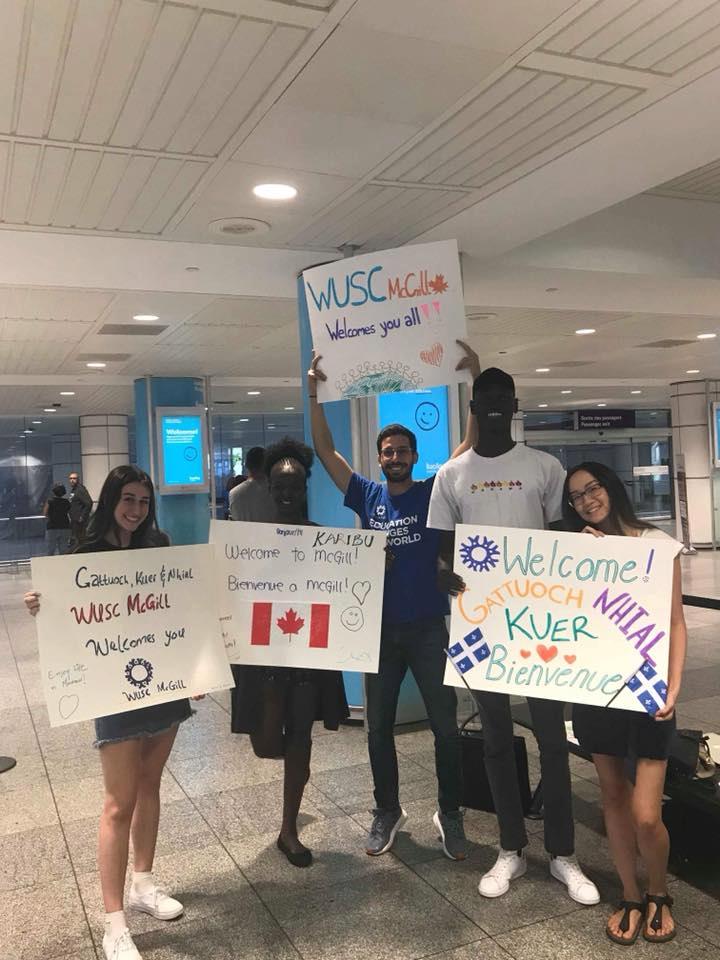
Student-led support begins from the moment students arrive at the airport. To SRP scholars like Manyang Lual Jok, U3 Science, who arrived in Montreal in 2017, these efforts help to create a support system. 

“What makes WUSC unique in terms of integration is the point that […] the first people who pick you up are schoolmates, [ which makes] it easier to interact and ask questions,” Jok said. “For all of us, the first point of contact is always the Local Committee [….] They can go on to become your mentors.”

The SRP program currently relocates students from Jordan, Kenya, Lebanon, Malawi, Tanzania, and Uganda to Canada and sponsors the students’ expenses for one year, after which they can apply for federal student loans. In the six countries where the SRP operates, there are government-mandated restrictions on higher education. Jeanne-Armelle Uwilingiyimana, U3 Agriculture and Environmental Sciences, explained the necessity of a program like SRP in aiding her relocation to Montreal from Malawi in 2017.

“The whole experience was a life-changing opportunity [….] In my cohort, 250 people applied and 22 were selected,” Uwilingiyimana said in an interview with the Tribune. “It is very sought-after [….] When you graduate high school, you could apply to university but […] the government does not fund refugees or non-Malawians to go to university [….] I don’t see how my future would have been beyond WUSC.”

WUSC McGill recognizes that limited quotas on students admitted through SRP to Canadian universities can leave behind many deserving students during the selection process. Ishimwe explained that in an effort to address this constraint, the upcoming Students’ Society of McGill University (SSMU) referendum will include a question that asks for an increase in the fees that students pay to support the program. 

“[Currently], each student at McGill [is] paying $2 per semester to help us sustain the program,” Ishimwe said. “We are going to see if we can increase that due to the high number of refugees across the world, especially because of COVID-19.” 

The organization hopes to increase the student fee from $2 to $4 through the referendum. 2018 SRP scholar Gattuoch Kuon, U2 Science, explained the significance of this proposed change.  

“To do good for the world […], don’t see it as four bucks,” Kuon said. See it as four people and their families. You are changing lives.”

Arts & Entertainment, Film and TV

Human Rights Watch Film Festival shares compassion through screens

From Feb. 18-22, Human Rights Watch Canada showcased a selection of their films for Toronto’s 18th annual Human Rights Watch Film Festival, a cinematographic exhibition that celebrates diverse human perspectives from around the world. With COVID-19 disrupting the festival’s typical execution, Canadian cinematographer and festival co-chair Nicholas de Pencier discussed how the team adapted their original vision to a virtual format.  

“This year’s festival looks radically different from last year’s and the many previous years,” Pencier said in an interview with The McGill Tribune. “We would gather for a number of nights in the winter in a theatre and have that sense of community around films that resonate issues of human rights [….] The whole team has had to reimagine what a festival looks like in the constraints of being limited to a virtual iteration [….] In fact, there [have been] some wonderful bonuses.”

Pencier is referring to the festival’s free charge and its online accessibility for this edition. All five films—A La Calle, I am Samuel, Love Child, Maxima, and Wake Up on Mars—were posted on the festival’s website. Anyone who registered for the event could watch them any time over the festival’s four-day period.

“Before, if there was a film that you really wanted to see and it was a Tuesday night, you had to be free to come down to the Bloor Cinema in downtown Toronto,” Pencier said. “This year, if you live anywhere in the country, you can download the film at your leisure, at a time that’s convenient to you [….] That’s a huge bonus in terms of its accessibility.”

The festival’s featured films explored the challenges and hardships that people face worldwide. I am Samuel, directed by Peter Mirumi, follows Samuel, a gay man living in Kenya, where laws and cultural values discriminate against queer people. Samuel is caught between two lives: His relationship with his partner in Nairobi brings him joy; however, his sexual identity creates tension with his family, who are farmers in rural Kenya. The film’s tense display of these difficult circumstances is moving.

“There’s a real sort of buzz about films that are new, that are vibrant, that will inspire you and raise your consciousness about really important things,” Pencier said. “[In] I am Samuel, where the struggles to live a queer identity in certain countries are just so formidable, […] the bravery of people who don’t deny their identity is really heartwarming and edifying to learn about through a film like this. [It] has a really intimate access to the protagonist.” 

Other films, such as Maxima by Claudia Sparrow, showcased environmental injustices and Indigenous sovereignty issues. In Maxima, Indigenous Peruvian environmental activist and farmer Máxima Acuña fights the Newmont Mining Corporation for her family’s right to remain on their land. The film displays beautiful vistas of the Peruvian Highlands, which emphasize the land’s significance to Acuña and her family as they try to protect it from an intimidating and exploitative company.

“I really get a sense of [Máxima] and her personal struggle,” Pencier said. “This Herculean effort that she has to make against an adversary that so many people would give up [on], would be afraid [of], would cave in to, [and] she doesn’t. It’s this wonderfully intimate story and knowledge of her that resonates the much broader theme of Indigenous peoples, the sovereignty of the land that they are on, and the exploitation of their land by huge, powerful colonial interests.” 

The film’s topics, which ranged from struggles for democracy to the lived experience of refugees, shared a humanitarian outlook that brought viewers new perspectives on their own lives, and those of others. 

“As soon as there is an awareness of suffering anywhere in the world, all of us as moral beings have to try and reconcile what we have as capital that we might apply to ease that suffering,” Pencier said. “Film has the power to move you emotionally.”

Creative

The T: “A tense SSMU General Assembly and a Judicial Board hearing on BDS” Mar. 2

This week on the show:

  • The SSMU General Assembly loses quorum, fails to pass Divest for Human Rights motion
  • Legislative Council debates and approves the Divest for Human Rights motion
  • Judicial Board holds a hearing re-interpreting a 2016 Boycotts, Divestments, Sanctions (BDS) ruling
  • An investigation into the curfew’s impact on migrant, undocumented, or temporary workers

Episode links:

Host: Sequoia Kim, News Editor
Guest speakers: News Staff Writer Ella Milloy, Contributor Nina Russell, Managing Editor Sophia Gorbounov
Podcast Producers: Multimedia Editors Sarah Ford & Alex Hinton, Creative Director Aidan Martin, Editor-In-Chief Helen Wu
Artwork design: Design Editor Chloe Rodriguez


content warning, McGill, News

Sex and Self event covers decolonization and destigmatizing Black sexuality

Content Warning: Sexual violence, racial violence, intergenerational trauma, slavery

Sex & Self, a sexual education organization at McGill, hosted the virtual seminar “Decolonizing and Destigmatizing Black Sexuality” on Feb. 21. This seminar was the second installment of their Black History Month “Facing the Facts” series, and featured Jet Setting Jasmine, a clinical therapist and co-owner of Royal Fetish Films, and King Noire, fellow co-owner of Royal Fetish Films. The event was co-hosted by Chelsea Martin, co-founder of Toronto’s Manifesto, an organization seeking to uplift Black and Indigenous communities, and Felicia Gisondi, U3 Education and founder of Sex & Self.

The panellists explored a wide array of topics, including white supremacy, systemic racism, and the history of the hyper-sexualization of Black individuals. All the proceeds raised from the event were donated to the BIPOC Adult Industry Collective, an organization that aims to support BIPOC adult performers and make the adult entertainment industry a safe space.

King Noire began the discussion by noting how diverse ideas about gender, sexuality, and sexual liberation have existed for generations in Africa before European colonization in the late 19th century.

“It is important to note that [in the] civilizations across the continent of Africa, there were many different forms of sexual orientation and ideas of gender,” King Noire said.

King Noire explained the term post-traumatic slave syndrome (PTSS) to the audience, leading into a discussion about how slavery has directly led to the hyper-sexualization of Black individuals. PTSS is a theory that explains the adaptive survival behaviours of Black communities as a consequence of the multigenerational effects of centuries of enslavement.

Jasmine then shared her own interactions with policing and experiences of systemic racism within the adult entertainment industry, noting how certain forms of pornographylike police pornreinforce negative stereotypes and contribute to the eroticization and fetishization of Black individuals.

“[Police porn] really is a mockery, because there is no resolve,” Jasmine said. “You’re not telling a historical thing that used to happen, you are selling our reality as entertainment, [and] normalizing it by either making it funny or sexualized.”

Jasmine emphasized the importance of reframing sex to be more pleasure-centred for Black individuals. King Noire and Jasmine currently facilitate fetish training and host workshops on a variety of topics, including sex-positive parenting, the importance of consent, and how to stay safe in the sex industry.

“A major key to Black sexual liberation is about us finding pleasure-centred sex,” Jasmine said. “[There are] no models through history of pleasure-centred sex, [since] everything has been done for the utilization of our oppressor. [The key] is allowing Black and Brown people to […] reconnect to spirituality, which was pleasure-centred sex, and the pre-colonial ways in which we connect to our bodies.”

King Noire also spoke about his efforts to steer the porn industry away from the white cis male gaze and the racial stereotyping that the industry perpetuates. His work aims to create a safe space for Black individuals to explore all kinds of fetishes, sexualities, and gender identities.

“What we’ve been working to do is […] to give a voice to Black sexuality and its ranges, [and show] just how broad the spectrum is,” King Noire said.

Gisondi hopes that the event’s in-depth discussion on the intersections of race and sexuality will ignite further conversations and see more people understand their own sexuality. 

“Too many individuals lack a basic understanding of their own sexuality,” Gisondi wrote in an email to The McGill Tribune. “By providing folks with the historical understanding of how sexuality and race are intertwined, a new dimension to our participants’ understanding of modern-day sexuality in the anti-racist context was achieved.”

A previous version of this article incorrectly stated that the proceeds of this event went to BIPOC Project. In actuality, the proceeds went to the BIPOC Adult Industry Collective. The Tribune regrets this error.

Read the latest issue

Read the latest issue