Latest News

The faculty is looking to reduce classes with under 20 people; full-time professors will now teach larger classes. (Alexandra Allaire / McGill Tribune)
McGill, News

McGill announces return to in-person classes for Fall 2021

On Feb. 23, McGill University announced their intention to return to in-person teaching for the Fall 2021 semester. The return to campus will be a gradual process, beginning with Tier 2 in-person activities which are currently being implemented during the Winter 2021 semester. The administration’s announcement raised many questions amongst students, but gave the McGill community some sense of certainty for the upcoming semester. 

The university stated at a Feb. 26 press conference that the Quebec government has prioritized the return to in-person education to support students’ mental health and improve academic experiences. Associate Provost (Teaching and Academic Programs) Christopher Buddle detailed what McGill students can expect for the return to in-person classes.

“[For] larger lectures, there is a plan that those will be offered online for students,” Buddle said. “Other kinds of activities, [like] labs, tutorials, conferences […] will be planned for in-person, and most smaller classes will be planned for in-person as well [….] Some students might see a blended approach where some of the core components of the class might be online, with other components in person.”

Jemark Earle, Students’ Society of McGill University (SSMU) President, was surprised by the announcement.

“Although I do think [this decision] was made a bit early, I do appreciate this advanced notice because it gives a lot of time to make this alternative planning,” Earle said. “It is hard to say if the decision was rushed [….] But it is also important this happened, since last year […], the decisions were made a bit too late.”

The university stated that it made their decision early to allow more time for preparation and to grant students a sense of certainty.

“One of the important pieces that came through in the discussions was the importance of a degree of certainty around what the expectations might be for the fall,” Buddle said. “It comes from some students [or] for potentially incoming students who are looking at a lot of different options for next fall as well and wanting to understand what the universities were doing. It might seem early to many in the community, but I think it’s really a signal that we are confident in our planning”

While Earle believes that many students are excited to return to campus, other organizations are concerned about the risk of exposing community members to COVID-19. Mario Roy, president of the Association of Graduate Students Employed at McGill (AGSEM), maintains that the university did not consult teaching assistants (TAs) on how the mandatory return to campus will impact them.

“We have not been consulted by McGill on this position even though we have requested many times to be consulted before taking such decisions,” Roy said. “Some of the TAs have been requested to come back to work in person and some have been consulted and agreed and in other cases, they weren’t consulted [….] [McGill] does not care about […] the family situation, they only care about the students or members themselves, they do not worry about the people they might be putting at risk.”

Although McGill has a plan in place for in-person academic activities, the rollout of extracurricular activities on campus remains uncertain. Deputy Provost (Student Life and Learning) Fabrice Labeau explained that the degree of in-person activities allowed will depend on how the pandemic evolves.

“We will put a priority on our academic activities to be in-person,” Labeau said. “We will be continuing to plan with different possible scenarios. All the scenarios will have the teaching research components, the core academic activities, and then we will have all the other activities in the plans. In some of these scenarios, it won’t be possible to have an in-person Frosh, and in some other [scenarios], it will.

News, SSMU

SSMU Legislative Council approves Divest for Human Rights Policy

The Students’ Society of McGill University’s (SSMU) Legislative Council convened on Feb. 25, where council members voted on the Motion Regarding the Adoption of the Divest for Human Rights Policy. The policy encourages SSMU to lobby the McGill administration to divest from companies that are complicit in a variety of human rights violations. It was initially put forth at the Feb. 16 SSMU General Assembly (GA), but was only adopted in a consultative capacity after approximately 80 attendees left the meeting prior to the vote, causing the assembly to lose quorum. Following 90 per cent approval for the motion at the GA, the coalition that authored the motion released a petition on Feb. 22 to encourage the Legislative Council to vote in favour of the motion.

The policy targets companies such as Puma and Nordstrom, which profit off China’s incarceration of the Ugyhur people in East Turkestan through the use of forced labour camps. Other companies mentioned in the policy include the Oshkosh Corporation, which manufactures vehicles that the Israeli military uses.

SSMU Vice-President (VP) of External Affairs Ayo Ogunremi urged the council to keep the results of the GA in mind when discussing the motion.

“I would note the significance of the motion being approved last week at the consultative forum and […] the fact that quorum was reached at GA last week and then was lost as a result of an exit [of a significant number of students],” Ogunremi said. “The result was 90 per cent in favour of this motion. I think that’s very important to consider going forward.”

The debate period, which lasted for almost two hours, centred on sections 3.2.2 and 3.2.3 of the policy—sections that call to divest from arms manufacturing giant Lockheed Martin, and Re/Max, a real-estate company operating in occupied Palestinian territories. Some councillors believed that the policy unfairly targeted Israel, while others argued that this focus detracted from its substance, and defended the policy.

Maya Garfinkel, a U3 Arts student and research coordinator for Students for Peace and Disarmament, argued that the concerns surrounding human rights that were mentioned in the policy are important to McGill students. 

“There have been claims here that [the motion] misrepresents what is going on in Israel and Palestine right now,” Garfinkel said. “I just want to ask, what claim for Palestinian human rights would this council not take issue with? Anything regarding Palestinian human rights is contentious, and the reason that we’re bringing this up is because McGill students are concerned with these issues.”

Councillors on both sides of the issue were optimistic about the engagement in student government that the policy garnered, given that the petition urging the Legislative Council to vote in favour of the motion received 378 signatures. VP University Affairs Brooklyn Frizzle noted that the motion encouraged students to voice their concerns on issues relating to student governance.

“While I understand concerns over the disenfranchisement of students, I would say that this is an example of students being engaged, interested, and hopeful [about] participation in student governance,” Frizzle said.

The motion was approved, with 21 councillors voting in favour, four abstaining, and five opposed. 

The Council also approved a motion amending the internal regulations of elections and referenda, which would provide a clear framework for students to organize “No” campaigns in opposition to a referendum question. The motion was approved with 29 in favour, one abstention, and none against.

Moment of the Meeting:

Management Representative Noah Gundermann unsuccessfully moved to postpone the Motion Regarding the Adoption of the Divest for Human Rights Policy as the minutes from the GA had not been distributed to councillors before the meeting, as per SSMU’s internal regulations on governance. No one seconded it, and the debate proceeded as planned.

Soundbite:

“While I understand the importance of [the] SSMU’s mandate to be a leader in cultural, social, and environmental issues, many of my constituents mention this as a reason for being inactive and disillusioned with student government. They’re frustrated when they see most of their representatives’ time being taken up by hot-button global issues when it feels to them that the issues they face on campus, such as the lack of support for sexual assault survivors and inadequate mental health resources, seem to fall by the wayside.” – Libby Williamson, Arts Representative to SSMU, on her reasons for opposing the Divest for Human Rights motion.

Arts & Entertainment, Music

Wavelength Winter Festival kicks off with a virtual bang

On Feb. 20, Toronto-based music festival Wavelength welcomed virtual attendees to the first show of its series. The non-profit arts organization has celebrated emerging artists for over 20 years, featuring local performers at the forefront of its events. This year was no exception: Toronto-based Zoon and Montreal-based Maryze and Backxwash took to the virtual stage to kick off the February music series. The show was divided into three livestreamed YouTube premieres with 30-minute intervals between performances, each artist having pre-recorded their set at their local venues. The resulting joint concert was a smoothly organized and phenomenally engaging success. 

The night’s first performer was Maryze, accompanied by producer Solomon KI on electric percussion. Filmed in the Diving Bell Social Club, Maryze gave a bewitching performance on a stage laden with fairy lights, candles, flowers, and of course, a diving bell. Gracefully moving around the stage while singing hits including “B.O.Y,” “Dis Moi,” and her soon-to-be-released track “Too Late,” Maryze curated an enchanting atmosphere, lulling listeners with her soft, hypnotic melodies. In-between songs, Maryze noted that this was her first performance in months, smiling as she did so.

“It’s really nice to be singing again and playing with Solomon and being on a stage,” Maryze said.

Maryze concluded her half-hour set with a cover of Caroline Polachek’s “Ocean of Tears,” effortlessly hitting every high note, enchanting viewers with the spell-binding atmosphere that she had cultivated throughout the set. 

The night’s second show was performed by Zoon, whose self-described Indigenous shoegaze pop performance contrasted beautifully with Maryze’s witchy, alt-pop tunes. Zoon’s set was filmed in the Toronto music studio Palace Sound, and featured Andrew McLeod on drums, Drew Rutty on bass, and Cole Sefton on lead guitar. The set was a feature film production rather than a recorded concert, heavily intermixing elements of sound, lighting, and camera editing to create a trance-like viewing and listening experience. The setlist was largely instrumental, with Zoon’s soft, nearly lyric-less vocalizations interspersed to highlight the varying melodic tempos. The camera moved between musicians, zooming in and out of their instruments, superimposing Zoon’s mouthing of lyrics in between shots, and blurring performers to create a dazy, ethereal ambience.

Polaris 2020 prize winner Backxwash ended the show on a fabulously demonic note. The Montreal rapper appeared onstage at La Sala Rossa in front of a pulpit and curtains, a tableau backlit in a red hue. Clad in devil horns, dark robes, a cross necklace, a crimson wig, and thick black eyeliner, Backxwash made clear her intention: Deliver to viewers a rebellious, subversive, satanic sermon. 

Armed with what seemed to be the most powerful bass line in existence and a fiery desire to shock and awe, Backxwash gave an incredible performance of—bluntly put—banger after banger. Backxwash performed many of her hits from her album Deviancy, including a rendition of her song “Devil in a Moshpit,” which was so consuming, made viewers forget that they were not, in fact, in a mosh pit. Livestream commenters raved during the performance, with one viewer even pointing out the extent to which Backxwash transported them to her virtual show. 

“[S]creaming at the screen like I’m on the rail at the show,” the viewer commented.

Wavelength’s pandemic premiere epitomized that the live music industry is not dead, but rather hibernating, and it will give its all to break out of the current performance slump. Each artist curated their own unique atmosphere that successfully transcended distance and device screens to envelop virtual attendees. From Maryze’s beguiling vocals to Zoon’s nostalgic instrumentals, to Backxwash’s satanic, digital rave, the evening was a phenomenal success. 

Saturday’s performances can be found here. The Wavelength concert series schedule can be found here.

Creative

Change Makers Episode 2: Alexis Zhou

In the second episode of Change Makers, Multimedia Editor Alex Hinton speaks with Alexis Zhou, a U3 Russian & Latin American Studies major, community organizer, and freelance journalist. Alexis recently co-founded the first ever Sunrise Movement chapter in Canada. They discuss the organization’s purpose, future, and how McGill students can get involved.

Features

A petrified stream of consciousness

Content Warning: Vomiting, graphic imagery 

Fear can really humble us. In the face of something that terrifies us, we are driven to confront the cause. This can help us survive––fear is the body’s way of protecting us.

Unfortunately, fear can also be completely removed from any legitimate danger. 

My fear, like those of others, has been a weakness that has paralyzed me, and has continued to limit me.

~

It is often difficult to pinpoint where a certain fear originates, but I remember one particular day in grade school that plays out in my mind as if it were a silent film.

I was with my father at an information session, listening to coordinators discussing the secondary institution and program I was applying for. We were sitting off to the side in a room crowded with people, each of them displaying emotions somewhere between boredom and eagerness. During the middle of the talk, my father began snoring beside me, earning us a few dirty looks, and out of embarrassment I shook him awake. 

Barely a minute passed before I heard the snoring again and I realized that something was wrong. I sprang out of my seat in the middle of the presentation as I saw that he had started to throw up obscene amounts of blood and vomit—enough to scatter the entire crowd to the edges of the room.

I recall that even though I had watched the ambulance carry him out on a stretcher, what had just occurred did not dawn on me until after I arrived home in my friend’s car, like a morbid rush of adrenaline.

~

Although fears may have planted their roots early on in our lives, one rarely realizes the degree to which they manifest until much later on.

It seems as though the more something is dutifully avoided, the more it tends to appear around you—rather, you notice it more frequently, and every encounter stays ingrained within your psyche. I have seen my cat hack out hairballs, listened to friends say they are about to throw up, and heard tales of my grandmother’s nauseating side effects from chemotherapy. I often cannot help but picture myself and those that I love having to go through these terrifying experiences, but they are just transient memories for them. Even for me, it is hard to understand why I fear just another natural bodily process; it is lonely having a niche phobia.

Science & Technology

Spotlight on Black scientists at McGill and beyond

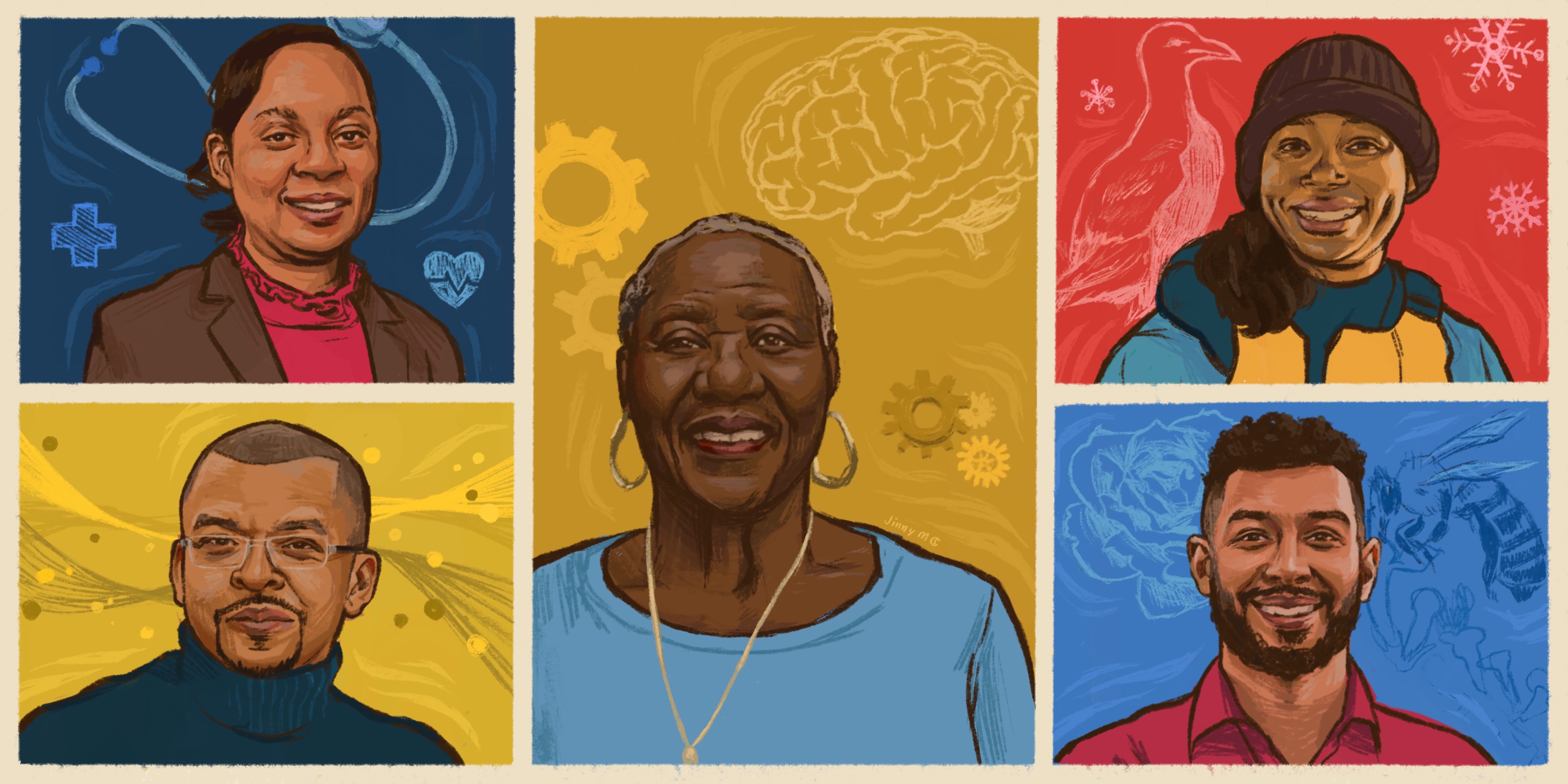
Despite the important equity work done by various organizations, Black people continue to be underrepresented in STEM fields and academia. In honour of Black History Month, The McGill Tribune spoke to five up-and-coming Black researchers in a variety of scientific disciplines. 

Dr. Myrna Lashley

Dr. Myrna Lashley is an associate professor in McGill’s Department of Psychiatry and an adjunct researcher at the Lady Davis Institute. For more than 30 years, she has advocated for Black Canadians through equity and inclusivity work.  

After coming to Canada from Barbados, Lashley faced overt racism in Canadian academia and experienced loneliness from being the only Black person in her department.

“I came to realize that I was not alone; my feelings were real and realistic and that I had a duty to do what I could to help others,” Lashley wrote in an email to The McGill Tribune. “However, those issues are overlaid with a thick layer of societal pain and pressure which are what we now refer to as ‘determinants of health’.” 

Throughout her career, Lashley has focussed on the intersections of racism and mental health, leading her to consulting work at multiple levels of government. In 2017, she authored a report exposing the extent of racial profiling in Quebec’s police force. 

Lashley believes that universities should rework their hiring policies and course offerings to represent BIPOC not only on paper but also in practice.

“In addition, professors need to be trained to understand that in some classes they are continuing to teach authors who may have had and practiced racist ideologies,” Lashley wrote. “Not examining that truth could lead to BIPOC students feeling further dehumanized and ostracized.”

Peter Soroye

Peter Soroye is a PhD student at the University of Ottawa who is focussing his research on conservation biology. Last year, his work on the drastic impact of climate change on bumblebee populations was published in Science, one of the highest-impact research journals in the world. 

As a child, Soroye was fascinated by the natural world. This early interest, coupled with the current climate crisis, inspired his career choice. 

“As I got older, I realized that we were destroying the world around us and making species disappear,” Soroye said in an interview with the Tribune. “I thought if I want to see all of this [nature], I have to help keep it around.”

Soroye is passionate about encouraging young BIPOC to participate in STEM fields through initiatives he has helped to develop, such as the CSEE BIPOC Library. This project hopes to improve BIPOC representation in science classrooms across the country. 

“[Me] and Professor Steven Heard created the idea of these grants that would help shine a light on researchers from historically excluded communities that are doing really brilliant ecology and evolutionary research,” Soroye said. 

As president of UOttawa’s Biology Graduate Student Association (BGSA), Soroye has co-authored a Graduate Student’s Guidebook to help students navigate their graduate school journeys. Often, first-generation students are not provided with sufficient resources to juggle the emotional, financial, and academic costs of pursuing a graduate education.

“[At] every step, from my way through undergrad to now, friends and colleagues who are Black or people of colour leave the program,” Soroye said. “It’s [as if] they’re being pushed out.” 

Dr. Emily Choy 

Emily Choy is a postdoctoral fellow at McGill University and Environment and Climate Change Canada working in the Department of Natural Resource Sciences. In November 2020, she received the prestigious $20,000 L’Oréal Canada For Women in Science Research Excellence Fellowship. 

Choy has dreamed of being a zoologist since she was a child. Her love of nature and animals inspired her to pursue conservation efforts and to combat climate change.

“I spent most of my childhood at my grandparents’ cottage on Canal Lake in Bolsover, Ontario, where I spent hours catching fish, frogs, [and] snakes, and feeding chipmunks, red squirrels, white-breasted nuthatches and black-capped chickadees,” Choy wrote in an email to the Tribune

Choy is currently researching the impact of climate change on Arctic marine animals and how prey dynamics might affect the behaviour of predators. Her work has involved frequent travel, such as trips to study ecosystems on Devon Island and thick-billed murres on Coats Island in Nunavut. 

Choy has also been to the Northwest Territories, where she studied beluga whales. However, her proudest achievement is her partnership with Inuvialuit communities as part of a beluga health community-based monitoring program.

Choy is passionate about STEM outreach and education, believing that anything can be achieved with perseverance. 

“You just have to push forward and pursue what you are passionate about,” Choy wrote. “Don’t get discouraged and remember, there is a lot of failure in science, but the only real failure is giving up.” 

Dr. Kevin Hewitt 

Kevin Hewitt is a professor in Dalhousie University’s Department of Physics & Atmospheric Science. 

Initially, he studied biology at the University of Toronto because his mother, whom he credits for his success, wished for him to become a medical doctor. However, he switched paths after he discovered his love for physics. 

In his molecular lab at Dalhousie, Hewitt studies biomedical applications for Raman spectroscopy, a light scattering technique that allows qualitative and quantitative analysis of molecules. One such application under development at the Hewitt lab is a technology for the fast and inexpensive detection of liver fat content.

“These results will guide transplant surgeons in deciding whether the liver is safe to use for transplantation, leading to fewer discarded livers, shorter waitlists for liver transplantation and better quality of life for many individuals with end-stage liver disease,” Hewitt wrote.

Hewitt has also been involved in many STEM outreach programs, founding the Imhotep’s Legacy Academy, a STEM outreach program for junior high to university African Nova Scotian students. He advises youth hoping to pursue STEM fields to seek out organizations such as the Canadian Black Scientists Network and connect with others who share similar interests.  

“Form your own group to provide support for one another to reduce that sense of isolation,” Hewitt wrote. “Get involved in your community; it will give back to you many times over what you put in and provide you that support that will lift you up to achieve your goals.”

Dr. Anita Brown-Johnson

Dr. Anita Brown-Johnson is the newly appointed chief of family medicine at the McGill University Health Centre (MUHC), as well as an assistant professor of family medicine in McGill’s Faculty of Medicine. 

Brown-Johnson was raised by her grandmother in Jamaica before continuing her studies in Montreal. A high school teacher sparked her interest in pursuing medicine as a career. 

“I was sensitized at an early age to many complex challenges faced by the elderly,” Brown-Johnson wrote in an email to the Tribune. “This bird’s eye view, coupled with a passion for mathematics and the sciences, inspired my early curiosity in the healthcare field.”

In 2020, Brown-Johnson was the recipient of the Woman of Merit award for her achievements in the field of geriatric medicine and humanitarian work. Her new leadership role has allowed her to oversee clinical and teaching activities, and implement Equity, Diversity and Inclusivity (EDI) initiatives at McGill’s Faculty of Medicine. 

As a physician and researcher, she prioritizes efficient care transitions, which seek to reduce the time spent by patients in transition-care units and the number of readmissions to the hospital. 

Brown-Johnson emphasizes the importance of seeking out mentorship and believing in one’s abilities when striving towards success. 

“Do not be discouraged if at first you do not succeed,” Brown-Johnson wrote. “Perseverance is key. Take time to discover your true passion. Believe in your abilities and never give up. I hope that my journey will help to convince young people from historically under-represented communities that anything is possible with commitment and hard work.”

Science & Technology

Housing crisis in Inuit Nunangat undermines healthy ageing in Inuit elders

Healthy ageing is unique to each individual and culture. In Western cultures, for example, healthy ageing is measured by physical, emotional, and social well-being. In Inuit culture, ageing is also linked to spirituality, strong familial connections, and community ties. 

Social determinants of health (SDH) in non-Indigenous ageing, such as a person’s sex, race, marital status, socioeconomic status, or access to services, have also been strong predictors of ageing well. However, in the Arctic, SDHs are influenced by colonialism and racism: Inadequate housing and living conditions in Inuit communities worsen their mental well-being and impede Inuit elders’ healthy ageing. In 2018, 52 per cent of Inuit in Inuit Nunangat were living in overcrowded homes, where over one third of these homes required major structural repairs. 

A series of studies led by Marie Baron, a research coordinator and PhD graduate of community health at Laval University, in collaboration with McGill researchers, investigated the perspectives of Inuit elders on healthy ageing and how it relates to the social and living conditions of the Arctic. 

“The importance of culture and being close to the land [where the Inuit fish, hunt, and ski-doo] helps the ageing population keep their identity and age in a dignified manner,” Baron said in an interview with The McGill Tribune. “However, the hidden homelessness and a lack of homes adapted to the needs of an older population negatively impact the well-being of Inuit elders.” 

The Nunavut Housing Corporation’s 2016 plan highlights that only 20 per cent of housing in Nunavut is privately owned. The majority of the population resides in subsidized housing and nearly 3,000 more houses are still needed to provide appropriate living conditions for all members of the Inuit community. 

“It is very expensive for the government to build and maintain houses in the Arctic,” Baron said. “A single house can cost up to half a million [dollars] and with the added political issues stemming from systemic racism, an easy compromise is yet to be found.” 

In addition to the prolonged housing crisis, the study also reported that older Inuit adults felt unsafe in their current homes. The infrastructure of these homes often ignores the accessibility needs of elders. For example, rooms built facing the furnace are a fire hazard, a risk that is exacerbated by the physical limitations of the elderly.

“Something as simple as stairs can become a mental and physical barrier for the elderly,” Baron said. “The solution is simple, [as] a ramp can provide adequate transportation and is also very affordable. But, unlike the cities we are used to, Inuit communities wait [until] summer for their orders from the south to arrive by boat, increasing the demand for more local solutions.”

Making existing homes safer and more accessible for Inuit elders can have profound effects on their health and well-being. With the desire to stay connected to their families and the land, the introduction of basic services, like free bus lines to a picnic cabin on the land, can make elders feel more connected to their heritage while strengthening their sense of community. Developing multigenerational housing on hills from where traditional land is visible can reinforce their Inuit identity. 

“We need to assimilate to [Inuit elders’] realities in order to provide them with the comfort of ageing and the dignity that each person deserves,” Baron said. 

Access to basic necessities continues to be a common theme undermining health among Indigenous populations, with adequate housing being the most immediate priority. Other needs include improving interpersonal connections with their kin and increasing involvement with the community on the land. Health policymakers can begin by implementing small changes in the current living standards of Arctic communities, like providing ramps to help residents descend stairs. Significant reform must come from the government as well as a willingness to prioritize the needs of Indigenous people.

Men's Varsity, Sports

A look into the storied life of McGill’s Phil Edwards

In the celebration of Black Canadian figures, McGill is lucky to boast one of Canada’s greatest track athletes and medical graduate, Dr. Phil Edwards, as an alumni. 

Edwards was born to a family of 13 children in Georgetown, British Guiana in 1907. After dominating track events in high school, he moved to the United States in 1925 to attend New York University (NYU). Edwards drastically improved as a sprinter under the guidance of his NYU coaches, competing in the U.S. Nationals for multiple years and winning the 880 yards event in 1929. 

In his college years, Edwards proved to be an Olympic-calibre athlete. However, he could not compete with the American track and field team, as he was required to compete for a country within the British Empire. At the time, Canada was within the Empire and manager of the Canadian Olympic track team Melville Robinson recruited Edwards for the 1928 Summer Olympics. With Team Canada, Edwards earned a bronze medal with his 4×400 metre relay team.

Edwards arrived at McGill following the 1928 Amsterdam Olympics to pursue a medical degree while simultaneously leading the McGill Track & Field team. During his time with the track team, Edwards led McGill to six consecutive championshipsfive while he served as captain. Edwards went on to set multiple McGill and Canadian track records en route to numerous individual Canadian interscholastic championships. 

Unhindered by his commitment to schooling and collegiate athletics, Edwards continued to dominate internationally. At the 1932 Los Angeles Summer Olympics, Edwards captured an astounding three bronze medals with Team Canada, finishing on the podium for the 800 metre, 1,500 metre, and 4×400 metre relay races. 

After becoming the first Black man to graduate from McGill University with a medical degree in 1936, Edwards competed in the 1936 Berlin Summer Olympics. Edwards impressed once again, earning his fifth Olympic bronze medal by finishing third in the 800 metre race. 

This medal was especially significant, as the games occurred under the gaze of the Nazi party, only three years prior to the start of the Second World War. Many athletes, particularly Black competitors, faced racism and were viewed as inferior by the host nation’s leaders. Edwards, along with famous American sprinter Jesse Owens, battled through this racism, successfully placing on the podium and making an athletic statement of equality during a time of entrenched racial discrimination. 

To end his spectacular year, Edwards became the first person to earn the Lou Marsh Award, given annually to Canada’s most outstanding athlete. 

After interrupting his medical career to serve as a captain in the Canadian Army during the Second World War, Edwards earned a graduate medical diploma at McGill University, becoming a specialist in tropical diseases. He continued his work at McGill’s Royal Victoria Hospital by specializing in parasitology and chest diseases, including tuberculosis. Edwards also took part in humanitarian expeditions. In 1960, Dr. Edwards joined a three-month Red Cross mission to help the Congo strengthen its medical system after gaining independence.

Edwards passed away beside his three daughters and wife in 1971 and currently rests close to McGill campus at the Mount Royal Cemetery in Montreal. 

Edwards was inducted into Canada’s Sports Hall of Fame and McGill’s Sports Hall of Fame in 1997 and entered the Quebec Sports Hall of Fame eight years afterwards. Additionally, every year since 1972, the Phil A. Edwards Memorial Trophy is presented to Canada’s most outstanding track athlete. Looking back on Phil Edwards’ legacy, his impact and recognition at McGill and in Canada remains tremendous to this day. A pioneer for Black Canadian athletes and medical professionals, Edwards reached astounding levels of excellence that inspired many generations to follow.

Campus Spotlight, Student Life

‘A Bite of History’ explores food and culture within Black communities

The Black Students’ Network (BSN), the McGill African Students Society, and the Office of the Provost and Vice-Principal (Academic) presented the panel discussion “A Bite of History: A Conversation on Food, Ancestry, and Healing” on Feb. 17 as part of Black History Month. The panellists— Aisha Lesley Bentham, vegan chef and founder of Hue Foods; Jean-Philippe Vézina, founder and director of Les Jardins Lakou; and Maud Mazaniello-Chézol, a clinical dietitian and PhD candidate —came together to discuss the important role that food can play in helping racialized individuals connect to their culture and pursue physical and emotional healing.

A focal point of the conversation was how the panellists think about food in the context of their personal and professional lives. Bentham opened the discussion by commenting on the international roots of veganism, as well as her own practice. 

“Veganism has been so whitewashed and boxed in as limiting, eating only salads and smoothies,” Bentham said. “There is a huge history of veganism all over the world before it came to North America and became narrowed. There can be a gentle process in a vegan lifestyle that I am trying to implement in my cooking.”

Bentham sees cooking and eating as a form of meditation with profound healing benefits that come with being present and listening to her body. For her, food has been a key pathway towards not only physical but emotional healing, helping her to connect with her Guyanese roots. She and Vézina agreed that using all senses while cooking and eating is crucial for people of African descent hoping to reconnect with their heritage.

“Farming is a healing practice,” Vézina said. “Farming and the connection to the land has been a way for me to learn more about my background as a Black person, but also touching the earth and the land has a powerful healing effect. The relationship with the land as people of African and Indigenous descent is the story of displacement and trauma. That is why it is so important to reconnect with the land.”

Les Jardins Lakou is a farming project that Vézina founded in 2019, focussed on growing indigenous African crops. As a farmer, he is interested in optimizing the nutrition and sustainability of the food he produces. He explained how industrialized agriculture in developed countries can deplete the soils of nutrients, resulting in less nutritious food. Mass-produced foods can lack micronutrients that would normally be found in produce. As such, artisanal farming uses practices that not only protect the land, but also produce more nutrient-rich foods. 

“For people in developing countries, globalization has led farmers to change to industrial agriculture tailored for the export market instead of subsistence, so people start buying their food in supermarkets because they are no longer farming their own,” Vézina said. 

Food exists at the crossroads of cultural, social, and biological needs, and when the foods that a community eats begin to change, so can its people. Mazaniello-Chézol’s research examines the potential health consequences of introducing a western diet to those living in developing countries, which include an increased prevalence of diseases like obesity and diabetes. But the people are not to blame for these problems––in countries where processed food is quickly becoming the cheapest and easiest option, individuals are often forced to make difficult health decisions when it comes to their diet. 

“Food should not be a burden and people should not be made to feel guilty for not having access to healthy and sustainable food,” Mazaniello-Chézol said. “Food should always be something you like to work with because it is a social tool. Food is all about embracing culture and ancestry and getting your hands busy.”

Science & Technology

Teaching spinach to send emails

Although plants are living things, they are usually inanimate and incapable of communicating anything but their need for water. However, through the use of nanotechnology, researchers from the Massachusetts Institute of Technology have found a way to initiate communication between plants and humans. With this emerging technology, spinach, known for its high iron content, can now send emails to warn scientists about climate change.

Researchers injected the spinach leaves with single-walled carbon nanotubes (SWCNTs)—a strong yet very light allotrope of carbon. As their name suggests, SWCNTs are nanoparticles that are almost 50,000 times thinner than a human hair and formed by rolling thin sheets of graphene into cylinders. The carbon nanotubes in engineered spinach can then detect harmful compounds or pollutants in the soil. The technology was originally created to test for explosive compounds, known as nitroaromatics, and is one of the first developments in the emerging field of plant nanobionics.

David Juncker, professor and chair of the Department of Biomedical Engineering at McGill, studies how nanotechnology can be used to manipulate cells, proteins and tissues.

Nanobionics refer to the integration of nanoscale artificial structures into living systems, [and] in this example, [into] single-walled carbon nanotubes into spinach plants,” Juncker wrote in an email to The McGill Tribune. “The general idea of bionics is to enhance biological function thanks to artificial structures, and in this case, they are materials at the nanoscale in plants.”

The carbon nanotubes in the engineered spinach are illuminated with infrared light, which is then emitted back, forming an image that acts as a reference for a nanotube not yet bound to any compounds. Chemicals present in the soil will make their way up to the leaves and bind to the carbon nanotubes, causing them to reemit the infrared radiation in a different manner, forming a different image. A small computer connected to the infrared camera then indicates the difference between the image formed and the reference. Once it does so, the computer automatically sends an email to the researchers signalling the presence of the target compound. 

This technique can be used to detect compounds and pollutants in the soil such as nitric oxide, which is formed as a result of combustion and contributes to climate change. Although only two plants—spinach and thale cress—were tested, the procedure could be applied to any other plant species. 

Nanobionics, however, come at a high cost.

SWCNT[s] are expensive to make, and here are functionalized with a molecule that binds the chemical,” Juncker wrote. “They are likely very expensive [and] need to be externally introduced, which would not allow for broader use. But the concept could be replicated with biocompatible materials, and even with materials produced by the plant themselves thanks to genetic engineering.”

Plant nanobionics can also increase plant productivity. For instance, certain nanoparticles could be injected into plants to increase their absorbance of solar energy, leading to a faster rate of photosynthesis. Farmers can also detect specific compounds in the soil to help them determine the exact amount of fertilizers or pesticides they need to use. 

“This is an example where they take advantage of the material to create a visible change in response to chemicals found in explosives, which could help locate them,” Juncker wrote. “At large scale, this could be useful to detect explosives or other ground chemical[s] based on satellite imagery, similarly to how Roman ruins can be identified based on changes in the vegetation colour when they grow atop shallowly recovered structures.”

This is not the only technical application of spinach. In the past, scientists struggled to find a material that would replace platinum as a catalyst for fuel cell reactions. However, a study conducted by American University found that an engineered version of spinach is actually more efficient at sparking reactions than platinum. This discovery marks an eminent step towards clean energy dependency as fuel cells could replace the conventional internal combustion engine.

Read the latest issue

Read the latest issue