Latest News

Ask Ainsley, Private, Student Life

Ask Ainsley: How do I maintain connections with peers virtually?

Dear Ainsley,

With most of my days spent indoors without the usual hustle and bustle of campus life, I am finding it difficult to stay in touch with acquaintances. On-campus classes and parties were what brought us together, so it’s been harder to maintain relationships in their absence. What can I do to stay connected with my peers? 

Sincerely,

Missing In-person Acquaintances (MIA)

Dear MIA,

The absence of social gatherings will inevitably mean less interaction with your acquaintances. Naturally, this makes it challenging to maintain these relationships. First of all, it’s important to recognize that these are unprecedented times, and that you are bound to have fewer opportunities to socialize. However, social media and other online platforms are  powerful tools that can help you maintain some of these connections.

To begin, try to play an active role in planning online get-togethers. Try inviting a group of friends from past in-person classes for a Zoom party. There are many online multiplayer games that you can play to spice up these gatherings, like skribbl.io, an online multiplayer Pictionary-style game. Zoom is  a great way to catch up with one another, and bring some laughs to an otherwise isolated day. I recommend inviting a large group so that there is plenty to talk about and catch up on, as this can help to avoid potentially awkward one-on-one chats.

You can also try keeping in touch with your peers via stories on Instagram or Snapchat. Sharing your thoughts and opinions by responding to social media posts can be a great conversation starter––you may be surprised at how many people will appreciate your comments. This will keep your name fresh in their minds and help to maintain your relationship even while campus activities are on hold. Reaching out to people who post thought-provoking content on their stories often leads to interesting conversations that can educate you on new topics while developing your relationships with acquaintances. 

Joining online social groups on Facebook, Discord, or other social media can help students both connect with people they already know and even meet new people with shared interests. Nowadays, it is easy to see where people are ‘hanging out’ online through posts that they share publicly. You can use this information to find groups that interest both you and your peers. While they may not be the same as in-person alternatives, chatting online can help alleviate the pressure to make a good first impression and help to break the ice. 

Lastly, you can use social media platforms to reach out to classmates directly. Many of them may also be feeling isolated, and sending a Zoom direct message or reaching out to start a group chat or Facebook group can add to the online learning experience while helping you develop study groups and lasting friendships. These platforms can be key to maintaining your old relationships as well as forming new ones. Be optimistic, and take advantage of the internet’s highly accessible communication tools. 

It is important to realize that the transition to remote learning means that many aspects of your social life will also be taken to the web. While the social distancing measures currently in place are temporary, there are still many ways to keep your friends and yourself engaged online in the meantime. You can even use the new reality to your advantage to connect with people in ways you may not have in the past.  Remember, your peers are likely just as interested in maintaining a relationship with you as you are with them. Don’t hesitate to make the first move. 

Best of luck,

Ainsley

Arts & Entertainment, Film and TV

‘To All the Boys: Always and Forever:’ Cute, but incredibly shallow

To All the Boys: Always and Forever is exactly what viewers want out of the final instalment of the acclaimed rom-com trilogy: A cheesy and soapy teen romance drenched in nostalgia and drama. The film follows protagonists Lara Jean Song Covey (Lana Condor) and Peter Kavinsky (Noah Centineo) through the end of their senior year as they head off to college—their biggest challenge yet. Peter, arguably the only character Centineo will ever be able to play well, has been accepted—surprisingly—to Stanford on a Lacrosse scholarship. Lara Jean’s acceptance to Stanford is still pending. But do not worry: Her safety schools are UC Berkeley, UCLA, and NYU. What happens next is beyond predictable. 

“Fingers crossed, I get into Stanford, and we never have to be this far apart again,” Lara Jean writes in a letter to Peter while on a trip to Korea.

Beyond its unremarkable plot, To All the Boys: Always and Forever remains true to the characters developed in its previous instalments, To All the Boys I’ve Loved Before (2018) and To All the Boys: P.S. I Still Love You (2020). It is a perfect teen love story, complete with some great Top-40 songs, montages every 10 minutes, strangely placed but pretty intertitles and transitions, endless references to past rom-com greats such as Say Anything (1989) and Romeo + Juliet (1996), and a flashback sequence over its end-credits akin to The Twilight Saga: Breaking Dawn–Part 2 (2012). Lara Jean and Peter are undeniably in love and Condor does a wonderful job with the otherwise mediocre script. As such, To All the Boys: Always and Forever is perfect material for a casual Friday night movie with friends.

However, for bona fide rom-coms lovers such as myself, To All the Boys: Always and Forever leaves much to be desired. Genre classics like 10 Things I Hate About You (1999) or When Harry Met Sally… (1989) continue to be celebrated for their well-written scripts, complex characters, and dynamic conflicts. In To All the Boys: Always and Forever, the central conflict does not develop in any way beyond its initial setup. The script is burdened by incredibly clichéd lines and clunky dialogue, along with infuriating subplots like Peter and Lara Jean’s quest to find their perfect couple’s song. Thus, the few moments of genuine substance are left critically underdeveloped: Viewers never learn enough about Peter’s strained relationship with his dad; Lara Jean feels disconnected from her Korean heritage due to her mother’s death, yet Always and Forever never provides a resolution to these subplots. On top of all the problems in the script, the film’s garish yellowy-green colour grading throws off its cutesy aesthetic. 

But by far, the most glaring issue is the film’s unintentional dramatic irony. Lara Jean is obsessed with having her life play out like a movie. She already has the fake dating trope from the first film and truly believes that she will be with Peter forever. The setup would be perfect for a simple rom-com, if not for the film’s insistence that Lara Jean accept the reality that her life is not like a movie. The film’s final monologue perfectly outlines this contradiction, when Lara Jean admits her desire for movie romance is childish before being given the most generic, fairytale ending a rom-com can muster.  

“We’re not like those other couples,” Lara Jean confesses. “We’re Lara Jean and Peter.” 

Implausibly, Lara Jean moves to NYC and starts a brand new life away from everything she has known, yet the film wants us to believe Lara Jean and Peter’s relationship will nevertheless work. To All the Boys: Always and Forever would have been far more realistic if both Lara Jean and Peter had matured enough over the course of the story to end their relationship amicably, remain friends, and start fresh chapters of their lives. This ending would be a big departure from Jenny Han’s bestselling novel, Always & Forever, Lara Jean, but the alternative is an ironic, simple-minded film that undermines its own message. 


Montreal, News

Montreal advocates call attention to curfew’s impact on migrant workers

The Students’ Society of McGill University (SSMU) released a statement on Feb. 12 condemning the impact of the province-wide 8:00 p.m. to 5:00 a.m. curfew on unhoused and migrant populations. As housing advocates have continued to push for more resources following Quebec Superior Court Justice Chantal Masse’s order to exempt unhoused populations from the curfew as of Jan. 26, community organizations supporting undocumented and temporary worker populations have also sustained their advocacy throughout the pandemic.

From exploitative labour conditions to an increased police presence on city streets to the threat of deportation or detention, migrant workers are facing several barriers exacerbated by the curfew. Mostafa Henaway, a community organizer at the Immigrant Workers Centre (IWC), believes that despite the curfew’s purpose to curb COVID-19 transmission, the measure put many migrant workers in a more precarious position. 

“A lot of the work that […] immigrants and migrants do is not nine-to-five,” Henaway said in an interview with The McGill Tribune. “These essential jobs are not office jobs. So people are working in kitchens, people are cleaning, people are working in warehouses, delivery jobs, care work, [and] all of these jobs happen around the clock [….] They’re the ones who are going to be out the most, and they’re going to be the ones targeted the most.”

Tasked with enforcing the curfew, the City of Montreal Police Service (SPVM) reserves the right to demand a letter of attestationa letter from an employer that explains why the employee is to be exempt from the curfew—from anyone found outside during curfew hours. Many warehouse employer letters, Henaway explained, are highly impersonal and often cause prolonged interrogations by police.

“There’s a standard template that employers use that just has the [employee’s] name, where they work, and an employer contact,” Henaway said. “Unfortunately, some warehouses don’t put the employee’s name. It’s just a generic letter […], and employers don’t even print them out sometimes [….] Because of the way that curfews are forced, it’s [often] simply not enough to have a letter. You have to have the letter and your ID [and] the police may not be satisfied with the letter.”

Gaurav Sharma, IWC organizer and UberEats delivery driver, said he noticed some of the police behaviour that Henaway mentioned.

“Sometimes the police [waste time],” Sharma said. “The police are not easily satisfied with [workers’ documents], so [it can] feel like harassment. If the [worker] has the [required] documents, [the police] should release them. Why do they ask questions for more than 15 [to] 20 minutes, wasting time?”

In addition to weak letters of attestation, the increased police presence at night also heightens the threat of deportation for those with vulnerable statuses. While matters of immigration and status fall outside the SPVM’s jurisdiction, Henaway noted that police coordination with the Canadian Border Service Agency (CBSA) poses a risk of deportation or detention to undocumented and temporary foreign workers. 

“If a person has an immigration warrant, the police […] will enforce that immigration warrant [and] hand them over to Canada Border Services Agency,” Henaway said. “So a lot of people live in fear.”

Furthermore, the well-documented systemic racism present within Quebec’s police forces puts additional pressure on workers with precarious immigration statuses, with racialized people facing an increased chance of experiencing racial profiling by police.

“You have areas in the city where there’s nothing but warehouses where people were targeted,” Henaway said. “[For example,] there was a company called Goodfood […] and people were ticketed waiting at the bus stop in front of Goodfood. There’s nothing there. No one is ever [in that area of town].”

While the curfew itself has provoked issues that further marginalize migrant workers, many observers stress that the pandemic has merely exposed and exacerbated pre-existing inequities. Jill Hanely, associate professor at the McGill School of Social Work and scientific director of the SHERPA University Research Institute on Migration, Health and Social Services, pointed to the Canadian immigration system and exploitative labour practices as dual factors that plunge migrant workers into precarious labour.

“On the one hand, our immigration system, […] by having precarious immigration statuses which require work permits, [signals] to employers that this is someone who will be here temporarily, [or] who will be nervous about defending their rights,” Hanley said. “But on the other side of that, there is discrimination in our labour market [….] There is a whole subsection of the labour market full of the tough jobs that do not pay as well [and] if you look at who is working in it, it is very gendered, it is very racialized, it is very divided up according to immigration status.”

Since the start of the pandemic, IWC’s advocacy has put Montreal’s Dollarama warehouses under public scrutiny for harbouring unsafe working conditions and employing workers through temporary placement agencies. Sharma suffered a workplace injury at Montreal’s Dollarama warehouse while working there between September 2019 and July 2020.

“One day I was lifting a box, and the boxes are very heavy,” Sharma said. “So I lifted the box, and I felt too much pain in my back so I tried to contact my supervisor. [My] supervisor said ‘go to the hospital,’ and my doctor recommended [best rest]. I was on bed rest for two weeks and later on, I decided to [start delivering for] Uber Eats.”

Before coming to Montreal, however, Sharma was a theatre artist in India. In collaboration with the IWC, Sharma prepared and acted in a street play that portrayed  warehouse workers’ experiences. Sharma first performed at De La Savane stationa metro station on Montreal’s orange line a few kilometres away from the warehouse. Sharma has remained involved with the IWC’s organizing and advocacy.

“I am happy I am associated with IWC because I feel the organization is doing very well,” Sharma said. “They are very honest and very [hard-working]. Last week, the IWC distributed a lot of masks […] and leaflets [to raise awareness] about work rights, the pandemic, [and] health and safety.”

On Jan. 26, the IWC published a statement titled “End curfew repression! Stop police harassment!” that contains four policy recommendations to better protect vulnerable workers. It calls on the city to institute a “don’t ask, don’t tell” policy which would effectively sever any ties between police officers and the CBSA, thereby halting the city’s role in facilitating deportations. Another recommendation includes the implementation of municipal IDs—a form of identification that allows both status and non-status Montreal workers to legally identify themselves without disclosing their immigration status.

The IWC also recently voiced its support for Villeray–Saint-Michel–Parc-Extension mayor Giuliana Fumagalli’s Motion visant à soutenir la régularisation des personnes sans statut légal vivant sur son territoire, which proposes that Montreal officials call on the federal government to regularize the status of all migrants in Canada. Introduced to Montreal’s City Council on Feb. 5, the IWC approved of this first step in a statement, but still believes that more must be done. The motion will be put to vote at the next council meeting on Feb. 22. 

Ayo Ogunremi, SSMU Vice-President of External Affairs, encouraged students to support student advocacy on campus and in the Montreal community.

“Those two organizations, particularly Pas de solution policière à la crise sanitaire and Meals for Milton-Parc have [affirmed] the agency and power of students and student organizing to address the injustices that they’re living around,” Ogunremi said. “Being able to channel whatever passion and determination within a collective organization is really the most important thing that students can do.”


McGill, News

SSMU General Assembly loses quorum prior to ‘Divest for Human Rights’ motion vote

The Students’ Society of McGill University (SSMU) held its Winter 2021 General Assembly (GA) on Feb. 16, reaching its quorum of 350 for the first time since Fall 2017. Although the GA approved the nomination of the auditor for the 2021 fiscal year, the centrepiece motion, “Divest for Human Rights,” was only approved in a consultative capacity after many attendees exited the meeting prior to the vote, causing the meeting to lose quorum.

The “Divest for Human Rights” motion seeks to expand SSMU’s leadership on matters of social justice and human rights and calls on the McGill administration to divest from companies such as Lockheed Martin, TC Energy Corporation, Re/Max, and Puma, among others. The motion looks to advance previous and ongoing demilitarization and fossil fuel divestment campaigns.

After several questions from attendees regarding whether the motion falls under SSMU’s mandate, Ayo Ogunremi, SSMU Vice-President (VP) External Affairs, explained that the motion was relevant to the mandates of both the Office of External Affairs and SSMU regarding student-run political campaigns.

“SSMU has a number of mandates to demonstrate leadership,” Ogunremi said. “Under the preamble of the constitution, SSMU is mandated to demonstrate leadership [regarding] issues of human rights, social justice, and environmental protection. The constitution also acknowledges that SSMU has a history of doing this [….] SSMU has a responsibility to support these sorts of human rights-based resolutions.”

With peak attendance reaching almost 390 students, the meeting’s debate period raised a diversity of opinions. The GA witnessed a notably intense debate regarding sections 3.2.2 and 3.2.3 of the “Divest for Human Rights” motion, both focussing on human rights issues on the Israeli-Palestinian conflict. Although students came prepared with comments both in favour of and against these particular sections, the debate quickly turned into a heated cycle of repeated arguments. 

In an interview with The McGill Tribune, Engineering Representative to the SSMU Legislative Council Jake Reed expressed his concern over the tense debate period during the GA. 

“I worry that [Zoom] fosters animosity in the same way that internet debates, flame wars, and comment sections do,” Reed said. “Because they rely on anonymity, [online debates] involve a lot more active aggression than arguments and confrontations in real life do, and I think the same thing played out in this GA.”

Following the lengthy debate, the GA voted on whether to continue or end the debate period in order to proceed to vote on the motion. After a majority voted in favour of ending the debate, many individuals immediately left the GA Zoom call. Attendance dropped from almost 390 members to 307. As a result, the GA lost quorum, which had been maintained until the voting period. The “Divest for Human Rights” motion has been approved in a consultative capacity and will be put to vote at the next Legislative Council meeting on Feb. 25. 

On Feb. 18, Divest for Human Rights Coalition, the group that wrote the motion, issued a statement condemning the participant exit before voting as an anti-democratic tactic, and called on SSMU executives to support the policy.

Moment of the Meeting: 

The meeting started 26 minutes later than scheduled as GA staff had to individually admit every member into the GA from the Zoom waiting room. Due to the popularity of the motion, GA staff ensured that the Zoom call could allow up to 500 members. SSMU Speaker of Council Lauren Hill asked attendees to remain patient as they admitted the 390 registered students to the call.

Soundbite: 

“If it isn’t approved, […] the motion will be null. I’m going to note that there is no longer quorum [….] For quorum check, we currently have 311 in the room, but given that we currently have three staff, myself, the parliamentarian, and the recording secretary, we have 307. We don’t have quorum. This means that this motion will go to the Legislative Council.” 

– SSMU Speaker of Council Lauren Hill on the loss of quorum prior to the vote on the Divest for Human Rights motion.

A previous version of this article stated that the “Divest for Human Rights” motion was not approved. In fact, the motion was only approved in a consultative capacity because the meeting lost quorum before voting on this motion. The article has been updated to clarify this. The Tribune regrets this error.

McGill, News

Tribune Explains: McGill’s Mandatory Meal Plan

First year students who left residences during the Winter 2020 semester may be wondering what will happen to their rollover meal plan money. Students who paid for the Mandatory Meal Plan during their first year in residence, or those who voluntarily elected to purchase the meal plan, now have hundreds of dollars left over. The McGill Tribune investigated if the funds will be reallocated and how students can use them.

What is the Mandatory Meal Plan? 

All students living in McGill residences except Solin Hall must pay for the Mandatory Meal Plan. The funds are split into two accounts: The Home Base Account and the Flex Account. 

The Homebase Account can be used at any of the five downtown residential dining halls on campus, whereas the Flex Account is divided between oneCard services and Flex Dollars. OneCard can be used for laundry services in residences, off-campus food purchases, and on-campus vending machines. Flex Dollars can be used to dine in over 20 on-campus restaurants and cafés, most of which are currently closed due to COVID-19. 

What is the Rollover Plan, and does it expire?

In previous years, leftover credit from the Mandatory Meal Plan was valid for the two terms following a student’s move-out from residence on Apr. 30. After that date, any leftover credit is transferred to the Rollover Plan: Funds that are taxable and expire at the end of the following academic year, typically the Fall and Winter semester of a student’s U1 or U2 year. 

During the duration of the Rollover Plan, Homebase dollars are accepted at the five downtown residential dining halls. Rollover Flex dollars, on the other hand, can be used in any of the on-campus locations where meal plans are accepted until April 30, after which any leftover money expires and is non-refundable. 

Are there exceptions for students who had to move out of residences early last March because of COVID-19?

Students who lived in residences during the 2019-2020 academic year and who vacated residences early are exempt from the Rollover Plan’s expiry. Although the Food and Dining services page reads that the Rollover Plans will expire on Apr. 30 2021, this does not reflect recent updates. Monique Lauzon, Student Housing and Hospitality Services (SHHS) representative, confirmed the extension in an email to The McGill Tribune.

“Due to the exceptional circumstances of the COVID-19 pandemic and subsequent closure of the university resulting in reduced services, the Rollover Plan deadline was extended for all 2019-2020 residence students,” Lauzon wrote. “Funds remaining in the Rollover Plan at the end of April 30, 2020 have been made available for students to use on campus until the end of their academic studies.”

Can students cancel their meal plan or get a refund?

Students cannot cancel or receive a refund for their Mandatory Meal Plan barring extenuating circumstances. For example, students who need to leave McGill for a medical emergency may necessitate a request for a refund. Students may request an exception by contacting SHHS. For non-emergency requests, there are certain costs associated with cancelling a meal plan based on the date that a student moves out of residence.

Are residence hall cafeterias open to non-resident students?

For students with the Rollover Plan, New Residence and Carrefour Sherbrooke dining halls are currently open to non-resident students. Royal Victoria College (RVC) is not available to non-resident students due to the recent COVID-19 outbreak. However, there have not been positive cases since Jan. 21, and the dining hall is likely to re-open to the public soon. 


Point-Counterpoint, Sports

Point-counterpoint: Are eSports really sports?

eSports: Competitive, coordinated, and strategic true sports

When video games became popular in the 1970s, games like Pong and Atari swept the nation by storm. Players everywhere gathered at local arcades to compete on consoles the size of refrigerators that could do little more than render a cluster of bouncing pixels. Since then, video games have come a long way: Computers have become faster, game developers have gotten more creative, and consumers have demanded higher quality options. In 2020, video game revenue netted 179.7 billion dollars, more than the global film and North American sports industries combined. 

While video games were traditionally marketed towards children, they are now a market-dominating force with an extremely competitive e-sport scene. Although many argue that eSports should not be considered real sports, this belief is being proven wrong as the industry develops. One of the most common arguments against eSports is that they do not require any physical prowess to compete, but this fails to acknowledge the seemingly inconceivable reaction times and fast-twitch muscle movement that takes years of practice to develop. 

Strategic play is another component of eSports that is often dismissed. Team planning, evasive maneuvering, and advanced meta-analysis are put to the test throughout the gaming world. Games like League of Legends, Valorant, Dota 2, and Overwatch have all fostered competition that has filled arenas throughout the world. 

With the skill and determination required to succeed in eSports, it is hard to deny that it is a real sport. During the COVID-19 pandemic, the market share for competitive video games has only risen and is expected to continue rising to match that of the world of “real” sports.

eSports are a skill, but not a sport

Video games do not usually come to mind when one thinks of daily exercises. The Merriam-Webster dictionary defines a sport as a physical activity engaged in for pleasure. While playing a video game requires skill and some coordination, it does not incorporate enough physical aspects to be a sport.

Although there is strategy involved in video games, board games like chess or card games like Solitaire also require strategy, but are not comparable to sports. And although, like sports, gamers can improve their skills with training, playing an instrument also requires practice and training, which still does not make it a sport. 

Sports require full-body movements and coordination, not just finger and hand movements. And while it is possible to move your whole body while playing a video game, it is not usually required to be successful. It is completely possibleand commonfor people playing eSports to sit in front of their TV or computer with a bag of chips and move the controller with one hand while snacking with the other. In this way, not only is there no physicality involved, but playing video games often is also unhealthy, whereas sports are proven to improve health and well-being. eSports and other forms of competitive gaming takes a toll on the mind and the body, but in a different way than regular sports. Playing sports competitively or recreationally can leave the whole body tired and help build muscle and lose fat. After playing sports, one’s mood is boosted, and the mind is clearer. eSports simply do not give these results.

Playing video games for hours on end gives the body nothing but headaches, grogginess, and irritation. eSports are competitive similar to the way that chess is competitive: It does not require physical exertion, and does not provide health benefits in the way that physical sports do. eSports could be considered an art form like playing the violin or a game like checkers, but not as a sport.

Editor’s pick

Ultimately, when considering the inherent physical nature of most sports, eSports cannot confidently be categorized the same way. While it remains true that video games and competitive gaming require high levels of skill and critical thinking, their lack of exertion rules eSports out as a sport. 

McGill, News, SSMU

SUS Winter General Assembly amends electoral by-laws

The Science Undergraduate Society (SUS) of McGill convened on Feb. 17 for their Winter 2021 General Assembly (GA). Despite the attendance of all executives and departmental representatives, the meeting failed to meet the required quorum of 100 students from four different departments. Without quorum, the GA proceeded as a consultative forum. 

Much of the evening’s discussion revolved around adapting to remote learning. With campus life on pause, executives expressed their frustrations in trying to provide meaningful services to their constituents. McGill Anatomy and Cell Biology Students’ Society (MACSS) Vice-President (VP) External Rahul Thareja highlighted the unexpected obstacles departments faced since remote learning began, including barriers to fulfilling clothing orders from the previous academic year.

“We were finally able to access [the] Strathcona [Building] and finally sent out our clothing orders from Winter 2020 because they were locked inside, and we couldn’t get to them,” Thareja said. 

Despite these logistical setbacks, department executives reported to the council that virtual engagements with the science community have been largely successful. Further, the SUS GA moved to implement a series of motions that would improve the quality of their in-person services for coming semesters. The renewal of the Computer Task Force (CTF) fee and the Science Student Space Improvement (SCSS) fund both passed unanimously. Although both of these funds have been underused this academic year, SUS VP Finance Rohan Bhutkar emphasized the SCSS’s services and urged executives to use them to their advantage. 

“[SCSS] is a fund you all know and love,” Bhutkar said. “This is what gets you new couches and replaces [old ones]. Please apply to this fund if you have any ideas on how to use this money during COVID times, which I haven’t come up with [yet], but if you have any, let me know.”

Although COVID-19 has curbed the usual flow of students in the Burnside basement, it has not stopped the onset of student government elections. With SUS general election campaigns beginning March 1, SUS President Sydney Merritt moved to amend the SUS electoral bylaws. Previously, the SUS electoral bylaws explicitly stated that the only online platform to be used for campaigning was Facebook. Merritt noted that this bylaw was outdated and especially restrictive during the remote semester.  

“In non-remote years […] you could promote your candidacy in front of classrooms on blackboards, or even in lectures,” Merritt said. “With the complete transition to the online platform, I find that the Facebook limitation makes it inaccessible to all members of the science community. Some people don’t use Facebook, but instead use Discord and other types of platforms.” 

Moment of the meeting:

To add levity to an otherwise taxing virtual conference, the SUS General Council has been instituting a theme for each biweekly meeting. This week’s theme was lab coats; many executives donned customized lab coats and safety goggles. At the end of the general assembly, Arts & Science Undergraduate Society VP External Ethan Mendell proposed the next meeting’s theme: Pyjamas and hot chocolate.  

Soundbite: 

“We have officially implemented electronic fund transfers, which means no more cheques. If you’re ever requiring money, yes, it can be direct-deposited into your account. So one more step towards sustainability and no more paper.”

—SUS VP Finance Bhutkar on eliminating cheque transfer as part of SUS’ environmental initiative

News

Sex and Self hosts a talk on institutionalized racism in healthcare

On Feb. 13, Sex and Self, a McGill-based sexual education organization, hosted a virtual panel titled “Institutionalized Racism in Healthcare” as a part of their “Facing the Facts” event series. The panel included Tanya Bass, a self-described “Southern Sexologist” with experience in the fields of reproductive health, HIV/AIDS and sexually transmitted infections (STI) prevention, women’s health, and health equity. The second presenter was Dr. Rachel Bervell, a medical resident at the University of California and one of the co-founders of The Black OB/GYN Project and founder of the non-profit organization Hugs For Ghana.

Felicia Gisondi, president and founder of Sex and Self, defined the scope of the event’s conversation and explained the educational mission of  Sex and Self which is to review the systemic and historical injustice found within the medical community. 

“Many folks rarely review and analyze the institutions that perpetuate [systemic] health care,” Gisondi said. “In reviewing sexual and reproductive injustices, Sex and Self has learned that the systems that are supposed to provide care to Black folks often fail them.” 

Bass began the presentations by calling attention to unethical medical practices that were used in the early North American British colonies and explained that many white surgeons dehumanized enslaved Black women through non-consensual operations.

“Some people call [Dr. J. Marion Sims] the father of gynecology,” Bass said. “I don’t. [He operated on] enslaved women with painful fistulas [who] couldn’t consent because they were not citizens. We were able to get to modern day gynecology on the backs of Black and brown women.”

Discussing these unethical experiments that advanced medical science, Bass explored how current conceptions of the Black body are shaped by Sims’ experiments performed on enslaved women, mentioning his victims by name.

“The development of what we now call the speculum is [thanks to] Black and brown women, specifically Anarcha, Lucy, and Betsy,” Bass said. “[What results] is also this idea [that] Black women are able to endure more pain that white women, as they are strong women who’ve [had to] endure these operations. They didn’t have a choice, and couldn’t speak out.”

Considering how racism continues to live on in modern healthcare institutions, Bass stated that confronting the history of systemic racism in the North American medical system is critical to incorporating anti-racism into healthcare practices today.

“Unless you pay attention to what’s happening or folks are able to speak out and stop the injustice, it will continue to happen,” Bass said. “There were Black folks who were enlisted in the South to help promote the use of birth control, but also [to] promote eugenics and control the Black population.”

Bervell elaborated on the contributions that racist doctors such as Sims made to the field of practical gynecology and the relation of such contributions to slavery and forced labour in the American South.

“[Obstetrics and gynecology] are really rooted […] in slavery,” Bervell said. “In the same way that America was built using the hands of African Americans, medicine was furthered using their whole bodies.”

Regarding how medical professionals conducted non-consensual experiments on enslaved African women, Bervell explained how these experiments were legally justified and urged broader recognition of the facts.

“Black women were frequently the subjects of these medical experiments because they were convenient, compared to white women who [had to] give consent to the procedure,” Bervell said. “All that was needed was permission of the owner. We have to say it, we have to speak it. It is racism, not race, that is affecting Black women’s health.”

Gisondi concluded her statement by sharing her stance with The McGill Tribune on anti-racist sexual education practices. 

“Creating an event [with] Black experts lead[ing] an open conversation surrounding systemic racism within the healthcare system has provided us with a true understanding of how our healthcare system was created,” Gisondi wrote in an email to The McGill Tribune. “This has allowed us and our audience to understand why Black and POC folks are continually discriminated against and what can be done next.”

Creative, Podcasts

The T: “Divest For Human Rights” Feb. 17

This week on the show:
• 7 student organizations come together to pen a motion demanding that McGill divest from companies complicit in human rights
• Governance: SSMU Legislative council
• Governance: McGill Board of Governors

Episode links:
• Student organizations collaborate on SSMU ‘Divest for Human Rights’ motion, by News Staff Writer Ella Fitzhugh
www.thetribune.ca/news/student-o…sembly-021621/
• Legislative Council approves question on SSMU Membership Fee increase, by Arts & Entertainment Editor Jonathan Giammaria
www.thetribune.ca/news/16022021/
• Board of Governors discuss preparations for in-person classes, by News Staff Writer Ella Milloy
www.thetribune.ca/news/board-gov…lasses-021621/

Host: Sequoia Kim, News Editor
Guest speakers: News Staff Writer Ella Fitzhugh, Arts and Entertainment Editor Jonathan Giammaria, News Staff Writer Ella Milloy
Podcast Producers: Multimedia Editors Sarah Ford & Alex Hinton, Creative Director Aidan Martin, Editor-In-Chief Helen Wu
Artwork design: Design Editor Chloe Rodriguez

Science & Technology, Science Rewind

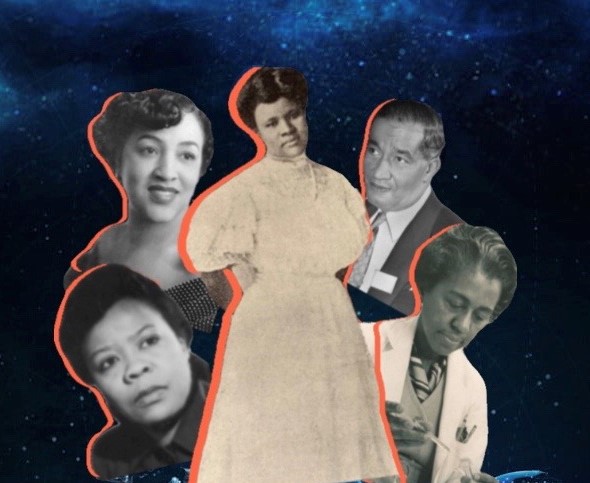
Science Rewind: Notable Black scientists and inventors throughout history

Content warning: Anti-Black racism and discrimination

Black people have long been barred from academia and entrepreneurship opportunities due to institutionalized racism and prejudice. In honour of Black History Month, The McGill Tribune highlights notable scientists and inventors who succeeded in making important scientific progress in spite of systemic anti-Black racism. 

Madam C.J. Walker (1867-1919)

Walker was one of many Black women afflicted with scalp ailments in the early 20th century. Exposure to harsh lye soap and sulphur, commonplace at the time among laundresses like Walker, contributed to severe hair loss. In 1904, she started working as a sales agent with Annie Turbo Malone, a Black chemist and entrepreneur who designed hair products specifically for Black women. With the help of her four barber brothers, Walker developed a scalp conditioning and healing formula by experimenting with both store-bought and homemade products. She used this to launch her own business and embarked on a successful door-to-door marketing campaign. Walker expanded her line and went on to launch a factory and salon. She employed 40,000 other African-Americans during her lifetime and pursued a wide variety of philanthropic work.

Frederick McKinley Jones (1893-1961)

Despite only having a sixth-grade formal education, Jones received 60 patents over the course of his life, with the majority of his work focussing on long-term refrigeration. Having worked as an automobile mechanic and an electrician, Jones’ first inventions were designed for the motion picture industry such as developing a contraption that combined moving pictures with sound. In 1935, he turned his focus to food transportation, creating a first-of-its-kind system for automatic refrigeration in long-haul trucks. He expanded his work to invent a variety of other devices, including a portable X-ray machine and a mobile air conditioning unit used for blood and medication storage.

Mary Beatrice Davidson Kenner (1912-2006)

Kenner was born to a family of inventors and continued the tradition by patenting five products throughout her life. Although she was accepted to Howard University, she was forced to drop out due to financial barriers. In 1957, she filed a patent for a sanitary belt with a moisture-proof napkin pocket, the design of which inspired modern menstrual pads. Kenner’s opportunity at commercial success was cut short when the company she hoped to work with found out she was Black and rescinded their interest in her products. She continued inventing throughout her life, including a patent for a walker attachment with a serving tray she designed for her sister who had multiple sclerosis.

Marie Maynard Daly (1921-2003)

After graduating magna cum laude with a bachelor’s degree in chemistry from Queens College, Daly decided to pursue graduate education. In 1947 at Columbia University, she became the first African-American woman to obtain a doctorate in chemistry in the U.S. She studied the composition and metabolism of the cell nucleus, and her post-doctoral research on the chemistry of histones provided fundamental discoveries to the field of chromosomal proteins. She was also the first person to identify a relationship between cholesterol and clogged arteries, which was essential in understanding the causes of heart attacks. Daly later became a professor at the Albert Einstein College of Medicine and continued her research until 1987.

Marie Van Brittan Brown (1922-1999)

Born and raised in the neighbourhood of Jamaica in Queens, NYC, Brown often felt unsafe alone in her apartment due to the area’s high level of crime. Building on the closed-circuit television technology of the time, she filed a patent in 1966 for a design involving a series of peepholes in her front door paired with an adjustable remote-controlled camera. A precursor to the modern home security system, her innovation allowed residents to see who was at the door, talk to them via a two-way microphone, and remotely lock or unlock the door. Although the patent was never put to commercial use, it has been cited in numerous other patents since, and Brown later received an award from the National Scientists Committee for her ingenuity.

Read the latest issue

Read the latest issue