

Latest News

Science & Technology

A future with 100 per cent green energy

In 2015, all United Nations (UN) member states adopted the Agenda for Sustainable Development, which comprises 17 goals that address the social, political, and economic aspects of sustainability to be achieved by 2030. 

On Feb. 9, a panel discussion titled “Can We Ever Achieve 100% Green Energy?” was held as part of the McGill Sustainable Development Goals week to raise awareness about the UN’s sustainability goals. A recording of the event can be viewed online.

The panel featured McGill associate professors David Wachsmuth from the School of Urban Planning, Ismael Vaccaro from the McGill School of Environment and Department of Anthropology, Chris Barrington-Leigh from the Institute for Health and Social Policy and the Bieler School of Environment, and Jeffrey Berthorson in the Department of Mechanical Engineering.

In their discussions, the panellists spoke about the ambitious vision of a global transition to 100 per cent green energy, including challenges and strategies to achieve it. Indeed, the speakers were confident in the feasibility of sustainable energy use. 

“From a technological perspective, I think it’s clear that we have most of the technologies needed,” Bergthorson said.

Barrington-Leigh mentioned that in one year, humans use approximately the same amount of power as what hits the Earth in solar energy. He argued that the green transition is not a physical impossibility but rather a matter of choosing a trajectory and coordinating efforts within a short enough time scale.

Speaking to the challenges associated with implementing sustainable approaches, Wachsmuth remarked that some systems which appear sustainable at a local level become more questionable when examined through a holistic lens. For example, cities that invest in green initiatives such as urban transit and cycling infrastructure tend to attract wealthier demographics, which impacts affordability and leads to gentrification

“Cities [such as Vancouver] that are understood to be leaders in green transition [are] de-materializing their local economies,” Wachsmuth said. “They redistribute a lot of their environmental impact to, say, China, which is producing the stuff that we consume in supposedly green cities.”

Vaccaro raised similar concerns and stressed the importance of learning from history to avoid repeating the trend of displacing the costs of innovation onto disadvantaged regions. For instance, waste and recycling are largely handled by private industry in Canada and much of it ends up being shipped to Southeast Asian countries.

“If you look at history, every single energy revolution [such as] Hydropower, coal […], nuclear energy, [was] designed to respond to the needs of the cities,” Vaccaro said. “The cities become the centres […] and all the rural areas around them feed them. And many of the problems, including landfills, are things that the city exports.”

The speakers emphasized the complexities of coordinating global efforts as well as persuading influential institutions to invest in sustainable long-term solutions over shortsighted conveniences. 

Barrington-Leigh argued that ambitious economic investments in green energy by governments are nonetheless justified, citing the pandemic as an example that has incurred large costs but will pay dividends in the future.

“When the costs are so large to not doing anything, […] once we have these big-picture, well-coordinated plans, we’re allowed to spend a lot on [them],” Barrington-Leigh said. 

Bergthorson suggested that corporations are often the slowest to make green changes and will not shift towards sustainable practices without incentivizing drivers. 

Wachsmuth further argued that environmental concerns are often interrelated with social issues. Social justice movements, such as activism for affordable housing or improved transit development, are also directing political energy towards sustainability.

Barrington-Leigh stated that helping individuals come on board with sustainable changes must go beyond apocalyptic narratives or reciting statistics. Instead, people should be encouraged with positive reassurances of a better world within new sustainability parameters.

We [must] really give ourselves the liberty to think freshly about how life could be and what we want,” Barrington-Leigh said. “ It’s only fair to the large segment of the population which is more interested in the end of the week than the end of the world.”

Sports

Racism is all too prevalent in professional sports

Content warning: Racial discrimination and hate speech

When thinking of sports, many people like to remember the epic highlights and the feel-good comeback stories. What is often overlooked is the systematic oppression that underrepresented groups have faced in sports over the years. Black people in particular have faced significant racial barriers in sports, and the fight is still ongoing. 

Baseball is one of numerous sports with a deep-rooted legacy of racial segregation. Although Jackie Robinson was the first Black player in Major League Baseball, Moses Fleetwood Walker was actually the first Black professional player in the sport. Fleetwood Walker was the catcher for the Toledo Blue Stockings in the American Association of professional baseball. He played minor league baseball until 1889 when the “Color Line” was enforced and would remain in effect until the arrival of Jackie Robinson in 1946. The Color Line excluded Black players from Major League Baseball and its affiliated Minor Leagues. 

Jackie Robinson would break the colour barrier permanently, although racism in baseball was still rampant. In 1946, Robinson joined the Montreal Royals, the Brooklyn Dodgers’ second team. He was promoted to the Dodgers in 1947 and became the first Black player in the MLB. 

Despite Robinson’s exceptional talents, he received anonymous letters threatening his life, violence against his wife, and abduction of his son. The senders of these hateful messages were not limited, however, to baseball fans. The Philadelphia Phillies’ manager and players shouted racial slurs at him when he was at bat and the St. Louis Cardinals threatened to go on strike if a Black player was allowed to play in the major leagues. Even Robinson’s own team rejected him at first until his achievements and attitude forced them to rethink their racism. He was named National League MVP in 1949 after leading the league in hitting with a .342 average, 37 stolen bases, and a career-high 124 RBI. 

Robinson was forced to prove to the professional baseball community that he belonged there. He had to be the best in order to overcome the prejudices held by most players and non-Black fans. 

Today, only eight per cent of Major League players are Black. Derek Jeter, the manager of the Miami Marlins and former shortstop for the Yankees, is the only Black manager in the MLB. This issue of representation is not just prevalent in the MLB—numerous professional sports leagues are seriously lacking representation. 

The NHL runs a campaign called “Hockey is for Everyone,” yet the league has a history of racial exclusion and violent ridicule from fans. In 1958, when Willie O’Ree stepped on the ice for the Boston Bruins in a game against the Montreal Canadiens, he became the first Black player in NHL history, over 40 years after the league’s founding. Throughout his career, he faced racial abuse from fans, players, and coaches. He detailed his experiences in an interview during the 22nd Anti-Defamation League conference in Boston. 

“Every time I went to the ice, I was faced with racial slurs because of my colour, and my brother taught me names will never hurt you unless you let them,” O’Ree said. “I had black cats thrown on the ice and told me to [go] back to the cotton fields and pick cotton.”

Racial abuse in the NHL is not just an issue of the past. In 2011, when Wayne Simmonds was playing for the Philadelphia Flyers, he had a banana thrown at him by a Detroit Red Wings fan in an exhibition game in London, Ontario. In 2012, after Washington Capitals forward Joel Ward scored an overtime winner, knocking the Bruins out of the playoffs, he was bombarded with racist abuse from Boston fans on social media. Even this year, when New York Rangers prospect K’Andre Miller participated in a question and answer session with fans on Zoom, he was repeatedly harassed with racist taunts. As much as the NHL wants to believe that “hockey is for everyone,” they continue to facilitate anti-Black racism, proving that professional hockey, even today, does not have the best interest of racialized players in mind.

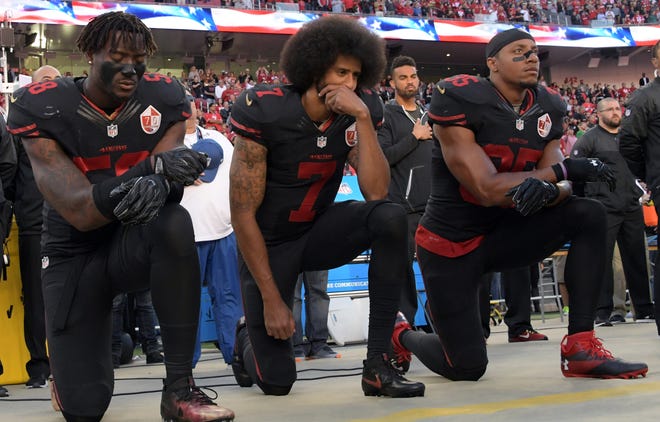
The NFL has had perhaps the most public recent protests regarding police brutality and the oppression of BIPOC. In 2016, 49ers quarterback and activist Colin Kaepernick knelt during the national anthem in solidarity with marginalized communities that did not have a platform to speak out about racial oppression. This came after Kaepernick was seen sitting during the anthem in the preseason games. When confronted by the media, he explained that he would not stand until the anthem represented something to be proud of. 

“This stand wasn’t for me,” Kaepernick said. “This is because I’m seeing things happen to people that don’t have a voice, people that don’t have a platform to talk and have their voices heard, and effect change. So I’m in the position where I can do that and I’m going to do that for people that can’t.”

Needless to say, Kaepernick’s resistance was met with criticism from every corner of the sporting world. In an interview with ESPN, Saints quarterback Drew Brees expressed his discontent with Kaepernick’s actions. 

“[T]here’s plenty of other ways that you can [speak on important issues] in a peaceful manner that doesn’t involve being disrespectful to the American flag,” Brees said.

Indeed, Kaepernick’s actions resulted in comments about him being unpatriotic, anti-American, or anti-military. NFL Commissioner Roger Goodell also disagreed with Kaepernick’s kneeling during the anthem, deeming the flag to be sacred and kneeling to be unpatriotic. 

The backlash due to Kaepernick kneeling and his subsequent explanations stems from the avoidance of racial discussions when political protests take place in sports. In a 2019 study that explored the responses of students to the NFL anthem protests, researchers found that some white students’ responses demonstrated an avoidance of race in political discussion, even when discussing racially-charged political protests. 

Even the NBA, widely considered one of the world’s most progressive professional sports leagues, can do better to address racism and discrimination. 

Ever since its founding in 1946, players in the NBA have faced racial injustice. In 1950, when Chuck Cooper became the first Black player to be drafted into the NBA, fans believed that Cooper should not play in the NBA. In 1956, the Celtics drafted Bill Russell, who would be the first Black NBA superstar, winning 11 NBA Championships in his 13 year career. Throughout his career, however, Russell’s house was vandalized with graffiti of racial slurs, a burning cross, and defecation. 

More recently, Marcus Smart, a point guard for the Boston Celtics, wrote an article in the playerstrib detailing the hate he has received from basketball fans, including a specific incident where a woman called Smart a racial slur in front of her young son. 

Smart is not the only player to face racial violence and discrimination. Utah Jazz fans are known for using racial hate speech against Black players. One fan told Russell Westbrook to “get down on [his] knees like he used to,” while another fan repeatedly shouted derogatory terms at Westbrook before a playoff game in 2018. 

Black representation in the NBA front-office is also severely lacking. While Black players make up 74.2 per cent of the NBA, there are only four Black head coaches and eight Black managers in the entire league of 30 teams. Although the NBA may be the most progressive league in the world in terms of player activism, Black representation is still desperately needed amongst team management.

Arts & Entertainment, Film and TV

Framing Britney Spears, again

In 2008, the L.A. Superior Court granted Britney Spears’ father, Jamie Spears, financial conservatorship over Britney, allowing him to control her finances. Thirteen years later, Jamie remains Britney’s conservator. Framing Britney Spears is a New York Times documentary following Spears’ tumultuous life and her fight to end her father’s conservatorship. Despite being the focal point of the film, Spears herself is not part of it. 

As mainstream media slowly but surely begins to embrace feminist values, with it comes increasing sympathy for Spears. Although many viewers are treating this film as her redemption, it should not be. It is her story, but it’s not told in her own words. Spears responded to the film on Instagram.

“No matter what we think we know about a person’s life it is nothing compared to the actual person living behind the lens,” Spears wrote.

It is unclear whether Spears is referring to the lens belonging to the paparazzi, or the New York Times. Perhaps it’s both, because the irony is this: At the end of the day, the public is still talking about Spears and is endlessly fascinated with her personal life, and yet, she still has no voice on the trauma she has faced throughout her career. 

Spears has expressed gratitude for the #FreeBritney movement, but it is difficult to see how this documentary helps Spears in her fight against her father’s conservatorship. More sympathy from the public might mean more sympathy from a judge, but #FreeBritney activists were already applying pressure on the L.A. Superior court to relinquish Jamie Spears’s conservatorship before the Times aired the film.

However, there are a number of reasons why this documentary does not belong on the let’s-speculate-about-Britney-Spears’-personal-life shelf.

For one, Framing Britney Spears is building some much-needed sympathy for Spears. Fans are currently demanding celebrities who mistreated Britney to apologize. 

Further, it lays bare how toxic paparazzi culture was, and still is. In one clip, paparazzi are seen packed into a gas station waiting for Spears to exit the bathroom. In another, she is seen crying in a restaurant as onlookers press on. An interviewer asks Daniel Ramos, an active member of the paparazzi, if their work affected Spears at all. 

“Working on her for so many years, she never gave a clue or information that [said] ‘I don’t appreciate you guys,’ or ‘leave me alone,’” Ramos says. 

Additionally, the film serves as a reminder that Spears faced harassment from not only the paparazzi, but also from the general public. Within the last decade, the public refused to view a woman in control of her sexuality as none other than a threat to their children. In a clip of Diane Sawyer interviewing Spears, Sawyer justifies a mother’s claim that she would shoot Britney if given the chance because of how hard it is to be a parent. From all angles, Spears was a target for criticism and hatred. 

Although the film has the power to sway public opinion in favour of Spears, it still inadvertently forces Spears—a woman who has suffered incessant public scrutiny—back into the limelight. One thing is for sure: Any piece of media with Britney Spears in the title will always do well because it satiates the public’s obsession with her private life. It’s clear that the filmmakers respect Britney—they are careful not to speculate about her life too much—but if their goal, truly, was to humanize Spears, they should have waited until she is ready and able to tell her own story.

Britney’s friend, chaperone, and former assistant Felicia Culotta alludes to the fact that this film is not Britney’s redemption. Culotta guides the filmmakers around her Mississippi home, the walls plastered with framed records and photos of her and Britney.

“One reason I agreed to do this interview is so we can remind people of why we fell in love with her in the first place,” Culotta says. “I’m excited for the time she’ll get to share her story [….] Everything will fall into place.”

Consultation
McGill, News

Board of Governors discuss preparations for in-person classes

McGill University’s Board of Governors (BoG) convened for its first meeting of the Winter 2021 semester on Feb. 11, where it discussed plans for the Fall 2021 semester and McGill’s key performance indicators in multiple areas, such as academics and sustainability. Notable topics of the meeting included the Building and Property Committee’s report on the New Vic Project, the Fiat Lux Library Project, the Stewart Biology West Wing Redevelopment project, as well as a report by the Finance Committee regarding the 2022 budget.

At the start of the meeting, members of the Board discussed whether vaccination would be mandatory for those hoping to return to campus after the summer. They also deliberated the ongoing preparations for the Fall 2021 semester, and how in-person activities will be held during the rest of the Winter 2021 session. Provost and Vice Principal (Academic) Christopher Manfredi raised concerns that international students may have for the return to in-person activities in the fall and shared the Office of the Provost and Vice-Principal Academic (OPVPA)’s plans to facilitate a smooth transition.

“We are actively working on our scenarios for the fall,” Manfredi said. “We know that Fall 2021 won’t look like Fall 2019, but it also can’t look like Fall 2020. We are looking at what the thresholds would be for in-person teaching activities, and how we can reconfigure our course schedule and our use of classrooms to give us maximum flexibility. Our objective is to have as much happen in-person on campus in the fall as we can.”

The Board assessed the various ongoing construction and renovation projects at the university. After the Building and Property Committee provided a brief update on the New Vic and Fiat Lux Library projects, the Board approved a request to proceed with the Stewart Biology Building West Wing’s redevelopment, which includes a full interior renovation. 

Vice-Principal of Administration and Finance Yves Beauchamp addressed budgetary adjustments necessitated by COVID-19, such as ventilation upgrades.

“In all our new designs [for the project], we will need to consider all of those [COVID upgrades],” Beauchamp said. “This will be something [our team] will be discussing [….] There will be staff working on [amassing] all the knowledge we can gather, [including] the best practices regarding space, mechanics, and flex times. We will [collect] all of that information in order to advise on future projects.”

Provost Manfredi presented McGill’s planned budget for the 2021-2022 year. For the 2021 fiscal year, the committee found no red flags in the expenditure or revenue reports that suggest exceeding McGill’s predicted deficit of $13.1 million. The Finance Committee will move the 2022 budget for approval at the Board’s meeting on April 22. 

Moment of the Meeting: 

Principal and Vice-Chancellor Suzanne Fortier discussed the Faculty of Management’s new Couche-Tard store. Built as a retail innovation laboratory, the Couche-Tard at the Bensadoun School of Retail Management uses new technologies which allow students to visit and shop without having to stop by a cashier. The new store is located on the ground floor of the Bronfman Building.

Soundbite: 

“The process in building the fiscal [2022] budget is proceeding as planned. In fact, we have essentially finished the preliminary work of working with the faculties and the main administrative units to understand their needs for the [2022] fiscal year in their position. We’ve gathered all the data and done all the consultations we need to do to start putting together a budget for [2022] [….] We’ve developed pessimistic, realistic, and optimistic scenarios [for] each of the [key drivers of revenue] [….] We are using those scenarios [to help build the budget].”  – Provost Christopher Manfredi on the process of developing the 2022 budget in light of the COVID-19 pandemic.

Basketball, Sports

Movie night: Five exceptional basketball movies

Sports have a long history on screen, and while there has been a long list of unfortunate misrepresentations of various sports, there has also been an abundance of fantastic movies that remind us of what we love about competition and the blood, sweat and tears that go into being the best at anything. 

At their best, these movies use basketball as a tool to develop character, raise stakes, and highlight hard work and pride. For anybody who needs a break from coursework or just misses pick-up basketball, The McGill Tribune has compiled a list of the best basketball movies to provide that cathartic release needed at the end of a long day of Zoom classes.

White Men Can’t Jump

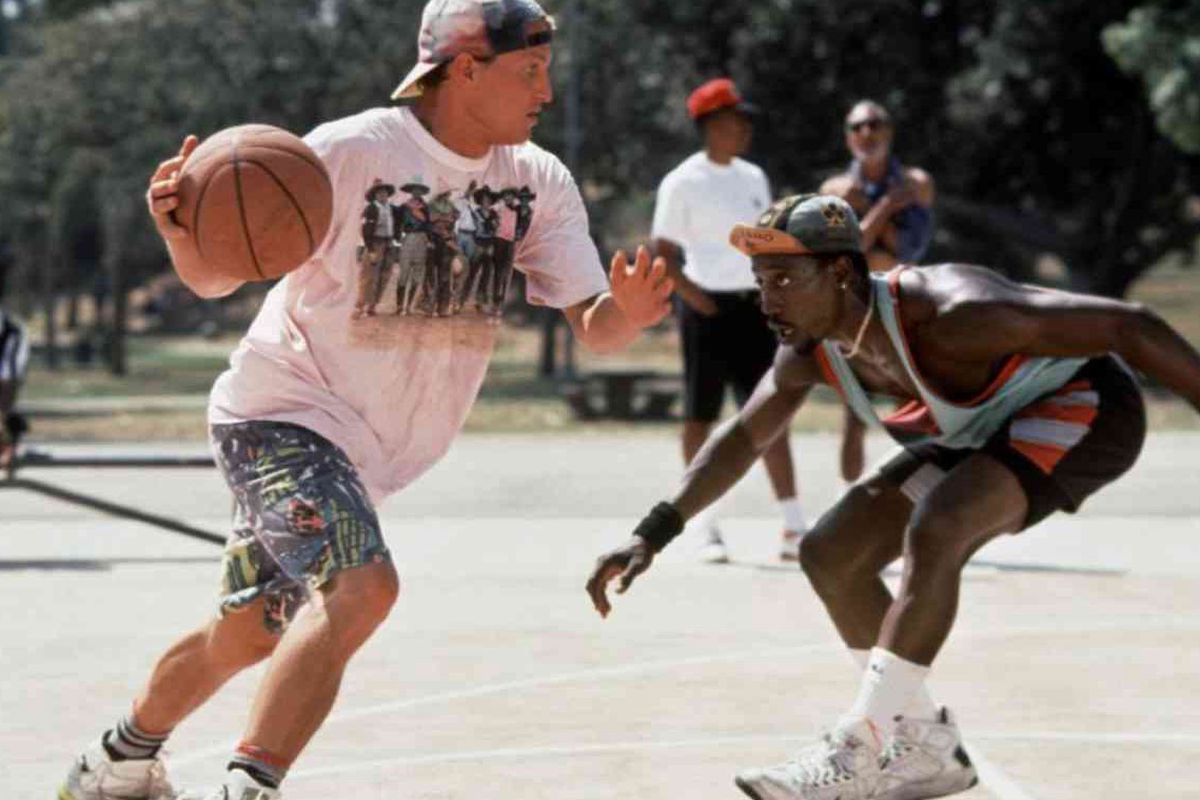
White Men Can’t Jump is a funny yet serious movie that tells the stories of two men making a living in several now-iconic neighbourhood courts in 1990s Los Angeles. 

Throughout the movie, Billy Hoyle (Woody Harrelson) takes advantage of the stereotype that he is not good at basketball because of the colour of his skin. This goes wrong when Sidney Deane (Wesley Snipes) catches on and looks to team up with Billy to scam unsuspecting players. 

To say this movie is about basketball is like saying The Godfather is about pasta. This movie is about cultivating friendships, making hard choices, and overcoming differences. On top of that, the movie features Rozy Perez and has fantastic basketball scenes. 

Love and Basketball

Love and Basketball is less about basketball than it is about a connection that binds two people whose love of the game surpasses everything else. Quincy McCall (Omar Epps) and Monica Wright (Sanaa Lathan) grow up next to each other, and while they come from entirely different backgrounds, they share a love for basketball. When they finally part ways after college, the two are unable to dismiss their connection to one another, and eventually rekindle their relationship after their professional careers. 

This movie gives a heartfelt depiction of the struggles that college athletes face when weighing the importance of an education against the glamour of a professional career, and the gender disparity in the world of sports.

He Got Game

He Got Game delivers a powerful, thought-provoking experience in line with what many have come to expect from director Spike Lee. This 1998 film features Jesus Shuttlesworth (Ray Allen) as a top high school basketball player, and his father Jake Shuttlesworth (Denzel Washington), a convicted felon, who tries to persuade his son to accept recruitment to the State Governor’s Alma Mater in return for his release from prison. 

This movie highlights several topics. Themes of inequality, corruption, and family duty are rife, and the cinematography and acting are exceptional, especially when considering this was NBA player Ray Allen’s acting debut. 

Semi-Pro

This masterpiece of a comedy was Will Ferrell’s last movie in a string of sports-themed comedies. Ferrell plays Jackie Moon, a one-hit-wonder musician who owns and plays for his own ABA Basketball franchise in Flint, Michigan. Will Ferrell’s antics and the absurdity of his team management make this movie a delight to watch, while covering an important moment in basketball history that occurred when the NBA acquired the ABA, consolidating the leagues, and marking the end of small market teams. 

Space Jam

It is difficult to write a list of the best basketball movies and not include this cultural touchstone. Space Jam begins with the alien abduction of Charles Barkley, Shawn Bradley, Patrick Ewing, Larry Johnson, and Muggsy Bogues. Their basketball talents are transferred to a group of aliens that form their own star team after they were challenged to a game by the Looney Tunes. With the help of Michael Jordan, the Tunes have no choice but to defeat the aliens in a game of basketball and save themselves from abduction. 

The star power of the cast and the combination of live action and animation make the film a spectacle to behold and a classic that holds up to this day.

content warning sa, McGill, News

Sexual Violence Awareness Week emphasizes healing and support for survivors

Content warning: Mentions of sexual violence.

The Sexual Assault Centre of the McGill Students’ Society (SACOMSS) held its annual Sexual Violence Awareness week from Feb. 2 to Feb. 6. The event aimed to provide a safe space for healing and to and equip attendees with tools to better support survivors. The week featured a variety of workshops and information sessions hosted on Zoom, culminating with their “Fire with Water” art show on Saturday night. 

The week kicked off with a workshop, reserved specifically for survivors, that aimed to provide a safe atmosphere for discussion on trauma and experiences of sexual violence. Facilitated by Malek Yalaoui, a Montreal-based advocate and special projects manager at McGill, the workshop explored artistic self-expression and invited participants to share their experiences and feelings about sexual violence. 

Feb. 3’s “Know your Rights” workshop focussed on the various reporting channels for disclosing experiences of sexual violence available to McGill students. Hosted by SACOMSS special events coordinator and U3 Arts student Kirsten Vanderlinde, the event detailed other support that might be helpful for survivors, such as counseling or attending survivor support groups. SACOMSS also emphasized other available routes outside of formal reporting. 

We decided to host this workshop in hopes of clarifying the very complex and long policies that McGill has in place for reporting sexual violence as well as to help individuals understand a bit more about what could happen if they choose to report to the police,” Vanderlinde wrote in an email to The McGill Tribune. “We encourage survivors to explore all their options and choose what they feel is best for them as there are often many factors to consider when reporting instances of sexual violence.

During the a workshop “Supporting Survivors,” speakers dispelled several common myths about sexual violence and shared advice on how to best support survivors. Sara Ghandour, SACOMMS special events coordinator and U1 Medicine and Health Sciences student, underscored the necessity of having strong support systems, especially as survivors may field unresolved trauma when speaking about their personal experiences.

Unfortunately, for many of us, it is likely that at some point in our lives [or] a loved one will seek support after experiencing an instance of sexual violence,” wrote Ghandour in an email to the Tribune. “These situations can be incredibly stressful, uncomfortable, and intimidating for survivors as well as their supporters [.…] After all, when a loved one comes to us for support, it is only natural that we would want to do our very best to provide them with it and avoid causing any more harm.” 

During “Consent and Comfort in Romantic Relationships,” speakers discussed the impact of sexual violence within relationships. Ghandour detailed how to set healthy boundaries with partners and establish preventative measures in an email to the Tribune

“The workshop was intended to create an open discussion on what it means to be in a healthy, comfortable relationship, where consent is regularly maintained, partners respect one another and each others’ boundaries, and both parties feel safe,” Ghandour wrote. “The workshop aimed to broaden preconceived notions on what [it] means to have consent in a relationship and expand from the traditional discourses surrounding consent with one time partners that we often hear about.”

The presentation also discussed the importance of consent in long-term relationships, noting that its absence can lead to sexual coercion and violence. Kennedy Randall, U2 Arts and SACOMSS volunteer, went over different scenarios of consent in non-romantic situations and highlighted the importance of respecting the personal space and boundaries of others. 

“Boundaries are an integral aspect to consent, and [are] important in achieving comfort and consent in relationships,” Randall wrote in an email to the Tribune. “Setting boundaries is an important part of any relationship, not just a romantic one [….] Ultimately, boundaries are to protect ourselves and our well-being, and to promote accountability in our relationships.”

**For more information on reporting instances of sexual assault please refer to the Office for Sexual Violence Response, Support and Education (OSVRSE) or the Sexual Assault Centre of the McGill Students’ Society (SACOMSS).

Chill Thrills, Student Life

Diving deep into Datamatch

Last year, I let an algorithm decide the fate of my love life: My relationship with my now-boyfriend was not the product of a chance encounter, but rather the result of a mathematical calculation. The forces at play will always be mysterious to me; it’s hard to imagine how a series of goofy questions can generate a lasting relationship with a compatibility score of 99.82 per cent.

It’s likely you’ve already heard about Datamatch, a Harvard University-based dating service that has a chapter at McGill. Considering my personal connection to this matchmaking service, I decided to take a deep dive into the platform.

Participants take an entertaining survey, and the team of “Datamatch Cupids” uses a secret algorithm to generate a list of matches for each participant. The matches are then released on Valentine’s Day. 

Anthony Schokalsky, U3 Arts, brought the matchmaking service to McGill, which is currently the only university outside of the U.S. to offer it. 

“I was scrolling through the Harvard subreddit in Fall 2018 and saw Datamatch being discussed and thought it was pretty cool,” Schokalsky wrote in a message to The McGill Tribune. “So I emailed the Datamatch exec asking them if they’d be interested in bringing it to McGill [….] I then became campus lead (or a “campus cupid” as we’re often referred to) and helped launch it at McGill for the first time last year.” 

According to Schokalsky, McGill is similar to some of the other universities that have taken part in Datamatch.

“I liked the idea of a university-exclusive dating app, which kinda felt like an early Facebook vibe,” Schokalsky said. “Plus, I feel like McGill has always had this tangential connection to East Coast [university] culture, so it just made sense to me that we’d be a part of Datamatch.”

Mariam Hegazy, U1 Arts, is a 2021 Datamatch McGill Campus Leader. According to Hegazy, the platform is great for those who have given up on dating apps. 

“It takes away the embarrassment and awkwardness of first contact,” Hegazy said. “Whether it’s a serious way to find love depends on the person […] but there’s a funny dynamic where someone will say that they’re doing it for jokes, but they actually do want to meet someone.”

Indeed, the joking nature of the questions helps to keep the platform lighthearted. 

“Campus leads make the questions, using those from previous years as inspiration. We made it McGill specific and we tried to inject a lot of humour in the air,” Hegazy said.

With campus activity shifting online this year, Datamatch now allows users to share their location and offers the option to participate in virtual dates.

“Participation numbers have more than tripled this year,” Hegazy said. “There’s an increase in the desire to meet people now [that] you don’t get that same social interaction these days, and people are really vying for that, so the demand has definitely gone up.” 

A glance at the Datamatch Instagram page shows McGill to be in fourth place with 1993 total individual users as of Feb. 10, just a few places behind Harvard University. 

Unlike other dating apps, the limited number of choices on Datamatch also encourages participants to contact the matches they do have, pushing them to “shoot their shot.”

If that isn’t enough to sell the platform, perhaps the free food is. This year, Datamatch has collaborated with Montreal restaurants to bring all users discounts on meals, as well as offer a draw for couples to win a gift card. Among the restaurant sponsors are Chef on Call, Falafel Yoni, and Café Nocturne.

After my deep dive into Datamatch, I still haven’t uncovered the secrets of the algorithm. But maybe I don’t need to understand all the calculations and considerations in part responsible for my relationship. Maybe, that’s the beauty of it: Like the website says, the mysterious forces behind this matchmaking service are certainly open to interpretation. 

Creative

The T: “Tier 2 Rollout and Schulich COVID-19 Risk” Feb. 12

This week on the show:
• McGill announces gradual rollout of ‘Tier 2’ academic in-person activities
• Some Schulich students allege that a recent in-person ensemble rehearsal posed a COVID-19 risk

Episode links:
• McGill plans to implement Tier 2 in-person academic activities, by News Editor Kate Addison
www.thetribune.ca/news/09-02-2021/

• Beware of McGill’s hazardous reopening plan, by The McGill Tribune Editorial Board
www.thetribune.ca/opinion/beware…-plan02092021/

Host: Sequoia Kim, News Editor
Guest speaker: Kate Addison, News Editor
Podcast Producers: Multimedia Editors Sarah Ford & Alex Hinton, Creative Director Aidan Martin, Editor-In-Chief Helen Wu
Artwork design: Design Editor Chloe Rodriguez

Creative, Video

Connecting on CourseLnk

Staff producer Noah Vaton speaks with Seb Danson, a second year computer science major who partnered with his friends to develop CourseLnk, an app designed to help students connect with their classmates.

Features

Our collective impulses

As students, we often become accidental archivists: Whether it be old class notes or miscellaneous campus merch, our lives are often full of these collections. Sometimes, the collections that initially appear to be trash become treasured. Students also move a lot, resulting in an annual cycle of packing and unboxing, which makes it difficult to sustain one’s collections. Getting rid of belongings should be easy, but sometimes parting with the things one spent time and money collecting seems impossible.


I have been collecting books ever since I first learned to read, and it was not until I moved away for university that I even considered giving them up. Moving halfway around the world to attend university sounded like an adventure, until I realized that I had to fit my whole life into two 23-kilogram suitcases. I had not reread many of the books in my collection in yearsbeing too busy with academics, life, and discovering new booksand they were certainly too heavy to transport to a new continent, just for them to collect dust. When I was younger, I defined myself through my books, as they offered me much needed company and adventure. While it was daunting to say goodbye to something I had treasured for years, moving away and travelling gave me a new perspective.

The tendency to collect is certainly not restricted to me, however. In fact, humans have been collecting things ever since they developed the ability to store more things than necessary for basic survival. The different objects people collect as well as the motivations behind these collections intrigued me, so I began investigating what factors inform this phenomenon.

Most human behaviour like collecting is rooted in biology and evolution, evolved from years of survival and self-preservation. Richard Koestner is a professor at McGill’s Department of Psychology whose research focusses on personality and motivation.

“There is an evolutionary explanation that has been offered for almost all human behaviors,” Koestner wrote in an email to //The McGill Tribune//. “I would guess it is largely genetic and […] does confer some broad fitness advantage to individuals, and that there is an advantage to groups if there are some people [present] who collect and organize things.’’

Read the latest issue

Read the latest issue