Latest News

McGill, News

McGill Board of Governors discuss potential declining international student rate

At their Oct. 1 meeting, the McGill University Board of Governors’ (BoG) passed revisions to the university’s Gift Acceptance Policy, stating that accepting gifts does not mean the university endorses the donor’s positions. It also discussed the status of student enrollment, McGill’s anti-Black racism action plan, and heard reports from four committees, notably the Building and Property Committee, which outlined its request to proceed with the development of the Fiat Lux Library Project.  

During the open session of the meeting, Principal and Vice-Chancellor Suzanne Fortier remarked on concerns about the potential decrease in international student enrollment due to the COVID-19 pandemic. She and Associate Provost (Teaching and Academic Programs) Christopher Buddle discussed complications posed by the closure of the Canadian border and its impact on student enrollment for the upcoming Winter semester.

“The decline in enrollment in international students does seem to be mostly in first-year students,” Buddle said. “As the principal said, many of these students enrolled […] with the hope that they would be able to come to Canada […] sometime during the fall or at least during the winter […] and the difficulties in getting coordination from the federal and provincial governments on that does raise a real danger that those students will […] decide that Canada isn’t a good place for them […] and they’ll go somewhere else.”

Following these remarks, Marc Weinstein, Vice-Principal of University Advancement, presented his memorandum on a revised Gift Acceptance Policy. Weinstein explained that the policy, which has not been revised since 2014, needs to be updated to take into account the new technologies for donations.

“We’ve seen, over the last couple of years, an increased number of requests from donors to provide potential philanthropy through new giving vehicles, which we didn’t anticipate in the first gift acceptance policy,” Weinstein said. “[With] the fact that there’s more public scrutiny related to McGill’s individual corporate donors, we felt that we really had to revise McGill’s Gift Acceptance Policy.”

The revision to the Gift Acceptance Policy includes a definition of what constitutes a gift, what types of gifts McGill is willing to accept, and the clarification that a gift is irrevocable once given. 

“We’ve added mention that the acceptance of gifts does not mean the university endorses or approves of the donor’s views, opinions, or businesses or activities,” Weinstein said. “We clearly specify that endowments should be […] managed by the university.”

Moment of the Meeting:

Principal Suzanne Fortier announced a historic moment for McGill: The official opening of McGill’s medical campus in Outaouais. Fortier noted that the program is extensive, allowing those living in the region to complete their entire medical school track at the Outaouais campus, and the program is being delivered completely in French. 

Soundbite: 

“This week, the McGill’s action plan to address anti-Black racism was shared with the community [.…] It’s being implemented, and there’s been a lot of consultations with our community, particularly our Black community, on this plan [….] There are very important initiatives that are being put in place in response to what we see as continuing racism particularly against Black people.” — Principal Suzanne Fortier, on the status of McGill’s efforts to address anti-Black racism. 

Student Life

A productive day in quarantine

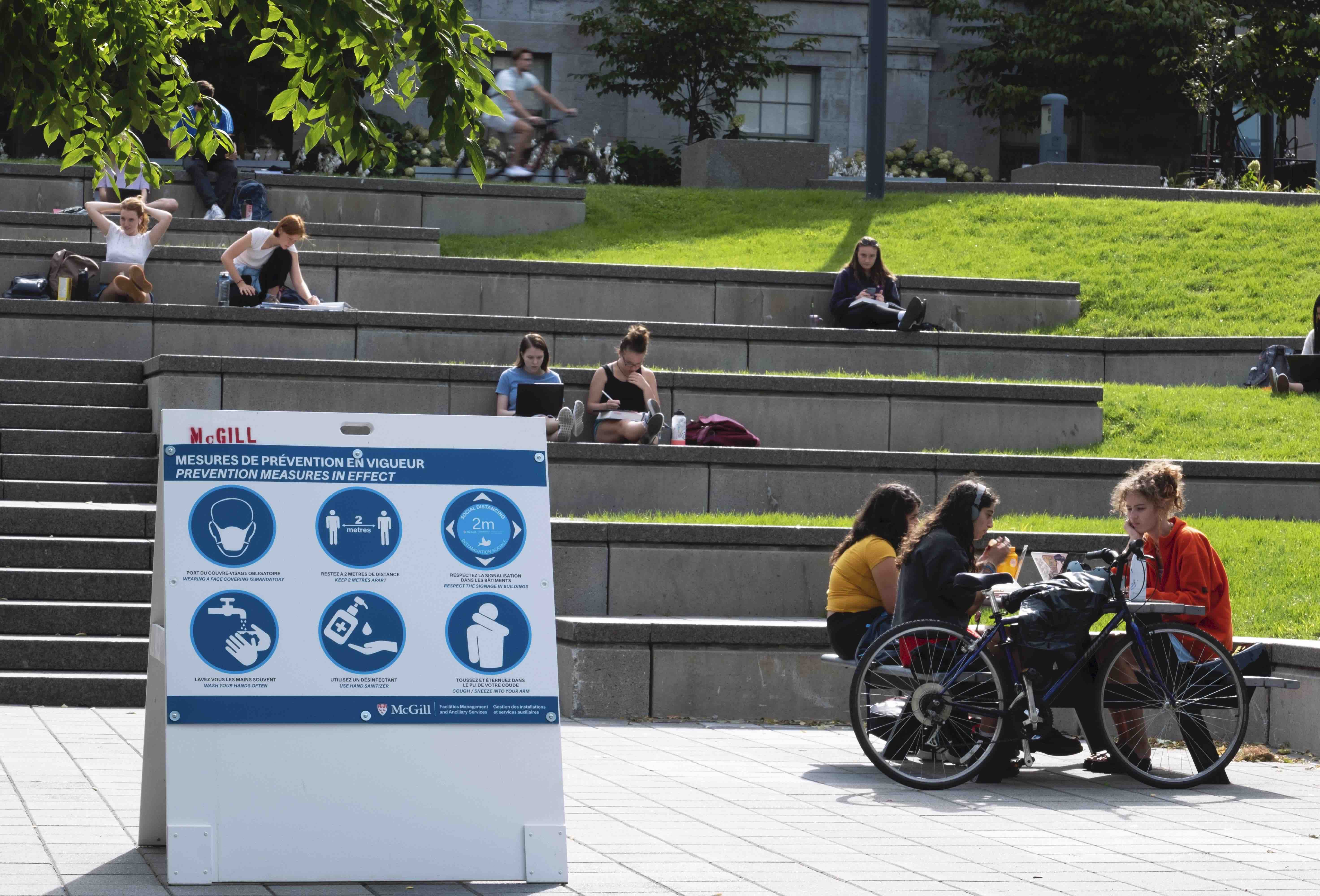
With Montreal’s recent re-entry into the red zone, students now find themselves back in quarantine mode. Whether isolating due to exposure to COVID-19, quarantining after testing positive, or simply limiting their contact in accordance with provincial recommendations, students in Montreal will be spending more time indoors during the coming months. Understanding how hard having a productive day in quarantine can be, The McGill Tribune has compiled a list of ways to make the days less dreary with easy tips to maximize time, space, and brain capacity. 

Divide up your day 

While this may seem tedious, giving structure to your day will help separate school from free time and establish a consistent and healthy routine. Some psychologists have found that people are more productive when they map out their goals and consider how long tasks will take. One way to do this is by using the Pomodoro technique, in which students set a timer for 25 minutes and work uninterrupted during that time. After the 25 minutes are up, students can schedule an allotted amount of time for a break. This technique is also great for planning out a day to ensure ample study and free time. 

Make time to go outside 

Whether through a porch or outdoor space, it is important to remember to get fresh air daily. Especially with the colder months approaching, ensuring time outdoors will not only increase one’s vitamin D levels, but will also help to refocus the day. Taking a walk, playing frisbee with housemates or family in the park, or even just sitting on a stoop can help relieve anxiety and may improve some feelings of isolation. 

Don’t feel pressure to be persistently productive 

Many students assume that because they are home all day, they should be constantly productive, whether by working out, completing coursework, or applying for internships. As boundaries between work and leisure begin to blur, remember that pre-pandemic students had downtime commuting, walking to classes, and enjoying wine nights with friends. A great way to relax and feel connected to friends is by scheduling video chats. Be it while students are eating or just hanging in their rooms, scheduling time out of their day for socialization can help break up working hours while still maintaining a healthy work-life balance.  

Study outside of bed

Separating study space from sleeping space is extremely important for students’ mental well being. The more time people spend in bed, the longer it generally takes for them to fall asleep and the more they tend to associate their bed as a workspace, rather than a place to sleep. Studies also show that working in bed is vastly unproductive, as limited space decreases focus. Studying in bed also creates a negative feedback loop wherein students have trouble falling asleep, and as a result, struggle to stay productive during the day. By designating an area to study, students will have an easier time staying focussed, and an easier time getting a full night’s rest.

Set limits on social media usage 

Without the social pressure of judgmental eyes in McLennan or professors banning phone usage in class, it is easy for students to scroll through social media while doing schoolwork from the privacy of their living space. By trying to limit social media usage through their device settings, or tracking their screen time through apps like OFFTIME and Moment, students can improve their focus in class by being their own parents and practicing self-control. 

Take time to meditate 

While this may feel like a waste of time, everyone has an extra seven minutes in their days to set aside. After only a week of meditating each morning, students may begin to see its positive effects. Waking up and meditating by using a guiding app, such as Headspace, Calm, or Insight Timer, has been shown to improve cognition, memory, and temper. Additionally, the McGill Student Wellness Hub and The Office of Spiritual and Religious Life offer free online meditation tools. By setting a daily reminder and incorporating this into a morning or night routine, students can improve their work habits and motivation.

Montreal, News

Growing COVID-19 case count pushes Montreal into the red zone

Quebec’s provincial government announced on Sept. 30 that Montreal is now one of three zones in the province under a red alert due to its rapidly growing number of COVID-19 cases. From Oct. 1 to 28, the city will enforce new restrictions on public and private gatherings designed to limit in-person contact in an attempt to minimize the effects of the pandemic’s second wave. 

The red zone is the highest level of alert according to Quebec’s colour-coded scale. Zones are determined based on indicators such as regional case count, hospitalization rates, and public health capacities. With 1,107 new cases in Quebec reported on Sept. 26 alone, public health officials recommended a 28-day partial lockdown to promote public health and safety in the Montreal community. 

Under the red zone restrictions, various public spaces will be closed, including bars and restaurants. Public and private gatherings, even outdoors, are prohibited, and residents are expected to limit their social circle to those living in their household. 

Although restrictions are currently set for 28 days, the province can extend this timeline if public health experts do not see substantial improvement in the number of new cases and rates of hospital admission. Public compliance with Montreal’s red zone restrictions in the coming weeks will be pivotal in limiting the spread of the virus. McGill Faculty of Medicine professor David Buckeridge sees the 28-day period as necessary for calculating the effects of the restrictions. 

“There’s a lag between when [an] infection occurs, [when] symptoms begin, and when the next person [becomes] infected,”Buckeridge said in an interview with The McGill Tribune. “Twenty-eight days will be about the time we start to see the effects of these restrictions.”

The possible extension of the 28 day restriction period, however, presents challenges for local businesses. McGill Retail Management and Operations professor Maxime Cohen sees a robust online presence as crucial for small businesses hoping to survive this next stage of the pandemic.

“Hopefully […] small business owners will understand [the] importance of digitization and moving to the e-commerce world,” Cohen said. “Several smaller [businesses] that still haven’t made [the] switch will unfortunately be hit quite hard.” 

Regardless of how long Montreal remains a red zone, the reduced number of students living in Montreal due to online classes has affected businesses that depend on student traffic. With McGill’s recent announcement confirming that the Winter 2021 semester will be delivered online, many small businesses will continue to depend on government subsidies to make up for lost revenue. 

Although closures are intended to prevent unnecessary exposure to the virus, Thom Haghigat, U3 Science, who tested positive for COVID-19 despite maintaining a small social circle, worries that this 28-day period could backfire. 

“When you’re going for a whole month without seeing any people, and then suddenly the restriction is taken off, I feel like a lot of people will end up [socializing] after the whole ‘red zone’ is over,” Haghigat said.

Student disregard for public health regulations has been a serious concern since classes resumed in September. The Milton-Parc community has had one of the highest neighbourhood COVID-19 case counts for the past two weeks due to indoor gatherings. Montreal public health physician David Kaiser, however, believes that universities have a responsibility to find ways to safely compensate for the lack of social interaction that comes as a result of online classes. 

“There’s a social component to being in university,” Kaiser said. “It can’t just be up to students to come up with solutions [….] The universities [need to] really help students identify how to make changes over the next few months so that people can stay sane [and] happy [while keeping] the risk of transmission […] low.”

Science & Technology

Exploring how artificial intelligence could redefine health care

Before Siri and Alexa, programmers created Eliza. Developed in 1964, Eliza was the first chatbot capable of recreating conversations between a psychotherapist and a patient. This chatbot pushed the boundaries of artificial intelligence (AI), a still-emerging field at the time, into the domain of health care. Despite researcher’s best efforts, the integration of AI into medicine was slow in the following decades. This slow progress accelerated, however, when the global COVID-19 pandemic challenged health care systems’ abilities to treat larger populations in need of immediate attention. AI-augmented care has emerged as the leading solution to efficiently manage patients and apply the ever-growing collection of data to diagnostic medicine.  

Dr. Samira Rahimi, a professor in the Department of Family Medicine at McGill, is using AI to monitor senior residents in long term care (LTC) facilities in Montreal and Toronto. Her ongoing project, AiCoV19, funded by Roche Canada’s COVID-19 Open Innovation challenge, uses biosensors in smartwatches to continuously track potential COVID-19 symptoms in elderly patients.

“The goal is to integrate data from these sensors into an algorithm that can detect abnormalities in vital signs and predict an infection earlier,” Rahimi said in an interview with The McGill Tribune. “The biggest advantage of AI-based, real-time monitoring is how quickly a health care professional can be alerted upon detection of concerning signals.”

AI is often glorified as a solution to numerous problems, however it is not yet capable of spontaneous consciousness. Instead, AI learns within the algorithms it is given.

“What makes AI so powerful is its capacity to translate big data into an automated algorithm that captures complex relationships and trends,” Rahimi said.

One of the most challenging obstacles facing doctors and nurses on the front-lines of COVID-19 is the inability to process the magnitude of data constantly being collected and updated worldwide. Deep learning is a specialized category of AI that loosely resembles networks of neurons in an attempt to mimic human intelligence and complete tasks that require layers of information processing. AI has become the basis of multiple global tools being used to tackle the pandemic. One such tool was created by MIT data scientists to forecast infections and deaths. Leaving computers to the task of reading research papers on COVID-19 as well as collecting and predicting future trends provides physicians more time to look after patients.  

With mounting evidence supporting the benefits of AI in diagnostic support, patient monitoring, and personalized care, its strongest proponents still wonder why it has yet to be embraced on a wider scale. The answer to that question is complex, but for many, this hesitation can be attributed to open debates surrounding the right to information security and the further questions of ethics that come with big data projects. 

“Data access continues to be a barrier in AI adoption in health care,” Rahimi said. “AI project proposals undergo [a] rigorous process to seek approval. There is a lack of open-source data available to researchers, which is the most valuable asset for any developer. AI continues to be part of the few scientific fields where the practice of open-science is still heavily debated.”

Although the global pandemic has revealed the necessity of AI in health care, it is important to reflect on the long term opportunities for AI-augmentation in tackling health-related problems. According to the World Health Organization, the expected shortage of health care workers in North America is projected to exceed 14.5 million by 2030. Rahimi points out that the incorporation of AI technology can resolve some of these anticipated issues by expanding health care access, improving administrative efficiency, and providing insight into selecting the most appropriate treatment paths for each patient.

Ask Ainsley, Student Life

Ask Ainsley: How do I network remotely?

Dear Ainsley, 

I’m a fourth-year Arts student stressed about post-graduation life. I was under the impression that I’d have lots of networking opportunities in my final year of undergrad. However, since classes have gone online, I’m finding it hard to make connections with employers and professors. I’m worried I won’t have anyone to ask for letters of recommendation. How do I go about networking now that McGill is operating virtually? 

Sincerely, 

Scared Hopeless Youth (SHY)


Dear SHY, 

Thanks for sharing, and just know that it’s totally normal to feel overwhelmed right now! Although networking can seem more difficult during the pandemic, it’s definitely not impossible. While it’s always hard to get started, a good first step is to get reacquainted with old connections. Reach out to familiar mentors, friends, and professors. Since you’ve already made a first impression, these conversations may feel more natural and lead to new contacts, and even new opportunities. 

It may seem daunting to connect with professors virtually, but look at the situation from their point of view—they’re used to seeing their students in person, and now many are teaching to a sea of Zoom squares. Now more than ever, professors want to connect with students, so take advantage of this by connecting outside of class. Online office hours cut your commute time down to zero, making it easier to fit meetings with professors into a busy student schedule. It’s a good idea to come with prepared questions, as this will better acquaint your professors with you and your academic interests. It’s also beneficial to familiarize yourself with your professors’ research beforehand so that you know how they can best help you in your professional pursuits. If they get to know you and your enthusiasm for their field, they’re more likely to write you a strong recommendation letter. 

The remote semester can also be a great time to strengthen your online professional presence: Take some time to spruce up your CV, cover letters, and LinkedIn account. The Career Planning Service (CaPS) is a great resource for help with your CV and cover letter, and is currently offering online appointments. LinkedIn can be a great tool to get your name on potential employers’ radars, but make sure that you’re taking breaks to avoid becoming overwhelmed by the unrealistic expectations it often sets up as a social media platform. Nonetheless, you can still leverage it to your advantage. You can start by building a network of people with whom you have something in common: Peers with shared student organizations are great starting points. Once you have built a network that mirrors your real-life one, you can begin to leverage it for further connections. Identify some people in organizations or companies you’re interested in getting involved with, and reach out to intermediaries, which you can find through the “How You’re Connected” tool. From there, these intermediaries can introduce you to the people you’re looking to connect with. 

Now is also the perfect time to speak to employers outside of your home city, since most calls and interviews are conducted virtually. With more remote positions available now than ever, it is a great time to set your sights further afield.

Although online career fairs and networking events may seem awkward or uncomfortable, it is a good idea to attend them anyway. Decreased attendance in comparison to in-person networking events can work to your benefit: You’ll have more time to ask questions and build relationships. Remember that once you’ve been introduced to someone, it’s always important to follow up! Even just sending a quick follow-up email and reminding potential employers of your interest will make you more likely to stay on their radar. 

Finally, remember that networking can be daunting even in the best of times, so try not to let the difficulty of undertaking it online discourage you. Taking time to strengthen your job application materials or reaching out to professors can help you feel more in control of your future. Don’t worry if networking sometimes falls to the wayside—you can always return to it when you feel more energized

Good luck!

Ainsley


McGill, News

Collective agreement ratified at AGSEM’s TA General Assembly

The Association of Graduate Students Employed at McGill (AGSEM) held its Teaching Assistant (TA) General Assembly online on Sept. 30 to vote on the new tentative TA Collective Agreement (CA). After two years of negotiations, AGSEM’s Bargaining Committee presented the tentative contract to the AGSEM Unit 1(TA) membership. The meeting concluded with a secret ballot vote, with 89.91 per cent of members voting in favour of ratification.

TA Bargaining Chair Jessica Rose and elected bargaining committee members Jean-Philip Mathieu and Farid Attar have been in negotiations with McGill University since the previous TA CA expired in June 2018. During the presentation of the tentative contract, the bargaining committee briefed members on various sections of the agreement, including those concerning discrimination, harassment and sexual violence, retroactive pay, union rights, and employment procedures.

“[Article 6, on Discrimination, Harassment and Sexual Violence] was a negotiation that took a very long time,” Rose said. “Our mandate was to update this section to include the policy on sexual violence, which did not exist when we were […] negotiating […] the [previous] collective agreement. We wanted to expand the language that came from [McGill’s] sexual violence policy to be more specific to TA working conditions and to add additional protection when it comes to relationships between teaching staff and students, which applies to TAs in multiple ways.”

The two years of bargaining between the union’s committee and the McGill administration escalated to conciliation with a provincial mediator after McGill stalled on equity-related issues and retroactive pay for TAs. Over summer 2020, members of AGSEM’s Executive and Bargaining Committees prepared for the assembly, creating a presentation to help communicate the details of the bargaining process to the union members.

“This [was] a mountainous task, we knew this from the beginning,” Attar said.

With 89.91 per cent of the union’s membership voting in favour, the ratified agreement will now be brought by McGill’s Bargaining Committee to the McGill Board of Governors. Once both parties sign the contract, AGSEM will follow up with current and former union members to inform them of which changes they could be impacted by. In an email to The McGill Tribune, AGSEM President Kiersten van Vliet highlighted that there remains work to be done to improve the working conditions of TAs, and that this round of negotiations has helped set priorities for future agreements.

“A [CA], while such an important document, is never a guarantee without strong enforcement outside of negotiations and there are so many things the union needs to address that cannot necessarily be codified in that document—things related to changing the culture around this power differential between TAs and their course supervisors,” van Vliet said.

The Bargaining Committee will be preparing a report of recommendations for the next round of negotiations, which will begin after the new agreement expires on July 31, 2023. The committee’s report will also help maintain institutional memory of the most recent bargaining process. 

Rose cited higher engagement amongst TAs than ever before, attributing the jump in involvement to the creativity of the tactics that the members of AGSEM employed. In addition, she believes that issues such as the lack of adequate safety precautions and increasing focus on equity have helped to mobilize the student body to participate in the bargaining process.

“There were a number of barriers […] in this round of bargaining, [and] I expected COVID-19 to be the biggest barrier, but it has not turned out that way,” Rose wrote. “I believe that members voted overwhelmingly to ratify this agreement to affirm what we did achieve, and not to give up on what we have not yet achieved. As far as TAs are concerned, preparation for the next round of bargaining begins today.”

Basketball, Sports

The five biggest winners if the Los Angeles Lakers win the NBA Championship

With the Los Angeles Lakers closing in on their 17th NBA Championship against the injury-plagued Miami Heat, The McGill Tribune looks at who would reap the greatest benefits from the Lakers’ potential win. 

LeBron James

After a disappointing 2018-2019 season beset by a groin injury, LeBron returns to the finals for a historic tenth appearance, competing for his fourth NBA Championship title. Critics and fans alike have regularly pointed out Lebron’s poor finals record (3-6) when comparing him to Michael Jordan. While a fourth championship may not place him above Jordan in the GOAT debate, it will make him the only player to carry three separate franchises to an NBA championship. LeBron knows the significance of this title—regardless of the injuries to key Heat players Bam Adebayo and Goran Dragic, he will need this fourth ring in his quest to step out of Michael Jordan’s shadow.

Anthony Davis

Davis was ranked first by ESPN out of high school, drafted as the undisputed number-one pick after winning a national championship at Kentucky, and since the beginning of his professional career, has made six All-Star appearances and warranted three All-NBA first teams. Despite these accolades, Davis never had much playoff success with the Pelicans, losing to the Golden State Warriors in 2015 and 2018. Questions have always risen about Davis’ ability to lead a winning team and now more than ever, he needs to prove he can win. While Davis did not have much help in New Orleans, barring Jrue Holiday, he currently has a partnership with Lebron James. While Davis may not win the Finals MVP, if the Lakers emerge victorious, his maiden ring in the bubble will distinguish his career from the greats before him who failed to win.

Rajon Rondo

At just 21 years old, Rajon Rondo won his first championship with the Celtics in 2008, beating the Kobe Bryant-led Lakers in six games. Despite losing against the Lakers in a 2010 Finals rematch, Rondo was seen as the future of the Celtics. However, an Eastern Conference Finals defeat to Miami’s Big 3 saw Rondo being traded to the Dallas Mavericks for 3 role players and a first round pick. While his stints in Chicago and New Orleans gave him the nicknamePlayoff Rondo, he was never able to get past the second round. Winning his second ring with the Lakers more than 10 years later would truly solidify his legacy, reminding the entire league that he is still a savvy veteran leader, and one of the smartest basketball players in the league today.

Dwight Howard

Since his 2009 loss to the Lakers, Dwight Howard has failed to make it to the finals. After a short-lived and turbulent season with the Lakers in 2012, his stints in Houston, Atlanta, Charlotte, and Washington saw his career plummet from a franchise-player to an unwanted roster liability. After playing a crucial role against Nikola Jokic and the Denver Nuggets in the Western Conference Finals, Howard vowed to ‘take full advantage” of his return to the NBA Finals. If the Lakers win, Howard could redeem himself in the eyes of Laker fans and prove that he is a valuable defensive anchor on a championship-winning team. The win would show the league that he has grown from his mistakes as he enters what could be the last free-agency of his career.

Rob Pelinka

When the NBA first restarted in the bubble in August, reports surfaced that the General Manager of the Lakers, Rob Pelinka, had little support as the executive of the year, despite the Lakers taking the first seed in the Western Conference standings. Unsurprisingly, the under-appreciation of a front office is typical whenever LeBron is on a roster. However, the Lakers’ performance in the playoffs and finals highlights Pelinka’s success. After missing out on Kawhi Leonard late in free agency, he surrounded LeBron and Anthony Davis with versatile players such as Kentavious Caldwell-Pope and Markieff Morris. Analysts often overlook the efforts of the front office, but Pelinka should deservedly gain respect across the league as an established GM, rather than Lebron’s puppet. 

Commentary, Opinion

McGill must prioritize affordable student housing

Seeking out safe, affordable housing is often a significant source of anxiety for students, one that has only intensified due to the disastrous financial consequences of the COVID-19 pandemic. 

Montreal, in the thralls of a housing crisis, currently has an extremely low vacancy rate of about 1.5 per cent. Low vacancy rates are caused in part by a lack of social housing and increased properties dedicated to short-term rental services, such as Airbnb, thus creating a housing shortage and giving landlords the ability to refuse long-term rentals. By leaving apartments of the market for long time periods, landlords are able to increase rent significantly for future permanent tenants. As 50 per cent of McGill students come from outside of Quebec, McGill has a responsibility to ensure that students living off-campus have the resources necessary to find affordable housing. 

Increased rent prices combined with soaring unemployment rates due to the pandemic have created a storm of terrible renting circumstances for students. The issue is only becoming more pressing as support funds from the government such as the Canada Emergency Student Benefit (CESB) and Canada Emergency Response Benefit (CERB) are no longer available. On top of this, McGill does not provide institutionalized funding for student housing. Instead, Student Housing and Hospitality Services (SHHS), a completely self-financed entity, manages all student housing and does not fund student accommodations. This leaves behind first year students living on campus in March when they must search for their own apartments for the next year. To add to this, COVID-19 has made it exceptionally challenging for students to rent as it is now more difficult to tour apartments in person before signing leases. This will leave students with no other choice but to sign a lease before seeing their apartments and arrive in Montreal without knowing what to expect of their living conditions.

The housing information that McGill does provide comes in the form of a dismal webpage with little to no advice on renting for the first time in Montreal. Student Housing and Hospitality Services provides the website “places4students.com” as the only suggested resource for students to find apartment listings. According to an SHHS representative who answered the information hotline, the university neither screens posted listings on the site nor guarantees safe and scam-free rentals. This allows landlords to attract international and out-of-province students and present them with inflated rent prices because they have not been presented with an accurate representation of the cost of rent in Montréal.

The Student’s Society of McGill University (SSMU) is a valuable service for students looking to rent, aiding them where the university fails to deliver. Last year, SSMU developed an Affordable Housing Plan designed to educate and inform students of their rights as tenants. The mission of the Affordable Housing Plan is to protect students, who cannot be guaranteed fair rent in an open market, from exploitation by landlords. In addition to this, the plan collaborates with Montreal-based organizations to move forward affordable student housing development. SSMU has partnered with The Unité de travail pour l’implantation de logement étudiant (UTILE), a non-profit organization dedicated to the development of student housing in Quebec and strives to create locally-governed real estate projects that offer affordable rent. UTILE has funded much of the SSMU Affordable Housing Plan. A partnership with UTILE would be a crucial first step for McGill to ensure that its students have access to safe and affordable housing. By partnering with SSMU and UTILE, McGill has an opportunity to directly support the already-existing initiatives promoting the accessibility of sustainable student housing. 

SSMU, having limited resources and funding compared to the McGill administration, does not have the same leverage as the university. As COVID-19 leaves students in desperate need for McGill to take action towards securing affordable housing, McGill needs to extend resources to better educate students on their rights as tenants, and commit to advancing affordable student housing. 

McGill, News

10 out of 1726: Confronting McGill’s colonial past and racist present

McGill lost 10 per cent of its Black faculty when Art History professor Charmaine Nelson left to take up a new post at the Nova Scotia College of Art and Design (NSCAD) in July 2020. Of the 1726 tenured or tenure-track faculty at McGill, only 10 are Black—a figure unearthed in a report produced by Dr. Nelson and her students in her final undergraduate seminar at McGill titled “James McGill was a Slave Owner.” The report was released in June of 2020, during the wave of protests that swept across the world following the police murder of George Floyd. 

“I [was] 10 per cent of the black faculty,” Nelson said in an interview with The McGill Tribune. “If people aren’t horrified by that stat, I don’t know what will motivate them. Enough is enough. What does it say if the university that thinks itself the best in Canada has reprehensible under-representation of Black and Indigenous people in 2020? What does that say? This is a university with a diversity hiring policy. Can we not agree that the policy is not working?”

Nelson is an art historian, the first and to this day only Black professor in the discipline at any Canadian university. She began teaching at McGill in 2003, has published seven books, won a slew of awards and distinctions, and amassed a body of work that has consistently expanded the horizons of the burgeoning but perpetually neglected field of Canadian slavery studies. After 17 years at McGill, Nelson will take up her new post as Canada Research Chair at NSCAD, where she will develop and launch the Institute for the Study of Canadian Slavery—the first such institute in the country. 

“Working as [Nelson’s] doctoral student, I’ve always been so impressed with how she manages to spin straw into gold,” Chris Gismondi, a Ph.D candidate at McGill currently researching the history of slavery in Upper Canada, said. “She is such a valuable resource because there are so few people in [the country] with a specialized knowledge of slavery in Canada.”

During her final year at McGill, Nelson was struck by the university’s silence on its historical connection to slavery in the lead up to its bicentennial—a state of affairs she finds all the more galling for the glaring nature of these ties. James McGill, the wealthy Scottish merchant whose posthumous 10,000-pound bequeathment allowed for the founding of McGill University in his name, both enslaved people and invested in the slave trade. 

To date, only three Canadian universities have joined Universities Studying Slavery, a consortium advocating for universities to confront their ties to slavery and racism. Some members, including Brown, Dalhousie, and the University of Glasgow, have commissioned extensive task forces to investigate their own connections to slavery. As of now, all McGill has done in addressing its history is hire two post-doctoral fellows to conduct research into the university’s links to slavery, with no decision yet on what the school intends to do with their findings. 

“Brown, Harvard, Glasgow, Dalhousie have done mega-studies that take usually three to five years to do well [….] It takes money to do this properly,” Nelson said. “McGill’s commitment so far has been two post-docs.”

Nelson believes that a reckoning with Canada’s history of slavery and anti-Black racism is long overdue. 

“Canadians are so good at saying, ‘It never happened here, it happened in the USA,’” Nelson said. “You can go from kindergarden to university in Canada and never have anybody say to you that slavery happened here.”

Canadians have patted themselves on the back for a purported moral superiority to their neighbours down south. During Black History month, schoolchildren are taught to see Canada as a sanctuary for enslaved African Americans arriving through the Underground Railroad. This historical description leaves out the fact that Black and Indigenous people were enslaved in what is now Canada for centuries, only ending in 1833—something that few Canadians know and fewer still have had the chance to study. 

Nelson’s research has shown that although people of African descent have been in Canada since the 1600s, their presence, as well as their enslavement, has been written out of Canadian history. Nelson believes that this erasure has stunted not only the study of Canadian slavery but also the development of a broader conversation about anti-Black racism in Canada. 

“The thing people need to understand [is that] James McGill [was] not just a fur trader, he was a slave owner,” Nelson said. “We know he enslaved at least […] two Indigenous children and three Black people, and he was a West Indian trader. He’s not just exploiting enslaved people here in Montreal. He was also knowingly exploiting enslaved people in slave-majority contexts, [like] the anglophone Caribbean, and he understood, of course, who was harvesting the sugar and making the rum. So that’s part of where his wealth came from.”

McGill’s reluctance to acknowledge its ties to slavery prompted Nelson to investigate the matter herself.

“What redress, what reparations should be made for that? But this seems to be a conversation [the administration doesn’t] want to have,” Nelson said. “So I [said] ‘you know what?’ I’m going to have that conversation with my students and we’re going to generate recommendations, not to replace what McGill should do, but to urge them to take it on in an official capacity.” 

That conversation took the form of a seminar which aimed to present a report that included original, archival scholarship on McGill’s ties to slavery and racism, and a list of Bicentennary recommendations for the school to address systemic racism within the university. 

“We did a lot of work with slavery in Canada and Montreal specifically, uncovering a history that no one really talks about,” Nicholas Raffoul, U3 Arts, a student who was at the seminar said. “One of our assignments was transcribing a bill of sale of an enslaved person. A lot of them were actually James McGill buying or selling an enslaved African or Indigenous person.”

Nelson faced institutional racism at every step of her career. Her time with the department of Art History and Communication Studies at McGill was no exception. Nelson noted how the department created a hierarchy of the most important administrative roles, and decided to allocate positions based on seniority. 

“When it came to my turn, they jumped over me and went to get a white female colleague that was on maternity leave,” Nelson said. “They literally had to go find her in her house. They didn’t want me to be chair of the department.” 

Instead, Nelson was consistently pushed towards the role of Undergraduate Program Director (UPD), a role deemed less important within the department.

  “When I came up for full professor, the chair at the time said to me, ‘You don’t have enough senior [administration experience],’” Nelson said. “I was like, ‘well none of you have let me be GPD [Graduate Program Director] or the chair.’ Which is what they—my white colleagues—use in general, in order to be promoted to full professor. But they never let me sit in that chair.” 

She also asserts that her other administrative roles, which included running the Senate Equity Committee on Race and Ethnic Relations, were strategically ignored and undervalued within the department because they were primarily concerned with racial inclusivity and anti-racist practices at the university.

“It’s not written anywhere that the role of GPD is more important than UPD,” Nelson said. “It’s the people in my department that made that up and then constantly pushed me towards UPD and then, when I came up for promotion, used it as a way to say I didn’t have enough [administration experience]. So what, are you saying that I can never be a full professor because you guys decided I can’t be chair?”

Nelson thinks that her being outspoken on matters of race and gender equality played a part in the treatment she received within the department, as well as in how her work is perceived more broadly. 

“I have never been silent on any of these issues of racism and sexism that I experienced [in the department], and they don’t want to hear it,” Nelson said. “If I dare to speak honestly about my experience, they are implicated.” 

She alleges that this treatment is symptomatic of a pervasive attitude toward scholars-of-colour whose work is sidelined as subjective and unduly biased for focussing on issues of race.

“Are you objective?” Nelson said. “You are an embodied white person having a white experience in the world which you are claiming is universal. You are not objective either. You bring your own ideas to the job of chair as well.” 

Despite the surge of public interest in anti-Black racism over the summer, Nelson is doubtful about the prospect of change at McGill.

“There’s a pattern to the way that white Canadians typically respond to these moments, which is to speak in platitudes and misdirect our attention and to lay claim to progress or action that is not really progress or action,” Nelson said. “The barometer of anti-racist work being done has nothing to do with the good intentions of white people.”

For now, students will have to wait for Sept. 30, when McGill will release its “Plan for Addressing Anti-Black Racism” to find out if their concerns will be addressed.

“Is the moment different? I don’t think so,” Nelson said. “There was no plan, there was no goal, there was no timeline. McGill is beautiful at platitudes without a timeline. No goal, no timeline, nothing happens. If you don’t say at McGill we’re going to hire 100 black professors by 2025, you think they’re going to hire any?”


Creative, Video

Test-taking strategies for McGill students

Contributor Monica T. shares some strategies from her experiences with taking exams at McGill.

Monica is the creator of the Youtube channel “I wish I knew”, where she explores the skills and knowledge she wishes she had during her time at McGill University. She shares resources with the goal of encouraging others to pursue education. Find more of her content here.

Read the latest issue

Read the latest issue