

Latest News

Commentary, Opinion

The Indigenous Equity Fee must be increased

Increasing the Indigenous Equity Fee should be a popular suggestion.

The intergenerational strength and resiliency of Indigenous students attending McGill is remarkable. Indigenous students face a number of hurdles which make it less likely for them to end up pursuing post-secondary education—among these are systemic disadvantages that play into almost every Indigenous person’s life. 

Indigenous people living on reserve are less likely than non-Indigenous individuals to complete high school, which is a prerequisite for admission to any Canadian university. The percentage of off-reserve Indigenous students graduating high school, though increasing year by year, still lags behind. The reasons for this lie in a history of colonialism that has resulted in the impoverishment, marginalization, and despair on Indigenous peoples. Unsurprisingly, the proportion of Indigenous students living off reserve who receive a high school diploma is greater among those with no family history of forced attendance at residential schools than among those with a history of family attendance. Relative to the broader Canadian population, Indigenous peoples, for example, have higher incarceration rates, higher infant mortality rates, higher school drop-out rates, higher rates of smoking, alcohol, and drug abuse, and suffer a range of chronic health conditions at a higher rate than their non-Indigenous counterparts

All of these factors speak to the incredible dedication and perseverance of Indigenous students in their post-secondary educational pursuits. These students are examples for everyone to follow in terms of their strength and resilience in the face of adverse circumstances.

However, the mere fact of working hard and being admitted to university does not mean that Indigenous students are exempt from the effects of colonialism. In many cases, they find themselves in a setting that is altogether unfamiliar to them in language, culture, and practices. According to recent student consultations held by Students’ Society of McGill University (SSMU) Indigenous Affairs, Indigenous students face racism on a daily basis through in-person and online comments from their peers and are consistently singled out in classrooms to speak to Indigenous issues. Outside McGill, they must continue to contend with the needs of their families. Within McGill, Indigenous students struggle to access mental health services at a higher rate than the rest of the student population. In addition, they face these challenges against the backdrop of daily news reports about how the federal government continues to engage in contemporary colonization, while paying lip service to ‘reconciliation’ that never actually ends up happening. These factors are just some of the unseen burdens and additional hard work that Indigenous students put into completing their postsecondary education.

McGill can be made a much more hospitable place for Indigenous students. Students have already voted to do so by introducing the Indigenous Equity fee—the $1 semesterly contribution added to SSMU student fees to create the Indigenous Equity Fund. With this contribution, SSMU Indigenous Affairs has been able to make significant progress in improving the well-being of Indigenous students by making attending McGill more accessible to those living on nearby reserves, increasing the visibility of Indigenous peoples on campus through events and campaigning, and hiring additional staff to hold consultations with Indigenous students and analyze McGill policies and procedures. The consultations have proven what Indigenous students all knew individually and identified experiences that were, in fact, common to many. They demonstrated that while the Indigenous Equity Fee is already effective, we are still coming up short in ensuring the success of Indigenous students and their integration into student life on campus. If the fee were increased to $1.50, more meaningful work could be embarked on in addition to current projects, such as introducing more mental health support specific to Indigenous students, more outreach projects, campaigns combatting racism, and making Indigeneity more visible on our campus by supporting and funding Indigenous art. These efforts would leave McGill better positioned to respond to the challenges that Indigenous students themselves have said are active barriers to access.

McGill students should all come together to help ensure the success of every Indigenous student at McGill by voting ‘yes’ to the increase of $0.50 to the Indigenous equity fee. This will not only help ensure their own well-being by providing essential resources, but that of their families and communities as well.

Commentary, Opinion

McGill failed its exchange students amid the CoronaVirus crisis

Standing toward the back of the line snaking its way around the grocery store, my cart full to the brim with frozen foods and canned soup, was not the way I had expected to spend my semester abroad at the University of Copenhagen. The night before, the Danish prime minister announced that the country was effectively shutting down: Closing schools, encouraging public sector employees to work from home, and banning gatherings of more than 100 people. Immediately after the announcement, my social media were filled with photos of empty store shelves and long lines, leaving me anxious for comfort and support from familiar institutions.

While, of course, my initial fears about having enough to eat were exaggerated, the cacophony of announcements from countries all over to curb the COVID-19 pandemic were enough to stress anyone out., Italy, Spain, and South Korea were all taking drastic measures just as Denmark did, ranging from encouraging self-isolation to closing borders. Being without my family, in an unfamiliar country, made the situation even more stressful. Times of uncertainty generally cause people to lean back on the institutions that are supposed to support them. For me, McGill should have been one of these institutions. Instead, the administration’s delayed response contributed to my anxiety. This stress was a result of structural issues within McGill’s lack of communication to the student body during the COVID-19 crisis at large. 

In the two-and-a-half days between Denmark’s initial announcement about closing much of the country and the first email I received from the McGill Abroad team, there was little clear communication from McGill. Only Deputy Provost (Student Life and Learning) Fabrice Labeau’s daily emails, which at that time  conveyed no more substantial information than encouraging the student body to wash our hands, were there to provide direction and reassurance. During this period, I quickly found out that many of my colleagues on exchange from universities in the US and UK had already been recalled. Even my friends at other Canadian universities, such as the University of British Columbia and University of Calgary, had received emails within 24 hours of Denmark’s announcement reassuring them that they could come home if they felt unsafe without risking losing credit for the semester. This allowed others to make decisions about whether the best option for them was to stay or leave, to some extent reducing uncertainty.

While I discussed the very same question with my parents, who were eager to have me back in Canada before the borders closed, the answer was made all the more complex by McGill’s silence, despite attempts to contact them through the COVID-19 information email. I could not be confident that, if I left, McGill would assist me in making the necessary accommodations to receive credit. However, more and more countries were closing their borders, and I wanted to be sure that I would be able to return home if the situation in Denmark worsened dramatically. 

I understand that the rapidly-changing nature of the COVID-19 crisis meant that it was difficult for the administration to make important decisions. I have no doubt that the decision to recall exchange students was not one that was made likely, and I am glad that the administration took the time to give the decision its due. However, it was difficult not to feel abandoned by the university that was supposed to be one of my main support structures when I needed it most. And in a situation in which each day saw drastic new proposals to curb the spread of the pandemic, going almost three days in isolation without any acknowledgement of what we were going through felt like an eternity. Now that I am home, I am grateful for my professors in Copenhagen, who reassured me that I would be able to complete my classes remotely, as well as the administration at the University of Copenhagen, whose consistent communication helped to alleviate some of the stress surrounding the crisis. I only hope that McGill continues to learn from other institutions which have made communication a priority, and continue to update its students on the measures being taken.


covid-19 illustration
McGill, News

No online or physical classes for two weeks during COVID-19 crisis

McGill suspends all online and physical classes

Associate Provost (Teaching & Academic Programs) Christopher Buddle announced in a video update that McGill will be suspending all academic activities for the next two weeks during the COVID-19 crisis.

“All classes are cancelled for the next two weeks, [both] online [and] in-person classes,” Buddle said. “This also includes any assessments or any examinations that students might be preparing for. Those will have to be postponed. Instructors have received information about how they can start planning [to make] sure that their courses […] can move to an online format when we return and when we reopen completely.”

According to an email sent to students by Deputy Provost (Student Life and Learning) Fabrice Labeau, thesis defenses will still take place, as well as any research activities that can be carried out off campus other than field work.

“McGill will make every effort to ensure that students complete the term as planned,” the email read. “I appreciate the perseverance of the community as we work through this situation in coordination with the Ministry of Health and the Ministry of Education and Higher Education.”

Students will not be forced to leave residences

McGill’s residences will continue to operate. According to Labeau’s email, other food services on campus may be closed or operate during reduced hours. Buddle warned that those living in residences who intend to leave Montreal should be aware that, if they return to Canada from abroad, they will have to self-isolate for 14 days. He also noted that travel restrictions to Canada may change in the coming days.

“If you choose to leave that’s fine and that’s your choice but you need to understand […] we can’t necessarily guarantee that all of your classes will be available in an online format,” Buddle said.

Buddle will be delivering daily video updates on COVID-19 at McGill throughout the next week.

Services shuttered, Wellness Hub closed for two weeks

McGill’s libraries and athletics facilities will remain closed until March 30, although online library services will still be available. The Wellness Hub is closed until at least March 21 and will move to online operations. Labeau’s email noted that students can access doctors virtually through the Maple app and mental health counselling services through Keep.meSAFE.

McGill recalls all students abroad

Following the Canadian government’s advisory to avoid all non-essential international travel, McGill is recalling all students currently abroad.  Information about academic accommodations will be announced soon. Labeau urged returning students to comply with the provincial government’s 14-day self-isolation request.

Quebec businesses asked to close indefinitely after Legault declares public health emergency

There are now 35 cases of coronavirus in Quebec, and over 1000 cases are currently being investigated. The first pediatric case of coronavirus in Quebec has been diagnosed.

In a press conference on March 14, Quebec Premier François Legault declared a public health emergency in the province of Quebec. He is encouraging seniors over 70 to stay at home and has also announced a ban on all visits to seniors’ long-term care facilities, residences, and hospitals.

On March 15, Legault asked that most businesses in Quebec close indefinitely, including bars, bars, and gyms. Restaurants may stay open, but should limit their customers to 50 per cent capacity and seat customers far apart.

As well, residents are no longer being encouraged to call Quebec’s 811 health line for coronavirus information, as it has become overwhelmed with calls from worried residents. Instead, provincial Health Minister Danielle McCann is encouraging those who cannot get through on the 811 number to call +1 (877) 644-4545. McCann also announced plans to launch 10 more COVID-19 screening clinics.

covid-19 illustration
McGill, News

McGill closed for two weeks following provincial COVID-19 update

Quebec Premier announces closure of all schools

Following a directive from the Quebec government on the coronavirus (COVID-19) outbreak, McGill has cancelled classes and exams for the next two weeks. On March 13, Premier François Legault announced the two-week closure of CEGEPs, secondary schools, universities, and daycares province-wide.

The McGill administration also announced via an email sent to students on exchange that those in Italy, China, Iran, and the Daegu and Cheongdu regions of South Korea would be immediately recalled. All other students abroad were encouraged to return to Canada if they felt unsafe.

McGill’s athletic facilities and libraries will be closed until Sunday.

Exchange students flying home

Only study-abroad students in areas covered by a Level 3 travel notice from the Public Health Agency of Canada, denoting a “large-scale outbreak in a large geographic area,” have been called home. However, some frustrated exchange students have already booked flights home.

Nina Russell, U2 Arts, is on exchange in Copenhagen, Denmark, where over 800 cases of coronavirus have been confirmed. She waited for communication from McGill after her host university cancelled classes, but after hearing nothing for days, she ultimately decided to book tickets back to her hometown.

“[The email sent March 13 stated] ‘you’ll receive more information in the coming days,’ which is annoying because [we have already] waited a few days and heard nothing,” Russell said. “I was the last to receive an email out of all my friends from [universities] literally around the world, including in Canada. It’s just frustrating to be kept in the dark so long, especially when travel restrictions are going up and I’m not sure [for] how much longer [I can fly home].”

SSMU cancels services and events

The Students’ Society of McGill University (SSMU) has cancelled a number of services, including DriveSafe, WalkSafe, and the Eating Disorder Resource & Support Centre. All SSMU-affiliated events occurring after March 15 will be cancelled. Events scheduled for the weekend are being suspended on a case-by-case basis. The academic conference hosted by SSMU Indigenous Affairs has been cancelled, however the keynote address by Cindy Blackstock may be rescheduled. Prospective attendees are urged to check the event’s Facebook page.

For those who are emotionally affected by the ongoing COVID-19 crisis, SSMU is directing students to Keep.meSAFE, a service that connects students with in-person licensed counsellors in Montreal. It is currently available at no cost.

SSMU President Bryan Buraga stated that it was critical that McGill students rally together as a community in the midst of the COVID-19 crisis.

“Of course the student body is very worried about the health situation that’s going on,” Buraga said. “I ask the student body to be patient, to trust in our expert health professionals, [and] also for students over the next couple of weeks to check in on their other fellow students, friends and family to make sure they’re doing okay.”

Ban on student travel and new international students

On March 13, Deputy Provost (Student Life and Learning) Fabrice Labeau announced a moratorium on student travel abroad. In addition, no new international students will be accepted to McGill until further notice.

“Following the directive issued yesterday by the Quebec government and the director of public health, all student travel outside Canada for internships, student exchanges, international mobility programs, competitions or conferences, is suspended until further notice,” the email read. “Additionally, effective March 12, all education institutions are required to suspend intake of new international students until further notice.”

Wellness Hub closed Friday

On March 13, the Wellness Hub was closed to students seeking healthcare, a statement confirmed by SSMU President Bryan Buraga. In addition, the Hub has cancelled all appointments taking place between March 15 to 21.

“Unfortunately, the Wellness Hub [is] closed today for the time being, to [allow McGill to] essentially figure out what to do next about the whole COVID-19 situation,” Buraga said.

17 cases of COVID-19 confirmed in Quebec

Four more cases of COVID-19 have been confirmed in Quebec since March 11, bringing the total to 17 cases in the province. All of the four new cases were linked to travel abroad. Over 250 cases are currently under investigation in Quebec.

McGill, News

Friday classes cancelled following coronavirus update

This article has been updated.

University cancels classes and exams scheduled for March 13

Confirming reports from CTV Montreal, Deputy Provost (Student Life & Learning) Fabrice Labeau announced that McGill would be cancelling classes and exams March 13 in an email sent to staff and students. Conferences for graduate students are also cancelled.

“In order to evaluate how today’s coronavirus (COVID-19) announcement from the Quebec government will impact campus operations and academic activities, the University is suspending classes and exams on Friday, March 13,” the email read.

Shortly after McGill’s announcement, Concordia University followed suit and announced that all classes would be suspended until the 16th, with courses with over 250 enrolments being moved online next week. The Université de Montréal announced its plans to undertake similar measures earlier that afternoon.

Ban on public gatherings

The decision comes after Quebec Premier François Legault’s announcement of a ban on all indoor events with more than 250 people. Anyone with flu-like symptoms and anyone returning from abroad, regardless of where they came from, was also advised to self-quarantine. Schools remain open, although multiple private schools, such as Academie Louis-Pasteur, have cancelled classes.

Libraries, arenas, and pools in Quebec will also close, as well as any spaces where more than 250 people can gather.

13 confirmed cases; one in McGill hospital

There are currently 13 confirmed cases in Quebec, with two people currently hospitalized. All of the cases so far have been linked to travel abroad.

One of the cases, a young adult who recently returned from Europe, was identified at the McGill University Health Centre. The staff members who came into contact with the patient will not be staying home.

McGill’s Faculty Olympics cancelled

All remaining Faculty Olympics (FACo) events were called following Legault’s announcement. The Students’ Society of McGill University (SSMU) Vice-President Internal Sanchi Bhalla ultimately decided to hold exclusively online closing ceremonies.

“We’ve cancelled all of tomorrow’s events, as well as the power hour tonight,” Bhalla wrote in an email to The McGill Tribune. “[We are] all sort of frazzled right now.”

SSMU meetings moved to online platform

A press release from Lauren Hill, SSMU Legislative Council’s Speaker, announced to campus media that the council meeting scheduled for March 12 would be taking place via teleconference.

“We apologize for the inconvenience, and we note that a recording of the public session will be available shortly after,” Hill wrote in an email to The McGill Tribune.

Petition to suspend in-person classes

Thus far, over 8,000 students have signed a petition demanding that McGill suspend all in-person classes for the duration of the semester. The petition, started by a Facebook group titled Ready McGill, demands that McGill cancel classes indefinitely, a measure already taken by Ontario’s Laurentian University.

Ready McGill also issued a ‘counter-statement’ to Labeau’s March 11 coronavirus update, criticizing his decision not to cancel classes at that time.

“While we welcome McGill University ‘exploring’ the possibility of transferring to distance-learning options and ‘proactively’ developing plans, we’d like to remind you that we are running out of time,” the counter-statement read. “Exposing your students and faculty to a highly contagious virus that has been exploding in cases in New York State, which is only 45 minutes away from Montreal, is not what many of us generally consider proactive.”

Features

Putting pen to paper

The New York Times headline glared out on my screen. The words reflected a phenomenon all too common on many progressive, university communities across North America.

“News or ‘Trauma Porn’?,” it began. “Student Journalists Face Blowback on Campus.” 

The Nov. 14, 2019 article by Julie Bosman, Mitch Smith, and Kate Taylor highlighted a controversy on Northwestern University and Harvard University campuses after student-run publications at both schools received criticism from students alleging a lack of sensitivity in their reporting practices. These conflicts represent a growing tension between ‘traditional’ objectivity-focussed journalism practices and the increasing demand for empathetic approaches. These demands are becoming more pervasive as standards of best journalistic practice and cultural awareness of sensitivity continue to evolve. Such sentiments underpinned many of the events surrounding the Northwestern incident.

Science & Technology

Geoengineering is a band-aid solution to the climate crisis

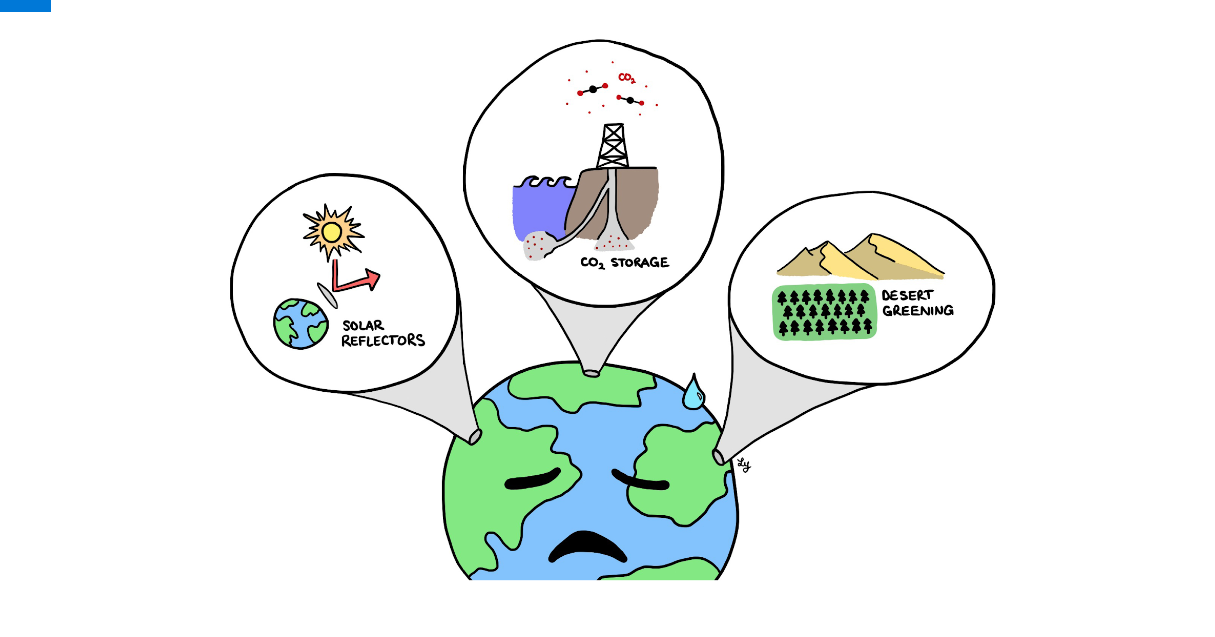
The conversation around geoengineering, otherwise known as climate intervention or climate engineering, is gaining traction as climate projections remain dire. Offering many salient yet controversial ways to mitigate Earth’s rising temperatures, geoengineering methods include spraying sulphate particulates into the atmosphere to block out solar radiation, fertilizing the ocean with iron to capture more carbon, and injecting atmospheric carbon dioxide into rock deep beneath the Earth’s surface. 

The Intergovernmental Panel on Climate Change (IPCC) has increasingly warned that countries must reduce emissions to avoid a two degrees Celsius jump in temperature, which would result in widespread social inequality and environmental degradation. Despite these warnings, emissions continue to rise, pushing scientists like Nigel Roulet, the Chair of the Department of Geography at McGill, to consider emissions-curbing experimental methods. 

“There are two areas of geoengineering, and the distinction is important,” Roulet said in an interview with The McGill Tribune. “Soft geoengineering [includes methods] that we can do that could enhance processes that are already going on to remove carbon dioxide from the atmosphere, such as increasing forest growth or having white roofs. Hard geoengineering [includes] methods that involve trying to intervene in the climate system.” 

Most techniques that people associate with geoengineering fall into the hard geoengineering category, a form that Roulet considered quite dangerous for two reasons.

“[First of all], we are not equipped with such an advanced understanding of the climate systems to forecast the possible consequences and externalities of hard geoengineering techniques,” Roulet said. “The second [worry] is the possible geopolitical consequences [….] If one state had access to geoengineering technology […], what would that mean for the global system and global effects?”

Geoengineering is often not discussed in a way that differentiates between pure climate intervention and techniques that simply enhance processes that are already occurring. Roulet believes that geoengineering merits closer examination and cannot be accepted as a quick fix to the climate crisis.

However, it is possible that as soon as geoengineering takes off, it could drain attention from examining human overconsumption.

“We have massive problems in our society that are associated with overconsumption,” Roulet said. “Thinking that technology is going to fix our problems is delusional. We need to reduce our consumption [by] a tremendous amount and ask ourselves questions like ‘How many people can the planet support with reasonable wellbeing?” 

According to Roulet, geoengineering cannot possibly address the fundamental problems of climate change, such as social inequality, exploitation of people and resources, and overconsumption. Geoengineering simply masks the symptoms. Roulet compared the danger of relying on geoengineering to taking a Tylenol when you have a cold. The difference is that Tylenol does not generally result in significant negative side effects, whereas geoengineering could have harmful consequences like altering the oxygen levels in oceans, decreasing biodiversity, and changing rainfall patterns. Scientists simply do not know enough—and might never know enough—about large-scale atmospheric processes to predict what sequestering carbon dioxide or trying to reduce the amount of sunlight reaching the Earth would do at the global scale. 

“Some methods of geoengineering are like jumping out of a frying pan into the fire, such as spraying sulphate particulars in the air,” Roulet said.

Technology will be part of the climate solution, but it cannot be the only fix. Geoengineering targets large sources of carbon dioxide like transportation and animal agriculture but does not address the smaller ones that humans emit every day.

“Humans are not well enough evolved to handle overwhelming questions,” Roulet said. “If there are readily available geoengineering solutions, we will not be forced to sit down and look at ourselves.”

Geoengineering suggestions are as diverse as they are fanciful. If humans have such a big imagination when it comes to technology, then the same could be possible for our ability to conceive different ways of implementing social and institutional changes. 

Artistic Swimming, Martlets, Men's Varsity, Sports, Varsity Round UP

Winter 2020 season recaps

Artistic Swimming

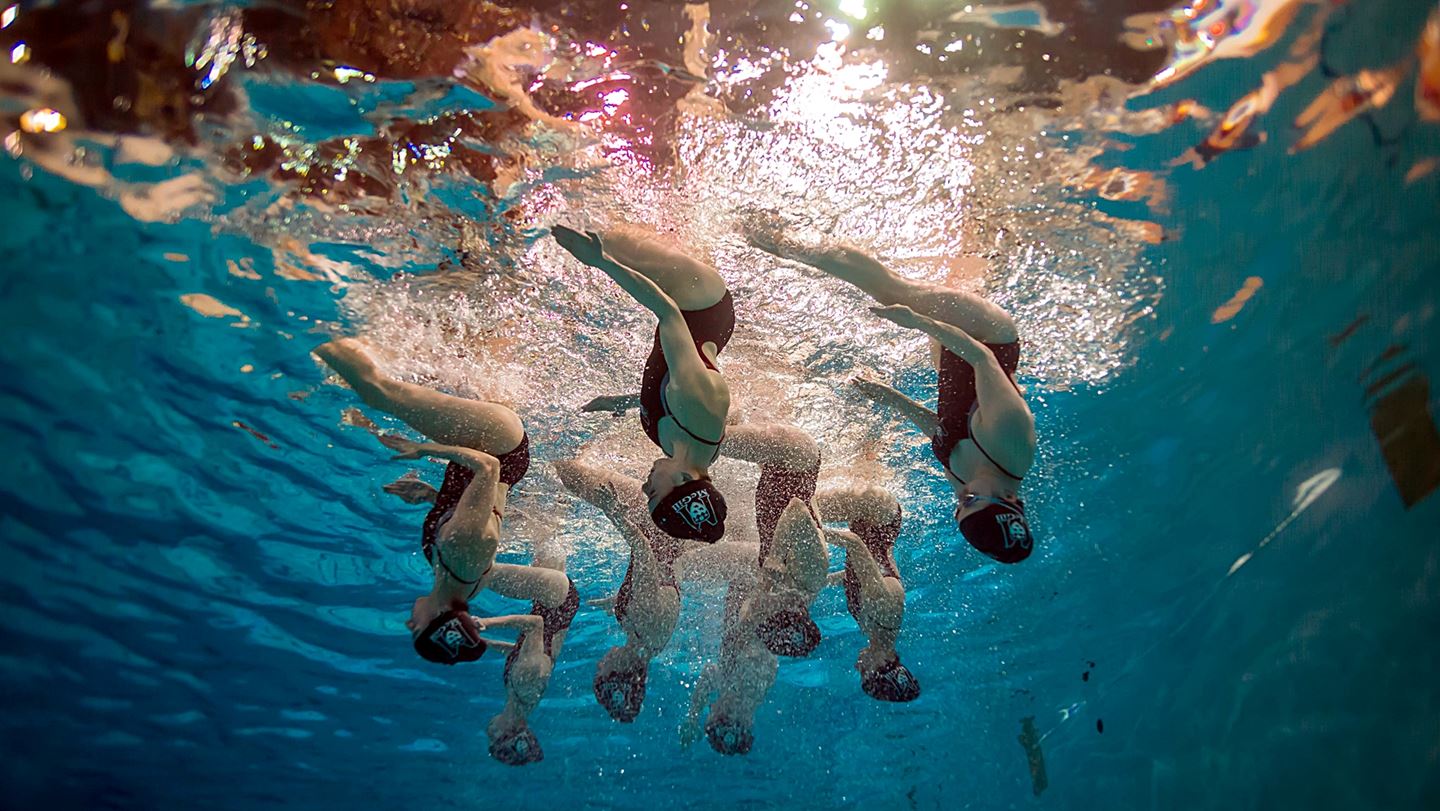
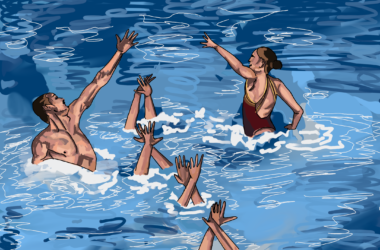
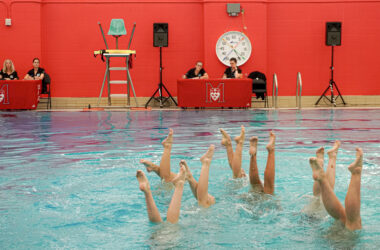
The McGill Women’s Artistic Swim team started their season off strong, finishing first out of 11 teams at the McGill Invitational in November. Strong performances from sisters third-year Ioana Gheta and second-year Maria Gheta earned them first place in the duet/trio category. First-year Katherine Demond also performed well, placing fifth for her solo routine. The Martlets continued their dominance with a first place at the Eastern Canadian Championship meet in Ottawa at the end of January. Second-year graduate student Michely Chen earned two gold medals and the Gheta sisters shined once again to come in second for their duet. Maria Gheta also earned both a solo gold and silver for her experienced solo, missing a second gold by less than 0.3 points. 

After an impressive send-off performance at Memorial Pool on Feb. 11, the Martlets headed to the University of British Columbia for the National Championship on Feb. 14. For the second year in a row, Maria Gheta was named All-Around Champion, claiming gold in the duet routine with her sister. McGill captured their 16th National Championship title at the meet. In the novice category, the Martlets dominated with the duet pairing of third-year Christina Wang and first-year Mathilde Lotz capturing gold. Chen went on to earn a silver medal for her solo routine and the individual All-Around title in the novice category. 

Men’s Hockey

Despite a wave of early-season injuries, the McGill Men’s Hockey team finished the regular season strong, with a 16–10–2 record. This performance earned them the fourth seed in the OUA Eastern conference.

Their success did not continue into the postseason, however, which ended unceremoniously in a three-game first-round loss to the Concordia Stingers. Despite this early exit, this season had plenty to celebrate, with standout players being recognized at the OUA awards. McGill claimed three awards: Third-year Nikolas Brouillard earned the Defenceman of the Year, fourth-year Louis-Philip Guindon was named the Goaltender of the Year, and fifth-year defenceman Dominic Talbot-Tassi secured a spot on the First-Team All-Star roster. This was the first time since 2011 that McGill collected three OUA awards. 

Going into next season, McGill Men’s Hockey is set for a new chapter. With the loss of five seniors, McGill is ready to start anew under the guidance of a rookie coach and a roster full of new talent.

Men’s Basketball

The McGill Men’s Basketball team had an unfortunate end to their season, achieving a dominant 12–4 record in league play before losing in the first round of the playoffs. The season started with several tough losses to NCAA teams in preseason play before the team notched their first wins against the Bermuda National Team and the University of Toronto. League play began on Nov. 7 with a decisive 101–78 win over Laval; however, a 94–71 loss to UQÀM in the following game foretold the struggles to come. 

Third-year guard Jamal Mayali led the team, averaging 15.7 points and 4.6 rebounds per game. Second- and third-year guards Quarry Whyne and Sam Jenkins added 13.5 and 12.6 points per game, respectively. Behind this scoring, McGill found their groove, winning seven games in a row. A three-game skid briefly halted their momentum, but they bounced back to finish the season on a four-game winning streak that included a 70–65 victory over UQÀM in their final game. They finished the regular season as the top seed going into the RSEQ playoffs.

McGill hosted fourth-place UQÀM in single-elimination play on Feb. 26 to begin the playoffs. Mayali missed the game due to the flu, however, and McGill’s season ultimately ended early after losing 70–61.  

Women’s Basketball

Martlet Basketball’s 2019-20 season was a rollercoaster. Their preseason opened in October with a loss to the Queen’s Gaels at an exhibition game celebrating the centennial of women’s university basketball in Canada. They bounced back from a four-game losing streak between November and January with a three-game winning streak, largely due to the efforts of fifth-year guard Gladys Hakizimana who scored 20 points for the Martlets in the first of those three wins. This put McGill back in the running for a playoff berth, and the Martlets sealed their spot in the playoffs on Feb. 15 in a home game against the Concordia Stingers. Fifth-year transfer centre Sirah Diarra and fourth-year transfer forward Nadege Pluviose each recorded a double-double in that decisive game. Their season came to an end for McGill women’s basketball on Feb. 26 with an away loss to the Laval Rouge et Or in the RSEQ playoff semi-finals. 

Pluviose earned Second-Team All-Star honours, while first-year guard Jessica Salanon was named a rookie All-Star at the RSEQ awards. Next year will see significant roster changes for the Martlets, with five graduating seniors leaving the squad. 

Men’s Track and Field

The McGill Men’s Track team had an equally successful winter season. They qualified seven athletes for the National Championship in Edmonton, after finishing third in the Provincial Championship. Second-year Alex Stathis distinguished himself by breaking his own school record in the heptathlon on his way to earning a provincial gold medal in Quebec City. The St-Anne-de-Bellevue, Quebec native finished in a remarkable fifth place at Nationals. 

Third-years Jose Guerra and Matthew Daly also dominated the RSEQ Championship, striking gold in the shot put and the 60m hurdles, respectively. The 4x400m relay, staffed by Nicolas Bernard, Jack Crosby, Sebastian Danson and Jasper Ross, reached the finals at Nationals after dominating the event in Quebec City.

Women’s Track and Field 

The standout of the Martlets’ 2020 winter track season was Jorden Savoury. The second-year psychology student started her campaign by breaking a school record on the 60 metre dash in Sherbrooke. Savoury went on to beat the record again, twice, at the 25th McGill Team Challenge on Jan. 25. The LaSalle, Quebec native praised her teammates for their support and work ethic. 

“Team spirit is what led us to succeed,” Savoury said. “I have never been a part of such an amazing group of athletes that work hard for what they want.”

As a collective, the Martlets track team had a productive season. They finished second at the RSEQ provincial championship, tallying two gold medals by fourth-year Abby Woods on the triple jump and graduate transfer Allison Frantz in the heptathlon. Both athletes earned a spot at the National Championship in Edmonton. The Martlets also dominated the long jump event: Savoury and Woods earned silver and bronze, respectively, separated by only eight centimeters. 

The Martlets’ relays fared well too, earning bronze in the 4×200 metre and silver in the 4×800 metre at the RSEQ championships. The team consisted of Savoury, Woods, Frantz, and third-year Stephanie Susinski. The Martlets did not win any medals in throwing events at the provincial championships; however, first-year thrower Marika Shafonsky had a strong rookie season, consistently finishing in the weight throw top 10.

The McGill Track Team hopes to build on this success as the outdoor season starts. Savoury, however, refused to set any ceiling for their performance. 

“I don’t believe in limits,” Savoury said.

Science & Technology

The social consequences of AI

Upon hearing the words “artificial intelligence” (AI), people tend to have mixed reactions. Science fiction’s favourite trope is AI taking over the world, and literature has been portraying such ideas since at least 1921, when Karel Čapek introduced the word ‘robot’ in his famous play R.U.R. The powerful applications of AI today often invoke thoughts of a utopian world where humans can do anything at the press of the button. As this narrative moves closer to reality, academics, computer scientists, and the general public are forced to ponder AI’s societal implications.

McGill’s Institute for Gender, Sexuality, and Feminist studies hosted a research talk on Feb. 20 as part of their Feminist and Accessible Publishing and Communications Technologies Speaker and Workshop series. The talk entitled ‘Why AI needs Collective Action’ was presented by Meredith Whittaker, the Co-Director of New York University’s AI NOW Institute and founder of Google’s Open Research Group.

Many are right to think that AI taking over the world is a far-fetched idea. As Whittaker pointed out, this is because AI isn’t a self-conscious machine; rather, it is an assembly of knowledge and skills in the hands of those in power.

“[AI] is a set of technical capabilities that are being recklessly integrated in social domains such as healthcare, education, criminal justice, and almost everything we can think of,” Whittaker said.

According to Whittaker, when we talk about AI, we must also confront issues of power imbalances. AI has become popular in recent years largely because modern hardware has the massive computational power necessary to handle large amounts of data.

“Major tech companies happen to have all of the necessary equipment [and] a lot of social data alongside a power structure designed to collect and record [these] data,” Whittaker said. “Current AI, the one touching our lives, is more or less from corporate companies, and only five companies in the West have these resources to develop and deploy AI [.…] If you ask any AI start-up, they will tell you that they are renting their computational power from one of the three major tech companies, […] Google, Microsoft, and Amazon, [who] resort to shady techniques to get [the] data.”

Whittaker explained how current AI data collection practices can violate privacy. For example, HireVue uses an algorithm to predict the best potential hire, a shoplifter prediction software used by stores in Japan analyzes people’s behaviours to predict whether they will commit a crime, and Amazon Ring has partnered with police to essentially make a privatized surveillance system. As there are no current checks on this power, Amazon can push new features without regulation.

“Because [these technologies are] primarily developed by private companies, socially significant decisions are made behind a veil of corporate secrecy,” Whittaker said. “Most of what the world does know about AI is through corporate marketing and PR departments [.…] The truth is hidden from the public and even the workers, [and] in a lot of cases, what we know is through investigative journalists and whistleblowers.” 

Whittaker, who previously worked at Google, was one of the organizers of the 2018 Google walkouts.

“As workers, we didn’t have access to a lot of information, and there was a whole network we had to set up,” Whittaker said. “Problems of bias and justice are fundamental issues and require us to examine structures of power and look at who is benefitting and who is harmed.”

Whittaker explained that AI can be used by people in power to isolate or discriminate against certain groups of people in situations ranging from hiring employees to being labelled a criminal. 

“No one is [being asked] to stop doing science, but the system requires change,” Whittaker said. “We need to add starting collective addition at the front of our AI […], a kind of system able to check the power of a tech before it’s too late.”

Science & Technology

The science behind back injuries

Canadian health organizations are increasingly pushing people to become more active. Groups such as the Canadian Paediatric Society are promoting programs like Active Kids, Healthy Kids, while the Canadian government is implementing programs that encourage activities such as dance and running.

As sports and fitness become more popular, the risk of injury grows as well. In the US alone, more than 3.5 million children injure themselves every year from sports-related activities. Though not the most common, back injuries are still a cause of frustration for many athletes, young and old.

Richard Preuss, an assistant professor for the McGill School of Physical and Occupational Therapy, explained that it is difficult to establish a pathoanatomic diagnosis—a diagnosis based on studying a specific tissue, joint, bone—for most back injuries.

“Current clinical practice guidelines for back pain indicate three triage categories: […] Specific pathology, radicular syndrome, and non-specific back pain,” Preuss said. 

According to Preuss, non-specific back pain accounts for 9095 per cent of all back injuries. In sports, specific pathology usually means a fracture, and radicular syndrome refers to injuries affecting the nerves. 

When it comes to back injuries, there is an important distinction between the spinal column and the spinal cord. The spinal column is the vertebrae: 33 bones stacked up and attached by the intervertebral disks and ligaments, allowing it to bend and move while protecting the nerves. The spinal cord is the neural tissue that runs from the brainstem to the bottom of the spinal column and branches out to relay messages between the brain and the muscles.

Preuss emphasized that injury to the spinal column is like any other broken bone. 

“Fractured vertebrae will heal very well but will be treated with great caution to ensure that the spinal cord remains protected,” Preuss said. “In the back, most fractures are associated with low bone mineral density. In healthy athletes, it would take a very high-energy impact to cause a fracture, and acute fractures of the vertebrae are rare.”

On the other hand, spinal cord injuries, while rare, are very serious and can lead to partial or complete paralysis of the region below the injury, with limited potential for recovery. Spinal cord injuries in the neck can be fatal, while injuries to other spinal nerves often lead to radicular syndrome. Spinal cord injuries most commonly occur in sports where forces to the top of the head can compress the spine, such as football, ice hockey, skiing, and snowboarding.

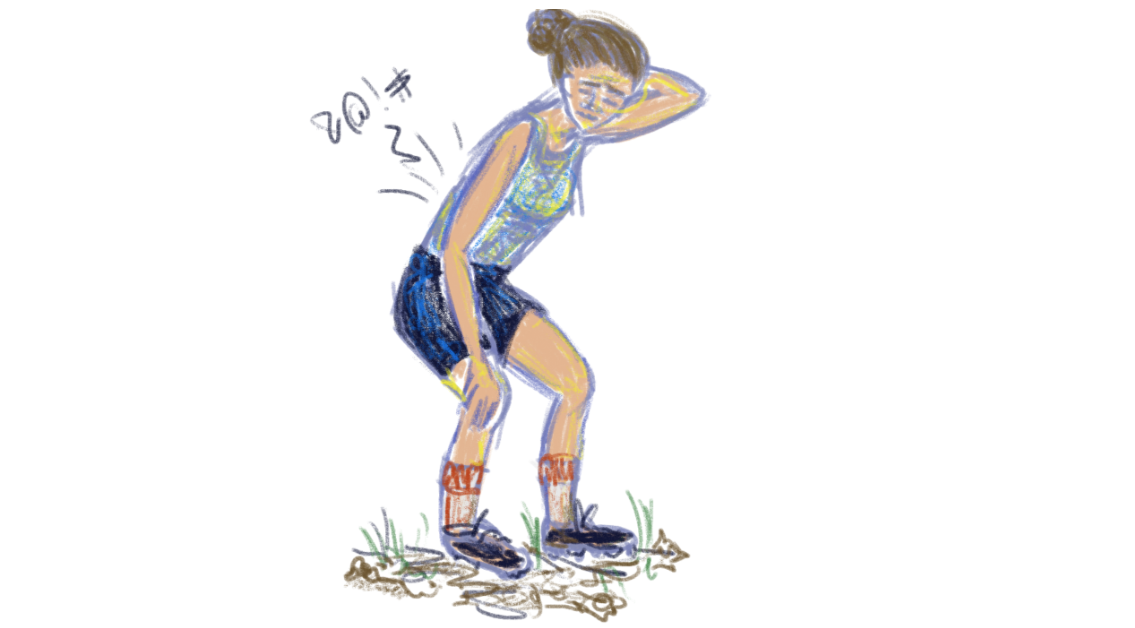
The most prevalent back injuries in athletes are sprains and strains. Usually, these are caused by muscle or ligament overuse, improper body motion or technique, or lack of proper stretching or conditioning. These are diagnosed when the athlete experiences pain while exercising and relief while resting. 

In sports that require a lot of extension and twisting like gymnastics or diving, spondylolisthesis is common. This is a condition where the vertebra at the bottom of the spinal column slips forward onto the one beneath it. Though the symptoms are similar to those of a sprain or strain, medical imaging can be used to confirm the source of the pain. Nonsurgical treatments include wearing a back brace, physiotherapy, or using epidural steroid injections. For more severe cases, or if the vertebrae are pressing on the nerves, treatment requires spinal fusion surgery that joins two vertebrae together into one bone. 

For less serious back injuries, the main treatment is rest. Ice and pain medications, particularly nonsteroidal anti-inflammatories, can also be used to ease the pain but should be used sparingly. In the case of muscle spasms, heat can be applied. 

Although they are not as common as other sports injuries, back injuries have a wide range of severity and still pose a risk in all areas of physical activity. According to Preuss, it is most important to practice proper sports techniques, take breaks to prevent overexertion, and seek help if any injury occurs. Virtually all back injuries are treatable, and with proper care, complete recovery is possible.

Read the latest issue

Read the latest issue