


Latest News

New York Knicks
Basketball, Sports

Supporting a team that never fails to disappoint

It’s a fact of life for all sports fans: At some point, your team will be bad. Some fans’ teams will be worse than others’, and the most unlucky of us all are the fans of teams that have been terrible for our entire lives. Regardless of how much you have been teased and tossed aside by your team, you are expected to stick it out and wait for the bright future aheadno matter how ludicrous and far-removed it may be.

The New York Knicks have been remarkably terrible for nearly three decades. Unfortunately for me and Knicks fans everywhere, there does not seem to be a bright future in sight.

We are trapped in an eternal cycle of excitement, hope, and eventual soul-crushing disappointment. It has happened over and over again: The 1992 Game 7 loss to Michael Jordan and the Bulls; the fleeting hope of Carmelo Anthony and Linsanity; the Kristaps Porzingis trade; and, most recently, the possibility of signing Kevin Durant and drafting Zion Williamson. Nobody holds on to unfounded optimism like Knicks fans, but every time we fail, we’re slightly more deflated and cynical. Despite all this, there is one thing a true Knicks fan would never entertain: Leaving.

The team’s owner James Dolan represents everything that Knicks fans hate: He appears to have no knowledge of basketball, and his horribly timed hands-on management style have earned him the title of worst owner in sports according to some commentators. His oppressively tepid music, fedora-wearing habits, and increasingly fragile ego have also made him the Darth Vader of basketball.

Celebrity chef and Knicks superfan Eddie Huang echoed the sentiments of many Knicks fans when he spoke up on Hot Ones.

Shoutout to the Knicks,” Huang said. “I love the Knicks, they give me these tickets, I get to go eat in the suite, but honestly, I have thought about killing James Dolan. They have very sharp steak knives, and I’m like, ‘Look, for the Knicks […], we might have to do this.’”

Huang was obviously joking, but grizzly steak-knife assasination plots highlight the limited options available to Knicks fans who wish to depose the cruel dictator James Dolan and restore the Knicks to their pre-1970s glory.

After years of suffering, I have realized something: I love to hate the Knicks. The team has not won a championship since 1973, yet remains the most valuable basketball franchise by $300 million. The most memorable moment the Knicks have had in two decades was Linsanitya two week winning streak, led by Jeremy Lin, in an otherwise forgettable 2011-12 season. New York fans spend so much money on merchandise and tickets that the franchise value rose $170 million in the span of one week. We love to lose our minds over nothing, and I will be there every time, no matter how disappointed I know I will be. 

I do not expect my team to ever be good, and I am fine with that. Being the worst team for so long has given Knicks fans a shared experience, something to stand for, and practice in self deprecation. It’s the most prolific culture of ineptitude in sports today. Chanting “Sell the team!” and heckling JD & the Straight ShotJames Dolan’s unremarkable band that screams “We only exist because I inherited my dad’s money”on the night of the 2017 draft are the only victories we need, as long as we are together, united by our frustrations. I would rather be last and proud, waiting for the number one overall draft pick that will never come, than be stuck as a mediocre potential eighth seed without a shared community.

Commentary, Opinion

Lecture halls are still unsafe for racialized students

On Oct. 23, an English professor at the University of Western Ontario used the n-word while describing terms that were historically used to refer to certain classes of slaves. The nonchalant use of a word with such violent historical and current implications was justifiably met with outrage by Black students in the lecture hall who felt deeply humiliated and angered. In addition to this offense, the professor claimed that he used the n-word was to “get a reaction” from students. This is a dangerous statement because it plays into a historical narrative that has disregarded the position and sensitivity of Black people. Further, it serves as a prime example of the ways in which academic spaces continue to exist as racialized spaces, where historical realities can manifest in damaging ways. 

Academia often prides itself on being neutral and unprejudiced, an environment where anyone, from any background, can engage in the dissemination and acquisition of knowledge. This neutrality often serves to actively ignore the ways in which racialized people are misunderstood and misrepresented within this supposedly all-inclusive intellectualism. In bringing the need for representation to the forefront, the Black Students’ Network of McGill (BSN) has proposed a Black Students’ Bill of Rights as a way of advocating for the rights of Black students. This would act as an essential step forward towards broader institutional recognition of the ways in which the black experience at McGill is marginalized. 

 The Black Students’ Bill of Rights highlights the barriers that Black students face at McGill, including a lack of representation within the teaching and professional staff, microaggressions, physical and online harassment, racial profiling and various forms of verbal discrimination. This bill also aims to suggest ways in which McGill can better accommodate the equal existence of Black students by first recognizing the distinct experiences and needs of Black students on an institutional level.

“In bringing the need for representation to the forefront, the Black Students’ Network of McGill (BSN) has proposed a Black Students’ Bill of Rights as a way of advocating for the rights of Black students.”

 Following the incident at Western, it is clear that the conception of academic spaces as sterile and welcoming to all is far from an all-encompassing reality. This incident serves to remind us of why a Black Students’ Bill of Rights is needed, especially one that specifically considers the daily challenges Black students face while navigating an academic space such as McGill. It is also important in outlining the appropriate steps McGill can take to better cater to the needs of Black students both presently and in the future.

 In making sure that this Black Students’ Bill of Rights is as comprehensive as possible, BSN called for a town hall on Oct. 22. It focused on discussing the barriers that Black students face at McGill, as well as using an online consultation form to collect feedback from Black students regarding their experiences in general. BSN proposes that this Bill of Rights will create an institutional structure which will allow Black students to better advocate for their needs on campus and it will also aim to hold the McGill administration accountable to its commitments to Black students.  

 Since McGill’s founder, James McGill, was a slave owner, the very history of McGill’s inception is tied to anti-Black racism. For example, until 2017 McGill did not officially celebrate Black History Month, despite the month being recognized by the House of Commons in 1995. Considering the university was established in 1821, that marks 196 years of institutional disregard for Black students and Black history, again reinforcing the need for a Black Students’ Bill of Rights.

“Since McGill’s founder, James McGill, was a slave owner, the very history of McGill’s inception is tied to anti-Black racism.”

 Academia, and more specifically McGill, has a role in ensuring that feelings of marginalization and ostracization are reduced for all its students, especially those of racialized backgrounds. The Black Students’ Bill of Rights serves as an important step towards creating an academic space that is truly inclusive and accommodating of the challenges Black and racialized students face. However, this should not be seen as a singular and temporary push for Black students rights under the guise of inclusivity, but rather as a demand for continuous institutional introspection over how to commit to the welfare of marginalized students.

Off the Board, Opinion

The hidden hurdles of a wallflower

The social interactions of everyday life exhaust me. Oftentimes, I would rather observe commotion unfold before me than engage in it. Due to our reserved nature, introverts like myself are frequently asked if we are okay when, in reality, we are happily minding our own business. Although the people asking these questions generally mean well, they make me wonder whether my natural disposition is somehow unfit for my environment.

Western society has always expected that women be approachable, chatty, and outgoing in social situations. However, I have learned that it is fine not to pretend to have any of those traits just to gain the validation of my peers. At social gatherings, I find myself hiding in the host’s bedroom, leaving early, or staying in one corner of the room, with no desire to network or strike up a shallow conversation. This is not to say I am unkind or hostile; I am just not interested in talking about superficialities like the snow, how classes are going, or which Netflix shows we are watching. After lengthy periods of socializing, I need some downtime, either spent alone or with one or two close friends.

In a world run by extroverts, I often feel that my capabilities are overshadowed by my peers’ forwardness in the classroom, on teams, or during group work. Those who earn leadership positions are usually outspoken, as they gain the trust of others more easily. Extroverts are more recognized because of their affable nature, while introverts struggle to break out of their personal space and are consequently perceived as cold. 

It is more difficult for me to prove my skillset in a group, however, I have realized that the affirmation of my capabilities is not necessary for me to make an impact. While it has always been frustrating to watch leadership positions be given to those able to make an impression, I now find my place in settings that prioritize the quality of one’s ideas. As a student conducting research in a life-science laboratory, I found a place that does not stress the importance of extroversion. Scientific research does not have to be done out loud, therefore, allowing reserved voices to investigate revolutionary ideas in peace. Although extroverts often have an advantage, even in science, I feel more powerful presenting data than when sharing my opinions on politics. In the end, what changes the world is not how people present themselves but rather the actions they take and the relationships they build. 

“This is not to say I am unkind or hostile; I am just not interested in talking about superficialities like the snow, how classes are going, or which Netflix shows we are watching. After lengthy periods of socializing, I need some downtime, either spent alone or with one or two close friends.”

Although I have a low tolerance for frivolous interactions, I do value genuine relationships and care about those around me. I prefer forming new friendships in less clamorous settings, where I can focus on learning about a person’s more important experiences. While speaking out in a group seems effortless for extroverts, it takes a lot of energy from me, and when I do, I find my voice drowned out by those around me. Both introverts and extroverts hold ideas that are worthwhile and it is beneficial for everyone to make space for their ideas to come through.

Naturally, I am a listener and a thinker rather than a speaker. However, my silence does not mean that I have no opinions. Although I speak up when I have something important to say, I prefer to reflect before speaking. Frankly, the conspicuous voices of extroverts that dominate the room deter introverts from expressing themselves. Although I am introverted, I do want to share my thoughts, be acknowledged for my work and have insight to bring to the table. People should be more cognizant of the ideas being left behind when louder voices eclipse those that may be more reserved. Words are powerful, but silence does not correlate with inadequacy.


Editorial, Opinion

Sharing Milton-Parc

Moving away from home, university students experience their first taste of personal freedom. However, having the power to do what they want does not excuse students being disrespectful to others. A drunken fight on Oct. 4 between two students in the Milton-Parc area resulted in $500 in damages to a family’s only car. This incident brought McGill students under fire once again for showing a lack of consideration for their neighbours and shared spaces. Students and organizations at McGill must hold themselves accountable when living and partying in the Milton-Parc neighbourhood and maintain a higher standard of respect for their neighbours.

Milton-Parc has been a student neighbourhood for several decades. Since the 1960s, students have become a significant portion of the area’s residents, leading to corporate gentrification, which sparked increasingly unaffordable rent costs and the replacement of historic homes with fraternity houses and condos. This influx of McGill students shifted the atmosphere of the neighborhood, some residents would say for the worse. Complaints by non-students highlight the sense of entitlement and disrespect by students and organizations toward their neighbours. Residents’ grievances have ranged from students being disruptive into the early morning hours, to excessive littering, and inconsiderate acts like urinating on residents’ property.

Party culture in the area seems to be the root of many disruptions. With several fraternities calling the neighbourhood home, drinking events are an ever-present reality. Moreover, faculty-and student-run events like Frosh, Hype Week, Faculty Olympics and apartment crawls, which often take place in or around the Milton-Parc area, lead to hordes of drunken students wandering the streets, which can result in accidental or reckless damage to others’ property. Party culture also contributes to excessive amounts of littered bottles, cans, and cigarette butts on sidewalks and lawns.

“Students and organizations at McGill must hold themselves accountable when living and partying in the Milton-Parc neighbourhood and maintain a higher standard of respect for their neighbours.”

Event organizers have taken steps to address the issues that arise from drinking events. For example, faculties dispatch Street Teams during Frosh week to manage intoxicated students as they pass through the neighbourhood. The Students’ Society of McGill University (SSMU) also tries to control apartment crawls by requiring hosts to have  liquor licenses and complete server training. However, rather than mitigating disruptions to the community, this restriction merely limits the number of clubs willing to go through the process required to host a crawl by SSMU’s rules.

It is incumbent on student organizations to hold themselves accountable during parties. If a club has a history of damaging private or public property, failing to make changes to their rules or practices is negligent. Some ways student organizations could be more courteous to Milton-Parc residents are by putting more effort into planning crowd control procedures and having stricter consequences if partygoers fail to respect neighbours at drinking events.

It also falls on student organizations to find ways to encourage proper waste-disposal, or at the very least have thorough cleanups after events. A portion of entry or participation fees for larger events like hype week should be reserved for fixing damages and ensuring public spaces are tidied after events.

SSMU should also take steps to address the issue. Incorporating tips on how to be respectful of neighbours and others’ property into server training would give hosts the skills to have more respectful parties. Moreover, SSMU must be stricter when holding clubs accountable. If certain clubs or faculties repeatedly cause serious damage and disruption, SSMU should levy consequences, including revoking alcohol privileges.

Students who do not take part in organized drinking events can still find ways to be better neighbours. In the past, some McGill courses in the Quebec Studies department make students volunteer in Montreal. These types of community engagement projects help students connect with their neighbours and be better citizens.

Simple things like joining a clean-up, finding out when garbage day is to avoid unnecessary trash on the sidewalks, or just saying ‘hi’ to a neighbour can make students better community members. On moving day, students should make use of services like Trash2Treasure to get rid of unwanted furniture in a sustainable way. When hosting a party, students can use online networks like Nextdoor.ca or leave a note in next-door mailboxes to let neighbours know their plans and invite them to share their feedback. Simple acts go a long way in making others feel respected and heard in their communities.

McGill students will continue to cohabitate with others in Milton-Parc. As part of the broader Montreal community, SSMU and McGill’s student organizations have a responsibility to control and mitigate the damages caused to the Milton-Parc community during McGill drinking events. Moreover, beyond McGill-organized events, student tenants should make an effort to engage with their community and be better Milton-Parc neighbours.

For those who are interested in donating, the GoFundMe to help cover the car damages sustained by the Milton-Parc family is still active.

Creative

Know Your Athlete: Isaiah Cree

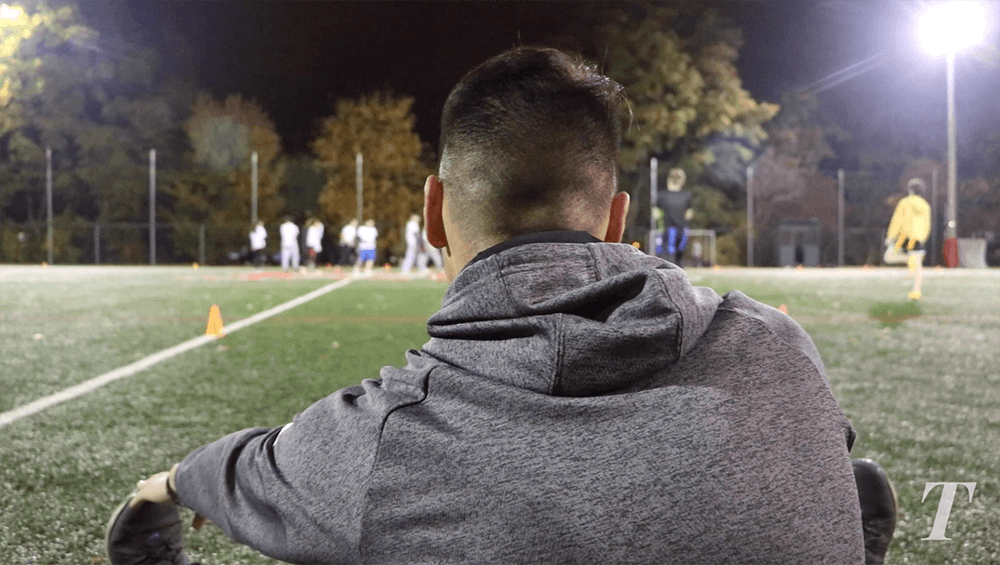
Our staff producers visited U0 Lacrosse player Isaiah Cree on the field and talked about growing up on the Akwesasne reservation in New York, Lacrosse’s cultural importance, and his Lacrosse-life balance.

Video by Alex Hinton and Zoe Lubetkin.

McGill, News

Pulitzer Prize-winning biographer gives lecture on Gorbachev

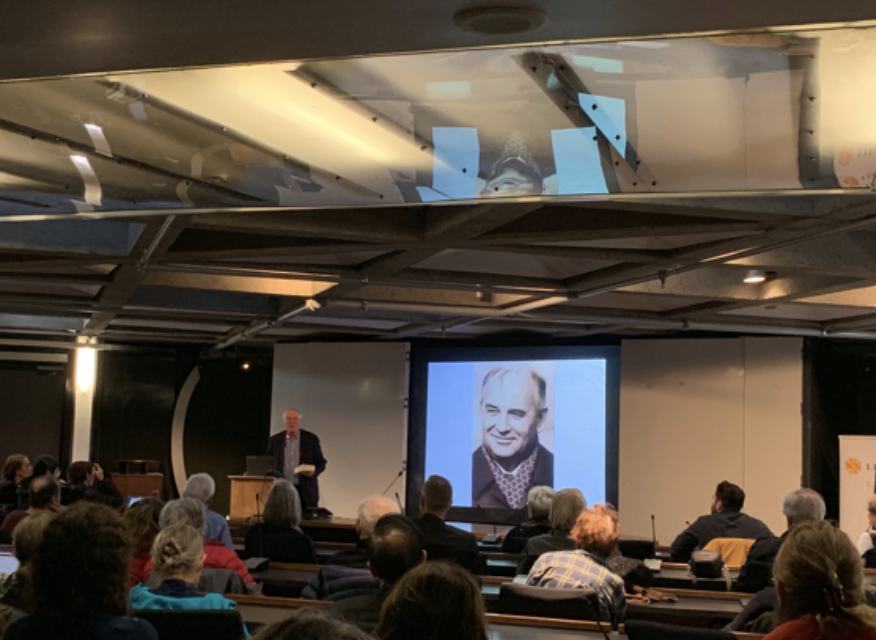
Pulitzer Prize-winning author and renowned political science professor at Amherst College Bill Taubman gave a lecture on the life of Soviet Union (USSR) leader Mikhail Gorbachev to a packed audience of McGill students and professors on Nov. 1. Drawing from his 2017 biography, Taubman presented the head of state as an idealistic, but flawed leader and suggested that his personal character was instrumental in explaining the successes and failures of the Soviet Union in its final years.

Taubman’s lecture, “The Rise and Fall of Mikhail Gorbachev—And Some Lessons for the Putin Era” was organized by the Research Group on Transitions and Global Modernities in collaboration with the Russian Studies Department at McGill.

In his introductory remarks, Taubman acknowledged that Gorbachev has had a contentious legacy, lauded abroad for his instrumental role in ending the Cold War, but fiercely criticized at home for his role in the economic collapse and dissolution of the USSR. For these reasons, Taubman said Gorbachev was a ‘tragic hero.’

“He was a hero because he laid the basis for democracy [in the USSR], conducted the first free […] elections to create the first functioning parliament, [and] ended the Cold War more than anybody else, [reducing] the threat of a nuclear holocaust,” Taubman said. “Why tragic? […] He wanted to save the Soviet Union and its new democratic form, but it collapsed, and in the process the economy crumbled, creating a […] disaster for many Soviet people.”

During his lecture, Taubman tied Gorbachev’s personal character to the successes and failures of the Soviet Union. Taubman contrasted Gorbachev’s idealistic reforms to the USSR’s staunchly inflexible governing body, the Politburo, and to a nation wary of change. He suggested that the Soviet leader’s hubris might have been the main cause of his undoing.

“How could he have thought that a country that had never known democracy for centuries could be democratized in a few short years?” Taubman said. “He was optimistic, extraordinarily so, probably excessively so. He was confident—too much so it appears in retrospect.”

For Henry Atkins, a Master’s student in political science, Taubman’s focus on Gorbachev as a person was nuanced and differed from most contemporary approaches to history, which prioritize long-term trends over the actions of important individuals.

“[It was] certainly a more sympathetic view of Gorbachev than I’m used to as a political science student,” Atkins said. “[He gave] a very agential view of history, the idea that what the person in charge does matters, [which is] not something I’m used to in [mainstream] political science models.”

However, for Sheena Li, an undergraduate student in pharmacology, the lecturer’s greater focus on character rather than on context made the topic accessible and informative.

“Since [it was] a lot about [Gorbachev’s] personality, [it was] easy for someone who doesn’t really know about [his] background to understand,” Li said.

In his concluding remarks, Taubman noted the rise of authoritarianism in Russia in recent years and his diminishing hopes for a democratic Russia. Having interviewed Gorbachev eight times for his biography, Taubman said that the former leader has had moments of optimism for his country, but that most of the time, Gorbachev has been more realistic.

“It may take the whole 21st century for Russia to find its way to democracy,” Gorbachev once told Taubman.

Features

Climate justice is racial justice

“The future is hotter than my imaginary boyfriend.”

“Clean up: It’s our future, not uranus.”

“Why go to school if we don’t have a future?”

The clever and creative signs featured at the Montreal Climate Strike focussed on protecting ‘our future.’ Even the #FridaysForFuture movement, started by Swedish activist Greta Thunberg, is about striking now to survive later. This rhetoric, however, can be alienating, especially for Black, Indigenous, and other people of colour (BIPOC). For many individuals, the present day is hotter than any ‘imaginary boyfriend.’ For example: My family lives in Kuwait where it has already reached dangerous temperatures. This summer, the country reached 52.2 degrees Celsius, and 63 degrees Celsius under direct sunlight. Kuwait is one of the hottest places on Earth, and temperatures are only continuing to rise. In this way, many BIPOC are striking for today, not tomorrow.

Editorial, Opinion

The time for Indigenous allyship is now

Last week, in our Oct. 29 issue, The McGill Tribune published an open letter written by Students’ Society of McGill University (SSMU) Indigenous Affairs Commissioner Tomas Jirousek. In the letter, Jirousek explains the events that  led him and other Indigenous student leaders to ask for the resignation of SSMU Vice-President (VP) Internal, Sanchi Bhalla. In addition, Jirousek’s letter describes the institutional failures of SSMU to provide adequate allyship to Indigenous students. The letter closes by outlining a three-step plan for increasing the autonomy, support, and mobility Indigenous students have when advocating for themselves on campus. The steps include increased fiscal autonomy, giving the Indigenous Affairs Commissioner role independence from the SSMU executive, and greater resources to facilitate rapid mobilization.   Following the letter’s release, Jirousek posted screenshots of hateful comments he had received in response to his activism in a Facebook post on Oct. 31. Some of the comments were from a recent r/mcgill Reddit post made in reference to Jirousek’s most recent open letter. Without exception, the comments present in Jirousek’s post are staunch examples of targeted racism and invalidate the work he has done as an Indigenous activist. In light of such comments, both SSMU and the McGill student body are falling short of their professional and moral obligations to support and provide allyship to Indigenous students on campus, especially Jirousek. 

The Tribune condemns the comments and responses shown in Jirousek’s Facebook post, as well as the hateful sentiments that they stem from. Further, the Tribune fully endorses the points and messages communicated by Jirousek in his most recent open letter. It is disappointing that following both the publication of Jirousek’s open letter and his Facebook post showing the racist rhetoric he continues to endure—including comments calling him aggressive and accusing him of having a ‘victimhood mentality’—SSMU has refrained from making any kind of official statement in response. While VP University Affairs Madeline Wilson has made a Facebook post on the SSMU University Affairs page supporting Jirousek, this is far from constituting an official response made by the entirety of SSMU.

“The McGill Tribune condemns the comments and responses shown in Jirousek’s Facebook post, as well as the hateful sentiments that they stem from. Further, the Tribune fully endorses the points and messages communicated by Jirousek in his most recent open letter.”

The initial call by Indigenous student leaders for Bhalla’s resignation is a complex situation, and the SSMU executive should take their time in deciding how to proceed further. However, a statement of support and solidarity for Jirousek and Indigenous students as a whole does not require that SSMU resolve the bureaucratic tangle involving VP Bhalla. A statement saying that SSMU have read, recognized, and are considering the propositions that Jirousek made in his open letter would also be beneficial. SSMU’s institutional silence on this issue is deafening and the message it sends about the priorities of the current executive body is disheartening.  

McGill’s student body also has responsibilities when it comes to providing allyship to Indigenous students. Allyship incorporates many different behaviors and practices, but its purpose as a whole must be focused on more than mere marginal changes for Indigenous students. One of Jirousek’s calls-to-action in his open letter was to provide full financial autonomy for Indigenous students advocating for themselves, instead of a fee through SSMU. The Motion Regarding Creation of Indigenous Equity Fund and Fee was submitted on Sept. 26, and will be put to a student vote from Nov. 12-15. The Tribune strongly encourages students to vote ‘yes’ to the fee. 

It is also incumbent upon everyone in the McGill community to call out the type of language directed at Jirousek for what it is: Racist and unacceptable. If students feel uncomfortable engaging with toxic individuals online, there are less direct methods of countering hate speech such as deplatforming users, reporting them, and flagging hateful comments. While online vigilance is necessary, Indigenous-focused allyship includes much more than intolerance to internet hate speech. 

McGill University is built upon land that was stolen from the Haudenosaunee and Anishinabeg nations by European colonizers. Allyship with Indigenous students is crucial; this involves educating oneself about the history of land which we currently inhabit, recognizing the genocidal practices and human rights violations that built up areas like Montreal, and understanding the ways in which this history systematically manifests itself in the present day.  However, the responsibility to educate does not lay with Indigenous student leaders or activists. Rather, it is the responsibility of those in positions of privilege to educate themselves. 

If students are able to help amplify the voices of marginalized groups and recognize the ways in which their own privilege functions on an everyday basis, this will foster better allyship for Indigenous students. This means participating in Indigenous-led protests, calling out your peers if they say something insensitive, and likely, recognizing aspects of one’s own lived experience which may be uncomfortable, including privilege and benefits one receives as a result of Indigenous oppression. Being a good ally is not necessarily easy, but it is absolutely vital. The Tribune also urges the SSMU executive to use this experience as an opportunity for learning and growth, and to use their position of power to help create meaningful change for Indigenous students.

competitive ice dance
Sports, Winter Sports

In Conversation with Tedy Markova

Tedy Markova, U3 Psychology, is not one to back away from fear. As the 21-year-old Bulgarian figure-skater hangs up her skates on a successful international career, she recalls her journey and the lessons she has learned along the way.

“When you have to go out on the ice, all by yourself, especially at the big competitions where there are a lot of people, that’s scary,” Markova said in an interview with The McGill Tribune. “It’s just me on the ice, and they’re all judging me. It’s frightening, yes, but it also gives you this weird thrill, this rush.”

That rush, an endless tango of fear and courage, became a theme throughout her life, from the time she first stepped on to the ice to her final competitive appearance at the 2019 European Figure Skating Championship in Minsk, Belarus. The 14-year-long journey earned her the nickname “The Bulgarian Swan”; however, like most great sports stories, this one’s beginnings were humble. 

Markova’s love of the ice started when she was just five-years-old, during a visit to the skating rink in her hometown of Sofia, Bulgaria. 

“I remember when I started, I would spend most of my time on my butt, just rolling around on the ice [with] people yelling at me to get out of the way,” Markova said. “But, when I started to finally stand upright, it was just so satisfying.” 

While Markova experienced falls and tumbles in those early days, she was quick to appreciate the people who were around her to pick her up. Her mother, in particular, played a key role in the beginning of her skating career. 

“Whenever I got off the ice and went, ‘I’m never coming back!’ [my mother] was the one telling me, ‘Tedy, pull yourself together, this is important to you, you got this,’” Markova said. “She taught me to go after my ambitions.”   

Relocating to Montreal in 2017 was a big step for Markova. In addition to adapting to a new country and culture, she also had to balance the workload of being a university student and a professional athlete. But, with the added burden came new opportunities: A chance to learn and train with the very best in the sport. 

“You have [in] Saint-Henri, one of the best ice dance schools in the world,” Markova said “It’s crazy, the Olympic champions, the World champions, they trained here. I loved Tessa [Virtue] and Scott [Moir] growing up. And sometimes [Moir] would come give us lessons. It was cool because these professionals were all so dedicated, and it was inspiring [because…] they were also humans like us.” 

The training would pay off as Markova went on to compete in competitions across the globe. But, it was at the 2019 European Championships where, unbeknownst to her team, Markova would be skating competitively for the last time. 

“I had been thinking about stopping for a while, so […] I knew this would probably be my last competition,” Markova said. “I didn’t want to tell anybody because it would discourage them, but I think [they] knew. It was really emotional, but honestly, I think it was for the [best]. It’s a lot of money, a lot of time, and a lot of effort I could put somewhere else. Of course, I’d been doing this for many years, but I had already come to terms with my decision.” 

Life after skating has been just as hectic, but Markova remains a model student. In addition to having executive roles in clubs like the McGill Students’ SocieTea, she’s maintained a keen interest in research and works in a lab studying the physiological mechanisms of pain. Yet, her relationship with figure-skating is by no means over.  

“I [want] to pursue a career in neuroscience, […] but someday […], I would like to coach and work with young children,” Markova said. “Maybe I can inspire them to like the sport as much as I [do].” 

Read the latest issue

Read the latest issue