

Latest News

Hockey, Sports

Don Cherry is a symptom of a larger problem

Don Cherry is known for many things: His wacky suits, strong opinions, and unfortunately, over the years, a series of racist remarks. On Nov. 9, Cherry added to the list of reasons why he should no longer have a public platform with a rant claiming that immigrants do not wear poppies around Remembrance Day. 

“You people [who] come here, love […] our way of life, you love our milk and honey. At least you can pay a couple bucks for a poppy or something like that,” Cherry said on Hockey Night in Canada. “[Canadian service members] paid for your way of life that you enjoy in Canada. These guys paid the biggest price.”

These comments were widely criticized across social media for being distinctly xenophobic, and this is not the first time Cherry has made racist, sexist, or xenophobic comments. Cherry was finally dismissed by Sportsnet on Nov. 11. But, Canada has forgiven him time and again, treating him like a quirky TV character rather than a human being expressing his own, very-real opinions. 

Canadians love to talk about how great we are, particularly in terms of welcoming immigrants and especially in contrast with the United States. Canada also has a tendency to tie our national identity to hockey. Here lies an undeniable contradiction, because hockey and its culture are hugely lacking in diversity, as well as having prohibitively high costs for participation. This was evident during the Toronto Raptors 2019 postseason en route to the NBA Championship. Vinu Selvaratnam, a sports researcher at the University of Waterloo, pointed out that basketball has wider reach globally, making it more accessible to recent immigrants. The Conference Board of Canada has found that visible minorities earn an average of $0.87 for every dollar that their white peers do. As such, financial barriers push hockey further out of reach as the more expensive equipment and higher costs for rink time make free basketball courts more accessible.

Hockey in Canada is declining as the proportion of landed immigrants in the population increases. According to Maclean’s, the last generation of Canadians for whom hockey was simply a given in life were the baby boomers. Growing up in Canada, learning to skate may feel inevitable, but anyone who did not grow up here or whose parents did not grow up here may not have learned the skill that is essential to hockey. 

McGill is not exempt from the consequences of older generations gatekeeping hockey either. A representative of the Working Group on Renaming and Commemoration, who wished to remain anonymous, described the events of a town hall meeting on renaming McGill’s men’s varsity teams that took place on Sep. 12, 2018. 

“There were [a few] white men who came to represent McGill hockey teams of the past,” the representative said. “They brought old [McGill] hockey uniforms […] that had the R*dmen [sic] name on them [….] [One white man] stood up with this uniform and started talking about the tradition and history of McGill’s hockey team.”

There is racism at every level of hockey in Canada, and Cherry’s most recent display of vitriolic racism is just another in a long list. He accuses immigrants of loving the life that they have in Canada without contributing to the country, but immigrants cannot be expected to fully participate in a society that ties itself so closely to a sport and culture that continue to be xenophobic and racist. Cherry is merely a symptom of a much larger issue, and while he should certainly have lost his platform a long time ago, taking him off the air will not be a quick fix to the problem. 
Research Briefs, Science & Technology

The underlying unity of life

Comparing animals of various sizes has historically been a challenge for biologists. From simple observation, an elephant could not be more different than a mouse. Yet, a universal underlying principle concurrently governs them both. 

Scaling laws—derived mathematical models that compare an organism’s key life traits to its body mass—present an intuitive way for scientists to study the relationships between organisms. By comparing characteristics such as metabolism, abundance, growth rate, and mortality between organisms of various sizes, biologists can gain valuable insights about the evolutionary history of life on Earth. 

In a study published last month, researchers found that previous scaling models may have been short-sighted in their conclusions, since they lacked a large enough number of organisms to observe interactions on the universal level. Ian Hatton, a professor in the Institute of Environmental Science and Technology at Universitat Autònoma de Barcelona, was the lead author of the study.

“We present relationships that show how all species, regardless of their particular traits, fall within fairly regular bounds,” Hatton wrote in an email to The McGill Tribune. “This suggests that at some level, these individual traits do not seem to matter, or that all these traits combine to have a neutral net effect on an organism’s energetics and dynamics.”

Following up on decades of scientific theory on the scaling laws that define the unity of life, Hatton began the project when he was a PhD student at McGill. 

Controversially, biologists had assumed that scaling laws between size and metabolism, a key life history trait, are defined by a function with an exponent of about three quarters. In other words, for every three-quarter increase in body mass, a given organism should undergo a proportional increase in their metabolism. 

Hatton and fellow researchers, however, found that this relationship only independently holds between major groups of animals, such as carnivores or herbivores. Across all eukaryotic life—essentially any organism that is not bacteria or archaea—the study found that the exponent is actually closer to one, meaning that when eukaryotic groups are compared, they seem to scale overall with a greater proportional relationship. 

“This [relationship] implies that different mechanisms are generating these different scaling relations within and across groups,” Hatton said. “Growth, on the other hand, exhibits similar three-quarter scaling both within and across groups, suggestive of a more basic mechanism.”

The authors of the study collected data from over 2,500 published meta-analyses. Whereas previous studies with similar questions were restricted to specific groups of animals, Hatton had the unique ability to observe patterns across life on a grand scale.

The researchers’ conclusions could drastically impact the way in which scientists approach questions of ecology and evolution in the future. 

“Once you start dealing with ecology, you are dealing with many species with widely diverse body sizes,” Andy Dobson, a co-author of the study and Professor of Ecology at Princeton University, said in an interview with the Tribune. “Since every species functions at a different rate, we use calculations to simplify these nonlinear interactions.” 

Dobson, who referred to scaling laws as the ‘spine’ on which a significant amount of ecological theory is based, sees the team’s findings as fundamental to how long-term evolutionary relationships will be understood. 

“To me, [our findings] are an affirmation of the strength of evolution,” Dobson said.  “The fact [that] we observed different slopes between different traits tells us that there are general problems [that] evolution had to solve as species evolved.” 

Looking forward, the authors hope that their newly-improved model can help make better qualitative predictions about how ecosystems and communities operate.  

“That, for me, would be the ultimate prize of 21st century science because we only have about 10 years before we run out of natural ecosystems to analyze,” Dobson said.

McGill, News

PGSS general meeting reaches and loses quorum

The Nov. 6 Post Graduate Students’ Society (PGSS) meeting in the Thomson House Ballroom initially met its 90-member quorum. However, several members left the meeting later in the evening, and all votes lost their binding status.

Following some standard announcements, the motions to approve the PGSS opposition on Bill 21 and to ratify their new financial auditor’s terms of engagement passed with little commotion. 

The pace of the meeting pace slowed by the time it reached the later parts of the agenda, as many members opposed a motion to ratify the Society Activities Manual. Frustrated with failures to meet quorum at council meetings, PGSS executives proposed shrinking the size of council decreasing amounts of funding for post-graduate student associations (PGSAs) that did not attend. Melissa Marquette, student in Earth and Planetary Sciences, did not appreciate the manner in which the executive proposed this change.

“It doesn’t seem like alternative avenues to increase participation [have] been explored,” Marquette said. “And it seems like cutting funding should be a last, last, last, last resort. […]  I think it is horrific to say something like ‘I don’t want to withhold these funds, but you might make me do it if you don’t come to council.’ That’s disgusting and I do not want that to be uttered in a body that is supposed to represent me.”

Secretary General Dakota Rogers defended the proposal.

“Reducing the size of council does increase accountability,” Rogers said. “We know it does because we [have] 32 of our PGSAs show up today [which is] the most that we’ve ever seen show up at a PGSS Council [meeting]. We rely on our counsel to do our jobs. If we do not [meet] quorum, we cannot do our jobs.”

Ultimately, the motion failed 32-29.

As the meeting moved on, the executive paused the discussion and counted the members in the room. Eight people had left the meeting, meaning that quorum had been lost, and thus, the meeting became a non-binding consultative session. Members tried desperately to reclaim quorum in order to officially pass the motion to declare a one-day PGSS climate strike.

However, after two recounts, quorum could not be re-achieved. PGSS executives discussed health insurance plans, as well as a policy to hold a moratorium on fee increases until McGill divests from fossil fuels. 

Moment of the meeting

In an impassioned speech, Rine Vieth, Anthropology PhD candidate, urged the PGSS executive to show better strength in pushing back against the administration on mental health policies, such as the one on involuntary leave.

Sound Bite

“It sounds like you’re saying, you want to pay people to be your friends and, like, if people don’t want to be your friends, and people don’t want to show up to the meetings [then] maybe you need to think about what you’re doing and [start] thinking about other ways of engaging with people.” – Vieth on the proposed Society Activities Manual changes

Campus Spotlight, Student Life

McGill students convene for the second annual one-minute scream

As the fog of midterm season lifts from McGill, the sinking feeling of not-too-distant finals comes to replace it. The stress that this time in the semester brings appears to be the reason behind the “1-minute scream.”

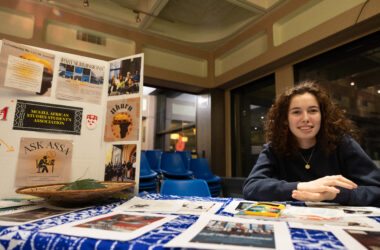
The second annual “1-minute scream” took place outside of Service Point on Nov. 7 from 3:00 p.m. to 3:01 p.m. Organized by students Emma Cona (U2 Science) and William Bouchard (U2 Engineering), the event had a simple premise: Meet in front of Service Point on the downtown campus, scream for a full minute, then disperse. By 2:55 p.m., a small crowd had already gathered, with students accumulating in the center of McTavish street.

Last year’s event took place on Oct. 29, and was run by Ananya Nair, Sam Ling, Maheen Akter, and Cathy Jing. Due to the success of last year’s scream, Cona and Bouchard wanted to recreate the event this year.

Cona explained that despite the success of the first event, the organizers were unwilling to inflate the “1-minute scream” past its humble origins as a lighthearted event. 

“It’s just a fun event,” Cona said. “Its [purpose] is more to gather people than it is to scream. It’s fun to scream, but screaming doesn’t help with midterms. [It’s about] knowing that everyone is […] in the same boat as you.”

When asked whether the “1-minute scream” reflects any student feelings regarding the lack of a Fall Reading Week, Cona was not willing to indulge a deeper interpretation of the event. 

“There’s not […] a big train of thought behind it, it’s just a one-minute scream,” Cona said.

While attendance was bolstered by student stress and a desire for community, many students simply turned out for fun and catharsis. Patricia Danielidis (U1 Music and Education) explained that she attended for fun.

“I saw the Facebook event and realized this [event] is one big meme,” Danielidis said. “This is going to be a fun time to just go and scream with my friend [to] just get our stress out for one minute.”

Danielidis was not alone in her reasoning, as most attendees seemed to be there in search of the relief that screaming offers. Erika Arless (U1 Education) was also there for the stress-relieving benefits.

“It’s about the catharsis,” Arless said. “It’s about releasing […] stress in a funny and enjoyable way with your peers.”

Regarding the genesis of an event like this, Arless and Danielidis acknowledged that the lack of breaks might contribute to students coming together and taking matters into their own hands: The stress of midterms, assignments, and finals give students good reason to scream. Danielidis expressed her desire for a Fall Reading Week.

“I think a reading week would be really helpful, to just have a few days to get it […] together,” Danielidis said. 

Arless agreed with such sentiments on the lack of recuperation time available to students.

“Because there’s [no] Fall Reading Week, we’ve just gotta scream!” Arless said.

Whether students in attendance were eager to release their school-related stress, come together with like-minded students, or to simply scream, the event was a success. People came, screamed, and left in an orderly fashion, presumably less anxious than they arrived.

The available Service Point employees declined to comment. 

McGill, News

Mental Health Commission of Canada announces post-secondary mental health standard

The Mental Health Commission of Canada (MHCC) recently announced a collaboration with the Canadian Standards Association to develop a standard for the psychological health and safety of post-secondary students. According to the Commission’s website, post-secondary educational institutions are free to adopt and modify the policy, known as the Post-Secondary Students (PSS) Standard, as needed. 

The standard aims to provide guidelines to help Canadian schools support their students’ mental health. The policy identifies factors that challenge students’ mental health and provides resources to help address each of these problems. The current draft of the plan advocates for increasing the amount of psychological support and counselling available to students, educating staff to create a supportive community, and assigning a manageable course load.

Amy Fogarty, MHCC manager of programs and priorities, emphasized that the PSS standard is student-centric. 

“[After championing the] Canadian National Workplace Standard in 2013, an opportunity emerged to support students,” Fogarty said. “[T]he MHCC was approached by funders and leaders to champion this work and fill this gap. Through the creation of the standard, the MHCC is committed to supporting student success and mental wellbeing on campus.”

Fogarty highlighted how the draft is flexible and easy to implement for institutions.

“[The PSS standard] acknowledges that each framework for psychological health and safety will be unique, based on the specific needs of the student body and taking into consideration the unique circumstances and resources of the specific campus community and the external community,” Fogarty said. “The draft [PSS] standard offers an audit tool to assist post-secondary institutions in conducting their own review.”

Executive Director of Student Services Martine Gauthier explained that McGill was already very familiar with the new standard.

“We are actively collaborating with the MHCC to assist with their efforts.” Gauthier said. “McGill is a part of the Best Practices Network (BP-Net), along with Queen’s University and the University of Toronto, and this group is working with the MHCC to inform the development of the standard. We conducted consultations last winter to help collect data for the MHCC, reaching approximately 26,500 individuals. We [even] posted a summary of key take-aways on our website last summer.”

However, Gauthier is not yet certain if McGill will be able to actually commit to following the standard.

“When the [PSS] Standard is released next year, we will be in a better position to evaluate its recommendations and how to adapt them to the McGill context,” Gauthier said.

Julia Caddy, U2 Arts and co-president of the McGill chapter of jack.org, a club promoting mental health education, and expressed excitement about the new standard. She urged McGill to commit to following its recommendations.

“I think a lot of the things [that McGill is doing] are guided in the right direction [.…] Where the standard comes in is that we [already] have mental health services, but really improving student’s mental health involves a system-wide approach,” Caddy said. “You can’t just focus on your mental health professionals. You have to look at how you are training your professors, and how you are regulating your assessment methods […] beyond just [saying] ‘What do we do when [students] are struggling?’” 

Caddy acknowledges the increased awareness of mental health due to initiatives such as Bell Let’s Talk, but believes that institutions must develop better policies to meet their students’ needs. She stressed the importance of keeping accessibility in mind when developing new programs. 

“[We need to make] sure that whatever programs we are implementing are […] accessible [to] everyone,” Caddy said. “A successful mental health plan needs to be able to meet everyone where they are at.”

Drug-testing
McGill, News

CSSDP to provide free drug-testing kits to students

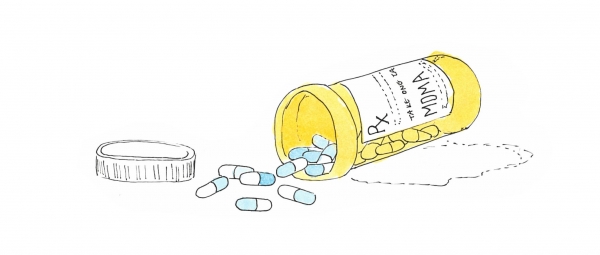
Canadian Students for Sensible Drug Policy (CSSDP) is currently applying for funding to launch a pilot project that will provide free drug-testing kits to McGill students. At the moment, the McGill-based student group is collecting data through a survey that they released to the student body on Oct. 31. The responses will allow the club to measured demand for specific kinds of drug-testing and to complete their one-time funding application to the Students’ Society of McGill University (SSMU).

The McGill Tribune met with Matthew McLaughlin, U2 Arts, and Gabriel Aboutboul,  U4 Arts, co-directors of the CSSDP branch at McGill. McLaughlin had the idea to provide students with free drug-testing kits during his term as SSMU Vice-President (VP) Internal Affairs in 2018-19, but was only able to undertake the project with the CSSDP after his tenure.

McLaughlin was inspired by universities in the United Kingdom such as Sussex, Newcastle, and Manchester, whose administrations have already funded drug-testing kits. Observing the lack of such services for students in Canada, McLaughlin believed it was time for McGill to adopt them.

“We know students use drugs and will continue to use drugs,” McLaughlin said. […] “The goal should not be to get students to stop using drugs, because prohibition, we know, doesn’t work. Instead, we look at this from a harm reduction standpoint, and we want students to know that what they’re consuming has not been contaminated with adulterants, that they’re consuming something safely.”

The SSMU funding is intended to finance a certain number of kits, the training of around five student volunteers by local harm reduction organizations, and a space from where the pilot project can begin.

“[T]he project […] essentially entails having a space on campus to distribute these kits once a week, [and] having students be able to drop by and speak anonymously,” McLaughlin said. “Essentially, they will tell us what substances they want to be testing and we will give them the reagents they need. [We will] be accompanying every kit with some literature on how to do these [tests] and hopefully holding some workshops […] so [that students] can see in-person how to do it.”

The CSSDP will also provide fentanyl test strips in every kit, allowing students to test for the presence of fentanyl or carfentanil, which are strong opioids that can lead to accidental overdose.

Aboutboul explained that the student group is looking to purchase drug-testing kits from several online and physical stores. 

“As of now, the plan seems to be [to buy the kits from] organizations like Dance Safe, […] an organization in Canada that distributes […] reagent kits [in bulk],” Aboutboul said. “We plan to separate these bulk sizes into [smaller kits], and then be able to distribute them that way to students.”

By talking to existing harm reduction organizations in Montreal such as Flying Safe and GRIP, and Project Safe Audience in Winnipeg, McLaughlin and Aboutboul realized that their pilot project should aim to do more than just provide free tools for safer drug use. 

“It’s also about interacting with students and learning about the types of drugs they use, what drugs they mix with one another, and advising them,” Aboutboul said. “It’s a way to obviously reduce harm by giving a kit but also [to create] relationships with people and [give] them some kind of advice, and this is obviously a better path than prohibition.”

In an email to the Tribune, McGill Student Emergency Response Team (MSERT) Director of Training Alberto Sobrero expressed his support for the CSSDP’s initiative. 

“MSERT is supportive of harm reduction initiatives and projects that aim to keep members of the McGill community safe,” Sobrero said. “[I]t seems to be a good harm reduction initiative and potentially very valuable for individuals who may be experimenting [with drugs] for the first time and who wish to do so safely.”

If the pilot project is successful, the CSSDP hopes to fund their project long-term through a renewable, opt-outable fee between $0.25 and $0.35 each semester, and will use its survey data to estimate the required funds.  

In the long-term, the CSSDP is hoping to inspire other universities across Canada and beyond, as its national body also has chapters across Europe and the United States. 

“I don’t think students should have to gamble whenever they’re taking a substance,” Aboutboul said. “People […] choose to take a substance and they should be allowed to know what’s in it [….] Providing the service is a way to make sure that that is a given for every person that chooses to [use drugs].”

Horoscopes, Student Life

Finals season horoscopes

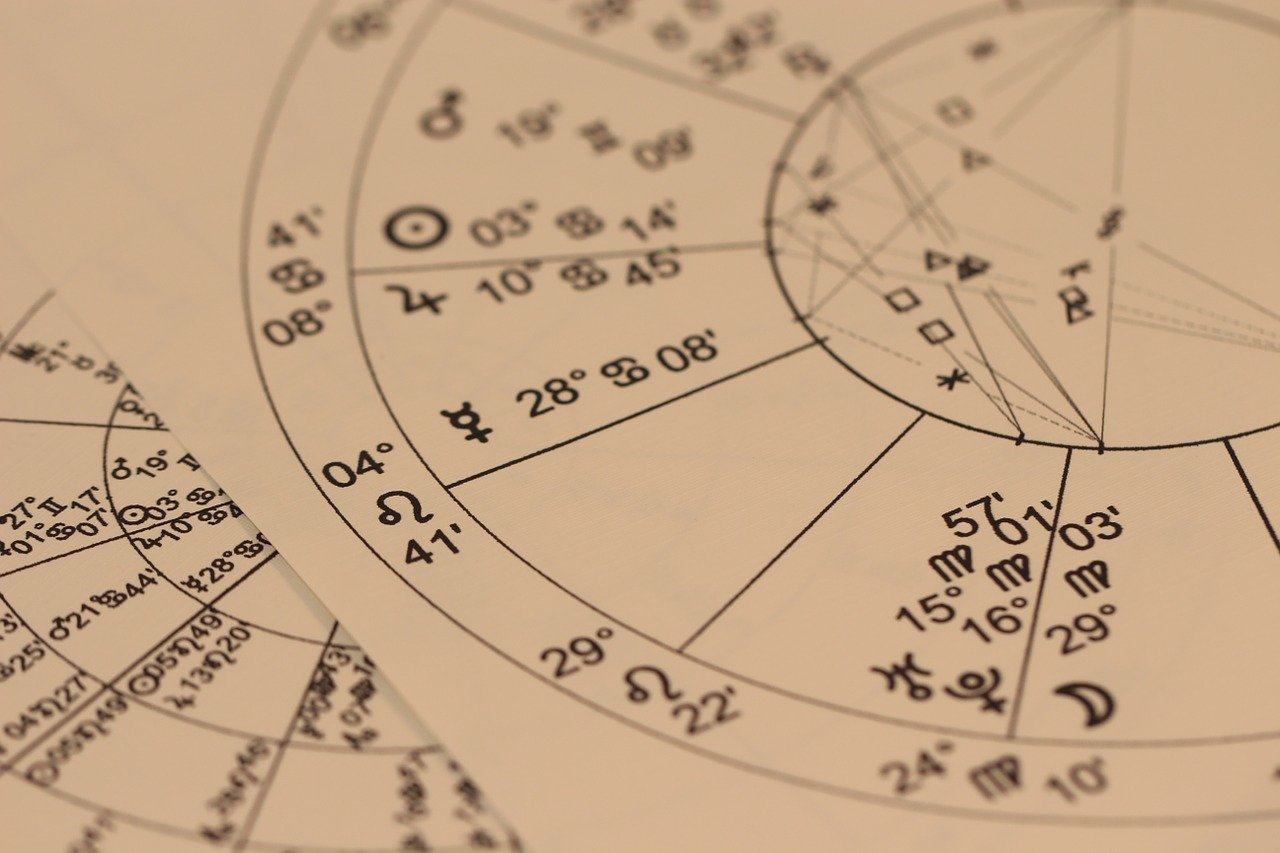
As the long month of November wears on and finals preparation begins, you might be in need of some guidance right now. While you could just go to your professor’s office hours, why not read your very own McGill horoscope right here instead? We’ll tell you everything you need to know for the month ahead.

Aries

Since Mercury is in retrograde now until Nov. 20, you might find the past bubbling up in ways you did not expect. You’ll find yourself wondering why you skipped so many classes to sleep in until noon. Unfortunately there is nothing you can do about it now except harass your friends for notes. You might also find yourself tempted to text your ex, to which we say, “Why not?” You have nothing to lose: Seize the moment.

Taurus

Do not make eye contact with the squirrels on campus over the next few weeks. They can smell fear and they will likely place a curse on you that will make you flunk your finals. If you do accidentally catch their eye, do not be the first to break eye contact. Charge at them if you’re feeling particularly feisty. Win the battle and triumph over fate.


Gemini

Studying for finals can be so boring, and you’re an air sign, so you need some excitement in your life right now. Get a joint finsta account with your bestie or significant other. It might wreak havoc in your relationship but think of all the drama! You can thrive off of that for months.

Cancer

Pro-tip for this finals season: Schedule your emotional breakdowns on the days you need to wash your hair. Showers are the perfect place to cry loudly, especially if you’re in a shared bathroom. Plus, the water will reduce the friction when you blow your nose into your hands. It’s not a glamorous look, but you need to be messy sometimes.

Leo

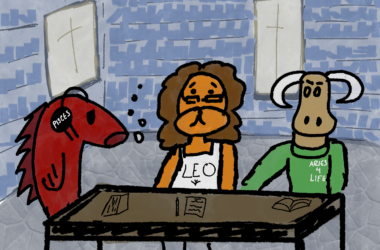
Play devil’s advocate in your conference this week. Don’t back down. Flip a desk if you have to. This is how you can assert dominance over both your peers and the TA, who will give you an A on behalf of your sheer Chad energy.

Virgo

Hey, don’t stress yourself out about finals. Yes, we know that you’re a perfectionist, but you’ve been doing well all semester. It will be okay. Binge-watch that show that you’ve been meaning to see. Have you seen Fleabag yet?

Libra

When you come to a crossroads in your life this finals season, take the road less travelled. Waitactually, you should take the road more travelled. That might be the better option. Safer, too, I bet. But maybe you’d be better off taking the road less travelled? Ugh, decisions are so hard.


Scorpio

Even though the weather is getting colder, you need to calm down and take a cold shower. Don’t get distracted by that hottie in your group project now. Snap out of it! Your one true love for this month is the sixth floor of McLennan.

Sagittarius

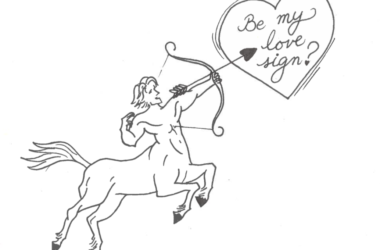
Okay, Sagittarius, please go to office hours. We know you’re in need of some guidance right now, like a SSMU baby seeking a rope to hold on to. Look on the bright side: Your birthday and Christmas are right around the corner.

Capricorn

You know that class that you always want to skip? You know the one I’m talking about. You should go—that will be your worst final. Don’t let anyone convince you otherwise. 

Aquarius

You know that class that you always want to skip? This week’s class will be super unimportant, and it is definitely not worth going to campus. Convince your Capricorn friend to skip with you. Get some overpriced Dispatch avocado toast instead, you deserve it.


Pisces

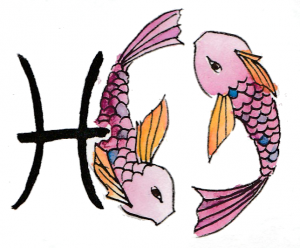
Instead of crying about your finals, you should give yourself bangs. Do it. You won’t regret it. Trust us.

(Image credits: Winnie Lee)

Arts & Entertainment, Music

In conversation with Nervous Nancy: Living through this

At first glance, Nervous Nancy is a ecclectic assortment of personality, dyed hair, and talent to spare. This four-piece student band is determined to keep punk alive. It all started this past February, when lead singer and guitarist Ada Levine made a post in the McGill University Entering Class of 2017 group calling for band members. Somehow, to the amazement of Nervous Nancy themselves, they found each other and hit it off. With Ada Levine on guitar and vocals, Nes Aliu on bass, Tara Cohen on lead guitar, Emily Gittings on drums, and Robbie Dow  on stand-in drums, Nervous Nancy is here to stay. 

On stage, Nervous Nancy embodies a free and empowering energy, but this freedom is not without its battles. Gender divisions continue to plague the Montreal punk scene, making the community challenging for femme-centric bands to navigate. 

“The experience is quite belittling. I know it’s not like […] they’re trying [to demean us]. But I feel like just being a girl in the world […] you just get so used to […] having your opinion put down and told that what you say or think doesn’t matter,” Aliu said. “The scene isn’t [as] inviting to girls as it is to guys.”

Though punk bands such as Bikini Kill and Sleater-Kinney have cleaved out spaces for femmes in the predominantly misogynistic mainstream punk scene, issues of discrimination are still prevalent in national and local circles. It may seem like these gender divisions have been done away with, but sadly, the band finds that they constantly having to prove themselves in a male-dominated world of punk. 

“It just sucks because I feel like we always say this but we don’t want being ‘the girl band’ [to define us],” Levine said. “But now I feel like every interview we do is about it because all our experiences have been shaped by that [reality.]” 

The band spoke further on the subject of gender, noting how punk isn’t necessarily something a classical ‘girl’ would find herself involved with.

 “It’s like any other gender role thing, where girls tend to go towards [a certain thing] because that’s what they experience,” Gittings said. 

Nervous Nancy is a force to be reckoned with and their experiences as women have shaped their music. This lived reality is what sets them apart from their male counterparts, like Societal Siege, BBQ Pope, or any other smattering of skate-punk boy bands.

The group noted that the girl punk genre represents unique creative avenues for women, and explained how they try to do their part in keeping the messages of that movement alive. 

“I feel like, it’s cool that our music can be so related to girls [….] like, I fucking love the line, ‘When I feel ugly, I feel mean.’ It’s like […] guys don’t feel like that as often. It’s not something that’s as relatable for dudes, and I feel like that’s kind of okay,” Dow said. “I see how excited all the girls in the crowd get and it’s nice to have something that is so fucking relatable to you personally.” 

At the same time, the band admitted that in the beginning they were hesitant to use the term ‘girl punk.’

 “We definitely don’t want to say that, like, the only characteristic as a band that we have is being a girl band,”  Levine said. 

The weight of the term ‘girl band’ or ‘girl punk’ can more often than not be subjugated to sexist reservations or judgements, but a ‘girl band’ is so much more than its composition.

It is difficult to not feel a sense of respect and inspiration after attending a Nervous Nancy show or simply listening to their music. The love they have for each other, for their music, and the punk scene itself despite the prejudices that still exist within it is evident.

“I have passion baby!” Levine said. “That’s all that matters.”


Nervous Nancy will perform at Piranha Bar Nov. 15.

Research Briefs, Science & Technology

The science behind concussions in sports

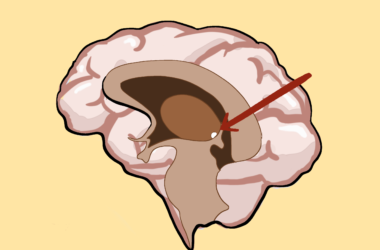
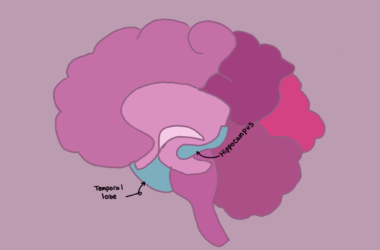
While thousands of sports-related concussions occur each year in Canada, the mechanisms behind the injury are still shrouded in mystery. Scientists use the word ‘concussion’ to describe the symptoms of damage inflicted on the brain, but they are still working to uncover the underpinnings at the cellular level. Concussions occur when the brain hits the skull, and are most commonly caused by a direct blow or quick jerking motions of the head.

In 2015, Dr. Alain Ptito, director of the Department of Psychology at the McGill University Health Center (MUHC) and concussion researcher, developed a scan to determine whether or not a person has sustained a concussion. 

“When someone has a concussion, [and] they undergo a scan, 99.9 per cent of the time, the scans are normal,” Ptito said in an interview with The McGill Tribune. “I have been interested in looking at how we could develop diagnostic tools to help us […] decide whether an athlete is affected and when that athlete is able to return to play.”

Ptito, along with Jen-Kai Chen and other researchers at McGill, the Montreal Neurological Institute and Hospital (The Neuro), and the MUHC, have developed a functional neuro-imaging test to examine the brain while a patient is performing a particular task, such as navigating through a virtual neighbourhood. As the person carries out the task, the researchers can see anomalies in the brain that would not be visible on an MRI.

“When the person is doing a task in the scanner, the regions that are involved in that task demand more blood and more oxygen, and this is what the scanner picks up,” Ptito said. “Now, when somebody has a concussion and is symptomatic, we see a lack of activation in those regions compared to a control group, […] and then that helps us make recommendations [about] whether they are able to return to play or not.”

Although contact sports like football, boxing, and hockey receive the most attention when it comes to concussions, seemingly benign sports such as curling and horseback riding can also cause head injuries. In golf, concussions may occur if a golfer gets hit in the head by a ball, or if someone standing too close to the driver gets whacked in the head by the club.

Concussions are very prevalent in soccer, largely due to repetitively heading the ball and colliding with other players. Ptito’s group is currently studying the cumulative effects of heading the ball and whether having multiple sub-concussive blows can accumulate to a point where brain damage occurs. 

“We see athletes playing soccer that get hit by the ball by accident, and they get totally messed up,” Ptito said. “[For] those that head the ball voluntarily, it’s less of a problem because their neck muscles tighten up, so the brain inside the skull doesn’t move as much.” 

On average, women receive more concussions and take longer to recover than men, possibly due to hormonal differences or weaker neck musculature. There is a need for more sex-specific studies on concussions to better treat these injuries.

Another vulnerable group is student-athletes. Concussions come with disabling symptoms such as increased sensitivity to lights and noises, anxiety, irritable mood, difficulty concentrating, and slower reaction times, all of which can hurt a student-athlete’s academic success.

For those that suffer a concussion, Ptito advised rest accompanied by some level of activity.

“It is better to slow down and to do as much as you can, unless the symptoms get worse,” Ptito said. “If the symptoms don’t get worse, keep on doing what you’re doing and gradually increase the activity.”

Ask Ainsley, Student Life

Ask Ainsley: Should I go to grad school?

Dear Ainsley,

I’m an Arts student in my third year, and everyone around me seems to be gearing up for grad school. I’m not quite sure I know what I want to do with the rest of my life, but the thought of no longer having the structure of school is worrying me. I’m also worried that I’m lagging behind my friends who are pursuing more education, and that I’ll regret it if I don’t continue my studies now. Should I go, and what should I consider when deciding?

Sincerely, 

Lost About Grad School (LAGS)


Dear LAGS,

Planning for the future after your undergrad can be intimidating, especially since it entails moving on from your university social group. It can be scary to think about going your separate ways, but it’s best that you make your decision independently of the people around you. Grad school is a big commitment, and it might take some soul-searching to determine if it’s right for you. At the same time, extra schooling can be a great opportunity to deepen your expertise in your area of study and can be either necessary or beneficial for finding higher-paying employment in certain fields. Below are a few things to consider, but every situation approaching graduation is different, so tailor this advice to your own. 

Given that you are unsure about going straight to grad school, it is probably because it’s not a necessity for your chosen career. Knowing this, assess what you hope to gain from grad school, such as more opportunities for professional experience or more focused training in a particular field. If you are in search of constructive career opportunities, it might be worthwhile to consider a more applied graduate program. These programs often include projects or internships that will bolster your resume upon completion and give you a head start with experience in your field. 

However, grad school also takes time: Most Master’s programs are around two years, law degrees take three, and a Ph.D. can be a five- to seven-year commitment. There are also opportunities that you might have to give up while in school, including the income you could earn in the workforce and moving up the career ladder. In other words, you will have to consider whether the eventual payout in terms of greater earning power, experience, and knowledge outweigh the disadvantages that come with extending your education. In some fields, work experience will be more beneficial than the research, academic projects, and book-learning involved in grad school. To determine whether this applies to your field, research what is required by jobs of interest in your field—you can do this by talking to a professional or a professor, or by taking a look at the requirements on postings for jobs that interest you. 

The cost aspect is also important to consider. Grad school can be relatively inexpensive or a significant financial burden, depending on the program and the funding you receive. Funding consists of internal awards from your chosen university, which tends to be given alongside your offer through a funding package, and external awards, which include grants and fellowships that you will need to apply for separately. If student debt from your undergrad is already a concern, it can be useful to work and save for a year or two before diving into grad school; some companies may even fund your future studies.

Ultimately, only you can make the decision about whether grad school makes sense for you or not. If you are ready and willing to put in the money, effort, and time to complete a graduate program, it can be a good option, but take time to consider what you hope to gain from the experience rather than thinking of it as a compulsory next step in your education.

Good luck! 

Ainsley

Read the latest issue

Read the latest issue