Latest News

Science & Technology

Books every self-proclaimed nerd should have on their shelf

As we head into the final weeks of the Fall 2022 semester, The McGill Tribune’s Science & Technology section has come up with a list of books to read over the winter break—or while procrastinating on assignments. Take the time to learn about science in a casual environment and don’t worry about an exam at the end of the book.

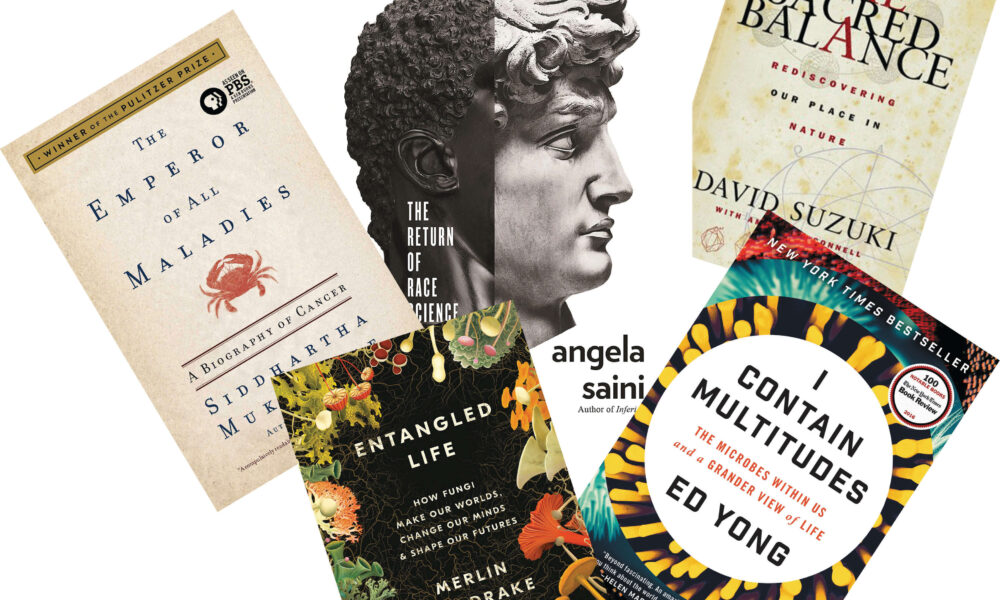
The Sacred Balance: Rediscovering our Place in Nature (David Suzuki)

David Suzuki is an iconic figure in the world of science. From his time on our screens as the host of The Nature of Things to his environmental activism through the David Suzuki Foundation, Suzuki has made the complexities of nature more digestible for generations of Canadians and others around the world. His book, The Sacred Balance: Rediscovering our Place in Nature, is no different.

Written with the help of Amanda McConnell and Adrienne Mason, Suzuki emphasizes the impacts of global warming on ecosystems and our way of life in a way that gives readers pause. He makes us think about our complicity in the climate crisis and inspires us to have more respect for the natural world by emphasizing the power of oceans, the importance of soil, and the “engine” of the planet: Fire. 

Entangled Life: How Fungi Make Our World, Change Our Minds, and Shape Our Futures (Merlin Sheldrake)

Named as one of the 100 must-read books in 2020 by Time Magazine, Entangled Life by Merlin Sheldrake is a masterful account of the world of fungi. While mushrooms may be the first example that comes to mind there are many, many more kinds—the book explores everything from  single-cell organisms like microscopic yeasts to multicellular filamentous moulds. 

Sheldrake takes readers on a journey through the mostly-unseen world of fungi, proving that such tiny organisms actually play a huge role in maintaining the world we live in. After reading Entangled Life, you might think twice before stepping on a mushroom the next time you’re in the woods.

I Contain Multitudes: The Microbes Within Us and a Grander View of Life (Ed Yong)

Just like the world of fungi, the world of microbes is one that the average person knows little about. Ed Yong, a Pulitzer-Prize-winning science journalist at The Atlantic does his best to rectify this in his book I Contain Multitudes: The Microbes Within Us and a Grander View of Life. Yong’s writing style makes the complex world of microbes accessible to all those curious about the tiny but essential organisms in our lives. 

Yes, nasty germs and bacteria are microbes, but so are the antibodies that keep us safe. Journey down the microscope with Yong to understand why microbes are not as bad as we may think—in fact, you learn about the crucial role the microbiome plays in gut health, and even in preventing neurological diseases such as dementia.

Superior: The Return of Race Science (Angela Saini)

Angela Saini minces no words in her book Superior: The Return of Race Science, which explores the ever-present racism in science that has been ignored in the name of “progress.” Beginning with an examination of the roots of racism in science that date back to before Darwin published On the Origin of Species, Saini traces the ways in which racism influenced many of the major scientific developments and constructed oppressive systems of the 19th, 20th, and 21st centuries.

Saini provides countless examples of the pervasiveness of racism in science: From the first attempts to track evolution, white scientists argued that white people were genetically superior to any other race to justify white supremacy. Eugenics—the theory that “planned breeding” could be used to maintain “racial purity”—emerged after World War II as a tool to be used to maintain the racial hierarchy There are many more instances that Saini uses to make white people understand that science is being used as a tool to perpetuate oppressive systems and uphold white supremacy.

The Emperor of All Maladies: A Biography of Cancer (Siddhartha Mukherjee)

Published in 2011 and winner of the 2011 Pulitzer Prize for general nonfiction, The Emperor of All Maladies: A Biography of Cancer delves into the history and science behind the world’s deadliest disease. Siddhartha Mukherjee uses his experience as a widely renowned cancer physician to craft a riveting tale about the evolution of cancer, from its first mention in ancient Persia to the future of cancer treatments such as immunotherapy. 

While sometimes heavy, the discussion of cancer, the damage it has wrought, and our attempts to rectify that damage are important reminders of the progress scientists have made. Crack open this nearly 600-page book for a whirlwind tale of patients who have fought cancer and physicians who have tried to develop a cure.

Arts & Entertainment, Film and TV

Lost birds find their way back home in new documentary

Content warning for colonial violence

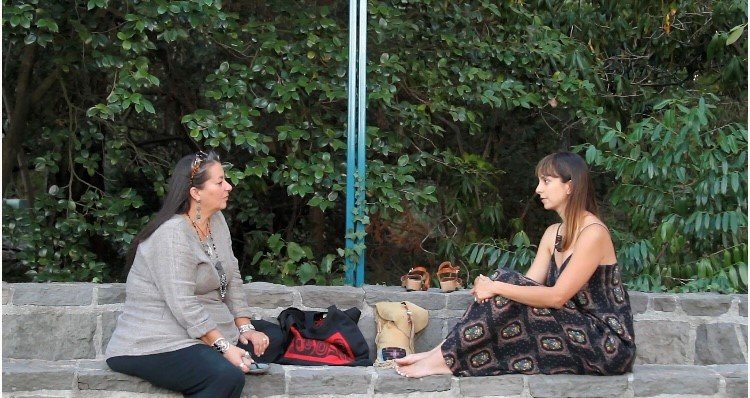
Daughter of a Lost Bird, directed by Brooke Pepion Swaney, debuted in 2021 and premiered as part of a film series called ‘Body and Land,’ presented by Cinema Politica, a non-profit media arts organization with a mission of supporting the work of independent, politically-minded filmmakers. The term “lost bird” refers to people who have been adopted from Native reservations and grow up not realizing they are Native American. Daughter of a Lost Bird focuses on Kendra Potter, a Lummi woman adopted into a white family as a baby. The audience follows her journey as she meets her birth mother, April Newcomb, and is introduced to the Lummi Nation of Bellingham, Washington, for the first time. Moviegoers also learn about Newcomb, who was herself an adoptee, and her story about overcoming addiction and reconnecting to the Lummi Nation in her own way.

The film opens with a phone call. A familiar Apple ringtone echoes loudly in an empty room while a young woman sits cross-legged on a rug with the phone pressed to her ear. Her anxious expression makes the audience sit forward slightly, on edge. The call clicks to voice message, and the woman says in a halting voice, “Hello April. This is your birth daughter, Kendra”. She adds she will be awake for another hour if April wishes to call her back. April hangs up and laughs with the people off-screen about the awkwardness of the voice message. The scene jumps to later that night, when Kendra’s phone is ringing—April is calling her back. Most parents with children in the adoption system do not want to or have the opportunity to reconnect with their children, making Kendra’s story a rare one. 

Daughter of a Lost Bird depicts the intensely emotional process through which many Indigenous families, torn apart by colonial policies of cultural assimilation and generations of trauma, reconnect and learn about each other for the first time. Kendra’s story delves into the intimate control governments had over Indigenous life and community-building, exemplifying the 19th and 20th century settler-colonial and gendered phrase: “Kill the Indian, save the man.” Although she was never taught about her culture growing up, she was raised as part of a loving, upper-middle-class white family and felt no grief over the absence of Native American culture or family in her life until her discovery. 

Telling a simple yet complex story, the film tackles the emotionally fraught and lasting results of colonial control and reach over Indigenous peoples in North America. With an emphasis on care, healing, and acceptance, Daughter of a Lost Bird portrays the values the Lummi Nation, among other Indigenous peoples in the Americas, place on the importance of family. Viewers watch throughout the film as Kendra goes from feeling overwhelmed and slightly out of place in her newfound community to passionately embracing her culture and lost community. The significance of the Lummi Nation’s welcome cannot be overstated. On Kendra’s first visit to the Nation, she is hugged by people she has never met, who warmly tell her: “Welcome back home.” 

Kendra’s story of reconnection with her birth mother and community is an essential watch. White families adopting Indigenous children is common, Brooke Pepion Swaney, the film’s director and a member of the Blackfoot Nation, explained during a Q&A after the film. Swaney felt that most Native birth parents who have given up their children for adoption do not want to meet them. This in turn creates a cycle of Indigenous trauma from children entering the broken foster care system, which can extend for generations. By giving a voice to these stories of reconnection, the film works to facilitate the redress of intimate forms of justice and reconciliation for Indigenous peoples.

Daughter of a Lost Bird played at Cinema Politica on Oct. 24 as part of their Body and Land series. Movies from this series will be playing every week until Dec. 5. A suggested donation of $5-10 is encouraged.

Campus Spotlight, McGill Recommendations, Student Life

The official 2022 McGill Residence cafeteria rankings

Pull up a stool and listen in. This is the official 2022 McGill Residence cafeteria rankings. No ifs, buts, or maybes—this is it. 

Along with the ranking, this also serves as a write-up for the places where McGill provides students with the most important commodity of all. And no, it’s not your education—it’s your breakfast, lunch, and dinner. 

Before we commence, I have one instruction: Go to your music app and look up “Stayin’ Alive” by the Bee Gees—I’m serious. Get it up now. You know the song. When I give the signal, press play. This is just to add some rhythm to the piece and, after all, I do seriously want to avoid food poisoning and… stay alive. 

So, are you ready? Here’s your signal: Hit play. Now, sit back, relax, and here we go. 

4th: Carrefour Sherbrooke

In last place is Carrefour Sherbrooke (C4). What can I say: You knew it was coming. It’s a cave of a cafeteria, with cluttered decoration, cramped seating, and a serving area that’s perfect if you want someone breathing down your neck. 

They have two hot serving counters, one by McGill and another by the burrito chain, Quesada—that’s when you know McGill is out of ideas. The McGill one has a burger area and a hot food option at the far end, which always looks lonely. And when the beef tacos look like shovelled mouse droppings, you can tell it isn’t the best. Even biting your fingernails becomes inviting. 

Food: 2/5 

Seating: 2/5

3rd: Bishop Mountain Hall

Onto the podium: In third is Bishop Mountain Hall (BMH). First, the positives: The seating area is magnificent—sufficient, spacious, and with a view of Montreal’s skyline. I mean, now we’re talking. The serving area is also enormous and has an extensive selection of cold food options, as well as pastries. 

So, what’s the problem? The hot food—it’s shockingly poor. I got the fish and chips last week and I think it’s the first time I could literally feel each mouthful peristaltically congesting my guts—as well as my will to live. If you can’t serve decent hot food as a residence cafeteria you might as well dance with scallops on your head—we’ll cook ourselves. 

Food: 2/5

Seating: 5/5

2nd: Royal Victoria College 

In second place is the Royal Victoria College (RVC) cafeteria. Some of you might have expected RVC to have come out on top—well, not so fast. 

Walking through the RVC corridors feels like the underpass at the end of the world. Inside, it smells like pompous RVC first-years, which certainly is not one of my favourite smells. This is made frightfully worse by the fact the hall is actually full of them. 

RVC has the second-best seating area, behind Bishop Hall, as well as a ton of food options. And this is where it comes into its own: From customizable pizzas, to beef and chicken burgers on the grill, to a make-your-own pasta bar. What brings it down is the quality. It’s better than BMH, sure. But value for your buck is still in question. Take the $10 burgers without fries—pre-made and tasting like yesterday. Or the $11 pizzas—on the small side and could well have you shot in Rome. But after all, this is university cuisine, so it slots in second. 

Food: 3.5/5

Seating: 4/5

1st: New Residence Hall 

How’s the music going? I think it’s working, I haven’t dropped dead yet. Now, for our first place, at the top of the tree is New Residence Hall (NRH). 

NRH’s seating area isn’t as large as BMH and the food options aren’t quite as expansive as RVC— their seating area does suffice, though, and there’s certainly enough choice to beguile any MacBook warrior student. 

The reason NRH is top is simple: They have the highest quality of food—this is what matters most. Or to put it differently, why does NRH beat RVC? Fewer grimaces. So squabble all you want. We go to these dining halls to eat. And with fairly fresh, relatively nutritious, and, crucially, enjoyable food most of the time, NRH must—must––take the gold. 

Food:4.5/5

Seating: 3/5

Album Reviews, Arts & Entertainment

Arctic Monkeys return to earth with grandiose inconsistency

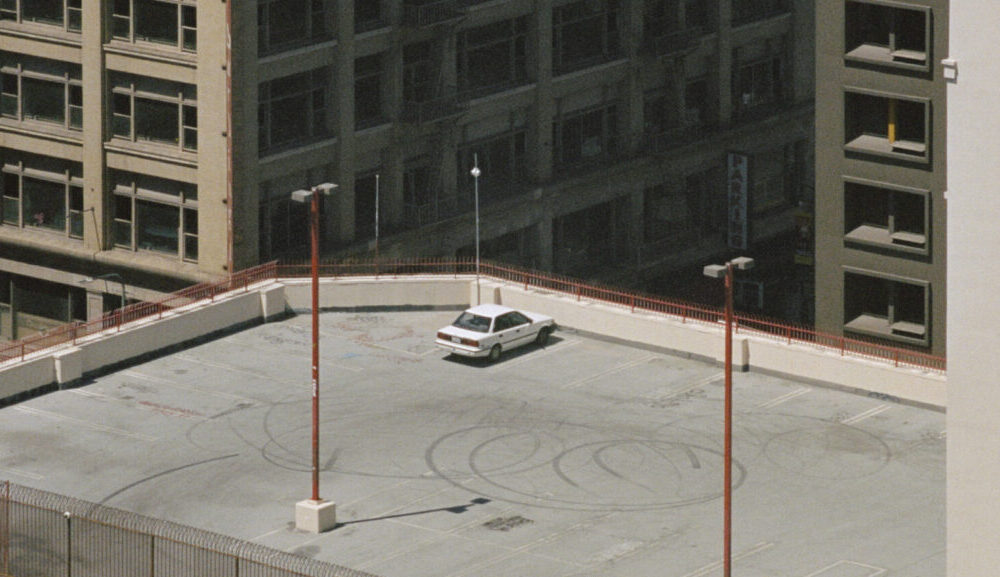
Arctic Monkeys are no strangers to reinvention, having pursued a range of musical directions since emerging as part of the mid-2000s garage-rock revival. On The Car, however, the band continues down the path set out on 2018’s left-field, lounge-infused Tranquility Base Hotel & Casino, refining their approach with new baroque-pop influences to produce a lavish-sounding record. 

Lush and orchestral strings fuse with Alex Turner’s falsetto vocals to add a sense of grandeur to the proceedings. Though swirling retro synths and pianos take precedence, the band’s characteristic sharp guitar leads cut through this air of mystique in calculated moments, such as the uptempo “I Ain’t Quite Where I Think I Am.” 

Lyrically, the album marks a departure from the cryptic musings of Tranquility Base, set in a fictional space hotel. “There’d Better Be a Mirrorball” epitomizes this more grounded approach, seeing Turner speak directly to a distant lover, lamenting their cynicism over a Bond-theme-esque soundscape. Turner also refocuses his metaphors surrounding a relationship in “Jet Skis On the Moat,” comparing nostalgic images of CinemaScope films with the “drying paint job” of a dying relationship. 

The Car will not suit every Arctic Monkeys fan’s taste, particularly those wishing for a return to the raucous indie-rock of their early career. Rather than reminiscing debaucherous nights out in Sheffield, Turner admirably looks to the present, reflecting on his glitzy surroundings as an L.A. resident. This manifests both in the record’s grandiose stylings and in lyrical themes of artifice and glamour, such as the titular conceit on “Body Paint.” 

Despite these sonic and lyrical merits, The Car tends to get lost in its own richness. Songs like “Big Ideas” and “Mr. Schwartz” revel in their extravagance, meandering through their run times without substantively developing the enticing melodies they initially present. At its most focused, The Car deftly combines evocative lyricism and serene baroque-pop. It’s a shame the band doesn’t sustain these moments, resulting in a record characterized more by its style than its substance. 

The Car is available to stream on all platforms, and Arctic Monkeys will perform at the Bell Centre in Montreal on Nov. 9, 2023.

McGill, News

Medical students call for comprehensive abortion education across Canada

Medical students are pushing schools across Canada for greater abortion education in their curricula as a means to improve access to reproductive health care nationwide. Students are emphasizing the issue in light of the overturn of Roe v. Wade by the Supreme Court of the United States on June 24, which has led to the increased scrutiny of abortion access in Canada. 

Sex[M]ed, an organization founded  by Jillian Schneidman, a third-year medical student at McGill, launched a petition on March 10 calling on various Canadian institutions to increase their abortion training in medical education. The petition was addressed to the College of Family Physicians of Canada, the Medical Council of Canada, the Association of Faculties of Medicine of Canada, and every medical school in the country.

The petition urges institutions to include and standardize curricula on abortion and to ensure students are exposed to abortion practices in a clinical setting. It also calls for institutions to create working groups to monitor the implementation of these goals and to keep the medical community informed about any progress. 

Currently, McGill’s medical curriculum dedicates one hour of total lecture time to abortion within a larger four-week block titled “Reproduction and Sexuality.” In a statement to The McGill Tribune, McGill media relations officer Frédérique Mazerolle explained that the curriculum is designed this way because counselling patients about abortions and performing abortions is beyond the level of learning expected of medical students.

“Over the course of their training, students will, however, be exposed to patients with spontaneous abortions (miscarriages) and may see patients who request termination of a pregnancy,” Mazerolle wrote. “This exposure happens within the clinical context.”

While abortion is legal in Canada, whether they will perform the procedure or not  is up to the discretion of healthcare providers. Abortion providers are also concentrated in urban areas, making access to the procedure in remote and rural communities difficult. Prince Edward Island, the Yukon, and the Northwest Territories all have one abortion provider for the entirety of the respective province or territory, while Quebec has 49 providers.

In an interview with the Tribune, Schneidman stressed the importance of comprehensive abortion education for medical students as it reduces barriers for people seeking the procedure.

“In order to increase this access and ensure that abortion services are available across the country, it really relies on health care providers, including physicians to be educated, trained, and willing to provide the procedures,” Schneidman said. “Equipping medical students with the information, tools, and resources is really the starting point to be able to do that.”

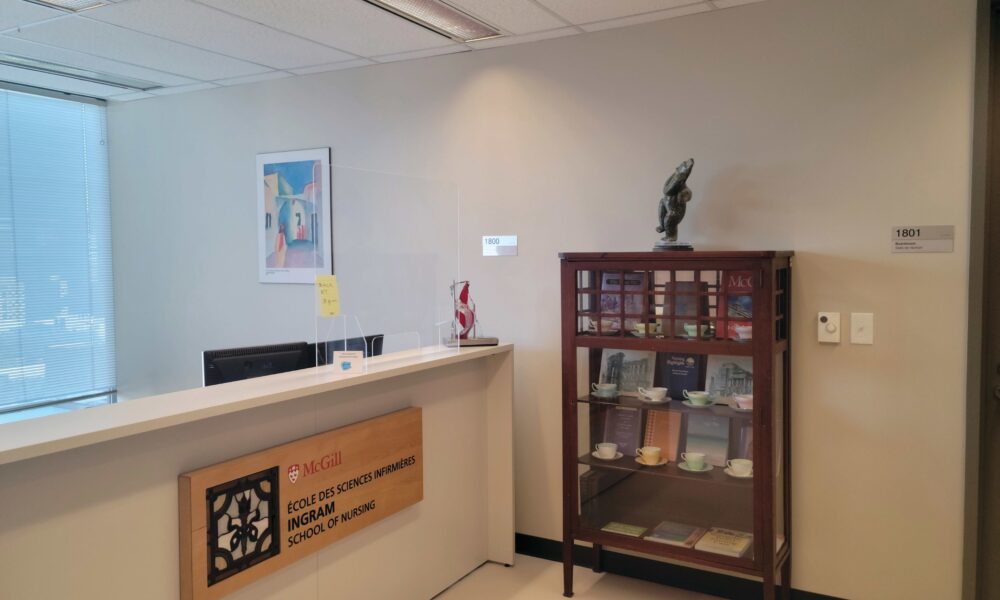
Cheryl Armistead, professor at the Ingram School of Nursing, added that a lack of education leads to the further stigmatization of abortion. Armistead believes that expanded education can work to shift perceptions as people, particularly medical students, enter the workforce.

“Everyone who’s entering school […] they’re going in with all the stereotypes and myths they’ve absorbed from society,” Armistead said in an interview with the Tribune. “If they are not given the opportunity in academia to question that, to open their mind, to look at other perspectives, then they are going to exit and go into care and just reinforce all the status quos, inequities, and oppressions that already exist.”

Armistead said that the role of academia reduces the harmful rhetoric surrounding abortions.

 “So we have to have open dialogue, we have to have this conversation, we have to stop stigmatizing it. And if we don’t, if we don’t do it in academia, oh my goodness, where [else]?”

Kelly Gordon, assistant professor of political science, and Pearl Eliadis, a lawyer in Quebec, will explore the issue of abortion rights in Canada further during a panel on Nov. 2. The event titled, “Roe v. Wade: A Canadian Perspective Panel,” will be hosted by McGill Medical Students 

for Choice (MMSFC). 

For medical students looking to learn more about abortion, MMSFC is an organization that works to destigmatize it and offer more opportunities for abortion education outside of the classroom.

Off the Board, Opinion

Remembering Ammi’s Saree

Content Warning: Mention of death and loss of a family member

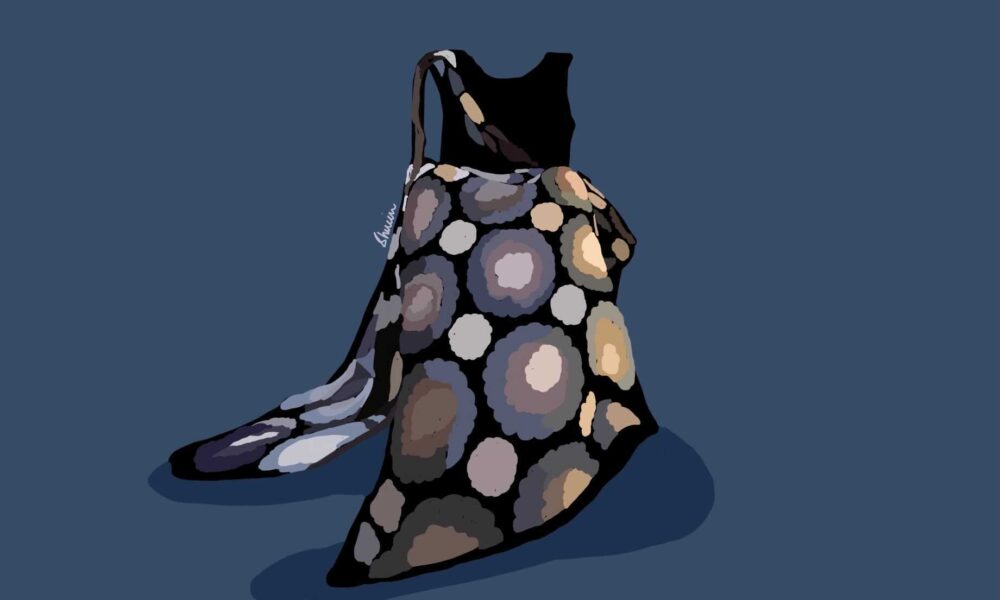
July 21, 2021, was the only day I ever wore my Nani’s (maternal grandmother’s) saree. After years of putting off the theme, my family finally committed to wearing sarees on Eid Al-Fitr. While one of my cousins bought hers straight from the market, and the other wore her high-school farewell saree, the one I wore was near and dear to my heart. An ancestral piece, it was a silk, black saree with blue and grey rosettes throughout. I adored every second of wearing a piece that had been passed down for generations. As it was my first experience wearing Ammi’s (we call our Nani ‘Ammi’) clothes, I was almost flaunting when I showed her how I styled it. However, it turned out to be the only time I would be able to do so.

One of the most tragic and pivotal events I have ever had to face took place just over a month ago. “Ammi passed away” was the WhatsApp notification that popped up on my mobile screen. 

Experiencing the loss of a family member while being away from home was unfamiliar territory. I didn’t know how to approach it. No one prepares you for it, and I don’t think anyone ever can. The most I could do was read it over again and accept the three words shown on the screen, but what was the next step? Do I cry until I feel like I’ll be able to move on? Or do I shut down the idea of mourning the loss? Whatever my choice, it was important to remind myself that I didn’t have to go through it alone. Everyone affected by her death felt a different pain; the only one I can speak for is my own. I felt my grieving was distinct in that we were half a world apart.

I couldn’t escape my endless yearning for a physical goodbye. It was my first waking thoughts that hurt the worst in the weeks immediately after her passing. With time, however, I noticed how remembering certain cherished moments with Ammi became a coping mechanism. One of these memories was of the time I wore her saree. As each day passed, I found it to be of deeper meaning to me. The memory associated with the saree made it an object I would hold onto tightly.

These days, I have the urge to hold the saree as soon as I get back home in the summer. I have the urge to remember its importance in my life and make sure it’s treated with care. I try to imagine how the image of Ammi wearing her saree would seem now. The idea of safekeeping someone else’s belongings will now carry greater responsibility. The saree’s journey is an ongoing one. However, its different chapters will be frozen in time and pictures. 

I had to deal with the helplessness of my inability to be with Ammi during the funeral rituals. Dealing with loss required a rare approach this time. I needed to remind myself to not push away the emotions, to take my time. The special memory and honour associated with Ammi’s saree will never fade. Grief is definitely not a smooth journey: It’s a bumpy ride with pit stops of flashbacks and recurring memories. July 21, 2021 is one of my pit stops, and I don’t mind staying here a bit longer.

McGill, News, Private

McGill librarians say students regulate volume levels, but not food consumption in libraries

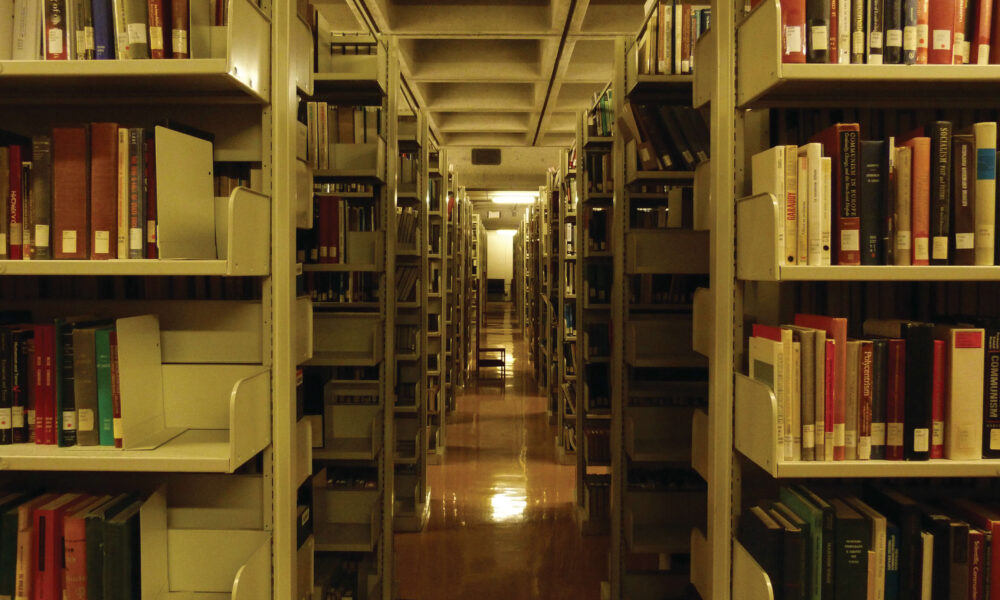
Finals season is fast approaching, and with them comes extended library hours to accommodate students. Libraries are a popular study spot and as foot traffic increases, more students have to confront library policies like silent zones and bans on eating. 

Anjolie Levêque, U2 Arts, is one of these students. On Oct. 31, Levêque was writing a midterm in the Humanities and Social Sciences Library and said that while it was “packed,” the noise level was not absurd.

“I got there around 12 and it was at 50 per cent capacity and I was on the fifth floor [….] By the time I left all the seats were taken,” Levêque said in an interview with The McGill Tribune.  “I heard a bit of music coming from people’s earphones but today was actually pretty good. I have had some days where people talk very casually, full voice or constantly whispering in completely silent zones.” 

Anaïs Salamon, head librarian of the Islamic Studies Library, and Sonia Smith, the acting head librarian of the Nahum Gelber Law Library, both told the Tribune in separate statements that controlling noise in their respective libraries is not something they have to monitor closely. Students typically self-regulate and respect the other students trying to work. 

“If some students are noisy, they will be silenced by other students,” Smith wrote in an email to the Tribune. “We have […] very respectful students that come to the Law Library to study, instead of for the purpose of socializing.”

The generally calm atmosphere of the Law Library has not stopped library staff from having protocols in place for handling rowdy students. Ana Rogers-Butterworth, liaison librarian for the Law Library, told the Tribune in an email that librarians are not the only ones around to enforce the rules.

“Library staff is on site during open service desk hours […] to respond to any complaints and university security responds very quickly if needed. A security guard also does rounds throughout the day,” Rogers-Butterworth explained. “When the library is open and the service desk is closed […] there is a security guard stationed at the door and another security guard does regular rounds of the building.”

Back on McTavish, Salamon believes that the atmosphere and floor plan of the Islamic Studies Library is what keeps students quiet while they work. 

“We are lucky to be in an environment that is conducive to quiet study: [T]he historical nature of the building, the bookshelves, and the individual study carrels seem to be enough to enforce the noise policy,” Salamon wrote. “The fact that the popularity of the [Islamic Studies Library] is constantly growing makes it a little more challenging for us to enforce policies, but it remains manageable.”

In the Islamic Studies Library, however, the policy that is most often violated is the no-food rule, according to Salamon. Most libraries have a policy against food because scraps and crumbs attract rodents and bugs, who often turn their attention to books when all the food is gone. 

“I wish people would understand that food remains attract rats and mice and that there is a good reason why we ask them not to eat in the library,” Salamon wrote. “When we see users eating, we will ask them to pack up the food and go somewhere else to eat; but we know that as soon as we are gone people go back to eating.”

Some students, like Anakin McMahon, U3 Nursing, take issue with the no eating policy, especially when they find themselves spending hours at a time working. 

“I have never had anyone tell me I shouldn’t [bring food], but I feel like we need to eat,” McMahon said in an interview with the Tribune. “For a lot of people who can’t go home between classes, this is probably the best place where they can eat an affordable lunch brought from home.”

McGill, News, The Tribune Explains

Tribune Explains: The Legal Information Clinic at McGill

The Legal Information Clinic at McGill (LICM) aims to help students with anything from accusations of plagiarism to navigating disputes with landlords. The McGill Tribune looked into this campus resource and all the legal issues the LICM’s volunteer staffers can help students address. 

What is the Legal Information Clinic at McGill? 

The LICM is a bilingual, free legal information service. Located on the main floor of the Students’ Society of McGill University (SSMU) University Centre building, the LICM provides legal information to McGill students and the Montreal community. It also helps with student advocacy, such as representing students in disputes with McGill, and community services, such as hosting public legal education pop-up booths. The LICM’s team consists of approximately 90 caseworkers and student advocates and six directors who manage the clinic. Though staffed by McGill law students, the LICM is an independent organization.

What types of legal issues can the LICM help with? 

The LICM can provide legal information on a broad range of issues, including housing, employment, immigration, municipal law and by-laws, and more. Providing legal information is different from advising. LICM caseworkers can explain and cite laws, but are not allowed to recommend any course of action to students. This is because the volunteer caseworkers are law students and are prohibited from providing legal advice as per section 128 of the Act Respecting the Barreau du Québec.  

The LICM does not take on cases that deal with criminal, tax, or construction law. In an email to the Tribune, the LICM clarified that issues in these legal areas are complex and are difficult to answer competently without obtaining specific information and giving advice. However, students can turn to the LICM’s Community Resources webpage that lists relevant resources to address those matters. 

What type of advocacy can the LICM do for students? 

The student advocacy branch assists students with formal and informal dispute resolutions related to McGill. This means everything from helping students navigate McGill’s internal policies, such as the Policy against Sexual Violence (PSV) or the Code of Student Conduct and Disciplinary Procedures (CSCDP), to facilitating negotiations between students and McGill or students and student associations. Student advocacy officers can also represent students in hearings with McGill by helping students prepare evidence and supporting documents before proceedings.  

The LICM student advocacy branch can also help navigate issues with academic supervisors, grievances against the university, and disciplinary matters. The LICM has also participated in the revision of McGill policies. For example, they helped improve the McGill PSV by commenting on it from a student-centric position in 2016 and were also consulted during its recent revisions in 2022. 

What can the LICM do for student groups?  

Through their Just Info program, the LICM can provide student groups and McGill community organizations with free legal information in the form of presentations. These presentations may be given in English or French and can range from 30 minutes to three hours. Possible topics include most areas of Quebec law, except for criminal law, tax law, and construction. While the presentations are tailored to the needs of the group, caseworkers can only offer basic legal information. 

How can students access the LICM’s services? 

Students can sign up for legal information by filling out the LICM’s form on their website. Student advocacy services can be accessed by setting up an appointment through email or by phone. 

In January, June, and September, the LICM also sets up pop-up legal information clinics on campus as part of their ‘Know Your Rights’ campaign. Members of the McGill community can walk up to the booth and ask specific legal questions to LICM volunteers, which they will then try to respond to immediately. The specific dates, times, and locations of pop-up booths are posted on the LICM’s social media accounts. 

The Legal Information Clinic at McGill can be reached at 514-398-6792 or at [email protected].

Emerging Trends, Student Life

A sticker is worth a thousand words: Laptop stickers, explained

As we reach the peak of midterm season, campus libraries are jam-packed with students scrambling to get all their work done. Although everyone is essentially there for the same reason, let’s face it: Some students simply look cooler than others. Could this be the result of their carefully curated fall outfits? Their brand-new $800 AirPod Maxes? Or is it their aesthetically decorated laptops? I would argue that it’s the latter. 

I had the chance to chat with some students about the increasingly popular phenomenon that is covering your laptop with stickers. Being fairly new to the trend myself, I learned a lot about the thought process behind it and how it varies from student to student. 

Maximalist or minimalist?

Students love to show off the cool stickers they pick up at trendy brand stores, cute cafés, or clubs to promote their extracurricular activities and showcase their personalities. But how does one select which stickers make the cut?  This is a widely debated topic amongst sticker fanatics. Some attempt to fill up every inch of their laptop cover, whereas others prefer a smaller, more meaningful set of stickers. Those who favour a more minimalist approach, like Alex Toca, U1 Management, prefer to have about 50 per cent of their cover coated. 

“Less is more,” Toca said. “Many stickers make a laptop cover look too crowded.” 

Others disagree with this: A laptop cover is meant to be as decorative as possible. After all, why waste space? Having more stickers makes a laptop cover much more captivating to the eye.  

What’s the motivation behind laptop stickers?

I received multiple answers to this question, but one in particular frequently came up: Laptop stickers are an excellent way of exhibiting one’s various interests, as well as giving people a taste of their personalities. In general, students seem to select stickers that hold some meaning for them. 

Anastasia Van Ryswyk, U1 Arts, shared the significance behind her laptop stickers in an interview with The McGill Tribune. 

“Some of them are school logos from universities of my state of residence, which reminds me of home,” Van Ryswyk said.

Better to showcase a smaller or larger number of interests?

Luca Lexham Cianciaruso, U2 Management, explained the importance of sticker diversity.

“Just like computers are used for a variety of purposes, stickers are meant to showcase a variety of interests,” Lexham Cianciaruso said. 

This is pretty much a consensus among students: It’s better to display various topics of interest as opposed to one. The way students approach this, however, differs. Some will go out of their way to buy stickers and make their laptop cover as diverse as possible to ensure they display every aspect of their overwhelmingly interesting personalities. As such, they’ll pay extra attention to ensure a variety of topics are represented amongst the stickers they choose. 

When “many” becomes “too many”…

Although the sticker decorating process may seem fun, it can get quite crowded with multiple stickers. Moreover, attempting to remove stickers is a tricky process, as it can easily result in a sticky, dirty-looking laptop if not executed with steady hands and laser focus so it’s important to be meticulous when removing them. The best trick, apparently, is to use nail polish remover. This sounds dubious, I know, but students swear by it: Once the remover makes it soft enough, they say you can use a credit card to scratch the remaining residue off to make your laptop cover as good as new. 

Others, like myself, however, cannot simply rely on word of mouth and turn to Google for a lesson on the art of laptop sticker removal. To my dismay, it turns out that the first suggestion that pops up when you Google “How to properly remove sticker residue from your laptop” isn’t entirely reliable. Don’t use vinegar to remove sticker residue and if you don’t believe me, I’ll gladly show you the current state of my laptop.

Features

The radical act of leaning on others

I hit a slump. By Thanksgiving break of 2021, I could barely get out of bed, make breakfast, or even sum up the strength to scroll on TikTok. Just a couple of weeks earlier, I was planning out every hour of my day, executing all my tasks with flying colours, peaking in productivity and socialization. I did not understand what had happened. It took a lot of rest, extensions on assignments, and breakdowns to recover, and even then, I still feel the threat of it happening again almost every day.

This “slump,” as I called it then, was actually autistic burnout. Autistic burnout is in many ways similar to a depressive episode: You experience a lack of motivation, an excess of hopelessness, and a lack of energy. But what makes autistic burnout tricky to identify and overcome is that all the tools that typically help depressed people, like going outside, seeing friends, and engaging in hobbies, can make the burnout worse. So basically, you are stuck in your stuckness. 

I had experienced this type of burnout before. Just a few months earlier, in the winter of 2020,  I was so unwell I could not read, think clearly, or physically take care of myself. I ended up moving back home and taking a leave of absence from school. During those months, the thought of doing schoolwork was enough to induce a panic attack. Emails to advisors were excruciating. Although simple, the process to request a leave of absence left me drained for days.

Looking back on these two experiences, what I had thought were depressive episodes were really symptomatic of something entirely different. I fell into a deep spiral of trying to figure out what exactly was “wrong” with me. As soon as I could, I sought out a psychiatrist at home and was diagnosed with ADHD. I had done my research and knew the diagnosis was likely: I experience unpredictable bursts of motivation, have intense dedication to hyperspecific interests, and struggle with task initiation. ADHD. And yet, as my psychiatrist talked me through my diagnosis and medication—hi Ritalin—it became obvious that she was missing something. According to her, my ADHD induced social anxiety as well as the sensory sensitivities I expressed I had. Nonetheless, I decided to give the medication a try and see what would happen. I was like an overly caffeinated toddler for a few weeks, not sleeping or eating, but I was finally getting my schoolwork done. I guess it was working. 

In my follow-up psychiatry sessions, I tried bringing up the aspects of my mental health that were getting worse. I struggled being in public around a lot of people; trips to the grocery store took me down for an entire day, a disruption in my routine felt catastrophic, and if I became overwhelmed, I stopped speaking entirely until I calmed down. My psychiatrist did everything to explain how this was social anxiety and handed me a booklet with instructions for social situations: How to make proper eye contact in a conversation. How to engage in small talk.

I felt mocked. I knew how to do these things—it was just not worth the physical exhaustion of performing them. I suspected a more accurate diagnosis for me was Autism Spectrum Disorder (ASD). I took all the tests, memorized the DSM-5—the American Psychiatric Association’s diagnostic manual of mental disorders—and painstakingly combed through my childhood memories. At every turn, I found myself discovering a new aspect of my life—of my brain—that I had ignored. Or been forced to ignore. This process was painful. I was peeling back layers upon layers of trauma and masking, realizing no one around me truly knew who I was. 

My girlfriend is autistic as well, and so I knew enough from their experience that a medical diagnosis was neither easy to come by nor a holy grail. Most medical professionals do not understand autism through the experiences of neurodivergent people, and most diagnostic tests are based on stereotypes of genius little white autistic boys lining up trains. They therefore fail to accurately assess anyone who is not a little white boy. I also experienced firsthand people’s reluctance to accept self-diagnosis as valid. At an earlier time in my life, I would have agreed that doctors are the best people to provide accurate diagnoses. But eventually I realized that this was a matter of who I was. After seeing psychologists, psychiatrists, and counsellors since the age of six years old who never even thought to assess me for anxiety, I learned that I am the person who knows myself the best. 

Despite understanding the importance of self-diagnosis and the inadequacy of the mental health care system, I was still desperate for validation. I waited for someone to tell me that I was autistic, that I had not made it up, and that I was allowed to be in pain. I was seeking this validation from psychiatrists and my parents, but I quickly understood that I was looking in vain. 

After speaking to other late-diagnosed and self-discovered autistic people, I learned that I was not alone in my experience. Kate Ellis (BA ‘22), explained that before seeking out a professional diagnosis, they were looking for affirmation from the people around them. 

“I mostly just wanted people in my life to like, believe me,” Kate told me. “I wanted the validation of having the words for my experience and wanting people to know me in the way that I now know myself.” 

These words struck me, and I was overcome by a deep sense of grief for what my life could have looked like if I had received that validation as a child. This need for acceptance, however, ran deeper. I needed to validate myself first, and to accept the possibility that my health was more complicated than I thought. When I talked to Ana Dumitrache (BA ‘22), they echoed this sentiment. 

“I think I had a lot of inner bias,” Ana said. “And I had to work on myself [through] a lot of self hate, like, not wanting to be different or be perceived as someone less competent.” 

Talking to other autistic people led me to a realization I was not expecting. Beyond diagnoses, what is key to our survival in an ableist world is community. When I decided to write this feature, I knew I wanted to ask other people who are disabled, autistic, or neurodivergent how they navigated school, the medical system, and relationships. I was excited to conduct interviews, but I did not realize just how transformative these conversations would be. They went beyond the idealized journalistic dynamic of the “objective” interviewer asking questions to a “subjective” individual. I could not easily detach myself from the questions I was asking because they were so deeply linked to my own experience. 

At first this frightened me: What if I was breaking some sacred journalistic code of honour? Or what if I ended up submitting a glorified rant session? But as my interviews progressed, it became apparent that being part of the story I was telling was only strengthening my piece—I write what I know and ask about what I don’t. 

What all the people I interviewed and I know is that the institutions and systems that we navigate daily, like the university and the health care system, are inadequate and actively harm neurodivergent people. Alex*, a U4 Science student has experienced barriers to accessing McGill’s resources. They have ADHD, but have not been able to get an official diagnosis because of the exorbitant amount of money they would have to pay upfront just to get an assessment. “If you don’t have a diagnosis, there is no solution for you,” Alex said. 

Kate had a similar experience. They chose not to pursue a path of accommodations with Student Accessibility and Achievement, formerly known as the Office for Students with Disabilities (OSD), because the process was not accessible to them. Even after Kate submitted an autism diagnostic report, the school required more documentation to grant them accommodations. 

“I didn’t feel comfortable going to the psychologist that diagnosed me to fill out an OSD form,” Kate said. “And I don’t have [a] family doctor, I didn’t have a therapist at the time. And McGill, at least at this time, did not accept just my diagnosis report. It would have had to be the particular form. And so that was a big barrier to me.”

Without the official avenues easily available, disabled and neurodivergent students are left to hope professors will be understanding and give them the accommodations they need. Luckily, for Kate, Ana, Alex, and myself, our experiences with professors have been mostly positive. This, however, does not undermine the fact that we have to disclose personal information and risk being invalidated every time we reach out to a professor for accommodations. For the university to truly be accessible, it needs to build in flexibility into its courses, rather than put the burden of disclosure on students. On the other hand, Alex highlighted one university measure that proved very helpful to them when they were depressed. Being able to defer exams their first time without official documentation allowed them to continue their education while also taking care of their mental health. 

“It gave me the room to actually go through my mental health issues and not have to drop out of college because I had one bad month or one bad semester,” Alex said.

Beyond the university, Quebec’s health care system has severe shortcomings when it comes to providing care for neurodivergent and disabled people. When Kate was undergoing their assessment, they were constantly misgendered even after reminding the medical professionals they were non-binary. In addition, they were tested for their IQ and eventually given an Asperger’s diagnosis. Kate expressed their discomfort, knowing that IQ tests are deeply ableist, racist, and inaccurate measuring tools for intelligence. Similarily harmful, Asperger’s Syndrome no longer makes up part of the DSM-5, failing to accurately represent the autism spectrum and taking its name from a Nazi doctor

“I emailed saying I was seeking an autism diagnosis and the whole time he was talking about it as an Asperger’s diagnosis. Which is not language that is recommended anymore and doesn’t align with the language of a lot of autism self advocates.” 

Oftentimes, autistic people are forced to compromise parts of their identity and even their values to receive some form of medical care, of quality or not. The implications of this are even greater for autistic and disabled people of colour, who are often not granted the right of medical care in the first place and are policed and surveilled instead.

Many racialized disabled educators on social media, however, have spoken out about this omission in the conversation, stressing the need for community-based and anti-racist approaches to mental health. After hearing from these educators, like Imani Barbarin (@Crutches and Spice), I started to think about the need for and meaning of community. Barbarin created the hashtag #MyDisabledLifeMatters to highlight how quickly the U.S. government forgot about disabled people in their COVID-19 response. This hashtag is an example of resisting through community, but also a bleak reminder that disabled people, particularly Black people and Indigenous peoples, have to fight for their lives to be seen as worthy. When the institutions that are supposed to care for you consistently fail you, community avenues of care become indispensable. 

The capitalist and toxic culture of productivity we live in can be deadly for disabled people. But understanding community care solely as a response to capitalism reflects my positionality in the world as a white person in North America. For many marginalized people, community is not an alternative to the system. It is the system. It is important to remember that white people too often take credit for movements they did not initiate, such as the #MeToo movement started by Tarana Burke or the Stonewall uprising led by Marsha P. Johnson and Sylvia Rivera. This awareness paves the way for us to reclaim concepts co-opted by white and capitalist cultures that harm disabled people and how they interact with the world. Definitions of relationship dynamics like codependency, for instance, have been demonized in favor of self-reliance and independence. These “autonomous” ways of living, however, are often impossible for disabled people. Being codependent can also mean survival and community. 

“To neurotypical people, that would be seen as codependent behaviour,” Kate said about their relationship with their girlfriend. “But to us, it’s interdependent—we’re meeting each other’s needs and helping each other thrive.” 

Allowing ourselves to depend on each other and have others depend on us while also maintaining boundaries is a beautiful act of love and care. But care can also look like accommodating ourselves. Alex explained to me that so much of how they cope in difficult periods is simply listening to themselves and catering to their own needs. Sometimes, this looks like wearing headphones in a loud environment or sunglasses inside when it is too bright. Other times, it looks like isolating themselves and cancelling engagements. Ultimately, a significant part of living as a neurodivergent person comes down to finding ways to survive

I focused much of my interviews around the difficulties of being disabled, neurodivergent, and/or autistic. Although it is important to highlight the social and institutional barriers that plague our lives, it is just as important to highlight disabled joy. I ended my interviews with Ana and Kate by asking them about what brings them happiness. 

For Kate, finding joy is allowing themselves the time to engage in their special interests (currently the Descendants movies and the comedians Dan and Phil), taking a step back from school, calling their girlfriend, and playing video games with their dad. 

Ana feels joy when exploring their hyperfixations and kayaking in the summer.

I find joy when I spend time with my girlfriend—mostly when we let ourselves be and we see how amazing our autistic brains truly are. 

I am the most caring towards myself when I feel cared for by other people. Having autistic people around me is about survival, but also about being able to share the bliss I experience in the world. For disabled joy to exist, community is indispensable. So how do you find joy? How do you take care of yourself?

For more resources, my girlfriend, Lou Secher created this document filled with autism and self-assessment resources. For more autistic-written information, I recommend the Embrace Autism website

*Alex’s name was changed to preserve their anonymity. 

Read the latest issue

Read the latest issue