

Latest News

Sports

Exposing the history of streaking in sports

Streaking, despite its taboo status, is a popular idea in our collective cultural memory. It’s a common high school and college movie trope to force the loser of a bet to “streak across the quad” or “do a naked lap.” This idea, however, didn’t come from nowhere: The art of stripping down to nothing and dashing as fast as you can has been around for decades.

The true origin of streaking in sports is hotly contested—a cursory glance at online sources will uncover nothing but conflicting accounts. The Guardian cites Michael O’Brien’s sprint across England v. France rugby match at Twickenham for a meagre payout of 10 pounds as the first of several streaking incidents that would plague sports in the years to come. Others, however, cite the University of Georgia as the patient zero of the streaking fad, with several streaking incidents, including a 1,500-person naked dash through campus in the spring of 1974, with some students even parachuting in the nude from above.

Some have even stipulated that streaking’s roots trace back to the 18th century, with reports of Founding Father John Adams’ son running amok across the Harvard Campus without his clothes on.

No matter where streaking claims its roots, it’s undeniable that a golden age of streaking emerged in the ‘70s. Streaking swept college campuses across both the North American and international stage, with sports fans taking to the field in the buff like never before. Streakers would sometimes interrupt gameplay several times a match, and players often felt a need to retaliate. This was the case in a 1977 match between New Zealand and Australia which featured three streakers, the third of whom was promptly spanked with a cricket bat by Australian cricketer Greg Chappell.

Streaking incidents like this haven’t died down—in fact, they’ve only grown more popular. Mark Roberts embodies this reality perfectly: As the self-proclaimed “world’s most prolific streaker,” Roberts has streaked at over five hundred events and has even been paid to streak at high profile events like Super Bowl XXXVIII, where he was ultimately bowled over by Patriots’ linebacker Matt Chatham.

Streaking is a logistical feat. Not only do you need to purchase front row seats to an event, but once you arrive, you need to figure out how to derobe quickly and get on the field before security notices you. After that, you need to run as fast as you can to avoid both security and players with the goal of staying on the field as long as possible—and getting away unscathed. Despite these challenges, people continue to seek out streaking in great numbers, leaving many asking, “Why?”

Are streakers seeking out fame? Are they adrenaline junkies? Or are they just sexual thrill-seekers? While it’s hard to attribute any single motivation to the whole of streaking subculture, Mark Roberts provided some insight in a 2015 interview with The Guardian, explaining that streaking was addictive from the very start.

 “It was just infectious. It was the adrenaline I got from that first day. I went crazy [….] I quickly realized that people really enjoyed watching me do this—this crazy mad streaking.”

The rush acquired from pulling off a stunt like this is certainly motivation for some to streak, the cost of interrupting a game and exposing yourself to thousands of spectators is clearly not deterrent enough.

While it’s hard to say why streaking has gripped sports the way it has, it’s probably here to stay—as long as it’s possible to get past security.

Creative

A Sound Walk Around McGill Campus

Multimedia Editor Farah Elmajdoub takes you on a sound walk throughout McGill campus starting from the Roddick Gates. As you tune in to this podcast, keep your awareness alert to what may unfold during your walk.

Features

Coping by cat spotting

Picture a circus tiger. Beholden to the cruel whims of circumstance, ensnared in a system that renders its life to nothing more than spectacle, it prowls the perimeter of its cramped cage with Sisyphean contempt. Here is a tortured—though cool as hell—soul. But Jackie, you say, you’re a university student with a delicate emotional constitution. How could you possibly relate? 

Enter the pandemic. I am a nervous person by nature, a quality that the COVID-19 circus only exacerbated. My daily state-sanctioned walk was a source of catharsis (I’m outside!) but also stress (I’m outside…). Each day, like an echo of the proverbial tiger, I traced the same six square blocks of my neighbourhood, nebulously discontent but nonetheless grateful to escape the blue glow of my laptop screen. 

Amid this deluge of screen time, my first fully online semester was a study in staying afloat. Tides of academic commitment swallowed my free time, and my work day often bloated into the evening, and then night. Usually, I had to delegate my walks to the wee hours of the night in effort to focus on class and avoid people in the day. 

Of course, walking in the dark brings its own flavour of anxiety—I’m no stranger to the classic image of a woman alone at night, house keys fisted like claws. I was, and still am, prone to paranoia. Anything from a mysterious slam to a literal toaster can prompt an adrenal response out of me. For this reason, I couldn’t wander alone, even though I knew logically I’d be fine. Two of my roommates went to bed at a reasonable hour, but the third, Josie, was a fellow night owl like me. We buddy-systemed our way into a routine: Stumble through Zoom class in the day, wade through the afternoon in a depressed nap, before eventually stalking the streets in feline parody around 1 a.m. 

I remember that it rained during our first midnight excursion, damp soil blooming under the drizzle, street lamps casting the puddles into oily orange on the concrete. Josie and I trekked out regardless. Here’s another fact about me: I distract easily. While the night was more peaceful than nerve-wracking when we were together, my mind still jumped around, electric with the day’s energy. We reached a small park that bordered an apartment complex. As the rain slowed, we used our hands to deposit snails from the gravel path into the garden, when something shifted at the clamber of our footsteps. Five cats streaked out of the bushes, leaping through the garden like spooked antelopes before disappearing down the block. A beat passed. I still had snails in each hand. Buoyed by the bizarre encounter—and an unhealthy dose of sleep deprivation—we laughed. I declared that since I had spotted the cats first, I was the winner. What I had won, I didn’t know. But the concept rooted into our shared vernacular, inoculated into our speech like all good inside jokes. We appointed the site “Cat Park,” and the act of spotting cats was given a name: Well, cat spotting.  

The next day Josie and I relayed our adventure to our other roommates, and the competition began. One point for an indoor cat spotted through the window. Two points for an outdoor cat on ground level; three points for one on a balcony. A staggering six points for every cat on a leash. Photographic evidence was preferred. We operated on an honour system, as with all our other roommate-sanctioned processes. On a large sticky note pinned to the fridge four names were scrawled, aligned in equally spaced lanes like horses readied behind the gate of a racetrack. We jockeyed for points, the tally marks gradually congregating into inked clusters that advanced across our score paper as time galloped on. 

As we navigated communal life with each other in our stamp-sized apartment, cat spotting became an outlet: An excuse to walk with friends, to delight in grainy photos around our kitchen table. Venturing outside during the day was now a novelty, since I could channel any nervous energy into a careful swivel of the head, hoping to catch a flash of fur in my peripheral vision. This was a pacifist sort of hunt in which a photo was the ultimate trophy—a fulfilling yet harmless coping mechanism during the semester’s growing pains.

Hockey, Martlets, Sports

Martlet hockey snags a narrow win over UdeM, remaining undefeated

On Nov. 14, the McGill women’s hockey team (6–0) played the Université de Montréal Carabins (1–2–1) in a suspenseful game of twists, turns, and occasional tussles. With a team composed of both rookies and veterans, the Martlets persevered into overtime despite an early goal by their opponents, ultimately emerging victorious with a 2-1 score. 

The game began with a rush of adrenaline. Within the first 15 seconds, the Martlets narrowly missed a goal, and instead turned the puck over to the Carabins, who scored a few seconds later. 

Throughout the first half of the game, the Martlets were strong on defence, successfully blocking nearly all shots on goal. However, they struggled to move the puck past the Carabins’ impenetrable defence and talented goalie, Aube Racine. The Carabins exercised more control over their passes, while the Martlets frequently lost possession.

Despite a slow start, the Martlets came into their own in the third period. Fifth-year team captain Jade Downie-Landry said she noticed the same shift. 

“I think we did a really good job at pushing the pace, especially in the third period,” Downie-Landry wrote to The McGill Tribune. “We were down by a goal but we simplified the game and got pucks to the net.”

The team’s strategy paid off. Halfway through the third period, Downie-Landry evened the score during a power play, with assists from forwards Christiana Colizza and Stephanie Desjardins.

Stakes were high in the final period, with the score at 1-1. Both teams saw newfound levels of assertion and aggression, and while overtime was almost certain, Martlets and Carabins alike were gunning for a last-second miracle goal. The Carabins’ offence was strong, but the Martlets’ defence was stronger, and they effectively kept their opponents at bay.

Despite two very close attempts on goal by the Carabins in overtime, the score remained tied and the teams went into a shootout after 20 minutes.

As the shootout began, you could hear a pin drop: Every fan was holding their breath. The first round saw misses for both teams, as did the second round. Finally, Downie-Landry buried her second goal for the team, clinching the win with a 2-1 finish.

After an extended break due to the pandemic, the women’s hockey team now has an exceptional roster with many first-year students. Despite their rookie status, every player on the team is learning and advancing quickly. 

Third-year forward Makenzie McCallum was quick to emphasize that she would not trade her teammates for anyone else. 

“I am proud of how far we have come this season,” said McCallum. “There are a lot of first-year players, [so] we had a lot of growing to do. We’re a young team with a lot of new players but our progress as a team has been amazing to watch and I can’t wait to see what else we’re capable of.”

Desjardins has high hopes for the season, noting how excited she is to see how the team will develop.

“Obviously, it is only the start of the season and we have a long way to go,” Desjardins said. “But so far, we are playing well. The girls are eager to learn, the energy is high, and that is what we need right now.”

The Martlets play their next game on Nov. 19 against the Concordia Stingers.

Moment of the game: After a two-period dry spell for the Martlets, Downie-Landry scored her first goal of the game, sending the team and crowd into an excited frenzy.

Quote: “I’m looking forward to each and every game I get to play with these girls. We have a great group and it makes coming to the rink the best part of my day.” – Third-year forward Makenzie McCallum

Stat Corner: The Martlets have won their last three games against the Carabins and have only lost one of their last 10 games against Montreal.

Science & Technology

In conversation with Dr. Sarkis Meterissan

On average, 76 women in Canada are diagnosed with breast cancer every day. October continues to be an important month for raising awareness and funds to support research and women battling breast cancer across the country.  Dr. Sarkis Meterissan, surgical oncologist and director of the MUHC Breast Clinic, is one such supporter. He completed a pledge to dye his hair pink and shave his head in honour of his patients, after raising over $300,000 for the Breast Cancer Wellness program at the McGill University Health Centre (MUHC). 

“We do a good job medically when treating breast cancers using chemotherapies, but the healing side is often neglected,”  Meterissan said in an interview with The McGill Tribune. “Money raised by this campaign will help restore a patient’s quality of life for free by providing access to sex therapists, nutritionists, and other psychological resources.” 

A study on the mental health of breast cancer survivors who opted to remove cancerous breast tissue through a procedure known as a mastectomy found that these women are more likely to develop depression than women in the general population. In contrast to women with no prior cancer, breast cancer survivors are at a higher risk of anxiety, sleep problems, sexual dysfunction, fatigue, and pain. The psychosocial impact of mastectomies can also lead to low body esteem, including accepting negative social attitudes and internalizing a destructive understanding of one’s body. Not only do women face these challenges post-operation, but they have to make difficult choices when it comes to treatment options, such as deciding between a mastectomy or conserving breast tissue through reconstruction. In fact, it has been reported that fewer than one in five Canadian women undergo reconstruction. 

“Women have taught me to not assume that all women want breast reconstruction after surgery, others are happy with their decision [to not undergo reconstruction] and continue to celebrate their scars,” Meterissan said.

Many patients develop a close bond with their oncologists, as people diagnosed with cancer often spend several years in treatment. A cancer diagnosis, depending on the severity, can be life-altering: It triggers feelings of loss, uncertainty about the future, and a constant need for emotional support. Patients often turn to their caretakers for both medical and mental support, and oncologists often play a vital role in minimizing their patients’ distress. 

“You have multiple experiences from operating, [like] the follow-up and simply getting to know the families over time,” Meterissan said. “I learn from my patients each day. One of the biggest lessons I have learned in my career is to not [project] your values and feelings of success or defeat onto the patient.” 

Meterissan explained the challenges oncologists face in cases of remission, sharing a story of one cancer patient who faced remission within a few months of a tumour removal surgery. After having operated on the patient and successfully excising the tumour, the patient’s cancer returned within a few months, resulting in his passing within the year. When gifted a beautiful photograph of a wild monarch butterfly by the patient’s wife, Meterissan realized that even though his patient’s time was short,  he nevertheless made the most of those last few months: The patient attended his son’s wedding, spent time with his loved ones, and captured another summer through the lens of his camera. 

“While it initially felt like a failure to me, it is important to recognize what patients value,” Meterissan said. “For this man, it was the gift of time. Similarly, the myriad of resources we can fund with this fundraiser will give future patients the strength to rebuild their lives. ” 

Commentary, Opinion

Putting a pin in unexamined patriotism

November 11, Remembrance Day, has a longstanding legacy of honouring veterans and their sacrifice made during wartime. Many students who grew up in North America are well acquainted with the tradition of wearing a red poppy to pay their respects both to veterans and soldiers who lost their lives during war. Remembrance day seems to be losing popularity, however: Those who forwent the flower outnumbered those who bore it, and even McGill did not make a notable effort to distribute the pin. The Royal Canadian Legion’s refusal to budge on the original conception of the poppy is pushing more people away from this traditional act of remembrance. It appears that the red poppy has increasingly become a symbol of patriotism that is removed from attempts at learning the lessons of war.  

While John McCrae’s “In Flanders Fields” inextricably links the poppy and World War I, the poem’s meaning and use has been extended to World War II over time. The omission of armed battles pre-World War I from Remembrance Days’ scope allows Canada to paint itself as a defender of good—a dangerous and uninformed view of a country whose history is rooted in the violent massacres of Indigenous populations. Many Indigenous communities across Canada lack access to potable water, and pipelines continue to be built on stolen land, putting their livelihoods at risk. Considering Canada’s ongoing colonial legacy and the patriotism associated with Remembrance Day, some people refuse to wear the poppy. Though soldiers should be remembered, especially women and racialized people whose contributions are overlooked, the war should not be glorified. The argument that Canadians should be thankful to these soldiers for Canada’s current political and social standing is a deeply flawed one. Remembrance Day cannot exist in a vacuum that disregards all contextual information about Canada’s colonial history. 

In an effort to dispel the glorification of war, white poppies are gaining traction. The pins were made to honour veterans while taking an anti-war stance. They also emphasize the importance of remembering the casualties on all sides of wars—who represent 90 per cent of all conflict victims—as well as people who were killed or imprisoned for refusing to fight. The white poppy is not necessarily meant to replace the original, but to offer different choices to folks who feel that the red poppy does not encompass their views. After all, being anti-war and socially conscious is not mutually exclusive from having respect for veterans. 

Fundamentally, the meaning and execution of Remembrance Day has changed with time, and the updates are not to everyone’s liking. For example, red poppies used to be made by disabled veterans through workshops hosted by Veterans Affairs Canada, but since 1996, the production moved to a private company

A key stakeholder in upholding the current—and flawed—cultural understanding of Remembrance Day is The Royal Canadian Legion. The Legion has a monopoly over poppy distribution as well as a trademark on the symbol itself, no matter the colour of the poppy. The Legion’s condemnation of all other poppies other than the traditional red  went so far as to call the white poppy an insult to veterans, and threatened legal action against its distributors. This rejection of alternatives wastes resources that otherwise might be alloted to support veterans themselves, and is a mistake that only further alienates Canadians from Remembrance Day. 


Finally, Remembrance Day 2021 has been an especially hard one to celebrate because the COVID-19 pandemic has been of great detriment to many veterans. The uncertainty of the pandemic has bred increased rates of anxiety and depression, while the systems in place for supporting them have also been compromised. Disabled veterans struggled to apply for federal support because it was difficult to see doctors, while wait times to receive this help have increased because of a backlog of claims. Isolation is especially risky for veterans whose experiences have left many with psychological struggles such as Post Traumatic Stress Disorder. While symbolic shows of support can be significant, this year especially, veterans need more than that.

Hockey, Sports

McGill men’s hockey outplayed in loss to UQTR

The McGill men’s hockey team (1–⁠3) continued their OUA season on Nov. 14 against the Université de Québec à Trois-Rivières (3–⁠1), dropping a 4-1 affair. 

The UQTR Patriotes entered McConnell Arena on a two-game win streak, and continued their hot start to the season on Saturday night against the McGill Redbirds.

McGill was able to seize momentum early, drawing a slashing penalty on UQTR forward Vincent Milot-Ouellet just a few minutes into the first frame. However, the powerplay unit was unable to convert the timely opportunity. Unfortunately, this has been a recurring pattern for the Redbirds early in the season, as McGill has only scored on one out of 15 powerplays this year, ranking close to last in the OUA.

Just minutes after the unsuccessful power play, McGill took a penalty of their own. The Redbirds’ penalty kill unit held strong again, stopping the UQTR man advantage. McGill’s unit is the best in the OUA currently, having successfully shut out 18 of the last 19 opponent power plays. 

Despite this, the Patriotes would begin the scoring late in the first period, as UQTR forward Simon Lafrance buried a shot past Redbird netminder Emanuel Vella to take a 1-0 lead. 

This late-period momentum bolstered the Patriotes going into the second period, as just five minutes into the frame, UQTR defenceman Justin Bergeron capitalized on a McGill turnover, scoring a tap-in and doubling the Patriotes’ lead.

Defenceman Jacob Golden, a rookie from Toronto who most recently played for the OHL’s London Knights, believed the team played well during the crucial few minutes before the two UQTR goals but was unable to convert chances compared to UQTR.

“They got a good break on the first goal as we had a bit of breakdown that they capitalized on,” Golden said. “They are a good team so you don’t want to be giving them a lead. Even when we were down 2-0 we had sustained pressure in their zone, but we could just not find the back of the net.”

Late in the period, McGill had an opportunity to cut the lead in half following a UQTR penalty. On the ensuing power play, the Redbirds created multiple scoring chances, notably a shot from the high slot that looked like it went in, but did not cross the goalline according to the referee. 

Despite not scoring on the man advantage, the momentum seemed to have finally swung in the home team’s favour. Any comeback attempt was quickly squashed by a Redbird penalty with just five seconds left in the second, sending UQTR to the power play again to start the third period.

Although the final frame did not present a miraculous comeback from the Redbirds, the home crowd had something to cheer for. With six minutes left and UQTR up 3-0, McGill rookie Eric Uba scored amongst a scrum in front of the net, putting the lone McGill goal of the night on the board. 

The Redbirds started the season strong with a  3-2 win against Concordia, but have dropped their last three contests to OUA opponents Ottawa, Carleton, and UQTR. The team has two important home-and-away matchups against Concordia and Ottawa at the end of November.

Looking ahead to the upcoming stretch, Golden highlighted the group’s perseverance and the return of some key players, including Redbirds captain Samuel Tremblay.

The next few games are really important,” Golden said. “We are definitely looking to get back in the win column next weekend. I think if we maintain our compete level and clean up some small details of our game, we will have success. Getting back some key players from injury, such as our captain, Sam, will definitely help.” 

McGill hosts rival Concordia this Friday, Nov. 19, meeting for the first time since a thrilling shootout finish at Concordia in the OUA season opener.

Moment of the Game:

First-year defenceman Gabriel Villeneuve blocked two shots on a McGill penalty kill to keep the Redbirds in the game.

Quotable:

“The last few games we have been a little snake bitten. I think despite the result, our team will use the positive aspects of the performance to build off for the upcoming weekend” – Second-year defenceman Jacob Golden 

Stat Corner:

The Redbirds killed all four UQTR power plays, increasing their OUA leading penalty kill efficiency to 94.7 per cent. 

From the BrainSTEM, Science & Technology

Going nuclear: The future of sustainable energy

As the 2021 United Nations Climate Change Conference (COP26) drew to a close on Nov. 13, questions about the future of climate initiatives saturated international discourse. One thing is certain: To mitigate the worst effects of climate change, the world must halt its use of fossil fuels as soon as possible. But where does nuclear power, an industry characterized by its fraught history, fit into this equation? 

Modern society and the global supply chains that sustain it are inextricably linked to fossil fuels, as they provide over 84 per cent of the world’s energy. While a cold-turkey shift to renewables has been politically unfeasible, nuclear power offers an alternative that could facilitate the transition away from fossil fuels toward more sustainable energy sources.

Nuclear power comes with its own slew of challenges, as exemplified in accidents at the Chernobyl and Fukushima facilities. The lasting impact of these disasters has painted nuclear power as being doomed to induce catastrophe—but this ignores the larger picture. It is important to realize that the slow violence of fossil fuel emissions far outweighs the hypothetical fallout of isolated nuclear disasters. Indeed, the fear of apocalyptic nuclear meltdowns is overblown in the public consciousness, especially since the aforementioned disasters were a result of human incompetence, born from prioritizing profit over safety, not technological inevitability. 

The crux of the nuclear power debate rests on the public understanding of the incongruence between the long term consequences of fossil fuels and the necessity of immediate climate solutions. Concern about nuclear waste contaminating communities is lessened when put into the context of worsening fossil fuel pollution. Does an imagined nuclear disaster outweigh the benefits of a carbon-free, consistent energy source? According to Dominic Ryan, a professor in the Department of Physics at McGill, the answer is no: The main barriers to implementing nuclear energy are social, not scientific.

“It’s not a technical or safety issue. It is a political and sociological issue,” Ryan said. “Technically, it can be done. It has been done with decades of experience under the reactors running without any problems.”

Public perceptions of radiation are riddled with misconceptions, Ryan argued. For example, many people are exposed to higher doses of radiation than they might think, through life-saving medical treatments or diagnostics such as radiotherapy or CT scans. Ironically, the stringent restrictions placed on radiation from nuclear plants are not applied to the fossil fuel industry. 

“There are more radiation emissions from a coal plant than there are allowed from a nuclear plant,” Ryan said, noting that radiation from coal is magnified tenfold when burned into fly ash, which then is dispersed into ecosystems and the atmosphere. 

Inside a nuclear reactor, fuel rods containing uranium pellets are bundled together to form a reactor core. The process of nuclear fission within all of these pellets triggers a chain reaction, producing enough heat to turn the surrounding water into steam, generating electricity. 

The progression in design safety of nuclear reactors is similar to that of aviation, as flying by plane is much safer than it used to be.  

“Nobody is getting on a 1950s aircraft to fly around the world,” Ryan said. “They’ve all been replaced and redesigned and improved, and there’s decade’s worth of cycling through improvements and so on, to make them safer. One of the problems you have with nuclear power is that because it fell out of favour rather hard, people aren’t building new designs and trying out new designs.”  

In an email to The McGill Tribune, Jean Barrette, a professor in the Department of Physics, agreed that advancements in nuclear technology have minimized the risk of human error. 

“One knows today how to build safer and more stable reactors, reactors that are more forgiving in case of errors in operation,” Barrette wrote. “Reactors with reactive feedback will have a tendency to turn itself off in the case of misoperation.”

Nuclear energy is ready to go, but it requires a sea change in both public opinion and the political sphere to be implemented on a scale large enough to make a dent in carbon emissions. 

“[Nuclear scientists] are extremely concerned with safety because one event hurts everybody,” Ryan said. “The nuclear industry is in the same boat. They know that if a reactor goes problematic, every reactor in the world suddenly comes under scrutiny.”

Editorial, Opinion

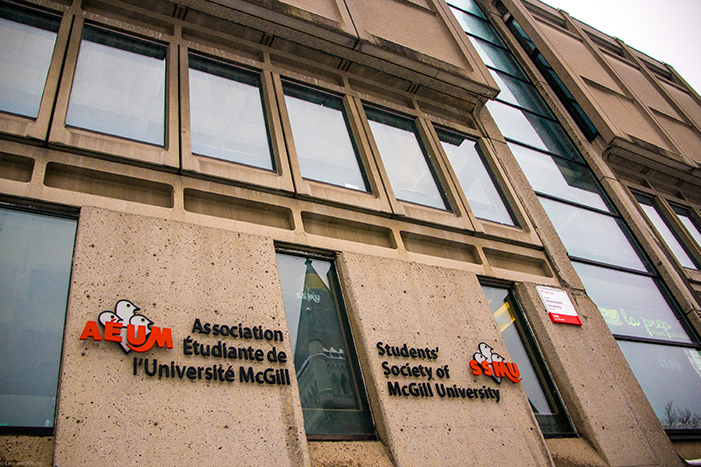
SSMU’s private failings should be public

On Nov. 8, The McGill Daily published an article detailing their efforts to investigate Students’ Society of McGill University (SSMU) president Darshan Daryanani’s ongoing absence. After reaching out to several councillors and staff as part of their investigation, Daily journalists received a hostile email from vice-president (VP) Internal Sarah Paulin, asking them to cease contacting SSMU employees because they have “no implications on campus.” Soon after this interaction, the Daily obtained a copy of an email Paulin had sent to all casual and permanent SSMU employees, which read, “You cannot and must not speak to campus media.” At the next SSMU Legislative Council, Paulin apologized and clarified the existing policies that govern SSMU employee media relations. Articles 24 and 25 of the SSMU Casual Staff Employee Manual state that regular and casual staff members are responsible for maintaining confidentiality and must direct all media inquiries to the general manager and the president—both of whom have been absent from their positions this year. This vague policy puts employees at risk, leaving them with less autonomy and few channels to seek accountability. 

The employee manual may be binding, but its content—specifically article 25—is unclear, and has not been strictly enforced up until now. In the past, SSMU employees, including casual staff, regularly spoke to media about the important work they were doing in their portfolios. Granted, such a policy is necessary to some extent: Some of the union’s affairs warrant confidentiality and since SSMU employees are not elected, they do not necessarily represent the union’s views. However, employees should have the prerogative to discuss their portfolios, which directly impact the student body. 

SSMU employees may not represent the student body in the same way executives do, but their work and well-being matters. Many SSMU employees contribute to important projects in portfolios such as  Black Affairs, Indigenous Affairs, and mental health. Some also work for SSMU-owned businesses like Gerts Bar and Café.  Suggesting SSMU employees have no implications on campus diminishes their efforts.

The consequences of the media blanket ban are ever the more severe when it comes to workplace issues, such as sexual harassment or inappropriate behaviour. But going to the media to discuss internal issues is rarely an employee’s first resort. SSMU employees could find themselves in a toxic work dynamic where a supervisor—the person they are supposed to turn to report workplace harassment, for example—is their abuser. This stipulation is far too broad, especially without a whistleblower policy. Even if no problems are occurring, having such a policy in place facilitates a healthy workplace. 

SSMU’s silencing of their employees’ interactions with campus media removes an important channel of accountability. The student body needs to blow the whistle on SSMU becoming an increasingly private organization. If SSMU wants to commit to transparent reform, they must amend the confidentiality policy to be more explicit in scope, and recognize that their employees’ expertise is valuable to the student body.

Read the latest issue

Read the latest issue