

Latest News

Student Life

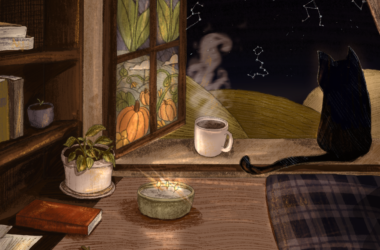
Sick day survival guide

In the COVID-19 world, it’s easy to panic the moment you let out a single cough or feel a tickle in your throat. Hyperaware as we are of cold symptoms, we are quick to notice when we have the dreaded common cold. Unfortunately, getting sick can take a toll on academics and cause a great deal of stress––and McGill’s policy on medical notes certainly doesn’t help. That being said, there are things you can do that can lessen the anxiety associated with catching a cold. Here are seven tips from The McGill Tribune on how to make it through this flu season. 

  1. Get tested for COVID-19

If you’re experiencing fever, cough, tiredness, or a loss of taste or smell––all common COVID-19 symptoms––it’s best to get yourself checked at your nearest testing clinic. It’s smart to apply for short-term academic accommodations through Minerva because you’ll likely have to miss class in order to self-isolate. Try asking a friend in your classes for missed lecture notes or reaching out to the professor. 

  1. Tell your loved ones 

Having to take care of oneself can be difficult, especially for those new to living away from home. When your body is weakened and your throat strained, it can be an especially arduous task. Even if your loved ones won’t be able to heal your sickness, or are far from you, text messages or Facetime calls can remedy something arguably just as important—your mood. Added tip: It never hurts to ask your friends if they can leave some soup at your door. 

  1. Sleep, and don’t feel guilty about it

Unfortunately, the onset of flu season collides with the waves of midterms and finals. Though it may feel tempting to continue to be productive even when you’re sick, rest is always more important—and conducive to a faster recovery. Peel your eyes away from that essay or textbook, turn off your alarms, and hibernate under your heaviest blanket for as long as needed. You will feel more energized and productive when you eventually do sit down to work.

  1. Try a cold remedy

The supposed remedies for colds are many, ranging from Vitamin C to saline sprays. Although it can be tempting to try a bunch of at-home remedies, make sure that those you choose are based on scientific evidence. Proven methods include staying hydrated, gargling salt and water to assuage a sore throat, and taking acetaminophen if experiencing pain. That being said, a warm bowl of chicken soup, though not a scientifically proven remedy, is certainly soothing when you’re feeling under the weather.

  1. Cope with restlessness

If you’re feeling restless, try doing small, non-exerting tasks in your home. Move your body to the rhythms of a guided yoga video, organize your closet, or declutter your working space. Create a soothing environment. 

  1. Call your doctor if necessary 

If your cold symptoms last longer than two weeks, worsen, or you begin to experience high fever, intense chest pain, or shortness of breath, it is a good idea to contact your doctor or the Wellness Hub. This may seem like overkill, but it’s important to check in with a medical professional to make sure that you are not developing an infection. 

  1. Give yourself a break

It’s easy to succumb to the guilt associated with a lack of productivity, but if there is ever a time to be unproductive, it’s when you’re feeling sick. Take a break, catch up on some of your favourite series, or read a book you’ve been meaning to read. Though it might not feel that way, resting is one of the most productive things you can do for yourself when you’re sick.

Student Life

The McGill Savoy Society opens their curtains again

It’s hard to imagine staging a theatre production—something so full of life and so reliant on personal connections—over livestream and video recordings. However, this is precisely what The McGill Savoy Society, a Gilbert and Sullivan-focussed theatre troupe at McGill, did last year. 

The McGill Savoy society specializes in putting on the productions of the Victorian-era theatrical duo Gilbert and Sullivan. Savoy’s shows amalgamate opera with the modern musical, a fast-paced and comedic performance that evokes more humour than the archetypal tragic narrative associated with opera.

The group was fortunate to put on their production of The Gondoliers in 2019, before the pandemic. With theatre venues left empty in 2020, however, they recorded an online show, H.M.S. Pinafore, which is available on YouTube. Alice Wu, U3 Arts and vice-president of the Savoy Society, described how losing the human aspect of theatre changed the intimate team dynamics essential to their creative work. 

“We went in knowing that we might go online, which is difficult because a huge part of the group is cast bonding, making friends, and building a family together,” Wu said. “We dance together, we laugh together [….] It’s hard to replicate that through a flat 2-D screen.” 

On stage, the months of work by each actor as well as the creative team come together naturally in a single night of suspense and spontaneity. Online, the process loses that element of unity: Each atomized video performance is stitched together on the screen. 

The Savoy’s online productions have their own charms, with actors each performing to the camera, speaking intimately to the viewer. However, Daniel Benjamin Miller, producer at the Savoy Society, admits that the unique creative process and audience experience of live theatre was impossible to reproduce virtually. 

“I don’t think we replicated [in-person performance],” Miller wrote to the Tribune. “We couldn’t have. What we produced was a different product [.…] When you’re on stage doing it live, there’s something there, both as an actor and as a spectator. When you’re standing at home by yourself in your room, it’s very different. It’s just an entirely different animal.”

Despite these challenges, Wu is grateful for the virtual bonding opportunities Zoom allowed for. 

“We had a Zoom party that lasted until 4 a.m.,” Wu said. “It was a special thing. And we were really grateful to have that last year, but obviously it wasn’t the same.”

This year, as the group transitions back to in-person events, the excitement of the cast to be in the same room as one another is palpable.

“There’s something really lovely about being in a space together,” Wu said. “That embodied feeling of being your character, [being able] to move around and dance to sing out [.…] To have that kind of connection [is what] theatre is all about.”

Working together in the same room has not only brought the Savoy Society closer together as a club, it has also allowed for live improvisation during rehearsals—a part Miller believes is a crucial element of their creative process. 

“Savoy is as much a social club as a theatre troupe,” Miller wrote. “But you also see that seep into the performance. A lot of gags make their way into performances from rehearsal.” 

Importantly, the Savoy is able to offer students the hands-on experience of theatre production. The ability to connect with new and old community members through this shared project sustains their presence at McGill. 

“Especially considering the difficulties all of our groups have been facing right now, I’d really like to see [the Students’ Society of McGil University] step up to back the performing arts,” Miller wrote. “We were all really heavily impacted by the pandemic and, for a lot of people, getting to perform at university is a unique opportunity.” 

The Savoy Society’s next production, “The Pirates of Penzance,” is currently in the works. Those interested in joining the creative team or crew can send an email to [email protected]. To apply to join the orchestra, email [email protected].

McGill, Montreal, News

Demonstrators rally in solidarity with Mohawk Mothers, demanding a halt to New Vic Project

*Content warning: Violence against Indigenous children, colonialism

Mohawk Mothers (Kanien’kehá:ka kahnistensera), alongside the Milton Parc Citizens’ Committee (CCPM), led a solidarity march on Nov. 10. Approximately 40 attendees gathered outside the gates of the Allan Memorial Institute on Pine Avenue at 4:30 p.m. to march in solidarity with the Kanien’kehá:ka community. Suspecting the presence of unmarked graves of Indigenous children at the site of the former Royal Victoria Hospital, the community is demanding that McGill launch an Indigenous-led investigation into the site before proceeding any further with the project.

In the 1950s and 60s, Dr. Donald Ewen Cameron experimented with torture techniques at the Allan Memorial Institute, a former psychiatric hospital next to the old Royal Victoria building. The torture techniques ranged from drug-induced comas to intensive electroconvulsive therapy aimed at reprogramming the brain. In an interview with The McGill Tribune, Kawinaa, a Kanien’kehá:ka kahnistensera (Mohawk Mother), speculated that Indigenous children were among the victims of Cameron’s experimentation, and that they were buried at the site.

“People who were non-natives and who were in for treatment had seen them, and would at night hear digging,” Kawinaa said. “The public needs to understand that our children are missing and never came home.”

In an email to the Tribune, Frédérique Mazerolle, a McGill media relations officer stated that McGill seeks to work closely with Indigenous communities.

“We are committed to collaborating with governments and Indigenous community leadership to undertake the work necessary to investigate this concern,” Mazerolle wrote. “The critical conversations between Indigenous communities and McGill University will continue through every stage of the New Vic project.”

Kahentinetha, a Mohawk Mother of the Bear Clan and founder of Mohawk Nation News, gave a speech at the march denouncing the government and McGill for failing to genuinely consult Indigenous communities. She insisted that both bodies need to receive consent from Indigenous communities before further developing plans for the site.

“This place was taken from us a long time ago,” Kahentinetha explained. “It was never handed over or sold. It is our responsibility to take care of that land. Now they are trying to make the project bigger. This entity is McGill University. We don’t want an apology, we want something done about this. We want an investigation done by us because this is our jurisdiction. We want our land and children back to us.”

Mazerolle outlined McGill’s efforts in consulting Indigenous communities on the project.

“Since January 2021, there have been several exchanges, including information sessions and roundtable discussions with Indigenous education organizations, Mohawk alumni, and Elders,” Mazerolle wrote. “Our efforts include initiatives that recognize the history and ongoing presence and contributions of Indigenous peoples on our campuses, and the creation of cultural and living spaces that welcome and support Indigenous students, faculty, staff, and community members.”

March attendee Mia LeBlanc, U3 Arts, believes that McGill’s statements acknowledging and supporting Indigenous communities are more performative than genuine. 

“I don’t think they really support the Indigenous community,” LeBlanc said in an interview with the Tribune.

At the march, Kawinaa explained to the Tribune that McGill borrowed Indigenous trust money—money the Canadian government held, according to Kahentinetha, for the Iroquois trust fund—to finance the construction of McGill, yet this money was never given back to them. 

“McGill is basically owned by the Kanien’kehá:ka people, we founded the school,” Kawinaa said. “McGill needs to acknowledge Indigenous sovereignty.”

McGill, News

McGill Senate and Board of Governors discuss new models of work in a world altered by COVID-19

Members of the McGill Senate and Board of Governors (BoG) convened remotely on Nov. 11 for their joint annual meeting. Discussions centred on how the university should move forward and fulfill its mission—the advancement of learning and the creation and dissemination of knowledge—in a landscape altered by COVID-19. Senators and governors reflected on how these changes have affected McGill’s workplace setting and approach to teaching and learning. 

Following presentations about new academic and administrative initiatives, staff members were placed in Zoom breakout rooms to brainstorm potential improvements to McGill’s academic program delivery and “model of work,” referring to the transition toward a hybrid work style for many university staff. 

Josephine Nalbantoglu, Dean of Graduate and Postdoctoral Studies, provided an overview of the interdisciplinary graduate programs McGill has developed in recent years. Such programs include the Ph.D. in Quantitative Life Sciences (QLS) and the Ad Hoc Master’s Degree in Digital Humanities

Nalbantoglu commented on McGill’s implementation of stackable master’s degree programs—non-thesis master’s degrees achieved through the accumulation of graduate certificates or diplomas in a given discipline.

“I hope you can see that what this allows us to do is really pivot very fast [to] […] subjects that students are interested in,” Nalbantoglu said. “And they can get the knowledge [they] want and the skills [they] need to go on to subsequent certificates and build [them] into a master’s.” 

Lorraine Mercier, New Model of Work Project Office director, fielded questions from faculty and staff about the office’s pilot project, which was introduced in March 2021 to examine various models of work to determine which one is best suited for McGill’s administrative unit. 

In response to the increasingly hybrid nature of the university’s workforce, the project would implement and oversee the transition of McGill’s workspaces for both administration and faculty members from individual offices to wholly shared office-spaces, including open area workstations and dedicated areas for collaboration. 

Mercier hopes that the pilot project’s model will enable McGill to create more efficient workspaces. 

“It is a holistic approach,” Mercier said. “We are making changes to the physical space by proposing various space [typologies] for different cognitive focus, collaboration, learning and socialization.” 

Adrienne Piggott, Associate director of Faculty Procurement, questioned how the New Models of Work Pilot project would manage workplace accommodations for individuals with disabilities. In response, Mercier noted that all of the office equipment introduced by the pilot project will be fully adjustable in terms of height, and that dedicated workspaces could still be provided for individuals with very specific needs.  

Manuel Balán, associate Dean of Student Affairs for the Faculty of Arts and professor in the Department of Political Science, spoke about how best to advise students experiencing uncertainty due to the pandemic. He suggested that flexibility—such as providing remote, in-person and group advising formats—as key to managing the increased demand for faculty advising among students. 

“We should not be thinking about seeing more students in less time,” Balán said. “We should be thinking about different ways of being able to see students and advise students.”

Moment of the Meeting: 

Michael Fronda, Associate Dean (Academic), commented that while much of the meeting’s discussions centred on how new technologies have created increased flexibility in terms of work models and academic program delivery, it is equally important to remember why the institution adheres to certain traditional practices as well. Specifically, he invited staff to consider the value of in-person teaching, repeating the sentiment of Provost McCall-MacBain that McGill is not going to become an online university, and that in-person teaching is a core requirement for the fulfillment of the universities’ mission. 

Soundbite: 

“It is super important that new models of work allow for a lot of flexibility and choice so […] students and employees have the agency to choose a workspace that is firstly compatible with the nature of their work or study and secondly, compatible with their personal or preferred work style.”

—Paige Collins, Arts Senator, responding to the question of what McGill can learn from other sectors regarding its academic program delivery and work environment. 

McGill, News, SSMU

SSMU employees’ media relations policy, president’s absence dominate Legislative Council meeting

The Students’ Society of McGill University (SSMU) Legislative Council gathered for their second last meeting of the semester on Nov. 11. At the outset of the meeting, SSMU vice-president (VP) Internal Affairs Sarah Paulin issued an official apology for emails she sent to The McGill Daily. In the emails, she asked the paper to stop investigating SSMU president Darshan Daryanani’s continued absence and to refrain from contacting SSMU employees. 

Paulin’s prepared statement, delivered on behalf of the executives, apologized for the emails and reiterated the SSMU policy governing employees’ media interactions.

“I would like to apologize if any communications that I have made have given the impression that the SSMU is not a transparent organization,” Paulin said. “My intentions were only to ensure any inquiries were directed to the correct parties. Obviously, the SSMU Executive Committee believes that transparency is of the utmost importance when representing the student body. That being said, the SSMU is a student union, but also an employer [….] As such, the SSMU has processes in place to address the media where employees direct any public questions or requests to the Executive Committee.” 

During the period that immediately followed, councillors responded to questions submitted ahead of time and questions from gallery members present. Many questions revolved around SSMU’s policies for casual staff and their implications for campus media.  

SSMU VP External Sacha Delouvrier responded to a question about whether the stipulation in the Casual Staff Employee Manual that reads that “Employees are not permitted to address the media and must direct any public question or requests to the General Manager and the President” constitutes a blanket ban on all interactions between SSMU employees and press. Delouvrier stated these media provisions exist because the employee’s main concern is fulfilling their job mandate, not being a media spokesperson.  

“Unlike us, [SSMU employees] are not here representing constituents,” Delouvrier said. “As such, it is appropriate that they stay within the scope of their mandate, which is why [the policy] is set as it is right now from a human resources perspective. It’s just safer for the society, for the staff in question, as well as for everyone involved.”

When questions about Daryanani’s absence came up, Paulin reiterated that information about the matter was confidential. During the question period, a member of the gallery accused the SSMU executive team of covering up unspecified internal problems and called for Daryanani’s resignation. 

Other members of the gallery also expressed concerns about the implications of the president’s leave—which has been ongoing since at least September 23—and asked about the possibility of an impeachment or resignation. Management Representative Nathaniel Saad questioned where the rest of the president’s salary—which totals around $32,000 annually—would go in the event of a resignation. Delouvrier responded in lieu of the absent VP Finance.

“If no one is appointed to replace this executive […] there [is] the option to give a bonus to the people who were appointed to take on parts of the portfolio,” Delouvrier said 

VP Downie also addressed the cancellation of the SSMU referendum earlier in the week, stating it was due to an error with a ballot question. Downie explained that the problem had been corrected and expressed hope that students would vote again.

Moment of the meeting:

Arts and Science Representative Kevin Franceshini brought up the increase in sangria prices at Gerts, which jumped from $12 to $17. VP Downie cited the effects of the pandemic on the supply chain as part of the reason for the increase. 

“The global supply chain and realities of it have changed a lot,” Downie said. “There are persistent shortages that we can’t really predict. It’s also been three years since the bar’s been open before and there is a persistent rate of inflation that is to be expected.”

Soundbite:

“We must remember the president was elected with a majority [.…] It’s simply our role to ensure that the democratic process was respected until further decisions, further measures are taken [….] The fact that the president has been on leave […] since that McGill Daily article came out is a coincidence of dates.”

 -VP External Delouvrier on the president’s role and the timing of his leave.

A previous version of this article incorrectly stated that councillors discussed the increase in sangria prices at Gerts. In fact, it was only Arts and Science Representative Kevin Franceshini. The Tribune regrets this error. 

McGill, News, The Tribune Explains

Tribune Explains: McGill’s New Office for Mediation and Reporting

What is the Office for Mediation and Reporting (OMR)?

McGill’s OMR was created in response to a review of the university’s Policy on Harassment and Discrimination, which was approved by McGill’s Senate and Board of Governors in May 2021. The OMR oversees all formal reports of harassment, discrimination, and sexual violence at the university and aims to be a central hub for information.

How does the OMR change the process of reporting harassment, discrimination, and sexual violence at McGill from the previous process?

OMR Associate Director Sinead Hunt explained in a roundtable meeting with The McGill Tribune that the office’s goal is to be a central hub for both information and reporting. Hunt previously oversaw reports filed under the Policy on Harassment and Discrimination and Policy Against Sexual Violence in her role as Senior Equity and Inclusion Advisor. She described the OMR’s aim to make the reporting process more accessible by centralizing information and resources regarding the two related policies. It also strives to strengthen the university’s response to reports. 

“The McGill community is very large,” Hunt said. “So the idea is to create a central site to enhance communications about where McGill university community members can go to obtain information about these policies, and where they can go to file a formal report. [W]ith this central site we [also] hope to strengthen our capacity and resources around the resolution of formal reports.”

How does one make use of the OMR?

Once a member of the McGill community contacts the OMR, the first step is a consultation where OMR staff help the individual decide if they would like to file a formal report.

“There is a consultation where we provide information, and we are very clear that a consultation itself is not a formal report, [….] that decision rests with the person themselves,” Hunt said. “If they do go ahead and file a report, as I said, we do an initial review. And then it can either go to a mediation or investigation process.”

If the individual chooses mediation, all involved parties must consent to the process. If all parties are on board, a trained mediator facilitates discussion and aims to guide the parties to arrive at a resolution. A formal investigation is when an assessor, either employed by the OMR or a third party, formally looks into a situation of alleged wrongdoing and writes a report. The report is sent off to the parties involved and the provost, who communicates their final decision to the parties within 15 days.

What do students think about the OMR?

Despite the OMR’s outreach efforts, Léonie Coke, U2 Arts, had not heard of the OMR when they spoke to The McGill Tribune. Coke feels that even students who know about OMR might be hesitant to use it because of the university’s poor reputation and history of not properly addressing sexual misconduct.

“[I have heard of] situations where students […] have to go to school with their sexual predators, whether they’re students in their classes or teachers,” Coke said. “I think [McGill’s response is] really not sufficient and it has not been sufficient. I do not think students will be inclined to use this resource because of the way McGill has been handling sexual harassment […] and punishing sexual offenders or predators.”

A consultation with the Office for Mediation and Reporting can be booked online at https://www.mcgill.ca/omr/book-consultation or by emailing the office at [email protected].

Sexual violence support services are available through McGill’s Office for Sexual Violence Response, Support and Education (OSVRSE) and the Sexual Assault Centre of the McGill Students’ Society (SACOMSS).

Arts & Entertainment, Books, Music, Poetry

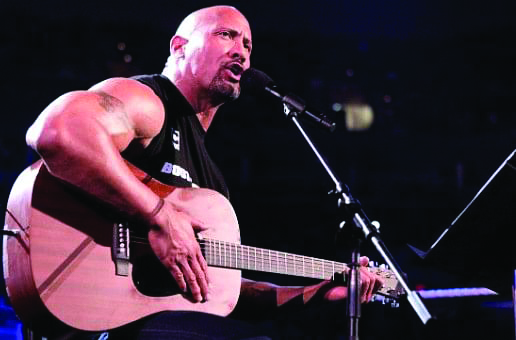
Looking back on Leonard Cohen’s legacy

Nov. 7 marked the fifth year anniversary of the passing of Leonard Cohen, a beloved singer-songwriter, poet, novelist, Montrealer, and 1955 McGill alum. Known for the depth and profundity of his work, the prestiged artist will continue to be commemorated by Montrealers, McGill students and staff, and fans around the world.

For Leonard Cohen, the Montreal community was, and would always be, a home. He kept a house just off of St-Laurent Blvd, overlooking the numinous Parc du Portugal. He was frequently seen in his later years occupying a stool at the nearby Bagel Etc

Leonard Cohen was thrust into stardom in 1967 with a nervous yet enthralling performance of “Suzanne.” Later in life, powerful tracks such as “Last Year’s Man” and “Hallelujah” would forever establish his reputation as a creator whose works were thematically bold and potent. His deep, rich voice and dynamic lyricism touched the very recesses of listeners’ hearts.

But for some, it’s not the gravity of his voice or words but the grandeur of his guitar playing that satisfies the heart. He met a Spaniard at Murray Hill Park near his childhood home in Westmount, Montreal who taught him flamenco-style guitar, as well as the simple yet elegant six chord progression that fans came to expect in Cohen’s music. 

Blurring the line between poetry and song, Leonard Cohen ultimately became a cultural icon. Known as the “Godfather of Gloom” and “Pop’s Poet Laureate,” his distinctive character and artistic authenticity gave him a legacy that seemed sure to prevail. After his passing, with the inevitable emergence of critics contesting the longevity of his work, we are left to observe how his legacy continues. 

“The guy seems to resonate, and five years after his death I don’t really see it changing,” said Brian Trehearne, a professor in the Department of English, in an interview with The McGill Tribune. “Maybe there’s another cycle coming, in fact, a new generation is discovering it.” 

On the other hand, criticism has been directed at the endurance of some of Cohen’s work. Canadian author Anaka Schofield, for instance, writes that Cohen’s second novel Beautiful Losers “remains a failed, fossilized encounter.”

Despite this discourse, it seems that Leonard Cohen’s spirit trudges on more powerfully than ever. In Montreal alone, two murals depict his visage. The one on Crescent St., made by artists Gene Pendon and El Mac in 2017, is a towering 22 stories high and watches over Montreal in a gaze of enclosing warmth. The other, situated on the side of the Cooper building on St-Laurent Blvd by Kevin Ledo in 2018 is slightly more humble in size, yet just as artistically impressive. As Cohen expresses in his first novel The Favourite Game (1963), his soul is preserved in Montreal: “Some say that no one ever leaves Montreal, for that city, like Canada itself, is designed to preserve the past, a past that happened somewhere else.”

“I think the vast majority of his audience is exactly where they were ten years before he died,” Trehearne said. “They love his work, and they miss him.” 

And so his relevance persists. With the COVID-19 pandemic slowly easing as vaccines are rolled out and restrictions lifted, we may find comfort in a particular verse from “Sisters of Mercy,” which Cohen wrote in a single inspired sitting: “If your life is a leaf that the seasons tear off and condemn / They will blind you with love that is graceful and green as a stem.” 

Science & Technology, Science Rewind

Science Rewind: How Quebec propelled aviation forward

A brief history of flight 

Home to Air Canada, Bombardier and the Canadian Space Agency (CSA), Montreal has placed itself among the world’s leading aerospace and aviation hubs. In 1856, the first aircraft ever constructed in Canada was a balloon that carried three passengers from Montreal to Pointe-Olivier, Quebec. Flown in 1903, the Wright Flyer was the world’s first successful motor-operated airplane. Since then, there has been exponential growth in inventions and innovations carried out in the aviation sector.

Encouraged by the huge success of the Wright Flyer, Canada hosted its first-ever aviation event in Pointe-Claire, Quebec—25 kilometres west of downtown Montreal. The 1910 event, which lasted one week, was a huge success and had a daily attendance of almost 20,000 visitors. Several professional aviators were present at the event, including France’s Count Jacque de Lesseps—the son of Count Ferdinand de Lesseps, the developer of the Suez Canal that connects the Mediterranean to the Red Sea. 

Founded in 1928 in Longueuil, Quebec, Pratt and Whitney Canada (PWC) eventually established itself among the world’s leading aircraft engine manufacturers. A few years later in 1937, Trans-Canada Airways—now known as Air Canada—was founded. Air Canada’s current headquarters are in Montreal, and serve as Canada’s flag carrier and largest airline with over 30,000 employees as of 2019. 

In 1963, Canada launched its first artificial satellite (Alouette 1), making it the first nation other than the U.S. or the Soviet Union to ever construct its own satellite. Alouette 1 would later on orbit the earth to study its ionosphere. The Quebec-based aerospace company Heroux Devtek provided the landing system for Apollo 11, the spaceflight that landed Neil Armstrong and Buzz Aldrin on the moon. In 1984, aboard NASA’s Space Shuttle Challenger, Quebec-born current MP Marc Garneau became the first Canadian astronaut to fly into space. Recently, in 1996, the CSA was founded and is currently headquartered in Saint-Hubert, Quebec. 


Challenger 3500 by Bombardier: Moving toward more eco-friendly jets

Designed as a successor to the Challenger 350—the best-selling business jet among global charter operators—the Challenger 3500 is set to become one of the world’s most eco-friendly business jets in the super midsize jet class. When tested, the Challenger 3500 was able to carry out a carbon-neutral flight, becoming the first business jet in industry to do so. Carbon neutrality is achieved when the carbon dioxide emissions are balanced by the removal of the same amount of carbon dioxide via carbon offset projects

Moreover, Challenger 3500 will be equipped with the eWAS Pilot with OptiFlight, also known as the “eco app,” which provides pilots with updated 4D weather information. This technology allows them to choose the most economical flight routes and to avoid challenging weather conditions for flight. 

The OptiFlight software also aims to provide pilots with information on how to reduce fuel usage and carbon dioxide emissions during the three main phases of flight: Climb, cruise and descent. The manufacturing of such jets are mainly powered by hydroelectricity, a form of energy that harnesses the motion of water to generate electricity, thus reducing overall carbon dioxide emissions.

CSA’s lunar exploration rover

A total of seven rovers were sent from the earth to survey the moon, all of which were manufactured by either the U.S., China, or the Soviet Union.  However, the CSA recently announced a partnership with two Canadian companies—MDA (MacDonald, Detwiller, and Associates) and Canadensys—to send a rover to explore the moon. 

The rover will enact scientific experiments and gather meaningful data and measurements that will help scientists gain a better understanding of our moon’s surface. Scientists speculate that the rover will face several hurdles to its survival on the moon, including the frigid and dark lunar nights. If Canada manages to send a rover to the moon, it would become the fourth country ever to do so. 

Features

Say my name (right)

At the start of every school year, my high school held a special assembly to honour seniors. Every senior was called up one by one by the principal to grab special red ties, meant to symbolize their maturity. In my last year, I was so excited for the assembly. But when it came to me, my name was mispronounced. An unsure giggle passed throughout the auditorium. I felt my cheeks get hot, and suddenly, I found myself holding back tears. While everybody else’s names were called, I stood in shame. I was utterly humiliated, but I was unsure why. 

Everybody in that room knew what my name was. Why did a little slip-up matter so much? As it turns out, I had experienced something all too common—a microaggression, or a small, unconscious act of prejudice and racism. At the time, I did not know the term, but I did not need to read an academic article to know that that moment of pure mortification would stay with me. As Ratna Ghosh, a professor in the Faculty of Education at McGill, put it to me, “Because it’s not overtly racist, it has the ability to make a more important inroad into your psyche.” 

Most people do not need to worry about how their names are pronounced—their names are common in the countries they live in. When I was four years old and had just immigrated to Canada from Iran—a place where my name was never an issue—I could not anticipate that it would turn out to be so challenging for those around me. But the chronic mispronunciation must have happened gradually, because by the time I realized that my name was constantly being said incorrectly, it had become a normal, even expected, occurrence. 

My name became a constant reminder of my difference. Always at the top of attendance sheets, I watched new teachers mull over “Sepideh,” giving a sympathetic look to the class before attempting to string the letters together in a way that made sense to them. I developed ways of intervening: The moment a teacher picked up the attendance sheet, I would raise my hand immediately to tell them my name and state that I was present. Unfortunately, this kind of behaviour was less bravery and more a product of my embarrassment. 

As it turned out, I wasn’t the only person who developed these kinds of strategies as a kid. Gialina Jiang, a second-year student at Carleton University, recalled how she used to pretend the botched versions of her name were accurate to get a laugh out of her peers. 

“It makes me feel guilty and sad that I needed to [resort] to humour in an uncomfortable situation to get validation from white people, as opposed to being proud of who I am, and my culture and roots,” Jiang said.

These microaggressions usually start in schools, easily the most significant social institution for youth. Chronic mispronunciation of a name is extremely harmful, according to a study done at Santa Clara University. Consequences range from internalized racism within students to negative self-perception that inhibits development. One study conducted at the University of Alberta found that students from ethnic minority groups feel disrespected when their names are mispronounced. Mispronouncing somebody’s name, even by accident, is a surefire way of wearing down a person’s sense of identity, since it minimizes the heritage and richness that goes into a name. 

Science & Technology

Tracing the evidence behind forensic science

Most viewers are aware that the crime-solving shown on TV is often a sensationalized representation of real-life forensic science, especially when it comes to the analysis of physical evidence. Trace evidence collection, bloodstain pattern analysis, ballistics, and other forensic techniques are supposed to give investigators the power to pin a suspect to a crime scene and recreate past events with a high degree of certainty.

The way scientists piece together puzzles of evidence is much murkier. Whether it be biological evidence, such as bloodstain patterns or bodily fluids, or physical evidence, like ballistic residue or clothing fibres, we expect that they are held to a scientifically rigorous standard before being used in professional practice. But somehow, in the media, techniques like shoeprint identification are presented as foolproof despite having no large-scale studies to support their use. Other techniques, like bite-mark analysis, are plagued with glaring inaccuracies: For instance, imprints in soft tissue lose their original structure over time, but may still be used for comparison. Organizations like the Innocence Project report that nearly one quarter of documented exonerations in the U.S. resulted from misapplications of forensic science. 

This is not to say that the field is without merit. In Quebec, the Laboratoire de sciences judiciaires et de médecine légale (LSJML) collaborates with law enforcement to review crime-scene evidence, from toxicology to odontology. Vincent Mousseau, a PhD candidate in the School of Criminology at the University of Montreal and associate researcher in the Laboratory for Criminology Research, says that the interpretation of evidence has improved over the years.

“Some practitioners are still reluctant to move from a model where the value of forensic evidence is expressed as a fact […] to a model where expert opinion is expressed in the form of probabilities, but important progress has generally been made,” Mousseau wrote in an email to The McGill Tribune.  “For example, today, forensic biologists from the LSJML communicate their conclusions in probabilistic forms, which is much more rigorous and transparent.”

According to Frank Crispino, director of the Laboratory for Criminology Research (LRC) at Université de Québec à Trois-Rivières (UQTR), forensic science acts as more of a historical tool rather than a predictive one.

“Forensic science is not about ‘techniques’ […] but about interpretation as reconstructing a past unobserved and uncontrolled singular event, not a Galilean way of practising science,” Crispino wrote in an email to the Tribune

Uncertainty is a seminal part of scientific inquiry, but in the field of forensics, it can be a matter of life or death. Since forensic scientists seek to establish the mechanics of a crime that only happened once, it does not follow the same iterative process as research science—therefore, attributing a piece of evidence to a person or a place can only be established to an imperfect degree of certainty. 

Cyril Muehlethaler, co-director of the LRC at UQTR, specializes in the analysis of microtraces such as fibres, or tiny specks of paint, that may be unknowingly left behind by a suspect. These can be particularly relevant in more complex cases, but take much longer to obtain results compared to DNA analysis.  

More common identification methods, like fingerprinting, are useful but often mired in quality issues. 

“What is often neglected [by the public] is that we deal with traces,” Muehlethaler wrote. “They are often of bad quality, incomplete, degraded, and can be non-representative of their original source. It can sometimes be tricky to analyze them and evaluate if they share similar properties to a reference piece. For example, having a beautiful fingermark of the whole fingertip is quite uncommon, we often have […] a trace that can be blurred, distorted, or contaminated with only a few visible ridges and a couple of minutiae.” 

Much of forensic science has to do with probability: What is the chance, say, that a DNA sample taken from a weapon matches that of a suspect and no one else? Muehlethaler explained that the translation of laboratory findings into the legal context during investigations can lead to muddled meaning. Stating that the probability of a DNA sample belonging to a person is 10 times more likely than chance is one thing, but warping that statement to establish a suspect’s culpability is very different. 

When asked to testify as expert witnesses in court, scientists are often pressured into giving definitive answers, usually to strengthen a prosecutor’s case.  

Read the latest issue

Read the latest issue