

Latest News

Student Life

Love and relationships IRL

Small acts of love and affection were most certainly taken for granted before the pandemic hit in 2020: No one ever thought that we would be denied dinner dates and hugs for a year and a half. 

With rising vaccination rates in Montreal allowing for the return of some in-person activities, many students are once again embracing their loved ones and exploring new relationships. COVID-19 anxieties still linger, however. How have love and relationships changed in this new transitional context? 

Stephanie Munn, U2 Arts, definitely thinks things are different. In an interview with The McGill Tribune, Munn explained how her expressions of love have changed to make up for lost time. 

“I think I’ve added physical touch [to my expressions of love],” Munn said. “I was lacking it for so long, that now pretty much anytime I see one of my friends, it’s always a hug.”

Munn’s not the only one placing newfound importance on the physical aspects of relationships. Sabrina Vidal, U1 Arts, took the chance to express her physical affection with her friends as soon as she could. 

“During the summer, after we got vaccinated, with my friends, we would just be so physical with each other,” Vidal said. “[We were] holding each other’s hands, hugging, sitting on each other’s laps, holding each other.”

Pandemic loneliness has also played a significant role in people’s desire for physical affection. While it might be assumed that increased vaccinations would prompt a rise in hook-up culture,  yet many still prefer more tender expressions of intimacy. Kristiaan van den Hoeve, U2 Arts, for example, recalled having a hook-up-turned-cuddling session.

“One time, I invited this guy over to my house, and we literally just ended up cuddling, and that was it,” Hoeve said.

Although many are rediscovering the importance of physical touch as they reunite with loved ones, the pandemic has nonetheless left its mark on relationships. Munn looks forward to meeting new people on campus as the vaccination rates among the McGill community continue to increase. However, many are still skeptical of widening their social circles. Vidal likes to keep her social circle intimate because she feels more comfortable when she knows where her friends have been.

Not only has the pandemic encouraged people to express their love through their bodies, but it has also influenced people to reevaluate their love lives and seek out more long-term relationships.

“Relationships are actually going to be more intimate and more focussed on inherent values and priorities,” said Felicia Gisondi, founder of Sex and Self, a McGill non-profit organization that provides resources for a comprehensive and well-rounded sexual education. “Because people have been in isolation for so long, they’re really seeking out those intimate relationships and they’re being punctual about it.”

On the other hand, Gisondi also believes that some will return to the casual dating scene. 

“It’s very individualistic depending on what your experience was like during the pandemic,” Gisondi said.

Gisondi appreciated the rise in virtual sexual relationships––such as sexting or phone sex––over the pandemic, and hopes that it will continue.

“It’s been really beautiful to have a hybrid approach,” Gisondi said. “We’re not 100 per cent there yet, so definitely integrating safety precautions and discussing vaccine passports with your partner [is important].”

It’s fair to say that an event as impactful as a pandemic is bound to change aspects of our lives—with love and relationships being an integral part of them.Although the pandemic separated many couples, or drastically changed their relationships, it also served as an awakening for many people to reassess how they express their love for others. Vidal believes that this learning experience will lead to fulfilling connections. 
“Now, when we look for a partner or any sort of relationship, it’s gonna be people that we value and who we know will value us for what we care about,” Vidal said.  

Out on the Town, Student Life

The Tribune tries: Haunted Montreal ghost walk

After the sun went down on October 24, we joined a group of 30 people near Concordia for a ghost tour of downtown Montreal led by Haunted Montreal. After we arrived, Jason McLean, our tour guide, abruptly adopted the animated persona of a ghostly storyteller and led us through the dim streets of Montreal, where we would soon be immersed in a narrative journey filled with harrowing histories. 

Holly Wethey 

As someone who avoids horror movies at all costs, I wasn’t sure how I would handle a ghost tour of Montreal. Though there are multiple locations, downtown seemed like the best option, with the bustle of the city to distract from my paranoia. But alas, it turned out that there was still horror lurking amidst the busy downtown streets.

We began at a haunted bar where the ghost of a tall, muscular man allegedly lurks, bumping into customers and knocking drinks out of their hands. We then moved on to the Concordia Grey Nuns residence, once a convent housing the order of the Grey Nuns. Gazing out across the dark courtyard at this ominous stone building across the dorms, I was glad I stayed in Douglas Hall. The tales of fires, death, and a crypt beneath the building reaffirmed this sentiment.

A later stop on the tour took us to what was once Le Cinq, a popular nightclub in the city. I immediately felt a connection to that place, as two of my best friends worked at the coat check in first year. This made the stories of haunting apparitions all the more chilling. 

The final stop on the tour left most of the group at a loss for words. As we stood in the middle of Dorchester Square, the guide informed us that we were standing over the graves of 60,000 people who died in one of the city’s cholera outbreaks. People exchanged looks of horror as the guide described the disturbing acts committed there.

Holly Wethey / The McGill Tribune

Wendy Zhao

Like Holly, I’m usually not drawn to horror. Neither am I a believer in ghosts or the supernatural, though I’m often jealous of those who have a paranormal experience to share with friends. As we started the tour, I expected fun and exaggerated storytelling, but was willing to suspend my disbelief. 

While our tour guide’s theatrics were indeed cheesy at times, the haunted histories of the city are surprisingly chilling. We learned about the legend of the Murderer’s Cross at the intersection of Guy and Rene-Levesque W, where a convicted murderer was reportedly killed in a torture wheel, and the reported hauntings of the prestigious Queen Elizabeth hotel. Hearing ghost stories the old-fashioned way—huddling around our tour guide’s voice—felt akin to a sort of exclusive campfire experience. As we made our way around the city, from Guy-Concordia to the downtown centre, I felt like I was in on some of the darkest secrets of the city. 

While listening to all these real-life witness encounters and reported hauntings throughout the city, there were moments where I wondered whether claims of ghostly orbs and lingering screams were really just coincidences and tricks of the mind, or if something more unexplainable was behind the tales.

Quote of the night:

Despite the sombre nature of the stories, McLean infused humour into the tour.

“To get [to the next stop], we’re going to go through something that’s been haunting Montreal for decades: Construction,” McLean joked.

Spookiest moment:

Standing in front of the former Le Cinq nightclub, the tour guide informed us that the business owners had to board up the windows after passersby complained of seeing strange faces in the windows. We looked up, and sure enough, wooden boards covered the window panes of the empty building. 

Out on the Town, Student Life

Digging in at Opiano

Hidden beneath the sprawling Le Cartier Tower among the hustle and bustle of downtown Montreal sits Opiano, a relaxed cafeteria-style Korean market offering a variety of dishes, from ramyun to bibimbap. Located just a five-minute walk away from campus at 1115 Sherbrooke St. W, this––literally––underground spot is a quintessential lunch destination for many McGill students.

Upon entering Opiano at lunch hour, one is instantly greeted by the warm, savoury aroma of Korean cuisine and the chatter of McGill students, office employees, and families. Visitors can be seen enjoying both vegetarian and meat-based options or picking up food to go in this cozy, laid-back environment.

Especially in the winter months, Opiano provides students bowls of comfort and warmth with a variety of stews, including their soft tofu soup (sundubu jjigae), and slow-cooked spicy pork bone soup (bbyeo haejangguk). Those who might be looking just for a quick snack can enjoy refreshing bites of kimbap and, if feeling more indulgent, can dig into a plate of flavourful stir-fried rice cakes. 

Samuel Nyandwi, U3 Science, discovered Opiano in his first year at McGill. He has since introduced friends to the restaurant, all of whom are now regulars. The spot holds many memories for him. 

“Opiano gives me nostalgia since it was the first restaurant I went to in Montreal,” Nyandwi told The McGill Tribune. “[The atmosphere] is very welcoming, there are always people there eating out with friends.”

Nyandwi recommends the spicy fried chicken stir-fry plate and the pork kassu.

“[They’re] honestly a 10 out of 10,” Nyandwi said of the dishes. “The presentation is fantastic, portions are big, and prices are affordable. You really get your money’s worth.”

It’s no surprise that Opiano has become a go-to spot for McGill students. The restaurant’s large yet relatively inexpensive portions are a much-needed comfort for busy students who might not always have the time to cook. 

Ari Cho, U1 Management, shares Nyandwi’s fondness for the restaurant. After hearing about Opiano from other McGill students, Cho decided to give it a try. She now frequents Opiano two to three times a week with her friends, thanks to its high quality and proximity to campus. 

“The [bone] soup and kassu are both huge portions and really good. [They] taste fresh and [the kassu] is crispy,” Cho said.

Although frequented by regulars, the spot continues to draw newcomers at McGill. Upon visiting Opiano for the first time recently, Sophie Cohen, U0 Music, felt comforted by the restaurant’s laid-back, casual atmosphere, noting how its bright red and black wooden chairs, beige benches, and numerous plants behind the counter create a homey and youthful feel.

While Opiano may not provide a fine-dining experience, it offers a space for students to chat freely with friends and escape from McGill’s dining halls.

“The ambience is very lowkey,” Cohen said. “It really caters to the students and downtown office workers […] which I think it does successfully.”

Amelia Waters, U1 Arts, recently discovered Opiano and has since introduced her friends to the restaurant. The passion and dedication the staff have for their small business is evident to any frequent customer. 

“[One of Opiano’s biggest draws is] how friendly the staff are,” Waters said.

Opiano remains  a beloved venue where students can reliably find comfort and friends. 

McGill, Montreal, News

Divest McGill protests RBC’s investment in fossil fuels

Members of Divest McGill, along with other McGill students, joined local climate action organizations such as Extinction Rebellion Quebec and Greenpeace Quebec on Oct. 29 in front of the Royal Bank of Canada (RBC) office at 1 Place Ville Marie, protesting the bank’s investments in fossil fuels. 

In front of the building, protestors used their outfits, signs, banners, and shouts to signal their discontent over the bank’s investment. Many showed up in costume, dressed as investment bankers, pipeline workers, and even the RBC lion. Others poured black paint onto the sidewalk in front of the bank, to symbolize oil spilling out of the pipeline. 

Louis Ramirez, a national organizer with the Banks Campaign of the Sunrise Project—a project that supports social movements that are working toward transitioning from fossil fuels to renewable energy—spoke at the protest. Ramirez translated and delivered a speech written by Emily Hardie, U0 Arts and Divest member, about their shared grievances against RBC. Ramirez explained the importance of directing climate action toward banks in an interview with The McGill Tribune.

Divest McGill members held their banners high as they walked to RBC, drawing honks of support from cars driving through downtown. (Brian Schatteman / The McGill Tribune)

“Capital is almost as responsible as anyone else for the climate crisis and for [the] colonial crises we are facing today,” Ramirez said. “Among these institutions, RBC is the worst.”

RBC is Canada’s number one bank financing fossil fuels and number five in the world, according to the Banking on Climate Chaos 2021 report. It has invested approximately $208-billion dollars in the fossil fuel industry since the signing of the 2015 Paris Climate Agreement. While other banks also partake in fossil fuel investment, Divest members, including Sophie O’Reilly, U3 Arts, believe that going after the largest investor in Canada will send a powerful message.

“Calling on RBC to divest from fossil fuels will set an example [for] other banks,” O’Reilly said. “It’s one of the biggest, so [RBC divesting] will revoke the social license to continue investing in the fossil fuel industry. Other banks will follow their lead, and potentially, [so will] other organizations, such as universities.”

The protestors took up a large space in front of RBC, creating an imposing presence with their chanting. (Anoushka Oke / The McGill Tribune)

Protestors emphasized the impact these investments have on Indigenous communities. RBC invests heavily in TC Energy, a company that is currently building a pipeline that runs through the Wet’suwet’en nation without their consent. In her speech, Hardie stood in solidarity with the Wet’suwet’en and urged attendees to join their struggle against the pipeline. 

“In planning this event, we are turning up as allies of a different nation, the Wet’suwet’en, who are fighting against a pipeline that threatens to ruin their homeland,” Hardie said. “With their permission, we are rallying behind their message, ‘RBC is killing me,’ which is no metaphor, as the land threatened by RBC’s investments is their very basis of survival.”

Divest McGill members and other students met at the Y-intersection on campus ahead of the protest.  After listening to several speeches from Divest members, students made their way toward RBC, chanting slogans like “RBC get off it, injustice lines your pockets, you’re making dirty profits, divest from all that’s toxic,” as they marched.

Protestors dipped fake money bags in black paint to represent the capital invested in oil and other fossil fuels. (Anoushka Oke / The McGill Tribune)

At the Y-intersection, Mikael Branch, U3 Arts and Divest member, emphasized that the protest was an important step not only in safeguarding the environment, but in protecting Indigenous sovereignty and livelihoods.

“We encourage [you], most importantly, to learn from and listen directly to the voices of Wet’suwet’en leaders, such as members from the Gidimt’en clan,” Branch said. “This is the true meaning of solidarity and reconciliation. Spread the word. Share the hashtag #RBCiskillingme. Let people know about the atrocities being committed today against the Wet’suwet’en Nation. Now is the time. We the people, united, can make a difference.”

Sports

Equal access to recreational facilities is vital

A recent Montreal-based CBC study found a direct correlation between a borough’s average income and the number of sports and recreation facilities in the area.  This inequity leaves youth who are unable to pay for private sports facilities or gyms with little opportunity to get involved with their communities in an active way. Equal access to athletic services is an essential step to providing youth in lower-income boroughs with better opportunities. Reducing the distribution gap of sports and recreation facilities throughout Montreal is imperative to an increased quality of life for youth. 

In Montreal, the economic disparities between different boroughs are massive. Côte-des-Neiges–Notre-Dame-de-Grâce, one of the lowest income areas in Montreal, also has the highest number of children, with about 27,000 kids under the age of 14. Despite this, the region only has 13.2 recreational facilities per 10,000 inhabitants. To put things into perspective, one of the high-income neighbourhoods, Île-Bizard–Sainte-Geneviève, boasts 53 facilities per 10,000 inhabitants. The areas that are most in need of access to public recreation centres are those that have the least—and this opportunity gap only widens as children grow older.

Access to community sports services is fundamental to youth development and is even more vital in low-income boroughs. Participation in sports comes with a plethora of benefits for young people, from better test scores to increased graduation rates to happier home lives, to decreased drug and tobacco use in high school. All of these benefits are less about the direct impacts of, say, soccer to a young person, but are more about the positive externalities that accompany athletic involvement. Playing on a sports team, or even participating in a fitness class at a community centre, builds skills that are pivotal in a child’s development, such as teamwork. This supportive space also allows young people to integrate and meet one another organically, regardless of racial or economic differences. These are vital social and interpersonal skills that can heavily improve quality of life as these young people transition into adulthood. Community-based activities promote positive growth and can prevent vulnerable youth from falling into criminal or illegal behaviour during adolescence. 

Access to sports facilities and involvement opportunities have a chance at changing Montreal’s crime trajectory. Even the United National Office on Drugs and Crime has acknowledged that access to sports is an effective method of crime prevention. Physical activity in supportive social contexts, such as those fostered in community facilities, can act as safe spaces for vulnerable youth and can provide healthy ways to pass time. 

While police in Montreal are increasingly imposing invasive crime prevention measures, such as security cameras, communities should look toward structural change for meaningful long-term effects. Policing does not reduce crime—social reform does. Instead of enabling further policing of youth in susceptible regions, there need to be more resources that support young people’s growth in all Montreal regions, but especially low-income ones. 
Children should not be penalized because of the financial situations they are born into. Deprivation of adequate sporting and recreational facilities directly hinder the development of valuable life skills. With the upcoming election, it is important to call on city officials to commit to enacting meaningful change on this front, such as reallocating funding toward public recreational facilities. Policing low-income areas without addressing root causes will not result in long-term improvement. Montreal youth deserve the opportunity to thrive in athletics and in society, and it is up to the government to provide it.

McGill, Montreal, News

SSMU Legislative Council discusses New Vic Project and approves motion condemning Bill 2

The Students’ Society of McGill University (SSMU) Legislative Council convened on Oct. 28 to hear from Dean of Science Bruce Lennox, who provided a midpoint update on the New Vic project and answered questions regarding the project’s accessibility, sustainability, and community consultations. During the question period, councillors harkened back to the quality of the first botched Activities Night of Fall 2021, and pressed on the repeated absence of SSMU president Darshan Daryanani. Councillors also voted on referendum questions and a motion to condemn Bill 2—a bill that proposes to add sex and gender as separate categories to birth certificates, and would also require people to undergo gender-affirming surgery to officiate a sex change on their birth certificate. 

Lennox, as academic lead of the New Vic project, provided a project timeline and mock-ups of what the interiors will look like. Lennox also shared some insights gathered from consultations with Acosys Consulting Services, an Indigenous consultancy group.

“What has come out of these [many] discussions since January is a series of potential [Indigenous] representations [on the New Vic site],” Lennox explained. “[The New Vic site may include] everything from sculpture, landscaping, garden design, interior artwork, to actual interior shaping of spaces that have their origins in Indigenous culture.” 

During the question period, council members inquired about Daryanani’s absences and questioned how the society can run smoothly without a president. Vice-president (VP) Finance, Éric Sader, who has taken over Daryanani’s role as signatory on SSMU meeting minutes, stated that the president is not currently active in his role.

“The president is on leave at this time and I would ask everyone to respect his privacy,” Sader said. “And I can confirm the society is functioning quite well.”

Next, VP Student Life, Karla Heisele Cubilla, acknowledged the shortcomings of the first rendition of SSMU’s activities night, but looked forward to the upcoming activities night 2.0 running from Nov. 1 to 3. 

“The reason why we did not do an in-person fair event for the first edition is because this was planned in June,” Heisele Cubilla said. “There were no vaccine passports. No venue would take more than 150 people, so it was a big struggle. For the second edition, we are doing an in-person event […] for three days, and we are also doing a hybrid option which is via Zoom in Redlands, so we are doing our best.”

Further motions regarding SSMU referral service fees, including the Motion Regarding the MUSTBUS Fee-Levy, the Motion Regarding CKUT Existence, and the Motion Regarding QPIRG Existence, all passed. During the debate period for each motion, Medicine Representative Benson Wan proposed an amendment that would require groups requesting fee increases to provide financial reports.

“Councillor Wan, your dedication to budget transparency,” Ashkir started, “I hope it is noted in the minutes and in any article that is written about this.” 

Moment of the Meeting

Speaker of the Legislative Council Alexandre Ashkir noted that almost 50 per cent of SSMU councillors did not attend the mandatory anti-violence training and explained that follow-ups will be scheduled to ensure those who missed it had valid reasons. 

Soundbite 

“It would call on the Quebec government to remove the provisions of Bill 2 that infringe on the autonomy of trans, intersex, and non-binary people in Quebec [….] If this motion passes, it will show the trans and intersex and non-binary community on campus SSMU’s determination in supporting them. As such I urge all of you to vote ‘yes’ on this motion and condemn the transphobic bill proposed by the Quebec government.” –Arts Representative Yara Coussa on the Motion Regarding Condemnation of Bill 2

A previous version of this article incorrectly stated that almost 50 per cent of SSMU workers did not attend the mandatory anti-violence training. In fact, it was 50 per cent of SSMU councillors. The Tribune regrets this error.

Commentary, Opinion

Pandemic prison conditions emphasize need for reform

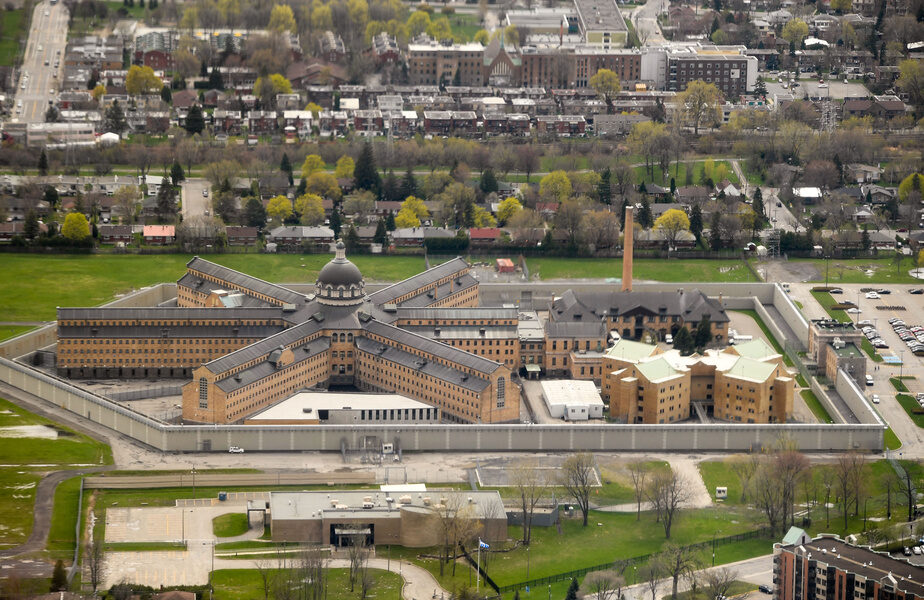
Throughout the pandemic, prisons have faced a reckoning, and Montreal’s Bordeaux prison is no exception. The prison has seen some of civilians’ worst fears play out, from multiple COVID-19 outbreaks, to inadequate resources, and more recently, to more than 1,000 inmates locked in their cells for over 24 hours while staff conducted an institution-wide search. These recent events, along with similar happenings in other prisons around the world, have re-energized calls for prison reform and restorative justice

The discourse was revitalized in the wake of the summer 2020 protests, which saw the Black Lives Matter movement take to the world stage following the police murder of George Floyd. The movement calls upon civilians and policymakers alike to rethink, and even do away with, the current criminal justice system in an effort to revitalize communities. The crisis at Bordeaux prison calls for renewed discussions in the Montreal context and also presents an opportunity for McGill students to take part in the debate. Although prison conditions may seem irrelevant or out of the control of many McGill students, the community must not turn its back on Bordeaux. It is the responsibility of all those living in Montreal and Canada to take a stance on the injustices festering in the prison system, given that these institutions are funded by tax dollars and have long-lasting impacts on the lives of marginalized youth. 

One of the most common arguments in favour of prison reform is that the current system is rife with human rights abuses with little to no accountability mechanisms. Throughout the pandemic, many Bordeaux prisoners’ basic human rights were disregarded due to the inadequate allocation of resources. With minimal access to showers, books, phones, or visits, those behind bars faced inhumane periods of isolation and solitude. Incarcerated people and employees alike protested the conditions, with over 30 engaging in a hunger strike last February to protest a lengthy  14-day confinement measure. In another instance, prison workers called on the government to provide adequate vaccination resources to the prison following a series of outbreaks. The blatant violation of human rights in these cases serve as a stark reminder of the necessity of prison reform. According to the United Nations’ recommendations for criminal justice and prison reform, prison authorities have the responsibility to ensure that the treatment of incarcerated people is in line with the law and respects their human rights. At the end of the day, it is imperative to guarantee incarcerated people, many of whom are jailed for non-violent offenses, the rights with which they were born.

In addition to assuring human rights, prison reform can support communities and promote equity and anti-oppression. In Canada, marginalized communities, most notably Indigenous individuals, are disproportionately incarcerated as a result of long histories of systemic discrimination in legal, political, and social spheres. Since systemic inequalities extend to all parts of the criminal justice system, including policing, sentencing, and prosecution, marginalized communities are often overrepresented in prisons. Meaningful prison reform must be accompanied by the adoption of anti-oppressive policies within the criminal justice system, ideally with an emphasis on revitalizing the communities that have been disproportionately affected. 

Conversations regarding prison reform should not be taboo: Students can take the lead in calling for change in an arena where older generations have often been hesitant to make strides toward justice. Students at McGill and beyond can do this by educating themselves on the issue by engaging with racialized scholars’ work on prison reform and abolition, contacting their local members of the National Assembly and parliament, and starting discussions about what prison reform could look like in the context of their own communities. Ultimately, it is only through continued dialogue about criminal justice that meaningful reform can begin.

Research Briefs, Science & Technology

The ebb and flow of fish biomass over the decades

The oceans once held what humans considered to be a limitless supply of fish—populations were so abundant that it was nearly inconceivable that the waters would ever run out. That viewpoint was challenged in the ‘80s and ‘90s as overfishing caused fish stocks in the North Atlantic to rapidly collapse

According to a recent study published in Science Advances led by Eric Galbraith, a professor in the Department of Earth and Planetary Sciences at McGill, the number of fish in the world’s oceans has plummeted in recent years, reducing the rate at which nutrients are cycled. The study aimed to quantify the amount of economically viable fish biomass in the ocean and the effects that changes in the biomass would have on ocean ecosystems.

“I think what was really unique about our [study] is [that] we were able to constrain it, at least, by using satellite data,” David A. Carozza, a research associate at UQAM and co-author of the study, said in an interview with The McGill Tribune. “At least we know that our model represented peak [fish] harvest [….] It was a different approach, but still of a comparable magnitude to other studies.”

The researchers used fishery data to estimate the historical biomass of fish, molluscs, and crustaceans at different time periods. They found that pre-industrial biomass hovered around 3.3 billion tons, but that it had dropped by approximately 47 per cent by the 1990s.

 “The scale that we worked with was large marine ecosystems, mostly coastal ones, around peak harvest,” Carozza said.“And using that information, we were able to […] literally backtrack into the past so we know that the model worked into the present day.”

Fish biomass today is slowly increasing as it recovers from the global overfishing crisis of the ‘90s. This recovery process, however, is extremely fragile: Although fishing is far more regulated now, the severe reduction of fish biomass means that population levels are more sensitive to perturbations from fishing activities.

“On the policy side, there’s been a lot of imbalance between different countries. Larger fisheries are able to travel farther out in the ocean where there’s less oversight,” Carozza explained. “Although there are some promising statistics, I’m still concerned about the state of fisheries globally.”

The study’s model elucidates how changes in fish biomass affect deep water respiration and carbon levels at the ocean’s surface through carbon sequestration.

“If you were to add fecal pellets, you [would] reduce oxygen content since bacteria use oxygen in this respiration process,” Carozza said. “We observed the opposite, where when fecal pellets are reduced, deep water respiration is also reduced.”  

Fish contribute to carbon sequestration in a fascinating way. Abundant phytoplankton in the ocean creates a large draw on carbon from the atmosphere. Phytoplankton is consumed by larger organisms, and this consumption continues up the food chain until the carbon content reaches fish. The excrement that fish produce then drops to the ocean floor. This process is very efficient, with pre-industrial fish populations accounting for 10 per cent of organically sequestered carbon.

“There’s no point in counting phytoplankton, they don’t have a part in [sequestering carbon in the deep ocean],” Carozza said. “And they are quite small, very little [carbon] is exported. Even smaller fish are able to release fecal matter that can escape the mixed layer of the ocean, where that matter would otherwise reside for hundreds of thousands of years.” 

Although there are other factors that cause fish populations to decrease, the study found overfishing to be the predominant driver. 

“For drivers other than catch, the ecosystem-level impacts, over a variety of marine ecosystems, were simply not known and could not be integrated into our modelling framework,” Carozza said.

The study stresses the importance of fish biomass not only for human consumption, but also for its role in sustaining ocean chemistry and regulating carbon sequestration. It also highlights the importance of computer models in broadening our understanding of ocean processes and mitigating the human impact on the planet.

Arts & Entertainment, Pop Rhetoric

Halloween movies: When holiday culture meets the horror film genre

Randy Meeks from the cult classic Scream once said, “There are certain rules that one must abide by in order to successfully survive a horror movie.” In Meek’s words: “You can never have sex, you can never drink or do drugs, and never (ever, under any circumstances) say ‘I’ll be right back!’” These survival tips almost become common knowledge during the Halloween season, when horror films abound.  

In this respect, the Halloween film is not its own genre. It is necessarily connected to the greater world of horror. Halloween movies became popular not because they present a unique category in film, but because they became attributed to a cultural fascination with normative violence. 

One of the earliest Halloween horror movies is the aptly titled 1978 Halloween, directed by John Carpenter. This cult classic follows the story of Michael Myers, who escapes from a mental hospital 15 years after murdering his sister on Halloween and returns to his small town to kill again. 

The movie’s intrigue lies not in its most outlandish moments, but rather in its ability to distort reality in a terrifyingly realistic way. Myers is not only a fictional representation of a man at a loss for humanity, he is a killer in the ordinary world; he could be the viewer’s neighbour, their teacher, or their local grocery store clerk. 

What Halloween shows us is that the “Halloween movie” is not bound to the supernatural—quite the contrary. What is most alluring about movies like Halloween is their imitation of reality and perversion of the ordinary in the most twisted, ridiculous, unbelievable, and ghastly ways. 

The 1992 film adaptation of Bram Stoker’s iconic novel Dracula, directed by Francis Ford Coppola, can serve as further evidence. It’s been suggested that Stoker’s Dracula was based on Vlad the Impaler, a real-life 15th-century Romanian king. Dracula, like Myers, is a physical representation of our darkest fears: A person stripped of all humanity, now on the hunt for blood—more of an empty void than a monster.    

Horror films that lean toward the realistic can evoke sympathy for the monster. Mary Shelley’s famous Frankenstein, adapted to film in 1931, is an example of this; the viewer is drawn in because they witness a monster who, deep down, still has a heart. 

The aforementioned films, Halloween, Dracula, and Frankenstein, air yearly around Halloween. All three are labeled as either horror or thriller, but not as “Halloween.” This is because the so-called Halloween movie is not defined by the film industry, but is instead a projection of popular demand for horror.  


The final nail in the coffin suggests that the “Halloween movie” is best animated through the audience’s reaction. A scary movie is not a “Halloween movie” unless its fans come to associate the film with the holiday. The ordinary alongside the gruesome, however terrifying to admit, is inexplicably fascinating. After all, the spirit of Halloween, through its many permutations, originates in a weakened veil between the worlds of the living and the worlds of the dead—Halloween movies simply transport this magic into the power of film. 

Science & Technology

Four ways McGill researchers are spearheading pandemic innovation

More than a year and a half has passed since Canada reported its first-ever COVID-19 case. From social distancing to online learning, humans have quickly adapted to these new conditions in order to contain the spread of the virus. While the pandemic has posed many challenges in academic and scientific domains, researchers jumped on the opportunity to innovate existing epidemiological techniques to help contain the spread of the virus. Most importantly, the pandemic brought scholars together to produce the best possible work within a short time frame. Over the past few months, many McGill researchers have contributed to key innovations in the fight against COVID-19.

  1. McGill COVID-19 Vaccine Tracker

As one of the most effective means of protection against the virus, vaccines have played a pivotal role in limiting transmission, reducing hospitalizations and death, and protecting immunocompromised people. With over 100 vaccine candidates and just over 20 approved ones, there is a lot to keep track of. However, a team of McGill researchers led by  Nicole  Basta, an associate professor in McGill’s Department of Epidemiology and Biostatistics, and Erica Moodie, a professor in the same department, created a tracker to provide up-to-date information about the number of approved vaccines worldwide, their manufacturers as well as the countries that administer those vaccines. The tracker also displays a list of potential vaccines that are currently undergoing trials. As debates around vaccine stockpiling and booster shots continue, tools like this will be critical in mapping access to immunization worldwide.

  1. Domestically produced COVID-19 tests 

Many of the COVID-19 cases reported are asymptomatic, so it follows that the more COVID-19 tests are administered, the more cases are detected. Quick results from these tests allow individuals who were in contact with an infected person to quarantine and curb the further spread of the virus. In partnership with the National Research Council (NRC), a team of McGill and RI-MUHC researchers led by Martin Schmeing, a professor in the Department of Biochemistry as well as  Don van Meyel, director of the Centre for Translational Biology (CTB) at the RI-MUHC, secured funding that would allow them to produce millions of COVID-19 tests. 

  1. Patient sequencing at the McGill Genome Centre

Researchers at the McGill Genome Centre recently announced a partnership with Genome Canada to extract the DNA and RNA of those who contracted COVID-19 in order to sequence it. Through genome sequencing, researchers will have a better grasp of what makes one patient more vulnerable to the symptoms of coronavirus than another, allowing those at high risk of developing complications from the virus to be identified so that their care can be prioritized. 

  1. A McGill-led study that found links between income inequality and COVID-19 mortality

Researchers, including Frank Elgar, an associate professor in McGill’s Department of Psychology, have provided evidence revealing that COVID-19 mortality rates could in fact be associated with income inequality, as well as individuals’ level of trust in the government and healthcare system. The study showed that countries and economies with greater income inequality tend to have higher COVID-19 mortality rates than those with lower ones. Moreover, countries whose populations report putting more trust in the public sector tend to have lower mortality rates compared to those reporting lower levels of trust. 

While the devastating human and economic tolls of the pandemic cannot be ignored, it is inspiring that researchers from across the globe have been able to collaborate with one another to produce meaningful work. Pandemic-era scientific research has undoubtedly highlighted the importance of cross-collaboration among many scientific disciplines. 

Read the latest issue

Read the latest issue