

Latest News

McGill, News

McGill holds annual Queer History Month themed “Coming Together”

Throughout October, McGill is holding a series of events in honour of Queer History Month, ranging from public talks to workshops, centred around the theme, “Coming Together.” The month opened with a homecoming event called “Return of the Rainbow,” which featured Kanien’kehá:ka Elder Kawennotas Sedalia. The event brought together former and current McGill queer community members, including staff, students, and faculty, to foster connections through relationship-building activities and to provide a safe space to share personal stories.

McGill’s Equity Education Advisor (Gender Equity and 2SLGBTQIA+ Education), Andrea Clegg, shared the meaning behind this year’s theme in an interview with The McGill Tribune.

“The theme ‘Coming Together’ is connected to the opening up of communities, including the McGill campus, in relation to the pandemic,” Clegg said. “[It is about] having a renewed opportunity to come together and celebrate and affirm our identities, something […] that varied communities have been impacted by in terms of the COVID pandemic.”

Honouring Queer History Month at McGill is important, explained Clegg, in that it provides space for celebrating members of the 2SLGBTQIA+ community and also includes a commitment to work toward further equality at the university.

“[Queer History Month at McGill] is an opportunity to come together, connect, celebrate our achievements, and identify ways we still need to continue to move forward on issues,” Clegg said.

While the month is primarily organized by the Office of the Provost and vice-principal (Academic) (OPVPA), they partner with many other groups to organize a wide range of events. One such group is McGill’s Subcommittee on Queer People (SQP), which submitted a formal motion to the McGill Senate in May 2021 for Queer History Month to be held and hosted the Return of the Rainbow event. Hiba Zafran, chair of the SQP, underscored the importance of adopting an intersectional approach in an email to The McGill Tribune.

“Equity and accountability are only possible when we both resist white supremacy and coloniality, and queer-ify, amplify and rebuild our ways of doing—together,” Zafran wrote. “It is our collective responsibility to promote the wisdom of, and leadership by, those of us with experiential knowledge. Queer History Month is one of the spaces where we can come together to envision such a politics and ethics for belonging.”

A handful of student-run groups helped organize Queer History Month as well. Queer McGill, a SSMU support service and the oldest queer organization on campus, hosted a documentary screening on Oct. 13 as part of the month’s programming. Jordan Elbualy, U4 Arts and an event coordinator for Queer McGill, spoke to the Tribune ahead of the screening and expressed his appreciation for the month’s events.

“I think [Queer History Month] shows that the administration cares about us a little bit,” Elbualy said. “I like it. It kind of takes the pressure off of Queer McGill’s shoulders not being the only Queer advocacy agency at McGill [and the Queer History Month organizers] do some really good work.”

For more information on Queer History Month and the events being held, visit the official page.

Queer students looking for support can visit Queer McGill’s Facebook.

McGill, News, The Tribune Explains

Tribune Explains: McGill’s new COVID-19 initiatives

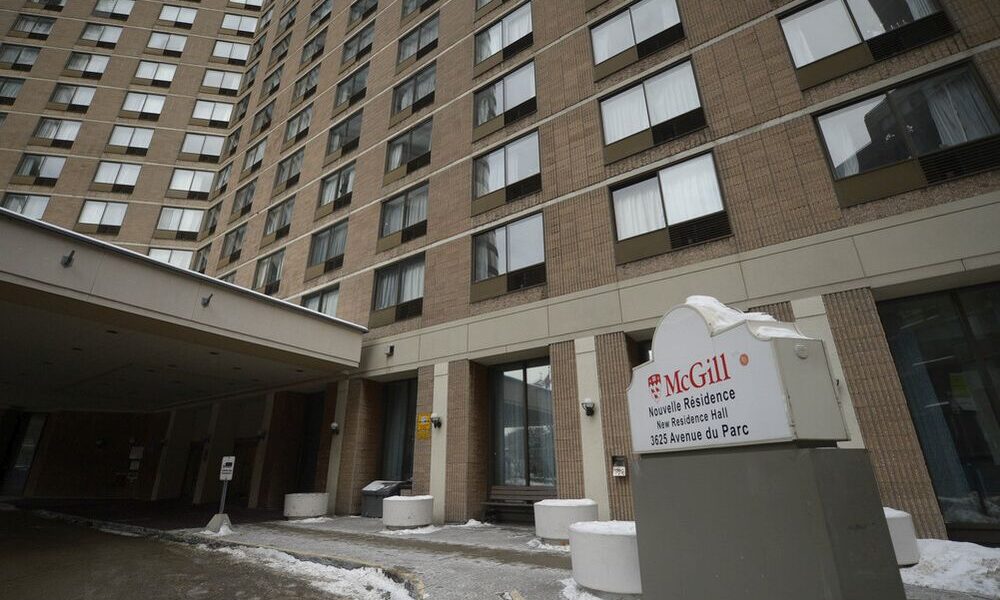
In a university-wide email sent out Oct. 7, McGill announced four new COVID-19 initiatives to help track and curtail the spread of COVID-19 on campus. The protocols, which are being implemented throughout October, include measuring CO2 levels to assess the efficiency of ventilation systems; testing wastewater in student residence buildings; distributing thermometers to those in residence; and establishing a new COVID-19 dashboard to distribute weekly updated data. 

Why is McGill measuring CO2 levels in some of its buildings?

CO2 builds up when ventilation is poor, so measuring CO2 levels is a way to track whether ventilation systems are operating properly. Some of McGill’s classrooms and exam rooms already have CO2 monitors, but others do not—a fact that prompted the university to conduct a systematic review of CO2 levels in spaces that previously went unassessed. Testing began on Oct. 4 and continues to be carried out by internal and external Subject Matter Experts (SME). The analysis is set to wrap up on Oct. 26. McGill has yet to announce next steps after the SMEs data is collected. Currently, the “Ventilation in your building” page details the ventilation statuses in specific rooms on campus.

What is wastewater sampling and how would it help prevent COVID-19?

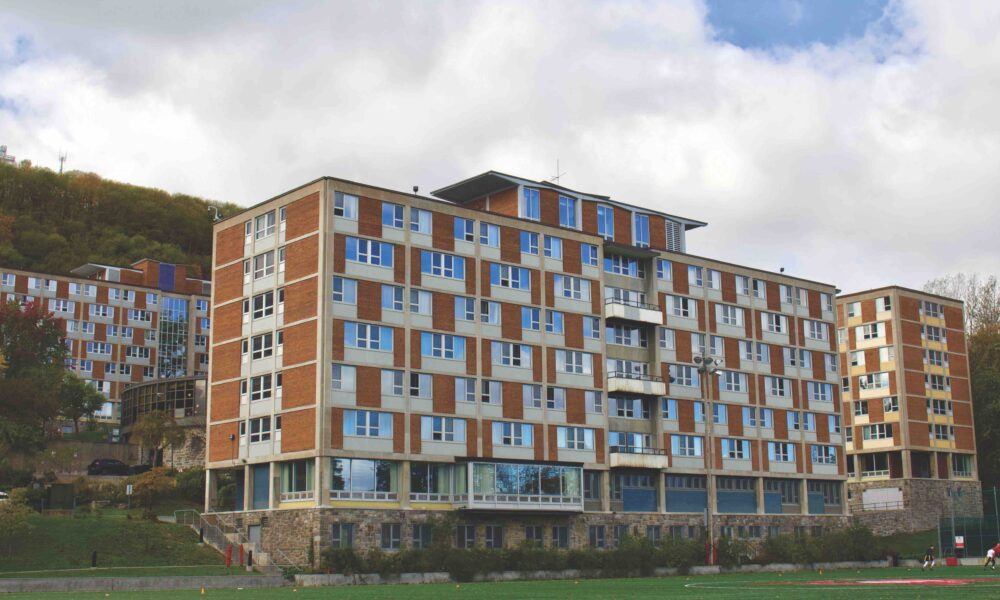
Wastewater sampling is currently underway at La Citadelle, Carrefour Sherbrooke, Royal Victoria College, and Solin Hall. McGill says it will expand the sampling to other residences soon. By sampling the wastewater from these buildings for evidence of the COVID-19 virus, McGill hopes to be able to detect potential COVID-19 outbreaks early. The university has devised three alert levels—vigilance, precursor, and outbreak—that can be activated at residences depending on the results of wastewater sampling. 

To support self-monitoring for potential symptoms of COVID-19, the university has decided to dispense 80 forehead thermometers to floor fellows and reception desks—which will be available to students upon request—and 750 personal stick thermometers, which are being given to students directly.

What is the new COVID-19 Situation Dashboard?

Another initiative McGill has rolled out is the implementation of a COVID-19 Situation Dashboard, which is updated every Tuesday and provides COVID-19 information from the past week. The dashboard provides information about campus and library traffic data, the number of new cases on campus, the number of cases linked to McGill classrooms, the number of calls to the Case Management Group (CMG), and the amount of contact tracing the CMG has conducted. This is more data than was previously available to the McGill community through the COVID-19 case tracker, which only stated the number of confirmed cases in a given week and whether there was evidence of community transmission.

What prompted McGill to implement these extra protocols?

Frédérique Mazerolle, a McGill media relations officer, says these new measures were devised in conjunction with public health officials and demonstrate McGill’s ongoing vigilance toward protecting the community.

“McGill University is working closely with public health officials to adopt policies and put into practice measures to protect students, staff and faculty. The University will continue to take a prudent planning approach that allows us to adapt as the health and well-being of our community remains a top priority,” Mazerolle wrote in an email to the //Tribune//. “The initiatives […] will provide new means of monitoring, keep the community informed with the latest data from around the McGill community and encourage and facilitate vaccination, which remains the best way to keep individuals, and the community at-large, safe.”

What is the McGill community’s reaction to these new measures?

David Juncker, chair of the Department of Biomedical Engineering, believes these new initiatives are useful, but wished they were implemented sooner. Juncker feels that there is still more that McGill could do to keep the community safe, such as requiring vaccination and implementing rapid testing. 

“I wish they had started [CO2 measurements] at the beginning of the semester, and I would encourage [McGill] to proceed faster and to make the results available publicly as soon as possible,” Juncker wrote in an email to the //Tribune//. “[T]he university should develop a strategy for using rapid tests under different modalities based on epidemiological modeling and cost-benefit analysis. Depending on the situation, twice a week screening for everyone could help catch many cases. Alternatively, rapid tests could be used as tests-to-stay or tests-to-enter for people who […] have mild symptoms.”

Commentary, Opinion

McGill should reduce harm, not safety

University is a time of experimentation, exploration, and self-discovery. For some students, this includes experimenting with drugs. However, users rarely have access to comprehensive education regarding safe drug use—a necessary component of a harm reduction approach. For many first-year students, their only “harm reduction” measure is an informal tradition: Floor fellows instruct students to write down the name of the drugs they are doing and tuck it into their left shoe. In the event of an overdose, floor fellows can refer to the note to help identify the drugs and respond appropriately. However, beyond this, there are very few harm reduction initiatives implemented across campus on behalf of McGill, especially in residences—a move that does more harm than good.

McGill has a responsibility to make sure that students’ experimentation with drugs is as safe as possible. Instead of prioritizing their students’ well-being, however, McGill recently adopted a zero-tolerance policy on drug consumption, further stigmatizing drug use on campus. Consequently, students themselves have taken on the responsibility of making harm reduction resources available on campus. McGill’s lack of care for their students’ health and safety places an unfair burden upon students to make campus safer. 

Drug use happens across all university campuses, and McGill is no exception. Students are not naive to this reality, and many are committed to addressing the gaps in knowledge that exist. One student-led group, Making Drugs More Accurate (MDMA), has made it their mission to address the lack of harm reduction education on campus. By providing accessible drug testing, education, and safe spaces, MDMA makes it safer for McGill students to experiment with drugs

What is perhaps most telling about the state of harm reduction at McGill is the overwhelmingly positive student response to their initiative. According to the founder of MDMA, the group handled over 40 orders containing 160 different substance samples that were tested and deemed safe to use over the course of a mere 48-hour period. The group’s online following only continues to grow because of their willingness to do what the administration refuses to. 

This is not the first time students have taken matters into their own hands to protect their peers. A petition on change.org demanding a commitment to harm reduction began circulating in May and has since gained traction, with 400 signatures as of Oct. 18. The petition is demonstrative that McGill students will continue to protect each other even if their university fails to. In the petition, students call on McGill to adopt a compassionate, educational, and non-punitive approach to drug use in residences and across campus as a whole. This approach might include adopting harm reduction techniques set forth by the National Harm Reduction Coalition and making resources such as naloxone available in all residence buildings and campus partners. Additionally, the petition calls upon McGill to embrace the recent postponed motion brought before the Students’ Society of McGill University Legislative Council in March 2020. The motion serves as an exposé against McGill for actively rolling back harm reduction policies by removing floor fellow training and online resources. 

The lack of institutionalized harm reduction resources on campus renders countless students without support when it comes to the safe consumption of drugs. If not for the student mobilization Making Drugs More Accurate sparked, the state of harm reduction at McGill would be virtually non-existent. If McGill refuses to implement life-saving harm reduction measures itself, it must at the very least provide support to student-led harm reduction initiatives and invest in a safer McGill community for all students. The administration’s blatant ignorance and avoidance of the topic of harm reduction can no longer be overlooked. Even if students are willing to take on this burden, it is ultimately McGill’s responsibility to alleviate the pressure by providing adequate resources.

Science & Technology

Where mother-of-pearl becomes glass

Many would agree that one of the foremost attributes of glass is its fragility. However, a team of McGill researchers have found a surprising model after which to fashion a more durable glass. The team has enlisted nacre, more commonly known as “mother-of-pearl,” to improve glass’ fracture toughness, impact resistance, and light refraction, and created a glass that is as resilient to fragmentation as plastic. 

“The methods for improvement [of glass composites] offer infinite variation and opportunities for novelty,”  Allen Ehrlicher, an associate professor in McGill’s Department of Bioengineering and a member of the research team, wrote in an email to The McGill Tribune

Ehrlicher and his team foresee such a durable glass composite as having the potential to vastly improve common applications, such as cell-phone screens. 

Using small fragments of glass and acrylic material, the researchers were able to adjust flexibility and collision resistance by varying how long the composite was spun in a centrifuge. This allowed them to align microscopic glass tablets into layers of parallel planes, leading to an overall denser structure with greater resiliency. 

To increase the transmittance of light and the overall transparency of the composite, the researchers made the opaque glass and acrylic solid take on the refractive index of glass through the selection of both hard and soft materials. According to Ehrlicher, hard substances provide a necessary backbone for the composite, while more pliable ones increase transparency by preventing the reflection of light, also known as refraction. This allows the clarity of the composite to be identical to that of more common glass forms, including those which are laminated and tempered with heat, but are comparatively weaker. 

“Mollusk shell in bioinspired materials is broadly recognized as an archetype of tough composite materials, and offers a design template in its brick and mortar architecture as well as [a] combination of rigid tablets and ductile connective material,” Ehrlicher wrote. “For the material to not shatter, the material must flex and the energy of deformation must be absorbed more gradually than catastrophically.” 

It is mainly due to the mollusk shell’s structure, rather than the material itself, that such deformative properties can be achieved. 

“[Deformation] occurs through toughening mechanisms in the plastic connective phase between the glass flakes,” Ehrlicher wrote. “By allowing the plastic phase to gradually break, develop cavities, and let the glass tablets slide, this prevents the overall material from breaking, similar to a myriad of mechanical ‘fuses.’ Toughening mechanisms are the processes which allow the material to not be fragile or brittle like conventional glass.” 

Nacre has both hard and soft phases that allow for a high level of rigidity while still being able to absorb and resist impact. Thus, the researchers fashioned their composite out of both stiff and deformable material, resulting in a high level of interface strength due to strong bonding between the different phases. 

The researchers have calculated that their composite is three times stronger than normal glass and over five times more fracture resistant, a sign that this design could have significant real-world applications. 

Even more compelling is that Ehrlicher believes this glass composite is comparatively easier to manufacture than traditional glass. The team is currently in talks with companies regarding its wide-scale production. 

It is hard to believe that nacre, most commonly a protective lining for many mollusk species, could be behind such an exciting scientific development. Yet, Ehrlicher thinks the sky is the limit for nacre and its other biological counterparts. 

“Bioinspired materials has become a field in its own right,” Ehrlicher wrote. While Ehrlicher and his colleagues specialize in cell mechanics, the realm of bio-inspired materials remains an open canvas for experimentation and development. It seems that as scientists discover more about the minutiae of nature, the potential for innovation will only grow.

Hockey, Sports

The NHLPA is leaving player health on the sidelines

On Oct. 7, the Montreal Canadiens announced that goaltender Carey Price voluntarily entered the National Hockey League’s player assistance program (NHLPA). The program supports NHL players and their families through  mental health struggles, substance abuse issues, and other related matters. Earlier that week, Vegas Golden Knights goaltender Robin Lehner tweeted about the situation of Jack Eichel and others whose safety was jeopardized for the advancement of their team. This controversy has launched the NHL and NHLPA into the spotlight, exposing the dangers players face off the ice. While NHL players’ mental health is slowly becoming more of a priority, their physical health is being neglected by their teams in favour of winning results.

It has become increasingly clear that the success of the NHL and its teams is prioritized over the physical health of athletes. Nowhere has this been more obvious than in the case of Jack Eichel. Since March 2020, the ex-captain of the Buffalo Sabres has been out with a herniated disk in his neck. Over the summer, the team and Eichel were at an impasse: Eichel preferred a disk replacement surgery, while the team insisted on a fusion procedure. He remained without operation into September 2020, where he failed to pass his physical and was revoked of his captaincy. Eichel’s wishes to take time to recover were ignored and he was penalized for not yielding to the Sabres’ desires. This instance shows a concerning lack of respect for player health and bodily autonomy, prompting one to question the NHLPA’s ethics.

In his tweet regarding the Eichel situation, former Sabre Robin Lehner divulged that he experienced a comparable situation while on the team. Though he did not provide many details, many speculate that the team cut his post-ankle-surgery recovery short—a move which may have led to his bad ankle sprain. On the same day, he tweeted that teams were giving their players benzodiazepines and Ambien in order to help them sleep on planes. Benzodiazepines can become addictive for some people in a matter of days—in 2020 the FDA ordered a new warning to be put on the drug’s label due to its role in opioid overdoses. Lehner himself admitted to becoming addicted after being given Ambien by a former team. 

Tragedy has already resulted from teams putting their interests ahead of their players. In response to Robin Lehner’s tweets, former NHL player Daniel Carcillo tweeted the story of his best friend, the late Steve Montador. The Chicago Blackhawks cleared him four times in the span of twelve weeks and attempted to have him continue playing following his nineteenth concussion. He decided to seek further treatment, against the advice of his team and management, and was deemed fit to play following two weeks of this treatment. Once he signed his fit to play agreement, he was relegated to the American Hockey League. Roughly two years later, Steve Montador died of chronic traumatic encephalopathy (CTE), a degenerative disease directly caused by repeated blows to the head. The NHL and NHLPA had a direct hand in the death of Montador due to their repeated failure to care for his health.
Montreal has seen its star goalie, Carey Price, approach the NHL for help in his mental health journey, with abundant support outpouring from players and fans alike. While this is a hopeful step forward, there is a distinct lack of mechanisms and programs to protect the physical health of the league’s athletes. This has left Jack Eichel hanging in a long-term injury reserve limbo and Dan Carcillo without a best friend. Lacking substantive support for physical health, players have become another cog in the money-making machine of the NHL, and their humanity has been left behind.

Science & Technology

Deep learning algorithm predicts early warning signals of climate tipping points

Tipping points are all around us, but it’s hard to see them coming. When a person falls off a bike, a patient has a heart attack, or a campfire escalates to a wildfire, it is nearly impossible to identify the exact moment at which disaster became inevitable.

 But it might not be impossible for much longer.

On Sept. 28, Thomas Bury, a researcher in McGill’s Department of Physiology, and Chris Bauch, a professor at the University of Waterloo, published a paper detailing the development of a new deep learning (DL) algorithm, that identifies early warning signals (EWS) of tipping points in dynamical systems. 

Dynamical systems are all around us and are defined as systems in which many variables interact and evolve over time. From the Earth’s climate to the human body, the organizations and organisms that dictate our quality of life are complex and unpredictable.

DL algorithms can improve their output automatically through experience and the use of data. But even with the help of DL systems, there remains the problem of not having enough data. Artificial intelligence algorithms need to be trained on data sets in order to learn how to recognize and predict patterns. Many of the areas researchers hope to explore, such as climatic dynamics or heartbeats, do not yet have enough data to properly train an algorithm.

However, data does not need to be taken from field experiments for it to be an accurate reflection of real events. Previous research into dynamical systems revealed key patterns about how data changes close to tipping points. By simplifying these patterns and building computer models to represent them, it is possible to generate vast amounts of simulated data that reflect real systems without actually collecting observations in the field.

Using simulated data representing dynamical systems with and without tipping points, Bury and Bauch trained their DL algorithm to recognize which features corresponded to systems with tipping points. Once trained, the algorithm was able to examine new situations, real and simulated, and successfully make predictions about the likelihood of future tipping points. 

Bury, who has been studying tipping points since 2015, is interested in early warning signals in both ecological and medical contexts.

“I am inspired to study tipping points because they arise in such diverse areas of science and society,” Bury said in an interview with The McGill Tribune. “This algorithm, for the first time, combines deep learning and dynamical systems theory to predict tipping points, and does so with better accuracy than previous approaches.”  

Although their algorithm is still undergoing testing to avoid unexplained inaccuracies, the possible applications of such an algorithm are endless. The ability to predict regional tipping points in climate systems could enable governments to prepare for natural disasters, such as floods or droughts, and better adapt to the effects of climate change. 

The algorithm can also be applied to unpredictable events at the individual level. For patients with cardiac arrhythmia, a condition that heightens the risk of sudden death by heart attack, data taken from heart monitors could be used to predict if and when a patient might experience a heart attack.

“Our approach may provide individuals [and] societies with greater forewarning to these events, and therefore allow mitigative [and] preventative strategies to be implemented in advance of the tipping point,” Bury said.

In the world of mathematics, Bury and Bauch are some of the first to study deep learning and dynamical systems simultaneously. 

“I find this research particularly exciting as it has shown that the combination of two seemingly disparate areas of mathematics, deep learning and dynamical systems, provides better prediction of tipping points than either area […] has managed on its own,” Bury said.

Though researchers cannot yet predict the next drought or medical emergency with absolute accuracy, it seems that it’s now only a matter of time before it can. 

McGill

McGill floor fellows fight for better wages, meal plans, working conditions as collective agreement negotiations drag on

It has been 15 months since the expiration of the collective agreement (CA) between floor fellows—upper-year students who live in residences to support students—and McGill. A new agreement has yet to be instated as parties remain in deadlock over issues such as the fellows’ wages, meal plan dollars, guest policies, and the university’s reluctance to include harm-reduction and anti-oppressive principles in the CA.

Floor fellows have been operating on a grey interim agreement since the previous CA expired on July 2, 2020. This means that they are compensated according to the expired agreement and also defer to the rules and regulations set out within it.

In an interview with The McGill Tribune, Chris Soong, a first-year doctoral student studying Collaborative Piano and floor fellow in Solin Hall, explained why a CA is important for floor fellows. 

“[Having a CA] lets us know what we will be responsible for and how we are going to be treated through the year,” said Soong. “Without the collective agreement, if something slips through, there is nothing to hold the administration accountable.”

Under the expired CA, floor fellows receive a meal plan valued at $4,500 a year, the majority of which must be spent on campus at dining halls and cafeterias.  According to sources, Solin Hall floor fellows are allocated $100 a month for groceries, although the average monthly expenditure on food costs in Quebec is estimated to be $328 per person

According to Christian Tonnesen, U3 Science and vice-president floor fellow of the Association of McGill University Support Employees (AMUSE) Unit B, the union representing the floor fellows, AMUSE has proposed to increase the amount of the meal plan to $5,600 a year. They are also pushing for  Solin Hall floor fellows to receive at least half of their compensation in grocery credits—money that can be spent at grocery stores instead of campus dining halls and cafeterias. Soong calculated how far $4,500 goes in a dining hall and concluded that the budget, on average, provides for a meal and a half per day. The meal plan for Floor Fellows has not increased since 2017, although the mandatory meal plan prices for students living in residences have gone up from $4,575 in 2017 to $5,475 in 2020.

Floor fellows live in residence for a fee deducted from weekly paychecks and receive minimum wage—$13.50 an hour—for an expected 13 hours of work per week. Duty shifts such as patrolling hallways are not included in the 13 hours of work and are considered as “additional hours.” This work includes being on duty, which consists of remaining in the building, being sober and accessible to all students, completing supervision rounds. Floor fellows are also responsible for scheduling and attending meetings with the Residence Life Manager, planning activities, and being available to support residents in crisis. In view of these responsibilities, Tonnesen explained, floor fellows are seeking a pay increase.

“The pay is not substantial, especially considering the emotional and physical toll the job takes on us,” Tonnesen said. “We proposed that [pay be increased] to $18 […] and [McGill] came back with a crisp $13.64 an hour.”

AMUSE is fighting for other changes in the CA, such as modifying restrictions on guest policies and compensating Floor Fellows for extra hours during move-in week. Another issue in the negotiation process is McGill’s refusal to include harm reduction and anti-oppressive principles directly in the CA. 

“[In residence, anti-oppression looks like] recognizing that the institutions we participate in are deeply seated in racism and colonialism and actively helping students unlearn these micro-aggressions,” said Tonnesen. “Harm reduction is the basic principle of meeting people where they are at in regards to substance use [.…] I have seen a degradation of [harm reduction] policies. That is the reasoning for needing it in the CA.” 

McGill media relations officer Frédérique Mazerolle declined to comment on details about the ongoing discussion with AMUSE Unit B, writing in an email to the Tribune that “the University will let the conciliation process run its course.”

A previous version of this article stated that floor fellows live free of charge in McGill residences and that floor fellows are expected to do approximately 13 hours of week per week. In fact, fees for living in residences are deducted weekly from floor fellows’ paychecks and the 13 hours of work does not include duty shifts, which are considered additional hours. The Tribune regrets the error.

McGill, Montreal, News, SSMU

Opposition to the New Vic Project prompts debate at SSMU Legislative Council meeting

The Students’ Society of McGill University (SSMU) held its third Legislative Council meeting of the Fall on Oct. 14. The meeting’s agenda included a discussion about SSMU’s opposition to McGill’s New Vic Project, a presentation from the Office of Sustainability, and councillor nominations to the SSMU Board of Directors.

In response to concerns over the SSMU’s stance against the New Vic Project, vice-president (VP) External Sacha Delouvrier cited various SSMU mandates—including its dedication to affordable student housing—as part of the rationale behind the group’s opposition to the project. 

“SSMU has committed itself through legislation to support the Royal Vic for the Public campaign, which is incompatible with the privatization inherent in McGill’s project,” Delouvrier said. “SSMU’s Affordable Student Housing Committee has further committed itself […] to support the Milton Park’s housing and social efforts as a community partner.”

During the ensuing debate, councillors and other members of the gallery raised concerns about the lack of consultation between SSMU and the heads of the initiative. Members also questioned SSMU’s opposition to the project, pointing out that the blueprints for New Vic promise space for on-site sustainability research and state they  have dedication to “healing the planet.”

Citing his experience as a former student at Macdonald Campus, where sustainability research was shut down due to a lack of facility space, Councillor Tiniacos felt it was a good thing that McGill’s proposal for the Royal Vic would give more space for sustainability projects. 

“Does the executive understand that opposing this project is opposing sustainable research [itself] and the mandate of the university’s […] basis of education and research?” Tiniacos asked.  

Delouvrier maintained that the Royal Vic site could be used in a more beneficial way, suggesting that an affordable student housing project as a better alternative. 

The Council also passed a motion to create the Queer Improvement and Partnership Solidarity (QUIPS) Fund and Fee. VP University Affairs Claire Downie and Gender and Sexuality Commissioner Grey Cooper introduced the motion, stating that the proposed fund would provide financial support for queer students with urgent needs and would also help finance grassroots research that would otherwise not be supported due to institutionalized homophobia. 

Medicine Representative Benson Wan questioned why the fee would be exempt from SSMU’s opt-out program. Cooper responded that non-opt-outable fees for equity programs are standard for SSMU, citing the Indigenous Equity Fund

“It is non-opt-outable, because it is specifically a fee to support minority students in the context of McGill,” Cooper said. “McGill’s general community, and the committee as a whole, believes that should be the precedent, that all SSMU members help support [minority students].” 

The council also unanimously approved a motion proposed by VP Internal Sarah Paulin to revise aspects of the Francophone Affairs Committee to increase its productivity and broaden its scope. 

Moment of the Meeting

VP Finance Eric Sader announced a surplus of $300,000 from the previous projection of the SSMU budget for 2021-2022. According to Sader, the previous VP Finance took a more “conservative” approach to the budget given that last year was online. Sader said he was consulting with department heads, executives, and other staff on where the money should be allocated, but said it would most go toward hiring additional SSMU staff in “overworked portfolios.”

Soundbite

“We take pride in presenting the annual report to all the student associations as a measure of transparency and accountability. Since the students contribute to half of the fund, we feel it is important to showcase what our office has been able to do by distributing those funds in the community and in the impacts that the those projects yielded.”

—Executive Director of Sustainability Francois Miller on the Office of Sustainability’s 2021 Fiscal Year report

Commentary, Opinion

A secure campus requires open communication

On the morning of Sept. 14, several campus buildings were evacuated and morning classes were cancelled as police responded to a suspicious package in the McCall MacBain Arts Building. Four days later, two men were stabbed just steps away from campus on Sherbrooke Street, and one of them later died. Although Montreal has a lower crime rate than most Canadian cities, security remains a concern for the McGill community. It is a shame that the administration offered little information about the threats, because students should not be kept in the dark about safety. McGill must develop better safety protocols and be more communicative with students about security risks on campus.

The university has some procedures in place to respond to safety issues, but these protocols are limited and vague. The only directive given to those who discover something suspicious is to avoid touching it, call Security Services, and wait for further instructions. Although McGill has an active shooter protocol, they have not publicized a procedure for dangerous individuals armed with other weapons, such as knives. The university’s lack of preparedness for situations like this is especially alarming in the wake of the Sherbrooke Street stabbing. Even though 81 per cent of Montreal’s fatal crimes occur during the evening or night, McGill employs more security guards during the day. This overlooks the many students who remain on campus at night for clubs, events, or studying. Without proper plans to respond to campus threats, students are put in unnecessary danger. McGill should institute evacuation drills for staff and the administration, and should clearly communicate them to students so that if an unexpected crisis arises again, people are prepared to respond appropriately. 

Even when the administration does create safety directives, McGill’s notoriously poor communication systems exacerbate dangerous situations. Students whose classes were cancelled or who were evacuated from their lecture halls deserved to understand what was happening, as well as what precautions to take without succumbing to unnecessary fear. Furthermore, the university should have immediately warned students to avoid the area where the stabbing took place, rather than leaving them to find out hours later through social media. McGill may wish to keep certain aspects of their security plans secret to prevent perpetrators from learning about them. However, it is cruel to keep students and staff uninformed and afraid during what they speculated was a bomb threat—and potentially fatal to withhold information about a stabbing next to campus when the suspects remain at large. 

The university’s inability to be forthcoming during active threats exemplifies a broader pattern of lax safety throughout the COVID-19 pandemic. Although McGill regularly provides updates from the Emergency Operations Centre and attempts to enact contact tracing, communication regarding COVID-19 transmission on campus remains insufficient. As a result, some students in the Faculty of Law began disclosing COVID-19 cases to each other on Facebook, alleging that the university was downplaying the number of cases on campus. The administration eventually blocked them from maintaining their own student-run reporting system. When McGill is not only withholding information, but preventing people from sharing amongst themselves, it erodes students’ trust in the university and calls into question whether the school truly cares about its students’ safety.
If the administration is not willing to prioritize safety, students should use the resources available to them to take precautions. Those who need assistance travelling at night can use the Students’ Society of McGill University’s WALKSAFE service, which relaunched on Oct. 8, as well as DriveSafe, when it resumes operations. Students can also subscribe to the university’s emergency notification system to receive alerts via text message, the McGill app, or their computers. However, the administration must do its part to keep students safe by using the alert software to tell students about safety threats and must adequately prepare for threats before they take place. Attending class or walking home from the library at night should not scare students, but McGill’s poor security communications should.

Basketball, Sports

Slow but promising start for McGill women’s basketball

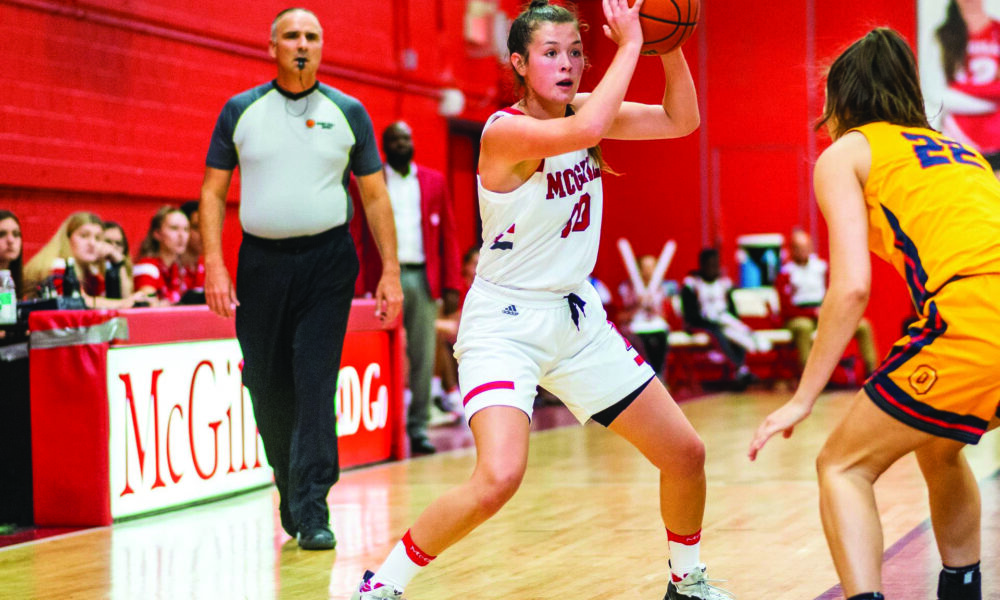
On Oct. 17, the McGill women’s basketball team (0–1) faced off against the Windsor Lancers (1–1), in a high-energy game that resulted in a 67-54 loss for the Martlets. After the pandemic halted games for over a year, the team was eager to be on the court. With a tipoff by centre Amelie Rochon that almost hit the referee in the face, the horses were out of the gate. 

Early into the first quarter, it was evident that the Martlets’ strength lay in their offence, with defence struggling to prevent the Lancers’ early attempts to score. However, the first points of the game went to McGill, with two free throws by first-year guard Iman Ibrahim

Though they initially had the lead, the Martlets quickly lost it, and remained just behind their opponents throughout the first quarter. In the closing seconds, as coaches, teammates, and spectators began to count down, the Martlets scored two three-pointers in a row—both from Ibrahim. Cheers erupted throughout the gym at her incredible shots.

The second quarter was a period of strife for the McGill team, with a score of 34-17 at the halfway mark. Their vivacity did not diminish until just before halftime, when lost shots and ball fumbles began to dim the team’s spirit. 

Emma-Jane Scotten, a first-year guard, agreed that morale was not at its peak.

“The energy was okay,” Scotten said. “I just think we need to be a little bit more positive on the bench and in the game, just bring in more energy and really play as a team.”

Yet, the end of the quarter saw McGill score 10 points in three minutes, ending the first half only seven points behind, with a score of 37-30. 

After a slow and steady comeback at the end of the second quarter, the team had the opportunity to turn the odds back in their favour. Unfortunately, Windsor’s defence was strong, and McGill stayed at 32 points for half of the third quarter. 

After many successful shots, guard and forward Maddy Colpitts was forced to sit out after an ankle injury that left her unable to play the rest of the game. Before the end of the third quarter, Scotten and guard Jessica Salanon scored a field goal and three-pointer respectively, leaving the score at 53-39 for Windsor.

Martlets defence struggled to contain the Lancers. Scotten said that the team will need to communicate and work cohesively to improve their defensive strategies. 

“I think that’s what hurt us today,” Scotten said. “We haven’t played in a while, but we still find we’re getting beat a lot. We really have to work on our on-ball defence [and] getting in the gaps.” 

In an email to the //Tribune//, new head coach Rikki Bowles pointed out that the team this year is almost all fresh blood with strong potential. 

“Our team is young this season, with 13 of our 14 players in their first or second year of eligibility,”  Bowles wrote. “We are focussed on getting better each day, learning from the Windsor game as we prepare for Ottawa this Saturday.” 

With a final score of 67-54, the game went to the Windsor Lancers. The Martlets, however, ought not to be dismissed too early. With a team of energetic and committed players, the long season ahead holds much promise for McGill.

Moment of the game:

Ibrahim scored two three-point field goals back-to-back after a points dry spell for McGill, bringing back the spirit of the whole crowd.

Stat corner:

With 16 points, Iman Ibrahim dominated the number of points and successful field goals scored by all players.

Quotable:

“We really want to work on helping each other out. We’re all connected when we play, so we have to play together as a team if we want to improve.” — First-year Emma-Jane Scotten

Read the latest issue

Read the latest issue