Latest News

McGill, News

McGill cancels all Winter 2022 exchanges and independent study abroad programs, students start petition

In an email sent to students on Oct. 5, Deputy Provost Fabrice Labeau announced that all outgoing exchange and independent study abroad programs would be cancelled for the Winter 2022 semester.  

Labeau attributed the decision to the ongoing uncertainty surrounding public health regulations, vaccination rates, and restrictions, all of which vary from country to country. In addition, the email cited the federal government’s Global Level 3 travel advisory ranking, which warns against all non-essential travel outside of Canada.

Frédérique Mazerolle, a McGill media relations officer, stated that one of the reasons for cancelling international exchanges was due to the university’s inability to monitor students’ adherence to health guidelines abroad.

“Traveling for […] university-sponsored activities in the context of the pandemic inherently presents a higher risk than in a normal situation,” Mazerolle wrote in an email to The McGill Tribune. “Due to the significant planning and logistical requirements involved, [the decision] will not be subject to change based on public health developments in the coming months.”

A petition on change.org created by McGill students and named “Students for Winter 2022 Exchange!” has been making its rounds on social media in response to the announcement. The approximately 800 signatories as of Oct. 13 include a wide range of individuals, such as parents of students, students who were set to study abroad in the winter, and would-be inbound exchange students. 

Juliette Debray, U2 Arts and one of the creators of the petition, said she was surprised by the abruptness of the announcement and was skeptical about McGill’s rationale for cancelation. 

“I was really taken aback,” Debray said in an interview with The McGill Tribune.  “McGill did not really give a warning that there was a possibility of cancellation. Logically speaking, it does not follow through. Their main reason was the varying public health landscape in different countries, but wouldn’t [a] logical follow-up in that case be to do a varying response?”

Labeau’s email emphasized that McGill students will not be able to take online courses with their host universities. Debray pointed out that many Canadian universities, including Concordia, UQAM, and Queen’s University, have chosen to pursue a more flexible approach, such as granting students the option to do online classes abroad or process exchange nominations on a country-by-country basis.

“I just found out today that UQAM also canceled their winter semester exchanges, but are allowing exceptions for students whose host universities are [in] their home country or for students who have only this year left to do an exchange,” Debray said. “They’re also allowing students to do online exchanges if they want to, so clearly it’s possible.”

Labeau clarified in the cancellation announcement that exemptions may be made to students who wish to pursue an Independent Study Away that requires no travel and is completed in the student’s home country.

Cameron Bailey, U3 Arts, had been making arrangements to attend the University of Edinburgh this winter. Bailey expressed frustration with McGill’s handling of the decision, highlighting McGill’s failure to reimburse the exchange fee deposited by students.

“They made a blanket call instead of looking into COVID-19 policies for different countries which drastically differ […] and they also kept our $150 deposit,” Bailey said. 

Max Garcia, U3 Arts, created the change.org petition alongside Debray. While Garcia is doubtful that McGill will reverse its decision, he hopes the petition might encourage the administration to consult students in future exchange-related decisions.

“To be honest, I do not foresee any changes really happening,” Garcia said. “I am not even the person who is the most angry about this, but this petition is for those who are angrier than me and would like to see something done. Maybe [the university] will not rethink their decision, but who knows, maybe McGill will start including students in the decision-making process.”

Arts & Entertainment, Poetry

Mcsway takes a breath of fresh air at “Poetry in the Park”

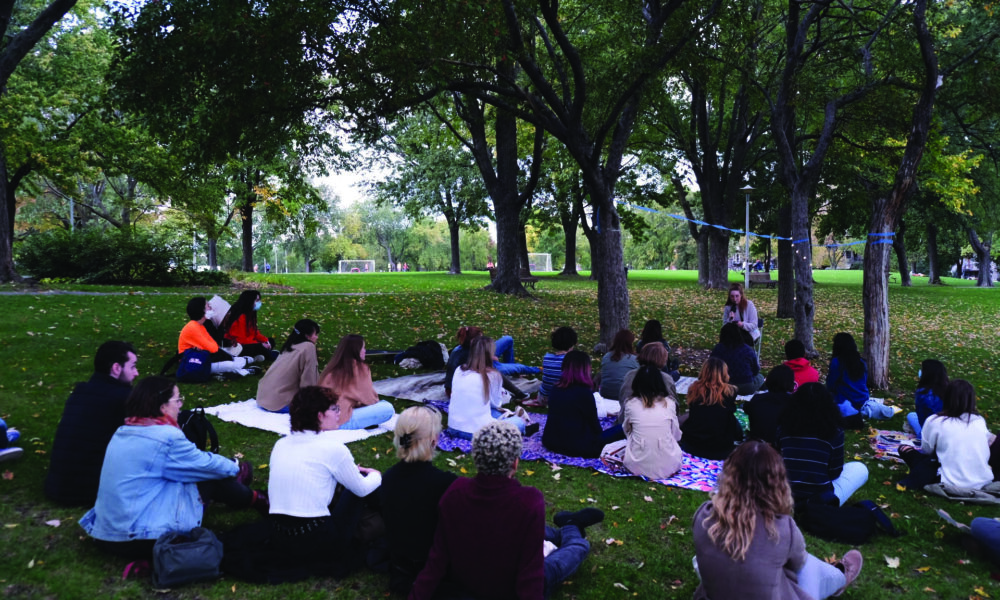
Voices came alive at Jeanne Mance Park on Sept. 30 with Mcsway Poetry Collective’s first open-mic night of the semester, “Poetry in the Park.” Gathered around a tree strung with lights that acted as a stage, the audience sat on blankets, listening to poets valiantly share their words and their hearts.

“This is our first time [hosting an open-mic] in the park, but it is an effort to create the spaces we were creating before the pandemic, [spaces] where people can gather and feel comfortable to share,” said Mcsway vice-president Amanda Ventrudo, U3 Arts. “A lot of people will share […] spontaneously at the end, or it will be their first time reading, so it’s just nice to have a space to do that.” 

Though it was the group’s first time holding a poetry night in the park, Mcsway created a welcoming, non-judgemental space where people felt safe to express themselves in an intimate and emotional way. 

“I think it’s just different to share physically what you’ve written and have people [react]. You can see and feel people respond to it in real-time,” Ventrudo said. “A lot of the time [it] is cathartic to read something that you wrote out loud, instead of just leaving it in its written form.”

A nervous excitement swept the atmosphere as each performer stood up and made their way to the stage. Some were more nervous than others, but as the excited and welcoming audience clapped and whistled in their honour, they visibly relaxed. 

Although there were technical issues with the microphone that made it difficult to hear the performers, many used their physicality to convey the spirit of the poems. Some were more faint, while others worked with the audience to improve their projection. 

It was moving to see initially nervous performers open up and embrace being vulnerable in sharing parts of their world with the audience. Some performers showcased poetry they had written before the pandemic—a striking reminder of how distant and detached the last year and a half of quarantine felt—while others shared poems about personal and intimate struggles. Writers also discussed the meaning and circumstances behind their poems, giving the audience further insight into their words. 

This event allowed all who attended to sit, share, and connect in a profound way that only sharing poetry can produce.

“For me, [poetry] is one of the most effective ways to express yourself because anybody can do it and there are not really any tricks or skills that you need,” Ventrudo said. “I think making it accessible and normal to share those kinds of things is really [important.]” 

Mcsway looks forward to hosting more open-mic-nights, as well as poetry shares and workshops—the first of which will be occurring in October. Find their Instagram and Facebook here.

Album Reviews, Arts & Entertainment, Internet, Music

Where do I begin?: Anthony Fantano and ‘The Needle Drop’

When Sacramento-based hip hop collective Death Grips released their debut studio album The Money Store in 2012, the culture of music consumption began to shift. The aggressive, experimental ethos of Death Grips’ LP was powerful enough to inspire change in tastes among fans and creators alike, but internet music enthusiast and notorious critic Anthony Fantano was a catalyst for the move toward the popularization of such experimental hip hop. Fantano’s YouTube channel, “theneedledrop,” with its classic jargony, essay-like approach to album reviews, handed Death Grips the elusive 10/10 rating—the first to ever receive the honour in the then-three-year-old channel’s history.

Since that fateful day in 2012, only a handful of records have tasted the glory of a Fantano 10. Fantano himself, now at the helm of a two-channel empire, has become a cornerstone of internet music culture. He reviews albums almost daily, providing unfiltered criticism and, on occasion, enthusiastic praise. His other video segments include his first-time listens and reactions to individual tracks, the interactive “Let’s Argue” and “Reading Your Comments” bits, and a number of weekly and yearly round-ups summarizing and celebrating recent releases in the music world. Fantano navigates his reviews quickly, bouncing from detail to detail while unpacking the core elements of each record, generating an atmosphere of controlled mayhem that builds towards a decisive conclusion.

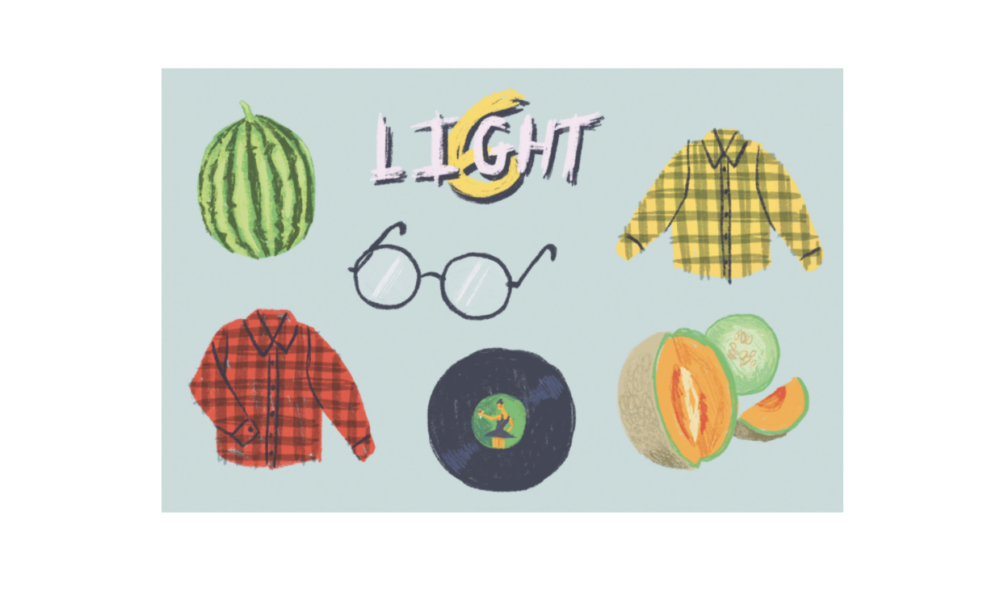
Fantano’s channel has become a breeding ground for some of the most inexplicable interactions on the internet—the “you had to be there…for the last five years” type of stuff. Sarcasm, esoteric references, and callbacks to his channel history litter the comment sections. A casual scroll-through can leave an unfamiliar viewer feeling like they have just opened a forbidden door. Among many other, and occasionally much darker, trends that exist in Fantano’s comment section, there is also a surplus of lighthearted nicknaming and inside jokes: Fans endearingly call Fantano “melon,” referring to his famously bald head, and comment on the subtle but meaningful Easter eggs—including Fantano’s choice of flannel shirt, which he uses to foreshadow his thoughts on a record. Amidst all the chaos, however, arises genuine, thoughtful discussions focussed on why, and why not, some music deserves a listen. 

Fantano’s rise to YouTube stardom places him in a relatively unoccupied echelon of the internet, preserving a space for active and opinionated music enthusiasts within music intellectualism’s brash, reactive, and often self-contradictory zone of the internet. Few web personalities have acquired such a far-reaching and potent influence over their viewers—even reaching a point where other music fans satirize his most devout supporters, who notoriously defer to “theneedledrop” for the majority of their musical opinions. Fantano is but one part of a sweeping revolution in music consumption whereby internet discussions and the tastes of web strangers make their way into popular discourse. Fantano’s willingness to review a plethora of diverse music has allowed a number of underappreciated and experimental artists to permeate the playlists of the more “mainstream” listener, like Danny Brown, Charli XCX, FKA Twigs, and others.

As the backbone of the online music-loving community, Fantano will inevitably continue to scour the musical landscape, finding underground gems and giving fan-favourite albums a 6/10, but viewers should take no insult. After all, Fantano has never hesitated to remind us that, “Y’all know this is just my opinion, right?”

Editorial, Opinion

Action is due against sexism in SSMU

On Sept. 22, The McGill Daily published an article shedding light on a long-standing culture of sexism and misogyny rampant within the Students’ Society of McGill University (SSMU). The article featured many accounts of past and present SSMU members who called out a culture of sexism within the Society. In response, SSMU’s vice-president (VP) Internal Affairs, Sarah Paulin, sent out an email that did not cite the article and only made vague reference to its contents. Although this is not the first time women have spoken out about their treatment within student government at McGill, it would appear that little improvement has occurred over the past several years. The article exposes only a fraction of a larger systemic failure, laying bare the need for urgent change in the immediate-term, and a cultural overhaul over the long-term. Structural change is imperative and while this is ultimately SSMU’s cross to bear, the organization will only take concrete action if students refuse to let these pervasive issues go unresolved. Students must move away from the accepted—and even expected—culture of apathy toward SSMU and reject its normalized toxicity to make substantive change possible. 

Upon entering McGill, many first-year students are taught, whether by upper-years or frosh leaders, that SSMU is a deeply flawed organization not worth engaging with. This rhetoric does have some backing to it—historically, SSMU has been both untrustworthy and inaccessible to students. The union’s lack of transparency leaves students disengaged and though candidates almost always run on platforms promising change, this problem continues to manifest. Scandals frequently end with no action or accountability, only empty promises and vague messages to the study body. Executives and other SSMU members have managed to get away with this, as many McGill students have come to accept that their student union is irredeemable. Students must mobilize and demand change, whether by attending the Legislative Council meetings, casting votes in elections, or demanding that SSMU executives give public updates on measures being implemented. SSMU is supposed to represent the entire McGill community, and it is unacceptable that it is an unsafe space for women and other gender minorities. 

While students at large have a responsibility to hold SSMU accountable, internal structural change is still clearly necessary in the short-term. It is telling that current and former student representatives felt the need to reach out to campus media to have their complaints taken seriously. As reported in the Daily article, SSMU’s human resources (HR) reporting structure is dangerously flawed. With the SSMU Board of Directors overseeing HR, there is limited separation of power, meaning that when representatives file complaints, they must grapple with the possibility that their superiors could see it. Furthermore, the mechanism to hold high-up executives accountable is ineffective for the very same reason. The mere presence of students in these roles exacerbates the lack of confidentiality and trust within both SSMU’s HR system and its approach to equity.

Although most students are unaware of the extent to which they shape SSMU, they possess the ability to radically improve its operations. For example, students can rally around proposals to pay SSMU representatives. It is disappointing that a motion to provide financial compensation for SSMU representatives failed in 2020, because it could have helped to address some of the union’s structural inequities. Compensation would make SSMU positions more accessible to a wider range of students, moving away from the ‘certain type of student’—particularly, those who have the financial privilege of not having to work during school—that these unpaid roles usually attract. This move would also allow SSMU representatives to unionize, providing an added level of protection and further empowering them to fight exploitation. 


Asking students to take a stand for SSMU’s benefit is gruelling, especially when their representatives uphold a toxic sexist culture while refusing to provide transparency about how they plan on addressing it. The women who have been affected by SSMU’s misogynistic and demeaning culture deserve more than meaningless statements lacking concrete action. Most of all, these individuals deserve to have their experiences valued. The SSMU executive team says they have made a pact to fearlessly “change the system,” and students must be equally involved in overseeing this necessary cultural shift.

A previous version of this editorial incorrectly stated that SSMU executives oversee the HR Department. In fact, the SSMU Board of Directors administers the policy through its HR department and committee, and may involve the SSMU president or any other staff, on a case-by-case basis. The Tribune regrets this error.

Science & Technology

Cut, tuck, lift: Tracking the rise of cosmetic surgery

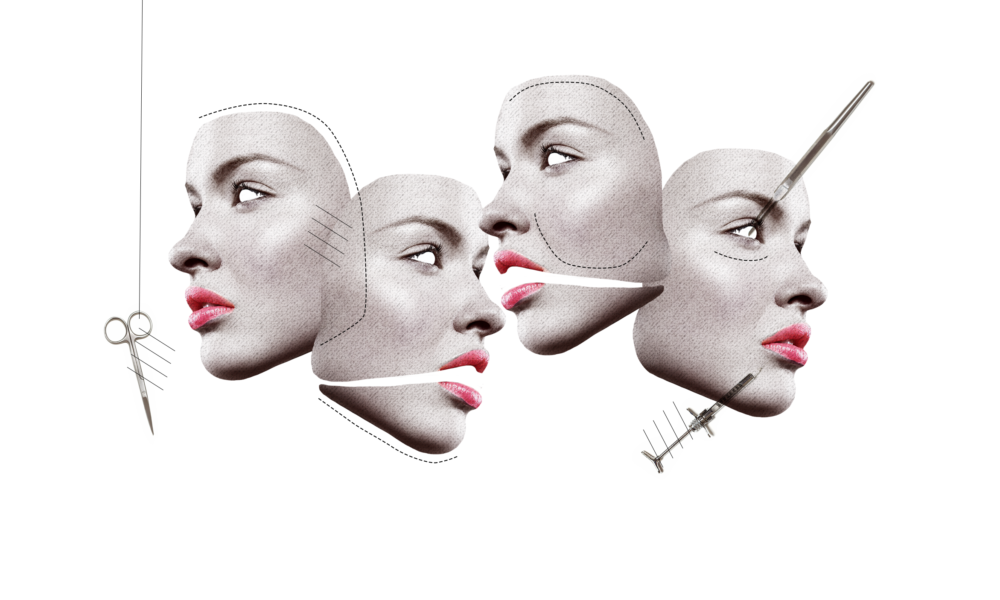
Blown-up shots of smooth skin, cinched waists, and tight bums are hard to avoid and even harder to look away from. Whether appearing on social media feeds or on seedy pornography websites, idealized bodies are on display on virtually every device with a screen. Bombarded by unrealistic beauty standards, more and more people, particularly women, have sought to modify their bodies via surgical means.

According to the American Society of Plastic Surgeons (ASPS), the total number of cosmetic surgical procedures, including breast augmentation and liposuction, remained relatively constant between 2000 and 2018 in the United States. However, minimally invasive cosmetic procedures, such as Botox and chemical peels, have increased 228 per cent in that same time period. Ninety-two percent of all these procedures were performed on women.

In an email to The McGill Tribune, Mario Luc, a plastic surgeon at McGill’s Department of Surgery and also a private practitioner, has been following the rising demand for cosmetic procedures and anticipates there will be advancements in the field in the near future.

“The demand will keep increasing for several more years,” Luc said. “The field of aesthetic surgery will continue to improve itself to provide reliable results and safety with refined techniques, protocols, and guidelines to increase patient satisfaction and safety.”

Many aspects of the pandemic have spurred an increase in procedures, including widespread weight gain and the ability to recover from surgery while shielded by a mask or computer screen.

In addition to these factors, social media may also be playing a role in the plastic surgery uptick. A notable example is the high volume of videos promoting plastic surgery to young, impressionable audiences on TikTok: Videos showing off rhinoplasties, the ubiquitous nose job, are particularly common, with over 3.2 billion views under #nosejob.

These 60-second videos often lack nuance, failing to acknowledge the significant cost and risk of cosmetic procedures. According to the ASPS, average prices can range from $400 for a Botox procedure to $7,600 for a facelift, or rhytidectomy.

More invasive surgical procedures have higher risks. Brazilian butt lifts, whose hashtag #BBL also boasts over 3.2 billion views on TikTok, is the most dangerous cosmetic surgery, having a death rate of 1 in 3,000. As for minimally invasive procedures, even a Botox shot lists symptoms ranging from headaches to permanent muscle paralysis.

Plastic surgeries often aim to emulate and exaggerate a specific body type, though the ideal is prone to changing like any other fashion trend. In addition, surgeries often attempt to recreate white, European features, such as smaller button noses or double eyelids. One notable exception is the Brazilian butt lift, which emulates the hypersexualized stereotypes of Black women, but is only truly attainable through surgical lifting for most. 

Many factors are at play in an individual’s decision to undergo a cosmetic procedure. In a survey conducted by realself, a healthcare marketplace that connects consumers to physicians and research about aesthetic treatments, revealed that the most common motivations for cosmetic procedures included wanting to improve self-esteem and confidence, and to look younger.

In a society where 53 per cent of girls are “unhappy with their bodies” by the age of 13, it is unsurprising that there is a large demand for such procedures. When standards of beauty come to impact all spheres of life—whether in the dating pool, the workplace, or the courtroom—there can be great pressure to conform.

Although cosmetic procedures always come with risks, having realistic expectations and opting for restorative procedures like facelifts instead of nose jobs are linked to greater psychosocial well-being. Consulting with recognized, trustworthy, and qualified surgeons is also crucial.

“We only use known safe and standard techniques and we keep everyone up to date in the latest safety protocols and measures, surgical techniques with constant and regular medical education,” Luc said.

(www.jessicalwarelab.com/)
Science & Technology

“Diversifying Entomology” creates buzz at Queer History Month

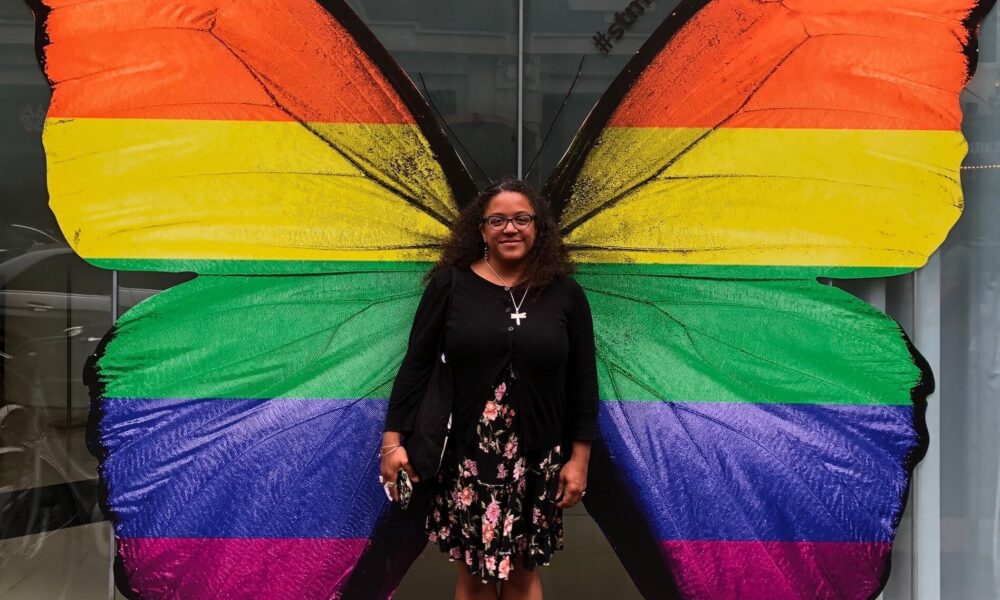
On Oct. 1, McGill’s Macdonald Campus hosted Jessica Ware as the keynote speaker at the 2021 edition of Queer History Month at McGill. Ware is a professor of entomology at Rutgers University in New Jersey and a curator at the American Museum of Natural History. In her talk “Diversifying Entomology,” Ware brought attention to the lack of queer and BIPOC representation in the study of insects. 

“When I was doing my studies and first entering academia, I was actually told not to talk about my Blackness or my queerness because people told me that scientists should not bring their feelings into their work,” Ware said. “That is one of many reasons why I strive to make my lab a safe space for a diverse group of people to work while staying true to themselves.”

Ware grew up visiting her grandparents in Northern Ontario, where she and her siblings enjoyed exploring the forests and flipping over rocks in search of insects. These childhood experiences fostered her curiosity, and eventually led her to earn a BSc in invertebrate zoology from the University of British Columbia (UBC), followed by a PhD in entomology from Rutgers University. Ware’s research focuses on the evolution of flight characteristics and behaviours in cockroaches, termites, and Odonata

“For people who grow up without green space, insects are introduced as pests and are only seen in an urban setting,” Ware said. “I was very fortunate to grow up with access to vast green spaces where I was able to roam freely and experience insects with a sense of wonder and curiosity. When I got to UBC, I was introduced to so many incredible mentors, many of whom also happened to be queer, and they helped me explore entomology while showing me how to navigate being queer in STEM.”

While only 40 per cent of queer individuals in STEM are “out” in their place of work, Ware is part of a group of scientists working to change that statistic. She and her colleagues have created forums and scientific societies for BIPOC and 2SLGBTQIA+ scientists to meet and share their experiences and to open up the STEM fields up to a more socially and culturally diverse future. The largest effort has gone into 500QueerScientists, a collection of over 1,500 scientists working to provide the next generation of STEM students with queer role models. 

In the field, Ware has encountered dangers in dealing with venomous insects—but also with being openly queer in spaces where that part of her identity makes her a target. 

“I do a lot of work in Guyana, and it is a criminal offense to be queer there,” Ware said. “I realized early on that it is important to make safety plans for queer field workers, and that is something most straight scientists [do] not think about.”

In 2019, Ware was delighted to receive the Presidential Early Career Award for Scientists and Engineers (PECASE) after being nominated by the National Science Foundation. 

“I come from a lineage of sharecroppers in the American South who were [denied] access to entomological knowledge by land owners who wanted to keep them in debt,” Ware said. “To need that information and not have access to it is a frightening prospect, and it is a big [turnaround] to go from that to being recognized by the government for my work.”

Ware’s field research and specimen collection expeditions have taken her all over the world to study the important role insects play in ecosystems and global cultures. The childhood wonder that initially attracted Ware to entomology continues to inspire her work in inviting more young minds into the field. 

“There are millions of species of insects on Earth, and there are millions more that have not been discovered yet,” Ware said. “We need more entomologists in order to beat the anthropogenic changes to climate conditions that are leading to extinctions across the globe. We are losing biodiversity every day, and we need a diverse array of people and perspectives to document as many insects as possible.”

Features

Subbed or dubbed?

Content warning: Mentions of sexual and physical violence.

Until three years ago, I actively avoided watching anime out of fear that I would get sucked into the curious world of this modern-day Japanese art. It turns out I was right: Since I started watching, I’ve devoured anime after anime, from more widespread titles like //Fullmetal Alchemist: Brotherhood// to covert ones like //Noragami//. I find myself immersed in the season-long story arcs and in the fluid animation so often that I’ve begun to wonder more about the history of the medium. Anime is staggerly popular: In 2020, Netflix reported that anime titles landed in the top 10 list of most-watched content in nearly 100 countries that year. In Montreal, the anime community has grown in size, sparking convention events such as Otakuthon and inspiring McGillian students to establish their own anime club, the McGill Students’ Anime Association. This surge in popularity is relatively recent, however—and it didn’t come out of nowhere.

For one, forms of media that cross multiple platforms tend to reach a greater audience, since they allow fans to engage in the fandom in multiple ways. Anime has always been closely tied to other genres, explained East Asian studies Professor Edmond Ernest Dit Alban, who specializes in Japanese culture and queer representation in anime.

“If you look at its history, it has always been a sort of hybrid between something and something else,” said Dit Alban. “Anime is so central because it was close to manga, it was close to radio, and then it becomes close to videogames. And after videogames, it becomes close to the internet and to online platforms.”

Anime drew in obsessives as far back as the 1980s in Japan, through the formation of conventions and clubs, where like-minded fanatics discussed and bonded over the medium. Eventually, a subculture emerged out of their shared interests in anime and computer games. Its young fans were labeled “otakus” by author Nakamori Akio in 1983, who ironically detested the original anime and manga fans. Although the creation of a subculture normalized attending conventions and discussing anime as an interest, the term also accrued negative connotations. Otaku was one description used to brand the serial killer and child rapist Tsutomu Miyazaki, who sexually abused and took the lives of four young children in 1988. Miyazaki’s notorious collection of manga and anime, as well as his attendance at otaku gatherings, triggered a negative perception of those who associated themselves with the subculture at the time. 

The definition of otaku has also been criticized for only describing a narrow subset of anime fans. Indeed, academic studies on the subculture seem to normalize a new interpretation of manhood: The initially outcast “nerd.” According to Dit Alban, the subculture is built upon a homogeneous identity that is unrepresentative of the entire fandom. 

“‘Otaku,’ basically for me, is masculinity studies,” Dit Alban said. “Otaku studies are usually written by male otaku, so I guess that it’s kind of an expression of what [anime] meant to them at that time [….] The real problem with otaku is that when we go into these definitions, there’s an obvious thing missing: Everyone else but the straight, cis guys.” 

Though the anime community may have started in a specific subset of the Japanese population, it has propagated across various cultures, spreading beyond native Japanese speakers. From the 1980s onward, it was primarily pirated and translated versions of the shows that spread through Western countries, initially passing discreetly among a small viewership. The following grew in size and heterogenized throughout the decades, perhaps due to anime’s futuristic appeal. 

Despite this, the increasing diversity of anime fandoms has not necessarily led to an increase in representation on screen. The majority of anime characters are heterosexual and Japanese or white, a reflection of the backgrounds of those producing and working on the shows. In comparison with media produced in Canada or the U.S., for instance, anime has limited representations of race, cultural background, gender, and sexual orientation. 

However, some shows have managed to include representation of marginalized groups, such as the 1998 classic //Cowboy Bebop//, which features people of colour and 2SLGBTQIA+ characters. Nonetheless, some of these portrayals have problematic characteristics and are merely symbolic in representation. Dit Alban, themselves a member of the queer community, explained that in Japan, “the problem is that most of the representation of queerness is made usually by straight cis people who are not necessarily allies.”

Considering the lack of diversity among both the creators and the characters of anime, clearly anime must have connected with so many different people around the world through other means. One way that anime has obtained this international viewership is by breaking language barriers, offering “subs” and “dubs” of the original dialogue. Subs, which are translated subtitles, and dubs, which replace the Japanese dialogue with one recorded in another language, have allowed anime to be widely distributed. For example, Shania Wan, a U3 Science student at McGill, was able to connect with anime in her native tongue throughout her childhood. 

“In Mauritius, where I was born, anime was pretty popular even among young children because it was broadcast on TV, and it was in French, so everyone could understand it,” Wan reminisced. “So even if people do not understand Japanese, it is a very accessible form of content. And you could tell that Japanese animation is very different from Western or European animation. I was watching //Tokyo Mew Mew// when I was a kid and I loved it.” 

For others, anime’s appeal lies in its complex backstories, thoughtful narratives, and insight into the flawed human mind. Anime is more than the intense fight scenes that span a few episodes in “shounen” classics––many include narratives that speak to a wide range of themes, from heartbreak to genocide. Bassem Sandeela, the vice-president internal of McGill Students’ Anime Club, explained the lessons he took away from the anime //Monster//, which tells the story of Dr. Kenzou Tenma, a neurosurgeon who questions the ethics of human existence and faces severe consequences for his choices. 

“[//Monster//] is one of the most powerful explorations of morality and humanity that I’ve ever seen,” Sandeela said. “It covers the idea of what it means to be stripped of your humanity and what it means to be human, and just the way it explores […] is so thought-provoking. I think my main takeaway […] is that to become a monster is to lose your humanity, is to embrace nihilism.”

An anime that I never suspected would exert a such tight grip on me was the two-season, emotionally charged 2015 series //Assassination Classroom//. The narrative follows Koro-sensei, a superhuman being that challenges a classroom of students to assassinate him by the end of the year, or else he’ll follow through with a threat to blow up the moon. It is the combination of the gripping character arcs and the immaculately-written ending that made it an anime that I continue to think about regularly. 

Like other means of fiction, anime serves a different purpose for each individual, and there’s something to watch for everyone amongst the vast and concurrently growing list of shows. For those reading this who have not watched anime before, perhaps it is time to visit Crunchyroll and indulge yourself in the beautifully crafted artwork and stories of the genre. 

Epilogue

I committed to writing a feature about anime in the hopes that I would learn something novel about the history of this intriguing form of media—and maybe find some recommendations to put on my to-watch list if nothing else. Dit Alban brought up the title //Sarazanmai// by Ikuhara Kunihiko in our conversations—an anime that I had never heard of. The anime portrays three students who are transformed into kappa monsters so that they can defeat kappa zombies—townspeople who have turned into giant monsters because of their hidden desires. Balancing both themes on the human need for intimacy and a conglomerate of well-placed innuendos, the anime is an obvious nod to the queer community. Dit Alban ranks it among the best animes offering representation, explaining that //Sarazanmai// dives into the social taboos and the desires of the population. 

“[Kunihiko]’s not queer himself, clearly,” Dit Alban said. “But what’s interesting about him is that he’s always using queerness in a productive way to represent social struggles. And I guess that he’s probably one of the only ones in Japan who’s getting it—that queerness is not just about representing pseudo-LGBTQ+ people on the screen, [but] it’s also about having a discourse about society and its structure.”

Afterwards, I knew I had to do some research into //Sarazanmai//, so I started by watching a few highlight clips. In front of my computer screen, I sat with my mouth agape, stunned by the audacity of this anime’s cheeky, unabashed anal sex jokes, hidden under the disguise of an adorable art style. After doing so much research into the genre’s rise in popularity, watching //Sarazanmai// reminded me that anime doesn’t just have a past, but a future—one that might explore the confines of the artform and push the boundaries of storytelling. 

McGill, News

Personal liberty is second to ‘greater good’ in vaccination effort, argues Dr. Anthony Fauci

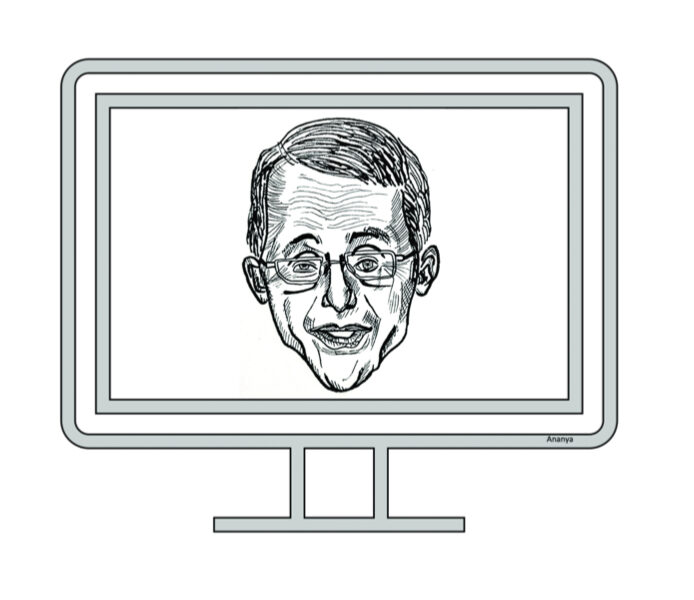
Dr. Anthony Fauci, chief medical advisor to President Biden, presented McGill’s 67th annual Beatty Lecture on Oct. 1. Titled Covid-19: Lessons Learned and Remaining Challenges, the virtual lecture garnered an audience of over 2,000 viewers. Every year, McGill invites an influential guest to discuss their professional experiences and provide insight into their respective field for members of the McGill community. Previous Beatty lectures were headlined by thinkers like Margret Atwood, Jane Goodall, and Muhammad Yunus. Ahead of Fauci, Suzanne Fortier, McGill’s principal and vice-chancellor, spoke to the significance of the annual event for the university.

“The Beatty Lecture is an important part of the McGill story,” Fortier said. “As one of Canada’s longest-running endowed lectureships, the Beatty is a testament to our university’s enduring commitment to excellence and to the exchange of ideas.”

Martha Crago, McGill’s vice-principal (Research and Innovation), introduced Fauci, highlighting his contribution and service as one of the world’s leading experts in infectious diseases.

“Driven to shed light on the unknown, scientists of the world have achieved amazing breakthroughs since the outbreak of COVID-19, such as applying mRNA technology for the first time to the development of vaccines,” Crago said. “Those breakthroughs owe an unsung debt to the building blocks of basic research conducted by Dr. Fauci and others well before the outbreak of this pandemic.”

Throughout his lecture, Fauci explained the similarities scientists have observed between the COVID-19 pandemic and other virus outbreaks. He detailed the scientific characteristics of the current coronavirus and its many variants, noting that they pose a particularly demanding public health challenge. Fauci also spoke about how the lessons learned from previous pandemics have helped shape the public health response to the COVID-19 pandemic.

“Emerging infections, including what we are going through, is truly a perpetual challenge,” Fauci said. “History has shown us that in order to meet the perpetual challenge we must be perpetually prepared, which is why I do hope that what we have learned and will learn from this outbreak does not escape our […] memory as we emerge from the scourge of this outbreak.”

Following the lecture portion of the event, Nahlah Ayed, lecture emcee and host for CBC Radio Ideas, moderated a prepared Q&A session where Fauci took questions from the audience as well as members from the McGill community about the pressing COVID-19 issues. When asked about the right of personal liberty in the context of this public health crisis, Fauci explained that individuals must put aside their perceived personal autonomy in order to promote the collective health of the public. 

“I think what people have to appreciate is that indeed, you do have personal liberties for yourself and you should be in control of that,” Fauci said. “But you are a member of society, and as a member of society, reaping all the benefits of being a member of society, you have a responsibility to society [….] Particularly in the context of a pandemic that’s killing millions of people, [there] comes a time when you do have to give up what you consider your individual right [to make] your own decision, for the greater good of society.”

Following the event, McGill presented Fauci with an honorary doctorate of science, McGill’s highest honour.

Know Your Athlete, Soccer, Sports

Catching up with Noah Eisenberg

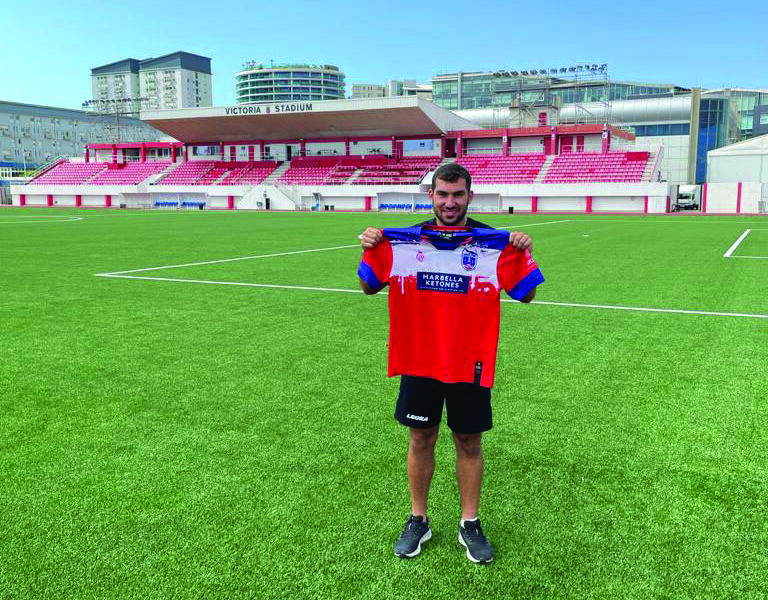
Former Montrealer turned professional soccer player Noah Eisenberg has moved on to a new stage of his career. After several stints in Belgium, Northern Ireland, and Wales, the 23-year-old has made it to the first division in Gibraltar, signing for Europa Point FC, who finished 10th in the Gibraltar League 2020-2021 season.

The new season starts on Oct. 17. Eisenberg will be playing for both the Europa Point FC, which competes in the Premier Division of the Gibraltar League, and the U-23 youth team which acts as a feeder for the first team’s roster. 

Because the Gibraltar league rules demand that at least five Gibraltar-born players be on the field at any given moment, playing time is limited for international players like Eisenberg. 

“[The club] has registered [international players] under 23 in both the U-23 and first team, [so that] we get the minutes to play [for the club],” Eisenberg said in an interview with The McGill Tribune.

Littered with obstacles created due to the pandemic, such as immigration restrictions and the protection of local leagues from an influx of international players, Eisenberg’s soccer journey in Europe has not been an easy one. The Montrealer considers the Welsh league’s move to reduce the number of international players to be an important factor in his move to Gibraltar. 

“I left Wales. There was no choice after Brexit [since immigration to Wales] became stricter with COVID-19,” Eisenberg said. “Between [Brexit and COVID-19] it was impossible to get a visa to play in Wales [….] [There is a push] to make the Wales league only for British players.” 

Fortunately, with the help of friends and his agent, Eisenberg’s transition to Europa Point FC was a smooth one. 

“I had a friend playing in Gibraltar who put me in touch with the owner [of Europa Point FC],” Eisenberg said. “In August [of 2021], the owner offered me a contract [for the new season]. I have an agent and we work together and when an opportunity comes, he negotiates [the contract] and finalizes the deal with the club.”

Playing in the first division in the Gibraltar league could give Eisenberg the unique opportunity to play in the Champions League, the Europa League, and the UEFA Conference League. 

“The first placed team [in the Gibraltar league] will qualify for the [preliminary rounds] of the Champions League. The second, third, and fourth will go to the Europa League,” Eisenberg explained. “Lincoln Red Imps [from the Gibraltar League] is currently competing in the UEFA Conference League. [The team] played against PAOK [from the Greek first division] last week, which is one of the best teams in the world.”

Although Eisenberg faces exciting challenges ahead of him in Europe, he hopes to return to North America to play soccer in the future. The newly formed Canadian Premier League is another option Eisenberg is open to exploring. 

“I have a list of goals for the near future. CF Montreal is definitely on my bucket list,” Eisenberg said. “Montreal would definitely be a place I would like to play in front of friends and family.” 

Eisenberg acknowledged that luck played a big role in a lot of opportunities he was afforded. For Montrealers who aspire to play pro soccer in Europe or North America, he advises hard work and dedication.

“Being good enough is not always enough,” said Eisenberg. “[You have got to be] at the right place at the right time [to] be as ready as you can for when that opportunity comes.”

Commentary, Opinion

SSMU’s failed activities night undermines its integrity

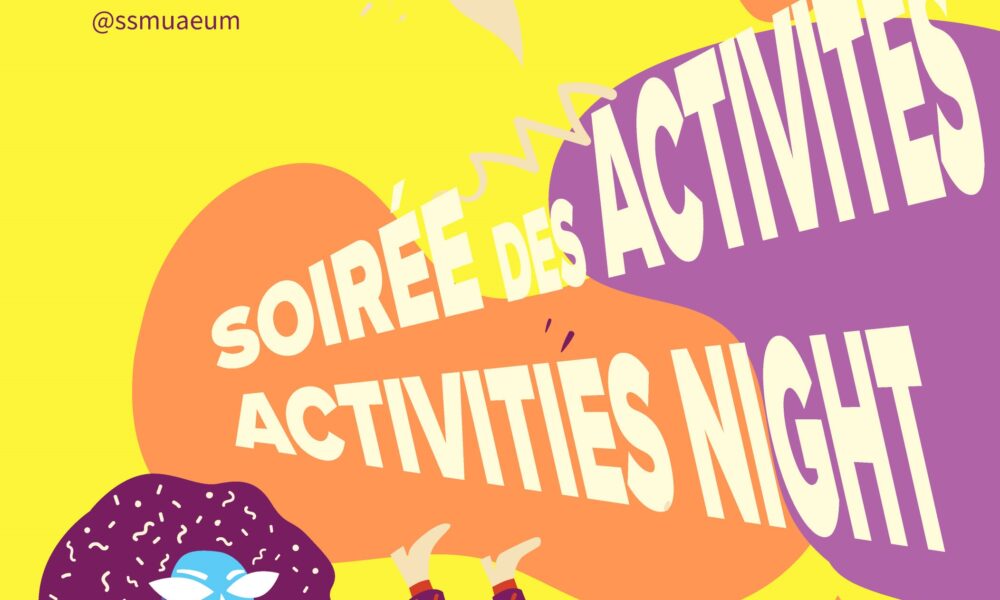
On Sept. 13, over 1,000 students barricaded the virtual entry doors to the Students’ Society of McGill University (SSMU)’s Fall 2021 Activities Night. Internet disconnection alerts flooded the screens of many confused students and club leaders. Although students might have anticipated a mediocre gaming platform with thousands of live participants to spell disaster, the degree to which the event failed was striking.

Activities Night is one of the most important opportunities for student involvement, especially this year, as student life makes a comeback following a year of remote learning. As the highlight of many students’ time in university, it is unfortunate that students were robbed of the chance to explore the broad array of student life at McGill. SSMU hosted the event on Gather.Town, a platform that allows users to walk around a virtual venue and send messages or start calls. However, the blame for the site’s technical failings should not be placed on its developers—it is common knowledge that online programs are prone to overload when flooded with users. Last year’s event was held on a different platform, Eventus, and did not experience mass technical difficulties. SSMU should have either tested the system prior to the event or at least had a backup plan, such as having prepared a list of organized Zoom links for each club or setting up a more reliable platform.

As a result, clubs were forced to find alternate avenues to interact. For example, some clubs posted their own Zoom meetings in the mass chat or on their individual social media accounts. SSMU did not immediately respond following the event, although they did post a blurry apology on a now-expired Instagram story and did dole out leftover Frosh goodies at a measly stand on McTavish. Karla Heisele Cubilla, SSMU vice-president (VP) of student life has since announced that a second Activities Night was on the way. 

Although it was logical to hold the event online to prevent the spread of COVID-19, SSMU illogically hosted a party at the Muzique nightclub the following day. SSMU has been pushing for the university to implement a vaccine mandate and other accommodations, writing an open letter critiquing McGill’s Fall 2021 Plans and Accommodations, staging a protest of McGill’s COVID19 policies on Sept. 1, and partnering with WeCanVax to create #2Jabs4McGill to encourage students and staff to get vaccinated. SSMU’s disorganization with their online Activities Night while hosting an in-person party calls their integrity into question. 

If SSMU did not allow Activities Night to be held in person, Muzique should not be an exception. While Muzique is an established business that must follow governmental COVID-19 protocols such as requiring vaccine passports and mandatory masks for entry, the regulations that make it a safe place to meet at this time could have been easily transferred over to an in-person Activities Night. Some student clubs under SSMU’s umbrella already conduct their own vaccine passport checks and require mask-wearing for participation, but most clubs have limited resources and members. The student union, on the other hand, is a large organization comprised of numerous staff and volunteers; they have all the resources they need to host a grand event.

SSMU could have easily made Activities Night a better experience had they only put in more effort. SSMU’s leaders are not only event hosts, but leaders who represent students and are meant to lead by example. Actions always speak louder than words: As helpful as their COVID-19 safety campaigns have been, the Muzique gathering suggests that SSMU puts their activism to the side when they want to have a night of fun.

Read the latest issue

Read the latest issue