Latest News

Commentary, Opinion

Major flaws in Montreal’s metro system leave McGill students at a loss

Montreal’s metro system has long been the lifeline of student life, whether it’s a late night out at Café Campus or an early 8 a.m. at Leacock Building. The metro system connects many major universities: Concordia, Université de Québec à Montréal (UQÀM), Université de Montréal (UdeM), Université de Sherbrooke, and of course, McGill. It is fast, convenient, and affordable, enabling direct access to these educational institutions. In recent months, however, it has become apparent that it has many flaws, one of the more significant ones being frequent service delays. The causes of these holdups vary, from equipment failure to degrading infrastructure to leakages. Some of these delays last minutes or hours, but others are far more drastic, lasting weeks with no clear end in sight. Serious measures must be taken to enhance the functioning and reliability of Montreal’s public transportation system, for the sake of McGill students and the community at large.

A prime example of this is the ongoing shutdown of the St-Michel station on the Blue Line due to degraded concrete. Though this station is on the far end of the Blue Line, far from any downtown universities, it still affects those Montreal students living far from campus, as well as the many community members who also rely on public transportation. As a result of this station closure, Montreal is urging the province of Quebec to take action on this matter and increase funding for public transit to $560 million CAD per year, a significant jump from the current annual projected sum of $240 million CAD.  

Though there have been mixed reactions to this demand for increased funding, the overall consensus is that the metro system needs significant improvement. Denis Martin, mayor of Deux-Montagnes, agrees that the city has waited far too long for changes to be made. Geneviève Guilbault, Quebec’s Minister of Transport and Sustainable Mobility, also acknowledges that service must be improved. Despite these high-level discussions and shared concerns, the reality remains stark: Montreal’s metro system faces budget cuts rather than the vital funding it needs. Students everywhere, myself included, cannot afford to keep arriving late for lectures or missing them altogether due to circumstances out of our control.

McGill students, many of whom depend on public transit to reach campus, face increasingly unreliable commutes with few alternative transportation options. McGill must play a role in advocating for its students and pushing for better services, by collaborating with the Societé de Transport de Montréal (STM) on initiatives to ensure transportation accessibility for students. The distribution of temporary taxi or Uber vouchers in times of STM system failures could be implemented, to guarantee that students can still arrive on campus in an affordable and timely manner. Alternatively, McGill could allow for flexible class schedules in times of delay. The university should allow students to attend lectures, labs and/or exams virtually during transportation disruptions, or at the very least allow for some degree of lenience, especially for classes that have a participation or attendance grade. 

The current trajectory of budget cuts rather than increased funding that STM desperately needs threatens not just daily commutes, but the fundamental accessibility of higher education in Montreal. As students navigate the pressures of academic life, the added uncertainty of reliable transportation creates an unnecessary burden that disproportionately affects those with fewer financial resources or schedule flexibility. This transit crisis, coupled with Quebec’s recent tuition hikes for out-of-province students at Anglophone universities, suggests a troubling trend of provincial policies that create additional barriers to education rather than fostering the accessible educational environment Montreal has long been known for.

Album Reviews, Arts & Entertainment

‘CHROMAKOPIA’ may be Tyler, the Creator’s most authentic work yet

CHROMAKOPIA, released on Oct. 28, is Tyler, the Creator’s most authentic album yet, following 2023’s CALL ME IF YOU GET LOST: The Estate Sale. Typically, Tyler adopts a new “character” for each album cycle, such as Igor for his 2019 album of the same name, or Wolf Haley on his earlier albums Wolf and Goblin. By taking on these different personas, Tyler is able to honestly explore different aspects of himself and his musical sensibilities without being overly vulnerable. In the music video for “Sorry Not Sorry,” the closing track of The Estate Sale, Tyler kills off all of the alter egos that served as the protagonists of his previous albums, a symbolic gesture that represents how he is finally accepting that he needs to be himself in his music.

However, leaving his characters behind is not an easy feat for Tyler. On the album’s cover, he is seen donning a mask of his own face, demonstrating how he cannot help but hide even when he is trying to unveil his true self through his music. This is the most prevalent theme of Tyler’s newest album: Grappling with his rise to fame while also embracing who he is. Even though he takes on the persona of St. Chroma—a masked military figure who is seemingly another protagonistin the album’s music videos, I interpreted CHROMAKOPIA as him abandoning the use of characters to tell his story—and finally telling it himself.

Despite continuing to mask himself on this album, Tyler dives into his emotionally fraught upbringing in the song “Like Him.” Singing to his mother—whose voice is featured in interludes throughout the album—Tyler asks if she resembles his estranged father. “Like Him” is a follow-up to his 2013 song “Answer,” which deals with the resentment Tyler feels towards his father for abandoning him when he was a child, while also wondering if his father would be there for him in times of need. However, on “Like Him,” his mother admits to being the reason why Tyler didn’t have his father in his life, thus turning the page on a topic that has long haunted his work. As a longtime fan of Tyler, this song is a heartbreaking listen, and it is one of the deepest looks into Tyler’s life we’ve gotten since “Answer.” 

Though “Like Him” is the album’s biggest standout, other songs such as “St. Chroma,” “NOID,” “Take Your Mask Off,” and “Sticky” are all well done lyrically and from a production standpoint. “St. Chroma” explores Tyler’s inner confidence and his desire for success with backing vocals from Daniel Caesar, while “NOID” details his constant paranoia stemming from being a star in today’s world. “Take Your Mask Off” urges others to embrace themselves as Tyler does on this album, and “Sticky” is a fun, upbeat listen with features from Lil Wayne, Sexyy Red, and GloRilla, placed in the middle of the album amongst some of the heavier themes. The closing track, “I Hope You Find Your Way Home,” is eerie and slow, closing with chants of the album’s title that make it linger with the listener long after the final notes.

Though Tyler has often felt he has had to hide his true self away, CHROMAKOPIA lets fans see behind both the literal and metaphorical masks he has worn over the years. It’s a degree of candour we haven’t heard since 2019’s IGOR, which was largely based upon a previous heartbreak he experienced. CHROMAKOPIA is Tyler at his most vulnerable.

Arts & Entertainment, Theatre

Staging Freedom: ‘Two Birds One Stone’ teaches empathetic understanding

Two Birds One Stone, directed by Murdoch Schon, is a lesson in listening and a reminder that friendship must not be scoffed at when seeking a viable framework for peace. It’s the first show in Teesri Duniya Theatre’s 2024-2025 season: Staging Freedom. Playwrights Rimah Jabr, a Muslim Palestinian, and Natasha Greenblatt, a Jewish Canadian, co-wrote the piece in 2016. Eight years later, the pair felt compelled to revisit it, believing its message to be more relevant than ever in light of the ongoing genocide in Palestine.

This autofictional play intertwines stories from Jabr’s youth in Palestine and her move to Brussels after enrolling in theatre school with tales from Greenblatt’s youth in Montreal and Birthright trip to Israel. The women navigate the messiness of young adulthood while searching to make their way back to a family house in the Occupied Palestinian Territories: Jabr’s grandmother’s home that she fled during the 1948 Nakba, which Greenblatt’s great grandfather purchased soon after Israeli settlers colonized the area.   

While the two playwrights played themselves in previous runs of the play, they are now both new mothers, leaving them unavailable to fill the roles for Teesri’s remounted production. Instead, actors Dalia Charafeddine and Natasha Fagant fill in for Jabr and Greenblatt, respectively, and portray the story’s numerous supporting characters—they sing, they cry, they laugh, and get fake drunk while slipping in and out of distinct accents and physicalities that differentiate these characters. Connecting with the audience in metatheatrical comedic moments, they dispel any awkwardness. We see two friends comment on their own performance, poking fun at the tiptoeing tendency we often see when engaging with Israel’s occupation and ongoing genocide in Palestine, shaping the intimate process of understanding into resistance. 

The dialogue takes centre stage, with the simple costumes, set, and blocking emphasizing the words above all else. Language is itself a tool that can obscure or bring truth to light, and Two Birds One Stone implicitly discusses these intentions. The play breathes life and immediacy, gripping us to feel all that is human. In the room, when the lights turn back on, tear-dampened cheeks lean on the shoulders of loved ones. 

This is what art is about—collaborative consumption—and there is no better place to be challenged than at Teesri Duniya Theatre. Its warm and collaborative approach encourages precisely these moments of self-reflection and openness. 

Creating works by and for the BIPOC community, Teesri Duniya’s commitment to multicultural reconciliation motivates its practices and shapes the stories it platforms. The space invites collaboration through the innovative Fireworks Play Development Program, which supports and mentors a cohort of local emerging playwrights as they develop their writing. 

Beyond its collaborations with the artists of Montreal, Teesri Duniya engages audiences in open dialogue via talkbacks after almost every show, mobilizing opinions that often continue to be discussed in the outside air of Avenue des Pins. Teesri Duniya’s founders and theatre directors Rahul Varma and Rana Bose hold fast to the belief that art should shun away from elitism, expanding theatre to all. Essentially, art is about trusting the community as it is, whether sitting in the audience or pacing its feet on stage.

Schon said in a CKUT 90.3 FM interview, “A good director wants people to leave with new questions in their pockets.” I believe this is true of Two Birds One Stone. It’s on my mind; I talk about it in a grocery store and share it with my friends. May we continue to attend theatre performances and feel their transformative power. May we learn from them and perform peace in our lives.

Student Life, Tribute

Murray Sinclair’s legacy lives on

Murray Sinclair (Mazina Giizhik-iban) was born in 1951 on the former St. Peter’s Reserve. He grew up in the Selkirk area north of Winnipeg, Manitoba and later attended the University of Manitoba’s Faculty of Law, graduating in 1979. In the years to follow, Sinclair dedicated his work to defending the rights of Indigenous persons and exposing the systemic oppression the Canadian justice system imposed on Indigenous peoples. Sinclair passed away on Nov. 4 at age 73. 

Sinclair became the Associate Chief Judge of the Provincial Court of Manitoba in 1988, making him the first Indigenous judge in Manitoba and the second in Canada. Sinclair’s recommendations included an emphasis on Indigenous offenders’ backgrounds and circumstances when applying sentencing, which allowed the court to consider historical inequalities and the legacies of colonialism when sentencing. This was later enshrined in the 1996 Gladue Principles. In 2001, Sinclair became the first Indigenous judge appointed to the Court of King’s Bench, the highest trial court in Manitoba. 

In 2009, Sinclair was appointed Chief Commissioner of the Truth and Reconciliation Commission of Canada (TRC)—which provided those affected by the legacy of the Indian Residential Schools system an opportunity to share their stories and experiences. The establishment of the TRC was mandated as a result of the 2007 Indian Residential Schools Settlement Agreement, the largest class-action settlement in Canadian history. For six years, the TRC facilitated reconciliation among residential school survivors, their families, their communities, and Canadians. It heard over 6,500 witness accounts across Canada, hosted seven national events, and created a historical record of the residential school system which is housed by the National Centre for Truth and Reconciliation at the University of Manitoba. 

The TRC delivered their six-volume final report to Prime Minister Justin Trudeau in December 2015.  It outlined recommendations to the Canadian government for carrying out reconciliation with Indigenous communities. This included 94 specific calls to action relating to legacy and reconciliation. While the TRC failed to recognize the oppression rooted in land dispossession for Indigenous persons,  Sinclair’s work to platform Indigenous stories was monumental in the fight for Indigenous restitution. 

Sinclair was appointed as a Senator from 2016 until 2021. From 2021 to 2024, Sinclair was a chancellor of Queen’s University

Throughout his life, he won notable awards, including his King’s Counsel designation in 2024 and over 30 honourary doctorates. On Nov. 10, 2024, Sinclair was honoured in a memorial service held at the Canadian Life Centre in Winnipeg, drawing thousands of friends, family members, colleagues, and supporters. 

His son Niigaan Sinclair expressed at the memorial service that his father was often the first in any room he walked into. Sinclair’s legacy as a trailblazer will live on—he changed the course of the country and fostered groundbreaking reconciliation efforts with Indigenous communities. He brought Indigenous voices into the legal system and platformed survivors of residential schools. Sinclair never hesitated to call out the abuse, oppression, and racism that existed within the Canadian system, including lacklustre attempts at reconciliation, while simultaneously working within it. 

As Manitoba Premier Wab Kinew noted after Sinclair’s death, “He showed us there is no reconciliation without truth.” 

Sinclair left a deep mark on the Canadian populace through his life-long dedication to seeking justice for Indigenous peoples. He will live on as one of the most influential voices of the 21st century. 

Editorial, Opinion

Fall 2024 SSMU Referendum Endorsements

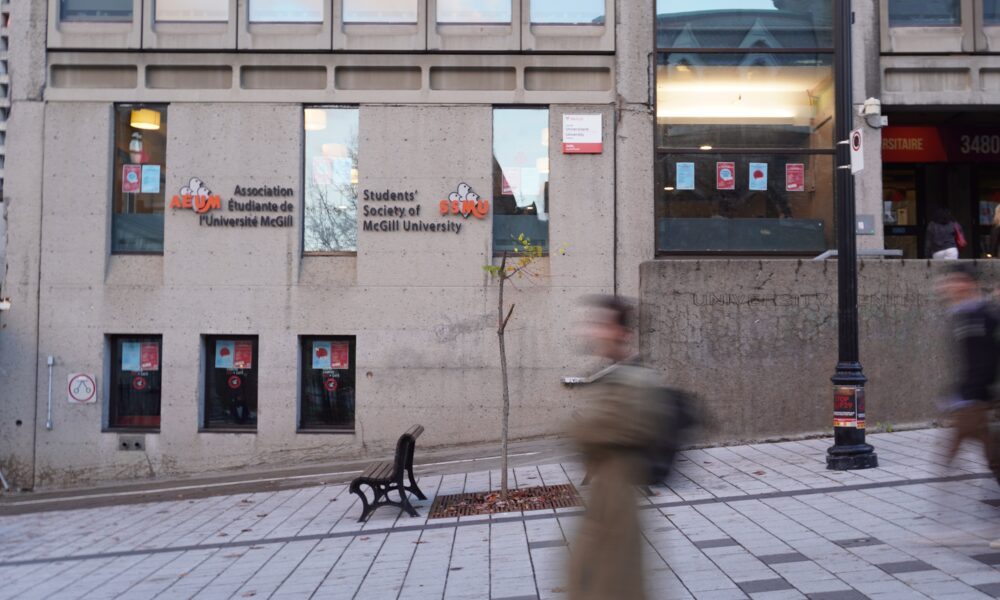
The Tribune’s Editorial Board presents its endorsements for the Students’ Society of McGill University (SSMU) Fall 2024 Referendum questions. The Tribune‘s editors researched and discussed each question  before voting on each endorsement. The endorsements reflect a majority vote of the editorial board, with the option for editors with conflicts of interest to abstain from pertinent questions.

Radio CKUT Fee Increase: Yes

Radio CKUT, McGill’s 24/7 non-profit campus-community radio station offers music, news, arts, and cultural programming, providing a unique media outlet for students and the Montreal community. With inflation driving operating costs, the proposed opt-outable fee will increase by $3.00 CAD, which would bring the total fee to $7.00 CAD per semester for full-time and $5.50 CAD per semester for part-time undergraduate students in professional programs (Dentistry, MDCM, Law). The total fee would be $8.00 CAD per semester for full-time and $6.00 CAD per semester for part-time undergraduate students in all other programs. This increment will start in Winter 2025 to Winter 2027 (inclusive), with the understanding that a majority “No” vote will keep the fee at its current rate. The increased fee will help CKUT maintain its operations and avoid a future budget deficit.

 In the absence of a journalism program at McGill, CKUT fills an important educational gap by providing one of the only spaces on campus for students to gain hands-on experience in broadcasting and radio production. In voting “Yes,” The Tribune highlights CKUT’s commitment to providing valuable learning opportunities for students, building community connections, and supporting sustainable operations in the workplace. 

Ambassador Fund Fee Increase: Yes 

The proposed $2.00 CAD increase to this opt-outable fee, bringing the total to $4.00 CAD per semester for both full-time and part-time students, would continue to fund student participation in off-campus academic and extracurricular conferences, competitions, and other events through Fall 2029. This increase, which would bring in an additional $40,000 CAD in funding available to students, will allow more students to participate in off-campus events without facing financial barriers. In recent years, demand for the Ambassador Fund has exceeded the available resources, demonstrating that students need the support of this fund to attend external events. The Tribune endorses a “Yes” vote to this fee increase. 

Community Engagement Fee Renewal: Yes

The Community Engagement Fee is a source of financial assistance provided to incentivize the charitable work of McGill students and further the connection between the McGill student body and its surrounding communities. This opt-outable fee is $0.72 CAD per semester for both full-time and part-time students. The fund is primarily intended for community engagement initiatives, not for events with the sole purpose of fundraising—including projects in community development and social services. In 2023-2024, however, more than 12 per cent of funding applications were directed to the Community Engagement Fund, despite this being the smallest of the fees disbursed by the funding committee. The Tribune supports this opt-outable fee renewal. 

Equity Fund Fee Renewal: Yes

The Equity Fund Fee is an opt-outable $1.00 CAD per semester fee for full-time and part-time students, beginning in Winter 2025 and ending in Fall 2029 (inclusive and excluding Summer terms). 

The SSMU Equity Fund was created to empower campus members to engage in initiatives that foster leadership, encourage civic engagement, and make observable or measurable differences in the representation or experiences of individuals who are members of historically and currently disadvantaged groups. The fund supports projects, research and policies that aim to end discrimination and promote accessibility and inclusiveness in the McGill community.

Should it fail to pass, there will no longer be a dedicated fund reserved for the purpose of supporting equity-related initiatives through funding applications. The Tribune endorses a “Yes” vote to this fee renewal. 

Legal Essentials Fee Renewal: Yes

The Legal Essentials Fee is an opt-outable, $30 CAD per year fee that will cease to exist if not renewed during this Fall 2024 referendum. The Legal Essentials program makes legal aid accessible, affordable, and safe. It is complementary to the Legal Information Clinic at McGill (LICM) and fills in gaps that other legal sources at McGill cannot; specifically, services like the LICM can only inform students about their legal rights and assist only in disputes at the university level, but cannot advise on the specific legal actions students should take. Meanwhile, Legal Essentials offers students access to consultation and representation by accredited lawyers who can represent them in cases regarding any area of the law, including disputes and violations regarding housing, academics, human rights, employment, and assist with small claims and civil mediation. 

For a fraction of the price, they cover both case and legal fees, and expenses that accumulate during proceedings. Access to legal aid is often costly, complicated, and daunting, but Legal Essentials works in conjunction with other legal sources at McGill to break down these barriers. By endorsing a “Yes” vote for the opt-outable fee, The Tribune supports the rights of students to have a certified advocate during legal proceedings, and seeks to ensure this support system is protected for years to come.

Création d’une cotisation de soutien aux affaires francophones/Creation of a contribution to support francophone affairs: Yes

The creation of a contribution to support francophone affairs would promote the growth and endurance of the Francophone Affairs Committee (CAF), which currently receives no funding, as well as the McGill francophone community. This opt-outable fee will be $1.00 CAD per semester for full-time and part-time SSMU members, excluding the summer term. It is set to begin in Winter 2025 and will continue until Winter 2030 (inclusive). The fund will help cover the salary of the Commissaire des affaires francophones, as well as part-time translation interns. It will also be allocated to francophone groups, francophiles, and anglophones undertaking projects aimed at enhancing accessibility for Francophones, organizing community events, and establishing partnerships with Francophone organizations to provide learning opportunities. 

Currently, 20 per cent of the student body and 21 per cent of staff report that French is their mother tongue, making the fee important for the CAF to fulfill its mandate of representing the francophone student body on campus. The Tribune supports the creation of this opt-outable fee to support francophone communities on campus.

SSMU Membership Fee Increase For Operations: Yes, with reservations

This question seeks to increase SSMU’s base fee for student members. For full-time students not enrolled in Medicine, Dentistry, or Law, the fee will increase by $14.86 CAD, from $70.95 CAD to $85.81 CAD per semester. For part-time students in the same faculties, the fee will increase by $7.22 CAD, from $34.44 CAD to $41.66 CAD. The funds generated from the increase will go entirely toward the salaries of SSMU’s full-time and part-time employees, not toward those of the executives. SSMU claims this will allow them to dedicate more of their operational budget to addressing their deficit and to offer new initiatives for students.

Since its last increase in 2019, students have voted against raising the membership fee many times, including in both semesters last academic year. The 2023-2024 academic year saw SSMU struggle against the financial strain of its deficit, which one executive estimated exceeded $726,000 CAD in February 2024. SSMU has cited budget constraints as the reason for employee layoffs, reduced operations, and an abrupt interruption in service for two weeks in April 2024. SSMU offers countless vital services to students, including funding clubs and student initiatives, managing Gerts, running a daycare on campus, offering the Menstrual Health Project, the Grocery Program, and more. Considering this, it is vital that SSMU secures the funding necessary to continue serving students and its employees.

However, SSMU must strengthen its relationship with its constituency. Between a lack of candidates applying for executive positions, dismal voter turnout, and consistently poor attendance at governance meetings, SSMU is struggling to engage the student body. Furthermore, its repeated failed attempts to raise the base fee suggest it must rebuild trust with students by clearly communicating how their money is managed and why the deficit has persisted. Finally, SSMU must extend better training and care for the executive team, some of whom have reported a lack of support in the demanding role. The Tribune endorses a “Yes” vote for the referendum question, while demanding that SSMU foster student engagement, increase financial transparency, and better support its executives.

QPIRG Fee Increase: Yes

The Quebec Public Interest Research Group at McGill (QPIRG) is seeking a fee increase from $5.00 CAD to $6.75 CAD per semester. QPIRG fosters community and engages students in social justice causes by offering educational initiatives, the Free Textbook Loan Program, and an Alternative Research Library. The group also organizes Rad Frosh each year. The organization’s fee has not increased since 2015; meanwhile, inflation has posed a strain on the group’s budget, resulting in a reduction of programming. 

QPIRG’s mission to provide alternative educational spaces on campus is invaluable in promoting community and solidarity. As it has been nearly a decade since the organization last recieved a fee increase, The Tribune supports a “Yes” vote on this opt-outable fee.

Features

Kitchen Chemistry

Hello everyone,

This week, The Tribune has given On The Table (OTT) the opportunity to bring you, their beloved readers, something a little different.

I’m Johann, and for the past three years, I’ve been developing recipes at McGill’s oldest culinary magazine, OTT. This week I’m bringing you some of my work, as part of our magazine’s new partnership with The Tribune. Just as The New Yorker has Bon Appetit Vox has Eater, now The Tribune has OTT.

Since our founding, OTT has aimed to do three things:

  1. Distribute beautiful print magazines freely to McGillians.
  2. Create content about, surrounding, and that is food, inspired by cooks and journalists from J. Kenji Lopez-Alt to Anthony Bourdain.
  3. Help McGillians feed themselves better, through teaching skills, recipes, and where to eat.

Coming very soon, you’ll be able to find our past print issues digitized on The Tribune’s website, as well as individual articles and recipes.

A lot of OTT’s content is niche. We nerd out on food history, chemistry, showcase unknown cuisines, and sometimes just write odd journalism which only barely excuses itself through the notion of “food content”—but I really think you’ll like our stuff!

The bulk of this piece is meant to give you a taste of the content we make at OTT. As the days are getting shorter, I’ve developed two soup recipes to keep you warm. Far from being just recipes, they also teach you some food chemistry theory and techniques.

The first recipe is a velvety lentil soup, with ridiculously good Brussels sprouts which you should make even by themselves. Here, I’m teaching you how to use alkalinity to your advantage. You’ll feel like a mad scientist as you vapourize lentils in a foaming cauldron.

The second recipe is a light and intensely savoury mushroom soup, with a crispy ginger-leek topping and infused oil. Here it’s less about technique than theory—I developed this recipe to be the most umami possible! I explain the chemistry of “umami,” and there’s a fun little exercise for you to taste the chemistry of umami as you cook.

Of course, I don’t actually expect that many of you will cook my recipes to the letter. In fact, I don’t really think you should!

To me, cooking is like jazz. It’s important to be able to play the standards, that’s for sure, there’s nothing wrong with following a recipe rote—you learn what works well, and why it works. But in my recipes, what I want is to teach you techniques to improvise with. So take whatever suits you, and go make some stomachs happy!

– Johann Pacheco-Veissière, November 2024

P.S. If you wanna send OTT a recipe or article, we got a form on instagram. @onthetablemag.

IllustrationLentil Soup!

Ingredients:

  • 1+½ cups split red lentils
  • Baking soda
    • ½ tbsp for lentils
    • 1 tsp for Brussels sprouts
  • 500g Brussels sprouts
    • Halve, then cut off root. Keep loose leaves
  • 2 medium onions (red preferred)
    • Halve, peel, cut off root, slice ~4cm thick. Make slices parallel to root, like latitude lines
  • 1 red bell pepper
    • Halve, remove stem and seeds, slice thin. (cut with shiny side down to avoid injury)
  • 6 cloves garlic
    • Lightly crush, then peel, cut root off, roughly chop
  • ½ inch ginger
    • Peel (spoon works well), mince
  • Spices (any you enjoy, my choices below, I would not omit cumin or whole mustard)
    • 1 tbsp whole cumin
    • ½ tbsp whole mustard seed
    • ½ tbsp coarse chili flakes
    • 2 tsp gochutgaru or Kashmiri chili
    • 2 tsp turmeric
    • 2 tsp paprika (add separately)
    • 2 tsp coriander
    • Seeds of 2 cardamom pods
    • Fresh-ground black pepper (grind until your forearm hurts)
  • 2+½ tbsp tomato paste
  • 1 tbsp apple-cider vinegar
  • 5 dashes fish sauce (for veg, soy sauce)
  • Salt to taste
  • Olive oil

Steps

  1. Soak lentils in ~5 cups of water for a total of 30 mins. While soaking, do steps 2-4.
  2. Cut all vegetables (see ingredients).
  3. Prepare Brussels sprouts:
    1. Off heat, in a large pan, pour a generous amount of olive oil (~2cm / ½ inch). Lay all Brussels sprouts cut side down, sprinkle loose leaves on top. (If you want to minimize dishes, you can do this in the soup pot, although you’ll likely need multiple batches.)
    2. Mix 1 tsp baking soda into ½ cup warm water.
    3. Place pan (3.1) uncovered on high heat. When you begin to hear sizzling: Add 1 garlic clove, alkaline water (3.2), then immediately cover.
    4. Listen closely: At first you will hear simmering, then boiling. When it begins to sound like frying, remove cover. (Another good cue to remove cover is the smell of browning.)
    5. Carefully flip over one sprout. If the cut side is already deeply browned, remove pan from heat. If not, turn heat to medium low, and fry until brown, then remove from heat.
    6. Lift sprouts out of oil, keep oil, set sprouts aside.
  4. Prepare aromatic base:
    1. Return pan with oil (3.6) to burner, set to medium high.
    2. Immediately add onions and ginger. Sautee until onions are soft.
    3. Then, add garlic and spices (except paprika or herbs). Sautee until onions or garlic begin to brown around edges. Remove from heat.
  5. Soup chemistry:
    1. Drain lentils (1).
    2. Add drained lentils (5.1), then five cups boiling water to a large soup pot. N.B. It is important the lentils and water do not reach more than 3/5ths up the pot. With the soda, the pot will foam until the lentils dissolve (think baking soda volcano). In a small pot, the foam could overflow. If your pot isn’t quite big enough, you can stir nonstop, which prevents a buildup of foam.
    3. Add the oil and aromatics from the pan (4.3) to the pot, as well as paprika or herbs (if desired).
    4. Add ½ tbsp baking soda to pot.
    5. Cook on high heat, stirring frequently, until lentils almost completely disappear (~6-8 minutes from boil).
    6. Neutralize soup pH by adding 2+½ tbsp tomato paste and 1 tbsp apple cider vinegar.
  6. Finishing:
    1. Add Brussels sprouts (3.6) and sliced red bell pepper to pot.
    2. Add 5 dashes fish sauce.
    3. Cook until red bell peppers are tender.
    4. If consistency is thicker than you would prefer, adjust with water before salting.
    5. Salt the soup! This is the last step, and you can taste to see if it’s missing anything: More pepper? More salt? Maybe more olive oil? (Note from Italian proofreader: there’s never enough olive oil. Add more olive oil.)

Blurb

In this recipe, the main lesson I aim to transmit is how to use alkalinity in cooking. The higher the pH, the faster two things happen: The breakdown of plant matter, and browning.

The first point is useful in a lot of contexts, but most of all when cooking legumes. Legumes can take hours to reach a toothsome texture, and even longer to completely fall apart. It’s common to add a touch of baking soda to cook lentils a touch faster, but to showcase the effect I developed this method. By upping the pH a lot, everything breaks down a lot faster—the pot foams up and the lentils and onions essentially dissolve. At the same time, I wanted to keep some ingredients toothsome, for which we need to back-adjust the pH (with tasty acids) before adding the rest in.

The Brussels sprouts are a perfect example of browning. By dousing them with alkaline water, the sugars and amino acids dissolve into the water, the base saturates the leaves, and the liquid softens them. As soon as the water evaporates, they caramelize deeply and quickly. You can use the same methods to caramelize onions twice as fast! I also recommend trying these sprouts on their own—just add salt and some chili flake after it’s done cooking.

All these lessons about alkalinity work in reverse when it comes to acidity. Adding acid to plant matter will make them cook slower, and acid will prevent browning. So, always add acid to legumes at the end of cooking, and if you don’t want a brown crust on something (e.g keep a cake very pale), add a touch of acid.

Umami soup with leek infused oil and crispy leek topping

Blurb

This recipe is less about food chemistry techniques and more so about food chemistry theory: Specifically, the theory of umami. Using chemical principles, I developed the umami-est soup possible. You can taste the chemical theory along the way. As a little bonus, I put in a new technique with the microwave oil-infusion.

“Umami” is a Japanese word which has been wholly incorporated into the English language. It’s the fifth flavour to sour, sweet, bitter, and salty—which remarkably English lacked an exact word for, although “savoury” approximates it. It’s that flavour for meaty-savoury-salivatingly-yummy which is chemically manufactured to sprinkle on Doritos. For this, we thank Kikunae Ikeda, who discovered what umami is at the molecular level.

Glutamate, discovered in dashi (in the recipe, step 2.7), is the chemical that activates the receptors in our tongue for “umami”. Glutamate is like a key to a keyhole in your tongue; when it fits in, you experience umami. Kombu, half of dashi’s major ingredients, is one of the most glutamate-rich things in nature, although many other things contain it, such as yeast extract, tomatoes, and parmesan.

Although, glutamate is not the only chemical which plays a role in tasting umami. Some things can “open up” the keyhole to make glutamate bind better, particularly inosinate and guanylate. Basically, when these chemicals combine, things taste MUCH more umami. Dashi, which has been made for much longer than the chemistry has been known, uses this synergy.

Dried fish, like katsuobushi, contains inosinate, as does most seafood, chicken, and nori. For vegetarians, all hope is not lost—guanylate, found in mushrooms, also synergizes with glutamate. Not all mushrooms have guanylate, but enoki and dried shiitakes are particularly rich in it.

I hope from my recipe you consider stocking the ingredients for dashi. A stock makes any soup vastly better, and dashi is one of the few stocks which one can make entirely from shelf-stable ingredients. It’s more neutral than you’d think—it’s essentially umami-tea. It’ll enhance the flavour of most soups.

If you want to play around with umami synergy, check out the Umami Information Centre. On www.umamiinfo.com, there’s a guide on which ingredients have what chemicals.

Also, you can do the oil infusion trick with a million different things! The classics are shallot and garlic, but I’ve also done it with capers, oregano, and scotch bonnets—all amazing additions to a bowl of ramen.

Ingredients

  • 2x 10cm sheet (10-14g) of kombu
  • 3 handfuls of katsuobushi (dried bonito flakes)
  • 10g dried shiitake (any mushroom works, shitake is ideal due to high guanylate concentration)
  • 4 chicken thighs
    • Make into thick strips by cutting into thirds, lengthwise.
  • Marinade / Seasoning:
    • 2 tbsp soy sauce
    • 2 tbsp mirin
    • 1 minced garlic clove
    • ½ inch minced ginger
  • ½ head of cabbage
    • Quarter, shred by cutting thin strips lengthwise or
    • Quarter, shred with box grater
  • 150g enoki mushrooms
    • Cut off end, separate
  • 2 carrots
    • Peel, then halve, cut into very thin half-moons
  • 1 inch ginger
    • Peel, cut into matchsticks
  • 1 leek
    • Cut in half, wash, separate white from green, remove root, slice white into half moons, as thin as reasonable to your knife skills
  • 1 bunch green onion
    • Separate white from green part
    • Remove root from white, cut in half
    • Slice green into rounds, as thin as reasonable to your knife skills (as close to serving as possible)
  • ½ cup peanut oil

Steps

  1. Marinade (Make up to 1.1 even if not using chicken, as it is added in 3.1)
    1. Combined minced garlic, ginger, soy sauce, and ginger in a small bowl.
    2. Place chicken thighs in a Ziploc, pour contents of bowl over the chicken thighs.
    3. Close the Ziploc almost the whole way, squeeze air out from open corner, close, then massage thighs.
    4. Marinate two hours, up to three days.
  2. Broth (Mushroom Dashi)
    1. Fill a pot with five cups cold water, add kombu. (Optionally, let sit for 1 hr). If making leek oil, also add leek greens, because why the hell not?
    2. Heat the pot on medium low heat until it begins to simmer.
    3. In meantime, prepare vegetables (6-11).
    4. When a steady simmer is reached, remove kombu and leek greens, discard kombu. [1]
    5. Ladle ~2 cups of hot liquid over dried shiitakes in a bowl.
    6. Add katsuobushi to pot (2.4), raise heat to medium, boil 8 minutes. After 8 minutes, turn off heat.
    7. Let katsuobushi infuse for another 8 minutes. After, strain, discard used katsuobushi, place liquid back in pot [2]
    8. Add liquid from bowl (2.4) into strained Dashi. when cool, squeeze liquid out of mushrooms into pot. Slice re-hydrated mushrooms, set aside.
  3. Soup
    1. On medium high heat, add marinade and the chicken, if used.
    2. Add carrots, simmer 5 minutes.
    3. Add white of green onions, enoki, chicken, simmer 5 minutes.
    4. Add cabbage, re-hydrated mushrooms (2.8), simmer 5 minutes.
    5. Turn off heat.
  4. Flavoured oil
    1. In a heat safe container (e.g., Pyrex), add sliced leek whites, ginger matchsticks, and half a cup of oil.
    2. Microwave on full power for 5 minutes, remove, stir.
    3. Microwave on full power for 2 more minutes, stir. Repeat until leeks are crispy.
  5. Serving
    1. In the bottom of the bowl you’ll eat in, add leek oil, ladle soup on top.
    2. Top with green onion greens, crispy leeks.

Notes:

[1] As a way to see the chemistry of umami in action, reserve a little bit of the pure kombu stock.

[2] With this liquid, compare the (2.4) kombu stock (glutamate), the (2.6) kombu+mushroom stock (glutamate+guanylate), and (2.7) kombu+katsuobushi (glutamate+inosiate). Which tastes the most savoury? Rinse your mouth with water between tests. Compare to 2.8.

Opinion

Simu Liu, bubble tea, and the importance of solidarity

Little in this world entertains and aggravates me as much as Dragons’ Den. Now on its 19th season, this hit CBC show sees aspiring entrepreneurs pitch ideas to a panel of potential investors that range in quality from inspired to downright idiotic: Bottled Intentions, a company selling bottled water with embossed words of affirmation along the side to promote positive thinking, is a particularly memorable flop. Though the show was a staple of my childhood, Dragons’ Den had completely disappeared from my consciousness until just a few weeks ago.  

On an episode that aired Oct. 10,  acclaimed actor Simu Liu joined the show as a Guest Dragon in hopes of finding Asian American and Pacific Islander (AAPI)-led small businesses to back with his newly-founded venture capital firm, Markham Valley Ventures. Instead, Liu found himself amidst controversy for voicing his concerns about Québecois entrepreneurs Sébastien Fiset and Jess Frenette’s company Bobba, a purveyor of bottled bubble tea. 

Describing bubble tea as a “trendy, sugary drink” with ingredients that buyers can “never be quite sure about,” Fiset and Frenette pitched Bobba as a healthy solution. After mild pushback from Liu, who expressed dismay that their products lacked appropriate recognition of the drink’s Taiwanese origins, the founders claimed that Bobba was no longer an ethnic product thanks to the addition of “crazy innovations” like popping bubbles to their recipes. 

Fiset later clarified that, despite the complete absence of references to the drink’s cultural roots on the can or in the marketing materials, the product’s cultural aspects came from the company’s collaborations with a Taiwanese supplier to develop its boba recipes and pearls. 

This microaggression-laden pitch is a clear-cut example of cultural appropriation: Two white individuals profiting off of a cultural product and taking credit for so-called innovations while rendering its distinctly Asian roots invisible. Boba first originated in Taiwan’s tea shops in the 1980s, but it has since spread to many other Asian countries and diasporic communities worldwide, becoming an important cultural symbol in the process. Ignoring the drink’s cultural significance while profiting off its popularity is straightforward exploitation, and the founders’ insinuation that traditional boba recipes are deceptive and mysterious is incredibly insulting to Asian communities that have been making this drink for decades. Furthermore, these concerns are completely fabricated; traditional bubble tea recipes call for a simple combination of tapioca pearls, brown sugar, milk, and black tea, while fruit tea variants can be made using fresh fruits and simple syrups. 

Yet perhaps just as concerning as this misguided pitch was the speed and fervour with which fellow Dragon Manjit Minhas jumped to its defence. The Indian-Canadian venture capitalist repeatedly spoke over Liu and rebuked him for overreacting, insisting that there is nothing wrong with giving traditional cultural products a new spin. Minhas then proceeded to make an investment offer the Bobba founders swiftly accepted. 

As one of two other people of colour and the only South Asian Dragon, it is especially disappointing to see Minhas show no solidarity with Liu’s perspective. Instead, Minhas’ implicit message—that those who speak out against cultural appropriation are overly sensitive and raising an unnecessary fuss—only emboldened the other Dragons to ignore Liu’s concerns themselves. 

Following public backlash to the episode, Minhas took to Instagram to confirm that she had pulled her offer after further reflection. While many were happy to see her withdrawing financial support for the company, the post lacked any remorse for her behaviour towards Liu or acknowledgement of the pitch’s shortcomings. Rather, she subtly doubled down on her denial of cultural appropriation, insisting that sharing traditional foods and goods is just an essential part of connecting with others. 

In our increasingly globalized world, cross-cultural exchange is inevitable, and that is by no means inherently bad. However, there is a marked difference between giving a cultural product you appreciate a new twist and divorcing it from its cultural origins completely. As consumers, we must recognize the difference between cultural appreciation and appropriation. We must stand in solidarity with those like Liu who call out the minds behind exploitative companies like Bobba for what they are: Uninformed businesspeople looking to make a quick buck off of another group’s heritage.

Album Reviews, Arts & Entertainment, Music, Poetry

Hannah Frances’ ‘Keeper of the Shepherd’ is the most sincere record of the year

Softly strummed chords steadily resound beneath layers of swelling vocals, grief-stricken and tenderly sincere. In her song “Husk,” Hannah Frances explores the glacial vulnerability of death, expounding grief as an absent presence and a manifestation of immortalized love. For sorrow cannot exist without the chances taken by love, and death forever plagues the corporeal body. The resulting imagery is passionately intimate: Dirt wedged between pulsating hands that claw at the mud, aching for some semblance of return, releasing the cages of despair that impede life in a time of loss. “Husk” is emotionally harrowing and breathtakingly articulate, spilling soulful introspections on life’s ubiquitous misgivings. Frances laments in the final lyrical blow, “Death is a husk / Holding the shape of my life.”

Frances’ record, Keeper of the Shepherd released in March of this year, melds the traditions of folk and avant-garde jazz to construct her distinctive sound. In this musical space, Frances grapples with the grief of losing her father and the emotional aftermath of vacuous relationships. Her lyrics are pure poetry and her guitar work is profoundly inventive. What results is a passionately authentic work, carried by its elegiac fortitude into untouched worlds perfectly encapsulated by its writing.

“When I started approaching Keeper of the Shepherd, I had grown so much as a musician,” Frances said in an interview with The Tribune. “The whole album is challenging, […] but I wanted to reach my edges as a musician on this record. Emotionally, I was going through a lot of intense reckoning and releasing a lot.” 

Throughout the record, the land is pushed to the soundscape’s foreground, while the perishable body becomes minute in the narrative of enduring nature. Frances now resides in Vermont, amongst the state’s breathtaking landscapes of ceaseless forests, lively wildlife, and harsh changes of the seasons. On “Woolgathering,” Frances sings, “Give me time to free my lungs / The ribs are loosening / The life breathes in.” She immerses herself in the life of a wandering shepherd to access the shearing of her bodily grief, communing with the surrounding mortality of nature for acceptance of this past. 

In discussing some of her literary influences, Frances said, “I think [Mary Oliver] subconsciously always inspires me to turn to the land for imagery and also to remember something bigger than the myopic stories that we all live in.”

Sometimes music unintentionally appears at the right time in a person’s life. This album arrived at an odd period for me. The March ice was waging wars as cold as ever, soon melting into the mud that bloomed the leaves of tomorrow’s summer. But Keeper of the Shepherd is a medicine for sorrow, engulfing you in its warm presence, comforting and easing with every note. The work accepts the loss that courses through every aspect of life, and the fleeting nature of love that drifts from season to season.

“Once it’s out of my hands, I think records find people when they’re meant to,” Frances stated. “It’s my hope that it makes people feel strong. I hope it makes people feel in touch with something very real and feel triumphant.”

The implementation of alternate tunings and irregular time signatures throughout the tracks fashion a soundscape of auditory uncertainty as a mirror to grief’s unpredictability. The record’s first song, “Bronwyn,” explores every inch of this theoretical space by continuously altering its signature to expound emotive wanderings. The accompanying arrangements crescendo as Frances expels, “For no one is mine to hold and no one holds still.” Her powerful voice hums every note like it’s her last, loosening ribs for breath and song to course through. There are no albums like //Keeper of the Shepherd//; its tender intensity and vulnerable beauty cement Hannah Frances as a true folk poet.

Arts & Entertainment, Film and TV

Soup and Memory film series reflects on community and food through documentary

On the evening of Oct. 28, Peterson Hall was filled with warmth, warmed by yellowed lamps inside Critical Media Lab’s bookshelf-lined screening room, warmed by cheerful conversation, and warmed by soup. 

Attendees had gathered for Soup and Memory, a two-night film series bringing together food and film, screening documentaries by Asian women filmmakers and serving soup made by community chefs. Miao Collective—a group that seeks to showcase films from emerging filmmakers to local audiences, focusing on Asian creators—organized the event series with support from McGill’s Critical Media Club and funding from the Canadian Race Relations Foundation.

On one side of the room, Miao Collective organizers spooned out bowlfuls of Indonesian chicken curry and snow fungus soup to eager attendees. On the other side, those already served chatted, tucking into their Tupperware containers and red solo cups.

After having eaten, attendees filed into the Critical Media Lab and waited for the documentary screenings to start.

Audrey Jiang, Curator and Director of Miao Collective, began by explaining that the event’s theme speaks to the way soup can act as a site for community building and a reminder of ancestral knowledge. Jiang told The Tribune that she first conceived of the event after reflecting on her own experiences with food as a member of the Asian diaspora living in North America.

“It’s through my interaction with other cultures that I realized […] how food is important to my digestive system, my body, and my memory,” Jiang said. “After I realized this, I found a lot of memories that are really dear to my heart [and] are always related to food. I always wanted to do something related to diasporic film and diasporic food [as] it can bring people together to have communal healing together.”

Shirley Soh’s Remember, to Eat took to the screen first. The short documentary showcases four senior residents of a Singapore public rental housing neighbourhood as they cook their favourite recipes, exploring the memories and community ties that form around food.

Attendees then watched Cavebirds by Emily Gan. The film follows her father’s efforts to build a birdhouse for swiftlets in Mengkarak, Malaysia in the hopes of harvesting their nests, which are used to make bird’s nest soup. Following the screening, Gan and the attendees discussed her practice as a filmmaker and the documentary’s reflections on memory and family in a Q&A session.

In an email to The Tribune, Gan highlighted that she journaled frequently while working on the film, and many memories of family meals arose from this. 

“Half-quoting from my film, […] I realized that food very much serves as an expression of love and care—a way to nurture, provide, offer, and share,” Gan wrote. “Food awakens our senses, and through them, it can evoke memories, transporting us to different times and places.”

However, Gan noted that bird’s nest soup is a luxury food that stands in contrast to ideas of soup as a comfort food. In Cavebirds, it is this soup that “came to represent an imagined legacy [Gan’s father] wished to pass down.”

For event attendee Dorothy Lok, the documentaries served as an important reminder of the intentionality that goes into cooking and the ties that it creates, something that busy students can easily forget. 

“Looking at these films reminded me of how food can be communal, and also my memories with food are so much more than just trying to sustain myself physically,” Lok said. “They’re also with my family and with the people around me.”

Jiang explained that one motivation for serving soup before the screenings was to encourage attendees to engage with one another and with the documentaries. Jiang—who plans on publishing the recipes for the soups on their Instagram—hopes that the dishes will be a way for attendees to retain and return to their experiences watching the films.

“If you get sick, if it’s windy, it’s a snowy day, you’re home, you have chicken, maybe you can cook the same soup, and think of the warmth and depths you felt from the films.”

This article was updated on Dec. 5, 2024.

Football, Sports

The NFL’s racist double standard

After the San Francisco 49ers beat the Dallas Cowboys (30-24) on Oct. 27, the 49ers’ defensive end Nick Bosa videobombed his teammate and quarterback Brock Purdy’s postgame interview while proudly wearing and pointing to a Make America Great Again (MAGA) hat, indisputably endorsing presidential candidate Donald Trump. In 2016, the NFL blacklisted former 49ers quarterback (2011-2016) Colin Kaepernick for sitting and kneeling during the national anthem to protest racial inequality and police brutality toward Black individuals. Yet, despite its policy limiting political messaging, the NFL has not acted against Bosa. The league’s silence on Bosa’s sentiment in comparison to its response to Kaepernick illustrates the clear double standard in the NFL, further propagating the anti-Black racism and bigotry that prevails within American football and the broader sports sphere. 

In the 2016 NFL preseason, Kaepernick sat down during the Aug. 26 pre-game national anthem in protest of anti-Black policing. Kaepernick’s protests advanced to kneeling when the anthem was played, with 49ers safety Eric Reid soon joining him. Kaepernick received nationwide attention from proponents and critics alike. While former-president Barack Obama defended Kaepernick’s “constitutional right to make a statement,” 2016 president-elect Donald Trump denounced Kaepernick for his “lack of respect” for the American flag. 

Kaepernick continued his protests and frequently spoke out in interviews about the debate around racism and patriotism. After the 2016 season ended, the 49ers had a 2–14 record, and Kaepernick opted out of the final year of his contract, instead entering the NFL free-agent market. However, no team offered to sign him. Kaepernick soon filed a formal grievance accusing NFL team owners of conspiring to keep him out of the league, which was resolved in February 2019; the settlement details have remained confidential. Kaepernick has not played on an NFL team since 2016. 

While Kaepernick’s stance of anti-racism effectively ended his football career and resulted in him receiving countless death threats and hate messages online, Bosa has been commended for his endorsement of Trump. Users on X responded to clips of the interview with praise, including sentiments like “You gotta love it” and “We’re so fucking back.” 

Just hours before Bosa appeared in the NBC interview, Trump had held one of his most racist, sexist, and vile rallies yet. Speaker Tony Hinchcliffe began the rally with slurs against Latinx and African-American individuals, David Rem called presidential candidate Kamala Harris “the antichrist,” and Sid Rosenburg attacked former presidential candidate Hillary Clinton with misogynistic rhetoric. Trump himself gave some of his most sinister anti-immigration remarks, calling for the death penalty against migrants who kill American citizens, with chants of “Send them back” resounding from the crowd. 

For Bosa to endorse a candidate who is openly racist, misogynistic, and xenophobic should be considered an act of hate, especially considering the backlash Kaepernick received when he called for an end to anti-Black killings. At best, Bosa will be fined around $10,000 USD for his political statement. While Kaepernick was completely shunned from the NFL for his social activism efforts, Bosa will not face the same consequences and will be allowed to ‘practice his constitutional rights.’

Yet Bosa’s endorsement of Trump should come as no surprise given his own values. Bosa has long had a history of liking and following Instagram accounts featuring racist and homophobic language. During Kaepernick’s 2016 protests, Bosa called Kaepernick a “clown” on X. He has continuously commended former presidents Trump and Ronald Reagan, referring to them as the “greatest of all time.”

The NFL—administrators, players, coaches, and fans—cannot blacklist Kaepernick for a stance against racism and then commend Bosa for his hateful pro-Trump sentiments. Sport is not apolitical; rather, it chooses to platform racism and silence impactful dissent. The NFL’s racist double standard must be addressed. 

Read the latest issue

Read the latest issue