Latest News

Off the Board, Opinion

Through love, we can protect the heart of democracy

The first time I saw democracy in action, it was not through a cast vote, but a love letter to the future. 

Before I was old enough to vote, my mom and dad would bring me to the polling stations in my hometown of Barrie, Ontario to watch the events unfold. People lined up patiently, one by one, to cast their vision of our country’s future. At a young age, I found it thrilling to see everyone united by a shared purpose: To make their voices heard. In my small, passionate community, voting was more than just a routine—it was a tradition treated with reverence and care. 

On one of those days, my parents explained how people had fought for this right, and how others around the world still dreamed of having it. They taught me that democracy is a gift we should never take for granted. But as I’ve grown older, my perspective has changed, coloured by the weight of the system’s fragility. 

After the Nov. 6 US election, I question what we must do to truly protect the gift of democracy. 

At its core, democracy is built on the voices of the people. It’s a system that hinges on participation, accountability, and respect for the will of the community. Yet, democracy is not a fixed system—it evolves with those who uphold it. Today, its foundation is under threat, with political polarization, misinformation, and attacks on the electoral process sowing seeds of doubt and division. 

It’s okay to feel discouraged––I know I am. I worry that the world is slipping out of our hands, burdened by the challenges that feel too heavy to hold. We may believe our efforts are too small, or that the change we need is too far out of reach. But these feelings—of uncertainty, frustration, and even fear—are part of the process, challenging traditional notions of democracy and reshaping them for the future. 

In a recent Philosophy of Race lecture (PHIL 327), we explored the ideas of democracy in the face of adversity. Feeling lost, my professor offered a powerful insight: Every effort to protect and redefine democracy must come from the heart. 

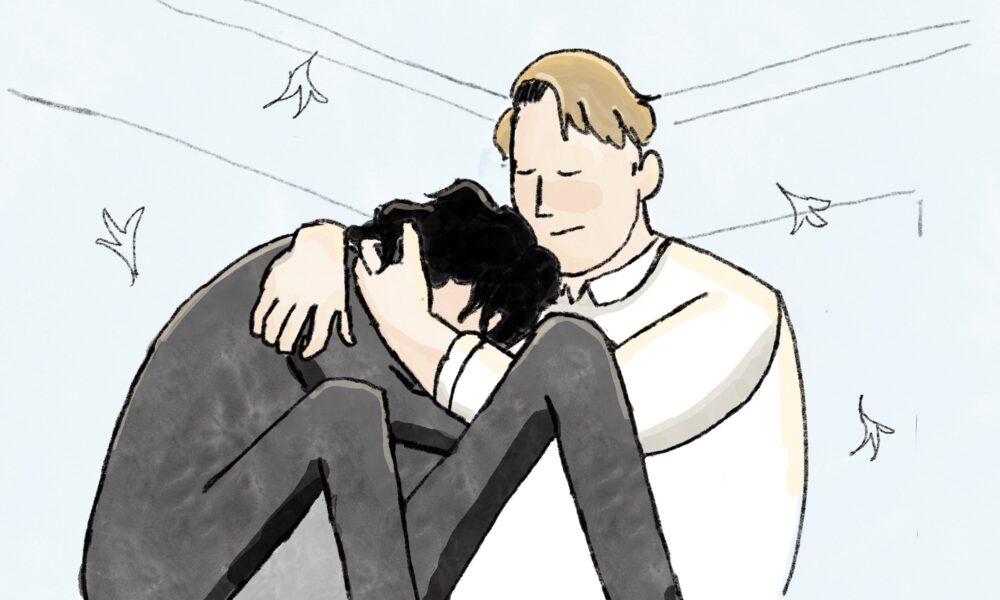
The teachings of American author bell hooks describe love as the foundation for justice. Her words—both gentle and bold—redefined love not as a mere sentiment but as something fierce and transformative at the core of democracy. To build and sustain the system, hooks reminds us, we must nurture it with love; with compassion, humility, and a commitment to the well-being of all. Conflict, she suggested, is the true test of trust—it’s in these moments that we learn how to make amends, listen deeply, and rebuild what has been wounded.

When we look to the future, may we act not only with conviction, but with the courage to love as a force that seeks the truth. 

The future of democracy feels uncertain, making it easy to fear the unthinkable. But through caring for one another and standing together, we can protect it. Democracy isn’t just a system; it reflects our shared hopes and commitments to something we believe so deeply in. We can’t take it for granted, but we don’t have to defend it alone. 

Looking back on my visits to the polls with my parents, I remember the reverence they instilled in me—their belief that casting a vote wasn’t just a civic duty, but a powerful act of faith in democracy. Today, that faith faces unprecedented challenges, but the essence persists: Democracy endures through every protest we attend, every truth we speak to power, and every right we stand to protect.

At the heart of it all lies love—the force that compels us to stand for something greater than ourselves. It is through love, not just for the values we cherish, but for each other, that we fulfill democracy’s promise. By fighting for the principles that define us, we can keep the tradition alive—not as a relic of the past, but as a force to shape a more resilient future.

Arts & Entertainment, Film and TV, Poetry

Inaugural Palestinian Film Festival celebrates art, heritage, and hope

“I’m nothing without Palestine. Palestine is my everything, all my values are based on being Palestinian.”

These words, spoken by a member who wished to remain anonymous of the Palestinian Cultural Club (PCC) at McGill, resonated deeply across the university’s campus on Friday, Nov. 8. That evening, the PCC hosted its much-anticipated Palestinian Film Festival, If I Must Die, transforming the Leacock Building into a breathtaking celebration of Palestinian culture. 

In a conversation with The Tribune, another PCC organizer who wished to remain anonymous expressed the club’s motivation for organizing the festival.

“A lot of people, especially in Montreal, only knew Palestine after October 7. We want to show people that it did not start on October 7, and it did not start in 1948,” they explained. “Palestine is not all about war.”

The building buzzed with energy as upwards of 300 people gathered to enjoy a carefully curated program of three short films, a full-length feature, and artistic performances highlighting the beauty and resilience of Palestinian culture. An array of Palestinian vendors offering handmade goods lined the halls, while an art exhibit, shown in collaboration with the Palestinian Museum in Palestine, captivated viewers with stunning works by Palestinian artists throughout history. Attendees enveloped themselves in the warmth of traditional thobes and keffiyehs; Palestinian flags proudly hung from the staircases, creating a powerful atmosphere of unity, pride, and remembrance. This event was, in a way, an act of protest against the ongoing injustices in Palestine; as one organizer said, “Art is a form of resistance.”

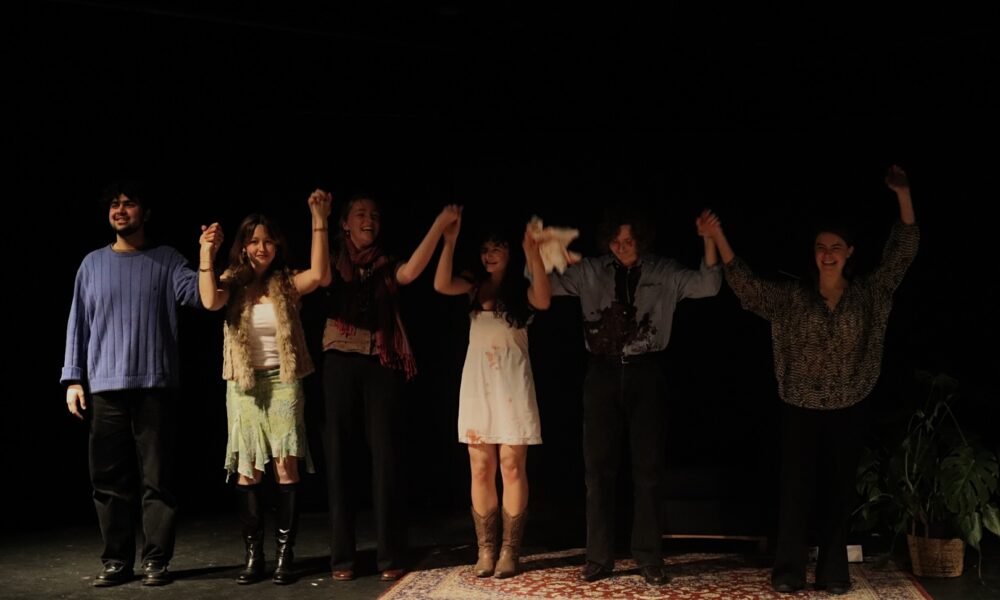
Once settled into Leacock 132 for the screenings, guests stood for the Palestinian and Lebanese national anthems, followed by a land acknowledgement. The PCC executive team then outlined their organization’s goals, announcing plans to make this film festival an annual tradition. They highlighted recent projects, such as their collaboration with SSMU to offer Dabke classes and their partnership with Concordia’s Palestinian Cultural Club to establish a Palestinian library.

In the beautifully animated short film Checkpoint, British-Palestinian filmmaker Jana Kattan explained the symbolism of the Jaffa orange in a voice-over. Representing strength and resistance, the fruit’s ties to the loss of agricultural land and displacement reflect themes central to the festival.

Before the screening of the 2024 feature film Where Olive Trees Weep, a Palestinian singer performed a musical rendition of the poem If I Must Die by Refaat Alareer. The poignant performance set the tone for the film, evoking a shared sense of dispossession—and resilience—that touched everyone in the audience. 

The occasion was more than a simple film festival; it was a tribute to Palestinian identity, a celebration of heritage, and a powerful act of solidarity with those enduring the ongoing struggles of occupation and displacement. Each film and performance served not only as a display of artistry but as a form of resistance, a reclaiming of narratives, and a reminder of the enduring spirit of the Palestinian people. The evening showcased the strength that has defined generations, connecting the audience to a shared history and identity that transcends borders and unites Palestinian communities, from Gaza to the diaspora.

“I want people to know that we exist,” the organizer said. “We exist on campus, we go to class, we are active members in clubs. It’s really hard—exhausting—to prove to everyone that we exist. But we do exist on campus. We have a history, we have a rich heritage, a rich culture.”

As the screenings came to an end, the event’s lasting impact was undeniable. For many, this was not just a demonstration of Palestinian culture, but a call to understand and support the rights and history of a people whose stories are too often overshadowed by violence. The PCC’s selection of moving and relevant films offered a lens into the realities of Palestinian life, stressing that Palestinian identity is more than a reaction to loss—it is a legacy of beauty, fortitude, and an unbreakable connection to the land, traditions, and future of Palestine. Through events like these, the PCC at McGill sends a powerful message: Palestinian culture is alive, vibrant, and will not be erased. 

Behind the Bench, Soccer, Sports

Professional soccer continues to prioritize commercial interests over safety and ethics

Content warning: Mentions of sexual violence, assault, and rape.

The narrative that rape accusations ruin the lives of the accused is dangerous, untrue, and often not the case, especially with high-profile alleged abusers. Athletes, managers, and coaches across the sporting world have faced allegations of sexual violence and face minimal consequences due to their skill level and status. It has become a particularly significant issue in professional soccer, given the sport’s international popularity. 

This is apparent when looking at Arsenal midfielder Thomas Partey, whose career is thriving despite three separate sexual assault allegations. He was arrested for rape in July 2022—which is the second time allegations had reached Arsenal—but has had his bail extended multiple times. Ultimately, the case was not pursued because of a technicality in legislation that prevented prosecution for an offence that happened overseas. Despite the controversy, Partey’s reputation in the media has been protected: UK privacy law determines that he remains anonymous unless charged, disconnecting any news reports related to his arrest with his name. 

Any threats facing his career have been purely performance-based. Last year, Arsenal put Partey’s contract under review because of his level of play. Head Coach of the Ghanaian Black Stars Otto Addo axed Partey from the national team on Nov. 7. While the reasoning was confidential, it is likely unrelated to the sexual assault allegations. He missed the previous games for Ghana due to illness, and, according to Addo, his exclusion is temporary. The decision might even benefit Partey’s ability to contribute to Arsenal, given that all his attention will now be focused on their next fixtures. On Nov. 5, the Gunners nominated Partey for Arsenal’s Player of the Month, featured him on the graphic for their recent match against Newcastle, and have consistently continued to publicly celebrate his performance. 

It seems all too easy for professional soccer players to get off scot-free when they are accused of sexual violence, particularly due to the huge fanbase and international following of European competitions like the Premier League. One only has to look at the infamous ex-Manchester United forward, Mason Greenwood, and the sexual assault and domestic violence case he faced in early 2022 to realize that rape allegations against professional soccer players are significantly understated among the clubs and leagues. 

Greenwood’s girlfriend, Harriet Robson, accused him of rape and physical assault after leaking incriminating photos and recordings. The Premier League suspended Greenwood during the investigation. The prosecutor withdrew the case, and Manchester United debated his return to the club right until the last minute because they felt a “duty of care” towards him. However, after discussions with key club stakeholders—including members of the women’s team—ultimately, the club cut ties

Many women’s rights organizations heavily criticized United’s leadership for this, citing the team made the decision only when met with increased pressure from the media. However, his skill and reputation as a promising young talent means that he can continue progressing in his career; Greenwood now plays for Ligue 1 club Marseille after being on loan to Getafe for the 2023-2024 season, and is still celebrated for his talent. Soccer journalists like Fabrizio Romano have frequently promoted his performances. 

Partey and Greenwood’s cases highlight the extent to which status, aptitude, and celebrity can exempt a person from the supposed “life-ruining” consequences of rape allegations. These allegations are typically only disregarded because of trivial bureaucratic details, meaning that prosecution is often nigh-impossible. A Google search into these players’ names only yields results related to their soccer careers, while their histories of sexual assault are buried under hundreds of articles praising their performances and discussing their futures. 

This doesn’t stop with Partey or Greenwood. Time after time, professional soccer players go unpunished for sexual assault because of their athletic prowess. Some of the biggest names in soccer, like Cristiano Ronaldo or Neymar da Silva Santos Júnior, have faced similar cases with few repercussions on their ability to continue playing professionally. 

Players are large investments for clubs that make up their brand and image. Hero-like worship and enormous support from their fans diminish athletes’ misconduct on the grounds of skill. The harmful reality is that clubs and organizations seldom take sexual violence cases seriously due to the focus on on-field excellence.

Out on the Town, Student Life

Halloweekend unmasked: How McGill students celebrated

This year, Halloween fell on a Thursday, which set the tone for a thrilling and festive weekend to follow. For McGill students—especially those recovering from midterms—Halloweekend served as a reward, with festivities ranging between frat events, parties, club outings, and other fun gatherings. With the large range of options to celebrate, and Montreal’s vivacious nightlife, students ended up with packed schedules for the holiday, making the most of their weekend. 

The Tribune compared and contrasted students from different years’ plans for the weekend. When we asked a group of first-years to give us the rundown, it seemed that they were leaving the weekend open to many different possibilities. For example, Nava Menon, U0 Music, shared her indecisiveness.

“There’s a couple things floating around—maybe we’re going to try to get into one of the frats because we know one of the people, but we don’t know if they’ll let us in because we don’t have tickets—so maybe we’ll stand in line for a club, or just end up at a bar,” she said.  

On a similar note, Emma Edwards, U0 Arts, who had Halloweekend plans with Menon, expressed how easy it would be to find something to do. 

“It’s such a clubbing area—there’s not much else to do,” Edwards stressed. “We always end up going to Café Campus anyway.”

Yet, Halloweekend also seemed to be a series of events difficult to coordinate, especially for those living in dorm residences, unable to throw their own party. However, while the first years may not have their own places to host a house party or something else for the holiday, Montreal doesn’t make it difficult to find other exciting activities. With Boul. Saint-Laurent expected to be packed with Halloween revellers, the celebration extends far beyond McGill’s campus.

While going to clubs or bars is a first-year rite of passage, for upper-year students, hosting or attending house parties is an integral aspect of Halloween festivities. Dylan Jacques, U3 Desautels, said he and his friends are “hosting a party on Friday and going to a friend’s party on Saturday.” 

As most students live in their own apartments, more casual and homely functions seem to have a bigger appeal. Dania Corbeil, U4 Arts, expressed that feeling in an interview with The Tribune

“House parties allow you not to worry about how much effort to put into costumes or what you are supposed to look like, since they create an environment where everyone feels comfortable,” she said.

Even though some upper-year McGillians still enjoy clubbing as it is a considerable part of Montreal’s vibrant nightlife, the consensus remains that house parties are the best way to celebrate this spooky season. Others, such as Charlotte Sovka, U1 Arts, decided that getting the best out of both worlds was also an option.

“[I plan on going] clubbing on Thursday since it’s the actual Halloween day and attending a house party on Friday and Saturday,” she noted. 

In addition to going out, students also enjoy partaking in the Halloween tradition of giving out candy to the trick-or-treaters of their neighbourhood. Corbeil mentioned how she bought candy but is “not sure that kids are going to stop by.” Although student neighbourhoods like Milton Parc or the Plateau may not be ideally suited for welcoming younger children—since they are mostly populated by university students—McGillians still take pleasure in being ready for the possibility.  

Each year, as housing situations, friend groups, and personal preferences change, Halloweekend plans look a little different for every student. From freshmen going to bars, clubs, or frats, to upper-year students organizing personal Halloween house parties, this year’s Halloween was characterized by diversity in options. Regardless of your Halloweekend itinerary, nothing compares to Montreal during the spooky season.

Campus Spotlight, Student Life

SLASA’s role in building community ties at McGill

McGill is home to various identity-based clubs that enrich its student life. One of the largest is the Spanish and Latin American Students’ Association (SLASA), which boasts over 1,900 members. SLASA offers a vibrant community-driven space for Hispanic and Latinx students on campus. 

Since the academic year began, SLASA has hosted a wide array of events to unite Hispanic and Latinx communities. The longest-running one is “Coffee and Spanish,” a bi-monthly event where students can practice their Spanish in a social, stress-free, and fun environment. Each session attracts 25 to 30 students looking to meet new people and reconnect with their culture through language.

Eugenie Renaudo, U3 Arts, told The Tribune that “Coffee and Spanish” is her favourite SLASA activity. 

“I love it because I found a lot of my Latino best friends [there]. You get to speak in Spanish, which I didn’t do during my highschool in France,” she said.

October was a busy month for SLASA, with activities stacked one after the other. On Oct. 4, the club launched a mentorship program that pairs students based on their interests and cultural backgrounds. They hosted a Latin America-themed Trivia Night with free food and drinks on Oct. 9. Then, on Oct. 25, the club organized the Latin American Consulate Panel in honour of Latin American and Hispanic Heritage Month. For this popular event, which attracted over 100 students, SLASA invited four Latin American consular representatives to discuss how youth can integrate themselves into Canadian professions.

Finally, SLASA celebrated Día de los Muertos on Oct. 30 with a get-together at Tacos Lakalaka, offering members a chance to connect and honour the holiday in a fun, non-academic setting. 

Attendee Alejandro Sotelo Tapias, U1 Management, highlighted the appeal of participating in the club’s events.

 “SLASA’s activities are fun to be at. It can help people from the Latino community like me to meet other people who are Latino,” Tapias explained.  

Through its events, SLASA aims to create a home away from home for students, understanding how challenging it can be to stay connected to one’s culture while being abroad.

Co-President Uma Le Daca Jolicoeur, U3 Arts, shared the executive team’s vision for SLASA, emphasizing the unique sense of belonging that comes from connecting with peers from similar backgrounds. 

“Part of our goal or mission is to make people at home and have more of a cultural base in terms of language and social interactions,” she declared. “[There are] certain things that you cannot talk about with friends that are not from the same cultural background as you.”

Going forward, SLASA is working to make events more inclusive for Portuguese-speaking Latinx. 

Co-President Júlia de Oliveira Lima Gaspar, a U3 Arts student from Brazil, is helping organize a Brazilian party and a “Coffee and Portuguese” event to increase representation for the community. “A big part of Latin America is South America, and which Brazil is such a big part of,” she emphasized, referencing Brazil’s over 214 million Portuguese speakers.

Non-Latin-American and Hispanic students are invited to attend SLASA events as well. 

“It’s not just for Latinos, it’s for people that are interested in Latin American culture and learning Spanish,” Susana Baquero Salah, U3 Arts and SLASA’s Vice President Events, shared. “Going to SLASA is important for me to reconnect with my peers, with my people, and preserving the culture. And it’s also a lot of fun.” 

For some, like Emmanuel Menacho Tardieu, U4 Engineering, SLASA provides a break from academic stress. 

“My major is pretty stressful, with a lot of homework, a lot of work to do but having this is the other side of the coin at McGill,” he stated.

Others, as Júlia de Oliveira Lima Gaspar puts it, “Join for the culture but stay for the community.” 

To keep up with SLASA’s upcoming events, follow them on Instagram.

Behind the Bench, Sports

Removing the mask: Uncovering the importance of mental health in men’s sports

Professional sport is a bastion of prowess and unwavering determination. In times where mental health and introspection are evermore pertinent, society is starting to recognize the importance of mental health advocacy, especially for high-level athletes. While recent years have seen a surge in discussions surrounding mental health, particularly among women athletes such as Simone Biles and Jordan Chiles, the discourse around men athletes’ mental health is still often epitomized by silence.

Traditional images of men athletes are one of stoicism, resilience, and unwavering toughness. This stereotype, perpetuated by patriarchal expectations, creates a toxic environment where men athletes feel compelled to suppress their emotions and mental health struggles. The “boys don’t cry” mentality, deeply ingrained in society, often leads men athletes to suffer in silence. Expectations to suppress emotions can lead to a buildup of stress, anxiety, and depression. The pressure to perform and the fear of being perceived as weak or vulnerable can exacerbate these issues. The toxic masculinity standards upheld by misconceptions about men athletes can lead to self-destructive behaviours, substance abuse, and even suicide. Misguided and problematic standards stifle open discourse surrounding mental health, making it difficult for athletes to acknowledge their own humanity. 

While organizations like Movember have made significant strides in raising awareness about men’s mental health, the conversation is rarely centred around specific challenges faced by men athletes. Constant public scrutiny and the high demands placed on athletes can strain their mental well-being. The shortage of adequate mental health resources for men athletes at the professional and collegiate levels, albeit decreasing, compounds the problem. Although progress has been made, many athletes still hesitate to seek the necessary support and treatment they might need.

The media plays a crucial role in reshaping public perceptions of mental health and challenging stereotypes that prevent open dialogue. While there has been increased coverage of men athletes’ mental health struggles, societal expectations still place elite athletes on a pedestal, perceiving them as unstoppable. Women athletes face immense media backlash for challenging mental health stereotypes. Take, for example, Simone Biles removing herself from the Olympics for her mental health, and being dubbed a “national embarrassment.” For men athletes, the challenge is distinct yet similarly painful; the idea of traditional powerful masculinity is what drives men athletes to hide their emotions from the world to maintain their image. To ignite meaningful change, media and cultural leaders must exemplify a standard of openness, dismantling the façade of perfection expected from athletes.

In recent years, a growing number of men athletes have begun to challenge the traditional norms of masculinity and openly discuss their mental health struggles. Kevin Love, a star NBA player for the Miami Heat, has been a vocal advocate for mental health awareness, sharing his experiences with anxiety and depression. Former NFL player Brandon Marshall has also been a prominent voice, using his platform to raise awareness and reduce stigma

To address these challenges, sports organizations, coaches, and athletes themselves must create a more supportive and understanding environment not only for men, but for all athletes. This involves breaking down the stigma surrounding mental health, encouraging open dialogue, and providing accessible mental health resources. 

By normalizing conversations about mental health, we can empower athletes to seek help without fear of judgment or repercussions. Encouraging athletes to share their experiences can inspire others to do the same, creating a ripple effect of positive change. Additionally, all sporting institutions making the effort to provide adequate mental health resources, such as therapists and counsellors, can ensure that athletes are supported to overcome these challenges. 

By sharing their stories, athletes like Love and Marshall inspire others to seek help and break the silence, demonstrating that it is okay to be vulnerable and that mental health is just as important as physical health. Just as women athletes like Biles and Chiles have bravely spoken out about their mental health struggles, it is time for men athletes to feel as though they can follow suit. By sharing their stories, they can not only inspire others, but can also help to dismantle the harmful stereotypes that perpetuate the silence surrounding men’s mental health in sports. It is only by addressing these issues head-on that we will be able to create a truly inclusive and supportive environment for all athletes to thrive both on and off the field.

Murals of Montreal, Student Life

If walls could talk, what would they say? 

In my first year of university, I stumbled upon a poster calling for research subjects for McGill’s Translational Research in Affect & Cognition (TRAC) Lab. They were running a study on U0 students’ emotions, by having me wear a strange helmet to measure my brain activity while I played some mental games. I participated, got $20 CAD in cash, and immediately spent it on a burger right outside the building. 

Evidently, posters can open the pathway to many opportunities—like a free lunch—and let you know what people care about in the world. The Tribune took a walk around campus, hitting major billboards and seeing what initiatives are vying for your attention.

AUS Billboards

As we began our tour in the Leacock lobby, the sheer number of publications was overwhelming. With various SSMU votes coming up, many of these boards were taken up by posters asking for student support. Importantly, SSMU was asking for the creation of a fee to support francophone affairs and CKUT was seeking a fee increase to sustain their operations as McGill’s student-run radio station. Given that CKUT’s referendum passed, postering paired with other methods of outreach can be a great way to assure services receive the support they need!

On the non-referendum side of things, the Arts boards boast various events such as film festivals and graduate school fairs. If you’re creative, you’ll also find many calls for submissions. Artists, writers, and musicians are always needed for various clubs under the Arts Undergraduate Society (AUS) portfolio, so if you want to share your genius with the world, just take a walk through the Arts building!

McConnell Billboards

The McConnell Engineering Building has many billboards in its lobby, all promoting interesting upcoming initiatives. Notable events include a physics hackathon happening from Nov. 15 to 17 and PhD Discovery Day on Nov. 21. The most prominent type of communication you’ll find on Engineering boards calls for participants and networking events. Studies typically offer compensation for participation, so if you want an extra $30 CAD for just an hour of your time, stop by for a quick look! It’s double the minimum wage, which is a pretty good deal.

MUS Billboards

The billboards in Bronfman’s basement looked barren on our visit. However, we noticed that Dave’s Store—a student-run snack shop—is now open! Their poster advertised that all items are between $1-$5 CAD. With Couche-Tard upstairs, Dave’s Store is a great alternative for students looking for a cheap energy boost from 10 AM to 6 PM Monday through Thursday. In general, Management Undergraduate Society (MUS) boards showcase career resources for management students, contact links for their 2024 Peer Advisors, and information about upcoming case competitions. Rest assured, there is no shortage of guidance available on Bronfman’s walls!

Rounding this exploration off, we looked at digital methods of postering, namely through faculty newsletters. If you don’t have the time to print and post advertisements in-person, or if you generally want to reach a wider audience, sending your initiatives to AUS, EUS, and MUS listservs is a great way to raise awareness.

In the city

Off-campus, posters are less school-related and take on various characters. Montreal used to have an anti-postering bylaw, but thanks to local activist Jaggi Singh, citizens can poster on street furniture without fearing fines. Walking on Boul. Saint-Laurent, you may notice advertisements for clubs—either for themed nights or special performances. You may also see community initiatives calling for action, such as protest announcements and posters that raise awareness about local issues. Public art and postering serve as a method of informal dissemination that can be classified as informative in one moment and vandalistic in the next. When you see a paper ripped off of public property, it’s necessary to inquire why some posters last longer than others in the wild. 

Postering is a call for people to notice the world around them. When we are inquisitive and take time to notice, we engage with the movements, messages, and events happening in our community.

Editorial, Opinion

Quebec’s healthcare system needs a prescription for change

Quebec Health Minister Christian Dubé recently announced reform plans for Quebec’s healthcare system, which include restricting new doctors to the public sector and potentially invoking the notwithstanding clause to enforce compliance. The provincial doctor shortage is a pressing issue: Quebec has seen a 70 per cent increase in physicians moving to the private sector since 2020. Contributing factors like difficult working conditions, excessive paperwork, and restrictive policies have driven doctors out of the public sector, yet the minister’s plans do not adequately address or offer solutions to these underlying issues. As a result, public healthcare accessibility has worsened, with increasing wait times for essential treatments and over two million Quebecers lacking access to a family doctor. This situation reveals systemic failures in supporting public-sector doctors and exposes a troubling pattern of neglect toward marginalized communities.

Due to being understaffed and overwhelmed, Quebec doctors struggle to provide adequate time or empathy to their patients—a deficiency whose effects particularly impact BIPOC and 2SLGBTQIA+ groups, who face discrimination and inappropriate medical questioning. The Canadian healthcare system still predominantly serves a white, cisgender, patriarchal model, contributing to widespread misdiagnoses for those who do not fit this profile. As such, non-white individuals are more likely to experience medical discrimination; women of colour are often dismissed by doctors who fail to take their symptoms seriously, while dermatological medical conditions are often misinterpreted on darker skin. 

The detrimental impact of this crisis disproportionately affects Indigenous populations who face life-threatening discrimination within healthcare settings. Inuit patients from Nunavik, for example, must often travel to Montreal for medical care, as their region lacks sufficient healthcare resources. Ullivik Lodge, intended as a supportive space for these patients, has faced serious issues—unsanitary conditions, staff disrespect, and mismanagement—compromising patient well-being. Furthermore, the provincial government’s oversimplified and superficial 90-minute online sensitivity training course for healthcare professionals fails to meaningfully engage Indigenous voices or ensure cultural safety for the large Indigenous populations it serves. This broader issue of disrespect and trauma faced by Indigenous patients is clear all over Canada, as was made clear in Saskatoon when doctors cut off Métis elder Ruben St. Charles’ long ponytail—a symbol of his heritage—without consent during a hospital stay. 

Indigenous health needs, which are deeply influenced by cultural values, go mostly unrecognized in Quebec’s healthcare system, which was designed without Indigenous input. This maltreatment has led to severe consequences for Indigenous communities, who already experience reduced life expectancy, insufficient or even harmful medical care, and cultural insensitivity, exacerbating historical trauma. 

One major obstacle to overcoming this crisis is Quebec’s recent tuition hikes, which restrict access to medical education and discourage aspiring healthcare professionals. These financial changes not only limit McGill’s ability to foster new talent in the healthcare field but also exacerbate the existing shortages in Quebec’s public health sector. Still, it is not completely out of the university’s hands: As a leading research institution, McGill has a responsibility to drive progress in Canada’s healthcare system through education and innovation and a duty to support other essential public sectors, such as healthcare, that serve the broader community—a commitment that is more critical than ever in light of the current crisis.

To address these structural issues, healthcare leaders need to proactively work to dismantle systemic racism. This involves more than short sensitivity courses; it requires integrating Indigenous and marginalized perspectives into healthcare education. Universities, especially those like McGill which have significant influence, must implement comprehensive cultural competency training in their medical programs. This training must centre unlearning ingrained biases, not simply learning new concepts. Incorporating Indigenous health perspectives as mandatory components of the curriculum, as seen in Manitoba’s Indigenous studies prerequisite for medical school, could pave the way for a more inclusive healthcare system. McGill can further support these efforts by encouraging inclusive innovation and the inclusion of cultural lifeways within the medical field. This would foster a new generation of healthcare providers who approach medicine with a culturally-informed perspective, not only to better serve Indigenous communities and communities of colour, but to enrich Canada’s healthcare system as a whole.

Chill Thrills, Local Stories, Student Life

Fall festivities flop: A reflection on pumpkin & autumn spice drinks

Despite the ongoing seasonal joy and fall festivities, the best season of the year—subjectively—will soon come to an abrupt end. This marks the beginning of finals and the fast-approaching end of the school semester. 

As a fourth-year Science student, my university experience has often consisted of late nights and cheap coffee. But what I’ve failed to find is a fall drink that sparks joy: Something evoking the feeling of being covered with a fleece blanket next to a crackling fireplace. The type you would get while writing for leisure in the chill autumn air as vibrant leaves swirl overhead. Essentially, as close as you can get to a drink-ified pumpkin purée. And that is exactly what I sought during October 2024. 

If you’ve also been on a search for somewhere to go (or not go), I’ve done the taste-testing work for you. Here is a personal account of the seasonal beverages from some latte locations in Montreal, based on a 10-point rating scale: 1 is vile, 5 is neutral, and 10 is my dream drink.

Tim Hortons: Latte with Autumn Spice (Medium, $5.19 CAD)

I began detailing this journey at Tim’s, which retrospectively was not a great place to start. The acridity of the coffee was hidden by sugar and a hint of fall spices. Though I tasted cinnamon and clove most, it was almost as if they were afraid of being too flavourful. This barely-spiced latte was inoffensive, but five dollars for a Tim’s drink is…surprising, to say the least. 5.2/10

Tommy’s: Pumpkin Spice Latte (Regular, $6.90 CAD)

This highly popular café held promise. The advertisement featured an intimidating beverage piled high with colourful ingredients and explosions of flavour. The real drink was quaint with aesthetic latte art, and the foam itself was sweet, tasting predominantly of cinnamon. While the coffee was light and tasteful, the somewhat overpowering cinnamon topping prevented the pumpkin and seasonings from truly shining. 7.2/10

COMMODORE Café Montreal: Latte à la citrouille épicée (Medium, $6.33 CAD) 

Encased by glass walls and lush overhead foliage, COMMODORE—connected to HONEYROSE Hotel Montreal and its restaurant—seemed to represent “business” to a tee. The place was sleek and fragrant, and so was the drink. The latte’s foam was light on sweetness and heavy on cloves, and the coffee was earthy with a slight tang that made you keep going back for more. All in all, the drink was pleasant and tasted powerful and autumn-like, for lack of a better term, but I was still not completely satisfied. 7.9/10

Myriade: Small Latte Citrouille (Medium, $5.24 CAD)

This cozy café’s atmosphere was dark, moody, and inviting, which the latte reflected perfectly. The foam was sweet, with fragrant tones of nutmeg, allspice, an elusive pumpkin-like aftertaste, and a nutty aroma. While the previous lattes mostly resembled a coffee with milk and indications of autumn, this drink marked the start of the few coffees that nearly embodied the pumpkin and spice energy that I was so desperately looking for. But despite being flavourful, it was not my perfect drink, so my quest continued. 8.1/10

Milton B: Latte à Citrouille (Regular, $7.07 CAD)

Having spent many nights-turned-mornings at this 24-hour establishment, I was curious about Milton B’s take on a pumpkin spice latte. Being the most expensive drink on this list, I expected greatness. Though I personally feel the price is quite high for what it is, I was pleasantly surprised. The coffee was chocolatey and mellow, sweet and light with spice. The syrup was concentrated and tasted similar to pumpkin purée. Though this drink came nearest to what I was looking for, it may have just been that the sweetness enticed the taste buds more than the pumpkin itself. 8.3/10

Humble Lion: Pumpkin Spice Latte (Medium, $6.67 CAD)

Truthfully, this place is where my journey both started and ended—for now. Overall, I went back to my humble beginnings three times. Each time, my drink experience differed, and I couldn’t decide how I felt. During my first two visits, the mix of all the spices was strong, and the coffee was dark and rich with a light bitterness. But on my last, the coffee was deep, complex, and flavourful—a pumpkin purée taste topped with a light foam and sweet cinnamon. This last cup added an extra point to my original rating, and while it wasn’t completely my dream drink, this latest visit will certainly not be my last. 8.5/10

Subjectively, the journey to find my ideal drink was unsuccessful. After deliberating with my loved ones, we posited that perhaps the fall drink hype was all a ploy. Maybe pumpkin and autumn spice drinks just leave something to be desired, and that’s why they’re only around one season a year. So we can collectively forget how unremarkable they are when next autumn rolls around.

After further contemplation regarding my failed quest, I realized the common denominator was me. Maybe I’m not the right person to review this product. Perhaps what I’ve discovered in this autumnal adventure is that, despite my efforts and retries, I’m not who I thought I would be: A die-hard fan of autumn/pumpkin spice drinks. Though I started running out of caffeine tolerance—and money—near the end, they say that life is about the journey, not the destination. Ultimately, it’s okay that I didn’t find my perfect autumn drink. There’s always next year. Also, I may be allergic to nutmeg. 

Note: Prices included are what the author was charged after taxes and before tip. This may not reflect the accurate or universal price of the drink in other locations.

Laughing Matters, Opinion

Café Campus ticket scalping and the real cost of FOMO

It’s Halloween day, 2024. You and all your friends are in pursuit of what may be the pinnacle of McGill first-year social life: Halloween Thirsty Thursday at Café Campus

The tickets are bound to sell out as soon as they drop, and to make matters worse, sales are only going live at noon. However, your plan is foolproof. You and your friends will all log on to the Café Campus website and simultaneously attempt to buy the tickets in bulk. That way, even if the online queue is disgustingly long, someone is bound to secure the highly sought-after tickets. The clock strikes 12. Across the McGill residences, first-years and upperclassmen alike are refreshing their browsers. A 504 error later and your place in the queue is being calculated. Your heart drops. You are number 2,381 in line. 

This Halloween, Café Campus’ tickets sold out almost immediately, making attendance at this coveted location incredibly exclusive. But, how much would //you// pay in the face of FOMO? Tickets for Halloween Night One were already valued at a higher price than the usual club entry fee, with tickets being sold for $30 CAD at the door instead of the $20 CAD online ticket. Yet, clearly—and perhaps unsurprisingly—thousands of students were prepared to spend these inflated amounts. 

What //is// surprising are the prices students were offering in McGill residence group chats. Within an hour of Café tickets selling out, students were reselling theirs at extreme prices ranging from roughly $50 CAD to over $200 CAD. Of course, the unrealistically expensive tickets were likely not purchased at the prices proposed by their sellers, but a broader truth still remains: McGill students are practicing extreme, unethical ticket scalping.

Although it may sound silly in writing, Café Campus is a space many McGill first-years flock to when seeking to make friends and experience Montréal nightlife for the first time. When tickets are increasingly financially difficult to obtain, economic barriers fracture the student body between those who can afford the steep resale prices and those who cannot. Ticket scalpers capitalize on this reality; it’s Café Campus’s status as a popular social space that enables exorbitant markups.

What McGill students may not know, however, is that a ticket-scalping side hustle can be illegal in Quebec. While most Canadian provinces require ticket scalpers to file a T2125 tax form for profits from ticket reselling, Quebec has stricter regulations. The Office of Consumer Protection in Quebec has prohibited the resale of tickets at prices above their face value since 2012, as per Bill 25. Those who violate the law will face fines between $1,000 CAD to $2,000 CAD for first-time offences and up to $200,000 CAD for repeated violations. For students who have been making a habit of ticket scalping, this legislation should serve as a terrifying deterrent.

So, will McGill students be attacked with lawsuits and charged with fines? It depends. Café Campus ticket scalpers are dancing along an interesting loophole. Currently, the resale of tickets at inflated prices is not punishable by law if the transaction occurs between two consumers. Many websites like StubHub take advantage of this legal loophole, describing their website as a platform for inter-consumer ticket sales, much like AirBnB is a platform for inter-consumer house or apartment rentals. In this way, sites manage to serve as vendors for illegally price-gouged tickets without facing fines. The question of whether a residence hall Instagram group chat violates the concept of the two-consumer rule is unclear. It will likely come as no shock that there is no Canadian legal precedent for a Café Campus Halloween ticket scalping frenzy. 

Still, regardless of the potential legal repercussions that ticket scalpers may face, McGill students should feel a social—or even moral—responsibility to avoid the harmful practice. 

And yes, I am bitter that I didn’t get a Café Campus ticket.

Read the latest issue

Read the latest issue