

Latest News

Laughing Matters, Opinion

Café Campus ticket scalping and the real cost of FOMO

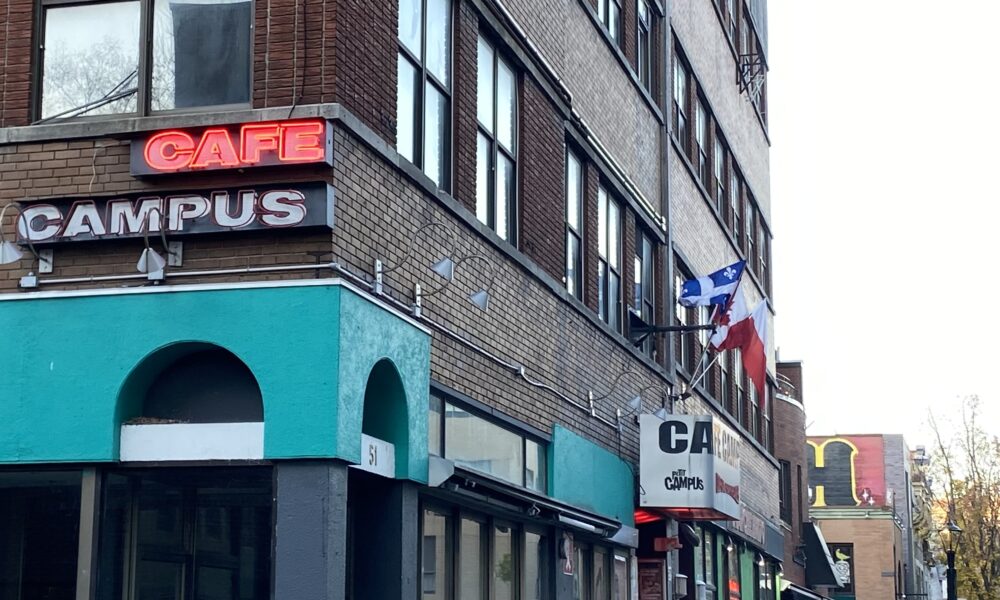
It’s Halloween day, 2024. You and all your friends are in pursuit of what may be the pinnacle of McGill first-year social life: Halloween Thirsty Thursday at Café Campus

The tickets are bound to sell out as soon as they drop, and to make matters worse, sales are only going live at noon. However, your plan is foolproof. You and your friends will all log on to the Café Campus website and simultaneously attempt to buy the tickets in bulk. That way, even if the online queue is disgustingly long, someone is bound to secure the highly sought-after tickets. The clock strikes 12. Across the McGill residences, first-years and upperclassmen alike are refreshing their browsers. A 504 error later and your place in the queue is being calculated. Your heart drops. You are number 2,381 in line. 

This Halloween, Café Campus’ tickets sold out almost immediately, making attendance at this coveted location incredibly exclusive. But, how much would //you// pay in the face of FOMO? Tickets for Halloween Night One were already valued at a higher price than the usual club entry fee, with tickets being sold for $30 CAD at the door instead of the $20 CAD online ticket. Yet, clearly—and perhaps unsurprisingly—thousands of students were prepared to spend these inflated amounts. 

What //is// surprising are the prices students were offering in McGill residence group chats. Within an hour of Café tickets selling out, students were reselling theirs at extreme prices ranging from roughly $50 CAD to over $200 CAD. Of course, the unrealistically expensive tickets were likely not purchased at the prices proposed by their sellers, but a broader truth still remains: McGill students are practicing extreme, unethical ticket scalping.

Although it may sound silly in writing, Café Campus is a space many McGill first-years flock to when seeking to make friends and experience Montréal nightlife for the first time. When tickets are increasingly financially difficult to obtain, economic barriers fracture the student body between those who can afford the steep resale prices and those who cannot. Ticket scalpers capitalize on this reality; it’s Café Campus’s status as a popular social space that enables exorbitant markups.

What McGill students may not know, however, is that a ticket-scalping side hustle can be illegal in Quebec. While most Canadian provinces require ticket scalpers to file a T2125 tax form for profits from ticket reselling, Quebec has stricter regulations. The Office of Consumer Protection in Quebec has prohibited the resale of tickets at prices above their face value since 2012, as per Bill 25. Those who violate the law will face fines between $1,000 CAD to $2,000 CAD for first-time offences and up to $200,000 CAD for repeated violations. For students who have been making a habit of ticket scalping, this legislation should serve as a terrifying deterrent.

So, will McGill students be attacked with lawsuits and charged with fines? It depends. Café Campus ticket scalpers are dancing along an interesting loophole. Currently, the resale of tickets at inflated prices is not punishable by law if the transaction occurs between two consumers. Many websites like StubHub take advantage of this legal loophole, describing their website as a platform for inter-consumer ticket sales, much like AirBnB is a platform for inter-consumer house or apartment rentals. In this way, sites manage to serve as vendors for illegally price-gouged tickets without facing fines. The question of whether a residence hall Instagram group chat violates the concept of the two-consumer rule is unclear. It will likely come as no shock that there is no Canadian legal precedent for a Café Campus Halloween ticket scalping frenzy. 

Still, regardless of the potential legal repercussions that ticket scalpers may face, McGill students should feel a social—or even moral—responsibility to avoid the harmful practice. 

And yes, I am bitter that I didn’t get a Café Campus ticket.

News, SSMU

Fall referendum CKUT fee increase passes, SSMU Base Fee increase fails for fifth time

The Students’ Society of McGill University (SSMU) closed the Fall 2024 Referendum polls on Nov. 8. Just 17.2 per cent of downtown campus undergraduate students cast a vote, two percent less than that of the Winter 2024 referendum. Six out of eight of the referendum’s ticket motions passed with a majority vote, including fee increases for CKUT, the Quebec Public Interest Research Group at McGill (QPIRG-McGill), the Ambassador Fund, alongside renewals for the SSMU Legal Essential Fee, Community Engagement Fee, and the Equity Fund. Students rejected the request for a Creation of a Contribution to Support Francophone Affairs along with the SSMU Base Fee increase, which has been denied five times since 2019.

The SSMU Base Fee increase was rejected with 58.1 per cent of voters casting a “No” vote. The motion sought to raise the semesterly fee that students pay for SSMU services by $14.68 CAD for full-time students to a total of $85.81 CAD and an increase of $7.22 CAD for part-time students to a total of $41.66 CAD. SSMU claimed the increase in funds would allow the organization to eliminate its current deficit of between $400,000 to  $1.3 million CAD, and increase SSMUnion members’ salaries to reflect inflation. Without the added increase, SSMU stated that the organization will have to cut staff as well as funding for clubs, initiatives, programs, and student financial assistance. 

In a written statement to The Tribune, SSMU President Dymetri Taylor explained that he believes the referendum question was rejected due to waning interest in the student union. 

“Frankly, I’m neutral about the results,” Taylor wrote. “I hope that this serves as a waking-up call that perhaps the SSMU needs to work on improving its relationship with the student population and showcase why it is a vital part of our university’s culture, which has been degraded in recent years.”

Voters also rejected the Creation of a Contribution to Support Francophone Affairs. A vote in favour would have support creating an opt-outable fee of $1.00 CAD per semester to support francophone clubs and translation services. The measure failed with 59.7 per cent of voters selecting “No.” Maëla Dube, the SSMU Francophone Affairs Commissioner, explained to The Tribune that current francophone groups receive little to no funding from SSMU. 

“I think [it] is a reflection of the experience of being francophone at an anglophone university in Quebec while also being a consequence of current governmental politics that make advocating for francophone rights and promoting the French language difficult,” Dube wrote.

While SSMU did not get some of the results it hoped for, many other organizations were successful in the referendum. CKUT, a campus and community radio station based at McGill, received its first fee increase since 2012, with 60 per cent of participating students voting “Yes.”

In a written statement to The Tribune, Madeline Lines, a representative for the radio station, relayed that CKUT staff, volunteers, and community members are “elated and relieved” with the result. 

“CKUT’s deficit will be eliminated, staff will receive a more livable wage, and the workshops, student jobs, and overall offerings the station will be able to offer will be expanded,” Lines wrote. “CKUT will be able to go from surviving to thriving with this result.” 

Voters also approved the Committee Engagement Fee Renewal with a 67.9 per cent “Yes” vote. The $0.72 CAD per semester opt-outable fee funds students and clubs at McGill, and seeks to give students autonomy to create events. 

SSMU Community Engagement Commissioner Nika Rovensky highlighted that the fee increase will help establish new initiatives, such as the creation of a free food pantry that seeks to address food insecurity on campus.

The QPIRG fee increase from $5.00 CAD to $6.75 CAD passed, with a 53.8 per cent “Yes” vote. The increased funding will help QPIRG maintain programs like its free textbook loan program, upkeeping its alternative library, and supporting independent research projects over the summer. 

“Passing this referendum ensures that we can strengthen the communities around us, and that we can support activists who fight for social change for the years to come,” the QPIRG team wrote to The Tribune.

The group also noted how significant this favourable vote is for them, especially considering students’ financial limitations.

“We don’t take it for granted that students have voted to increase our funding at a time of unprecedented inflation, when their own finances may be severely constrained,” QPIRG wrote. “We aim to give them back greater value than what they contributed to us.”

Behind the Bench, Soccer, Sports

Champion Reform: If it wasn’t broken, why’d they fix it?

The 2024-2025 Union of European Football Associations (UEFA) Champions League (UCL) season saw the first dramatic change to the league’s format since the second group stage—introduced in 1999—was dropped in 2003. The UCL is an annual, elite showcase for Europe’s most storied clubs. Since its inaugural edition in 1955, the tournament has symbolized the pinnacle of club competition in the continent; it often achieves viewership numbers that events like the Super Bowl could only dream of

Traditionally, the UCL’s group-then-knockout-stage format offered a clear and competitive pathway for champions and top contenders across Europe, balancing a sense of exclusivity and inclusivity for top teams across nations. However, the 2024-2025 season brings a new chapter, to the chagrin of many. The UEFA Executive Committee’s is making a fundamental change to the UCL’s structure via the “Swiss model” league phase that will replace the classic group stage. In this rendition of the Swiss, 36 (up from 32) clubs will compete, facing eight opponents each. Subsequently, the total number of games will increase from 125 to 189, allowing for thousands of minutes of additional viewing time. The expansion raises an intriguing question: If the UCL is the “competition of champions,” what is the rationale behind adding more teams?

After these league-phase matches, the top eight teams will automatically qualify for the round of 16. Teams placing ninth to 24th will compete in a play-off round for a chance to reach the knockouts.

Effectively, the new format increases the number of games played by four in the pre-knockout phase. Clubs will now face more opponents, providing fans with marquee matchups earlier on. Meanwhile, the seeding system, wherein teams play two opponents from each “pot,” takes away features like home and away fixtures of the same matchup. However, it attempts to retain the essence of that idea by hosting four, an equal number, of both games. The Swiss model’s intention is clear: T1o generate a more varied and exciting group of matches, even if it means altering the established rhythm of qualification and impacting players’ ability to rest.

UEFA has laid out several motivations for these reforms, emphasizing a need to increase competitive diversity, boost revenue, and respond to the demands of elite clubs and fans alike. UEFA President Aleksander Čeferin has said that the changes maintain the league’s tradition of open competition by allowing more clubs to face Europe’s best. Some industry analysts suggest that investor and broadcast interests play a larger role in driving the reform than he lets on. With more games featuring top teams, UEFA and its broadcasting partners stand to see an increase in viewership and, by extension, advertising revenue. The expansion also helps satisfy elite clubs’ managements, which see the new format as both a financial incentive and a chance for their players to gain visibility in the European audience.

For fans, the Swiss model offers the chance to see their teams compete against a larger variety of European opponents. However, traditionalists may struggle to enjoy the drastically different new format. Players will certainly feel the effects of a longer, more intense competition—with the four extra games in the league phase, there is increased strain on top players, who already face packed domestic and international schedules. There’s also a heightened risk of fatigue and injuries, which could impact performance throughout the season.

UEFA’s investors and broadcasting partners, on the other hand, will benefit from the greater revenue potential that the format changes allow. The Swiss model is designed to increase viewership, and its fruition is aligned with UEFA’s goal of further solidifying the UCL as a commercial powerhouse, particularly in an era when sports broadcasting faces fierce competition from other mediums such as streaming platforms.

By expanding the number of teams and adopting a more inclusive approach, UEFA risks compromising the UCL’s identity and exclusivity as a “competition of champions.” The Swiss model undoubtedly introduces something fresh, but whether these changes ultimately enhance or dilute the League’s prestige is yet to be seen. As the upcoming season unfolds, only time will tell if the Champions League’s new format can live up to the legacy it seeks to build upon.

McGill, News, PGSS, SSMU

McGill governance meeting highlights: Week of Nov. 4-8

Post-Graduate Students’ Society (PGSS) Nov. 6 Fall General Meeting

PGSS’s Fall General Meeting included key discussion points such as an update from the Quebec Student Union (QSU), a motion to share an Expression of Concern (EoC) on Palestine, and concerns from a Macdonald Campus student about parking and childcare services.

After Speaker Vibhuti Dikshit opened the meeting, Vice-President of the QSU Tania Michaud provided updates on the union’s campaigns to address food insecurity, student mental health, and financial aid. The QSU is an association that represents its member associations, such as PGSS, to the provincial government for improvements in student conditions. Michaud emphasized the need for more funding through the Quebec Research Fund. She also encouraged students to fill out the Quebec Provincial Survey on Student Mental Health in Higher Education and its Determinants.

Most of the meeting’s discussion centred around Motion 7.1: “Motion for the PGSS to share the recent Expression of Concern submitted by the McGill community.” This EoC, submitted by the McGill Graduate Students for Palestine, urges McGill to divest from companies complicit in Israel’s occupation of Palestine.

Andrew Carkner, a PhD candidate in chemical engineering, introduced the motion, stressing that divestment has been an effective tool for social change at McGill, citing South African apartheid as a historical precedent. Following a petition that gathered over 600 signatures, the EoC was submitted to McGill’s Committee on Sustainability and Social Responsibility for review. Through Motion 7.1, Carkner argued that PGSS members ought to know the content of this EoC.

During the discussion, Jonathan Hubermann and Eleane Hamburger, two Master’s students in experimental surgery, expressed concerns about the clarity and consistency of the motion. They argued that the document was vague in its terms, lacked proofs and definitions, and had spelling mistakes. The two advocated for the vote to be delayed to the next meeting so that people would have time to reexamine the motion.    

Nick Vieira, a PhD candidate in astrophysics, proposed amendments to the motion for it to reflect what he alleged should have been the version on the agenda. This included having “Palestine” in the motion’s title. He also raised concerns that PGSS had altered the language to “share the context” rather than directly distributing the EoC, which he viewed as diluting the motion’s intent. Eventually, the assembly voted to approve the amended motion put forth by Vieira, with 73 in favour and 10 against.

The meeting concluded with Macdonald Campus graduate student in Food Science Ekua Manful raising concerns about parking availability for students with dependents and the lack of childcare services on the satellite campus. PGSS executives said they would work with the Macdonald Campus Graduate Students’ Society to address these issues and invited Manful to contact the PGSS External Affairs Officer and Mac Campus Commissioner.

Students’ Society of McGill University (SSMU) Nov. 7 Legislative Council meeting

The council’s fourth meeting of the semester began with reports presented by committees, executives, and councillors. Vice President (VP) Operations and Sustainability Meg Baltes announced her resignation, effective at the end of the semester. She noted that bi-elections for hers and the position of VP Student Life—vacant since Chloé Muñoz’s resignation on Oct. 29—are open.

The council moved on to debate four motions; the first was the Motion Regarding the SSMU Policy Against Antisemitism, presented by VP External Affairs Hugo-Victor Solomon. The motion aims to provide specific cultural, ethnic, and religiously sensitive measures to combat antisemitism for students. It also seeks to improve advocacy, communication, education, and trust between the SSMU, the McGill administration, and Jewish student groups. Solomon explained that consultation for the policy involved many actors including various Jewish student groups on campus. During the Q&A period of the meeting, he explained that he did not consult Israel on Campus (IOC) as the group had been deemed inactive by Muñoz per the SSMU’s Internal Regulations of Student Groups. Further, he explained that student groups involved in the consultations were strictly those who self identify as Jewish student organizations.  

Later on in the Q&A session, several council members expressed dissatisfaction with the proposed definition of antisemitism in the motion. It defined antisemitism as the discrimination against Jewish people or Jewish institutions, as well as conditions that marginalize Jews, hindering their ability to participate as equals in political, religious, cultural, economic, or social life.

Multiple executives disagreed that the definition was unsatisfactory. VP Internal Affairs Zeena Zahidah expressed that the policy was broad in order to encapsulate various Jewish student experiences and to provide swift action against antisemitism. 

In response, Music Senator Seraphina Crema Black put forth a motion to create a working group to amend the proposed policy which would include SSMU External Affairs and representatives from all interested McGill Jewish student groups. Her proposal sparked intense debates, with some believing the working group was necessary to come to a consensus while others saw it as a measure to shut down the conversation and leave the council without a working policy to address antisemitism. Some councillors pointed out that since no concrete amendments had been proposed, the motion should be passed. Ultimately, the council tabled the motion until the next meeting, cancelling Black’s motion. 

The council then moved on to the Motion Concernant la Politique des Affaires Francophones de l’AÉUM introduced by Solomon. The motion aims to promote the growth and endurance of the Francophone Affairs Committee (CAF). It also strives to provide funding to help cover the salary of the Commission des affaires francophones and part-time translators, and enhance accessibility to services for francophone students. Arts Councillor Rishi Kalaga asked to postpone the motion, saying he couldn’t understand it because it was in French, despite receiving it two weeks earlier. During the debate, some councillors expressed frustration that others had not taken the time to read the policy in advance of the meeting. Ultimately, the motion was approved.

Council also approved a motion on the Legislative Council Statement on Campus Emergency Measures 2024-2025, presented by VP University Affairs Abe Berglas. Additionally, Baltes introduced a motion to allow the VP Operations and Sustainability and President to fulfill the VP Student Life’s responsibility of leading the club committee until someone assumes the role. The motion passed unanimously.

McGill Senate and Board of Governors (BoG) Nov. 7 joint meeting

The Senate and BoG came together in the Faculty Club for the annual joint meeting of the governing bodies. The group focused on financial challenges the university faces arising from a number of pressures from the provincial government, including the tuition increases for out-of-province students, efforts to impose a cap on international students through Bill 74, and limits on funding for university capital projects. 

McGill President and Vice-Chancellor Deep Saini noted in his opening remarks that there is a perception that measures to adapt to these financial pressures are the responsibility of the senior administration team alone. 

“We need to shed that fallacy,” Saini said. “It’s our collective responsibility.” 

Addressing members of the Senate and BoG, Associate Provost (Teaching and Academic Planning) Christopher Buddle explored ways that the university could cut costs by reviewing the academic programs it offers. While some study areas are growing in enrollment—such as bioengineering and psychology—others are decreasing. Buddle drew attention to the fact that McGill currently offers roughly 415 degree programs, yet in Fall 2023, 73 programs had no students enrolled in them. He did not specify which programs. As Buddle emphasized, changing the university’s offering of programs would not necessarily mean slashing them. It could, however, mean retiring, restructuring, and even developing new programs.

In his presentation, Vice-President (Administration and Finance) Fabrice Labeau discussed how the university can begin to “transform” its delivery of services. Labeau stressed the need to increase efficiencies, such as through eliminating red tape—bureaucratic formalities that waste time—and to ensure that all members of the university community are working together to integrate changes. He also pointed to the imperative in increasing space efficiency on campus, especially since more McGill staff have begun to work from home since the pandemic. 

Then, Provost and Executive Vice-President (Academic) Christopher Manfredi gave a presentation on how McGill hopes to change its budget model to respond to financial challenges. Manfredi explained that McGill has an incremental budgetary model wherein all revenue flows to the Provost, who distributes the funds to different units. This stands in contrast to the Responsibility Centre Management or Activity-Based Budgeting models, wherein each unit controls its own budget and revenue. According to Manfredi, McGill will seek to move to a hybrid model, which may help incentivize faculties to develop new programs to attract more students and revenue. 

Following presentations from various members of the senior administration, there was a discussion period in which Senators and BoG members brought questions and concerns to the administrative team.

In his closing remarks, Saini highlighted the need to engage all members of the McGill community in addressing the university’s financial situation, including students. He also addressed the “trust deficit” between faculty and administration at the university and acknowledged the need for the latter “to restore it.” 

A previous version of this article stated that SSMU did not consult Israel on Campus (IOC) in its drafting of the SSMU Policy Against Antisemitism because of its previous inactivity. In fact, consultation did not occur because IOC had already been deemed inactive by former VP Student Life Chloé Muñoz before she left her role per the SSMU’s Internal Regulations of Student Groups. Further, IOC was not consulted because they are not a self-identified Jewish group. The Tribune regrets this error.

Science & Technology

Championing Open Science and advancing research accessibility

Scientific research has undoubtedly become an integral aspect of human existence. It shapes our understanding of the world and drives advancements that impact nearly every aspect of life. With ongoing scientific efforts to combat diseases such as Alzheimer’s, breast cancer, and immune disorders, the demand for accessible data continues to grow, emphasizing the importance of Open Science for advancing scientific discovery.  

Open Science is the practice of sharing data, information, tools, and research results. It accelerates discovery by enabling others to build on previously validated research. 

On Nov. 7, the Montreal Neurological Institute-Hospital (The Neuro) hosted its sixth annual Open Science in Action Symposium, aiming to highlight the practical implementation of Open Science across all stages of the research lifecycle. The event emphasized areas where the adoption of Open Science remains limited, such as data acquisition in laboratories. 

The symposium commenced with a compelling presentation on Open Science by keynote speaker, Ed Lein, a senior investigator at the Allen Institute for Brain Science

Allen Institute and their open science commitment

Lein strives to enhance the accessibility of science to promote collaboration, team cohesion, and address any potential accessibility barriers in current research methods. 

“The aim here is to create resources that can be catalytic much, much beyond our walls. Our core principles really are picking big impactful problems in current health issues and helping researchers tackle the complexities in biology,” Lein said.

The keynote lecture then addressed the Allen Institute’s Open Science commitment as a transformative force within neuroscience and beyond. The Allen Institute’s approach is rooted in an ethos of early data sharing, which is a central focus of the institute. This guiding principle facilitates democratic access to research findings and accelerates progress in scientific discovery by making complex datasets readily accessible to the broader community. 

The Development of a Brain Cell Atlas and technological advancements

The remainder of the discussion centered on initiatives, featuring the Allen Institute’s Brain Cell Atlas project

This ambitious project involves cataloging the vast diversity of brain cells, understanding their unique properties, and mapping their spatial organization across different brain regions. 

“We now have a complete cell atlas of the mouse brain, and we’re able to get a first draft in humans,” Lein highlighted. 

The Brain Cell Atlas uses a technique called single-cell transcriptomics to differentiate various brain cell types. By examining the transcriptome, which encompasses all messenger molecules, this process pinpoints the active genes within each individual cell. This data allows scientists to group cells into categories based on their gene expression profiles, providing insights into their specific functions and identities. By analyzing these profiles, researchers can identify specific cell types and their roles in brain function and disease.

While single-cell transcriptomics provides a “who’s who” of brain cells, spatial transcriptomics shows where these cells are located within the brain’s complex architecture. By pinpointing the location of each cell type, scientists can understand brain structure, cellular interactions, and cellular arrangements in different areas of the brain. 

Developing the Brain Cell Atlas relies on integrating enormous datasets generated from advanced techniques. The Allen Institute uses sophisticated computational tools and machine learning to analyze and synthesize this data, allowing them to build a coherent map of the brain’s cellular landscape. This integration of vast datasets is essential for making connections between cell types in animals and humans, brain structure, and cognitive function.

“By focusing our sampling efforts, we’ve been able to identify and map over three thousand distinct human cell types, capturing their complex interactions within a comprehensive database,” Lein said. 

Through its commitment to transparency, the Allen Institute has emerged as a leader in Open Science, especially in neuroscience, where complex data often challenges traditional research approaches. Embracing this openness not only enhances collaboration but also accelerates discovery, setting a new standard for accessibility in scientific advancement.

Student Life, Tribute

Murray Sinclair’s legacy lives on

Murray Sinclair (Mazina Giizhik-iban) was born in 1951 on the former St. Peter’s Reserve. He grew up in the Selkirk area north of Winnipeg, Manitoba and later attended the University of Manitoba’s Faculty of Law, graduating in 1979. In the years to follow, Sinclair dedicated his work to defending the rights of Indigenous persons and exposing the systemic oppression the Canadian justice system imposed on Indigenous peoples. Sinclair passed away on Nov. 4 at age 73. 

Sinclair became the Associate Chief Judge of the Provincial Court of Manitoba in 1988, making him the first Indigenous judge in Manitoba and the second in Canada. Sinclair’s recommendations included an emphasis on Indigenous offenders’ backgrounds and circumstances when applying sentencing, which allowed the court to consider historical inequalities and the legacies of colonialism when sentencing. This was later enshrined in the 1996 Gladue Principles. In 2001, Sinclair became the first Indigenous judge appointed to the Court of King’s Bench, the highest trial court in Manitoba. 

In 2009, Sinclair was appointed Chief Commissioner of the Truth and Reconciliation Commission of Canada (TRC)—which provided those affected by the legacy of the Indian Residential Schools system an opportunity to share their stories and experiences. The establishment of the TRC was mandated as a result of the 2007 Indian Residential Schools Settlement Agreement, the largest class-action settlement in Canadian history. For six years, the TRC facilitated reconciliation among residential school survivors, their families, their communities, and Canadians. It heard over 6,500 witness accounts across Canada, hosted seven national events, and created a historical record of the residential school system which is housed by the National Centre for Truth and Reconciliation at the University of Manitoba. 

The TRC delivered their six-volume final report to Prime Minister Justin Trudeau in December 2015.  It outlined recommendations to the Canadian government for carrying out reconciliation with Indigenous communities. This included 94 specific calls to action relating to legacy and reconciliation. While the TRC failed to recognize the oppression rooted in land dispossession for Indigenous persons,  Sinclair’s work to platform Indigenous stories was monumental in the fight for Indigenous restitution. 

Sinclair was appointed as a Senator from 2016 until 2021. From 2021 to 2024, Sinclair was a chancellor of Queen’s University

Throughout his life, he won notable awards, including his King’s Counsel designation in 2024 and over 30 honourary doctorates. On Nov. 10, 2024, Sinclair was honoured in a memorial service held at the Canadian Life Centre in Winnipeg, drawing thousands of friends, family members, colleagues, and supporters. 

His son Niigaan Sinclair expressed at the memorial service that his father was often the first in any room he walked into. Sinclair’s legacy as a trailblazer will live on—he changed the course of the country and fostered groundbreaking reconciliation efforts with Indigenous communities. He brought Indigenous voices into the legal system and platformed survivors of residential schools. Sinclair never hesitated to call out the abuse, oppression, and racism that existed within the Canadian system, including lacklustre attempts at reconciliation, while simultaneously working within it. 

As Manitoba Premier Wab Kinew noted after Sinclair’s death, “He showed us there is no reconciliation without truth.” 

Sinclair left a deep mark on the Canadian populace through his life-long dedication to seeking justice for Indigenous peoples. He will live on as one of the most influential voices of the 21st century. 

Know Your Athlete, Sports

Know Your Athlete: Ibrahim Chami

Ibrahim Chami, U1 Arts, a first-year defender for Redbirds Soccer, has made a strong mark on the field in his first season on the team. Starting off his rookie season strong, Chami has been named to the U SPORTS All-Rookie Team, has merited first-team all-star status in the Réseau du sport étudiant du Québec (RSEQ) conference, and has been a starting player in all of the team’s regular-season games. 

Chami kicked his first soccer ball at three years old, practicing on his own and often playing with his dad. At the age of eight, he joined his first team and started playing competitively, and from there, his soccer career flourished. Chami has represented Team Lebanon on various occasions including at the Arab Cup, the Asian Cup, and the 2024 Olympic qualifiers. Now, he plays both for the Redbirds and also semi-professionally for the Association de Soccer de Blainville (AS Blainville) soccer club, where he competes in Ligue 1 Québec.  

His transition from playing high-level soccer throughout high school to being a student-athlete at McGill while balancing rigorous academics has been a tough adjustment, but one that has paid off on the field.

“I decided to [come to] McGill University because I know it’s a prestigious school,” Chami told The Tribune on Nov. 7. “Regarding the sport aspect, I wanted to challenge myself a bit, because in the past years, McGill didn’t have […] good results. So I wanted to change the tendency and try to push the team the highest that I can. And I think that, as a first-year student, things went very well, because we were not expected to be where we are today, and today we’re at Nationals.”

The Redbirds are having an extremely strong season, reaching nationals for the first time since 2011. They placed third out of seven teams in the RSEQ conference, with a record 5–4–3, achieving their highest regular-season record since 2018.

Despite coming off a loss (1-2) to the Université de Montréal Carabins in the conference championships, Chami says the Redbirds are looking to build from the positive moments from the game and the season to fuel them for the tough competition at Nationals. 

“We were all disappointed with the result of our final against [the Carabins], but we were pissed that we lost the game on specific details, details that we could have avoided,” he said. “But it was just small details that made the difference. And this is what happens in important games, things can change in seconds, just because of details. So I think we’re ready to bounce back today and in the upcoming games for nationals.”

Reaching the semi-finals, the Redbirds fought hard but ultimately fell short to the York Lions (3-1) in a bronze medal match on Nov. 10.

As the university soccer season comes to an end, Chami is looking to build on the great performance the Redbirds had this year. His first year on the team has shown how much of an impact he’s made and he aims to continue to build off of these positive wins from the season, pushing the team to be the best it can be in his next years at McGill.

As Chami reflected on his own soccer journey, playing competitively from a young age, he stressed the importance of resilience and a strong mentality.

“If you truly have something in mind and you want to achieve it, you just go for it,” he said. “You don’t find excuses […] you just put in the work. Even if you don’t get results immediately. But I see it as a process, and this is how it should be. Even if the results are not good for the moment, if you keep working, you keep grinding, at one point, things are going to turn for you.”

Album Reviews, Arts & Entertainment

‘CHROMAKOPIA’ may be Tyler, the Creator’s most authentic work yet

CHROMAKOPIA, released on Oct. 28, is Tyler, the Creator’s most authentic album yet, following 2023’s CALL ME IF YOU GET LOST: The Estate Sale. Typically, Tyler adopts a new “character” for each album cycle, such as Igor for his 2019 album of the same name, or Wolf Haley on his earlier albums Wolf and Goblin. By taking on these different personas, Tyler is able to honestly explore different aspects of himself and his musical sensibilities without being overly vulnerable. In the music video for “Sorry Not Sorry,” the closing track of The Estate Sale, Tyler kills off all of the alter egos that served as the protagonists of his previous albums, a symbolic gesture that represents how he is finally accepting that he needs to be himself in his music.

However, leaving his characters behind is not an easy feat for Tyler. On the album’s cover, he is seen donning a mask of his own face, demonstrating how he cannot help but hide even when he is trying to unveil his true self through his music. This is the most prevalent theme of Tyler’s newest album: Grappling with his rise to fame while also embracing who he is. Even though he takes on the persona of St. Chroma—a masked military figure who is seemingly another protagonistin the album’s music videos, I interpreted CHROMAKOPIA as him abandoning the use of characters to tell his story—and finally telling it himself.

Despite continuing to mask himself on this album, Tyler dives into his emotionally fraught upbringing in the song “Like Him.” Singing to his mother—whose voice is featured in interludes throughout the album—Tyler asks if she resembles his estranged father. “Like Him” is a follow-up to his 2013 song “Answer,” which deals with the resentment Tyler feels towards his father for abandoning him when he was a child, while also wondering if his father would be there for him in times of need. However, on “Like Him,” his mother admits to being the reason why Tyler didn’t have his father in his life, thus turning the page on a topic that has long haunted his work. As a longtime fan of Tyler, this song is a heartbreaking listen, and it is one of the deepest looks into Tyler’s life we’ve gotten since “Answer.” 

Though “Like Him” is the album’s biggest standout, other songs such as “St. Chroma,” “NOID,” “Take Your Mask Off,” and “Sticky” are all well done lyrically and from a production standpoint. “St. Chroma” explores Tyler’s inner confidence and his desire for success with backing vocals from Daniel Caesar, while “NOID” details his constant paranoia stemming from being a star in today’s world. “Take Your Mask Off” urges others to embrace themselves as Tyler does on this album, and “Sticky” is a fun, upbeat listen with features from Lil Wayne, Sexyy Red, and GloRilla, placed in the middle of the album amongst some of the heavier themes. The closing track, “I Hope You Find Your Way Home,” is eerie and slow, closing with chants of the album’s title that make it linger with the listener long after the final notes.

Though Tyler has often felt he has had to hide his true self away, CHROMAKOPIA lets fans see behind both the literal and metaphorical masks he has worn over the years. It’s a degree of candour we haven’t heard since 2019’s IGOR, which was largely based upon a previous heartbreak he experienced. CHROMAKOPIA is Tyler at his most vulnerable.

Commentary, Opinion

Major flaws in Montreal’s metro system leave McGill students at a loss

Montreal’s metro system has long been the lifeline of student life, whether it’s a late night out at Café Campus or an early 8 a.m. at Leacock Building. The metro system connects many major universities: Concordia, Université de Québec à Montréal (UQÀM), Université de Montréal (UdeM), Université de Sherbrooke, and of course, McGill. It is fast, convenient, and affordable, enabling direct access to these educational institutions. In recent months, however, it has become apparent that it has many flaws, one of the more significant ones being frequent service delays. The causes of these holdups vary, from equipment failure to degrading infrastructure to leakages. Some of these delays last minutes or hours, but others are far more drastic, lasting weeks with no clear end in sight. Serious measures must be taken to enhance the functioning and reliability of Montreal’s public transportation system, for the sake of McGill students and the community at large.

A prime example of this is the ongoing shutdown of the St-Michel station on the Blue Line due to degraded concrete. Though this station is on the far end of the Blue Line, far from any downtown universities, it still affects those Montreal students living far from campus, as well as the many community members who also rely on public transportation. As a result of this station closure, Montreal is urging the province of Quebec to take action on this matter and increase funding for public transit to $560 million CAD per year, a significant jump from the current annual projected sum of $240 million CAD.  

Though there have been mixed reactions to this demand for increased funding, the overall consensus is that the metro system needs significant improvement. Denis Martin, mayor of Deux-Montagnes, agrees that the city has waited far too long for changes to be made. Geneviève Guilbault, Quebec’s Minister of Transport and Sustainable Mobility, also acknowledges that service must be improved. Despite these high-level discussions and shared concerns, the reality remains stark: Montreal’s metro system faces budget cuts rather than the vital funding it needs. Students everywhere, myself included, cannot afford to keep arriving late for lectures or missing them altogether due to circumstances out of our control.

McGill students, many of whom depend on public transit to reach campus, face increasingly unreliable commutes with few alternative transportation options. McGill must play a role in advocating for its students and pushing for better services, by collaborating with the Societé de Transport de Montréal (STM) on initiatives to ensure transportation accessibility for students. The distribution of temporary taxi or Uber vouchers in times of STM system failures could be implemented, to guarantee that students can still arrive on campus in an affordable and timely manner. Alternatively, McGill could allow for flexible class schedules in times of delay. The university should allow students to attend lectures, labs and/or exams virtually during transportation disruptions, or at the very least allow for some degree of lenience, especially for classes that have a participation or attendance grade. 

The current trajectory of budget cuts rather than increased funding that STM desperately needs threatens not just daily commutes, but the fundamental accessibility of higher education in Montreal. As students navigate the pressures of academic life, the added uncertainty of reliable transportation creates an unnecessary burden that disproportionately affects those with fewer financial resources or schedule flexibility. This transit crisis, coupled with Quebec’s recent tuition hikes for out-of-province students at Anglophone universities, suggests a troubling trend of provincial policies that create additional barriers to education rather than fostering the accessible educational environment Montreal has long been known for.

Arts & Entertainment, Books

The literary world’s battles to ban and boycott Israeli literary institutions

Content Warning: Mentions of genocide

Reading is a political act. Whether it be the choice of what books a predominantly white industry chooses to publish, what books one has access to, or even the privilege of having time to read, literature is not neutral—especially in our current combative political climate. 

In the wake of Donald Trump’s recent re-election, readers and experts alike have voiced concerns over possible future book bans. Project 2025, the manifesto in which Trump and his allies are now clearly expressing intent to execute over the United States upon his inauguration, recommends implementing book bans in order to protect children from reading pornography. However, this is a dog whistle meant to conceal that, in effect, books with 2SLGBTQIA+ themes will be the first to go as their content is flattened by conservatives as “pornography.” This plan follows the disturbing trend of libraries and schools banning texts that deal with racism, homophobia, and sexism due to right-wing pressure which has also reached Canada

In another case of politicization in the literary world, PalFest and other campaign groups put forth a cultural boycott of Israeli literary institutions signed by thousands of authors and literary workers in response to the Israeli genocide of Palestinians in Gaza. The boycott follows the Boycott, Divestment, and Sanctions (BDS) movement guidelines that call for the rejection of the normalization of Israeli culture to justify the occupation of Palestinians. This movement follows in the footsteps of similar boycotts of South African goods to oppose the country’s apartheid state in the 1980s. 

Specifically, this cultural boycott is targeting Israeli literary institutions that are either silent about or complicit in Palestinian oppression. The boycott’s supporters include prominent and prizewinning contemporary authors such as Percival Everett, Viet Thanh Nguyen, Annie Ernaux, Rachel Kushner, Ocean Vuong, and Sally Rooney, the Irish author who has been deemed the ‘voice of a generation’ after the boom of her novel Normal People. She has been outspoken in her support for Palestinian rights for years. This ranges from refusing to sell Hebrew translation rights to an Israeli publisher in 2021 to expressing her solidarity with the people of Palestine in a speech at the recent launch of her latest novel. Rupi Kaur also showed her support of the boycott by refusing an invitation from the White House for a Diwali event last fall on account of the Biden administration’s continued armament of the Israeli military. 

Discussions of the Israeli occupation of Palestine have never been without controversy, especially for Palestinian authors. A few days after the Oct. 7 attack, Adania Shibli, the Palestinian author of Minor Detail, which focuses on a girl murdered by IDF soldiers in 1949, had her award ceremony for the book cancelled by The Frankfurt Book Fair in Germany. This decision provoked outrage from fellow writers and activists as it seemed to be made solely based on her Palestinian origins; Shibli had never condoned Hamas’ actions or expressed any disrespect to the victims of Oct. 7. The Fair responded by declaring their continued support for Israel, which is part of a larger conversation about German institutions’ complicity in Israeli war crimes

As for the recent literary boycott, over a thousand industry workers signed an open letter that denounced its intention. The letter pushes against the message that book spaces should not be political, arguing that this reduces the transformative power that books and their authors have to create tangible change and stating that boycotts create more divisiveness. 

However, as readers and authors respond to the complex and often controversial calls for political action in the literary world, books remain a powerful tool to create change in the world we want to inhabit. The choice to depoliticize literature is a privilege that only a few have when books have the power to bring awareness and tangibly impact movements. By continuing the boycott, there is a clear message that we must fight against injustice by ensuring that our literature does not stay neutral.

Read the latest issue

Read the latest issue