


Latest News

Science & Technology

Turning pollution into power: McGill’s green energy innovation

At the First Earth Summit in 1972, the world set out guidelines to help preserve the Earth and prevent climate change. Since then, climate change has gained a prominent place in the global political agenda and has remained a matter of international importance for decades. But what has changed since then? Despite 196 countries uniting at the Paris Agreement of 2016 and committing to achieving green goals by 2030, the rate of global greenhouse gas emissions was at an all-time high between 2010 and 2019, and the world continues to experience devastating natural disasters at an increasing rate

While governments address climate change by implementing policies like carbon taxes, scientists like Hui Su, a Postdoctoral Fellow in McGill’s Department of Chemistry, and Jing-Tan Han, a PhD student at McGill’s C-J Li Lab, have been striving to develop alternative ways to combat the climate crisis. 

In a recent paper published in Nature Communications, Su and Han discuss their success in using light to catalyze the conversion of greenhouse gasses, specifically methane and carbon dioxide, into valuable industrial chemicals such as green methanol and carbon monoxide.

“We wanted to combat the climate change caused by the emissions of greenhouse gasses, so that was our starting point,” Han said in an interview with The Tribune. 

With a background in small molecule transformation, Han found the reactions he studied often produced carbon monoxide and other greenhouse gasses as byproducts. This observation inspired him to use carbon monoxide and methane as reactants and transform them into useful products.

Since 2014, Han’s team has been dedicated to this research, and after a decade of work, their efforts have begun to come to fruition.

Through their innovative process, gold and palladium ions are added to gallium-nitride, creating a photocatalyst—a substance that alters the reaction rate of a chemical reaction upon exposure to light. With the photocatalyst present, the activation energy required to break the carbon-oxygen bond in carbon dioxide and re-bond that oxygen atom to one of the carbon-hydrogen bonds in methane is decreased, creating methanol.  

Methanol, a type of alcohol made primarily from natural gas, serves as a valuable chemical in the production of plastics and construction materials and can be used to fuel vehicles and ships.

Han and Su’s method can synthesize methanol from pollutants without producing any toxic byproducts.

“We didn’t anticipate this product,” Han explained.

Han and Su were expecting the production of carbon monoxide and hydrogen, two gasses that contribute to climate change far less than carbon dioxide, but instead produced methanol and oxygen—a more beneficial result.

This process could help combat climate change—fuel could be created from factory exhaust and other emissions, and recycled to power those same factories and vehicles. 

By transforming pollutants like carbon dioxide into usable resources, this new method has the potential to help pull carbon dioxide out of the lower atmosphere, reduce reliance on fossil fuels, and cut greenhouse gas emissions.

Before achieving success, the team spent over six months optimizing each aspect of the project. 

“We’re still trying to optimize our parameters, but we are trying to scale this process up,” Han explained. In order to decrease costs, they are looking at utilizing other photocatalysts, such as nickel or iron, as gallium-nitride is comparably expensive. In addition, they are exploring ways to potentially synthesize cheaper gallium-nitride.

In the meantime, while they continue to optimize their product before they commercialize, the team has patented their new technology. 

“[It’s a] new, novel process, which has never really been reported before, [so we’ve created] new opportunities for research,” Han expressed.  

Moving forward, this advancement in green-energy technology promises to be a useful tool in the global fight against climate change.

Off the Board, Opinion

Activism must be shaped beyond spectacle

A few weeks ago, my professor began our history seminar on Black Internationalism by asking if we had ever imagined ourselves or our families enslaved. Given the subject matter of the class, the question wasn’t necessarily surprising, but I found it unnecessary. As upper-year history students, hadn’t we learned that we don’t need to put ourselves in others’ shoes to understand or humanize them? 

What was even more striking was the demographic being asked. The idea of my majoritarily white peers imagining themselves as enslaved in order to empathize with Black suffering was unsettling. I wondered, “Am I being oversensitive, or am I just growing increasingly frustrated with how we as humans choose to engage with the historical, and current, suffering of others?”

This experience led me to consider how we digest imagery of others’ hardships on social media and how sharing images of suffering, particularly the suffering of people of colour, has become so common. In an age of hyper-visibility, we increasingly encounter images of human misery—whether it’s police brutality, children killed in conflict zones, the conditions of migrant workers, or any other gruesome injustices. These images often spark outrage and mobilize action, especially among white allies, but history shows that this energy quickly fades. The constant exposure risks turning suffering into a routine part of our daily media consumption, numbing us rather than inspiring lasting change. 

The expectation that viewing images of suffering will inspire empathy and action also overlooks the unequal burden placed on marginalized communities. For instance, to Black Americans, videos of police violence that shock white viewers are not new revelations—they are painful reminders of a history that lives in their everyday experience. As American theologian James Cone wrote, “Black Americans cannot forget the terror of the lynching tree… It is buried deep in the living memory and psychology of the Black experience in America.” The same goes for those in African countries and their diasporas who face the generational trauma of colonialism paired with the ongoing harm from neo-colonialism. 

More troubling is the underlying assumption that witnessing suffering is necessary to care about or act against injustice. Today, as we scroll through endless images of war, brutality, and displacement, we risk becoming passive consumers of other people’s agony. Images depicting the hardships faced by people of colour, which have long served to reinforce racial hierarchies, evoke empathy no more effectively than a familiar song that calls to mind a past experience. This reliance on graphic imagery or imagining ourselves in others’ shoes reduces adversity to spectacle, framing empathy as something triggered only by what we see. Instead of fostering meaningful action, this approach desensitizes us, trapping us in outrage without the imagination needed to envision a future beyond pain. 

Honouring ongoing suffering, as well as those who have lost their life to it, requires more than passive media consumption; it calls for meaningful action and reflection beyond the visual. We must question whether witnessing suffering interrupts power dynamics or merely reproduces them. Are we being proactive, or are we just watching? 

If advocacy relies on the continual display of suffering, we remain in a cycle where pain is the primary currency for creating change. We need to imagine a way forward that does not depend on the circulation of violent imagery. Instead of waiting for the next shocking video to reignite our activism, we must shift towards effective strategies that centre community care, justice, and long-term policy solutions. Our advocacy must be based less in reactivity and more on building a world in which the exploitation of violent imagery is no longer necessary. This shift requires us to move beyond empathy that is sparked by trauma and towards solidarity rooted in shared humanity. We do not need to see another video of a Black person killed by police or a child carried from the ruins of war in Palestine to know that injustice exists. What we need is the imagination and commitment to act before the next tragedy is captured on camera. 

McGill, News

First Board of Governors meeting of the academic year discusses admissions following government-mandated tuition increases

The McGill Board of Governors (BoG) convened for its first meeting of the 2024-25 academic year on Oct. 9. The board discussed enrolment, an update from the Committee on Sustainability and Social Responsibility (CSSR), and the university’s communications strategy.

The first and last portions of the meeting were not open to the public. The open session of the meeting began with remarks from McGill President and Vice-Chancellor Deep Saini, who focused on the encouraging enrolment statistics for the 2024-25 academic year. 

“Enrolment […] is a good news story this year, despite the fears that we had last year when the government introduced a new funding framework for universities, as well as new measures on tuition at the university,” Saini said. “Enrolment is either comparable to last year or up in all faculties across the board in the university, with the largest growth occurring in Science, Desautels, and Engineering.”

He also noted that the number of students from CEGEPs enrolled in bachelor’s degrees at McGill increased by 5.2 per cent, and new registrations from out-of-province Canadian high school students increased by 11 per cent. 

Despite these increases in enrolment, Saini expressed concern about Canada’s continued tightening of regulations around international students, specifically the 10 per cent reduction in the number of study permits issued across Canada for 2025. He pointed out that masters and doctoral students, previously exempt, are now subject to this reduction

“This has introduced a new hurdle for our ability to attract top-tier talent [at] the graduate level, where global competition is already very fierce,” Saini warned. 

Saini added that McGill was cooperating with other research institutions like Université Laval and the Université de Montréal to advocate for fewer restrictions that impact enrolment at Quebec universities.

Following Saini’s introduction, Regional Vice President of Private Banking for Quebec and Eastern Canada and Chair of the CSSR Alan Desnoyers presented a report from his committee. Desnoyers noted that during committee meetings on Aug. 29 and Oct. 2, the CSSR had discussed McGill community members’ concern around the university’s investment in companies complicit in the Israeli genocide of Palestinians in Gaza. Desnoyers also explained that the CSSR is consulting the McGill community on the possibility of a broader divestment from weapons manufacturers through a webform which was available for people to fill out until Oct. 1. 

“The committee agreed to launch a broad consultation process with the McGill community concerning the question of divestment from direct investments in companies that derive a dominant portion of their direct revenues from the production of military weapons, regardless of the countries in which they operate,” Desnoyers noted.

Philippe Gervais, who has served as Vice-President of Communications and Institutional Relations since Aug. 1, outlined his plans for re-organizing the university’s communications staff, such as separating the previously combined “Issues Management” and “Content Production” teams. He also plans to integrate AI-assisted translation to reduce the burden of labour for the translation staff. 

Gervais also discussed how McGill is responding to the Quebec government’s mandated tuition increases, and highlighted that these new measures require 80 per cent of non-Quebec students to achieve a Level 5 proficiency in French. Gervais stated that the university is trying to combat the challenges imposed by the new expectations for French proficiency by offering an opportunity to learn a new language over the course of their degree. 

Subsequently, the Board approved the 2023-2024 Financial Report, which was verified by an external auditor. The last report was a presentation from the Faculty of Medicine, which gave an overview of the recently opened medical education program at the Outaouais Campus, where the first class of students graduated in spring 2024. 

Moment of the meeting:

Saini highlighted McGill’s 2024 Canada Award, which offers up to $12,000 CAD for out-of-province Canadian students entering in 2024-25 academic year, has helped to encourage out-of-province students to enroll despite Quebec’s new fee requirements.

Soundbite:

“We’re looking ahead at a little bit of a rebranded McGill, a little bit of a refresh, bringing it a little bit up to date [….] This will be a long process. It’s not something we can do overnight. It’s not finding a new catchphrase for McGill. There’s a lot of work to be done there.” — Gervais on how he sees McGill’s image developing in the future.

McGill, News

Hundreds rally in solidarity with Palestine day before Superior Court of Quebec grants McGill an injunction

This is a developing story

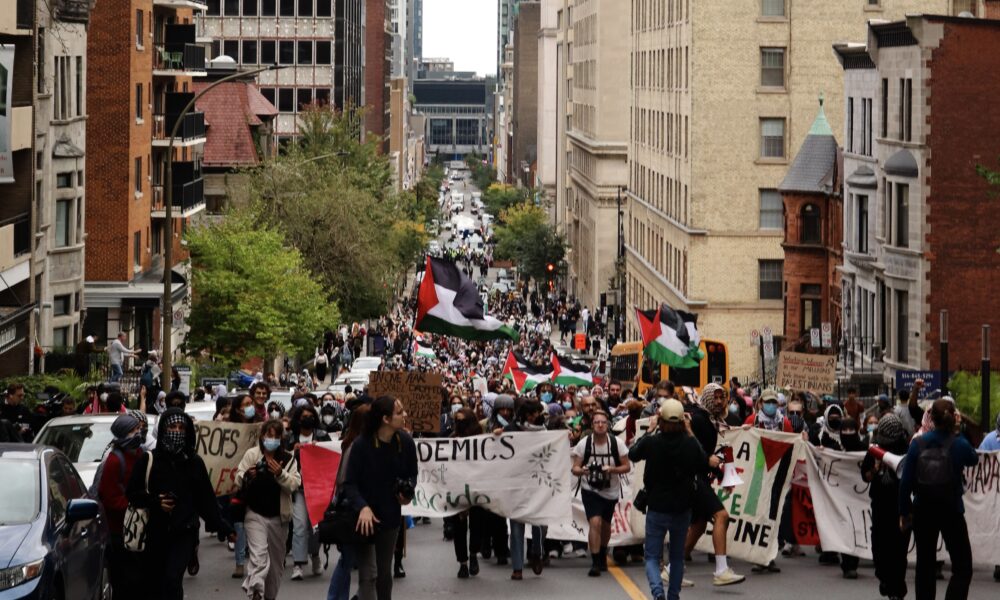
Several hundreds of protestors rallied in solidarity with Palestine through police-lined streets in downtown Montreal on Oct. 7. Protestors dispersed after police employed tear gas following individuals smashing the lower windows of the Sylvan Adams Sports Science Institute (SASSI) on Avenue des Pins. The following day, McGill announced a 10-day injunction barring Solidarity for Palestine’s Honour and Resistance (SPHR) at McGill and “any person aware of the judgment” from protesting on campus under specific circumstances. 

The rally—which both the McGill and Concordia chapters of SPHR organized—began at Concordia’s Henry F. Hall Building at 2 p.m. The protest’s date marked one year since the Hamas-led attack in southern Israel which killed 1,139 people. In the year since, Israeli forces have killed over 42,000 Palestinians, wounded over 98,000, displaced about 1.9 million, and sparked a humanitarian crisis of disease and hunger in the region. In recent weeks, Israel has furthered its military campaign in Lebanon, with Israeli airstrikes in Beirut killing about 1,000 people according to CNN.

Consistent protests in Montreal and worldwide have also marked this past year. At McGill, student protestors have demanded that the university cut ties with and divest from institutions and corporations complicit in Israel’s genocide of Palestinians. On Sept. 16, the Students’ Society of McGill University (SSMU) announced that it had revoked SPHR’s status as a SSMU club following a notice of default of the union’s Memorandum of Agreement with the university from Deputy Provost (Student Life and Learning) Angela Campbell.

“Despite the administration’s countless attempts to smear and repress the student movement on campus, the outpour of support that we witnessed on Monday marked a historic shift in the history of Palestine organizing on campus,” SPHR wrote in an email to The Tribune. “It revealed that McGill’s crackdown against the students has failed to suppress the movement, and has instead turned the public’s outrage towards McGill’s academic and financial complicity in genocide.”

In anticipation of protests, McGill restricted access to campus between Oct. 5 and 7—later adding Oct. 8—and worked with the Service de Police de la Ville de Montréal (SPVM) to deploy dozens of officers, security guards, and riot police. McGill’s campus was accessible only through two points of entry: The Milton Gates and the McTavish Gates.

In an email to The Tribune, McGill’s Media Relations Office (MRO) explained the reasoning for the closure.

“McGill aims to ensure an open campus to the fullest extent possible. However, we also have a vital obligation to safeguard our community and help ensure that classes, midterms and other key activities can continue,” the MRO wrote.   

As the protest moved from Concordia to McGill, attendees were led in chants of “Disclose, divest, we will not stop, we will not rest!” The group walked down Avenue du Docteur-Penfield and turned down Rue McTavish, arriving at the fenced-off entrance to the McLennan-Redpath Library Complex. Tens of protestors broke through the metal fence and rushed the Redpath Library terrace and Lower Field, where they were met by SPVM officers on bikes and riot police. 

The hundreds that did not go past the barricade stood face-to-face with a line of police officers blocking the entrance to the Library Complex on McTavish repeating the refrain of “Cops off campus!”

Zev Saltiel, a master’s student in the School of Social Work, explained to The Tribune that they are currently on leave in response to McGill’s complicity with Israel’s genocide of Palestinians. They said this is one of the ways in which they show their solidarity with Palestine.

“I’ve been at protests most weeks now for the past year, and also before that,” Saltiel said. “I feel, as a Jewish person, but also as a trans person, I have an obligation to show up and denounce the genocide being committed in my intersectional identities.”

Following the altercation on Lower Field, protestors made their way toward SASSI. SASSI was funded in large part by a $29 million CAD donation from Israeli-Canadian billionaire Sylvan Adams. Pro-Palestine groups on campus have long criticized SASSI for Adams’ self-proclaimed role as an “ambassador to Israel” as well as the institute’s academic ties to the Sylvan Adams Sports Institute at Tel Aviv University

A representative from SPHR Concordia addressed the crowd in front of SASSI, expressing that these protests will continue until the institutions meet protestors’ demands.

“We make it very clear again and again to the administrations that we are not going to back down until they divest,” the representative said. “There is only one solution, and it is [to] […] boycott, divest, and sanction.”

On the night of Sept. 14, protestors dropped paint and a banner off the side of SASSI, which is currently under construction. At the Oct. 7 rally, an SPHR at McGill organizer derided the institute, claiming it was an example of sportswashing—a phenomenon in which sports are used to distract from unethical conduct. The representative told the crowd to “take [their] rage out on the building.”

Protestors threw paint and spraypainted the building’s facade. Some individuals took wooden batons and smashed its lower windows. Just past 4:20 p.m., police intervened in the demonstration by deploying tear gas on protestors. The crowd began to flee the scene, chased by yet more police on bikes.

On Oct. 8, an email to the McGill community on behalf of Campbell, and Vice-President (Adminstration and Finance) Fabrice Labeau detailed an injunction against SPHR and “all those who become aware of the judgement.” The 10-day injunction, granted by the Superior Court of Québec, has four central effects. First, those aware of the judgement are not allowed to block access to exits and entrances of any buildings where “McGill activities are underway.” Second, protest activities are prohibited within five metres of McGill buildings. Third, the email banned actions which harass or threaten community members or visitors at McGill. Finally, the email wrote that people may not “engage in behaviour that disturbs the peace or engages in public disturbance.” The injunction decision also obliged  SPHR to publish the judgement to its social media accounts and authorized law enforcement officers to arrest and remove any person thought to violate the judgement.

The email went on to stress the need to balance community members’ right to freedom of speech and assembly with McGill’s mission to provide a quality education. Campbell and Labeau stated that SPHR’s commitment to disrupting “business or classes as usual” on campus “clearly violates the fundamental academic rights of students, instructors, and all McGillians.”

The MRO did not elaborate on these measures when asked by The Tribune

At the Oct. 7 protest, a McGill student who wished to remain unnamed explained the hope that they find through solidarity with others.

“I think it’s really easy to think that it’s hopeless,” they said. “But if you’re surrounded by people who also believe what you believe, then you really understand that this was a choice that was made—colonialism, settler colonialism, Zionism—it’s a choice we can unmake.”

Soccer, Sports

Game recap: Martlets soccer dominates Bishop’s Gaiters with a 4-0 victory on senior night

After a tough 1-0 loss last week against the Université du Québec à Montréal Citadins, Martlets soccer was determined to revive its winning streak against the Bishop’s Gaiters on Oct. 4. It was the last home game for graduating players

After initial difficulties staying composed, the team rebounded 11 minutes into the game when second-year striker Alexandra Hughes-Goyette scored an unstoppable first-point header. Following this goal, Hughes-Goyette continued to trouble Bishop’s defense. In the 28th minute, she scored what was arguably one of the best goals of the season: A powerful shot from the outside corner of the box that rocketed into the top corner of the net. The Martlets’ domination didn’t stop there; their defense allowed only four shots on goal, all of which were easily saved by goalie Sophie Guilmette.

Before the end of the first half, Renaud scored one more goal to add to her tally; she is currently the league’s top goalscorer. Returning after halftime, the Martlets continued to dominate, with a quick goal by third-year midfielder Elisabeth Pronovost in the 50th minute that ultimately secured the team’s 4-0 win.

Hughes-Goyette reflected on the team’s win and her two goals.

“I’m super excited about it,” she said. “Our team has worked hard this week to get back in the mindset to win, and I couldn’t have done it without them. I was very happy for the corner because we had really worked on that this week and it paid off.”

Head Coach Jose-Luis Valdes also shared his thoughts.

“Tonight, the mentality was super positive,” he said. “Obviously, the emotions were quite high as it was senior night, and in the first minutes, that affected us, but as soon as the emotions were out of the way, we had the players playing how we play—we controlled, we kept the ball, we moved it around. It’s fun to watch.”Next week, the Martlets will face a difficult opponent, the Université de Montréal Carabins, as they try to finish their season on a high note with only four regular-season games left.

Basketball, Sports

The Toronto Raptors dribble into McGill’s home courts for pre-season practice

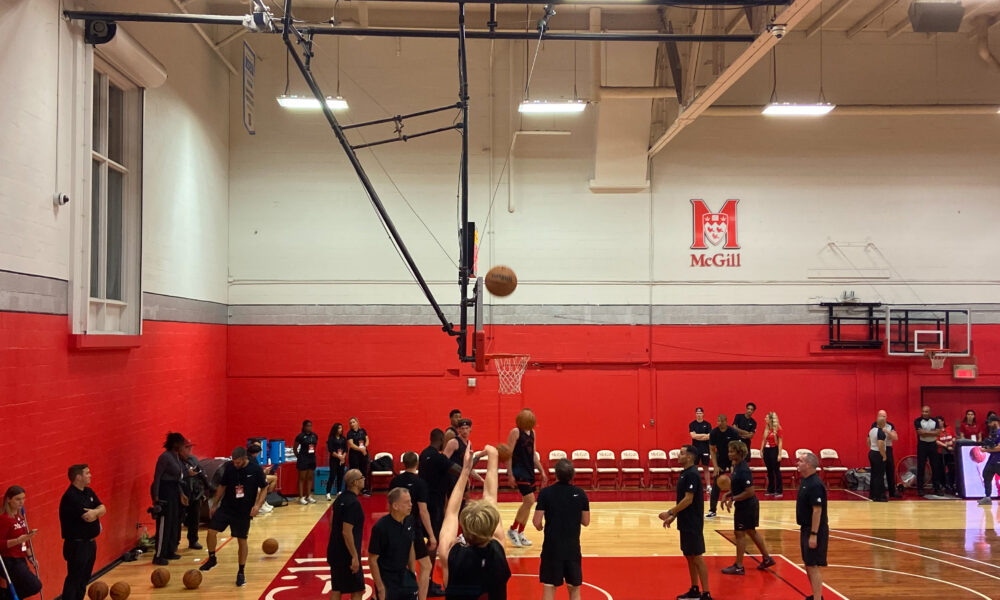
This past Friday, Oct. 4, the Toronto Raptors visited McGill’s Love Competition Hall for an open pre-season practice. Their visit marks the team’s first time holding a training camp in Montreal and their seventh pre-season game before the start of the regular National Basketball Association (NBA) season. Proceeds from the sales of the open practice tickets will be used to send underserved youth to McGill’s summer sports camp for free, making sports like basketball more accessible to these communities. The team’s trip to Montreal was packed with other community initiatives, including running a Community Impact Clinic at Kateri School and opening up a newly refurbished court at Parc Oscar-Peterson.

The NBA also used the team’s visit to Montreal to honour the Raptor’s 30th season in the league with “Maison NBA,” a three-day interactive experience including games, photo walls, meet-and-greets and more with past and present NBA and Women’s National Basketball Association legends. The exhibition included meeting players like Raptors star Vince Carter in Old Montreal.

During the practice,half of the players wore grey jerseys while the other half wore black jerseys, indicating early signs of the upcoming scrimmage. Expectant students and fans packed the hall, eager to watch the Raptors battle it out on the court.

Before the match, the players warmed up. They lined up doing plyometrics before moving to ball handling. After a few drills, players split into their respective teams and practiced some shots. The warmup sequences were rhythmic and synchronized—almost dance-like on both ends of the court. As players put up shots, they would occasionally bounce the ball hard against the floor or the backboard using the momentum to dunk the ball midair, drawing cheers from the crowd and leaving spectators on the edge of their seats.

The teams then began scrimmaging, with upbeat music playing in the background generating an electrifying atmosphere. A fast-paced play ended the first quarter with a 22-18 scoreline for the black-jersey team. RJ Barrett (#9) was particularly strong offensively, as he made his second-season debut with the team.

In between periods, North Side Crew dancers threw shirts into the crowd, prompting spectators to stand up and eagerly hold their hands out in anticipation.

The second period saw a comeback from the grey-shirt team, ending tied at 38-38 and featuring a strong performance from Jared Rhoden (#8). The quarter ended in a drama-filled sequence in which a stoppage left 0.6 seconds left to play. In the short amount of time remaining, the team wearing black managed to get a shot off but missed, temporarily injuring D.J. Carton (#3) on the grey team in the process.

During halftime, Raptors mascots kept the excitement high, pumping up the crowd in anticipation for the last bit of the scrimmage. 

The Raptors skipped the third quarter entirely, instead opting to immediately follow halftime with a five-minute fourth quarter in which they changed the scores up to 90-90—presumably to simulate the high-pressure last five minutes of a tied game. Following those five minutes, the scrimmage ended with a score of 102-98 in favour of the grey-jersey team.

The Raptors are building up a young team this year to try and come out strong for their 30th season. Throughout both the warmups and the game, the rookies tried to prove themselves. However, many of the returning players like Gradey Dick (#1), D.J. Carton (#3) and RJ Barrett (#9)—whose name has been floated for the most improved player for the 2024-2025 season—stood out in particular amongst the team. Looking ahead to this season, the Raptors’ returning players are still the ones to watch. 
The Raptors finished their week-long visit to Montreal with a pre-season match against the Washington Wizards on Oct. 6. Finishing their visit on a high, the Raptors beat the Wizards 125-98.

Commentary, Opinion

Addressing the Indigenous homelessness crisis—if not now, when?

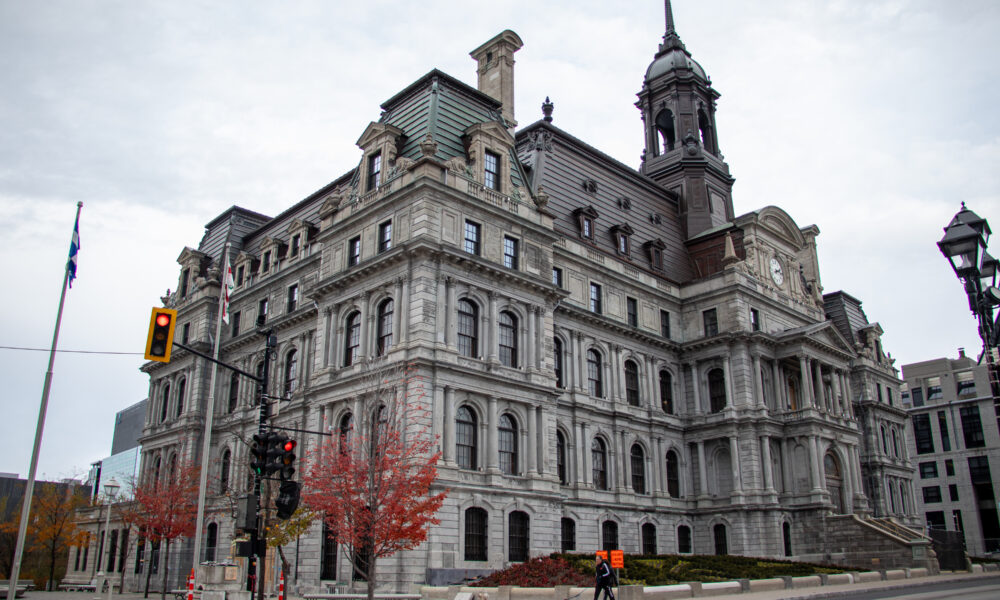
All too many Indigenous residents of Tiohtià:ke—the island known to many as Montreal—face truly dire circumstances. Only recently, however, through a conversation that I shared with a lovely Inuk man named Paulu, have I come to recognize both the profound gravity and pressing urgency of the situation. During our conversation, Paulu described in great detail the many injustices faced by members of his community daily, focusing especially on the city’s pitiful lack of public infrastructure to shelter its rapidly growing population of unhoused individuals. Above all, Paulu expressed his broiling frustration toward the utter impotence of Montreal’s municipal government in implementing concrete solutions to the injustices that he and his community have endured for years.  

The city of Montreal has recently hired Randy Legault-Rankin as its newest Commissioner of Indigenous Affairs. On paper, it appears that Legault-Rankin is the ideal candidate for the job. With years of experience working in Indigenous relations in both government and nonprofit environments as well as, more importantly, being a member of the Abitibiwinni Nation himself, Legault-Rankin seems to possess both the knowledge and connections to genuinely better the lives of Montreal’s almost 20,000 Indigenous residents. However, when asked by interviewers to divulge the precise ways in which he plans to curb specific issues facing Indigenous communities in Montreal—the most poignant being the city’s growing homelessness crisis—Legault-Rankin routinely responds with the same empty platitudes about ‘community partnerships’ and ‘centring Indigenous voices’ that have defined Canada’s pathetic attempts at reconciliation for years. 

Montreal’s neglect of Indigenous issues has entrenched a devastating crisis: Indigenous people in the city are 27 times more likely to experience homelessness than non-Indigenous residents. For Inuit specifically, the disparity soars to 80 times more likely. Furthermore, the minimal attention given to this crisis by policymakers has created a reality in which the city’s network of emergency shelters is utterly insufficient in supporting its swelling population of unhoused individuals—a reality that disproportionately affects Indigenous communities who make up a staggering 12 per cent of the visibly unhoused population of Montreal despite constituting merely 0.6 per cent of the city’s total population. Still, Montreal provides fewer than 2,000 beds in shelters each night, failing to meet the needs of the city’s 5,000+ individuals who require these crucial sheltering services. This discrepancy is especially disgusting considering that there remain upwards of 800 derelict and abandoned buildings across the island that could be converted into shelters if only for the commitment of the municipal government towards developing such projects. However, for years the city has prioritized private development of these sites or has simply left them to languish in decrepitude—a deeply irresponsible injustice that especially angers Paulu, and rightfully so. If the city truly cares for Indigenous residents and their wellbeing, addressing this situation with compassionate yet decisive action should be the first thing on every municipal politician’s to-do list. 

As members of a Montreal-based institution, the McGill community maintains a responsibility toward the Indigenous peoples of this land. Both within the classroom and in our daily lives, students must use their voices to pressure university administrations and local governments to pursue action-oriented reconciliation with Indigenous groups in our community. 

Luckily, Legault-Rankin is in the perfect position to bring about this crucial change in the city’s approach toward reconciliation. However, over a month into his role and still having yet to propose a single precise policy change, Legault-Rankin risks slipping into the same trap of inaction to which his many political predecessors have fallen victim. In evading this trap, Legault-Rankin must expand his strategy beyond the vague platitudes that have defined his tenure so far and pivot towards concrete policy improvements to provide crucial support for the Indigenous communities of this city. For the sake of Paulu and every other Indigenous resident of Montreal, I hope that he will succeed.

Campus Spotlight, Student Life

Lettuce leaves falling: Who was crowned fourth Head of Lettuce?

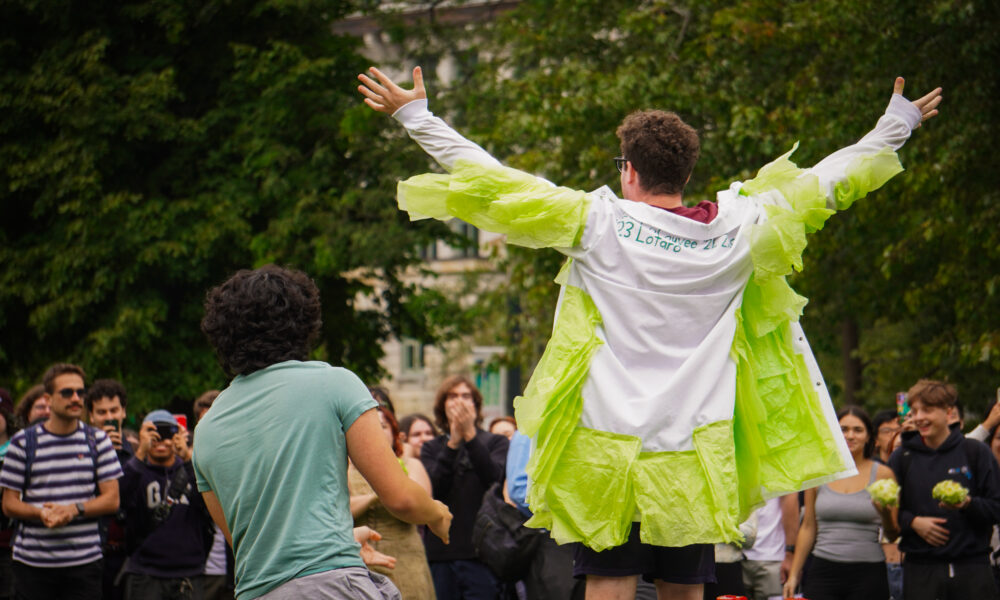
While the leaves turned orange and red in the city, the Lower Field was filled with green on Sept. 27. Students enthusiastically gathered for the fourth annual lettuce eating contest, and this year, competition was more fierce than ever. Although midterm season was right around the corner, a dedicated crowd turned out to compete and cheer on the participants.

The McGill Lettuce Club lays out clear-cut rules about how to participate in their event crowning the fastest lettuce eater—and they are very specific about their lettuce. Of course, the competition is BYOL (Bring Your Own Lettuce), but not just any type of lettuce is welcome. The head of iceberg lettuce should weigh around 600g. Cheating is not an option as a weigh-in period is scheduled starting 30 minutes before the countdown. Still, word spread about how some dipped a smaller lettuce in water to make it heavier. Participants are also allowed to bring dressings and utensils, depending on the technique they plan on using.

This contest has become an iconic part of McGill’s annual rhythm for some students. While some were regulars and knew the event well, the peculiar absurdity of the competition is what truly captured the attention of most spectators.

Bee Budrean, U2 Arts and Science, underlined the importance of having such an event to break the daily academic monotony in an interview with The Tribune.

“As university students, we are really able to find joy in the most absurd, innocuous things.” Budrean said, “One can be a Rhodes Scholar, and one can be the Head of Lettuce, and we are here to celebrate that.”

Participants had a variety of backgrounds in terms of their relationship with lettuce. Some had been training for the event, others randomly decided to join at the last minute. In fact, a highlight of the event was Anwyn Li’s, U1 Science, spectacular run towards the last lettuce available. The Tribune had a chance to ask her why she decided to race for the last spot.

“Vibes! I was thinking about ‘Oh what a shame, I wanted to do this next year!’, but why do it next year when I can do it now?” Li said, panting after her mad dash.

Malak Oualid, U1 Engineering, also jumped on the occasion without notice.  

 “I was with my friends and I said ‘If you do it, I’ll do it’, because why not?” Oulaid told The Tribune

As the contest finally started, participants rushed to their lettuce and began digging in. The leading lettuce eaters quickly stood out from the crowd. The competition was ferocious, but it was James Levitsky, U1 Science, who pulled ahead, and secured the title of Head of Lettuce, finishing in just two minutes and 58 seconds. 

Surprisingly, Levitsky did not prepare at all. “I didn’t know the strategies, I didn’t know what to do; I tried to eat the lettuce as fast as I could,” he said.

After his victory, the new champion stood proudly, having the honour of wearing the exclusive lettuce suit—a white lab coat with green fabric hanging like lettuce leaves—and signing it like his predecessors had done in previous years.

“I’m feeling ecstatic, I’m over the moon right now,” Levistky said. “[This new title is] going on the CV, it has to, [but] I’m not eating lettuce until like ever, I’m never having a salad again.”
While Levitsky lets the fame sink in, The Tribune cannot wait to meet him again for next year’s lettuce event (which he is expected to organize—the prestigious Head of Lettuce title doesn’t come without its responsibilities).

Student Life

Indigenous Ojibwe Anishinaabe art on campus fosters continuing conversations of reparations

McGill’s Indigenous Awareness Weeks kicked off with multiple Indigenous scholars and speakers offering students a chance to learn about the various intricacies of Indigenous culture, stories, and testimonies. On Sept. 24, a crowd gathered at the Redpath Library to listen to guest speakers Carmen Robertson and Robert Spade discuss Centering Ojibwe Anishinaabe Art

Carmen Robertson, Scots-Lakota Professor of Art History at Carleton University in Ottawa, presented in depth the life and works of Norval Morrisseau, the renowned Ojibwe artist also known as Osawa Bego Binesa (Copper Thunderbird). She focused on his use of colours, symbolic elements like water and manidoog (spiritual entities), and his connection to the land. Robertson also touched on the visual storytelling of the artist and his journey of artistic self-discovery. 

Robertson’s presentation resonated with many students, as it explored the powerful symbolism behind Morriseau’s art and its connection to Indigenous worldviews. Mylee Downey, U2 Education, shared her thoughts in an interview with The Tribune.

 “The visual and the talk of colour were so clear in how they related and it was powerful to see its intricate meaning of life and land,” Downey mentioned.

Afterwards, Robert Spade (Keeshigooninii), an artist-educator from the northern Ojibwe territory in Northern Ontario (Obuckimaakang), shared his personal experience. Currently a professor at McGill’s Schulich School of Music and a specialist in Indigenous music, he offered attendees a personal and thought-provoking testimony of his childhood and his passion for art. He demonstrated a persistent sense of self and his community through his paintings, describing his persistence with art despite systemic barriers. 

Yigit Akalin, U2 Education, shared that he is glad that Indigenous experiences and histories are finally being discussed, as they have often been sidelined or erased in mainstream education. 

“[They are] no longer swept under the rug and Indigenous perspective is possibly slowly being integrated into the university culture,” Akalin said.

During Indigenous Awareness Weeks, McGill seemed resolved to acknowledge its role in the alienation and continued oppression of Indigenous people in Canada and its campus. But is the university truly meeting its responsibilities? By opening spaces to the Indigenous community with discussions and other events on campus, McGill appears to be pursuing the recommendations of the Truth and Reconciliation Commission’s Calls to Action to address injustice and recognize the rights of Indigenous peoples. But is this effort truly so sincere?

In 2018, McGill’s men’s sports team changed their name from “Redmen” to “Redbirds” after nearly 80 per cent of students voted in favor of the change in a referendum held by SSMU. This decision reflects the integrity and solidarity of the McGill student body in supporting progress and systemic improvement within McGill culture.

While the McGill student body is advocating for meaningful changes, many feel that McGill’s Indigenous Awareness Weeks may not be sufficient on its own.

“It is nice to see that there are steps taken towards reconciliation, but I think there is always more to be done,” Downey said, regarding the event. 

Theresa Kannuthurai, U4 Education, also acknowledged that there is still significant room for improvement in how Indigenous issues are addressed at McGill, particularly in amplifying Indigenous voices. 

“Not everyone’s voices are heard enough. McGill should contribute more to promoting these events,” she said.

The powerful art showcased at the event made it inevitable to be affected by a multitude of profound and intertwined feelings regarding identity, community, and resistance. The continuing legacy of McGill and Canada’s oppression of Indigenous people complicates their attempt to showcase Indigenous art. No one is free until everyone is, and the celebration of culture is essential for this journey.

Rugby, Sports

Game recap: Martlets rugby lose 115-0 against the Ottawa Gee-Gees

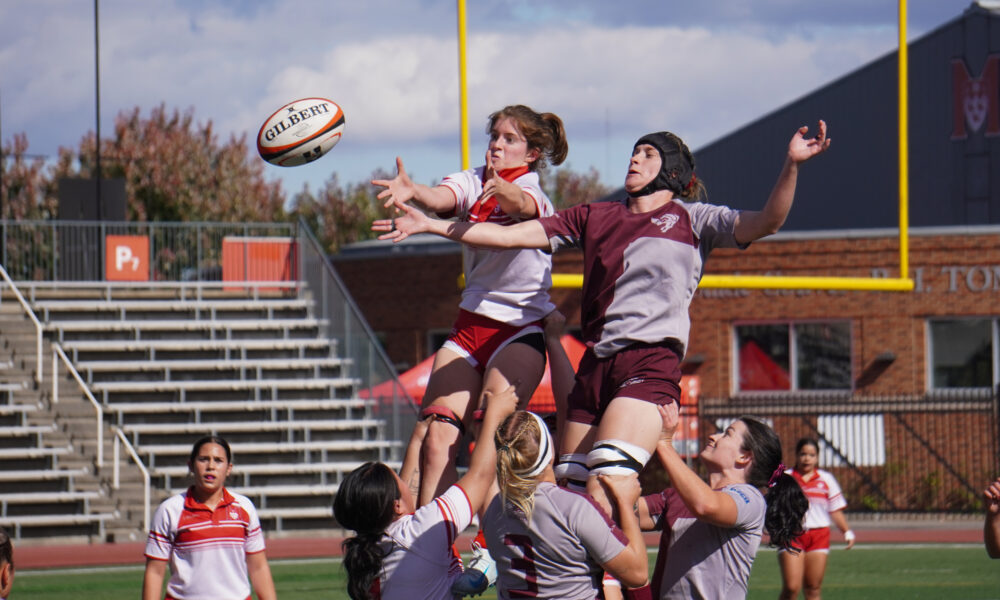
On Oct. 5, Martlets rugby took on a challenging game against the undefeated Ottawa Gee-Gees. McGill team captain and third-year flanker Olivia Ford led the team in a noble effort on home turf to try and overthrow the 6–0 Gee-Gees. In the end, however, the Martlets lost 115-0.

McGill’s Percival Molson Stadium provided the perfect atmosphere for the game, with the sun shining and fans decorating the stands. The Gee-Gee’s got an early lead, scoring four tries within the first 15 minutes. They carried this energy forward throughout the rest of the half and ended the first 40 minutes with 58 points ahead of the Martlets. 

Ottawa had several scorers, among which centre Aurora Bowie stood out, being both the team kicker and a key leader on the scoreboard. For the McGill Martlets, second-year fullback Emma Piers dazzled with her consistency and determination on the defensive side. Throughout the match, the Martlets struggled to transition to more offensive plays but put up an admirable fight defensively. 

In a highlight moment of the game, Ottawa’s prop, Deborah Oyetoran, battled through about five attempted tackles and slid the ball down the left corner of the field to make a try.

Despite the Gee-Gees’ seemingly endless amount of tries, the Martlets kept up their morale throughout the game, even through the final minutes when Ottawa’s centre, Ella Blyth, snuck in one last try as the final whistle was blown. Aurora Bowie then successfully made the final conversion, capping off an undefeated season for the Gee-Gees. 

This match concluded the regular season for the Martlets, leaving them with a record of 0–6. The graduating seniors were honoured in a flower ceremony at the end of the game, where players had their final send-off on the McGill field. 

Read the latest issue

Read the latest issue