


Latest News

Science & Technology

From mountains to oceans: Climate change and ecosystem dynamics

As the planet warms, natural dynamics are in constant flux, adjusting to the new environmental pressures imposed by climate change. From the depths of the oceans to the highest mountain peaks, the shift in species’ habitat ranges driven by changing temperatures and other climate factors is dramatically altering ecosystems across the globe. The movement of species impacts not just survival; it affects profound changes in biodiversity, ecosystems, and human livelihood. 

Jake Lawlor, a PhD candidate in biology at McGill, explores the effects of these changes in a recently published paper in Nature Reviews Earth and Environment. He highlights that a species’ range is the geographical area where it naturally exists, thrives, and reproduces. As climate change alters temperatures, precipitation patterns, and ecosystems, species shift their ranges to find suitable habitats. 

However, climate change does not affect all species in the same ways or to the same degree. 

“Some things that we think might affect species range shifts are what we call species traits; characteristics of the species and how they live and how they move that might allow them to keep up with temperature or not,” Lawlor said in an interview with The Tribune.

Many species shift at different speeds due to various factors like dispersal ability, competition for land, and resource availability. For instance, wind-dispersed plants can rapidly move to new areas, while marine invertebrates with limited mobility struggle to keep up with changing temperatures. Additionally, species interactions complicate these movements. Butterflies migrating up mountains may find their progress halted if their host plants cannot move upward quickly enough. 

“There’s some non-temperature factors, precipitation patterns, or humidity, or the number of hours of daylight as you go up latitude, that set limits on species,” Lawlor explained. “The hard thing about this is there’s a lot of variables that probably matter, and it’s kind of hard picking apart in specific cases, why a species isn’t shifting when we think it should.” 

The impacts of these range shifts are significant and multifaceted. On the one hand, they can help maintain biodiversity by allowing species to find new habitats. On the other hand, they have the potential to destabilize existing natural and human systems.

For example, species suited to warmer conditions will replace cold-adapted species, a phenomenon known as thermophilization. This disruption can upset ecological balances as seen with the expansion of the barren-forming urchin in Australia, which has devastated kelp forests, shifting mangrove species and altering coastal ecosystems. 

Lawlor also highlighted the effects range shifts have on human environments, altering human relationships with species. 

“Most of the relationships that humans have with species in general, whether it’s harvest species, medicinal species, resource species or economic species, […] were built under the assumption that species are going to stay where they are,” Lawlor explained. 

For example, fishers along the Atlantic coast of the US and Canada are facing the need to travel farther to catch the same species they once collected closer to shore. This shift requires adjustments in fishing practices, gear, and markets to account for the changing distribution of target species. 

Similarly, conservation strategies such as national parks and marine protected areas, originally designed to protect species within fixed boundaries, may become less effective as species move beyond these areas. Consequently, conservation plans need to be flexible to continue supporting biodiversity effectively.

Lawlor emphasized the importance of observing and adapting to these changes. 

“I think we should look around and observe the species that are with us here now,” Lawlor said. “For example, even the trees up and down the streets of Montréal have thermal tolerance ranges as well. So as the Earth keeps warming, all the species around us are going to change, and all the ways that we interact with our environments are going to change too.”


Science & Technology

Telemedicine: A path to modernize healthcare for seniors

The COVID-19 pandemic has transformed the economy, society, and healthcare system. While this crisis has presented the healthcare delivery system with unprecedented challenges, it has catalyzed the rapid adoption of telemedicine—remote clinical services. 

Telemedicine allows patients to chat with healthcare professionals about their physical and mental health or receive a diagnosis via video or phone consultations. Although it has the potential to improve healthcare access and quality, its use may present unique challenges for older adults. 

In a recently published paper, Dr. Vladimir Khanassov, assistant professor in McGill’s Department of Family Medicine and Director of the Care of the Elderly Training Program, and his team investigated potential advantages and barriers to telemedicine use in primary care for older adults. They also proposed recommendations to improve older adults’ experiences with telemedicine.

“Unlike younger generations, it is often difficult for older adults to use technology, so my objective was to identify the barriers for the elderly patients to access telemedicine for issues that would sometimes require hours of wait in the emergency room, but when they have access to telemedicine, their problems should be solved in five to ten minutes,” Khanassov said in an interview with The Tribune.

Khanassov’s team found that most older adults preferred phone calls over video sessions for ease of use. Nonetheless, telephone consultations have several disadvantages.

Telephone consultations are restricted to verbal communication, meaning the physicians cannot observe the patient’s body language, facial expressions, and environment. This lack of visual contact can cause essential details to be overlooked and potentially result in diagnostic errors. 

However, telemedicine has certain limitations regardless of whether it is conducted over the phone or video.

“For example, it is difficult to treat abdominal pain in telemedicine because you have to touch the belly,” Khanassov said.

The study also highlighted miscommunication-related concerns due to language or hearing barriers.

“Language barrier is a significant challenge to telephone consultations because healthcare professionals cannot explain everything over the phone,” Khanassov said. “Elderly patients often have hearing problems, which make telephone consultations difficult. When they cannot fully understand questions, they cannot see the body language of the healthcare professional or make any visual contact.”

Furthermore, telephone consultations may be inconvenient for older adults with limited literacy or cognitive impairment, as they may struggle to effectively express their medical condition over the phone. 

Older adults also often encounter technical challenges associated with video consultations, such as internet connection problems, difficulties in handling video devices, and video quality issues.

“When you do a video call, there is usually a privacy statement that patients need to accept. The elderly patients sometimes do not see the button that they have to click to accept, so they cannot access video consultations, and that would create an obstacle,” Khanassov said.

Despite these disadvantages, patients interviewed in the study expressed several advantages associated with telemedicine, including maintaining continuity of care, saving time, reducing exposure to potential high-risk environments, and improving the patient-physician relationship. 

Not only does telemedicine benefit older patients, but it also helps improve the work efficiency of healthcare professionals.

“For nurses, telemedicine helps them to complete tasks more quickly. For example, they can assess the blood pressure over the phone because patients will take the blood pressure, write it down, and report it to the nurses who will then assess the numbers. This process would be more time-consuming if the consultation was in-person,” Khanassov said.

Khanassov also emphasized the importance of supporting older adults in navigating telemedicine platforms and highlighted future directions for telemedicine research.

“This study allows us to see that elderly patients appreciate telemedicine and would like to have access to telemedicine, so we just need to adjust the technology for them,” Khanassov said. “Based on the study, we most likely need to do more randomized, controlled trials to look at the difference in clinical outcomes of certain conditions for telemedicine versus in-person visits, such as the number of emergency visits and admissions.”

Off the Board, Opinion

The revolution will not be memeified

Memes make the world go round. Well, not exactly, but they certainly helped me get through my summer internship. Between the stress of research projects and meetings, I found respite in scrolling through my Instagram Explore page and grinning at jokes that the pilgrims would have found incomprehensible (if not explicitly blasphemous). 

 During one of these breaks, I stumbled upon a post from @OfficialMcGillMemes that had gone viral. Without getting into the nitty-gritty, the meme used a format from the animated film Inside Out that likened developing class consciousness in response to seeing the McGill senior administration’s ballooning paycheques to the characters discovering a new emotion. I stopped to read the post. I chuckled. I heaved a frustrated sigh at the situation. Then I moved on, not thinking twice about the meme or its McGill-related subject matter.

It’s safe to say that much of the McGill student body is familiar with memes about the university—how else would we preserve crucial institutional memory if not through videos of Flood Girl, photos of the Lettuce Club, or screenshots of our esteemed administration’s online blunders? But this particular post seemed to have popped the McGill bubble and spread to far-reaching corners of the internet; rather than garnering the account’s average of 300 or so likes, or even their previous personal best of nearly 1,400, this post boasts over 15,000 likes as of this article’s publication.  

Using humour to cope with difficult situations is nothing new, particularly for Gen Z. As the first generation to grow up with phones at our fingertips, many of us are accustomed to getting some or even all of our news from social media platforms. When you consider that we are bearing witness to countless atrocities and abuses of power through our phones in real-time, every day, it seems like the only option is to resort to humour or risk losing all hope. 

Still, seeing how the niche account’s Pixar-inspired meme had gone semi-viral gave me pause. Why did this post in particular resonate with people? Not everyone who liked the post currently goes to or has ever attended McGill, but surely many have. If even a third of those people were students who organized a protest or circulated a petition against McGill’s decision to raise senior administrators’ salaries while neglecting AGSEM members’ right to a living wage, the potential for shifting the status quo would be enormous.

Social media has given us the freedom to engage by reposting an aesthetic infographic or commenting under a topical meme, then letting these movements go out of sight, out of mind when we put our phones down. The actions suggested above are undeniably more strenuous and emotionally-taxing pursuits than engaging in online activism, but they are well worth it. The remedy for despair is direct action and community-building, not memes.   

It should be stated that this is as much a critique of my own hypocrisy for engaging with more political memes than tangible activism as anyone else’s. If I had gone to half as many rallies as I had scrolled through satirical Onion articles about the ongoing siege on Gaza or chuckled at a post calling out McGill’s overreliance on the police, I probably wouldn’t be writing this. However, as I was reminded by a chant at a recent student rally, “We keep us safe.” The only way we effect change is by showing up for each other offline and fighting for it.  

Silly as it may sound, coming across this post was the reminder I needed that sitting on the sidelines never leads to progress. Attend a rally. Sign a petition. Stand up against injustice in the ways you know how. Memes can be an effective way to start a conversation, but they can’t be the end of the discussion. Sure, you can argue that it isn’t that serious. But unless our memes are accompanied by concrete action, the joke will still be on us, whether we’re in on it or not. 

Arts & Entertainment, Internet, Music, Pop Rhetoric

Invasive fans have GOT TO GO!

Should rising artists expect the harassment that comes with fame? Chappell Roan,  a 26-year-old rising pop artist from Missouri, thinks not. She’s not a human billboard, and as she has made abundantly clear in recent interviews and social media posts, she is not willing to tolerate obsessive fandom culture. The recent invasive events she has experienced have prompted her to remind fans that, like her drag name, her stage personality is a persona, not an identity. She has made clear in multiple interviews that she does this so that her fame doesn’t consume her since her musical persona can be so exhausting to portray. 

In an Instagram post from Aug. 23, Roan compares the unwanted physical touch and harassment she has received to blaming a woman in a short skirt for the harmful actions of a harasser and expecting her to deal with the consequences. Roan later explained on TikTok that while she is grateful for her success, she will not tolerate stalking or harassment. She says that harmful behaviour towards famous women in the past has normalized these attitudes—but it shouldn’t have.

Roan argued in her TikTok that if she were not a celebrity, shouting at her or stalking her and her family would be considered forms of harassment. Though some fans may feel they know her through her music or social media presence, they are still strangers to her, so why does it make a difference that she’s also famous? Stalking, both in-person and online, is never justified. 

The sudden public scrutiny and lack of privacy accompanying fame can be extremely harsh and unanticipated, especially for someone like Roan, who first gained fame as a teenager.

Roan isn’t dramatizing the threats to her safety. Obsessive fan behaviour can be incredibly harmful, and in extreme cases, even deadly. Famous singers, like Christina Grimmie, have been killed by obsessive “fans.” In July, American singer Halsey shared in a deleted Tumblr post that though her fans have been incredibly supportive, they are also the quickest to criticize her. These same people have been trying to morph Halsey and Roan into divas who only have time for themselves when both artists are simply trying to protect their safety. 

Of course, this type of misguided portrayal is always harshest on famous women, even more so against queer women because of the preexisting discrimination which tries to undermine the validity of their success. Following the criticism, Roan received much emotional support from other artists like Elton John, who advised her to stop if she was being pushed too hard.

Much of this obsessive behaviour is sparked by social media, which makes fan-celebrity relationships even more intimate and accessible than in previous years. Celebrities can share mundane or funny details of their lives just as a friend would, and they can interact with fans directly and immediately by replying to comments. Roan first achieved fame with the release of her single “Pink Pony Club” at the start of the COVID-19 pandemic when touring was restricted, so the only way for the singer to maintain a connection with fans was through a screen. These online interactions can make fans feel like the relationship is two-sided, especially if they interact or react to her posts frequently. In reality, it’s purely parasocial. 

As a result, some fans feel that it’s acceptable to share personal information online with the artist and expect empathy from someone they have never met. Perhaps the reason fans are so angry is because Roan is telling them she was never actually as close to them as they believed, but she has profited off of them. 

Roan has made it clear on multiple occasions that she loves her fans. Her recent comments have upset some people who believe she is obligated to give up her time and privacy for them. They need to be reminded that Chappell Roan might be their favourite artist’s favourite artist—maybe even an inspiration—but not a friend. 

Commentary, Opinion

To fly or not to fly: Soaring into Canada’s Uncompetitive Skies

With midterms approaching at a rapid pace, McGill’s reading break is an alluring opportunity for well-deserved rest, gruelling last-minute study sessions, or maybe even a quick trip back home. Given that 50 per cent of McGill’s incoming students come from out-of-province or abroad, the Montréal-Pierre Elliott Trudeau International Airport can expect an influx of McGill students in the coming weeks.  

As students look forward to a much-needed break, the reality of air travel costs remains a persistent challenge. For many, getting home has become an increasingly unattainable expense. Here in Canada, our air travel choices are scarce and often lead us toward Air Canada. With consistently high airfares, declining customer service, and questionable competition practices, we can’t help but want better for our skyways—and our wallets. 

In 2022, Air Canada accounted for 51 per cent of available domestic flights across Canada— a significant figure in any industry, particularly within the national airline market—and this dominance was not achieved naturally. The Greater Saskatoon Chamber of Commerce raised concerns that Air Canada and WestJet—Canada’s second-largest airline—were possibly colluding by dividing flight maps amongst themselves in order to quash further competition and raise prices. This year, the airlines collectively made up 82 per cent of domestic flights compared to 74 per cent in April 2023. Similarly, the Minister of Transport raised concerns over Air Canada’s proposed acquisition of Air Transat, one of its only competitors on over 83 flight routes, as it potentially represents an anti-competitive practice. This proposal was almost given a pass until the European Commission barred the transaction, citing the desire to maintain a competitive market as a primary reason. 

The current aviation landscape in Canada isn’t surprising given the circumstances under which Air Canada was created in 1937. The company was founded as a crown corporation, meaning it was operated as a private entity but owned by the federal government, which gave the airline a complete monopoly on domestic air travel until 1959. Given this history, the federal government has a responsibility to address the current monopolistic landscape and ensure that competition in the airline industry serves the public interest. 

The scarce presence of budget airlines in Canada, such as Spirit Airlines or Ryanair in the U.S., also means consumers don’t have a choice but to reach deep inside their pockets and pay inflated ticket costs. While ticket prices are steadily declining after a surge during the pandemic, prices remain 10 per cent above what they were in 2019. Post-pandemic, two of Canada’s few budget airlines—Lynx Airlines and Sunwing—both ceased operations with Lynx Airlines shutting down and Sunwing being absorbed by WestJet. Swoop, another low-cost Canadian airline, had a similar fate and was absorbed by WestJet a few days after Sunwing. 

With the time constraints associated with long-haul intercity bus services and our rail system’s continuous shortcomings, flying has become the only viable option for many travellers to reach their destinations. As of recently, Air Canada has plans to take over the Canadian rail network by joining forces with the French rail company SNCF to build a long-awaited high-speed electric train corridor between Windsor, Ontario and Québec City. Instead of seeking new business ventures as an attempt to expand its monopoly, Air Canada should focus on improving client experience. This is especially true after the airline ranked at the bottom in a recent survey on customer satisfaction, with Spirit and Frontier, two budget airlines, being the only carriers ranking lower for economy class. 
To break free from this monopolistic hold, the federal government must take swift and decisive action to encourage competition in the Canadian airline industry. Interventions like blocking anticompetitive mergers and promoting the growth of budget airlines could provide travellers, including McGill students, with more affordable and diverse travel opportunities. As McGill’s student body increasingly looks toward travel for respite or reconnection, it’s time for Canada to open its skies to better options.

McGill, News

Professor Johnathan Flowers discusses ableist algorithms in virtual lecture

Professor Johnathan Flowers of California State University, Northridge gave a virtual talk entitled “Ableist Algorithms and Digital Disability” as part of the “Disrupting Disruptions: Feminist Publishing, Communications and Technologies” speaker series on Sept. 11. Organized by professor Alex Ketchum of the McGill Institute for Gender, Sexuality, and Feminist Studies (IGSF), the series explores the intersection of feminist studies, technology, and history.

Flowers’ talk centred around the ableist connotations of discussions around AI. He began by discussing the recent controversy surrounding National Novel Writing Month (NaNoWriMo), a non-profit that connects writers with each other for support in crafting a novel. The organization was criticized by the public after it encouraged writers with physical or cognitive disabilities that impair their writing to use AI if they need it. Flowers argued that this upholds ableist structures through what is called a “technocapitalist disability rhetoric,” where disabilities are seen as problems to be solved through technology, which undermines the personhood of disabled people.

Despite the world becoming more AI-driven, Flowers continues to caution against the extensive use of this technology, arguing that it perpetuates oppressive practices. He argued that AI is a product of “technoableism,” the idea of technology as a means of eliminating disability, instead of addressing the systemic issues disabled individuals experience.

“The increasing integration of algorithmic technologies into our daily lives not only relies on structures of ableism in society, but imposes new ableist social and political structures through their everyday applications,” Flowers explained.

Flowers described AI as a ‘political technology’ in the same sense that Langdon Winner, a political theorist, describes all technologies. Winner’s work states that technologies are inherently political, as they can create or reinforce existing social orders. Drawing from Winner, Flowers emphasized that AI is mired in ableist and colonialist roots, and that referring to it as an ‘algorithmic platform’ is more appropriate since ‘AI’ conceals the power dynamics at play.

“The term ‘artificial intelligence’ implicitly enables the ableist, eugenicist, and racist purposes to which these technologies are routinely put—to be perceived as unmitigated goods and advancements in society,” Flowers explained. 

Additionally, Flowers stated that since the discourse surrounding AI is often centred on the technology itself, it often ignores the benefits it has for people. He used the example of Phonak, a hearing aid company, and explained that the company stated their latest hearing aids were the first of its kind to adopt AI technology.

“The [Phonak] advertisement positions the advances in technology as the primary focus of the description, rather than the material benefits it may bring to disabled persons,” Flowers said. “This reframing relies on a milder form of technoableism that positions algorithmic technologies as the future solution to ‘problems’ of disability.”

Computer algorithms perpetuating ableist structures is a familiar concept to Ketchum, whose research focuses on how marginalized groups respond to digital technologies. She noted that algorithmic ‘gatekeeping’ can affect academics who produce and disseminate feminist scholarship in digital spaces.

“[O]ne issue is that some major academic journal publishers announced that they are selling their database of articles to train AI—a labour issue, an environmental issue, and also (though legally contested) a copyright issue,” Ketchum wrote to The Tribune

Ketchum proposed that feminist publishing and communications can resist ableist algorithms by opting out and not using generative AI. 

Jeremy Frandon, a PhD student in Information Systems Engineering at Concordia University, noted that “AI objectivity” is shaped by the datasets it uses, potentially embedding systemic biases.

“Research groups try to gather data that represents the real world and that is free of sampling bias, but creating a quality dataset is such a challenge that some papers are published just to present a new dataset,” Frandon wrote to The Tribune.

For Flowers, it is crucial to pay attention to the motivations of those who created AI technologies, as well as the biases within the technologies themselves.

“We must attend to the political and social purposes that motivate the introduction of these technologies, rather than simply try to understand the technologies themselves.”

Commentary, Opinion

Good enough: CoComelon and our toxic quest for self-improvement 

I, like many others, feel a constant need to improve myself. When many kids hit puberty, they hear a voice in the back of their minds telling them they can be smarter, funnier, cooler, more cultured, and more attractive. This voice says there are endless possibilities regarding what they can achieve. One must only set their mind to it, and it can be theirs. For the past 10 years of my life, I and some of my friends have lived this way. We find something we don’t like about ourselves and work obsessively hard to change it, and then the cycle repeats itself. What’s more, this obsession has infiltrated our leisure time. We’ve been living as machines, by treating ourselves as some kind of software that we can endlessly update—but that is not a sustainable or enjoyable way of living. True growth and self-love arise when people embrace their limitations as human beings and accept that they are good enough as they are. 

Living in a cycle of self-improvement makes people unhappy because they always feel like they’re falling short. Many over-achievers and academically curious people on university campuses such as McGill have a drive to acquire enormous amounts of knowledge. However, these endeavours often stem from a place of insecurity of not being “intellectual” or not sounding “smart enough,” rather than a genuine pursuit of truth. Compulsively listening to audiobooks while cooking and podcasts while working out for the sake of being productive evoke a sheer sense of shame regarding the pursuit of guilt-free pleasure. People watch classic movies and read classic books because they find them beautiful, but also because they know they’re acquiring cultural capital while doing so. This mindset diminishes the simple pleasures of daily life and fosters a sense of constant inadequacy, making it difficult to truly relax and savour life, generating a deep-rooted feeling of dissatisfaction. 

However, this dissatisfaction evaporates once people come to accept their own limitations and allow themselves genuine pleasure without the constraints of self-optimization. On a recent podcast episode of The Ezra Klein Show, the host grapples with the idea of pleasurable entertainment and educational value. In the episode, Klein and author Jia Tolentino discuss the kids’ show CoComelon. CoComelon gets a lot of scrutiny from parents because the show essentially does not provide any educational value to its viewers—mostly kids ages 0 to 4. Tolentino suggests that while parents’ concerns might be well-intentioned, they externalize their obsession with self-improvement onto their children. Consequently, kids grow up believing they must optimize their free time, which leaves no room for simple pleasures such as CoComelon. Demanding this sort of productive leisure from children leads them to grow up thinking they will never be good enough, and therefore, must keep improving themselves even in their spare time.

McGill students can reap enormous benefits from adopting a healthier relationship with pleasurable leisure time. Full-time students have always been at a high risk of burnout, but those risks have skyrocketed ever since the COVID-19 pandemic. Juggling five classes, a part-time job, working out, and a social life is no easy task; so, adding a self-imposed pressure to remain productive during our spare time is a refusal to attend to our human needs. If you feel like binge-watching Bridgerton instead of reading Dante’s Inferno because you are too mentally tired, your body’s signaling to you that it needs that. It is not an act of laziness to occasionally succumb to pure pleasure and self-enjoyment. In fact, it is a political act by refusing to equate an individual’s self-worth with how productive they can be. 
Self-improvement is not a bad thing. There is value in growing and bettering oneself, and having this collective growth as students benefits our community. Nonetheless, this behaviour becomes destructive when it becomes so pervasive that it dominates every aspect of our lives. Let’s embrace a kind of fun that is unconstrained from 21st-century capitalist pressures, and accept that we are good enough as we are.

McGill, News

Suppart Collective hosts art showcase in support of the Mohawk Mothers

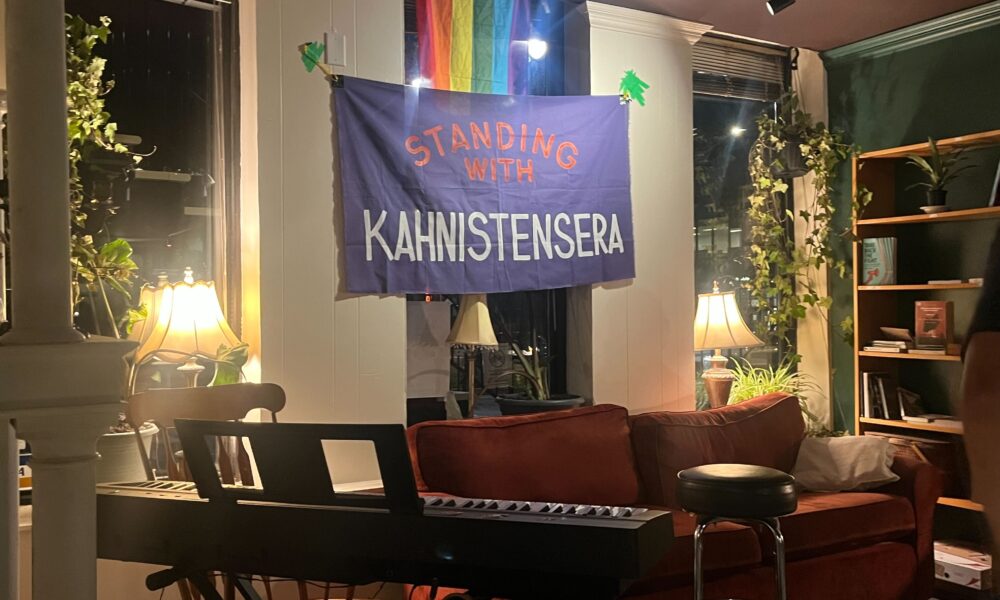
Singers, poets, visual artists, and members of the broader Montreal community gathered at Bar Milton Parc on Sept. 12 for a fundraising art showcase in support of the Kanien’kehá:ka Kahnistensera (Mohawk Mothers), who are currently involved in an ongoing lawsuit with McGill and investigation into possible unmarked graves on the site of McGill’s New Vic Project. The event was hosted by Suppart, a collective of eight organizers who host weekly showcases with local artists to fundraise for various causes.

Suppart is a non-hierarchical, consensus-based organization, whose mission is to champion young artists and promote social change. In addition to the Mohawk Mothers, the group is fundraising for the International Solidarity Movement, the Palestine Children’s Relief Fund, and Comm-Un. Suppart founder Maddy Hay told The Tribune that she sees community-building as the key to fostering social change. 

“The dream was to create a consistent safe space where young artists and friends could come together to support each other and the causes,” Hay said.

Suppart began fundraising for the Mohawk Mothers this summer. Since 2015, the Mohawk Mothers have been working to prevent construction at the former site of the Royal Victoria Hospital (RVH), where McGill seeks to build their New Vic Project. On the site, the CIA and Canadian government ran the MK-ULTRA mind control and chemical interrogation experiments from the 1950s to the 1960s, which allegedly disproportionately targeted Indigenous youth. The Mothers believe there may be unmarked graves at the site and have been advocating for a comprehensive investigation. 

In April 2023, the Mohawk Mothers reached a settlement agreement with McGill, the Société québécoise des infrastructures, the RVH, the City of Montreal, and the Attorney General of Canada, which mandated that a panel of archaeologists appointed by all parties support archival, testimonial investigations, and archeological work at the site. However, after the panel disbanded in August 2023, various hearings have ultimately left the panel dissolved. In the latest decision on Aug. 17, the Court of Appeal of Quebec ruled that the panel would not be re-established as the Superior Court of Quebec had ruled in November 2023. 

In a written statement to The Tribune, the McGill Media Relations Office (MRO) highlighted that, although the panel would not be re-established to direct excavation work on the site, the recommendations the panel made in their July 2023 final report remain in force. Moreover, the MRO noted that, as per the panel’s recommendation, an archaeologist will monitor excavation on McGill’s section of the site in the fall of 2025, when excavation work is scheduled to begin.

Karonhia’no:ron, who performed poetry at the event, is a McGill graduate student who joined Suppart through their work with the Mohawk Mothers. Karonhia’no:ron explained that the latest ruling represents a loss for the Mothers and spoke to the importance of fundraising for them in the wake of the decision.

“The funds are important […] because the Mothers are not represented by lawyers. So whenever there is a decision in favour of McGill or Quebec, it’s at the cost of the Mothers,” Karonhia’no:ron said. 

Karonhia’no:ron also noted that, in addition to raising money, the showcases they host aim to promote social change and awareness through community building. 

“It’s a great way to not just have more people know about the Mothers, but have more people that know each other and support each other,” Karonhia’no:ron said.

Poet Robin Warren—who goes by the stage name Rusty—performed at the event and echoed Karonhia’no:ron’s sentiment, stressing the sociopolitical power of art. 

“One of the things that interests me about Suppart is that they blend art and activism together,” Warren said. “Art has always been at the forefront of political action [.…] [When you] start listening to other people that write, you can feel their hurt, you can know what they’re hurting about, and you can better understand [their] issues.”

A previous version of this article stated that the CIA and Canadian government ran MK-ULTRA experiments on the site of the former Royal Victoria Hospital from the 1950s to the 1970s. In fact, the experiments ran between the 1950s and the 1960s. The Tribune regrets this error.

Art, Arts & Entertainment

The contradiction of The Art of Banksy Without Limits

Art from the renowned Banksy—whose real identity remains unclear—has made its way to Montreal. The Art of Banksy Without Limits, an internationally-touring exhibition being held at La Maison du Festival, advertises 170 works by the world-famous street artist. However, only 40 of the works have had their provenance verified by a Banksy expert. The Montreal Gazette compares this display to a Rolling Stones cover band, as many of these artworks pay tribute to the original but are not entirely the same. Still, the over 130 non-original works on display pay homage to the work of Bansky, encapsulating the style, spirit, and message of the original pieces. 

Art inspired by and relating to Bansky’s Dismaland and The Walled Off Hotel, a morbid parody of Disneyland and a hotel exhibition located right across from Palestine’s West Bank barrier, respectively, are among the artworks featured throughout the exhibit. These pieces have been arranged to create a vignette of what the real work might look like. While it may not be the original display, Bansky’s twisted humour—alongside his anti-war activism and disdain for capitalism—is still conveyed to the viewer. Other galleries in the exhibition display photos, videos, and even holograms explaining how Banksy started his career, highlighting his involvement in various global issues centred in his art.

Due to the static nature of Banksy’s street art, it can be rare to catch one of his pieces in person. However, this exhibition has travelled all around the globe from St. Petersburg, to Madrid, to Las Vegas, and many other cities, allowing the public to view works that had previously existed only on the buildings he used as his canvases. Furthermore, the exhibit displays paintings and recreations of Banksy’s work that either cannot be moved or no longer exist. Without these recreations, it would not be possible to experience Dismaland or The Walled Off Hotel without travelling to England or Palestine.

As a street artist, many of Banksy’s works are painted over and taken down, especially due to their controversial public reception. They may only last for a short time before they disappear—sometimes by design. In 2018, his famous Girl With Balloon painting was sold at an auction for $1.4 million USD. Upon sale, the work self-destructed, as the artist had installed a paper shredder into the frame as a protest against his art being used for profit.

The gallery may preserve Banksy’s work into a singular space, with the pieces protected by four walls and a steep entrance fee, but when spray painted on a building, Banksy’s art is left for any passerby to see.

While the exhibit has been successful in concentrating and entrenching the work and message of Bansky into one display, the $25 CAD entry fee seems to go entirely against the artist’s anti-capitalist beliefs. 

Nevertheless, producer Sorina Burlacu maintains that their aim is to spread the spirit of Banksy’s art and asserts that if Banksy disagreed with the exhibition, he would have interfered. Judging by the artist’s previous actions, Banksy has no fear of sharing his opinion. Most of his art makes statements as such, so if he were really opposed to this travelling exhibition, he would likely have let the public know.

Regardless of whether Banksy himself endorses the exhibition, the commercialization of his work does raise the question of whether The Art of Banksy Without Limits actually adheres to the ideals that Banksy is known for. While the concentration of his pieces in one place has allowed people to view the work that typically could only be seen on the other side of the world, the entrance fee commodifies his work in a way that Banksy has explicitly condemned.
The Art of Banksy Without Limits can be viewed at La Maison du Festival until Oct. 18.

McGill, News

QPIRG launches paid membership program for non-McGill students

The Quebec Public Interest Research Group at McGill (QPIRG) is rolling out a Community Membership program this fall. Although only McGill students were previously eligible for membership at QPIRG—a grassroots collective concerned with anti-oppressive social and environmental justice—this new program will allow those in the greater Montreal community the opportunity to connect more deeply with the organization.

QPIRG offers a variety of services such as Rad Frosh, event series such as Culture Shock and Spring Into Action, and access to an Alternative Library and a free textbook loan program. Any McGill student who has paid their student fees for the semester, including the $5 CAD opt-outable QPIRG fee, is automatically a member of QPIRG. Although membership was previously reserved for McGill students, QPIRG’s programming has always been open to the general public. 

The new Community Membership program has introduced two tiers of non-student enrollment: A basic annual membership option, which is equivalent to a student membership, and a “Friend of QPIRG” option. 

The basic membership, which operates on a pay-what-you-can model with a suggested fee of $10 CAD, entitles the holder to printer access for 500 political posters and 100 personal prints annually, a reserved copy of the planner and resource guide that QPIRG publishes every year, and a membership card. The “Friend of QPIRG” option, priced at $15 CAD, further entitles purchasers to a QPIRG tote bag, a personal thank you postcard, and “bonus surprises throughout the year.”

Nelly Wat, QPIRG’s full-time Outreach and Promotions Coordinator, explained that the organization began to consider implementing a non-student membership system as early as February 2024 to address their increasingly limited finances. Citing a rise in the cost of resources, Wat stated that QPIRG has had to cut the budgets of their Working Group, which are collectives that undertake research and action through organizing around a specific social justice issue. Current working groups include The Black Healing Centre, Solidarity for Palestine’s Honour and Resistance (formerly Solidarity for Palestinian Human Rights) at McGill, and The Trans Patient Union. QPIRG has also had to indefinitely suspend discretionary funding opportunities for small-scale projects to keep their external services available. 

“As long as we’re able to address this budget crisis we’re in, [our] events will remain free,” Wat said.

Nhuan Dong, a non-student member of QPIRG who also sits on the organization’s board, told The Tribune that the new membership program also seeks to increase QPIRG’s connection with the community. 

“We have been having financial issues with operational costs […] and also were trying to find a way to re-engage with non-student community members in a more meaningful way so that people feel they are really a part of [QPIRG] instead of loosely connected.”

As a McGill alumnus (BA ‘24) who was employed by the QPIRG Alternative Library during his time as a student, Dong expressed how meaningful QPIRG continues to be in allowing him to maintain connections and seek personal development opportunities. Dong noted that the organization was especially important in supporting him in transitioning from the university to the workforce.

Wat echoed this sentiment, explaining that the membership model will only provide a small supplement to revenue and is more about heightening McGill students’ awareness of what the QPIRG entries on their Minerva statements contribute to.

 “Community members access our services for free. They don’t pay a fee levy to QPIRG, but students do. So [this] would level the playing field […] and help students realize they get a lot for their dollar.”

In an email to The Tribune, Carl Bystram, another representative from QPIRG, added that the fee increase would draw students’ attention to the financial contributions they provide to the organization through student fees while promoting their services.

“We hope that the membership campaign will encourage them to learn about our events, campaigns, programs and services, and to hopefully directly benefit from the organization that they have helped to build,” Bystram wrote.

Read the latest issue

Read the latest issue