


Latest News

Science & Technology

Cherry-picking in biostatistics research reveals a deeper-rooted problem

On Jan. 10, 2024, the Epidemiology Monday Seminar Series kicked off the new year with a presentation by Anne-Laure Boulesteix, professor of biometry at the Ludwig Maximilian University of Munich. Her research focuses on metascience and evaluating research methods in the fields of bioinformatics, machine learning, and medicine. 

The seminar began with an introduction of Boulesteix’s paper called “An over-optimism in bioinformatics.” The paper criticizes the lack of systematic critical study that implicitly allows researchers to optimize their data sets to produce positive data using their research methods. It eventually leads to the over-optimism of published papers in statistical bioinformatics research and, more broadly, the lack of reproducibility in the field. 

“Reproducibility [in this context] means that the same steps of analysis performed on the same dataset consistently produce the same data,” Boulesteix explained in her presentation. 

This is a pressing issue across all scientific fields, but Boulesteix focused on reproducibility in bioinformatics, a discipline that applies computational tools and methods to interpret biological data. Without reproducibility, the findings’ validity and reliability remain questionable, and no further study can be built upon them. 

The majority of published articles presenting new methods claim that they perform better than the existing ones, but this is not always accurate. To illustrate a common logical error, Boulesteix presented the timeline of three hypothetical research papers: A, B, and C. B is published after A, proving that its method performs better. A has the most recent research, and C introduces a new method and proves a higher efficiency to both A and B. However, a question arises here. Does paper C confirm B’s superior performance to A? According to Boulesteix, it does not, since C assumes a neutral perspective as to the relationship between A and B. This is an example of a tempting logical fallacy in drawing conclusions from a comparison study. 

Boulesteix then introduced some possible reasons for the lack of reproducibility, data manipulation or misconduct, publication bias, and selective reporting. 

Publication bias refers to the likelihood of a study being published based on its research outcomes. New methods that perform worse are regarded as failures, so studies using them are less likely to get published. Since researchers have an interest in getting their work published, this has the potential to lead to practices such as cherry-picking.

“It certainly is tempting for researchers to cherry-pick only the cases where the new method works better, but it is a major issue in methodological research.” Boulestiex said. “[In fact,] almost all methods can be made best-performing [by selective reporting.]” 

“[As a solution,] the cross-design validation of methods can be used, where researchers verify the performance of the methods of two papers that use different methods to study the same research question,” Boulesteix suggested. Forming neutral author teams made up of scientists from different backgrounds and fields would help ensure accurate and reliable judgments for comparative studies. 

Boulesteix proposed a long-term, holistic solution: Better acceptance and cooperation for neutral comparison studies by journals, doctoral agencies, committees, and doctoral schools. This goal may take a lot of effort and cooperation, but it is vital that powerful institutions such as these put more research efforts into methodological ethics. Shifting both mindsets and resources would benefit everyone, as it would allow researchers to do science in a just environment of scholarship, ensuring the output of accurate research. 

Out of all the solutions proposed, some seem more challenging and idealized than others because they require a prolonged, collaborative effort across institutions, and because the resources will never be abundant enough to support every idea. Nevertheless, such attempts will ultimately contribute to promoting a more reliable and trustworthy research environment. 

Student Life

Some like it hot: Chocolate

We’ve reached winter. It’s cold—we’re all familiar with the wind seeping through our fall-appropriate cargo pants and bunching our fists in the palm of our gloves. We need hot chocolate. If you’re wondering where to find the best cup in the city, I’ve got you. Look no further for an exceptionally informative and professional list of the best drink of the season. 

If you like it cheap: Tim Hortons

Location: 666 rue Sherbrooke O

Rating: 3/10 stars

Tim Hortons is almost always a last resort. Naturally, I go there often. On a student’s budget, there’s nothing quite like counting out a toonie and two quarters to exchange for hot chocolate from a machine. Watery, weak, but not hot enough to burn your tongue. They also have a seasonal “marble swirl” option (it tastes the same for 50 cents more). If I’m honest, the hot chocolate will always muscle its way out of the cup and onto my toasty mittens, but I’m not sure if that’s the fault of my shivering or whoever engineers the Tims lids.

If you want to feel fancy: Marius et Fanny

Location: 2006 rue St-Hubert

Rating: 9/10 stars

The only reason I know about this pâtisserie is because I used to live on rue St-Hubert. It’s a tiny shop with fondant chocolates and fresh bread. And when you order a hot chocolate, they ask, “What kind would you like?” There are five types of hot chocolate to choose from, and I’ve never had a bad drink. The options range in chocolate percentage—each sourced from different parts of South America and Africa. When I go here, I feel like I’ve stepped out of my academic nightmares into a peaceful little slice of France. It’s good stuff. 

If you want options: L’Affaire est Chocolat! 

Location: 2350 rue Beaubien E

Rating: 7/10 stars

I’ll admit: This one is a little bit of a hike, but it’s worth it. I felt like I was entering Willy Wonka’s Chocolate Factory because there’s a whole hot chocolate bar. I counted 18 (!) options for chocolate, three options for creaminess, and options for “added character.” I was a little hesitant about adding fleur de sel, but this shop might have won me over. Whether you’re a fan of bitter, rich, or spiced chocolate, I’m sure these chocolate gods will concoct the right cure for winter blues. I will be going back—despite the seven dollar hit my wallet took.

If you want it now: Gerts 

If you don’t know where this is, are you even a McGill student? Students’ Society of McGill University (SSMU) basement, 3480 rue McTavish

Rating: 5/10 stars

I’m almost shocked by the amount of people who don’t know Gerts is a café during school hours. It’s convenient. The staff are nice. There are student discounts. The hot chocolate isn’t terrible. I’d almost label it “alright.” Between classes, this is a nice little treat to warm up your cold engineer soul. For everyone else, the hot chocolate is a slightly watery way to keep you on a sugar high during your next class or help you brave an icy walk home.  

If you like absolute garbage: Second Cup

Locations: 2200 McGill College Ave, inside the McGill Metro, etc.

Rating: 1/10 stars

This is the kind of place where I don’t even order a drink. I watched my friend order a hot chocolate—a white hot chocolate too, even worse. She didn’t finish the cup, and when I said she could offer the rest to a friend when we got to class, she said that would be cruel. It’s a load of sugar masquerading as hot chocolate. It’s bad, and if I didn’t know better, I’d think the hot chocolate here was a joke.

Arts & Entertainment, Pop Rhetoric

Does Princess Diana’s depiction in ‘The Crown’ contradict her public legacy?

Following the conclusion of Netflix’s The Crown with its sixth and final season in late 2023, I found myself drawn to the series’s portrayal of Lady Diana Spencer’s life and death. Born into British nobility and thrust into the spotlight following her 1981 marriage to now King Charles III, then Prince of Wales, Diana won the public’s attention and admiration through her beauty, charisma, and charm. Twenty-five years after her tragic passing, Diana and her life still continue to garner attention from the public and media alike. 

The Crown first introduced Diana (Emma Corrin) in season four. By the end of the season, the turmoils of Royal life had changed the once innocent and naïve Diana. While showcasing the inner lives of the Royals, The Crown also emphasizes the importance of their relationship with the press and their constant concern for public opinion. The public’s perception of the royal family was a carefully constructed display crucial for maintaining their image. 

Even in Andrew Morton’s biography of Diana, Diana: Her True Story, which sources most of its information directly from Diana, mediation is still involved. For example, Princess Di selectively omits aspects that might cast her in an unfavourable light, such as infidelity. So even when we are reading her biography, the truth is constructed. 

Diana’s life became an overwhelming source of entertainment for the tabloids. Although seen as part of her royal responsibilities, the paparazzi dominated Diana’s relationship with the press, destroying any possibility of a positive dynamic with the media. Despite the illusion of a fairytale life in the palace, her privileges could not protect her from struggles with depression and a failing marriage. Her position in society created unique problems for her, particularly when the press invaded her privacy.

The first four episodes of season six bring a closer look into the lives of Mohamed Al-Fayed (Salim Daw) and his son Dodi (Khalid Abdalla) as the timeline quickly approaches the point of the car crash that killed both Dodi and Diana. The portrayal of the collision emphasizes Mohamed pushing his son into a relationship with Diana (now played by Elizabeth Debicki), in hopes that it would bring him closer to the Royals and help him obtain British citizenship, as the factor that ultimately led to the tabloid car chase. But this places undue and unjust blame on Mohamed when the crash is the fault of the driver’s drinking and speeding—all due to the intense pressure of trying to escape the press. 

Despite my discomfort with the car crash’s framing, the story does honour the lives of Dodi and Mohamed. In one scene, an imaginary Dodi tells his grieving father that despite the Western world ignoring his death and only focusing on Diana, the Arab world is mourning him. Mohamed “shouldn’t look up to the West” because they will only disappoint him. Mohamed and Dodi’s story stresses how meaningless it is to put faith and trust in these institutions that do not care about the rest of the world.

The Crown’s portrayal of Diana, although sympathetic to both Diana and Charles’ perspectives, highlights the stark contrast between their public image and actual lives. While attempting to incorporate multiple perspectives, the show’s selection implies inherent value to those shown and a lack of value to those omitted, shaping the audience’s interpretation. Nonetheless, as a show about the monarchy, The Crown centres how situations affect the royal family above all else. It can still, however, allow critiques of the monarchy to be discussed beyond the show’s confines. Even today, despite numerous articles favouring the Royals, the turmoil during Diana’s lifetime has resurfaced with the conflict between Prince Harry and Meghan Markle and the royal family. 

Diana’s story inherently exposes the royal family. While criticisms about the royals’ behaviour were initially directed toward Charles as a young Prince, his current role as king represents the entire monarchy, heightening the criticism’s gravity and legitimacy. Thus, the legacy of the People’s Princess can bring about a new wave of critique onto the Royals.

Science & Technology, Student Research

Heavy metal exposure: A hidden cause of heart disease

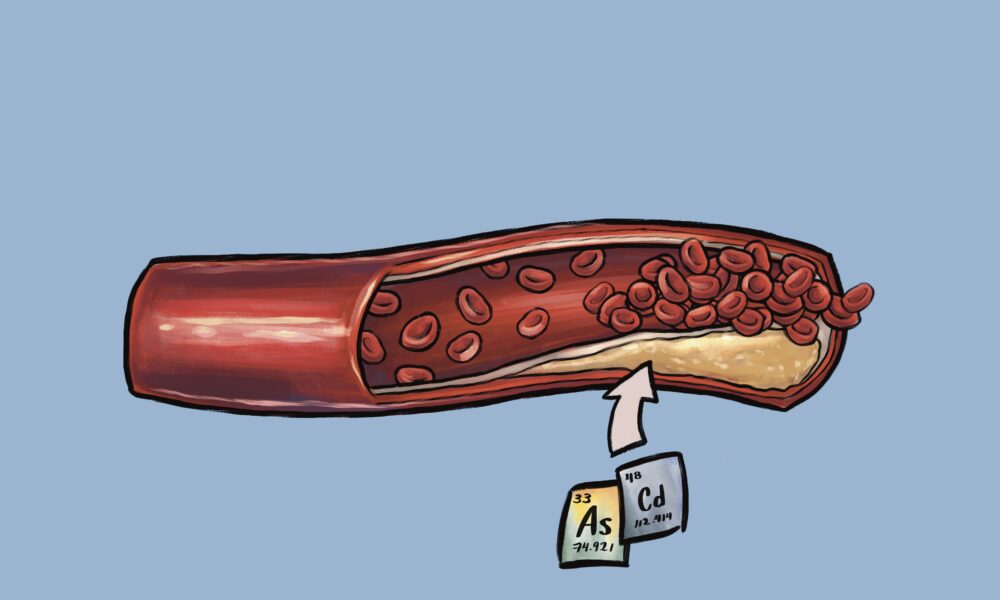
Around the world, millions of people come in contact directly or indirectly with heavy metals, particularly cadmium and arsenic, thereby increasing their risk of heart disease. 

Past studies have investigated the respective effects of these two metals on heart health at concentrations well beyond the levels that people are typically exposed to. However, these studies have not characterized their potential consequences when combined at low doses, which more closely mimics the complex real-world environment. 

In a recently published paper, Nivetha Subramaniam, PhD candidate in the Faculty of Medicine and Health Sciences, and her team filled this research gap by investigating the effects of low-dose arsenic and cadmium on the development of a condition called atherosclerosis.

Atherosclerosis, the primary cause of heart disease, is characterized by the hardening of arteries due to the gradual buildup of plaque consisting of fats, cholesterol, and other substances inside the walls of arteries. For Subramaniam, arsenic represented the ideal candidate to further study atherosclerosis since the lab has historically worked with this element.

“We’ve already looked at the effect of moderate doses of arsenic, so in this study, we’d like to look at environmentally relevant concentrations,” Subramaniam said in an interview with The Tribune. “Apart from arsenic, we chose cadmium because cadmium has also been found to have pro-atherosclerotic effects.”

With atherosclerosis, plaque buildup causes the arteries to narrow, reducing blood flow to vital organs, such as the brain, kidneys, and heart. The constriction of coronary arteries, which supply blood to the heart, could lead to coronary artery disease, heart attack, or even heart failure. In addition to heavy metal exposure, risk factors for atherosclerosis include elevated blood pressure, abnormal cholesterol levels, smoking, obesity, physical inactivity, diabetes, and a high-fat diet.

Drinking water is one of the most common sources of heavy metal exposure. Other common sources include food, medicine, smoking, and certain occupations like mining and construction work.

The World Health Organization (WHO) recommends a safe threshold concentration of 10 parts per billion (ppb) for arsenic in drinking water and 3 ppb for cadmium. However, higher levels of heavy metals have been reported in numerous countries, including India and the United States.

In Subramaniam’s study, ApoE−/− mice—mice that share a relatively similar genetic profile with humans—were used to study the effect of heavy metal exposure on atherosclerosis development. This type of genetically modified mouse is currently the most widely used type in preclinical atherosclerosis studies. 

“Mice have more good cholesterol than bad cholesterol, whereas humans have more bad cholesterol than good cholesterol. [That is to say that] if you were to provide mice with a high-fat diet every day, then they would still not develop atherosclerosis,” Subramaniam said. “So, we need to genetically manipulate the mice to obtain a genetic profile that is more similar to [that of] humans.”

The findings of the study suggest that arsenic, cadmium, and the combinations of both metals do not drastically promote atherosclerosis at low doses in males. On the contrary, low-dose arsenic significantly accelerates atherosclerosis in females.

Another notable finding is that low-dose mixtures of these two metals do not considerably promote atherosclerosis more than either metal individually. 

While this is encouraging news, there is a caveat to this study: Mice metabolize arsenic considerably faster than humans, so it is likely that exposure to low-dose mixtures of arsenic and cadmium may produce more drastic effects on humans than on mice. One of Subramaniam’s goals for future research is to resolve this limitation. 

“We will work with human cells to generate humanized mice where we insert the genes that metabolize arsenic in humans into mice, so this would allow us to better [generalize the study results] to humans,” Subramaniam said.

Subramaniam’s study is the first to explore the effects of exposure to low-dose metal mixtures on the progression of atherosclerosis. While this is innovative in itself, the paper also reinforces the need for more advanced technologies to produce genetically modified mice as well as complementary human studies.

Hockey, Sports

New year, new league: Discussing the PWHL inaugural weekend

The announcement of the Professional Women’s Hockey League (PWHL) back in September generated a great deal of uncertainty among hockey fans. How would the league operate? What cities would get teams? Would the league generate good viewership numbers? What would the on-ice product look like? Despite a number of blips in the league’s preparation, the inaugural PWHL game was played on Jan. 1, 2024, and silenced fans’ anxieties.  

With a sold-out crowd on New Year’s day, PWHL Toronto hosted PWHL New York at the Mattamy Arena—the current home of the Toronto Metropolitan University Bold and former Maple Leaf Gardens.  First game, first goals, and first regular-game win were all milestones achieved, as New York prevailed with a 4-0 victory against Toronto. Defender Ella Shelton, who was later on named alternate captain for New York, scored the first-ever PWHL goal. In a stellar performance, New York goaltender Corinne Schroeder earned the PWHL’s first-ever shutout with 29 saves, enshrining New York in the league’s history. 

On Jan. 2, PWHL Montreal took the ice against Ottawa at TD Place in front of 8,318 fans, setting the record for most fans at a professional women’s hockey game. Claire Dalton and Laura Stacey scored the opening two goals for the Quebec franchise with McGill alumni Ann-Sophie Bettez netting the overtime winner for a 3-2 Montreal victory. 

However, playing at the Xcel Energy Centre—home to the National Hockey League’s Minnesota Wild—the PHWL Minnesota shattered Ottawa’s attendance record, drawing 13,361 fans for their inaugural game. Minnesota’s Grace Zumwinkle scored all three goals of the game, earning the league’s first hat trick, and carried her team to a 3-2 win over PWHL Boston for the first home-ice win of the season.  

For some, the most exciting part of the league are the innovative tweaks to the traditional hockey rulebook. Introducing a 3-2-1 point system, regulation wins earn a team three points, overtime or shootout wins earn two points, and an overtime or shootout loss earn one point. (For most hockey leagues, including the National Hockey League (NHL), the points system remains two points for any win and one point for an overtime or shootout loss). Additionally, rather than having minor penalties end only if time expires or when the team on the power-play scores, a shorthanded goal from the penalty-killing team will also end the penalty. The PWHL also decided to part ways with traditional rules concerning shootouts as players are able to shoot multiple times (typically each player is only eligible to shoot once). Those changes from traditional rules showcase the innovative nature of the game, setting its own norms and stakes.

With games being broadcasted by CBC, TSN, Sportsnet in Canada, Bally Sports, MSG Network and NESN in the United States, and each game being live streamed from the PWHL’s Youtube live channel, the viewership for women’s hockey reached new heights. With the inaugural New Year’s Day game garnering more than 2.9 million viewers across Canada, the PWHL had one of the most viewed hockey games in North America, surpassing recent editions of the NHL Winter Classic and many regular season games. The choice to stream the games in high definition and quality on Youtube, a widely accessible, free-to-access source allowed for the games to be seen beyond Canada and the USA. Fans are also able to watch the recorded games for free later on. These heights are even more significant when considering the limited viewership that the Premier Hockey Federation had achieved the year prior. 

This record-setting audience is proof of the excitement and interest in women’s professional hockey, effectively silencing unfairly critical pessimists. After years of turmoil and advocacy for a united women’s professional hockey league, the PWHL’s opening weekend success finally provides a place for young women aspiring to one day be a professional hockey player, in a league that seemingly has the legs to go the distance.

Emerging Trends, Student Life

You’ll never walk again, again?

The day we have all dreaded finally arrived this week: The slippery layer of snow that will cover the ground until April is here. While I will miss seeing grass for the next three months, the innumerable podcasts in my library are sure to make walks to campus more bearable. Following last year’s guide, here are my updated podcast recommendations for your walk to campus that will make sure you get to your class more informed, or at least more entertained.

Binchtopia

As a subscriber to its Patreon, I am biased in recommending this show and cannot say that I am upholding the highest standard of journalistic integrity, but my God is this one of the best podcasts I’ve ever stumbled upon! Hosts Eliza McLamb and Julia Hava describe their show as what would happen “if Plato and Aristotle had internet addictions and knew what ‘gaslighting’ was.” McLamb and Hava’s strength lies in unpacking current cultural topics through an academic lens while staying both highly informative and entertaining. 

Some episode recommendations to get you started include “Napoleon’s Complex Situationship, which unpacks the history of the love letter going from James Joyce’s fart fetish letter to his wife to the modern-day sext. Another personal favourite is “Honey I Monetized the Kids Again” which explores the phenomenon of mommy bloggers and child labour, going from Victorian-era chimney sweeps to the children of Ruby Franke.

Michael Hobbes Cinematic Universe Podcasts

The three podcasts in this sub-category all have the same common denominator: They are hosted by Huffington Post reporter Michael (Mike) Hobbes. Each podcast has a different co-host and a specific topic. They all help debunk commonly held beliefs. 

You’re Wrong About

The podcast is hosted by Mike Hobbes and his co-host Sarah Marshall, a writer for various publications such as The Believer and The New Republic. They focus on looking back at events that, as you might have guessed, you are wrong about. Some of my favourite episodes include “The Stonewall Uprising,” “The Stanford Prison Experiment,” “Gangs,” and the “Y2K Bug. 

Maintenance Phase

Focusing more on wellness culture and the many scams that occupy the space, Maintenance Phase is co-hosted by Aubrey Gordon a—writer and author of the book You Just Need to Lose Weight and 19 Other Myths about Fat People. Together, Hobbes and Gordon go through topics ranging from pilates to poop transplants, debunking commonly held assumptions. The most interesting episodes so far have been the ones on “Snake Oil,” “The Body Mass Index,” and “The Keto Diet.

If Books Could Kill

The latest addition to the Mike Hobbes Cinematic Universe, my personal Marvel Cinematic Universe (MCU), is a podcast which takes aim at so-called airport books that “captured our hearts and ruined our minds.” Co-hosted by lawyer Peter Shamshiri, they take a second look at (and usually absolutely obliterate) books that have had a profound impact on our culture. Some of my favourite episodes to get you started include “The Nudge,” “Atomic Habits,” and “The Subtle Art of Not Giving a F*ck. 

Spellcaster: The Fall of Sam Bankman-Fried

Similar in style to The Dropout, which I recommended last time around, this limited series tells the story of the rise and fall of FTX crypto-entrepreneur and famed Bahamas resident, Sam Bankman-Fried. The main series has six episodes that retrace his story from the start. Some new episodes have been released as the trials related to FTX take place and the verdicts are delivered. 

Rehash

In this podcast, hosts Hannah Raine and Maia (Broey Deschanel) rehash the pop culture phenomenon that struck a nerve in our society but was quickly forgotten. With episodes on pop culture topics such as #FreeBritney, the trial of Depp vs. Heard, and Kim Kardashian Breaks the Internet, they take a deeper look at moments that influenced the recent cultural past and make you question what you think you knew about them.  They also have some more lighthearted episodes on topics including Gymcels, Himbos, Karens, and Pick Mes

Science & Technology

Keeping up with new chemicals in our drinking water

As McGill students, we rely on access to clean water from the city’s infrastructure, but few of us know where our water is actually coming from, how it is filtered, or where it goes once we are done using it. Every day, the city must clean, store, and distribute water for over two million Montreal residents, each requiring an estimated 367 litres of drinkable water per day.

The filtration process, a crucial step where contaminants are removed from our drinking water, requires constant research to ensure that the treatment technology is keeping water safe to consume. 

“The extensive number of [potentially dangerous] compounds makes it impractical to monitor them all,” Viviane Yargeau, a professor in McGill’s Department of Chemical Engineering, wrote in an email to The Tribune. “New compounds continually enter the market, and evolving evidence may necessitate further investigation into initially deemed safe substances.”

Yargeau and a team of researchers at McGill are helping push this research forward by focusing on several chemicals that have not received much attention in the past. 

In a recent paper published in Science of The Total Environment, they performed an analysis of filtration efficiencies for a selection of flame retardants, which help slow the spread of fire in materials like clothing and furniture, and of plasticizers, which make plastics more flexible. These chemicals, while useful and pervasive in modern materials, are harmful if consumed. 

While some specific flame retardants and plasticizers have been banned, new chemicals often pop up to replace older ones. 

“The replacement compounds aim to substitute those deemed environmentally hazardous or potentially impacting human health, often replacing banned ones or substances of concern,” Yargeau wrote. “Assessing their removal during treatment is crucial, as predicting their ease or difficulty of removal is almost impossible.”

To address this, Yargeau’s research compared the efficiency of these new replacement chemicals with their older counterparts, referred to as “legacy chemicals.”

Overall, they discovered minimal levels of polybrominated diphenyl ethers (PBDE)—legacy flame retardants—across the board. This could be due to PBDEs’ hydrophobic nature, leading them to be more concentrated in drier materials like sludge and sediment. On the other hand, their samples often contained organophosphate esters (OPEs), replacement flame retardants. Although the removal of OPEs was generally effective, it varied by chemical—ranging from close to no removal for certain compounds to as high as 90 per cent efficiency for others. 

In terms of plasticizers, the team looked at eight different chemicals. Despite achieving a total removal rate of 96 per cent, they observed higher levels of replacement plasticizers in finished drinking water than they did in legacy ones. 

For certain chemicals, the team even found negative removal efficiencies, indicating higher chemical levels in the finished drinking water than in the untreated water. While this might suggest contamination introduced during treatment, it could also be attributed to inconsistencies in the sampling process. 

Collecting representative samples in a water treatment plant is no easy task, as water cycles through different stages of treatment throughout the day, and target chemicals are generally found in extremely low concentrations. Grab sampling—the practice of relying on just one or two samples—is an easy option but can produce unreliable data. 

“Briefly put, grab sampling overlooks concentration variations over time and fails to consider the time lag in water flow through the treatment plant,” Yargeau explained. “Reliable data necessitates collecting samples that capture daily variability and staggering the sampling to track the same water through the treatment process.”

To ensure they were collecting reliable data, Yargeau and her team took samples every 15 minutes over the course of three days in the summer of 2020. Additionally, the team took samples from each stage of the water treatment process, carefully adjusting the sampling times to account for differences in the individual treatment units. 

Yargeau’s research, which is some of the first to target chemicals like PBDEs, OPEs, and plasticizer replacements, demonstrates the need for careful studies on both legacy and replacement versions of these common but dangerous compounds.

Science & Technology

Looking beyond textbooks: Must-go Montreal science events

The break is over…. Gone are the sweet days of relentlessly refreshing Minerva’s transcript page and ignoring our families to reread the entire Percy Jackson series in our confined rooms (just me?). McGill students must now return to their beloved campus, faced with bleak early-morning McMed hikes and the endless McGill Communications emails that they will never actually read. But fret not, dear readers, for The Tribune’s Science and Technology section has prepared a list of upcoming events to reinvigorate your passion for learning—or at least quell your boredom. 

Ocean-Based Urban Development: Speculation, Sand, and Sustainability 

Whether through a pineapple under the sea or news of the human-made Palm Islands surrounding Dubai, you may already be familiar with ocean-based urban development. 

Sarah Moser, associate professor in McGill’s Department of Geography, will host a talk on this topic for the Indian Ocean World Centre Speaker Series on Jan. 17 at 3 p.m.

The seminar, hosted in Peterson Hall, will focus on the significant surge in ocean-based large-scale projects over the last two decades due to real estate investments and neoliberal policies favouring free markets. At a time when artificial islands can serve as the foundation for the construction of entire cities, especially in countries like China and the Maldives, urban planners and policymakers have raised a lot of questions about economic and environmental costs. Moser will also shed light on the use of sand in these projects, specifically in the context of global warming and rising ocean levels. 

Geotop: Dr André Pellerin – Exploring the Extremes: The Mysteries of Lake Untersee in Antarctica

There are not many areas that still hold mystery to humankind, where few can venture back alive: The centre of a volcanic eruption, Snake Island off the coast of Brazil, my apartment the morning after a party, and the deep, frozen lakes of Antarctica. André Pellerin, a postdoctoral scholar in the Department of Geological and Environmental Sciences at Ben-Gurion University of the Negev, will discuss his exploration of the latter for the Geotop seminar series on Jan. 30 at 12:30 p.m.

Taking place at Université du Québec à Montréal’s President Kennedy Pavilion, and on Zoom, Pellerin will recount his expedition to Lake Untersee in East Antarctica, one of the largest freshwater lakes. His focus is on better understanding the evolution of life on Earth billions of years ago. Searching the depths of this 160-metre abyss, Pellerin discovered a unique microscopic world—one where microbial prowess triumphs over multicellular inhabitants, revealing a captivating realm reminiscent of Earth’s most ancient oceans.

The 3rd Annual Cannabis Scientific Symposium: From Plants to People

Okay, so hear me out…. Like every science symposium, the Third Annual Cannabis Scientific Symposium comes with a hefty price tag—starting at $107.83. Nonetheless, for those few aficionados, this symposium may be worth the cost. 

Hosted at the McGill University Health Centre Research Institute on June 3 and 4, this event is dedicated to better understanding the chemical and metabolic nature of cannabis, especially as its legalization in Canada approaches the six-year mark. If you are interested in learning about new research in cannabis agricultural science, post-harvesting processes, medical trials, or new safety policies, you will surely find some answers or gain new questions at this symposium. 

So, McGillians, buckle up for a semester that promises more than just textbook cramming and caffeine-fueled study sessions. Here’s to a semester filled with knowledge, curiosity, and a sprinkle of unexpected fun!

Ask Ainsley, Student Life

Ask Ainsley: How to maintain your New Year’s resolutions in three easy steps

Dear Ainsley, 

It is January 15th and already I have given up on my New Year’s resolution. I woke up on January 1st with a smile so wide it practically fell off my face, ready to tackle 2024. Goodbye eating cheese puffs for breakfast and watching Drew Monson every Friday night. Goodbye writing fan fiction, hello writing the next War and Peace. Goodbye to standing on the corner of the street and watching people work out through the gym windows, hello to actually going to the gym and watching them from the inside. My future was looking so bright! Alas, here we are again. I feel like the same person I was on December 31st, watching Anderson Cooper get drunk in Times Square while drinking expired eggnog mix and crying tears of pure sorrow. What should I do?

Please help, 

Grimy Grace 

Hello Grimy Grace,

We all face the ever-present challenge of not keeping up with our New Year’s resolutions. If you want to be relieved of this gut-wrenchingly guilty feeling, it is vital to remember that time is an arbitrary concept—the new year doesn’t actually change much about you. That being said, on the morning of Jan. 1, my pet parakeet was quite aware of the intricacies of the Gregorian calendar and insisted that I get up and stop being so lazy.  

Here are some of my tips for staying motivated and accomplishing your New Year’s resolutions. 

Staying unplugged

The Metaverse, Facebook Marketplace, Instagram reels of cake disguised as turtles—we are all wired to the internet, the infamous “World Wide Web” as they like to call it. Avoiding distractions from our machines is difficult as we have to constantly use them for school, work, and looking up our horoscopes. My way of staying off my phone is to take so many selfies of myself that I don’t have enough storage to do anything else. I also supplement time that could be spent doing fun things (playing Fortnite), with other more productive things on my phone, such as watching Ted Talks about the meaning of the universe, and listening to two minutes of a podcast so I can tell people that I am someone who listens to podcasts.  

Going to the gym 

A common New Year’s resolution is going to the gym. However, the gym isn’t for everyone. My recommendation is to find a sport or activity that truly makes you happy, such as aqua aerobics. Often going to the gym can seem daunting, as you will be stared down by 14-year-olds sporting unusually large biceps. However, no one will judge you in aqua aerobics. And you are sure to make friendships that last a lifetime (at least, last their lifetime)!

Loving yourself and having other people love you

All jokes aside, self-respect and acceptance are important any time of the year. But how do you get other people to accept a kind of flawed and weird person (no offence, Grace)? Surround yourself with people who make you feel good about yourself. For me, this is my friend Sheela Na Gig. She is there with me through it all. When you feel supported by other people, you are more likely to have confidence in completing your goals. 

I hope this advice helps, and remember that just because two weeks have passed since the daunting strike of the clock at midnight does not mean it is too late! Everyone can become the best versions of themselves if they put their mind to it.

Know Your Athlete, Sports

Know Your Athlete: Scott Walford

With a number of stitches adorning his nose from a puck to the face in the Redbird’s 4-3 victory against the Windsor Lancers (10–10–0) in which he scored the overtime winner, Scott Walford sat down with The Tribune to chat about his time at McGill

Like many McGill athletes, Walford did not start out as a single sport athlete. However, after six years of balancing both lacrosse and hockey, Walford was guided by his father’s love of the sport. 

“My dad has always been a big [Vancouver] Canucks fan,” Walford explained. “He loved the game so much, and my brother and I picked up our love after him for the game. Whether it was playing road hockey in the backyard or on rollerblades, video games, going to Canucks games, I just started following after my dad’s love game.” 

This passion is in large part what got Walford to where he is today, giving him a leg up on his peers. 

“When I was young, I just loved hockey so much, and I was always playing it,” said Walford. “I’d go in the backyard and imagine playing with the Canucks.” 

In 2014, Walford was drafted 18th overall to the Victoria Royals of the Western Hockey League, commencing a four-year career with the team. Playing as a 16-year-old in a league largely composed of players closer to 20, Walford was faced with a tough transition, but his time in Victoria was more than positive. 

“You grew up a lot in that first year away from home,” Walford said. “It’s a very demanding schedule [….] But I love the city of Victoria. I think it’s the most beautiful city in Canada.” 

Three years into his time with the Royals, Walford was drafted 68th overall by the Montréal Canadiens

“Everything pretty much up until the point that I got drafted, went almost perfect, other than injuries, to the route that you want to take in the [Canadian Hockey League],” Walford explained. 

However, Walford elected not to sign with the Canadiens, ultimately leading him to McGill. The scout who was instrumental to the Canadiens drafting Walford was McGill alumni Ken Morin, who later pushed Walford to come play for the Redbirds. 

“He said, it’s a great place where you meet a lot of special people,” said Walford. “I got to speak to some of the other hockey alumni like Guy Boucher, who’s currently the assistant coach for the Maple Leafs and seeing the history of the program being all this hockey team ever and being out in a great city in Montreal that I’d never lived in [influenced my decision].” 

Like many USPORTS players, the question of whether or not he made the right choice in taking the university route remains in the back of his mind. But Walford explained that with the increasing level of competition and quality of hockey in USPORTS, the chance to pursue a professional hockey career after graduation is by no means out of the question. 

“I’d be lying if I said that I didn’t think about it,” Walford said, lamenting his decision not to go pro right away. “With how my career’s gone at McGill, getting an education, finish[ing] with a degree, I’ve been very, very lucky, and being able to come out on the other side of that and hopefully play pro next year.” 

But more importantly, with a 14–5–2 record and a steady hold on third place in their division, Walford is looking forward to his final USPORTS playoff run and hopefully, a bout at Nationals. 

“To have that coming to an end is a bit bittersweet,” Walford reflected. “There’s a lot of excitement, but at the same time, too, you really want to do everything in your power to push this season as long as you can and hopefully win the national championship because then you’re with your best friends as long as possible.” 

The Redbirds will play next on Jan. 19 against the University of Ottawa Gee Gees (14–6–0).

Read the latest issue

Read the latest issue