


Latest News

Off the Board, Opinion

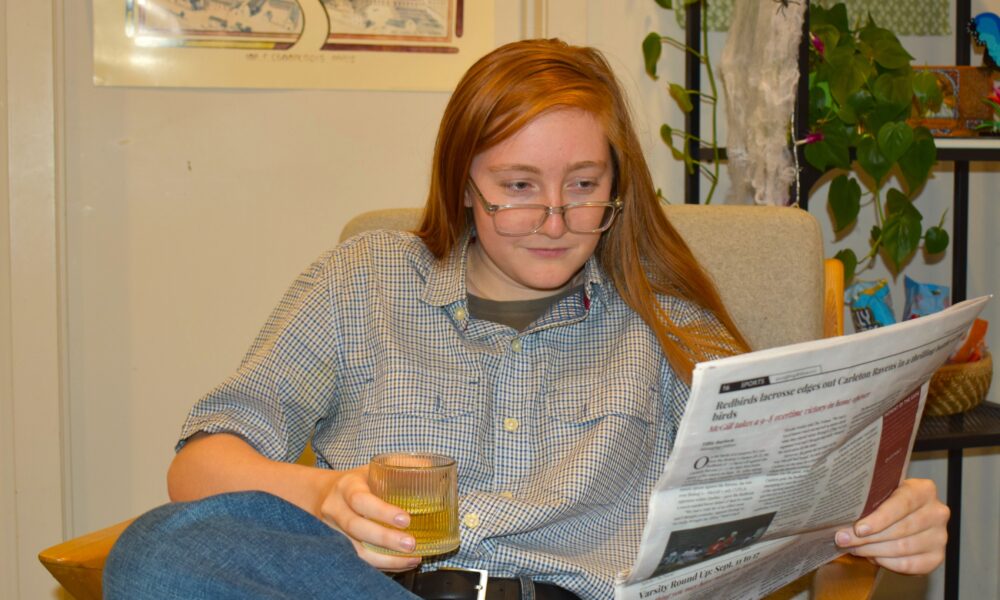
Diary of a Dad Friend

Sometimes I wonder if I was destined to become the “Dad Friend.” The label attached itself to me well before my friends bought me “#1 Dad” socks for Christmas. It became almost certain when my roommate began saying “Thanks, Dad” as they slid over their leftover dinner for me to finish. By the end of my first year of university, I was forced to accept that I had slipped, inevitably and deeply, into this role––I even had the socks to prove it. By the time I looked up from doing the dishes the other day to explain that the song playing was actually a cover of the Grateful Dead, it was old news.

Ticking 21 of the 29 boxes on BuzzFeed’s “Are You the Dad Friend?” quiz, I have to ask myself: How did I get here? 

At first glance, many of these behaviours result from an imitation of my own Dad. The jeans and plain sweater uniform, the habit of ordering black coffee, and the taste for goofy jokes certainly seem to support this argument. Perhaps lesbian stereotypes play a role as well; when it comes to button-downs and working with tools, I sometimes even out-Dad my own father. 

However, I have come to believe that there is something deeper at play here. Some quirk of personality that underlies all these surface-level behaviors. But what is that, exactly? What is this “Dad essence” that my friends are constantly picking up on?

Asking around in preparation for this article, I got a variety of responses. Some friends emphasized a particular brand of “goofy intellectualism” or a “caring disposition,” two traits I think I can live with. But others noted a desire to educate, or even a feeling that they needed to meet my approval. This is about when a troubling word began to surface: “Paternal.” 

“Paternal,” in itself, means simply “pertaining to a father.” However, its connotations are far-reaching, and its counterpart, “paternalistic,” which describes a government that makes decisions for its citizens out of a supposed sense that it knows their best interests, is an important reminder of the key role that unchecked power plays in fatherhood. 

By nature, fatherhood involves an age gap, a degree of physical control over the home, financial authority, and, often, a gender imbalance. All of these factors, in combination with the emotional influence of having a child who will naturally seek their approval, contribute to a huge and unequal power dynamic between father and child. This creates an environment––as with any power dynamic––that can foster emotional distance, manipulation, and even abuse. 

I am, as a result, in an interesting position. I have an “impression” of Dad-ness, but without the age gap, without the financial or physical power (as anyone who’s ever arm-wrestled with me will tell you) and also as someone assigned female at birth. So what does it mean, then, to be a Dad without the power imbalance? Does this position allow me to subvert the unique dynamics of gender, age, and control and make being a Dad Friend an act of rebellion against the patriarchy? Or, is this collection of habits and traits a result of internalized sexism, which recreates and reinforces existing power dynamics, even when the oppressor is absent? 

This reminds me of a classic debate between second and third-wave feminists: The former seeking to imitate men to gain equal power and influence, the latter embracing femininity as its own, uniquely valuable, asset. Perhaps a rewatch of the Barbie movie is in order to help untangle my position here. 

Either way, when I pause a movie for the fourteenth time in the first five minutes, or as I offer an unrequested explanation of the nuances between USB-A, USB-B, and USB-C cables, it bears taking a moment to pause and ask exactly what power structures I’m participating in, exactly what interpersonal relationships I’m emulating, and whether I’m working to dismantle or to strengthen them.


McGill, News

Science, storytelling, and stepping up: Conference highlights hope about the climate crisis

On Oct. 12 and 13, McGill University’s Bieler School of Environment hosted the “Montréal 2140: Hopeful Futures in Science and Storytelling” climate conference. The conference included a series of events that worked toward inspiring productive discourse around climate change and enabling younger generations to uncover hopeful narratives for the future. The conference brought together researchers, writers, scientists, and activists to gather a multitude of diverse perspectives, and to craft an art-centric mélange of both scientific fact and fictional storytelling.  

Over the two-day period, the conference hosted multiple panels, workshops, and keynote speakers. Much of the event discussed the newly emerging literary genre called Hopepunk—a subgenre of speculative fiction that seeks to illuminate the themes of scientific transformation, discovery, and empathy. The resulting conversations addressed the importance of art as a cathartic medium, and emphasized recognizing the privilege certain people have in regard to the immediate climate action they can take. The conference highlighted how respecting people’s diverse temporalities and methods of communication is essential to creating a space for authentic, reflective conversation.

“There’s a lot of solidarity [at this conference],” Tamara Ghandour, U2 Science, said. “When you lose hope in the world because you look at all these people in power who are just not doing anything about the environment […] it’s nice to be reminded that there […] are communities where you can foster that hope.” 

Despite these conversations taking place on campus, many attendees did not feel that McGill adopts the same attitudes towards sustainability. When asked how the conference aligns with McGill’s sustainability goals, first-year Ph.D. student B. Parazin pointed out, “McGill has yet to divest from fossil fuels, which is a pretty big sticking point.”

The Tribune reached out to McGill Media Relations Officer Frédérique Mazerolle to enquire about McGill’s progress on its sustainability goals and objectives. Mazerolle, citing the university’s climate strategy, stated that the university was on its way to achieving its targets. 

“The University has a long-standing commitment towards sustainability and social responsibility in investment that has already expressed itself in several initiatives and measures,” Mazerolle wrote. “The University’s 2020-2025 Climate & Sustainability Strategy identifies achievable actions focused on the University’s operations and academic activities that will further position McGill as a leader among universities with respect to sustainability.”

Along with faculty-led events, the conference included an entirely student-organized panel that sparked conversations about how students can shift their mindsets to incorporate hope and optimism in their lives.

Daphne Chalmers—a third-year master’s student in the Faculty of Education and a member of the conference planning committee—expressed the value she sees in collaboration between students and faculty.

“What I was excited about here was the chance to have intergenerational dialogue because not often do students get to talk to faculty members and say what they want,” Chalmers said. “I think [the conference] breaks down some of that power dynamic.”

During the event, science communication and ecology professor Diane Dechief co-hosted a workshop that discussed prompting climate change conversations and inspiring hope in educational spaces. She examined the different ways people communicate in institutional settings and highlighted the empathy required to create genuine conversations about climate action and the future.

“I feel like in universities, we’re trained to speak and write in a certain way to participate in the disciplines we’re a part of, which is important, but it’s also really important to speak from the heart in a more casual and colloquial way because those are the real ways we think and understand each other,” Dechief said.

Recipes, Student Life

Savoury pumpkin recipes to keep you cozy this fall

Autumn brings about gorgeous golden-orange colours, crisp air, crunching leaves underfoot, and the smell of woodsmoke. It also means the arrival of pumpkins: Pumpkin soup, stew, pies, cookies, bread, pancakes, drinks, and candies. As pumpkin has become a flavour nearly synonymous with fall, The Tribune has compiled hearty and mouthwatering pumpkin recipes that are perfect for a chilly fall day.

For pasta lovers: Creamy Pumpkin Pasta

While bolognese, carbonara, or amatriciana might be your all-time favourite, this soul-soothing pumpkin pasta is a great fall classic edition.

Ingredients:

  • 200g of whole-wheat pasta (cooked according to package directions)
  • ¼ cup of olive oil
  • 2 tsp of garlic, minced 
  • 1 cup pumpkin purée
  • 2 tbsp milk of choice
  • 1 tbsp white wine vinegar
  • ¾ cup vegetable broth 
  • 3-4 sage leaves (or ½ tsp of dried sage)
  • ½ cup of parmesan, grated (optional)
  • 2 cups of spinach
  • ¼ cup of walnuts, chopped 
  • 2 tbsp of pumpkin seeds, roasted 
  • Salt, to taste
  • Pepper, to taste

Steps:

  1. Over medium heat, cook the olive oil and garlic in a saucepan for 2-3 minutes.
  2. Add the pumpkin purée, milk, vinegar, broth, salt, and pepper to the saucepan. Whisk and let simmer for about 5 minutes.
  3. Add the sage and parmesan to the saucepan. Let simmer for about 2-3 minutes.
  4. Remove from heat. Add the spinach and mix together.
  5. Add the cooked pasta. Top with walnuts, pumpkin seeds, and extra parmesan (optional). Garnish with sage. Serve warm.
  6. Store the leftovers in the fridge for 3-5 days or in the freezer for up to 3 months.

For rice lovers: Creamy Vegan Pumpkin Risotto

When you feel like treating yourself on a relaxed weeknight, this hearty pumpkin risotto full of fresh fall flavours is an amazing choice.

Ingredients:

  • 6 cups of vegetable broth
  • 425g of pumpkin purée
  • 2 tbsp of extra virgin olive oil
  • 1 large shallot, finely diced
  • 2-3 garlic cloves, minced
  • ½ tbsp of sage leaves, sliced
  • ⅛ tsp of nutmeg
  • 2 cups of arborio rice
  • ¾ cup of dry white wine (such as Pinot Grigio)
  • ½ cup of vegan parmesan cheese, grated
  • Salt, to taste
  • Black pepper, to taste

Steps:

  1. Add the vegetable broth and pumpkin purée to a medium-to-large pot. Whisk until evenly combined. 
  2. Bring the pumpkin broth to a simmer over medium-low heat while preparing the rest of the ingredients; the broth should remain at this temperature when added to the risotto.
  3. Pour the olive oil into a large pan over medium-high heat. 
  4. Add the shallot, garlic, and sage to the oil once warm. Cook for 2-3 minutes, until the onion is translucent and the garlic starts to brown. 
  5. Add the nutmeg and arborio rice to the pan and mix well. Toast the arborio rice for 2-3 minutes, until the rice becomes more translucent. 
  6. Pour the white wine into the pan to deglaze it. Simmer for 3-5 minutes, until most of the liquid has evaporated from the pan and until the scent of alcohol has left.
  7. Combine ¾ cup of the warm pumpkin broth with the rice in the pan. Reduce the heat to medium-low and stir the mixture frequently to ensure the rice is cooked evenly. 
  8. When the spoon leaves a dry path after dragging it through the mixture, add an additional ½ cup of warm broth. Repeat this process with the remaining broth. 
  9. Cook the rice for 20-25 minutes until creamy. Turn the heat off and stir in the grated vegan parmesan. Season with salt and pepper to taste, if desired. Serve warm. 
  10. Top with a small drizzle of olive oil, extra sprinkles of parmesan, pumpkin seeds, and a sage leaf (optional).
  11. Risotto is best enjoyed fresh. Leftovers can be kept in the fridge for up to 5 days.

These recipes were adapted from Jar of Lemons’s Creamy Pumpkin Pasta and From My Bowl’s Creamy Vegan Pumpkin Risotto.

Student Life

Polyamorous dating drama and high school theatre trauma

I have had the privilege of performing in the McGill Classics Play these past two years. From the very beginning, the audition process set itself apart from any previous theatre experience I had: Actors go out for any part, not knowing more than basic character descriptions for a few of the leads. This has eliminated the stress I always felt in high school when auditioning for a specific role and waiting for the fateful day that the cast list goes up. Not only does this process alleviate the “failure” of not getting a part, I find it’s better at giving us what we need, rather than what we think we want.

Perhaps the most uncomfortable part of this realization was recognizing that what I dislike about high school theatre is also what I now dislike about monogamy.

Now, I am not a relationship person. Yet, I still consider myself to be polyamorous. So, why do I go through the hassle of explaining polyamory to tons of people I won’t meet again? Why do I bother explaining the boundaries I would set in a relationship to someone I don’t intend to date? Why explain to people how I might navigate several romantic partnerships when I find it unlikely that I will meet several people I want to date?

Well, it’s because the way I would navigate a romantic relationship isn’t different from how I navigate any other interpersonal relationship. I don’t see romance as the pinnacle of human connection, but rather just a permutation of it.

I am polyamorous because one person’s place in my life does not depend on my relationship with anybody else. So, for me, monogamous dating feels like an audition. While I am getting to know someone and building the foundation of a relationship with them that’ll last as long as we enjoy each others’ company, they are auditioning people to fit the role of “partner” in their life. Their relationship with me will last only until they cast someone else in that role, unless they cast me, in which case it’ll last for as long as I fulfill the criteria slightly better than anyone else. 

This also means that I will be cut from people’s lives because I fit their requirements for dating a little too well yet not enough. Their feelings toward me exceed what they deem acceptable for a friendship, but other differences make me unsuitable to be their singular partner. I think it’s quite unfathomable for a polyamorous person to cut contact with someone because we do care about them, but showing that we care about someone else means we cannot care about any other person in a comparable way.

I also want to clarify that being polyamorous certainly does not mean you have to be dating several people at once or have the same closeness or boundaries with all of your partners. Take it as a matter of choice: Are you doing certain things you consider exclusive to a romantic partnership with one person because you want to or because you have to?

So, I will ask you to think about a few questions to consider whether you might be more polyamorous than you think. Why do you want to be in a relationship? Is it emotional or physical intimacy? Where do these overlap, and importantly, where do they not? What are things you might want that, socially, are only acceptable to want from your partner? Will these things actually take away from what you personally consider important for your relationship? Will getting the best head of your life once again take anything away from everything you love about your current partner? From my experience: If it was just sex then, it’s just sex now, and I hope you choose monogamy for a hell of a lot more than good head. 

Student Life

Indigenous Voices of Today exhibit showcases culture and resilience

You’re in a forest. Dappled light filters through a lush maple canopy and wraps you in a green cocoon. This is the entrance to the Indigenous Voices of Today: Knowledge, Trauma, and Resilience exhibit at the McCord Stewart Museum, which displays various Indigenous artifacts that highlight Indigenous cultures and histories. 

The exhibit opened in 2021 and is on permanent display, with over 100 artifacts on rotation. For over eight years, Huron-Wendat curator and professor Élisabeth Kaine, who passed away in 2022, travelled to all 11 of the Indigenous nations in Québec and gathered around 800 testimonies. Quotes from her travels adorn the exhibit. 

The exhibition is divided into two main rooms: One on Indigenous culture, and one on Indigenous trauma. 

In the center of the forest-themed foyer, a large circular screen provides video interviews of Indigenous spokespeople, including Joséphine Bacon, an Innu author from Québec. Immediately, visitors are greeted by Indigenous voices and perspectives.

“It’s truly Indigenous people expressing themselves and what they went through, what they believe is important, and what their aspirations for the future are,” Johnathan Lainey, a member of the Huron-Wendat nation and Curator of Indigenous Cultures at the McCord Museum, said in an interview with The Tribune.

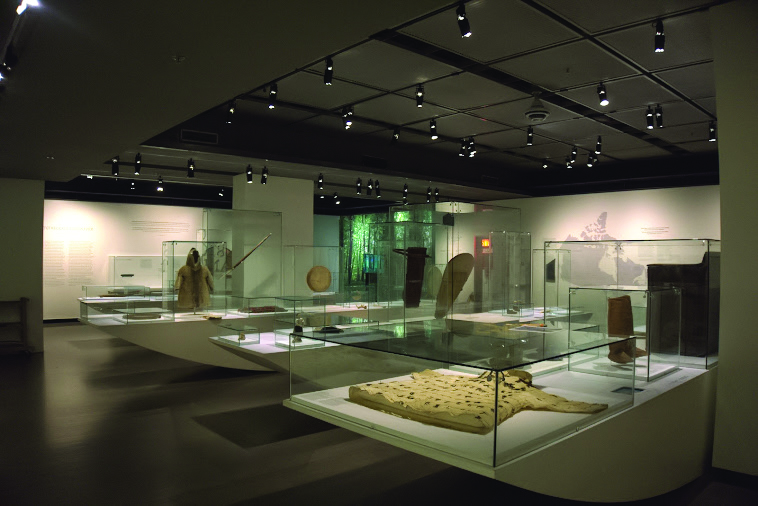
The first room is white and well-lit. Canoe-shaped tables hold artifacts from many aspects of Indigenous culture. One table, titled Moving, displays Indigenous transportation methods, with models of canoes, toboggans, and snowshoes. Other Indigenous technologies include hunting equipment such as Inuit harpoons and knives, highlighting groups’ no-waste and efficient hunting practices. The materials of the artifacts range from ivory to sinew. 

The section titled Children are the Centre showcases the love within Indigenous families One table is dedicated almost entirely to baby carriers called cradleboards. A series of monochrome photos display mothers from different Indigenous communities and their children. They are smiling, the babies laughing in their cradleboards. While the physical objects inform one of the items that Indigenous peoples make and use, the photos help connect those objects to the people using them. 

“The [quotes] are written with ‘we,’” Lainey noted. “So it’s our stories, it’s our traumas. It’s us.”

Other features of the exhibit help contextualize the artifacts and photos. A map on the left-hand wall shows Indigenous communities across Canada, with markers for the 11 nations in Québec. Videos document Indigenous craftspeople and homelands. 

“The more you appreciate the first section, the more you feel the violence of the second section,” Lainey said.

The following room is black and dim, with a burnt forest along the back wall. Monochrome photos show the inside of residential schools, capturing how white supremacist, settler colonial policy stripped away Indigenous children’s culture and language. Totems are featured to explain how Indigenous religious practices were invalidated and judged. A television presents movies that feature damaging stereotypes of Indigenous people. In the center, a beaded, bright red dress is dedicated to missing and murdered Indigenous women and girls. Each testimony, written in red, is impactful and revealing. The walls are lined with artifacts, forcing the visitor to circulate in near-darkness.

“Now that we acknowledge Indigenous trauma, what do we do? So this is where the exhibition becomes a tool for better understanding and living together,” Lainey told The Tribune.

The exhibit ends with a room similar to the foyer, with trees and a video greeting. Centred on resilience, the room encourages visitors to be proactive about supporting Indigenous communities. One can write a message in a notebook and receive a pamphlet with ten actions they can do to support Indigenous peoples. 

“We must rewrite the story of our lives by breaking the silence,” Kaine wrote on the wall at the end of the exhibition.

The exhibit is open from 10 a.m. to 5 p.m. on weekends and from 10 a.m. to 6 p.m. Tuesday-Friday.

Admission is $15 for students and free for members of Indigenous communities.

Along Party Lines, McGill, News

McGill students and staff respond to new language requirements for the PEQ

On June 7, the Quebec government, led by the Coalition Avenir Québec (CAQ) in the National Assembly, implemented changes to the Programme de l’expérience québécoise (PEQ)—a program which many international students at McGill rely on as a path to permanent residency. 

The PEQ has two branches: One for temporary foreign workers, and another for international students. The program provides a fast-track to permanent residency. If successful, applicants receive a Quebec Selection Certificate

As of June, the program now differentiates between applicants who have studied in French and those who have studied English. Whereas Francophone applicants can apply right after they finish their studies, Anglophone workers and students will not be qualified to apply unless they have been enrolled in secondary and post-secondary courses in a French institution for three years beforehand. The program makes no specification about whether or not Anglophone applicants need 12 to 18 months of employment before applying, a condition that has been exempted for Francophones. In addition, all applicants must now have a knowledge of oral French that is of Level 5 or higher on a 12-point French proficiency scale established by the Quebec government for immigrants. 

English universities—including McGill and Concordia—have voiced their discontent with this new requirement, stating that it will hurt their current and future student bodies and negatively affect English universities’ ability to attract students. According to McGill’s data, around 30 per cent of the student body are international students. The academic institutions have requested that the Minister of Immigration, Christine Fréchette, reconsider the new policy—a request the minister declined

McGill’s media relations officer Frédérique Mazerolle explained why McGill stands opposed to the policy in an email to The Tribune

“Our primary expertise and focus lie in identifying and attracting the finest talents globally, irrespective of the languages they speak, to contribute to our world-renowned research initiatives and, in the case of our professors, enrich the learning experience for our students, a significant portion of whom are from Quebec,” Mazerolle wrote.

During the party’s election campaign in Fall 2022, François Legault—the leader of the CAQ and Quebec’s premier—publicly stated that allowing more than 50,000 immigrants per year into Quebec would be “suicidal,” arguing that it would further threaten the French language. Despite this, the CAQ announced in late May that it will allow more than 50,000 immigrants per year into the province. When it shifted the language requirements for the PEQ, the CAQ also removed its cap on the number of students and temporary workers from outside of Canada who are eligible for the PEQ. 

McGill Political Science Professor Daniel Béland told The Tribune in an email that such changes in policy direction are ill-considered, but not uncharacteristic of the CAQ.

“The CAQ government regularly changes course on key policy issues based on polling numbers and pressures from various constituencies,” Béland wrote. “This is certainly the case in immigration policy, where the government’s lack of a coherent and compelling vision is hurting the economy and creating social anxieties that could have easily been avoided.”

Sumaira Nawaz, a fifth-year Ph.D. student at the Institute of Islamic Studies, pointed out that learning French requires time, which not everyone has in between the need to study and to find employment.

“I respect the [provincial government’s] intention, I understand that this is a French-speaking province,” Nawaz said. “Why would you change regulations? I’m in the fifth year of my Ph.D., I came here expecting that I can find employment in a bilingual setting at least. And now suddenly that’s gone? That’s ridiculous.”

The latest development in the CAQ’s policies impacting students is the plan to double tuition fees for out-of-province Canadian students. McGill’s Principal and Vice-Chancellor Deep Saini released a statement to the media, stressing that Quebec needs global talent to foster a successful economy. 

“A thriving knowledge economy requires a global exchange of talent,” Saini wrote. “The measures announced today will have a major, long-term effect on Quebec’s economy. The skilled people we attract and retain contribute significantly to Quebec and provide our businesses with the highly qualified workforce they so urgently need.”

Behind the Bench, Sports

McGill’s lack of varsity sports culture needs to change

McGill has a long history of pioneering innovation within the sports world: James Naismith, the creator of basketball, studied at McGill, the university’s annual carnival hockey game first took place in 1883, and McGill participated in the first American football game of all time.

In April 1874, McGill played Harvard in what is widely viewed to be the first time that North American football rules were played with, otherwise known as Boston rules. Next year will mark the 150th anniversary of this first football game, though most are likely unaware of the milestone and  McGill has not made any public plans to celebrate this momentous occasion. 

This speaks to a wider issue within McGill varsity sports. McGill has struggled to maintain school spirit around its sporting events, and fans in attendance are often few. The administration has previously expressed that they would increase ticket sales if there was higher demand. Yet, playoff games and rivalry games often fail to generate enough interest for McGill to expand how many tickets are sold. Leaving fans out of the stadium delivers a weak atmosphere at our games, both diminishing the accomplishments of McGill’s student athletes and failing to build a cohesive community culture. 

Next week is the Redbirds’ homecoming football game against Concordia, and players are concerned about a lack of publicity for the game. Fourth-year offensive lineman Klaus Calixte wished that there was a larger effort to make homecoming an event for all of McGill sports. 

“The stadium should be opened to 100 per cent capacity for homecoming, yet there is little marketing done by the school to even sell these tickets,” Calixte told //The Tribune//. “We have a generational QB [quarterback] talent in Eloa Latendresse-Regimbald and Scott Walford, a third-round draft pick to the NHL [on the hockey team]. People should come see them!” 

The lack of engagement with our teams not only delegitimizes the hard work of student athletes but reflects poorly on McGill’s university culture. Is the problem due to post-COVID students who never saw pre-COVID sporting events at McGill? Or, is there a pattern of apathy stemming from McGill Athletics? 

For some varsity teams, this lack of school spirit extends beyond having a limited number of fans at games. The Martlets’ field hockey team has not played a home game since the 2018-19 season. According to Madeline Cohen, the team’s captain, McGill Athletics has not provided a “solid reason” as to why they cannot play regular season games at home, and also claims their Ontario University Athletics’ competitors have expressed a willingness to travel.

“Athletics is so fan oriented,” Cohen said. “Most of our athletes would tell you that they could name 10 people instantly who would love to come to a game. We all have huge support bases here [….] But there isn’t even a video stream for them to be able to watch us play.”  

If McGill Athletics cares about creating a McGill culture around our sports, there are lots of simple steps they can take. McGill must follow in the footsteps of schools by offering free tickets to their students and faculty like the University of Toronto or a package with tickets at less than one dollar per game like the Université du Québec à Montréal. Lowering ticket prices for students and having a set amount of free early bird tickets, in combination with greater marketing efforts on campus could easily increase fan engagement. Those who frequent the quad will notice Marty the Martlet advertising a few football games a year, which begs the question: Why can’t this happen for every game and for more teams? 

By not playing into historic sporting events and disappointingly marketing players and teams, and an overall lack of care to its sports teams, they are doing a disservice to their athletes, fans, and McGill culture. The McGill community must celebrate the talent we have at our school and revive our sports culture. 

Sports Editor and Martlets field hockey goalkeeper Anoushka Oke did not contribute to this article.

McGill, News

McGill Board of Governors votes to change title of ‘Principal’ to ‘President’

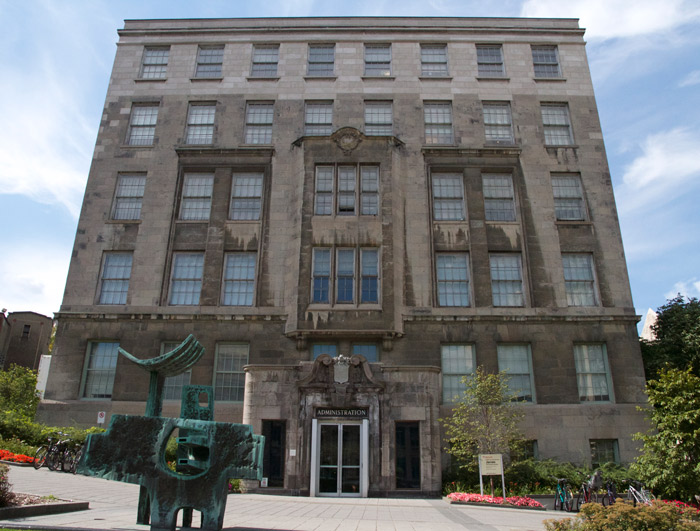
McGill’s Board of Governors (BoG) convened its first formal meeting of the academic year at 4 p.m. on Oct. 5. The in-person contingent of the meeting took place in room 301 of the James Administration Building, while others joined on Zoom. The open session of the meeting, which started just before 6 p.m., began with remarks from Principal Deep Saini, a report from the Senate, and finally reports from three committees of the Board.

Following a land acknowledgement, Saini affirmed his commitment to the university’s mission and values. The principal went on to address the University’s advocacy in the wake of new French-language rules that he believes negatively affect anglophone universities in the province.

“McGill tabled a submission to the National Assembly on the topic of Quebec immigration planning [and] appeared before the National Assembly Committee on Citizen Relations on September 20,” Saini said. 

“We emphasized that such [language] distinctions could negatively affect the ability of anglophone institutions in Quebec to retain these students post-graduation, we also underscored that these changes of immigration policy might have unintended effects on the acquisition and retention of academic talent for all universities in Quebec, including the francophone ones.”

Saini recounted attending several campus events throughout the semester, proclaiming: “I will never forget [the] about 45 minutes I spent at the Open Air Pub.” In addition to visiting the Open Air Pub, the principal attended the Security Services Community Barbeque, Soup and Science, the launch of the Indigenous Awareness Weeks, and the second annual legacy lacrosse game

The Principal also discussed the university’s ranking, reporting that while McGill has remained third in Canada, it has dropped in ranking internationally. 

“We need to pay attention to that so that this doesn’t become a trend,” Saini said. “Although not everything at a university is about rankings. I often use the expression, ‘you live by rankings, you die by rankings.’ But I think they are an important indication of the health of the institution, in relative terms.”

Saini concluded his remarks by recognizing recent awards earned by the McGill community, emphasizing that Professor Cindy Blackstock won the World’s Children’s Prize this year. 

The Board then proceeded to hear a brief report from the Senate, also presented by the Principal, followed by reports from the Audit and Risk Committee, the Nominating, Governance and Ethics Committee (NGE), and the Investment Committee.

Stephen Halperin, chair of the NGE Committee, presented the committee’s report, including a motion to approve a title change for McGill’s top administrators.

“On behalf of the NGE, I’m requesting a resolution to approve the amendment to the statutes to change the title of principal to president, vice-principal to vice-president, and associate or assistant vice-principal to associate or assistant vice-president, as the case may be,”  Halperin said.

The motion passed and the university statutes will be amended.

Media Relations Officer Frédérique Mazerolle elaborated on the reasoning behing this change in a statement to The Tribune. She did not provide a timeline.

“The change of title […] serves to align McGill with the majority of research-intensive universities in the U.S. and Canada, and will leverage its position at the international level, particularly in Asia, where the titles of President and Vice-President are more recognized,” Mazerolle wrote by email.

During the report of the Investment Committee, committee chair Donald Lewtas spoke about a committee resort that had taken place the day prior.

“Yesterday, the committee also reviewed the SRI [Socially Responsible Investing] report and CAMSR’s [the Committee on Sustainability and Social Responsibility] recommended strategies and commitments,” Lewtas said. “The committee […] looked at each of the eight commitments and strategies and approved the adoption of those commitments and strategies [meaning] the committee believes the adoption of them will not impact the university’s ability to sustain a dependable source of endowment income.”

Moment of the meeting: Lewtas announced the Investment Committee’s approval of up to $25 million USD  in Basalt Infrastructure Partners IV and up to $20 million USD in Crown Global Secondaries (CGS VI), along with the approval of the 2022-2023 McGill Endowment Fund Annual Report, which was submitted to the Board.


Soundbite: “I think it’s fair to say that there is a gap between what government representatives would say to you in one conversation, and what they can go ahead and do for public consumption, and sometimes say for public consumption.” — Saini on his advocacy with members of the National Assembly.

McGill, News, SSMU

SSMU Fall GA fails to reach quorum with less than 20-person audience

On Oct. 2, the Students’ Society of McGill University (SSMU) held its bi-annual General Assembly (GA) in the University Centre Ballroom. The event, open to all McGill undergraduate students, saw reports from SSMU vice presidents (VPs) regarding their summer work and future initiatives, with three open discussion points shared at the end of the meeting. 

The GA began with a land acknowledgement and the recognition that the 350-person quorum was not met, as less than 20 people—other than SSMU executives and event managers—were in attendance. As a result, the meeting was considered a consultative forum and votes on motions were non-binding, in accordance with the SSMU Constitution.

After passing the assembly’s standing rules—which specified the expected decorum of the meeting—and adopting the assembly’s agenda, SSMU President Alexandre Ashkir approached the podium to present the report of the SSMU Board of Directors (BoD). However, due to unspecified technical difficulties, Dong called for a recess. Upon the assembly’s recommencement, Ashkir did not present the report due to an internal miscommunication, and Dong announced that the GA would be continuing onto the next agenda item instead. The BoD report will be presented in the next legislative council meeting on Oct. 12. 

VP Internal Affairs Jon Barlas began with the first executive report, sharing that his areas of focus included diversifying the Students’ Society Programming Networking (SSPN) intitatives, publishing the 2023-2024 SSMU handbook, and revamping SSMU’s social media with additional outreach on the SSMU and SSPN Instagram accounts. Furthermore, Barlas disclosed that as of this year, SSMU has started to roll out post-event feedback forms after its events. He reported that ten per cent of attendees of SSMU’s back-to-school Barbie’s First Semester event filled out the form. 

VP External Affairs Liam Gaither delivered the second report, sharing that the L’Unité de travail pour l’implantation de logement étudiant or UTILE housing project—an affordable student housing complex to be built on the corner of Rue Ontario Est and Boulevard Saint-Laurent—is expected to be ready for move-in in Fall 2026. He additionally shared that he is working on projects in collaboration and solidarity with Indigenous peoples in Montreal. 

“We have been working alongside, or with the Kahnistensera, the Mohawk Mothers. You may have heard of […] the ongoing story developing on the […] old site of the Royal Vic hospital. One thing we’re going to be planning to do is host Critical Campus Tours, which will sort of tell an alternative story to McGill’s history, this land, and the people who have contributed and owned parts of it,” Gaither said. 

Hassanatou Koulibaly, VP Operations and Sustainability, gave the next report, explaining that her portfolio includes managing the use of the University Centre with plans of introducing gender neutral bathrooms on all floors. Koulibaly additionally shared that SSMU will be offering eleven minicourses this Fall, such as courses on pole dancing and speaking with confidence. Koulibaly also outlined some new additions to Gerts

“There’s new signage, and the new signage comes up with a new menu [….] Every student gets a twenty per cent discount, and then there’s forty per cent for happy hour,” Koulibaly said. “So, you get really cheap food.”

Following Koulibaly, VP University Affairs Lalia Katchelewa delivered her report. Katchelewa shared her involvement with the Indigenous Affairs Committee, Know Your Rights Campaign, and Menstrual Health Project. She explained that the Project plans on expanding their social media outreach to transform the way students consume menstrual health services.  

“There are informative videos on social media on how to use the different [menstrual health] structures in the university buildings and how to use the [menstrual] products themselves. We’re going to do little tutorials,” Katchelewa said. “All the products are always free for all the students who menstruate from the McGill community.”

Nadia Dakdouki, VP Student Life, provided the last VP report, highlighting the success of the Fall 2023 Activities Night, where 360 student groups tabled. Dakdouki also shared that the SSMU Daycare and Nursery are doing well, but plans of expansion are at a standstill while they search for places to expand into.

Lastly, Ashkir presented the President’s report, sharing that he’s working on reforming governance documents, making the SSMU environment more accessible, and developing better interfaculty relations for students. 

There were no questions from audience members for the executives. The meeting then turned to three discussion points, during which VPs presented issues and audience members were given the opportunity to approach the microphone to further discuss actionable items. Discussion points included the use and accessibility of campus space by students, food insecurity on campus, and actions for the ongoing climate crisis in relation to Divest McGill

While the GA was scheduled to be three hours, it wrapped up after one hour. 

Moment of the Meeting: Management Representative Alexandra Nitu was the only non-executive to speak at the GA. She asked if there was a way to bring together Presidents of clubs related to sustainability from various faculties to allow for more joint initiatives that avoid repetitive climate crisis actions. 


Soundbite: “Honestly, the lack of quorum at the GA is something we want to tackle [….]  I really hope that for the next GA, we are able to encourage people to come more and increase accessibility and democracy at SSMU.” — Ashkir on the lack of students present at GAs

Arts & Entertainment, Comedy

Hasan Minhaj’s anecdotes aren’t just dishonest, they’re detrimental

Comedians often embellish for comedic effect, but when exaggeration is used to manipulate emotions for connection, it takes a darker turn. On Sept. 15, The New Yorker ran a story titled “Hasan Minhaj’s ‘Emotional Truths’” in which journalist Clare Malone uncovers an unsettling truth about the comedian’s stand-up: Minhaj had been fabricating anecdotes. This is particularly shocking because of how much his stand-up hinges on these stories surrounding his experience with racism and islamophobia. Instead of denying Malone’s findings, Minhaj justified the fabrications as ‘emotional truths’—fictitious stories propelled by a legitimate emotional reaction or experience.

In his 2022 Netflix special The King’s Jester, Minhaj shares an anecdote from his middle school days in 2002 when a muscular, white F.B.I. informant, Brother Eric, barged into his family’s Sacramento-area mosque under the guise of converting to Islam. Minhaj goes on to tell stories about Brother Eric going for dinner at Minhaj’s house and teaching fitness classes to the community’s teenage boys. Minhaj tells this story to illustrate what it was like living as a Muslim-American teenager in the immediate aftermath of 9/11, and so when he recounts that in a moment of teenage rebellion, he decided to tell Brother Eric that he was going to get his pilot’s license—only to be slammed up against a police car moments later, it feels particularly resonant to the ways in which islamophobia was so omnipresent during the war on terror. 

However, none of this ever happened to Hasan Minhaj. While “Brother Eric” was a real F.B.I. informant named Craig Monteilh, he’s never been to Minhaj’s mosque. Monteilh worked in counterterrorism in Southern California, far from the Sacramento area, and was still in prison when Minhaj alleges the story took place. 

This goes beyond artistic license. When stand-up comedians embellish a story for comedic effect, the goal is to get a bigger laugh. Here, key details of the story are altered attempts to communicate a larger ideal about systemic injustice or the widespread commonality of islamophobia. By inventing fictitious anecdotes, Minhaj is intentionally deceiving the audience for the purpose of centring himself within a discussion of racism, rather than directly referring to the actual people whose experiences are behind the story. The problem with presenting these emotional truths is that they exploit the traumatic life experiences of others solely for the purpose of entertainment and gaining social clout, without changing the system.

Minhaj does not stop there. He also uses the real names of people in his anecdotes, which permanently alters their public perception, especially since these are televised specials and not just stage performances. In one instance, Minhaj doxxed a high school crush after claiming that she accepted his invitation to prom only to later reject him when he came to pick her up. He claimed that the girl’s parents didn’t want him taking photos with a brown boy out of fear of what their relatives might say. In reality, the girl, who was a close friend of Minhaj’s, turned him down days before the dance. In the years following the special’s release, the woman faced online threats and doxxing due to Minhaj’s failure to properly hide her identity. Her daily life is forever changed because of Minhaj’s desire to communicate a feeling through an “emotional truth” rather than reality. 

These emotional truths break the trust that was the crucial facet of Minhaj’s relationship with his audience. His Peabody Award-winning Netflix show, Patriot Act, became somewhat of a beacon of hope in the realm of political comedy during the Trump presidency. The show’s combination of seemingly personal anecdotes from his youth with the breakdown of overtly racist policies, like the Muslim Travel Ban, created a sense of solidarity and catharsis between Minhaj and his audience. His approach to comedy felt level-headed, making intelligently crafted arguments that reassured viewers of their anger and comforted them with a sense of understanding. Criticisms of the New Yorker article often hinge on the fact that lots of comedians embellish their stories. What this criticism is missing specifically is how Minhaj having stories that resonated with South Asian audiences directly translated into a boost in his popularity. His embellishments weren’t just in service of creating better art but in service of raising his stature within the conversation around islamophobia during the War on Terror into the Trump presidency years. These revelations are disheartening to many fans, who felt like they had finally found a sense of authentic representation within relatively mainstream comedy. Minhaj’s embellishments not only let down a community that has done so much to support his career but could also bring about a wave of people questioning other comics’ real experiences with racism. For fans and comedians, this story is not only deeply demoralizing, but sets an awful precedent for truth, sincerity, and authenticity in comedy.

Read the latest issue

Read the latest issue