


Latest News

Emerging Trends, Student Life

Summer fashion flings to spice up your wardrobe

If you’ve ever seen Confessions of a Shopaholic, you’ll know it’s the essential movie for anyone down-bad for fashion. I have always related to main character Rebecca, who has stashes of clothes littered around her room. This habit is not suitable for apartment life, but the ravenous trends of city style demand what they will. 

This summer was no different: I found myself immersed in the ballet core sheer material trend which wrapped the city in tulle—a fine form of netting—and bows. Celebrities were overwhelmingly attending red-carpet events in lush, sheer dresses and wrapped in swathes of light fabric. Women like Gigi Hadid and Rita Ora both gorgeously exemplified the dark tulle look at the 2023 Met Gala

Directly contrasting the popular trend of long, baggy jean shorts and graphic tees, this sway toward ballet offers a beautiful variety to your closet and answers that itch to change it up a little. Attending McGill means that you are only blocks away from a maze of malls and shining storefronts that beckon you to walk in and shop. Urban Outfitters on Sainte-Catherine currently decorates a quarter of a block with its floor-to-ceiling windows, boasting mannequins in tulle of every shade and length and laced-up pastel dresses. But in reality, if you don’t want to be running from your bank representatives like Rebecca in the movie, all that Sainte-Catherine offers students is a session of window shopping that will leave you empty-handed. Luckily, the ballet core look is relatively easy to achieve affordably and sustainably. 

So, open your closets and get to work. Grab materials in pastel colours or any colour of tulle, light cotton, or sheer fabric. If you have any long skirts, throw them into the mix and start layering. If you can’t find these components in your closet, fear not! Plan a visit to one of the many thrift stores on Saint-Laurent, which are conveniently close to campus and are home to  some real finds if you’re willing to dig around. If you don’t want to stray too far but need something on the cheaper side, visit Eva B’s second floor. Next, you’re going to need to go to Dollarama and grab as many rolls of ribbon as your heart desires, and before you head out, swing by the bead section and grab a bag of pearls or other cute charms. 

Now, imagine the scene from Cinderella where the birds and forest animals are adding bows and materials until she is dolled up and ready for the ball; that’s essentially your job! Add the ribbon as a belt to pants or tie bows on the loops of your jeans. Wrap ribbon around your ankles and pair it with frilly socks or change out the laces of your shoes for a sheer ribbon. Throw them in your hair or tie one around your neck. Layer these ribbons with charms and beads. Add pearls to your hair or string a few as a belt or bracelet. The outfit is just the base—this look is all about the accessories. Besides, a few bows never hurt anyone. 

If you prefer darker colours, try layering a sheer shirt over a dark dress, or be bold and find some black or navy tulle to wrap around yourself. And for the beach lovers out there, find a knit or sheer shrug, layer with a soft blue, cream, or lavender shirt, and add some shells to your look with a necklace or earrings.

And voilà! You’re ready to go and take the McGill Y-intersection catwalk by storm. 

If you’ve ever seen Confessions of a Shopaholic, you’ll know it’s the essential movie for anyone down-bad for fashion. I have always related to main character Rebecca, who has stashes of clothes littered around her room. This habit is not suitable for apartment life, but the ravenous trends of city style demand what they will. 

This summer was no different: I found myself immersed in the ballet core sheer material trend which wrapped the city in tulle—a fine form of netting—and bows. Celebrities were overwhelmingly attending red-carpet events in lush, sheer dresses and wrapped in swathes of light fabric. Women like Gigi Hadid and Rita Ora both gorgeously exemplified the dark tulle look at the 2023 Met Gala

Directly contrasting the popular trend of long, baggy jean shorts and graphic tees, this sway toward ballet offers a beautiful variety to your closet and answers that itch to change it up a little. Attending McGill means that you are only blocks away from a maze of malls and shining storefronts that beckon you to walk in and shop. Urban Outfitters on Sainte-Catherine currently decorates a quarter of a block with its floor-to-ceiling windows, boasting mannequins in tulle of every shade and length and laced-up pastel dresses. But in reality, if you don’t want to be running from your bank representatives like Rebecca in the movie, all that Sainte-Catherine offers students is a session of window shopping that will leave you empty-handed. Luckily, the ballet core look is relatively easy to achieve affordably and sustainably. 

So, open your closets and get to work. Grab materials in pastel colours or any colour of tulle, light cotton, or sheer fabric. If you have any long skirts, throw them into the mix and start layering. If you can’t find these components in your closet, fear not! Plan a visit to one of the many thrift stores on Saint-Laurent, which are conveniently close to campus and are home to  some real finds if you’re willing to dig around. If you don’t want to stray too far but need something on the cheaper side, visit Eva B’s second floor. Next, you’re going to need to go to Dollarama and grab as many rolls of ribbon as your heart desires, and before you head out, swing by the bead section and grab a bag of pearls or other cute charms. 

Now, imagine the scene from Cinderella where the birds and forest animals are adding bows and materials until she is dolled up and ready for the ball; that’s essentially your job! Add the ribbon as a belt to pants or tie bows on the loops of your jeans. Wrap ribbon around your ankles and pair it with frilly socks or change out the laces of your shoes for a sheer ribbon. Throw them in your hair or tie one around your neck. Layer these ribbons with charms and beads. Add pearls to your hair or string a few as a belt or bracelet. The outfit is just the base—this look is all about the accessories. Besides, a few bows never hurt anyone. 

If you prefer darker colours, try layering a sheer shirt over a dark dress, or be bold and find some black or navy tulle to wrap around yourself. And for the beach lovers out there, find a knit or sheer shrug, layer with a soft blue, cream, or lavender shirt, and add some shells to your look with a necklace or earrings.

And voilà! You’re ready to go and take the McGill Y-intersection catwalk by storm. 
Along Party Lines, News

Along Party Lines: Language education rights being debated as Bill 40 returns to court

Following the Quebec Superior Court’s ruling that portions of Bill 40—an education reform meant to transform the governance of English school boards—were unconstitutional, Premier François Legault publicly announced on Sept. 8 that his administration intended to send the case back to court. As of Sept. 15, their request for appeal has officially been filed

What is Bill 40?

Bill 40 is one piece of the mounting legislation and public debate regarding what place English will continue to have in Quebec. The province adopted Bill 96, which built upon Quebec’s previous language legislation established in Bill 101, in May of last year. Portions of the bill came into effect this summer, notably, education reforms that cap the number of students permitted to enroll in English-language CEGEPs and set requirements for the number of courses instructed in French that students are required to take in order to graduate. 

Bill 40, adopted in February 2020, planned to convert English-language school boards into “service centres.” The Ministry of Education described this reform as a way to provide Quebec schools with “a modern, efficient governance, closer to the needs of students.” The Quebec English School Board Association (QESBA) disagreed and brought it to court on behalf of nine of Quebec’s anglophone school boards, claiming that it is unconstitutional. 

Why is QESBA opposed to Bill 40?

In an interview with The Tribune, QESBA Executive Director Russell Copeman explained the organization’s rationale for challenging the bill and why he considers the case paramount for English-language education rights in Quebec.

“We are convinced [the bill] is a significant shift, that it dilutes the responsibilities of the school service center governance model and transfers that responsibility to the government of Quebec,”  Copeman said. “It would be […] practically an elimination of the autonomy or independence of democratically-elected school boards.” 

According to QESBA, this transfer of control violates Article 23 of the Canadian Charter of Rights and Freedoms, which guarantees provincial minority language groups the right to education in their language. 

Copeman also appealed to the francophone minority experience in the rest of Canada, highlighting what he sees as the comparable position of Quebec’s anglophone population as protected under Article 23. According to the Canadian government, over 160,000 francophones study at community-run French-language primary and secondary institutions outside of Quebec. As of 2016, New Brunswick was 31.8 per cent francophone, the Yukon was 4.6 per cent francophone, and Prince Edward Island was 3.3 per cent francophone.

“Francophones outside of Quebec […] have been fighting for decades to establish French language schools, to establish a governance structure that they are in control of,” Copeman said. “The link between education and the vitality of a minority community is very, very clear—and that’s why it’s so important in our view to maintain school boards under the control and management of the community.”

What is the current status of Bill 40? 

The Quebec Superior Court ruled in favour of QESBA on Aug. 2, affirming that portions of Bill 40 indeed violated the rights of Quebec’s anglophone minority. Just over a month later, the governing party Coalition Avenir Quebec (CAQ) filed an appeal of that ruling. 

QESBA has publicly criticized the CAQ’s decision in their most recent press release, expressing their disappointment on behalf of the province’s English-speaking population—particularly the 100,000 anglophone students their organization represents. Quebec’s liberal and conservative opposition parties echoed the sentiment, calling for the CAQ to drop their plans to appeal and encouraging unity in the face of pressing educational concerns plaguing Quebec—most notably, staff shortages that have left thousands of vacant teaching positions across the province. 

The Quebec Ministry of Education did not respond to The Tribune’s request for a comment.

Student Life

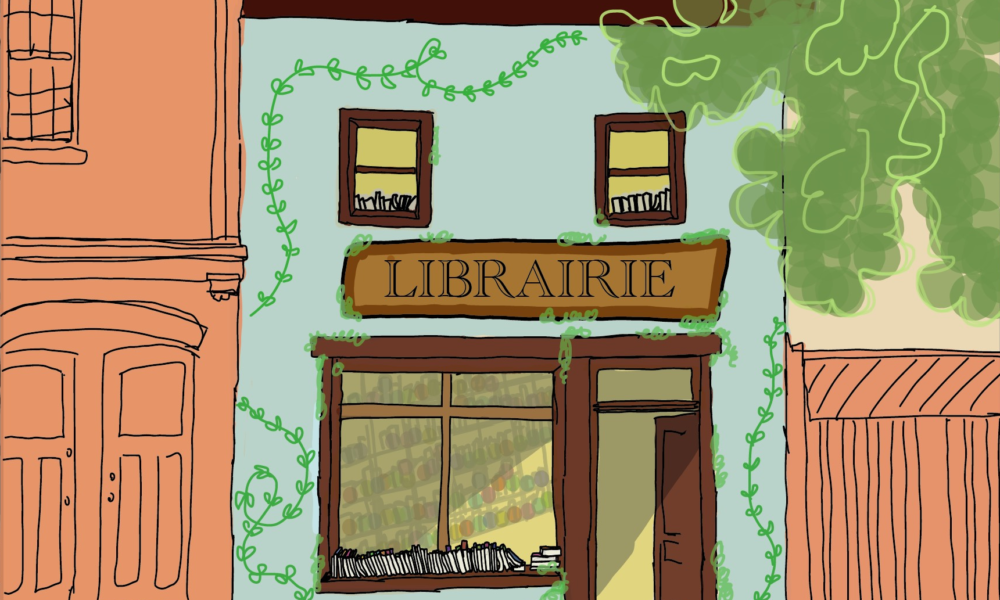
Ranking Montreal’s neighbourhood bookstores

Where does one go to find the perfect book? Maybe, you’re looking for a novella to read while waiting in line for ice cream at Frostbite, or maybe an anthology of poems to complement your English class. Either way, you can find any of these books at the following local shops. Here is a list of English-language bookstores near campus—listed from least to most cute and charming.  

4. Paragraphe  

Distance from campus: 2 minutes by foot

In terms of convenience, Paragraphe is the place to go. Paragraphe’s selection ranges from  romance to cookbooks. There are also McGill course books and a large nonfiction section to complement your studies. However, it is not technically an independent bookstore—it is owned by the Renaud-Bray Group—so if you are looking to support local businesses, you might consider the listings below. 

3. Argo Bookstore

Distance from campus: 21 minutes by foot, 13 minutes by metro, and 9 minutes by bike

Located in the heart of downtown, Argo is a respite from the noise and crowds of the street. The shop is small and quaint, matching the vibe one expects when walking into a bookstore. The walls are lined with books, some with index cards describing the text and giving recommendations from the staff. Argo is also queer-owned and has a large selection of queer literature. They house a Japanese book club and specialize in speculative fiction. 

2.  L’Eugélionne 

Distance from campus: 36 minutes by foot, 12 minutes by metro, and 10 minutes by bike

When you first walk into L’Eugélionne, you are met with mainly queer and feminist literature along with miscellaneous yonis. L’Eugélionne prides itself on being a feminist bookstore, with an equal number of books in both French and English. There is a large collection of nonfiction books on feminist theory, social movements, gender and sexuality, and colonialism. L’Eugélionne has a large zine collection, offering the buyer a wide variety of different forms of reading besides the typical novel. It is also a non-profit co-op so you can become a member and receive discounts. 

1. The Word

Distance from campus: 5 minutes by foot, 3 minute by bike

The Word is a family-run independent used bookstore that has been around for nearly 49 years. When you walk around the store—which started as an underground book dealership run out of Adrian King-Edwards’s living room—you are met by the friendly and knowledgeable staff who are willing to help you search for any book you need. Their focus on second-hand books allows them to maintain a varied collection, from local Montreal poetry to used course textbooks. The turnover rate at The Word is fast, so you’re sure to see different books every time you enter. The location is ideal for McGill students, and the small store crammed with books piled high and in every corner gives the energy of an old-timey store kept alive through the magic of writing.  

The local touch

There’s something very special about buying a new book—perusing a bookstore and then getting home and cracking open the spine of your newest read. It belongs to you, a slice of the story becomes your own, a world you can dive into, a silent retreat from your outside life. Hopefully, one of these picturesque bookstores will offer you this feeling and maybe even become part of your routine. It’s important to support these local shops; they bring the literary arts to the neighbourhood, organize events for and interact with the community, and act as safe spaces for different groups. If you leave without buying anything, you’ll still come out with a good experience, whether that be having a friendly conversation with the clerk, taking note of an interesting author, or discovering a place of like-minded readers.

Commentary, Opinion

Schulich library will not fill the void of a McLennan-Redpath closure

Though the reopening of the Schulich Library was timed conveniently with the impending closure of the McLennan-Redpath Complex, whether the new and improved Schulich will make a worthy competitor is the question of the hour. Apart from the labyrinthine path one must take to locate the library, Schulich’s questionable capacity, amenities, and interior design will determine the library’s reputation in upcoming months. Yet, as it stands, Schulich’s opening is not a solution for the study space to be lost in the impending McLennan-Redpath closure and must be accompanied by an increased investment in accessible infrastructure across campus.

The intrigue surrounding the newly renovated Schulich is offset by the fact that it remains inaccessible for newcomers—no one seems to know where it is. Unable to find the mysterious building with instructions from Google Maps, assistance from the McGill community was needed in my own search. Alas, this only served to complicate the issue. What was meant to be a quick five-minute walk from Leacock more closely resembled the hunt for //El Dorado//. 

While it was determined that the simplest path to Schulich was through the Adams building and then to simply turn left at the Frank Dawson exit, it did actually require multiple sources to find this library. This is a major note in the con column when comparing Schulich’s accessibility to McLennan’s.

Schulich’s interior design is decidedly its most impressive feature. With an old-style structure, the subtle aroma of rich wood permeates the air of the building, lit with rays of natural light. For students wishing to study surrounded by an aura of mystery, a lovely little nook perfect for private study lies just up the stairs, though finding it unoccupied may prove to be a challenge. A soothing blend of blues and oranges throughout the space combined with classic brick walls provide a warm ambiance conducive to studying. Even whilst maintaining its architectural roots of eras past, Schulich is not lacking a modern touch. There are several more contemporary work desks and study pods for those with more metropolitan tastes, as well as comfy couches perfect for studying with friends—not to mention the futuristic sixth floor, with its beams and windows that evoke the feeling of studying inside a spacecraft. A potential cause for concern is the basement, which is comparable to studying in a dungeon. But, there may too lie a market for dark and melancholy study spaces. 

However, looks aren’t everything. One consistent complaint from McLennan-goers remains that the library is always full. If students already believe the largest library on campus has a capacity issue, Schulich faces an unavoidable fate of overcrowding once midterm season hits. As the influx of library goers inevitably increases later in the semester, having to wait indefinitely for Schulich’s one and only elevator may prove particularly frustrating for those who need it. While those able to access the library will be able to make use of valuable resources such as printers, computer workstations, quiet zones and more, those unable to take the stairs may be prevented from accessing such amenities with ease. In creating these new spaces for students, McGill needs to place more emphasis on ensuring that students’ accessibility needs are met rather than focusing on aesthetics.

In a push to modernize and create more space for students in the McLennan-Redpath Complex, McGill has undertaken its //Fiat Lux// project, the reason for the Library’s upcoming renovations. While McGill’s ambition is admirable, attempting to solve a space issue by creating more of a space issue, albeit temporarily, does little to solve the problem. 

All things considered, Schulich’s appealing aesthetic quality and promising amenities mask both a lack of space and of accessibility. Will Schulich emerge victorious against the test of anxiety-induced vomiting, spilt coffee, and stress-tears? Or, will it be doomed to the fate of McLennan—relegated to reconstruction once McGill decides it is no longer nice to look at.

Off the Board, Opinion

Finding Mr. Right in Indigo’s Bestsellers section

All of us have picked up a book advertised by Indigo as “a thrilling new romance between two forces of nature” only to find out it’s a drawn-out bore about two coworkers who are just afraid to ask each other out. Or maybe it’s about a woman falling in love with a manipulative, aggressive, slightly terrifying yet jaw-droppingly handsome man: But don’t worry––she can change him. For some reason, I’ve always had trouble getting behind a lot of popular modern romance books. I love pretty much anything with a good love story, but I find myself rolling my eyes when trying to read another “enemies to lovers” novel that hinges entirely on miscommunication. For a lot of people, romance books are an escape from reality into a world of magic and intrigue, or perhaps just a story where men treat women like people. But for me, reading a book where I know exactly what is going to happen feels like taking years off my life. 

When reading The Spanish Love Deception by Elena Armas, my first thought was that she must have industry connections because there is no way any respectable publisher would actually support this. The book drags on and on, and after reading almost 500 pages, a bleak realization settles in: Bland and predictable writing was not going to redeem the sponge-like personalities of the book’s main characters. There are thousands of Harry Styles fanfictions more engaging than this book, yet it remains extremely popular and well-rated. This can be accredited to the fact that this, along with many others of the genre, is simply an easy read. A basic, generic plot with characters who the reader knows are going to fall in love is comfortingly predictable. 

One of the most common romance tropes is “enemies to lovers,” something I actually really enjoy when done well. The tendency, however, for it to be based on the main character’s devotion to her work (obviously making her hate her super attractive coworker who keeps distracting her) is frustrating. I recently read Lessons in Chemistry by Bonnie Garmus, and while romance is not its main focus, I was recommended the book many times because of its “incredible” love story. And yet, I was once again disappointed. The book is set in the 50s, so the male character is immediately dismissive of the female main character’s scientific prowess. Their love story only begins to unfold once he begins to treat her as an equal, something I couldn’t get behind considering the “enemies” part of the trope was truly just misogyny. Unfortunately, this is not unique to books set in the 50s and continues to be a common device in modern romance novels.

Other times, the author twists romance into a dark fantasy where abuse becomes a lazy tool to spur conflict, normalizing the idea that acting violent or manipulative is part of a passionate relationship. No one is more guilty of playing into this trope than popular romance author Colleen Hoover. In an attempt to avoid predictability––an issue so pertinent in modern romance novels––Hoover makes her love interests morally grey and mysterious. This, coupled with poor prose and unnecessary twists, makes her novels buzzy and popular. 

You may ask: Sofia, why do you keep reading these books if all you’re going to do is complain about them? Because I’m a hater! And of course, there is a part of me that hopes I will find a love story that will hold up against Normal People by Sally Rooney or Writers & Lovers by Lily King. These novels are extremely popular, and for good reason—the main characters and love interests are three-dimensional, complex individuals with real obstacles to their relationships. The stories are raw, powerful, and more importantly, make you root for the characters to be together, despite their flaws. I understand that not every love story can rise to the prestige of Jane Austen’s Pride & Prejudice. But seriously, if I have to read another miscommunication trope that could have been resolved in a single text message, I might have to give up reading romance forever.  

Features

Support Our Scientists: SOS’ fight for the future of Canadian science

Graduate students and postdoc researchers’ pay have remained stagnant for decades. Now one group has taken the fight to Ottawa—and across the country.

“I can’t do science if I can’t afford rent and groceries,” one sign read, at the Support Our Science (SOS) national walkout for better researcher pay on May 1 earlier this year. “My pay hasn’t increased since the airing of the Friends finale,” another said. 

SOS is the grassroots organization leading the fight to change this reality for thousands of graduate and postdoctoral researchers living paycheck to paycheck across Canada.

The national walkout saw tens of thousands of researchers across almost 50 academic institutions take a stand for better pay. Professors and students stood shoulder to shoulder in solidarity. SOS’ ongoing movement has involved a series of petitions sent to the House of Commons delineating their most pressing demands. So far, the petitions have been supported by Members of Parliament from the New Democratic Party, the Liberal Party, and the Conservative Party.

SOS was born on May 15, 2022, following an open letter and petition sent to Prime Minister Justin Trudeau, Minister of Innovation, Science, and Industry François-Philippe Champagne, and the House of Commons, urging them to increase support for Canadian researchers. Since then, they have organized marches, petitions, and social media advocacy campaigns. On Sept. 5, leading members from SOS met with Finance Minister Chrystia Freeland to discuss the pressing financial issues researchers face. Their mandate is simple: Improve pay for graduate students and postdoctoral scholars in Canada. 

Growing up in academia—both my parents are biology professors at the University of Toronto—graduate students have always played a significant role in my life. They watched me on days off from elementary school, accompanied my family on trips to conferences around North America, and entertained me at the frequent lab parties my parents threw in our home. Now, as a university student myself, I have felt the effects of the rising costs of living on students firsthand.

SOS has emerged in response to the increasingly dire financial situations faced by graduate students and postdoctoral researchers across Canada over the past two decades. McGill’s Post-Graduate Student Society (PGSS) shared an unreleased to The Tribune that revealed the shocking truths about the state of graduate student funding at McGill. Students reported living off of peanut butter and jam sandwiches for multiple meals a day for semesters on end, all while experiencing delays in promised support payments from McGill. These issues add to the prevailing consensus among graduate students that they are valued only for their work—not as people.

For years, Canada has consistently ranked at the bottom among G7 countries for research and development spending, with graduate students bearing the brunt of this deficit. As Kali Heales, a second-year Neuroscience Ph.D. student and Funding and Supervision Commissioner of the PGSS, aptly articulated in an interview with The Tribune, “Everyone wants the cure to cancer, but no one wants to pay for it”. 

To tackle the underfunding, SOS has presented the Canadian government with four requests. These will ameliorate the funding allotted to the Tri-Agencies: The Canadian Institutes of Health Research, the Natural Sciences and Engineering Research Council, and the Social Sciences and Humanities Research Council—the three main organizations responsible for funding research and innovation in Canada. 

Ask 1: Increase the value of Tri-Agency graduate scholarships and postdoc fellowships by 53 per cent and index to inflation moving forwards

Since 2003, the values of graduate scholarships, such as CGS-M and PGS-D, have stagnated, while those of postdoctoral fellowships have only marginally increased. In contrast, inflation in Canada has grown by 52 per cent in the last 20 years. In real terms, this means that the graduate students that I played with at my parents’ lab parties when I was a toddler were earning the same salary as the graduate students I drank with at OAP today. 

Ask 2: Increase the number of Tri-Agency graduate student scholarships by 50 per cent

Since 2010, the number of graduate scholarships (CGS-M, PGS-D, and CGS-D) offered has either decreased or remained the same across the board. However, graduate school enrolment has increased by around 30 per cent in the same period—and has doubled over the last 20 years. This phenomenon indicates that it’s not just the value of the awards that need to increase, but the sheer number being offered. 

Ask 3: Double the number of Tri-Agency postdoctoral fellowships  

While the number of doctoral students has doubled, the number of postdoctoral fellowships has decreased by 40 per cent from 2010, underscoring the need for more funding opportunities. Without an increase in fellowships, Canada risks being unable to secure the high-quality researchers that are necessary to continue producing innovative work.

Ask 4: Increase Tri-Agency research grant budgets supporting faculty researchers by at least ten per cent for the next five years.

The majority of graduate students and postdocs are paid through research grants. Individual research grant values, such as the NSERC Discovery Grant, have also remained the same for the last five years, despite 17 per cent economic inflation.

According to Heales, a major problem in tackling the issues is that Canadian graduate students are often left out of conversations on science, technology, engineering, and mathematics (STEM), although they make up the backbone of the actual research. 

“There are thousands of students across the country,” Heales said in an interview with The Tribune. “Who are the workers doing the wet lab work, the bench work, and the computational work to generate data for these really high-impact publications that contribute to the Canadian scientific community and the global scientific community?”

One of the biggest impacts of this is the beginning of a new wave of brain drain in Canada—something SOS is striving to change. A 2016 report found that a quarter of all STEM graduates left Canada for work, citing higher pay elsewhere as a top reason. In fact, the 2019 McGill Trace Report estimated that 38 per cent of newly trained Ph.D. students in humanities, social sciences, and fine arts leave Canada for better opportunities, predominantly to the United States and Europe. 

International students are disproportionately affected by the funding system in Canada. According to the PGSS survey, international students normally pay double the tuition fees of out-of-province students, and over four times as much as Québecois students. 

Isabela Uquillas, an Ecuadorian Ph.D. student studying computational neuroscience at McGill, earned her undergraduate degree in the United States and her master’s degree in the Netherlands. In an interview with The Tribune, she said “I know how the American system works. I know how the Dutch system works. And here [I] was just like, oh this is broken.” 

As the president of the Graduate Student’s Association for Neuroscience (GSAN), the largest graduate student program at McGill, Uquillas sees the best and the worst of the Canadian system. 

“We are all very angry,” Uquillas said. “Because this is unsustainable. This hasn’t changed in 20 years[…] Someone’s got to do something.” 

An example of the unfairness is the importance of the activities graduate students do—and the cost of these projects. Students working on projects such as cell cultures may work with materials that cost up to $20,000 a day to maintain—much more than what they will take home in a year. 

According to Uquillas, international students are already some of the most vulnerable of the affected groups—often more susceptible to predatory behaviour from the institution. Not only do they face higher international fees, but their visas are often tied to having a supervisor. This, she said, can lead to resigning to “Well, what are you going to do, quit?” 

“I met international students that are like, ‘Why did I leave my country […] I had a house. I helped my parents pay their rent. I worked a nine to five.’ Why did I do this to myself?” Uquillas said. “When you’re disenfranchised you’re not thinking, ‘how can I fix this.’ You’re thinking ‘I want to see a breakdown.’”

SOS’ four requests look to translate these feelings into concrete demands with significant bargaining power. Graduate students are often under non-worker status, which means their work does not fall under minimum wage requirements. This also means they can not properly unionize or take collective action to bargain for higher wages. 

As Uquillas said, “We can tell you a lot about Alzheimer’s […], but we cannot bargain for a fair wage.”

Another group often left out of the conversation surrounding funding is individuals with accessibility needs. Tam Pham, a queer, disabled, student of colour at Dalhousie University, emphasizes the struggles faced by disabled graduate students in an interview with The Tribune

“Sometimes you ask for an accommodation and it gets invalidated because people will say, ‘Oh, this is an inconvenience, I don’t think we can afford this’. So there’s a lot of narratives about […] accommodations requests […] being framed as an inconvenience and not being referred to as a necessity, and a part of our body,” Pham said. 

There is also a lack of understanding, Pham said, “because we always think of funding as paying for […] just regular daily life along with bills, but [we also have] our disability aids, our disability taxes […] the regular stuff that I have to pay that not a lot of people would know.”

These extra expenses include everything from medication to wheelchairs to screen-reading accessibility devices for students with visual impairments. “Accessibility is the key to equity,” Pham said. “So if we want to have more folks, more marginalized communities, participating in STEM, we need to make it more accessible. And that’s just the reality of it.”

The issue of accessibility is an age-old question for universities today. As Heales argued, it begs the question: “Are we recruiting the best of the best? Or just the students that are willing to take on that [kind of financial burden]?”

Without adequate funding opportunities for Canadian graduate students, we run the risk of not only losing our brightest minds, but failing to recruit them in the first place. For Canada to remain competitive on the global stage and ensure the well-being of its students, it must follow the requests of SOS to fix the deplorable state of research funding. Only then can we enter into a new and brighter age of academia.

Baseball, Sports

Redbirds baseball stuns Stingers in thrilling walk-off win

After an undefeated weekend in Ottawa with six wins in three days, the Redbirds headed back across the Quebec border to play their regular season opener against the Concordia Stingers (0–1) on Sept. 5. 

The game opened with a two-run top of the first for Concordia, but McGill was quick to respond, tying the game 2-2 in their at-bat. In the top of the second, the Stingers took a 3-2 lead, but third baseman Evan Dunne led off the bottom of the inning with a triple to deep centrefield, and right fielder Brandon Kim scored him on an RBI double to tie the game. 

After allowing three runs in the top of the third, starting pitcher Gabriel Braun was removed from the game and pitcher Braden Tennill entered with the bases loaded. Despite his best efforts, two more runs scored on back-to-back walks, allowing Concordia to exit the inning 7-3. 

Following a quiet bottom of the third and top of the fourth, Kim reached base on a single and centre fielder Alessandro Perreault blasted a two-run shot to bring the Redbirds back within two runs in the bottom of the fourth. 

“I think [the home run] really rallied the team and really got us going,” Perreault told The Tribune. “Obviously it was a little bit difficult even after that, but we still picked it up and found a way to win that game.” 

With the bases empty, shortstop Brad Marelich beat out a ground ball and stole second on a wild pitch. After a walk and a flyout, the Stingers walked three straight batters to tie the game 7-7. Following an RBI single from Dunne and a hit-by-pitch with the bases loaded, McGill exited the fourth inning with a 9-7 lead. 

In the top of the fifth with two outs, an infield single resulted in runners on first and second, and as both runners moved into scoring position on a wild pitch, the pressure was on. The Stingers hit a ground ball to third base—a seemingly guaranteed third out. However, the runner was called safe at first, allowing Concordia to score two runs and tie the game, with first baseman Sacha Remillard still holding the ball. The Stingers scored another run to take the lead 10-9, sending the Redbirds back to the dugout, drained by both the mental error and the humidity. 

After a quiet inning and a half, Concordia scored in the top of the seventh, giving them an 11-9 lead heading into the final frame. 

As the game completed its third hour, Marelich and second baseman Daniel Zevnick reached base on a walk and a hit-by-pitch, respectively, in the bottom of the seventh. With one out and Remillard up to bat, the Redbirds accomplished a double steal, moving the runners to second and third. Despite his fielding misplay in the top of the inning, Remillard became the hero with a massive two-run triple to tie the game and electrify the stadium. 

“It meant everything because I had a feeling of letting down my whole team and this triple was like redemption for all the mistakes I did, so at least it ends on a good note,” Remillard said, still trying to catch his breath after the game ended. 

Dunne then singled to centrefield to score Remillard and walk-off the game. Three hours and 25 minutes after they began, the Redbirds remained undefeated. 

“They were really tired, and you could sort of tell by the length of the game today,” newly appointed head coach Christoper Haddad explained. “One thing I’m going to attest to is they battled every single inning.”

However, when asked what they will be doing to prepare for their next game against the Université de Montréal Carabins on Sept. 12, Haddad had just one thing to say: “Rest.” 

Moment of the game: In the top of the first, catcher Chris Bodine threw out a runner trying to steal second, limiting Concordia to just one run that inning. 

Quotable: “Attitude. Never giving up. [….] Fighting and battling. Also, hitters. [Our] hitters came through big time.”

– Coach Haddad on what went well for McGill.

Stat Corner: There were a total of 25 walks and seven hit-by-pitches. 

Horoscopes, Student Life

The Tribune predicts: Fall horoscopes

With an end to the summer heat finally in sight and life returning to campus, you may be struggling to adjust to your new school routine. But don’t worry, dear McGillians—the stars are here to plot out the perfect start to your fall semester.

Aries (March 21-April 19): Romance is in the air for you this fall, Aries. A special someone will turn up at the campus Starbucks that will leave you smitten. Don’t forget about your studies, though—those deadlines aren’t going anywhere. 

Taurus (April 20-May 20): Venus retrograde is coming to a close, which will bestow you with clarity and creativity. Use this opportunity to start cultivating your post-grad plan; there’s no better time. You may also find yourself developing a new hobby you had never considered before. Go for it, Taurus!

Gemini (May 21-June 20): Be careful, Gemini! A rocky living situation will come to a head, leaving you frayed at the edges. Luckily, your friends will be there to support you and help you get back up on your feet.

Cancer (June 21-July 22): As your sign aligns with Jupiter, fortune is on the horizon, Cancer. You will experience a series of events that will leave you feeling more financially secure. It’s also a great time for you to socialize. So, head out to Gerts with your friends or check out the McGill Farmer’s Market before school gets too hectic. 

Leo (July 23-Aug. 22): You’re in for a great month, Leo! As the sun aligns with Jupiter, your social life will be on fire. Use this opportunity to branch out and talk to a new classmate in your lecture hall. You never know—maybe a romance will blossom. 

Virgo (Aug. 23-Sept. 22): The sun is in your sign this month, so the spotlight is on you—make sure to use it wisely. At the end of the month, you will get a stroke of inspiration that will leave you more confident. Go get ‘em, Virgo. 

Libra (Sept. 23-Oct. 22): Oof! Libra, you’re in for a rough start to the month. A long-term plan will come crumbling down, leaving you to pick up the pieces. Lucky for you, when the sun enters your sign on Sept. 23, your social life will flourish.

Scorpio (Oct. 23-Nov. 21): This back-to-school season, you will be on your A-game, Scorpio. You will spend hours in McLennan getting a head start on assignments. Fortunately, these immaculate study habits will pay off when your assignments come due.

Sagittarius (Nov. 22-Dec. 21): After an evening at Activities Night, a new passion will ignite a spark in you that you never would have imagined. Whether it be a school club, sports team, or social cause, take full advantage of it—it may help guide your future career prospects. 

Capricorn (Dec. 22-Jan. 19): With all those classes at the top of McTavish, you will be getting fit this semester, Capricorn. Just don’t be tempted to skip your classes—midterms are coming sooner than you think! 

Aquarius (Jan. 20-Feb. 18): You will start the semester feeling like the mouse in Redpath library at midnight: Everyone is moving on without you. But don’t worry, you’re not alone in feeling lonely. Things will turn around at the end of the month when you hit it off with someone in line at the hot dog stand. Will it be a friendship or romance? Only time will tell. 

Pisces (Feb. 19-March 20): This fall will bring a new set of challenges for you, Pisces. Don’t be afraid to tackle them head-on. If you maintain a positive mindset, this month will be rewarding—with new challenges come new opportunities.

Editorial, Opinion

Divest from fossil fuels and end greenwashing—McGill needs climate action now

The past week has been marked by a heatwave sweeping across the country, with temperatures rising approximately ten degrees higher than the September average in Montreal. As McGill students walked to classes through the humid air, one thing was made clear: Even the most privileged are no longer spared from the effects of climate change. 

The recent heatwave is only the latest example of climate change’s devastating effects. As of now, the wildfires raging across Canada this summer have destroyed 165,000 square kilometres of land, making it impossible to ignore the life-threatening reality of the climate crisis. Even within the comfort of the McGill bubble, smoke filled the lungs of anyone outdoors in the weeks of late June when Canadian cities experienced the worst air quality in the world. 

In cities where the search for affordable housing is already a heavy weight on the shoulders of young adults, the climate crisis only serves to exacerbate this issue. In California, where subsidized housing is being built in wildfire-prone areas, insurance companies are gradually starting to pull out, leaving residents unsafe and uninsured. In Canada, Desjardins is threatening to increase insurance premiums in response to Quebec’s wildfires. While the government has failed to control the current housing crisis, it has surveilled, policed, and underserved unhoused populations in Montreal who need care, shelter, and social services. Moreover, the lack of compassion toward wildfire victims does not address the struggles displaced populations face in acquiring permanent, safe housing. 

Despite climate change’s universal consequences, Indigenous peoples in Canada are still disproportionately affected by the climate crisis. When land turns into property, when respect for the land turns into greed, climate change becomes the ultimate effect of settler colonialism. We must listen to Indigenous voices and seek solutions from those who know and care for the land and its many relations best. Indigenous peoples, who make up just five percent of the world’s population, protect 80 per cent of our global biodiversity. Embracing a comparative approach to climate justice will allow governments to understand what land means to others to better protect it. The loss of land for Indigenous peoples in rural and urban spaces goes beyond economic interests or environmental violence as the loss of a core, grounded, and personal connection, built from a young age. 

Still, the Canadian government will not say or practice Land Back.  Indeed, when it comes to Canada’s attitude toward the climate crisis, the Greenbelt controversy represents its failures. Ontario’s Greenbelt––a protected area of two million acres of farmland, forests, and rivers––prevents urban sprawl and ensures Ontarians’ access to local food, clean water, and nature. Last year, however, Ontario’s Progressive Conservative government announced the construction of 50,000 homes in these protected areas, thus removing 7,400 acres of land from the Greenbelt and using the housing crisis as an excuse to please donors. The housing crisis is not a reason to dismiss environmental protections and vital legislation that safeguards the little protected land Canada has left.  

Yet, both the government and institutions such as McGill engage in the individualistic rhetoric of climate change, displacing the blame on everyday people to protect themselves. With every summer getting hotter and every fire burning more fiercely than the last, throwing your bottle in the right bin on campus will never be enough. What we need is collective action on the ground and legislative action from above.

McGill needs to put an end to its greenwashing campaign and take action. As a university that  takes pride in its brilliant researchers, McGill must listen to the voices of environment experts around the world. Fossil fuels are by far the biggest contributors to global climate change, accounting for nearly 90 per cent of all carbon dioxide emissions. McGill, which is investing tens of millions of dollars in the fossil fuel industry—$11,982,749 in Royal Bank of Canada and $2,610,419 in TC Energy as of Dec. 31, 2022—is not only complicit in global warming, it is complicit in the forests that are burning and in all the disasters to come. McGill needed to take climate action 20 years ago and now, more than ever, it needs to divest once and for all.

Arts & Entertainment, Film and TV

‘Bottoms’ tops all other summer comedies

Dubbed ‘Lesbian Fight Club,’ Bottoms is Canadian director Emma Seligman’s second feature film. Reminiscent of beloved 90s and mid-aughts teen comedies like Superbad and American Pie, the film delivers a hilarious and unapologetically gross romp that is sure to become an instant cult classic. With a tight 90-minute runtime, Bottoms should be at the top of everyone’s watch list this weekend. 

The film follows PJ (Rachel Sennott) and her childhood best friend Josie (Ayo Edebiri), two nerdy high schoolers who start a fight club masquerading as a self-defence club, in an effort to lose their virginities to cheerleaders. As the club gains traction, the most popular girls in school join, much to the delight of its founding members. Soon, the duo finds themselves in way over their heads as their web of lies starts catching up with them. 

Seligman and Sennott’s first collaboration, 2020’s Shiva Baby, was gripping but unsettling‌. In this venture, which Sennott co-wrote, the pair swap suffocating anxiety for a lighter, more improvisational narrative. They have crafted a script that plays within the established rules and tropes of its predecessors while remaining relevant to modern young audiences’ tastes. It feels in touch with the pop culture references of the moment, making liberal use of Twitter’s cultivated vocabulary, without ever veering into cringy. Pinpointing cultural touchstones can be challenging in our ever-changing social media landscape, but the writing duo seems to accomplish more than what so many others can—creating a script that still feels relevant and clever, rather than quickly becoming outdated like the trends it draws from. The result is a piece of media that feels genuinely authentic in speaking to its audiences.

Edebiri and Sennott are magnetic and infinitely watchable, and the central premise of their friendship keeps the occasionally surrealist plot grounded as a teen comedy. However, the pair with the best chemistry is by far Edebiri and Havana Rose Liu, who plays cheerleader Isabel. The two bring an electric rom-com energy that adds a sweet and satisfying touch to what is otherwise a rather violent and absurdist final act. With adorably awkward run-in and swoon-worthy confessions of love, the two instantly become audience favourites—simply put, they are the couple you root for, a staple of the genre. 

The rest of the supporting cast fills out the captivatingly hilarious and absurdist world of PJ and Josie’s high school with equal panache. Nicholas Galitzine shines as Jeff, star quarterback and world-class idiot, and Kaia Gerber, making her acting debut, portrays an unsurprisingly believable popular cheerleader Brittany. The chemistry of this great ensemble only adds to the ever-expanding repertoire of players in the Zillennial Cult Comedy Cinematic Universe.  

The film’s true crowning achievement is how it’s able to do queer representation in a fun and light-hearted format. Mainstream queer representation, particularly lesbian representation, at the box office often comes in the form of serious dramas, so it’s refreshing to see a movie built for young queer audiences to have fun with. PJ and Josie’s trouble with getting girls isn’t about them being lesbians—there are other out queer students at their school—it’s just that they’re losers. Bottoms celebrates and has fun with young queer culture without it having to feel like a talking point of the movie. 

With such roaring success, the bright future that Seligman and Sennott have as a creative team will be undoubtedly hilarious to watch. From needle drops to costume choices, the duo evidently have a great affection for the teen comedy genre and may be able to give it a full revival, if not a makeover, for a new generation. With killer jokes, dynamic chemistry, and a final set piece worth the price of admission, Bottoms is a breath of fresh air in the space of teen comedies.


‘Bottoms’ is currently in theatres across the country.

Read the latest issue

Read the latest issue