


Latest News

McGill, News

McGill investigating antisemitic vandalism in Faculty of Medicine 

Content warning: Antisemitism and violent threats

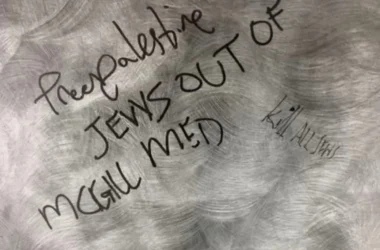
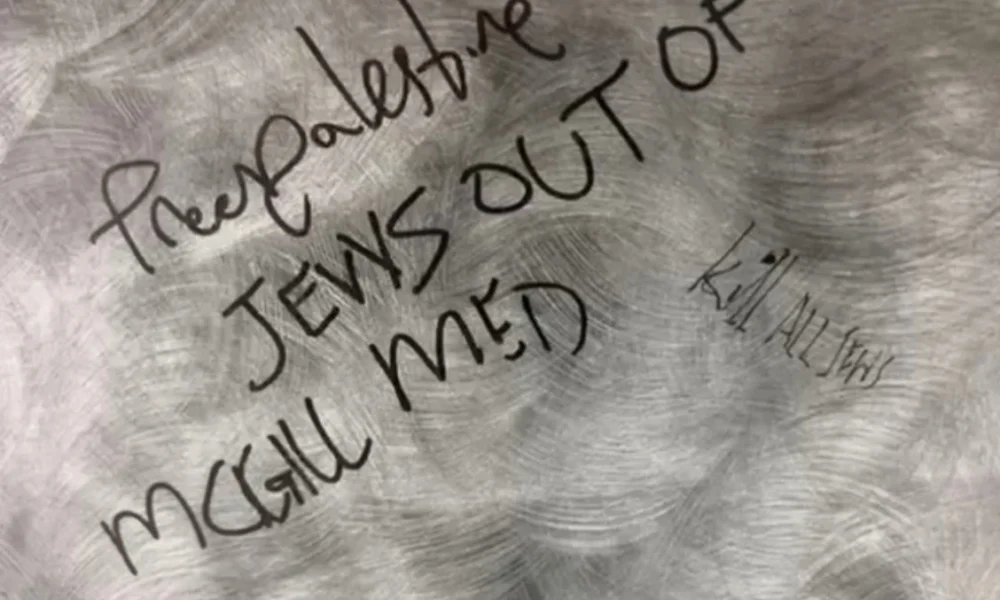
A recent act of antisemitic vandalism at McGill is raising renewed concerns about campus safety for Jewish students. The graffiti, found in a bathroom stall in the Faculty of Medicine, read “Kill all Jews” and “Jews out of McGill Med.” An official statement from McGill administrators states that the incident is under investigation, and appropriate disciplinary action will be taken if a perpetrator is identified.

A spokesperson for McGill reiterated the University’s stance against antisemitism in a statement to The Tribune, writing that the administration is actively working to protect and support Jewish students. 

“McGill unequivocally denounces all forms of antisemitism and anti-Jewish hatred and reaffirms its dedication to preventing and combating such discrimination,” the spokesperson wrote. “The University has taken concrete steps to support the safety and well-being of students, faculty, and visitors. McGill also regularly reassesses whether additional steps are needed to reinforce its efforts to maintain a safe, inclusive and welcoming campus.”

While details surrounding the bathroom vandalism remain limited, the incident follows a pattern of reported antisemitism on campus, sparking concern from student groups such as the Medicine and Dentistry Jewish Association (MDJA).

“The presence of these messages within a medical school, an institution dedicated to the preservation of life above all else, is particularly disturbing,” the MDJA wrote in an official statement on the incident. “Calls for our exclusion and elimination undermine not only the safety and dignity of Jewish students, but also the foundational values of the profession we are preparing to enter.” 

The Tribune contacted the MDJA, Chabad McGill, Hillel Montreal, and McGill Chavurah for comment, but they did not respond in time for publication.

In response to the recent graffiti, Independent Jewish Voices (IJV) McGill told The Tribune that they perceive the University’s conflation of anti-Zionism and antisemitism as heightening tensions on campus for Jewish students. 

“IJV McGill understands this current climate as one which necessitates a wholly different approach to centring Zionist discomfort and modes of understanding incidents of discrimination and hate speech—while nevertheless condemning and seeking accountability for hate speech, such as in the Medicine Faculty.”

Regarding the University’s actions moving forward, McGill’s spokesperson referenced the Working Group on Antisemitism (ASWG) at McGill, which did not respond for comment in time for publication. The Working Group launched in Fall 2025 to assess how antisemitism manifests on campus and to recommend strategies for prevention and response. Among its areas of focus, the Working Group has examined anti-Zionism and its relationship to antisemitism. This issue has been contentious at McGill, with disagreements among Jewish student groups about the definition of antisemitism. 

“While members of IJV McGill have engaged in University Channels, such as the university’s committee on antisemitism and anti-Israeli discrimination, we have felt uncomfortable doing so out of an unwillingness to legitimate structures which […] implicitly equate anti-Zionism with antisemitism—all while no such committee exists for Palestinian students at McGill.” 

IJV then claimed that the incident demonstrates the administration’s attempt to homogenize Jewish perspectives.

“This transgression imposes itself far more heavily on our community’s conscience than Sharpie in bathroom stalls,” IJV wrote. 

The rise in antisemitism on campus reflects a broader nationwide trend. An email containing violent death threats and references to explosives was sent to roughly 125 organizations across Canada—the majority being  Jewish institutions. In Montreal, Jewish school Yeshiva Gedola was targeted in two separate shootings less than a week apart in November 2023. And more recently, two synagogues in the Greater Toronto Area were hit by gunfire. 

Existing channels for reporting incidents of harassment, discrimination, and anti-Jewish hate through McGill include campus security or the Office for Mediation and Reporting. Further, students can file complaints through the Student Affairs Liaison for Jewish Students and the ASWG’s confidential form. Faculty and staff can refer to the Employee and Family Assistance program for confidential support, and students can reach out to the Student Wellness Hub, which offers counselling services, and GuardMe for 24/7 mental health support from anywhere in the world.

News

Referendum to boycott Israeli institutions passes with the highest voting turnout in recent LSA history

On March 19, voting for the Referendum Regarding the Academic and Cultural Boycott of Israel to Preserve Academic Freedom (PACBI) opened to all members of the Law Students’ Association (LSA). The motion, put forward by Law Students for Palestine at McGill (LS4PM) and McGill Radical Law Students’ Association (RadLaw), called on the LSA to modify its constitution to terminate all academic ties with Israeli post-secondary institutions complicit in Israel’s ongoing genocide in Palestine.  

Citing the targeted bombing of all 12 universities in Palestine and the killing of thousands of students and professors, in addition to statements made by the United Nations, LS4PM argued that the systematic destruction of academic freedom in Palestine breaks Canada’s Crimes Against Humanity and War Crimes Act

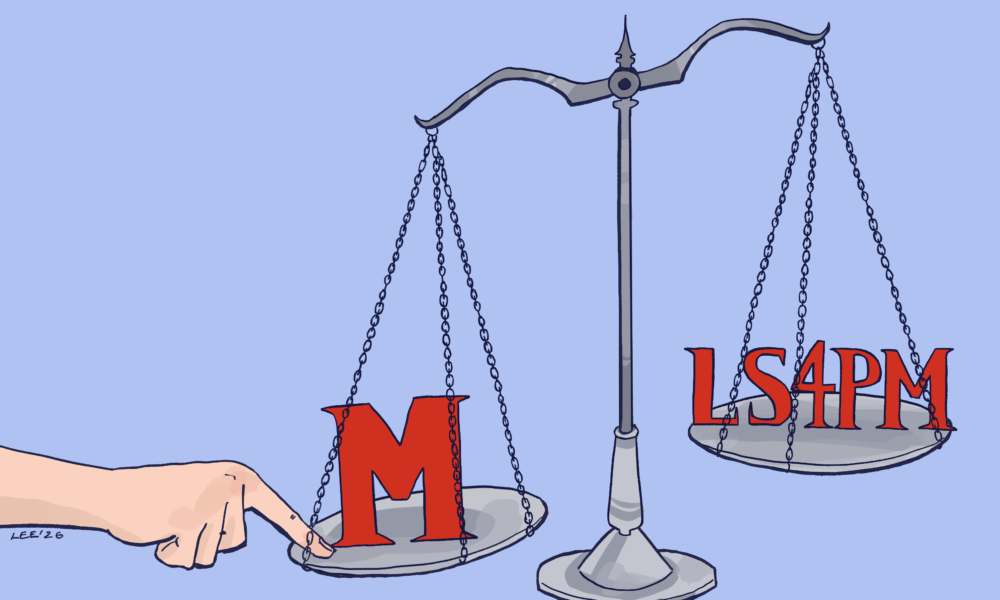
10 minutes before the voting period began, Provost and Executive Vice-President Academic Angela Campbell, along with then-interim, now-official, Dean of Law Tina Piper, sent a joint letter to all law students describing the amendment as “objectionable.” They stated that its mandate to terminate all academic exchanges with Israeli post-secondary institutes is discriminatory toward Jewish students both at McGill and in Israel. The letter also affirmed that Campbell and Piper do not take a particular political position on the matter, but oppose the PACBI motion due to concerns from Jewish students. As the LSA’s constitution prevents any parties directly involved in the referendum item from campaigning during the voting period, LS4PM was not able to address these allegations until after the referendum outcome was announced. 

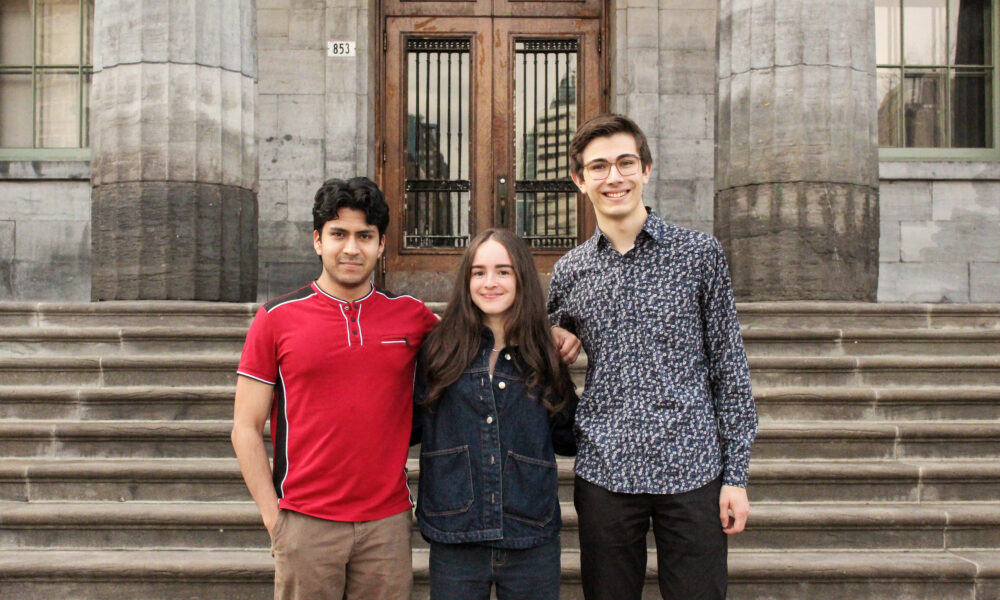
In an interview with The Tribune, four representatives from LS4PM, Jamie*, Robin*, Sasha*, and Sam*, described the letter as interference with the LSA’s democratic process. Highlighting the potential danger of a precedent in which the McGill administration swings voters in their favour, these representatives explained the reasoning behind the proposed modifications to LSA by-laws, as well as the concerns behind McGill administrators depicting the Jewish community as a monolith. 

“We were told to stop campaigning. Yet, [McGill’s administration] effectively got two more days where it was constitutionally impossible for us to say anything in response. That is the procedural injustice in this,” Jamie said. 

Sam added, “We follow the rules, but they are free to run over our democracy.”

According to the LS4PM representatives, the letter followed a list of frequently asked questions (FAQ) sent out by the LSA at 11:00 p.m. on March 18. The FAQ stated that if the PACBI referendum passed, the LSA would, by default, be in breach of its Memorandum of Agreement (MoA) with McGill. The letter went on to forecast a three-year arbitration with administration, which they estimated would cost around $40,000 CAD. The LSA’s letter also included anonymous statements from professors in the Faculty of Law, ranging from disapproval of LS4PM’s motion to threats of stopping classes should it pass.  

The four representatives agreed that although the LSA showed solidarity with LS4PM by denouncing McGill’s letter as an attempt to influence voters, the mass FAQ email sent to students likewise advised students to vote against the motion.

“All of these negative messages had the effect, in our opinion, [of saying] that the LSA was against the referendum, and all of this information confused the voters,” Sam said. “The effect of these cherry-picked testimonies, and of this worst-case scenario forecast, was to interfere with the student vote [….] We understand the need to provide information from the LSA, especially about the threat of litigation. However, the way the information was provided was unbalanced and did not account for the myriad of factors that could influence the cost of arbitration.”

McGill’s Jewish Law Students’ Association (JLSA) ran a Vote No campaign against the referendum prior to the voting period. The JLSA cited concerns that the LSA taking an official stance would impose a singular viewpoint on the whole Law Faculty based on a subset of voters. They further deemed the motion discriminatory toward students who disagree with LS4PM’s reasons to boycott Israeli institutions, referring to the group’s stance on genocide, apartheid, and war crimes in Israel. 

In a written statement to The Tribune, a JLSA executive elaborated on these concerns, stating that the motion may be used to scrutinize or stigmatize minority groups on campus. The executive also mentioned ongoing worries regarding how the referendum was conducted, specifically whether the required threshold for adoption was met. The executive stated that they are looking into the matter through the appropriate channels. 

“[The motion] appears poised to curtail the ability of Jewish and Israeli students to participate fully and equally in academic and campus life. Students risk being excluded or ostracized based solely on their belief in the right of a Jewish state to exist,” the executive wrote. “All law students—regardless of religion, nationality, or political belief—should feel welcome on campus and free to express their identities and pursue their academic interests. That must apply equally to members of the JLSA and to members of LS4PM.”

In response to these concerns, Sasha explained that nothing in the motion itself suggests that it would lead to an increase in antisemitism.

“There’s a lot of language that the community feels unsafe [….] Jewish students have this unfair burden. Jewish faculty feel unsafe [….] [There have been] no reports of intimidation or discrimination,” Sasha said. “Using this language of safety, harm, making students and faculty feel scared to be at school, really is exaggerating what this actually is into something that seems like conflict when really it’s a student-led movement for a vote. It couldn’t be any less violent.”

Sam further emphasized that this mischaracterization of LS4PM as an antisemitic organization not only discredits them unfairly as a student group, but also takes away from the seriousness of these allegations. 

“You’re essentially emptying anti-oppression language from its meaning to then uphold the status quo and interfere in student democracy, […] which means that this advocacy can be characterized as racist, when we are fighting racist apartheid,” Sam explained. 

Referring to the letter sent by Piper and Campbell, Jamie, who is Jewish, explained that the claims of antisemitism levied against the motion ignore members of the Jewish community at McGill who advocated for the referendum, clarifying that the boycott doesn’t apply to individuals, but to institutions that support and perpetuate Israel’s actions against Palestinians’ academic freedom. 

“I genuinely have not read such an antisemitic message in so long,” Jamie said. “It literally says if your Jewish identity is not tied to the State of Israel, we do not see you. We don’t care about your feelings.” 

“There are tons of Jewish students in LS4PM [….] It’s really frustrating that this is McGill’s take toward the Jewish community on campus, framing it as one monolithic perspective, which in itself is antisemitic,” Sasha added. “Painting it as one collection of ideas and thoughts that are all aligned toward the same thing, just to advance [administrators’] own objectives.”

Emphasizing their support for the democratic process, the representatives explained how the administration’s reaction to the PACBI should concern all students, regardless of their political affiliations. 

“Equating democratic action with violence essentially makes it impossible for students to come forward with any sort of political movement in the faculty without being labelled as violent or threatening the safety of the community and the faculty,” Sasha added. 

Despite the interference, the motion passed with 67.3 per cent of LSA members voting, 57.3 per cent in favour. This marks the highest voting turnout in the LSA’s recent history.

Now passed, LSA bylaws have been modified to terminate academic exchanges with Israeli institutions, notably Tel Aviv University (TAU). One Jewish student has filed a court injunction against the adoption of these modifications. McGill’s Media Relations Office (MRO) clarified in a written statement to The Tribune that no court judgement has determined the referendum to be discriminatory or exclusionary as of April 5, and that the case is ongoing. Jonathan Amiel, the chair of the Faculty’s Advisory Board, course lecturer, and donor, has resigned from his position in protest of the motion, explaining his reasoning in a public letter

“An institution once defined by intellectual rigour and principled debate has, in too many instances, become an environment where being Jewish, identifying as a Zionist, or maintaining any association with the State of Israel carries professional and personal risk,” Amiel wrote. “It is particularly concerning that, at a time when Jewish communities face heightened vulnerability, the Law Faculty has not provided a constructive or unifying response. Instead, a majority of its students have supported a measure that isolates leading academic institutions and risks further division within its own community.”

A student has since brought a petition to the Quebec Superior Court against the LSA, seeking to overturn the referendum results. McGill President and Vice-Chancellor Deep Saini has endorsed her position, stating in an email to students that the motion’s mandates fall outside the purview of a student association on campus, and therefore cannot be implemented. 

Still, faculty opinion is divided. In a written statement to The Tribune, Law Professor Omar Farahat expressed concern about the administration’s approach. 

“We must distinguish between intervention by university administrators and potential review of those student actions through the judicial system,” Farahat said. “Anyone is entitled to resort to the judiciary in the event that they feel that a violation of their legal or constitutional rights has occurred [….] University administrators, in my view, have an even higher burden [than students] to protect and respect the students’ freedom of speech and freedom of association.”

Farahat went on to explain that the administration’s interference risks setting a dangerous precedent for student activism on campus. 

“It is one thing to argue that a specific measure by a student group may technically give rise to tensions concerning the group’s agreements with the University, but it is a completely different thing to portray this act of student activism as discriminatory, racist, or dangerous without any objective justification of those claims,” Farahat wrote. “This is a very troublesome approach as it sends the message that morally conscious activism—which is precisely what we expect from young critical minds—will be met with institutional resistance and reprimand, which, I personally worry, could hurt our standing as a major institution of learning and thinking not only in our region but globally.”

*These names have been changed to preserve the speakers’ anonymity.

A previous version of this article stated that PACBI mandates McGill terminate all academic exchanges with Israeli universities. In fact, the motion mandates LSA advocate for the termination of all academic exchanges rather than enforces they cease altogether. A previous version also stated that LS4PM claimed Israel’s destruction of academic freedom in Palestine violated Canada’s Crimes Against Humanity and War Crimes Act when in fact, LS4PM references the Crimes Against Humanity and War Crimes Act because it designates illegal west bank settlements as illegal. The Tribune regrets these errors.

Montreal, News, Private

Parc-Extension tenants rally against abusive rent hikes, demanding effective rent control

Over 100 tenants and fair housing activists gathered outside 955 av. d’Anvers on March 31 to denounce what organizers called abusive rent increases imposed on residents. Organized by the Regroupement des comités logement et associations de locataires du Québec (RCLALQ) and the Comité d’Action de Parc-Extension (CAPE), the rally’s attendees demanded better rent control. In collaboration with artistic and activist collective Le Sémaphore, the organizers projected messages like “No to abusive rent increase,” and “Je refuse je reste” (“I refuse I’m staying”) onto the building’s exterior.

The building’s tenants, part of a complex of 18 buildings for a total of 165 units, reported receiving increases of up to 20 per cent. According to a representative from the rally, one tenant received a rent increase of $300 CAD, and many of these notices do not include meaningful renovations to justify them. March 31 is the deadline for many Quebec landlords to send rent increase notices, making it a deliberate day for action.

In an interview with The Tribune, Noémie Beauvais, a community organizer with the RCLALQ, explained that the increases reflect a persistent gap in tenant protections despite recent regulatory changes. Quebec introduced a new rent-setting formula in January, but Beauvais noted that the reform has done little to curb excessive demands from landlords.

“The calculation is a bit different. It is a bit easier for tenants to understand,” Beauvais said. “But the problem is the same. If the landlord wants to just put any number on the notice, then [the tenants][…] feel like they have no power.”

The complex has changed ownership multiple times in recent years. In a speech to the crowd, Rizwan Khan, a community organizer with CAPE, highlighted that conditions have deteriorated across each transition.

“These buildings have been affected for a very long time with cleanliness and hygiene issues related to negligence from the owners*,” Khan said. “The new owners also introduced new building regulations with abusive clauses and pressured tenants by saying, ‘If you want your new key to the building’s front door, you have no choice but to sign.’ These are the kinds of tactics that are used by far too many landlords, and this has to stop*.”

In an interview with The Tribune, Sohnia Karamat Ali, an organizer with CAPE, emphasized how the cycle of ownership changes has worn tenants down.

“This is the third administration,” Karamat Ali said. “We started mobilizing against the first who were here five, six years ago. After a huge mobilization, they just sold the building [….] It is like every time, we start from zero again.”

Ali Kamruzzaman, a 70-year-old tenant who has lived in Parc-Extension for 27 years, told  The Tribune that many residents are afraid to push back against the increases. He urged fellow tenants not to acquiesce to their demands.

“My message is: Do not be scared,” Kamruzzaman said. “We have the Parc-Extension Action Committee, and you can ask them. They can advise you where to go. You have the rental board.”

The rally is part of a province-wide campaign organized by the RCLALQ against the 2026 rent increase season, with similar actions held in Quebec City and Granby. The Tribunal administratif du logement set a baseline increase of 3.1 per cent for leases renewing after April 1 under a new formula tied to the consumer price index, down from the 4.1 per cent in 2025. But the rate has done little to slow a broader trend: Average rents in Quebec have risen by roughly $1,800 CAD per year since 2023, and asking rents in Montreal have doubled since 2019. The RCLALQ reaffirmed that a revised framework should include stricter limits on annual increases tied to actual maintenance costs and new legal obligations for landlords to justify any hikes above the standard rate

Émile Boucher, a community organizer with the RCLALQ, stressed that the rate only functions as a floor, and tenants in the complex are facing increases nearly seven times that amount.

“There is no effective rent control,” Boucher said in an interview with The Tribune. “Landlords can still propose whatever increase they want. They are not required to follow the recommendations of the Tribunal administratif du logement, and that is an enormous problem for us. People will experience rent hikes individually because they receive the notice, they have to accept it or refuse it, they have to pay. But we are showing that this is a collective problem, and tenants are not alone in this*.”


*These quotes were translated from French.

Science & Technology

A reflection on McGill’s science programs from graduating SciTech staff writers

Antoine – BSc, Honours Biology

Dear Bio,

If you’re into bio, you’d better learn to love DNA. Breathe it. Dream about it. Because everything comes back to DNA. What’s the reason behind ‘phenomenon X?’ A gene. ‘Phenomenon Y?’ Another gene. Are you curious about the composition of a microbial community? Sequence another gene. You will not go a single day in biology without encountering DNA, so you might as well make peace with it.

And while we are here—a message to the department: Where are the plant courses? Apart from BIOL 205, the course selection for plant people is literally a desert. But plants are fun. Plants are essential. Plants are, quite frankly, carrying the entire biosphere on their backs—so why does McGill only offer half a plant course for a biology degree? Plant people, and plants themselves, of course, deserve better.

Tip to incoming bio students: Don’t procrastinate—or you may regret it after your midterm— and get involved in research early. You certainly won’t regret that.

Cheers, and I hope to never have to hear about DNA again,
Antoine

José – BEng, Chemical Engineering

To all engineering students, and to the incoming class of 2030,

Chemical engineering was quite the journey—and quite the learning curve. It’s a program that pushes you to your limits and teaches you temperance. It’s a career that forces you to problem-solve, then to solve your own problems. It’s a path that taught me concepts in math, physics, and a bit of chemistry, but it was also where I learned a lot about myself. More than anything, it’s a degree that puts you on the spot and forces you to ask yourself whether you are good enough. To anyone who finds themselves questioning this, I simply want to say: You are.

What advice can this cynical, outgoing undergrad offer? Take risks, maintain a healthy level of skepticism, allow yourself to make mistakes, open every door you can, regardless of perceived limitations, and surround yourself with people whom you love—and who love you.

Why is the last point so important? Many years ago, after telling my father I wanted to pursue this career, he looked at me, smiled, and then hugged me. From then on, I knew I was not facing this uphill battle alone. I hope you’ve had, or will find, your version of that too. 

Keep your head up, and enjoy the experience. ¡Mucho éxito!
José

Michelle – BSc, Psychology

Dear incoming freshmen,

Like many students at McGill, I came in thinking I had my future mapped out. As a first-year student in the biomedical sciences freshman stream, I had always imagined myself following the traditional “pre-med” path. So, when the time came to declare a major at the end of my first year, Anatomy and Cell Biology seemed like the “logical” choice.

However, my expectations quickly shifted when, over the summer, I had the chance to work as a mental health worker. This experience changed the way I wanted to approach medicine entirely. My vision was not only to be knowledgeable in the sciences, but also in understanding people—how their behaviour, emotions, and lived experiences shape them. By the end of that summer, I had switched into Psychology.

After four years, I still hope to pursue medicine, but I now graduate with a perspective shaped by a degree that gave me passion, hope, and a more well-rounded view of the world. I’ll leave you with this: The right path is not always the one that looks best on paper, but the one that makes you excited to keep learning.

Here’s to finding the major you didn’t know you needed,
Michelle

Science & Technology

Has spring felt weird this year? This is why

Spring has felt unusually out of sync this year, with winter lingering well into late March and only brief, inconsistent stretches of warmth. Is this just a strange season or a symptom of climate change? In an interview with The Tribune, Robert Fajber, Assistant Professor in McGill’s Department of Atmospheric and Oceanic Sciences, shared his thoughts on the city’s recent weather patterns.

“Montreal kind of follows […] the same overall climate and weather patterns that we see for most of the mid latitudes,” Fajber said.

As a result of climate change, Montreal has warmed up by 1 to 1.2 degrees Celsius over the last 50 years. With this warming comes a shift in precipitation.

“Globally, precipitation changes by about two per cent per degree of global warming,” Fajber said. “However, local extreme precipitation changes more like seven per cent per degree. So if you have an extreme rainfall event, and the local warming is two or three degrees, expect that extreme rainfall event to be more like 20 per cent stronger.”

According to climate data comparing recent decades to the mid-20th century, winters in Montreal are becoming shorter and milder. Between 1950 and 1980, the city experienced about 148 frost days—the number of days when the minimum air temperature is below zero—per year, but today that number has dropped to around 130.

Winter is also shifting in time: It now starts later, moving from around Oct. 10 to Oct. 18, and ends earlier, with the last frost day arriving closer to April 20 instead of April 29. These trends are based on 30-year climate normals, which smooth out year-to-year variability, but individual winters can still differ widely, as seen this year.

To explain this year’s odd spring temperatures, we need to understand what drives the North American climate. Much of North America’s climate is shaped by an “east–west dipole,” where one side of the continent experiences cold conditions while the other is warmer. This pattern is driven by atmospheric waves, influenced by temperatures in the Pacific and Atlantic Oceans.

Depending on how these waves shift, Arctic air can be pulled further south, bringing colder conditions to regions like eastern Canada. This year, unusually strong flows of cold Arctic air occurred, cooling Montreal.

Predicting these patterns is becoming more challenging. Over the past decade, both oceans have experienced unprecedented heat waves, starting with the Pacific “blob” around 2014, and more recently, extreme warming in the Atlantic since 2023. These ocean influences are now interacting in complex ways, making climate patterns harder to predict.

“Most climate models actually show the Atlantic as being one of the slowest places that [has] warmed on the planet,” Fajber said. “The North Atlantic warms very slowly because this is an area where the ocean actually draws down a lot of water, and as that water basically goes away from the surface. It takes heat with it.”

Looking ahead, scientists expect Montreal to see climate trends that largely mirror the past half-century. Winters will likely continue to shrink, snow cover will decline, and extreme weather events will intensify.

However, new uncertainties are emerging. In addition to the unexpected warming of the Atlantic Ocean, sea level rise remains unknown. While sudden and large-scale ice loss is considered unlikely in the next 50 years, it could significantly raise water levels in the st. Lawrence River, impacting people living on its shores.

Beyond gradual warming, extremes are the real story. Heavy precipitation and severe storms are intensifying faster than average conditions and will likely have the greatest impact on daily life.

As these changes accelerate in Montreal, adaptation strategies must go beyond individual action. While personal efforts can help, they are often limited in scope.

“We are much better when we work together on adaptations than when we try to work by ourselves,” Fajber said.

Student Life

Winter 2026 report card: On-campus dining

As finals season looms upon us, we get ready to say goodbye to our social lives, regular sleep schedules, and hobbies. In this time of despair, trips to the grocery store get farther and farther apart, causing many students to fall into a vending-machine-anchored diet. Arguably worse than the barely functioning existence we all enter each exam period is the endless waiting for grades McGill bestows upon us each semester. While The Tribune would love to promise early marks back, that is slightly beyond our reach. Instead, we present the marks of the best on-campus dining in hopes that the vending machines get some time off this April. 

Hot Dog Man: A

This McGill classic needs no introduction. Hot Dog Man’s return to campus each spring acts as the unofficial first flicker of light at the end of a very snowy tunnel. The hot dogs themselves are great: The efficiency, faint taste of charcoal, toasted bun, and plethora of toppings make this staple something to write home about. The cart offers an original jumbo dog, a vegan option, and a Polish kielbasa. Perhaps even better than the sausages themselves is the excitement that hits as you stand in line with your friends, surrounded by fellow hot dog lovers. The Hot Dog Man unites McGillians across faculties and years, fostering a true sense of community amongst 40,000 students. This makes the Hot Dog Man an iconic part of our fleeting years at McGill and worthy of the coveted A grade. 

Vinh’s Café: A

Vinh’s Café has two locations, one in the Genome Building and the other in the Strathcona Music Building. It offers fresh Vietnamese food at affordable prices. Known for their bánh mi’s, Vietnamese coffee, and pho, Vinh’s is a convenient and delicious lunch on campus that won’t hurt your wallet beyond repair. Pick up one of their loyalty cards and get your 10th bánh mi for free!

Frostbite: A-

If you take a sharp left when you enter McConnell Engineering, you will stumble across Frostbite, McGill’s very own ice cream shop. Open Monday to Friday from 12:00 p.m. to 5:00 p.m., Frostbite is entirely student-run and the perfect mid-day treat. McGill’s worst-kept secret is arguably the shop’s Toonie Tuesday special, where you can grab a ‘baby scoop’ in exchange for a single toonie. In addition to Toonie Tuesday, Frostbite gives out a free scoop to anyone who scores less than 30 per cent on an exam worth 15 per cent or more of their final grade. With rotating and interesting flavours to choose from, the only thing holding Frostbite back from that top score is the massive line that forms each Tuesday. 

SNAX: B+

Squeezed into the hallway between Leacock 26 and Rooms 111 and 112 is SNAX cafe. SNAX is affordable, conveniently located, and good at what they do. Since it is primarily a coffee shop, SNAX only offers a small selection of baked goods and delicious Montreal bagels; the somewhat limited menu results in a good but not excellent final grade. Nonetheless, SNAX is the perfect caffeine boost or hunger fix when running between classes. So, before frantically meeting with a TA in an attempt to master the entire syllabus, gift yourself an afternoon sweet treat and grab a double chocolate cookie for $2.75 CAD. 

McConnell Engineering Cafeteria: B+

Tucked above the racecars and Dispatch in the McConnell Engineering lobby is the McConnell Engineering Cafeteria, home to Mezze Café and Booster Juice. While both options are delicious and close to the indoor seating that is so essential in the winter, their prices turn a trip to the cafeteria into a special treat, with most meals being above $10 CAD. Mezze offers Mediterranean fare made with halal ingredients for both breakfast and lunch, and Booster Juice has an array of smoothies to choose from. What makes these options stand out is the incredibly kind employees who consistently take time to chat, smile, and laugh with each customer.  

Arts & Entertainment, Books, Culture

Preserving childhood magic in adulthood

As kids, we ache to grow older; as adults, we ache for childhood. The Tribune shares three childhood books that capture this longing.

The Little Prince by Antoine de Saint-Exupéry – Bianca Sugunasiri, Arts and Entertainment Editor 

Grown-ups become preoccupied with the most inconsequential matters. Peering at the world blindly, they neglect what is laid bare in their hearts, unsure of what they’re searching for. They forget everything that was once painfully obvious as children. 

The Little Prince is a story of a stranded pilot once discouraged from drawing elephant-eating-boa constrictors, and the clever little prince he meets in the desert—a child tired of always and forever explaining things to grown-ups. The little prince is a character full of wonder, and wiser than most every grown-up I’ve ever met. His inquisitive heart never relinquishes a question once asked. In his dedication, author Antoine de Saint-Exupéry notes that although all grown-ups were once children, few remember it. 

In finishing this book, you find yourself with more questions than you would’ve thought to ask—why is it that when making a new friend, grown-ups only ask about inconsequential things like their age, but never what their voice sounds like, or whether they collect butterflies? You will also follow the little prince to otherworldly places: Secrets in the land of tears, a planet with forty-four sunsets, and a glass dome with a tamed rose inside. He reminds grown-ups that their “matters of consequence” matter very little. The Little Prince is a book which you will mourn after finishing. It will leave you listening for the golden-haired prince laughing amongst every interaction you will have.

The Phantom Tollbooth by Norton Juster – Alexandra Lasser, Arts and Entertainment Editor

Though it’s difficult to pick a single moment that began my love of literature, reading the first pages of Norton Juster’s The Phantom Tollbooth is definitely in the running. The story follows Milo, a young boy bored with life, until a mysterious tollbooth appears and whisks him away to a land of imagination and endless wordplay. There he learns that the ordinary is not always boring, and that one can make an adventure out of every day. Juster’s world-building conjures images as vivid today as they were upon first reading. It is a novel that isn’t afraid to dive into the ridiculous, hysterical nonsense that children—and adults, secretly too—find amusing.

For all those longing for a world unburdened by the everyday routines that melt weeks into years, The Phantom Tollbooth escapes the confines of time and space as the princesses, Rhyme and Reason, are missing. Milo and readers are charged to tackle the beautiful chaos of the world to restore logic and meaning to life. As a student, the pressure of work and assignments makes the idea of a world without structure enticing, and Juster appeases that, but not without a lesson. Chaos is not sustainable; eventually, rhyme and reason must return to grant purpose and organization to a society, leaving readers to appreciate the consistency of each new day. 

Love You Forever by Robert Munsch Malika Logossou, Managing Editor

As children, we are rarely confronted with the reality of aging, of watching those who care for us grow old. But with time, that innocence fades, and this reality grows closer, scarier, and harder to ignore. Love You Forever by Robert Munsch traces a boy’s life from infancy to adulthood, marked by his mother’s unconditional love for him as expressed through her singing: I’ll love you forever / I’ll like you for always / As long as I’m living / my baby you’ll be. She is present at every stage of his life, even going to her son’s house once he’s grown, opening his bedroom window and crawling inside, collapsing the distance between childhood and adulthood as if it never existed. However, the story shifts as the boy grows older and his mother ages. Their roles reverse as he holds her and sings the same song back, later sharing it with his daughter. Revisiting Love You Forever as an adult reminds readers that love—whether from a parent, guardian, or anyone who shapes us—moves in cycles and endures over time.

Sports

As the 2026 World Cup expands, access to it narrows

Last July, a father and asylum-seeker took his two children to the Fédération Internationale de Football Association (FIFA) Club World Cup final at MetLife Stadium in New Jersey. He was cited for a minor drone ordinance violation in a nearby parking lot. Instead of releasing him, officers handed him to Immigration and Customs Enforcement (ICE) agents. He spent 11 weeks in arbitrary detention before self-deporting to Colombia. The 2026 World Cup final will be played on the same field this summer, just over one year later.

The 2026 edition promises the largest World Cup yet: 48 teams and 104 matches across 16 host cities—11 in the U.S. and five split between Canada and Mexico. FIFA’s infamous slogan is that “football unites the world,” but as the tournament grows in size and spectacle, the world it claims to welcome is shrinking, staged behind the most restrictive entry regime in World Cup history. Fans from Haiti—who will compete for the first time in 52 years— Iran, Senegal, and the Ivory Coast face almost a complete travel ban that suspends tourist visas for those without one already in hand. Fans from Algeria, Tunisia, and Cape Verde—which qualified for its first-ever World Cup this yearmust deposit up to $15,000 USD per person under the State Department’s Visa Bond Pilot Program just to obtain a tourist visa. Under a new rule expected to take effect before the tournament, travellers from 42 additional countries will be required to provide five-year social media disclosures as a condition of entry.

This is not what was promised. The U.S., Canada, and Mexico pitched the 2026 tournament to FIFA in 2018 as the United Bid—a trilateral showcase of continental cooperation. For the first time, human rights commitments were embedded directly into the hosting agreement. Each host city was required to develop action plans addressing discrimination, workers’ rights, and protections for vulnerable populations. The bid’s campaign video declared the tournament would be “more inclusive [and] more universal than ever.”

Those commitments have been hollowed out, pressing FIFA to match its rhetoric with action. As of March 2026, only four of the 16 U.S. host cities had published their plans, and Amnesty International found that none of them addressed protections from ICE operations. ICE’s acting director, Todd Lyons, testified this February that the agency would be a “key part of the overall security apparatus for the World Cup” and refused to rule out enforcement at venues. From January to October 2025, ICE arrested at least 92,392 people in and around the 11 U.S. cities hosting World Cup matches. Of these arrests, 65.1 per cent involved immigrants with no criminal convictions. Amnesty International’s March 2026 report described the U.S. as facing a “human rights emergency” and warned that the tournament was drifting far from the safe and inclusive event promised eight years ago.

FIFA is not a neutral arbiter of these failures. President Gianni Infantino has met with U.S. President Donald Trump at least a dozen times since January 2025.  In December 2025, Infantino created the FIFA Peace Prize and awarded it to Trump at the World Cup draw for his “tireless efforts to promote peace.” An institution so closely aligned with the administration producing immigration policies that leave so many human rights organizations and fans in fear is in no position to challenge them.

In 2018, Infantino gifted Trump a referee kit with yellow and red cards, joking that the red card could be useful for Trump if he wanted to kick anyone out. Trump picked it up, grinning, and pretended to throw it at the press. Today, that ‘joke’ has hardened into reality. A tournament that bars, targets, and surveils the very fans it is supposed to unite is a bigoted red card being wielded before the games have even begun.

Editorial, Opinion

60 years after Gloria Baylis’ landmark case, Canadian legal systems still fail to redress systemic racism

From Jan. 29 to March 8, 2026, a new exhibition at Montreal’s Sanaaq centre revisited the story of Gloria Baylis, a Black nurse who, in 1965, became the first person in Canada to successfully challenge racial discrimination in employment under the law. Baylis was denied a nursing position at the Queen Elizabeth Hotel after being falsely told that the position had been filled, which prompted her to bring the case forward under Quebec’s newly introduced Act Respecting Discrimination in Employment. She won. 

Today, Gloria Baylis’ precedential case is commemorated as a turning point in Canadian law. However, the persistence of similar cases in the present reaffirms the limits of the Canadian system. While legal precedent now exists, the institutional frameworks used to assess and ‘counter’ racism continue to obscure its structural nature, making incidents of discrimination susceptible to dismissal as the government continues to operate under the guise of progress. 

Although the $25 CAD penalty imposed on the Queen Elizabeth Hotel was symbolic, Baylis’s case offered undeniable proof that Canadian institutions could be held accountable under the law for racial discrimination in employment. The case also reshaped how discrimination could be publicly confronted. Prior to Baylis’s challenge, many Black individuals were reluctant to report discriminatory experiences, often fearing retaliation or believing that such claims would not be taken seriously. Following the ruling, more individuals came forward, allowing advocacy groups like the Negro Citizenship Association to document patterns of racial discrimination and build the case for watchdog agencies, such as the Federal Human Rights Commission and Quebec’s Commission des droits de la personne et des droits de la jeunesse (CDPDJ). 

Yet, just over 60 years later, Wanda Kagan’s case is a reminder of the inadequacy of current legal frameworks to identify and address racial discrimination. After decades of working within Montreal’s public health system, Kagan filed a complaint with the CDPDJ, alleging that systemic racism had stalled her career advancement despite her qualifications and seniority.

However, the CDPDJ’s institutional design inherently constrains its ability to recognize and, by consequence, redress incidents of systemic racism. The CDPDJ does not provide clear public guidelines for how systemic racism in employment should be proven or dealt with, and such complaints are evaluated using the same standards as individual discrimination claims. In Kagan’s case, instrumental context—such as her race and the demographic composition of her workplace—was omitted from the commission’s statement of facts, minimizing a pattern of unequal treatment to a mere administrative ‘oversight.’ 

The limitations evident in Kagan’s case are not proper to a single complaint: They are part of a broader, recurring discrepancy in Quebec’s confrontation with systemic racism. Former Quebec Premier François Legault has repeatedly refused to formally acknowledge systemic racism as a fact of Quebec’s history and structural design. For example, the province refuses to consistently collect standardized, disaggregated, race-based data across employment or public institutions, making patterns of discrimination difficult to identify, and even harder to prove. Instead, complaints are assessed in isolation, reducing systemic racism to coincidental incidents that can be dismissed as irregularities instead of structural inequities that must be fundamentally addressed.

The aforementioned limitations in recognizing the full extent of systemic racism are also embedded within McGill itself. The University’s selective institutional memory celebrates its legacy of prestige while simultaneously minimizing the conditions of injustice upon which it was built. James McGill, the university’s founder, was a slave owner who amassed the majority of his wealth—which he then used to fund the creation of the school—through enslaved labour and the fur trade. 

Throughout the 20th century, McGill imposed restrictions on admission and instituted barriers to medical training and hospital internships for Black students. These histories are rarely foregrounded or acknowledged in McGill’s narrative—instead, McGill continues to maintain and re-embed systemically racist structures on campus. In September 2025, the university dissolved the Faculty of Medicine’s main equity, diversity, and inclusion body. As of 2023, Black professors represented merely 1.6 per cent of McGill’s teaching staff, with only 4.4 per cent of the student body self-identifying as Black. McGill’s omission of its historical and current perpetuations of anti-Black racism is purposeful. This selective institutional memory shapes how inequality is understood in the present and how it will be addressed in the future.

To move beyond commemoration, Quebec must formally recognize systemic racism as a structural reality to be addressed at a foundational level. Institutions like McGill must move past selective remembrance and commit to transparent accountability and meaningful support for Black students and scholarship. Without using the knowledge of the past as a catalyst for change, McGill risks not just perpetuating, but promoting practices of inequality.

Science & Technology

A blast from the past: Revisiting some of our favourite SciTech pieces

A look at Artificial IntelligenceMalika Logossou, Managing Editor

A few months ago, I wrote a piece on Artificial Intelligence (AI) tools, examining whether they reduce cognitive skills and how this extends to students and adults. Drawing from Nandini Asavari Bharadwaj’s expertise, a PhD candidate in McGill’s Department of Educational & Counselling Psychology, she explained that the effect of AI on our critical thinking skills depends on how we use it—but it can also serve as a powerful instrument to assist learning

Since Alan Turing’s 1950 proposition of the ‘Imitation Game’ to test machine intelligence, to Arthur Samuel’s checkers-playing program, AI has evolved considerably. Most recently, a humanoid robot gave a speech alongside the U.S. First Lady at the Fostering the Future Together Global Coalition Summit. Though AI is not new, it has become increasingly present in our everyday lives.

“AI has been around since the 1950s [….] Currently, we are seeing significant interest and development in generative AI, particularly large language models and related conversational interfaces such as chatbots,” wrote Bharadwaj in an email to The Tribune.

The trajectory of AI highlights its dual nature: It can enhance our thinking, but overreliance risks dulling our critical reasoning. Its growth also has environmental implications and social costs, and affects how we view and understand art and friendships. As we look back on why these tools were initially created, it’s important to remember that struggle, reasoning, human contact, and creation are central to human learning. 

Reviewing perceptions of public transport– Sarah McDonald, Science & Technology Editor

When I first joined SciTech as a staff writer, the third article I wrote examined public perceptions of public transportation developments. Reflecting on recent Réseau express métropolitain (REM) station openings, I reached back out to Lancelot Rodrigue, a member of the Researchers at Transportation Research at McGill (TRAM), to see how the team’s research has progressed since November 2024.

“The research project which we were talking about [in 2024] was […] part of our bigger project on the REM, so this project has been ongoing. I think now we just collected the wave six or seven […] of the survey,” Rodrigue explained. 

TRAM’s projects have included comparing reception from the Pie-IX BRT and the REM—finding that the BRT has been far less controversial than the REM—and analyzing the difference between projected and actual demographic use of the REM stations in a recent article.

Recent work has validated public concerns that Rodrigue described to me back in 2024.

“There are elements that we discussed about two years ago, which were issues with the references in terms of governance and planning, [such as], it might have gone too fast, and people weren’t feeling certain about it. We did have some confirmation that these were kind of valid fears in terms of issues that the REM has been having during the winter.”

With their research still ongoing, TRAM continues to evaluate both the impacts and perceptions of public transport developments such as the REM. 

Additional details on The James Webb Space Telescope – Leanne Cherry, Science & Technology Editor

One of the first pieces I wrote as a SciTech editor came after attending a Physical Society Colloquium on the James Webb Space Telescope. While every component of Webb is a feat of engineering, one particularly incredible aspect which I wasn’t able to mention in my original article is the telescope’s sunshield.

Webb captures images of our universe by detecting and interpreting the low-energy infrared light emitted from astronomical objects. The telescope itself must be kept at exceptionally low temperatures to accomplish this—a process which is largely mediated by the sunshield. The shield is larger than a tennis court, and is composed of five layers of Kapton—a tough and sturdy plastic—each layer thinner than a human hair. Acting as a wall between Webb’s lenses and the sun, the shield reduces the temperature by nearly 300 degrees Celsius from one side to the other.

Perhaps most impressively, the engineers figured out how to fold this massive structure into something that would not only fit inside a rocket but could be unfurled upon reaching its orbit without tearing. This required around 150 different mechanisms working in perfect harmony, and 7000 flight parts.

Read the latest issue

Read the latest issue