Latest News

Sports

Mirror mirror on the wall, will Red Bull once again conquer all?

As the lights went out in Bahrain and the 2023 Formula 1 season got underway, fans flooded the stands to watch this year’s batch of drivers and cars perform on the track. With lots of speculation about who will win the World Championship, The McGill Tribune compiled a handy prediction guide to help you keep up with the race.

Which teams are the top challengers of the season?

Despite Red Bull’s reduced wind tunnel time, a result of their 2022 cost cap breach, the Austrian team had an easy one-two finish in Bahrain with Max Verstappen taking first and teammate Sergio Perez snagging second. The perfect finish is a telltale sign that Red Bull’s domination is far from over and that their recipe for success is just as effective as last season. The Tribune predicts that Red Bull will easily win the Constructors’ Championship.

On the other hand, Ferrari’s poor strategy over the past eight years—complemented by a number of driver errors—left the former championship-winning team unable to compete for titles. But Ferrari is once again a top contender, with new leadership setting the Italian team on what appears to be the right track to attain multiple podium finishes this year.

However, the Tribune regrets to inform Ferrari fans that 2023 is not the year for their team to regain its former glory. Despite its great car design, the SF-23 is no match for Red Bull, and the Scuderia will probably be second in the Constructors’ Championship. 

Fernando Alonso’s third place and Lance Stroll’s sixth place finish in Bahrain confirm that Aston Martin’s changes in both car design and engineering have paid off. The team can confidently expect to sit on top of the midfield. Fans of Alonso and Aston Martin can also expect multiple podiums from the Spaniard and riveting driving from both pilots. However, do not be fooled by reports that Aston Martin can win the Championship. The team’s performance promises to be exciting, yet insufficient to challenge Red Bull for the title: The Tribune’s crystal ball foresees exhilarating battles with Ferrari. 

Which drivers should fans look out for?

After proving to fans in 2022 that he’s still got it, Double World Champion Alonso’s move from Alpine to Aston Martin is proving to be the right one as he is finally in a podium-finishing car. As the most experienced driver on the grid, Alonso’s love for competition is known by all teams and drivers. The combination of his passion and his car’s abilities are sure to make him a top driver this season. 

Fans who also enjoy battles at the back of the field should look out for HaasKevin Magnussen and Niko Hülkenberg driver pairing. The American team has done a complete 180 from its 2021 strategy: The 2021 team consisted of a pair of F1 rookies, but transitioned to two experienced drivers for its 2023 pairing. This combination will surely bring in some finishes in the points department, especially as Haas finished eighth out of 10 in the Constructors’ Championship in 2022, bringing in additional funding

Which teams have it wrong?

Lewis Hamilton’s P5 finish and George Russell’s P7 finish in Bahrain show that Mercedes can still fight for podiums and be a strong team in 2023. But this is not the standard of competition expected of Mercedes––a team that has dominated F1 for the past decade. Mercedes is a team that should fight for pole positions and championship wins. Instead, it looks like the team still hasn’t found the right combination to bring them back up to their standard of performance.

McLaren also had disappointing results in Bahrain, with a P17 finish for Lando Norris and a Did Not Finish for rookie Oscar Piastri. The team’s performance has slowly declined since the 2020 season when they finished P3 of the Constructors’ Championship. Their results in Bahrain are not only indicative that the team will be unable to rise to the top of the midfield, but also that they have completely missed the mark in terms of car design for this season. 

Student Life, Word on the Y

Word on the Y: McGill Yearbook Quotes

Dear Y/N,

Have a great summer—but also, a great life since I’m moving back to the United States and will probably never see you again! We’ve had such fun times over the last few years, going to classes (sometimes), hitting the bars (every weekend), and making memories (that I’ll refuse to tell my children about when they’re older). There’s just so much to look back on when it comes to our time at McGill—think about all the different buildings we’ve gotten to study and sob in.

“Leacock smells like a school gymnasium, and I can’t really explain it, but I think maybe I’ll miss it, but maybe not, who knows?” (Basil Atari, U2 Arts)

I will always remember the sparkling sights of McGill’s downtown campus—when it’s not covered in icy, gross snow, of course. One of my most treasured memories is sitting outside on the picnic benches near Lower Field, waiting to spot Cloudberry and all his little buddies.

“Those squirrels are really fat!” (Ruo Ning Wang, U1 Science)

And who could forget Mac campus? Well, technically me, since I’ve never been. 

“Mac campus should be more represented at McGill.” (Sky Castaing, U3 Science)

I know I never really talked about anything going on outside of the McGill bubble and, now that I’m graduating and leaving the country, I probably never will. But somebody should totally do that. Pour one out for all the apples, asbestos, and absence of food resources! Speaking of the which:

“Asbestos will put us back online.” (Olivia Benguigui, U2 Kinesiology)

Oh, the Zoom University days! I vaguely remember hearing about McGill’s long history of pretending student activism doesn’t exist, ignoring the needs of marginalized and disabled students, and doing the bare minimum to acknowledge the settler-colonialist history of the campus, our namesake’s rise to power, and island of Montreal.

“COVID f***** half my school year and McGill has given me nothing else, so f*** you McGill.” (Afreen Mithaiwalla, U3 Arts)

I would be remiss to talk about McGill memories without talking about what we pay the most for: Our education. I know we always sat in the back of lectures so we could play 2048 and take naps without the judgement of other students, but sometimes, a professor would say something so poignant it would capture even our attention.

“‘Bald is beautiful.’ —Sidney Trudeau.” (Vanessa Quinn, U2 Kinesiology).

I will always treasure the nights spent in one of our apartments, watching movies, judging people on social media, and sharpening our cooking skills by trying new flavours of ramen soup packages. For the meme, here were some of my favourite records—from our shared notes app file—of these nights:

“Don’t trust what would swallow you.” —Julian Cashwan-Pratt (Charlie Zacks, U1 Arts)

“Water off a duck’s back.” —Jinkx Monsoon (Maya Kendall, U1 Arts)

“How are you going to be a revolutionary if you’re such a traditionalist?” —La La Land (Mitchell Horwood, U4 Arts)

As we split off into the next phase of our lives, I’m not sure we’ll ever see each other in Montreal again. But it’s heartwarming to think back on how enthusiastic and optimistic we were when we first started at McGill—we are practically the inspiration for the “how it started, how it’s going” meme format.

“McGill has been, so far, the best two years I’ve had in Montreal!” (Jade Smith, U2 Arts)

I love you so much, Y/N. You’ve been there for me through it all. But like, I wouldn’t name my kid after you, no offence. XOXO, bestie! 

“I expect you to pay for my therapist after graduating.” (Alexander Joly, U1 Science)

ABCs of Science, Science & Technology

SciTech Presents: A Pi Day Pie Recipe

Happy Pi Day! In a break from our regularly-scheduled McGill research coverage, The McGill Tribune’s Science & Technology section brings you one of our favourite apple pie recipes to celebrate an iconic day. Pi is a mathematical constant that represents the ratio of a circle’s diameter to its circumference. Crust us when we say that as science enthusiasts, we have the most awe-ins-pie-ring recipe to fill your day. 

Ingredients

For the crust:

  • π cups of flour
  • π tsp of sugar
  • 1 tsp salt
  • 1 ¼ cups shortening
  • ¼ cup butter
  • 1 egg
  • 1 tbsp vinegar
  • 4-6 tbsp cold water

For the filling:

  • 6-7 Granny Smith apples
  • 1 tbsp lemon juice
  • ½ cup sugar
  • 2 tbsp flour
  • 2 tsp cinnamon

Start by making the crust: 

  • Mix the dry ingredients (flour, sugar, and salt) together. 
  • Combine the butter and shortening with the dry ingredients. Cut the fat into 1-inch chunks and then use a fork or two knives to cut it into the flour mix. You can also use a food processor if you have one on hand. Either way, you’re looking for a crumbly texture, which has small chunks of fat that are not larger than a pea. 
  • Once you have the butter all mixed in, add the egg, vinegar, and 4 tbsp of cold water. If the dough is a little too dry, add water bit by bit until you can easily shape it into a sphere—make Archimedes proud.
  • Shape the dough into two discs, cover each with cling wrap, and refrigerate for half an hour.

While the crust is chilling, preheat the oven to 400°F, and prepare the apples:

  • Peel the apples and cut them into practically two-dimensional semi-circles.
  • Put your apples into a bowl and mix in the lemon juice, sugar, flour, and cinnamon, as well as some ginger, nutmeg, or allspice if you want. 
  • Toss until the apples are coated and set aside. 

Once the half-hour is up, you can begin assembling. 

  • Take one of the discs of dough out of the fridge. Put some parchment paper down underneath the dough and another layer on top to stop it from sticking to the rolling pin. It won’t hurt to put some flour on the parchment paper as well. Roll the dough out until it is several inches wider than your pie tin. 
  • Lift the parchment paper off the table, taking the top layer of paper off, and rotate it 180 degrees into the pie tin, trying to centre the crust in the pan. You should then be able to peel the remaining parchment paper off the crust fairly easily.
  • Once the crust is on the pie tin, gently press it into the inner corners.
  • Repeat the rolling process with the second disc of dough. Do this before you add the apples so the bottom crust doesn’t get soggy if you take a while to roll out the top.
  • Pour the apple mixture into the pie plate, taking care not to pour in any liquid that has collected in it. 
  • Place the second crust on top and cut off any excess, leaving a fringe of about one centimetre. Crimp the crust however you like. One popular option is to press the tines of a fork into the crust around the circumference of the pie tin. You can also press the fringe of the crust between your thumb and your first two fingers in order to create a small V-shape, and then continue this pattern around the edge, trying your best to emulate your high school calculus teacher’s sine wave graphs. Either way, the important thing is to press the bottom and top crust together to create a seal. 
  • Make a couple of slits in the top crust of the pie with a sharp knife so hot air can escape while baking. 
  • Bake at 400°F for 40-50 minutes, until the crust is golden brown and the filling is bubbling. If it looks like the crust may burn, turn the heat down to 350°F or cover the edge of the crust with some tin-foil.
  • Allow the pie to cool for half an hour and enjoy!
Campus Spotlight, Student Life

Preserving life, drop by drop

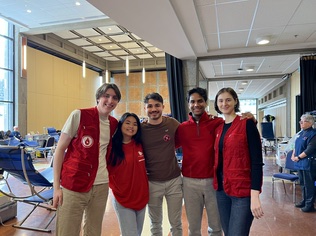
On March 6 and 7, McGill’s on-campus blood drive provided students with a productive activity between classes: Donating blood. The drive was brought to students through a collaboration between the McGill Students’ Blood Donation Association (MSBDA), the Medicine, Education, and Development for Low-Income Families Everywhere (MEDLIFE), the Medical Students’ Society (MSS), Nurses for Community Service, and Héma-Quebec

In Quebec, someone needs a blood transfusion every 80 seconds, meaning that the province needs 1,000 blood donations daily to account for patient needs. Over merely two days, the blood drive collected blood from over 100 students. 

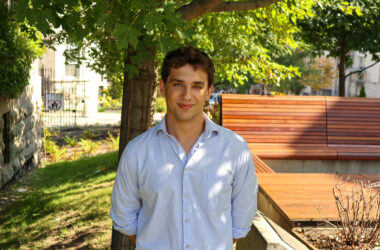
Cyril Kazan, U3 Science, is the president of the MSBDA, an organization that he founded in 2021 in response to the lack of blood supply in Quebec during the pandemic. The club focuses on recruiting blood donors, recruiting plasma donors, and raising awareness for blood-related issues such as sickle cell anemia.

Kazan explained in an interview with The McGill Tribune that the closest fixed blood donation centre is a 30-minute metro ride away from campus, an inconvenience for students eager to donate. 

“All the students complain about the 30-minute metro ride,” Kazan said. “That’s something that has made it harder for students to donate and harder for us to convince them to donate. So, having it on campus is much, much easier. Students can donate blood just between classes, for example.” 

At that week’s blood drive, giving blood was extremely simple: After booking an appointment, students headed to the Students’ Society of McGill University (SSMU) Ballroom in the University Centre to register, take an online questionnaire, donate blood, and rest with some snacks. The Héma-Quebec nurses were kind and patient with donors, creating a comforting and calm environment. 

Although the drive was only two days long, organizers wished it could have been longer as online appointment bookings filled up fast. 

Natasha Odessa Grimard, M1 and MSS representative, hopes to expand their next drive to accommodate more donors. 

“One thing that we would like to do in the future is maybe a three-day instead of a two-day blood drive,” she said. “So really extend the drive or even add another blood donation zone.”

Kazan knows that many students are concerned about the safety and potential consequences of donating blood. Before the process, all patients are subjected to a blood pressure and hemoglobin test to ensure they are safe donors. However, Kazan insists that patients don’t lose anything by donating. 

“Blood is something that 100 per cent regenerates. So you’re donating your blood, but in more than 50 days, all of the things that you lost, so the iron, the red blood cells, everything will be regenerated, and you’re back to normal,” Kazan said. “Except if you’ve finished your blood donation and you go run a marathon, then yeah, you’re gonna be in bad shape.”

If you’re thinking about donating blood, checking the eligibility criteria first to ensure that you fit the blood donation criteria is essential. A few common mistakes that inhibited students from donating were having gotten a tattoo or piercing in the last three months, recent travel to a different country, or forgetting a valid form of ID (Héma-Quebec volunteers recommend a passport).

Although there is not yet another on-campus blood drive to look forward to, students eager to donate blood can register for an appointment at a clinic in Montreal or stay up to date with blood donation opportunities on and around campus by checking the MSBDA Facebook page

Donating blood is essential to our healthcare system, and for Odessa Grimard, when it’s as easy as walking over to the SSMU building, the pros outweigh the cons. 

“We need blood donated by people in order to treat other people and there’s very little way about it for a lot of cases. So of course we need people to donate blood because I would like my patients to have the greatest chance of survival. And that sounds dramatic, but that is the truth.”

McGill, News

Students condemn inaccessible food prices during Let’s Eat McGill assembly

Content warning: Mention of disordered eating

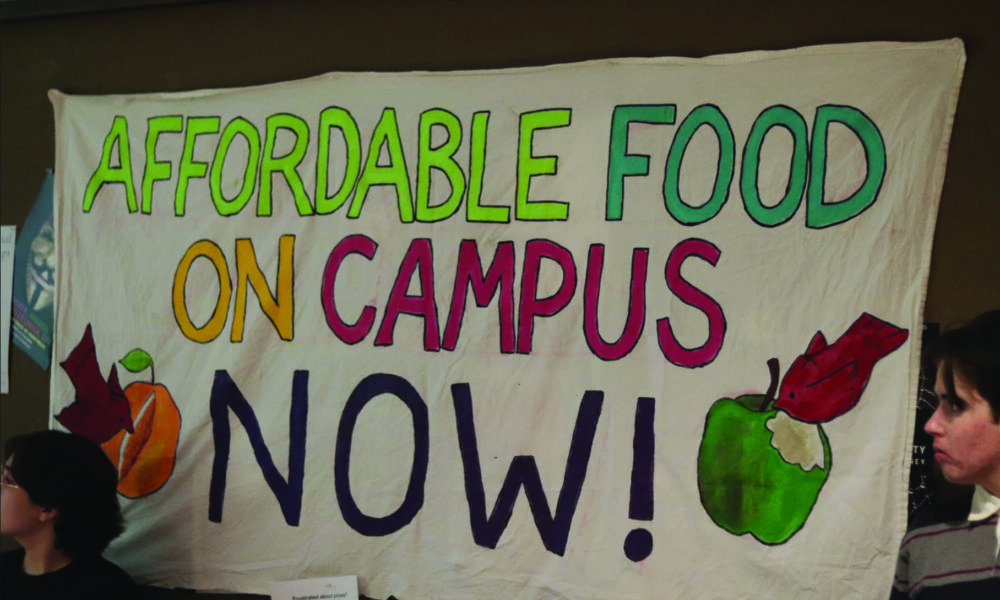
Students filed into Arts W-215 on the evening of March 7 for an assembly on the food insecurity crisis at McGill hosted by the new campaign Let’s Eat McGill. All seats were full by the time the presentation began, which was rife with photos of expensive cafeteria items, such as a $17 caesar salad and a $15 box of raspberries. Throughout the night, snaps turned to banging on desks as students got fired up about exorbitant food prices on campus. 

Moderators discussed the $6,200 per-year fee that McGill requires students living in residences to pay, much of which goes toward food: $4,725 of the fee is dedicated to the mandatory meal plan, $975 is for a meal plan administrative fee, and $500 is put into students’ oneCard accounts for expenses such as laundry and eating at affiliated off-campus dining spots. Many at the assembly said that the plan only covered one or two meals a day, forcing them to find food elsewhere. 

“I was in residence last year [….] I would go grocery shopping to supplement [the meal plan] which is ridiculous, because, […] it’s like $192 a week [….] Where is the money going?” Sadie Cambray, U2 Arts, told the The McGill Tribune.

Roommates Alyssa Abou-Chakra, U1 Science, and Miranda Roberts Nouel, U1 Arts, were similarly shocked that 10 items from Provigo only came out to around $70 because of the prices they were used to paying at McGill’s dining halls and cafés.

Students also shared frustrations about having to resort to unhealthy eating practices to get by, such as under-eating or skipping meals entirely. Many cited a worsening relationship with food after coming to McGill.

“I came into McGill already with […]very much an eating disorder,” Morgane Garrick, U1 Arts, told the Tribune. “So I already had a really strained relationship with food. And yeah, it went downhill […] particularly my first year in New Res because of the food options, because of the prices.”

The university has held a contract with Dana Hospitality, which calls itself a “food service management firm,” since 2019. The firm supplies food to the five residential dining halls and has gradually taken over many cafés on campus, meaning it has a virtual monopoly at McGill. Students also pointed out that at Macdonald campus, the situation is especially dire because of a lack of both on- and off-campus dining options.

Organizers explained that schools like the University of British Columbia and Concordia University have taken steps to subsidize cafeterias in response to high rates of food insecurity on campus and urged McGill to do the same. The administration, however, claimed it does not have room in the budget to subsidize the cost of food at a recent Board of Governors meeting.

Aside from subsidies, the organizers stressed the importance of student-run on-campus eateries, which used to be abundant at the university but have gradually been phased out. Before McGill’s move toward privatization, student associations operated popular dining spots such as the Architecture Café and The Nest, which both provided accessible, affordable food, as well as employment opportunities for students. Attendees discussed how a return to this model could re-envision dining at McGill as a community-building experience, rather than an isolating and stressful one. Many pointed to Midnight Kitchen’s free lunches as an example.

Alex Bluck Foster, U4  Arts and one of the organizers of the meeting, enthusiastically reflected on the assembly after the event.

“The atmosphere was more than I could have hoped for. Everyone’s been really vocal and had great points. And it’s really nice to hear everyone raise things that I hadn’t even thought about, like getting jobs from student cafés,” Bluck Foster said in an interview with the Tribune. “This definitely was intended to be a collaborative thing [rather than] us as this organization coming and telling you our ideas [….] We want to form a coalition with your help.”

Research Briefs, Science & Technology, Student Research

Making soup with methane, vitamin D, mRNA, and shellfish waste

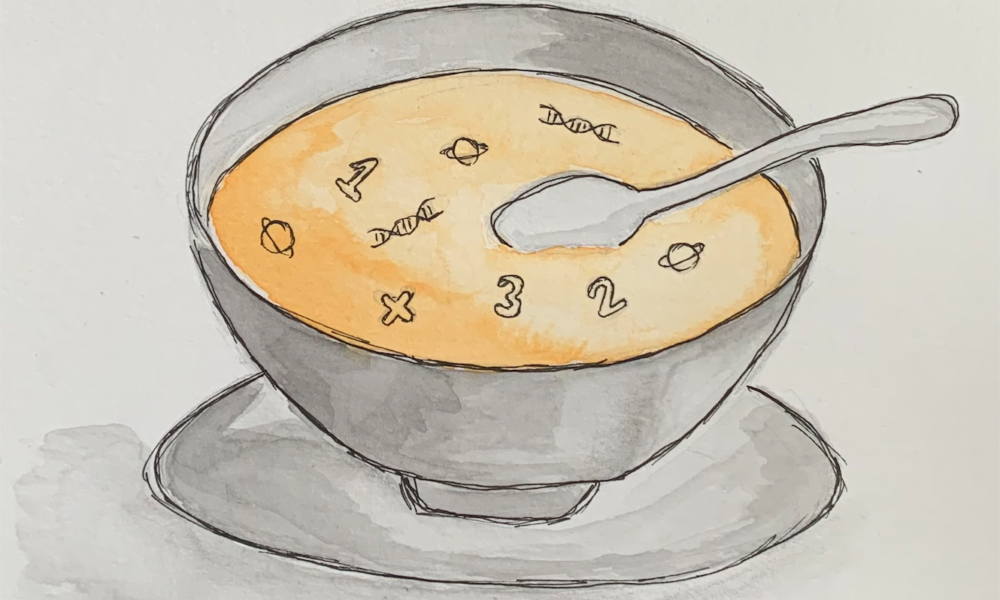
The 35th semesterly Soup & Science was one for the books, with top-notch student and professor research presentations accompanied by delectable soup. The McGill Tribune  brings you the presentations we liked best for a little taste of the event.

Improving mRNA resilience by combining it with other molecules 

U4 chemistry student Sally Yao presented her research about the instability of nucleic acidss, which are the gene-storing molecules that form DNA and RNA. 

“From COVID, many of us are familiar with therapeutic nucleic acids, which are mRNA vaccines,” Yao explained. “Despite its great efficacy in treating diseases […] the biggest limitation is that it’s really unstable under ambient temperature.” 

Because mRNA vaccines cannot be stored above a temperature of 20 degrees Celsius, communities in hot or remote areas have limited access to them. The same instability causes mRNA from COVID-19 vaccines to degrade in our bodies over time, meaning that we may have to take more booster shots, exhausting our immune systems. 

Yao’s research endeavours to bind nucleic acids to poly-A, a chain of nucleotides in mRNA, to form a three-stranded molecule that our cells cannot degrade. Perfecting this will solve the myriad issues of mRNA vaccine storage, like temperature and expiration dates.

Sustainably processing shellfish waste 

Chemistry professor Audrey Moores presented her research on finding ways to sustainably process discarded shells from the shellfish industry. 

“If I look at the province of Quebec, we estimate that we generated about 14,000 tons of the [shellfish] waste every year, which is humongous. And right now, we don’t do anything with that waste,” Moores said. “This is a missed opportunity because these materials can actually give rise to value-added materials.”

Moores’ research could lead to a sustainable, practical way to handle shellfish that would help limit the environmental impact of leaving huge piles of shells along shores. It would also allow us to make use of the valuable components present in shells. 

“They contain nitrogen-containing molecules, which is very rare for stuff coming from nature,” said Moores. “This can be interesting because it has some cool applications in the biomedical area, for instance.”

How do experiences of racism impact long-term health?

Darius Scott, an assistant professor in the Department of Geography, spoke about his work mapping the relationship between health outcomes and people’s experiences of stigmatization and racism, as well as their perceptions of how accepting their environment is. 

“In thinking about stigma and health, again, there’s so many factors or so many outcomes that are associated with stigma,” Scott said. “I’m just starting here in Montreal, seeking out Black, gender, and social minority adults, and the impacts of past and recent stigmatizing experiences on their perceptions of the city.”


In the past, he has conducted studies asking similar questions in the American South, making discoveries that inform and motivate his research here in Montreal. Some findings indicated that experiences of stigmatization can have long-lasting effects on how individuals, Black gay men in particular, felt about their communities.

“The folks I was working with suggested that even if you live in an environment that’s more accepting, past experiences of stigma can be so persistent in dictating your perception of your present-day environment,” Scott said.

Stable isotope biogeochemistry and paleoclimatology

Associate professor Peter Douglas’ research focuses on the role of methane emissions in global warming, both in wild environments, such as natural landscapes in northern Quebec, and populated towns. 

Methane is a focus of climate change research because it warms the atmosphere 32 times faster than carbon dioxide (CO2).

“While there is a lot more CO2, methane has a very big impact on the atmosphere—it accounts for about 25 per cent of anthropogenic global warming,” Douglas said during his presentation. 

Large amounts of carbon are stored in permafrost—permanently frozen soil that is common in Canada. 

“We’re worried that as the planet warms, this is going to release carbon [from permafrost] in the environment and it is going to turn into CO2 and methane,” Douglas added. 

His team found, using radioactive carbon isotope dating, that methane in the environment is actually derived from “younger” carbon compared to other carbon-based emissions. This is because “almost all [methane] is coming from human operations, with some coming from tailings ponds and some from bitumen mining.”  

Community relationships to governmental conservation efforts 

Associate professor of geography Brian Robinson’s research focuses on the way communities use the environment to implement conservation efforts that  target highly exploited areas. 

Robinson’s research specifically looks at how  communities in China interact with the environment. His data found that low-socioeconomic status communities were more likely to depend on their natural surroundings for their livelihoods. 

Another focus is how governmental policies and institutions affect the environment, focusing on agricultural subsidies. China passed legislation to compensate herders who limited their livestock numbers in an attempt to preserve regional grasslands. Robinson studied this policy to determine the size of its ecological impact. 

He found that payments were insufficient to cover the losses that herders incurred as a result of downsizing their  livestock and that the Chinese government would need to increase their payments in order to see larger benefits from the program.

Randomness in infinite dimensions

Mathematics professor Linan Chen studies what comprises “randomness” through probability regarding concepts with “infinite dimension.”

“We can think of dimension as a degree of freedom,” Chen said. “A line only has one degree of freedom, while a plane has two dimensions, so you have two degrees of freedom […] we’re going to see infinite dimensional randomness—all of them related to geometry.”

Chen explained that you would need to “put an infinite degree of randomness” to get a truly random curve.

“In fact, nature has given us the best answer,” Chen said. “Robert Brown was a botanist who put […] pollen on top of water’s surface, and as the water molecules kick and bounce off, the pollen moves across the water’s surface, leaving a [zig-zag-like route.]”

Brownian motion can be found in water molecules diffusing through a cell membrane, and it’s different from other curves like a sine wave because there are infinite degrees of randomness found within Brownian curves. 

Links between vitamin D and autoimmunity

Physiology professor John White presented his research about how vitamin D deficiency in childhood affects autoimmunity later in life, discerning that it can lead to Type 1 diabetes or multiple sclerosis

“The clinical evidence suggests that vitamin D is influencing the process in the thymus called negative T-cell selection, in which T-cells of the immune system that recognize the ‘self’—anything that you produce, [and] for the most part, proteins—as a foreign invader, [rendering them] immunologically innocuous,” White said. 

Autoimmune regulators (AIREs) are proteins that drive gene transcription for every protein encoded in your thymus. Vitamin D’s role in the thymus was unknown until White discovered it’s a cofactor with AIREs, as it assists AIREs in chemical reactions.

“Vitamin D stimulates the transcription of a number of genes that are regulated by AIRE,” White said. “This puts vitamin D at the heart of the critical transcriptional events that are necessary to control negative T-cell selection.”

Evaluating aptamers as DNA repair inhibitors

U3 pharmacology student Antoine Moitessier’s research involves using aptamers—DNA or RNA strands that can fold into a three-dimensional structure and bind to target molecules, such as proteins—as cancer-preventing agents. 

Moitessier seeks to understand how current therapeutic methods for cancer, like chemotherapy, involve DNA denaturation and also take a large toll on patients’ overall health. 

“[DNA denaturation] is toxic to cells, [so] the idea is that they will also be toxic to cancer cells as well, but they, of course, have many side effects,” Moitessier explained. 

Aptamers should inhibit DNA polymerase beta from repairing damaged cells with cancerous cells, preventing the cancer’s growth. Moitessier focused on aptamers because of their high affinity, which means they bind ‘tightly’ to targets, and high specificity, since they attach to only a certain cell type. As opposed to chemotherapy, aptamers will not cause cell death.


News, SSMU

SSMU spends $1,500 on incoming executives’ PR training, hires publicist

In May 2022, the Students’ Society of McGill University (SSMU)’s Legislative Council passed the Motion Regarding the Adoption of a Media and Transparency Plan. The motion mandated that the Society hire a public relations (PR) advisor by May 2023 to increase transparency and provide media training for SSMU staff. 

According to vice-president (VP) Finance Marco Pizarro, SSMU officially hired a publicist in February 2023 and PR advising will be incorporated into the 2023-2024 SSMU executives’ onboarding.

SSMU President Risann Wright and VP Internal Cat Williams did not respond to The McGill Tribune’s requests for more details about the hiring. Pizarro, however, confirmed that the Society spent $1,500 on the training. 

SSMU hired a PR advisor, whose name and affiliated firm were not disclosed to the Tribune, who will work with future executives and some SSMU staff to establish proper communication networks with students and media. Pizarro did not share details of SSMU’s contract with the advisor or whether the training was outsourced before the advisor was hired. 

“Most training is done with the SSMU team and outgoing Executives; we have a full team of managers and employees who specialize in various departments and share their expertise with the incoming Executives starting May 1 of each year,” Pizarro wrote in an email to the Tribune. “The Executive team typically prepares a month full of training with Commissioners, Staff, outgoing Executives, and groups on campus, including McGill staff, to ensure a smooth transition.” 

The advising will be mandatory for all SSMU executives and a few unelected positions. Pizarro explained that the additional employees who will get the training were chosen based on the likelihood of their interactions with media outlets during their tenure. 

“The rule is that staff cannot speak to [the] media because they are not elected people, and so, it is only positions that can speak to the media [who will receive the PR training],” Pizarro wrote. “But there are some exceptions made, usually when staff is much more qualified.”

Rory*, an SSMU employee, has yet to receive the PR training but believes it is important because it provides some instruction on how to speak comfortably with the public for employees who lack experience doing so. 

“Some people might think about the training in a twisted way, […] but I don’t think about it in that way,” Rory told the Tribune. “I’ve seen the [executive] committee interact with the public, and they seem to be very comfortable and eloquent.” 

Aimy Croner, U4 Arts, thinks the PR training is beneficial to students working for SSMU and the student body at large. As a student who recently started working at McGill, she felt unprepared for certain tasks and believes that this type of  training would help her learn the skills not taught in the classroom setting. 

“I think that [PR training] is a really interesting initiative,” Croner said. “ It would take away that barrier. Like, I know that SSMU is for the students, but some people might [not] really know about it and might think that it’s still part of the institution of McGill. So you have a small barrier there in terms of ‘I don’t want to say something wrong.’” 

Kateri Duranceau, U1 Arts, echoed Croner’s sentiments about the training having the potential to increase transparency, but she worries that SSMU executives would prioritize PR-safe strategies over promptly resolving problems brought to their attention by students. 

“I think it’s important to learn how to communicate with customers [….] But also, I think it could give an excuse to people to just not really do  their job [well],” Duranceau told the Tribune. “So it’s important but in moderation.”

The Tribune did not receive further information regarding the PR training, including the budget set aside for the advisor’s salary.

*Rory’s name has been changed to preserve their anonymity.

McGill, News

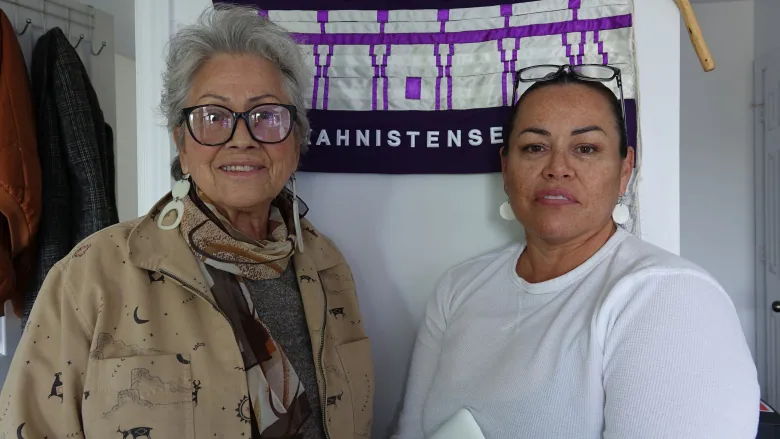
Kanien’kehà:ka Kahnistensera speak at McGill while university attempts to lift New Vic injunction

In honour of International Women’s Day, the Kanien’kehà:ka Kahnistensera (Mohawk Mothers) participated in a roundtable discussion hosted by the Students’ Society of McGill University (SSMU) on March 8. The talk, chaired by Nancy R. Tapias Torrado, a human rights lawyer and visiting fellow at McGill’s Centre for Human Rights and Legal Pluralism (CHRLP), touched on the challenges the Mothers have faced in their ongoing lawsuit against McGill. 

On Oct. 27, the Superior Court of Quebec granted the Mothers an interlocutory injunction that halted the university’s New Vic Project over the Mothers’ concerns about potential unmarked Indigenous graves at the site. The order remains in effect until April 27 with the possibility of extension or until both parties, the Mothers and McGill, reach an agreement. 

During their roundtable at McGill, the Mohawk Mothers emphasized the importance of their case in the ongoing fight for land rights. Mother Kwetiio believes that the Canadian settler-colonial state continuously violates Indigenous peoples’ rights, but camouflages these violations using structures such as the reserve system

“It’s still happening to us. Our human rights are still being violated. As my husband would put it, he says that living on our reserve feels like we’re living in a residential school. We’re constantly being monitored. Our rights are constantly taken away from us.” 

– mohawk mother kwetiio during ssmu roundtable

The Mothers stressed that the surface-level, performative activism that institutions and powerful individuals engage in cannot be equated to real advocacy for Indigenous groups. Mother Kahentinetha said that while the cultural genocide of Indigenous peoples has been recognized, no real reparations or next steps have been taken. 

“The Pope said, ‘yes, it is a genocide,’” Kahentinetha explained. “But now what happens? You don’t hear anybody talking about what they want to do. All they want to do is say, ‘well, I’m sorry about it.’ They want us to forgive them for what they did to us, but then they turn around and live a very good life right on top of our unmarked graves.” 

On Feb. 9, McGill filed a motion to lift the injunction on the grounds that while strides have been made during confidential discussions with the Mothers, the two parties still disagree on numerous points, including the Mothers’ methods for archaeological investigation on the site. The motion argues that “the New Vic Project is a legitimate and worthwhile endeavour that is essential to the future of McGill University and is in no way at odds with, or antithetical to, Reconciliation.” 

In an email to The McGill Tribune, McGill media relations officer Frédérique Mazerolle explained that McGill remains committed to positive discussions with the Mothers, but that the university will pursue litigation if there is no resolution before the injunction expires. 

“If such a resolution is not reached, the matter will proceed before the court given that the order issued by Justice Moore on Oct.27, 2022 is in place for six months,” Mazerolle wrote.

The Mothers remain adamant that all archeological work should centre on direction from qualified professionals and adhere to the guidelines set forth by the Canadian Archeological Association (CAA). 

During the roundtable, Kwetiio urged Canadians to show true support for Indigenous communities by researching the atrocities that have occurred in Canada and actively participating in the fight for justice for Indigenous peoples. She would also like universities to revamp their constitutions to properly acknowledge Indigenous history.

“If you learn something and you totally disregard it, then you’re not part of the solution. You’re part of the problem,” Kwetiio said. “It’s harsh to hear that, but if you don’t take the things that you’ve learned and do the right thing, […] you’re part of the problem.” 

McGill’s motion to lift the injunction will be heard on April 20 and 21. Prior to these court dates, there are judicial settlement conferences scheduled for March 22, April 4, and April 6, which will aim to reach an agreement outside of litigation, as recommended by Justice Gregory Moore.

Research Briefs, Science & Technology

McGill exoplanet specialist recognized for outstanding work in astrophysics

Last month, the Astronomical Society of India awarded McGill physics professor Eve Lee the 2022 Vainu Bappu Gold Medal for her work in astrophysics. The award honours young astronomers—typically under 35—for their exceptional achievements and potential.

Lee’s work focuses on exoplanets, which are planets that orbit around other stars in solar systems outside Milky Way. Studying the behaviours of exoplanets can provide information about the origin of our own solar system, including the conditions necessary for creating life—something Lee finds particularly fascinating.

“I am very much motivated by all the interesting and unexplained patterns and trends we see in the observed properties of exoplanets,” Lee said in an interview with The McGill Tribune.

Many of the patterns and trends Lee studies manifest in the way planets form, grow, and organize themselves. Relationships between the masses of planets and their host stars, or the chemical composition of exoplanet atmospheres and cores, are just some of the topics that Lee researches.

One of the challenges of astrophysics, however, is building experiments since the systems being studied are too huge and too far away to manipulate in a lab. 

The nearest star, excluding the sun, is Proxima Centauri b and it is over four light-years away, meaning that radio communication of a single message would take over four years. Comparatively, the farthest object ever sent into space, Voyager 1, has travelled less than one per cent of that distance. 

To circumvent this issue and not stall research, Lee and other astronomers depend on telescope observations to gather information. Techniques such as spectroscopy—matching colours of light signals observed by telescopes to the elements known to emit those signals—can be used to gain insights about the material composition of exoplanets that cannot be directly measured. 

Another common technique, called the radial-velocity method, uses the change in light signals from moving exoplanets to determine how quickly planets are moving. This change is quantified by the Doppler Effect, a measurable difference in the light emitted by an object moving away, as compared to an object moving closer. By comparing the light emitted by exoplanets at different parts of their orbit, astronomers can figure out details such as the planet’s orbital velocities and distance from host stars. 

Using data like these, Lee tries to piece together more complex inferences about how exoplanets are formed, what they’re made of, and how they behave.

Lee has conducted her research at institutions across Canada and the United States, including the University of California, Berkeley, the University of Toronto, and McGill, ever since she completed her undergraduate studies in 2011. 

According to Lee, she learned many of her most important research skills as an undergraduate.

“In research, it is important to come up with multiple ways to verify one’s result, and so coming up with various sanity checks is something I tried to build on since my undergraduate years and it is also what I emphasize to the students in my group,” Lee said. “In addition, I would say patience and tenacity in carrying out research is also an important quality that can be built from undergraduate years.”

As for navigating the world of academia and the challenges that she faces as a woman in the male-dominated field of astrophysics, Lee credited support from mentors over the years.

“I was very fortunate to have had numerous mentors throughout my academic career, with whom I still keep in touch. I think having this network of mentorship helped me navigate various challenges I came across,” Lee said.

Lee feels honoured to receive the Vainu Bappu award. 

“Receiving this award is a good opportunity to have students and junior scientists be excited about the research being done in my group and also more broadly to motivate them to pursue what they are interested in.”

Off the Board, Opinion

Accounting for oneself and others 

In my first year at McGill, my academic naiveté made me anxious and self-centred. I was convinced that good writing was a product of genius forged in solitude. When tasked with an essay, a tinge of shame came in reiterating the ideas of other scholars and writers. Citation in those first few months often came at the end of my essay writing process, always an afterthought—the bibliography felt like a confession of my intellectual ineptitude. 

I soon learned that I had missed the whole point. Now, in my last year of university, a long and sprawling “Works Cited” page brings me satisfaction. Citation lays out the constellations of labour and love behind an individual and their work. Any student who has toiled through a research paper knows that before you can say anything of value, there comes the more arduous and vital task of understanding what others have said before you. The personal voice can only go so far. When it gestures and tunes in, rather, to a varied chorus of those who have preceded it, we can find mutual respect and insight in speaking the same vocabulary and echoing one’s own academic and creative investments. 

On the topic of citational practices, I can look to Sara Ahmed, who first wrote on the inequity of citation in academia, or read Moya and Trudy Bailey who first coined the term misogynoir. To learn how to inhabit a shared language, I can reference Fred Moten and Wu Tsang’s collaborative works that quote messages, emails, and edits exchanged between the pair during their creative processes. 

These writers advocate for citational practices that recognize citation as a technology of violence in academia. It is not incidental, for example, that a 2018 survey of syllabuses conducted by The McGill Daily on the Department of Political Science at McGill found that 86 per cent of the 300 authors polled were white and 75 per cent were men. In a 2018 episode of CBC’s Unreserved podcast, Indigenous scholars Kyle Powys Whyte and Sarah Hunt shared that Indigenous scholars are pressured to cite white male scholars and Western academic knowledge in order to legitimize their work. In research-centred universities like McGill, where citation is a measure for tenure, citational practices that obscure the labour of marginalized scholars translate into the material gaps within classrooms and faculty. Ahmed makes this key point: Citation is an act of selection, not a natural mirror of a discipline’s history or its core figures. 

Though most commonly encountered through the bibliography and the university as an institution, citational practice manifests in our habits of engagement with others beyond the ivory walls. If we keep our sources of knowledge institutionally bound, we neglect the vast majority of racialized and lower-income people who don’t have the privilege of being legitimized. I like it when I’m able to quote and give authority to a friend when sharing an anecdote or a piece of advice. I also enjoy learning about my friends’ own sources of wisdom, as this makes me more equipped to converse with them and critique them if I disagree. When shared, knowledge of any kind and the interpersonal networks that uphold it expand in reach only through decisive acts of conversation and commitment with and to one another.

Centring citation as a practice both within and outside of academia has made me more aware of my own agency in the sources of knowledge I choose to engage with and pass on. I’ve become more hesitant to opine hastily, though I no longer see this as a failing. Now in my last year at McGill, when writing an essay or talking with a friend, rather than seeking to immediately share a testament to my own unique knowledge, I think it’s enough to faithfully quote an idea that I see value in, or merely put it in conversation with another. 

Read the latest issue

Read the latest issue