

Latest News

McGill, News

Students suffer from ‘food desert’ at Macdonald campus

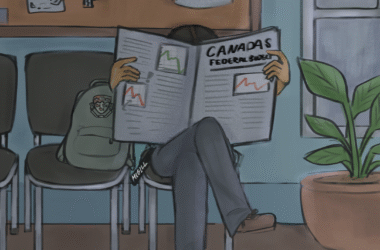
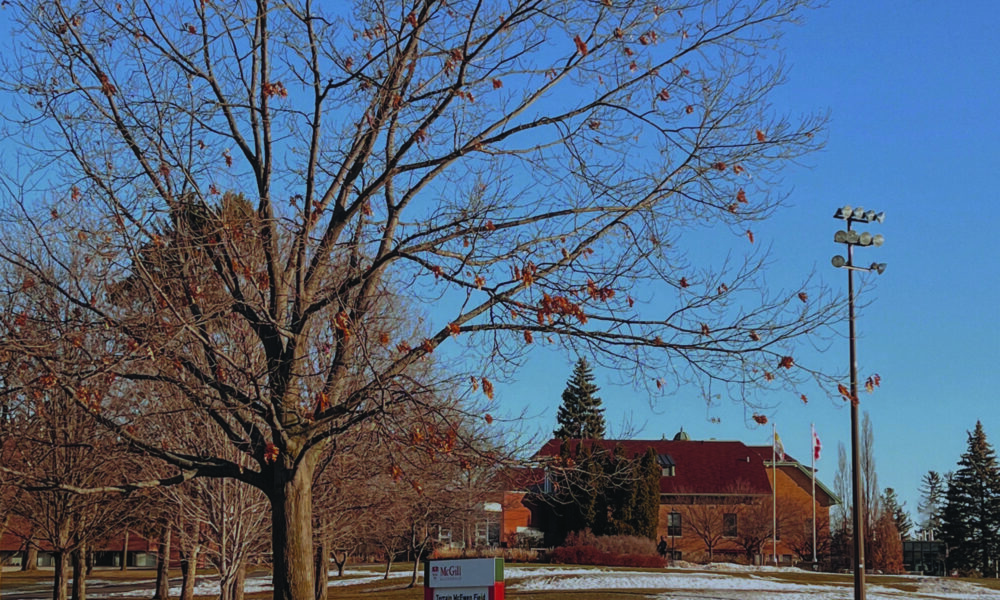
With the closure of Sainte-Anne-de-Bellevue’s sole grocery store, Marché Richelieu, in early January and the closure of McGill’s Barton and Macdonald-Stewart buildings due to asbestos on Jan. 31, students at the Macdonald campus have been left with few options to access food. 

The Twigs Café on campus has also closed, leaving only one on-campus eatery: The Ceilidh. Any students hoping to buy groceries now have to either order them online through a delivery service or use the bus service that takes students to the nearest grocery store once a week.

The bus service, provided by the administration, ran one bus before Marché Richelieu’s closure but was expanded to run two in late January to meet students’ increased need to commute for groceries. Every Monday night at 6:30 p.m., two buses shuttle students from Laird Hall to a Walmart about 10 kilometres away in Vaudreuil. The bus then returns students to campus at 8:30 p.m. The service is available to all students, including graduate students, but is first-come first-serve. According to McGill media relations officer Frédérique Mazerolle, the plaza in Vaudreuil also includes a Metro, Dollarama, and Bulk Barn that students can access during their two hours.

The Macdonald Campus Students’ Society (MCSS) has been working to adjust existing services by liaising with the McGill administration. In an interview with The McGill Tribune, MCSS vice-president (VP) External Zell Song said that MCSS is creating surveys to gather student opinions. Using the information provided in the survey, MCSS hopes to create a report to present to the Student Housing and Hospitality Services (SHHS) and the administration to adjust the existing services to better fit student food needs.

“For students who live in Sainte-Anne, it’s kind of hard for them to be dropped off at school and then have to walk back to the place where they live,” Song said. “So [we can see] if it’s possible to stop at a bus stop so they can walk less [….] If there’s a lot of students who think another time instead of Monday evening works better, based on the majority of responses, the housing office [might be] willing to change the time.”

MCSS VP Equity Affairs, Sara Kosumi, told the Tribune that while the bus service has been helpful, there are still issues surrounding access that McGill needs to address.  

“It’s great that they are taking action and providing another grocery bus, but I wish they could reflect students’ voices more,” Kosumi said. “I hear that students cannot take the shuttle because of the time it would take—students would have to wait on the returning bus for at most one and a half hours before the bus leaves the store, no matter how fast they shop [….] Maybe McGill wanted to act quickly, and we appreciate that. However, I believe now is the time to hear students’ voices and adjust.”

As a student living in the Macdonald campus residences, Kosumi shared that with the limited space in residence kitchens, getting food for the entire week with the bus service is not feasible.

“I used to use Marché Richelieu to buy things in the middle of the week when there was no shuttle bus,” Kosumi said. “With the limited space in the shared fridge in residence, getting [the] food I needed for a week from a grocery shuttle wasn’t feasible [….] However, now that Marché Richelieu has closed down, I rely less on fresh vegetables or meat and live off plain rice or cereals.”

According to Jamie*, the closures have only exacerbated an existing problem, not created a new one. Using the @maccornhub meme page on Instagram, which they run, Jamie has been able to gauge the attitudes of Macdonald campus students through a Google Form linked in their bio.

“Mac campus has been a food desert for as long as it’s been around,” Jamie told the //Tribune//. “I think many students are kind of feeling cheated of their university experience at this point. Firstly with COVID, and now with the asbestos closures. It’s also really hard for student societies to encourage people to come to campus.” 

Jamie also pointed out that some Macdonald campus students felt neglected. As the Macdonald campus is over 30 minutes away from downtown and has a significantly smaller student population, some students feel that the McGill administration fails to provide adequate support to its students. 

“As a Mac campus student myself, I’m honestly not surprised with how things are going,” Jamie said. “It doesn’t take long as a Mac student to realize that McGill admin doesn’t really care for us [….] Students on the campus already have to make up for so much that is lacking since the McGill community kind of ignores us—I wouldn’t blame them, we are like 35 minutes away, it just sucks that they wouldn’t at least try a little harder.”

Zahur Ashrafuzzaman, U3 Arts and Science, told the Tribune that the problem of food insecurity at  Macdonald campus is compounded by the fact that the MCSS has no voting power on the Board of Governors, unlike the Students’ Society of McGill University (SSMU).

“The issue with food accessibility has deep roots at McGill, reaching up to the Board of Governors who refuse to allocate sufficient funding to subsidize food services or student-run food security-focused groups on campus,” Ashrafuzzaman said. “It becomes much more difficult for Mac students to advocate for McGill to take action to address this food insecurity when they don’t have any voting power on the Board.”

While the options are more limited than before, the MCSS and other student groups are working to provide accessible and healthy food for students. With Happy Belly, an organization that provides free vegan meals every Thursday and Buy your Own Bulk, which buys food in bulk to sell at affordable prices to students, those outside the McGill administration are trying to mitigate the issue. In addition, the Macdonald campus’ Horticulture Research Centre grows produce year-round. The center has provided over 40,000 kilograms of produce to McGill Food and Dining Services in the past three years. In July through November, the produce is also sold to students and community members at the Mac Market.

MCSS also runs The Ceilidh, the only on-campus restaurant currently open to students while three buildings remain closed. The Ceilidh is open from 8:30 a.m. to 3 p.m., after which it operates as a bar, on weekdays. To Jamie, The Ceilidh is essential.

“This has honestly been a saving grace, especially since the restaurant is located in one of the buildings that is not closed,” Jamie said. “I think the major issue is if you are on campus not during peak times […] if you’re on campus for any 6 p.m. classes or whatnot, there are no options available for you.”

*Jamie’s name has been changed to preserve their anonymity.
Research Briefs, Science & Technology

Data scraping reveals Montreal’s hidden property owners

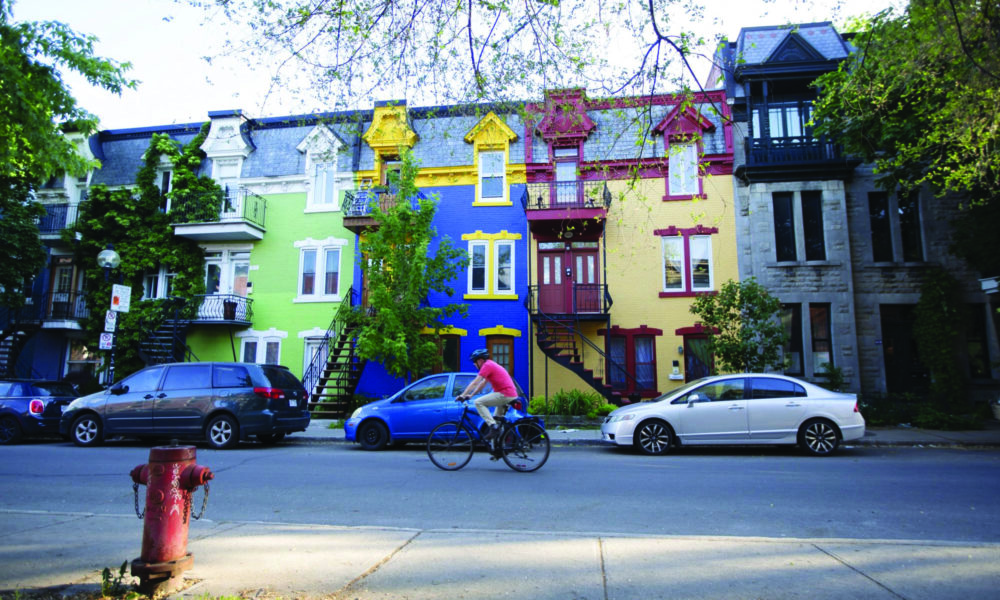
With the school year closing fast, one thing on returning students’ minds is finding a new apartment. However, many students will struggle throughout the process, facing high competition and prices, adding to the already stressful experience of moving into a new place.

In the 1990s, Montreal, and Canada as a whole, began leaning into policies that would simplify a process called financialization for real estate companies, including legalizing real estate investment trusts (REITs). Financialization is when financial companies, such as Metcap Living, buy residential properties with the hope of increasing the payout for company shareholders. 

A variety of factors contributed to more instances of financialization in the housing rental market, like REITs—large financial institutions that specialize in buying up residential properties—higher demand for rental housing following the 2008 global financial crisis, and the deregulation of rent control and tenant protections. 

Since businesses are not inclined to share financialization data with the public, University of Waterloo PhD student Cloé St-Hilaire and McGill PhD student Mikael Brunila decided to wade through the financial muck to find it. In a recent article supervised by David Wachsmuth, associate professor of urban planning at McGill, the two graduate students tracked the ownership data of a number of financial companies in Montreal, including the top 600, who altogether own around 32 percent of Montreal’s apartment units. 

“One of the points we want to bring home most forcefully is that this is the type of information that should be available for everyone living in a city so that they can encounter landlords on equal footing,” Brunila said in an interview with The McGill Tribune. 

Brunila had the difficult task of figuring out how exactly he and St-Hilaire would collect the data they were looking for. Montreal maintains a public database detailing the owner of every building in the city. But individuals must look up each building one at a time to see who owns it. This time-consuming task prevents the average city-dweller from tracking all the buildings owned by any single entity of interest. 

Brunila used a method called data scraping, where a computer program collects and copies large quantities of data from the internet, to find the names of the firms that own real estate in Montreal.

“After we had this data, it gives kind of a starting point,” Brunila said. “If you go and look up in the registry of companies in Quebec, […] you’ll find that that company is not owned by people, it’s owned by other companies.”

This led to another round of data scraping, this time to track the breadcrumbs left by each company leading to their parent companies. Once the researchers had both sets of data, they were able to draw several conclusions about financialization in Montreal.

The team arranged data into clusters, grouping similar data points into collections and analyzing them according to similarity. For this study, people were grouped together according to how they are affected by financialized apartments.

“When we did a clustering analysis, it gave five clusters total, but there were two clusters that were more prone to have financialized landlords in them,” St-Hilaire said in an interview with the Tribune. “The first cluster is called financialized precarious students.”

This means that students are particularly likely to find themselves living in financialized apartments, which explains the increased difficulty of finding affordable student housing: Financialized apartments are more prone to rent increases and predatory landlord practices such as harassment and eviction. 

The second largest financialized cluster was renters willing to pay higher prices for newer units. New buildings are often funded by financial firms and funds as Montreal does not enforce rent controls for the first five years following the completion of a building’s construction.

Since companies are wary of this data getting out, they have already taken action against this research. After Brunila scraped the data from the website, a CAPTCHA was installed, which is a test to separate humans from computers, to prevent similar techniques from taking advantage of the same vulnerability that he found.

Arts & Entertainment, Theatre

‘Our Fathers, Sons, Lovers, and Little Brothers’ powerfully tackles anti-Black racism

Content Warning: Discussion of anti-Black racism, police brutality, and murder

While Our Fathers, Sons, Lovers and Little Brothers arrived in Montreal at the end of Black History Month, this solo theatrical work serves as a striking affirmation that Black lives matter year round. Created and performed by Makambe K. Simamba, this co-production between Black Theatre Workshop and Toronto’s Tarragon Theatre ran from Feb. 22 to 26 at the Segal Centre

The play invites audience members into the final moments of Slimm’s life, a 17-year-old from Miami who is murdered in an incident of anti-Black violence. Stuck in a mysterious liminal space, he must follow the steps his ancestors set out for him to prepare for his journey into the afterlife. 

Portraying the story of the real-life teen Trayvon “Slimm” Martin almost 11 years to the day after his tragic death, the play offers audiences a fictionalized look into Slimm’s life—a defiant opposition to the media’s tendency to focus on his infamous murder. On Feb. 26, 2012, Martin was walking back from a convenience store to his father’s fiancée’s house in a gated community when he was shot and killed by George Zimmerman. The captain of the local neighbourhood watch, Zimmerman claimed that Martin appeared suspicious and that he had been forced to shoot the teenager in self-defence after a dangerous physical altercation. Though charged with second-degree murder, Zimmerman was acquitted by the jury. Zimmerman’s acquittal sparked outrage across America as people fought to gain justice for Martin. This wave of protests against police brutality and anti-Black racism led to the eventual formation of the Black Lives Matter movement in 2013. 

To bring Martin to life, Simamba spent much of the creation and rehearsal process developing a movement style and vocabulary that felt representative of Black American youth at the time. 

“I wanted to explore 17-year-old hip hop culture, […] what that physicality and culture might have been,” Simamba said in an interview with The McGill Tribune. “In 2012, a lot of Black boys and teenagers were trending, and seeing the way in which young Black bodies were setting trends, dance moves, language [….] I leaned into it pretty naturally.”

In developing this physicality and vocal quality, Simamba expertly captured Martin’s energy and provided the audience with a clear-cut way of distinguishing between the various characters she plays throughout the story; Martin’s low, relaxed voice and slouched body contrasted with his mother’s higher, reedy voice and upright posture. Simamba shifted between characters swiftly and effortlessly, demonstrating an impressive command of her physical and vocal abilities. 

Now a nearly 90-minute play, Our Fathers, Sons, Lovers and Little Brothers was originally developed as a 10-minute solo piece while Simamba was participating in the Calgary theatre company One Yellow Rabbit’s Summer Lab Intensive in 2016. Simamba then continued to develop and refine the work for several years before its world premiere in Toronto at b current Performing Arts in 2019. The current production, directed by three-time Governor General’s Award nominee Donna Michelle St. Bernard, will continue to tour across Canada after its run at Black Theatre Workshop. 

Although it is distressing that the play continues to reflect the ongoing police brutality experienced by Black people in North America in 2023, Simamba recognized the importance of showcasing her play in a country where many continue to believe that anti-Black racism is a problem reserved for our neighbours south of the border. 

“That division does not exist in the way people think it does,” Simamba said. “There are Canadian names on the list [of victims of police brutality]. It’s not just one group or one country that’s doing this.” 

The play’s ending made the passage of time since 2012 feel even more striking. Simamba ended the performance by reciting a list of names—police brutality victims from the 1800s to the present. The devastating list went on for 10 minutes and included five names from 2023.

Off the Board, Opinion

Two minutes till dawn

Every morning, my phone tells me the sun is setting two minutes later than the day before. Most students would be warmed by the thought of another winter ending and brighter days coming soon to wash away the snow. Yet, every morning, I cannot help but feel a slight anxiety sliding through the cracks of my blinds. Tomorrow, the sun will also set two minutes later than today. Each day will go by, dragging along the sun, until yet another semester comes to an end. Before I know it, days will turn into years, and I will, hopefully, hold my diploma in front of the all-knowing camera, with a proud yet bittersweet smile on my face. Why did it have to go by so fast? 

I vividly remember graduating high school, as if it was just yesterday when we all threw our exam papers down the wooden staircase and ran through the streets of Paris under the rainbow of smoke flares. Although hope and nostalgia streamed through the air on that sunny day, I mostly remember the exhilarating euphoria of it all—the excitement of opening a new chapter in our lives. Mine was over 5,000 kilometres away. 

Leaving France, the few tears I shed were for the downright incompetence of  Canadian immigration services. But once I acquired my long-desired study permit, nothing could stop me. Montreal was waiting for me, and I was more than ready to dive into the unknown across the ocean. 

I will always romanticize my way through life, but I have to admit that everything was far from perfect. As memories of my first year at McGill already start to fade into the hazy corners of my brain, I can still recall the quiet life I led in my new city amidst a world-changing global pandemic. But between the restrictions and the silent dinners in my empty residence room, I somehow found myself. I fell in love with the city and its people, laughed a lot, and cried a bit as well. I turned the unknown into a safe place, and even a home. These tribulations of uncertainty became much more than just a place of passage or a single chapter of my life. And as the weeks go by and the sand in the hourglass seems to only be falling faster, leaving this place seems unimaginable.

While moving so far from home was never scary to me, the idea of going back fills me with a sense of dread that I cannot escape. The thought invades me, and I sometimes find myself living in the third-person, watching myself from above, already nostalgic for the present and for the moments that glimmer swiftly in an existence. As my friends play cards, make dinner in the kitchen—mundane scenes of everyday life—I try to inhale it all before it gets buried in the hourglass.

Unlike high school, leaving college feels like a ticking bomb. As I already see myself sitting on my final flight back to Paris, I’m afraid of going back to reality, of returning to the streets I’ve known my entire life without enough stories to tell. My pre-emptive fear of missing out might very well be a product of every single coming-of-age movie overselling the college experience as the “best years of your life.” But the truth is, these have been the best years of my life, and it takes a lot to imagine a future better than this. As I’ve turned 20, I feel as if my free trial for life is about to expire soon and it’s now time to be an adult, get a real job, and then what? 

But I find comfort in reminding myself of the chance I have of being here at all. I feel lucky to experience even this simple fear of growing up, and I know, deep down, that graduating doesn’t have to be sad.

Today the sun will set two minutes later than yesterday, melting the prints I left in the snow, but I’ll always know I was there.

Behind the Bench, Sports

Canada Soccer president resignation must be a force for progress

After more than two years in the position, Nick Bontis—the president of Canada Soccer—resigned following an escalation in the ongoing labour dispute between the organization and the Canadian Women’s National Team (WNT). Bontis’ resignation is certainly a step in the right direction towards a more productive relationship between Canada Soccer and both the WNT and Men’s National Team, who had their own dispute with the organization in 2022. However, Canada Soccer’s internal fractures and their potential effects on the WNT’s preparations for the upcoming 2023 Australia-New Zealand World Cup cannot be left unaddressed. If these issues continue to fester, the future of the sport in Canada is at stake. 

In an ambiguous resignation statement released on Feb. 27, Bontis failed to clarify his position on equal pay and resources. He cited the numerous achievements made by the association, including the successful bid to co-host the 2026 World Cup, though these feats occurred before his election in November 2020.

The announcement comes amid ongoing hostilities between Canada Soccer and the Canadian Soccer Players’ Association (CSPA)––the union that represents the WNT––over differences in expenditures and facilities between the men’s and women’s teams. While the CSPA expressed relief at Bontis’ resignation, they emphasized that more needs to be done.

One of the WNT’s central demands is to be granted similar resources for their 2023 Australia-New Zealand World Cup preparations as the men’s team was provided in the run-up to their historic 2022 Qatar World Cup campaign.

The CSPA’s demands are crucial to feeding the growing momentum for soccer in Canada. Since 1998, soccer has been the most played sport among Canadian children, resulting in the unprecedented developed talent available to both the men’s and women’s teams currently. Adequate funding and pay is vital in ensuring this momentum grows, and that the beautiful game continues to flourish across the country.

The U.S. Women’s National Team achieved equalized pay, resources, and prize money in May 2022 following highly publicized disputes and lockouts over several years. While many regarded the Americans’ dispute as a model for Canada, plans for a similar strike were stifled in late February after Canada Soccer threatened to sue the CSPA.

Instead, the Canadian WNT still routinely sports purple bands to promote their fight for equality in opportunity and pay.

With the Women’s World Cup coming up this summer, the WNT has expressed deep concern regarding the lack of resources provided to them by Canada Soccer. The team has been forced to shorten training camps, cut medical and coaching staff, and even reduce the size of their playing squad. Despite the WNT’s 2020 Olympic gold medal, Canada Soccer continues to disrespect their accolades. 

The lack of resources not only harms their chances of success in the tournament, it impedes the dreams of young women and girls hoping to pursue a viable professional career in soccer—careers that are not currently possible without equitable opportunity at the national level. 

Although players’ pay is disclosed for neither the men’s nor women’s national teams, insiders and journalists believe that there is a disparity. Some have pointed to the vast gap in World Cup prize pools to explain this. With 5.4 billion cumulative viewers, the 2022 Men’s World Cup distributed a record $440 million USD to national organizations for participation, an astronomical figure compared to the $30 million USD up for grabs at the 2019 Women’s World Cup.

Football administrators have historically argued that equal resource distribution is unsustainable in such a landscape of prize inequality. However, the women’s sport is rapidly catching up to its male equivalent: Viewership increased by 106 per cent between the 2015 and 2019 World Cups. Over one billion people watched the 2019 Women’s World Cup, with the number expected to increase for this year’s edition.

Perhaps this chaos and obfuscation across the board demonstrates Canada Soccer’s institutional incompetence, though in recent days the CSPA announced an interim agreement to settle the WNT’s pay through 2022, complete with per-game incentives and performance bonuses mirroring the structure of the men’s agreement. 

Progress on this impasse is vital if Canada Soccer wishes to transform its recent momentum into long-term prosperity. Meaningful reform could launch the beautiful game to blossom as Canada’s biggest sport. Watch out, hockey.

Along Party Lines, News

Along Party Lines: In conversation with the Honourable Marc Miller

When Marc Miller started helping high-school friend and current Prime Minister of Canada Justin Trudeau fundraise in 2008, he was a practicing lawyer, not particularly involved in politics. 

Fifteen years later, Miller has now been the Member of Parliament (MP) representing McGill’s riding for eight years and became the Minister of Crown-Indigenous Relations in 2021. He also became the first MP to give a speech in the House of Commons entirely in Kanien’kéha (Mohawk). 

Miller, 49, graduated from McGill Law in 2001, after completing his bachelor’s and master’s in political science at the University of Montreal. Though his father was the Dean of Arts at McGill and his mother an archivist, he did not want to become an academic. 

“I’m mildly introverted at times, but not introverted enough to do a PhD,” he said, chuckling.

Miller said he was probably older than the average law student during his time at McGill, but still enjoyed meeting people from different backgrounds.

“Some of my best memories are the kind of silly ones with my roommates […] participating in law games, stuff sometimes involving alcohol,” Miller said. “Probably not the most distinguished way for a minister […] to remember their [time] but you know, it was a memorable occasion.” 

After university, Miller became a mergers and acquisitions lawyer for Stikeman Elliot, working in Montreal, New York, and Stockholm. But after being inspired by Trudeau’s movement, he swapped  his time as a lawyer for helping Trudeau’s campaign. In 2015, Miller was elected MP for Ville-Marie—Le Sud-Ouest—Île-des-Soeurs.

Miller, pictured left, with Justin Trudeau, Prime Minister of Canada (Ryan Remiorz / Canadian Press)

Miller’s mandate as Minister is to build government relationships with Indigenous communities, which he does by settling treaty disputes and funding Indigenous support programs. Miller is conscious of Indigenous communities’ significant socio-economic disadvantages, such as insufficient access to health care and low water quality, and says the government is committed to tackling these problems. 

“Putting in sort of historic sums to try and close it, whether it’s education, health care, infrastructure, clean water, […] has been a […] highly profiled topic across the country, but something that’s still ongoing,” he said. 

McGill is currently involved in its own dispute with the Kanien’kehá:ka Kahnistensera (Mohawk Mothers) over the New Vic Project, which the group says is the site of unmarked graves of Indigenous children. In October 2022, the Superior Court of Quebec ordered McGill to halt construction on the site for approximately four months until a final decision on the lawsuit had been made. 

“I am concerned,” Miller said regarding the dispute. “It’s important to make sure that you are very respectful of timing and pace, and protocols, […] often, you know, in our haste to develop, or even in the best of faith, it’s important sometimes to take a pause and to listen.”

Since Miller became an MP, the political landscape in Canada has changed significantly. He mentioned how in 2015, the Liberals had been out of power for almost a decade, but now, most young people have grown up with a Liberal government. While contending with the expectations of young voters, Miller has also had to navigate challenges posed by the COVID-19 pandemic, the rising cost of living, and the highest food inflation since 1981. 

“What we know from a pure data perspective is that […] students, women, and racialized groups are the most affected [….] Failure to recognize that has terrible consequences.”

One government program Miller said provides relief is the one-time top-up to the Canada Housing Benefit, a payment of $500 to low-income renters. To qualify, you must be a permanent resident or citizen of Canada and have a family income of less than $35,000.

Modes of communicating with young constituents have also changed since 2015. The rise of social media has led to shorter attention spans and an increased risk of exposure to disinformation. Miller believes politicians still need to learn how to use the media effectively and that it is important they do because young people are driving new priorities in the political agenda.  

“Youthful segments of the population are very interested in seeing the government have a position,” he said. “There is a will to see politicians taking care of [long-term] issues that are dealing with the environment and Indigenous matters.”

Editorial, Opinion

Parliament Hill must address the root causes of the migrant crisis

Last year, around 39,000 refugees entered Canada through Roxham Road, an illegal border-crossing site between New York and Quebec, which requires an extremely dangerous journey on foot. This past January, almost 5,000 were reported to have crossed the site into the province. The situation has sparked heated debate at Parliament Hill in recent weeks about Quebec’s capacity to manage the refugee influx, and the federal government’s responsibility toward those who seek asylum and Canadian immigration policy more broadly. 

The Third Safe Country Agreement (STCA), implemented in 2004, has led to the increased usage of illegal and unregulated border-crossing sites, such as Roxham Road. The bilateral agreement between Canada and the United States requires asylum seekers to make a claim in the first safe country they arrive in. This means that if an asylum seeker arrives in the United States first, they cannot make a claim in Canada under the STCA, and vice versa. In July of 2020, a Canadian federal court judge deemed the STCA unconstitutional, stating that Canada’s treatment of asylum seekers under the agreement is in direct violation of the Charter of Rights and Freedoms. In response to political pressure, Trudeau plans to “renegotiate” the STCA with U.S. President Biden later this month. However, the Canadian government must immediately and completely suspend the agreement if it intends to welcome migrants safely and equitably. 

In late December 2022, Fritznel Richard, a 44-year-old Haitian man, died of hypothermia while trying to cross Roxham Road into the U.S. from Montreal. Richard had heard that Canada was more welcoming toward Haitian immigrants than its southern neighbour. After a year of living in the country, he and his wife had not been granted work permits, and instead were forced to return through Roxham Road, where he first entered Canada with his family. Along his route into the woods near the crossing, Richard, disoriented and freezing, called his wife who pleaded with him to call 911. Fearing his arrest and deportation to Haiti, Richard refused. 

Last week, two months after Richard’s death, Jose Cervantes, a 45-year-old Mexican man, collapsed and died after crossing from Quebec to Vermont. Cervantes and Richard’s deaths expose the inhumanity of colonial immigration policies in both Canada and the United States. Asylum seekers entering each country often face lengthy processing times, detention, and deportation under the current immigration systems. The STCA only exacerbates exclusion across the Americas, creating confusion and uncertainty for refugees who must try to navigate complex,often closed systems by taking extremely dangerous and preventable risks.

The government’s refusal to address the STCA’s role at Roxham Road further manufactures this humanitarian crisis that is a symptom of inefficient, austere, and dehumanizing immigration policies. For several months, New York City has been paying the bus fares of asylum seekers hoping to enter Canada through upstate New York in order to discourage them from claiming refugee protection in the city. The exploitation of legal loopholes within the STCA to defend the interests of state and provincial leadership points to the disgraceful implications and dysfunctional framework that underlie the bilateral policy. Closing Roxham Road without addressing root causes would not solve the crisis, but would rather further alienate and endanger migrants in its attempt to deflect accountability. 

Instead of offering tangible solutions, Conservative politicians have touted that closing Roxham Road would alleviate the problem of illegal immigration. The nature of the dialogue at Parliament Hill employs Roxham Road as the be-all and end-all of the migrant crisis, failing to assess the xenophobic policy that creates its danger. Yet, Quebec not only has the capacity to care for more refugees, but also has the need for more people. Legault’s government has long weaponized its relationship with the federal government in order to fulfill its xenophobic and racist agenda, as exemplified by its refusal to abide by federal standards for immigration intakes. The relationship between the federal and provincial governments, outlined by their respective responsibilities, has a history riddled with negligence.

Canada must abolish the STCA immediately, and Legault’s government must shed itself of its racist and unjustified immigration policy. The deaths of Cervantes and Richard are among many tragedies that underscore the urgency of addressing the migrant crisis and ensuring that the safety of asylum seekers are protected, as outlined by Canada’s very constitution. 

Out on the Town, Student Life

Behind the Montreal deli beef

As an avid, please forgive my use of the word, foodie, I managed to live in Montreal for two whole years without trying the fare on offer at Schwartz’s. Being one to root for the underdog, I took the comments by seasoned smoked meat enthusiasts—that Le Main is actually where it’s at—very seriously. So, using my French culinary expertise, I decided I had to go and find out which is better, once and for all. 

I started with Le Main to avoid the snowy wait at Schwartz’s across the street. Immediately upon entering the restaurant, the vibe was immaculate. Walking into the diner feels a bit like stepping back in time, and the warmth of the staff caught me off guard as someone born and raised in Paris. The attitude at Le Main felt genuine. When I told the waitress who seated me that I’d never tried smoked meat, she brought me a plate of freshly cut meat to try. The meat itself was smooth and easily pulled apart, with a nice peppery crust. Very tasty, but not particularly as smoky as I had been promised. 

I ordered a smoked meat sandwich, for $13.25, along with a side of fries, three latkes and an order of potato pierogies served with fried onions and sour cream. The sandwich itself was tasty, but with a 10:1 meat-to-bread ratio, I would recommend ordering an extra slice on the side. The trio of flavours from the rye bread, smoked meat, and yellow dye no. 2 American mustard was incredible. The first bite made me regret the two years I’ve missed out on this culinary delicacy. The fries were fries, but the latkes and vareniki really stole the show.

After conversing with my waitress, Anastasia Xenos, for a bit, I found out that she was Leonard Cohen’s favourite waitress and she showed us the booth where he liked to sit. Cohen was famously a big fan of Le Main’s smoked meat sandwich combo.

“I served him […] almost 400 times,” Xenos said. 

Among other famous patrons, Xenos also served Justin Trudeau many times when he lived in Montreal. Like a true Canadian, his favourite dish on the menu was the poutine, although he also liked the latkes.  

I was satisfied with my first experience of Montreal smoked meat but knew I had to go across the street to check out the competition. Luckily, by 5 p.m. on this snowy Sunday, there was no line and was able to walk right in and order at the bar. I ordered a smoked meat sandwich for $13.75, with a side of fries. 

The food came in about a minute and 30 seconds, so I cannot lament about the waiting time. The culinary experience of the sandwich was almost identical, and that holy trinity of rye, mustard, and meat really satisfied. But again, the name smoked meat  feels misleading because no smoky flavour could be detected past the first millimetre of crust. 

When asked if he had ever tried out the competition, my waiter assured me: “No I’ve never been, but I’ll go if they pay me better!”

When it comes down to it, the quality of the meat and sandwich was essentially identical, and I would argue that any preference between the two likely stems from differences in which cut of meat you got served on that particular day, not any sweeping distinction between the meat itself. 

If you are in search of the Montreal smoked meat experience ask yourself the following question: What is more of an authentic Montreal experience––waiting in line in the snow for Schwartz’s, or going across the street to sit down for the same sandwich and be served by the same person who served Leonard Cohen and Justin Trudeau? If you can answer that, then you know where to eat!

Research Briefs, Science & Technology

Think twice before taking a drag from your friend’s vape

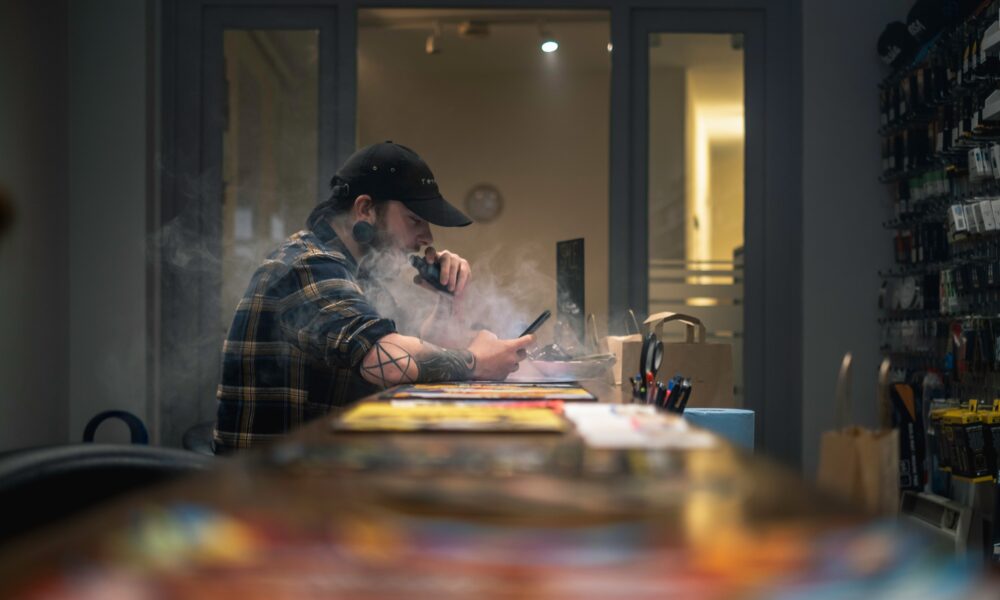
Most students at McGill have encountered a vape pen: Whether they’ve taken a hit from someone’s JUUL at a party, walked through a cloud of grape-scented vapour in front of McLennan, or bought one from the depanneur on the corner. In Canada in 2021, 13 per cent of youth aged 15 to 19 and 17 per cent of young adults aged 20 to 24 reported vaping at least once in the past 30 days. Among these people, 55 per cent said that they vape on a daily basis. 

The side effects of e-cigarettes—colloquially called vapes—are largely unknown despite their widespread usage. Alarmingly, chronic and high-volume usage of vape pens has resulted in hospitalizations of many otherwise healthy individuals, with some cases ending in death.

But, what about the effects of infrequent vaping? Researchers at McGill are asking themselves this very same question. 

In an interview with //The McGill Tribune//, Carolyn Baglole, associate professor in the Departments of Experimental Medicine and Pharmacology & Therapeutics and director of the McGill Research Centre for Cannabis, explained her rationale behind studying vaping. 

“There is such little information on the health effects, particularly in the lungs, of these products,” Baglole said. “I do this work in the hope of filling in a major knowledge gap, given how common e-cigarette use is now.”

In a recent study published in //The FASEB Journal//, Baglole’s lab comprehensively profiled what happens in the lungs in response to low, but prolonged exposure to e-cigarettes. The study used eight to 12-week-old mice as test subjects. The control group was exposed to typical room air, while the test group was exposed to low levels of commercially available mango-flavoured JUUL vapour every day for four weeks. 

The researchers found that there was an increased number of inflammation-related immune cells called neutrophils and lymphocytes present in the lungs of test mice. There were also a number of changes in mRNA and protein expression, especially those related to immune function and smoking-related diseases such as chronic obstructive pulmonary disorder (COPD).

“These findings suggested that these products are certainly not inert and could cause widespread changes before the onset of disease,” Baglole said.

So, what is actually in the ‘vape juice’ within each of these JUUL pods?

“What is provided by the manufacturer is the solvent, the carrier if you will. The most common one is a mixture of […] propylene glycol and vegetable glycerin,” Baglole explained. “Most e-liquids contain nicotine and a variety of chemicals that make up the flavourings.”

When the vape pen is activated, the atomizer, also known as the heating coil, is switched on, and the e-liquid in the cartridge is heated and turned into a vapour to be inhaled. 

“Some metals are used in the heating coils of e-cigarettes,” Baglole said. “Metals such as nickel, chromium, arsenic, as well as lead have been detected in the aerosols. There have been some studies that have found higher levels of these metals in [blood and urine samples] of e-cigarette users as well.” 

Though the effects of inhaling these chemicals and metals are not well-researched because of the relative novelty of e-cigarettes, some data suggest that they might induce an inflammatory response in the lungs.

“Chronic inflammation, if left unchecked and unbalanced for a long time, can lead to cardiopulmonary diseases,” Baglole added. 

While e-cigarettes might have the potential for harm, Baglole believes that we must find a balance in regulating these products because giving “active smokers access to products like e-cigarettes, in order to quit smoking, is a worthy goal.” But, she adds, “we don’t want to make access so easy that youth are particularly inclined to pick up these e-cigarettes.”

When asked for her takeaways from studying vaping, Baglole said, “Our results and others have shown that these products are not inert. My advice would be if you don’t smoke, don’t vape.”

Private, Research Briefs, Science & Technology

Alveolar macrophages, the lungs’ safeguard

Pulmonary infections—such as COVID-19 and the flu—in which bacteria or viruses enter and damage the lungs, are among the leading causes of death in older adults. Elderly people’s increased susceptibility to pulmonary infections is attributed mostly to immune systems that weaken over time. 

The initiation of immune responses to protect against lung damage involves a key group of players known as alveolar macrophages (AMs). Recently, McGill researchers discerned previously unknown mechanisms behind  AM growth and longevity. Their recently published study provides important insights into the processes that affect the self-proliferation of AMs and the intricate connections between neonatal neutrophils—white blood cells found in newborns—and AMs.

AMs are a type of tissue-resident macrophage, an immune cell that takes on diverse roles, including blood vessel formation, bone degradation, and activation of immune cells. Tissue-resident macrophages are found in the tissues of various organs, such as the brain and intestines, and perform tissue-specific functions. Alveoli, the tiny air sacs in the lungs where gas exchange of oxygen and carbon dioxide occurs, contain AMs.

“AMs are critical for pulmonary homeostasis and immunosurveillance, and they can both initiate the immune response and the resolution of inflammation,” Maziar Divangahi, a professor of medicine at McGill whose lab led the study, wrote in an email to //The McGill Tribune//. “For example, AMs are the first immune cells encountered in the airways by respiratory viruses, such as SARS-CoV-2, and contribute to viral clearance, limiting lung damage and promoting tissue healing.”

AMs also help remove excess surfactant, thereby maintaining lung homeostasis—the proper functioning of the lungs. Lung surfactants are materials produced by alveolar cells that prevent the collapse of alveolar walls when exhaling; they are essential to normal lung function. But, when an excessive amount of surfactant is produced by alveolar cells or when AMs fail to remove the surfactant, the gas exchange that takes place in alveolar walls can be significantly hindered, making breathing more difficult.

“AMs are crucial for many aspects of lung immunity, and they represent an excellent target for promoting healthy lungs,” Divangahi wrote. During embryonic development, AMs develop from fetal monocytes, which are white blood cells derived from the bone marrow and precursors to macrophages. Upon maturation, AMs self-renew throughout their lifespan, contributing to their remarkable longevity in the lungs. 

In the new paper, Divangahi and his team found that the absence of 12-HETE, a derivative of fat molecules, led to a significant reduction in AMs in the lungs. This reduction was attributed to elevated levels of prostaglandin E2—a ubiquitous lipid mediator. 

The paper also explored variations in immune cell functions in different stages of life. 

“While adult neutrophils, [a type of white blood cell that fights infection], don’t express 12-HETE, our study shows that the neonatal neutrophils do,” Divangahi wrote. “This highlights the fact that the function of immune cells in neonates versus in adults is diverse, which is incompletely understood.”

In other words, excess prostaglandin E2 production acts as a brake on the proliferative self-renewal of AMs, impairing immune function. The impaired immune function characterized by reduced numbers of AMs could increase the risk of acute lung injuries and lung infections, such as influenza A virus and SARS-CoV-2.

As researchers delve deeper into understanding AM mechanisms, Divangahi envisions these cells to be a revolutionary panacea in lung health and medical intervention. 

Read the latest issue

Read the latest issue