Latest News

Campus Spotlight, Student Life

Day in the life of a McGill student: Outfit edition

Walking around campus sometimes feels like walking the catwalk at Paris Fashion Week. And by sometimes, I mean every day. McGill’s got a fashion culture––a big one. A 10-minute walk to class can have you passing by people draped in floor-sweeping trench coats, balanced on mile-high platforms, and sporting some looks that you’d only see in Vogue. 

But with the hectic student life, how do people do it? What does the process look like? Where is the inspiration coming from? How is everyone turning out show-stopping looks on random Wednesdays? The McGill Tribune sat down with some of McGill’s most fashionable students to find out.

8:30 am – Going to class

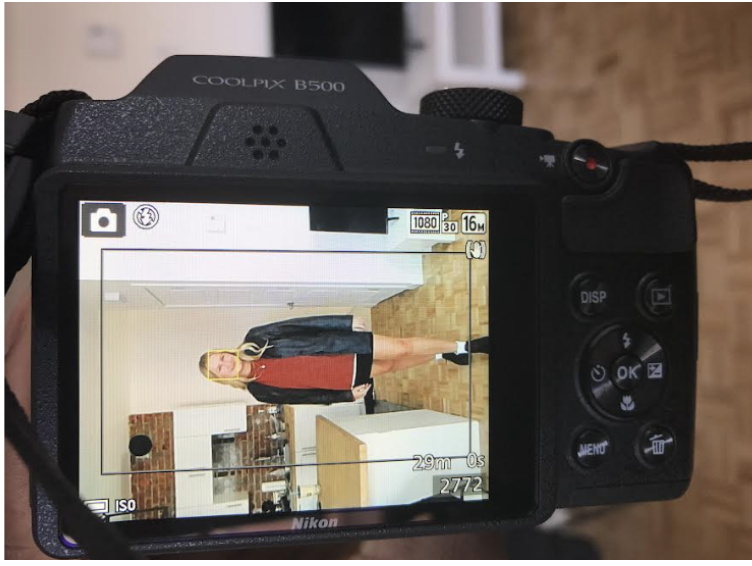
Starting bright and early at 8:30, Rebecca Yates, U1 Arts, dons a white button-up shirt, a fuzzy sweater, and a black mini-skirt layered underneath a leather jacket.

Yates usually builds her outfit around one piece that she really wants to wear and finds others to complement it. If it’s a sunny day, she’ll pick out a cute skirt that she’s feeling and then expand outwards. Her style is all about comfort because of the confidence she gains from that, so just 10 minutes before class, she’ll pick pieces that make her feel her best and boldest. 

If all else fails, she tells me, she’ll grab jeans and a baseball cap. 

When describing her style, Yates explains that she gravitates towards whatever makes her feel like the coolest version of herself.

“When I look in the mirror and I’m like, ‘OMG I feel so cute right now’ […] you feel like the best version of yourself,”  Yates said in an interview with the Tribune.

4:00 pm – Chilling at home

You can find Leena Demers, U2 Arts, lounging around her house in an oversized t-shirt, yoga pants, a cozy sweater, fuzzy slippers, and maybe even some sunglasses.

From both talking to Demers and observing her style, you get the sense of deep thoughtfulness, analysis, and so much passion. For Demers, all of her outfits revolve around colour and asking herself how she can make something that best represents her.

A seasoned fashion enthusiast, Demers is inspired by style icons like Vivienne Westwood, Halston, Ralph Lauren, and of course, Ms. Bella Hadid. She describes her style as big and bold and we joked about how, when she’s walking through Redpath and heads are turning, she knows she’s put together something great.

7:00 pm – Gym Time

Lifting, squatting, or running on the treadmill, Ella Peck, U2 Arts, can be spotted in the gym in a periwinkle track jacket and matching Nike gym shorts.

Ella describes her style as comfy and cozy. She likes to be comfortable physically and feel good in whatever she has on. 

Timelessness and agelessness are pillars of Peck’s style.

“I love to find combinations of outfits that anyone, anywhere in the world could wear,” Peck said. 

10:00pm – Hitting St. Laurent

For a night out, Peck can be seen wearing an all-black ensemble. She sports a silky-black top with black leather pants and black heels, topping the look off with dangling sparkly earrings.

She explains that, when putting her outfits together, she loves to have one piece that her eyes are just drawn to, one thing that really pops.

Speaking to each of these fashionistas was extraordinary; you could tell that their energy, passion, and colourfulness in life are what shape and inspire their daily fashion choices. One thing everyone agreed on was that choosing pieces that make them the most comfortable, and in which they feel their best, is when they look their best too.  

“When you put clothes on that make you feel and look good, you’re going to exude your best self,” Demers said.

Basketball, Sports

Day one of McGill’s Basketball Classic see Martlets victory and Redbirds defeat

McGill’s Basketball Classic began on Oct. 14 with both the Martlets (2–4) and the Redbirds (1–6) in action at Love Competition Hall. 

McGill Martlets vs. MacEwan Griffins

The Martlets first took the court to face off against the MacEwan Griffins (0–2). McGill got out to a sluggish start and dug themselves into a 13-0 hole by 4:43. Despite the cold shooting and the poor finishing from the Martlets, the team doubled down on their defensive strategy and were able to limit the Griffins to just four points in the remainder of the first quarter. 

The momentum shifted after the team began forcing defensive stops, and McGill was rewarded offensively as the Martlets ended the quarter trailing by only five. The second quarter was a more balanced affair, with both teams locking up their defence and moving the ball well. Slowly but surely, the Martlets clawed their way back into the game and eventually tied it up. The team finally took the lead when more collaborative play allowed Emma-Jane Scotten to penetrate the paint and generate a three-point play opportunity right before the halftime buzzer. The strong take from the third-year guard pushed the Martlets into a narrow 33-30 lead at halftime.

The third opened up with a smooth three-pointer from second-year Katie Rathwell, which was quickly countered by a Griffins’ three. The fast pace and hustle on both ends resulted in many lead changes during the quarter. Early fouls by the Martlets hindered their defensive pressure and allowed their opponent to take a 45-43 lead heading into the final period. 

The last quarter brought nail-biting tension as Montreal’s own Ines Tchoukuiegno hit her rhythm. Coming off the bench, the first-year guard took over the game and scored the team’s first eight points of the quarter. Tchoukuiegno began her run with an old-school three-point play, followed up with a three-ball, and finished with a running layup. The back and forth continued, and the game was a tied contest with 36 seconds remaining. With just seven seconds left, a Griffin foul sent Tchoukuiegno to the line where the first-year nailed both her free throws to seal a 59-57 victory. 

In a post-game interview, Tchoukuiegno explained how the team stayed focused.

“We followed the game plan, we played good defence,” the first-year guard told

The McGill Tribune. “We really wanted to win this game. We need to stay focused when tired, keep encouraging each other and communicating well.”

After the game, head coach Rikki Bowles also shared her excitement for the team and noted some future areas for improvements. 

“They battled, they fought, and that same effort and energy has gotta continue for the rest of the tournament,” Bowles said. “But one thing to better is our rotations, so when we do get beat on the defensive, they can’t get to the rim.”

McGill Redbirds vs Lethbridge Pronghorns

After the Martlets exited the court, the Redbirds were up next against the Lethbridge Pronghorns (2–0). Just like the Martlets, the team fell behind quickly when their opponents started with hot shooting hands: The Pronghorns jumped out to a 14-2 lead halfway through the first quarter. While the Pronghorns showcased their skills by shooting 58.8 per cent from the field and 42.9 per cent from deep, McGill’s shooting woes continued. The Redbirds trailed 23-8 after 10 minutes with 14.3 per cent shooting from the field and 28.6 per cent from behind the arc. 

The team’s comeback attempt began in the second quarter with fifth-year transfer guard Samuel Chaput showcasing his bag of tricks and major explosiveness off the dribble to score 10 points. With renewed focus, the team worked to chip away at the lead. Fourth-year transfer combo-guard Ibrahim Gosselin-Diawara provided a spark off the bench with six points to help narrow the lead to within striking distance. At halftime, the Pronghorns were only leading 43-38 over the home team.

A comeback, however, became increasingly unlikely as the Redbirds had another cold shooting outing in the third, going one for eight from three-point land and five for 19 in the paint. Gosselin-Diawara tried to engineer a run with the bench players while the starters struggled to find their shots, but was unsuccessful. The Pronghorns took a 68-49 lead into the final quarter. The visitors kept their foot on the gas even as the Redbirds’ offence began hitting the mark in the fourth. Down by almost two dozen, McGill waved the white flag and emptied their bench in the later stages of the quarter. The game ended 89-72 in favour of the Pronghorns. 

In a post-game interview with the Tribune, Gosselin-Diawara mentioned some key points to keep in mind for future games, as well as the importance of team chemistry.

“We need to have a better start to the game, we need to be consistent and focused on the details, we have to be resilient and bounce back,” said the guard. “I like everyone on the team, [our] chemistry needs to be better, but that will take time.”

The McGill Tribune also caught up with head coach Ryan Thorne afterward to learn about the team’s takeaways. 

“We know we can play at a high level. We just gotta learn to do that consistently for 40 minutes,” said Thorne. “This is the first time that the whole group is together. Sometimes people are taking it all on themselves so we got to learn to play as a group and at a high level.”

On Oct. 15, both the Martlets and the Redbirds dropped games to the Laurier Goldenhawks and Saint Mary’s Huskies respectively. Oct. 16 brought victory to both teams with the Martlets taking down the Laurentian Voyageurs 65-62 and the Redbirds narrowly defeating the Ottawa Gee-Gees 61-60 for their first win of the season. 

Martlet Basketball returns on Nov. 3 for the regular season home opener against Bishop’s University at Love Competition Hall at 6 p.m. The Redbirds will follow at 8 p.m. 

Stat Corner:  It was a superb offensive outing for first-year guard Ines Tchoukuiegno, who led all players with 15 points on 50 per cent shooting from the field and hitting two out of four from the three. The rookie guard also contributed on the defensive end with three steals and one block.

Quotable: “I was really proud that even [with] the difficult start, they didn’t hang their heads, they didn’t stop working, they kept competing, and they fought back.” —Coach Rikki Bowles


Moment of the Game: During a tense tied game, fourth-year centre Amelie Rochon made a crucial steal to send Tchoukuiegno running the other way with less than 10 seconds left. With the Martlets in the bonus, the Griffins’ foul sent the rookie to the line where Tchoukuiegno demonstrated veteran composure to secure the win for the Martlets.

Science & Technology, Science Rewind

Leading Canadian neurosurgeon recommends ban on body checking in hockey until age 18

In light of the revelation about the mishandling of Miami Dolphins quarterback Tua Tagovailoa’s concussion, conversations about the role of concussions in many sports, especially youth hockey, have been reinvigorated. Dr. Charles Tator, a prominent Canadian neurosurgeon, Order of Canada recipient, and director of the Canadian Concussion Centre (CCC) at Toronto Western Hospital, spoke with The McGill Tribune about the impacts of brain trauma on youth and called on Hockey Canada to delay its current ban on body checking from age 13 to 18. 

Tator’s recent study, which fills the data gap on the long-term effects of concussions in youth athletes, is the first to examine the long-term consequences of brain trauma in young hockey players. The study followed 87 hockey players—66 men and 21 women—between the ages of 10 and 18 that were referred to the CCC between 1997 and 2017 after being diagnosed with a concussion. 

The study revealed that post-concussion syndrome (PCS)—when concussions symptoms last beyond the expected recovery period of seven to 10 days following the initial injury—occurred in 80.4 per cent of players. Of the 34 patients that sustained concussions from body checking, 70.6 per cent of them suffered from PCS. 

Concussions are typically caused when one’s head or body is hit with enough force to stretch, damage, and even break the brain’s neurons. This can lead to chemical and metabolic changes within these brain cells, making it difficult for them to function and communicate. In addition to the immediate pain following concussions, PCS symptoms can include fatigue, irritability, difficulty concentrating, memory problems, and sometimes depression. Other behaviours such as impulsiveness, poor social judgment, and dramatic personality changes may also develop. 

Tator’s study indicates that if leagues banned body checking until age 18, there would be a lower overall incidence of concussions in hockey players.  

“Because treatment for neurological injuries is not effective for everybody, we should spend more time trying to prevent the injuries from happening in the first place,” Tator said. “Our data indicated that by 18, you’re much more agile […] you can skate better […] and your brain is more developed [….] We didn’t have too many 18-year-olds with concussions from body checking.”

Despite the rigour Tator employed throughout his research process, his work has been met with criticism from some, like McGill men’s hockey coach David Urquhart.

“Contact and concussions are prevalent in female hockey despite rules against body checking,” Urquhart told the Tribune. “Teaching proper angling, checking, and contact prevention techniques coupled with properly enforced rule changes could be valuable methods for concussion prevention.” 

Tator takes criticism like Urquhart’s in stride, pointing to the benefits that waiting until the age of 18 to introduce body checking would have for high-level sports teams. 

“If [professional and university teams] wait until age 18 to recruit, there’ll be a much larger pool of players because all of those who were [saved from] damage by early concussions will be available,” said Tator.

There is a large body of evidence linking concussions to long-term brain damage and cases of chronic traumatic encephalopathy (CTE)—a progressive neurodegenerative disease caused by repeated blows to the head—in former NHLers such as Steve Montador and Derek Boogaard. The National Hockey League (NHL) and its commissioner, Gary Bettman, however, continue to deny the connection between concussions and CTE. To many, the debate over body checking bans in hockey is a battle between medical expertise and profits.

“Gary Bettman sells violence,” Tator concluded. “He makes money for [NHL team] owners, and they love him and won’t dislodge him. It’s a problem that has been created, but I think it’s a problem that can be solved.”

McGill, News

Construction begins on New Vic site without consent from Mohawk Mothers

Content Warning: Mention of colonial violence.

Arkéos, an archeological firm hired by McGill, began excavating the Royal Victoria Hospital site as part of McGill’s New Vic project, on Oct. 12. The firm is investigating claims that there may be unmarked graves of Indigenous children on or near the property.  Arkéos broke ground without the consent of the Kanien’kehà:ka Kahnistensera (Mohawk Mothers), who raised concerns about unmarked graves in October 2021. The Mothers are also embroiled in an ongoing lawsuit against McGill over the potential burial site. The next hearing is scheduled for Oct. 26.

Following the most recent hearing for the lawsuit, the Société québécoise des infrastructures (SQI) postponed archeological work until an information session could be held with Arkéos. The session took place on Oct. 6.

According to the Mothers, the meeting was unusual from the moment they were belatedly invited. Karennatha, one of the Mothers, explained that there was misinformation given about the location and timing of the meeting, as well as who would be attending.

“The [information session] we went to, it was all lies,” Karennatha said. “First of all, they reported that they had the meeting at the Long House, and it was actually in the [Elder’s Lodge]. Then, they said that there were [30 to 40 Indigenous] people there who went to that meeting [….] There were four people there.” 

At the information session, Karennatha and Kahentinetha, another Mohawk Mother, posed two questions, after which they were escorted out of the meeting by police officers. 

“They were showing pictures of the grounds […] and [Karennatha] says, ‘Why don’t you show people the building where you murdered all our children? Show it to them.’ And I said, We wanna know what you did with our children. Where are they? What did you do with them? We know you have them, and you know you have them.’ And then they called the police,” Kahentinetha recounted in an interview with The McGill Tribune.

In the Mothers’ opinion, McGill began archeological work because the university believed it had consent from the Indigenous community, which the Mothers did not provide. 

“After this meeting, McGill claimed that they got [all Indigenous peoples’] permission, but [they got] only four Indigenous people’s,” Kahentinetha said. “And those four people work for the government, they are not on our side.”

In a statement to the Tribune, McGill media relations officer Frédérique Mazerolle stated that the decision to start work was made after consulting “all relevant groups.” In addition to claiming that McGill is adhering to all regulations regarding archeological work, Mazerolle asserted that Indigenous observers will be present on the construction site. 

“The Indigenous communities concerned were invited to information sessions about the methods used to identify and preserve any potential vestiges present on the site of the former hospital,” Mazerolle wrote. “[McGill] intends to follow the industry standard practice of seeking input from the Indigenous community and we have no intention of proceeding in a manner that would endanger Indigenous artifacts or vestiges.” 

The Mothers, however, claim that McGill’s behaviour towards them has been cold and uncooperative. Henry*, an associate of the Kahnistensera, explained that security guards were present on the construction site after the Mothers declared that they would be monitoring the work from the sidewalk. 

Protestors supporting the Kahnistensera occupied the New Vic construction site on Oct. 11 to denounce the coming archeological work. Police evacuated protestors by 3:30 p.m. the same day. Barricades and fencing were erected around the area soon after. 

When the Mothers and their team revisited the site on Oct. 12, the land was completely blocked off. There were active construction crews on site and the Mothers reported being interrogated by security guards and discouraged from taking pictures. Furthermore, the Mothers’ attempts to file an official police report regarding the crime of desecration of graves were unsuccessful, and their phone calls and visits to local police stations were met with hostile responses. During a phone call that the Tribune was included on, one police officer told the Mothers that workers would not have begun work without implicit legal approval.

“A graveyard is a private property and if there’s trucks working on the property, it is because the [property owners] asked them to,” one police officer told the Mothers. “For digging, you need to have a permit, and you need to go through the city for a permit. The things you are talking about were probably all done before they started digging there. They are not just digging.”

The Mothers also publicly questioned why construction began, as they noted that McGill and Arkéos are not complying with the Canadian Archaeological Association’s (CAA) guidelines for ethically conducting professional archeological work on unmarked graves. These guidelines include a framework for conducting remote sensing, as well as highlighting the importance of area mapping and bringing on Indigenous investigators. 

The Mothers believe that construction is being rushed in an effort to quickly destroy evidence of Indigenous bodies. Henry explained that this rapid start to construction represents a complete defiance of archaeological guidelines. 

“They have not used a single ground checking technique that they’re supposed to, according to CAA,” Henry said. “They are just rushing the work manually.”

While the guidelines are not legally binding, Henry explained that for McGill to break ground, the university must have received a mandatory signature from Quebec’s Minister of Culture, as required by law.

The Mothers filed an official complaint with the CAA on Oct. 13 outlining why they see McGill and Arkéos’ conduct as unethical and illegal. The letter called out McGill’s lack of adherence to their previous agreement with both the court and the Mothers: To halt archeological work until their next official court date. 

On Oct. 14, the Students’ Society of McGill University (SSMU) executives issued a public statement in an effort to stimulate discussion about the dispute. In their email, the executives emphasized McGill’s failure to properly consult Indigenous communities about the New Vic construction, and expressed their belief that the university’s actions are driven by greed. 

The Mothers released a statement on Oct. 16 explaining that they are being falsely accused of organizing certain solidarity actions, such as an instance of vandalism of Arkéos property that the SQI reported to the judge appointed to their case. While the Mothers are appreciative of support, they urged demonstrators to consider the legal repercussions their actions may have on the Mothers—even if they are intended to support their cause—and emphasized their values of “peace and respect.” 

The Mothers’ next steps are tentative. They told the Tribune that they will continue fighting for justice, but that there is uncertainty over the Oct. 26 court date, where the Mothers had originally hoped to receive an interlocutory injunction to effectively halt renovation on the site until court proceedings had elapsed. As archeological work has already begun, the Mothers fear that the judge will argue that the need for an interlocutory injunction has been eliminated. 

Arkéos did not respond to the Tribune’s request for comment.

*Henry’s name has been changed to preserve their anonymity.

Research Briefs, Science & Technology

Exercise in a pill for those with rare movement disorders

Spinocerebellar ataxia type 6 (SCA6), a rare neurodegenerative disorder, is characterized by severe, progressive movement and balance issues. It is associated with low levels of a neural molecule called brain-derived neurotrophic factor (BDNF), which guides the growth and maintenance of brain cells and overall plasticity. SCA6 affects one in 100,000 people worldwide. Research has shown that exercise can significantly restore BDNF levels in SCA6 patients, but some SCA6 patients have such limited movement that they cannot exercise. 

Along with her lab, Alanna Watt, a professor in McGill’s Department of Biology, has identified a new drug that mimics the effects of exercise on BDNF levels, opening the door to more accessible treatment for patients with SCA6. The team’s findings were published in Science.

In an email to The McGill Tribune, Anna Cook, a PhD candidate in Watt’s lab and first author of the paper, explained that finding new ways to exercise was the main driver for SCA6-related therapy research. 

“Exercise is a low-cost intervention that is accessible to SCA6 patients all over the world, even to those without access to healthcare,” Cook said. “However, exercise as a treatment has its own problems, particularly in people with movement disorders who might find it difficult to exercise. That’s why we wanted to build on finding drugs that work in the same way.”

Low levels of BDNF are also seen in patients with Parkinson’s and Alzheimer’s. Cook’s research began with her finding that the expression of BDNF and its receptor TrkB, the structure that BDNF binds to, was significantly reduced in mice with SCA6 disorders, leading to motor problems. 

Cook mimicked the effects of exercise on a chemical level using a TrkB booster, 7,8-dihydroxyflavone (7,8-DHF), that activates the BDNF receptor and promotes the growth of brain cells. After receiving this booster, the mice who suffered from SCA6 saw similar increases in BDNF levels as they did after exercise. This indicated to Cook that 7,8-DHF may offer similar benefits in humans, allowing for a more accessible form of treatment for patients with severe movement disorders.

In the future, Watt and her team hope to show how different types of exercise can elevate BDNF levels in the brain.

“We showed that the mice that ran further showed better improvement,”  Watt said in an interview with the Tribune. “We’re looking at movement disorders from many points of view—we don’t think that there’s going to be one perfect solution.”

Not only does this highlight the importance of early diagnostics for those with SCA6 and similar movement disorders, but it suggests that future research should be conducted at later disease stages.

“Some of our next steps will be to identify other treatments that mimic exercise, and other drugs that are more effective in later stages of the disease,” Cook said. “So far we have only been able to rescue ataxia in early disease stages, but to really help patients we need to understand what goes wrong later in disease and find new treatments that target those later changes.” 

Cook added that with further investigation, more areas of research are opening up. 

“SCA6 currently has very limited treatment options and no cure, so this is very promising research,” Cook said. “I really believe that it’s just as important to identify treatments for rare diseases as it is for the more common ones.”

Campus Spotlight, Student Life

The Tribune’s declassified midterm survival guide

As the days get shorter and the leaves change into varying shades of auburn and crimson, fall midterm season has snuck up on us. This time of year can feel like an all-encompassing mass of anxiety for McGill students as they work away at McLennan until the wee hours of the morning. Midterm season’s heavy workload sometimes leads students to neglect personal care in favour of spending a few more hours hitting the books. There are tons of ways, however, to incorporate self-care into your fall midterm routine without sacrificing your GPA. 

Spend time outside

Going out for a walk in nature is one of the best ways to clear your mind and take time for yourself during exam season. Luckily, Montreal is home to many parks and hiking trails that will help you get lost in nature without veering too far from the library. The quintessential Mount Royal is a mere five minutes from McGill’s downtown campus and offers a variety of trails to suit your specific hiking abilities. The stunning backdrop of the city amid the colours of the trees is sure to make you forget about that calculus exam for a few hours. If you are looking to get away from the McGill bubble, try a walk along the Lachine Canal or a stroll through Parc La Fontaine.

Practice mindfulness

Mindfulness is a regulation and meditation technique that has exploded in popularity in recent years—and for good reason. This method involves using breath and meditating techniques like ​​body scan meditation to allow yourself to be fully focused on the present moment instead of stressing about what lies ahead. Particularly during midterm season, mindfulness is a great way to help you remain grounded and calm your nerves. 

Study shorter and smarter

Instead of spending countless hours at your desk and burning yourself out, study in shorter bursts and increase your productivity by attempting to accomplish one task at a time. Break down each big task—studying for a midterm, for example—into a step-by-step process and tackle an individual, small step on its own. You can do this by dividing a midterm syllabus into equal parts, splitting the word count for an essay due, or distributing practice problems of certain chapters, and work through each chunk independently and sequentially. 

By honing in on smaller tasks, you will feel more focused, avoid being overwhelmed by the large amount of assignments on your plate, and have a more concrete idea of the end goal you are working towards. As an added bonus, accomplishing the small tasks will give you the extra motivation you need, as compared to being daunted by larger assignments. If you still feel swamped, try organizing your tasks into a to-do list, for which Notion and Microsoft have great digital options, and perhaps inculcate the Pomodoro Technique into your study plan

Spend time with friends

In the midst of all this midterm season chaos, disconnecting from work and hanging out with the people close to you can be the perfect recharge. Not only will it take some stress away and help relieve some of your mental burden, but studies have found that spending time with friends can be good even for your physical health. Having a trusted circle of friends has been linked to lower risk of heart disease and longer life expectancy. 


So grab your closest friends and head to Randolph Pub for a board game night, go for a bike ride on one of Montreal’s most scenic bike trails, or simply order takeout and watch a movie at home. Any of these activities will do wonders in helping manage your stress levels and will give you a much-needed break from the long hours buried deep in academics.

Art, Arts & Entertainment

‘Seeing Loud’ showcases Basquiat like never before

After his untimely death in 1988, Jean-Michel Basquiat rose above his hard-earned fame to become one of the most celebrated neo-expressionist artists of the 20th century. His works grew in popularity, and now, Basquiat’s designs can be found around the world, from sneakers to album covers

His fame has also meant the simplistic reduction of his image to that of a primarily visual artist, when in fact, he was also a musician and performance artist. Yet, Seeing Loud: Basquiat and Music, a new exhibition at the Montreal Museum of Fine Arts (MMFA), synthesizes the many creative aspects of Basquiat into an unprecedented portrait of the artist himself.

Seeing Loud is a collage of drawings, paintings, performances, music, and more that tracks Basquiat’s artistic career in seven sections. There is special emphasis on Basquiat’s involvement in the experimental, multi-genre band Gray, which he co-founded with filmmaker Michael Hoffman in 1979. 

The exhibition focuses mainly on the essential connection between Basquiat’s fine arts and music, highlighting both the music he created and that which inspired him. Many of his pieces include written words and onomatopoeia; the forms depicted capture and mirror elements of his musical aspirations. 

As guest curator Dieter Buchhart said in a press release, “Basquiat’s works appear like a ‘language of rupture,’ a concrete poetry of hip-hop created in a copy-and-paste technique and jazz improvisation. Music thus forms the decisive link in his art.”  

The visitor’s experience begins in a room displaying many of his paintings, drawings, and a film of various underground music performances in New York City, where Basquiat grew up and cultivated his artistic career. The raw, rebellious sounds of punk shows work in perfect dialogue with his pieces that challenge the status quo, making the connection between Basquiat’s vision and music immediately evident. As the exhibition continues, it becomes clear that music and the themes of Basquiat’s works, many of which speak on various aspects of the Black experience, are not only connected but inseparable. 

After a trip to the Ivory Coast in 1986, Basquiat acquired many traditional instruments, such as water drums, castanets, and rattles, which greatly inspired his work. The legacy of the African diaspora and its connections to the “American” forms of Creole and jazz music are central to many pieces in section six of this exhibit, Basquiat and the Music of the Black Atlantic. Basquiat understood jazz music in its greater historical context, demonstrated by the motifs he employed. He often painted African-American jazz musicians who faced racism in the industry to reflect the racial, social pressures he faced after becoming a public figure.

The last section of the exhibit is dedicated to just two of Basquiat’s paintings: Eroica I and Eroica II, created in the last year of his life. They stand out as the perfect example of theme and music converging in Basquiat’s work. They are based on Beethoven’s Symphony No. 3, which shares the same title, Eroica, meaning “heroic” in Italian. With Basquiat’s choice of words and design, the paintings are a poignant monument to the perils and complexity of Black celebrity and commodification.

A great deal of thought was put into this exhibition’s curation, down to the smallest detail. It has a uniquely immersive atmosphere thanks to the constant presence of music, whether it be punk, jazz, hip-hop, or opera. The MMFA collaborated with a Montreal-based studio to create an interactive app that allows the user to experience Basquiat’s art in concert with augmented-reality stage reconstructions and specialized musical selections. In addition, there is extensive associated programming, with events such as film screenings, themed evenings, and concerts being offered throughout the exhibition’s stay

It is amazing to witness Basquiat’s legacy being remembered in its full scope. This is truly an exhibition whose ingenuity matches that of the artist himself.

Seeing Loud: Basquiat and Music is on display at the Montreal Museum of Fine Arts until Feb. 19.

Research Briefs, Science & Technology

McGill researchers use drones to collect volcanic samples

Gasses emitted from volcanoes can provide crucial insight into their activity and eruptions, but gas samples are difficult, and often dangerous, to collect by hand. McGill scientists are among the first to overcome this issue by employing drones to collect samples remotely by piloting them into the crater of a volcano and filling containers with volcanic gasses. 

Using commercially available drones at the Poás volcano in Costa Rica, a team of researchers led by McGill PhD candidate Fiona D’Arcy collected gas samples and analyzed them for carbon isotopic content—the ratio between two versions of carbon, 12 and 13, found in the sample. 

The researchers determined that fluctuations in isotopic concentrations were a good indicator of eruption patterns at Poás.

During dormant periods, carbon-13 built up inside the Poás volcano, increasing the ratio that D’Arcy’s team measured in the gas. But during periods where Poás was erupting, they observed a shift towards more carbon-12, resulting in a lower isotopic ratio.  

“When we start to see [the ratio] dropping, it’s a bit of a warning signal, like, maybe there’s a break in the seal, maybe something is gearing up to […] explode through,” D’Arcy said in an interview witThe McGill Tribune//

If this pattern holds true across volcanoes with different characteristics in different regions, it could be a powerful tool for predicting eruptions. D’Arcy has already done work applying this method to the island volcano of Stromboli in Italy and found similar results that she hopes to publish later this year. 

“On the one hand […] we definitely need to keep confirming this and go elsewhere,”  D’Arcy said. “But on the other hand, you’re just like, wow, this is amazing. We have to publish this and get this out.”

The subtle fluctuations in carbon isotopes that D’Arcy monitors would have been extremely difficult to measure as recently as 10 years ago, but have been made possible by several technological innovations. Using drones to collect measurements was a key improvement, but, as John Stix, who worked with D’Arcy to collect and analyze this data, explained, advances in portable lab equipment were equally crucial.

“The study was beautiful for two reasons: A, the drones, and B, the fact that we had this instrument with us in the field, and we were making these same-day measurements, almost real time,” Stix, a professor in the Department of Earth and Planetary Sciences, said in an interview with the Tribune

Innovations like these are currently revolutionizing the world of volcanology, especially the use of drones to collect measurements where it would be dangerous to send humans. 

“If everything’s going well, you fly it in, you make your measurements, and you come out. And that’s really the beauty of it,” Stix said. 

While incorporating these new technologies is a huge asset to researchers, it also entails a lot of trial and error.  D’Arcy constructed the instrument package used by the drone herself, and had to figure out the process as she went along. 

“I spent a lot of time on forums online and on YouTube picking out how the batteries plug in and what are the best ways to use this one sensor, and going to hobby shops and ordering parts from all over and figuring out how the wires fit,” D’Arcy said. 

Ironing out these wrinkles and determining best practices is a key part of using new drone technology, and others are already looking to build on D’Arcy’s work. In February, she will participate in a workshop at IACVEI 2023, an international conference with the goal of developing the most effective practices and standard protocols for the use of drones to study volcanic activity. Observatories monitoring local volcanoes for prediction and evacuation purposes are also interested in using this technology.

As more volcanologists incorporate the use of drones for remote controlled sample collection, we can expect to see more exciting discoveries like this one.

Chill Thrills, Student Life

Donating clothing, dressing the community

Say you’ve decided to clean out your closet and you find yourself staring at a pile of clothing, realizing you don’t wear most of it. According to the Pareto principle, you probably wear 20 per cent of your clothing 80 per cent of the time. Maybe some of it is outdated, old, threadbare, or just not your style anymore. Before you throw these clothes in the trash, consider the many local thrift stores that accept donations. 

It’s great for the environment

Have you ever thought about what happens to your clothes once you throw them away? In Montreal, clothes that get thrown away end up in landfills. The dyes and fibres from these fabrics pollute groundwater, release high levels of harmful methane as they decompose, and wreak havoc on the air quality when incinerated. Donating your clothing will not only repurpose these items for someone else, but it will also reduce the harmful impacts of the fast fashion industry.

Many students on campus have already started their journey to help those in need, such as Prune Broudehoux, a member of the Commerce and Administration Student Charity Organization (CASCO) at McGill. Broudehoux recently organized a clothing donation event to collect funds for the Montreal Children’s Hospital. 

“Financially, donating clothes can help support vulnerable groups that cannot afford to buy new clothing,” Broudehoux said. “Environmentally, I find it very important to give clothing a second life instead of throwing them away.” 

It helps those in need

Many organizations will sell the clothing you donated at a lower price (or even give it out for free) to those who cannot afford them. Lost in a pile of sweaters, shirts, and pants stacked in your bedroom, an old piece of clothing you no longer wear could help unhoused people or lower-income individuals who are in dire need of affordable clothing.

Cassiopée Laugier, a third-year political science student at Concordia University, is passionate about giving back to her community. In an interview with the Tribune, she explained why she started donating clothing. 

“Today, I am trapped in a culture that relies on overconsumption,” Laugier said. “Having accumulated many items of clothing over the years, the more I buy, the less I wear each item. I would rather give this clothing to others in greater need than see them lying unworn around my closet.” 

It’s easily accessible to give

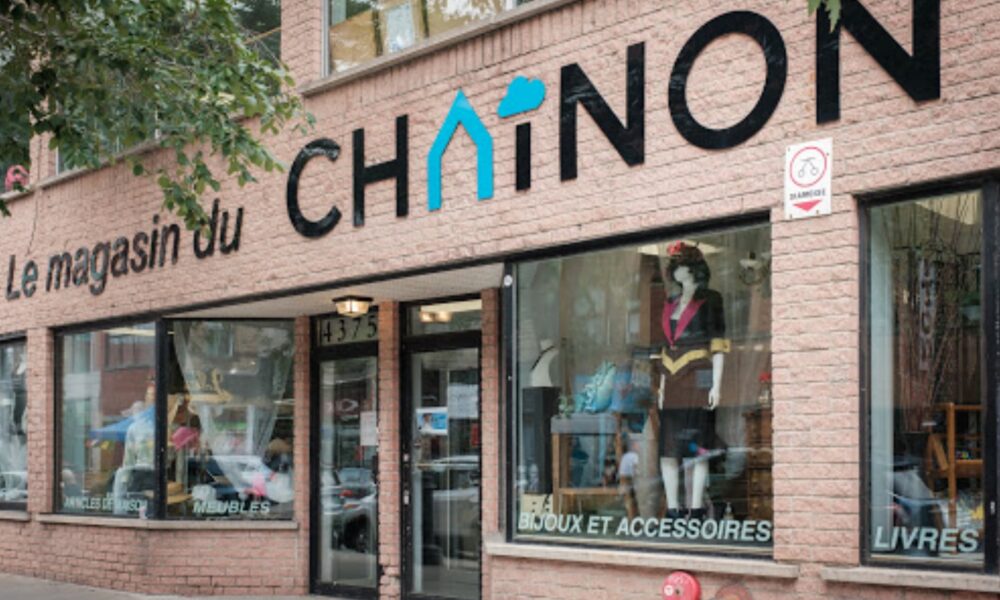
Some charitable organizations in Montreal collect clothing, sell it to those in need, and use these funds to provide assistance to economically marginalized groups through food donations, housing, and counselling. A great place to drop off your clothes is the Chaînon. Located on St. Laurent, the Chaînon is a thrift store that sells clothing donated from the community at affordable prices.

In an interview with the Tribune, store manager Patrice Mongeau explained the organization’s mission: “Our goal is to welcome women in difficult situations by offering safe housing and assistance to tailor their needs. The funds generated through our clothing sales then help our association.”

The Chaînon remains an ecologically sound organization every step of the way. If the clothing they receive is too damaged to sell, it gets recycled—so all items are welcome. 

“Although the clothing we sell in the store needs to be in good condition—that is, no stains, holes, or broken zippers—we will accept anything handed to us because we recognize that there is always a good intention behind a donation,” Mongeau told the Tribune. “The damaged clothing will go to recycling companies.” 

Other great options to donate your clothing are donation centres such as Big Brothers and Sisters, le Support, and Renaissance Quebec which offer a variety of accessible drop-off sites.

Whether you see donating clothing as an opportunity to lend a helping hand to the planet like Broudehoux or wish to fight overconsumption like Laugier, donating clothing is a great way to give back to the community. Try spending an afternoon sorting through the items of clothing in your wardrobe, and fish out the handful of shirts, pants, or sweaters that you never wear to give them to someone who will make better use of them. 

Science & Technology, Student Research

Teaching an old enzyme new tricks

Blue-green algae are a common sight at summer swimming holes and lakes. Also known as cyanobacteria, blue-green algae are a class of bacteria capable of using sunlight as an energy source through photosynthesis. Despite being well-known and well-studied, a group of McGill researchers uncovered an unexpected and surprising activity in an enzyme made by these microbes in a recent study: The enzyme can make its own primers, and therefore self-produce biopolymers.

Cyanophycin synthetase (CphA1) is an enzyme used by cyanobacteria to make an amino acid polymer—a chain of amino acids, the same molecules that make up proteins—called cyanophycin. The cell uses this polymer to store energy, amino acids, and nitrogen that can be later accessed when nutrients become scarce. CphA1 has been harnessed by scientists for the industrial production of cyanophycin, which can be used to make plastics found in acrylic nails and paints—polyaspartic acid, a biodegradable alternative to polyacrylate

In an email to The McGill Tribune, Itai Sharon, McGill PhD student and lead author of the paper published in Nature, detailed the complex relationship between cyanophycin and CphA1.  

“CphA1 needs a primer, ideally a short cyanophycin chain, to be active, and this creates a bit of a chicken and egg problem,” Sharon wrote. “The enzyme needs cyanophycin to make cyanophycin.”

Sharon works with peptidases, enzymes that cut up proteins. Upon comparing enzyme structures, Sharon noticed that CphA1 had an active site, a region on an enzyme that interacts with other proteins, with a similar structure to the peptidases—suggesting that CphA1 may also have the ability to cut up proteins, like molecular scissors. Sharon also discovered that this active site in CphA1 had binding sites for cyanophycin—an unexpected finding for a well–studied enzyme like CphA1. 

“Even though at the time we did not know where those results would lead us, we decided to perform more experiments to determine whether this peptidase-looking part of CphA1 really does have this kind of [cutting] activity,” Sharon wrote. “To our surprise, we found that it did.”

CphA1’s ability to make its own primers allows the enzyme to use cyanophycin already present in the cell to make new polymer chains. This means the amount of cyanophycin CphA1 can make isn’t limited by the available quantity.

This finding has important considerations for CphA1’s use in industrial production of cyanophycin as a water softener or in plastics. As cyanophycin production is cheaper and more environmentally friendly than trying to chemically synthesize polyaspartic acid or polyacrylate plastics, scientists have been working to improve the biological production of the polymer. In order to optimize production, cyanophycin synthetase is often expressed in bacterial or fungal hosts that grow rapidly and are easy to work with. But these hosts don’t naturally produce cyanophycin, and thus don’t have suitable primers for CphA1, limiting the amount of polymer that can be made.

“That is why it’s important that CphA1 can create its own primers, to ensure that primer availability does not limit the amount of cyanophycin that can be produced,” Sharon said.

CphA1’s ability to make its own primers was an unexpected discovery that could reduce the cost and environmental impact of cyanophycin production. Scaling up cyanophycin production would allow for widespread use of the environmentally-friendly polymer in nail polish and paint, as well as its use as an eco-friendly water softener. No matter how much research has been done on an enzyme or how many labs have worked on it, enzymes like CphA1 will always have surprises in store.

Read the latest issue

Read the latest issue