Latest News

Campus Spotlight, Student Life

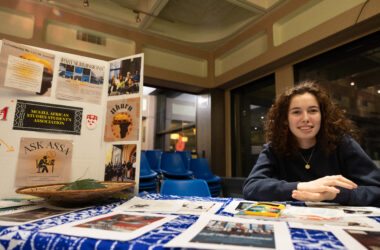
 Club Spotlight: Black Students’ Network 

While struggle must be recognized, it should not—and does not—define a community. As Andalus Disparte, U3 Arts and Vice-President (VP) Political & Advocacy for McGill’s Black Students’ Network (BSN), said in an interview with The Tribune, “We want to strike a balance between […] educational events that focus on Black history […] but also highlighting Black joy. There’s a tendency during Black History Month for programming to focus a bit too much on Black struggle, but we are so much more than that.”

Members of BSN work tirelessly to provide and support a community for Black students on campus. Established in 1970 when there were only 15 Black students at McGill, BSN was the Black Students Association. In 1986, it became the Black Students’ Network. 

Since then, BSN has consistently mobilized and advocated for tangible change. 

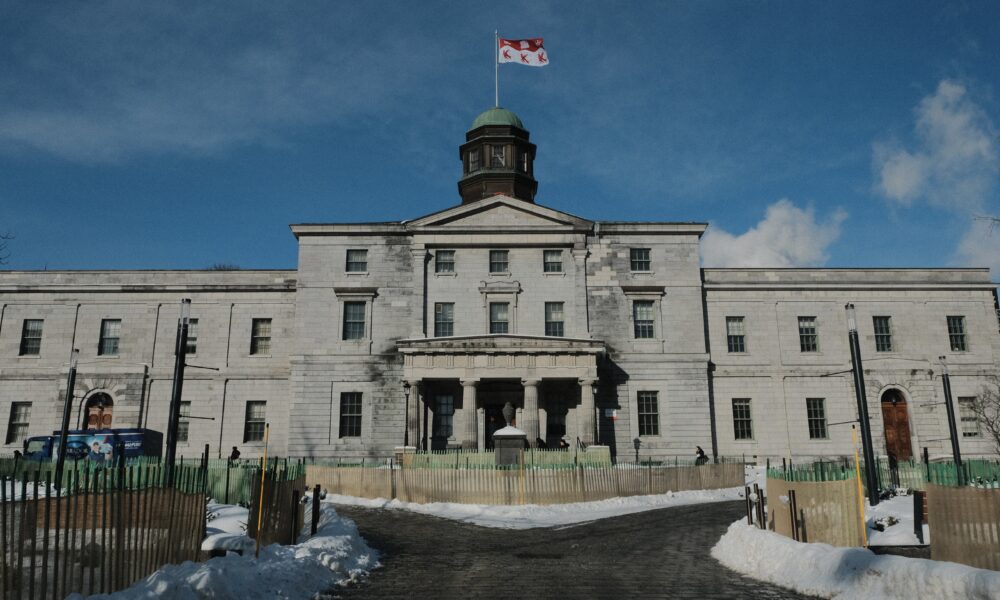
“The BSN started the McGill South Africa committee, which […] was campaigning against the school’s financial ties to South Africa […] and in the end, McGill divested during the 80s,” Disparte explained. “Later, in 2020 […] the Take James Down movement was spearheaded by BSN and that was successful—the James McGill statue that used to be in front of the Arts Building is no longer there.” 

During Black History Month at McGill, BSN aims to support other Black student groups, run events and educate the broader McGill community. In an interview with //The Tribune//, Yousof Eldood, U1 Science and VP Operations & Comms for BSN, expanded on this. 

“My favourite event that we do is Black Talk with CKUT,” Eldood said. “There will also be a soul food [event] [….] where essentially there’ll just be some food from Black culture somewhere to kind of give people a taste, and to serve as a point for the Black community to congregate, talk, have a good time, and just enjoy themselves.”

Disparte also touched on some other events from BSN’s upcoming Black History Month calendar, which was released on their Instagram.

“There will be a book club […] we’re gonna be […] reading The Bluest Eye by Toni Morrison [….] There’s a speaker event happening […] with multiple professors.” 

These events allow for important matters to be brought to the forefront, BSN President Orlane Donkpêgan Dopinos, U4 Arts, explained in an interview with The Tribune.

“Every single Black club on campus feels compelled to […] organize an event this particular month to talk about something that’s relevant to their own subcommunity.” Donkpêgan Dopinos said. “There’s a lot more attention on us and we take advantage of that as much as possible to discuss things that are specific to Black people.”

But while Black History Month creates a period of sustained visibility and acknowledgement, allyship is no less important outside of February. 

“I think that part of being a good ally outside of Black History Month is definitely realizing that there’s a tendency when we talk about racism, to reduce it solely to casual racism […] but really […] those things are institutionalized,” said Disparte. “It can be very valuable to call out your friends or if you see something happening and not […] requiring Black people only exclusively to use their voice.”

As of 2021, Black students made up 4.6 per cent of McGill’s student body. Despite Dopinos noticing an increase in Black students at McGill since 2021, she also recognizes the power in not accepting the statistical predisposition of being a minority, and instead bolstering opportunities to grow community ties.

“What’s more important is what you do with that community. How you guys rally up.” Donkpêgan Dopinos said. “How do you guys support each other? How do you guys make sure that your needs are being heard? How do you create spaces where you feel supported, where you feel valued academically, culturally, socially as well?”
To learn more about the BSN and their events, visit their Instagram page

Prof Profiles, Science & Technology

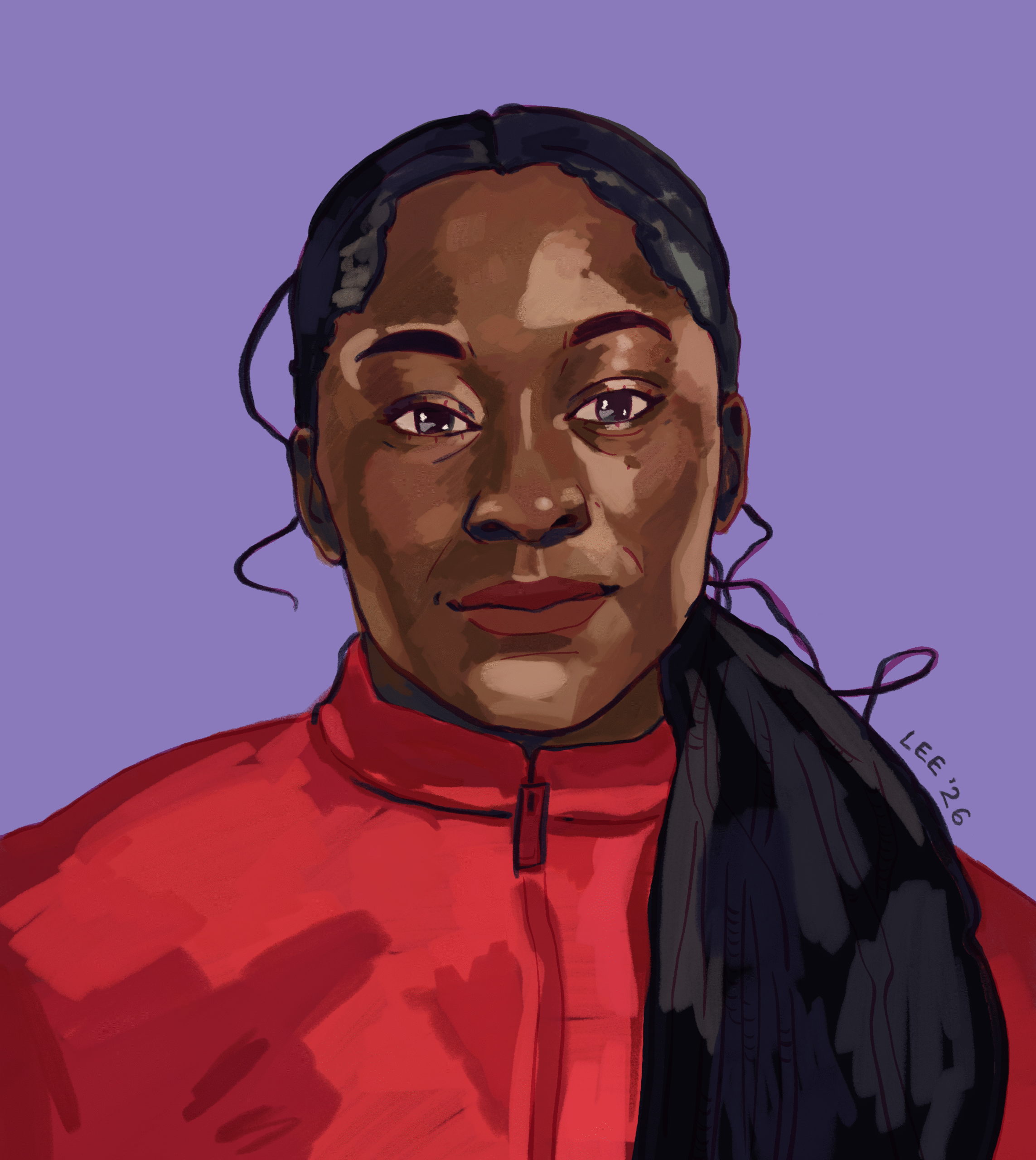
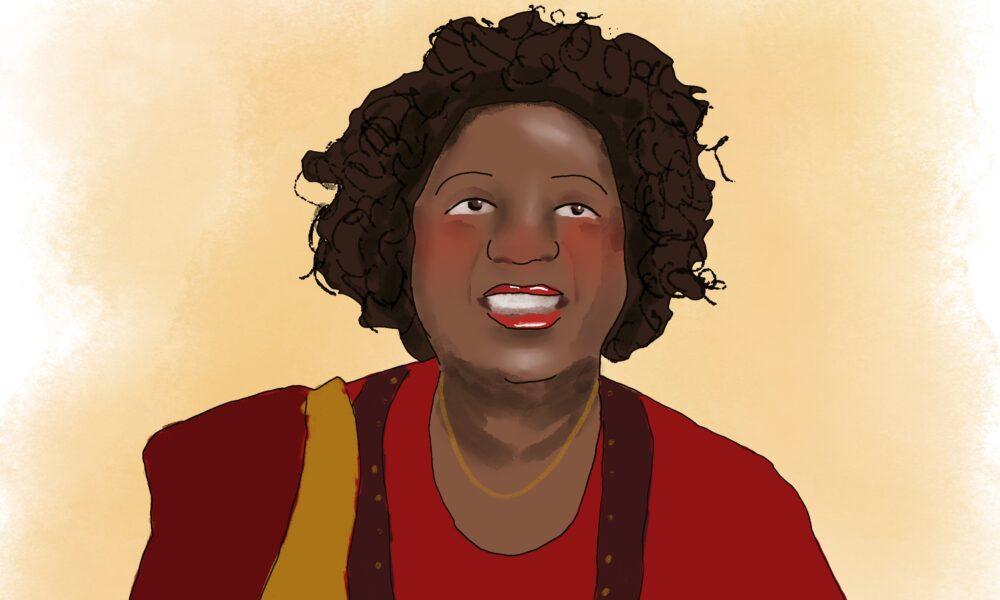
Professor Myrna Lashley sheds light on the importance of studying Black Canadian youth’s mental health

Black Canadians, on average, experience disproportionately poor health outcomes throughout their lives. While genetics may contribute to many chronic illnesses and mental health challenges, social and environmental determinants such as limited access to health care and anti-Black racism drive much of this disparity. This discrepancy is compounded by the legacy of colonialism and medical racism, which leaves Black communities underrepresented in mental health research.

To explore how these inequities affect youth mental health, The Tribune spoke with Myrna Lashley, an associate Professor in the Department of Psychiatry and adjunct researcher at the Culture and Mental Health Research Unit of the Lady Davis Institute for Medical Research

While researching youth mental health, Lashley noticed that Black youth often carry a profound burden of intergenerational trauma relating to racism while also having to navigate structural racism, shaping how they see themselves.

“Structural racism is based on ideology,” Lashley said. “It’s in our laws, in the way we interact with each other, even in the way we teach religion, in the arts, and cultures, everything, and we have to be very conscious to set things so that Black youth see things that value them as citizens in the Canadian mosaic.” 

These systemic pressures also bleed into Black youth’s educational environments. Schools’ anti-violence policies often define violence as solely physical rather than emotional. This results in disciplinary action being taken only against students who respond physically to racial bullying, ignoring the harm caused by racist language. Teachers may also dismiss racist comments or fail to document incidents, leaving frustrated students to undermine their self-worth and sometimes reshape their perceptions of mental health practitioners.


“Anti-violence policy is used against that child, who responded to violence that they have been suffering all along, because violence is often seen only as a physical thing and not as an emotional thing,” Lashley explained. “When you are young, you tend to look at everybody almost the same. So how do you say to somebody, ‘Let’s go and get you some mental health remedies,’ when the person who is going to help you looks like the person that you are angry at?”

Lashley highlighted several persistent barriers in accessing mental health care in Canada for youth, stemming from systemic bias to a lack of culturally competent care and adequately trained professionals. 

“We don’t have enough people who understand the issues [.…] You still have people even to this day, who [incorrectly] think that Black people don’t feel pain to the same extent as white people,” Lashley explained. “There are barriers to care in terms of knowledge, there are barriers to care in terms of […] therapists taking racism into the therapy room with them. Have they done the reflection that’s necessary to look at their own privilege?”

In order to offer appropriate mental health resources to Black youth, professionals must recognize their privilege and understand how Black youths are affected by their lived experiences.

“How do you help someone when you already determined that they are genetically flawed as a group? […] You’ve made up your mind that they are aggressive […] You send that kid on the road to difficult mental health issues.”

These barriers often put the onus on Black youth to educate their caregivers or mental health practitioners about their lived experiences, which can discourage them from seeking care. The underrepresentation of Black service providers also leads to lower medical school enrolments within Black communities.

“We’re still in the process of trying to train people to understand not only the lived reality of Black people and therefore […] Black youth, but what effect this has on mental health,” Lashley said. “Because if you feel like you are going to see someone who doesn’t understand you, […] you are spending a bit of money in your first few sessions […] teaching people how to see you. We have to really make sure that when we train people who are working in mental health and are going to help others, that they have a better understanding [of this reality].”

Cultural stigma within Black communities adds another layer of difficulty. 

“[There is] stigma within the community, and how we deal with, as Black people, […] mental health, and mental illness. And we are ashamed to have it, so we tend often not to seek the care that’s necessary, and so our youth don’t do it, because we’re not encouraging them to do it.”

Lashley also emphasized how adults’ lack of access to mental health services can create familial and environmental issues that harm children. 

“People have to deal with racism in the workplace, and they don’t know how to confront it there, or they have to put food on the table, […] then they go home, and they take it out on the family. The kids get hit, or the partner gets hit, or the person starts to self-medicate with alcohol or drugs,” she said. 

With these factors in mind, Lashley shared how she sensitizes professionals and the public to Black mental health through her work.

“I talk with my colleagues, I try not to get angry […] If I’m angry, they don’t hear me [….] When I go to the court, this is what I do: I go to the judge, I give them a history of racism in Canada, not the United States [….] I will talk about it here,” she said.

This ignorance comes from many not knowing their history, placing the burdens of education, which stem from systemic factors, on Black communities themselves. 

“A lot of Canadians don’t know their history. And so, I approach it from that perspective and […] have them understand their history so they can understand why […] some Black people don’t trust them. We have to teach our kids that, so that they know how to protect themselves, not to hate you, but for them to protect themselves, and that’s something you don’t have to do with your kids [.…] I get them to address their privilege,” Lashley explained.

Medical and educational institutions also have a role to play in addressing systemic inequities, as they impact not only Black communities but also Indigenous, disabled, and other marginalized populations in various ways. This makes inclusion important in all spheres of life.

“It’s one thing to pull people in, but if you then end up putting people just like polka dots on the background of the hegemony of whiteness, what have you done?”

Looking ahead, Lashley’s work reinforces the need for more research and institutional inclusion to reflect the lived experiences of the studied communities rather than token representation.

“You have to look at the lived experience [….] If you go into a specific group, you have to create what it is you’re studying, the research, with that specific group,” she said. “We can no longer take a position of ‘I am the academic, I know everything, I am going to go and study, and then I am going to impose my results on you.’ That is very insulting. It’s inaccurate, it’s unethical, and it’s unhelpful.”

Overall, Lashley stressed the importance of doing inclusive research on mental health in Black youth. She teaches and spreads her expertise not to divide people, but rather to create an egalitarian society where all communities can access the mental health services they deserve without stigma.

“We’re not looking at what divides people [….] We want to know what the issues are. What is dividing people and using that information to pull everybody together [….] We want to create a world, a city, where everybody feels included, and everybody feels equal, and everybody is getting equity.”

Know Your Athlete, Sports

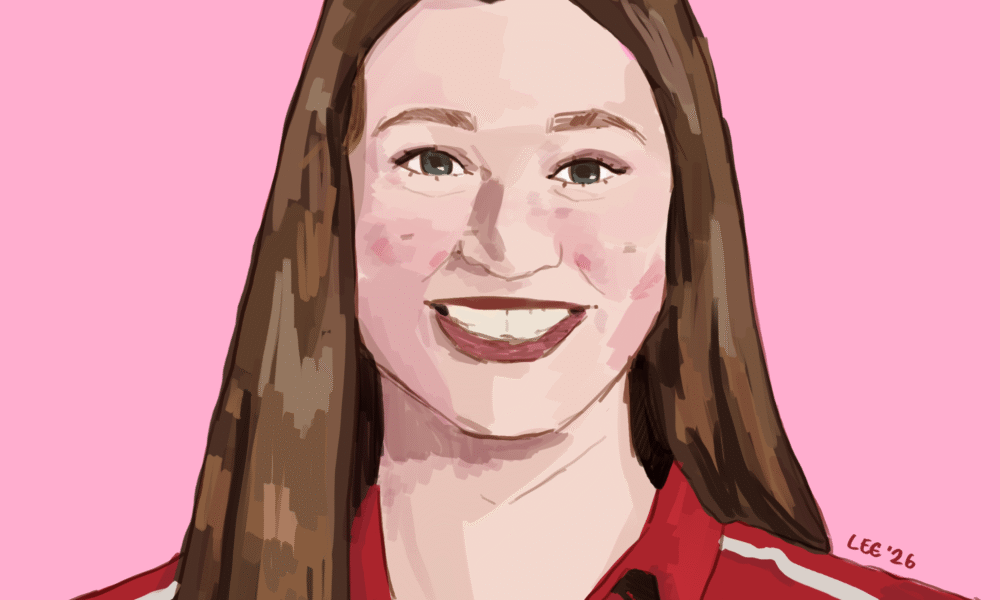
Know Your Athlete: Sonia Dunn

The McGill Artistic Swimming Team delivered a flawless performance at the Eastern Divisional Meet at Queen’s University on Jan. 24, placing first in all six events and taking home the trophy.

That dominance was fueled by a standout performance from Sonia Dunn, U2 Science, who won gold in the solo, duet, and team routines. Scoring 204.1150 points in her solo routine, she made history as the first athlete to break the 200-point mark in the Canadian University Artistic Swimming League (CUASL) level.

In an interview with The Tribune, Dunn reflected on the moment she first fell in love with artistic swimming at just seven years old.

“One of my friends in elementary school had a sister who did artistic swimming, and she invited me to one of her shows,” Dunn shared. “I was supposed to be there [to play with my friend], but the moment I watched the first routine, I was completely transfixed. I remember thinking, ‘this is what I want to do.’” 

What started as a strong interest soon became a full-time pursuit. Dunn trained with the GO Capital Artistic Swimming Club in Ottawa for five years before reaching the national level at merely 12 years old.

“In high school, it was nearly 30 hours a week. Saturdays and Sundays could be up to six hours each day,” she said. “There would be days when we trained at one pool for two hours, then got in cars to drive to another pool and continued training there.”

Her experiences in the pool shaped not only her athletic career but also her decision about where to attend university. In 2015, Dunn’s coach, a synchronized swimmer for Carleton University, invited her to watch and volunteer at the Nationals of the Canadian University Synchronized Swim League, now known as CUASL. That year, McGill won their 12th title.

“That kind of always stuck with me in my head,” Dunn said. “Okay, McGill is number one.”

When she first arrived at McGill, Dunn took an unconventional path: Instead of joining the university team right away, she spent her U0 year with Montreal Synchro. With club eligibility extending to age 19 and two seasons lost to COVID, she wanted one last year competing at the club level.

“It was a hard decision, but I’m really glad I took that stepping stone. I familiarized myself with McGill as a school separately from McGill synchro,” Dunn explained. “It also helped me mature as a leader because I was the oldest on the team, and I never really experienced [leadership] to that extent.”

All the growth from her U0 year paid off. With the Eastern Divisional Meet coming earlier than last year, the team dove into fitness training right after winter break, moving quickly to swim full routines instead of breaking them into segments. Dunn believes the hard work yielded results at the competition.

“When I’m competing, my goal is always to win because that’s the standard I hold myself to. But synchro isn’t a sport where you’re just competing against one other team or person, it is a subjective sport judged objectively,” Dunn said. “Once I started competing, I realized my fitness was really there. As the events progressed throughout the day, the momentum from the crowd and the results kept building, and it just compounded in a really positive way.”

Dunn also credited her teammates and Head Coach Lindsay Duncan for fostering a supportive environment.

“Coach Duncan would come with a quote to motivate us. One of our key words was trust. We trust each other. We know this routine is hard, but I’m surrounded by nine other girls who are all going to push themselves hard, and I trust that they’re going to,” Dunn said.

While her focus remains on reaching new heights for herself and the team, Dunn is also looking ahead to the next chapter of her synchro journey.

“Once I’m done at McGill, I think it’s going to be a great way to close my chapter indefinitely,” Dunn explained. “I’ll need a little break from the sport to find myself outside of being an athlete, since so much of my identity is tied to it. But I know my path is going to lead back to synchro. It’s always been my first love.”

Arts & Entertainment, Fashion

Fashion Business Uncovered’s conference merges business and style

Fashion is everywhere. It’s in the brands we wear, the trends we follow, the models we admire, and the meticulously staged illusions that flood our feeds. Yet behind every viral look, ‘It girl’, or coveted brand, lies a business quietly shaping visibility, marketability, and how trends are created, sold, and sustained.

On Jan. 24, Fashion Business Uncovered’s (FBU) annual conference put fashion, skincare, and clothing under the spotlight as both art and industry. The room itself felt like a runway of its own: Heels clicked across the room, statement accessories sparkled, and a striking variety of aesthetics—from minimalist chic to bold and creative—displayed that fashion was not merely being discussed but fully lived. 

FBU carefully brought together panellists from both global and local brands, including ALDO, L’Oréal Paris, Indeed Labs, Groupe Dynamite, Jack the Publicist Group, and Atelier Détails. The speakers traced their journeys into the fashion world, illuminating the breadth of careers it offers, and exploring how creativity and craftsmanship intertwine with business strategy, technology, and marketing.

A recurring theme throughout the conference was the importance of exposing oneself to opportunities. Speakers encouraged students to pursue internships, network and attend events, and join companies they aspire to work for. They emphasized that a specific degree or linear path is not required to succeed in the fashion and beauty industry. 

In an interview with The Tribune, panellist Dimitra Davidson, CEO and co-founder of Indeed Labs, stressed the educational value of such events for students navigating a world where trends and reality evolve faster than academic curricula.

“I did not have […] at all a foundation of marketing,” Davidson said. “You just figure it out as you go along. If you actually go by a playbook, then sometimes you’re not going to have a point of difference. You’re just going to be exactly like everybody else.”

Social media also took centre stage, with panellists acknowledging its influence in shaping trends and directing brand strategies to fragmented digital audiences.

Nathaniel Woo, Marketing Manager for Men & Skincare at L’Oréal Paris Canada, spoke about the importance of immersing oneself in these online spaces to cater to target audiences.

“One of the best pieces of advice [one of my managers] gave me was to scroll. Literally set aside 15 to 20 minutes to scroll on TikTok, scroll on Instagram. I even have an account on my work phone that is more tailored to the male algorithm,” Woo said. “I know nothing about hockey. But in that algorithm, it’s literally hockey, soccer, F1, and […] I don’t usually find that on my personal phone.”

Beyond industry insight, education remains at the heart of the club’s mission. In an interview with The Tribune, Michelle Govorkova, co-executive director of FBU, explained that exposing students to the full spectrum of fashion careers was one of their primary objectives.

“Our main goal and priority here is education and to teach people that there are so many professions and jobs within the fashion industry that are not stereotypical,” Govorkova said. “Obviously, you have your designers, you have your models, you know, […] the mainstream roles, […] but what we aim to do here, as for the name ‘Fashion Business Uncovered,’ is to really touch on the business side of fashion because […] even a fashion company is still a business, right?”

Co-executive director Julie Baillet echoed similar sentiments, emphasizing the importance of revealing the industry’s full scope through its selection of panellists.

“We just wanted to have […] this very diversified panel to really show all the facets of fashion and uncover the ‘behind-the-scenes’ that happen within the fashion industry,” Baillet said. “[We wanted to] have […] many different perspectives from production, marketing, like entrepreneurship, operations, really anything that happens within fashion.”

By the end of the conference, one thing felt clear for attendees: The fashion industry is broad and intersects with businesses more than we imagine. Given that there is no traditional fashion program at McGill, this conference proved to be an inspiring learning experience for many students.

McGill, News, SSMU

SSMU LC discusses McGill identification policy, undergraduate AI use, and BoD reform

On Jan. 29, the Students’ Society of McGill University’s (SSMU) Legislative Council (LC) convened to discuss a new motion proposed by SSMU President Dymetri Taylor. The motion seeks several amendments to the SSMU Constitution—the Society’s fundamental governing document, which outlines SSMU’s roles as the governing body of McGill undergraduates and serves as its legal by-law regarding its status as a non-profit corporation under the Quebec government. 

The meeting began with Executive and Councillor reports. During Vice-President (VP) University Affairs Susan Aloudat’s report, Science Councillor Benjamin Yu inquired into McGill’s proposed Identification Policy for Access to Properties Owned, Occupied, or Used by the University, which was presented to the McGill Senate on Jan. 14. 

Though Aloudat assured the LC that the Senate had serious concerns with the proposed policy—which would empower unspecified, authorized personnel to request anyone on university grounds to provide McGill or government-issued identification and remove facial coverings—she expressed her belief that the proposed policy would nonetheless pass the Senate and move to the Board of Directors (BoD). Still, she intimated that the policy would undergo reforms before its ultimate implementation. 

“I do think that [the Senate is] going to reimagine [the policy], especially for considerations like certain groups who will be experiencing [on-demand identification] disproportionately, who are on campus for perfectly legitimate and academic affairs,” Aloudat said. “[McGill should put] […] guardrails around when this policy will be used, so that it’s only applied and enacted in situations where security is a genuine threat or risk, and not a ‘perceived’ risk or arbitrarily interpreted risk.” 

Also during Aloudat’s report, Arts Councillor Delaney Cahill inquired into SSMU’s policy that grants undergraduates access to Grammarly, a writing-assistant software powered by Artificial Intelligence (AI). Cahill stated that members of the Faculty of Arts professoriate are concerned that SSMU is providing undergraduates with access to AI tools that could be used to undermine academic integrity.

“Some of the [Faculty of Arts] teachers weren’t thrilled about [undergraduate access to Grammarly] and […] the SSMU prompting the students to use Grammarly and AI in general,” Cahill noted. “What is the SSMU doing to combat […] unethical AI use right now?”

While Aloudat stated that it was not her duty to police undergraduates’ use of AI, Taylor later clarified that the generative AI features in Grammarly are unavailable to undergraduates.

Taylor then presented the newly proposed motion, which seeks to amend the SSMU Constitution to, among other initiatives, further empower the LC, change specific terminology, combat the politicization of the BoD, and specify the roles and powers of Board and Executive Council members. 

One of the amendments would change the constitution’s nomenclature, replacing the current designation “Board of Directors” with the name “College of Directors.” Taylor explained that part of the rationale for this amendment is that “College of Directors” has a more positive connotation than its current name. 

“[The current designation] gives the impression that the Society is more of a corporation than a student society,” Taylor said. “That is the current way in which we are structured [….] We are both [a non-profit] company and a student society, […] but principally the change […] [from] ‘Board’ to ‘College,’ […] more or less presents an opportunity for the Board to be considered into a better light than how the Board has been viewed in previous times.”

Similarly, Taylor indicated that amendments to increase the LC’s oversight over the BoD and its subgroup, the Executive Council, were necessary in light of past political polarization within the Board. 

“[In the past] executives might tap [individuals] because they want to get people that are like-minded to them onto the Board,” Taylor said. “[It served as] a way for the executives […] to then be able to have their vision [of the BoD] be the one that goes forward without necessarily getting the broad perspective that you otherwise get in as a council.” 

Taylor mentioned how, rather than focusing on legal, financial, and operational duties,  the BoD has gradually and strategically begun to shape what SSMU achieves.

“With the board now and with the way it’s currently structured, for instance, for our job contracts, I’m overseeing the executives, which doesn’t make any sense at all,” Taylor said. “There can be interpersonal issues that arise [….] That’s what this [amendment] is trying to navigate, as well as to also ensure executive accountability.”

Ultimately, the motion was tabled. If passed by the LC and a student referendum, it would be implemented on May 4. 

Moment of the meeting:

Arts Senator Keith Baybayon and VP University Affairs Susan Aloudat discussed potential accommodations to address McGill’s 2026 Spring Convocation dates and the conflicts it imposes on Muslim graduates celebrating Eid al-Adha.

Soundbite

“The Faculty of Music throws the best bars out of every single faculty! You can quote me on that, Tribune!” —VP External Seraphina Crema-Black, regarding the Music Councillor’s report on the success of the Music Undergraduate Students’ Association holiday party. 

Soccer, Sports

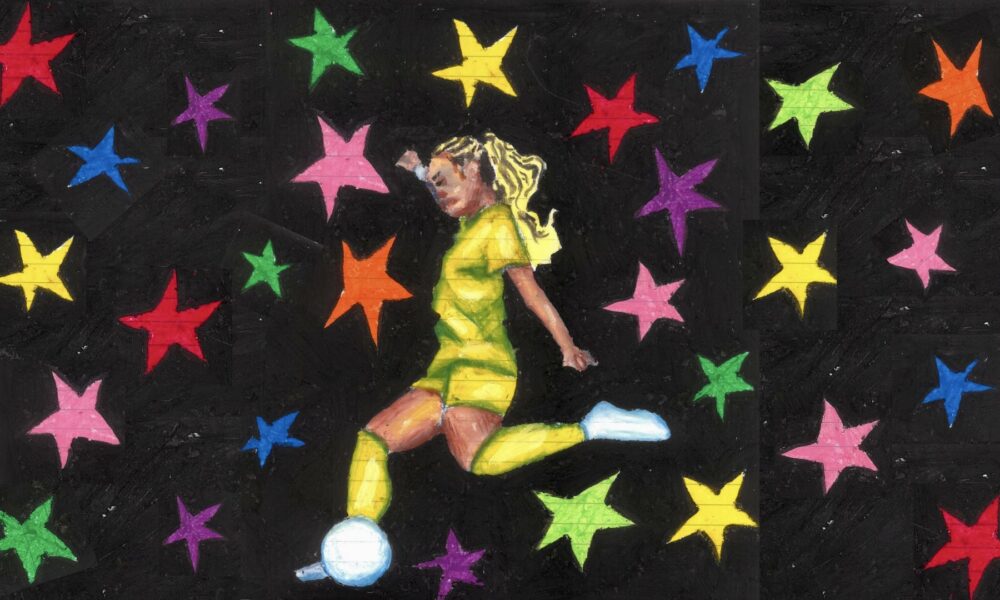
Trinity Rodman becomes highest-paid player in NWSL history

In January 2026, Trinity Rodman, one of the most prominent talents in women’s soccer, reached a milestone unseen in the National Women’s Soccer League (NWSL). By signing a new contract with the Washington Spirit, Rodman became the highest-paid player in NWSL history and second-highest-paid women’s soccer player in the world. At 23 years old, she signed a three-year contract worth more than $2 million USD per year (including bonuses), surpassing all previous contracts in the league’s 14-year history. 

Rodman’s rise to this moment has been astounding. Drafted second overall by Washington in the 2021 NWSL Draft, she helped lead the Spirit to the 2021 NWSL Championship at 19 years old and quickly became one of the league’s most effective attackers. Her profile expanded internationally as she became a prominent figure with the United States Women’s National Team (USWNT) and played an important role in the team’s success. 

While Rodman’s talent on the pitch has been clear to see for years, her status as the league’s top earner was not achieved without controversy. When her previous contract expired at the end of 2025, Rodman entered free agency with strong interest from elite European clubs—teams that could potentially offer more compensation due to the NWSL’s salary cap limitations. In late 2025, the Spirit and Rodman agreed to a four-year contract structure that would have averaged more than $1 million USD annually. However, NWSL commissioner Jessica Berman rejected the deal, saying it violated the ‘spirit’ of the league’s salary cap rules, despite both sides stating that it was compliant. 

This led to a larger dispute: The NWSL Players Association (NWSLPA) filed a grievance on Rodman’s behalf, arguing that the rejection of the contract violated her free-agency rights under the collective bargaining agreement. This put pressure on the league, already attempting to balance financial sustainability with the retention of elite talent. In response, the NWSL Board of Governors approved a new rule known as the High Impact Player rule, designed to allow teams to exceed the standard salary cap by up to $1 million USD for players who meet specific criteria, such as national team involvement, marketability, and elite performance. 

While the league frames the High Impact Player mechanism as a tool to retain and attract star players, the NWSLPA has raised concerns about how the system was implemented and whether it gives the league control over which players are deemed ‘impact’ players. Regardless of the debate, Rodman’s contract reflects not only her immense value as a player, but also the shifting economics and politics of women’s soccer. Historically, women’s leagues around the world have struggled to offer salaries that rival those seen in men’s competitions. While European clubs have paid top players well, Rodman’s deal positions the American league in a strong spot for the sport to grow. 

Critics of the NWSL’s salary cap argue that without mechanisms like the High Impact Player rule, or without a higher base cap, the league risks losing its best talents to teams abroad. The Major League Soccer (MLS) has similar salary limitations, with a cap of $5.95 million USD per player annually, which has also swayed stars to take their talents abroad. Rodman’s re-signing is both a victory and a challenge, as it shows that the league can hold on to top stars but also reveals the pressures that come with balancing equality and competitiveness. For the Washington Spirit, keeping Rodman is more than a strategic win but a financial success as well. Her presence boosts the club’s visibility, expands its fanbase, and enhances its marketing appeal. Rodman’s new contract may even influence how future NWSL negotiations unfold, setting a benchmark for player compensation and reshaping expectations for what elite women’s soccer players can earn. 

As she begins this next chapter, Rodman’s journey from a teenage prodigy to the highest-paid player in NWSL is a reflection of a sport that is growing through new circumstances. By reforming what is possible for NWSL athletes, she has become a trailblazer for Black women athletes, paving the way for younger players. Her story speaks to how competitive excellence and talent increasingly intersect with equity, value, and the future of women’s professional soccer. 

Commentary, Opinion

Black History Month should go beyond mere acknowledgement

Black History Month in Canada is a celebration of Black people and their cultures, the diversity of Black communities, and the contributions and legacies of Black Canadians throughout the country’s history. 

However, Black History Month is often viewed purely as commemorative, intended to spotlight Black historical figures for the sake of mere acknowledgment and recognition. Yet, the month’s purpose lies far beyond that. Black History Month involves the conscious reevaluation of how histories are written, constructed, and shared, by emphasizing the lesser-known aspects of Black history, noting how information and histories are shaped by power relations, and actively decolonizing collective memory and the process of history creation. This approach, known as historiography, serves to analyze how Black history has been and must continue to be revisited, re-celebrated, and re-understood. 

In Canada, February was first designated as Black History Month in 1978 by Daniel Hill and Wilson Brooks, the founders of the Ontario Black History Society (OBHS). In 1995, Canadian Member of Parliament Jean Augustine presented a motion to formally recognize February as Black History Month, which was unanimously approved by the House of Commons. Augustine, having worked in education, understood the importance of institutionalizing this celebration within Canadian education and collective memory. 

However, the motion to recognize Black History Month was only fully passed by Parliament in 2008, when Senator Donald Oliver pursued its recognition in the Senate. Oliver emphasized the importance of Black History Month in challenging our common perceptions of history and tackling racial prejudices. He also tied the month’s value to Canadian pedagogy, stating schools must teach the country’s history of slavery and segregation—the latter of which lasted well into the 1960s—in order to understand the present-day fight against anti-Black racism. Therefore, one of the active goals of Black History Month is to analyze biases and how they have systematically hidden stories from conventional Canadian history.   

Systemic biases still persist today, including through notions like Canadian exceptionalism, under which anti-Black racism is often depicted as external and U.S.-specific. Overlooked far too often are patterns of prejudiced policing and disproportionate incarceration rates in Canada. In 2015, Black people were twice as likely to be accused in Canadian criminal courts, and in 2020, Black people accounted for nine per cent of federal correction populations, despite making up only four per cent of adults in Canada. Also neglected is the underrepresentation of Black people in academia, as only 2.3 per cent of high-ranking positions at Canadian universities were held by Black professionals as of 2024. These statistics demonstrate that Anti-Black racism is not a strictly American phenomenon, and reveal the critical significance of Black History Month as a mechanism through which to revisit such biases. 

An important part of this process is interrogating how history has selectively omitted Black narratives. This goal does not have to be solely pursued through historical research and education reform, but can also be achieved through cultural events, such as music, visual art, and performance art. In this way, cultural events become part of the historiographical process themselves—sites where Black artists and communities reframe dominant narratives and participate in the ongoing reconstruction of collective memory.

Black History Month’s historiographic power lies in its recurrence, its nature annually underscoring the voices of Black Canadians while also finding new ways to challenge Canadian history. One of the best ways to continue this tradition is through education. At McGill, this means going beyond initiatives and events during February to offering courses on Black history and critical Canadian history, designating a program specifically for Black Studies, and reconciling its own histories of slavery, discrimination, and exclusion
Black History Month anchors a celebration of Black excellence and cultures, but this cannot exist without an ongoing commitment to reexamining the stories Canada tells about itself.

Features

To my companions and my community

INT. LIVING ROOM EVENING

//TJ’s parents are chatting on the sofa. He stands in front of them. They stop talking to look at him.//

TJ

//(wipes the sweat off his hands)//

Mom, Dad… I have something to tell you.

NARRATOR (V.O.)

But wait… haven’t we seen this before?

For some, coming out is an integral part of their queer journey, but to others, it is a casual statement about one aspect of their lives. The queer community encompasses a wide range of lived experiences. Yet, films and television often rely on a familiar pattern: Framing a queer character’s narrative around coming out, positioning it as the climax of their journey. While coming-out narratives provide essential representation for the queer community, they can also narrow the scope of what the queer experience is allowed to look like. 

A history of queer representation in film

From 1934 to 1968, the Hays Code required Hollywood movies to depict homosexuality negatively, forcing filmmakers to vilify or queercode queer characters. During the Gay Liberation Movement of the ‘60s, ‘70s, and ‘80s, activists urged people to “Come Out, Come Out, wherever you are,” and increased queer representation in television followed suit. Still, many stories treated queerness as a defect. An episode of the medical drama //The Eleventh Hour//, released in 1963, attributed Hallie Lambert’s (Kathryn Hays) lesbian identity to her overbearing mother, reinforcing the idea that queerness stems from familial failure. In response, advocacy groups such as the Gay Media Task Force, the National Gay Task Force, and the Gay Activists Alliance held protests against these offensive representations. Their pressure pushed television producers to reconsider how they represented queerness on screen. Thus, in ‘70s sitcoms, a side character’s coming out became a plot device for cisgender, straight leads to confront their own views on homosexuality. However, television shifted from this structure after Ellen DeGenerestrailblazing performance as the show’s lead Ellen Morgan on //Ellen// in 1998. Her appearance as a beloved lesbian character marked a shift toward the implementation of recurring mainstream queer characters. Since its formation in 2005, GLAAD, formerly the Gay & Lesbian Alliance Against Defamation, has tracked queer representation in media and publishes a report each year analyzing queer representation on broadcast television. According to GLAAD, 2SLGBTQIA+ characters in broadcast series today make up 9.3 per cent of all leads. While queer representation has moved far beyond early vilification, the continued focus on coming-out narratives in media reveals that queer media still needs to represent a diversity of stories for queerness to be widely normalized. 

*Dramatic pause* …I’m gay

Despite the increased positive representation of queerness, not everyone relates to the coming-out narrative. Movies like //Love, Simon//, released in 2018 //Happiest Season//, released in 2020,  and shows like //Heartstopper//, released in 2022, //Heated Rivalry//, released in 2025, and //One Day At A Time//, released in 2017, feature lesbian, gay, and bisexual (LGB) characters who reach an emotional climax when they come out. These narratives stem from decades of underrepresentation, but a focus on these plots may amplify grand emotional scenes, which unintentionally push aside other queer experiences. 

Al Dervisevic, U4 Arts and Resource Coordinator for Queer McGill, discussed his own experiences watching coming-out scenes in an interview with //The Tribune//. 

“I’m sure there are queer people who have had these big sit-down moments with their loved ones, but it’s not something I’ve ever felt represented by. It’s not always this narratively satisfying moment,” Dervisevic said. “When we’re talking about normalizing queerness, taking it to be just a part of people’s lives, which it is, these grand scenes of coming out confessions are probably detracting from that.” 

This type of narrative, similar to ‘70s sitcom representation, also centres the queer character’s relationship with the straight people in their lives. Coming-out narratives are not just about how a queer character feels about their identity, but also about how they expect straight characters to react to hearing about it. It portrays a character’s queerness as the relationship between their identity and the heteronormative expectation to reveal it. 

“The queer narrative becomes a part of straight people’s narratives too, because suddenly they have a role to play,” Dervisvic explained.

This feeds into an underlying problem of many coming-out narratives: They are actually outings. Characters are placed under an external pressure to come out, which forces them to reveal their sexuality. 

Mae Johnson, U3 Science, touched on the theme of outings in film in an interview with //The Tribune//. 

“Many LGBTQ+ stories feature characters who don’t get to come out on their own terms, and while this is unfortunately the reality for some people, it’s sad when it seems to be one of the most common coming-out tropes,” Johnson said.

In //Love, Simon//, Simon Spier (Nick Robinson) is blackmailed by his classmate, who uses evidence of Simon’s closeted queerness as a bargaining chip. He is eventually outed at school. In a situation with enough circumstantial pressure to come out, the moment can seem as forced as an outing. In season 5, episode 7 of //Stranger Things//, Will Byers (Noah Schnapp) feels anxious that the resident villain with a world-demolishing agenda, Vecna, will target his sexuality unless he comes out publicly. While the expressed support from his friends and family serves as a cathartic moment for Will, the decision to tell his friends was Hobson’s choice—he would rather come out than risk their deaths. Other outings with similar conditions can be found in //Heated Rivalry//, //Young Royals//, and //Red, White, and Royal Blue//.  While these portrayals represent a traumatic reality for many queer people, presenting an outing as a coming out reframes the conflict between heteronormative expectations and a queer person’s internal desires as a simple act of  ‘bravery,’ rather than as a constrained or coerced response. 

“These stories allow characters to show strength, resilience, and claim their identity in the face of scrutiny,” Johnson said. “However, I think that featuring queer characters coming out on their own terms is as important, though less seen.”

She also wonders if a pattern of coming-out narratives creates a perceived pressure to come out in real life. 

“I think it’s important to validate the idea that coming out is not what makes your queer identity real. If you’re not ready, or not in a safe space to make that happen, you don’t have to,” Johnson said. 

These sentiments suggest that the coming-out narrative is itself a staple of queer media, yet simultaneously a source of frustration for many queer people.

Who’s missing from the narrative?

Coming out narratives also underrepresent the stories of transgender people, racialized people, and queer elders. A study that analyzed the top 10 coming-out films recommended by IMDb found that while there are many interpretations of characters’ reactions to coming out, there is little diversity in race, gender, or the sexual orientation of the characters themselves. 

Val Muñoz, the Administrative Coordinator for Queer McGill, expressed that they would like to see more representation of queer stories from Central and South America, where queerness in many countries is persecuted

“I would want to see their stories highlighted and their community, and the fight that they have in their home countries,” they said in an interview with //The Tribune//.

The genre conventions of coming-out narratives further narrow representation. These stories most often appear in teen romantic comedies or sitcoms, leaving little room for queer elders. This framing perpetuates the idea that queerness is a phenomenon within a younger generation,  despite the reality that 2SLGBTQIA+ people have always existed. 

“These coming-out narratives are always in YA [young adult] or teen romance. But what about the people who weren’t able to come out until they were much older?” Muñoz said. “Even now, with social spaces in Montreal, it’s always catered to under-25s. We’re missing a whole generation of our queer ancestors who paved the path before us. It would be really nice to see and hear these people’s stories.” 

This absence highlights the wider lack of representation for transgender and characters of colour. In their 2024-2025 report, GLAAD found that of the 489 queer characters last year, 86.5 per cent were LGB, while there were only 33 transgender characters. They also reported that 51 per cent of characters were of colour. While this may seem balanced on paper, this does not necessarily translate into equitable representation on screen, nor does it address whether these characters occupy leading roles or are portrayed beyond stereotypes.

“We all have different experiences coming out, and I think it’s important to see that reflected in how we tell [these] stories,” Johnson said.

 Beyond coming out 

Media representation can have tangible effects on youth mental health and well-being. In a study which surveyed adolescents across the country, Bradley Bond, a Communications professor at the University of San Diego, found that more queer media exposure correlated with feeling less sad, dejected, and depressed. He theorized that positive depictions of 2SLGBTQIA+ characters could decrease suicidal feelings within queer youth. LGB youth are nearly five times more likely to attempt suicide than their heterosexual peers (CDC). Considering the high rate of depression and suicide among queer youth, accurate and inclusive portrayals of queer characters take on a new importance. Positive portrayals of queer characters in film and television could significantly affect not only the general public but our community itself.

 Within this context, the rom-com convention offers a unique opportunity to portray a healthy coming out and a happy ending. It can model what an appropriate acceptance looks like for friends and family. When shows and films follow the character’s emotional journey, the viewer is privy to thoughts and feelings about how their identity fits within their world. This fosters empathy and understanding for the character, which transfers to queer people in real life.

Ana Gomez, U3 Arts, voiced her feelings about watching coming-out scenes in an interview with //The Tribune//

“While I can’t relate, I have a lot of friends who are queer, so I feel a lot of empathy and admiration for my friends. I also just get very emotional for them, especially if it’s something that they have thought about for a while, and that they feel vulnerable and comfortable sharing with me.”

It can also depict the experience of stepping into the queer community as a teen and what community support should resemble. //Heartstopper//, for example, features an ensemble of queer characters, most of whom help other characters fall in love, come out, or transition.

“I love watching characters being able to live more authentically, and these stories are in many ways what encouraged me to come out as a teenager,” Johnson said. “I also think it is important to discuss the nuances around this experience and not pigeonhole what coming out looks like.” 

Ultimately, queerness is not dependent on coming out, nor is it a precursor to being a part of the queer community. With the improvement of queer representation in television, producers may move away from outing plots and include more transgender characters, characters of colour, and queer elders. They should also acknowledge that a character does not need a public declaration for their queerness to be real. For viewers within our community, we should continue to ask ourselves how particular depictions of coming out contribute to expectations and stereotypes for our community. 

//TJ looks down and hides his sweaty hands behind his back.//

NARRATOR (V.O.) CONTINUED

Do you see that? Are you going to ask, “Haven’t we seen this before?”

McGill, News

COFAM continues negotiations with McGill over CAS precarious faculty employment

In July 2025, the Confederation of Faculty Associations of McGill (COFAM), composed of five faculty unions, began bargaining with McGill over the working conditions of Contract Academic Staff (CAS). 

COFAM consists of the Association of McGill Academic Staff of the School of Continuing Studies (AMASCS/AMPEEP), the Association of McGill Professors of Education (AMPE), the Association of McGill Professors of the Faculty of Arts (AMPFA), the Association of McGill Professors of Law (AMPL/AMPD), and the Association of McGill Library Academic Staff (AMLAS). This bargaining process primarily concerns CAS faculty members at McGill.

Tenure-track academic staff must fulfill three areas of work: Teaching, researching, and contributing to the university community. CAS faculty, however, only need to fulfill two out of the three categories. Even though staff in both streams are expected to work full-time, they do not receive the same contract length, hiring benefits, and pay as other tenure-track academic staff.

In an interview with The Tribune, Kyle Kubler, AMPFA treasurer and CAS faculty lecturer at the McGill Writing Centre, explained that the main purpose of this negotiation is to fix the discrepancy in employment conditions between tenure-track and CAS faculty. 

“We recognize that tenure-track professors have more job responsibilities in the sense [that] they have these three categories instead of two, but it’s not like […] by having more categories, they work more than us,” Kubler said. “We all work the same. Each individual person works slightly different hours depending on their setup, but there’s not an expectation that what we do is less than full-time and what they do is full-time or more than full-time.”

CAS faculty members generally must have six years of teaching experience at McGill before they may obtain a permanent contract. Kubler explained that this contract renewal system could create job instability.

“For CAS members, the university has the right to give you a contract of however long they want [….] There’s a lot of variability in those first six years before you become permanent,” he said. “That makes our jobs really insecure [….] Our proposal into bargaining is that we want to take the people that are currently CAS faculty lecturers and CAS professors and put them into the tenure stream [….] Where we get one for three years, we do a renewal process, and we get another for three years.”

On Jan. 20, COFAM met with the McGill administration for a bargaining meeting. McGill rejected COFAM’s initial proposal to eliminate the CAS system, instead offering a counter-proposal, which introduces teaching-intensive tenure-track positions.

Kubler expressed that while it is a step in the right direction, McGill’s decision remains inadequate in pragmatically improving working conditions for existing CAS faculty.

“What they’ve offered us right now is obviously insufficient in the sense that it doesn’t really address any of our concerns,” he said. “We’re happy to see them move in that direction, and we need a lot more information about details before we really know what to do with it.”

Julie Sénat, AMPFA vice president and French Language Centre faculty lecturer, was hired as a CAS faculty member on a two-year contract in 2022. In an interview with The Tribune, Sénat mentioned that amid McGill’s recent budget cuts, many CAS faculty are left questioning their job security.

“When I was hired, my colleagues and I were under the impression that [our jobs were] stable, [as] having a longer contract made me feel as if I was more secure,” Sénat said. “Later on, as McGill started budget cuts and I started getting more information, I realized that my position could be cut [….] If that were to happen, let’s say they were deciding to cut CAS positions, […] they could give me a non-renewable [contract] and I would not have any seniority. What would happen is that I would just [have to teach] the leftover courses.”

Kubler explained that while the current contract-length policy allows McGill to maintain maximum flexibility, it is unfair to CAS members.

“I’m not trying to say that this is something nefarious, but this is of course something they want,” Kubler said. “And then, of course, it makes sense for us why we wouldn’t want that, because we want certain clarity in terms of our employment. It becomes tricky [when] you’ve got someone who’s one year away from getting their permanent contract, and then they don’t know if they’re going to get renewed for that last year.”

Sénat then expressed dissatisfaction with McGill’s lack of transparency with its employees.

“We are way more precarious than our tenure-track colleagues, we’re way less paid,” she noted. “The feeling is that McGill’s culture has always been like everything is silent, things are not clear. It’s handled case by case. What we’re trying to do is to put together and clarify everything, negotiating together.”

The Tribune reached out to the McGill Labour and Employee Relations group, but they did not respond in time for publication.

In an interview with The Tribune, Steve Jordan, president of the McGill Association of University Teachers (MAUT) and associate professor in the Faculty of Education, explained that although COFAM and MAUT differ legally, they work in parallel to promote the interests of faculty members and staff.

“The Contract Academic Staff faculty lecturers are represented in MAUT,” Jordan said. “The MAUT Council is the governing body, and it’s composed of about 20 people [….] There’s a CAS representative [….] MAUT has been actively working with CAS around their working conditions. For example, in the last couple of years, we’ve had town halls and workshops specifically aimed at CAS, where we’ve invited CAS members to come along to air their concerns, their issues, as far as to provide support and feedback.”

He then explained that improving the working conditions of CAS members remains a priority.

“We have the Committee on Academic [Staff] Compensation, which is […] our body where we negotiate directly with the administration on salary, working conditions, and so forth,” Jordan said. “We’re quite concerned about CAS, because they have grown in numbers over the last several years, and so they become a really important part of our negotiations and our membership.”

Kubler also elaborated on why the collective bargaining process could take longer than expected.

“Because we’re unionized, the working conditions themselves get determined in collective bargaining,” he explained. “We’re in that process right now of trying to create this first collective agreement for faculty members [….] Employers are generally busy, and there’s not a huge incentive on their end to get things done super quickly […] there’s lots of unions on campus that they have to navigate with too, and some of them are also in bargaining.”

For many CAS faculty members, their ability to contribute meaningfully to the university is closely tied to a sense of stability in their employment at McGill. Kubler reiterated that McGill’s ambiguity around the working conditions of CAS faculty members will continue to dissuade them from committing long-term to the university.

“The best way that we can contribute to McGill is primarily through our teaching, because that’s largely what we do,” Kubler said. “If we want to develop new courses, and if we want to go to pedagogical conferences, if we end up doing advising [for] students or developing different kinds of programs […] these are all things that are there, like multi-year projects that require long-term investment. But if we don’t have these long-term contracts, then it makes it really difficult for us to commit and invest in that work and actually invest in McGill.”

Errata: A previous version of this article stated that COFAM consists of four unions. In fact, COFAM consists of five unions, including AMLAS. The Tribune regrets this error.

Editorial, Opinion

McGill’s silence on Iran unmasks its global negligence

For an institution that prides itself on global engagement, McGill’s response to the crisis in Iran isn’t just inadequate—it’s indefensible. On Jan. 13, Dean of Students Tony Mittermaier sent an email to all students who hold an Iranian passport on McGill’s records. The message acknowledged the “civil unrest and disruptions to communications in Iran” and directed students to the Wellness Hub and GuardMe for mental health support. For academic accommodations, Mittermaier advised students to speak directly with their instructors. What the email did not provide was a clear, centralized protocol, or any standardized guidance to ensure that students receive consistent accommodations across courses. 

McGill regularly positions itself as a “globally engaged” institution. Still, as the Iranian government’s violent crackdown on protesters intensifies amid a nationwide internet blackout and mass arrests, the university has failed to offer comprehensive support systems for students and faculty during this time of crisis. 

The email’s recommendation that students speak directly with their instructors is not a neutral signal of support. It forces students to disclose personal distress as they navigate fear and uncertainty, unable to contact loved ones back home. This perfunctory response creates unequal access by design, as the accommodation outcome is likely to vary significantly depending on the instructor and the student’s comfort with disclosure. 

The McGill administration frequently offers vague, decentralized guidance to faculty members during exceptional circumstances and events, harming the consistency of accessibility measures. When this institutional obscurity is practiced during times of international crisis, students and faculty are left to face compounded uncertainty. 

McGill’s decision to only send this email to students with Iranian citizenship also raises the issue of visibility. Many students with loved ones or community in Iran do not hold an Iranian passport but are still deeply affected by the government’s violent repression of protestors. By deciding that passport-holders are the only appropriate recipients of this email communication, McGill is actively narrowing who gets recognized as impacted and, by consequence, who is connected with resources and support systems. 

Yet regardless of the mechanism through which administrators determine if a student ‘counts’ as Iranian for an email communication, McGill should express solidarity and treat international crisis as a collective, campus-wide concern. 

McGill has shown in the past that it can respond publicly and with empathy. When Russia launched its war on Ukraine in 2022, the Office of the Provost and Executive Vice-President issued a public statement strongly condemning the Russian invasion, expressing solidarity with Ukraine, and explicitly highlighting local and university-sanctioned resources available to McGill community members affected by the war, such as accelerated admissions and tuition waivers. McGill’s lack of institutional coordination to support students tied to Iran testifies to the university’s inconsistency in dictating how, when, and which students receive visibility, urgency, and empathy. This double standard is exacerbated by the disparity in enrollment numbers—in the 2024-2025 academic year, roughly 300 students with Iranian passports enrolled at McGill, compared to 17 students with Ukrainian passports. If McGill wants to continue claiming its title as a “motor of social inclusion,” it must confront and cease its discrepant treatment of different global crises. This is not a critique of McGill’s response to Ukraine—that statement reflected precisely the kind of institutional leadership and support students deserve during the crisis. The problem is: If the administration demonstrated its capacity for coordinated, public solidarity then, what explains its choice to withhold the same level of support now?

The gap between McGill’s stated values and its actions is hard to miss. For a university that emphasizes global engagement as central to its identity, its minimal, lacklustre response is striking. When McGill engagement is framed primarily through partnerships, prestige, recruitment, and research ties, while the university simultaneously neglects the well-being of its own community members by refusing to offer tangible support, it becomes extractive by default. If McGill wants to benefit from internationalism, it consequently inherits the obligation to uplift and advocate for the international and diasporic students who make this globalized status a reality. 

McGill can do better, and this does not require inventing a new system from scratch. Right now, the university’s approach makes the crisis in Iran feel unnecessarily isolated, when crisis communications should be public and centralized. By leaving students to rely on student associations and one-off conversations with professors, McGill is outsourcing its obligations in lieu of a proper response. 

If McGill cannot respond to global crises with the same standard of care every time, then that gap becomes a statement in itself. McGill has shown what it can do. Now is the time to apply that capacity consistently—because silence is a choice, and so is negligence.

Read the latest issue

Read the latest issue