

Latest News

Sports, Varsity Round UP

Varsity round up: What you missed in McGill sports

Men’s Lacrosse

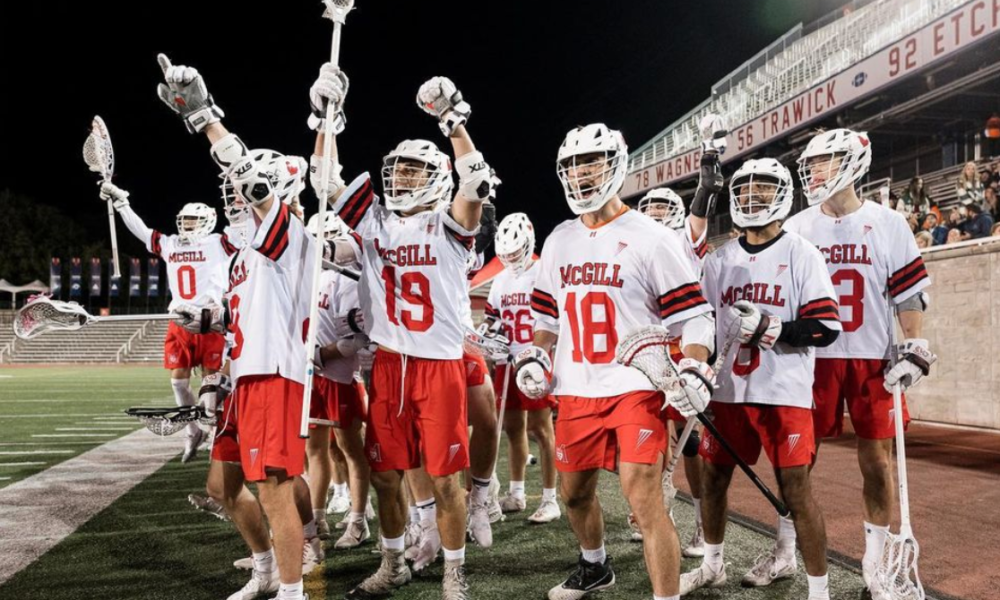
On a chilly Friday evening, Redbirds lacrosse fans turned out for the first annual Legacy Game as McGill (4–1) faced off against Queen’s University (2–2). A boastful crowd of 580 watched the Redbirds dominate the Gaels for their third win in a row, spearheaded by first-year midfielder John Miraglia who led the team with five points. Less than two minutes into the first quarter, Miraglia opened up the scoring, giving McGill a lead that they maintained throughout the game. With 4:37 left in the first quarter, fourth-year attacker Cameron McGinnis buried a power-play goal, quickly followed up by fourth-year attacker Isaiah Cree’s first goal of the night, putting the Redbirds up 3-1. As the Gaels tried to battle back, they were silenced by McGill’s unrelenting offence and ended the first half down 6-2 to the Redbirds. McGill blew the game open in the third quarter, scoring four goals, two from Miraglia. With the score at 10-3, Cree potted his third goal of the night, and opened the door for the Redbirds to breeze into a 12-5 victory over the Gaels. 

“I was a little nervous at the beginning considering there was a lot of weight in the atmosphere and everything, but [the win] felt wonderful,” said Cree in a post-game interview. “[We’re] happy to go home with the win and looking forward to the next game as always.” 

The Redbirds dropped their second game of the weekend 8-7 to Carleton and will play next on Oct. 9 at Nipissing.

Men’s Baseball 

(Matt Garies/McGill Athletics)

After losing 3-1 in game one of a double-header against Queen’s University (8–2), ending an eight-game winning streak, the Redbirds (15–5) tried to get back into the swing of things in game two. Starting on the bump for McGill was left-handed pitcher Caden Welch, who settled in nicely after a bases-loaded jam in the top of the first. In the bottom of the inning, the Redbirds’ offence exploded, scoring seven runs with shortstop Milo Young paving the way with a single and a stolen bag. Their lead widened later in the inning when designated hitter Vincent Rizzolo knocked a two-RBI single. After a quiet second, the Gaels began to threaten the Redbirds’  seven-run lead, scoring two in the third and three in the fourth, making the score 7-5. But the McGill offence bounced back, cushioning their lead with a two-RBI double from first-baseman Brad Marelich. The Gaels did not go quietly, scoring one in the fifth and one in the seventh, but left-handed pitcher Nathaniel Factor was able to close out the game and earn himself the save. In the 9-7 victory, catcher Chris Bodine stood out offensively alongside Rizzolo and Marelich, going 3-for-3 with three singles and an RBI. 

“We came out, we played our brand of baseball in that first inning and [although] it didn’t translate to the full game, we were able to get a good clutch hit by Brad Marelich to tack on two more at the end,” said head coach Casey Auerbach. “We’re just looking to find our stride and be as consistent as we can offensively.” 

The Redbirds finished out the weekend picking up two wins in their double-header against the Ottawa Gee-Gees in a couple of tight games, winning 8-7 and 4-3. Their next game will be on Oct. 5 at Université de Montréal.

Men’s Hockey 

On Sept. 30, the Redbirds (2–1) defeated the Royal Military College of Canada (RMC) (0–4) 8-3 in a landslide victory. McGill opened the scoring with two goals in the first five minutes, seizing the momentum for a fast-paced, high-scoring game. Over the 60 minutes of play, six different players found the back of the net, with the rookies leading the way—first-year defenceman Maxime Blanchard and first-year centre William Rouleau scored two goals each. With an aggressive forecheck, McGill went four for six on the power-play, scoring all four goals within the first 30 seconds of their one-man advantage. Despite moments of sloppy play, the Redbirds were able to dominate throughout the game, outshooting RMC 61 to 22. In a post-game interview with The McGill Tribune, Rouleau, who was awarded the first star of the game, expressed optimism about the upcoming season. 

“This year especially, I think we have a special group of guys [….] We’re getting really competitive this year so it’s really fun to see our potential,” said Rouleau. “So far in the preseason we have been playing great. We didn’t have the greatest game tonight, but still had a good result. The sky’s the limit for us.”

The Redbirds will play their next game on Oct. 7 against Université du Québec à Trois-Rivières at McConnell Arena.

Women’s Soccer

(Matt Garies/McGill Athletics)

A sluggish first half defined the Martlets’ soccer (4–3–2) home game against the Bishop’s Gaiters (1–4–4). The first 20 minutes saw an aggressive Gaiter midfield trying to dominate possession, while the Martlets’ defence, led by Stephanie Hill, stood up to any scoring attempts, leaving goalkeeper Sophie Guilmette with little work to do. In the first half, the Martlets’ only offensive highlight was a quick counter-attack by forwards Liliane Lefebvre and Giovanna Tiberio that was extinguished by Bishop’s goalkeeper in the 22nd minute. 

Lefebvre, who was voted McGill Athlete of the Week, applauded her team’s performance in the game. 

“I think we were comfortable defensively, but need to be better in scoring. We needed to be confident [going forward] in the final three quarters of the game.”

The second half only began to heat up in the final 10 minutes. Some great ball movement in the final third saw Lefebvre threaten the Gaiters’ defence minutes before the final whistle.

“We got past their press on several occasions but then got too rushed and lacked a bit of composure,” said head coach Jose-Luis Valdes. “The effort is there, [it] just needs to be [supplemented] by quality play.” 

Next, the Martlets play the Montreal Carabins on Oct. 7.

Men’s Basketball 

After a tough start to the pre-season for the McGill men’s basketball team (0–4), the Redbirds were presented with an opportunity to right the wrongs of their opening three games in a difficult fixture against Queen’s University (2–0). From the very first moment of the game, the Redbirds were playing catch-up, with the Gaels winning the opening tip-off and racing away with a 16-0 lead. The first quarter was filled with frustration for McGill as they attempted to kickstart a comeback. Fourth-year guard Zachary Lavoie-Toure, along with guard and graduate student Sam Jenkins, led a spirited, albeit unsuccessful, comeback attempt in the second half. Jenkins also led the team in playing time and points with 34 minutes and 14 points.  

Head coach Ryan Thorne expressed his disappointment in the team’s start, and how that played into the rest of the game. 

“They out-hustled us, they out-muscled us, they wanted it more than us,” Thorne told The McGill Tribune. “We showed some spots of fight, but that’s a good team, I think they finished fourth in Canada last year, so you can’t only show spots, you have to perform the entire time.”

Queens out-rebounded McGill by 43-32 and despite the Redbirds’ best efforts to stay in the game, even cutting the lead to single digits in the fourth quarter, they ultimately fell 71-55 to the Gaels. 

The Redbirds will play their next game on Oct. 14 against the Lethbridge Pronghorns as part of the McGill Redbirds’ Classic tournament. 

Commentary, Opinion

Call it Milton Parc

The six blocks bounded by University, Ste. Famille, Milton, and des Pins form the notorious “McGill Ghetto”, a neighbourhood adjacent to campus, swarming with students and their vices. For first-years eager to integrate into McGill’s vibrant community, this area holds great appeal. It is a hub for young students to run free and make memories for the fleeting years that they are there—but at what cost? Not only does the name “McGill Ghetto” vainly claim this neighbourhood as students’ own, but it also offends the historic struggle to protect this cherished area against gentrification. Language matters. These six blocks are not the McGill Ghetto. They are Milton-Parc

Nearly five decades ago, most of the historic buildings in Milton-Parc were purchased by the real estate giant Concordia Estates Ltd. in order to make room for shopping centres, hotels, and new high-rise, high-rent buildings. Local activists protested the construction, seeking to protect the community’s character and residents’ access to affordable housing. The protestors occupied the developers’ offices, and many were arrested and jailed for mischief. Remarkably, their movement to prevent the construction was successful. The familiar LaCité apartment building is the only project outlined in the $250-million development endeavour that was completed. 

The struggle for Milton-Parc was a historic catalyst for similar municipal urban movements around the world and, to this day, it remains one of the largest housing projects in North America. Most buildings are owned by 22 non-profit and housing co-operatives, and community involvement is alive and well, represented by the Milton-Parc Citizens’ Committee (CCMP). 

It is deeply disrespectful for students to ignore the plight of long-time residents considering the rich history of resistance and struggle to protect their neighbourhood. For decades, there has been tension between students ad established residents over the McGillians’ inclination for yelling in the streets at night, throwing loud parties, and recklessly throwing garbage onto the streets. Traditional gentrification harms communities through forced displacement and exclusion. Governments and corporations erase the history of entire neighbourhoods to make room for more profitable developments and demographics. But through so-called studentification, students harm communities through neglect, more so out of immaturity than profit-seeking. 

Not to mention that the term “ghetto” is itself loaded, and its use in any case is inherently insensitive and should not be any student’s vocabulary.  “Ghetto” originated in reference to the forced segregation of Jewish people into closed areas, and is now used as slang for neighbourhoods with high concentrations of ethnic minorities and levels of poverty. For students to distinguish it as such, based on their perception of the area as a playground for university life, further implies that the entire neighbourhood belongs to and revolves around us. 

Paying attention to our language and using the correct terminology for Milton-Parc demonstrates an intention to improve relations with established residents and, ultimately, work together to benefit the entire community. For instance, Mobilizing for Milton-Parc (formerly Meals for Milton-Parc), a meal-share initiative providing food and care packages to unhoused people in the neighbourhood, was developed by former McGill student Sophie Hart (BA ‘22) in 2020. Participating in this initiative is one of many ways that students can shift to a more inclusive perspective of the neighbourhood—one that recognizes its existence outside the McGill bubble.

McGill students spend some of their most formative years in Milton-Parc, and, in turn, build valid emotional attachments to the area and incorporate it into their identity. If anything, it is because of these attachments that students should be more reflective and intentional about the language they use when referring to their neighbourhood. Milton-Parc is an anomaly in the capitalist landscape. It would not exist without residents’ persistent struggle, and they are owed the utmost gratitude and respect for their fight to protect our shared community.

Science & Technology, Science Rewind

Artificial cells offer hope for COVID-19 & cancer patients

Sixty-five years and four Nobel Prize nominations after Dr. Thomas Chang invented the first artificial cell in his McGill dorm room, the invention is still improving lives in countless new ways. From blood transfusions to cancer suppression and, most recently, COVID-19 treatments, Chang’s invention continues to push the boundaries of medical possibility.

Chang developed the first crude prototype of an artificial red blood cell during his undergraduate studies at McGill. 

“It was back in 1957 and I worked […]  in my dormitory room in Douglas Hall,” Chang said in an interview with The McGill Tribune. “I [did] my research in my bedroom and when people [were] not there, I used the living room.”

Chang’s artificial cells are not just physical entities. They are artificial and modifiable structures that can replace or supplement malfunctioning cells. The cells consist of an artificial membrane made of several types of polymers,, and/or crosslinked proteins that surround typical cell components like enzymes, proteins, other cells, and more. Artificial cells act as mini bioreactors—or reaction chambers—where molecules can enter and react with the contents inside before being exported once again. 

Artificial cells are uniquely useful because their membranes and contents can be modified to suit many needs. 

“We can prepare them to contain cells, stem cells, vaccines, mRNA, DNA, microorganisms, magnetic material, absorbents, hormones, drugs, and other material,” Chang said. “There are unlimited possibilities in variations for the artificial cell membranes and contents.”

According to Chang, artificial cells that contain hemoglobin and other proteins mimic blood cells but do not belong to any blood type group, making them a universal blood substitute. This is especially useful for emergency trauma cases when on-site blood cross-matching is not available, and for people who cannot accept blood transfusions for religious reasons. And since the membranes do not have antigens—which can sometimes cause the body to reject foreign substances—the artificial cells will not be attacked by antibodies or white blood cells. Beyond their use as a blood substitute, this makes them ideal to carry essential enzymes or substances into the body without the risk of adverse effects.

“As a physician-researcher with the aim to do what is best for the patients, my plan has been to continue to do frontier innovative research […] and at the same time to encourage others around the world to develop these ideas for patient use,” Chang wrote in a statement to the Tribune

According to Chang, artificial cells have already been used as a delivery vehicle for mRNA vaccines. They have also been used to treat patients with COVID-19. These patients can develop a cytokine storm—a fatal release of excessive cytokines due to an overreaction of the immune system. Cytokines, small proteins that control the growth of blood and immune system cells, are more effectively removed by activated charcoal than traditional hemodialysis. Activated charcoal, however, can release harmful particles into the body and damage red blood cells. By using an artificial ultrathin membrane to coat the charcoal, those negative side effects can be avoided while also increasing the speed at which cytokines are removed from the blood. 

“A problem is a challenge, and challenges mean that you can innovate.”

– Dr thomas Chang

In a 2021 paper, Chang’s artificial cells showed promise in suppressing skin cancer. Inspired by a 2005 study that found that low levels of the amino acid tyrosine suppress melanoma tumor growth, Chang began working on a nanobiotherapeutic PolyHb-tyrosinase, an enzyme that lowers levels of tyrosine in systemic circulation to inhibit tumour growth in mice. Overall, their results showed that nanocarrier PolyHb-tyrosinase suppressed tumour growth in mice and even inhibited tumor cell migration, also known as metastasis. 

“We have only touched the surface of the potential of the extension, innovations and uses of artificial cells,” Chang wrote. For Chang and others working on the cutting edge of biomedicine, there is much more to learn.

Arts & Entertainment, Film and TV

‘Do Revenge’ could do better

What happens when you throw Gen Zs into a classic revenge plot? Netflix’s new teen drama, Do Revenge, gives us a fresh, yet unsatisfying look: It avoids predictable characterizations while still relying on tried-and-true dramedy tropes. The film enlists actors from a range of successful teen shows—Euphoria, Riverdale, Outer Banks, Stranger Things, and 13 Reasons Why—leaving each of their respective fanbases to converge around the film. Its massive success––topping Netflix’s streaming charts––is no surprise due to its acclaimed cast, contemporary soundtrack, and Gen Z pop culture relevance. The film both honours and pokes fun at Gen Z culture while taking inspiration from iconic teen films from the 90s and 00s. But these triumphs do not prevent the movie’s character development, costume design, and pacing from falling short. 

The film follows queen bee Drea (Camila Mendes) after her boyfriend leaks her sex tape and she becomes a social outcast. Drea befriends the awkward new girl Eleanor (Maya Hawke), who is hesitant to enter the school’s social scene, haunted by a homophobic rumour started by her ex-crush. The girls agree to exact revenge on each other’s enemies by any means necessary. While the scheme for Eleanor’s vengeance is immediately successful, the girls struggle to bring down Max (Austin Abrams), Drea’s manipulative ex-boyfriend. The setback brings up larger issues within the girls’ partnership, revealing even deeper secrets and uncovering the movie’s true, unexpected conflict.

The premise of Do Revenge is enticing and unique because it relies on contemporary struggles created by the internet and social media to fuel the plot. While major conflicts in teen dramas such as Clueless, Mean Girls, and Heathers are often related to bullying and social status, the issues in Do Revenge surrounding homophobia and revenge porn have been scarcely addressed in teen dramas, making it more relatable and intriguing. Max serves as the film’s primary antagonist, twisting the humiliation and slut-shaming Drea faces into a campaign victimizing himself. This allows the film to comment on misogyny in a humorous and bite-sized portrayal of social justice.

The film’s eclectic music and costume design solidify it as a quintessential Gen Z flick. The soundtrack consists of a carefully curated playlist that includes Olivia Rodrigo, Billie Eilish, and other Gen Z staples. The soundtrack is one of the better-developed parts of the movie, with just enough songs to not oversaturate the story but to provide relevant and contemporary accompaniment to the plot. 

In contrast, the costume design falls short. Pushing boundaries with its colourful, campy style, the clothing design is eye-catching, but fails to accurately portray modern teen style. This is especially evident with Drea, who––despite being a scholarship student who thrifts most of her clothes––manages to wear the same high-end, modern styles as her trust-funded peers.

Beyond the engaging plot, the movie fails to develop the characters in a way that makes them sympathetic to viewers. Both Drea and Eleanor’s characters disappoint as their flaws are candidly pointed out to the audience, but are not given enough attention or time to make their redemption arcs believable. Mean Girls (2004), which shares tone and plot points with Do Revenge, subverts this well by showing both the main character and her bully facing the consequences of their actions with the help of a well-timed school bus. Conversely, Do Revenge lacks conviction because of Drea and Eleanor’s unconvincing character developments. While the girls do seek to apologize to their new love interests, these resolutions are too rushed to feel compelling. Drea’s interest in her new boyfriend does not seem genuine due to both a lack of chemistry and predictable writing. Eleanor’s eventual girlfriend is barely seen, with their relationship not even getting addressed until the credit scene. 

Ultimately, Do Revenge is a solid entry into the teen film genre thanks to its acclaimed cast and exciting plot. It lacks, however, the character development and thematic wit of its predecessors like Clueless, which inhibits it from becoming a modern classic. The cast and provocative plot are undoubtedly the most thrilling parts of the movie, but the writing serves up a revenge that just isn’t cold enough.

Do Revenge is now streaming on Netflix.

Science & Technology

McGill’s Catalyst Awards celebrate community contributions to sustainability

In September 2022, McGill’s Office of Sustainability granted three Catalyst Awards recognizing students, staff, and projects that have made exceptional strides in pushing sustainability forward at McGill. 

“Since its first edition in 2011, the purpose of the awards has always been to acknowledge and celebrate those who led the way towards integrating sustainability into McGill’s operations, curriculum, and overall culture,” wrote Francois Miller, executive director of the Office of Sustainability, in an email to The McGill Tribune

Professor Catherine Potvin of McGill’s Department of Biology received the Faculty & Staff Award for her work with the Bayano-McGill Reforestation Project. The project has planted over 44,000 trees in Panama in cooperation with local organizations and Indigenous authorities with whom Potvin had established ties through previous research. Potvin’s reforestation work is critical because trees remove carbon from the air through photosynthesis, storing it in their biomass and in the soil. This process helps to offset McGill’s carbon emissions and contributes to the university’s goal of reaching carbon neutrality by 2040. 

The Office of Sustainability granted the Group Initiative Award to impact200, a competition held last year which gave teams of McGill students a platform to develop innovative start-ups that address one of the United Nations’ 17 Sustainable Development Goals. The finalists included Miniwaste, which developed a food mapping software to connect food donors and people in need with local food banks, and CoolHealth, which is working to build solar-powered vaccine coolers for use in communities where access to refrigeration is limited. 

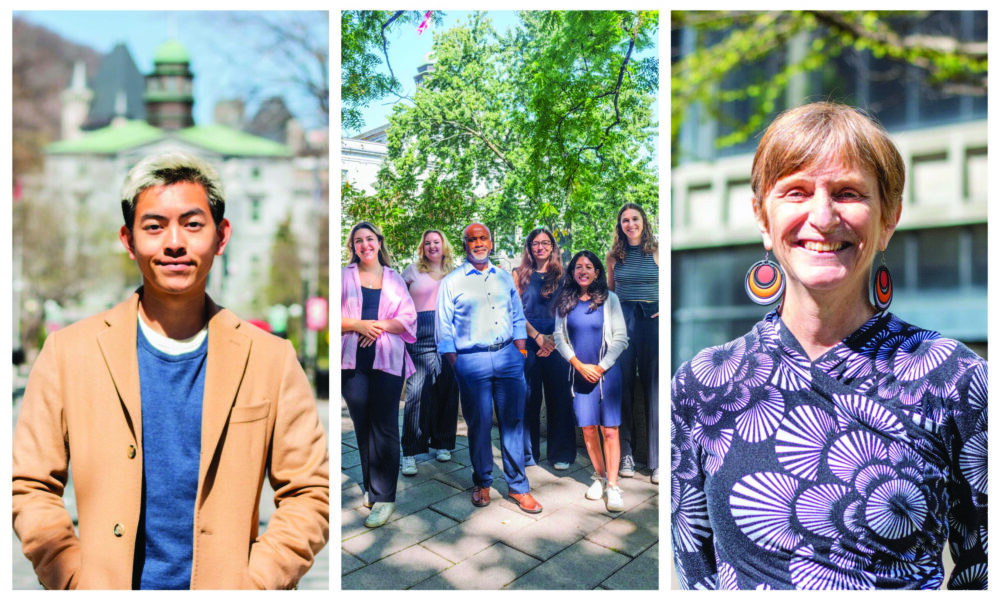
The Emerald Key Award recognizes individual students who contribute to McGill’s culture of sustainability and was awarded to Quang Nguyen, U3 Engineering, this year. Nguyen, who is currently on exchange at École Polytechnique de Lausanne, was last year’s co-president of the Research & Sustainability Network (RSN), an organization that connects McGill staff and students with the aim of furthering sustainability projects. 

“I got involved with RSN because I was interested in how it takes an interdisciplinary approach to the problem, with members coming from engineering, science, but also arts and business backgrounds,” Nguyen wrote in a direct message to the Tribune. “This is the kind of diversity in perspective and skill set that we need to solve such complex and systemic issues that are often found in the sustainability space.”

Nguyen also participated in the 2041 ClimateForce Antarctic Expedition, which sponsored young activists to journey to the Antarctic in March 2022, with the goal of inspiring them to preserve the Antarctic environment. 

“My biggest takeaway from the Antarctic trip is that climate change is created by humans so we should be able to solve it, too—but only if we overlook our differences and come together as a society,” Nguyen wrote. “The climate will not wait for us to overcome our political and economic delays. We need to act quickly and we need to do so collectively.”

In an effort to actively engage students, the McGill Office of Sustainability also recently selected 60 students to participate in the 2022-23 Sustainability Ambassadors Program

“This program offers a platform for students to apply their skills and creativity in order to grow the sustainability movement at McGill,” Miller wrote. 

There are many ways for students to get involved in environmental activism on campus, from the McGill Office of Sustainability to research, student-run clubs, and organizations such as the Research and Sustainability Network, the McGill Energy Association, and the Desautels Sustainability Network, to name a few.

“There’s so many opportunities that exist now,” Nguyen noted. “Whether you want to organize events and host environmental discussions, work on a more hands-on project in green research, grow a community garden—there’s really something for everyone!”

McGill, Montreal, News

Montreal shelters lead the city in second annual Every Child Matters March

On Sept. 30, hundreds of people gathered in front of the George-Étienne Cartier monument at the foot of Mount Royal before marching through Montreal to commemorate the National Day for Truth and Reconciliation—also known as Orange Shirt Day. Since 2021, Sept. 30 has marked a federal statutory holiday, although the province of Quebec does not officially recognize it. The event, organized by the Native Women’s Shelter of Montreal and Resilience Montreal, featured speeches and performances from many Indigenous community members, such as Kahnawá:ke Grand Chief Kahsennenhawe Sky-Deer, Inuk musician Elisapie Isaac, the Generational Warriors group, and the Travelling Spirit Drum group.  

Many of those who attended the walk wore orange t-shirts to honour the Indigenous children who were taken from their homes and forced to assimilate under Canada’s residential school system—many of whom were abused and never returned home. Marchers traversed Milton-Parc, where a disproportionate number of unhoused Indigenous people reside, and paused for speeches in front of McGill’s Roddick Gates before concluding the event at Place du Canada. Chants like “no pride in genocide” and the call-and-response “when I say land, you say back” echoed through downtown Montreal. 

Steve McComber, a Mohawk elder from the Kahnawá:ke Nation and a speaker at the event, emphasized that the path towards Truth and Reconciliation requires a commitment to learning about the injustices that Indigenous communities have suffered.

“Becoming aware of what is the truth, is the beginning to reconcil[ing],” McComber said in an interview with The McGill Tribune. “Our people lived under oppressive policies for generations, but people are not aware of that. So once people become aware, [then it will be] the beginning for things to change.” 

Nakuset, the executive director of the Native Women’s Shelter of Montreal and one of the march’s organizers, believes that attending Truth and Reconciliation Day events is a significant first step that non-Indigenous people can take to become educated and more active in the fight against anti-Indigeneity.  

“I want [settlers] to be here so they can listen to the messages that everyone will be giving,” Nakuset said in an interview with the Tribune. “Everyone has a different message […] for people to absorb it and to do better as opposed to deflecting, ignoring, and walking away, which is what we usually get.”

On the same day, McGill’s fourth “We Will Walk Together/Skàtne Entewathahìta” took place at the Education Building from 10 a.m. to 12 p.m. The event featured speeches and performances from Associate Provost (Indigenous Initiatives) Celeste Pedri-Spade, Alex Allard-Gray, and other Indigenous community members. Local Indigenous vendors and artisans and the Indigenous Law Association, which held an Orange Shirt sale, attended to fundraise for organizations such as Resilience Montreal. 

Olivia Bornyi, U2 Arts and a member of McGill’s Indigenous Initiatives Unit, led the programming and the communications committee for the event. Bornyi believes that Truth and Reconciliation Day is “integral to students’ education” and hopes that McGill’s event starts a conversation about the historic oppression of Indigenous peoples. 

“I would have liked to see a little bit more student turnout, but we did get a fair bit,” Bornyi said in an interview with the Tribune.  “It’s a very emotional day for many members of the Indigenous community, which is very important to recognize.”

Philippe Haddad, 2L, used his position as a member of the Rugby Leadership Group to get his teammates to attend the event. Haddad called on the McGill community to become more “active participants rather than complicit bystanders” by engaging in conversations about Indigenous rights. 

“Many [dissociate] from Truth and Reconciliation by regarding it as a legislative issue,” Haddad said in a statement to the Tribune. “As an educational institution, McGill should be highlighting safe spaces for dialogue and storytelling […] specifically for Indigenous folks, providing alternatives to settler-colonial educational structures, and freeing itself from settler-colonial influence in […] governance as a first step to addressing a prevalent imperialist mindset.”

Album Reviews, Arts & Entertainment

‘Hold The Girl’ explodes with originality, but is lost among the debris

Back in 2020, Rina Sawayama released her debut album, SAWAYAMA, and entered pop consciousness like how one would kick down a door: Fierce and unapologetic. Her sophomore endeavour, Hold The Girl, has Sawayama looking back through the very same doorway, retracing her footsteps down the path of her childhood. Released Sept. 16, the record is a loving and forgiving ode to her younger self, thematically orbiting around her experience growing up as a queer, Japanese, first-generation British immigrant woman. 

 Hold The Girl is at its best when it is conceptually and sonically focused, as exemplified by the ABBA-interpolated lead single, “This Hell,” the otherworldly “Frankenstein,” or the frenetic “Imagining.” By interweaving a wide array of genres––hyperpop and rock in the span of two songs––Sawayama embodies her ambitious and striking nature as an artist. Hold the Girl twists, turns, and constantly surprises the listener. But the record occasionally gets lost in its own maze and loses coherency throughout its 46-minute run-time, such that softer tracks like “Catch Me In The Air” fall flat instead of offering a peaceful break. The thematic thread attempting to hold the album together loosens with every startling sonic shift, and sitting through the entire thing can quickly become overstimulating.

Despite this, Sawayama’s insistence on honesty and innovation is commendable, providing a refreshing addition to pop music in an era where, as Beyoncé famously said, “[p]eople don’t make albums anymore.” Hold The Girl and its tracks evade the allure of creating a song around one catchy line intended to go viral on TikTok and instead offers a driven project stuffed with introspection and excitement—even if it occasionally bursts at the seams.

For those who appreciate pop music, Hold The Girl is a goldmine—you just need to dig. 

Hold The Girl is available to stream on all streaming platforms

Research Briefs, Science & Technology

Honey, I shrunk the brains!

Aging is one of the few truly universal experiences, yet it is one of those things that no one really looks forward to. Along with visible signs like wrinkles and grey hair, however, comes a more insidious and harder-to-combat symptom: The decline of brain function. But according to a new study from a team of McGill researchers, the link between aging and cognitive decline may not be as clear-cut as previously believed. 

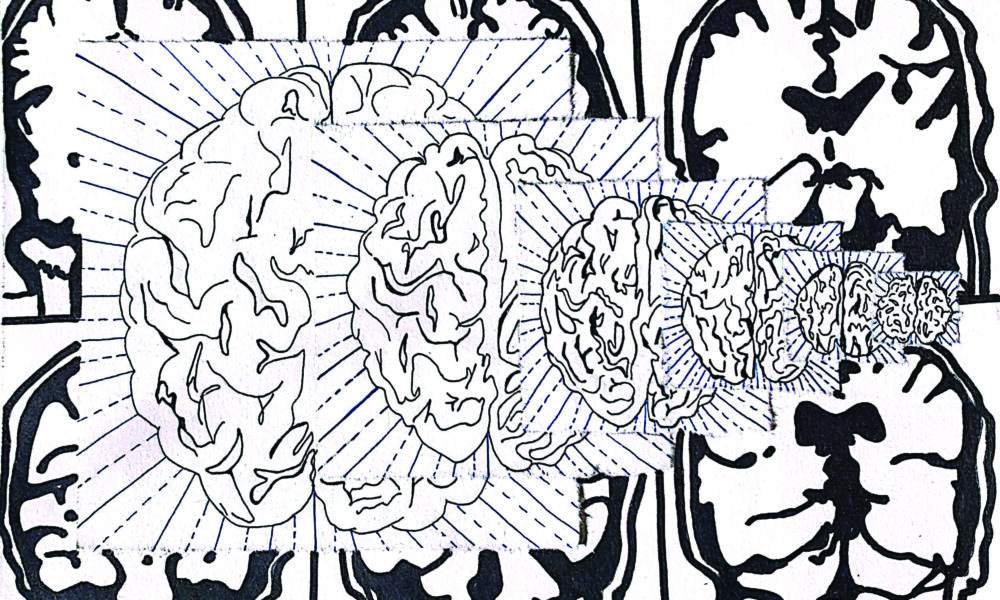
Jamie Snytte, a third-year PhD student in clinical psychology at McGill, supervised by Dr. Natasha Rajah and Dr. Signy Sheldon, along with other colleagues, published a study centred around memory and its relation to brain volume. Snytte collected memory data from 125 adults by having them perform memory tasks—like showing a face on a screen and having the participants attempt to recall where the face was shown. 

Those who performed worse on these tasks were mostly shown to have a lower volume of brain matter in their hippocampus. The volume of the hippocampus is directly related to brain function and one of its main roles is to consolidate information from short-term to long-term memory. A decrease in hippocampal volume has been associated with decreased memory function in older adults. 

Snytte and his team measured the subjects’ performances on memory tasks, then measured the volume of the participants’ hippocampi and calculated the differences between participants. The researchers found that the hippocampi of participants who had trouble remembering details were smaller. The grey matter volume was lower in these participants, meaning that their hippocampi were just smaller than those of higher-scoring participants. 

Contrary to popular belief, this study suggests that old age is not in and of itself the cause of decreased cognition. Rather, it is the breaking down and atrophying of memory-related structures in the brain that lead to the decline. Not everyone will experience memory loss at the same time or to the same degree of severity. 

In an interview with The McGill Tribune, Snytte explained that atrophy in the brain is a normal part of aging.

“In healthy aging, there are lots of brain structures that tend to change, that tend to atrophy,” Snytte said.

According to Snytte, this atrophy can be measured in three main ways.

 “You’d look at the size [of the brain]—the amount of neurons or brain cells within a certain structure and how that changes,” said Snytte. “You can look at changes in brain function—so how much does a certain brain area activate, how much blood does it require to complete a certain task. And you can also look at white matter tracts, [which] are paths that connect different brain areas.”

Although the prospect of cognitive decline may seem like a dreary fate, Snytte’s team found something else in their studies: Other parts of the brain were able to step in and take over to make up for the decreased function in the hippocampus.  

“You can see stories of patients who are missing a big chunk of their brain, but their cognition is totally preserved,” Snytte explained. “They can do this by activating other brain regions, and this is usually called compensation.” 

Pinpointing areas of brain degeneration is an important step in finding successful treatments for degenerative cognitive diseases. It is also a fascinating look into the complex nature of our brains. Our brain has a backup generator of sorts, preventing the worst effects of the cognitive decline that come with aging, pushing us onwards with quite literally fewer brains, but just as much ability. 

Arts & Entertainment, Theatre

‘Meet Me’ provokes reflection through interactive theatre

In the “post”-#MeToo era, consent, sexual misconduct, and cancel culture have become hot-button topics present throughout news articles, thinkpieces, movies, and TV shows alike. From fiery op-eds insisting that there is a stark difference in severity between sexual assault and sexual misconduct to columnists who disavow complaints about ‘cancel culture’ as an excuse to avoid accountability, it seems that everyone has a different approach to these contentious topics. 

Enter Meet Me, an interactive new play presented by Live Action Theatre Project and Teesri Duniya Theatre. This intimate production engages audiences in conversations about sexual harassment and power dynamics directly by having them follow one of the play’s three characters for the entire show. Audience members accompany their assigned character to the show’s three distinct settings, witnessing their unique perspective of an evening where a sexual encounter goes terribly wrong. 

Along with seven others, I followed Gemma (Darragh Mondoux), an accomplished young artist and academic eager to make an impression on her attractive new co-worker Qas (Zeshaun Saleem). Throughout the play, each character consults their audience on how they should proceed, allowing you, as an audience member, to collectively shape the course of the narrative in real time. For Gemma’s group, this meant weighing in on everything from which outfit she should wear for drinks with Qas and her academic mentor Roslyn (Leigh Ann Taylor) to how she should respond to a breach of her consent. 

Audience members were given earbuds and a cell phone specially programmed to display social media posts, texts, voicemails, and video calls from the other characters, providing additional context that could influence the group’s decisions. With this unique structure offering a choose-your-own-adventure experience, audience members inevitably butt heads if they disagree on how exactly the adventure should play out. But in the show’s press release, Meet Me director Rosaruby Kagan expressed her acceptance and enthusiasm for these potential conflicts. 

Meet Me is an opportunity to get people together who may not share the same political beliefs or ideology, to talk about the divisive theme of call-out culture and responsibility for one’s actions,” Kagan wrote. “I am hoping people will leave the play understanding on a visceral level why someone might make choices that they themselves wouldn’t.” 

Though there were a few small disagreements within my group, we often came to a consensus about how Gemma should proceed after Qas violated her consent during a sexual encounter. Instead, moments of potential conflict mainly emerged during the play’s outdoor transitions. 

Meet Me is created in the style of promenade theatre, in which a show guides audience members to different locations from scene to scene and encourages them to participate in the performance itself. In my case, this meant following Gemma on foot to her artist’s studio (a room in the Armstrong Building decorated with black and white portraits) and the campus bar (Morrice Hall 017). Those in Qas and Roslyn’s respective audience groups followed their assigned character as they moved between the campus bar and a third location. 

The journey down McTavish between scenes was short, but there were still plenty of interruptions from passersby. A perplexed dog-walker strolled straight through one scene, and a few confused students stopped to giggle and gawk at a passionate make-out between Qas and Gemma by the McTavish Gates before hurrying past. 

These moments certainly caused some awkwardness amongst the crowd, but they also intensified the play’s authenticity. The production’s setting is a university campus, so it makes sense that other students would notice if two individuals started to go at it out in the open. Furthermore, staging this moment—a precursor to the sex scene where Qas violates Gemma’s consent—in such a public space is unfortunately pertinent given the pervasive nature of sexual violence at postsecondary institutions.   

In presenting this striking energy alongside its open discussion of consent, violation, racism, and cancel culture, Meet Me proves to be a thought-provoking, engaging theatre experience that will keep audiences thinking long after the metaphorical curtains close. 

Performances of Meet Me run until Oct. 8 at TNC Theatre, 3485 McTavish (Morrice Hall). Tickets can be purchased by calling 514-848-0238 or online (Students: $20 ; Regular: $30).

Research Briefs, Science & Technology

Mapping behaviour using genetic biomarkers

What if you could visibly lay out your entire genome sequence in front of you and see almost everything that explains who you are, from your eye colour to whether you’re an introvert or an extrovert? If this were true, we look at someone’s genes and calculate whether they will develop attention deficit hyperactive disorder (ADHD) and offer them treatments right away. Unfortunately, accurately reading biomarkers isn’t as easy as laying the genome out like a map. Luckily, there are researchers working on ways to solve this problem. 

Dr. Patricia Pelufo Silveira, an associate professor in McGill’s Department of Psychiatry, is one such researcher. Pelufo Silveira, along with the help of Dr. Cecilia Flores, a professor in the Department of Psychiatry, developed a novel genetic scoring technique called expression-based polygenic risk score (ePRS), which they are using to score impulsive behaviour. 

“High impulsivity has been associated with several psychiatric disorders,” Flores said in an interview with The McGill Tribune. “Many times, it’s used as a trait of vulnerability.”

Their technique involves studying an entire gene network associated with DCC, a gene shown to influence impulsivity. Flores has researched the DCC gene extensively and found that it has a profound impact on guiding growing axons towards assembling the nervous system. The researchers used gene expression datasets from mice and identified the genes that had correlated co-expression with DCC. Then, a program  filtered the genes according to the ones most expressed during the first 18 months of life, creating a DCC co-expression gene network. The genes were then mapped and weighed based on their effect on the brain, resulting in the genetic risk score. 

“We know that [DCC] is very important in the maturation of impulse control,” Flores said. “We also identified where in the brain that the function of this gene is important for the development of impulse control.”

EPRS goes much deeper than previous genetic scoring methods, such as the original polygenic risk score (PRS), which determines whether one is at high risk for a given disorder by looking at known, correlated genes. So, instead of connecting a gene to a disease like PRS does, ePRS connects a gene to other genes.

“The main difference is, instead of marking risk for disease, we’re marking variation in a biological process,” Pelufo Silveira said in an interview with Tribune

“It’s not only the genetic variance in a person and associating [that] with a disorder, but it’s how that variance influences the gene function of a process in particular brain regions,” said Flores. 

Not only is ePRS much more accurate, but it is also excellent at controlling for genetic factors such as ethnicity. 

“We want what we call external validity, to be valid to many different groups independent of their genetic background, but when you’re using genetics, this is difficult because people’s [genetic markers] vary depending on their ancestry,” Pelufo Silveira explained. “[ePRS] is strong enough to predict this difference across different ancestries.”

Flores and Pelufo Silveira also considered external factors such as social environment or drug exposure, which Flores stressed as being extremely important when researching ePRS in a clinical setting.

“You [want to] have more than one metric for each individual [which] really personalizes the intervention, that’s the goal,” Flores said. 

Given that everyone is impulsive to some extent, Flores says that a holistic approach is key when distinguishing between normal impulsivity and harmful impulsive behaviour.

“A single trait is not enough, you need information about other aspects to form a diagnosis; [some behaviours and circumstances] are red flags.”

In the future, Pelufo Silveira hopes that ePRS can be used to identify other biomarkers, not just those for impulsivity.

Read the latest issue

Read the latest issue