Latest News

Arts & Entertainment, Fashion

Oscars 2022 Fashion Roundup

In spite of falling ratings, one recent trend of contemporary Academy Awards ceremonies has steadily risen in popularity—fashion commentary. Millions of creators across social media channel their inner Miranda Priestly each year to judge the always extravagant, sometimes ostentatious outfits worn by celebrities on different red carpets throughout the night. Here are some of the best outfits from this year’s event, as selected by members of the Arts & Entertainment team.

Lily James — Post-Pam Princesscore

There are no two ways about it: Lily James has entered her bombshell era. The Pam & Tommy actress transformed from Baywatch megastar to red carpet marvel at the 2022 Academy Awards, rocking a lacy Atelier Versace number complete with a thigh-high slit, pink platforms, and a long train adorned with embroidered flowers. Doing away with her striking resemblance to Pamela Anderson, James traded in her signature blonde locks for a sultry brunette hairstyle. But don’t be fooled—the British actress hasn’t shed her old skin just yet. On the contrary, James’s ethereal look, dripping in TikTok’s viral princesscore aesthetic, served up a nod to her breakout performance in 2015’s Cinderella. We, too, wish we could appoint Versace to be our very own Fairy Godmother.

(instyle.com)

Zendaya — Secret Service Realness

Zendaya has come a long way since her days on the Disney Channel, not just as an actress, but as a fashion mogul, too. Though she was not nominated in any individual categories, the film Dune, in which she starred, was up for 10 awards, including Best Picture. The face of Valentino’s Spring 2022 campaign surprised the world by swapping her dazzling red carpet outfit for a fierce Sportsmax suit at the Vanity Fair Oscars after-party. The jacket’s prominent shoulder pads and perfectly cinched waist created a stunning silhouette. Complementing the garment, Zendaya beautifully executed an edgy, Secret Service-type look: Her slicked-back low ponytail, dark eyeshadow, and eyeliner tied the look together.

(glamour.com)

Timothée Chalamet — The Hottest Bad-Boy in Hollywood

Chalamet donned a black and bedazzled Louis Vuitton lace jacket, which belongs to the Spring 2022 womens wear collection and opened to reveal Chalamet’s bare chest. The pairing of the nontraditional bold jacket and the peek of skin was a powerful choice, and especially striking in light of previous complaints about the dullness of men’s red carpet fashion. Chalamet’s Cartier pendant necklace—a white gold panther with emerald eyes—served as the final ornamentation to his smouldering appearance. Chalamet effortlessly pulled off the fit, with black dress pants anchoring the sparkle of his top.

(esquire.com)

Jessica Chastain — All that Glitters is Glory 

California-born actress Jessica Chastain took the red carpet by storm with a dazzling floor length gown that gave off a sparkling glow. Its bottom section’s beautiful lavender tone epitomized elegance—much like the actress herself. The top of the dress had a rose gold hue and sequins, which perfectly complemented Chastain’s red hair. The ruffled tulle bottom added an extra flair to her already stunning look. Custom-made by Gucci, the dress’ flowy material and sparkles were echoes of old Hollywood glamour. Such a style managed to match Chastain’s prestige for the night, for she indeed won the Academy Award for Best Actress for her lead role in The Eyes of Tammy Faye.   

(people.com)


Commentary, Opinion

Between climate denial and climate anxiety

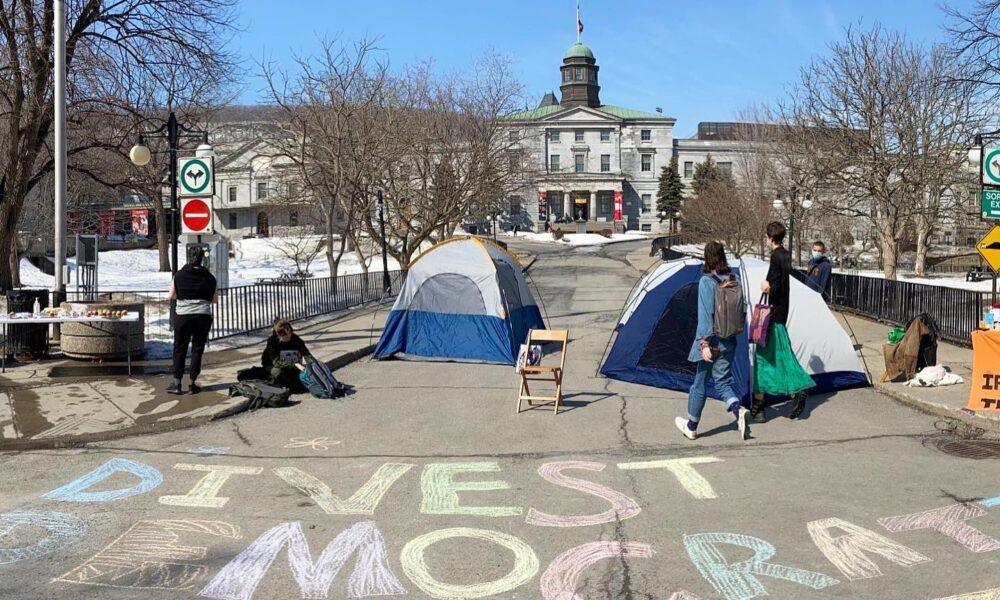
During their time occupying the Arts Building, Divest McGill screened movies and documentaries shining light on the climate emergency. As the chilling images of fires, floods, and famines flashed across screens, the air became heavy. Silence reigned, and only a few deep breaths disturbed it from time to time. It brought forth the concept of “climate anxiety,” the distress caused by today’s environmental crisis. This feeling, which particularly affects younger generations, was reflected in the banners urging McGill to divest from fossil fuels. Yet, although the climate crisis raises anxiety among McGill students, the urgency of the issue is often downplayed, despite scientific consensus.

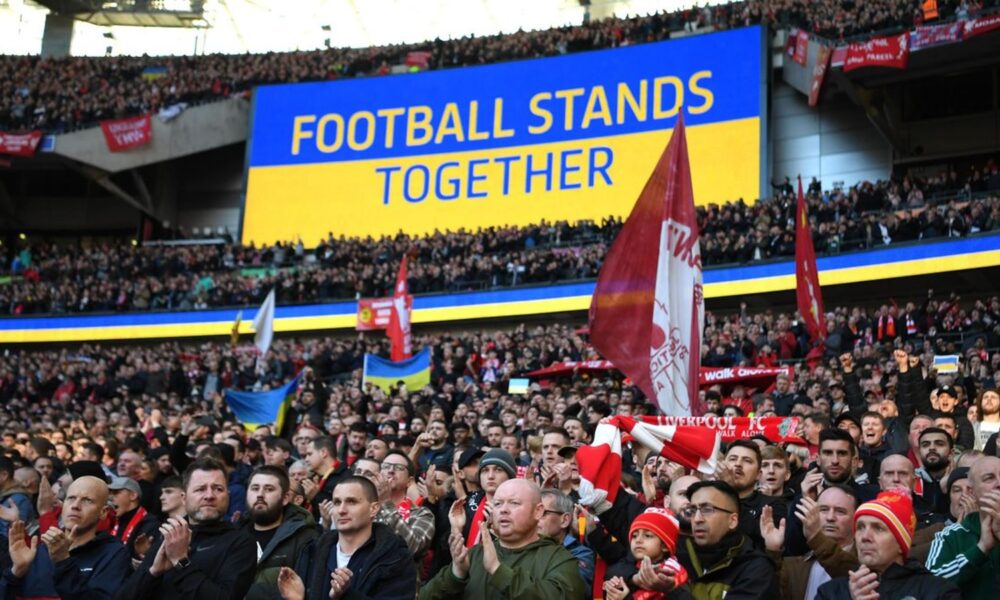
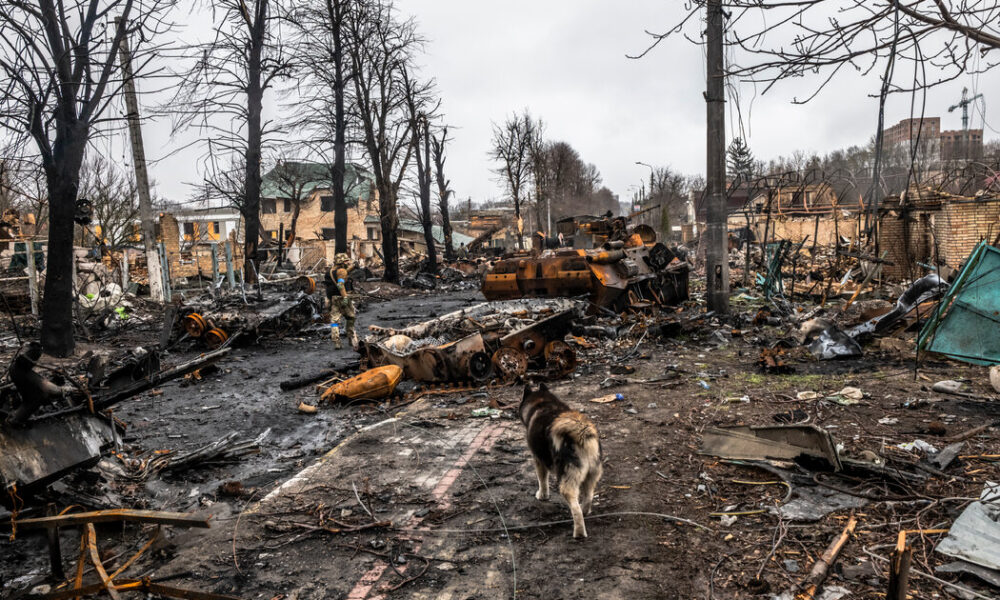
That week, the urgency of the climate crisis attenuated until it reached complete silence just past the Roddick Gates. On the other side of the gates, all one could hear was a muffled sound; the quiet but familiar melody of denial. The skyscrapers of downtown Montreal are not yet threatened by rising sea-levels nor global warming, even though Quebec’s average yearly temperature has increased by 1.2 degrees Celsius from 1979 to 2016. Among the many studies alerting the public to the climate emergency are the Assessment Reports, one of the most influential sets of documents published by the Intergovernmental Panel on Climate Change (IPCC). However, regardless of its eminence, the latest report published on Feb. 28 was barely covered by the media. Unlike the war in Ukraine, which is rightfully receiving its share of attention from most news outlets, journalists are blatantly overlooking the release of this deeply alarming document.

With a focus on how societies could continue to adapt to climate change, the newest report is a damning ultimatum to humanity, calling attention to the brief and rapidly closing window of opportunity to act against climate change. As the global temperature increases to 2.7 to 3 degrees Celsius from the pre-industrial era, the damaging effects could be irreversible. Entire ecosystems will be in jeopardy, endangered species’ extinction risks will be 10 times higher than they are today, the numbers of deaths due to heat waves could be multiplied by a factor of two or three, and three billion people could be suffering from chronic water shortages. With entire populations seeing their existence threatened, especially those in coastal regions, sitting in silence is not an option. 

Canada will not be spared the consequences of climate change, as the country will experience extreme weather conditions and longer fire seasons. The report shows that certain areas that would have suffered from wildfire only once every 400 years will now be subject to it every 50 if gas emissions are not lowered. Moreover, climate injustice will particularly affect certain Indigenous peoples in Canada; for example, rising temperatures will threaten the Anishinaabe tradition of “manoomin,” or wild rice, harvest.

With each sinister prediction, the report describes a dystopia that is nearer and nearer to our certain future. Humanity is at risk: Approximately 150,000 people die every year in poor communities because of climate change, while universities like McGill continue to invest millions of dollars in pipeline projects that intrude on Indigenous territory. Once again, the trappings of capitalism prove to be the environment’s biggest threat. Yet, the report clearly emphasizes the negative economic impacts of the climate crisis on Canada, from rebuilding entire infrastructures to coping with a weakened agricultural sector.

Beyond the anger and distress, this report ultimately raises a new feeling among young people: The impression of being powerless, condemned to watch future generations grow up in a world which can no longer support them. It is time to walk back into the Arts building, where McGill students can transform this feeling of helplessness into empowerment by carrying on individual and collective action while also calling out institutions in their assault on the environment. 

Commentary, Opinion

The threat of incel violence runs deeper than we think

Content warning: misogynist violence, white supremacist terrorism

In February 2018, a young man stabbed a woman in a Toronto massage parlour. That same year, another man killed 10 people in a van attack in Toronto. In December 1989, a man barged into Montreal’s École Polytechnique just a few miles away from McGill and murdered 14 engineering students, all of them women. The common thread linking these attacks is incel ideology. Incels, or “involuntary celibates,” men who, frustrated at their perceived ostracization from society, blame women and sexually active men for their own lack of sexual activity. The incel movement is a misogynistic one, oftentimes borrowing violent tactics and rhetoric from white supremacists and homophobic movements. Although incels are mostly active on online forums, away from public scrutiny, they rose to popular attention after the 2018 Toronto van attack. The perpetrator was a self-identifying incel whose social media accounts were filled with misogynistic posts. Since the attack, security experts and the media have fuelled a public debate on whether incels pose a national security threat as terrorists, or whether their danger is overestimated. This debate, however, does very little to address the daily instances of misogynistic violence that feminine-presenting people experience in spaces like their homes, public transportation, and even university campuses.

Those who argue that the media inflates the incel threat also tend to claim that the problem is first and foremost a mental health issue. According to this logic, incels should not be treated as terrorists or violent threats, but rather understood as lonely men struggling with mental health. However, this debate is unhelpful in stopping men from adopting incel ideology. Although non-carceral alternatives to justice are necessary to reimagine our deeply racist and ableist society, the fact that the first instinct is to claim that these men are acting out of distress, and not hatred, proves how much we are willing to excuse the behavior of white men. Instead of engaging in a debate over semantics, we should reframe what we understand as violence.

The question of whether incels are violent terrorists should not depend on how many people they victimize or kill. This approach fails to address the root causes of misogyny and violent nature of incels in the first place. Incels are not violent only when they kill. Regardless of physical action, their rhetoric is violent in and of itself because it rests on the idea that they are entitled to women’s bodies. The links between incel rhetoric and other discriminatory ideologies particularly endangers women experiencing intersectional oppression. Incels blame women for their feelings of inadequacy, and although they express anger at systemic issues of discrimination that also affect men, like fatphobia, their main grievance is a nostalgia for the past when the concept of consent had not entered public consciousness.

Although their views push misogyny to the extreme, incel ideology and rhetoric exists far beyond their chat forums, even creeping into university spaces. As such, we should reframe our conceptions of what counts as violence to include the systems of oppression that protect men at all costs, at the expense of others. At McGill, class debates about women’s rights, queer identity, and racism manifest as frequent instances of marginalized people’s lives being treated as debatable topics. These daily forms of oppression alienate non-men in classrooms and send a clear message that people’s humanity can be contested, potentially reinforcing budding incel ideology. Furthermore, these oppressive systemic factors, such as class discussions upheld by professors, force marginalized people into positions of resistance, whether they want to or not. 

Where the incel movement is afforded compassion, or even pity, the existence and experiences of women and queer and racialized people receives unfiltered contention. This should force us to question what we are willing to tolerate and what we categorize as violence. Whether incels should be labelled terrorists or not does little to prevent violence—it only encourages preventative action after someone has been murdered. Violence exists on a spectrum and men must understand the consequences of their complicity in pushing that spectrum to the extreme. It is their responsibility, as well as that of university administrations and instructors, to identify signifiers of misogyny, violence, and incel arguments and to counteract them well before they morph into murder.

News, SSMU

SSMU executive requirements pose unique challenges for international students

International students holding an executive position in the Students’ Society of McGill University (SSMU) face significant challenges due to conflicting credit requirements imposed by Quebec immigration laws and the SSMU constitution. To contend with their 40 to 70 hour weekly workload, SSMU requires executives to drop to part-time status, enrolling in a maximum of one or two classes per semester. However, this contradicts the Certificat d’acceptation du Québec (CAQ) requirement that international students must maintain full-time student status during their studies—the equivalent of a minimum of 12 credits per semester. 

These restrictions have deterred international students from running for SSMU executive positions in the past. Adhering to SSMU’s requirements can jeopardize future renewals of study permits and even, depending on the situation, put international students at risk of deportation.

As an international student from Indonesia, SSMU president Darshan Daryanani, U3 Arts, has experienced challenges with the conflicting SSMU and immigration requirements. Daryanani was supposed to graduate at the end of the Summer 2021 term, before he assumed the role of SSMU president. He intended to take up his position at the SSMU after having completed his undergraduate degree, and use a post-graduate work permit that would have allowed him to work at the Society without having to take any courses. 

However, at the end of the summer, Daryanani was informed by the Deputy Provost (Student Life and Learning) Fabrice Labeau that doing so would violate section 11.4 of the Society’s Memorandum of Agreement (MoA) with McGill, which stipulates that officers of the Association must be undergraduate students. 

“Unfortunately, this placed me in a vulnerable situation as not complying with this would have led to a default of the Memorandum, which is dangerous for the SSMU,” Daryanani wrote in an email to the  The McGill Tribune. “I faced a dilemma with SSMU, having to request for [its maximum credit] requirement to be waived. Ultimately, SSMU and McGill’s rules are inconsistent [with each other] and have resulted in major challenges and barriers.” 

In an email to the Tribune, the associate director of International Student Services, Anastasia Koutouzov, stated that international students face distinctive challenges if they wish to become SSMU executives because of immigration requirements. 

“Student executive positions at McGill require a major time commitment, and some students choose to pursue their studies part-time while serving in these roles,” Koutouzou wrote. “This option isn’t available to international students, as they are required by Immigration policies to remain full-time throughout the duration of their studies (except for their last term).”

According to the MoA renewed in 2019, McGill must “ensure the availability” of up to 12 academic credits to SSMU directors and officers that count toward their degrees. These credits are registered as “independent reading and research” courses or an equivalent on academic transcripts. The provision allows executives to only take independent study courses during their tenure so they can focus on their duties for the SSMU while respecting minimum course credit requirements. 

Discussing the importance of international students in student government, Arts Undergraduate Society (AUS) president Adin Chan, U3 Arts, emphasized the makeup of international students in the McGill body.

“We have multiple international students on executive both this year and in years past,” Chan wrote in an email to the Tribune. “[International students] bring a unique perspective that is often missing in student government. In order for our student governments to be representative of our student body, it is crucial that international students, who make up approximately 30 per cent of the McGill student body, are also meaningfully represented in the executives of student associations.” 

A previous version of this article stated that SSMU President Darshan Daryanani said that McGill and the SSMU’s rules regarding international student SSMU executives were inconsistent with government regulations. In fact, Daryanani said that McGill and the SSMU’s regulations rules were inconsistent with one another, not the government’s. The Tribune regrets the error.

Off the Board, Opinion

Redefining the I’s in Identity

The first year of university is a major transition for all students. For me, the biggest change was not just moving across the country, but additionally learning to adapt to a completely different environment, both culturally and socially. Culturally, as I grew up as a Taiwanese immigrant in a small, predominantly white town; I was almost always an anomaly at school and work. Besides just looking different on the outside, I found that having “two” cultures gave me a different worldview than many of my classmates. Socially, I had to sacrifice some of my passions in order to keep up with the university course load. As I reflect back on my first year, I realize that I depended on tangible things to make up my identity, things that ultimately do not make me, “me.” 

I remember one particular interaction that triggered me to question my identity based on my outward appearance. It occurred on a fall evening when a fire alarm went off in my residence. As we waited outside for the all-clear, I worked my way through the crowds of students, hoping to find my friends. Before I could make it to them, I was stopped by a student, and her first and only question to me was whether or not I spoke Chinese. Annoyed by her intrusion, I angrily said no, even though I did know how to speak Mandarin, and walked off toward my friends. It was not until later that night that I realized I was not bothered by her stopping me, but her question. Why was that her first and only question? Could she not have asked me what floor I lived on, my faculty, or even who I was looking for in the crowd? It was frustrating that how I appeared to others had so much to do with the identity others assigned to me, whether that has to do with the language I speak or my personality. This event, however, resulted in long term upset that I could not pinpoint the cause of at the time. 

I was not new to the idea of having an identity crisis, I just never imagined that I would have one—how could I question my identity if I was so confident? 

This crisis was only made worse when other factors I considered so important to my identity began crumbling down. Throughout grade school, my schedule was jam-packed with band performances, orchestra rehearsals, and skating practices. I could not imagine a life without all the time I spent pursuing these passions, and assumed that I would still be able to continue these activities in university. At the Fall Activities Night, I made sure to check in with the music societies and the skating club, and tried out for as many groups as I could. However, my course load piled up, and by the time November rolled around, the mid-semester stress coupled with seasonal affective disorder caused me to fall down a mental health spiral. I could not even find solace in my grades because I was struggling so much in my classes, nor could I make the time to join any clubs or groups, leading me to lose all social and creative outlets that I’d relied on so heavily back in high school. I’d completely lost my sense of identity. Looking back, I can see how trying to understand myself and my identity through my hobbies was a mistake. 

First year is just the beginning of a journey of self discovery that will surely continue throughout university. Though I am still trying to figure out why certain interactions made me upset, I think that acknowledgement is the first step in allowing growth and self acceptance. I have learned, and am still learning, that I wanted so badly to define myself on my own terms that I ended up suppressing core parts of my identity while placing too much importance on futile interests. Identity is not something that comes easily for everyone, but it is certainly a rite of passage that everyone experiences, albeit in totally different ways.

Arts & Entertainment, Theatre

Finding self-love as an exiled love poet

For Ancient Romans, “following your heart” rarely resulted in finding true love—more often than not, it ended in untimely death, being transformed into a tree, or thousands of years of exile. According to Ovid’s Metamorphoses, the 2022 edition of the McGill Classics Play, love is to blame for the many divine mishaps recorded in Roman mythology. However, as the play unfolds, Metamorphoses reveals that love is a power that one should embrace, not reject. 

Publius Ovidius Naso (43 BCE–17 CE), commonly known as Ovid, was one of the most famous writers from what is called the “Golden Age of Latin Literature.” While Ovid gained success from his love poems, he was also forced into exile in 8 CE for allegedly encouraging illicit love in his elegy Ars Amatoria—an exile that was only revoked in 2017, more than 2,000 years later. Fortunately, most of Ovid’s poetry survived, including his most well-known work: The narrative poem the Metamorphoses

Although no less impressive in artistry, the McGill Classics Play, supported by a non-profit venture of the same name, is a tradition slightly younger than Ovid’s poetry. In 2011, Lynn Kozak, a McGill Classics professor, offered a simple challenge to ambitious Classics students: Translate original Greek or Roman texts and adapt them into original amateur theatre productions. Since then, the McGill Classics Play has staged a diverse array of impressive works, ranging from Sophocles’ Philoktetes to Euripides’ Hekabe. This year, Taryn Power, U3 Arts, and Keisuke Nakajima,  BA ‘21,  took on the roles of co-directors. After nearly a year of hard work, they successfully adapted Ovid’s poetry into a narrative that tackles questions about the nature of love. 

“We did the translations ourselves,” Nakajima said in an email to The McGill Tribune. “A lot of the dialogues [and] monologues are taken from Ovid’s poems [….] On the other hand, there are a few scenes where we took more creative freedom.” 

Some of these liberties included Orpheus’ (El Bush, U1 Arts) love of wearing Crocs in sport-mode, a Romeo-and-Juliet-inspired dialogue between star-crossed lovers Pyramus (Alexandra An) and Thisbe (Emma Weiser, U1 Arts), and the main narrative that ties the story together: Ovid’s (Gabrielle Gaston, U3 Arts) creative slump after his exile. Luckily for him, Amor (Fiona Vail, U2 Arts), a goddess of love, comes to joyfully persuade him to retell his favourite stories in hopes of rekindling his love for poetry—and possibly for the goddess Amor as well. 

Ovid’s work often played with gender and sexuality—meaning that the play was ripe for interpretation. Nakajima and Power spent time carefully interpreting each line. For example, a skit starring Iphis (Sierra Burgoyne, U3 Science) describes a situation where Iphis, who is biologically female, presents themselves as a man to protect themselves from their father’s misogynistic beliefs. 

“There was essentially two readings of the story in Ovid, and we ended up choosing one,” Power said. “One is that it’s a lesbian story, and then the other one is that it’s a story about gender non-conformity. We ended up going with the second one, just because honestly, I think it’s more ‘Ovid’ [….] It’s very much not like a physical metamorphosis. It’s all performative.”

The directors’ translations of the texts themselves were exercises in creativity and critical thinking. The play features several original funny folk tunes and wistful ballads created by Troy Lebane (U4 Music Education) and musician Taya Kendall, which further emphasize the themes of love and heartbreak in Ovid’s poems. The success of Ovid’s Metamorphoses only confirms the cast and crew’s resilience: They created a show from a dead language, brought characters to life, and produced a performance all within the chaos of a pandemic. The love that the directors have for the production goes to show that Ovid’s words on love—although from a different time and language—continue to bear weight today. 

“It’s truly been a production where everyone’s been helping,” Power said. “Troy did the music, my best friend Taya did music and graphic design and everything else. Grace, [the set designer], has literally devoted her life to this play, and so I couldn’t ask for more support outside the cast and inside the cast.”

Student Life, Word on the Y

Word on the Y: Experiences with burnout

With finals season upon us, McGill students and faculty alike are entering a period of intense academic stress and anxiety. The turmoils of the past months, from online classes to several spikes in COVID-19 cases, have offered no relief. These high-pressure situations are the perfect recipe for burnout and ––the exhaustion that comes from prolonged stress. While these moments can leave you feeling alone, it is important to remember that many other McGill students face similar mental and physical fatigue. Here are some of their experiences with learning to combat burnout. 


“I did not know what burnout was until a few months ago as I was starting my first year as a university student. Back when I burned out in middle and high school, I thought I was simply disinterested or lazy, which just caused the negative cycle of thoughts to continue to persist. I recently booked an appointment with my local wellness advisor and got connected to a counsellor at the Wellness Hub, and though I can’t speak for everyone’s experience, it’s personally been one of the best choices I’ve made this year. They’ve helped me to pay attention to things I didn’t even know were going on in my body, have a way better sense of what is healthy for me, and learn that it’s okay to lighten my load. Even though many unexpected stresses and barriers have hit me this year, I’m happy I have this new knowledge and set of skills to tackle future ones and I feel more hopeful for the future than I have in years.”

—C.S., U0 Science

“Continuous uncertainty surrounding whether I get to have in-person classes has led to burnout for me in my first two years at McGill. What gets me through rough patches is having established habits and routines with regards to my schoolwork that establish a sort of bare minimum, so I at least never fall too far behind. I guess it’s not really a solution for burnout, but it minimizes the damage.”

—Jacob Van Oorschot, U1 Science 

“Burnout has hit me really hard with the McGill workload. Things tend to snowball one way or another. I have found it helpful to turn the snowball around toward productivity by forcing myself to get moving so that I am likely to continue that momentum.” 

—Ophelia Kaya, U2 Arts 

“I struggled with burnout for a few years in high school and into my first year of university. I felt so much pressure to perform well and get good marks. I had taken on too many responsibilities and my expectations for myself were too high. I began to detach and make excuses for why I couldn’t do things. I eventually reached out to a therapist who helped me realize I needed to change my expectations and just do enough, that I couldn’t do everything. I took a step back and focussed more on what I could enjoy in each thing I was doing, rather than what I was achieving in every aspect of my life.”

—C.W., U0 Arts 

“It was like I could not focus on anything. I could not delay gratification and I had a hard time getting easy things done, like cooking and doing laundry. I’m not out of it yet, but I had to take a step back from school and other activities to start my recovery.”

—L.R., U2 Science

Ask Ainsley, Student Life

Ask Ainsley: How should I handle rejection?

Dear Ainsley, 

It’s been a rough couple of weeks for me. I’ve sent out over 20 summer job applications, got two interviews, and no offers. I’m entering my final year next year and am worried that I’ll be unprepared to enter the workforce without professional experience. Plus, though I know I shouldn’t compare myself with others, seeing my friends all getting offers and being set for the summer months makes me feel awful about myself. How do I stop feeling this way? 

From, 

SAD (Searching Aimlessly Daily)


Dear SAD, 

I feel you! Rejection, though a universal experience, is never easy. Despite the urge you may have to hop on Indeed.com and immediately start the job search again, we suggest you take an adequate amount of time to feel. Take a few hours, or however much time you need, to spend alone with yourself. It’s important to acknowledge, rather than suppress, any painful emotions so they don’t fester and hinder you from putting yourself out there in the future. At the same time, avoid overanalyzing your every decision throughout the failed hiring process—you won’t arrive at any concrete answers and this kind of circular thinking will only compound negative emotions. 

After the grieving process, remind yourself that these instances of rejection do not define your worth or skill level in any way. The recruiters on the other side of the job board are not omniscient. They’re fallible, messy humans just like you. A one-page cover letter, C.V., and 15-minute interview can’t accurately encapsulate all of your assets and skills, and is an inherently unnatural way of meeting people. Mastering this process, like any other exam or course, is a matter of practice. As students just entering into the workforce, rejections don’t reflect on your inherent abilities, but rather on your familiarity and experience navigating the specific forms of self-presentation that job searches typically require. 

It’s cheesy, but my word of encouragement to you is—don’t give up. Forget obsessing over your past applications, and instead reflect on the areas you can improve on. You may be avoiding your friends who have received acceptances out of anxiety or jealousy—and of course, we know that you’re happy for them, but a tinge of envy is only natural. However, rather than indulging in those negative emotions and cutting off a source of support during a difficult time, take advantage of their wisdom: Ask if they’re willing to read over your future cover letters and host mock interviews with you. Do they have any unique tactics? Especially if these folks are in the same field as you, it’s likely that the jobs they’ve applied for have similar expectations to your own prospects. By seeking to learn from your friends’ successes, it will be easier to see their achievements as logical results rather than a personal affront to your competence. 

Putting yourself out there is an accomplishment in itself—with each interview, you’ll become more prepared for the next one, and each cover letter you compose is a great writing experience. It’s also important to remember that rejection is normal, even necessary. Regardless of you who are, everyone has had the experience of sending out dozens of resumes without receiving a response. Many famous writers, for instance, have been rejected at one point or another—try, like them, to shift your mindset entirely. If you frame your goal around receiving 100 rejections instead of acceptances, your success will be inevitable! It’s a matter of putting yourself out there, even when the going gets tough.

I hope you find this advice helpful as you navigate your job search. Remember, all you need is one yes. 

Sincerely,

Ainsley

Student Life

Graduating students look back at their time at McGill–and forward, too

As the Winter semester comes to a close, the class of 2022 is getting ready to graduate. Some will take a gap year to travel or to work, whilst others may be heading to graduate school. The options are endless—but what’s certain is that graduation marks both the end of an era and the start of a new chapter. 

While Alena Russell, U3 Arts, is excited to be graduating and going into the “real world,” she is also anxious. Before heading to graduate school to study art history, Russell will be taking a break from academia. To kick off her gap year, she’s travelling to Greece in May. 

“I am nervous about big changes and goodbyes, but I am really looking forward to my gap year,” Russell said. “I’m hoping to work a little and get some experience, but I am also excited to be able to travel, as I have not travelled much outside of the U.S. I am looking to prioritize life experiences and personal growth this coming year, and take a breather from academia.”

Looking back at her time at McGill, Russell explained that the university has been the backdrop for many of her most valuable moments and relationships. 

“McGill has given me amazing friends and meaningful experiences that have helped me grow into an adult,” Russell said. “I would love to go back and experience that chaotic joy again. Living in dorms, exploring a new city, and figuring out what I wanted to study was so formative and meaningful to me looking back on it now.” 

Students in the Arts program often face internal doubt and external pressure about their futures and the practicality of their degrees—if not graduate school, then what? Despite not knowing exactly what her post-McGill life will look like, Victoria Fortunato, U3 Arts, reflected on how her undergraduate degree helped her develop more than book smarts.

“I feel fairly prepared to enter the real world,” Fortunato said. “It’s something I was always planning for and thinking about throughout university [….] Many McGill classes have helped me understand more about myself and the world, and I find that really necessary for me to feel comfortable with the fact that I’m leaving.”

For some, the transition to life after McGill will be fairly straightforward. Others, however, like Natika Bikraj, U3 Science, have noticed a scarcity in resources for finding a career post-graduation.

“I don’t think McGill prepares us for life after graduation, especially in science. In terms of trying to expose students to different job opportunities, it’s very academia-focussed,” Bikraj explained.

Despite her misgivings, Bikraj says she will always remember the community she found at McGill and the moments she shared with friends.

“My favourite memories at McGill have all been the times I was hanging out with my friends, making cocktails and having board game nights,” Bikraj said.

Ruxi Chirila, U3 Arts, would have been among the graduating cohort this year as well if not for the pandemic. However, like many other students who have spent most of their time at McGill online, Chirila is taking an extra semester. Though she’ll be missing out on the formal hurrahs of the end-of-year spring season, like grad balls and summer grad trips, the extra time brings its own perks. 

“Because my first year went online at the start of the pandemic, being able to take an extra semester has overall helped me feel like my undergraduate degree isn’t being cut too short,” Chirila said. “It’s also provided me the space to take four-course semesters, giving me more time to take on a larger role in my extracurriculars and experience a healthier school-life balance.”

Like Bikraj, Fortunato’s experiences meeting new people at McGill has had a huge impact on her. Her most memorable experience at McGill has been meeting people from around the world who have different perspectives. 

“Coming to McGill has shaped me to be the person I am today. I’ve met so many amazing people thanks to McGill, both students, and professors alike.” Fortunato said. “I’ve had numerous moments in class where I’ve thought, ‘I’m so glad I’m here.’ I’ve been lucky to experience classes and meet people that have changed my life.” 

Arts & Entertainment, Film and TV

‘Atlanta’ season three is chaotic in the best way

Warning: Spoilers ahead

The third season of Atlanta may very well be its best. Picking up from its season two finale nearly four years ago, Atlanta leaves behind its titular setting for Europe, just as it does with its old rules for fresh fury. Donald Glover, the show’s creator, showrunner, and lead actor, abandons any form of predictable clichés for frenzied, yet thematically consistent vignette-style storytelling. The David Lynch-like traces of horror-slash-surrealism that Atlanta once teased take centre stage, elevating its comedy in ways I didn’t think possible. But at its core, Atlanta remains the same, following the down-on-his-luck Earn (Donald Glover) trying to make something of himself as a music manager for his talented cousin and rising hip-hop star Alfred (Bryan Tyree Henry). Immensely intelligent and perpetually stupid, Earn can never seem to live up to his potential. 

Unlike many of its contemporaries, Atlanta doesn’t try to fart soliloquies; rather, it leaves itself bare and doesn’t take itself too seriously. For example, the season’s pilot opens on a quiet night, where two friends are fishing on an eerie lake. The white friend explains to his Black friend the cursed lake’s history, and how there used to be a town—inhabited solely by Black residents—that was flooded by the government, drowning many. Apparently the town was once so prosperous they were “almost white,” since whiteness was really something to be bought, nothing more than a mirage. With each word growing more ominous, the white man suddenly turns to reveal a pair of empty eye sockets and shrieks as ghosts pull the Black friend into the lake. This type of commentary—laced in mythos and quite funny—is what makes this season so spectacular. 

The season’s pilot is a bottle episode based on the Hart family murders, an enraging case of foster parenting gone wrong. The moments stolen from real life are more terrifying than any of the episode’s supernatural contortions. Episodes two and three return to the previous season’s storyline as Alfred’s European rap tour proves to be a huge success. The familiar cast navigate their way through unfamiliar European countries, which on the surface appear more friendly than the America they’re used to—the key word being ‘appear.’ From commercialized blackface to the wealthy’s fetishization of white saviourism, the ironies, hypocrisies, and absurdities of racism remain, just worn under a different mask.

Glover achieves creative freedoms rarely seen in Hollywood. Atlanta isn’t afraid to offend, tackling Sinterklaas and depression in the same episode that portrays an elderly Tupac Shakur’s assisted suicide—and still managing to make it hilarious. 

There are moments Atlanta sends me into a near-fatal laughing fit, but as I catch my breath I can’t help but question whether it’s intended to be funny. Atlanta blurs the line between comedy and political commentary, but whether this is to make itself more palatable for wider audiences or make the real problems more bearable is unclear. Perhaps Donald Glover isn’t certain himself. Or, perhaps attempting to pry into the show’s intentions is a pointless exercise in conjecture, rather than taking it for what it is. A famous T.S. Elliot quote comes to mind: “I meant what I said. If I could have said it any differently, I would have.” 

Without exposing too much, there is one scene in the first episode I believe best encapsulates both the humour and the poignancy of Atlanta season three: Loquacious, a young Black boy paraded by his insane white foster parents, holds a “Free Hugs” sign at a farmer’s market, before a white man approaches and asks, “Aw. Is Hugs your father?”

Atlanta season three streams on Apple TV+, with new episodes releasing every Thursday.

Read the latest issue

Read the latest issue