



Latest News

Off the Board, Opinion

The unspoken harm of digital hoarding

Toward the end of my winter break, I flipped open my copy of the New York Times to find a dying Seneca, scantily clad with arms outstretched as if to spread the last vestiges of his sagacity to his surrounding party. He was trapped in the chassis of an article written by Molly Young, who was describing the revival of Stoic philosophy during the pandemic. Young writes that ancient philosophers Epictetus and Seneca practiced stoicism to escape psychological enslavement—which, today, many attribute to their abundant screen time. But this is old news; we are all too cognizant of (and admittedly complacent with) the fact that technology is taking over our lives. A grave element of the issue, however, often flies completely under the radar—that is, our newfound capacity to indulge in technological hoarding. 

It is not just the photos dating back 10 years that we carry around with us. It is the countless messages across every social media platform that have documented our every conversation. Not to mention our notes apps, brimming with every grocery list, fleeting idea, or emotional word vomit we have churned out over the last decade. In the same space, the digital footprint looms, ominous and unassuming, ready to bite us in the ass with a mortifying Facebook status from 2013. The development of iCloud has ensured that the litter of our daily lives—things our parents would scrawl down on scraps of paper or send away in physical letters—remains with us on every device for the rest of our lives. 

We casually carry around remnants of every moment, relationship, and discussion we have had since our adolescence. The healthy bunch of our generation might pay this no mind, but to the anxious remainder, these colossal archives are a merciless poison. Nostalgia, the secret force behind our troubles, convinces us that life is nothing without moments to remember, good or bad. Poet Anaïs Nin once wrote that we write to taste life twice; the victims of Nostalgia, however—who pore over old texts or notes like daily prayers—do not read their writing as a rare indulgence, but as a persistent and nauseating gorging.

We consume good memories like drugs—looking back at our pictures or notes to chase the first high of the lived moment, but never quite catching up to it. As we re-indulge in these moments, the dull ache of forcibly induced dopamine rises like bile in our chests, each time less potent than before. A once determined fist that has tired of knocking on the same door, its wrist too limp to cause that satisfying rap against the wood. 

We devour the bad memories with the same insatiable voracity. We mull over the word choice in our every text. We feed on each obsessively recorded moment in our notes apps. We revisit conversations that should have been forgotten the moment they happened. Like a siren, Nostalgia beckons, promising us signs of personal growth, or at least a little more self-awareness, should we return to these memories. And so every horrendous haircut, traumatic interaction, and cringe-worthy word written to a trusted friend—or a despised ex—it’s all there, preserved in our useless Library of Alexandria that we refuse to let burn. 

How can we expect to heal from a past that we can never escape? Whenever our ancestors said something to regret or experienced something profound, they would allow the memory of the moment to dissolve. The shame or embarrassment or joy would fade with time. Our cells may divide and regenerate every decade or so, the same way theirs did—but we prevent ourselves from shedding the skins of our past.

Whether it is guilt, loss, rage, or pure sentimentality that has you rummaging through your past, know that it is a practice we were never meant to engage in at this level. Purging our phones of our past is something we all must do for a semblance of primeval sanity. Clicking delete may feel like losing a part of ourselves, but it is the only way for us to grow. 
News, SSMU

SSMU President back in the limelight, but questions about absence remain

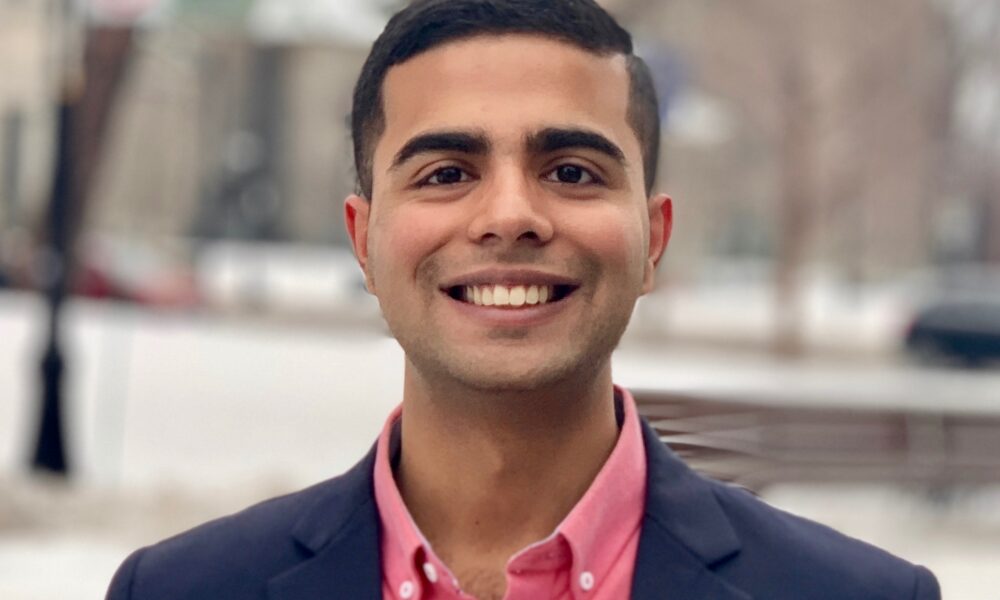
Darshan Daryanani is resuming his duties as  president of the Students’ Society of McGill University (SSMU) after a five month break rife with contentious questions and debates regarding the circumstances of his absence. In an interview with The McGill Tribune, Daryanani raised several grievances he has against SSMU leadership, who, in turn, remain troubled by the still-confidential circumstances shrouding Daryanani’s vacancy.  

“It is a relief to be back fulfilling the duties I was elected to fulfill, but the transition has not been complete,” Daryanani said in an email to the Tribune. “Despite my formal reinstatement, I have still not been permitted to serve as Chairperson of the Board of Directors, nor to even attend its meetings, which severely hinders my ability to complete my duties.”

According to Daryanani, the SSMU Board of Directors (BoD) unilaterally decided to suspend him with pay—a salary of approximately $32,000—in a closed meeting that he was not present for. Daryanani believes that his suspension may have been racially motivated.

“When the Legislative Council posed questions about my absence, the other executives and board members continued to falsely claim that I [was] ‘on leave,’” Daryanani wrote. “This insidious rhetoric is typically used to target, delegitimize, and dehumanize people of color based on racist tropes which portray Black and Brown people as ‘unfit’ for positions of authority. This is a double standard that would not be leveled against a non-racialized person.” 

During the question period, councillors grilled Daryanani with questions about his suspension. Nathaniel Saad, U2 management representative, does not think the majority of SSMU members share the President’s enthusiasm about his return, saying he was distressed by the number of messages he received throughout the Council meeting from concerned student employees and members. 

“[People are feeling] very mixed emotions, but all negative, unfortunately,” Saad said. “People were texting me during the [Legislative Council] meeting saying, ‘can you please do something?’ or ‘I’m not feeling okay.’”

At the Nov. 25 Legislative Council meeting, Saad and management co-representative Mary Zhang put forth a motion calling for Daryanani’s resignation due to his prolonged absence that included a provision for a possible student body referendum on his impeachment. It passed with no opposition in the Council, but the SSMU BoD struck the motion down a week later. Saad told the Tribune that some SSMU members have preached out to him privately, calling for the motion’s revival.

Another topic that has garnered significant discussion throughout the year, and that Daryanani was pressed on at the Feb. 17 Legislative Council meeting in his role as president, is concern about SSMU’s workplace culture. According to Yara Coussa, U3 arts representative and BoD member, the world of politics is traditionally male-dominated, and SSMU is no exception.

“What I will say is that there is an ongoing culture of sexism at SSMU, and in the past, we have seen a certain type of personality run,” Coussa said in an interview with the Tribune. “You’re not very well-paid [and] giving up one year of your studies is a privilege […] most often held by people who are in places of power, […] so we end up in this position where SSMU is not an accessible space for gender minorities or anyone who doesn’t fit the standard—the hetero, cis, patriarchal standard.”

Though Daryanani believes the motion only passed Legislative Council due to the BoD’s deliberate mischaracterization of his absence, Saad contends that the crux of the motion was that Daryanani was holding a title and getting paid $32,000 from student fees for doing nothing, regardless of circumstance. 

“Whatever term we’re using, he wasn’t there and he wasn’t doing his job,” Saad said. “Having [his salary] donated to a charity, or putting it back toward students who need it […] would be a wise choice that demonstrates leadership, which we’ve been lacking.”

Daryanani says he hopes to earn the McGill community’s confidence again by fulfilling his duties and promises.“In light of the many issues surrounding SSMU’s workplace climate, my main priority is to act on my main platform promise, which is to make SSMU a more inclusive, equitable and accessible place,” Daryanani said. “I believe it is important now, more than ever, to put this promise at the forefront of the next few months.”

A previous version of this article stated that Nathaniel Saad said that Yara Coussa, U3 arts representative and BoD member, had reached out to him calling for the motion’s revival. In fact, Coussa never publicly called for the motion’s revival. The Tribune regrets the error.

McGill, News

McGill Committee responds to expression of concern regarding Dollarama warehouse workers, recommends no action

On Feb. 10, McGill’s Committee to Advise on Matters of Social Responsibility (CAMSR) issued its report on the expression of concern the McGill Corporate Accountability Project (MCAP) submitted to the university’s Board of Governors (BoG) in August 2021. The expression of concern regarded the alleged human rights abuses and mistreatment of migrant warehouse workers by Dollarama—a company that McGill had invested $3.3 million in as of Dec. 2020. The BoG shared the report with MCAP on Feb. 14 and informed them that CAMSR recommended McGill take no action.

MCAP originally penned its expression of concern after evidence surfaced throughout 2020 and 2021 of immigrant warehouse workers being mistreated by Dollarama. Reports detailed that workers were not receiving first aid after being injured on the job, or were being forced to work overtime for no pay, among other things.

The Association of McGill University Support Employees (AMUSE) and Montreal’s Immigrant Workers Centre (IWC) collaborated with MCAP throughout the process of creating the 16-page report, which included evidence compiled from multiple news reports, a 2016 report compiled by the Integrated Health and Social Services University Network Centre-Sud-de-l’Île-de-Montréal and more. 

According to Frédérique Mazerolle, a McGill media relations officer, CAMSR made its decision based on its inability to find evidence of “social injury,” which it defines as something that causes extreme harm, social or otherwise. Furthermore, Mazerolle explained that according to CAMSR’s mandate, an expression of concern must contain evidence of “a pattern of breeches of existing rules” or “a pattern of serious and continuing” violations of business behaviour standards to warrant action on the part of the university. 

“Although the submission provided testimonies of warehouse workers expressing concerns relating to their income, employment and health and safety conditions, these concerns appear to be limited in number, and are not sufficiently supported by evidence demonstrating the undertaking of other due processes, such as evidence considered by a tribunal or other regulatory body,” Mazerolle wrote in an email to The McGill Tribune

Samuel Helguero, 3L, co-leader of MCAP, and one of the primary writers of the expression of concern, was dismayed by CAMSR’s report. He argued that the criteria that the committee used to evaluate the evidence submitted was arbitrary and stricter than they would have been in a court of law. 

“The issue here is that CAMSR is just inventing standards,” Helguero said in an interview with the Tribune.  “I am convinced that if I brought this before a judge and they were deciding on the balance of probabilities, whether or not there was social injury here, reading through all this testimony, all the statistics and evidence, they would agree that there has been social injury.”

AMUSE’s communications and outreach officer, Katia Lo Innes, views CAMSR’s report as part of a larger pattern of McGill’s continued refusal to support living wages. McGill has stalled contract negotiations with McGill University’s Non-Academic Certified Association over wage increases, while floor fellows are also struggling to secure fair wages and more flexible meal plan options. 

“McGill continues to prove that it does not care about workers, nor does it care about social impact, it only cares about maintaining the status quo,” Lo Innes said in an interview with the Tribune. “Continuing to invest in Dollarama, a company that underpays its employees and reportedly pays third party employees and migrant workers illegal wages, shows where McGill’s priorities lie.”

Helguero agrees with Lo Innes. He views McGill’s inaction in the face of what he believes are blatant human rights abuse to be a clear lack of respect and care for immigrant workers. 

“Dollarama workers saying very similar things about their employer publicly […] should be believed, just as we have the tendency, and should have the tendency, to believe victims,” Helguero said. “It baffles me that someone could doubt their testimonies [….] McGill’s response shows insensitivity to the experience of workers.”

Science & Technology

How to care for caregivers: A new online dementia education program

Many caregivers for those living with dementia are family members and friends who sacrifice their time—and even compromise their own health—to care for their loved ones. However, family and friends often lack training and support, which can put them at risk of suffering from stress and burnout

A new program at McGill seeks to change that. Ten Online Modules over Ten Weeks for Adult Learners (TOTAL) eLearning is an online-based education program still in development that aims to educate caregivers about dementia.

Today, more than 55 million people worldwide are living with dementia, with the most common form being Alzheimer’s disease. As a progressive disease, dementia starts with memory loss and eventually progresses to losing the ability to eat, walk, and communicate. Compared to those caring for healthy seniors, caregivers for seniors with dementia feel more distress from the extended hours they put in, as well as navigating the cognitive, mood, and behavioural symptoms associated with dementia. 

This new program will be based on the in-person workshops from the McGill Dementia Education Program founded by Claire Webster, a certified Alzheimer’s care consultant. Webster, whose mother was diagnosed with Alzheimer’s disease in 2006, felt wholly unprepared for taking on the role of a caregiver. 

“I got absolutely no information or education at all about the illness and as a result, it definitely had an impact on the quality of care that my mother received,” Webster said in an interview with The McGill Tribune. “It had a ripple effect on my health and a ripple effect on my family.”

Webster started volunteering at various Alzheimer’s disease groups, teaching medical students about post-diagnostic care and eventually collaborating with McGill clinician-scientists Dr. Serge Gauthier and Dr. José Morais to develop caregiver workshops in 2017. The workshops covered topics such as safety and caregiver burnout, and consisted of simulated scenarios portrayed by actors. 

“[The workshops] had a very powerful effect, because a lot of these caregivers had never been educated [about dementia] before,” Webster said. 

However, these in-person workshops were limited to Montreal and could only accommodate a certain number of participants. Caregivers also needed to leave their patient partners to attend these workshops. Yet, even before the pandemic, Webster envisioned an online program that centres accessibility, flexibility, and support.

That is how the collaboration with McGill professor Tamara Carver began. Carver, the Director of the Office of Education Technology and E-learning Collaboration for Health (Ed-TECH) at the Steinberg Centre for Simulation and Interactive Learning is tasked with leading the transition of the program to an online format. Recently, the Public Health Agency of Canada granted the project over $750,000 in funding to develop the online program, which is set to launch in October 2022. Accessibility is key: The program will be delivered in both English and French, and tablets will be available on loan to participants in remote areas with minimal internet access.

The program will also undergo feedback from the caregiver participants to ensure that it can be reworked to accommodate changing concerns and demands.

“We want to know: Does it meet the needs of the participants? Do they feel more supported? Are they more confident in their ability as caregivers?” Carver said in an interview with the Tribune. “This is the exciting aspect about creating community education. Our goal is to help them and also learn from them in a community-based participatory approach.” 

Both Webster and Carver emphasized the importance of the various departments and institutions that came together to develop the Dementia Education program, upon which the TOTAL eLearning program will be based.
“What the Office of Ed-TECH is doing […] is one important project,” Carver said. “What the acronym stands for, to me, is really important [….] The ‘collaboration’ is really key to the success of the projects we take on.”

Commentary, Opinion

To strip or not to strip: The power of political nudity

Content warning: Mentions of sexual violence

Activism is an artform. Inspiring and resonating with enough people to make a difference often demands human connection through loud and creative means. Like spoken or written words, nudity carries endless potential for representing a cause, both within and beyond the feminist domain with which it is most commonly associated. Just last week in Montreal, demonstrators outside Hudson’s Bay went nude to mark National Anti-Fur Day, protesting The Bay and other companies’ manufacture and sale of fur. Of course, in most cultures, a mass of people marching down public streets in the nude carries shock value. Although naked protests are much more than a simple scheme to attract public awareness to a cause, in politics, nudity is a metaphorical goldmine. 

While the Free the Nipple movement has seen significant victories in past years, nudity can be an effective political tool against more than just challenging sexist indecent exposure laws. It can also represent masses “stripped” of their fundamental rights, or it can spotlight the brutality of government, industry, and law enforcement in its juxtaposition to the fragile and vulnerable human body. It can articulate themes of transparency, to protest corruption and politicians’ shady behaviour—or individuality, to protest mass consumerism and the hegemony of large corporations. 

This is what protestors had in mind when they flooded the streets leading up to Montreal’s 2012 Formula One Grand Prix, one of Canada’s largest global tourist events. Among others, Convergence des luttes anticapitalistes led nightly naked protests against the Grand Prix and its elitist stakeholders. “You’re sexy, you’re cute, take off your riot suit!” chanted protestors in response to police repression. 

From a feminist perspective, the symbolism is even more powerful. For many feminist activists, marching together in the nude means regaining control over both the body itself and predominant gendered narratives of femininity. Through bold messages and paint smears on their exposed bodies, protestors shock bystanders and media away from romanticized, delicate, and inferior depictions of femininity. Men who leer at and objectify these protestors do not invalidate the intention behind their nudity—principally, it is her choice, no matter his reaction. 

Protestors’ decision to participate in nude protests highlights women’s autonomy over their own bodies, an issue central to sexual violence, exploitation, and reproductive justice. For example, at the 2015 Slutwalk, a topless protest in Rio De Janeiro, up to 3,000 women marched against a sexist bill introduced by Eduardo Cunha that would require people in Brazil who wanted an abortion to provide evidence that they had been raped or faced medical danger due to the pregnancy. Similarly, in 2016, women in Sierra Leone protested naked against then-President Ernest Bai Koroma’s scrapping of a safe abortion bill under pressure from religious leaders and their foreign funders. This intentional nudity sends a clear message that a woman’s body, rights, choices, and decisions are hers, and hers only.

Regaining control through nude protests also subverts the overt sexual objectification of women. At the Brazil Slutwalk in Rio De Janeiro, nude protestors explained that they sought to challenge the narrative that women face sexual violence at their own fault because of what they choose to wear. Likewise, several Grand Prix protestors challenged the increased sexual exploitation and harassment that women in Montreal experienced during the event by tourists who then left before police initiated proper investigations.

Commenting on the 2012 Grand Prix demonstrations, former Premier Jean Charest claimed naked protests attacked the wrong people, disrupting the public instead of productively vocalizing concerns to the government. But nudity provokes action too. It is worth more than just its shock value and can be equally as intentional, meaningful, and targeted as other forms of protest. For example, in 2012, many Montreal students protested nearly naked to challenge proposed tuition hikes in Quebec, contributing to unrest that resulted in then-Premier Pauline Marois cancelling the proposal. During this demonstration, the students’ nudity did not prevent aggressive police repression with tear gas, batons, and pepper spray, but rather highlighted its arbitrary brutality. 

The image of police in full riot suits chasing down completely exposed demonstrators is worth a thousand words. Indeed, this unconventional form of protest is about more than provoking double-takes and controversial conversations. It is legitimate and effective activism: The human body, in all its diversity and vulnerability, is extremely impactful.

McGill, Montreal, News

‘When Injustice is Fully Bilingual’: Emilie Nicolas’ Mallory Lecture discusses linguistic barriers to anti-racism work in Quebec

Emilie Nicolas, a columnist for Le Devoir and the Montreal Gazette, took to the virtual stage on Feb. 15 for this year’s Mallory Lecture, speaking about language barriers to anti-racism work. The McGill Institute for the Study of Canada (MISC) hosted the talk.

Nicolas introduced her lecture by describing a “war-time story.” The spring of 2016 saw numerous manifestations of systemic racism that mobilized many Montreal activists, including Nicolas herself. Investigations into the Val-d’Or police over allegations that a retired police officer sexually assaulted multiple Indigenous women, and the Montreal police killing of Jean-Pierre Bony contributed to a larger call for immediate and institutional change. 

Nicolas noted that systemic racism in the province is often regarded as a foreign influence rather than a homegrown set of ideas, practices, and institutions.

“[An] accusation was that systemic racism was an English concept, it was an American concept that we were importing into Quebec society and that Quebec society was different,” Nicolas said. “Quebec society was always [framed as] welcoming and peaceful and tolerant […] and we were trying to put English ideas into Quebec society.”

Nicolas highlighted the tendency of settler-colonial states around the globe to deny their own systems of oppression. While countries like the United States, France, and countries in Latin America hold different narratives surrounding their histories of institutionalized oppression, a common thread remains: People who deny the existence of systemic racism within their states. 

“Canada is one of the most successful marketing campaigns of all time,” Nicolas said. “The whole idea about niceness and politeness and all of that being put in a position with the violence of the United States is one of the core, founding mythologies […] around Canada.”

Nicolas feels that many English-speaking Canadians continue to hold such a narrative. On the other hand, French-speaking Canadians perceive themselves as the minority group in Canadian society which, according to Nicolas, allows them to deny their own racism. She gave the example of the little-acknowledged history of francophone Quebecois nuns being deeply involved in the residential school system.

“There was a widespread perception that residential schools were an English thing, were a British thing, and that French-Canadians didn’t do that and didn’t participate in that,” Nicolas explained. “More than half of the residential schools in this country were operated by oblates that are based in Montreal and were recruiting French-Canadian Nuns from the Saint Lawrence river [….] There was a lot of denial when that aspect of the story started to be covered.”

This denial and air of moral loftiness, according to Nicolas, can be exhausting for people trying to advocate for racial and social equality across the board.

“There is this hockey game going on […] and people like myself are the puck. We’re not even players,” Nicolas said. “[The] treatment of racialized folks and Indigenous folks and Black folks are argument points that are used to […] prove that you have the better social model or you have the moral high ground, which is a way to produce the very idea of white supremacy, which is about civilizational superiority. It’s a vicious circle.” 

Blair Elliott, the communications and events associate for MISC, stressed the importance of learning from people like Nicolas.

“It’s important not to tokenize these issues, and to recognize that the work of advocating for decolonization, antiracism, and social justice is not only complex but also constant,” Elliot said. “It’s also important to remember that these conversations cannot be isolated from ongoing policy discussions.”

Campus Spotlight, Student Life

Scouting out the best areas to eat on campus

With some time to go before terrasse season starts and eating outside becomes viable again, it’s important to know the comfortable indoor places to eat on campus. COVID-19 measures, including social distancing and mask mandates, have made the simple act of eating lunch an arduous process. The McGill Tribune visited some of the designated indoor eating areas at downtown campus to help alleviate meal-time stress.

Redpath

The basement of the Redpath library is one of the most popular eating spaces on campus, even prior to the pandemic. It does have some advantages, including being in the library, having various food options, and housing a variety of vending machines. However, it can get crowded and noisy, especially during peak hours. The lineups at Redpath Café and the stress of finding a table can eat up most of the time you were hoping to spend on your meal. The constant influx of people and the large crowds might also be a bit jarring for those worried about catching COVID-19. 

Education

Although the Education building, tucked away near the McTavish Reservoir, might be too long a trek for some, those who don’t mind the uphill climb on icy sidewalks will be rewarded with a pleasant eating experience. Even at peak hours, there are usually plenty of tables and seats available. There are large windows, microwaves in the basement, group and solo seating spaces, and even some occasional live piano. Here you can also find the Education Café, a modest eaterie with plenty of options, including some weather-appropriate soups and grilled cheese. 

McConnell

Hidden behind Dispatch coffee, the McConnell cafeteria is easy to miss. At lunch time, the space can feel pretty cramped and it gets near impossible to find a single seat, never mind trying to find one for a friend. Even accessing the microwaves requires some pushing and shoving. However, if you’re strapped for food, the McConnell Café offers plenty of options and typically speedy service. 

Burnside

The small eating area in the Burnside basement might be great for quick bites, especially because of its direct outdoor access and convenient location on campus, but the heavy foot traffic and lack of natural lighting aren’t ideal for a lengthy lunch. In contrast to the building’s cold architecture, the Soupe Café has an array of warm soups to keep you toasty during the subzero temperatures. 

Flex Spaces 

Another option is flex spaces, classrooms which are free at designated times for eating. The main advantage of these designated areas is their location––chances are, there’s probably a flex space in or near one of your classrooms, making them practical for sneaking a quick bite before or after your class. Popular lecture hall rooms like Leacock 132, Arts W-120, and Stewart Biology S1/3 become flex spaces when there are no classes. 

Honourable Mentions There are many more eating spaces scattered across campus that, though imperfect, may be more convenient or suited to your needs. The first floor of Trottier has a designated area for eating, although the Trottier Café has unfortunately been closed since the beginning of the pandemic. The Strathcona Anatomy and Dentistry building has a small eating area on the second floor, but it’s quite a trek up the hill and is really only practical for those who have a class in the building. The Ferrier student lounge is a quiet, but small, eating space with cushy couches, tall tables, and microwaves.

McGill, News

‘Decolonizing Approaches to Research’ tackles whitewashing and Eurocentrism in research

McGill’s Faculty of Education hosted a panel on Feb. 17 titled “Decolonizing Approaches to Research” that addressed colonial barriers to research through the lens of McGill’s research relationship with Barbados. Moderated by Jean St. Vil, a special advisor to the vice principal, the panel featured professor Terri Givens, provost’s academic lead and advisor on McGill’s Action Plan to Address Anti-Black Racism, Dr. Saleem Razak, a pediatrics and health sciences professor, PhD candidate Jamilah Dei-Sharpe, and students Asia Blackman (M.Sc. Epidemiology) and Khaelan King. The panel was part of the university’s official programming for Black History Month.

Throughout the online event, St. Vil directed questions at specific panelists, who traced  pervasive colonial attitudes to the historical foundations of research that continue to influence the way that knowledge is produced in academic institutions.

Dei-Sharpe detailed the predatory relationship that often exists between researchers and racialized participants. She referenced “dehumanizing and exploitative [research] practices” Western scientists have conducted throughout history, and stressed the urgent need for change. The sociological concept of the “white gaze,” Dei-Sharpe explained, is one such colonial effect that needs to be dismantled in academia.

“For me, research is a way to understand the world, people, and the environment that we frequent,” Dei-Sharpe said. “Since the 17th century, the Western scientific method has propelled a standard for who and what is researched, and how to conduct research that positions the European and racially white person with the authority to interpret and draw conclusions on the world.”

Razak elaborated on his belief that the whitewashed standard for research has not only made academia non-inclusive as an educational space, but also had negative impacts on the value and accuracy of studies. Oftentimes, the populations whose data is used for research have little involvement in the scientific process. This has especially been true in the field of medicine, one of the many factors contributing to systemic medical racism.

“There are pulse oximeters that measure the pulse of the blood, [which are] absolutely crucial to care in the hospital,” Razak said. “But they were designed in the ‘80s and tested on light-skinned individuals. They have now evolved, but for a long time, they were less accurate in dark-skinned individuals. That’s an example of a systemic racist research protocol.”

Because universities are involved not just in research, but education, it is essential that course curricula be decolonized, explained King. If not, the colonial stains on the research process will seep into classrooms—and young minds—unchecked. Though she recognizes that many courses do acknowledge the past colonial harm that has been done, she explained that much of this acknowledgement is whitewashed through a Western, colonial, lens, and does not come from the perspective of people who have actually been harmed by colonial forces.

“In order for McGill to actively educate our student body from a global perspective, our research methods and the selection of professors has to be more inclusive,” King said. “As a student, for me, the importance really lies in the material that we’re consuming, [and] in utilizing reading materials that give alternative perspectives […] because we know [that] time and time again, history has been told from the perspective of the victors [….] Broadening the way that we’re approaching research [is] the first step in decolonizing it.”

Science & Technology, Student Research

Giving back and moving forward in the medical sphere

Racial biases have major impacts on the medical field, from inaccurate diagnostics to nonconsensual procedures—but always to the detriment of marginalized communities. Many medical professionals at McGill and in Montreal are working to change this, however: The Social Accountability and Community Engagement Office of McGill’s Faculty of Medicine and Health highlighted four Black changemakers in health care during their event “Research, Advocacy, and Philanthropy in Health Equity” on Feb. 10.

Berson Augustin

Berson Augustin is a PhD student in epidemiology at McGill who has been working in community health care for many years. As a researcher at the Lady Davis Research Institute, he aimed to improve Hepatitis C virus screening through community outreach among migrants in Montreal.

But before then, Augustin got his start in medicine as a volunteer. After a chance meeting with a doctor at a free clinic in Florida, Augustin was encouraged to volunteer as a translator for Haitian immigrants seeking health care. From doctors to refugees in Canada, all the people Augustin has encountered during his life have profoundly shaped his passion for medicine.

“To be able to have moved on, little by little, because of these people that have been supporting me is the reason that I think doing this kind of work and thinking about medicine is important,” Augustin said.

Victoire Kpadé

Victoire Kpadé’s experience in medicine, too, was deeply shaped by her peers. A current medical student at McGill, Kpadé started seriously looking into medical programs after an inspiring conversation she had with her friend Lashanda Skerritt, another speaker who had recently been accepted in a similar program. 

Kpadé’s work centres around giving back to the community. One of her past projects was developing  clinical guidelines for medical professionals working with unhoused individuals. 

“At this point, I feel like I have a lot of different pieces of research,” Kpadé said. “Now I want to see how to translate that research into sustainable interventions that will have a long standing impact to improve the access of care and particularly for members of marginalized communities.”

Lashanda Skerritt

As a MDCM and PhD student studying family medicine, Skerritt researches the reproductive health-care needs of women living with HIV, who are often at the intersection of many different forms of oppression.

An essential concept that Skerritt uses to guide her work is Two-Eyed Seeing, known as Etuaptmumk in Mi’kmaw, which was introduced to her by Indigenous professionals she works with. Two-Eyed Seeing seeks to integrate the strengths of both Indigenous and Western ways of knowing. Skerritt’s work focusses on bringing together traditional epidemiological approaches with community knowledge.

“Working with communities requires us to change the way that we view [those] that might be experiencing barriers and challenges,” Skerritt said. “There are a lot of ways in which community organizations, Black community groups, do incredible work to support our community that’s outside of the health-care system, outside of academia.”

Nicolas Cadet

Graduated from McGill Medicine in 2012, Nicolas Cadet is the first opthalmologist of African descent specializing in oculoplastic surgery in Canada. Encouraged by his parents to give back, he is intent on using his role in health care to support his community.

Cadet is an advocate for the importance of community and mentorship for Black medical students, and part of his current work includes establishing a bursary to support them. Establishing a sense of community trust, he said, is crucial in delivering effective health care to marginalized communities, highlighting the importance of health care built by and for Black people. 

“My dream is to see how we can all come together as physicians from Black communities to actually build something for our communities,” Cadet said. “I think that the change should come from us, so let’s make that change happen.”

Arts & Entertainment, Books

The Sally Rooney effect

In reaction to the pandemic, people have indulged in melancholy. Though Sally Rooney’s novel Normal People was neither her debut nor her most recent, it was the one that made her famous. The gloomy but beautiful novel was published in 2018, and adapted for television by the BBC two years later. The television series, released right in the midst of the pandemic, became a smashing success, and BBC’s most streamed series of 2020. Dubbed this generation’s Salinger, Rooney did more than create a bestselling book: She changed the romance terrain. Fueled by BookTok and the rising popularity of melancholic literature, the deglamourized romance of Marianne and Connell provided comfort for many readers.

Along with this influx of melancholic, domestically themed novels like A Little Life, My Year of Rest and Relaxation, and of course Normal People, the trope of the self-aware narrator has become increasingly popular in contemporary fiction. Protagonists, such as Marianne, weave self-criticism and eerily astute observations about their own flaws into the narrative, creating a sense of nonchalant introspection that makes their stories seem more realistic. This transparent style of writing walks a thin line between poignant awareness and cliché. No one wants to read a novel where the protagonist spends the whole time complaining—no matter how self-aware they are—but Rooney’s characters emotionally level with readers. The writings of melancholic authors like Rooney or Emily Austin are especially pertinent to struggles of the pandemic era.

This genre certainly deviates from the previous trends of romantic fiction literature. As the pandemic continues, many seek comfort in reading, and while before people turned to fantasy or cheesy rom-coms, now, these dark, and domestic, fictions are growing in popularity. Without leaning too heavily on the self-aware narrator, these novels embrace the melancholia of the everyday. These novels’ unforgettable ability to languish in the uncomfortable has become indicative of their genre.

With social media’s increasing popularity, it is no surprise that the literary market is also affected by this shift in trends. BookTok, a subsection of TikTok, is a worldwide reading community that discusses books and drives sales. All of the larger-name book stores have some sort of a “Trending on TikTok” section—if a book blows up on BookTok, it is bound to sell out in stores. The hashtag #normalpeople has amassed 6.2 billion views on Tik Tok, proving the Gen Z literary influencers have spoken. 


However, there is a distinction between timeless and trending, and for these novels, it lies within the characters. Especially for novels like Normal People, the characters are the core of the story, and they are endearing because they are so unfiltered. They nest in the perfect middle ground: Realistic but not too realistic, relatable but not too relatable, funny but not too funny. And especially when touching on more sensitive topics, like abuse, addiction, and fluctuating power dynamics, authors must tread lightly. But what allows these novels to resonate is their almost unintentional disregard for their readers, as they appear to remove the performative aspect of character development. It’s always most difficult to do the simplest things well, and Rooney masterfully created a love story that is as raw and brittle as her characters, shattering the illusion of the tried-and-true romance.

Read the latest issue

Read the latest issue