

Latest News

News, SSMU

‘I never went on any leave of absence’: SSMU President Daryanani makes first appearance at Legislative Council since Sept. 23

On Feb. 17, the Students’ Society of McGill University (SSMU) Legislative Council convened for a long 5.5 hours, with SSMU president Darshan Daryanani’s return dominating the meeting and discussions about concerns of racism and harassment within SSMU. Councillors voted on several motions, including one regarding a moratorium on ancillary fees, and heard presentations from several student groups, including Student Support, Athletics and Recreation, and Divest McGill, about the different fees and services up for referendum at the SSMU General Assembly

Providing long-awaited transparency, Daryanani addressed the council directly during the meeting, revealing that he was not on a leave of absence, but that he had been suspended by the SSMU Board of Directors (BoD) since Sept. 23, 2021. The suspension was set to end on Nov. 5, 2021, but the BoD extended it several times and did not give Daryanani a definitive end date.

“Only on Sunday, February 13, was I informed by the SSMU Board of Directors that all reasons to justify the suspension were unfounded and declared inadmissible,” Daryanani said. “I can assure you that at every step, I fully collaborated with the process, despite the fact that the board frequently violated my rights as a SSMU officer and employee. To be clear, I never went on any leave of absence.”

In the question period that followed, Daryanani said that he was never told the reason behind his suspension, but responded to several inquiries about his time out of office. 

Several student representatives and members of the gallery raised concerns about the lack of transparency on the part of other SSMU members regarding Daryanani’s suspension. Although all of the SSMU executives were present at the meeting, only Daryanani responded to questions regarding his suspension, with the others stating that such information was confidential. 

Engineering representative Hiraku Murakami questioned vice-president (VP) Finance Éric Sader about executives refusing to acknowledge Daryanani’s suspension due to confidentiality. Several other councillors also brought up the topic, with management representative Nathaniel Saad later adding, “There is a fine line between confidentiality and withholding information that students deserve to know.”

As attention turned toward the actions and responses of the SSMU executives, many attendees became emotional when discussing questions about the “toxic” workplace culture for women and gender minorities at the SSMU. After member of the gallery and former SSMU president Bryan Buraga questioned why executives were acting “glib” about such a serious matter, VP Student Life Karla Heisele Cubilla quickly responded, claiming that executives were also “victims of the structure” and calling the question “insulting, almost.”

While all the executives agreed that there are major issues in SSMU’s working culture that need to be addressed, tensions were high and the responses of executives differed greatly in manner. VP University Affairs Claire Downie spoke out broadly about the actions of male employees at SSMU. 

“Men who work at SSMU, men who are in these circles, please consider that you may be part of the problem,” Downie said. “You may not have these egregious examples that some people talk about, but many many men are part of the problem and I want people to be mindful.””

Councillors then addressed five motions concerning the Feb. 21 General Assembly before the session was adjourned: The Motion Regarding Amendment on the Moratorium Ancillaries Fees was not approved; the Motion Regarding the French Accessibility Fee Referendum Question and the Motion Regarding Referendum Question on the Increase of the 2022 SSMU Membership Fee were both approved; and the Motion Regarding Reintroduction of the Facility Improvement Fee Referendum Question and the Motion Regarding Ratification to the Society’s Board Of Directors were both postponed. The remaining motions, including the Motion Regarding Referendum Question on the Creation of a Black Affairs Fee Levy, were postponed to email approval.

Moment of the meeting:

During the announcement period, VP internal Sarah Paulin interrupted president Daryanani with a point of order, claiming that the revelation that he was absent because of suspension was confidential information. Members of the Dias—which includes the Speaker, Speaker On Call, the Parliamentarian, and the Governance Manager—met in a breakout room for 15 minutes to decide on whether to sustain the VP Internal’s point of order, before allowing Daryanani to continue.

Soundbite:

“I just want to bring up one thing: That this is not a clash of McGill Athletics and Divest McGill. McGill Athletics is with the climate movement [….] However, this is a chance for the Student Union to actually stand up and protect the students […] from the administration [….] This is a chance for […] the thousands of students that use McGill Athletics to have a better experience and to be better able to control that experience out of the hands of administration.” —Gallery Member James Mulvaney, on how amending the SSMU moratorium of ancillary fees uplifts McGill Athletics without devaluing Divest McGill’s efforts.

A previous version of this article stated that the Speaker of Council and a couple non-voting members of the council convened in the breakout room. For clarification, it was the members of the Dias (which includes he Speaker, Speaker On Call, the Parliamentarian, and the Governance Manager) who met in the breakout room to decide on a governance question—whether to sustain the VP internal’s point of order.


Science & Technology

Anger, crime, and punishment: Can we control our own emotions?

A team of scientists from McGill, the National Institute of Scientific Research (IRNS), and the University of Ottawa have identified anger as being an intuitive, near-instantaneous reaction to crime in a recent study published in Psychology, Crime & Law. Their research shows that emotion, alongside factual evidence, can play a significant role in determining punishments for criminalized individuals.  

Led by Carolyn Côté-Lussier, professor of urban studies at the INRS and assistant professor in the University of Ottawa’s criminology department, the experiment asked participants to make snap decisions about the degree of punishment 52 males should receive based on their photo. Participants were told that the men had previously been convicted of a crime, but their actual crimes were not listed. 

By measuring both the participants’ electrical impulses that control facial expressions and their punitive decisions, Côté-Lussier’s team concluded that anger could manifest itself physiologically within only 500 milliseconds. Participants had decided on a punishment for a criminalized person after only 1.3 seconds, on average.

The researchers used facial electromyography (fEMG), a technology that records minute movements in facial muscles down to the millisecond, to quantify the physiological manifestation of emotion. The movements of corrugator muscles, those directly responsible for frowning, were specifically recorded to isolate instances of anger. 

“We respond to other people’s facial expressions and emotions, and we also have our own facial expressions that express our emotions,” Côté-Lussier said in an interview with The McGill Tribune. “I’m very interested in these micro expressions, in how we feel intuitively. You might not be aware of where an emotion is coming from, but it [manifests] itself on your face.” 

The team observed that participants felt varying levels of anger toward the individuals they were shown, and that there was a correlation between how “warm”—or friendly—the individual was perceived to be and the degree of punishment the participants said they should receive. 

“When I was creating the groups of pictures, I was focussed on how they differed on the dimension of warmth,” Côté-Lussier said. “Because this […] is the thing we pay attention to the most [in this experiment] and will really orient our emotions to a particular social emotional group.” 

Côté-Lussier noted that this intuitive manifestation often stems from biases founded upon demographic characteristics like race, age, perceived social status, or attractiveness.

“These kinds of biases […] are infusing our reasoning, they are tinting the way that […] we see people, and we can work actively to try and dismantle that. But when we look at the data, we tend to see the same kind of biases being manifested,” Côté-Lussier said. “So there is a link here between the intuition and the outcome that we end up seeing.”

Côté-Lussier says that other characteristics that provoke such biases pose possible areas of future study, now that the link between the intuitive nature of anger and punitiveness has been quantified. 

“For instance, I haven’t considered the race dimension in the analyses themselves, partly because I made an effort to control for that by having the same kind of composition across the two groups,” Côté-Lussier said. “But that doesn’t mean that that stops us from looking at those dimensions [in the] future.”

And according to Côté-Lussier, it is these internalized biases and tendencies to make snap judgments that proliferate and fester in our criminal justice system, even if we make efforts to check them at the door of the courthouse.

While Côté-Lussier recognizes that this research does not directly emulate what occurs in the courtroom, specifically because judges and jury members are expected to make decisions based on evidence, not just a photo, she reminds us that our innate tendencies can lead us to make emotionally-guided judgements. 

“I think it would be incorrect to expect that a judge or a jury member could do away with the emotional intuitive reactions,” Côté-Lussier said. “For me, the important thing is less about how I hope people will pay attention to [this research] in the criminal justice system, and more about how I want it to tackle social, structural inequities. If we reduce those inequalities, we’ll see less crime and less anger about crime.” 

Basketball, Sports

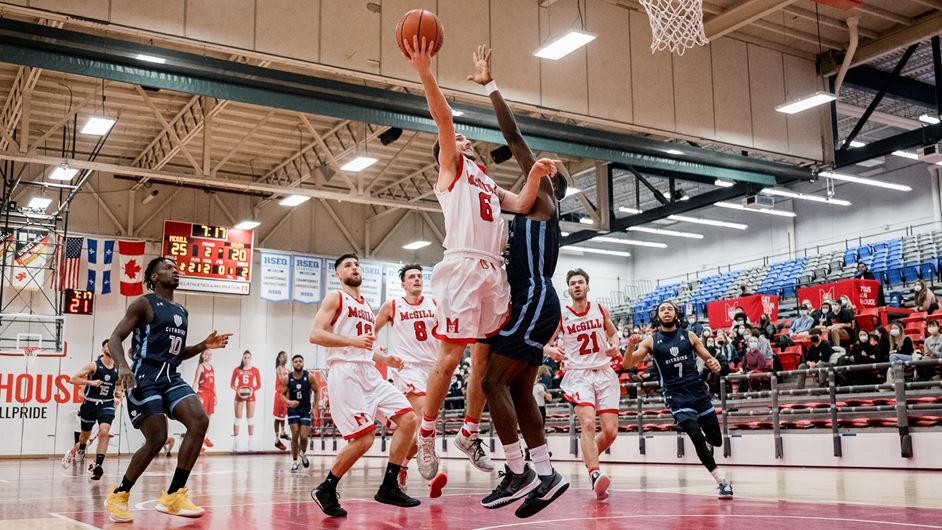
McGill men’s basketball maintain their perfect record, rallying for back-to-back wins against Citadins

On Feb. 17, the McGill men’s basketball team (6–0) returned to the court for the first time in almost three months, lengthening their win streak to six games with a decisive 84-62 win over Université du Québec à Montréal (UQAM) (2–4), then a narrow 80-79 victory the next day. Thursday’s game started strong for the Redbirds, who sustained a lead from the first quarter to the last. Although UQAM demonstrated some beautiful passing that led to a few key scoring opportunities, the Redbirds dominated the game and easily secured the win.

Sam Jenkins, a fifth-year guard, was on fire with a game-high 19 points, including five three-pointers and nine rebounds. Jamal Mayali, also a fifth-year guard, had an impressive game with several three-pointers, contributing 16 points overall and four rebounds, ranking second in points for the Redbirds. 

“We moved the ball very well offensively, and as a result, a lot of guys were getting good quality shots and defensively, we were on point with our rotations for most of the game,” Mayali wrote to The McGill Tribune.

Like many others, starting guard Cameron Elliot was excited to be back in action and was impressed with his team’s performance after an 11-week break.

“I think we played well as a team, considering it was our first game back after a long break, but we have a lot to improve on if we want to reach our goals for the year,” Elliot said. “I think we did a good job of playing with flow and keeping the ball moving at all times, and I know we will only get better with time.” 

Less than 48 hours later, the Redbirds rematched against UQAM on Feb. 19. While the game was a much closer affair, the Redbirds held on to win 80-79, coming back from a 12-point deficit to win on a buzzer beater from first-year guard Sidney Gauthier

In contrast to Thursday’s game, the Redbirds were mostly trailing their opponents, only gaining the lead with just over four minutes left in the last quarter. With less than two minutes left in the game, the Redbirds, trailing by six, called a timeout. After an apparently successful pep talk, Gauthier and third-year guard Elliot made two back-to-back layups to shrink the deficit to two. 

With 30 seconds left in the game, now only down by three points, McGill called another timeout. This time, after a jump shot from Jenkins and two missed free throws from UQAM, the Redbirds were within one point of their opponents, and Gauthier’s last minute heroics clinched the team’s sixth victory.

“I think it was certainly a team effort, and I never would want to take all the credit for that play, because all I did was make the shot,” said Gauthier. “[But] the feeling after seeing the ball go in is a feeling I never want to forget. It gives me chills just thinking about it again.”

Fourth-year forward Kevin Li was happy with his team’s performance against a team he considers to be one of their top rivals.

“For our team, I think it was a great two wins,” Li said. “The UQAM team is the team that beat us in my first year. We beat them in the regular season but when we went to the playoffs we lost to them twice. I think it’s a great message that we sent to them, saying we are not losing this year.”

The Redbirds return to the court next weekend with a home-and-away series against Laval on Feb. 24 and Feb. 26.

Stat Corner: The Redbirds current record of 6–0 marks the team’s best start since 2001.

Moment of the Game: With no time remaining on the clock and the Redbirds down by one point, first-year guard Sidney Gauthier netted a jump shot off an assist from Cameron Elliot to win Saturday’s game 80-79.
Quotable: “It’s just been so nice to be back on the floor with everybody that it’s hard to look past the excitement of the moment. But we’re hungry for more than just regular season wins, and I’m really looking forward to competing when it matters the most.” — Cameron Elliot on the return to competition.

Student Life

The Computer Riot, Birth Control Handbook, and struggle for Africana Studies: Brief histories of student activism

Students have long been at the forefront of social progress, both on their campuses and in the wider Montreal communities. The McGill Tribune looks back on a few instances throughout history when students banded together to advocate for their rights.

1969 Computer Riot at Concordia 

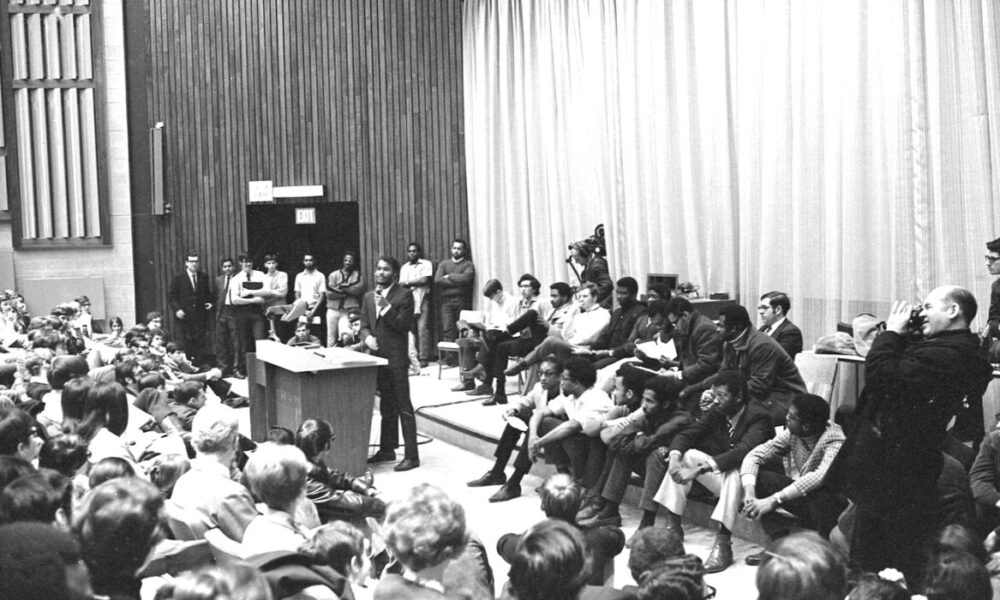
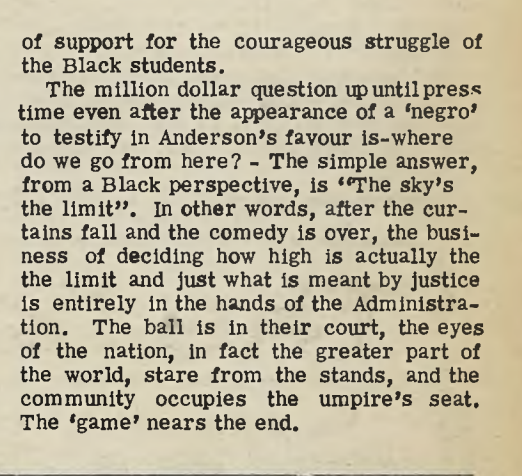
This protest would come to be known as the largest student riot in Canadian history. In the spring of 1968, six West Indian students from Sir George Williams University filed a complaint against their professor, Perry Anderson, for deliberately giving Black students lower grades. Though the university agreed to establish a Hearing Committee, Black students denounced the impartiality and incompetency of Concordia’s representatives. They walked out of the hearing with around 200 other students and occupied the school’s Computer Centre. After days of negotiation between the administration’s lawyers and the students, a settlement that would institute a new Hearing Committee was established, and the end seemed near. As protesters began to leave the Centre, assuming that the agreement was all settled, however, the proposal was scrapped. The next day, the administration called in the police and riot squad to handle student threats of vandalism. When they arrived, a large portion of computer equipment had been destroyed and a fire had broken out—totalling $2 million in damages. 

Though the accused professor was reinstated soon after and received no consequences, the occupation forced the administration to establish student representation on university decision-making bodies. Soon after, University Regulations on Rights and Responsibilities and the Ombuds Office was established. 


This quote comes from the special issue of the student newspaper The Georgian produced by student protestors called The Black Georgian (Concordia Archives).

The Birth Control Handbook 

In 1968, the dissemination, sale, and advertisement of birth control methods was still illegal across Canada. In spite of this, the McGill Student Council passed a motion to form a Birth Control Committee and host a student seminar on sex education, eventually leading to the conception of the Birth Control Handbook, a guide to the pros and cons of various methods birth control methods as well as other useful information on sexual health. The handbook’s co-editors, Allan Feingold and Donna Cherniak, worked alongside Montreal-based doctors to conduct research and compile practical information on everything from condoms and diaphragms to abortion services and IUDs. Feingold and Cherniak also sought to highlight how social and political issues affected access to sexual health resources. At a time when contraceptives were inaccessible, the handbook responded to a huge demand, with more than three million copies distributed, in and beyond McGill, by 1974. 

(Rise Up! Archives) 

The struggle for Africana Studies 

In the 1990s, the Africana Studies Committee (ASC)—formed after McGill attempted to downgrade its African Studies program to only offer a minor—worked to, among other goals, bring an Africana Studies program to McGill. This program would study the Black diaspora as well as the interdisciplinary, internationalist perspectives that characterize it, and not to mention act as a departure from African Studies’ problematic history of centring white scholars. Black students at McGill worked for four years to craft a proposal for the expanded program, presenting it to the McGill administration in 2000. It was the culmination of several initiatives, including a public demonstration that demanded the African studies program continue, the fundraising of approximately $20,000 for the Committee, and the organization of the Africana Congress 2000, which brought students, community activists, and lawyers from different countries together to strategize the future of Black studies at McGill. 

The proposal was also delivered at an important time: McGill had recently received more than $65 million in private donations and a commitment of $80 million in government investment. In the end, however, the administration showed its blatant resistance to the needs of Black students, stalling and eventually shelving the proposal once the student leaders graduated. Throughout the years following the ASC’s proposal, the Black Students’ Network has continued to spearhead the initiative for an Africana studies program at McGill. 

Commentary, Opinion

For a better future, McGill must learn from Black history

Every February, Black History Month comes around with growing support, yet there is still room for growth on behalf of institutions and individuals. Oftentimes, corporations and institutions appear to care about Black history, while truly not doing much good for anyone. These institutions shape Black History Month increasingly around Black trauma when, this month should really be a celebration of Black achievements and history. Most importantly, this celebration should take place all year, keeping the discussion prominent and accessible in the mainstream.

The history of Black nationalism in Canada dates back more than 400 years, but many students only know about Black American history, which diminishes the role of Black internationalisms in the history of Pan-Africanism and Black nationalism. This is shocking considering the major links between Black Canadian and American history. For example, the parents of Malcolm X, Earl and Louise Lansing, met in meetings of the then-newly formed Montreal branch of Marcus Garvey’s United Negro Improvement Association and later wed in the city. After defending his family’s right to reside in a predominantly white neighbourhood in Michigan, Earl was killed, and Louise was subsequently admitted to a mental health asylum. These experiences pushed Malcolm toward the ideology of Black nationalism, with which he would greatly influence the Civil Rights movement of the 1960s as he fought for racial justice. This great connection between Canadian and American Black history should be recognized and more widely taught.

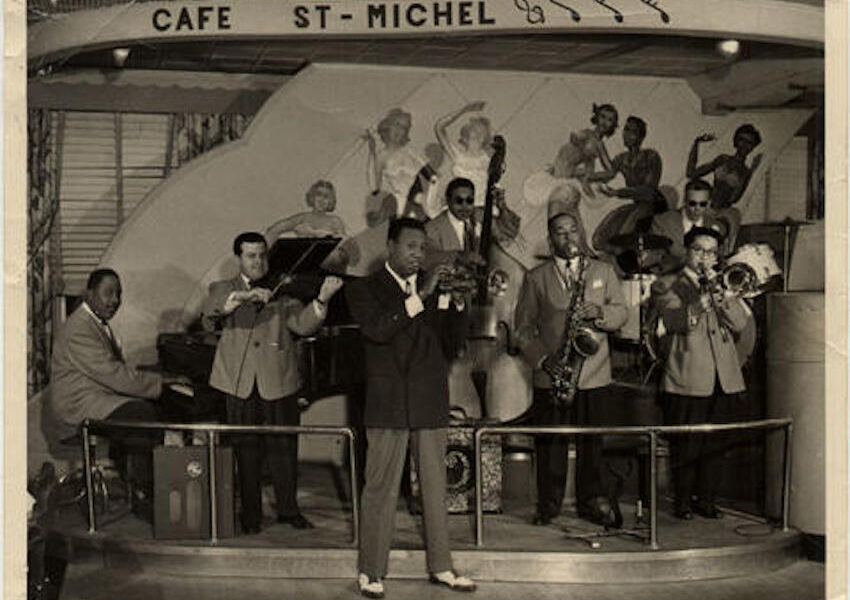
Montreal’s role in the emergence of jazz culture makes the city a cornerstone of Black history,  and is even home to the largest Jazz Festival in the world today. The roots of Montreal’s jazz culture can be traced back to the early 20th century when the Black community of Little Burgundy established a number of social organizations to counteract poverty and social marginalization, out of which arose artists like Oliver Jones and Oscar Peterson. During the Golden Age of jazz, several famous artists visited Montreal and frequented clubs founded by the Black community, such as Café St-Michel and Rockhead’s Paradise, the latter being the first Black-owned nightclub in Canada, founded by Rufus Rockhead. The impact that jazz has had on the city is indisputable, and countless McGill students spend their weekends enjoying jazz bars. Residents of Montreal have the responsibility to recognize the rich history of Black culture in the city, to help revive historical and cultural narratives.

McGill has made great progress in celebrating Black History Month with events, and supporting organizations like the Black Students’ Network and the McGill African Students Society, which have brought attention to Black history. However, it is the obligation of McGill students to make use of these resources to further their knowledge of Black history and its impact. These organizations use history to help understand current issues facing Black students, and also offer calls to action that equip students to be better allies to the Black community. 

McGill should offer more on Canadian and Montreal Black history. Moreover, McGill is very loud and proud as an institution regarding their alumni, but many students may not have heard that Julius Garvey, son of aforementioned Marcus Garvey, attended McGill. This is a strong link between the Black nationalist and Pan-African movement that the university should recognize during Black History Month. 

Montreal and McGill both have profound Black histories. With living in a major city comes the responsibility of acknowledging and understanding the history that shaped it to be what it is today. Montreal holds a diverse population, and increasing recognition of local Black history can truly impact the way residents treat each other and can go a long way toward cultivating an anti-racist society. 

From the BrainSTEM, Science & Technology

Winter Olympics 2022: Mother Earth returns empty-handed

After the 2022 Winter Olympics in Beijing ended with a grandiose closing ceremony on Feb. 20, it is time for a review—not so much of the sports, but rather of the ecological impact of the quadrennial event. Some may wonder as they read this: Didn’t the International Olympic Committee (IOC) assure us that these would be the most sustainable Games in history? They certainly did, but if anyone is still unclear about what “greenwashing” is, here is exhibit A. 

While Beijing boasted about its renewable energy efforts and the IOC published a 130-page sustainability report on the Olympics, nothing can erase the startling image of a completely artificial ski slope rising up amid a semi-arid landscape. The almost post-apocalyptic picture has been trending all over social media, sparking indignation and shattering the eco-friendly myth Beijing tried to spin. Far from being the most environmentally friendly games in history, the only title that Beijing 2022 managed to earn is being the first winter games to fully rely on artificial snow

But what exactly is artificial snow? Joe Schwarcz, director of the McGill Office for Science and Society, explained that snowmakers produce droplets of ice, each with a diameter of about one ten-thousandth of an inch, by quickly releasing water and compressed air, which then expands. The temperature drops and freezes the water, thus releasing heat. 

“This should be obvious when we realize that in order to melt ice we have to add heat,” Schwarcz wrote in an article for the Office for Science and Society. “The heat released is taken up by the expanding compressed air. Incidentally, this is why the ‘snow making’ pipes are always high in the air. If the snow were made close to the ground, the heat released by the freezing process would actually warm up the ground and melt some of the snow.”

The process of snow-making itself is not environmentally harmful: The IOC has ensured the absence of chemicals in artificial snow. The biggest problem with artificial snow is the massive amount of natural resources needed to produce it: 185 million litres (49 million gallons) of water is required to generate enough snow for the Games. 

This is a significant demand from a region that receives only 300,000 litres (300 cubic metres) of water per capita per year, more than two-thirds below the UN’s water-scarcity threshold, which is 1,000 cubic meters per capita per year. Hosting the snow-based events in Beijing could require enough water to fill 800 Olympic swimming pools.

To add to the environmental catastrophe, China has also made the decision to establish its ski domain in the Sonshang nature reserve in Yanqing, causing the decimation of 20,000 trees, the equivalent area of 1,000 soccer fields. On top of that, the IOC’s commitment to transplanting all the felled trees reveals, once again, the crucial lack of commitment the Games has to environmental issues—not the slightest consideration was given to the impact of such a decision on the region’s biodiversity. This doesn’t come as a surprise, as the IOC’s primary mission is the “democratization of sports”—with its market of 1.6 billion people, China turns out to be a purely strategic choice to fulfill this goal. 

The tug-of-war between profit and environment is on display. And yet again, profit wins. But is this struggle even worth the price? Unless greenhouse gas emissions are drastically reduced, only one city out of 21 host cities surveilled—Sapporo, Japan—could feasibly host the event by the end of the century. It seems like the IOC should start worrying about ecological concerns, for its own survival.

Basketball, Sports

Dry spell for women’s basketball prolonged by 66-36 loss to Citadins

The seats of Love Competition Hall were sparsely filled as the Martlets basketball team (0–5) made their return to the court after a three-month hiatus to face off against the Université du Québec à Montréal (UQAM) Citadins (3–2). With only nine players on the bench, the Martlets lost 66-36. 

“I approached Thursday’s game as the start of a whole new season. New year, new beginning,” wrote third-year guard Jessica Salanon in a message to The McGill Tribune. “[The] first half of the season wasn’t easy for us, but at this point we have nothing to lose, only experience to gain.”

First-year guard Iman Ibrahim opened up the scoring with an easy layup. UQAM was quick to gain the lead back, but both teams’ defences kept each other on their toes. There was no clear leader in the first quarter until the last three minutes, when the gap between UQAM and McGill widened in the visitors’ favour, leaving the score at 15-13 for the Citadins.

The Martlets started the second quarter with a dry spell until Salanon scored the team’s first points of the quarter at the 6:46 mark. Yet, the Citadins persisted, maintaining an 11-point lead.

The Martlets continued to make unsuccessful attempts at field goals, and their defence fell short against the relentless Citadin offence. But Rathwell brought morale back up after a fantastic three-pointer, cheering up both the team and the crowd.

Centre Kristy Awikeh made a layup with just over one minute left in the second quarter, while Salanon sank two free throws. The Martlets went into half-time reinvigorated despite UQAM’s 35-24 lead. 

“I think the first half of the game showed that we have improved as a team,” Rathwell said. “We are a very young team going against much older teams. There is no doubt that this is a rebuilding year for us, but I think that each of us have our individual strengths and have potential.”

By the end of the third quarter, the Martlets had only managed to score four more points, including another two free throws by Salanon. The Citadins scored 11 points, bringing the score up to 51-28, increasing their already significant advantage. 

Salanon was disappointed with the results of the third quarter, but took the time to reflect on how the team could improve moving forward.

“Unfortunately, when we came back from half, things went downhill,” Salanon said. “We weren’t able to score and we were giving them easy baskets. I know we are a young team so we lack a lot of experience. We have to learn to stay consistent through the whole game.”

The fourth quarter was dogged by player exhaustion on both sides, resulting in low scoring and several loose balls. However, guard Joy Taan-Tobias broke the slump through an amazing defensive move, setting Rathwell up for a layup.

Spirits brightened, and the Martlets gave it their all for the end of the game. Rathwell scored an additional four points, but UQAM’s lead was too substantial, and they claimed victory 66-36. While it wasn’t the outcome they wanted, Rathwell believes that their moment will come.

“Progress and winning isn’t something that is going to happen overnight, but I’m certain as we all fight our hardest this next month and for the seasons to come it’s something in our future,” Rathwell said.

With the team’s motivation and determination, it won’t be too long before the group solidifies the perfect winning combination.

The Martlets next face off against fourth-place Laval on Feb. 24 at Love Competition Hall.  

Moment of the Game:

After a long scoring drought, the crowd saw a brilliant play from Taan-Tobias. The resulting turnover allowed Rathwell to score, reinvigorating the Martlets.

Stat Corner:

With 11 points and five field goals out of 10 attempts, Katie Rathwell had her best game of the season yet.

Quotable:

“I think that for the rest of the season, our goal would be to be disciplined and [to] fight through the whole game, not only through the first half.” — Third-year guard Jessica Salanon

Arts & Entertainment, Film and TV

CBC’s new series ‘The Porter’ tells stories of Black resilience in 1920s Montreal

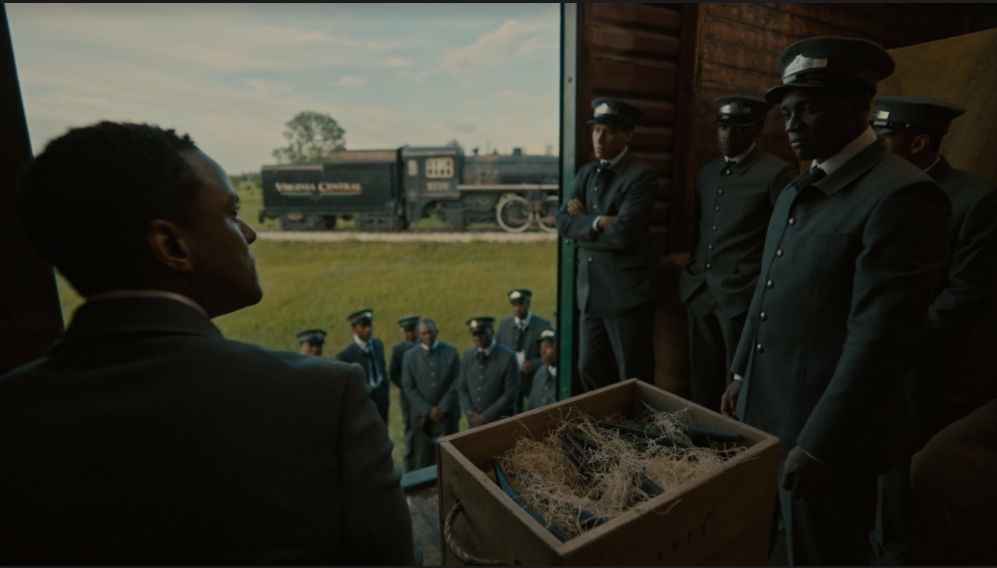
Far from the rosy multicultural haven one may have been taught about in their high school history class, Canada has a sordid legacy of anti-Black racism and discrimination. CBC’s new show, The Porter, released on Feb. 21, explores the little-known history of Black Canadians in Montreal through the lens of Black railway workers in the early 1920s. 

An eight-episode series, The Porter follows the lives of train porters Junior (Aml Ameen) and Zeke Garrett (Ronnie Rowe), as well as Marlene Massey (Mouna Traoré), a Black Cross nurse, and Lucy Conrad (Loren Lott), a jazz club performer. Though characters face systemic problems in their professions—including dangerous working conditions and racist and sexist higher-ups—their stories are imbued with strength and resilience, with a major plot point of the show centering on Zeke’s efforts to establish the first Black labour union.

Though it tells a fictional story, The Porter incorporates real historical events into its plotlines. Zeke’s efforts to unionize Black porters, Junior’s bootlegging operations, Marlene’s involvement with the Universal Negro Improvement Association (UNIA), and Lucy’s work in the entertainment industry encompass a range of true stories, albeit consolidated and rearranged for engaging television. A crucial element of the show is its location in Montreal’s own St. Antoine neighbourhood—also known as Little Burgundy. As both a railway hub and the home of Canadian jazz, St. Antoine attracted a diverse and growing Black community from the Maritimes, the Caribbean, and the United States in the early 20th century. Several dance numbers in the Stardust Club pay homage to St. Antoine’s African and Caribbean heritage and give credence to Montreal’s 20th-century status as the “Harlem of the North.” Though the show was shot in Winnipeg, the production recreated life in Montreal in the 1920s, drawing upon archival photographs and consultations with historians. 

Aside from its captivating historical perspectives, The Porter’s strength lies in its diverse array of nuanced characters and situations. Tragedy strikes when Henry, a fellow porter, dies after falling off a railway car due to a lack of safety precautions. While Zeke attempts to reason with the Cross-Continental Railway higher-ups and rallies to unionize his fellow porters, Junior enters the bootlegging industry in Prohibition-era Chicago. Junior sees Henry’s death as proof that work as a porter is fundamentally inhumane, so he quits as an act of self-preservation, while Zeke tries to change the nature of the job to help his community. Though the two bonded as soldiers in WWI, their differing reactions are understandable—they reveal the complexities of coping with the racist society surrounding them. Marlene’s internal conflict in wanting to help those struggling in her community but questioning whether her work as a Black Cross nurse is ultimately useful enough to them, presents a similar struggle. 

With a healthy dose of human drama, The Porter presents an engaging and thought-provoking look into a chapter of Montreal’s history, striking a satisfying balance between soap opera and historical drama. It entertains viewers while simultaneously encouraging them to look further into the stories of Black Canadians and Montrealers. With a talented cast of characters with diverse backstories and perspectives, The Porter brings to life some of the many stories that made Canada into the country it is today. 

The Porter is available on CBC and BET+.

Arts & Entertainment, Film and TV

‘Uncharted’ might be Nathan Drake’s most daring quest yet

Since its 2007 release, Naughty Dog’s Uncharted series has honoured three generations of PlayStation consoles with its preeminent fable. The quartet of video games follows treasure-hunter Nathan Drake, accompanied by mentor Victor Sully and reporter Elena Fisher, as he quests for ancient treasures and mysteries across the world. Uncharted is revered in every aspect of its composition, setting unrealistically high standards for any related media to come. 

While the fourth game (Uncharted 4: A Thief’s End) seemed to wrap up the series for good in 2016, the Feb. 18 release of the Uncharted movie brought Nathan Drake back to the screen—albeit this time, the silver one. Basing my judgment off the previous terrible movie adaptations of some of the most iconic video games, I issued a self-consolatory sigh and convinced myself to watch the movie without expectations. 

The story introduces a much younger Drake (Tom Holland), a confident and talented bartender whose side-hustles include, but are not limited to, pickpocketing and retelling conveniently relevant historical facts—oftentimes simultaneously. A descendant of the notorious explorer Sir Francis Drake, the younger Drake’s seemingly ordinary life takes a sudden turn toward an inescapable destiny when Mark Wahlberg’s Sully requires his assistance in tracking down an ancient treasure. 

Before going any further into the review, however—and on the topic of Sir Francis Drake—it is important to acknowledge the romanticization of exploration present throughout the Uncharted franchise. The asymmetry in power between the explorer and the area explored makes the latter a mere fascinating object of study for the former. This “Orientalization” of the landscape subdues local autonomy over its own peoples and cultures, providing the explorer with free-reigned ownership of historical artifacts.

The movie follows a simplistic storyline that is predictable to anyone well-versed with the Uncharted games. However, the high production value and star-studded cast offset that weakness, delivering a final product that far outshines the script. Effortless camerawork complements the over-the-top, video-game-esque action. There are frequent and delightful references to the games, such as visual puzzles, occasional stealth (it isn’t Uncharted without massive crates you can hide behind, after all), and ledge-grabbing parkour that only Nathan Drake could execute. 

That being said, Uncharted has a few inherent flaws in need of immediate acknowledgement. 

For one, the characterization takes a serious backseat to the action. Nate’s brother, for example, is introduced at the beginning for only a few minutes, yet the viewer is expected to form a sympathetic bond with him. This is virtually impossible, considering the only personality traits divulged to us are that he steals things and likes to disappear without explanation. Holland and Wahlberg’s chemistry pays homage to Drake and Sully’s immutable dynamic, wherein one is but the extension of the other on every quest. However, while this is reflected from the source material, it is a bit too smooth at times. They form a bond within minutes of knowing each other, making for humorous quips that seem a little ill-fitting for near complete strangers. 

Santiago Moncada (Antonio Banderas) is the run-of-the-mill villain, providing the unidimensional “bad guy” without a purpose. This boundless immorality caricatures his personality, reducing the impact that could have been dealt had he been a more polished, well-developed antagonist. 

At times, the story seems unsure of its own characters’ motives. This confuses viewers, as they question their sympathies with characters who make arbitrary decisions fuelled by unjustified motivations. Most characters go through little to no development over the course of the movie, and when they do, it is often abrupt and clumsy. 
When it comes to movies based on video games, historical precedent painted a grim picture for Uncharted far before its release. Critics and audiences alike circled like vultures, waiting to tear it apart. And quite frankly, most did. However, this movie sets an optimistic scope—not only for future installments within the franchise, but for movies based on video games in general. To synthesize well-known and loved faces in a production of such immense magnitude showcases a hopeful mainstreaming of video game storylines—a bank which holds an ocean of hidden treasures, and then some. 

Features

Putting nature in the foreground

The one constant for me throughout this turbulent pandemic has been seeking refuge in the outdoors. During the headlines, elections, and political battles that constantly preoccupied everyone’s minds, nature became a source of comfort and solace. 

It was in April 2020 when the virus initially surged in New England, right when the bitter cold started to thaw. Two weeks off from school started to look like it was going to be a lot longer than anticipated. After weeks without schoolwork and a waning social life, I eventually grew bored of online shopping and scrolling through TikTok. Instead, I began spending more time in my own backyard. Just being in the sun and surrounded by greenery was a refreshing break from the constant stream of information I absorbed from news and social media. 

Addicted to the exhilarating feeling of being outside, I started taking walks around my neighbourhood, looking for nature both in our local parks and in less obvious crevices of the suburban landscape—like thriving gardens dominated by native plants or mini-ecosystems flourishing on mossy rocks. Later in the summer, after getting my bike fixed, I started taking long bike rides on the rail trail that bisects my town. No matter which turn the pandemic or any other current events took, I could always walk into the open arms of the outdoors for consolation.

Though I’m back in Montreal now, I still try to seek this solace in nature. Admittedly, it is oftencan be much more challenging to do this in a big city like Montreal, which is certainly more urban than my suburb outside Boston. The harsh winter that wipes away most of the greenery for almost half the year makes it even harder to interact with the natural world, especially when most of the city is blanketed by layers of snow.

But even in an urban setting, nature physically and culturally shapes our landscape more than we realize. Animals and plant life physically enter into and interact with what we deem “human spaces,” and their presence or absence affects how we as humans connect with our world. There are, of course, the public parks that all Montreal-dwellers enjoy—Parc La Fontaine, Mont Royal, and Parc Jeanne-Mance, to name a few—but even in seemingly bleak downtown areas, nature still manages to creep through. No matter how much humans make their mark on the planet, even our most urban spaces are occupied by plants and animals that seek to share space with us; squirrels make McGill’s campus home, plants constantly weather our man-made structures, and pigeons shadow humans anywhere there seems to be food. To see the omnipresence of the natural world sometimes requires a change of perspective: You need to put nature in the foreground of how you view the city. Whether it’s the weeds sprouting through the cracks of sidewalks or fences covered in thin vines of ivy, one is reminded that the natural environment and the city are not mutually exclusive.

Read the latest issue

Read the latest issue