


Latest News

Science & Technology

Top five podcasts to grab science on the go

For university students, podcasts can provide a much-needed respite from the monotony of studying and attending online classes. Their portable format makes them a great tool to learn science on the go while commuting, running errands, or doing chores. The McGill Tribune has compiled some of our favourite science podcasts for easy and informative listening.

Ologies with Alie Ward 

Every week, actress and journalist Alie Ward invites an expert in a random scientific field to discuss their research in a way that appeals to any listener, regardless of their level of scientific literacy. From thanatology, the study of death, to dendrology, the study of trees, Ward learns alongside us as the guest expounds on their favourite -ology, complete with fun asides to break down the scientific jargon. The show’s tagline, “Asking smart people dumb questions,” captures the lighthearted curiosity that inspires Ward’s love of science and reels in listeners. 

Since its inception in 2017, Ologies has grown enormously popular and now boasts more than 50 million listeners across over 250 episodes. Part of its appeal is Ward’s unique ability to keep the science accessible and fun with witty banter and her bubbly personality. 

Favourite episode: Cheloniology (SEA TURTLES) with Camryn Allen

This Podcast Will Kill You

In light of the current pandemic, many people may not be reaching for a podcast about deadly diseases. But hosts Erin Welsh and Erin Allan Updyke manage to make learning about the science of illnesses an escapist experience. In under two hours, the Erins explore not only the mechanisms of disease at the molecular level, but also the social and historical contexts of a given virus. In fact, the show’s strong point lies in its attention to how disease research interacts with social justice: Episodes exploring the nonconsensual use of Henrietta Lacks’ cells or the stigma surrounding Hepatitis B ties medical research to activism. And for those who can still stomach pandemic content, their ongoing mini-series, Anatomy of a Pandemic, delves into the myriad effects of COVID-19, from physical symptoms to government mismanagement and a growing mental health crisis. 

Favourite episode: Sickle Cell Disease: Invisible Illness, Enduring Strength

Daniel & Jorge Explain the Universe

For those who may be intimidated by the complexities of astronomy and astrophysics, look no further than Daniel and Jorge Explain the Universe, an entertaining romp through space-time concepts from quirks and quarks to the Higgs boson. Each episode entices listeners with questions that are both endlessly fascinating and terribly complex, like “Can we build a wormhole?” and “Could a solar flare wipe out humanity?” The hosts are Daniel Whiteson, a physics professor at the University of California, Irvine and researcher at CERN, and Jorge Cham, a scientist-turned-cartoonist and science communicator. Both have a talent for distilling complicated scientific concepts down into digestible segments for listeners, especially those who may not be well-versed in physics. Where many podcast host duos sound like they are trying a little too hard to infuse the episode with humour, Cham and Whiteson have an organic chemistry that is infectious and easy to listen to. 

Favourite episode: Is there an explanation for the Universe, or is it random?

SciShow Tangents

With new episodes released every Tuesday, SciShow Tangents was launched in 2018 as a podcast offshoot of the popular Youtube science channel SciShow. The hosts include science communicators Hank Green, Ceri Riley, and Sam Schultz. 

Each episode is under an hour and tackles one broad topic—anything from birds of prey to mirrors to volcanoes. Filled with hilarious and oftentimes weird science facts, the hosts try to one-up each other while trying to avoid going on a “tangent.” However, staying on topic is usually unsuccessful, resulting in a a podcast that feels like listening to a conversation between friends. The hosts often play Two Truths and a Lie as they try to guess which bizarre fact from a list is a falsehood, making it an interactive experience for the listener as well.

Favourite episode: Black Holes

Nature Podcast

The allure of the Nature Podcast is simple—every week, in under 20 minutes, it covers the best emerging stories in science, ranging from vaccines and ecology to astronomy. For those who get their latest scientific intel from podcasts, this one can be an easy way to stay up-to-date on a spectrum of science news.

If you were wondering whether it has any relation to the prestigious research journal Nature, you are not mistaken. The podcast features a selection of exciting research from each issue of the journal, and takes time to showcase the scientists behind the research, too. 

Favourite episode: Recreating the lost sounds of spring

Arts & Entertainment, Pop Rhetoric

Wordle’s popularity is no puzzle

Sick of time-consuming crossword puzzles, or endless online games with thousands of repetitive levels? Wordle, the latest internet craze boasting roughly 3,000,000 daily players, might be your jam. The premise is simple: Try to guess a random five-letter word in six or fewer tries. Once users guess a word, the game reveals the similarities between the guess and the winning word. Incorrect letters become grey, correct letters green, and misplaced letters yellow. The catch? Players can only play one game per day and everyone in the world gets the same puzzle. 

Software engineer Josh Wardle created the game in 2013 for his partner, who loved playing the New York Times Spelling Bee and daily crosswords. Taking inspiration from these two puzzles, Wardle created a hybrid puzzle that he and his partner could play together. Eventually, Wardle shared the game with his family’s WhatsApp chat, and eventually made it publicly accessible in October of 2021. He even named Wordle after a pun on his last name. Three months later, Wordle has become a global phenomenon, leading The New York Times to buy it for over a million dollars

Combining luck, vocabulary, and gameplay scarcity into a five-minute game, Wordle is genuinely addicting. It is easy for players to incorporate into their daily routines. What’s more, there are no ads or paywall on the site—just a grid of blank boxes on a screen. But this does not mean that the game is boring; Wordle promotes friendly competition between players, as every participant in the world plays for the same five-letter word. Since there is only one puzzle per day, players can compare daily gameplay streaks, correct letter guesses, and numbers of attempts with fellow users. To ensure a level of spoiler-free result sharing, Wardle programmed the players’ responses to appear as a grid of coloured square emojis matching the attempt progression. As Wardle attempted to eliminate spoilsports, several Twitter bots have been taken down for cracking and leaking the Wordle algorithm. Several human users have also flocked to Twitter to post their funny, yet revealing results. 

Families have also been using Wordle to keep in touch. As game results can be easily shared through text messaging, loved ones can compare their results and check in with each other each day. In fact, some families have been so consistent that missing a Wordle check-in can be a reason for concern. For instance, when  80-year-old Denyse Holt’s daughter did not receive a Wordle text from her mother living across the country, she called Holt’s landline, only to find it was disconnected. The daughter enlisted the help of Holt’s neighbour, who ultimately ended up rescuing Holt from a knife-wielding intruder who had locked Holt in her basement. Shockingly, Wordle has saved lives. 

Wordle has gotten so popular that many app developers are creating spinoffs to try and grasp a sliver of the original game’s success. These imitation games include Squirdle, for guessing Pokemon, Lewdle, which uses rude words, and more. But what these spin-off apps are missing is the simple, gimmick-less feel of older 2010s internet games like Flappy Bird, which Wordle somehow managed to achieve in 2022. The basic graphic and premise model is reminiscent of 2048—a number game created in 2014 that remains popular among bored university students. But what makes Wordle especially unique is its constraints against being binged. It is perfect for every puzzle-enjoyer, no matter how much free time they have. Wordle may not be the most original game, but its attractive gameplay awards it the 2022 gaming C-R-O-W-N.

Behind the Bench, Hockey, Sports

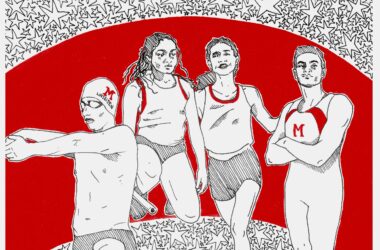
Growing the game: The importance of the Olympics to women’s hockey

On Sunday, Feb. 6, an article titled “Why women’s hockey doesn’t belong in the Olympics” was published—and no, it was not by the Onion. A columnist at the Toronto Star berated women’s hockey, arguing that because Canada and the United States dominate the sport at the Olympic level, the women’s team simply does not deserve to play. The columnist further insulted the sport, calling Olympic women’s hockey another form of “affirmative action” and a “cheap medal.”

What are the Olympics for, if not to put the talents of the most skilled athletes in the world on display? The speed and calibre of the women’s game is the best it has ever been, with achievements extending well beyond those of the North American teams. This is why women’s hockey deserves to be broadcast on the world stage. A team’s purported skill differential is not a reason to dismiss every player’s dedication to the game.

Jenni Hiirikoski, a 34-year-old Finnish defenceman, was ranked as a top-three generational player by the Athletic. As a member of the national team for 20 years and the captain for the last 10, Hiirikoski has averaged more than 25 minutes a game throughout her international career and has appeared in 75 world championship games—more than any other women’s player. 

Alina Müller, a 23-year-old forward for Switzerland, is at her third Olympics in Beijing this year, with two Patty Kazmaier nominations to her name after lighting it up with the Northeastern Huskies since 2018. 

Klára Peslarová, the 25-year-old goalie for Czechia, put on an outstanding performance in the Olympic quarter-final against the United States this year, making 56 saves on 59 shots. How could the world not want to watch that? 

On the McGill women’s hockey team, the Olympics are a huge motivating factor for highly skilled players. The Martlets’ associate coach, Katia Clément-Heydra, emphasized the importance of the Olympics as an attainable goal. 

“If you look at TSN, there’s no women’s sports at night,” Clément-Heydra said in an interview with The McGill Tribune. “Having that recognition [at the Olympics] brings our value up. We’re sold short, because no one knows about us. No one recognizes us as being elite because we’re women.” 

Clément-Heydra also stressed the lack of professional opportunities for women’s hockey.

“We have some graduating players that are close to the top elite athletes of the country, but there are not a lot of places for the girls to play [professionally] right now, unless it’s going overseas,” Clément-Heydra said. “I see so many girls that are so good at hockey retire after university, just because they’re not in a city where there is a [professional] team. It’s really important to have the Olympics, but the next piece would be more investment in women’s professional hockey.” 

A peak audience of 1.3 million people watched the Canada vs. U.S. women’s hockey game on Feb. 7, drawing CBC’s largest late night audience so far this Olympics. 

Inconsistent and inadequate television coverage of women’s hockey at the professional and collegiate levels across North America has resulted in the Olympics being the single moment of exposure for many fans. The Olympics remain one of the only opportunities for many to discover international stars and watch hometown favourites such as Mélodie Daoust, a McGill graduate. 

“The product is there,” Clément-Heydra said. “The girls are really good. It’s TV [that] people are going to watch.”

Currently, two professional women’s leagues exist in North America: The Premier Hockey Federation (PHF), formerly known as the National Women’s Hockey League, and the Professional Women’s Hockey Players Association (PWHPA), which is a hybrid between a league and players union. The two leagues remain divided in their abilities and demands, with the PHF being unwilling, or unable, to provide players with the necessary health benefits, living salary, and professional hockey infrastructure the PWHPA is demanding. The NHL’s statement that they would only support a united women’s league in combination with the PHF’s deal with ESPN+ has created an incentive for the two to come to an agreement. 

Until there is a cohesive professional league, the Olympics is a vital event to the continued growth of the women’s game. It’s beyond time to drop the age-old, sexist debate over whether or not women’s hockey belongs, and focus on enjoying the incredible display of skill at the 2022 Olympics.  

McGill, News, SSMU

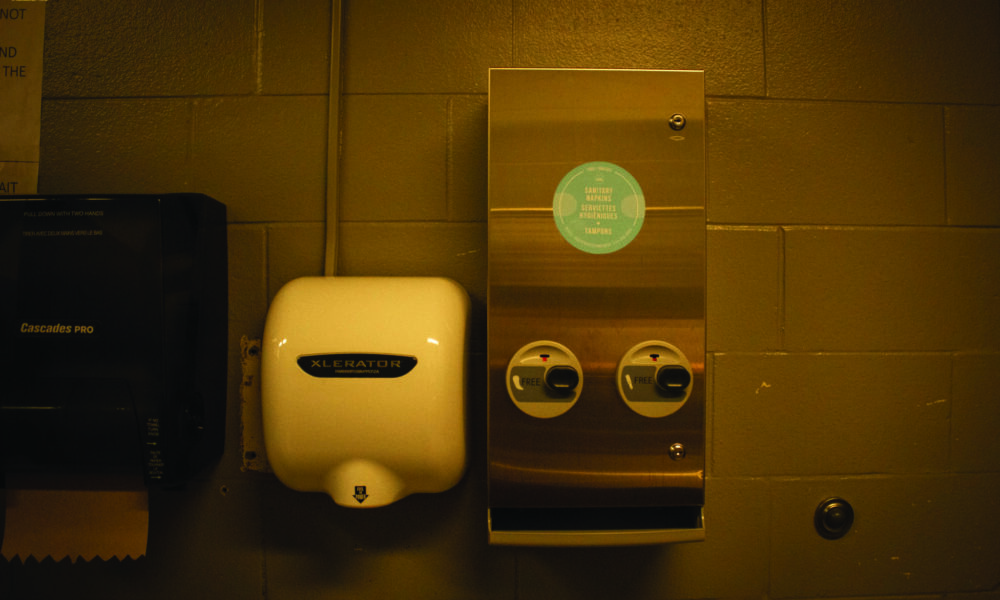
Menstrual product dispensers empty or missing across campus

The McLennan-Redpath library complex, the Leacock building, and the Bronfman building, among other high-traffic buildings on McGill’s campus, are lacking the menstrual products promised by the Students’ Society of McGill University (SSMU). An investigation conducted by The McGill Tribune the week of Feb. 8 found the majority of dispensers empty—or missing altogether. Of the 10 bathrooms in McLennan that the Tribune checked, all dispensers in the five women’s bathrooms were empty and the five men’s bathrooms had no dispensers. 

In 2016, the SSMU passed a motion establishing the SSMU Menstrual Health Products project, an initiative that would provide free menstrual products on campus. The project will run until McGill or Quebec declares the products “necessary goods” upon which menstrual products would be supplied in all washrooms for free.

The non-opt-outable ancillary fee funding the project helps cover the cost of purchasing the products, installing the dispensers, and paying the wages of the project’s part-time SSMU staff—the menstrual health commissioner and two menstrual health coordinators. The student fee that funds the project increased in 2020, jumping from $0.90 to $2.40 per semester to account for greater expenses.

In an interview with The McGill Tribune, SSMU vice-president (VP) University Affairs Claire Downie stated that the project has been on pause since December 2021, which is why the Tribune found that only three out of 22 bathrooms checked on campus had menstrual products. Downie explained the hiatus is due to strict COVID-19 restrictions limiting access to the University Centre, where the project is coordinated. 

“We had the planned pause for the winter break and the holiday closure of the SSMU office, so we’ve been on pause for around a month,” Downie later wrote in an email to the Tribune. “The menstrual health staff were offered remote work relating to the SSMU menstrual products policy during the pause.”

Downie called attention to the financial burden of purchasing menstrual products, highlighting  the importance of having them widely available on campus.

“There is an additional huge lifetime cost imposed on people who menstruate,” Downie said. “If just a couple dollars every semester for a student can reduce that burden I think that’s a really awesome way to do it. These products should be free and accessible everywhere. If we can be a small part of that on campus, I think it is well worth doing.” 

Anaïs Pronovost-Morgan, U3 Arts and co-director of Monthly Dignity, a non-profit tackling period poverty in Montreal, applauded the SSMU initiative. Yet, she also acknowledged that the responsibility of providing menstrual products should fall on institutions, not student leaders. 

“This should not be a student initiative, it should be an institutional responsibility,” Pronovost-Morgan said in an interview with the Tribune. “It should be [McGill’s] responsibility to provide toilet paper, soap, and menstrual products in bathrooms [….] It is just as debilitating to not have toilet paper as to not have menstrual products. It is just as uncomfortable and awkward. There are laws that you have to provide toilet paper, it just doesn’t apply to menstrual products.” 

McGill media relations officer Claire Loewen informed the Tribune that kiosks at the Student Wellness Hub are supposed to provide menstrual products, but that their operations have been paused since the “earlier days of the pandemic.”  

“The Student Wellness Hub has provided students with complimentary menstrual products through health promotion kiosks across Campus since 2018,” Loewen wrote. “We plan to resume this service when we can safely do so. The kiosks began as an initiative to ensure McGill students have access to free health and wellness products to promote healthier living during their studies.”

Acknowledging that the supply of menstrual products on McGill’s campus is “patchy,” Pronovost-Morgan argued that menstrual products should be widely available on campus regardless of the pandemic.

“It is a question of feeling safe and having the products you need, where you need them, and when you need them,” Pronovost-Morgan said. “Having the products available in schools is important because it permits people to live their normal lives, to not be stopped, or to not feel ashamed for forgetting to bring menstrual products with them [….] With issues from supply chains, people need these more than ever. Periods never stop, pandemic or no pandemic.”

Arts & Entertainment, Books

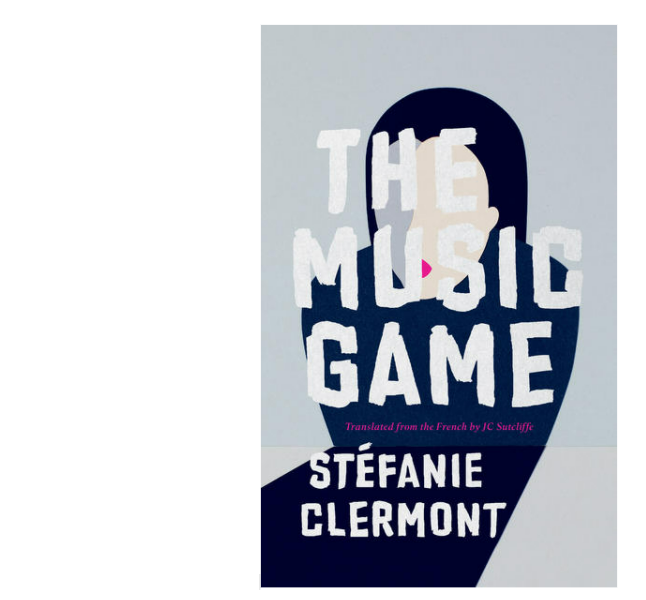
‘The Music Game’ explores the challenges and joys of adulthood

Transitioning into adulthood is never an easy feat; it comes with the anxiety of an uncertain future in a world of independence and responsibility that is still unfamiliar. The English translation of Stéfanie Clermont’s debut novel The Music Game, released on Feb. 8, perfectly captures the dread of being stuck in the awkward in-between phase that is young adulthood. 

Originally published in 2017 as Le jeu de la musique, Clermont’s novel won the Quebec Arts Council’s prize for a new work by a young artist in 2017, the acclaimed Ringuet Prize of the Quebec Academy of Arts and Letters in 2018, and the Adrienne Choquette Prize for short stories in 2018. Born and raised in Francophone Ontario, Clermont spent her early 20s traveling around Canada and the United States before settling in Montreal.  

Clermont’s nomadic experience inspired her novel’s main character, Sabrina, who finds herself lost in her adulthood as she puts down roots in Montreal after years of travelling around North America. From her childhood spent in Ottawa with her best friends Céline and Julie to her adulthood working minimum-wage jobs in Montreal, Sabrina navigates life with relatable incertitude.

As both a novel and short story collection, The Music Game’s structure is what sets it apart. Each chapter tells a self-contained story from the point of view of someone within Sabrina’s inner circle, be it a long-lost friend or a neighbour. Hitchhiking from perspective to perspective, the narrative voice, like the main character, travels from Ottawa to Montreal—with a quick detour to an anarchist commune in Oakland, California.

The beauty of The Music Game is its familiarity: Each story relates emotions and adventures that are relatable and relevant to the Franco-Canadian millennial experience. The stories perfectly capture the struggle of a generation forced into activism during the 2012 Quebec student’s protests, and how the abrupt ending of the protests left Quebecois young adults hungry for social change. Clermont’s reflection on activism is skillfully nuanced, exploring both the hopefulness and cynicism that often come with political engagement. 

The novel covers a broad range of social issues without belittling any of them. Each narrator navigates distinct, but interrelated topics, touching on socio-economic struggles, racism, mental health struggles, and sexism. One of the recurring characters is Sabrina’s best friend Céline, a white upper-class graduate student who perfectly encapsulates the practice of performative activism. Vincent, another member of Sabrina’s friend group, is a tragic figure who hides his depression and suicidal thoughts behind a know-it-all façade. Other characters only appear for a chapter or two, like Céline’s neighbour Cassandra, a survivor of domestic violence, and her roommate Kat, a single mom who experiences constant racist microaggressions. The novel’s main theme, the hardships that accompany the transition into adulthood, ties these stories together while respecting the plurality of characters’ diverse, intersectional experiences. 

The strength of The Music Game lies in its impeccably realistic characters. Despite the many narrators whose voices come and go, each has a defining personality and distinct style, making the reader feel as if they’ve known them for years. 

While the English translation may lack certain subtleties of Franco-Canadian patois, The Music Game remains a compelling read for all non-French speakers who wish to plunge into Clermont’s world. It is a perfect introduction to millennial Quebecois culture, and filled with fun easter eggs for those already familiar with it. 

A previous version of this article incorrectly spelled the author’s last name, Clermont, and the book’s title, The Music Game. The Tribune regrets these errors.

Off the Board, Opinion

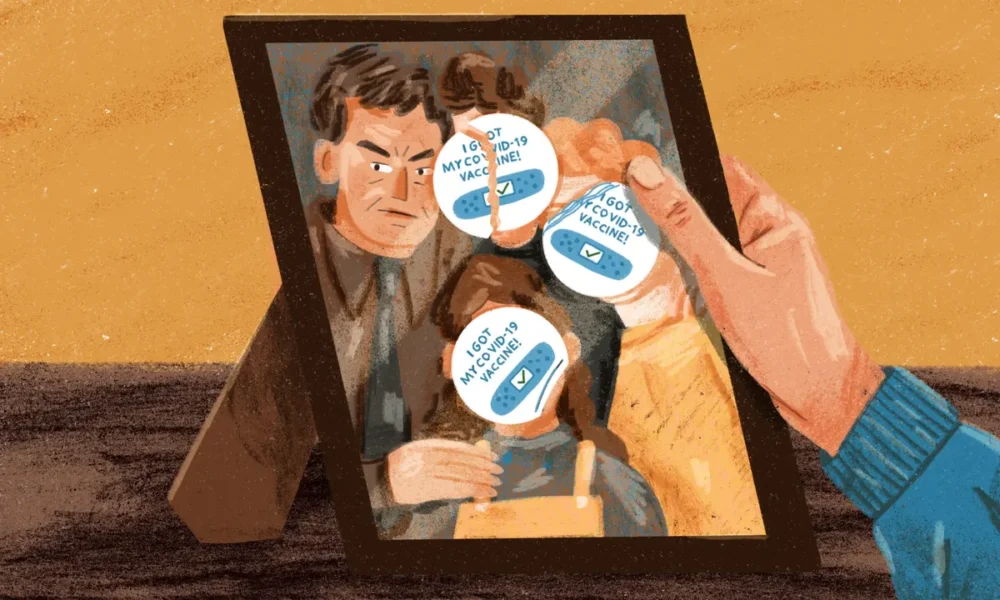
Attempting to bridge the gap: A family divided by COVID-19

At the beginning of the COVID-19 pandemic when we were all shut into our homes, washing our groceries when we got home from the store and buying every disinfectant we could get our hands on, everyone in my extended family agreed that we had to do everything necessary to keep our loved ones safe. However, as the pandemic evolved with the introduction of vaccines, vaccine passports, masking regulations, and travel restrictions, our opinions began to differ. Soon, it felt like our disagreements about COVID-19 were unwinding our once tight-knit group.

When the COVID-19 vaccine finally became available for those 18 years and older, I rushed to clicsanté.ca—the Quebec government’s online platform for booking appointments through the public health-care system—and registered to receive my first dose of the Pfizer-BioNTech vaccine

One of my uncles and one of my aunts decided they would not be getting the vaccine. Although they decided to do so for personal reasons, they were ones that I could not understand. Although initially their decisions had little impact on me since the world was under lockdown, the introduction of vaccine passports complicated things. In October 2021, my sister turned 18 and wanted to go to a restaurant, all of which were open to fully vaccinated people. But, my unvaccinated uncle and aunt were not able to join us, and their decisions resulted in a celebration all too similar to those we had during lockdown, where those who came to the house kept their distance. 

The debate was tough on my sister, and we discussed the impact that the differing opinions were having on our ability to spend time together. The issue grew from there, as my aunt and uncle became increasingly critical of vaccine passports and booster shots. When the Freedom Convoy began, my aunt agreed with its initial mission, but has stopped talking about it since it took a violent, disrespectful turn. Tensions like these have resulted in my extended family barely speaking with each other, except for sending non-political messages like “have a good day.” 

My family is not the only one struggling with strain caused by differences in opinion. Multiple news sources have run stories on families disagreeing and friendships ending over standpoints on vaccination. Public safety and personal rights in the time of COVID-19 have become two of the most politicized and polarizing debates in recent years. People have been forced to confront opinions that are vastly different from their own and the way that this affects their relationships with others. 

For example, some believe that the vaccine mandate imposed throughout Quebec infringes on individuals’ rights to personal liberty, as determined by section seven in the Canadian Charter of Rights and Freedoms. Despite the urge to ignore those we disagree with, navigating the cleavages that have emerged during the pandemic remains important. Ultimately, it is very likely that the pandemic will eventually end and vaccine mandate opinions will become inconsequential, and I do not want to lose my family because of this thing of the past.

The first step, from my experience, is recognizing and respecting that people will ultimately have differing opinions, whether or not they are right or based on facts and research. Disagreement can be healthy, but arguing intensely with someone has been proven to reinforce opinions, not change them. 

I have also learned that empathy is key. Mending relationships goes beyond recognizing the differences that exist; it requires understanding. I know now that my aunt made her decision because she believes it is what will be best for her children. I do not agree with her, and I do not think I ever will—I believe in the science supporting vaccination—but I respect and understand that she is doing what she thinks will keep her children safe. I remind myself of this when the topic of COVID-19 comes up in casual conversation, when we actually see each other. 

Going forward, treating each other with dignity must be a priority. At the end of the day, we are all trying to get through the COVID-19 pandemic and doing so united would be much better than bitter and divided.

Arts & Entertainment, Pop Rhetoric

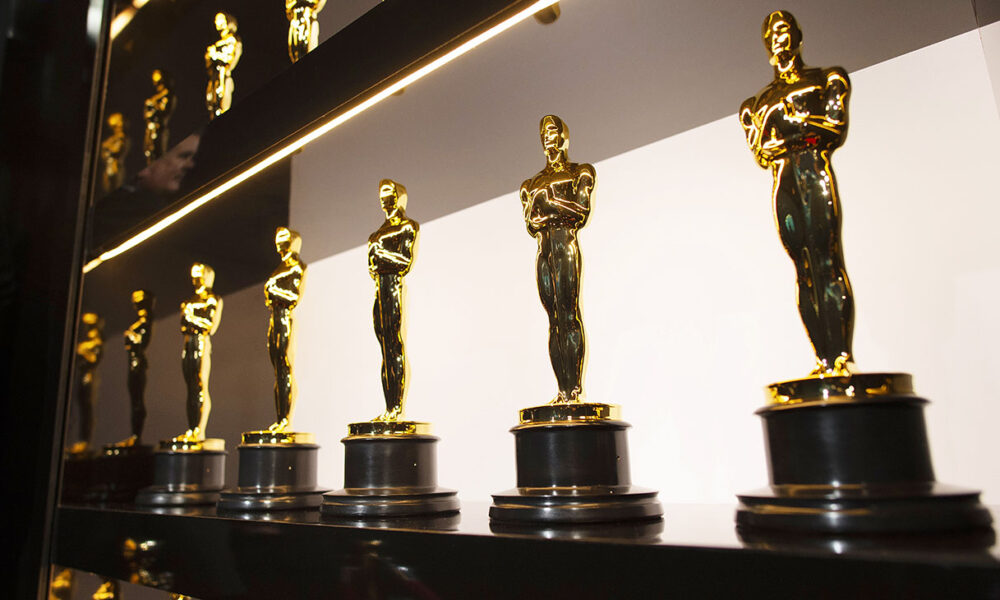
2022 Oscar nominations: Winners, losers, and snubs

After yet another long and tumultuous wait, this year’s Oscar nominations have been released—and I, for one, am pleasantly surprised. With the past year yielding a wide variety of films from across the globe, the 94th annual Academy Award nominations recognized an impressive collection of well-deserving work. It can be hard to know what’s worth your time, so here are the best and worst nominations of the show, with predictions of who will take home the top prize. 

Netflix took the biggest wins this year, coming away with a whopping 27 nominations, including 12 for The Power of the Dog, the most for any individual film this year. They also have two films in contention for Best Picture: The aforementioned The Power of the Dog and previous Oscar winner Adam Mckay’s Don’t Look Up. The other notable winner is Danish film Flee, which is the first film to be nominated for Best International Feature Film, Best Animated Feature, and Best Documentary simultaneously. Netflix’s final winner is the entire Best Supporting Actress category—and wow. Every performance was well deserving of a nomination. From Jessie Buckley in The Lost Daughter to Ariana DeBose in West Side Story (2021), this category may be just near impossible to predict. 

Unlike the Best Supporting Actress category, the biggest loser of the nominations was the Best Actress category. Putting aside the questionable nomination for Nicole Kidman’s performance in Being the Ricardos, the category fails to acknowledge any break-out performer. In a year with two truly excellent first-time performances from Alana Haim in ​​Licorice Pizza and Rachel Zegler in West Side Story (2021), the oversight is not only an unjust but a painfully dull decision. The last loser is arthouse film distributor A24. Known for their consistent, exceptional artistry, A24 films are typically received with warm audience reactions and mass critical acclaim. With their impressive slate of 2021 films including Red Rocket, Zola, C’mon C’mon, and my personal favourite The Green Knight, it’s almost incredible how they managed to accumulate so few nominations—a mere three for The Tragedy of Macbeth​​

In addition to the broader categorical snubs, there were quite a few individual oversights in other nominations. Denis Villeneuve definitely should have received a Best Director nomination for Dune (2021). The Academy has been traditionally hesitant to acknowledge the achievements of sci-fi and horror films, such as Ari Aster’s Midsommar, which wasn’t nominated, and The Matrix, which only received craft awards. Although Dune (2021) did break through by receiving an astounding nine nominations—including Best Picture—Villeneuve should have been recognized for his brilliant handling of adapting such a highly technical novel. 

Now that I’ve thoroughly complained about the nominees, or lack thereof, what do I think will actually happen on Hollywood’s biggest night? As passionate as I am about smaller films like Drive My Car and CODA, I predict Netflix will receive Best Picture, and we’re looking at a The Power of the Dog vs Don’t Look Up showdown for the top prize. Although Belfast seemed to be a strong contender earlier in the awards season, winning a Golden Globe at the start of this year, it fell short in nominations compared to other films, suggesting that it might have fallen into third place. 

In terms of viewing recommendations, for both personal enjoyment and winning that Oscar pool, The Power of the Dog, Worst Person in the World, Licorice Pizza and Drive My Car are my top choices. Slightly less relevant, but still excellent films you should seek out are CODA, The Lost Daughter, and West Side Story (2021). I would recommend skipping Don’t Look Up as well as ​​Being the Ricardos, because there are far superior films nominated that are more worth your time. No rush, though: The Oscars telecast will air on Mar. 27, so there’s plenty of time to catch up with all the nominees and craft your opinions for who will take home what.

Commentary, Opinion

Standardized testing is a perpetuation of white supremacy

As students near the end of their degrees, whether high school or university, many opt to continue their education. And for those whose dreams involve college in the United States, law school, or medical school, a terrifying barrier to entry stands in their way: Standardized tests. Despite being known for their difficulty, their most troubling characteristics are often overlooked, including their racist origins and the way they systematically impede marginalized people’s access to further education. A system conceived to benefit wealthy white men, standardized testing has continued to create additional barriers to entry for those who are already disadvantaged by the institutionalized racism present in most universities. The fight for equal access and opportunity to post-secondary education must include the removal of standardized testing from the process. 

The precursor to most standardized tests was the Scholastic Aptitude Test (SAT), adapted from the Army Alpha—a test that was supposed to evaluate future cognitive abilities but, in reality, reinforced white male cultural biases. The College Board commissioned Carl Brigham, a noted white supremacist, anti-immigrant eugenicist, and segregationist, to create the SAT. His “research” claimed that African-Americans were on the “low-end” of a supposed racial, ethnic, and cultural hierarchy. Hence, the creation of standardized tests is inextricably tied to intellectual racism, separating different “intelligence levels” under the guise of science to falsely separate races. Standardized testing is a system created by and for white men: Knowledge that is common to white men given their life experiences and expected education levels is used as the baseline to test the intelligence and future potential of all students.   

Today, standardized testing is mandatory to pursue many career paths. There is virtually no acknowledgement of the documented advantage that high-income white men continue to have on these types of examinations, whether it be the Law School Admissions Test (LSAT), the Graduate Management Admission Test (GMAT), the SAT, or the American College Test (ACT). These tests are “norm-based,” which, when the norms are biased toward majority groups, means they reflect the knowledge of white populations. 

Another major issue with these tests is their financial barrier. Prep programs, which often exceed $1,000 per course, are much more accessible for wealthy families. For many lower-income families, where racial minorities are disproportionately represented, these resources are out of reach. Further, the LSAT costs $200 to take, a steep price that can discourage some participants from retaking the exam to achieve a higher score. 

Otherwise, there are systemic factors in the tests that make it easier for certain people to excel. For example, according to the Law School Admissions Council’s own statistics, white people comprise the largest percentage of test takers and consistently have the mean highest LSAT scores, while African American and Puerto Rican test takers have the lowest. Some explanations offered for this include the percentage of higher-scoring populations in high-income schools and neighbourhoods, and the way that this knowledge base is considered the norm. Studies have also shown that by the age of 10, many Black students internalize racial biases, which often include negative academic stereotypes that can result in a paralyzing fear of underperformance in stressful testing environments. While the hours in the exam room with nothing but pencils and an extra sheet of lined paper are supposed to promote a fair environment, people of different backgrounds and circumstances experience those three hours in vastly different ways. Three hours of a gruelling test embodies the effects of three centuries of exclusionary testing. On top of racial inequalities, standardized tests assume perfect fluency in the English language, resulting in a major disadvantage toward those whose first languages are not English. 

The inequalities that seep into standardized testing reflect those that minority populations face in their everyday lives and continue to act as barriers to upward mobility. Some schools have made changes to mitigate these, such as Northwestern University and Massachusetts School of Law, which no longer require LSAT scores for admissions. In Quebec, schools including McGill recognize the disadvantage to non-native English speakers and thus do not require MCAT or LSAT results for admissions. Schools must move away from this flawed system based on a single arbitrary test that does not accurately predict success in law school. Instead, they should start using holistic applications, equally considering grades, personal statements, work experience, and even extracurriculars. Just acknowledging these problems will not fix the racist and classist problems inherent to standardized testing. Since standardized tests were created to reinforce these differences, they must be removed from the admissions process.

McGill, News

$5-million donation launches development of Laidley Centre for Business Ethics

McGill announced on Feb. 2 that David Laidley (BCom ’67), chairman emeritus of Deloitte LLP, donated five million dollars to establish the Laidley Centre for Business Ethics, which will be part of the Desautels Faculty of Management. According to Desautels communications manager Leilani Ku, the fledgling centre is in its early stages.

“There are still many elements to be put in place, including the establishment of structure and objectives,” Ku wrote in an email to The McGill Tribune. As of yet, there is no one slotted for the role of director.

Matias Font is a first-year master’s student in business administration (MBA) and vice-president External of Desautels Graduate Student Society (DGSS). He says the donation is especially meaningful coming from inspiring alumni like Laidley because he was the one to acknowledge the lacking business ethics component of management education. 

“There was a gap and he’s willing to close that gap. Bringing all that knowledge to us is really important,” Font said.

The Laidley Centre is the first of its kind at McGill, but other Canadian universities began establishing similar centres as early as 1988 when the Clarkson Centre for Business Ethics at the University of Toronto’s Rotman School of Management was founded. Anish Umasuthan, U3 Management and vice-president Internal of the Management Undergraduate Society (MUS), noted that Desautels does not currently devote significant attention to ethics.

“I haven’t had much exposure to [business ethics] as a whole or to the Laidley Centre,” said Umasuthan. “We do integrate sustainability and ethical dilemmas into our classes, but a class that’s solely focused on ethics doesn’t fully exist outside of MGCR 360 [Social Context of Business].”

Unless students voluntarily participate in ethics-related case competitions outside of the classroom, MGCR 360 is the only ethics training required of Desautels undergraduates.

“The professors in MGCR 360 are great,” Umasuthan said. “They definitely make the topics adjustable for […] people who are more quant, [who] are not going to enjoy writing essays or doing readings, which is more arts focussed. But we would benefit from implementing business ethics a little more in some other classes.” 

According to Font, the graduate program in business administration also lacks exposure to ethics discourse. Though McGill hosts workshops at the beginning of the year introducing multinational MBA students to ethics in the Canadian cultural and environmental context, the bulk of the instruction derives from external experiences, such as internships.

“We have a good onboarding process, but looking back, I don’t think it should be taught only once or twice,” Font said. “Every semester, every year, we need […] to refresh the idea. Continuous learning is important and would be the next step.”

Font says the Laidley Centre is a welcome development, especially for a generation that is heavily invested in environmental, social, and corporate governance (ESG), as well as equity, diversity, and inclusion (EDI).

“So many students want to have an impact in ESG, they consider EDI, and how we could change things from the inside,” Font said. “The centre […] is for people that are going to be in various positions or even start their own companies. And what’s better than realizing that a person started their company with a social purpose?”

To Umasuthan, business ethics is not an oxymoron. While businesses can be unethical, he believes it can also be used for social good.

“You can make the argument that finance as a whole is destructive, but ultimately we are working in the system that we have, and [change is] going to be incremental,” Umasuthan said. “It’s hard to predict how exactly people will act in the real world once they leave Desautels, but implementing little bits of ethics here and there is helping change the narrative on what business should look like, and what profit-building means to people and to companies.”

Arts & Entertainment, Film and TV, Pop Rhetoric

Fact or fiction? Creative liberties in biopics

Biographical movies are not a recent phenomenon. From Lawrence of Arabia to Malcolm X, biopics in modern cinema have consistently met commercial success, as audiences seem to have an interest in seeing the lives of famous figures dramatized. But there is always the risk of biopics misrepresenting the lives of those who have passed. How then does one navigate the tension between telling a compelling story and maintaining historical accuracy? Ultimately, script writers can afford themselves creative freedom in crafting an entertaining story, but should still uphold a standard of realism and accuracy.

Take, for instance, Amadeus, a film about the life of Wolfgang Amadeus Mozart and his rivalry with the composer Antonio Salieri. The costumes in the movie are grand and colourful, the set pieces magical; the movie gives an enchanting, lighthearted depiction of the Age of Enlightenment in Europe. There is, however, a major inaccuracy here: The historical rivalry between Mozart and Salieri was not as sensationalized as the movie portrays—in fact, it was likely based on a rumour. But would audiences want to see a more tame depiction of Mozart? Probably not. Despite the movie’s major historical inaccuracies, it is frequently listed as one of the best biopics of all time

This trend of prioritizing theatricality over accuracy continues in biopic production today. Bohemian Rhapsody and Rocketman—recent biopics covering the careers of Freddie Mercury and Elton John, respectively—take major creative liberties in depicting real-life events. For instance, Rocketman portrays Elton John’s father as neglectful and unloving, but this fact is heavily contested by John’s own half-brother. In a different, but no less problematic turn, Bohemian Rhapsody diverges from reality by downplaying Mercury’s bisexuality and making it seem as if the band broke up in the early 1980s before their show at Live Aid, which is not the case. In both instances, historical accuracy is diminished in favour of crafting a story for the audience’s enjoyment. 

But are there times when theatricality can come before accuracy? With Bohemian Rhapsody, former band members have stated that they liked how the movie turned out, including guitarist Brian May and drummer Roger Taylor. But who is to say that Freddie Mercury would have approved of the movie—and its portrayal of his sexuality—if he were alive today? Closeting the main character is rather unethical, so situations like this need to be taken into account when writing the script. 

These ethical decisions are rarely easy to make. Recall the success of Amadeus, which received critical praise and won numerous awards despite its historical inaccuracy. Mozart did not give his consent to create the movie, and producers today continue to fail to obtain the consent of the figures in question, as seen with the controversy concerning Pamela Anderson’s recent biopic series. Conversely, another celebrated biopic, Steve Jobs, received criticism for inaccurately portraying its titular character by highlighting the negative aspects of his life to make him appear as less loving than some people said he was. Both films’ creative liberties provide theatricality that audiences tend to like. But, in this case, some viewers actually did care about the biopic’s rightful portrayal, hinting at the possibility that perhaps the time between a person’s death and the creation of the movie changes viewers’ opinions on the importance of a movie’s historical accuracy. Historical fallacies in biopics are applied rather arbitrarily, so an objective moral solution to the dilemma of “fact or fiction” in cinema is muddled.

However, moral arbitrariness is not always a bad thing. Unless egregiously inaccurate, film creators should allow themselves creative liberties as they see fit. The inaccuracies of Bohemian Rhapsody crosses this paradigmatic line, as closeting the main character fundamentally changes who is portrayed on screen—here, fact should be preferred over fiction. On the other hand, the less serious and more playful inaccuracies of Amadeus are a classic example of when it is acceptable for fiction to rule over fact.

Audiences should be able to enjoy cinema, but some degree of historical reality should also be preserved. Although these two tend to be at odds in an industry specifically made to be sensational, entertainment value seems to take precedence—sometimes for the better and sometimes for the worse.

Biographical movies are not a recent phenomenon. From Lawrence of Arabia to Malcolm X, biopics in modern cinema have consistently met commercial success, as audiences seem to have an interest in seeing the lives of famous figures dramatized. But there is always the risk of biopics misrepresenting the lives of those who have passed. How then does one make sure that deceased figures would approve of how they are represented on screen? Ultimately, script writers can afford themselves creative liberty in crafting an entertaining story, but should still uphold a standard of realism and accuracy.

Take, for instance, Amadeus, a film about the life of Wolfgang Amadeus Mozart and his rivalry with the composer Antonio Salieri. The costumes in the movie are grand and colourful, the set pieces magical; the movie gives an enchanting, lighthearted depiction of the Age of Enlightenment in Europe. There is, however, a major inaccuracy here: The historical rivalry between Mozart and Salieri was not as sensationalized as the movie portrays—in fact, it was likely based on a rumour. But would audiences want to see a more tame depiction of Mozart? Probably not. Despite the movie’s major historical inaccuracies, it is frequently listed as one of the best biopics of all time

This trend of prioritizing theatricality over accuracy continues in biopic production today. Bohemian Rhapsody and Rocketman—recent biopics covering the careers of Freddie Mercury and Elton John, respectively—take major creative liberties in depicting real-life events. For instance, Rocketman portrays Elton John’s father as neglectful and unloving, but this fact is heavily contested by John’s own half-brother. In a different, but no less problematic turn, Bohemian Rhapsody diverges from reality by downplaying Mercury’s bisexuality and making it seem as if the band broke up in the early 1980s before their show at Live Aid, which is not the case. In both instances, historical accuracy is diminished in favour of crafting a story for the audience’s enjoyment. 

But are there times when theatricality can come before accuracy? With Bohemian Rhapsody, former band members have stated that they liked how the movie turned out, including guitarist Brian May and drummer Roger Taylor. But who is to say that Freddie Mercury would have approved of the movie—and its portrayal of his sexuality—if he were alive today? Closeting the main character is rather unethical, so situations like this need to be taken into account when writing the script. 

These ethical decisions are rarely easy to make. Recall the success of Amadeus, which received critical praise and won numerous awards despite its historical inaccuracy. Mozart did not give his consent to create the movie, and producers today continue to fail to obtain the consent of the figures in question, as seen with the controversy concerning Pamela Anderson’s recent biopic series. Conversely, another celebrated biopic, Steve Jobs, received criticism for inaccurately portraying its titular character by highlighting the negative aspects of his life to make him appear as less loving than some people said he was. Both films’ creative liberties provide theatricality that audiences tend to like. But, in this case, some viewers actually did care about the biopic’s rightful portrayal, hinting at the possibility that perhaps the time between a person’s death and the creation of the movie changes viewers’ opinions on the importance of a movie’s historical accuracy. Historical fallacies in biopics are applied fairly arbitrarily, so an objective moral solution to the dilemma of “fact or fiction” in cinema is muddled.

However, moral arbitrariness is not always a bad thing. Unless egregiously inaccurate, film creators should allow themselves creative liberties as they see fit. The inaccuracies of Bohemian Rhapsody crosses this paradigmatic line, as closeting the main character fundamentally changes who is portrayed on screen—here, fact should be preferred over fiction. On the other hand, the less serious and more playful inaccuracies of Amadeus are a classic example of when it is acceptable for fiction to rule over fact.

Audiences should be able to enjoy cinema, but some degree of historical reality should also be preserved. Although these two tend to be at odds in an industry specifically made to be sensational, entertainment value seems to take precedence—sometimes for the better and sometimes for the worse.

Read the latest issue

Read the latest issue