

Since 1990, more than 75 per cent of Conference Championship victors have been seeded in the top two. It has been almost an entire decade since an NFL team seeded third or lower have even appeared in the Super Bowl—the last time being the Baltimore Ravens in 2013. This season may see a continuation of these steady trends, but two teams may disrupt these tendencies come Super Bowl LVI on Feb. 13.
The Top Seeds
#1 Green Bay Packers
The Packers are led once again by the reigning MVP and quarterback Aaron Rodgers, who is looking to return to his first Super Bowl since 2010. The future Hall-of-Famer has lost four straight NFC Championship Games, but with a number one seed and a bye in the wild card round, the path to the ultimate game is possibly the most straightforward of Rodgers’ career. With All-Pro left tackle David Bakhtiari returning right before the playoff push, the Packers are not only the favourites to win the conference, but the front-runners to bring home another Lombardi to “Titletown.”
#2 Tampa Bay Buccaneers

Led by the “G.O.A.T” Tom Brady, the Buccaneers remain poised to lift the Lombardi trophy for the second year in a row, a feat that has only been achieved once this century, accomplished by the very same quarterback almost two decades ago. Despite many believing Tampa Bay to be the favourite to win the NFC, the Bucs have shown serious lapses in the latter half of the season, and will likely have to go on the road in the conference championship game again to capture a berth in Super Bowl LVI.

Potential Spoiler – #4 Los Angeles Rams
The Rams have returned to their magnificent form under head coach Sean McVay’s first two seasons, with 2009 number one overall pick Matthew Stafford and NFL leading receiver Cooper Kupp driving one of the top offences in the league. On the other side of the ball, three-time Defensive Player of the Year—and the most dominant player in all of the NFL—defensive tackle Aaron Donald has spearheaded a superb defence along with first team all-pro cornerback Jalen Ramsey. Although the Rams have talent loaded on both sides of the ball, the history of their quarterback in the playoffs has raised questions about the potential of a Super Bowl return for Los Angeles.
American Football Conference (AFC)
#1 Tennessee Titans
For just the second time since their heart-breaking SuperBowl XXXIV defeat in the 1999 season, the Tennessee Titans have finished the season atop the AFC. Losing to Kansas City in the AFC Championship Game just two seasons ago, the Titans are looking to finally dethrone the back-to-back AFC Champions and return to the ultimate game for the first time in two decades. A team complete with strong offensive and defensive lines, and formidable playmakers on offence such as Derrick Henry, A.J. Brown and Julio Jones, the Titans boast a 7-2 record this season at Nissan Stadium, and will look to prove to the rest of the league that both this season and the future of the conference will run through Nashville.
#2 Kansas City Chiefs
A team that needs no introduction, the Super Bowl LIV champions and the 2020 AFC Champions will look to return to the big game for the third year in a row, a feat that has only been achieved once since the early 1990s by the New England Patriots. Led by former MVP Patrick Mahomes and his reliable receiving crew of Travis Kelce and Tyreek Hill, the Chiefs struggled early on this season, but have since won nine of their last ten heading into Wild Card Weekend—a trend that may seem intimidating to those trying to knock off the kings of the conference in late January.
Potential Spoiler – #4 Cincinnati Bengals
The dark horse in these NFL playoffs, the Bengals have already beaten AFC favourites Kansas City in January this season and will look for similar results through the end of the month. A strong front seven on defence and two of college football’s most recent superstars—former LSU Tigers Joe Burrow and Ja’Marr Chase—lead Cincinnati’s “new kids on the block” mentality, as head coach Zac Taylor looks to become the second-youngest frontman to win the Lombardi Trophy.
After nearly two years of the COVID-19 pandemic, opinions on the merits of online versus in-person learning tend to be passionate. Having experienced virtual learning for multiple semesters, students have adapted to different methods of schooling. With public health conditions once again necessitating online school, McGill’s return to a virtual teaching format has reignited the debate about how students learn best.
For certain music students, like Daniel Marmer, U0 Music, it’s difficult to study a subject like jazz online, because the experience of practicing an instrument in person is unmatched. Practicing in ensemble format has been put on pause until Jan. 24.
“Playing with other musicians is the most important part of learning and helps you develop the quickest,” Marmer said. “Jazz is all about conversing with the musicians you’re playing with, reacting to them and expressing yourself, and that can’t be done when you’re not playing with them live.”
Students in all faculties may have experience with other disadvantages of online learning, including the extra stress of having internet issues for reasons out of one’s control, the difficulty of forming meaningful bonds between instructors and students, and more. Such impediments of virtual learning have proven to be significant. A survey revealed that 51 per cent of Quebec university students reported higher levels of psychological distress during the Fall 2020 semester––which was remote due to the pandemic––and 56 per cent of students found online courses as a principal stressor for their diminished mental health.
Despite these drawbacks, one obvious benefit of online school is that it curbs the spread of COVID-19. This becomes especially crucial with the airborne and highly transmissible Omicron variant. In December 2021, a petition urging for final exams to be moved online circulated around the McGill community and received upwards of 3,200 signatures. The petition cited safety concerns about rising COVID-19 cases and alleged a lack of attention paid by the university toward ensuring safe and comfortable examination environments. With rising COVID-19 cases in Quebec, virtual learning allows students to earn their credits with greater reassurance for personal and communal safety.
There’s also the practical aspect of not having to commute all the way to campus for class—an inconvenience that Arantza Fernandez, U3 Arts, is grateful to be relieved of.
“I like online learning because it gives me control of what to do with my time,” Fernandez said in an interview with the Tribune. “I can choose how to spend [my time] or how to organize [my day] without taking into account transportation [to campus].”
Virtual learning has also brought students more accessible modes of learning, including recorded lectures, easier organization of work with all material in one place, scheduling flexibility, and more.
“I find with online classes I enjoy having all of the lectures recorded for me to go back to if I didn’t understand something or if I need to pause the video to finish taking my notes,” said Emma Smith, U0 Arts. “Online classes [also] teach you to be accountable for yourself and to achieve your work goals.”
For students who find it difficult or nerve-wracking to participate during in-person classes, engaging in a discussion over Zoom can be less intimidating.
“I feel calmer and more confident when I’m just alone in my room, talking,” Gabby Orle, U2 Arts, told the Tribune. “It doesn’t feel as scary as when I’m in a room and everybody is physically looking at me.”
After more than two years of the pandemic, each student—each with unique circumstances—has had their own experiences with virtual and in-person learning, making this a highly nuanced debate.
As we ease into the semester—or perhaps it’s more accurate to say, as we are thrown unwillingly into a new term—change is on the horizon. With classes online, Big Suze stepping down, and a new season of Too Hot to Handle soon to be released, there’s so much up in the air. Forget your academic advisor—The McGill Tribune is here to help you map your course of action. Find your sign below for completely accurate and not-at-all made-up astrological predictions.
Aries
This is your warning, Aries: If your professor asks you why you took their class, do not reply that it is because of them. You may be a fan, but you’ll save yourself some embarrassment if you keep that to yourself. (It’s also best not to mention the book of quotes from them that you’re currently compiling.)
Taurus
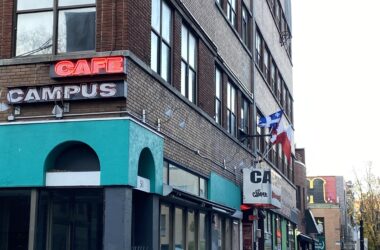
Redpath Café may be closed, but your kitchen definitely isn’t. It’s time to start going easy on the home-brewed cappuccinos, Taurus (we can feel your jitters from all the way over here).
Gemini
We’re going to go out on a limb to say that you’re not enjoying those long and verbose emails from the provost, Gemini. Are we right? We thought so. This is your sign to follow Spotted McGill (@spottedmcgill) for much-needed recaps in everyday language.
Cancer
It’s time to check your Slack DMs, because you’ve got a secret crush. Play it cool though, Cancer; you know your worth.
Leo
We can hear your sighs all the way from the Tribune office—we know you’re looking for love, Leo. If you’re searching for a sign to do something about it, look no further; why not give Datamatch a try? Be on the lookout for the matchmaking service’s 2022 edition.
Virgo
Have you noticed that all your guests leave their sunglasses on inside your apartment? They may be too polite to tell you this, Virgo, but it’s time to stop collecting those neon construction signs. We know nothing says “Plateau Chic” like a bright orange “Rue Barrée” sign, but at some point, you have to think of the guests.
Libra
This may be a long shot, but we’re sensing that you’re an Arts major. Are we right? Please let us know—we’re in desperate need of validation.
Scorpio
It’s time to stop messing around and ask yourself an important question: Do you really want to be taking The Art of Listening online? We know you’re definitely registered because you have a passion for the subject matter, so we’d hate for the quality of your education to suffer this semester.
Sagittarius
Now is looking like a great time for you to donate to Big Suze’s GoFundMe. She needs your help (especially in light of recent events).
Capricorn
Uh oh! I just spilled my decaf caramel macchiato on my charts so I can’t see what the stars hold in store for you! But if I remember correctly, it did involve some form of studying.
Aquarius
You know that personal anecdote you’re thinking of bringing up in your conference? Perhaps you’re better off keeping it to yourself. Don’t get us wrong, we certainly find your personal experiences with the Montreal Metro system of the utmost interest, but it’s worth asking yourself whether those in POLI 342 will feel the same way.
Students’ busy schedules and––mostly––amateur cooking skills makes getting takeout food a huge comfort. During another COVID-19 wave, it’s also especially important to support local restaurants—and when possible, remember to avoid corporate delivery services and order directly from businesses. For when you have no time to cook, or just want to summon a special treat, The McGill Tribune brings you six local restaurants with a wide range of delicious options that can be brought to your door.
Nouilles Zhonghua
Nothing brings comfort, especially in the winter, like a slurp-worthy bowl of noodles.
Though students might not be able to pass this quintessential noodle spot on their way to class in person with remote school, they can always bring the tastes of campus home for around $12-15 a bowl. As many students know, the noodles here are hand-pulled, giving them a chewy texture primed for flavour-soaked bites. Try their classic Lanzhou beef noodles, the oil spill noodles for extra spice, or their vegetable noodles, which ditches the meat without scrimping on umami flavour.
Bocadillo
This family-run Venezuelan spot has two locations you can order from—one in Little Italy and the other in the Plateau. Bocadillo is famous for its arepas, a South American staple bread made from cornmeal. Stuffed with a variety of ingredients such as cheese, shredded chicken, beef, egg, avocado, and even passion fruit pork, these tasty creations come in a wide selection of forms to excite your taste buds. If you’re looking to pair your meal with a dessert, try their Venezuelan caramel flan or Tres Leches. Dishes here cost around $12-14, and can be ordered through their online portal.
Qinghua Dumpling
You can find this restaurant’s dumplings at either of their locations, in Chinatown or near Guy-Concordia. They serve a large variety of dumpling flavours in sets of 15, from pork and corn, to beef and cheese, to pumpkin. For a less adventurous and more staple choice, the pork and coriander dumpling is one of the most popular menu items among locals. If you find yourself close to the area, you can also pick up some frozen dumplings or wontons to save for later meals. Though it varies depending on the filling flavour, an order typically costs around $15.
6 Green Banana Grassroots Jamaican Food
Bordering Milton Park and the Plateau, this Jamaican food spot is operating at reduced hours from 12-7 p.m., Friday to Saturday. They offer traditional dishes and vegetarian alternatives. Highlights include the jerk chicken roti and jerk tofu. Locals rave about the rich combination of slow-cooked flavours in each dish, as well as the generous portions, priced at $15.
Restaurant Queen Sheba
Located on Park Ave just steps away from Jeanne Mance Park, this venue offers a variety of hearty Ethiopian dishes, including both traditional meat stews and a vegan menu. As Ethiopian food is usually enjoyed communally, this would be a great spot to order from for a special dinner with roommates. Try the classic Doro Wat, a red-coloured chicken stew simmered in an Ethiopian red pepper sauce and topped with fresh cheese. Queen Sheba’s vegan options are just as flavourful—to share with a friend, or simply to indulge in yourself, try the Yetsom Beyaynetu, a set of three vegan dishes of your choice made complete with their freshly baked injera.
Faroujj Express
Tucked in the Galeries du Parc mall, this Lebanese food spot can be easy to miss in the underground food court if you’re not a regular. The Shish Taouk plate and Shawarma are must-tries that provide comfort without denting your wallet. Their sides—especially the crispy garlic potatoes, seasonally prepared salads, and creamy hummus—deserve their own spotlights. Just make sure to get your orders in early, as this restaurant closes at 6 p.m.
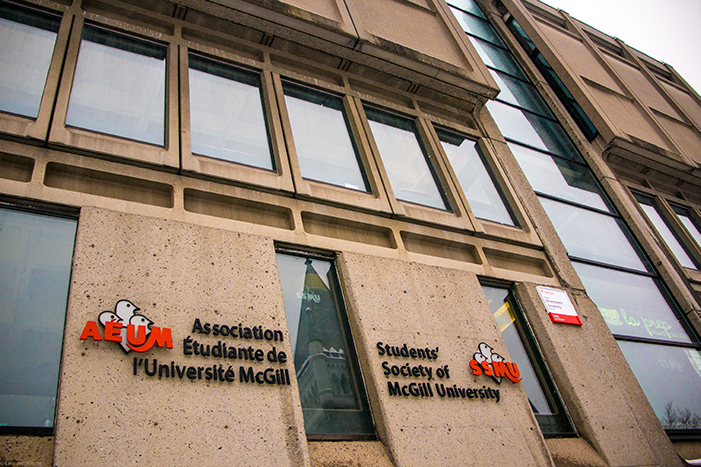
The Students’ Society of McGill University (SSMU) Board of Directors (BoD) convened on Jan. 6 with all directors present except the SSMU president, Darshan Daryanani, who has been on leave since at least Sept. 23. Directors heard vice-president (VP) University Affairs Claire Downie present a motion for SSMU to make an $8,000 purchase of respiratory N95 or KN95 masks which would be made available to students through SSMU. Details about the cost of each mask, and whether or not they will be free, is still to be decided amongst directors. Downie also introduced the idea of establishing a remote learning bursary for students in need of access to technology.
Surrounding this meeting was widespread student concern about SSMU’s inactivity regarding the president’s absence. In an email interview with The McGill Tribune, U3 Arts student Randall* said they believed SSMU’s inability to function as a support to students was due to the president’s absence from office.
“There are a lot of wonderful and talented people on the SSMU [Executive] this year, but they seem overburdened by the controversy surrounding the Society and the lack of a leading figure to help direct the organization’s efforts,” Randall wrote.
In early November, The McGill Daily investigated the president’s absence, and VP Internal Affairs Sarah Paulin asked the paper to discontinue their inquiries on the matter and to stop contacting SSMU employees. Randall argued that this, coupled with the fact that the Society has not acted to instate a new president, has had a negative impact on other student societies.
“SSMU’s inactivity over its recent controversies have forced the undergraduate societies to pick up their slack, for lack of a more polite way of putting it [….] Also, the lack of accountability [or] transparency is pretty frustrating, if not insulting at this point, to the students that SSMU claims to serve.”
In response to student concerns about SSMU’s inaction, Downie stated that SSMU executives have been able to work effectively despite the president’s leave. Downie also claimed that there is work being done behind the scenes to aid students, such as discussions about bulk-ordering COVID-19 rapid antigen tests—an initiative they ultimately decided against.
“The [SSMU] office opened back up on Monday, [Jan. 3],” Downie said in an interview with the Tribune. “There was a lot of work done over the break, but unfortunately a lot of it was just watching and waiting, because we don’t have answers from McGill.”
Yara Coussa, Legislative Council representative, showed support for Downie’s motion to make respiratory masks available for students to purchase in light of McGill’s current plan to return to in-person learning after Jan. 24. Coussa also suggested that SSMU cease buying respiratory masks if the student demand is not as high as expected.
Ultimately, the motion passed with six directors in favour and two directors against. Directors plan to discuss more details about the motion via email.
Moment of the meeting:
Downie asked speaker Alexandre Ashkir for a suspension of the Standing Rules for her motion on respiratory mask expenditures. During the ensuing debate, VP Finance Éric Sader argued the motion was being presented in a faulty manner with which he was not comfortable, and Sader stated he would rather flesh out the amount of masks they aim to buy rather than starting with a monetary amount.
Soundbite:
“Everyone seems to know someone right now who doesn’t know where they got COVID […] and that anecdotally, whatever meaning anecdotal has, tells me that this is a good time to be proactive. If students are going to be going back into these crowded environments, […] it would be a good use of student money to help people access better safety equipment.”
— VP University Affairs Claire Downie on why McGill’s current distribution of surgical masks will, in her mind, not be sufficient for the return to classes after Jan. 24.
*Randall’s name has been changed to preserve their anonymity.
In a message sent to the McGill community on Jan. 7, Suzanne Fortier announced she will be stepping down nearly one year before the end of her second five-year term as principal and vice-chancellor, effective Aug. 31, 2022.
On Fortier’s behalf, McGill media relations officer Frédérique Mazerolle, explained that, having served as McGill’s principal and vice-chancellor since 2013, it was time for a change in leadership.
“After almost a decade in this role—and with the university now entering its third century—Principal Fortier felt it was an ideal time to pass the baton to a new leader who will shape the future of our university,” Mazerolle wrote in an email to The McGill Tribune. “Until then, Principal Fortier will remain focused on building on the strong foundation of McGill University, embedded in its Mission and Principles.”
Mazerolle did not give reason as to why Fortier has chosen to step down almost a year before the end of her contract, which was set to expire on June 30, 2023.
Fortier is a two-time alma mater of McGill, receiving a BSc in 1972, and a PhD in 1976, and served as a former chair of the Natural Sciences and Engineering Research Council of Canada (NSERC). As McGill’s first francophone principal, she was selected primarily to help strengthen McGill’s connection to Quebec.
Speaking on behalf of the McGill Association of University Teachers (MAUT), Yelena Simine—assistant professor of Chemistry at McGill and VP Communications at the MAUT—told the Tribune that Fortier has widely lived up to the task.
“She has helped improve relations between McGill and the Province of Quebec, she has always made her pride in McGill clear, and has been dedicated to the cause of promoting the university,” Simine said. “During her time as principal the university became more inclusive in many ways.”
Simine was critical, however, of the way Fortier altered McGill’s governing structures over the course of her tenure.
“Collegial academic self-governance weakened further in favor of top-down managerial approach,” Simine said. “Centralization of operations has increased the everyday bureaucratic burden and led to increased burnout among faculty. We feel that the perfect successor would bring new unexpected and exciting ideas for uniting our community and will make it a point to shape McGill through collegial consultation and implementation of local initiatives and ideas.”
For Students’ Society of McGill University (SSMU) vice-president (VP) University Affairs Claire Downie, Fortier’s tenure over the course of the pandemic will be remembered as one marked by a blithe disregard of student issues.
“While I’m sure Principal Fortier accomplished a lot of work that students aren’t aware of, I think many students will remember most strongly what she did not do, things like implementing strong COVID-19 safety measures, ensuring graduate students were paid a living wage, or standing up to the provincial government when its actions directly harmed students,” Downie said. “I wish Madame Fortier the best in any future roles, but at the same time, I hope we can also acknowledge the harm caused by inaction during her tenure and push her successor to do better.”
Still, students like Juliana Malka, U3 Science, explained that while she disapproves of how Fortier has handled the past two years, she will remember her time in office with nostalgia.
“Although I have issues with how the administration dealt with the past four semesters, serving as head of an institution as diverse as McGill is no easy task, and definitely warrants our respect,” Malka said. “I remember hearing about Suzanne Fortier before applying to McGill, and now that I’m graduating and ‘Big Suze’ has announced her leave, it kind of feels like the end of an era.”
An Advisory Committee will identify and recommend possible candidates to the McGill Board of Governors with the expectation that the Board will appoint a new principal by Fall 2022.
A previous version of this article incorrectly attributed statements solely to Yelena Simine. In fact, Simine provided them on behalf of the MAUT. The Tribune regrets this error.
To prepare their readers for online conferences, The McGill Tribune unearthed scenes from various breakout rooms and class discussions over the last five years
Gender Studies
Yeah, I mean, and this is just speaking from experience, Judith Butler might be projecting a bit, don’t you think? Like we get that you perform as a member of the diverse LGBTQ community, but there’s got to be deeper meaning there. I actually used to do improv on Thursday nights at the Second City, the one in Toronto; it’s pretty exclusive if you run in improv circles, so performance is just in my blood. Here are my questions: Who is Butler performing to? Can I get a ticket to see them in action? And that obviously connects to moving hands from chest to head the world around us because there are stages and gender and women, of course.
History
No, I don’t know the date when the Treaty of Paris was signed, but I’ll tell you something more useful. I totally recognize my position of influence as a student of history, because like we study the wars and the fights for justice. It’s not just the past—it’s the present, it’s the future. I’m not so sure everyone knows that, we aren’t that simple, right. One thing I’m becoming increasingly aware of is that just because colonialism ended doesn’t always mean that it has though. So, what do we need to do? I’ll leave you with that food for thought. Maybe you could look at our history and get back to us?
English Literature
Toni Morrison, wow what an author? Right, guys? And what a name? Toni? Must have been a risk in the 1970s. polite laughter. So what was up with that woman killing her baby or whatever? That’s child abuse, and that is wrong. Period. Full stop. I’ve supported children my entire life, always taken on this sort of proto-father role, no exceptions. Did that just happen in Ohio or is that an American thing? The movie was good though. Did you know Oprah’s an actor and not just a Black woman who likes butter in her coffee? And she has a book club?
International Development Studies
We have to be reasonable here. If we accept that the purpose of development is to enact change, we have to reconsider what change and development actually mean, wouldn’t you think? What if there are some reasons that inequalities are in place? Like, that’s the economy? Isn’t that just inevitable? My point is, who am I to interfere, right? I’m, of course, only talking about Europe. That’s not true of the Middle East, Africa, most of Asia, and South America though, as they need us! If you remember correctly and pay attention to the news, you would remember that we as Canadians, as citizens of this country, set the best example for the world.
Political Science
If I could just––and I’m not going to say play the devil’s advocate, that’s bad now, I guess liberals just get what they want––speak to another perspective that is much-needed in this setting and in this cultural milieu, or cancel-culture environment if you’d put it that way, is that politicians make mistakes. Makes eye contact with every member in the conference. That’s life. That’s reality. That’s, therefore also, what politics is. Just to kind of circle back to my own life, I’ve started to realize that, like what noted theorist John Rawls says, dramatic pause we live in a society, and that hurts politics, because society links to politics and back to society.
Philosophy
I’m not going to lie, I had a pretty busy weekend. I won’t bore you with the details, but I was in the audience when Slavoj Zizek debated McGill alum Jordan Peterson, so I’d consider that an extraordinary reason for not doing the reading. I’d beg this question: What if there were 500 people instead of 5 people in the trolley problem? I’ve seen The Good Place a few times, even though I don’t think Jameela Jamil’s funny, and thus I’d argue that numbers and ethics matter in real life, especially when we are alive.
With a laughably talented cast and a whopping $75-million budget, Netflix’s original film Don’t Look Up generates lofty expectations that it ultimately fails to meet. The film follows astronomers Kate Dibiasky (Jennifer Lawrence) and Dr. Mindy (Leonardo DiCaprio)’s attempt to warn the U.S. government and general public about a comet large enough to cause mass extinction barrelling toward earth. By extension, it aims to provide social commentary on how a global population responds to, or simply ignores, crises such as the COVID-19 pandemic and climate change. Over the course of the film, the protagonists’ concern for the future of the human species meets humorously grudging resistance from characters that walk a precarious line of clichés. Don’t Look Up emphasizes the danger of apathy, and media-fuelled politics’ twisting of facts—even as morbid as imminent extinction—into headlines palatable for public consumption. The forced humour and supersaturated clichés detract from the film’s political punch, and bury the moral of the story.
Directed and produced by Adam McKay, the film’s impressive cast and contemporary relevance have attracted much buzz. Regardless of which celebrity’s appearance they anticipated, viewers flocked to Netflix’s streaming platform, amassing over 111 million hours of watch-time in the film’s first two days of release. From a laissez-faire U.S. president (Meryl Streep), to incessantly positive news hosts (Cate Blanchett and Tyler Perry), to a socially anxious billionaire (Mark Rylance), the characters are distinct in their portrayal, yet trite in their stock.
The film’s characters border on the annoying and one-dimensional. Scattered cameos of other actors—such as Ariana Grande’s musical appearance—provide little purpose other than shock value and name recognition. Numerous political allusions are made, though the most obvious is that of the U.S. president and her chief of staff, who bear semblance to the Trump family. Although Streep’s performance as the U.S. President is comedic, it is cartoony—and her son (Jonah Hill) simply fulfills the stereotype of the bland, spoiled rich kid. However, Timothée Chalamet provides genuine comic relief, and rumours that he improvised much of his role are believable. The two protagonists, Kate and Dr. Mindy, manage to narrowly subvert stereotypes: Their frustration evokes sympathy, and their flaws and character development feel authentic.
Still, after two agonizingly slow hours of brain-numbing dialogue, perhaps the most redeemable scene is the last one. It is a well executed balance of calmness and dread, aptly conveying the Everything-Is-Totally-Fine mindset with a biblical nod to the Last Supper. In the simplicity of the dinner party, an almost uncomfortable feeling of acceptance radiates out, allowing for a perfectly melancholy ending. As the rest of the film leaned heavily into satire, here it feels like it’s finally giving up, just like its characters. It is the one scene where jokes are not unnaturally forced into the script and viewers are not spoon-fed political allusions. It stands out as a different caliber of cinematography than the rest of the film.
Ironically, the film itself experiences the same struggles as its protagonists, as its own execution distracts from the main message: We are all going to die if we don’t do something soon. Don’t Look Up was advertised as a political comedy, and though jokes are littered throughout the script, it simply is not very funny. Whether intentional or not, the failed humour of the film acts as a thinly veiled coping mechanism for the societal collapse it alludes to. But as jarring as Kate’s profane explosion on live television was, it seems that seeing Timothée Chalamet sport a mullet or one too many of Jonah Hill’s cringe-worthy remarks is enough to steal the media spotlight. So, like the Dibiasky comet, it seems the moral of this film has gone right over most people’s heads.
For many undergraduates, it can be challenging to find opportunities to learn the applied skills of science, technology, engineering, and math (STEM) fields in a classroom setting. Being trapped memorizing facts only to regurgitate them during midterms and finals can quickly stifle the enthusiasm that students would have otherwise brought to the scientific community. As a result, many students at McGill search for alternative ways of practicing scientific methods and propelling their careers forward in STEM.
It can be daunting, however, to find research opportunities and co-ops without prior knowledge of the opaque inner workings of academia. Nevertheless, there are students who prevail, and hearing their stories can hopefully guide others in pursuing their own goals.
Hadrien Helfgott, a U2 student studying cognitive science wanted to get a more hands-on feel for the subject, so he contacted with his academic advisor to explore his options.
“I told my academic advisor that I was interested in labs, and he sent me an old list of labs and professors that were recruiting at the time,” Helfgott said in an interview with The McGill Tribune. “I emailed a paragraph introducing myself and I told them that I was interested in their project. [Before applying] I would read scientific articles on their project so that I had a good idea about what they did [….] The seventh professor emailed me back.”
The professor was running an experiment that required participants, so Helfgott experienced the lab as a participant before coming back to run the experiment himself. Being a participant, Helfgott explained, allowed him to gain a deeper understanding of the purpose of the experiment.
“I can’t talk too much about the experiment obviously, but it involves putting EEG caps on people and measuring their brain waves while we observe specific stimuli,” Helfgott said. “We look at how their brains respond to the stimuli and that allows us to draw our conclusions.”
Darren Li, a U1 student studying quantitative biology, holds a fair amount of experience in lab work. Having reached out to professors in his first semester at McGill, he has been assisting at the Pollock Quantitative Biodiversity Lab research lab for over six months and continues to work into his most recent semester.
“I just went on to the biology [faculty] website and chose professors that I was interested in working with. [Laura Pollock] was the first professor that I contacted and we met and talked about it,” Li said in an interview with the Tribune.
After reaching out to the professor, Li quickly found a role within the lab.
“I made a trait database for every single vertebrate in Canada,” Li said. “And now the lab can use my database […] to publish recommendations on which lands to protect based on different metrics.”
Like Li, U1 pharmacology student Alia Devasahayam decided to reach out to a professor who inspired her. After taking CHEM 120, Devasahayam emailed Pallavi Sirjoosingh to see how she could work with her in the future.
“I was always interested in [science], but after meeting [Professor Sirjoosingh] I was interested in doing it with her,” Devasahayam said in an interview with the Tribune. “Hearing about her work and how she talks about science, it made me think, ‘Yeah, now I’m into it too.’”
Devashayam is also part of the Tomlinson Engagement Award for Mentoring (TEAM). Founded in 2001, TEAM was created to allow students to assist in the teaching of a multitude of courses at McGill. TEAM students are selected to provide peer mentoring to other undergrad students. For Devasahayam, the process of joining TEAM was as easy as contacting her professor, completing a form, and undergoing a selection process.
“Last semester I was a lecture help, so I was answering questions during the lectures, which was really interesting because a lot of people ask questions that aren’t in the textbook,” Devasahayam said. “They’re so curious and I love that.”
The consensus among the students interviewed was that pursuing extracurricular activities in the STEM fields allowed them to develop a deeper practical understanding of their chosen disciplines while creating memorable experiences along the way. It goes to show that there’s more to science than can be found in the classroom, and that there are fantastic opportunities awaiting for those who seek them out.
With finals period now a distant memory and the add/drop period beginning, stress levels are subsiding as students leave the last semester behind. However, between harsh syllabi guidelines and stigma surrounding asking for help, asking for extensions is often the last thing students want to do. In a competitive atmosphere where prestige is valued over mental health, McGill fosters a toxic environment where students are reluctant to ask for extensions. But as we enter the new semester, hindsight is key—be it 20/20 or in 2022, and students should not hesitate to ask for extensions when they need them.
In many syllabi, asking for extensions is explicitly discouraged, with strict requirements in place to prevent students from pursuing them. Professors often plan out a grading schedule ahead of time, leaving students responsible to manage their own time for assignments. Especially in the midst of a pandemic, where health-care systems are already overwhelmed, medical notes might not be as easily accessible or be the doctor’s first priority. On top of this, assignment deadlines seem firm, unbendable, and unapproachable, contributing to the idea that professors are unwilling to provide any sort of leniency. This generalization, however, cannot be made for all professors; many of them are understanding and happy to extend deadlines.
A blanket overstatement of formality seems to be a common theme: Students often feel dissuaded from even emailing their professors. And the immense level of scrutiny and effort that students put into writing their emails is rarely matched by their professors. Though understandable, this kind of attitude deters newer university students from asking for help, clarification, or expansion of lesson material.
McGill, a university filled with overachieving students who are constantly being chased by the threat of academic burnout, is, at its core, a breeding ground for competition. A level of academic prestige, derived from the common high school mantra, “Professors won’t be this lenient in university!” often prevents students from feeling like it is okay to ask for help. Aside from being academically isolating, especially during the pandemic, a competitive atmosphere like McGill demands the impossible: Get perfect grades, and do it all by yourself.
Furthermore, with thousands of the best students from across Canada—and the world—competing for top grades, asking for an extension carries with it an academic stigma. Because everyone else is assigned the same deadline, if a student cannot make that deadline, it can falsely perpetuate the idea that they are somehow less competent than the others. Asking for extensions should be normalized, as there are often factors out of students’ control, whether mental, physical, or situational, that might affect their ability to complete an assignment on time.
Students need to do their part to combat this toxic academic environment and understand that asking for help is not a sign of weakness. Beyond individual efforts, students should voice concerns to their faculty’s curriculum committees, or the Students’ Society of McGill University (SSMU)’s VP University Affairs. Talk about supporting students throughout the pandemic has suffered from hollow and inconsistent follow through. Students should ask for extensions when they need them, raise awareness in committees that have the possibility to make substantial changes—such as re-instating the S/U policy—and push their student leaders to advocate for their needs.