I’ve lost count of the number of times I’ve brainstormed the perfect slogan to scribble on my cardboard sign right before a protest. Almost always, I end up settling on something I deem to be just so-so. The same thing happened in January 2017, a day after Donald Trump’s inauguration, when I joined what felt like the rest of the world at the Women’s March in Washington D.C. for possibly the largest single day of protest ever, cardboard sign in hand.
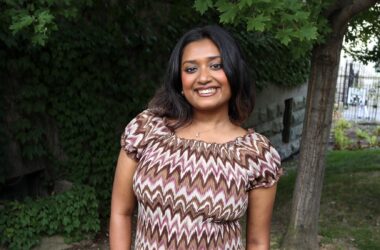
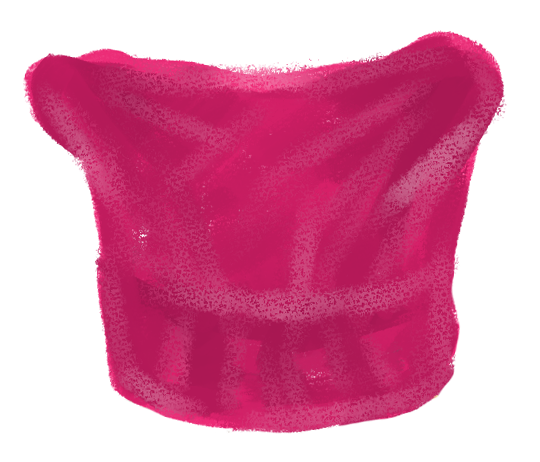
While I didn’t have a “pussy” hat—pink hats with little cat ears sparked by then-president Trump’s comments about grabbing women “by the pussy”—I was the stereotypical attendee in almost every way: A white 15-year-old girl, passionate, idealistic, more than a little naive, and fully prepared to have no voice the following day from all the chanting and screaming.
I think this is the side of feminism many relatively privileged girls and young women are introduced to first. It’s made readily available to us. It’s the stuff that makes the news. —iIt’s loud, and it’s flashy. I don’t say any of this to belittle protesting, or this brand of feminism more broadly, but as I’ve grown up, I’ve realized how many other forms feminism can take.
It turned out that what I once saw as a relatively homogeneous movement was much more site-specific than I had thought. For example, In Washington D.C., where I’m from, for example, the feminism I engage with in Washington D.C., where I’m from, is often entangled with federal politics: Which senate and congressional races are looming, whether the candidates are progressive or regressive on so-called “women’s issues,” and so on and so forth. Only when I got older did I learn about other feminist movements other forms of feminism taking place in my city, namely Black feminist organizing like Jaimee A. Swift’s Black Women Radicals. These non-mainstream forms of feminism rarely receive marginal the same external validation and media coverage, but nevertheless carry out vitally important work.
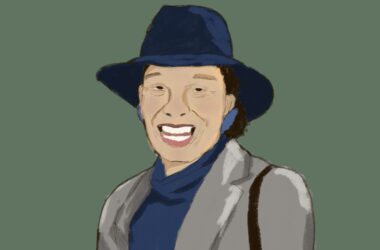
While it’s easy to think of feminism as only the sort of concrete and easily -identifiable activism we see in the news, like Women’s Marches, in reality, it encompasses much broader, more nuanced movements, ideologies, and art forms. This is probably why Alexandra Ketchum, a faculty lecturer in McGill’s Institute for Gender, Sexuality, and Feminist Studies, offered me thesome sage advice to “: “I would go with plural of ‘feminisms’ rather than single ‘feminism.,’” she said.
Traditionally, scholars have summarized the historical stages of the feminist movement into three, and more recently four, “waves,” each characterized by a set of core principles and practices. As the story goes, during the first wave, first-wave feminists were mostly preoccupied with securing the right to vote for white women, while second-wave feminists took up a broader range of issues, like reproductive rights, the wage gap, and more, rallying around the cry “the personal is political.” Third-wave feminists rejected much of prior feminist thought, further challenginged notions of gender and sexuality, and began to advocatinge for the feminist movement to adopt a more an intersectional approach.