
Latest News

McGill, Montreal, News

Montrealers, McGill students march in solidarity with Wet’suwet’en land defenders

The Montreal chapter of the activist group Convergence des luttes anticapitalistes (CLAC) hosted a protest in support of Indigenous sovereignty on Nov. 27, marching in front of and around the Montreal office of the Royal Canadian Mounted Police (RCMP). McGill students and Divest McGill members participated in the demonstration alongside other environmental, Indigenous, and other activist groups.

The primary focus of the protest was a recent escalation of the construction of TransCanada Energy’s Coastal GasLink (CGL) pipeline’s through the unceded territory of the Wet’suwet’en First Nation in British Columbia, which has been ongoing since 2019. The project has garnered much criticism, as it began without the proper consent of Wet’suwet’en, and police have been quick to use force to suppress dissenters, using police dogs, destroying property, and threatening people with rifles. This November, the RCMP invaded resistance camps—like the Coyote Camp—violently arresting activists and journalists. 

Marlene Hale, a land defender from the Small Frog Clan of the Wet’suwet’en nation, spoke at the protest and expressed her frustration with the Canadian government’s seizure and occupation of their land. Hale described how government officials avoided going through the proper channels of Wet’suwet’en leadership for their consent, instead seeking approval from the twenty band councils, who all signed on to the project. Hale brought this up to Prime Minister Justin Trudeau at a town hall in Saint-Hyacinthe, Quebec back in 2019.

“[I asked him,] ‘how do you not know that [for] consent in our nation, you’re supposed to go to the hereditary chiefs?’” Hale said. “They know who’s going to sign, who is the weak link, and who they can get [consent from] to do the work they want for as little as they can [….] The consent was not given by the right land title holder, which is the hereditary chief, Woos. Right now, he is on his own territory fighting [the RCMP] to gain access to his own home.”

The RCMP has confronted Wet’suwet’en land defenders several times over the last couple of years in an attempt to quell resistance to the pipeline. From Nov. 19 to Nov. 20, they had arrested 29 people, including two journalists, in British Columbia; protestors were trying to interfere with the pipeline’s construction in order to protect the land. The latest wave of arrests spurred protests across the country, including the one in Montreal this past Saturday. Eve Saint, the daughter of Wet’suwet’en hereditary Chief Woos, described the RCMP’s treatment of the protesters and journalists who were arrested, including Wet’suwet’en land defender Sleydo’.

“I just gotta give a lot of love to Sleydo’ because she is a mother, she is an Indigenous Wet’suwet’en mother, [and] she is raising her babies on the Yintah, on the land,” Saint said. “And now, these courts have […] criminalized her and [are] trying to keep her from moving freely on her own land, on her own territory.”

Saint herself has been on the frontlines of the fight; she was arrested alongside three others at Gidimt’en Checkpoint on Feb. 7, 2020 while defending Wet’suwet’en land. Saint condemned the violence the RCMP has inflicted on her people over the past week.

“We have elders that are being dragged off the Yintah, that are being denied their medication, and that had to go to the hospital,” Saint said. “This is at the hands of the RCMP. This is how they look at Wet’suwet’en people, this is how they look at Wet’suwet’en women, mothers, matriarchs, hereditary chiefs. They point their guns at us when they want us off that land so they can steal it. It is stolen land. They want us dead.”

After Saint finished speaking, the group marched toward downtown Montreal, followed by police officers who maintained a heavy presence throughout the demonstration.

In a subsequent webinar on Nov. 28, Ellen Gabriel, who is part of the Turtle Clan within the Mohawk nation of Kanehsatà:ke, compared the situation to the Oka crisis that occurred in 1990. At the time, the Sûreté du Québec (SQ) provincial police force violently invaded Kanehsatà:ke land that developers wanted to turn into a golf course. Following SQ raids of Mohawk territory, there was a 78-day standoff as the police faced down Mohawk warriors defending their land. Then-Quebec Premier Robert Bourassa eventually brought in the Canadian military to replace the SQ, and the standoff ended whenMohawk warriors had to surrender.

“The fact that the RCMP are being the root squad for Coastal GasLink as the SQ were for the municipality of Oka and the rich developers means that we haven’t gotten very far in the reconciliation process that Trudeau and others keep talking about,” Gabriel said. “This is not reconciliation. [Indigenous peoples] were here long before Europeans arrived, and we are still being treated, 500-plus years later, as if we are disposable, as if our rights don’t matter.”
Know Your Athlete, Soccer, Sports

Know Your Athlete: Mara Bouchard

Starting university is a challenging time of transition for all first-year students, both academically and socially. For student athletes, this period is particularly difficult, as they are presented with the additional challenges of meeting teammates, coaches, and staff that will become critical figures in their daily lives.

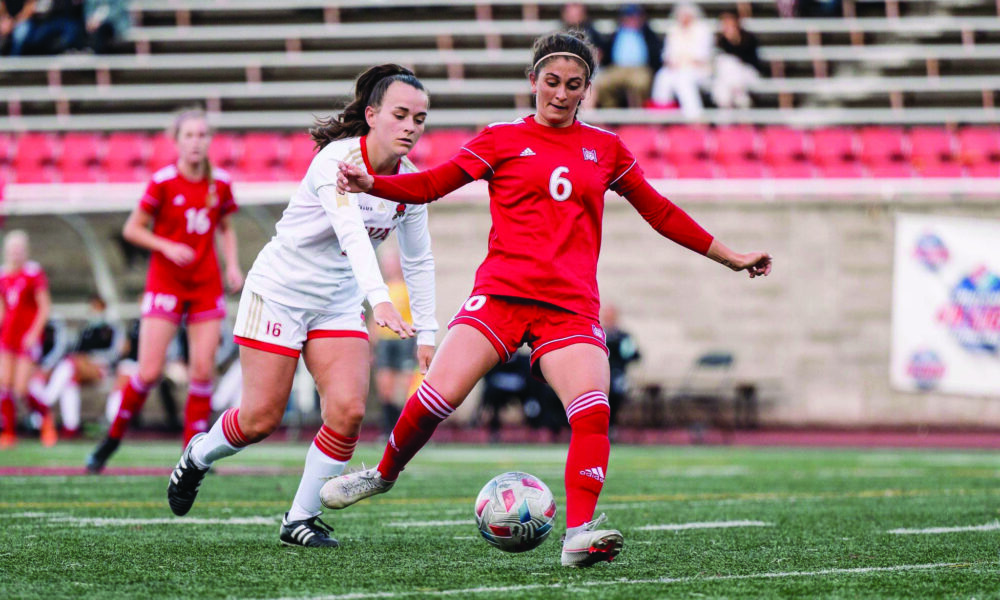
Mara Bouchard, U1 Arts, is a first-year student on the McGill Martlets soccer team who previously played for Vanier College in Montreal. Despite the barriers that many first-year student athletes face, the midfielder from Granby, Quebec found the adjustment to university life to be smooth and straightforward. 

“As a rookie and first year on the team, I was very much included by the rest of the players and veterans,” Bouchard said in an interview with The McGill Tribune. “I think being from Quebec made it easier to bond with the team, as there are a lot of other members of the squad from this province.”

Bouchard performed well in her rookie season with the Martlets, helping McGill achieve the second best defensive record in the league. Bouchard cited her past experience at the National High Performance Center (CNHP) directed by Soccer Quebec in Montreal as a reason for her success. 

“Soccer-wise, I thought it was a great season for me,” Bouchard said. “I was expecting to do well coming from a strong soccer background and playing at CNHP. Especially for my first year, I ended up in a place that I was happy with.” 

The Martlets had an especially impressive showing this season given the larger share of newcomers to the team. The squad placed third in the RSEQ, finishing the year with a 7–4–3 record. Although the Martlets fell short in the playoff semi-final game against Université Laval, they ended the season on a hot streak, winning their final four of five regular season matches. In Bouchard’s eyes, this late-season push proved the team successfully achieved their goal for the season. 

“The result of the semi-final against Laval was obviously not the one we had hoped for,” Bouchard said. “Our goal [for] the year was to become the most improved team. I think we accomplished and proved our goal to everyone, including ourselves.”

Heading into the Fall 2022 season, Bouchard is optimistic about the team’s future and is looking forward to building on this past year’s momentum.

“This year, finishing third was certainly a success for the program, particularly given the shortcomings of the recent past,” Bouchard said. “Our objective for next year is to continue to improve and earn a playoff spot once again. Our coaches have done an excellent job so far in my time here, and I know they are going to push us further to properly develop our individual and team play while we all progress toward the ultimate goal of a championship.”

Off the pitch, Bouchard is halfway through her first year as a psychology major. However, Bouchard’s top priority after university is to continue pursuing her love of and passion for the beautiful game.

“After McGill, I definitely want to keep playing soccer,” Bouchard said. “I am hoping I can find a pro contract in Europe somewhere and hopefully play professionally for a few years after I graduate. If this plan does not work, I will use my degree to pursue my goal of becoming a psychologist. I would love to be employed in this field in the future, and am enjoying studying the subject so far here at university.” 

Next August, training camp will build upon the strong bonds forged between players and coaches throughout this season. Bouchard looks to lead the midfield next season amongst a dedicated squad that is poised to improve on this season’s success.  

Ask Ainsley, Student Life

Ask Ainsley: Should I get a part-time job next semester?

Dear Ainsley, 

I’m not sure if I should get a part-time job for next semester. I do want to start building toward financial independence, but I’m worried that an added commitment to schoolwork and extracurriculars will be difficult to manage. A lot of my friends tell me they’re able to balance working part time while taking a full course load. I’m torn—what should I do? 

Sincerely, 

Worked up about Work (WUAW)

Dear WUAW, 

“Work hard, play hard” is a refrain common to the university experience, but how each student interprets it is entirely unique. For many, financial constraints necessitate a part-time job. But if you have a bit of wiggle room, it is important to reflect on your priorities before potentially undertaking more responsibilities. 

Think carefully about your schedule. If you do get a job, is there a chance you’ll be asked to pick up extra shifts? Is your transportation reliable? Do you have courses in person as well as online? How long does your coursework actually take you to complete?

Anywhere between 10 to 20 hours per week, adjusted to fit your specific timetable, should allow you to complete academic work while also getting enough rest. Working a part-time job can help you network, refine your time management skills, or even practice speaking French or English if applicable. The decision is ultimately up to you, but remember that life is made up of checks and balances. Stretching yourself too thin in effort to accomplish everything will inevitably lead you to falter, so compromise is essential. 

Don’t feel pressured to take five courses—you can drop down to four. Select your extracurriculars carefully to ensure they align with your personal or professional goals without causing further stress. Does this club boost your CV, but impede on your well-being? Whittle down extraneous commitments to allow yourself time to breathe. Look at a calendar and sketch in potential work shifts: Do you have enough availability to properly commit yourself? Most workplaces are collaborative environments; if you have to bail on a shift to study, you’re letting down your team. While academics are, for the most part, solitary in consequence, jobs affect others around you. It’s important to bear all this in mind before dedicating your time.

It is difficult to juggle academics, extracurriculars, and part-time work while still leaving time to rest, but it is still possible. If you find your social life slipping through the cracks, try allocating some time each week to seeing friends or talking with loved ones. Once the hangouts or chats are scheduled, they will gradually stop feeling like—as terrible as it is to say—time wasted. There’s no need to feel guilty for seeking out connection, especially during the transitory and tumultuous time that is university. 

University and productivity culture in general have misled our perceptions toward rest: Too often the definitions of self care—sleep, food, and time with friends—are just the bare minimum required to function. Be sure not to treat self care only as a reward. You don’t deserve rest; you need it. Nothing is more important than your health.

None of this is to say you shouldn’t try your best to reach your goals or succeed academically. Know your limit, and play within it: Be diligent, yet also realistic so that you can sustain your physical and mental health. As most of us are under 25 years of age, our brains are still developing. It’s tempting to fill your plate with responsibilities, but remember that the state of your health will shape your future in the long term just as much as your GPA or that extra resume bullet point. 

Know that if working is a financial necessity, there are resources available to you at McGill that offer support. Consider looking into government and student aid, as well as the Work-Study program, which connects students in financial need to jobs on or near campus with flexible schedules. 

I hope you can make a decision that works best for you. 

Sincerely, 

Ainsley

Emerging Trends, Student Life

Wending your way through winter commutes

The arrival of winter, with its sub-zero temperatures and snow-packed roads, transforms students’  lifestyles—especially when it comes to their daily commute. 

Much of the student body can be seen walking or biking to school in the summer months, but far fewer cyclists are spotted on the roads once the first signs of winter approach. Though some bike owners might still be seen bracing the wind chill, Bixi, the city’s affordable and convenient public bike rental service, ended their season on Nov. 15. This means that many, including Arantza Fernandez, U3 Arts, have had to resort to other ways of travel.

“It was so easy to take the bike,” Fernandez said in an interview with The McGill Tribune. “I would be at school in five minutes, and I could come and go as much as I wanted. Now I have to walk to school, which takes me almost 15-20 minutes.”

However, unlike the weather these days, all is not bleak. Opting to walk to campus can bring about some positive and unexpected changes in one’s daily routine. 

“The good thing is I now get to call people when I walk, like my parents at home,” Fernandez said.

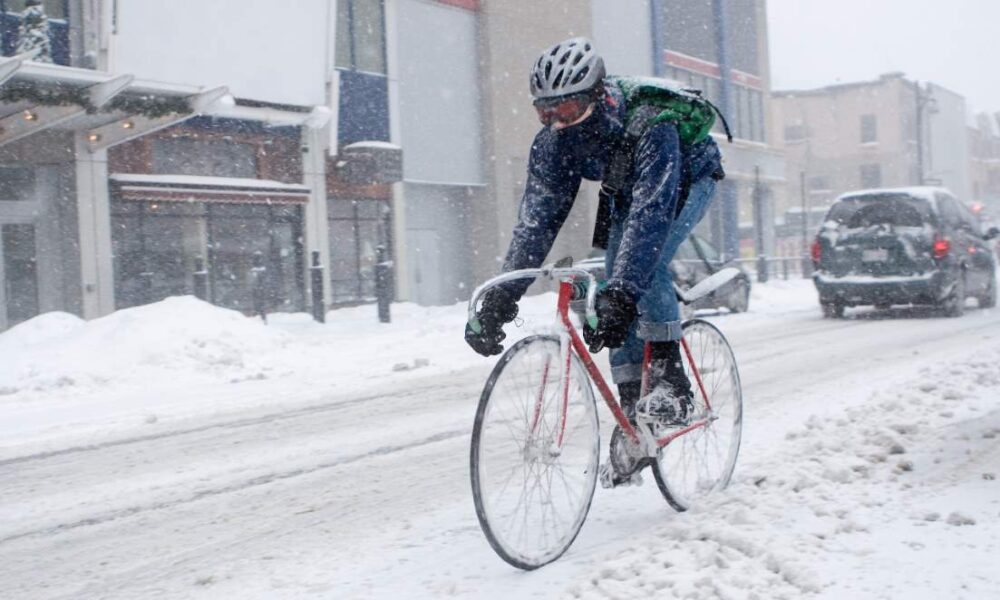
Nevertheless, many cyclists still pedal their way through the snow to get to their classes—and many start gearing up for the winter months far in advance. Danyal Chaudhry, U1 Science and frequent winter biker, is familiar with the preparation process. 

“Biking saves me a lot of time, and it is not as dreadful as you think when you have the proper gear for it,” Chaudhry said. “If you have big winter tires, some headlights for darker days and are wearing layers, you should not have much trouble biking to campus.”

It’s important for cyclists to know how to equip themselves and their rides to ensure safe travel. Experts suggest proper winter tires to prepare your bike for the snowy months, and regular cleaning throughout to prevent ice buildup and breakage from frozen parts. 

Although self-preparation is needed, efficient snow plowing is also crucial to avoid wipeouts. Montreal’s winter bikers have formed a community that vocalizes and lobbies for these concerns. They call themselves the “hurlus,” French for “weirdos.” 

Bikers are not alone in having to change their travel routes to school. Ibrahim Naveed, U3 Science, has become cautious, albeit hesitant, when walking to campus now; the dilemma of missing classes due to harsh weather is not unknown to the student body. 

“The weather has made me reluctant to walk to class and I often think of taking the bus or, sometimes, not going to campus at all if it’s too cold out,” Naveed explained. “In the summer, I would normally just take my bag and run to campus, but now I have to make sure I am properly bundled up to prevent myself from freezing to death.”

With many layering up in their winter boots and parkas to walk to campus, car commuters who live farther from McGill or in areas with limited public transit face different challenges. For them, endless lines of traffic, inescapable construction reroutes, and icy roads increase the risk of danger and can lead to longer travel times. The Montreal Gazette offers a comprehensive guide for those who choose to travel by car in the winter. The SAAQ is another helpful resource. 

With all these complications, many students opt for public transport, including the bus, metro, or commuter train. This is when the OPUS discount for McGill students comes in handy, reducing the monthly fee from $90.50 to $54 per month.

“I would never buy the OPUS monthly pass at its normal rate,” Naveed said.“But with the discount and the changing weather, I think it’s worth it, at least for the winter months.”

And so, every year, cylists, pedestrians, and car commuters alike prepare for safety and convenience; amidst the fierce Montreal winters, this small travel routine becomes a big part of our lives. 

Chill Thrills, Student Life

The McGill-wide 2021 holiday wishlist

It’s Nov. 30 and the holiday season is officially upon us! With less than a month until Christmas, you may feel overwhelmed about what to ask for this year. But don’t be alarmed—The McGill Tribune has got you covered. Below, you’ll find this year’s McGill wishlist, and hopefully, the items within will provide some inspiration for your own seasonal desires.*

Upper residence kids are asking for a magical device that will help them float up the hill to Gardner Hall.

Nearly graduated students want to stay in the comfort of academia forever….

Marty the Martlet would like to one day take off his uniform (it’s getting hot in there).

SSMU wants student papers to mind their own damn business.

Cloudberry wants people to know that he is the only leucistic squirrel on campus (and that he doesn’t have red eyes).

English students would like their parents to stop asking them what they plan to do with their degree.

Science students want you to stop complaining about having one in-person final.

All students want a week-long reading week. 

Chris Buddle wanted to be cast in Peaky Blinders. Unfortunately, it didn’t work out (but he kept the page-boy hat, of course).

McLennan Library wants as many students as possible to stop by and spend the night during finals season (she gets lonely).

Minerva wants IT to stop doing construction on her over the weekends. No, really—she doesn’t like to let students down during these stressful times.

MyCourses is asking for students to stop watching lectures on 2X speed (it’s exhausting!).

Desautels Students are—as always—looking for lucrative investments.

Philosophy students want you to stop asking them about the meaning of life; they have absolutely no idea.

Gerts would be thrilled to receive some noise-cancelling headphones to drown out the sound of drunk first years singing Taylor Swift.

Redpath cafe is tired of being compared to Tim Hortons. It may be more expensive, but the coffee is definitely worth it….right?

Soupe Cafe would like to file a complaint against Gerts cafe for having cheaper grilled cheese.

Skateboarders and cyclists are asking for just a few more weeks without snow (however, with chilly days on the forecast, their chances aren’t looking so great).

Maxime (RVC) is wondering why no one talks about him (or Fight Club) anymore. Seriously, what happened to this guy?

Subway wants people to know that they exist (despite being tucked away in the depths of the Arts Building).

The McGill Nightly wants to officially be recognized as McGill’s most reliable news source.

Big Suze wants…actually, what does this woman desire? We have no idea…

Tipsy Cow bar goers on Nov. 10 want that selfie they took with Noah Centineo printed and framed. Then wish he would leave their sacred territory.

McLennan frequenters want their red fast pass sticker to unlock a portal to the seventh floor where time is endless and finals don’t exist. 

The McGill Tribune wants you to have a successful finals season 🙂

*The items listed do not necessarily correspond with the opinions and desires of those on the list.

Student Life

Lube: What’s good and what’s just goo?

Consumerism is a curse! There’s nothing like choice paralysis, a phenomenon exemplified by the feeling of standing in the sexual health aisle of Pharmaprix and staring at the vast lube section: Water-based, silicone-based, massage oils, and more. Here, The McGill Tribune breaks down which ones are condom-compatible, safe for use with silicone sex toys, or best for stimulating sensation, regardless of your anatomy.

  1. Water-based lube

Water-based lube is at the top of this list and my personal favourite—for good reason. If you’ve ever purchased a sex toy, there’s a good chance it’s made of body-safe silicone. Ironically, the best lube for silicone toys is anything without silicone in it, as silicone lube will degrade the material over time. Water-based lube is also a fan favourite because it’s easier to clean up than other formulas, generally less sticky, and condom-compatible as well. Add a drop or two inside a condom to provide extra sensation for the wearer, slather it all over your favourite vibrator, or even use it for the purpose of old-fashioned manual masturbation.

  1. Silicone lube

I know I made water-based lube sound like the no-contest champion, but don’t be fooled. Silicone lube can’t be used with silicone toys, but it’s otherwise condom-compatible and plenty of fun. It’s generally thicker in consistency than water-based formulas, giving it a slicker sensation and increased staying power for longer play. And for those that love a true slip-and-slide experience? Silicone lube is your friend. Penetrative sex, particularly for those who’ve experienced painful penetration, can be much more pleasant with silicone lube. Its formula makes it last longer than water-based formulas, so those that enjoy drawing things out might find this the best choice.

  1. Massage oil lubes

Speaking of slip-and-slide, it’s high time to get acquainted with the world of massage oils! For those of us with tight shoulders, a massage oil session coupled with some fun partner intimacy can be incredibly relaxing and make for titillating foreplay. There are specific massage oil lubricants on the market, which I would recommend over any garden-variety massage oil as lube. Not all generic massage oils have been tested for internal use, so it’s best to stick to the products formulated for a sexual purpose. Oil-based formulas are not latex-safe, meaning they can’t be effectively used with latex condoms. But, if pregnancy and physical barriers aren’t of concern for you, massage oil lubes can be an exciting way to engage in new foreplay and indulge yourself or your partner(s).

  1. Warming (and cooling) lube

I was hesitant about the placement of temperature-play lube on this list because I have some beef with it. To its credit, this type of lube can be either water- or silicone-based, making warming or cooling lubricant a versatile bedfellow. The sensation of warmth draws blood flow to the genitals, enhancing the sensation of orgasm for some, and cooling lubes can be a great way for beginners to experiment with temperature play. I find the artificial heat a little disconcerting, not to mention reminiscent of the symptoms of a urinary-tract infection (if you know, you know). However, I won’t let my qualms dissuade you—to each their own.

  1. And remember: Coconut oil is not a lubricant

I hope that at this point in public sexual health knowledge this wouldn’t have to be a conversation, but there’s no shame in falling victim to Gwyneth Paltrow-esque, granola-girl gospel and erring in your lube choices. Coconut oil is good for hair masks, a dry skin balm, cooking and more, but it is not a sexual lubricant. It compromises latex condoms and dental dams and its high pH might disrupt your vaginal microbiome—not to mention it’s a pain in the ass to clean up. 

I understand the desire to avoid putting chemical products with long ingredient lists in your body willy-nilly, but hopefully the list above makes you feel more confident in choosing the right water, oil, or silicone-based lube for you.

Know Your Athlete, Sports

Know Your Athlete: Jamal Mayali

Jamal Mayali, a fifth-year Political Science student, was named the McGill athlete of the week on Nov. 15 after steering the Redbird basketball team to a win in their opening game of the RSEQ season against Concordia. In 29 minutes of court time, he made nine of 16 field goal attempts and six of 12 attempted three-pointers. With this impressive game record, Mayali is a player to look out for on the Redbirds squad this season.

As a product of Bill Crothers Secondary School, a prestigious sports academy in the Greater Toronto Area, Mayali arrived well-suited to his position on the McGill team. The academy has a gifted athlete program, which exposes students to job opportunities in a variety of sports fields such as management, promotions, coaching, and health sciences. 

“I learned a lot [at Bill Crothers] from the coaching staff to older veteran players. [The school] helped me to get [attention] from university schools [across Canada],” Mayali said in an interview with The McGill Tribune

After graduating from Bill Crothers in 2017, Mayali enrolled at McGill and has played basketball for the Redbirds since his first year.

Last year, he was also awarded the opportunity to play overseas for the Palestinian National Basketball team in the 2021 FIBA Asia Cup. The opportunity to play in the Asia Cup was a culmination of Mayali’s childhood dream of representing the Palestinian National Basketball team.

“The [Palestine Basketball] Federation has been reaching out to me for a couple of years now. [However], I didn’t have time to play for them before as I was in university,” Mayali said. “The pandemic presented an opportunity to play overseas [as the RSEQ season was suspended].”

University can be tough to navigate, especially for student athletes. The academic demands and the athleticism required to play varsity sports can take a toll on one’s mind and body. Mayali was honest in admitting his journey at McGill as a student athlete has not been easy.

 “[To be a student athlete] is tough, I wouldn’t lie to you,” Mayali said. “We practice almost twice a day, six to seven days a week, and with school you have to be able to manage that too.” 

Apart from basketball, Mayali has a keen passion for martial arts. He competed in boxing as a child and even wanted to pursue it as a career at one point. However, given the full-time demand of the sport, Mayali, on the advice of his mother, decided to pursue basketball and has kept the childhood passion at bay—for now. 

“[My mother] said, ‘You got to get a degree first and maybe after school [you can consider] fighting again,’” Mayali recalled.

As a student athlete, Mayali sees sports, and in particular, team sports, as an important part of university life. 

“Individual sports are great, and you learn a lot of things from them, but [the skills] you learn from team sports apply a lot to the real world,” Mayali said. “There are a lot of things only sports can teach us.”

The troika motivating Mayali to play basketball at the varsity level is his country, his parents, and his teammates.

“[To play for] my country Palestine motivates me [along with] the commitment that my parents have put into me and supporting my goals since I was young, and my teammates,” Mayali said. To him, the Redbirds Basketball team is “kind of like an army regiment—you are fighting for the guy next to you.”

Features

From feminism to feminisms

I’ve lost count of the number of times I’ve brainstormed the perfect slogan to scribble on my cardboard sign right before a protest. Almost always, I end up settling on something I deem to be just so-so. The same thing happened in January 2017, a day after Donald Trump’s inauguration, when I joined what felt like the rest of the world at the Women’s March in Washington D.C. for possibly the largest single day of protest ever, cardboard sign in hand. 

While I didn’t have a “pussy” hat—pink hats with little cat ears sparked by then-president Trump’s comments about grabbing women “by the pussy”—I was the stereotypical attendee in almost every way: A white 15-year-old girl, passionate, idealistic, more than a little naive, and fully prepared to have no voice the following day from all the chanting and screaming.

I think this is the side of feminism many relatively privileged girls and young women are introduced to first. It’s made readily available to us. It’s the stuff that makes the news. —iIt’s loud, and it’s flashy. I don’t say any of this to belittle protesting, or this brand of feminism more broadly, but as I’ve grown up, I’ve realized how many other forms feminism can take.

It turned out that what I once saw as a relatively homogeneous movement was much more site-specific than I had thought. For example, In Washington D.C., where I’m from, for example, the feminism I engage with in Washington D.C., where I’m from, is often entangled with federal politics: Which senate and congressional races are looming, whether the candidates are progressive or regressive on so-called “women’s issues,” and so on and so forth. Only when I got older did I learn about other feminist movements other forms of feminism taking place in my city, namely Black feminist organizing like Jaimee A. Swift’s Black Women Radicals. These non-mainstream forms of feminism rarely receive marginal the same external validation and media coverage, but nevertheless carry out vitally important work.

While it’s easy to think of feminism as only the sort of concrete and easily -identifiable activism we see in the news, like Women’s Marches, in reality, it encompasses much broader, more nuanced movements, ideologies, and art forms. This is probably why Alexandra Ketchum, a faculty lecturer in McGill’s Institute for Gender, Sexuality, and Feminist Studies, offered me thesome sage advice to “: “I would go with plural of ‘feminisms’ rather than single ‘feminism.,’” she said. 

Traditionally, scholars have summarized the historical stages of the feminist movement into three, and more recently four, “waves,” each characterized by a set of core principles and practices. As the story goes, during the first wave, first-wave feminists were mostly preoccupied with securing the right to vote for white women, while second-wave feminists took up a broader range of issues, like reproductive rights, the wage gap, and more, rallying around the cry “the personal is political.” Third-wave feminists rejected much of prior feminist thought, further challenginged notions of gender and sexuality, and began to advocatinge for the feminist movement to adopt a more an intersectional approach. 

Behind the Bench, Sports

Peng Shuai resurfaces, but justice for survivors is nowhere to be found

Content Warning: This article discusses sexual violence. 

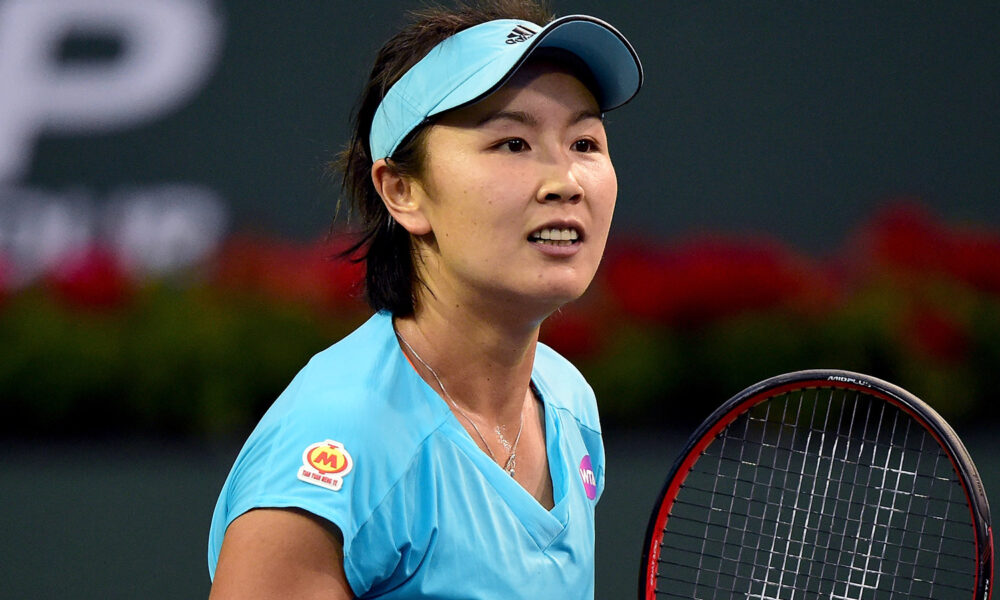
On Nov. 2, Chinese tennis player Peng Shuai posted a statement to Weibo, a Chinese social media platform, accusing former vice-premier Zhang Gaoli of sexually assaulting her in his home three years prior. Shortly after, the statement was deleted from the platform and Peng Shuai disappeared from the public eye.

The post was censored and Chinese media did not allow citizens to search certain terms related to the situation, such as Peng Shuai’s name. This disappearance has led to international concern for her safety.

The hashtag #WhereIsPengShuai has been trending on various social media platforms and fellow athletes such as Serena Williams, Naomi Osaka and Novak Djokovic expressed their distress over the situation. 

On Nov. 17, an email allegedly written by Peng Shuai to Steve Simon, the chairman and CEO of the Women’s Tennis Association (WTA), attested to her safety and well-being. Simon openly questioned the veracity of the statement, tweeting that “​​Peng Shuai must be allowed to speak freely, without coercion or intimidation from any source.”

Simon has threatened to cease the WTA’s business in China if the safety of the tennis player is not confirmed. 

On Nov. 20, disturbing footage of the tennis player dining in Beijing was released. In the videos, Peng doesn’t speak and clearly looks uncomfortable. Though the videos are a reassuring indicator that Peng is alive, the footage does not guarantee her security or comfort. 

That Peng Shuai could have her autonomy stripped just for telling her truth reflects a larger culture of silencing and dismissal that many athletes face when they speak out about sexual assault within the sports world. Over the years, multiple athletes have been reduced to silence regarding the sexual abuse they have endured at the hands of coaches and teammates.

Sexual violence is severely underreported, and sports organizations such as USA Gymnastics have also played a part in encouraging the culture of silence in athletics. It appears that the athletes’ performances and organizations’ reputations are deemed more important than athletes’ mental or physical health.

In 2018, former USA Gymnastics coach Larry Nassar was tried and sentenced to prison for sex crimes. Nassar had sexually abused at least 265 girls and women under the guise of medical treatment and procedures. This abuse was covered up and brushed under the rug by multiple institutions at the expense of the athletes.

Michigan State University received reports of sexual abuse regarding Nassar in the 1990s yet continued to employ the doctor. Only in 2015 did the FBI begin privately investigating him. Between the beginning of the investigation by federal authorities and the public denunciation of his abuse by The Indianapolis Star, Nassar had abused more than 40 women and girls.

The Nassar case is a clear example of the failure of athletic institutions and organizations to treat sexual abuse and assault cases seriously. As recently as 2021, Alen Hadzic, a fencer for Team USA, was allowed to compete in the Olympics despite multiple accusations of sexual misconduct against him. Allowing athletes and coaches with a history of sexual misconduct to attend and participate in sporting events is detrimental to those athletes who have experienced sexual abuse—and also puts others at risk.

Prominent American gymnasts who suffered abuse by Nassar, such as Simone Biles and Aly Raisman, have denounced the system that enabled their abuse and faced backlash for speaking out. However, Peng’s situation is particularly worrying because the entire narrative of her story is controlled by the Chinese government. 

The case of Peng Shuai reveals a culture of silence that blankets athletes around the world, protecting perpetrators and stifling survivors. There need to be significant changes made in the way cases of sexual abuse and sexual misconduct are handled by athletic institutions. When reports of abuse are constantly dismissed or pushed aside, athletes are led to believe that speaking out will change nothing, while abusers are never held accountable.

Arts & Entertainment, Theatre

Tuesday Night Café Theatre production ‘The Elephant’ is a powerful musical about surviving abuse

Content Warning: discussion of sexual assault

Tuesday Night Café Theatre (TNC)’s newest production The Elephant is a powerful story of survival and perseverance. Written and directed by Troy Lebane, U3 Music Education, this musical portrays characters in the aftermath of an abuser’s arrest in his former workplace and offers a powerful exploration of how survivors can regain power over their narratives.

Set within a high school theatre department, The Elephant begins after the  department’s former head is arrested for sexual misconduct against a student. The musical depicts the varied responses to this event: Ignorant principal Brad (Jacob Barton, U4 Music and Education) attempts to cover up the situation, while vice-principal Phyllis (Nina Vukelic, U2 Arts) blames Orlee (Renée Withnell, U2 Arts & Science), another teacher, for not reporting the allegations internally before involving the police. Despite this rampant victim-blaming within the administration, teachers Tanner (Lebane) and Tamara (Will Barry, U3 Arts) take a stand by actively questioning the administration’s dismissive attitude and lack of support systems available to students. 

Lebane’s writing expertly handles this heavy topic, and the musicality of his score offers a new,lighthearted mode of delivery. Each song spotlights a different character’s internal monologue, showing how complex the issue of sexual assault is at the level of individual affect. In a catchy song, titled “Couture over comfort,” Tamara encourages Tanner to come forward with his story, comparing his way of speaking up to a couture pair of shoes—uncomfortable yet unapologetic, and therefore superior to comfortable shoes.

While the show centres sexual assault and its aftermath, it does not actually portray the abuse itself. Instead, Orlee and Tanner’s sexual assault stories are told through gossip and personal monologues. These two communication methods often contradict, showing how stories become warped when spread as rumours, conveying how dismissive responses—like those of the administration—harm survivors emotionally. 

Lebane’s musical was inspired by the #MeToo movement and his own experience with sexual assault. The #MeToo movement amplifies the voices of sexual assault survivors and aims to create a dialogue that condemns abusers, particularly those in positions of power.

“Often you don’t see men represented in the narrative of coming forward because a lot of them are the perpetrators,” Lebane said in an interview with The McGill Tribune. “But there are a lot that are survivors as well, and have yet to tell their story. Toxic masculinity plays a big part in men not coming forward because they’re afraid they’ll be seen as less than or less masculine, less tough.”

Tanner routinely defies toxic masculinity throughout the show by being vulnerable, proving that there is nothing wrong about a man sharing his emotions and speaking up against his abuser. It is also worth mentioning that despite Tanner and Orlee’s internal conflicts on whether or not to come forward, their friends constantly support them. 

“I want [survivors] to know, especially men, that they are not alone,” Lebane said. “It’s a very courageous thing to come forward. It’s never going to be the right time for anything. It’s never going to feel amazing. But it’s a step in the right direction if we can hear more people’s stories.”

Although The Elephant focusses on how survivors cope with sexual assault, the musical also shares with the audience ways in how they can support survivors. By listening to and believing survivors, sexual assault will no longer be the elephant in the room. 

’The Elephant’ will have two more performances at TNC on Nov. 25 & 26 at 8 p.m.

Read the latest issue

Read the latest issue