
Latest News

Campus Spotlight, Student Life

Catching up with Mobilizing for Milton-Parc

What a difference a year—and a pandemic—can make.

In the fall of 2020, during the months when COVID-19 raged, concern for unhoused neighbours in the area surrounding McGill prompted Sophie Hart to found Meals for Milton-Parc, a student-led meal-share initiative that provided food and care packages. 

The group recently shifted its mission and took on a new name—Mobilizing for Milton-Parc (M4MP)—in order to meet the changing needs of unhoused people.

In its early days, M4MP focussed on getting food to those in need and making sure Milton-Parc’s unhoused neighbours felt cared for. Meal distribution was a cornerstone of that effort.

“I felt like we were not doing enough to support vulnerable people in our community,” Hart said. “With the pandemic, services were closing down due to public health requirements.” 

What followed was an outpouring of support from the McGill community, much of it driven by social media. In the period between October 2020 and August 2021, M4MP raised close to $20,000 and distributed some 3,000 meals.

With services for the unhoused community returning to full working capacity as pandemic restrictions loosen, M4MP is now shifting gears to focus on supporting both Indigenous-led and non-Indigenous-led organizations in Montreal.

“We started our project because there was a need for us to meet,” Hart said. “But as the pandemic has begun to wind down, the organizations in our community have been able to get back to full capacity. We want them to know how much we appreciate the work they do, and that they have our community supporting them when they need it.”

M4MP now gives financial and material support to organizations such as The Open Door, The Montreal Indigenous Community Network, The Native Friendship Centre of Montreal, and Plein Milieu, to name a few.  

With this shift in vision, M4MP has become a conduit for funds, food and material support, community building activities, and settler education projects.

The group runs community building activities for residents of the Hotel Dieu shelter, which is open 24/7. Since October 2021, M4MP has held art, self-care, and pumpkin-carving events.

“These activities, in my mind, are important to create connections among neighbours as well as to have some fun,” Hart said. “I think people forget that at the end of the day we all like to have fun, connect with neighbours, and talk to new people.”

Much of this programming has been made possible thanks to crowdfunding efforts through M4MP’s Instagram page. This year, M4MP started an “Education Team” that uses its online platform to educate settlers, and to stress the responsibility that they have in amplifying and supporting the voices of marginalized communities.

“[The past year] has made me realize how much can be done when caring people work together,” Hart said. “This year has also made me realize how broken the systems in place to support vulnerable people are. I’ve learned so much in such a short time, but what has stood out to me most is that we really need more people to join the care and community field.”

Individuals interested in volunteering can join the Mobilizing for Milton-Parc Interest Group on Facebook and watch the volunteer training video. Donations may be e-transferred to [email protected].
Chill Thrills, Out on the Town, Student Life

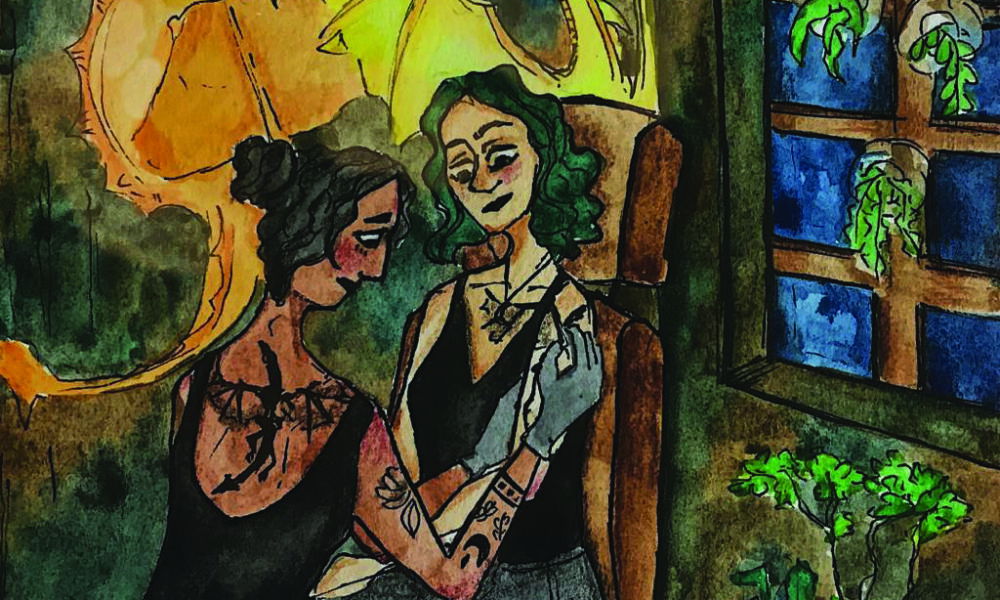
Getting inked in Montreal

Starting university is a symbolic step in one’s independence and coming of age. This newfound freedom is, for many students, expressed in getting their first tattoos. Whether as a planned tribute to a loved one or an impulsively chosen design, tattoos serve as a vehicle for expressing one’s personality. 

Olivia Bjerkelund, U0 Arts, who moved away from Vancouver for university this past September, saw her first year of independence as an ideal opportunity to get her first tattoo.

Ironically, Bjerkelund’s tattoo, a still life jug of lemonade surrounded by plums and daffodils on her inner arm, is representative of her childhood. 

“I used to have a plum tree when I was a kid,” Bjerkelund told The McGill Tribune. “The daffodils are there [because] my mom gives me daffodils every year on my birthday.”

Like Bjerkelund, Gracie Thompson, U0 Arts—who already has several tattoos—decided to add to her bodily mosaic after moving to Montreal this September. Thompson made her decision within her first weeks in the city. 

“I was with my parents [and] I saw a little sign that was on a compost bin,” Thompson said. “I thought it was so cute [….] I thought about it for two weeks, then decided to go for it as a ‘welcome to Montreal’ gift.”

In addition to this new piece and her previous collection, Thompson has gotten two other tattoos since moving to Montreal, creating a patchwork on her arms. For Thompson, skin can be a place to memorialize one’s personal growth. 

“I like [getting tattoos] because it symbolizes who I was at the time of getting the tattoo,” Thompson said. “It makes you feel so confident [and is] a great conversation starter.”

Students looking to get their first tattoos or add to their existing collections in Montreal are in luck: The city has a wealth of local tattoo artists ranging from those working at established shops to DIY artists, each of them with unique design styles.

Among these artists is Aya Dazig, a multidisciplinary artist who has been tattooing since she was 15. Her journey in the practice began by tattooing her friends and acquaintances.

“I kind of got into tattooing by accident,” Dazig said. “I would fix my friends’ stick and pokes as a teenager, and [I] had a friend tell me, ‘you should really get into this.’”

Stick and poke tattoos have risen in popularity over the past few years. It is a method of tattooing that requires only a sterilized needle, pot of ink, and a friend’s—or one’s own—artistic hand. This DIY technique not only offers students a more affordable alternative to the hefty prices of tattoo parlours, but also an intimate memory to mark the inked design, with many receiving these hand-drawn tattoos from someone they know, and often in a personal space. 

Dazig, who started out fixing stick and poke tattoos done by others for friends, turned her passion into a full-time job this past April. She now works with two other Montreal tattoo artists in a private studio located in the Plateau. 

Dazig doesn’t lean toward a specific tattooing style; her inspiration comes from either her stream of consciousness or a direct reference.

“My main goal is to have all of my work feel intuitive and authentic,” Dazig said.

Dazig believes that students’ desire to get tattoos after starting university is tied to a newfound sense of independence. 

“It goes hand in hand with moving out,” Dazig explained. “You have a new sense of ownership over your life and body.” 

Though the permanence of tattoo ink can feel intimidating, Dazig advises students who are considering getting their first tattoos not to overthink how they will view the tattoo in the future.

“Don’t worry about pain or getting something timeless,” Dazig said. “Get something you genuinely like in the moment.”

Recipes, Student Life

How to dish up gourmet food with frozen produce

It’s no surprise that frozen produce is considered inferior to its fresh counterpart: Not many of us enjoy flavourless boiled green beans or mushy carrots. But while frozen veggies alone can be unappetizing in flavour and texture, they are an easy way to avoid both food waste and a pricey grocery bill during the colder months. To avoid lackluster meals without sacrificing a healthy diet, The McGill Tribune brings you two easy recipes to bring out the best flavours in frozen fruits and vegetables.  

Spiced chicken with lemon yogurt sauce

A plate of food

Description automatically generated with medium confidence

This spiced chicken recipe is easy to make and perfect for meal-prepping. The veggies and spice blend can be customized to your preferences, so you can achieve completely different tastes using the same simple steps.

This spiced chicken recipe is easy to make and perfect for meal-prepping. The veggies and spice blend can be customized to your preferences, so you can achieve completely different tastes using the same simple steps.

Ingredients:

  • 2 chicken breasts
  • ¾ cup basmati rice
  • 1 lemon
  • 1 ½ cups chicken broth
  • 1 ½ cups frozen zucchini, sliced
  • 2 cups frozen carrots, chopped
  • 1 tbsp Moroccan spice blend (or a different spice blend of your choice)
  • 1 tbsp unsalted butter
  • ½ cup plain Greek yogurt
  • Fresh parsley (optional)
  • Kosher salt
  • Black pepper
  • Olive oil

Steps:

  1. Preheat the oven to 425°F.
  2. Add the chicken broth to a pot, cover, and bring to a boil. 
  3. Add the rice to boiling water, reduce the heat to low, cover, and cook until the liquid is fully absorbed. Remove the pot from the heat and set aside, still covered. 
  4. Mix ¼ cup of the Greek yogurt with the spice blend in a large bowl. Pat the chicken dry and add to the bowl. Coat the chicken and set aside to marinate. 
  5. Juice half the lemon and mix with the remaining Greek yogurt. Season with salt and pepper and set aside. 
  6. Heat a nonstick pan over medium high, then add about 2 tbsp of olive oil. When heated, add the frozen carrots and zucchini to the pan. Cook until zucchini is slightly crisped on the outside. Season with salt and pepper. Mix in the veggies with the rice. 
  7. In the same pan over medium-high heat, add about a tablespoon of olive oil. Cook each of the chicken breasts for about 2 minutes. Add the cooked chicken to a baking sheet and place it in the oven for about 13 minutes, or until cooked through.
  8. Juice the other half of the lemon over the rice and veggies. Add optional parsley. Mix together. Thinly slice chicken and serve over rice with lemon yogurt sauce. 

Chickpea, turmeric, and coconut milk stew

A plate of food

Description automatically generated with medium confidence

Not only is this recipe easy, but it is filled with bright fall flavours. Like the other dish, this stew can be easily be adapted to your own taste. Feel free to skip the kale, add potatoes, or even change the spice level. You can serve it over rice, with naan, on a pita, or just enjoy it on its own. 

Ingredients:

  • 1 large yellow onion, chopped
  • A 2-inch piece of ginger
  • 1 ½ teaspoons ground turmeric
  • 1 teaspoon red pepper flakes
  • 2 cans chickpeas
  • 2 cans coconut milk
  • 2 cups vegetable broth
  • 2 cups frozen kale
  • 4 garlic cloves, minced
  • Kosher salt, to taste 
  • Black pepper, to taste 
  • ¼ cup olive oil 

Steps:

  1. Heat about ¼ cup olive oil in a pot over medium heat. Add the garlic, onion, and ginger. Season with salt and pepper. Stir periodically, until the onions start to brown on the edges. 
  2. Add the turmeric, red pepper flakes, and chickpeas to the pot. Season with salt and pepper, then stir the spices into the chickpeas. Cook until the chickpeas start to crisp, about ten minutes. Crush the chickpeas with a wooden spoon, leaving a few uncrushed for texture.
  3. Add the coconut milk and vegetable broth to the pot. Bring the stew to a simmer, making sure to stir the bottom of the pot occasionally. Cook until the stew has thickened to your desired consistency, around 40 minutes. 
  4. Add the kale, then allow the stew to simmer for around five minutes, or until the kale is tender and any added liquid evaporates. 
  5. Serve! You can top the dish with red pepper flakes for some extra spice. I ate the stew with some toasted naan. 
Student Life

Essential attire for winter warmth

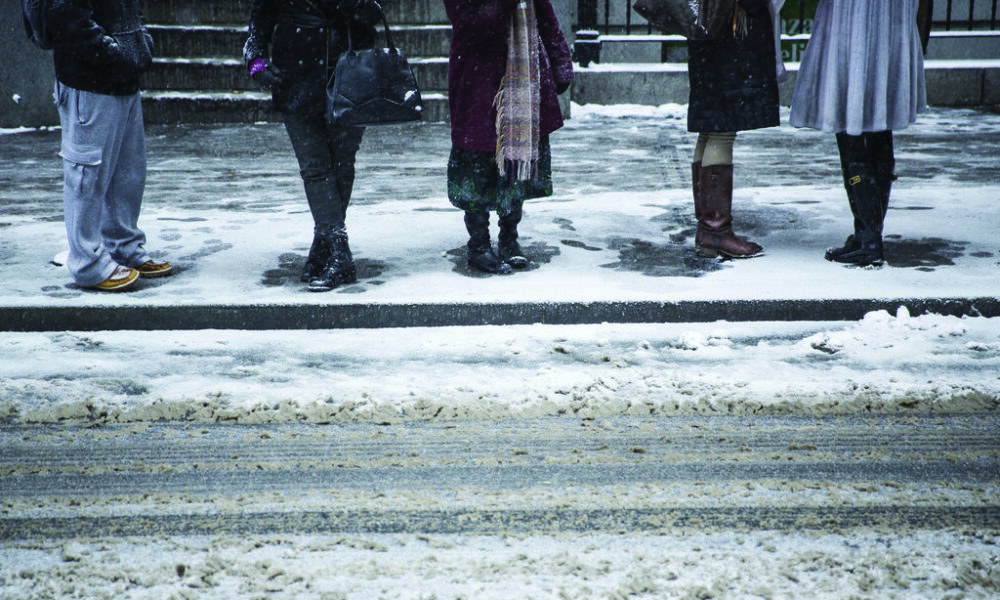
As we take advantage of the last few sunny fall days in Montreal, it’s easy to forget that a frigid winter is approaching. Before the snow fully settles upon us, it’s best to prepare ahead of time for the sub-zero temperatures. For those who have yet to experience Montreal’s ice-cold weather, The McGill Tribune brings you a list of essential winter clothing items and practices, from layering to staple winter accessories. 

A good jacket

Equipping yourself with the perfect winter jacket is crucial to keeping warm.  

When it comes to length, the longer the better. To fight off frostbite, invest in a coat that will cocoon your body all the way down to your knees. You’ll feel like a penguin waddling around on campus. 

Other important things to look for when hunting for a jacket are its insulation and fabric. For Montreal weather, water-resistant down material is the way to go. The goose down will keep your body insulated, while water-resistant fabric will be perfect for rainy and snowy days. Some down-free alternatives that are equally as warm are quilted jackets filled with nylon or polyester.

Consider as well a hood for your jacket to keep your head dry and cozy while it rains or snows. If you don’t love the look of hoods on your jackets, try to find one with a detachable hood for the best of both worlds.

Storage and warmth are what pockets are all about. Look for a jacket with large pockets to store your miscellaneous belongings and protect your hands from the cold. 

Black, grey, and white are staple colours that go with anything you wear. However, if you want to add some vibrancy and style to your winter look, pick out a jacket in your favourite bright colour. Not only will it help you stand out, but it will keep you joyful during downcast winter days. 

Layering

Remember this rule of thumb: You can always take off layers, but you can’t add them once you’ve already left the house. 

Good fabrics for layers are always thinner, not thicker. Try shopping for cashmere, fleece, and wool sweaters with long sleeves. Thermal long-sleeved garments are also a great addition underneath a cozy sweater for an extra layer of warmth. These items are always easy to thrift at Value Village if you’re on a budget. 

For your bottom half, wearing tights or long underwear underneath your favourite pair of pants ensures that your legs will be warm as you strut through the city. 

Layering doesn’t have to be solely practical. For instance, try wearing funky, patterned turtlenecks underneath your favourite graphic tees to spice up your outfit, or transition your dresses into winter by wearing a thick, ribbed pair of tights and vibrant long sleeves underneath.

Accessories

Although accessories may feel like a small component of your outfit, they can be a hefty addition to your warmth. While the majority of your outfit may simply feel like insulation, it’s these added features that allow you to express your style. Good items to consider are ear muffs, hats, scarves, and mittens. Depending on how warm your jacket keeps your neck, you might want to add a scarf for more protection against the wind or for added flair. 

When choosing between gloves or mittens, mittens are the way to go––wearing them allows your fingers to generate more heat And mittens with button flaps allow you to use your phone whenever need be.

Shoes

In the early days following the first frost, it’s easy to get away with thick socks and a pair of fur-lined Doc Martens. As we move further into the season, however, it’s a smart idea to invest in a pair of proper heavy-duty winter boots. 

The perfect Montreal winter boot is fur-lined, tall, waterproof, and has good traction for the icy sidewalks. Some brands to look for are Ugg, Sorel, and Merrell. To keep your boots chic, include striking, colourful laces with beads laced in, and wear long, patterned socks to peek out of your boots for a fun surprise.

Hockey, Sports

McGill men’s hockey prevails in shootout against Concordia

The McGill men’s hockey team (1–1–0) opened their OUA season on Nov. 3 against the Concordia Stingers (1–1–0), defeating their downtown rivals on the road and disappointing the home crowd. 

The game began with some physicality and emotion that spilled over from the previous match-up, as the final preseason contest finished just over a week prior to the season opener. Tension was elevated further following an early goal from Concordia five minutes into the game, sending the home fans into a frenzy—particularly the Stingers’ student section that sat beside the McGill bench.  

Despite the early deficit, the Redbirds continued to press hard, with solid play from the defencemen and continuous forechecking from the McGill forwards. The consistent pressure yielded positive results for the away squad, as fourth-year forward Jordan Ty-Fournier tipped a slap pass from third-year Blake Hayward past the Concordia netminder, tying the game again and pushing the momentum back in McGill’s favour. 

At the end of the first period, McGill and Concordia got into a brawl as the intensity between the two rivals increased. The scrap resulted in two Redbird penalties and one Stinger penalty, giving Concordia a power play to begin the second period. However, McGill successfully defended the penalty kill and thwarted any possible momentum that might have begun the period. 

After keeping the home team in check, the Redbirds began to press once again and took advantage of their opportunities. Hayward was involved once again, burying a beautiful goal to take a 2-1 McGill lead halfway through the second period. After scoring, Hayward and the rest of the Redbirds on the ice mildly taunted the Concordia fans after some back and forth between the away players and home fans earlier in the game.

Despite the unforgiving rival crowd, fourth-year defenceman Taylor Ford was happy to be back at the Ed Meagher Arena. 

“It was definitely a great feeling to have a rowdy crowd again, even if they were against us. I’ve been around a few years now, so I expected the Concordia crowd to be in our ears all night long,” Ford said in an interview with The McGill Tribune. 

Following the McGill goal, the Redbirds held the momentum for the rest of the second frame, but were unable to capitalize due to costly mistakes. This was exemplified late in the second when the away team took a penalty just three seconds into a powerplay, immediately quashing any man advantage opportunity.

These missed chances would come to hurt the Redbirds: Four minutes into the third period, the Stingers tied the game 2-2 on a point shot from Concordia defenceman Marcus Tesik. The crowd went into a frenzy and was suddenly rejuvenated. Concordia would benefit significantly from this jolt, drawing two McGill penalties with under 10 minutes left in the game.

However, the McGill penalty kill unit proved their might once again, blocking multiple shots and killing over a minute and a half of a 5-on-3 power play. 

Ford was delighted with the penalty kill unit’s performance, commending their defence against all six of Concordia’s power plays.

“Our penalty kill was great,” Ford said. “Our assistant coach spoke to us before the game about the 5-on-3, which helped us come up big when Concordia in fact had that opportunity.”

Additionally, Ford credited goalie Alexis Shank for the team’s success.

“The most important part of any penalty kill is the goalie, and I thought [Alexis] stood on his head, not only for the penalty kill, but for the entire game,” Ford said. 

After regulation, the score remained even, prompting a 3-on-3 overtime. The extra period was extremely fast-paced, with an abundance of odd man rushes for each side. However, neither team could convert over the seven minutes, sending the game into a shootout.

With each team and fanbase anxiously anticipating each shot, the tension in the arena was palpable. With no goals after 17 straight penalty shots, Jordan-Ty Fournier buried the game-winner in the ninth round of the shootout, sending the handful of McGill fans into celebration, and leaving the Concordia faithful disappointed.

McGill plays Carleton University in Ottawa for their next game on Nov. 12. 

Moment of the Game:

Jordan-Ty Fournier scored in the ninth round of the shootout to win the game for McGill.

Quotable:

“The younger guys definitely got a taste of what the Concordia and McGill rivalry is all about. As always, it was a great feeling to beat [Concordia]” — Fourth-Year defenceman Taylor Ford

Stat Corner:

Concordia had six total power plays in the game, compared to just one for the visiting Redbirds.

Know Your Athlete, Sports

Know Your Athlete: Victor Henry

Victor Henry, U2 Science and the second goalkeeper for the McGill men’s soccer team, was born in Washington, D.C. and started playing soccer when he was only four years old. After moving to Paris at the age of five, he continued playing, but struggled to excel—until he tried his hand as a goalkeeper.

“My mother is the one who actually suggested to my coach that I should try out goalkeeping. She thought that is where I should be,” Henry said in an interview with The McGill Tribune. “As soon as I started, I realized that that is where I had true potential. So I have been goalkeeping ever since.”

Henry became a part of the McGill team this season after being unable to play at McGill last year due to a delay in his study permit. After participating in the training camp over the summer, he was selected to join the team.

“It’s impressive how serious and professional the team is, especially in contrast to facilities and teams in France, which are much less valued,” Henry said. “The team gets along extremely well and is hardworking, which adds to the level of professionalism.”

Henry attributes much of his positive experience with the Redbirds to his coaches. Both Michael Palomo, the goalkeeper coach, and Marc Mounicot, the team’s head coach, are consistent with their advice and expectations, which Henry says has helped him fulfill his potential as a keeper.

As a player with lots of experience in several roles on the pitch, Henry feels that being a goalie is a unique position. It does not require the same skill set or aptitudes as other players as the coordination and the endurance needed are not the same.

“As a goalkeeper, my role is quite different than [that] of my teammates,” Henry said. “I have to communicate with my defenders and centerbacks, as I’m the only player who has a view of the whole field. It’s an aspect of my role that I really enjoy.”

The highlight of the season for Henry was undoubtedly the supporters: Nothing fuels an athlete like an enthusiastic crowd. Out of all his supporters, Henry says the best encouragement comes from his parents.

“In terms of supporters, my parents are my biggest fans,” Henry said. “They have attended my games throughout my whole life and even came to Montreal at the beginning of the year to watch me play. They also watch the games on the McGill streaming service.”

Currently pursuing a joint major in mathematics and computer science, Henry hopes to work in software engineering after graduation. With these big dreams, Henry has adapted his schedule around the team’s hours, working in the afternoon before practice and then making time to relax with friends. 

“I think having a good discipline in terms of organization is what allows me to do all these things,” Henry said. “My roommates and I are into basketball, so it’s typical for me to come back from school after having studied and been to practice and just watch an NBA game with them.”

Henry is also a big fan of the French National Team and was delighted when they won the Nations League. His favourite players are goalkeeper Hugo Lloris, N’Golo Kanté, and Karim Benzema. He also supports both Arsenal and Paris Saint-Germain (PSG).

Henry hopes that the men’s soccer team will make it to the playoffs next year, with the aspiration of reaching nationals. He is currently very happy with his position and is looking forward to getting back to training with the team. 

Any soccer fan should keep an eye out for Victor Henry in the following years. If his shutout game against UQAM—where he made seven saves and stopped two penalties—is any indication of his talent, the goalkeeper is set for some impressive performances in the future.

Research Briefs, Science & Technology

Just one lifetime away: Mapping climate change beyond the year 2100

The year 2100 has frequently served as a benchmark for climate health projections. Yet, more than half a century has passed since 2100 was first used as a horizon, and the year is no longer a marker of an abstract and dystopian future, but rather a time that will be reached by some alive today. 

Christopher Lyon, a postdoctoral researcher at McGill, joined scientists from the University of Leeds as a visiting researcher to help create a new experimental model for a climate warming curve continuing beyond 2100 and into the year 2500.

“We keep saying 2100, and don’t look past 2100,” Lyon said in an interview with The McGill Tribune. “Someone might be forgiven for assuming that whatever is going to happen by 2100 is the stopping point for climate change, but it keeps going after that.”

One of the greatest impacts that climate change may have past 2100 is the substantial warming of the equatorial regions around the globe, which would render places such as the Midwest or the Indian subcontinent too hot for human habitation. Humans could be forced to migrate to the poles and scientists would have to develop new artificial intelligence (AI) technologies in farming to adapt crop production to these high temperatures. 

“If, and it’s a big if, we don’t manage to meet our climate objectives, and the world does get that much hotter, we may have to reprioritize our aims,” Lyon said. “It could be that we end up in a kind of triage politics where we have to think about sustaining [human] life, rather than some of the places and ecosystems we hold valuable now.” 

The crux of climate change negotiations of the future could lie between allocating resources toward either conservation or adaptation. For instance, extensive irrigation and water conservation systems designed to be controlled remotely could benefit areas such as the North American plains, where water could become scarce. There is also a very real possibility that personal protective equipment will be needed to safely venture outside in equatorial regions. 

“If we delay, […] it gets much harder to do,” Lyon said. “The planet will be warmer, there will be more CO2 and other greenhouse gases in the atmosphere, and we will need a much greater level of technological intervention to stop emissions.”

While Lyon’s research is mostly aimed at modelling the climate crisis further into the future, his team nevertheless takes time to highlight the challenges climate change poses to current governments. 

“Maybe we need to think about how we structure our institutions for the kind of decision-making that needs to happen to mitigate climate change,” Lyon said. “[This system is] responsible for producing the emissions […] but it’s also the system we’re trying to solve [climate change] with.”

While a complete restructuring of our political systems might seem daunting, or too large a task to be completed before the Earth warms by two degrees Celsius, Lyon remains optimistic about humanity’s prospects for overcoming these obstacles. 

“We are kind of missing an opportunity right now to do something collectively as a species to address a challenge facing us that could provide a lot of meaning to people’s lives,” Lyon said. “The generations that meet this challenge can tell their grandkids about [it] when [they] might ask ‘What did you do in the climate crisis when it was really bad?’” 

Know Your Athlete, Sports

Know Your Athlete: Matthew Beaudet

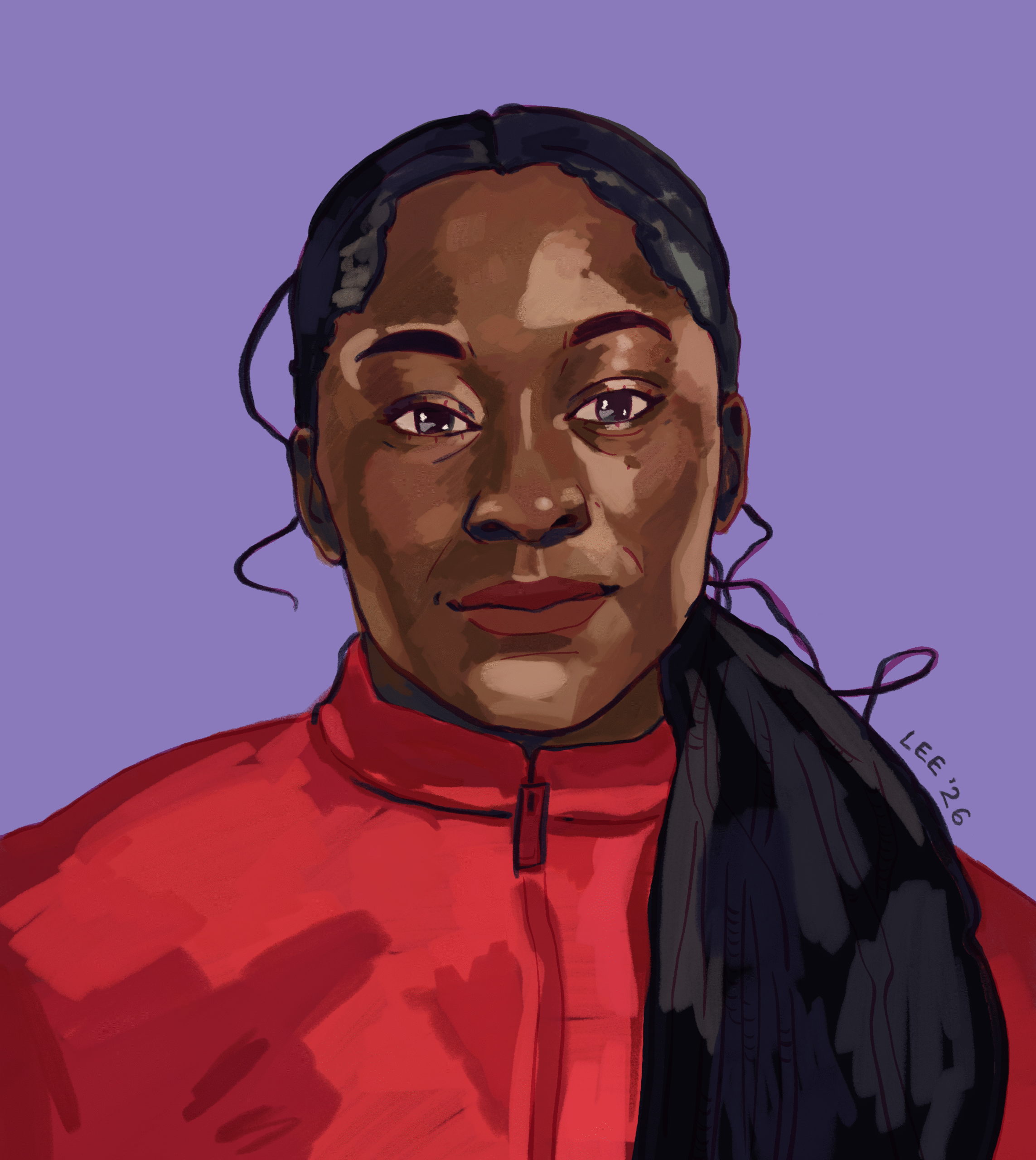
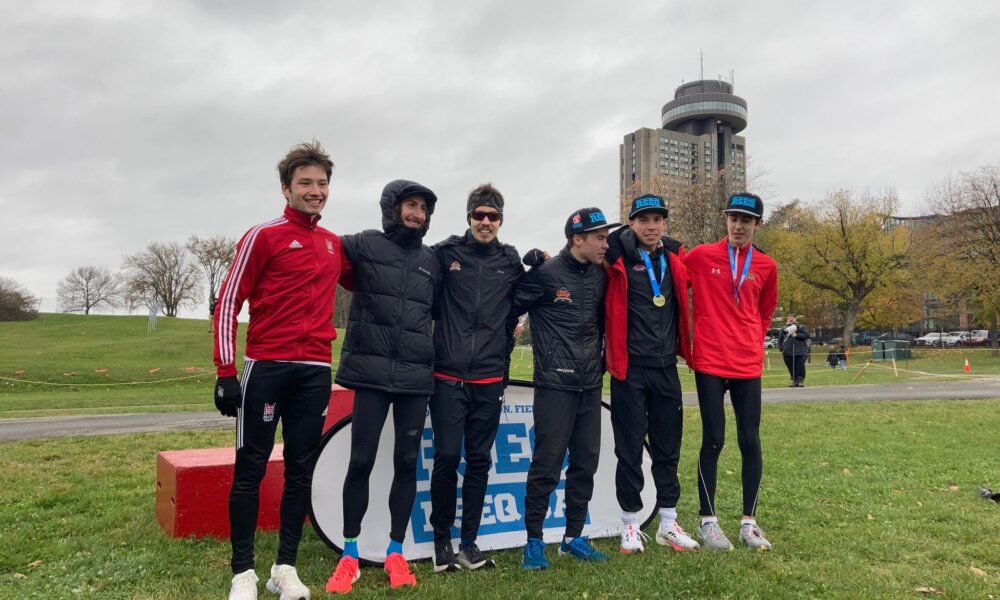
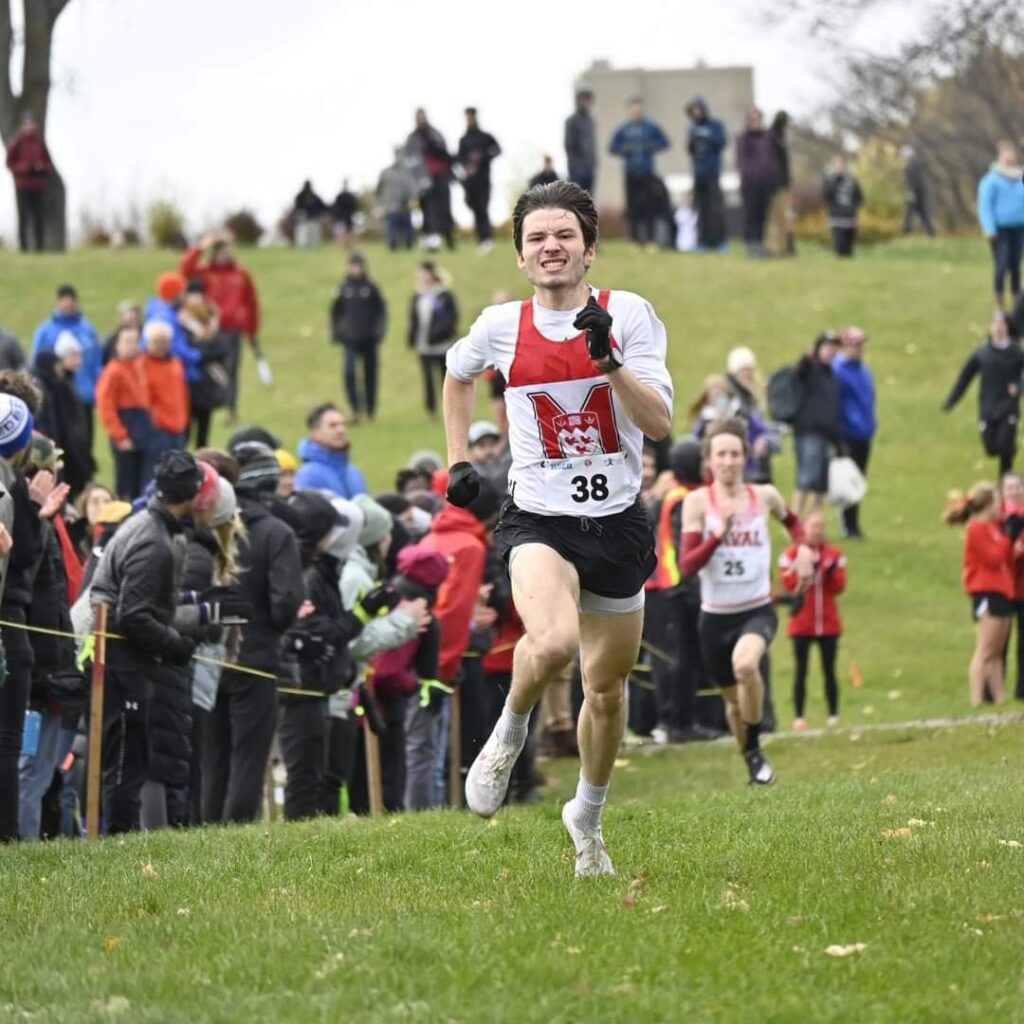
Matthew Beaudet has had a successful cross-country season, to say the least. On top of winning an invitational and being named RSEQ athlete of the week, Beaudet won gold at the RSEQ Championships on Oct. 30 and was named rookie of the year. Although fairly new to competitive running, Beaudet has quickly found his stride on the Redbirds cross-country team.

“In high school, I played more team sports like hockey, football, and soccer, and during the winter we would have speed and agility training. Once I got into my last year of high school, I was enjoying that more than […] going to the gym or playing football,” Beaudet said in an interview with The McGill Tribune. “So I decided that I was going to continue in CEGEP. I started with sprints, but […] I think I have a better aptitude for long-distance, so now I run the 1500 metre [for track] and five kilometre for cross-country.”

With all the running he does, Beaudet finds that listening to artists such as Arlo Parks or Ninho helps the kilometres go by a little easier.

“I know some people say it is better if you don’t, but I find that it is so much easier to get through the run listening to music,” Beaudet said.

Although races can be very difficult, Beaudet uses post-race rewards as motivation. He often stopped at Lemaire, a traditional poutine restaurant, on his way home from races in Quebec City this past summer.

“They make the cheese curds there and it’s fresh and really good,” Beaudet said. “So if the race was good, it is a celebration to get a poutine, and if it was a bad race, to console myself I would also stop to get a poutine.”

As a second-year student studying electrical engineering, Beaudet has a busy schedule. Despite this, he often runs twice a day—before and after a full day of challenging courses. Outside of running, however, Beaudet also finds time to make a difference in his community. After a long-term injury forced him to take a six-month running hiatus, Beaudet started coaching and found the experience extremely gratifying.

 “A lot of kids find running track and field pretty difficult, so it’s nice to see them become more confident,” Beaudet said. “It’s nice to see and to know that you might have played a small part in that.”

In his free time, Beaudet likes to read. One of his favourite books is The Emperor of All Maladies, which looks at the history of cancer from the perspectives of patients, physicians, and government lobbyists. He also enjoys books about spies during the Cold War.

“I read this book recently called Agent Sonya about this USSR agent who was the greatest female spy,” Beaudet said. “Her life was crazy—you couldn’t make it up.”

For anyone looking to start running, Beaudet sees patience and consistency as key to overcoming the initial hurdles of training. 

“You are definitely out of breath on your first runs, but you improve really quickly in the first month and you surprise yourself,” Beaudet said. “Discipline and consistency are the most important things because you are bound to get stuck at some points. But if you keep going, it could be three months, it could be six months, but you are going to break through at a certain point.”

And if you want an extra boost, Beaudet swears by drinking beet juice the week of a race to enhance his performance. 

For now, Beaudet looks forward to the U Sports Nationals, which will take place on Nov. 20 in Quebec City. And one thing is for sure—win or lose, he will be getting poutine after.

Features

The human cost of a warmer future

This summer, I spent most of my time working and hiking. If I wasn’t running around helping a client find something at the pet store I worked at, I was running around the woods with a backpack full of snacks, coffee, and water. I ventured past the city of Montreal to McGill’s Gault Nature Reserve at Mont St-Hilaire or to Mont-Rigaud, close to the Ontario-Quebec border. For the few hours I was in the woods, I left my earphones in the car and shut my phone off so that I could enjoy the sounds of rustling leaves, streams, and the occasional birdsong. 

One Tuesday toward the end of July, I was staring out the window at work planning my next excursion when I noticed how hazy the sky was. In fact, it was more than hazy: It was smoky. I soon realized that it was actual smoke, so much of it that I could not make out the cars on the other side of the parking lot, maybe only 200 metres away from me. When I looked at the sun, I could barely tell where it was in the sky. It was like a fever dream. I stepped outside expecting to see a building on fire, but there were no flames, no buildings on fire—just heavy air, thick with smoke and the scent of fire. When I left that night, the haze had passed, but the moon was glowing a deep orange colour. 

Later that night, my research revealed the source of the apocalyptic scene as the major forest fires raging across Canada. The moon that night was orange because the smoke particles blocked shorter wavelengths of light, like blue and green. This year, Canada experienced 6,224 wildfires between Jan. 1 and Sept. 15. The week of July 20 saw the highest number of active fires recorded in a week in 2021 since the start of Canada’s official fire season on April 28. The week I noticed the smoky sky, there were 738 active fires. In those seven days, 580.6 thousand hectares of land were burned. 

What startled me was that these statistics represented wildfires in Canada in 2021 alone. As I reflected on just how much the natural world is suffering, I was seized by a strong sense of impending dread. That sense of dread made me extremely anxious, depressed even, about what the future of our planet would be.

This anxiety was not entirely new to me. It was something I had felt it for years, but had buried it deep down because I didn’t want to deal with the reality of the ongoing climate crisis. After witnessing the effects of climate change first-hand, however, I understood I could no longer

Editorial, Opinion

Quebec’s new program takes an ignorant course

On Oct. 24, the Quebec government unveiled a new education program called Culture and Citizenship in Quebec (CCQ). The new course will take the place of the previous Ethics and Religious Culture (ERC) program. Intended to broaden student engagement with Quebec values, the program is currently undergoing a curriculum drafting process for both primary and secondary schools and will be deployed in schools for the 2022-23 school year as a pilot test. The curriculum is slated to be fully implemented by 2023-24. When Quebec Education Minister Jean-François Roberge announced the program, he emphasized that Quebec’s rich cultural legacy should be shared with students but that, at the same time, students could disagree “respectfully.” But instead, the program ends up enforcing an idealized version of Quebec culture that erases  cultural difference and breeds xenophobia. In light of criticisms by Indigenous groups and religious leaders, the Quebec government should halt the CCQ’s drafting process. Only by engaging with the various cultural and religious stakeholders on the land now known as Quebec can the provincial government actualize the program’s goal of dialogue and critical thinking skills.

When the Quebec Liberal Party (QLP) first introduced the Ethics and Religious Culture program  in 2008, the intention was to teach students about the diversity of religions and cultures from an unbiased perspective. Considering how colonial governments used religion to further their imperial projects and how religion often finds itself at the root of global conflict, teaching—rather than proselytizing—religion bridges cultural gaps among students. As the Coalition Avenir Quebec (CAQ) began its secularizing mission—infamously embodied by Bill 21, which  prohibits public servants from wearing religious symbols—they sought out recommendations on how to best secularize the former ERC program. While Quebec’s culture certainly remains influenced by secularism and the legacy of the Quiet Revolution—a period during which the province retreated from the Catholic Church––religion still plays an important part in the lives of many Quebecers. Further, the government should not view religious differences as antithetical to Quebec culture, especially as the province sees rising levels of anti-Semitism and disproportionate violence and discrimination against Muslims. Under both Bill 21 and the CCQ, female Muslim teachers will continue to be stripped of their freedom of expression and identity, and intolerance and hate crimes toward Muslims risk seeing an even greater increase. Even if secularism belongs in education, students will not become citizens of the world, nor will they grasp the full picture of Quebec’s culture, through the total erasure of religion.

A major critique of ERC that provoked its revision was its focus on multiculturalism. A national right-wing promotion of a citizenship “values tests” set the groundwork for a closed-minded approach to Quebec culture. Such an approach has fueled nationalist extremism at the expense of minorities. Similar to comprehensive sexual education, students should be provided space to discuss religion openly. A fear of sharing or expressing one’s religion can create stigma and have disastrous impacts on identity formation. Teachers should be trained to explain religion, ethnicity, identity, and all their complex intersections, to foster a safe and inclusive environment.

The purpose of CCQ itself remains suspect, especially due to the government’s lack of consultation with Indigenous groups to whom the land belongs. Premier François Legault repeatedly denies the presence of systemic racism in the province and the non-Indigenous Minister of Indigenous Affairs Ian Lafrenière claimed that Indigenous groups had been consulted, despite the fact that many groups refute this. Exercises in promoting Quebecois culture and “nation”-building run counter to Indigenous peoples’ sovereignty and well-being. Quebec should move away from settler-colonial pedagogy, and toward championing Indigenous culture. Only then can students, teachers, and the province tap into the tenets of equality, conscience, and self-respect the CCQ aims to realize. 

As it stands, Quebec’s redrafting process signals that freedom of expression in the province is only given to those who submit to CAQ’s narrow doctrine, rules, and guidelines. Legislating a strict, “nationally cohesive” culture through the education system may be a clever political move to harness power from rural and suburban Quebecers detached from the religious diversity of Montreal and Quebec City. However, without proper consultation with Indigenous groups and religious minorities, the program will obscure differences to marginalized groups’ harm and majority groups’ ignorance.

Read the latest issue

Read the latest issue