
Latest News

Art, Arts & Entertainment

‘Human Weighted Blanket’ experiment aims to smother anxiety through platonic touch

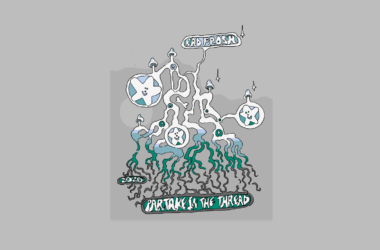
After months of strict isolation and social distancing regulations, many are missing the comfort of a good hug. Self-proclaimed “Artivist” Red Jay, a.k.a. Joshua Oliver, has created a remedy for the loneliness the pandemic has fostered. On World Mental Health Day, October 10, Red Jay presented a two-part exhibit called the “Human Weighted Blanket,” which offered a professional platonic touch workshop both in person and online.

Red Jay was inspired by a viral tweet about two nurses’ ingenuity in an ICU ward in Brazil. To soothe COVID-19 patients whose illness made it impossible for loved ones’ physical comfort, nurses filled gloves with warm water to simulate human touch, calling it “the hand of God.” Jay also drew inspiration from the 1950s “happenings” movement, which implicated viewers in performative and situational art forms. These acts of creative kindness led him to create his own performance piece to highlight—and help ease—mental health struggles. By gathering a group of professional touch therapists, Red Jay hosted a space for people craving human touch.

One half of the exhibit is a short video, which Jay calls a “virtual hug.” The film depicts three participants affected by anxiety, depression, and complex post-traumatic stress disorder who are invited to test a “special” weighted blanket. Unbeknownst to them, the “blanket” is a session with four professional touch therapists who specialize in somatic bodywork, massage, and cuddling—quite literally a “Human Weighted Blanket.” From there, they calm the participants through a combination of group meditation and massage therapy. Although each participant’s time with the touch therapists is short, the participants visibly relax. One participant, named Bella, described how their struggles with gender dysphoria caused them to associate their body with pain. However, after their experience with the “Human Weighted Blanket,” Bella realized their potential to heal and associate positivity with their body. 

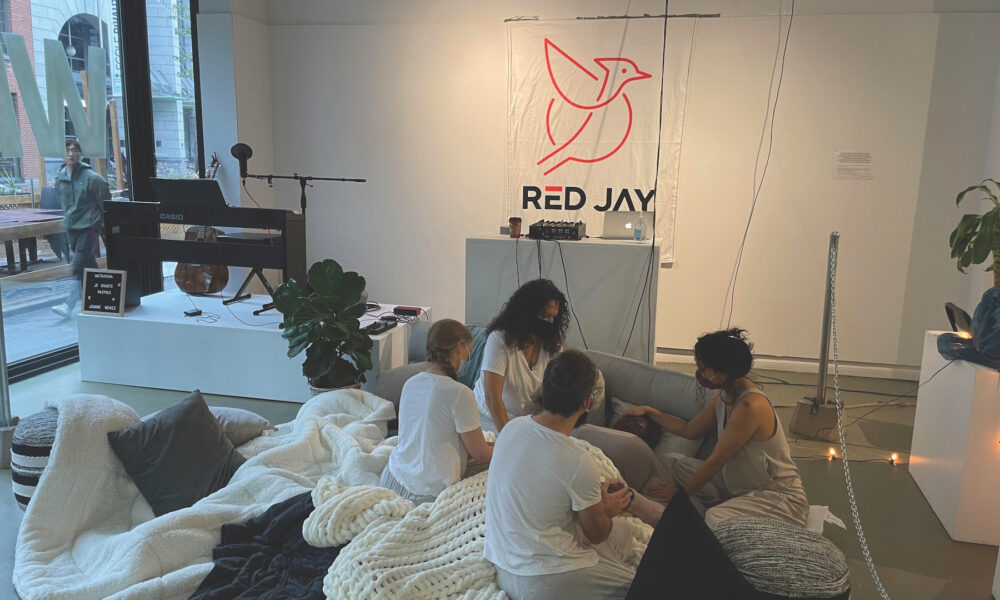
The exhibit’s other half sees participants—chosen at random from consenting bystanders at the exhibit—and viewers get to see the therapists and the “Human Weighted Blanket” in action. Each participant starts their session by talking with the therapists. The professionals ask how they can be helpful and also give a quick overview of the types of therapies they offer. The participants lead the session, deciding their positions, setting boundaries, and communicating with the professionals throughout the entire process. 

“The way to make a cuddle good is by expressing what it is that [the participant] desire[s], but the most important thing is establishing communication and trust,” professional touch therapist Sharon Lopez said in an interview with The McGill Tribune

Given that the experience is a collaboration between the experts and participants, the therapists adapt to the person’s needs and comforts. By constantly checking in with their participant, the therapists can maintain consistent consent, making it a positive experience for both parties.

Although the idea of being cuddled by strangers may seem odd, participants find comfort and peace in the trusting warmth of the “Human Weighted Blanket.” At a time when human interaction is scarce, Red Jay celebrates the healing potential of physical platonic touch that was taken away during the pandemic.


After months of strict isolation and social distancing regulations, many are missing the comfort of a good hug. Self-proclaimed “Artivist” Red Jay, a.k.a. Joshua Oliver, has created a remedy for the loneliness the pandemic has fostered. On World Mental Health Day, October 10, Red Jay presented a two-part exhibit called the “Human Weighted Blanket,” which offered a professional platonic touch workshop both in person and online.

Red Jay was inspired by a viral tweet depicting two nurses’ ingenuity in an ICU ward in Brazil. To soothe COVID-19 patients whose illness made it impossible for loved ones’ physical comfort, nurses filled gloves with warm water to simulate human touch, calling it “the hand of God.” Jay also drew inspiration from the 1950s “happenings” movement, which implicated viewers performative and situational art forms. These acts of creative kindness led him to create his own performance piece to highlight—and help ease— mental health issues. By gathering a group of professional touch therapists, Red Jay created a space that gives “hands of God” to non-COVID affected people who are craving human touch.

One half of the exhibit is a short video, which Jay calls a ‘virtual hug.’ The film depicts three participants affected by anxiety, depression, and complex post-traumatic stress disorder who are invited to test a ‘special’ weighted blanket. Unbeknownst to them, the ‘blanket’ refers to four professional touch therapists who specialize in somatic bodywork, massage, and cuddling. From there, they calm the participant through a combination of group meditation and massage therapy. Although each participant’s time with the ‘blanket’ is short, the participants visibly relax. One participant, named Bella, described how their struggles with body dysphoria caused them to associate their body with pain. However, after their experience with the ‘Human Weighted Blanket,’ Bella realized their potential for healing and associating positivity with their body. 

The exhibit’s other half is the actual ‘Human Weighted Blanket,’ where participants—chosen at random from consenting bystanders at the exhibit—and viewers get to see the therapists in action. Each participant starts their session by talking with the therapists. The professionals ask how they can be helpful and also give a quick overview of the types of therapies they offer. The participants lead the session, deciding their positions, setting boundaries, and communicating with the professionals throughout the entire process. 

“The way to make a cuddle good is by expressing what it is that [the participant] desire[s], but the most important thing is establishing communication and trust,” professional touch therapist Sharon Lopez said in an interview with The McGill Tribune

Given that the experience is a collaboration between the experts and participants, the therapists adapt to the person’s needs and comforts. By constantly checking in with their participant, the therapists can maintain consistent consent, making it a positive experience for both parties.

Although the idea of being cuddled by strangers may seem odd, participants find comfort and peace in the trusting warmth of the ‘Human Weighted Blanket.’ At a time when human interaction is scarce, Red Jay celebrates the healing potential of physical platonic touch that was taken away during the pandemic. 

Out on the Town, Student Life

Uncovering Montreal’s indie coffee shops

Coffee has long been synonymous with university life—students rely on caffeine boosts to fuel up for early morning classes or power through late-night study sessions. Luckily, those in pursuit of a perfect study spot and cup of coffee can explore Montreal’s many indie coffee shops and roasters. //The McGill Tribune// highlights the distinct stories and features behind a selection of these shops.

1. Le Brȗloir – 318 Rue Fleury Ouest 

Le Brȗloir, roaster and coffee shop, prides itself on providing high-quality coffee products to customers. Since its opening 10 years ago, Le Brȗloir has become a centrepiece of its neighbourhood,  fostering a of community of local coffee lovers. It has subsequently expanded to include Le Petit Brȗloir, a smaller sister shop, located a short walk away from the McGill campus at 8485 St. Laurent Boulevard.

Vincent D’Aoust, the owner of Le Brȗloir, enjoys seeing community members from all walks of life enter the cafe. 

“The essence of our coffee shop is bringing people together,” D’Aoust said in an interview with //The McGill Tribune//. “[We provide] a very warm atmosphere [with a] close-knit, eclectic clientele that ranges from young students to neighbouring families to retirees.”


Le Brȗloir has a unique roasting process: it uses an in-house roaster to produce its coffee, where coffee beans are heated to different temperatures based on the type of roast, allowing the shop to create a variety of flavours. 

Le Brȗloir has built close relationships with farmers in Honduras, whom they purchase their coffee beans from. In supporting individual small-scale farmers, Le Brȗloir hopes to help support an ethical supply chain. 

“We serve coffee, but we understand the supply chain,” D’Aoust explained. “Having relationships [with the farmers] makes us more passionate about what we do.” 

2. Pikolo Espresso Bar – 3418b Park Avenue

If you’re in need of a caffeine boost or a study space located just minutes away from McGill’s main campus, look no further than Pikolo Espresso Bar. Pikolo is a quaint, timeless coffee shop known for its rich lattes, lightly roasted coffees, and delicious baked goods.

Pikolo Espresso Bar’s founder, Marie-Eve Laroche, has been passionate about coffee for years. After working in a coffee shop in Whistler, British Columbia as well as on a coffee plantation, Laroche opened up Pikolo in July 2011.

Laroche’s time working on a coffee plantation was a major turning point for her love of coffee and knowledge of the craft. 

“That’s really where I went deeper into understanding coffee from crop to cup,” Laroche said. “I realized, ‘Wow, this is what I wanna do.’”

Pikolo’s unique environment and community, fostered by students, are its greatest attractions. The shop hosts a warm, cozy, and comfortable ambience, with old-fashioned, rustic undertones.

“[Pikolo’s atmosphere] is very vintage and industrial, which really fits with the neighbourhood and the old building,” Laroche said. “It has a lot of character, and a fun, young energy.”

3. Structure Coffee Roasters – 460 McGill Street

Structure Coffee Roasters, located just outside of Montreal’s historic Old Port, is a community-oriented roaster and coffee shop. 

One of Structure’s co-owners, Marco Dieckmann, discovered his passion for coffee after visiting locally owned coffee shops across 40 different countries.

“There’s no better travel guide to a city than getting to know a local coffee shop,” Dieckmann explained. “[Structure] is our Montreal take on specialty coffee [….] Our coffee is both roasted and packaged with care in Montreal.” 

Incorporating elements of Japanese and Scandinavian style into its design, Structure blends the heritage of its location with its modern ethos. 

“While being in a century-old building, we wanted to give a contemporary approach to presenting the coffee,” Dieckmann said.

Above all, Dieckmann recognizes that the cafe is about more than just the coffee and values the close relationships Structure has fostered.

“The whole coffee business is about people [and] the relationship between the baristas and clients,” Dieckmann said. “Coffee connects the people.”

Campus Spotlight, Private, Student Life

A feathered allure: Flocking to McGill’s birding community

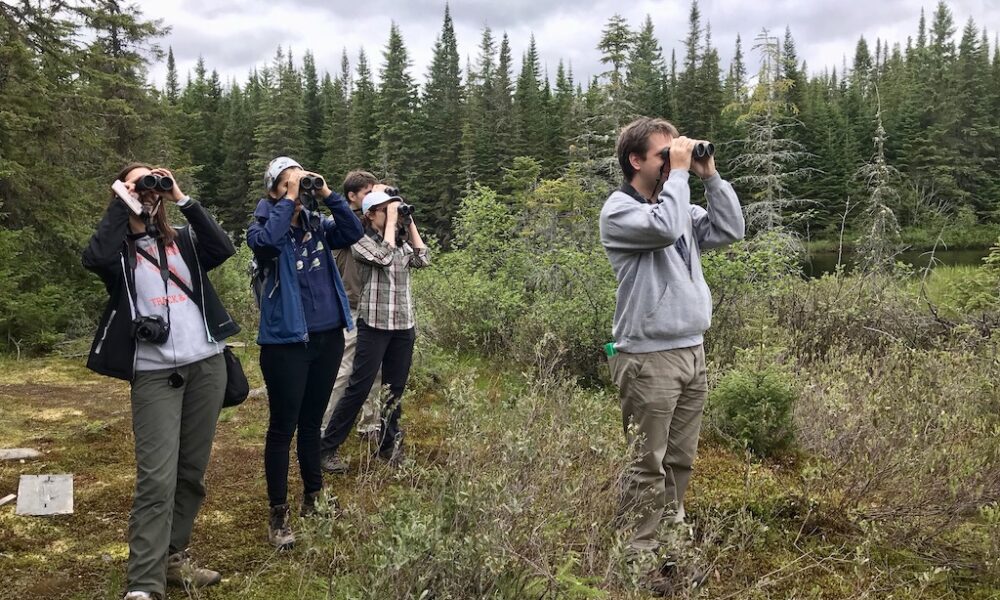
The founders of the McGill Students’ Birding Club (MSBC) met six years ago while taking WILD 420, an ornithology course at McGill. Since the club’s creation, birders of the McGill community have had a place to congregate and share their love for our feathered friends. 

On the club’s Facebook group, members share photos and videos of their sightings as well as news on conservation threats to local bird habitats. Members sometimes request the community’s help in identifying a certain species spotted outside their window or a specific high-pitched call heard on a hike. A few months ago, one member posted an audio recording of bird sounds they recorded on Mont-Royal and said they planned to use it in composing a piece for the McGill Symphony Orchestra. 

One aspect that unites those who flock to the bird-watching community is a curiosity for the environment, explained Anthony Zerafa, M.Sc.’22 and one of the club’s four founders.

“I’ve always had a deep fascination in the natural world, not just birds,” Zerafa said. “[Bird watchers] are interested in the world around them and want to learn more.”

With such an appreciation for the wild, many bird watchers are either already involved in environment conservation efforts or have become involved through birding. 

“When you start to appreciate and learn about the wildlife that can be found around you, you then want to ensure that that wildlife is protected,” Zerafa said. “You want the place you like to go birdwatching, where you may have had many fond memories, to continue to be a good habitat for the birds.” 

After an excursion, birders will often post about their experiences and list the species they spot, taking care to note rarities. Though a successful birding trip requires patience, quiet, and more observance than action, the excitement lies in the accumulation of experience and knowledge. 

“It really can be overwhelming at times when you first start out, but once you start to get a sense of the different birds that are in the environment and what you can see at different times of years, it quickly becomes addictive,” Zerafa said. “It’s very much like Pokemon Go, but in real life.” 

Even as someone with no birding experience, I was reeled in by the passion and flair with which the bird watchers recounted their sightings. As each encounter is unpredictable, the accounts can resemble action adventures, keeping both the birder and reader hooked. 

“Guess it’s time to head home,” one member wrote in a post shared to the Facebook page. “But no! The surprise: A ring-necked pheasant saunters out of the nearest shrubbery, to hang with his buddies the Fox sparrows. Much celebratory dancing.”

In the U.K., birding’s allure is only sometimes a relaxing pastime—other times, it is channeled into aggressive fervor. British twitching, extreme competitive birdwatching, leads to fierce rivalries, “twitcher madness,” and even tricks of sabotage. 

However, for McGill’s community of bird watchers—and for most elsewhere—the hobby remains rooted in a communal appreciation of the vast number of species waiting to be admired. 

“I mean, who cares in reality, if you’ve seen the most birds,” Zerafa said. “It’s mostly just personal competition, trying to challenge yourself to see as many species as possible.” 

Prior to the pandemic, the club hosted weekly bird watching outings and annual day trips to farther birding locations, including Amherst Island in Kingston, Ontario or Victoriaville, a two-hour drive from Montreal. They hope to resume excursions in the upcoming weeks. 

Beginner’s Guide to Birding in Montreal 

Locations

Montreal Botanical Garden: The Garden’s diverse mix of habitats attract a large variety of species and is free to visit during the winter months. 

Mont Royal Cemetery: The Cemetery’s many fruit trees make it a prime spot for bird watchers. 

Morgan Arboretum at MacDonald Campus: The Arboretum has one of the highest numbers of breeding species on the island. 

Tools 

Binoculars: Scan for movement, then train your binoculars when you believe you have spotted a bird. 

Mentor: In order to identify a bird from sight, sometimes only sound, prior knowledge is needed. Zerafa recommends joining others’ excursions or having an experienced mentor provide guidance. 
Merlin Bird ID App: A popular app among bird watchers, Merlin helps identify bird species through visual cues and sound.

Art, Arts & Entertainment

MMFA’s ‘The World of Yousuf Karsh: A Private Essence’ captures the nobles of the 20th century

Situated on the third floor of the Montreal Museum of Fine Arts, The World of Yousuf Karsh: A Private Essence displays 111 works by Yousuf Karsh, one of Canada’s most well-known portrait photographers. Having immigrated to Canada from Armenia at a young age, he eventually gained fame and recognition on the world stage for his work as a portraitist. At first glance, the exhibit exudes a serious air, akin to the feeling of flipping through a grandparent’s childhood album. The tone of the Sunday morning crowd studying Karsh’s photos was one of quiet wonder. The exhibition reflects many of the qualities that make Karsh’s work so unique; though at first the portraits appear unassuming, upon further examination they stun with their breadth of knowledge and experience. 

Filled to the brim with Karsh’s signature silver gelatin black and white photographs, the first of the exhibition’s three rooms is similar to the quiet stoicism of a library. However, the portraits lose this solemnity once viewed up close, for beneath all their formality, the people pictured emit a warmth and liveliness. Arranged in chronological order, the photos in the first room are simple scenes, like his first wife standing beneath a tree or his teacher reading the newspaper. After 1941, they explode into a myriad of celebrity portraits, becoming a window into 20th-century high society.

Displayed prominently at the entrance is Karsh’s most famous photo, The Roaring Lion, which depicts Winston Churchill on a visit to Canada in 1941. It is the same picture, interestingly enough, used on the five-pound British note. Dominating the room with its stateliness and singularity, the portrait is a reflection of what many describe as the characteristics of Churchill himself. This capturing of a person’s essence extends through all of Karsh’s work, from Audrey Hepburn and Nelson Mandela to Canadian steelworkers and farmers.

Although primarily known for his celebrity portraits, Karsh considered his photographs of Canadian workers to be an important part of his portfolio. Karsh depicts these workers as they stand covered in motor oil or knee-deep in grain, looking perfectly at ease next to neighbouring photos of Albert Einstein and Glenn Gould. While the exhibit presents only a few of these modest shots, one of Karsh’s quotes regarding assembly workers speaks volumes: “I tell you, these workers are the peers of those men who are better known. I say this not in disparagement of the great ones, but in humble recognition of the same qualities of greatness in these industrial workers.”

Karsh masterfully captures each individual’s nuanced personality, highlighting even the most subtle expressions. Next to the photographs, short anecdotes of Karsh’s conversations with the people in his portraits enhance the overall experience, allowing viewers to feel as though they know these individuals personally, as if they had been transported back in time to the 20th century. In The World of Yousuf Karsh: A Private Essence the complexity and greatness of individual personhood are fully encapsulated.

The World of Yousuf Karsh: A Private Essence is on display at the Montreal Museum of Fine Arts located at 1380 Sherbrooke St. W until January 30, 2022.

Student Life

Friendsgiving takes many forms among students

Friendsgiving, a Thanksgiving celebration among friends, holds a beloved place in the hearts of students, sometimes even more than its familial alternative. For those who find themselves away from home or simply wish to gather with loved ones, Friendsgiving celebrations foster unique forms of bonding and expressions of gratitude among students. 

Especially due to the fraught history of Thanksgiving, many students choose to focus on expressing gratitude through alternative celebrations. Though it borrows its name from Thanksgiving, Friendsgiving is popular precisely for its casual structure. Since it’s not beholden to any set of familial traditions, it can take different forms for each group of friends. 

For Cathleen Ma, U2 Arts and a second-generation Chinese immigrant, Thanksgiving has never been a part of her family tradition or culture. In university, she used the reading break to see friends kept apart by busy schedules. 

This year, Ma took part in a Friendsgiving potluck celebration. Some brought store-bought items for a stress-free evening, while others made cultural foods. The dinner table was transformed into a mosaic of diverse offerings, including Tandoori rice, a vibrant veggie stir-fry, rotisserie chicken, and even Madeleines. 

“It wasn’t traditional at all,” Ma said. “There was a huge variety of dishes that people made that I could never make at home.”

An occasion often used to gather with one’s chosen family, Friendsgiving conjures images of exclusive, tightly knit groups. But platonic bonds, unlike blood relations, can be more easily formed between strangers. With people bringing their siblings and acquaintances from different social circles, Ma’s friendsgiving brought new and old friends together. 

“It definitely differed from our usual get-togethers because there was [others’] family there […] and it wasn’t just a singular friend group,” Ma said. “It was an opportunity to get to know all these different people.” 

Faith Ruetas, U2 Arts, celebrated the holiday on a smaller scale with her roommate. They made lentil and mushroom Wellington, a dish the two had never tried before, and then went the lazier route for dessert, indulging in a premade blueberry pie. 

When away from loved ones, perhaps one of the best reassurances one can provide is the snapshot of a good meal. Before eating, Ruetas and her roommate arranged and decorated their dinner table before sending pictures to their families. 

“I was really proud of our spread,” Ruetas said. “My popo responded with one word: ‘Wow.’ Even though we’re in different provinces, I’m happy I was still able to share something with her.” 

Arantza Fernandez and Christal OuYang, both U3 Arts, also celebrated the holiday together this year. Though Fernandez is from Mexico, where Thanksgiving isn’t typically celebrated, her time in Montreal led her to observe the holiday with her family.

“It’s not a thing in Mexico,” Fernandez explained. “Last year when I [was] back home in Mexico, I forced my family to have Thanksgiving with me.”

OuYang has always stayed in Montreal for the holiday.

“I’m from Vancouver, and I usually do not go home for Thanksgiving just because Thanksgiving is not really like a big celebration for us,” OuYang explained.

This year, Fernandez and OuYang organized a dinner among friends where each person brought something to the table.

“I think Friendsgiving is having all of the people you care about come together and everybody contributes something in a collaborative effort,” OuYang said.

The meal consisted of chicken, cranberry walnut salad, vegan shepherd’s pie, cranberry sauce, a green bean casserole, carrot cake, banana bread, and wine. They turned all the lights off and listened to a playlist combining jazz and classical music. 

“We played a little game where we were not allowed to talk until we finished all the food and drinks,” OuYang explained. “[We got] to really appreciate each other’s company without words.”

McGill, News, The Tribune Explains

Tribune Explains: McGill’s new COVID-19 initiatives

In a university-wide email sent out Oct. 7, McGill announced four new COVID-19 initiatives to help track and curtail the spread of COVID-19 on campus. The protocols, which are being implemented throughout October, include measuring CO2 levels to assess the efficiency of ventilation systems; testing wastewater in student residence buildings; distributing thermometers to those in residence; and establishing a new COVID-19 dashboard to distribute weekly updated data. 

Why is McGill measuring CO2 levels in some of its buildings?

CO2 builds up when ventilation is poor, so measuring CO2 levels is a way to track whether ventilation systems are operating properly. Some of McGill’s classrooms and exam rooms already have CO2 monitors, but others do not—a fact that prompted the university to conduct a systematic review of CO2 levels in spaces that previously went unassessed. Testing began on Oct. 4 and continues to be carried out by internal and external Subject Matter Experts (SME). The analysis is set to wrap up on Oct. 26. McGill has yet to announce next steps after the SMEs data is collected. Currently, the “Ventilation in your building” page details the ventilation statuses in specific rooms on campus.

What is wastewater sampling and how would it help prevent COVID-19?

Wastewater sampling is currently underway at La Citadelle, Carrefour Sherbrooke, Royal Victoria College, and Solin Hall. McGill says it will expand the sampling to other residences soon. By sampling the wastewater from these buildings for evidence of the COVID-19 virus, McGill hopes to be able to detect potential COVID-19 outbreaks early. The university has devised three alert levels—vigilance, precursor, and outbreak—that can be activated at residences depending on the results of wastewater sampling. 

To support self-monitoring for potential symptoms of COVID-19, the university has decided to dispense 80 forehead thermometers to floor fellows and reception desks—which will be available to students upon request—and 750 personal stick thermometers, which are being given to students directly.

What is the new COVID-19 Situation Dashboard?

Another initiative McGill has rolled out is the implementation of a COVID-19 Situation Dashboard, which is updated every Tuesday and provides COVID-19 information from the past week. The dashboard provides information about campus and library traffic data, the number of new cases on campus, the number of cases linked to McGill classrooms, the number of calls to the Case Management Group (CMG), and the amount of contact tracing the CMG has conducted. This is more data than was previously available to the McGill community through the COVID-19 case tracker, which only stated the number of confirmed cases in a given week and whether there was evidence of community transmission.

What prompted McGill to implement these extra protocols?

Frédérique Mazerolle, a McGill media relations officer, says these new measures were devised in conjunction with public health officials and demonstrate McGill’s ongoing vigilance toward protecting the community.

“McGill University is working closely with public health officials to adopt policies and put into practice measures to protect students, staff and faculty. The University will continue to take a prudent planning approach that allows us to adapt as the health and well-being of our community remains a top priority,” Mazerolle wrote in an email to the //Tribune//. “The initiatives […] will provide new means of monitoring, keep the community informed with the latest data from around the McGill community and encourage and facilitate vaccination, which remains the best way to keep individuals, and the community at-large, safe.”

What is the McGill community’s reaction to these new measures?

David Juncker, chair of the Department of Biomedical Engineering, believes these new initiatives are useful, but wished they were implemented sooner. Juncker feels that there is still more that McGill could do to keep the community safe, such as requiring vaccination and implementing rapid testing. 

“I wish they had started [CO2 measurements] at the beginning of the semester, and I would encourage [McGill] to proceed faster and to make the results available publicly as soon as possible,” Juncker wrote in an email to the //Tribune//. “[T]he university should develop a strategy for using rapid tests under different modalities based on epidemiological modeling and cost-benefit analysis. Depending on the situation, twice a week screening for everyone could help catch many cases. Alternatively, rapid tests could be used as tests-to-stay or tests-to-enter for people who […] have mild symptoms.”

McGill, News

McGill holds annual Queer History Month themed “Coming Together”

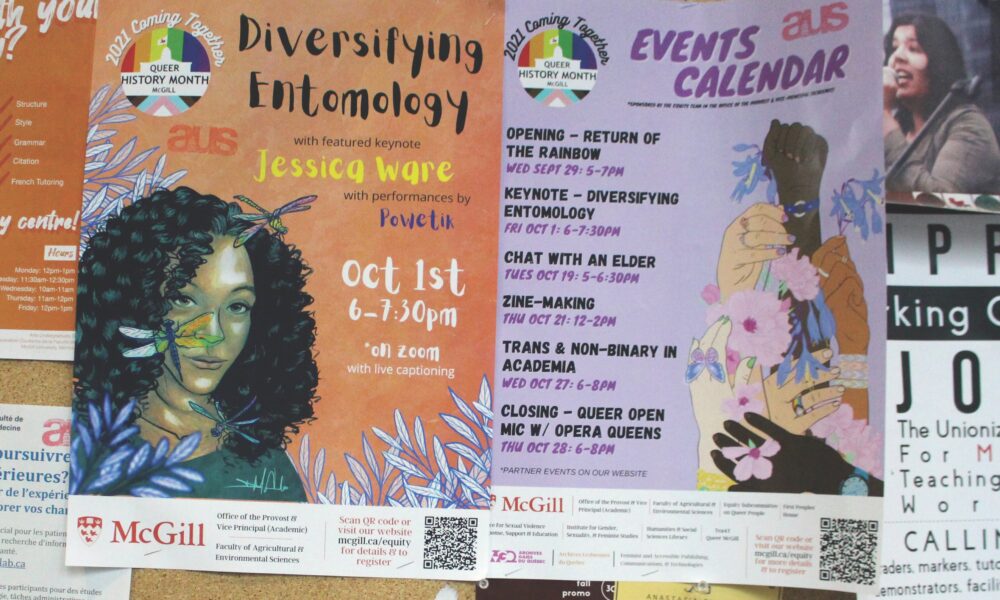
Throughout October, McGill is holding a series of events in honour of Queer History Month, ranging from public talks to workshops, centred around the theme, “Coming Together.” The month opened with a homecoming event called “Return of the Rainbow,” which featured Kanien’kehá:ka Elder Kawennotas Sedalia. The event brought together former and current McGill queer community members, including staff, students, and faculty, to foster connections through relationship-building activities and to provide a safe space to share personal stories.

McGill’s Equity Education Advisor (Gender Equity and 2SLGBTQIA+ Education), Andrea Clegg, shared the meaning behind this year’s theme in an interview with The McGill Tribune.

“The theme ‘Coming Together’ is connected to the opening up of communities, including the McGill campus, in relation to the pandemic,” Clegg said. “[It is about] having a renewed opportunity to come together and celebrate and affirm our identities, something […] that varied communities have been impacted by in terms of the COVID pandemic.”

Honouring Queer History Month at McGill is important, explained Clegg, in that it provides space for celebrating members of the 2SLGBTQIA+ community and also includes a commitment to work toward further equality at the university.

“[Queer History Month at McGill] is an opportunity to come together, connect, celebrate our achievements, and identify ways we still need to continue to move forward on issues,” Clegg said.

While the month is primarily organized by the Office of the Provost and vice-principal (Academic) (OPVPA), they partner with many other groups to organize a wide range of events. One such group is McGill’s Subcommittee on Queer People (SQP), which submitted a formal motion to the McGill Senate in May 2021 for Queer History Month to be held and hosted the Return of the Rainbow event. Hiba Zafran, chair of the SQP, underscored the importance of adopting an intersectional approach in an email to The McGill Tribune.

“Equity and accountability are only possible when we both resist white supremacy and coloniality, and queer-ify, amplify and rebuild our ways of doing—together,” Zafran wrote. “It is our collective responsibility to promote the wisdom of, and leadership by, those of us with experiential knowledge. Queer History Month is one of the spaces where we can come together to envision such a politics and ethics for belonging.”

A handful of student-run groups helped organize Queer History Month as well. Queer McGill, a SSMU support service and the oldest queer organization on campus, hosted a documentary screening on Oct. 13 as part of the month’s programming. Jordan Elbualy, U4 Arts and an event coordinator for Queer McGill, spoke to the Tribune ahead of the screening and expressed his appreciation for the month’s events.

“I think [Queer History Month] shows that the administration cares about us a little bit,” Elbualy said. “I like it. It kind of takes the pressure off of Queer McGill’s shoulders not being the only Queer advocacy agency at McGill [and the Queer History Month organizers] do some really good work.”

For more information on Queer History Month and the events being held, visit the official page.

Queer students looking for support can visit Queer McGill’s Facebook.

McGill

McGill floor fellows fight for better wages, meal plans, working conditions as collective agreement negotiations drag on

It has been 15 months since the expiration of the collective agreement (CA) between floor fellows—upper-year students who live in residences to support students—and McGill. A new agreement has yet to be instated as parties remain in deadlock over issues such as the fellows’ wages, meal plan dollars, guest policies, and the university’s reluctance to include harm-reduction and anti-oppressive principles in the CA.

Floor fellows have been operating on a grey interim agreement since the previous CA expired on July 2, 2020. This means that they are compensated according to the expired agreement and also defer to the rules and regulations set out within it.

In an interview with The McGill Tribune, Chris Soong, a first-year doctoral student studying Collaborative Piano and floor fellow in Solin Hall, explained why a CA is important for floor fellows. 

“[Having a CA] lets us know what we will be responsible for and how we are going to be treated through the year,” said Soong. “Without the collective agreement, if something slips through, there is nothing to hold the administration accountable.”

Under the expired CA, floor fellows receive a meal plan valued at $4,500 a year, the majority of which must be spent on campus at dining halls and cafeterias.  According to sources, Solin Hall floor fellows are allocated $100 a month for groceries, although the average monthly expenditure on food costs in Quebec is estimated to be $328 per person

According to Christian Tonnesen, U3 Science and vice-president floor fellow of the Association of McGill University Support Employees (AMUSE) Unit B, the union representing the floor fellows, AMUSE has proposed to increase the amount of the meal plan to $5,600 a year. They are also pushing for  Solin Hall floor fellows to receive at least half of their compensation in grocery credits—money that can be spent at grocery stores instead of campus dining halls and cafeterias. Soong calculated how far $4,500 goes in a dining hall and concluded that the budget, on average, provides for a meal and a half per day. The meal plan for Floor Fellows has not increased since 2017, although the mandatory meal plan prices for students living in residences have gone up from $4,575 in 2017 to $5,475 in 2020.

Floor fellows live in residence for a fee deducted from weekly paychecks and receive minimum wage—$13.50 an hour—for an expected 13 hours of work per week. Duty shifts such as patrolling hallways are not included in the 13 hours of work and are considered as “additional hours.” This work includes being on duty, which consists of remaining in the building, being sober and accessible to all students, completing supervision rounds. Floor fellows are also responsible for scheduling and attending meetings with the Residence Life Manager, planning activities, and being available to support residents in crisis. In view of these responsibilities, Tonnesen explained, floor fellows are seeking a pay increase.

“The pay is not substantial, especially considering the emotional and physical toll the job takes on us,” Tonnesen said. “We proposed that [pay be increased] to $18 […] and [McGill] came back with a crisp $13.64 an hour.”

AMUSE is fighting for other changes in the CA, such as modifying restrictions on guest policies and compensating Floor Fellows for extra hours during move-in week. Another issue in the negotiation process is McGill’s refusal to include harm reduction and anti-oppressive principles directly in the CA. 

“[In residence, anti-oppression looks like] recognizing that the institutions we participate in are deeply seated in racism and colonialism and actively helping students unlearn these micro-aggressions,” said Tonnesen. “Harm reduction is the basic principle of meeting people where they are at in regards to substance use [.…] I have seen a degradation of [harm reduction] policies. That is the reasoning for needing it in the CA.” 

McGill media relations officer Frédérique Mazerolle declined to comment on details about the ongoing discussion with AMUSE Unit B, writing in an email to the Tribune that “the University will let the conciliation process run its course.”

A previous version of this article stated that floor fellows live free of charge in McGill residences and that floor fellows are expected to do approximately 13 hours of week per week. In fact, fees for living in residences are deducted weekly from floor fellows’ paychecks and the 13 hours of work does not include duty shifts, which are considered additional hours. The Tribune regrets the error.

Science & Technology

Deep learning algorithm predicts early warning signals of climate tipping points

Tipping points are all around us, but it’s hard to see them coming. When a person falls off a bike, a patient has a heart attack, or a campfire escalates to a wildfire, it is nearly impossible to identify the exact moment at which disaster became inevitable.

 But it might not be impossible for much longer.

On Sept. 28, Thomas Bury, a researcher in McGill’s Department of Physiology, and Chris Bauch, a professor at the University of Waterloo, published a paper detailing the development of a new deep learning (DL) algorithm, that identifies early warning signals (EWS) of tipping points in dynamical systems. 

Dynamical systems are all around us and are defined as systems in which many variables interact and evolve over time. From the Earth’s climate to the human body, the organizations and organisms that dictate our quality of life are complex and unpredictable.

DL algorithms can improve their output automatically through experience and the use of data. But even with the help of DL systems, there remains the problem of not having enough data. Artificial intelligence algorithms need to be trained on data sets in order to learn how to recognize and predict patterns. Many of the areas researchers hope to explore, such as climatic dynamics or heartbeats, do not yet have enough data to properly train an algorithm.

However, data does not need to be taken from field experiments for it to be an accurate reflection of real events. Previous research into dynamical systems revealed key patterns about how data changes close to tipping points. By simplifying these patterns and building computer models to represent them, it is possible to generate vast amounts of simulated data that reflect real systems without actually collecting observations in the field.

Using simulated data representing dynamical systems with and without tipping points, Bury and Bauch trained their DL algorithm to recognize which features corresponded to systems with tipping points. Once trained, the algorithm was able to examine new situations, real and simulated, and successfully make predictions about the likelihood of future tipping points. 

Bury, who has been studying tipping points since 2015, is interested in early warning signals in both ecological and medical contexts.

“I am inspired to study tipping points because they arise in such diverse areas of science and society,” Bury said in an interview with The McGill Tribune. “This algorithm, for the first time, combines deep learning and dynamical systems theory to predict tipping points, and does so with better accuracy than previous approaches.”  

Although their algorithm is still undergoing testing to avoid unexplained inaccuracies, the possible applications of such an algorithm are endless. The ability to predict regional tipping points in climate systems could enable governments to prepare for natural disasters, such as floods or droughts, and better adapt to the effects of climate change. 

The algorithm can also be applied to unpredictable events at the individual level. For patients with cardiac arrhythmia, a condition that heightens the risk of sudden death by heart attack, data taken from heart monitors could be used to predict if and when a patient might experience a heart attack.

“Our approach may provide individuals [and] societies with greater forewarning to these events, and therefore allow mitigative [and] preventative strategies to be implemented in advance of the tipping point,” Bury said.

In the world of mathematics, Bury and Bauch are some of the first to study deep learning and dynamical systems simultaneously. 

“I find this research particularly exciting as it has shown that the combination of two seemingly disparate areas of mathematics, deep learning and dynamical systems, provides better prediction of tipping points than either area […] has managed on its own,” Bury said.

Though researchers cannot yet predict the next drought or medical emergency with absolute accuracy, it seems that it’s now only a matter of time before it can. 

McGill, Montreal, News, SSMU

Opposition to the New Vic Project prompts debate at SSMU Legislative Council meeting

The Students’ Society of McGill University (SSMU) held its third Legislative Council meeting of the Fall on Oct. 14. The meeting’s agenda included a discussion about SSMU’s opposition to McGill’s New Vic Project, a presentation from the Office of Sustainability, and councillor nominations to the SSMU Board of Directors.

In response to concerns over the SSMU’s stance against the New Vic Project, vice-president (VP) External Sacha Delouvrier cited various SSMU mandates—including its dedication to affordable student housing—as part of the rationale behind the group’s opposition to the project. 

“SSMU has committed itself through legislation to support the Royal Vic for the Public campaign, which is incompatible with the privatization inherent in McGill’s project,” Delouvrier said. “SSMU’s Affordable Student Housing Committee has further committed itself […] to support the Milton Park’s housing and social efforts as a community partner.”

During the ensuing debate, councillors and other members of the gallery raised concerns about the lack of consultation between SSMU and the heads of the initiative. Members also questioned SSMU’s opposition to the project, pointing out that the blueprints for New Vic promise space for on-site sustainability research and state they  have dedication to “healing the planet.”

Citing his experience as a former student at Macdonald Campus, where sustainability research was shut down due to a lack of facility space, Councillor Tiniacos felt it was a good thing that McGill’s proposal for the Royal Vic would give more space for sustainability projects. 

“Does the executive understand that opposing this project is opposing sustainable research [itself] and the mandate of the university’s […] basis of education and research?” Tiniacos asked.  

Delouvrier maintained that the Royal Vic site could be used in a more beneficial way, suggesting that an affordable student housing project as a better alternative. 

The Council also passed a motion to create the Queer Improvement and Partnership Solidarity (QUIPS) Fund and Fee. VP University Affairs Claire Downie and Gender and Sexuality Commissioner Grey Cooper introduced the motion, stating that the proposed fund would provide financial support for queer students with urgent needs and would also help finance grassroots research that would otherwise not be supported due to institutionalized homophobia. 

Medicine Representative Benson Wan questioned why the fee would be exempt from SSMU’s opt-out program. Cooper responded that non-opt-outable fees for equity programs are standard for SSMU, citing the Indigenous Equity Fund

“It is non-opt-outable, because it is specifically a fee to support minority students in the context of McGill,” Cooper said. “McGill’s general community, and the committee as a whole, believes that should be the precedent, that all SSMU members help support [minority students].” 

The council also unanimously approved a motion proposed by VP Internal Sarah Paulin to revise aspects of the Francophone Affairs Committee to increase its productivity and broaden its scope. 

Moment of the Meeting

VP Finance Eric Sader announced a surplus of $300,000 from the previous projection of the SSMU budget for 2021-2022. According to Sader, the previous VP Finance took a more “conservative” approach to the budget given that last year was online. Sader said he was consulting with department heads, executives, and other staff on where the money should be allocated, but said it would most go toward hiring additional SSMU staff in “overworked portfolios.”

Soundbite

“We take pride in presenting the annual report to all the student associations as a measure of transparency and accountability. Since the students contribute to half of the fund, we feel it is important to showcase what our office has been able to do by distributing those funds in the community and in the impacts that the those projects yielded.”

—Executive Director of Sustainability Francois Miller on the Office of Sustainability’s 2021 Fiscal Year report

Read the latest issue

Read the latest issue