


See you soon, McGill!


Members of our Editorial Board share how they’re spending their time in quarantine.
Video by The McGill Tribune Editorial Board.
My first pen pal was my grandma’s dog, Amigo. He wrote me stories on little scraps of birchbark about his life in the backyard: Digging holes, chasing squirrels, and accompanying my grandma on her walks. He asked me about what I was learning in school, what life was like in the big city, whether or not I was excited to be a big sister. When Amigo died, the correspondence responsibility was transferred to her new dog, Tangles. I was older then, and insisted upon having human pen pals. I loved the idea that my words could be taken anywhere in the world. I was hooked on a hobby that I practice to this day. Since moving to Montreal for university three years ago, I correspond mostly with a close friend from home, Seth Bartusek, and my 10-year-old sister, Hannah Jane. I spoke with both of them about how exchanging snail mail has changed the way they communicate.
McGill Swimming excelled this year, with both the men’s and women’s teams finishing in first place at the RSEQ Championships. At the National Championships, the men’s side placed fourth overall and earned four medals for the first time since 2009. Second-year Clement Secchi stood out, winning two gold medals and one bronze, as well as setting a blazing-fast Nationals record of 25.82 seconds in the 50 metre backstroke. Secchi has driven McGill’s turnaround in men’s swimming in the last two seasons, pushing them higher in the rankings than they have been in years past.
Much of McGill Swimming’s success this season can be attributed to Head Coach Peter Carpenter. In 2020, Carpenter was awarded Fox 40 Men’s Coach of the Year and RSEQ Men’s and Women’s Coach of the Year.
“[Carpenter] has definitely changed me as an athlete,” RSEQ Rookie of the Year Daphne Danyluk said in an interview with The McGill Tribune. “I used to be very anxious about my [performance], which obviously did not lead to the […] results that I wanted. He helped me to have fun and enjoy the sport once again.”
Second-year Maria Gheta led the women’s artistic swimming team to their second consecutive—and 16th overall—national championship title. Gheta’s season featured several remarkable performances, including a duet with her sister Ioana Gheta that earned them first place in the Canadian University Artistic Swimming Finals. She was named Athlete of the Week by McGill Athletics on several occasions. Gheta is leading McGill Athletics in perhaps its most dominant stretch in any sport and will continue to do so in the years to come.
Averaging 17.4 points, 4.7 rebounds, and 1.5 assists in league play during the 2019-2020 season, third-year shooting guard Jamal Mayali led the McGill men’s basketball team to a conference record of 12–4. This was enough to secure the number-one seed in the RSEQ postseason tournament. Mayali’s crafty shooting and foul-drawing style of offence allowed the team to work like a well-oiled machine, with wide floor spacing that kept the lane clear. Mayali’s efforts this season earned him a First Team All-star selection from the RSEQ.
First-year centre back Ariel Carignan came in blazing for the Martlets. Fresh off a promising season at Collège de Sherbrooke, Carignan did not want for highlights this season, ending a six-year losing streak to the Université de Montréal Carabins in October with a curling free kick to win 1–0. This performance earned her an Athlete of the Week from McGill Athletics and RSEQ All-Rookie Team merits. Carignan’s performance helped the Martlets finish the season with an impressive record of 9–4–1. With three years of eligibility left, it is safe to say that we can expect more highlights from Carignan in the years to come.
First-year guard Cameron Elliot had an outstanding season with McGill men’s basketball: He led the team in assists with 93 on the season, almost 30 more than second-place teammate Quarry Whynne, and was third in minutes played for McGill. This well-rounded performance earned Elliot a spot on the RSEQ All-Rookie Team. As well, the guard’s proficiency as an unselfish playmaker bodes well to the future of McGill basketball.
With its legalization in 2018, marijuana, or cannabis, has become more widely accessible to adult Canadians for recreational use. Most people are familiar with marijuana’s usual effects, such as feelings of euphoria and relaxation; increased sensitivity to colour, sound, and taste; clouded thinking; and hunger. Beyond recreational use, however, cannabis has a number of important uses and applications in the biomedical industry.
Cannabis is a genus of flowering plants belonging to the family Cannabaceae. The active chemicals found in cannabis are called cannabinoids, the most notable of which is tetrahydrocannabinol, or THC, which is also the plant’s primary psychoactive compound, responsible for the common “high” feelings. Over 100 cannabinoids have been identified, including cannabidiol, or CBD.
The current and future applications for cannabis in medicine build on a long history of human understanding. The use of cannabis as medicine can possibly be traced back as far as 2737 BC, when, according to Chinese legend, Chinese Emperor Shen Neng prescribed marijuana tea to treat a plethora of illnesses, including gout, rheumatism, and poor memory. A more successful and reliable use can be attributed to Hua Tao, a Chinese physician who lived around 110 to 207 AD. Thought to be the first to use cannabis as an anesthetic, Tao allegedly mixed dried cannabis powder with alcohol to create a numbing powder used before surgery. In fact, the Chinese word for ‘anesthesia,’ mázui, literally means ‘cannabis intoxication.’
In the US, cannabis was used as a patent medicine during the 19th and early 20th centuries. However, the introduction of legal penalties for marijuana possession, and its criminalization in the second half of the 20th century, limited medical cannabis research as it became more difficult to obtain, even for scientific purposes.
By the late 20th century, more states in the US started to support prescription cannabis, finally allowing medicinal marijuana research to properly take off.
Carolyn Baglole, a professor in the Department of Medicine at McGill and member of the Research Centre for Cannabis, explained how CBD can be used in medicine.
“CBD has been studied fairly extensively,” Baglole said in an interview with The McGill Tribune. “There’s a lot of hope that CBD can be used therapeutically to treat a variety of different conditions, whether [that be] helping you sleep better or reducing inflammation and pain associated with rheumatoid arthritis.”
Yet, scientists still do not fully understand many compounds found in cannabis.
“It’s thought that perhaps the combination of these different compounds is responsible for the widespread beneficial therapeutic properties,” Baglole said.
When cannabinoids enter the nervous system, they bind to cannabinoid receptors CB1 and CB2, a class of cell membrane receptor proteins located throughout the body. This binding causes many of marijuana’s psychoactive effects. Cannabinoid receptors are a part of the endocannabinoid system, which plays a role in many physiological processes, including mood, memory, appetite, and the perception of pain.
“The endocannabinoid system is sometimes referred to as the ‘Goldilocks,’ because it’s a system that helps us feel just right,” Baglole said. “It regulates our temperature, our mood, our circadian rhythm, digestion, [which are] all important for homeostatic control.”
At McGill, research on the medical application of marijuana takes place at the Research Centre for Cannabis. Baglole is one of two co-leads for the biomedical sector of the Centre.
“We were granted centre status officially through the Faculty of Medicine one year ago,” Baglole said. “There was good momentum at McGill to organize a centre that would unite folks with diverse expertise in all things cannabis [….] It’s probably one of the most comprehensive cannabis centres in existence.”
Antonio Vigano is a professor in the Department of Oncology and Medicine and the other co-lead of the biomedical sector.
“We are looking at a lot of pre-clinical studies to understand the mechanisms of action and the chemical composition of medicinal cannabis, and the real challenge comes with trying to understand how medicinal cannabis can help our patients,” Vigano said. “In particular, we are looking at how to integrate medicinal cannabis in response to chronic conditions.”
More recently, cannabis has been used in cancer therapy. Though not a direct treatment, it can alleviate symptoms and improve the general quality of life for cancer patients. Doctors can prescribe it as medication for cancer patients experiencing adverse effects of chemotherapy, such as nausea, vomiting, and general cancer-related pain. According to Vigano, cannabis can be taken alongside more traditional cancer treatments.
“My usual response to cancer patients is that, if you feel better, and you can do more, you can be in better shape [as a result of medicinal cannabis] to receive traditional cancer treatments like immunotherapy,” Vigano said. “We know that one problem of cancer treatments is how difficult it is to go through them […] patients are very fatigued, they lack appetite, they’re in pain. All these symptoms can be treated and can benefit from medicinal cannabis.”
Baglole explained that THC is not as addictive as other compounds like opioids, but it has been shown that psychological addiction and dependence can arise from regular cannabis use. The American Psychiatric Association’s Diagnostic and Statistical Manual of Mental Disorders (DSM-5) classifies cannabis use disorder as an official condition, which gives rise to the question of whether patients who are prescribed medicinal cannabis can become dependent on it. US federal law lists cannabis as a Schedule I drug, meaning it is likely to be abused and lacking in medical value. This places it on the same level as heroin, ecstasy, and LSD. Unlike marijuana, however, over 65,000 heroin overdoses occurred in 2018, ecstasy is frequently cut with stronger and more dangerous drugs, and LSD is a powerful hallucinogen.
Lara*, a U2 Arts student at McGill, explained how daily use of cannabis began to affect their day-to-day life in an interview with the Tribune.
“Using marijuana every day really diminished its effect,” Lara said. “While it still prevented me from being very productive, a lot of the more enjoyable effects weren’t occurring.”
Lara also talked about what happened when they did not use cannabis.
“I would have a lot of trouble sleeping, and throughout the day, all I could think about was how much more comfortable I would be if I could smoke,” Lara said. “I was almost in a permanent state of relaxation, and I lost interest in many activities that I was passionate about before.”
While cannabis can negatively affect recreational users, Baglole emphasized that people who need cannabis for debilitating and chronic conditions like rheumatoid arthritis would benefit more than they would suffer. She stated, however, that with the research still in its infancy, it is difficult to provide concrete information regarding medicinal cannabis dependency.
In the future, the biomedical sector of the Centre hopes to answer major questions that remain about cannabis use. In particular, Baglole’s lab has been focussing on the outbreak of lung injuries that have arisen due to THC-containing vape devices, which are still not well understood in the medical community. Though not a medical application, examining the negative effects that cannabis-like products can have is important for better understanding the drug more comprehensively.
“We still don’t really know much about the inhalational effects associated with cannabis use, particularly vaping, so one of the directions my lab is hoping to take is regarding the safety and efficacy of lung-delivered cannabis products,” Baglole said. “Even for medical purposes, smoking is still the most common form of cannabis consumption. We want to know, ‘Is it safe?’ And if it is safe, how effective is it in alleviating symptoms with various conditions?”
There is still a lot of research to be done before cannabis can easily be administered in a medical setting, from understanding the chemistry of cannabinoids, to investigating cannabis’ effect on the brain, to grasping the social implications of cannabis’ long history as an illicit drug. However, with teams like the Research Centre for Cannabis, our understanding of medicinal cannabis is bound to improve, hopefully allowing cannabis to help patients that would greatly benefit from it.
*Name has been changed to protect the anonymity of the source.
Over the last few decades, climate change has profoundly changed the shape and movement of the layer of sea ice covering the Arctic Ocean. As a result of a warming climate, melting sea ice has become more mobile. A new study conducted by McGill’s Department of Atmospheric and Oceanic Science in collaboration with the University of Colorado Boulder, Columbia University, and Arizona State University explored the effects of this increased mobility.
The researchers wanted to assess how transnational sea ice exchange in the Arctic will change during the 21st century. To do this, they used an earth system model called the Community Earth System Model, which tracks the movement of sea ice from the area where it formed to where it ultimately melts.
The team found that the movement of sea ice between Arctic countries will increase significantly in the next few decades. Between Russia and Canada, for example, the quantity of ice exchanged will triple. By mid-century, they predict that the average time it takes for sea ice to travel from one region to another will be about half of what it takes now.
Climate change is causing the sea ice cover to thin, which is in turn increasing the mobility of the ice.
“Thinner ice is weaker and moves faster under the action of the same winds,” Bruno Tremblay, an associate professor in the Department of Atmospheric and Oceanic Sciences at McGill, wrote in an email to The McGill Tribune.
However, the area of ice formed during winter is also increasing, especially along the Russian coastline and the Central Arctic, which could explain why the quantity of ice exchanged between these regions will triple.
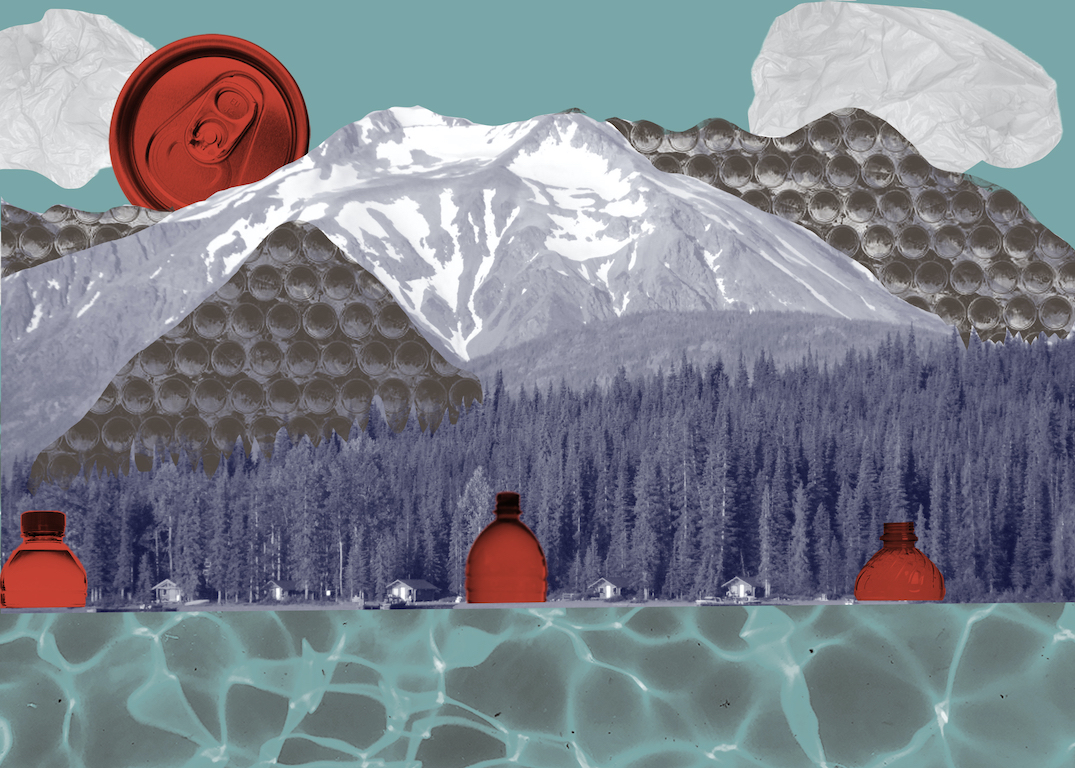
Increasing sea ice mobility is especially worrisome because it could facilitate the spread of pollutants like microplastics and oil across the Arctic. According to Tremblay, such pollutants mostly originate from elsewhere.
“Pollutants get to the Arctic from any rivers draining into the Arctic,” Tremblay wrote.
Ships are another transporter of pollutants. Unfortunately, the volume of ships in the Arctic is only rising due to increased economic activity in the region. As melting ice creates new shipping routes, there is growing demand for the Arctic’s mineral resources from emerging economies like China and India. New shipping lanes and increased nautical traffic will likely increase pollution in the Arctic.
“Increased traffic means higher pollutant release [from things like used water] in the Arctic, which then travels far distances and affects the local environment [and people] living in the North,” Tremblay wrote.
Increased shipping also raises the risk of oil spills and shipping accidents, which can add an immense quantity of contaminants to surface ice. The Central Arctic, located in the middle region of the Arctic Ocean, is particularly vulnerable to environmental issues associated with shipping. Since no country holds exclusive rights over this region, the lack of policies regulating the release of pollutants into international waters has left it especially vulnerable.
For boat traffic, the Arctic remains a challenge, with a short operational season, large distances between ports, and severe weather. This makes ships more accident-prone, increasing the chance of releasing toxic pollutants into the water. According to Tremblay, the main way to mitigate this problem is to tackle its source.
“[We must] reduce carbon dioxide emissions,” Tremblay wrote. “[This means that we must] use energy more effectively, better insulate buildings, and move to renewable energy sources.”
Unfortunately, scientists predict that the Arctic sea ice will be in a dire state by the end of the century.
“We expect to lose the summer sea-ice cover within one to two decades,” Tremblay wrote. “By then, [the Arctic] will have a seasonal ice cover instead of a perennial ice cover.”
My roommate looked up at me from across our dining room table.
“I’m so ready for everything to go back to normal,” he said.
Since March 13—the day McGill shut down for two weeks—I have thought about this idea every single day. After the two weeks had concluded, I thought that everything would go back to normal.
Then, COVID-19 began to tighten its grasp around North America. For my generation, there is no precedent for this pandemic: It undermines the lifetime status quo of every young person on earth. Whatever ‘normal’ was before this disease arose, there will be no returning to it. COVID-19 is going to change everything. It will shift economies, lives, and cultures; as a generation of individuals about to crest into adulthood, McGill students must accept the seriousness of this brave new world.
Consider the economy. On March 23, the provincial government of Quebec shut down all non-essential services until April 13. For anyone whose jobs are not immediately critical to people’s lives, this means a complete cessation of work. Even after non-essential services are allowed to resume, quarantine and frugality will impede the steady stream of customers that businesses rely on to survive. The picture in Quebec over the next several months looks like this: The demise of an entire class of independently owned and small businesses, steadily increasing unemployment for those who work in entry-level or non-trade sectors, and an increasing number of individuals who do work in essential services contracting COVID-19 because of heightened exposure to the virus. The ripples of these impacts are going to take years to recover from.
The bigger picture is even more disheartening. In the United States, joblessness claims hit 10 million on March 28; the Government of Canada expects 4 million people to file for emergency financial aid. While talk of markets is somewhat of a black-box in terms of details for the average university student, the experts made one thing clear: the economic situation is really bad. The difference, however, between this financial crisis and those past is that governments appear entirely incapable of addressing this wave of financial distress. Whereas the 2008 recession was the consequence of rapacious and naïve investors—a malicious, albeit controllable force, as this New York Times article points out—the most powerful threat to the economy this time around is something much more entropic: An unpredictable and potent disease.
Now, let’s think about global health. As of April 6, the virus has infected nearly 1.3 million people worldwide. For context, the 2003 SARS outbreak infected about 8,000; more than that many people have already died from COVID-19 in the US alone. The disease has claimed over 70,000 lives globally. In countries like Italy and Spain, healthcare workers are beginning to face impossible ethical decisions about prioritizing resources for younger sufferers who have a higher chance of survival. Countries thought to be staunchly prepared for a public health crisis are manifesting as woefully vulnerable.
Changes as drastic as these in global health and economies are going to have unavoidable consequences. Some young people, who have consistently demonized older generations as egocentric for their unwillingness to address global climate change, have revealed themselves to be just as arrogant in refusing to take seriously a similarly wicked problem that requires collective action. Further, though beliefs about the invulnerability of young people to COVID-19’s most aggressive symptoms have abounded, we are discovering this is not the case. From Feb.12 to March 16, in the US, 38 per cent of individuals sick enough to be hospitalized by the virus were 55 years-old or younger.
The cultural landscape is shifting before us as we observe an anthropocentric tradition of individualism in the West leading communities to shoot themselves in the foot, while more collectivism approaches allow places like Japan to stop the virus in its tracks. As governmental responses become more urgent, we are witnessing the necessity of socialist measures in reactive policies, and, uncomfortably, the success of authoritarian practices in mitigating the crisis.
I have thought long and hard about how to reconcile the reality of these circumstances, but I have realized that that is precisely the point: There is no modus operandi. The evolution of global systems demands that everyone be flexible in adopting new approaches not just to work or school, but to life. As we begin to chart this unknown territory, remember three things: First, those you love are your most important allies. Talk to your parents, your grandparents, your friends, your acquaintances, and be there for each other. Second, the forward march of time is inevitable. In the darkest moments, remember that this is not permanent. Finally, as bleak as the paragraphs above may seem, optimism and hope alone will allow us to endure. I believe in my family, I believe in my friends, and I believe in the ability of humans to be good to each other, and so should you.
Some scholars, politicians, and activists believe that the climate crisis merits the same kind of national and international response that COVID-19 is receiving, but others think that would be impossible. While climate change and COVID-19 are fundamentally different problems, they both pose massive threats to human well-being and require enormous behavioural shifts.
Much like a pandemic, climate change is a threat multiplier: A study of the SARS epidemic in China found that patients from regions with high air pollution were twice as likely to die from the illness as patients from regions with cleaner air. Similarly, air pollution from greenhouse gases such as carbon dioxide, methane, and nitrous oxide make people more susceptible to respiratory illness, which can exacerbate the risks associated with COVID-19 and disease in general. Furthermore, urbanization and rising temperatures are expanding the geographic ranges of both animals and humans, creating more potential vectors of disease transmission.
According to Hamish van der Ven, professor in the Department of Political Science at McGill, the discrepancy between how governments have responded to COVID-19 and climate change is in part due to which populations are most affected. Climate change is threatening the futures of younger generations, while COVID-19 is taking the lives of older people.
“We have seen a response to COVID-19 because people in power are equally at risk of suffering adverse health impacts,” van der Ven said in an interview with The McGill Tribune. “Boomers care about the problems that affect them [….] Boomers stand to suffer the most from [COVID-19], and millennials stand to suffer from climate change.”
Another reason that the responses to both problems have been different is because climate change can still seem like a somewhat distant problem.
“COVID-19 forces immediate behavioural action because it is easier to trace causality,” van der Ven said. “Climate change does not have acute, easily attributable impacts, making action much harder.”
Further, while climate change has been unfolding slowly for decades, COVID-19 has appeared rapidly, and the situation understandably demands quick and decisive action. With social distancing, quarantining, and, hopefully, immunization, COVID-19 can be contained.
Climate change, on the other hand, does not have a quick fix. The behavioural shift needed to respond to COVID-19 is conceptually simpler, requiring that people put their lives on hold for weeks and likely months to come. Responding to climate change, however, will mean a multi-generational commitment to reshaping industries and the economy.
The current pandemic may demonstrate that decarbonization is doable, at least in a short time frame. From January to March, for example, China reduced their CO2 emissions by 25 per cent.
“This may be a political opportunity and a chance to restructure the economy,” van der Ven said.
Governments could even use the power they have to provide bailouts to shift towards decarbonization. Academics are calling to leave the oil and gas industry to fend for itself and for airline-industry bailouts to include emissions-reduction requirements. This opportunity to decarbonize and downscale the economy is only one of the ways in which the current state of the world mirrors some of the tenets of degrowth, a movement that advocates for economic slowdown.
“[COVID-19] has put degrowth into a new perspective and [forced people to] question what is essential and what is non-essential,” Nicolas Kosoy, a professor in McGill’s Department of Natural Resource Sciences, said in an interview with the Tribune.
While COVID-19 has shown us that behavioural change is possible, Kosoy acknowledged that no one in their right mind would hope to replicate COVID-19 as a formula to reduce emissions. What’s more, the emergency policies in response to COVID-19 may temporarily reduce emissions, but it is likely that COVID-19 will ultimately be a step back in global efforts to respond to climate change, as people begin to realize just how precious experiences such as travelling, eating out, and consuming are. Furthermore, if the response to COVID-19 is held up as a model for climate action, it will be hard to garner public support.
Walking past Segal’s, the beloved Saint-Laurent grocery store, you may have noticed the phrase “#FringeBuzz” plastered to the windows on the second floor. Behind those windows is the Minimain, a black box performance space in the Mainline theatre. This is where actor, director, and playwright Natasha Perry-Fagant performed her one-woman show The Absence of Silence on February 20, 22, and 23 during the Festival de la Bête Noire horror festival. Perry-Fagant moved to Montreal from Summerland, British Columbia in 2009 to attend Concordia’s theatre program, where she developed an interest in surrealism. She performed in director Nathalie Claude’s 2010 rendition of Gertrude Stein’s Dr. Faustus Lights the Lights and collaborated with director Jen Cressy on a one-woman performance of Charlotte Perkins-Gilman’s The Yellow Wallpaper. She has since written her own pieces, such as Scrum, a surrealist piece about gender and body dysmorphia.
In the intimate setting of the Minimain, Perry-Fagant’s work was mesmerizing. Her unnamed characters explore solitude and femininity in three acts, their performances ranging in genre with an emphasis on sound and visuals. The show opens with the eerie choreography of a nude creature reacting to a soundscape and projected visuals that slowly creep closer to her. The second act is a gory scene in period-piece costume, while a Yellow Wallpaper–inspired overhead voice muses matter-of-factly on 19th-century life. In the final act, a woman comes home from the store and sets down her groceries. This scene is repeated several times, with each repetition including slight but significant changes, resulting in a Black Mirror–like mind-bending effect.
Like any successful avant-garde piece, The Absence of Silence is difficult to describe. It refuses to collapse into digestible descriptions. Perry-Fagant cites italian theatre director Romeo Castellucci as an influence on her work.
“I saw a piece of his that travelled to Montreal where they had these weird interludes, and there was this huge machine onstage […] whirring and whirring, and there [was] a moment where a bunch of wigs were falling into the machine,” Perry-Fagant said. “Looking at the pieces apart from each other, nothing frightening was happening there, but I was absolutely terrified watching it [….] It made an impression on me of how looking into the subconscious can really draw out feelings from a viewer, and especially a viewer in the sense of being in the theatre, as opposed to the screen.”
The second act is inspired by a The Dollop episode about the history of women and transportation, in which Dave Anthony and Gareth Reynolds joke about how women in the past were expected to ride side-saddle, since straddling a horse was thought to break their hymens and put their wombs at risk. Perry-Fagant wrote the voiceover — in the style of Perkins-Gilman — from the perspective of a woman who injures herself falling from a horse because of this side-saddle mandate. As Perry-Fragrant curls around the frame of a broken mirror and fastens a corset stuffed with shards of glass around her body until her white dress oozes red, it is clear that her movements are not intended to mime the monologue. The dissonance between the florid voiceover describing 19th-century domesticity and the abject, self-imposed suffering onstage creates a sense of loneliness effectively conveyed by both narration and visuals. As an actor, Perry-Fagant wanted to understand how a woman of that time would reflect on her loneliness in that situation without the language of feminism that we have today.
“I wanted to have this kind-of distanced text that describes [those] feelings, but in a way that is not right on the bone of “Yeah I feel like shit, because I feel like I’m worthless”, and kind of aggrandizing that in the 1800s [women might say something more like] ‘Well I don’t think that I quite understand how it’s feeling, but it’s not very good now.’”
With movement-based work, the lack of dialogue forces actors to react more to their environment, but this means that it can also be easier to get distracted by shuffles in the audience or somebody coughing. Rather than being subjected to the whim of her setting, Perry-Fagant takes advantage of this vulnerability and lets invasive soundscapes, which project outward expressions of characters’ inner feelings, guide her performance.
“I find that if people are speaking words at you, it puts you in a cerebral [mental space],” Perry-Fagant said. “You’re analyzing the words, and you’re trying to think of what the author meant. I find that to get at the subconscious of the viewer, it’s easier to aggrandize the emotional experience of the performer [through sound]. […] It’s always been really important for me to have sound [be] a key part of the experience of bringing you into the world.”
COVID-19 has been a shock for the theatre community, with the entire runs of shows cancelled. For a community centered on live performance and gathering, this has shocked the creative routines of many Montreal artists. Perry-Fagant looks for the silver linings in this situation by treating it as an opportunity to allow her future works to percolate: She’s keeping herself busy editing film projects and studying, analyzing, and workshopping future shows.
A previous version of this article incorrectly spelled Perry-Fagant’s name as “Perry-Fragrant.” The Tribune apologizes for this error.
Despite the self-isolation imposed by the COVID-19 pandemic, I’ve still been dolling myself up to go out on the weekends and even, recklessly, the weeknights. With bars and venues closed and our lives re-oriented from being mostly online to almost entirely online, it’s unsurprising that people have been flocking to online ‘clubs’ to continue one of life’s simplest, but most rewarding pleasures: Dancing. Besides the sheer fun of it all, the emergence of online dance parties provides a vital space for queer and marginalized peoples to foster community in these seemingly disparate times.
Club Quarantine (Club Q), not to be confused with D-Nice’s Instagram live event, is the most high-profile of these online queer clubs, having featured DJ sets by big names like Charli XCX, Tinashe, and Dorian Electra. Created as a joke between four friends in Toronto, Casey MQ (Manierka-Qualie), Brad Allen, Ceréna, and Mingus New, Club Q now broadcasts every night on Zoom, creating a sense of familiarity amongst its patrons.
“We have Club Q regulars now,” Manierka-Quaile, DJ and co-founder said in an interview with The McGill Tribune. “There [are] some dedicated people [who] come all the time, and that is beautiful to see. This is the space that [they now] go to. ‘What am I doing tonight? I have nothing to do. I’m definitely going to Club Q.’”
Online dance parties operate in a similar fashion, as Zoom’s audio- and screen-sharing functions allow producers to highlight acts and patrons. The chat function allows users to talk openly and message each other privately, mimicking the chaos of bumping into people in a real club. In all, Zoom’s tools give producers the same artistic and logistical oversight as they would over an IRL venue. A highlight of Zoom is the ‘spotlight’ tool, where hosts choose a screen to share on an online ‘jumbotron.’
“It’s kind of become the heartbeat of Club Q, because everyone gets to have their moment,” Ceréna, artist and co-founder said. “Here, because we’re all at home, you can do anything you want! We can be spotlighting someone cooking in the kitchen or someone giving us a full twerk moment or someone with their pet turtle.”

These features can be further used to elevate a traditional club experience, allowing for more experimental camera angles and perspectives. Avery Burrow, co-founder of Montreal’s Vice Versa Productions, recently held Queerantine, a Zoom version of their lesbian party, Blush, geared towards raising funds via PayPal to support QTBIPOC sex workers who have difficulty directly accessing government aid. Burrow noted the benefits of using go-go dancers and backgrounds to create a cohesive visual experience on Zoom. Besides providing financial support, Burrow sees Queerantine’s positive role extending beyond its patronage.
“Just [in] advertising for Queerantine, I got a lot of responses from people being like ‘Oh, it’s just so nice to have something in my feed that’s positive right now,’” Burrow said. “That’s what we’re trying to do is break up the negativity and […] build community.”
Like any real club, however, unwanted patrons can appear, in this case in the form of online trolls. Hosts must take it upon themselves to moderate chats and kick out users when it jeopardizes the safety of other patrons. Burrow kept the password to Queerantine locked to the organizers and those who donated to the event’s GoFundMe; though not a foolproof method, it did reduce the chance of homophobes crashing the party.

Showing solidarity with these spaces is more vital than ever, with queer and marginalized people disproportionately affected by lay-offs and financial strains of the COVID-19 pandemic. But, communities have thrived online far prior to the quarantine age, and that may be why so many people who grew up on the margins of society feel at home in these spaces. Manierka-Quaile noted that the re-emergence of queer internet culture has spurned a sort of nostalgia for those who’ve already spent hours lurking in online chat rooms like Omegle and Chatroulette. Now, like it or not, more groups of people are seeking belonging in these virtual worlds.
“This is like my childhood. I think that’s why, for all of us, it was just very natural to […] go onto this platform, because it [had] very chatroom vibes,” Ceréna said. “It’s just kind of wild that when the world stopped and everything just took a pause, [….] I was ready to just retreat and hibernate, [and then] this happened and now it’s like, “Oh shit, we did break the internet!”
A perhaps-unintended consequence of these parties is the absence of physical barriers to accessibility. Clubs and bars are traditionally seen as one of the few safe spaces for queer and trans communities, but have long been inaccessible to differently abled patrons.
“We can bring the dance party to people’s living rooms,” Burrow said. “If you live in a wheelchair-accessible house, that means [that] the dance party is now wheelchair accessible [….] My party can now welcome people who want to be at it, no matter what barriers they might face.”
Furthermore, these online clubs provide a space for people who are unable to see any other queer people in person. Sitting alone in front of a laptop, watching other queers vogue, dance or even just lounge about and drink wine can comfort patrons and remind them that they aren’t alone in their experiences.
“We just needed another outlet for us to be free and to feel […] that sense of community [with] each other,” Ceréna said. “What’s been the most beautiful of Club Q is seeing all the beautiful queer people. I’m in a small town [right now] with no queer people, and this is just like, serving me. This is making my life just so much better.”
For the foreseeable future, people will have to go online to find these spaces. Club Q shows no signs of slowing down, and Burrows hopes for Vice Versa to host more online parties in the future. Similar parties are popping up: Club Hunhouse for queer women, trans and non-binary people, and STRAPPED.TO, which centers QTBIPOC, is hosting virtual events. When and once COVID-19 passes, these places will likely move into the physical world, however at their core, they remain a uniquely virtual phenomenon. In bridging these geographical and physical gaps to connect queer communities, online clubs will retain an almost ephemeral existence that a physical club simply can not attain.
“In this moment in the quarantine age, you’re going to have to find that community online or you’re going to have to find it within yourself,” Manierka-Quaile said. “By being online, there’s that accessibility to just being tapped in.”
To provide financial support:
Club Q: https://www.paypal.com/paypalme2/reachclubq
Vice Versa Productions: [email protected] or https://www.gofundme.com/f/vf6y9-queerantine-a-queer-online-dance-party
Also Cool Artists Fund: https://ca.gofundme.com/f/also-cool-artist-fund