


Latest News

Artistic Swimming, Martlets, Men's Varsity, Sports, Varsity Round UP

Winter 2020 season recaps

Artistic Swimming

The McGill Women’s Artistic Swim team started their season off strong, finishing first out of 11 teams at the McGill Invitational in November. Strong performances from sisters third-year Ioana Gheta and second-year Maria Gheta earned them first place in the duet/trio category. First-year Katherine Demond also performed well, placing fifth for her solo routine. The Martlets continued their dominance with a first place at the Eastern Canadian Championship meet in Ottawa at the end of January. Second-year graduate student Michely Chen earned two gold medals and the Gheta sisters shined once again to come in second for their duet. Maria Gheta also earned both a solo gold and silver for her experienced solo, missing a second gold by less than 0.3 points. 

After an impressive send-off performance at Memorial Pool on Feb. 11, the Martlets headed to the University of British Columbia for the National Championship on Feb. 14. For the second year in a row, Maria Gheta was named All-Around Champion, claiming gold in the duet routine with her sister. McGill captured their 16th National Championship title at the meet. In the novice category, the Martlets dominated with the duet pairing of third-year Christina Wang and first-year Mathilde Lotz capturing gold. Chen went on to earn a silver medal for her solo routine and the individual All-Around title in the novice category. 

Men’s Hockey

Despite a wave of early-season injuries, the McGill Men’s Hockey team finished the regular season strong, with a 16–10–2 record. This performance earned them the fourth seed in the OUA Eastern conference.

Their success did not continue into the postseason, however, which ended unceremoniously in a three-game first-round loss to the Concordia Stingers. Despite this early exit, this season had plenty to celebrate, with standout players being recognized at the OUA awards. McGill claimed three awards: Third-year Nikolas Brouillard earned the Defenceman of the Year, fourth-year Louis-Philip Guindon was named the Goaltender of the Year, and fifth-year defenceman Dominic Talbot-Tassi secured a spot on the First-Team All-Star roster. This was the first time since 2011 that McGill collected three OUA awards. 

Going into next season, McGill Men’s Hockey is set for a new chapter. With the loss of five seniors, McGill is ready to start anew under the guidance of a rookie coach and a roster full of new talent.

Men’s Basketball

The McGill Men’s Basketball team had an unfortunate end to their season, achieving a dominant 12–4 record in league play before losing in the first round of the playoffs. The season started with several tough losses to NCAA teams in preseason play before the team notched their first wins against the Bermuda National Team and the University of Toronto. League play began on Nov. 7 with a decisive 101–78 win over Laval; however, a 94–71 loss to UQÀM in the following game foretold the struggles to come. 

Third-year guard Jamal Mayali led the team, averaging 15.7 points and 4.6 rebounds per game. Second- and third-year guards Quarry Whyne and Sam Jenkins added 13.5 and 12.6 points per game, respectively. Behind this scoring, McGill found their groove, winning seven games in a row. A three-game skid briefly halted their momentum, but they bounced back to finish the season on a four-game winning streak that included a 70–65 victory over UQÀM in their final game. They finished the regular season as the top seed going into the RSEQ playoffs.

McGill hosted fourth-place UQÀM in single-elimination play on Feb. 26 to begin the playoffs. Mayali missed the game due to the flu, however, and McGill’s season ultimately ended early after losing 70–61.  

Women’s Basketball

Martlet Basketball’s 2019-20 season was a rollercoaster. Their preseason opened in October with a loss to the Queen’s Gaels at an exhibition game celebrating the centennial of women’s university basketball in Canada. They bounced back from a four-game losing streak between November and January with a three-game winning streak, largely due to the efforts of fifth-year guard Gladys Hakizimana who scored 20 points for the Martlets in the first of those three wins. This put McGill back in the running for a playoff berth, and the Martlets sealed their spot in the playoffs on Feb. 15 in a home game against the Concordia Stingers. Fifth-year transfer centre Sirah Diarra and fourth-year transfer forward Nadege Pluviose each recorded a double-double in that decisive game. Their season came to an end for McGill women’s basketball on Feb. 26 with an away loss to the Laval Rouge et Or in the RSEQ playoff semi-finals. 

Pluviose earned Second-Team All-Star honours, while first-year guard Jessica Salanon was named a rookie All-Star at the RSEQ awards. Next year will see significant roster changes for the Martlets, with five graduating seniors leaving the squad. 

Men’s Track and Field

The McGill Men’s Track team had an equally successful winter season. They qualified seven athletes for the National Championship in Edmonton, after finishing third in the Provincial Championship. Second-year Alex Stathis distinguished himself by breaking his own school record in the heptathlon on his way to earning a provincial gold medal in Quebec City. The St-Anne-de-Bellevue, Quebec native finished in a remarkable fifth place at Nationals. 

Third-years Jose Guerra and Matthew Daly also dominated the RSEQ Championship, striking gold in the shot put and the 60m hurdles, respectively. The 4x400m relay, staffed by Nicolas Bernard, Jack Crosby, Sebastian Danson and Jasper Ross, reached the finals at Nationals after dominating the event in Quebec City.

Women’s Track and Field 

The standout of the Martlets’ 2020 winter track season was Jorden Savoury. The second-year psychology student started her campaign by breaking a school record on the 60 metre dash in Sherbrooke. Savoury went on to beat the record again, twice, at the 25th McGill Team Challenge on Jan. 25. The LaSalle, Quebec native praised her teammates for their support and work ethic. 

“Team spirit is what led us to succeed,” Savoury said. “I have never been a part of such an amazing group of athletes that work hard for what they want.”

As a collective, the Martlets track team had a productive season. They finished second at the RSEQ provincial championship, tallying two gold medals by fourth-year Abby Woods on the triple jump and graduate transfer Allison Frantz in the heptathlon. Both athletes earned a spot at the National Championship in Edmonton. The Martlets also dominated the long jump event: Savoury and Woods earned silver and bronze, respectively, separated by only eight centimeters. 

The Martlets’ relays fared well too, earning bronze in the 4×200 metre and silver in the 4×800 metre at the RSEQ championships. The team consisted of Savoury, Woods, Frantz, and third-year Stephanie Susinski. The Martlets did not win any medals in throwing events at the provincial championships; however, first-year thrower Marika Shafonsky had a strong rookie season, consistently finishing in the weight throw top 10.

The McGill Track Team hopes to build on this success as the outdoor season starts. Savoury, however, refused to set any ceiling for their performance. 

“I don’t believe in limits,” Savoury said.

Science & Technology

The social consequences of AI

Upon hearing the words “artificial intelligence” (AI), people tend to have mixed reactions. Science fiction’s favourite trope is AI taking over the world, and literature has been portraying such ideas since at least 1921, when Karel Čapek introduced the word ‘robot’ in his famous play R.U.R. The powerful applications of AI today often invoke thoughts of a utopian world where humans can do anything at the press of the button. As this narrative moves closer to reality, academics, computer scientists, and the general public are forced to ponder AI’s societal implications.

McGill’s Institute for Gender, Sexuality, and Feminist studies hosted a research talk on Feb. 20 as part of their Feminist and Accessible Publishing and Communications Technologies Speaker and Workshop series. The talk entitled ‘Why AI needs Collective Action’ was presented by Meredith Whittaker, the Co-Director of New York University’s AI NOW Institute and founder of Google’s Open Research Group.

Many are right to think that AI taking over the world is a far-fetched idea. As Whittaker pointed out, this is because AI isn’t a self-conscious machine; rather, it is an assembly of knowledge and skills in the hands of those in power.

“[AI] is a set of technical capabilities that are being recklessly integrated in social domains such as healthcare, education, criminal justice, and almost everything we can think of,” Whittaker said.

According to Whittaker, when we talk about AI, we must also confront issues of power imbalances. AI has become popular in recent years largely because modern hardware has the massive computational power necessary to handle large amounts of data.

“Major tech companies happen to have all of the necessary equipment [and] a lot of social data alongside a power structure designed to collect and record [these] data,” Whittaker said. “Current AI, the one touching our lives, is more or less from corporate companies, and only five companies in the West have these resources to develop and deploy AI [.…] If you ask any AI start-up, they will tell you that they are renting their computational power from one of the three major tech companies, […] Google, Microsoft, and Amazon, [who] resort to shady techniques to get [the] data.”

Whittaker explained how current AI data collection practices can violate privacy. For example, HireVue uses an algorithm to predict the best potential hire, a shoplifter prediction software used by stores in Japan analyzes people’s behaviours to predict whether they will commit a crime, and Amazon Ring has partnered with police to essentially make a privatized surveillance system. As there are no current checks on this power, Amazon can push new features without regulation.

“Because [these technologies are] primarily developed by private companies, socially significant decisions are made behind a veil of corporate secrecy,” Whittaker said. “Most of what the world does know about AI is through corporate marketing and PR departments [.…] The truth is hidden from the public and even the workers, [and] in a lot of cases, what we know is through investigative journalists and whistleblowers.” 

Whittaker, who previously worked at Google, was one of the organizers of the 2018 Google walkouts.

“As workers, we didn’t have access to a lot of information, and there was a whole network we had to set up,” Whittaker said. “Problems of bias and justice are fundamental issues and require us to examine structures of power and look at who is benefitting and who is harmed.”

Whittaker explained that AI can be used by people in power to isolate or discriminate against certain groups of people in situations ranging from hiring employees to being labelled a criminal. 

“No one is [being asked] to stop doing science, but the system requires change,” Whittaker said. “We need to add starting collective addition at the front of our AI […], a kind of system able to check the power of a tech before it’s too late.”

Science & Technology

The science behind back injuries

Canadian health organizations are increasingly pushing people to become more active. Groups such as the Canadian Paediatric Society are promoting programs like Active Kids, Healthy Kids, while the Canadian government is implementing programs that encourage activities such as dance and running.

As sports and fitness become more popular, the risk of injury grows as well. In the US alone, more than 3.5 million children injure themselves every year from sports-related activities. Though not the most common, back injuries are still a cause of frustration for many athletes, young and old.

Richard Preuss, an assistant professor for the McGill School of Physical and Occupational Therapy, explained that it is difficult to establish a pathoanatomic diagnosis—a diagnosis based on studying a specific tissue, joint, bone—for most back injuries.

“Current clinical practice guidelines for back pain indicate three triage categories: […] Specific pathology, radicular syndrome, and non-specific back pain,” Preuss said. 

According to Preuss, non-specific back pain accounts for 9095 per cent of all back injuries. In sports, specific pathology usually means a fracture, and radicular syndrome refers to injuries affecting the nerves. 

When it comes to back injuries, there is an important distinction between the spinal column and the spinal cord. The spinal column is the vertebrae: 33 bones stacked up and attached by the intervertebral disks and ligaments, allowing it to bend and move while protecting the nerves. The spinal cord is the neural tissue that runs from the brainstem to the bottom of the spinal column and branches out to relay messages between the brain and the muscles.

Preuss emphasized that injury to the spinal column is like any other broken bone. 

“Fractured vertebrae will heal very well but will be treated with great caution to ensure that the spinal cord remains protected,” Preuss said. “In the back, most fractures are associated with low bone mineral density. In healthy athletes, it would take a very high-energy impact to cause a fracture, and acute fractures of the vertebrae are rare.”

On the other hand, spinal cord injuries, while rare, are very serious and can lead to partial or complete paralysis of the region below the injury, with limited potential for recovery. Spinal cord injuries in the neck can be fatal, while injuries to other spinal nerves often lead to radicular syndrome. Spinal cord injuries most commonly occur in sports where forces to the top of the head can compress the spine, such as football, ice hockey, skiing, and snowboarding.

The most prevalent back injuries in athletes are sprains and strains. Usually, these are caused by muscle or ligament overuse, improper body motion or technique, or lack of proper stretching or conditioning. These are diagnosed when the athlete experiences pain while exercising and relief while resting. 

In sports that require a lot of extension and twisting like gymnastics or diving, spondylolisthesis is common. This is a condition where the vertebra at the bottom of the spinal column slips forward onto the one beneath it. Though the symptoms are similar to those of a sprain or strain, medical imaging can be used to confirm the source of the pain. Nonsurgical treatments include wearing a back brace, physiotherapy, or using epidural steroid injections. For more severe cases, or if the vertebrae are pressing on the nerves, treatment requires spinal fusion surgery that joins two vertebrae together into one bone. 

For less serious back injuries, the main treatment is rest. Ice and pain medications, particularly nonsteroidal anti-inflammatories, can also be used to ease the pain but should be used sparingly. In the case of muscle spasms, heat can be applied. 

Although they are not as common as other sports injuries, back injuries have a wide range of severity and still pose a risk in all areas of physical activity. According to Preuss, it is most important to practice proper sports techniques, take breaks to prevent overexertion, and seek help if any injury occurs. Virtually all back injuries are treatable, and with proper care, complete recovery is possible.

Commentary, Opinion

Postgraduate education in Canada poses financial barriers for students

With Reading Week over, many students are in the midst of sending out CVs and graduate school applications. While the students who desire to pursue postgraduate education come from all backgrounds, many Canadian universities continuously fail to accommodate low-income students in their admissions processes. 

In recent years, many postgraduate programs have shifted their focuses toward increasing diversity in admissions, yet despite this, significant financial barriers remain. Beyond the high price of tuition, which can reach up to $35,000 per year for law school in Canada, students from lower socioeconomic groups are often limited due to steep application fees, the high price of studying materials for standardized tests, and expensive interview processes.

 It can be very expensive to write required standardized tests like the Medical College Admissions Test (MCAT), Law School Admissions Test (LSAT), and General Management Admissions Test (GMAT). With a price point hovering around $200 per test, many students can only afford to take the test once, further increasing the pressure to score well on them. Many online forums suggest setting aside at least three months to prepare for these tests, but some students find this unmanageable while balancing jobs and heavy course loads. In fact, many on-campus groups advertise prep classes and implicitly suggest that, in order to succeed, students must purchase the books and courses, like the Princeton Review, which starts at $599 USD. As a result, standardized tests advantage students who can afford to take time away from work and who have the funds to enroll in prep courses and purchase pricey prep books.

Certain Canadian schools, including McGill, are beginning to recognize the weaknesses of standardized tests. As a result, many Canadian postgraduate admissions councils have started to give extracurricular activities, volunteer work, and past experience the same weight as Grade Point Averages (GPA) and standardized tests to diversify the applicant pool. Some have even omitted portions of these tests altogether, like McGill which does not require LSAT or MCAT to apply for law or medical faculties, respectively. However, not all schools follow suit. Some Canadian law schools, such as University of Victoria, weigh LSAT results nearly as heavily as students’ grade point averages. As such, some admissions boards essentially equate four years’ worth of undergraduate education with a three-hour test. The pressure to perform is immense and enough to dishearten some students.

Even with admissions initiatives to consider applicants more holistically, experience on one’s CV often comes at a steep price, and unfortunately, part-time jobs often do not bear as much weight on an application as unpaid experience might. Similarly, extracurricular activities and volunteer work often require significant time away from school and work, which can affect students both financially and academically. Furthermore, for some postgraduate programs such as medical school, students are expected to travel from coast to coast to participate in interviews. For many applicants, this venture is a significant time constraint, but for others it represents an insurmountable financial obstacle.

 Issues with diversity are far from being solved. For example, medical schools in Canada feature more minority groups than the Canadian population. However, the distribution remains skewed: Some minority groups are drastically underrepresented, while others are overrepresented. Canadian students of higher socioeconomic status are overrepresented as well.

Canadian postgraduate programs, including those at McGill, have a long way to go in terms of prioritizing both socioeconomic and racial diversity in their classrooms. University of Calgary shows merits in its Pathways to Medicine Scholarship, which is geared toward low-income applicants and provides $21,000 of financial assistance and a paid internship. Similarly, both McGill and the University of Toronto offer bursaries and targeted application processes for Indigenous students. Yet more work needs to be done to ensure that distribution of races and socioeconomic statuses remain representative of the country and demonstrate that all students are welcome in Canadian postgraduate programs. Instituting more holistic admissions processes that are more considerate of socio-economic privilege and disadvantage is crucial for achieving equity.


Arts & Entertainment, Music

Michael Haze confronts love and loss in his debut EP

“CANCER,” Michael Haze’s second track on his debut EP MICKEY, opens with the crackle of a vinyl record followed by a spare guitar riff. The melody is simple, a two note progression whose deeper half is echoed by a soft and higher strum. Subdued and sparse beats accompany the low tempo intro to create an understated ambience which welcomes Haze’s equally soft vocals. Though he maintains a higher register through most of the track, he, at times, dips into his lower range, melding his voice with the instrumentation that supports him. Haze’s singing, which recedes with each repetition of the guitar riff, holds an effortless transience that echoes the track’s subject: Haze’s resurgent memories of his ex-girlfriend. 

MICKEY is a sombre meditation on a breakup’s fallout, a study in a relationship’s fleeting moments, whose reverberations haunt the psyche long after the moment of their occurrence. Despite the fact that Haze produced the EP in his basement, all five tracks’ cohesive sound and poetic lyricism mark his reach and potential for the heights of professional, contemporary R&B music.

Currently studying at McGill University, Haze, U3 Arts, showed an interest in music from a young age. During his early education, he took up the guitar and joined his school’s choir, as well as performing in talent shows. Before he produced his own music, Haze would often gravitate to pop and indie rock musicians’ work. Artists such as XXXTentacion informed Haze’s early attempts at songwriting, though he remarked how he had to rely less on other artists’ voices if he was to come into his own. 

“When you first start making music […] I think the best way to go about it is to make music that sounds like people that inspire you already,” Haze said in an interview with The McGill Tribune. “But then a lot of it just sounds faux. It sounds copied until you find your own sound. I guess that’s where I’m at right now.”

Haze starts making his tracks either by writing a few verses or developing a beat. Whichever comes first, he frames its counterpart so that it resembles the atmosphere and theme of the initial creation. Though MICKEY excels because of its meditative production, Haze expressed how he’s looking to produce more varied music in the future.

“I go to concerts a lot and I love down tempo. But I also love a mosh pit, like in up tempo concerts. So I’m really trying to incorporate a lot more of that in the [next] project, but still have the same ethos as the EP,” Haze said. 

MICKEY’s last track, “PHONEY” best encapsulates Haze’s aim at a balance between lively and moody music. Its opening is a percussive assemblage of deep synth vibrations that lead into a kinetic trap beat. Haze contrasts the track’s heightened energy with his signature smooth vocals, though his lyrics’ about his ex coalesce with the background’s bold audio. The track’s forcefulness dissipates midway, though, when artist Shenny delivers a spoken word poem. With a subdued musical accompaniment, Shenny’s words conclude MICKEY in a moment of stark vulnerability. His poetry, reflective of the EP in its entirety, both celebrates the trust that love cultivates between two people as well as its subsequent betrayal as a result of the aftermath of a separation. The EP’s bittersweet ending, an attempt at reconciliation of that which inspired the EP, is a marker of Haze’s hopes to take his music elsewhere.

“I grow weary of making the same type of music, or about the same type of things,” Haze said. “The next project may still be about love, but a different aspect of it. Love that isn’t intimate.”

MICKEY is available on all streaming services.

McGill, News

AUS rejects Motion to Acknowledge Role of Blood Collection Services on Campus

The Arts Undergraduate Society of McGill (AUS) held its fourth legislative council meeting of the semester on Feb. 27. Concillors debated the concerns presented by Héma-Québec’s blood drives on campus and policies restricting donations from men who have sex with men through a three-month deferral period.

Several members of the council expressed dissent following the introduction of a motion on Feb. 27 to Acknowledge the Role of Blood Collection Services on Campus and to Encourage the Continued Advancement of Non-Discriminatory Policies. In response to a motion presented during the AUS’s last general assembly condemning the presence of Héma-Québec on campus, this new motion regarding Héma-Québec sought to condemn only the organization’s discriminatory policies while continuing to make them feel welcome at McGill. Many AUS representatives believe that this new motion was not in the best interests of McGill students and feared the repercussions of creating spaces on campus for an organization that possesses discriminatory policies toward 2SLGBTQIA+ people. 

The motion brought forth by the Society of Linguistics Undergraduates at McGill Vice-President (VP) External Mathieu Hergett-Rozier, and seconded by The Canadian Studies Association of Undergraduate Students (CSAUS) VP External Brent Jamsa, was intended to recognize the importance of student blood donations for life-saving services and create a comfortable atmosphere for those facilitating collections on campus. 

“I think it is important to also recognize the contributions made by these organizations and make them feel welcome because they do save people’s lives,” Hergett-Rozier said. “I don’t want to foster an environment in which these groups feel threatened because that ultimately correlates to people’s loss of lives [….] Every drop of blood counts.” 

Deferral times for blood donations made by gay men have decreased in previous years from an outright ban to five years in 2013 and one year in 2016. These changes have been implimented in an effort to refute homophobic fears surrounding gay men and HIV/AIDS. Gender, Sexuality, Feminist and Social Justie Studies Students Association External Coordinator Alexandra Smith Taylor discussed how the motion could be perceived as prioritizing blood collection services that continue to uphold these discriminatory policies over McGill’s 2SLGBTQIA+ population who may feel ostracized by the collection service.  

“I feel like [this] motion suggests that it is more important for us to create a safe space for Héma-Québec [on campus] than a safe space for our students,” Smith Taylor said. “I don’t want to vote in favour of this motion because of the way that it has been written.” 

This sentiment was echoed by HSA VP external Dalton Liggett, who stated that failing to adequately condemn Héma-Québec does not adhere to the AUS equity policy. 

“While I would like to recognize that the motion is in good faith, […] the AUS equity policy […] mandates us to be proactive in condemning processes of marginalization which affect the safety and well-being of disadvantaged groups of McGill,’” Liggit said. “Following consultations with numerous groups, including Queer McGill and the Union for Gender Empowerment, [there has been a] consistent take away and that is that the presence of these blood drives on campus, occupying public space [and] loudly playing music, […] is explicitly and inherently exclusionary to the vast majority of the queer community on campus.”

Following the debate, the motion was voted on by the council and failed to pass. 


Moment of the Meeting: 

Councilors voted yes to a motion which resolved that the VP Communications send out emails in the coming months regarding upcoming climate justice demonstrations as part of the Arts Undergraduate Societies declaration of a state of Climate Emergency. The emails will include a “Has McGill Divested Yet?” segment to maintain engagement with the issue. 

Sound Bite: 

“I don’t feel like I was ‘made by McGill’. I feel like I was made in spite of it. I hope that, going forward, in all the years that follow the first 200, students don’t have to feel like that anymore and that we feel properly supported by the services here [….] I think that [what] I would like to see come out of the bicentennial is actual conversations with students and not just forms.” – RSUS VP external Mo Rajji Courtney in response to a presentation about upcoming bicentennial celebrations.

McGill, News

SSMU Indigenous Affairs prepares to host academic conference

The Students’ Society of McGill University’s (SSMU) Indigenous Affairs Committee (IAC), in partnership with the Indigenous Law Association, the Desautels Indigenous Business Society, the McGill students chapter of the American Indian Science and Engineering Society (AISES), and the Indigenous Student Alliance, is preparing to host an academic conference. On March 14 and 15, the conference titled ‘Intergenerational Strength and Resiliency’ will host a total of 14 events including panels, workshops, and keynote speakers. According to SSMU Indigenous Affairs Commissioner Tomas Jirousek, the conference hopes to highlight Indigenous approaches to teaching and learning.

“[The conference has] focussed on different themes over the years,” Jirousek said. “This year, we chose to focus on intergenerational strength and resilience through an academic conference, but not specifically the type of Western conferences that we constantly refer to in academia [….] We have activists coming in, we have elders, we have politicians. There’s a lot of really cool different kinds of knowledge bases that we’re bringing together.”

Roméo Saganash, who will be delivering one of the keynote addresses, has been lauded for his activism for Indigenous issues. Saganash, from the Cree community of Waswanipi, is the first Indigenous Member of Parliament (MP) to hold a seat in Quebec. A survivor of the residential school system, Saganash has spent over 20 years furthering the legal and constitutional rights of Indigenous people, including his contributions to the United Nations Declaration on the Rights of Indigenous Peoples. Catie Galbraith, a member of the IAC and a citizen of the Chickasaw Nation of Oklahoma, expressed their excitement over Saganash’s visit. 

“[The IAC was] able to get in touch because Roméo follows our Vice-President Events, Janelle Bruneau, on Twitter and she slid into his DMs,” Galbraith said in a message to The McGill Tribune. “Roméo is one of those figures that is pretty beloved amongst Indigenous youth—he’s pretty famously called other politicians out on their bullshit, and that type of refusal is super empowering to watch.”

Galbraith referred to Saganash’s use of an expletive during question period in the Canadian House of Commons: In September 2018, Saganash denounced Prime Minister Justin Trudeau’s support of the Trans Mountain Pipeline, a project that has not yet received consent from the Squamish Nation on Tsleil-Waututh in British Columbia. Jirousek praised Saganash’s ability to remain resilient during his eight year tenure as the MP for Abitibi—Baie-James—Nunavik—Eeyou.

“Roméo got right involved in the mud and the muck of [politics],” Jirousek said. “And so you’ve seen him be this passionate, powerful voice for Cree people in his own riding […] in the House of Commons, and his work speaks for itself. I remember […] last year when he called up the Prime Minister and said ‘You don’t give a fuck about Indigenous rights.’”

In addition to Saganash, another keynote address will be given by Cindy Blackstock, a Gitxsan social worker who was spied on after suing the federal government for discriminating against First Nations children on reserves by underfunding social services. Nakuset, the Executive Director of the Native Women’s Shelter of Montreal, will also be delivering a talk. Jirousek cited both Blackstock and Nakuset as inspirations for his activism. 

“[Blackstock and] Nakuset have been really big role models for myself over the last couple of years,” Jirousek said. “Anytime I have an event, I reach out to Nakuset. I can’t remember the last time that I’ve actually done something of significance without Nakuset there by my side.” 

To Claire Grenier, the SSMU’s Community Affairs Coordinator and a member of the Métis Nation of Ontario, events like these are important to fostering a dynamic and diverse community of Indigenous students.

“Administration [and] Enrollment Services are really pushing [for] Indigenous students to enroll at McGill,” Grenier said. “But there’s no support or community that’s really pushed to them, or there’s just nothing there that lets them know that there is a community, that there’s a space for them to learn and to keep Indigenous identity, even in a city like Montreal that’s so urban [….] I think this conference […] to have this as a really distinct moment in the year for Indigenous youth to come together and kind of reconnect and really even get to know other Indigenous students at McGill that they can get involved with, that they can become friends with and share their experiences with, I think that’s really important.”

Interested students are encouraged to visit the event’s Facebook page to view a list of events, and to reserve their tickets for the keynote address on March 15 at 5:00 pm.

Editorial, Opinion

McGill needs to address its colonial legacy

McGill’s Vice-Principal Academic Christopher Manfredi is very proud of his efforts to advance McGill’s academic commitment to equity and inclusion. Manfredi says so in the McGill Reporter’s recent feature interview “Confronting Colonialism”, where he  introduced McGill’s new Provostial Research Scholars in Institutional Histories, Slavery, and Colonialism program. The program will fund two new research positions which will investigate McGill’s historic connections to the transatlantic slave trade as well as McGill’s colonial legacy and its impact on Black and Indigenous communities. 

Initially, the addition of these positions seems like a positive step towards McGill addressing its problematic ties to slavery and colonialism. Initiatives such as the Black Students’ Bill of Rights, put forward by the Black Students’ Network, have made it clear that a number of students feel the university must engage in a public acknowledgment of these realities, and the addition of this program is one way for it to do so. However, the media materials put out to publicize this program largely overshadow the continuous efforts that have been made over the past several years by Black, Indigenous, or people of color (BIPOC) members of the McGill community to shed light on McGill’s colonial legacy. The McGill Reporter article praises Vice-Principal Manfredi for making strides toward inclusion when McGill should instead be crediting BIPOC members of its community for advancing equity at the university. 

In 2019, the culmination of years of effort from Indigenous community leaders resulted in the changing of the Men’s Varsity team name. This semester, Professor Charmaine Nelson is teaching an art history course titled  ‘James McGill was a Slaveowner: Slavery and the History of Universities.’  These examples represent only a fraction of the work that BIPOC individuals have done to address McGill’s continued colonial legacy, and these are the endeavours that should be highlighted by the McGill administration. However, the administration seeks to idolize Vice-Principal Manfredi’s working groups and task forces which, though better than nothing at all, do not yield sufficient structural change. The irony of a white man, in Vice-Principal Manfredi, taking credit for equity initiatives added to McGill’s community by BIPOC individuals seems lost on the administration. 

McGill continues to engage in neocolonial practices: McGill invests in TC Energy, the company behind Coastal GasLink, the company currently attempting to construct a gas pipeline on unceded, untreatied Wet’suwet’en territory. McGill continues its colonial legacy by deciding how to invest its money, and in doing so, they are not only complicit but actively abetting the contemporary oppression of BIPOC. Moreover, many of McGill’s buildings are named after known racists, such as the Ferrier building which is named after James Ferrier, a Conservative politician who engaged in colonial harms such as illegally buying Egyptian mummies from looters, which remain in the Redpath Museum today.

 To fulfill its commitments to diversity and inclusion, McGill must acknowledge and address their current contributions to oppression, rather than making illusory attempts to unveil past instances of it. The administration must also embolden BIPOC members of the McGill community by highlighting classes, such as those taught by Professor Nelson, and publicizing efforts, such as the #ChangetheName movement by Indigenous activists, in their media materials. McGill should pursue these ends rather than allowing elite, white members of the faculty to take credit for the increased equity of the university community. In terms of its own efforts, the administration should continue to fund research like that involved in the new Provostial Research program, as well as fund the publication of the results of said research.

 “To fulfill its commitments to diversity and inclusion, McGill must acknowledge and address their current contributions to oppression, rather than making illusory attempts to unveil past instances of it.”

As it stands, the administration portrays the university’s novel commitment to diversity and inclusion as a way to bolster its image for its upcoming bicentennial celebration. Research programs should not be mere tokens used by McGill to solicit donations from well-intentioned donors; they should be constructed as substantive efforts to halt the colonial behaviours which pervade McGill’s reputation. 

The Tribune calls for McGill to divest from companies that contribute to the continued oppression of BIPOC in contemporary communities, both directly and tangentially. This includes divesting from fossil fuels, completely and unequivocally. Finally, the Tribune calls for the removal of the James McGill statue from McGill’s campus, with recognition of James McGill’s slave owner status and the implications of his deification in McGill’s institutional history. 


Commentary, Opinion

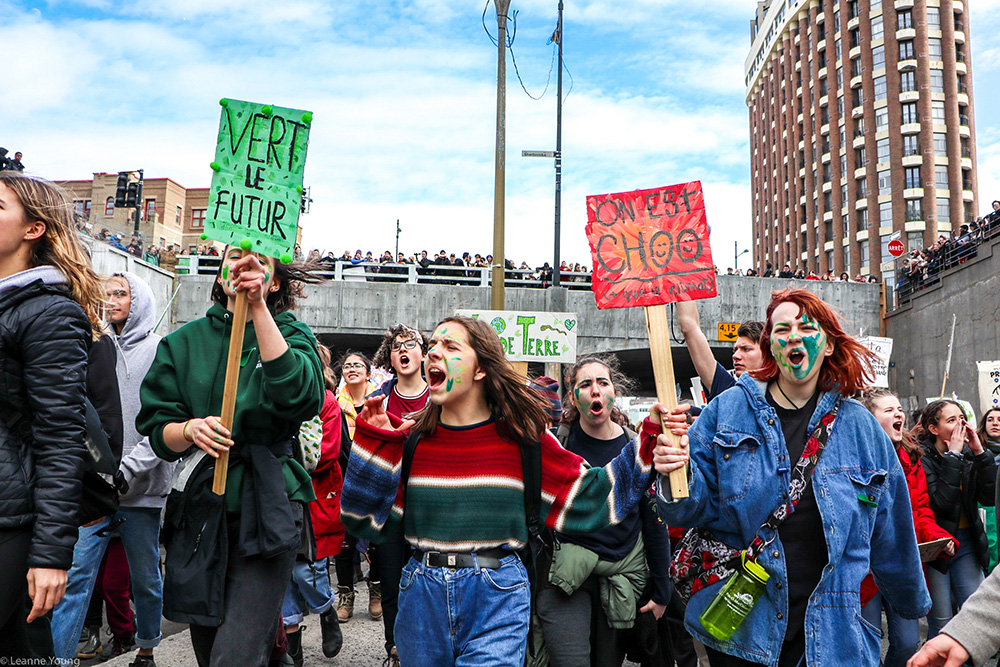
It’s time for another Climate Strike

Sometimes the burden of climate change feels like a futile battle. We’ll use a reusable water bottle, never touch a plastic straw, attend the climate strike, donate to fight Australia’s wildfires, and tweet #FridaysForFuture at our politicians, but still temperatures are rising, pollution is increasing, and our institutions and governments remain complicit. We can’t carry the responsibility of ending the climate crisis by individual actions when our economic and political systems are designed to exploit earth’s resources and allow the hoarding of wealth by an elite few. We need to utilize our collective strength and demand systemic change, or else our future will be annihilated. It’s time for another climate strike. 

The Canadian government declared a climate emergency on June 17, but approved the Trans Mountain Pipeline extension the following day, violating the sovereignty and human rights of the Secwepemc nation and other Indigenous communities while cementing Canada’s international role as a climate criminal. The McGill administration has touted carbon reduction and sustainability on campus, but won’t divest from oil, coal, and gas or discontinue its research focused on weapons and the fossil fuel industry. To members of the McGill administration, whose wealth insulates them from the onslaught of climate change, maintaining an unsustainable and traditional social order is more important than transitioning towards a livable future. To them money is more important than our collective livelihood. To the members of C-JAM, their actions are nothing more than fraudulent greenwashing and attempt to depoliticize the climate crisis. Given the consequences, this can no longer be accepted. We need those abusing their power to feel our shared power. 

The fact that some are contemplating or denying that it is time to act relies on a lot of privilege. The fatal consequences of the climate crisis are already here, seen by the recent disasters in Indonesia, Bangladesh, Puerto Rico, the Carribean and more; this will only get worse. The effects of climate change disproportionately impact systematically marginalized groups (including Indigenous, Black, poor, racialized, and Global South communities) who are least responsible for the ecological crisis, while the corporate and political elite emit the majority of carbon and abdicate any responsibility. Due to the ways that systems of oppression overlap and reinforce one another, if we are to combat racism, sexism, classism and other forms of oppression, we must turn to climate justice. For example, those that want to weaken or abolish environmental regulations are the same people who invade Indigenous lands and violently disregard sovereignty rights and Indigenous knowledge. We see this now as Coastal GasLink and the Royal Canadian Mounted Police are illegally occupying Wet’suwet’en territory, harassing, surveilling, and arresting land defenders to protect oil and the colonial state. As students with the ability to democratically strike, it is imperative that we mobilize alongside the many activists leading the movement to transform the world at a crucial moment in history. We must envision environmental prosperity in the context of social equity, because no one is free until we all are. It’s time for McGill to stop being complicit. 

The protests on March 15 and Sept. 27, 2019 were historic in size, but without sustained momentum, their influence on McGill’s administration and Canada’s government leaders dwindles; their relevance, galvanism, and potential are lost. Together, across McGill’s faculties and departments, students can democratically vote for a strike that will legitimize our demands and increase public consciousness of the urgency of climate change. Our collective power, combined with that of other educational institutions, can force recognition by both McGill and the Canadian federal government. Our privilege to perform intellectual labour roles is shared with our responsibility to forge a future that’s worth earning our education for. As future workers, students provide a vital service to the economy and McGill and without our cooperation, neither will be able to function smoothly. Striking is powerful enough to force the government to listen to us rather than waiting for their insufficient responses to petitions, letters, and speeches. Nothing is as politically empowering within a democratic society than people committing non-violent direct action against institutional authority. Only with collectivized, disruptive, and prolonged action will we progress the fight against climate change. 

As millions of people are rising up around the world, it is time for us to take a stand against the systems of oppression that are preventing necessary climate action. It’s with all of this in mind that we’re joining the Coalition étudiante pour un virage environnemental et social (CEVES) in their strike week. From March 30-April 3, strike with us and participate in campus protests and actions. Join environmental groups country-wide to collectively take the future into our hands.

governance
McGill, News

SSMU Legislative Council discusses fee increases due to construction

The Students’ Society of McGill University (SSMU) Legislative Council reconvened on Feb. 27 to debate fee increases associated with library renovations and student clubs food sale fundraisers.   

The meeting began with a presentation by Dean of Libraries Colleen Cook, who shared the feedback received from consultations with students regarding library improvements. Cook reported that students feel the need for more seating and a better atmosphere in the libraries on campus, and that the university will be funding a six-year project to reconfigure the McLennan-Redpath Complex into the Fiat Lux Library Building. The new $13.27 per semester fee, which is currently up for renewal for the next 10 years, according to Cook, will be put towards doubling the amount of study spaces available and purchasing new learning technology.

Cook assured the council that student input is being sought to ensure that the project reflects the needs of the community.  

“Each library has an advisory committee, and there is student representation on those, as well as on the Senate Committee on Libraries,” Cook said. “We also actively reach out to students in formal and informal channels.”

SSMU Law Representative Beatrice Mackie challenged Cook about the reality that sections of the library will remain quiet during the renovations and expressed concern for the availability of study spaces during the construction period.

In response, Cook acknowledged that space will be lost within the complex during the construction, but affirmed that temporary study spaces will be available elsewhere. 

“I am confident that with all the libraries in our constellation of libraries, we will always have some quiet spaces for students during this project,” Cook said. “In the end, we have to do this. We are truly far behind.” 

The council meeting also passed the Motion Regarding SSMU Club Fund Fee Referendum Question, which was moved by Vice-President Student Life Billy Kawasaki. The policy proposes a $0.82 increase to the opt-outable SSMU Club Fund Fee to help eliminate the financial burden of the $25 Food Handling Sales permit. After a SSMU club was reprimanded by the City of Montreal for unsafe food handling last semester, all clubs and services must pay SSMU to use the food handling equipment for all food-related fundraisers.

Medicine Senator André Lametti raised an objection to SSMU’s plans to subsidize this expense of the permit in order to reduce the cost of hosting a food sale fundraiser for student clubs and services. 

“I think subsidizing the price of samosas is against our core values,” Lametti said. “It is a progressive tax where all students contribute to people who want to buy food on campus, while the students with [fewer] financial resources have to stick to the cheaper option of bringing food themselves.”

Arts Representative Adin Chan emphasized the potential of the fee increase to allow student groups to operate effectively.  

“While it is important to appreciate that samosas are essential to McGill culture, we should not overlook that clubs rely on the funding [raised by samosa sales],” Chan said. “Having to pay the $25 fee is counterproductive to the very purpose of [a] sale, which is to generate revenue for the good services that clubs serve on campus.” 

Following further debate, the motion carried with 14 in favour, six opposed, and three abstaining. 

The Legislative Council will reconvene on Feb. 12 in McConnell Engineering 603 at 6:00 pm. 


Moment of the Meeting:

Clubs Representative Victoria Flaherty emphasized the importance of subsidizing food on campus by describing a $12 sandwich with a single tomato she saw in the McConnell Café. 

Soundbite:

“No one likes samosas more than I do. In fact, I was one of the only two SSMU [representatives] to go to the protest. But I am concerned that our solution to this is passing another fee. I think there are other avenues we should [pursue] before charging this [fee] to the student body, such as advocating to Montreal Public Health.” – SSMU Music Representative Sebastian Duckett, on the proposed club fee increase. 

Read the latest issue

Read the latest issue