

Latest News

Commentary, Opinion

Safety and speech aren’t either/or

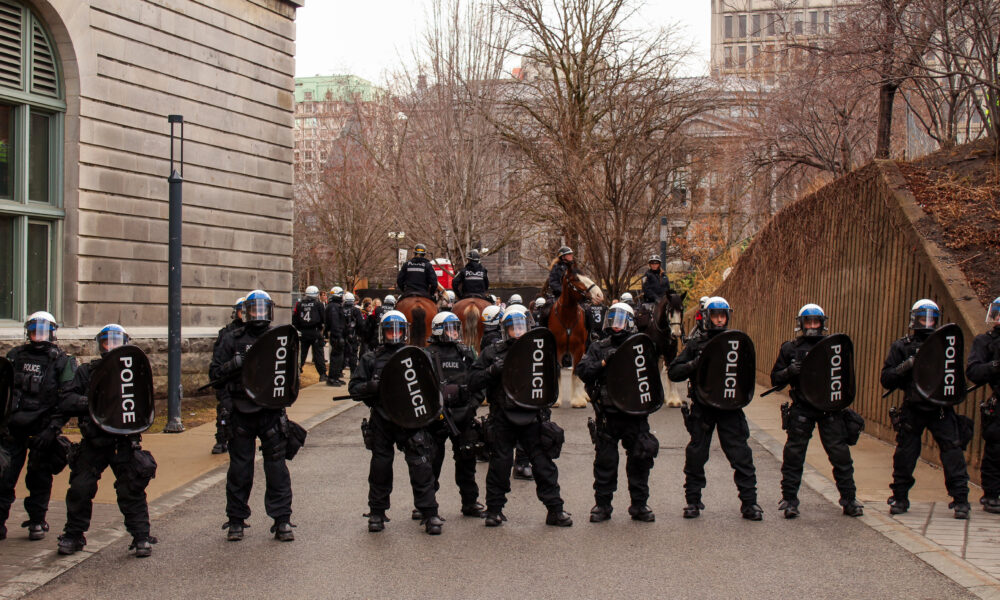
Hate-fuelled harassment deserves a firm legal answer. But Canada’s Bill C-9—also known as the Combating Hate Act—risks the criminalization of non-obstructive protests near community institutions, serving more as a tool to stifle political protest than to combat hate.

As currently drafted, Bill C-9 would establish new intimidation and obstruction offences to apply in the vicinity of houses of worship and buildings primarily used by an “identifiable group” for community and education purposes. It would also ban public display of certain terrorist or Nazi symbols when intended to promote hatred. The bill defines ‘hatred’ as detestation or vilification, but creates allowances for the symbols to be displayed for legitimate purposes, including journalism, religion, education, or art, and a narrow good-faith removal—a temporary and necessary display solely to identify and remove hateful material. Bill C-9’s stated intention—to keep people safe—is admirable. However, the line between respectful political dissent and actions fueled by hatred is dangerously blurred throughout the bill.

On multicultural campuses like McGill, a blurry legal line like that in Bill C-9 can give undue power to administrations at the expense of students’ freedoms of speech and assembly. Protests are designed to be disruptive: They interrupt routines, access, and comfort, even when peaceful. They are supposed to be //felt//. The bill’s intimidation offence condemns any conduct with the intent to provoke a state of fear in order to impede access to community buildings. Through the incorporation of conceptions of ‘intent’ into the bill, police officers will be given the jurisdiction to assess the intentions and goals of protestors, meaning that they can charge protesters with hate-based acts without proof of threats or physical obstruction. Though the bill permits protestors to be “at or near” a site to communicate information regarding their demonstration, this right only applies in the event of obstruction, not intimidation. Threatened with a potential penalty of 10 years of imprisonment, protests will be likely to self-censor.

On paper, Bill C-9 is content-neutral, and its access rules hinge on where conduct occurs, not on viewpoint. However, the political geography of recent protests means enforcement will inevitably fall unevenly. Because Bill C-9 is applicable when conduct occurs at or near protected sites, pro-Palestine demonstrations near Jewish institutions and counter-protests near mosques are the most likely to be policed. If protest behaviour is perceived as intimidation or impedes access—even without a hard blockade—police will be empowered to make arrests on the basis of hateful action. In other words, the text targets conduct, but the political geography of recent protests shapes who is most vulnerable to enforcement.

Bill C-9 also removes Attorney General consent for hate-propaganda charges, which heightens the risk of charge-first, acquit-later outcomes. Its clause banning the use of symbols during demonstrations creates even more space for the criminalization of protest. Currently, the bill denounces any imagery that resembles banned symbols closely enough to the extent that it could be confused as such. This definitional elasticity invites law enforcement to act on visual uncertainty in fast-moving demonstrations. 

If Bill C-9 is enacted, students’ ability and right to protest on campus will be severely suppressed. Under this legislation, tactics that simply look like impeding entry—or are read by on-site law enforcement as intimidation intended to impede access—will carry high legal risk for protesters. This subjectivity in assessing criminality is damaging and unconstitutional; drawing clear, well-defined lines around police officers’ legal authority matters as much as the bill’s stated intent. Otherwise, the bill will not serve anyone; not minority student groups, not faculty members, not protestors, not even police who are asked to adjudicate in fast-paced moments.

Canada needs a firm answer to hate-fueled harassment, but Bill C-9 is not it. The Combating Hate Act should be amended to protect access without criminalizing political voices: That’s how we keep our doors open, our arguments loud, and our rights intact.

Behind the Bench, Rugby, Sports

Despite losing World Cup final, Canada Women’s Rugby still has lots to be proud of

Before the Women’s Rugby World Cup Final kicked off on Sept. 27, Canada and England’s women’s rugby squads had already etched their names into the history books. When they walked onto the pitch at Twickenham Stadium in the London suburbs, a sold-out crowd of nearly 82,000 rugby fanatics greeted them with a roar, eager to see the Canadian and English national teams face off for glory. A watershed moment in women’s sport, this tournament was more than a chance to prove which team was the best in the world: It was an opportunity to capture the eyes of viewers across the planet.

The matchup promised excitement at every turn. England’s squad, known as the Red Roses, had not tasted defeat since their loss in the 2022 World Cup final at the hands of the New Zealand Black Ferns. They had made the final in each of the previous six World Cups—which happen once every four years—but were victorious only in 2014. The Red Roses were looking to shake off their 1–5 finals record and turn over a new leaf, elevating them to the status of the undisputed number one team in the world.

Canada, on the other hand, has a much less storied rugby past. They had only made one World Cup final, coincidentally losing to England in 2014. However, they were undefeated throughout 2025 and ranked second in the world. Win or lose, Canada could look back at the 2025 tournament as a whole and take pride in the history they had already made. They guaranteed their best finish ever in a World Cup, and a victory in the final would have been the cherry on top. 

Both teams had remarkably similar paths to the final. England started out red-hot, winning all three of their group stage games and out-scoring their opponents 108-17. They saw off Scotland in the quarterfinal, winning 40-8, and survived a test against France in the semi-finals. Canada started their tournament with a bang as well, winning all three of their group stage games including a 65-7 romp over Fiji and a flawless 42-0 victory against Wales. The crowning moment of their tournament occurred in the semi-finals, where the Canadians went up against perennial powerhouse New Zealand. The Black Ferns had not lost a World Cup knockout round match since 1991, and were the two-time defending World Champions. 

Powered by Queen’s University Gaels alum and 2022 U SPORTS Athlete of the Year Sophie de Goede, who scored a try and a penalty kick, and made three conversions, Canada pulled off one of the greatest upsets in the history of women’s rugby. They went from fundraising just to attend the World Cup, to being one win away from the greatest achievement in program history. The win against New Zealand proved that Canada can go toe-to-toe with anyone, and should be considered one of the best teams in the world from now on. The victory was more than just a chance to go for the gold—it marked a significant milestone and turning point for women’s rugby in Canada.

In the final, Canada got off to a quick start, with wing Asia Hogan-Rochester scoring a try in the opening five minutes of the game to make it 5-0 in favour of the Canadians. However, England struck back with tries from Ellie Kildunne, Amy Cokayne, and Alex Matthews before the thirty-minute mark. Successful conversions on all three tries left Canada facing a 21-8 deficit at halftime. England’s proficiency in the scrum and staunch defence proved to be too much for Canada, and the Red Roses triumphed 33-13 to cap off an unheralded run of 33 games unbeaten

Despite the defeat, Canada’s players and fans should be immensely proud of the team’s efforts. While they may not have had the fairy tale ending they were hoping for, the World Cup solidified Canada as a rugby powerhouse for years to come and represents a new chapter in the story of women’s sport in Canada.

Art, Arts & Entertainment

‘Weci | Koninut’ cements voices of Indigenous land-stewardship in both present and future

What do you dream about? Hopes, fears, a pigeon wearing a coconut hat? What about your memories, or the pieces of yourself you can still hold on to? Weci | Koninut, a new installation in the Quartier des Spectacles, uses dreamlike experiences to ground audiences in the six seasons of Atikamekw culture, opening a doorway to the past and hopefully carrying its pieces into the future.

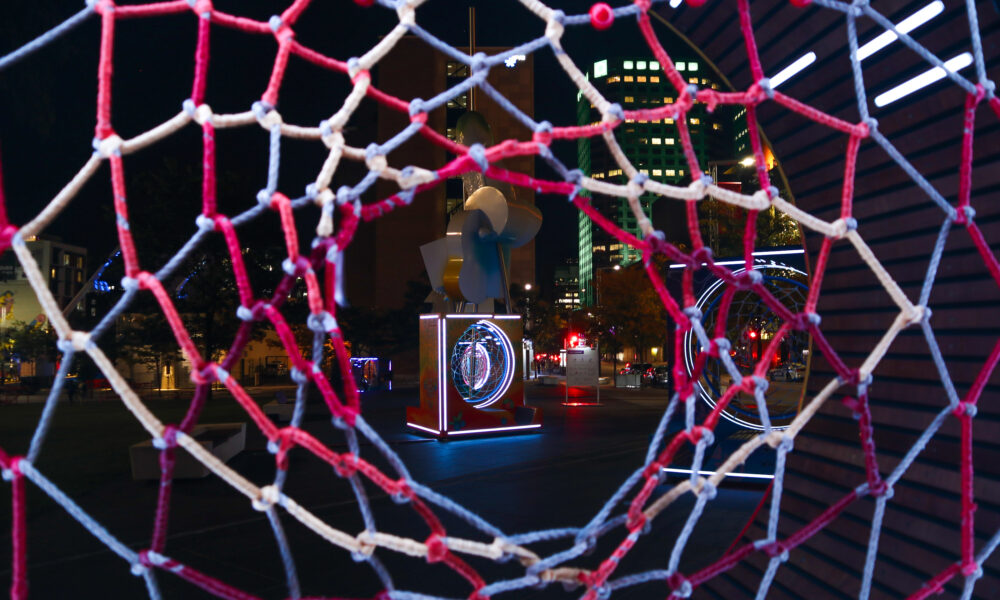
Created by Indigenous artists Julie-Christina Picher and Dave Jenniss, Weci | Koninut guides visitors through the six Atikamekw seasons, from Pitcipipon (pre-winter) to Takwakin (autumn). It specifically details the artists’ relationship with the Atikamekw people’s sacred land of Notcimik—how their ways of living and hunting there changed through the seasons.

Six colourful, boxy structures called ‘dreamcatchers’ facilitate the experience, each one separated through the middle by a woven mesh with space on either side to lie down. These dreamcatchers encourage visitors to come closer and activate the sounds, music, and spoken stories of the represented season. In one dreamcatcher, you hear footsteps crunch through the snow; in another, the excitement of the music seems to herald the coming of a more prosperous season.

These sounds, plus a spectacle of light that is projected down onto the audience member, do not give away too much. Even when there are spoken stories, you may not be able to understand them—that is the point.  

Weci | Koninut is, above all, a meeting point where our voices mingle with those of our ancestors,” explained Picher and Jenniss in a press statement. 

“The dreamcatchers are thresholds that invite surrender to the rhythm of the Atikamekw seasons, guided by imagination and by the dialogue that unites us with the Earth.” 

In creating a dialogue that concerns itself with both the present and past, the installation prompts our imagination to fill in some of the blanks for us.

The design of the dreamcatchers themselves helps create a connection among visitors. While separated from each other by the woven mesh of the dreamcatchers, participants still find even the most unintentional connection through a shared fascination with the structures or interest in how another reacts to their dream. Although nobody hears the same thing, the unspoken presence of another carries them into a reverie, expressing the idea that there’s always someone to help, to comfort, to brave the seasons.

These quiet connections with others echo the bond with the land that this installation conveys, where, as Picher and Jenniss mention in their statement, “each gesture and breath recalls the living bond with the land.” The land is presented as a living, breathing thing; it’s something that has to be worked through, something that presents obstacles, yet also joys and successes. This land emphasizes how these bonds of affection are the result of unity between people and the Earth.

In this project, every interaction between the audience and the art becomes part of the larger story. It’s where, despite being in the middle of the largest city in Quebec, a modern perspective can seamlessly drift into a lucid imagination about a culture that so valued—and still values—guardianship of the land. 

With all this talk of dreaming and resonance with ancestors, it’s still important to remember that this art was not meant to memorialize a long-forgotten past. Weci | Koninut is, by its nature, echoing the lives and the callings of ancestors, but it also asks audiences to do more than just listen and move on. After all, dialogue means nothing if it does not bring change. 

The act of dreaming and awakening to the same sounds, music, and voices of history juxtaposed against the backdrop of an overwhelming metropolis brings one closer to understanding contemporary Indigenous voices. Remember: These stories of culture are still living and breathing today as they have for generations. Just as dreaming is a sign of sleep, sleep is a sign of refreshment, and this installation refreshes our continued need for connection to nature and to those we’ve failed to listen to.

Montreal, News

The Tribune Explains: The upcoming Montreal municipal election

The race for Montreal’s next mayor kicked off on Sept. 19, following current mayor Valérie Plante’s announcement last year that she would not be running for a third term. Montreal’s municipal election day will be held on Nov. 2, 2025. The Tribune explains how to navigate voting.

How can I vote? 

Voting on election day will take place from 10:00 a.m. to 8:00 p.m. on Nov. 2 at local polling stations. Advance polling is also scheduled from 12:00 p.m. to 8:00 p.m. on Oct. 26.

For the first time, students from 16 Montreal post-secondary institutions, including McGill, will be able to vote on their campuses on Oct. 24, 27, 28, and 29.

If one is unable to vote in person for health or mobility reasons, they can register to vote by mail or by mobile.

Montrealers can register to vote through an online video conference call before Oct. 15 at 6:00 p.m., or in-person at a commission of revision between Oct. 11 and Oct. 16. Voters can also check online to see if they are already registered. 

You must be registered to vote.

Who is eligible to vote? 

To be eligible for registration, a voter must be a Canadian citizen who is at least 18 years old by Nov. 2, reside in the territory of the City of Montreal, and have lived in Quebec for at least six months prior to the election. Moreover, one must not have lost their right to vote due to legal incapacity or guardianship.

Who are the candidates? 

There are currently five candidates running for mayor: Luc Rabouin for Projet Montréal; Soraya Martinez Ferrada for Ensemble Montréal; Craig Sauvé for Transition Montréal; Jean-François Kacou for Futur Montréal; and Gilbert Thibodeau for Action Montréal

Luc Rabouin, the current borough mayor for the Plateau-Mont-Royal, was selected by Projet Montréal as Valérie Plante’s successor. Rabouin is running on a platform to offer discounted transit fares for low-income users, add more public bathrooms across the city, and add 1,000 BIXI stations to Montreal over the next four years, ensuring all Montrealers have a BIXI station within a 15-minute walk of their homes. 

Soraya Martinez Ferrada resigned from her role as former federal tourism minister in Justin Trudeau’s Liberal cabinet to run for Montreal mayor with Ensemble Montréal. Her key campaign promises include using artificial intelligence to enhance traffic management and construction planning, and conducting a review of the city’s bike paths to eliminate any dangerous ones. Moreover, she is concerned with tackling youth crime and homelessness, aiming to create more non-market housing that also offers social support to its residents.

Craig Sauvé is a city councillor for Montreal’s Sud Ouest borough. He was a former member of Projet Montréal, and left the party after a sexual assault allegation, which he has categorically denied. He ran for the New Democratic Party in the riding of LaSalle-Émard-Verdun in the most recent federal election. Some of Sauvé’s key campaign promises include taxing the “ultra-rich” to reinvest the resulting money in social housing, establishing a night mayor, and “standing up” to François Legault’s Coalition Avenir Quebec provincial government on its supposed neglect of Montreal’s infrastructure, citing the province’s abandoned tramway project in LaSalle and Lachine. Recently, Sauvé has denounced the provincial government’s directive banning the use of gender-neutral language in official state communications, calling it divisive and stigmatising.

Jean-François Kacou is running for mayor with Futur Montréal, a party founded by civil rights activist Joel DeBellefeuille and community leader Matthew Kerr. He is originally from the Ivory Coast and was a former executive director of Ensemble Montréal. His platform includes making police and fire department equipment up-to-date and electrifying the entire bus network.

Gilbert Thibodeau is running again under the Action Montréal banner after receiving one per cent of the vote in the 2021 municipal elections. He believes Montreal requires more efficient financial and infrastructural management.

Research Briefs, Science & Technology

Are deep-ocean microbes waiting for lunch?

The deep ocean—at least 200 metres below sea level—is home to an organic carbon pool comparable in size to the atmospheric carbon reservoir. This carbon pool has remained consistent in size for millennia. If just one per cent of the deep-ocean carbon were released in the atmosphere through microbial respiration, it would equal a year’s worth of human greenhouse gas emissions. Yet, the mechanisms that keep this carbon stable for so long remain unknown.

During his postdoctoral fellowship at the McGill Geomicrobiology Lab in the Department of Earth and Planetary Sciences, Richard LaBrie and his collaborators investigated whether bacteria in the deep ocean are too starved to decompose dissolved organic carbon (DOC), offering an explanation as to why the carbon pool has not shrunk.

LaBrie’s hypothesis relates to the priming effect, which was introduced in soil science a century ago.

“The priming effect is the addition of simple or moderately complex organic molecules that help microbes degrade more [persistent] carbon that would not be degraded otherwise or within [a given] context,” LaBrie said in an interview with The Tribune.

The addition of exogenous organic compounds makes it easier for microbes to eat their lunch.

To test his hypothesis, LaBrie collected water from 2,500 metres deep in the Antarctic Ocean and added different compounds separately to the samples: Glucose; amino acids, a substitute for dissolved organic nitrogen; glucose 6-phosphate, a substitute for dissolved organic phosphorus; and a mix of amino acids and glucose 6-phosphate.

“Nitrogen and phosphorus are both very important for microbial growth, [so] we thought that they could also help bacteria break that energy barrier,” LaBrie explained.

At several time points, the researchers analyzed DOC, cell abundance, and the microbial community composition in water.

Surprisingly, they found no evidence of the priming effect, as bacteria did not degrade the deep seawater DOC after the addition of exogenous carbon sources.

“The addition of [the organic carbon] compounds did not bring the carbon below the background level, but we did find some very interesting results,” LaBrie elaborated.

Contrary to expectations, glucose 6-phosphate was the least usable carbon compound, even though phosphorus is usually the most limiting nutrient—meaning the essential nutrient—in the deep ocean.

“In contrast, it was the amino acids that were first consumed and resulted in the highest increase in cell abundance,” LaBrie added. “So, there was maybe a larger limitation in nitrogen than in other compounds, like phosphorus or pure carbon.”

The microbial community composition analysis further revealed that different microbes consumed DOC under different treatments. They also found evidence of competition between two microbes in the amino acid and glucose 6-phosphate treatment.

“We think these types of relationships between microbes are important for deep ocean cycling,” LaBrie said.

A limitation of the experiment is that it only tested simple carbon molecules. To build on this work, LaBrie plans to do another priming effect experiment in the St. Lawrence estuary. This time, he will add more complex carbon compounds to deep-estuary water samples.

“When the molecules are more complex, the microbial communities need to produce enzymes to cut these molecules down before they can consume them,” LaBrie said. “By producing these enzymes, they could also break down more complex molecules that are in their vicinity, […] [degrading] what is already present in the ecosystem.”

The findings have implications for geoengineering, a branch of science that explores approaches to counteract climate change. One of the most studied geoengineering techniques is the enhancement of ocean primary productivity. This inevitably results in some of the carbon made by producers sinking into the deep ocean and contributing to the carbon reservoir, keeping carbon away from the atmosphere.

If the priming effect is absent, as LaBrie’s findings suggest, then the persistent deep-ocean carbon will not be released into the atmosphere, even with the addition of DOC produced by primary producers. As a society, it is our role to determine whether such geoengineering technologies are ethical.

Out on the Town, Student Life

Happy hour, happy life: A guide to 5 à 7 in the city

After a long day of classes, extracurriculars, and small talk, McGill students often find themselves in search of an affordable, relaxing outing. While the low prices at Gerts and Blues can make for a cost-effective evening, The Tribune has compiled a list of restaurants and bars throughout Montreal that also offer discounts and deals. This fall, escape the McGill bubble and enjoy some new eats and cheap drinks. 

Lola Rosa 

Though technically still within the McGill sphere, located just a block down from Milton Gates, Lola Rosa offers a variety of plant-based menu items from tacos asada to curry, gyro to braised tofu. The restaurant also offers a selection of desserts and caffeinated beverages, serving an excellent cappuccino. While the food is delicious, and the ambiance is warm and intimate (with a range of music choices from Addison Rae to Grimes), it is also economical for broke university students, who can receive a 15 per cent discount with a McGill student ID. For those who live far away from campus, Lola Rosa is the perfect spot to unwind after a day of classes and catch up with a friend over a $14 CAD platter of nachos. If caffeine alone fails to ease your day, Lola Rosa also offers alcoholic coffee beverages. 

Le Majestique Bar

For delicious seafood on a budget, Montreal is home to many restaurants that offer deals on oysters—but the atmosphere in Le Majestique is unbeatable. Their typical price for oysters is $3.75 CAD, which drops down to $2.50 CAD for their happy hour deal between 5:00 p.m. and 7:00 p.m. The space, although not particularly spacious, is always bustling with large crowds until 3:00 a.m. Begin your night with an economical platter of oysters and signature cocktails, transitioning into a longer night of casual partying. 

Urbanista 

If you’re in search of a hot pregame bar or simply an evening of many cheap cocktails, Urbanista, located in the heart of the Plateau area, is the ideal place to go. Their happy hour, from 5:00 p.m. to 9:00 p.m., promotes two-for-one cocktail deals—an ideal arrangement for students on a budget. With booths lining the bar and eclectic, vintage lights hanging from the ceiling, Urbanista curates a laid-back vibe conducive to a night of tipsy chatting among a large group. 

Bar Bootlegger

In competition with Le Majestique, Bar Bootlegger is yet another Montreal bar that offers happy hour deals on oysters—but their happy hour menu extends past the $1 CAD oysters, including deals on drinks as well. Available every day of the week between 5:00 p.m. and 7:00 p.m., Bootlegger sells local beer or cider pints for only $5 CAD and signature cocktails for $13 CAD, rather than their usual pricing of around $19 CAD per cocktail. On Tuesdays, enjoy free entry to the spot, with live jazz performances starting at 9:00 p.m. 

Barbossa 

Barbossa is a known favourite among McGill students. Free entry before 10:00 p.m. is not the only deal this spot offers: It also provides a variety of happy hour deals—$10 CAD martinis all night on Mondays; $10 CAD margaritas on Tuesdays; $10 CAD espresso martinis on Wednesdays. From Thursday through Saturday, Barbossa promotes two-for-one cocktails between 8:00 p.m. and 10:00 p.m. Any day of the week, stop by Barbossa for great deals on drinks and enjoy music from local DJs. Whether you are in the mood for a martini or an amaretto sour, jazz music or house, Barbossa has it all, coupled with a groovy, checker-printed dancefloor. 

Behind the Bench, Football, Sports

Dynasty in demise: Kansas City in trouble

The Kansas City Chiefs are off to a slow start, having just picked up their first win of the season against the New York Giants. Only 10.1 per cent of teams who start 0–2 have ever made the playoffs. However, never before has an 0–2 team had Patrick Mahomes, so one would imagine they will be okay. Then, why the slow start if the Chiefs have Mahomes? 

The team has certainly felt the temporary loss of their top two receivers Rashee Rice and Xavier Worthy, due to suspension and injury, respectively. Rice is clearly the team’s best receiver, with well over a thousand career receiving yards in only twenty games. Worthy, on the other hand, is a speedster who racks up yards after the catch, and a gadget guy who can take screen passes and end-arounds for big plays. 

In the absence of the two, the Chiefs’ offence currently looks toothless. They are a bit of a one-trick pony, focusing on throwing short passes underneath. In the team’s first win against the Giants, Mahomes only had five completions which travelled more than eight yards in the air, and fifteen of his twenty-two completions travelled five yards or fewer, with eight even going behind the line of scrimmage. 

Chiefs fans can expect improvement when Rice and Worthy return, but they will still have other problems on offence with their run game. This offseason, the Chiefs traded away four-time All-Pro guard and massive offensive contributor Joe Thuney to cut costs as Mahomes’ new contract kicks in. As for the team’s running back talent, Isaiah Pacheco and Kareem Hunt are simply not good enough. Opposing defences have been playing two high safeties against the Chiefs, limiting passing windows downfield, as well as playing nickel personnel that use an extra defensive back instead of a bigger body near the line. The lack of rushing threat has made it far too easy for opposing defences to stop the Chiefs’ already struggling passing attack. 

The other side of the ball has also been a problem for Kansas City, as their defence lacks real difference-makers outside of Chris Jones and Trent McDuffie. The main issue has been down on the line of scrimmage. Jones is an elite player, but the rest of the defensive line has looked rough, with the exception of the team’s win against a bad Giants team. Opposing offensive lines have dominated the non-Jones linemen on runs, and the Chiefs’ defensive front has failed to pressure the quarterback on passing downs. 

Against bad quarterbacks, you can rely on the blitz, but when you play MVP-calibre quarterbacks like Josh Allen and Lamar Jackson in the playoffs, the Chiefs will need to get pressure on them with four rushers to leave seven defenders in coverage. The Chiefs have lost a lot of talent in recent years as they try to build a roster around Mahomes. While the size of his new contract has certainly not helped, the real issue is that the Chiefs simply have not drafted well enough. As long as Mahomes is on the team, their championship window is open. But, they need to hit on more picks. 

As for this season, the Chiefs will get Rice and Worthy back and should make the playoffs—barring a Mahomes or Jones injury—but their path to the Super Bowl does not look great. With the Buffalo Bills sitting at 4–0, becoming the number one seed in their conference is a long shot for Kansas City. Winning the American Football Conference (AFC) would likely require beating both the Baltimore Ravens and Buffalo, whereas if the Chiefs had the top seed, they would only need to beat one or the other. No team in the AFC is without its weaknesses, but—as currently constructed—fans should not expect the Chiefs to be the conference’s Super Bowl representative, let alone to beat the National Football Conference’s best in the big game.

Out on the Town, Student Life

 How to prepare for Piknic Electronik

There are many annual events in Montreal that you don’t want to miss out on: Piknic Electronik is one of them. Let’s demystify this iconic event so that you’re fully prepared for your night at Parc Jean-Drapeau. From metro lines to dress codes, The Tribune has put together a guide for everything you need to know to have a well-prepared, stress-free experience. 

Tickets

First order of business: Tickets. General admission tickets start at $24 CAD, and many McGill students choose to purchase them in the fall, while classes are in session. Don’t stress about buying tickets super early: In an interview with The Tribune, Natasha Pfeffer, U2 Arts, said that she bought her tickets last-minute and still managed to attend in the Fall semester.

“I booked my ticket about a week before I went, and I went September 14, so late summer, early fall season, and this is my first time going.” 

However, if you’re set on a specific night, the Piknic Electronik website drops tickets well in advance. 

Piknic Electronik runs every Sunday for six months, from May 18 to Oct. 12, so there are plenty of opportunities to attend. Going at the beginning of the fall semester, before the stress of school hits, is a great way to enjoy the weather with your friends. 

Transportation

If you’ve heard about Piknic, you might know that it takes place on an island, and it’s not exactly walkable from campus. Most students take the metro, where a one-way ticket costs $3.75 CAD, or use their OPUS card. This fee is often more affordable than services like Uber, even if you’re travelling in a group. At the end of the day, taking the subway is much more convenient—but it’s also fun. When taking the metro, be ready for noise, energy, and speed to secure a coveted seat. 

“My best transportation tip is to take the metro with friends. Don’t go alone because the hectic aspect can get really scary,” Pfeffer suggested.

It’s also important to note that you will need to switch lines at the Jean-Drapeau (Yellow Line) metro stop, so make sure you have your route nailed down beforehand. But don’t stress—if you and your friends had a little too much fun at the pregame, you can always just follow the crowd.

Packing

When it comes to packing, Piknic has restrictions on bag sizes, so pack light and prioritize the essentials. Besides, you don’t want to carry a bag that weighs you down and limits your dance moves. Luckily, the venue allows you to bring non-alcoholic sealed beverages, so it’s a good idea to pack a plastic water bottle—hydration is always key. 

“All I really needed was my phone and ID,” Pfeffer told The Tribune

You want to worry less about what to pack and more about what to wear. Outfits can vary depending on who’s DJing that night. At some events, you’ll see funky, eclectic accessory choices. At others, you might spy event-goers rocking sweatpants. But most of the time, you can count on spotting fun hats, face gems, and shimmery scarves.

Weather

Before you plan out your night, remember to check the weather. Oftentimes, especially deeper into fall, the weather is anything but sunny and pleasant. Don’t dress for a delightful spring day if the forecast calls for torrential rain. Don’t be afraid to pack ponchos or umbrellas—you’ll still look great. Prioritize comfort over everything; it’s hard to enjoy the music and vibes of Piknic Electronik when you’re freezing to the bone.

No matter what you choose to wear, what you pack, or how you get there, Piknic Electronik is an exciting event that you shouldn’t miss out on, and it’s sure to be full of excitement and amusement for you and your friends.

Commentary, Opinion

Sportswashing will not cleanse Israel of its genocide

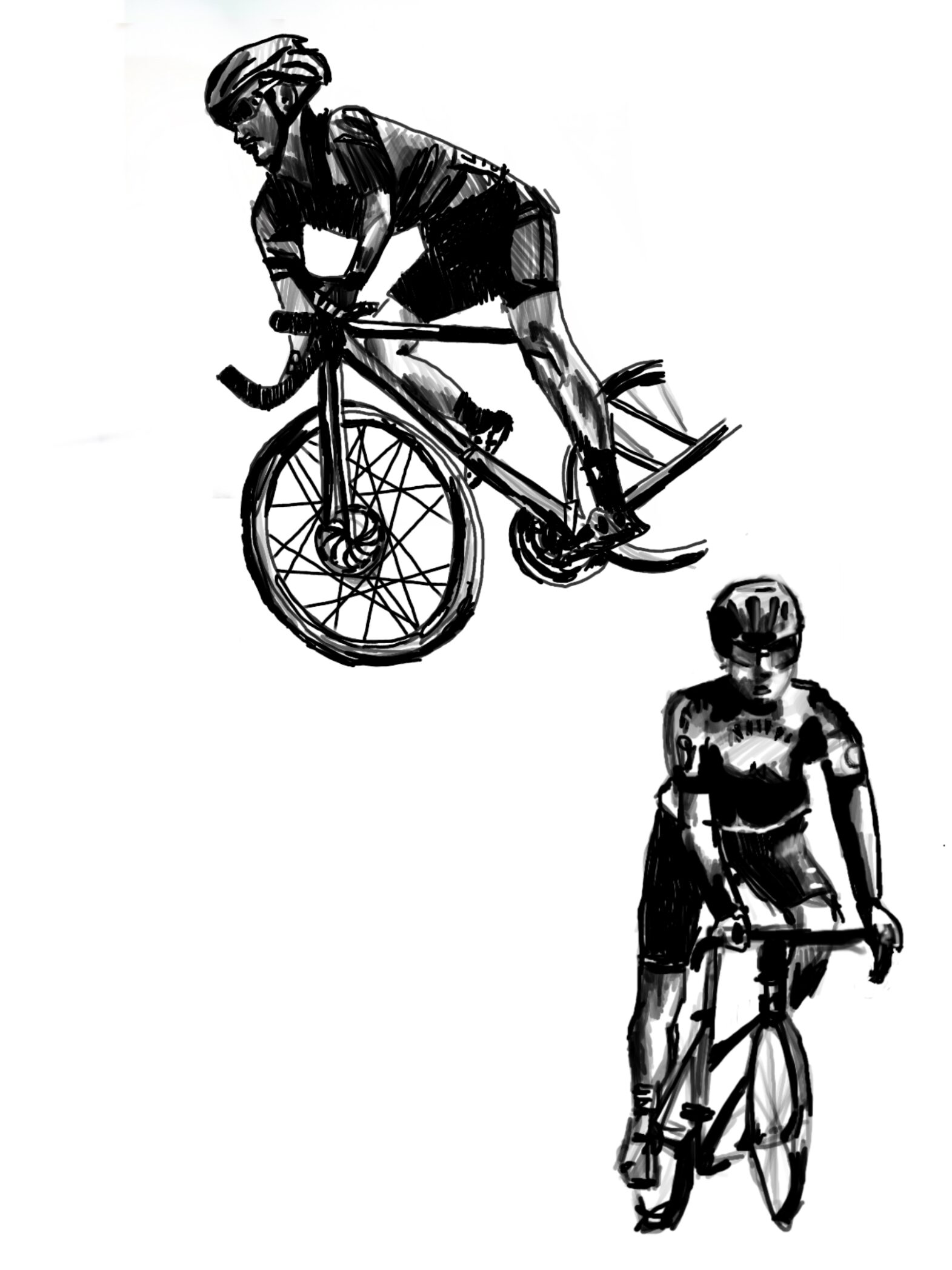
Events meant to celebrate athleticism are too often exploited to burnish the reputations of countries responsible for humanitarian crises. On Sept. 14, seven protesters were arrested at the Montreal Cycling Grand Prix. They were rallying against the participation of the Israel—Premier Tech (IPT) cycling team in the race. The arrests were for obstruction, according to police reports, and the demonstrators mostly cooperated to avoid harm. The protesters opposed the presence of the team given Israel’s genocide in Gaza. The participation of IPT in a similar cycling event in Madrid was also met with protests of the same conviction. These protests bring attention to a common issue in the sports world: Sportswashing—the use of sport to alter the image of a sponsor or government. 

These protesters should not be criticized for the politicization of an event that is already inherently political. While sports could just be a celebration of skill and athleticism, they are often much more than that due to national representation.

Though IPT is a cycling team, its presence at the event can be seen as a political statement. While IPT is not directly tied to Israel, some members of the group—such as co-owner Sylvan Adams—consider themselves representatives for Israel. Adams has previously referred to himself and the team’s riders as self-appointed ambassadors for Israel. While Israel might not be actively sponsoring the Grand Prix, IPT’s participation ensures that Israel’s image is being promoted nonetheless. Thus, the protesters’ presence only ensured that their condemnation was heard in a typically depoliticised environment curated by corporations—in this case, a corporation representing Israel. 

This issue is not exclusive to Israel; countries have long used sportswashing to improve their image. The 1936 Olympic Games in Berlin were infamously used as a way to project an image of a strong and united Nazi Germany all while the nation was actively persecuting its Jewish and Roma communities. In recent years, human rights activists have accused Saudi Arabia of sportswashing by hosting sporting events including golf and soccer leagues to distract from the nation’s human rights abuses: These include the discrimination against LGBTQ+ communities, as well as the assassination of Jamal Khashoggi

However, in the sports world, Israel’s human rights abuses, including the displacement of 90 per cent of Gaza’s population, are not criticized nearly as much as other countries perpetrating horrific violence at this scale. 

Other countries condemned by sporting committees have been banned from events in which Israel is allowed to participate. Russia, for instance, has been banned from a plethora of international sporting events since 2022, due to its ongoing invasion of Ukraine. Yet, despite being responsible for the death of more than 60,000 Palestinians in Gaza, the international community does not hold Israel to the same standard. Instead, they welcome Israeli teams with open arms to their fields, arenas, and starting lines. 

In any situation, the use of sports to generate undeserved good press trivializes the sport and the hard work of its athletes. IPT should be made completely aware of the impact that it has on global politics, recognizing that the protesters at the Grand Prix were right to call it out for its ties to Israel. If the protesters were not there, IPT would have continued to promote Israel’s image unchallenged. Because of this, sports cannot be apolitical. All participants in sports should be held to the same standards as the governments they choose to support.

Art, Arts & Entertainment

‘The Lost Paintings, a Prelude to Return’ grapples with past histories and lost art

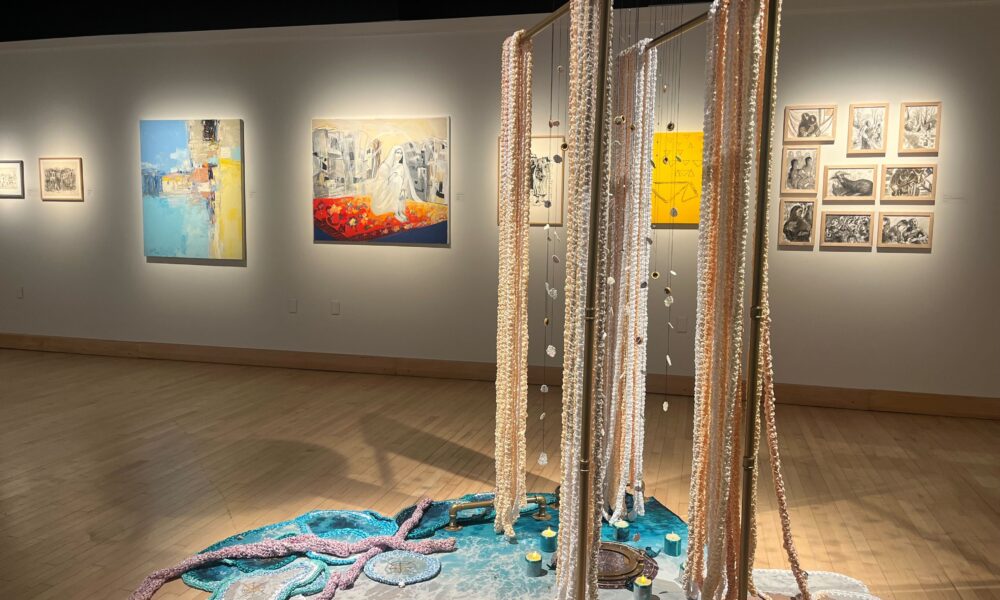
The Montreal, arts interculturels’ (MAI) recent exhibition, The Lost Paintings, a Prelude to Return, brings together an expansive range of art to create a compelling and powerful showcase. Featuring works by 53 Palestinian artists, the exhibition showcased a diverse range of media, including photographs, sculptures, paintings, and multimedia pieces. The collection reimagines the works of the Palestinian-Lebanese artist Maroun Tomb, whose 1947 exhibition of 53 oil paintings in Haifa was lost during the Nakba. Curated by Rula Khoury, Joëlle Tomb, and Haidi Motola, The Lost Paintings attempts to reclaim this past by having each artist draw inspiration from Tomb’s painting using the few remaining records and archival documents. 

The exhibition was deeply engaging, as the curators drew from pieces across time and settings, blending together the works of rising and established artists from across generations. While these pieces were stylistically varied, they all drew on central themes of loss, memory, and time through rich imagery and visual storytelling. 

Weaving and embroidery were used across multiple pieces, such as Landmark, Nardeen Srouji’s sculpture of industrial metal sheets embroidered with brightly colored wool thread, and Farid Abu Shakra’s Embroidered Landscape, which consists of four copper prints embroidered with colourful thread and punctured holes to create patterns and images of birds. These works reference traditional forms of embroidery in Palestine by engaging with the practice itself and using these familiar patterns and motifs. 

More contemporary pieces balanced artistic tradition throughout the exhibition. The collection featured large-scale installations made with unconventional materials, such as Mary Tuma’s The Road to Stella Maris. Tuma’s piece is a metal framework from which orange and cream crocheted ropes hang down over a blue print of the ocean waves, incorporating other materials such as candles and compasses. This collection of materials and forms made for a dynamic exhibition.

While landscapes are a form that can often easily be overlooked, many pieces in The Lost Paintings make the land the central figure of their designs, creating a sense of both instilled beauty and loss. Antoine Elias Raffoul’s black-and-white ink drawing, Back to 55: An Imaginary Mediterranean Landscape, uses artistic techniques he learned in 1955 from Maroun Tomb. Sandra Tomb’s oil painting of lush green forest, Under the Oak Trees with a Basket of Watermelons, brings a sense of hopefulness to an exhibition that is sombre and heavy. The work’s warm, earthy palette and thick, heavy brush strokes give the landscape a glowing effect. These landscapes vary in stylistic qualities and materials, yet all display a clear care and concern for the land.

One of the most striking pieces in the exhibition was Faissal El-Malak’s multimedia art piece, Hadar Hacarmel: I never thought I would ever find you, yet here you all are. It combines personal testimony, newspaper articles, and visual media to tell a greater story. The mix of media forces the viewer to ponder the work longer and engage with the emotional stories of displacement and loss. These raw and powerful testimonies bring a personal dimension to the overwhelming tragedies represented across the exhibition. The heavy use of writing also contrasts with many of the other visually based works in the gallery. The image of the cursor hovering over the buildings in El-Malak’s work gestures to a sense of forced distance from these landscapes and the role of technology in the contemporary age, bridging the gap between past histories and contemporaneity.

This collaboration weaves together different stories and histories in a powerful way, attempting to reanimate the nearly lost legacy of Maroun Tomb. Viewers are reminded of the importance of art in documenting the experiences of individuals and the sorrow attached to the loss of Tomb’s works. Each piece provides a significant contribution to the exhibition as a whole and highlights the power of storytelling through art. 

The Lost Paintings, a Prelude to Return is open until October 4th.

Read the latest issue

Read the latest issue