

Latest News

Hockey, Sports

International hockey has a shootout problem

International hockey tournaments are in full swing around this time of year. The World Junior Championships take place around New Year’s, the World Championships are in the spring, and every four years, we get to see hockey at the Winter Olympics. Needless to say, it’s a good season to be a hockey fan. While these tournaments are exciting, there has been one highly unpopular event that has increased in frequency to the point of critical mass in recent years: The shootout.

Shootouts suffer from one fundamental problem: They don’t provide a satisfactory finish to hockey games. A disappointing ending takes away from the excitement of the game’s preceding action. The shootout takes what is fundamentally a team sport—built on teamwork and collective skill—and turns it into an individual show. Teamwork is imperative in hockey, so to resort to the individuality and fluke outcomes that shootouts encourage seems inconceivable. Yet, they remain prevalent. It’s time for the International Ice Hockey Federation (IIHF) to consider scrapping and replacing shootouts.

At the 2017 World Junior Championships in January, strong Canadian and American teams faced off in the gold medal game in an exciting match that ended in a tie, forcing overtime. After a scoreless-but-exciting overtime period, the game went to a shootout, essentially a skills contest that didn’t necessarily represent the competition as a whole. At the World Championships five months later, history repeated itself when the gold medal game between the North American rivals ended in another shootout. Most recently, the latest iteration of the infamous Canada-U.S. rivalry in women’s hockey ended in a shootout at the gold medal game of the PyeongChang Olympic Games.

Something needs to be done about this long standing issue, but few have agreed on what. The most logical conclusion is to get rid of shootouts outright; however, this decision can create problems in and of itself, such as unnecessary strain on athletes and the fact that few tiebreakers besides overtime would be more exciting or team-oriented than shootouts. New overtime rules, however, have the potential to decrease the amount of shootouts. For ideas, the IIHF can look to the NHL.

In 2015-2016, after poor reception to the shootout format, the NHL switched from its previous four-on-four overtime format to three-on-three. With fewer players on the ice, it became much easier for teams to create scoring chances, and the goals started to flow. The number of games resulting in shootouts fell from 170 to 107 in just one season. Fifty-six per cent of games that required extra time in 2014-15 ended in a shootout, while just 38 per cent did a year later.

Furthermore, in the NHL, these three-on-three periods last no more than five minutes. The IIHF could introduce three-on-three overtime, and even double that length—from five minutes to 10. Shoutouts wouldn’t become extinct, but with a limited number of games—as is the case in a tournament—the likelihood of a gold medal coming down to a shootout would decrease considerably. Otherwise, the IIHF could turn to the NHL playoff overtime system, where the game continues in 20-minute periods until someone scores. However, since tournament games typically take place in quick succession in the same building, this option is only viable for the gold medal game.

The frequency of shootouts in international competitions has gotten out of hand, and the IIHF needs to address the problem. The World Championship qualifiers take place in April, and the tournament itself follows in May. The stream of international tournaments is practically infinite, so the IIHF has plenty of opportunities to make changes. The puck is in the IIHF’s zone—and it’s their turn to play it.

Basketball, Sports

March Madness players to watch

The comeback: Michael Porter Jr., University of Missouri

After three miserable seasons with a combined 27-67 record, new Head Coach Cuonzo Martin seemed to be turning the Missouri Tigers program around by nabbing a star-studded recruiting class—headlined by a projected top-five NBA Draft pick in Michael Porter Jr. However, excitement quickly came to a stop after Porter suffered a supposedly season-ending back injury in just his second minute of college play at the start of the 2017-18 season.

Fortunately, the rest of the Tigers held down the fort as Porter’s recovery progressed more quickly than expected. Now, Porter’s return will provide an injection of elite talent to a suddenly-scary Mizzou squad—which includes his brother Jontay, an emerging star in his own right.


The veteran: Devonte’ Graham, University of Kansas

Prior to this season, Devonte’ Graham was a typical Kansas Jayhawks guard, providing the perennial power with consistently strong, but under-the-radar, point guard play. After a season as a role player and two as a supporting starter, Graham has risen to become the central figure on the first-seeded Jayhawks, leading the team in points, assists, and steals per game and earning first-team All-American honours in the process.

Beyond the box score, Graham might be the single most important player on any team of Kansas’s elite level. The senior provides the Jayhawks with the team’s only reliable play-making, which explains why he ranks fifth in the NCAA in minutes played.


The journeyman: Marcus Foster, Creighton University

A lot can change in a few years. Marcus Foster entered the Kansas State Wildcats basketball program to little fanfare, but instantly took college basketball by storm with 25 points in his second career game. Foster followed up with consistently strong performances and ended his season as one of the country’s premier freshmen. Fast forward a year as Foster lost focus and gained weight, leading to his dismissal from the K-State basketball program.

But after sitting out for a year with the Creighton Bluejays, he flipped the script once again. Foster played a vital role for the Jays in 2016-17, and has again stepped up his game this season to be one of college basketball’s most prolific scorers. With little first-round draft buzz to his name, Foster will look to turn the tables one last time before his senior season concludes—starting with a matchup against none other than his former Wildcats.


The villain: Grayson Allen, Duke University

Despite competing in a sport monopolized by prolific one-and-done talents, Grayson Allen has kept a firm grip on the college basketball spotlight for four years. His long run of infamy began innocently enough with an explosive dunk during a 2015 Blue Devils Final Four victory. He held fans’ attention in the time since, consistently providing solid contributions and borderline-dirty plays.

Combining Allen’s questionable antics with Duke’s traditionally villainous brand, college basketball has found its bad boy. Alongside Duke’s latest set of blue-chippers, Allen will look to his undeniable talents—in creating wins and controversy—to troll fans one final time.

Commentary, Opinion

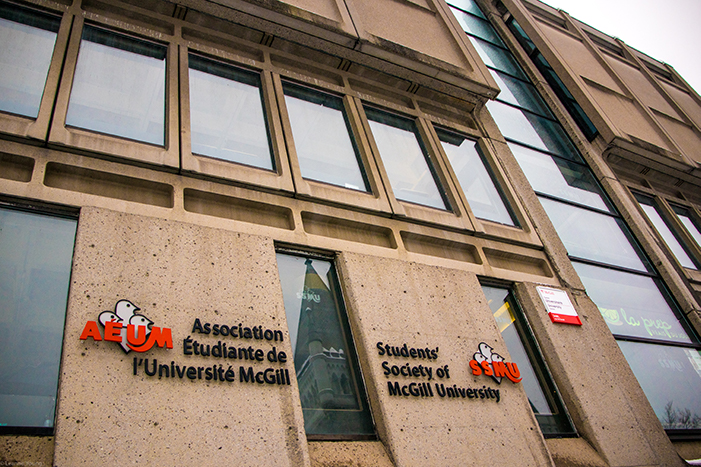
Financial transparency is severely lacking at SSMU

Students are now in the homestretch of the Winter semester, but there is one obstacle: Election season. Over the next two weeks, McGill will be treated to another round of prospective Students’ Society of McGill University (SSMU) executives for the 2018-2019 school year. Student politicians have often tried to earn cheap political points by making the largely nebulous promise of increasing trust and transparency. Indeed, current president Muna Tojiboeva was elected in Winter 2017 after making exactly those promises.

Yet, there have not been any significant improvements on either of those fronts, as evidenced by a motion of non-confidence against Tojiboeva at the Fall General Assembly in October 2017. If anything, SSMU seems just as dysfunctional as last year––the early resignation of Vice-President (VP) Operations Anuradha Mallik and the murky suspension of VP Finance Arisha Khan from the Board of Directors are only highlights. However, the most appalling SSMU scandal this semester was the controversial $4,000 loan to AVEQ, because it revealed the serious gaps in SSMU’s financial administration. Rather than making more vague promises about communication and student trust, the future VP Finance should propose clear, actionable steps to improve SSMU’s financial transparency and reporting of expenses.

Rather than making more vague promises about communication and student trust, the future VP Finance should propose clear, actionable steps to improve SSMU’s financial transparency and reporting of expenses.

After using a SSMU credit card to fund and host an AVEQ conference, SSMU executives Connor Spencer and Isabelle Oke defended their actions by claiming they were standard practice. The incident revealed how unclear the rules on discretionary spending are—even VP Finance Esteban Herpin seemed unclear on the rules. The fact that AVEQ will pay SSMU back doesn’t change the troubling lack of clarity on executives’ access to company credit cards.

Certainly, there should be rules governing when executives are allowed to rack up thousands in credit card charges. However, since these rules are not public, students have to assume that either they don’t exist, or take Spencer and Oke’s word that they followed them. If SSMU is serious about promoting transparency, it needs to release all internal regulations on discretionary spending so that the electorate can assess whether they are stringent enough, and hold executives accountable to them in the future. The confusion as to whether Spencer and Oke committed any wrongdoing is unacceptable, and could have been avoided with clear standards outlining how the SSMU executive handles discretionary spending.

SSMU does not report the executive’s departmental budgets, or indeed the budget itself, in sufficient detail. The 2018 budget is a spreadsheet with no explanation for any of the values—it only shows net movements in cash, after the money is spent, instead of budgeted gross values. To top it off, there is no reporting as to how each department spends its allocated funds. For example, the 2018 budget projects the VP External department to be over $40,000 in deficit. The specific benefits that students receive for that money is unknown, since the budget does not elaborate on individual departmental budgets. Students should demand that the incoming executive team publish more detailed budgets and expenditure reports that account for every dime earned and spent by each SSMU portfolio. Specifically, departmental budgets should be public and expenditures should be in gross rather than net values. While audited financial reports require this type of accounting, the budget doesn’t need to be in net values, nor should it be. After all, the AVEQ conference debacle could be only one of various ambiguous discretionary expenses.

Ultimately, in order to hold representatives accountable, students need to know how SSMU is spending their money. Right now, there is no clarity on how executives budget their money, and how much various portfolios spend on what. When the incoming VP Finance promises to prioritize transparency, students should demand real measurable objectives. If Jun Wang—the only remaining candidate for VP Finance—wants to add real transparency to his platform, he should take these policy proposals into consideration.

McGill, News

McGill Senate tackles distraction in lectures

The McGill University Senate, a governing body that supervises all academic matters on campus, convened on Feb. 21 to discuss the implementation of interactive learning methods in classrooms. Deputy Provost Student Life and Learning Ollivier Dyens (DPSLL) also delivered a report about progress made by the office of Student Life and Learning (SLL) in 2016-2017.


Engaged Classroom in a Digital World

During the meeting, a guest panel discussed how the presence of devices such as laptops and cellphones has changed the social and educational dynamics of lectures. The panel, composed of two professors and one student, was invited to speak about their experiences with interactive learning strategies and technologies such as polling software and group work.

The first panelist, Assistant Professor Sharmistha Bhadra, Faculty of Engineering, complained that students are easily distracted by their electronic devices during lectures.

“[In a lecture] I’m the only one talking, but most of the students are not engaging,” Bhadra said. “They are looking at their cell phones or their computers […or have] just stopped showing up to classes. It was very discouraging because I felt like I wasn’t doing a good job. When it came to the final, [those] who didn’t show up to class or engage in class did terribly.”

Bhadra suggested professors use active learning techniques such as group activities to increase student engagement.

“I tried to rely more on the black boards to solve problems [collectively] and [was able to] incorporate more student input,” Bhadra said.

Kenneth Ragan, Professor in the Faculty of Science and the second panelist, shared his experiences leading two freshmen physics lectures with up to 700 students in attendance. In order to boost class participation, he said he implemented polling technology and allotted time during lessons for students to discuss course material. He emphasized the effectiveness of the latter method in particular.

“Interaction between students is at least as important as interaction with the professor,” Ragan said. “Peer instruction happens when you have a group of students whose knowledge individually is very incomplete but are able to bounce ideas off of each other and effectively find a solution.”

The last panelist, Salma Youssef, U3 Biochemistry, presented a collection of student testimonies on classroom engagement and interactive learning strategies. Many students endorsed activities like classroom simulations and small-group discussions—the latter of which Youssef corroborated.

“In my personal experience, I found that in courses like chemistry, when professors pause and allow the students to think through the material, and then prompt one of the students to answer, made learning a lot more effective,” Youssef said.


Dyens presents Annual Report from Student Life and Learning (2016-17)

Dyens presented the Annual Report, which highlights achievements by Student Life and Learning, an administrative office which aims to foster students’ academic development and well-being through a number of services including Student Housing and Hospitality Services and Athletics and Recreation.

In the past year, SLL received $8 million in provincial grants to implement more experiential learning initiatives. The funding was divided between a number of programs for both undergraduate and graduate students.

“$1.5 million was allocated to Enriched Educational Opportunities (EEO), so all faculties can provide more bursary for work experience opportunities outside the classroom,” Dyens said. “Graduate and Postdoctoral Studies also received $1.5 million to implement more PhD internships.”

Dyens also outlined ways to improve SLL’s performance after his departure from his office this Summer.

“In the next year, we need to focus a bit more on the customer service aspect to respond to student needs more quickly,” Dyens said. “This will also include the Mental Health and Wellness Strategy, which will come out soon. It’s really the customer service aspect that make the biggest difference for how the students feel about the SLL.”

The Senate will reconvene on March 28.

Science & Technology

Bioenergy Plantations: A step towards meeting our climate change goals

On April 22 2016, nations from across the globe signed the Paris Agreement, an international climate accord with the aim of managing countries’ greenhouse gas emissions and reducing average global temperatures increases to 2℃ above pre-industrial levels. Since 2015, it has become increasingly apparent that further reducing emissions will not be enough to achieve the goals that were set in Paris. Instead, many scientists are turning to negative emission technologies like bioenergy with carbon capture and storage (BECCS), which combines multiple existing technologies to extract previously emitted CO2.

BECCS operates by cultivating fast-growing grasses and trees grown on large-scale bioenergy plantations that are burned to generate energy. But, instead of emitting carbon into the atmosphere after a burn, the carbon produced from biotic material is pumped and stored underground. Uniquely, BECCS releases zero greenhouse gases, as the grasses and trees absorb atmospheric carbon through carbon sequestration. This technology returns atmospheric carbon to the geological reserves where it originated, eliminating emissions while generating energy.

To economic opportunists, BECCS is a promising solution for combating climate change because it doesn’t require widespread lifestyle changes. But, like many new technologies, BECCS is not without its flaws.

Fossils fuels are much more energetically dense than biotic materiala large mass must therefore be cultivated to generate a significant amount of energy. Joann Whalen, a professor in the Department of Natural Resource Sciences described the energy-density barrier of BECCs technology.

“The energy gain from a bioenergy plantation is highly dependent on the amount of energy required to move the plant biomass from its area of origin (e.g., a field) to the conversion facility,” Whalen wrote in an email to The McGill Tribune. “[Biomass is] not a dense fuel source compared to fossil fuels.”

The technical feasibility of BECCS is further complicated because storing carbon in geological reserves is an energy-intensive process which requires expensive technologies. Grant Clark, an professor in the Department of Bioresource Engineering, believes that BECCS will probably be used in tandem with other energy technologies in the future.

[BECCS] could be one aspect of the energy jigsaw puzzle,” Clark wrote in an email to the Tribune. “If it becomes popular, it will probably be an interim solution that will be phased out of the energy portfolio as other, more robust and efficient technologies become less expensive”.

Unless bioenergy plantations are strictly confined to marginal lands, increasing the area of land that is used for bioenergy plantations reduces the land available for agriculture and livestock. Don Smith, a professor in the Department of Plant Science, and expert researcher in root-colonizing bacteria, has developed a small protein that could make food stocks on marginal lands more resilient.

“[This protein] regulates aspects of the plant’s genome […with the] capacity to help plants grow under more challenging environmental conditions, [like those affected by] climate change,”  Smith wrote in an email to the Tribune. “[…This compound] could build more climate change resilient agriculture, which in turn makes BECCS a more realistic prospect as agriculture on marginal lands becomes more reliable.”

Looking to the future, Whalen doesn’t see BECCS as the end-all, be-all solution to climate change mitigation, but rather, as a component of a larger comprehensive plan.

“We cannot stop the rising carbon dioxide levels with bioenergy plantations alone, but they’re a part of the solution, along with other renewable energy solutions that are practical at this time—geothermal, wind, solar and hydro power—and those that may come to be practical in the future, [such as algae],” Whalen wrote.

For the time being, BECCS is a preliminary technology that is a step in the right direction toward weaning humans off of their dependence on fossil fuels.

Off the Board, Opinion

Journalism still matters

Returning home for reading week often comes with the usual barrage of concern from my family over my choice to pursue journalism as a career. “Journalism is a dying field,” my family members say. “Anybody with a blog can be a journalist.” Yet, I could scarcely go a day without one of my friends or family fretting over American tariffs, Trudeau’s travels, or Russian nerve agents. I was baffled at the apparent disparity between their bleak outlook on the future of the media industry and their consistent interest in updates on global affairs. This disconnect is the result of people seeing information as a freely and easily accessible public good and taking it for granted. Yet, although readers can get their information through social media, there is no replacement for the investigation and impartiality of journalism.

Although readers can get their information through social media, there is no replacement for the investigation and impartiality of journalism.

While mainstream conversation about journalism today tends to focus on its decline as a profitable business, with the prevalence of people griping about news in the U.S., it might seem like journalism is seeing a resurgence. Indeed, in what is affectionately referred to as the “Trump bump,” millennials increasingly started paying for media subscriptions after the 2016 election to content from organizations like The New York Times, The Washington Journal and The Washington Post. Thanks to his uncanny ability to be thoroughly offensive, people from a diverse range of backgrounds have a newfound stake in politics. Trump’s stance on travel bans and the environment show that administrative decisions have very real impacts.

Yet, as appealing as it is to mock Trump or an opposing political party, all readers must recognize what those willing to pay for subscriptions already do: That journalism functions most importantly as a reliable, common information source. It is this function that needs to be valued—and paid for—by news consumers.

It is difficult to separate our opinions on the news itself and our opinions of the events it reports. This is especially true given the popularity of receiving news through social media or celebrities like YouTube star Philip DeFranco and host of Last Week Tonight John Oliver. However, one should not substitute journalists for media personalities. Distributing and putting a favourable spin on informative content is not the same thing as producing it. The latter is what journalists do, and it is no small task. Impactful stories don’t happen overnight—they require sifting through hours of formal meetings, and maintaining longstanding reputations of professionalism. It’s this enormous investigative legwork that subscribing readers pay for. Although citizen journalism—the process by which the public shares news information—is an important process of making stories viral, it is not a sufficient replacement for the value of thorough, fact-oriented journalistic investigation.

What distinguishes journalists from entertainers and political commentators is that they are mandated, to the best of their ability, to present relevant information to the public in an unbiased way. Trump’s polarizing allegations of fake news obscures this fundamental value of news reporting. Upon googling the difference between Fox News and CNN, I see readers from both sides disavowing the other as sensationalist nonsense. In general, as tempting as it is to seek out like-minded individuals, it is necessary for readers to recognize the value of a range of news sources, despite differences, in order for journalism to fulfill its role within society. A free press fulfills a role analogous to the judiciary, as it empowers the people through a mandate of truth. To forsake this would be dangerous, as, logically, society needs to have some basis of common understanding to be able to function.

As a news editor, I’ve seen firsthand the importance of providing an impartial source of information. Whether it is a debate over student federations, politics, or religion, people need to realize any public conversation requires a common information base, and journalism is the ideal third-party platform to provide that. If people are not adequately informed, arguments over General Assemblies and Task Force forums will only become increasingly polarized.

We need to be able to differentiate between the very realyet manageabletechnological growth pains, the political leveraging against journalism, and our own personal biases. Journalism is about recognizing truth and common experiences, and that is a value as old as society. As such, it is a value worth preserving.

Out on the Town, Student Life

Caffè Farina offers a taste of Italy in Saint-Henri

Tucked away in the quiet southwestern borough of Saint-Henri lies Caffè Farina, a new Italian espresso bar and eatery that opened in November 2017. Serving bold coffees and caffès—Italian espresso drinks—alongside traditional sandwich recipes straight from nonna’s kitchen, Caffè Farina offers a hip twist on the authentic Italian experience.


After only four months on the block, Caffè Farina has been phenomenally successful, according to owner Vincent Pesce.  

“Feb. 16 [was] our three-month anniversary,” Pesce said. “We were supposed to open up before that, but there was so much construction on the street [that] we didn’t want [it] to interfere with [business] so we waited, and two days after we opened, the street was opened [back up] and ready to go.”

The brain-child of Pesce and his long-time friends, Farina’s menu is comprised of unique, family-inherited Italian recipes that the owners grew up eating.

“We’re four different families,” Pesce said. “We all came together and [this was] pretty much one idea we always wanted to do together.”

Luring in third-wave café experts with its sophisticated blue suede couches, marble decor, and iconic neon “Ciao Bella” tube sign, Caffè Farina’s atmosphere is so charming you would swear you were in Italy. Its menu offers four traditional Italian sandwiches, packed with hearty Italian-style meats on rustic, non-fat ciabatta buns for $10 each.

The bread Farina uses for its sandwiches is sourced from Boulangerie San Pietro, an Italian bakery that has served Little Italy for over 35 years. But, according to Pesce, the search for the perfect bun to cradle their meaty sandwiches was no small feat. Pesce and his partner scoured Montreal in search of the ideal bread.

“One day my partner [said] ‘you have to go try all the bread in the city,’” Pesce explained. “So for every bakery we really knew, we tried all the bread. I’m still full from that day. And I gotta say, [our final choice] was fantastic. We toast it in the oven a bit and it comes out nice and hot—it doesn’t break your palette and it’s perfect with the meat.”

Aiming to cater to the masses, Pesce considers it important for Caffè Farina to offer recipes and prices that anybody can love.

“My customer base is huge,” Pesce said. “From the millenials, to the lawyers, to doctors [and] students […] We’ve kept our prices very low for that reason. The sandwiches here are $10, the coffee is super cheap as well.”

In the summer, the café plans to open up its doors by installing an outdoor terrace that will cater to summer street-goers and window-shoppers, offering an aperitivo-style menu during happy hour.

“In Italy, it’s very known to have a 5 à 8, so [during happy hour] we’re going to [sell] small focaccias, pizzas, and [drinks] for half the price, or two for one,” Pesce said.

Pesce is planning to expand Farina’s main menu as well.

“We make [seven] fantastic things, and they’re good for now,” Pesce said. “In the future, we’ll have a pasta of the week, meatballs, maybe a folded pizza, like in Naples, [we’re adding things] slowly, slowly, you know?”

Basketball, Martlets, Men's Varsity, Sports

U Sports basketball national championship recap

Martlets

After capturing the program’s first Bronze Baby—the national championship trophy—last season, the Martlets showed up from March 8-11 in Regina to defend their title. In their opening game at the U Sports national championships, McGill faced off against the McMaster University Marauders. The Martlets ended the first half down five points, but regained their footing in the second, spurred on by 10 points from fifth-year guard Frédérique Potvin. With a comfortable 55-39 final score, the Martlets booked themselves a spot in the semifinals against the first-seed Carleton Ravens.

McGill dominated the start of their matchup with Carleton, maintaining a steady lead through the first quarter. In the second period, the Ravens showed signs of life, but the Martlets were able to contain the outburst and rode into the halftime break ahead by six. After an even third quarter, McGill sat atop a 42-35 lead, but the final period proved disastrous for the Martlets: The Ravens effectively kept them off the scoreboard, with McGill’s only two points coming from a pair of free throws. Carleton tied the game with 86 seconds remaining, then snatched up their first—and only—lead of the game with two seconds left to play. Unable to retaliate in the dying seconds, the Martlets were eliminated from title contention.

In the bronze medal game, the Martlets faced the second-seed University of Regina Cougars. McGill managed a three-point lead after the first period but were shaken by Regina’s 23-point second period. The Martlets lost further ground in the third, and entered the final period of play down 43-55. Facing a 10-point deficit with 83 seconds remaining, McGill rallied behind third-year wing Stéphanie Guinois-Côté, who sank two three-pointers to help her team land within two points of Regina. However, despite their best comeback efforts, the Martlets were unable to beat the clock, and the Cougars took the bronze medal game 66-63.


Redmen

Entering the U Sports Final 8 tournament as the third seed, the McGill Redmen put up a decisive 88-57 win in their first-round matchup against the University of New Brunswick Varsity Reds. The Redmen jumped ahead with an early 6-0 lead, but the Varsity Reds clawed their way back in, and the first quarter ended at a 16-16 deadlock. The second quarter proved pivotal for the McGill squad, as they put 29 points on the board—including a combined 22 from veterans Alex Paquin, Dele Ogundokun, and Sebastian Beckett. The Redmen maintained steady control for the rest of the game, earning themselves a spot in the semifinal.

In the second round, McGill tipped off against the University of Calgary Dinos. After suffering a 20-point defeat against Calgary in an October 2017 pre-season tournament, the Redmen were again unable to break down the strong Dinos defence in their nationals semi-final meeting. Calgary shot 39 per cent from the field and held the McGill hoopsters to four three-pointers on 32 attempts, handing the Redmen a 43-65 loss.  

The bronze medal match saw McGill face off against the Carleton Ravens—a Canadian basketball dynasty coming off their seventh consecutive national title. A monster 25-point second period put the Redmen ahead by 10, but the Ravens responded with 24 points in the third. A back-and-forth final quarter ended with the Ravens on top, 76-71. With their fourth-place finish, the 2017-18 Redmen tied the 2016-17 and 1976-77 squads for the program’s best-ever finishes.

Science & Technology

Reefer Madness: Understanding the schizophrenia risk associated with cannabis

Cannabis, or what the 1937 film Reefer Madness coined the “burning weed with its roots in hell,” is slated to become federally legal in Canada by the end of 2018. The potential risks and benefits of its use are still being disentangled from antiquated disinformation, individual studies, and hearsay.

While cannabis research is still in its infancy, the difference in perception of risk between the medical community and the public is substantial. Concerns regarding the increased likelihood of developing schizophrenia due to cannabis usage in healthy adults steers potential medical and recreational users away from the drug, but these worries are unjustified.

In an op-ed for The Independent, Ian Hamilton, a Lecturer in Mental Health in the Department of Health Sciences at the University of York, wrote that individuals who do not have a family history of schizophrenia and whose brains are fully developed—people aged 18 or more—have little to fear. A 2017 study in Psychol Med showed that the true potential risk concerning cannabis use and schizophrenia is limited to those who start young or those consume frequently in large doses. Furthermore, the effects of early and consistent cannabis usage are similar to that of other substances such as alcohol, and warrant similar regulation.

One particular statistic that’s commonly used popular media to steer youth away from cannabis use states that young cannabis-users are about twice as likely to develop schizophrenia than those who abstain from use. However, this is somewhat misleading. According to the National Institute of Mental Health, the baseline rate of developing schizophrenia is a little less than one in 100 in the general population. A study in World Psychiatry found that it’s about two in 100 in those who use cannabis regularly before they’re 18. Additionally, when potential confounds such as IQ, childhood behaviour, cigarette smoking, and others were included in the analyses, the risk was only 50 per cent higher than the controls, or 1.5 cases per 100 people.

If there was a substantial causal effect of cannabis usage on schizophrenia, one would expect countries with higher youth cannabis usage to have higher rates of schizophrenia. But Dr. David Bloom, medical director of the psychotic disorders program at the Douglas Mental Health University Institute and assistant professor of psychiatry at McGill, told The McGill Tribune that this does not appear to be the case.

In Canada, where there is the some of the highest youth cannabis usage in the world […] the statistics are similar to other developed nations,” Bloom said.

Bloom clarified which groups should worry about the potential for developing schizophrenia from cannabis use.

“In general, the only group at real risk are those who have a penchant for early and heavy use,” Bloom said. “That’s what the epidemiology says. The big harm is [inhaling smoke]. If anything, use a vaporizer or edibles to avoid lung damage.”

Medical professionals such as psychiatrists, general physicians, and pain specialists have a particular interest in understanding this drug in both its medical and non-medical contexts. Like all drugs, the costs and benefits must be weighed against one another, and no drug can be used without consequences.

In the near future, when cannabis will be widely available around the corner at a dispensary, there won’t be a schizophrenia epidemic. Cannabis’  reputation as the “burning weed with its roots in hell,” is fiction.

“If we think about [cannabis] in terms of legalization, we have to think about it like alcohol.” Bloom said. “[With legalization], we have greater control of dosage and control of age of consumption,”

Editorial, Opinion

Toward a weed-friendly campus: Let’s set the bar high

It’s no secret that many university students smoke weed, including at McGill. With marijuana set to be legal in Canada by the end of the summer, schools no longer need to turn a blind eye. In preparation for the new industry, McGill’s Faculty of Agricultural and Environmental Sciences has already scheduled two workshops on medical cannabis for May, and plans to roll out a diploma on cannabis production in 2019.

Whatever the benefit of these workshops or of the burgeoning cannabis industry, these measures open a much-needed explicit, institutional-level conversation about recreational weed use. While weed will be included in the upcoming campus smoking-ban alongside tobacco, physical campus is not the only space in student life. And, federal deadlines providing, next year’s first-year students will be the first to enter university when recreational weed is legal. The McGill community should take this opportunity to frankly discuss best practices for education, including harm and stigma-reduction, and to decide the kind of weed culture that it wants to promote and maintain.

Rather than looking the other way—or encouraging others to do so—McGill and its students must actively shape the norms and culture around cannabis.

Cannabis use is as common in the McGill community as alcohol consumption. Yet, it hasn’t been matched by the same extensive educational and harm-reduction measures that McGill’s drinking culture has. Safe partying initiatives and resources like Rez Project, Frosh goodie bags, and Healthy McGill fliers focus primarily on alcohol consumption, sometimes with allusions to general safe drug use. Yet, there are no dedicated conversations about the most prevalent drug at McGill, apart from when smoky residence bathrooms set off fire alarms. However safe or culturally acceptable, most drugs on campus are still technically illegal, discouraging the University or student groups from explicitly condoning use of them.

That will no longer be the case for weed. Rather than looking the other way—or encouraging others to do so—McGill and its students must actively shape the norms and culture around cannabis.

As with any substance, the key to both harm and stigma-reduction is access to information. For some young people, especially those coming to McGill from outside of Canada, post-secondary school is their first exposure to recreational substance use. In this case, education is important not because weed is insanely dangerous—generally, it isn’t—but because society lacks an understanding of its potential benefits and harms. Weed has long been used for medicinal and curative purposes. It can act as a vital aid for chronic pain, and can relieve stress and anxiety. It does not present the same—sometimes fatal—harms that alcohol does. At the same time, weed has its own unique, highly-varied side effects, many of which experts don’t fully understand yet: It can affect cognitive functioning, produce user-dependency, and, for some, cause or exacerbate anxiety. Furthermore, impaired driving is a risk regardless of the substance involved.

Come legalization, McGill ought to ensure students have the information necessary to make educated decisions if they want to use substances, and support if they find themselves struggling with dependent use. That doesn’t mean war-on-drugs fear-mongering, nor does it mean passive ignorance of all use—it means an evidence-based, judgment-free approach to providing information, through a range of educational and support channels that are accessible to students. Frosh and residence programming seem like the most obvious places to start, but as not all students participate in Frosh or live in residence; broader-reaching online resources are necessary to ensure that all students are included—during first year and after. Ultimately, it comes down to students to engage with the information available, and act accordingly.

Apart from educating students on cannabis, initiatives like the workshops in May also serve to deflate stigma around its use. Legalization will further validate marijuana as an acceptable drug, but undoing entrenched judgmental attitudes is an ongoing process. A campus with a healthier, more comprehensive discussion around cannabis culture starts with McGill ensuring that relevant information—and safety measures—are available to students. For their part, students ought to do what they always should: Educate themselves and respect each other. Students aren’t merely part of the school’s weed culture; they are its entirety—and it is up to them to create a physically and emotionally safe space around it.

Read the latest issue

Read the latest issue