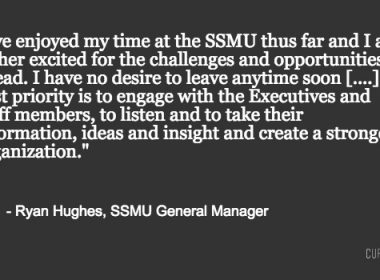
In an article published in the Tribune on Dec. 1, entitled “Discouraged and overlooked, but still competing: A club athlete's experience at McGill,” the Sailing Team was profiled along with other club sports at McGill. The article sought to bring light to the underappreciated and often overlooked club sport athletes, an undoubtedly worthwhile cause. Club sport athletes at McGill practice early in the morning and late into the evening, they pay out of pocket to enjoy the sport they love, and they don’t enjoy large fan sections like the larger athletic teams on campus. The article pointed out how discouraging underfunding and under appreciation can be, citing that club athletes tend to have an “attitude of resignation.” In discussing this sentiment, the sailing executive committee felt it best to clear something up:
As sailors, students, and athletes, the 33 members of the McGill University Sailing Team refuse to be discouraged.
If you didn’t know the McGill Sailing Team existed, you wouldn’t be alone. Despite our 2nd place ranking in Canada last year and our competitive scores throughout North America, McGill Sailing tends to fly under the radar. The reasons for this are pretty easy to suss out: We practice in Dorval and tend to compete outside of Montreal. These facts have never discouraged the sailors on the team. With a dedicated executive committee and a group of incredibly passionate student-athletes, the team remains unequivocally positive and cohesive, despite the inherent difficulties that face all club sports at McGill.
The largest hurdle that McGill Sailing faces is a lack of funding. Sailing is expensive and we ask a lot of our members in order to overcome this obstacle. For everything from travel and accommodations to coaching and boats, we are entirely funded by students on the team. To add to that expense, the team is currently in the process of acquiring a new fleet of sailboats to replace our decades old, poor quality C420s. (Yes that’s what they’re called. Yes we’ve heard the joke before). Needless to say, getting through each season under budget is a challenge.
In sailing, there is a lot out of your control. The wind, the current, and the weather are almost always against you as you fight for speed on the water. Sailing is about managing all of these variables and putting yourself in the best position to win. The team takes this to heart on and off the race-course. In addition to the incredible talent that our sailors display everyday at practice, they demonstrate creativity, passion, commitment, and support to improving the team. To succeed, we use what we know: We acknowledge the inherent obstacles, we come up with creative solutions, and—above all—we always stay positive.
Isaiah Riesman-Tremonte is the fundraising coordinator for the McGill University Sailing Team. He can be reached at [email protected]. This letter was co-signed by the other members of the McGill University Sailing Team's executive: Amanda Ivey, Andries Feder, Renee Torrie, Jess Horne, Jacob Webster, and Catherine Ross
Deemed a “laureate of American lowlife” by Time in 1986, Charles Bukowski was a 20th century poet, novelist, and working-class alcoholic. His deadpan confessional style, glorification of alcohol, and misanthropic view of humanity has appealed to a large cult readership over the years. In 1987, unknown to most, Bukowski entered the Hollywood scene alongside director Barbet Schroeder, who urged him to write the screenplay for his next film. Claiming to despise the art of filmmaking, Bukowski accepted Schroeder’s offer only after considering the number of drinks he could buy with his paycheck. Barfly is essentially a simplistic, misanthropic Bukowski novel put on the big screen.
Mickey Rourke is the star of Barfly, playing the scruffy, staggering Bukowski alter-ego, Henry Chinaski. As the story centers on the routine life of a drunk, the film is more of a character study than a plot-based action story. Henry spends his days at the Golden Horn, a gritty bar occupied by a cast of regulars taking up the same stools everyday. Demonstrating the circular flow of a life composed of drinking, writing, and paying rent, the film opens and closes on the same scene: a bar fight between Henry and the bartender, Big Ed (Frank Stallone). Big Ed despises Henry, and Henry hates him back, saying: “He symbolizes everything that disgusts me. Obviousness. Unoriginal macho energy. Ladies man…”
One day, Henry spots Wanda (Faye Dunaway) across from him at the bar. Asking why she sits alone, Henry receives a response that she is “crazy.” This intrigues Henry, who later writes on a piece of paper: “Some people never go crazy. What truly horrible lives they must lead.” He orders Wanda a drink and the conversation that follows attests to Bukowski’s adeptness in scripting dialogue. While it’s clear that Wanda is a regular barfly, she has a natural aplomb that isolates her from her surroundings.
“I can’t stand people,” Wanda tells Henry as he takes the stool next to her. “I hate them. Do you hate them?” “No,” Henry responds. “But I seem to feel better when they’re not around.”
Upon discovering that Henry is totally broke, Wanda invites him to stay at her place. A hint of her crazy side shines as she runs uphill to a field to pick green, unripe corn, exclaiming: “I love corn!” while Henry reminds her that she’s drunk. Police headlights shine on Wanda, given that she is trespassing, and the two quickly abscond to her apartment. Henry and Wanda are unadjusted to love, yet an intimacy develops between the two barflies. Therefore, when Wanda smells perfume on Henry one day, she is outraged.
The perfume is from the beautiful, delicate, and wealthy girl (Alice Krige), who publishes a literary magazine and has tracked down Henry to hand him his paycheck. She compliments Henry on his work and Henry is amused, since he always believed he would be discovered posthumously. She and Henry arrive at her house, and they flirt and drink. When she offers him space in her home to write, he declines. “I take it you don’t care for my world,” she says. Henry replies: “Well, baby, look around. It’s a cage with golden bars.”
Bukowski was known to loathe the monotonous structure of daily life. He once claimed that the nine-to-five work day was one of the greatest atrocities sprung upon mankind and that he was so repelled by the idea that he was driven to “drink, starvation, and mad females, simply as an alternative.” Barfly is overall a glorification of a vision of freedom and a tale of love between two misanthropes. In Bukowski’s own words, the film is “better than the average movie.”
Another month, another country album that your mom or American cousins might like. This month, it’s Tim McGraw, and he’s hardly poised to challenge any assumptions about what kind of person makes country music. His latest, Damn Country Music, is unlikely to challenge the standard country sound. Certainly no one is expecting him to, but with his recent outings being so uncharacteristically rocky, there’s plenty reason to be apprehensive. McGraw is serviceable in this album, and notably restrained. He serves up a few solid numbers that avoid the worst excesses of country schlock, while steering clear of his previous pop pretensions that gave listeners serious “But I’m a cool dad!” vibes. Sadly, it’s not enough to stop the slow train to Snoozeville.
On appearances alone, the album’s artwork isn’t exactly a countrified orgy of fringe and brown leather, but it leaves McGraw himself, in ripped jeans and a cowboy hat, looking like the hottest dad at the parent-teacher meeting. McGraw takes a similar restrained approach to the album itself but, far from eking out some measure of unvarnished emotion, he produces a lot of undifferentiated mush.
The first song on the album is the Celtic-and harmony-heavy “Here Tonight,” a charming duet with his daughter Gracie that at least adds some diversity to the dad persona. The honky-tonk title track is similarly nice. It's a pseudo-autobiographical ditty that shows the edge of the ironic bitterness the terrific name suggests, plunging down dirt roads of dusty memory and musings on stardom, emerging with a surprisingly sharp hook. The album goes downhill from there, however, producing a slog of same-feeling tunes that fail to squeeze any real conviction from the twangs and riffs they conjure up. It’s beyond cliché at this point to say that all country music sounds the same, but here McGraw seems unable, or unwilling, to challenge that idea; there is little, if anything, that feels surprising or new.
Indeed, there once was a time when the words “Everything except rap and country,” were the go-to bon mots of the calculatedly disinterested, the lazy recourse to replace staking out any musical opinion. Nowadays, with rap megastars like Drake and Kanye headlining festivals and blowing up arenas, and previous country darling Taylor Swift departing for pop-ier pastures, the fight to avoid instant cultural dismissal has passed to the likes of Tim McGraw. If his offering for continued relevance is Damn Country Music, then that is a damn shame.
Standout Tracks:
“Here Tonight,” “Damn Country Music.”
Sounds Like:
Exactly what you would expect.
You Should Listen If:
You already like Tim McGraw. Everyone else, steer clear.
The last few years have seen a burgeoning of the movement of ‘poptimism.’ Poptimism takes popular music as an artistic form worthy of merit and critique like any other, and has been very productive. Popular music is analyzed and appreciated more rigorously and superstars like Beyonce, Nicki Minaj, and Taylor Swift get due credit; however, within poptimism, there is a trap: Instead of taking pop music as something to critique, writers become boosters for pop artists, with everyone falling over themselves to be the one to pay homage to the new Slay Queen. With this in mind, one can examine Adele’s “Hello.”
“Hello” had considerable buzz around its release. It is the first music video to be shot in IMAX film, which people generally associate with a sense of grandeur and respectability. This is a common theme in popular culture; Macklemore and Ryan Lewis are known for using RED digital cameras, a technical aspect which contributed to their extremely successful videos. Going back a bit further, James Cameron’s Avatar’s enormous cost of filming helped contribute to its hype. The problem is, in the intrigue caused by flashy technology and high budgets, aesthetics often get pushed to the side. Avatar is a great example of this: It made an incredible amount of money, but received little critical acclaim beyond its impressive visuals. “Hello” feels the same.
“Hello” is a torch song that speaks to a lost lover of Adele’s, a topic she is well known for exploring. The song itself is decent, revealing a vulnerable side of Adele which compliments the fiery defiance she showed on 21. But there’s nothing new or exciting here—the material is more or less the expected from Adele, and it treads over ground that has been trampled by hundreds of other songwriters. That said, the thing that brought this song to fame is the video.
The video is… boring. It looks nice, shot in crisp sepia tones. It’s decision to hire a person of colour to play the role of Adele’s lost lover is commendable and different from traditional representation, if not groundbreaking. Beyond that, it drags on, and the introduction is slow and trite. The music video begins and ends with a direct address: Adele’s eyes looking at the audience. Her eyes are certainly striking, but it’s not enough. The video doesn’t take advantage of the potential for music videos to be non-narrative and instead follows a boring linear structure, occasionally cutting back to clichéd flashbacks.
Ah, remember when we laughed? Remember when later we cried in the rain? Good times.
But those flashbacks aren’t cut in a particularly impactful narrative style—they’re just kind of sprinkled occasionally, and the obvious opportunity to have the first flashback start at the chorus is missed. Adele picks up a phone and talks in a way that is frustratingly and distractingly mixed. In the second verse, the video finally gets away from the basic structure to show us a classic phone booth with the receiver hanging off of the hook. Another form of connection that is old and not working. The image is getting a bit played out, and the box just kind of sits there, and Adele doesn’t interact with it in any meaningful way. Then there’s a bridge, and another direct address and viewers get the big shot, the IMAX shot of her at a pond with blossoms flying—the climactic moment. It all feels like it is trying very hard to be meaningful, and has all these signifiers of meaning, but ultimately it doesn’t reach anything significant. It is ultimately an attempt to mimic the aesthetic of an independent video.
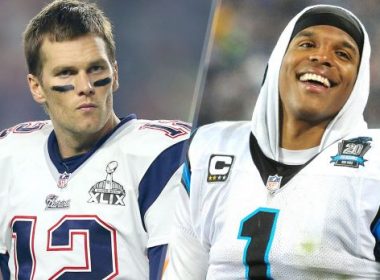
Week 12 was packed with primetime match-ups and exciting games. The Denver Broncos stunned the New England Patriots in overtime, and the Baltimore Ravens defeated the Cleveland Browns on a blocked field goal returned for a touchdown as time expired. As per usual, there were some big performances across the league, accompanied by a few notable injuries. Let’s take a look at the key fantasy football takeaways:
A Bronco breaks lose
Broncos running back CJ Anderson experienced a revival in Sunday night’s triumph over the previously undefeated Patriots. Anderson rushed 15 times for 113 yards and two touchdowns, the second of which was the overtime game-winner. The effort should help him regain the starting job in Week 13 with the San Diego Chargers. Treat Anderson as a high-upside second running back.
Jeremy Maclin’s big day
Kansas City Chiefs wide receiver Jeremy Maclin’s stats have suffered with ultra-conservative quarterback Alex Smith at the helm. He hadn’t broken 50 receiving yards in four straight games, and wasn’t being targeted like he was in his prime. However, Week 12 was a whole different story for the former Eagles wideout, as he snagged nine catches for 160 yards and a score in the Chiefs’ 30-22 win over the Buffalo Bills. Maclin will look to stay hot next week against the Oakland Raiders, a bottom-four defensive unit in passing yards allowed per game.
Gronk and Graham, God damn
The already paper-thin tight end position suffered more casualties on Sunday, as the Seattle Seahawks’ Jimmy Graham and Patriots’ super-human Rob Gronkowski left the games with lower-body injuries. The Seahawks later announced that Graham would be sent to Injured Reserve with a torn patellar tendon, a lengthy and possibly career-threatening injury. Gronk’s injury initially looked like an ACL tear, but early reports are suggesting he escaped with a minor bruise. Patriots backup tight end Scott Chandler would become an instant fantasy asset should Gronk miss significant time.
Abandon Private Ryan
Atlanta Falcons quarterback Matt Ryan once again let down fantasy football owners and teammates alike in a loss to the Minnesota Vikings. Ryan completed 22 of 31 passes for 230 yards and a touchdown while throwing two interceptions. Ryan has now thrown a league-worst four red-zone picks, and the Falcons have dropped five of their last six games. He’ll be a shaky option in Week 13, even against a lackluster Tampa Bay Buccaneers defence.
Alegria Contemporary Ballet Company expresses the emotional side of dance in a way that is personal for both the dancers and the audience as the pieces capture the transformative power of dance. It is McGill’s first and only contemporary ballet company, founded in 2014 by Karen Chen and Zoë Goldstein. They decided to start Alegria because they felt there was a lack of opportunities in the McGill dance community for dancers who were more ballet-focused. The majority of Alegria’s pieces incorporate elements from classical and contemporary ballet, creating a spectrum of different styles.
Chen, a U3 Political Science and Philosophy major, and Goldstein, a U2 Psychology major and Russian studies minor, met at McGill through their passion for dance. Chen first got involved with dance when she was 12 years old after a ballet studio opened up near her house in Toronto. Goldstein, a rhythmic gymnast since the age of seven, transitioned to dance when she was 14 years old.
“My favourite part of dancing is something that you feel in your body when you’re in the middle of a dance,” Goldstein said. “It’s a nonverbal high [that] gives you deep satisfaction and you feel it hours after. Dance is really emotional [when] you feel like you merge with the song.”
Alegria creates a space for dancers to express themselves as it brings together some of the best sides of dancing, performing and choreography. While dance can be seen as something personal, the real enjoyment comes from the collective experience and by presenting it to others.
“It is such a rewarding experience to express [your feelings] to others,” Chen elaborated. “It’s so fulfilling knowing that we’ve created a space where other people can come and share their passion and dance.”
This year there are 15 dancers participating in Alegria. Each was picked according to their technique, performance quality, stage presence, dance style, and how they express emotion on stage. For each showcase, there is one structured improv piece, and one large ensemble piece. The dancers improv without any previous choreography to music. The group dances take a lot of work so the dancers begin preparing for the showcase right away.
A highlight from last year for Chen and Goldstein was the year-end show in March held at La Chapelle where each dancer had the opportunity to choreograph a piece.
“Each dancer had full creative control over their dance,” Goldstein said. “They got to pick the costumes and dances they wanted.”
Chen noted that this was an amazing experience.
“That’s when it all came through,” she said. “It was our first year and we were very happy with the results. We had two shows that were completely sold out!”
Each dancer has a different approach to choreography—it’s a very personal experience. Chen stated she generally stumbles upon a song she really likes by chance and is always on the lookout for a potential song, whereas Goldstein describes herself as more of a planner and says it helps to listen to music, watch other dance videos for inspiration, and imagining possible steps. Once they pick a song, they improv to the piece, come up with the steps and then teach it to the dancers.
The upcoming Winter showcase features a variety of songs ranging from more serious to upbeat, including songs by James Vincent McMorrow, Nina Simone, Lorde, and Queen. This year Chen and Goldstein are adding some new creative elements to the show, including an improv piece featuring a select number of dancers who do not know what the song will be.
“[The performance will be a] first time experience for both the dancers and the audience [because] everyone will be hearing the song for the first time,” Chen said.
Chen and Goldstein encourage the audience to feel and engage with the performance.
“I really love it when people who don’t know anything about dance come and it’s very exciting for them,” Goldstein said.
Essentially, what makes dance so special is power it has to communicate emotion with an audience through movement.
Alegria’s Winter Showcase will be held on Tuesday, December 1 at 7pm at the McGill Gymnasium (475 Avenue des Pins) in the Mind and Body Room. Tickets cost $5.
On Tuesday night, Mitski turned Casa del Popolo into a de facto confessional. Touring for her 2014 release, Bury Me at Makeout Creek, Mitski Miyawaki’s Montréal show followed a handful of North American tour dates, which were directly preceded by performances in the U.K., and even at the Iceland Airwaves festival. A shivering pack of concert-goers, noses pink from the cold, gathered near the stage in anticipation of the headlining singer-songwriter herself, as well as openers PWR BTTM and Palehound.
Duo PWR BTTM brought a vibrant and glitter-heavy punk affair on stage. Their set was punctuated by quips about Windows ’98 being “the least queer operating system” and anecdotes about crossing the border, their easy banter transitioning playfully into similarly animated songs. Ben Hopkins and Liv Bruce swapped places playing the guitar and drumming, voicing chant-encouraging choruses in a high-energy frenzy.
The Boston-based indie rock group Palehound followed. Although beginning with the caveat that her between-song repartee wouldn’t measure up to that of PWR BTTM, frontwoman Ellen Kempner remarked that the audience could probably “relate to being pretty bummed out a lot of the time”—after all, it was a Mitski show. She continued with a selection of songs that were poignant in their own right; Kempner herself swaying side-to-side through “Healthier Folk,” a wistful, alt rock lullaby. Her breathy, dreamlike vocals, combined with drumming from Jesse Weiss and bass from David Khoshtinat, to make for an intimate live experience.
After conquering a series of soundcheck difficulties, Mitski and her supporting band launched into the searing anthem “Townie” with earnest fervor. The swelling energy was only amplified by the work of Casey Weissbuch on drums and Callan Dwan on guitar. The camaraderie between the musicians was more than apparent with all members of both opening acts standing stageside, as enraptured as any other viewer that night.
Mitski’s lyrics are melancholy without being bleak; her voice sincere and raw. There’s nothing timid in lyrics like “I want a love that falls as fast / as a body from the balcony,” and that’s the point. On stage her songs are feats of strength, encompassing everything from the soothing rumination of “First Love/Late Spring” to the concentrated fury in “Drunk Walk Home.” This emotional intensity brought the room to a standstill, during which, she addressed all the “women, people of colour, and trans people” in the audience. The words “you’re not asking for too much” echoed in the otherwise hushed room. After a pause, some scattered, whispered thank-yous emerged from the reverent quiet.
Midway through her set, Weissbuch and Dwan bowed out, leaving Mitski alone to conclude what had already proved to be an intense and emotionally draining performance. The powerfully devastating final notes of “Last Words of a Shooting Star” rang out to a stunned-silent crowd–the words “I’ve always wanted to die clean and pretty/ but I’d be too busy on working days” seeming fragile and resilient all at once.
The winter holiday welcomes many things: Food, family, love, renewal, reflection, and the new year. As 2015 comes to close, here’s what people around McGill campus have on their holiday wish list.
I wish for a few national championships for McGill in the Winter semester. Also, I really wish that sports announcers would stop referring to a team in the plural sense and correctly refer to a team in the singular sense (e.g. Canada “has got” to score, instead of “have got”). —Earl Zukerman, McGill Athletics Sports Information Officer
J.A. Happ certainly isn’t David Price, but the Toronto Blue Jays might not be done yet this off-season. I wish new General Manager Mark Shapiro can prove the doubters wrong and erase Alex Anthopoulos from Jays fans’ memory by making a big splash and bringing home the first World Series since ’93. —Aaron Rose, Staff Writer
I hope that the Brooklyn Nets win the NBA draft lottery so that their No. 1 overall pick gets sent to Boston and I can watch Bill Simmons live tweeting during the draft, proclaiming how the next NBA dynasty is going to be in Celtic green in his charmingly homer-istic way. He will be making delightfully absurd Larry Bird-Ben Simmons comparisons and commenting on how his and Ben’s shared last names and initials is fate. —Arman Bery, Contributor
I hope to see gender equality in sports, and not the double standard between male and female athletes that has persisted for too long. Male athletes are paid more, and are never asked about their appearance, what brands they’re wearing, or their love life – they’re asked about their performance. This year, I wish for the same privilege to be afforded to all athletes, regardless of gender. —Nicole Spadotto, Contributor
It'd be really nice if Green Bay Packers quarterback Aaron Rodgers returned to his usual god-like self —Max Berger, Tribune alumnus
With Jurgen Klopp at the helm, Coutinho playing like a Brazilian legend, and Firmino starting to justify his £29 million price tag, I wish that Liverpool can place in the top four and return to its rightful place in the Champions League. I wish that Daniel Sturridge can overcome injury issues, Liverpool can overcome injury issues (looking at Sakho, Ings, Gomez, Countinho), and also reduce their bloated squad. I hope Liverpool can help me live more than a few seconds, turn away from the inconsistency of the Brendan Rodgers’ era, and bring excellence back to the Kop. —Ziko Smith, Sports Editor
Although released in November, this second single released from Bieber’s new album Purpose, “Sorry” is likely to remain a hit for the rest of the year and into the summer. The success of “Sorry” largely goes to hit-making Producer and DJ, Skrillex, but Bieber’s matured voice carries the track above and beyond similar club anthems. A catchy hook and a beat faintly rooted in salsa make the track endlessly danceable. “Sorry” is evidence that Bieber has left his days of simplistic crooning firmly in the past.
9. “Don’t Wanna Fight” – Alabama Shakes
The second song from Alabama Shakes’ sophomore record, Sound and Color, encapsulates the variety of sounds, skills, and singing techniques that encapsulate the band’s first Billboard number one album. Brittany Howard’s vocal expertise impressively squeals the song to start, and through the course of the track, she runs through a litany of falsettos, screams, and whispers that notably display her Motown influences and cements her among the most powerful voices in modern music. The song’s central riff showcases a refreshing combination of intricate jazz chords coupled with a steady rock beat that proves for a relatively simple, yet satisfying, listen.
8. “Really Love” – D’Angelo
The most most mesmerizing track off an entire album filled with mesmerizing soul cuts. During the 15-year gap between the release of D’Angelo’s last album and Black Messiah, he apparently taught himself how to play guitar—boy, does it show. The blistering flamenco solo that opens “Really Love” is a nice instrumental flourish, but what comes next is even better. In contrast to the heavy vocal overdubbing of his previous work, D’Angelo uses only a single track here, sounding tender, intimate, and almost vulnerable over the sleepy groove of his backup band. Even by his unattainable standards, this track is gorgeous.
7. “California” – Grimes
While it’s hard to pick one particular as a standout on Art Angels, “California” has to be one of Grimes’ finest songs to date. “California / You only like me when you think I’m looking sad,” she shrieks. It is both a finger-point and heartbroken confession on her rise to fame. She follows this up with “California / I didn’t think you’d end up treating me this bad” over one of the catchiest melodies released this year. “When you get bored of me I’ll be back on the shelf” she says, firmly tongue-in-cheek, but with this song—and the entirety of this record—it’ll be a while before people get bored of her.
6.“Love/Paranoia” – Tame Impala
Everything about “Love/Paranoia” pierces directly into the heart of anyone who has experienced a breakup. The frank title and lines like “I’ve heard those words before, / Are you sure it was nothing? / ‘Cause it made me feel like dying inside” encapsulate the intense hurt, regret, and remnants of love that follow a broken relationship. Add some sweeping synth work and a powerful bassline and you have the perfect breakup song. Yet, the song is neither overly-dramatic nor cold; the pop sensibilities of Tame Impala frontman Kevin Parker ground the track in reality, where life goes on.
5. “I Know There’s Gonna Be (Good Times)” – Jamie xx
This was definitely the song of the summer. Built around a mixture of ‘70s soul and Jamie’s typically buoyant production, “Good Times” is a blast of pure sunshine to the ears. Young Thug’s verses are borderline incomprehensible as usual, but his playful style suits the production perfectly. Perhaps the most impactful thing about the song is its versatility. There’s something in “Good Times” for everyone from old-school ravers to modern-day trap queens. You could bump it in the club or play it lounging by the pool. Mostly though, it just sounds like summer.
4. “Depreston” – Courtney Barnett
On her debut album’s standout track, Australian singer-songwriter Courtney Barnett deals with things that are all too familiar for the average 20-something: Hipsters, urban sprawl, and the question of how many cars can fit into a garage. “You said we should look out further / I guess it wouldn’t hurt us / We don’t have to be around all these coffee shops.” But as Barnett and her partner look around a potential bungalow she learns that it’s a deceased estate, prompting her to recognize the many lives being lived around her that she’s totally blind to. “Depreston” is the most millennial song ever written.
3. “Complexion (A Zulu Love)” – Kendrick Lamar
In the middle of an album that’s entirely about how the world functions in the present, Kendrick Lamar audaciously jumps back 200 years to tell a love story about a relationship between a field slave and a house slave on a cotton plantation. It unabashedly embraces its soul and R&B influences, with its thumping basslines and funky hook bringing a feeling of romance and levity to an otherwise heavy album. Despite its subject matter, it might be the most optimistic track on the album, extolling the virtues of love, no matter the cost.
2. “The Only Thing” – Sufjan Stevens
“Should I tear my heart out now? / Everything I feel returns to you somehow,” sings Sufjan Stevens in memory of his mother. He’s both wishing for her to return whilst also contemplating the possibility of ending his own life because living without her is simply too hard. “The Only Thing” captures the emotion of the entire record perfectly: It’s both longing and forward-looking; finding the tiniest light of happiness in an otherwise dark room; accepting and dealing with loss in order to fix a broken heart and live life fully.
1. “Sunday Candy” – Donnie Trumpet and the Social Experiment
2015 was not a good year. In the United States, police brutality, gun violence, and domestic terrorism crippled national trust and inspired the coast-to-coast “Black Lives Matter” movement. It was in this volatile climate that Donnie Trumpet and the Social Experiment released “Sunday Candy,” an upbeat sermon of song featuring Chance the Rapper’s sunshine verses and Jamila Woods sugar sweet chorus. The song is a welcome contrast to the atmosphere it was created in—simple but full of love. It inspires Chance’s lyrical Sunday best: “I am the thesis of her prayers / Her nieces and her nephews are just pieces of the layers / Only ones she love as much as me is Jesus Christ and Taylor.” Featuring both heartwarming lyrics, gospel-esque trumpet, and excellent production, “Sunday Candy” affirms itself as the best song of the year. It’s a celebration of family, tradition, and most importantly, love.
Dramatically toning down the gritty sound of her previous album, Ultraviolence (2014), in favour of a more layered, ethereal, and timeless aesthetic, Lana Del Rey—one of pop music’s most divisive artist—takes the listener on an exquisite journey of love, drugs, and existential poetry. Del Rey’s vocals soar over sparse, skittering beats and heavy strings, whilst her lyrics tackle themes of being misunderstood, getting high, and escaping reality. She flips the concept of the male gaze on its head during the brilliant “Music To Watch Boys To;” she’s a menacing mistress on “24,” and a reminiscing Hollywood starlet on “Terrence Loves You.” Most of all, she’s a pop voice like no other.
Dan Bejar, the ubiquitous troubadour hero of Canadian indie rock, once again delivers an album that is truly unique—both from his previous work and from other artists. Incorporating a luscious string section and drawing on influences from Bruce Springsteen to orchestral chamber music, Bejar creates a record even more impactful than his 2011 classic, Kaputt. Full of songs about “cities and girls and injury,” the album spins hyperverbal tales of urban decay and budding love, realistic and fantastical in equal measure. It’s the perfect music for a long evening drive.
8. D’Angelo — Black Messiah
Nearly 15 years after the release of his neo-soul opus Voodoo, D’Angelo finally returned late last year. Needless to say, he didn’t disappoint. In Black Messiah, D’Angelo produced a record that’s every bit as ambitious, challenging, and downright groovy as its predecessor. The political overtones on “1000 Deaths” and “The Charade” prove that D’Angelo’s learned a couple things during his hiatus. Nevertheless, like any D’Angelo record Black Messiah is about the groove first and foremost. Working with a virtuosic rhythm section of ?uestlove on drums and Pino Palladino on bass, on this record D’Angelo’s crafted a pocket so deep no light can escape.
7. Alabama Shakes — Sound & Color
Sound & Color marks the second studio endeavoir of Southern rock band Alabama Shakes, but don’t let their geographic origins fool you. Debuting at number one on the U.S. Billboard 200, Sound & Color explores a myriad of genres and atmospheres that really complicate a simple labeling of the band’s genre. “Don’t Wanna Fight,” for example, showcases the band’s successful and refreshing modern spin on traditional soul/blues rock, while only two tracks later, “Gimme All Your Love” takes this soul formula and amazingly injects it with an electronic ‘space-ness’ that bridges generally unacquainted genres. Brittany Howard, composer, lead vocalist, and guitarist on most tracks, truly shines on this record, and will definitely be a musical force in the coming years.
Art Angels is a glorious showcase of Grimes’ versatility and far-reaching artistic vision. Tracks like “California” and “Flesh Without Blood” could easily find their way on popular radio stations right beside La Roux or even Selena Gomez, while “SCREAM” harkens back to her more experimental work on Visions. Art Angels seamlessly blends Grimes’ bubblegum-bright voice with ‘90s pop guitar in anthem after anthem celebrating female autonomy. The album is evidence that Grimes is blossoming from a somewhat fringe artist into a skilled producer and performer. Catchy tracks and complex production make Art Angels an excellent album.
5. Courtney Barnett — Sometimes I Sit and Think… And Sometimes I Just Sit
With effortless vocal delivery and gritty guitar melodies, Courtney Barnett’s debut album offers some of the most meticulously crafted, lyrically-genius songs this year. On “Dead Fox” she examines the simple things in life, “Pedestrian At Best” deals with a perceived risk of not delivering to societal expectations once becoming ‘famous,’ while standout track, “Depreston” narrates the disappointing and expensive reality Barnett faces when trying to purchase her first home. Her songwriting is witty; her lyrics often tongue-in-cheek, but there’s no denying the quality behind her ‘girl-next-door’ façade and lyrical themes.
4. Jamie xx – In Colour
Jamie xx’s LP is the best electronic record in an underwhelming year for the genre. From the squelching garage of “Gosh” to melancholic “Obvs,” In Colour is a record that boasts every hue in the electronica rainbow. The LP also shows some solid collaborations with Jamie xx’s bandmates on “Stranger in a Room” and “Loud Places,” as well as the scorching “I Know There’s Gonna Be (Good Times)” featuring Young Thug and Popcaan. Though it doesn’t try to reinvent the wheel, In Colour is a satisfying listen from front to back.
In Currents Kevin Parker wastes no time with simplicity; each song is wrought with layers that feel like waves of psychedelic magic. Yet in this complex swirl of sound, meticulous drum and bass lines emerge, showcasing Parker’s talent for pop riffs. Parker borrows from funk, disco, noise rock, and dream pop to create a pop/rock record that runs wider in scope than any other alt rock project of this year. Sentimental yet upbeat, the record has the melancholy tinge of a breakup album while maintaining the euphoric anything-goes attitude of someone with nothing to lose and something like endless youth ahead of them.
Growing up is never easy—especially when the death of a loved one and a troubled childhood are involved. On his seventh studio album, Detroit-based singer-songwriter, Sufjan Stevens reflects on both earlier and easier times in his life, contrasting them with the devastating and traumatic events that led him to writing the songs he finds himself including on his latest record, namely his complicated relationship with his mother both before and after her death Despite the heartache behind the songs, the achingly beautiful Carrie & Lowell provides one of the most understated, but encapsulating listens of the year.
Every few years an album comes out that manages to take the pulse of an entire culture and perfectly verbalize its sentiments to the world. Just as rare is an album so personal and singular that no other artist could have released anything like it. To Pimp a Butterfly is both of those albums. Eschewing the narrative of his previous album, Lamar raps about everything on his mind—his crippling self-doubt and arrogance, religion, the way black people are treated in America, his complicated relationship with his past, and more. This is a dense album, both lyrically and musically, tightly winding influences from every genre under the sun around Kendrick’s typically insightful, spitfire lyrics filtered through his incredibly versatile vocal timbre. The result is an album that is almost defiantly idiosyncratic—a jazz-soaked tone poem that serves as both a ‘fuck you’ to society and a song of hope for the future in a tense, uncertain present.