Week 12 was packed with primetime match-ups and exciting games. The Denver Broncos stunned the New England Patriots in overtime, and the Baltimore Ravens defeated the Cleveland Browns on a blocked field goal returned for a touchdown as time expired. As per usual, there were some big performances across the league, accompanied by a few notable injuries. Let’s take a look at the key fantasy football takeaways:
A Bronco breaks lose
Broncos running back CJ Anderson experienced a revival in Sunday night’s triumph over the previously undefeated Patriots. Anderson rushed 15 times for 113 yards and two touchdowns, the second of which was the overtime game-winner. The effort should help him regain the starting job in Week 13 with the San Diego Chargers. Treat Anderson as a high-upside second running back.
Jeremy Maclin’s big day
Kansas City Chiefs wide receiver Jeremy Maclin’s stats have suffered with ultra-conservative quarterback Alex Smith at the helm. He hadn’t broken 50 receiving yards in four straight games, and wasn’t being targeted like he was in his prime. However, Week 12 was a whole different story for the former Eagles wideout, as he snagged nine catches for 160 yards and a score in the Chiefs’ 30-22 win over the Buffalo Bills. Maclin will look to stay hot next week against the Oakland Raiders, a bottom-four defensive unit in passing yards allowed per game.
Gronk and Graham, God damn
The already paper-thin tight end position suffered more casualties on Sunday, as the Seattle Seahawks’ Jimmy Graham and Patriots’ super-human Rob Gronkowski left the games with lower-body injuries. The Seahawks later announced that Graham would be sent to Injured Reserve with a torn patellar tendon, a lengthy and possibly career-threatening injury. Gronk’s injury initially looked like an ACL tear, but early reports are suggesting he escaped with a minor bruise. Patriots backup tight end Scott Chandler would become an instant fantasy asset should Gronk miss significant time.
Abandon Private Ryan
Atlanta Falcons quarterback Matt Ryan once again let down fantasy football owners and teammates alike in a loss to the Minnesota Vikings. Ryan completed 22 of 31 passes for 230 yards and a touchdown while throwing two interceptions. Ryan has now thrown a league-worst four red-zone picks, and the Falcons have dropped five of their last six games. He’ll be a shaky option in Week 13, even against a lackluster Tampa Bay Buccaneers defence.
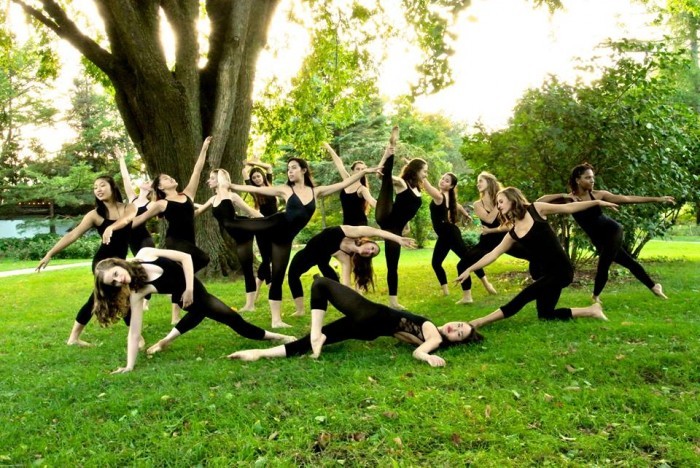
Alegria Contemporary Ballet Company expresses the emotional side of dance in a way that is personal for both the dancers and the audience as the pieces capture the transformative power of dance. It is McGill’s first and only contemporary ballet company, founded in 2014 by Karen Chen and Zoë Goldstein. They decided to start Alegria because they felt there was a lack of opportunities in the McGill dance community for dancers who were more ballet-focused. The majority of Alegria’s pieces incorporate elements from classical and contemporary ballet, creating a spectrum of different styles.
Chen, a U3 Political Science and Philosophy major, and Goldstein, a U2 Psychology major and Russian studies minor, met at McGill through their passion for dance. Chen first got involved with dance when she was 12 years old after a ballet studio opened up near her house in Toronto. Goldstein, a rhythmic gymnast since the age of seven, transitioned to dance when she was 14 years old.
“My favourite part of dancing is something that you feel in your body when you’re in the middle of a dance,” Goldstein said. “It’s a nonverbal high [that] gives you deep satisfaction and you feel it hours after. Dance is really emotional [when] you feel like you merge with the song.”
Alegria creates a space for dancers to express themselves as it brings together some of the best sides of dancing, performing and choreography. While dance can be seen as something personal, the real enjoyment comes from the collective experience and by presenting it to others.
“It is such a rewarding experience to express [your feelings] to others,” Chen elaborated. “It’s so fulfilling knowing that we’ve created a space where other people can come and share their passion and dance.”
This year there are 15 dancers participating in Alegria. Each was picked according to their technique, performance quality, stage presence, dance style, and how they express emotion on stage. For each showcase, there is one structured improv piece, and one large ensemble piece. The dancers improv without any previous choreography to music. The group dances take a lot of work so the dancers begin preparing for the showcase right away.
A highlight from last year for Chen and Goldstein was the year-end show in March held at La Chapelle where each dancer had the opportunity to choreograph a piece.
“Each dancer had full creative control over their dance,” Goldstein said. “They got to pick the costumes and dances they wanted.”
Chen noted that this was an amazing experience.
“That’s when it all came through,” she said. “It was our first year and we were very happy with the results. We had two shows that were completely sold out!”
Each dancer has a different approach to choreography—it’s a very personal experience. Chen stated she generally stumbles upon a song she really likes by chance and is always on the lookout for a potential song, whereas Goldstein describes herself as more of a planner and says it helps to listen to music, watch other dance videos for inspiration, and imagining possible steps. Once they pick a song, they improv to the piece, come up with the steps and then teach it to the dancers.
The upcoming Winter showcase features a variety of songs ranging from more serious to upbeat, including songs by James Vincent McMorrow, Nina Simone, Lorde, and Queen. This year Chen and Goldstein are adding some new creative elements to the show, including an improv piece featuring a select number of dancers who do not know what the song will be.
“[The performance will be a] first time experience for both the dancers and the audience [because] everyone will be hearing the song for the first time,” Chen said.
Chen and Goldstein encourage the audience to feel and engage with the performance.
“I really love it when people who don’t know anything about dance come and it’s very exciting for them,” Goldstein said.
Essentially, what makes dance so special is power it has to communicate emotion with an audience through movement.
Alegria’s Winter Showcase will be held on Tuesday, December 1 at 7pm at the McGill Gymnasium (475 Avenue des Pins) in the Mind and Body Room. Tickets cost $5.
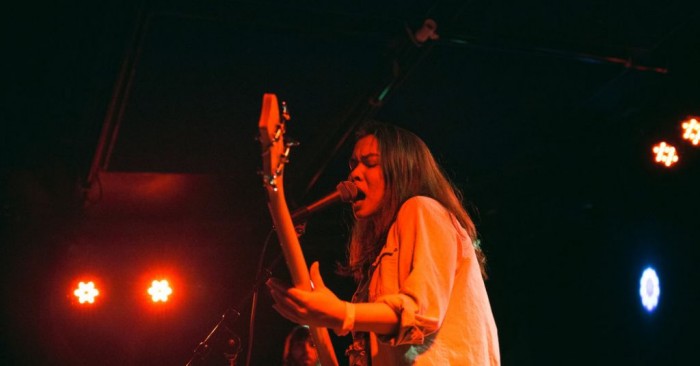
On Tuesday night, Mitski turned Casa del Popolo into a de facto confessional. Touring for her 2014 release, Bury Me at Makeout Creek, Mitski Miyawaki’s Montréal show followed a handful of North American tour dates, which were directly preceded by performances in the U.K., and even at the Iceland Airwaves festival. A shivering pack of concert-goers, noses pink from the cold, gathered near the stage in anticipation of the headlining singer-songwriter herself, as well as openers PWR BTTM and Palehound.
Duo PWR BTTM brought a vibrant and glitter-heavy punk affair on stage. Their set was punctuated by quips about Windows ’98 being “the least queer operating system” and anecdotes about crossing the border, their easy banter transitioning playfully into similarly animated songs. Ben Hopkins and Liv Bruce swapped places playing the guitar and drumming, voicing chant-encouraging choruses in a high-energy frenzy.
The Boston-based indie rock group Palehound followed. Although beginning with the caveat that her between-song repartee wouldn’t measure up to that of PWR BTTM, frontwoman Ellen Kempner remarked that the audience could probably “relate to being pretty bummed out a lot of the time”—after all, it was a Mitski show. She continued with a selection of songs that were poignant in their own right; Kempner herself swaying side-to-side through “Healthier Folk,” a wistful, alt rock lullaby. Her breathy, dreamlike vocals, combined with drumming from Jesse Weiss and bass from David Khoshtinat, to make for an intimate live experience.
After conquering a series of soundcheck difficulties, Mitski and her supporting band launched into the searing anthem “Townie” with earnest fervor. The swelling energy was only amplified by the work of Casey Weissbuch on drums and Callan Dwan on guitar. The camaraderie between the musicians was more than apparent with all members of both opening acts standing stageside, as enraptured as any other viewer that night.
Mitski’s lyrics are melancholy without being bleak; her voice sincere and raw. There’s nothing timid in lyrics like “I want a love that falls as fast / as a body from the balcony,” and that’s the point. On stage her songs are feats of strength, encompassing everything from the soothing rumination of “First Love/Late Spring” to the concentrated fury in “Drunk Walk Home.” This emotional intensity brought the room to a standstill, during which, she addressed all the “women, people of colour, and trans people” in the audience. The words “you’re not asking for too much” echoed in the otherwise hushed room. After a pause, some scattered, whispered thank-yous emerged from the reverent quiet.
Midway through her set, Weissbuch and Dwan bowed out, leaving Mitski alone to conclude what had already proved to be an intense and emotionally draining performance. The powerfully devastating final notes of “Last Words of a Shooting Star” rang out to a stunned-silent crowd–the words “I’ve always wanted to die clean and pretty/ but I’d be too busy on working days” seeming fragile and resilient all at once.
The winter holiday welcomes many things: Food, family, love, renewal, reflection, and the new year. As 2015 comes to close, here’s what people around McGill campus have on their holiday wish list.
I wish for a few national championships for McGill in the Winter semester. Also, I really wish that sports announcers would stop referring to a team in the plural sense and correctly refer to a team in the singular sense (e.g. Canada “has got” to score, instead of “have got”). —Earl Zukerman, McGill Athletics Sports Information Officer
J.A. Happ certainly isn’t David Price, but the Toronto Blue Jays might not be done yet this off-season. I wish new General Manager Mark Shapiro can prove the doubters wrong and erase Alex Anthopoulos from Jays fans’ memory by making a big splash and bringing home the first World Series since ’93. —Aaron Rose, Staff Writer
I hope that the Brooklyn Nets win the NBA draft lottery so that their No. 1 overall pick gets sent to Boston and I can watch Bill Simmons live tweeting during the draft, proclaiming how the next NBA dynasty is going to be in Celtic green in his charmingly homer-istic way. He will be making delightfully absurd Larry Bird-Ben Simmons comparisons and commenting on how his and Ben’s shared last names and initials is fate. —Arman Bery, Contributor
I hope to see gender equality in sports, and not the double standard between male and female athletes that has persisted for too long. Male athletes are paid more, and are never asked about their appearance, what brands they’re wearing, or their love life – they’re asked about their performance. This year, I wish for the same privilege to be afforded to all athletes, regardless of gender. —Nicole Spadotto, Contributor
It'd be really nice if Green Bay Packers quarterback Aaron Rodgers returned to his usual god-like self —Max Berger, Tribune alumnus
With Jurgen Klopp at the helm, Coutinho playing like a Brazilian legend, and Firmino starting to justify his £29 million price tag, I wish that Liverpool can place in the top four and return to its rightful place in the Champions League. I wish that Daniel Sturridge can overcome injury issues, Liverpool can overcome injury issues (looking at Sakho, Ings, Gomez, Countinho), and also reduce their bloated squad. I hope Liverpool can help me live more than a few seconds, turn away from the inconsistency of the Brendan Rodgers’ era, and bring excellence back to the Kop. —Ziko Smith, Sports Editor
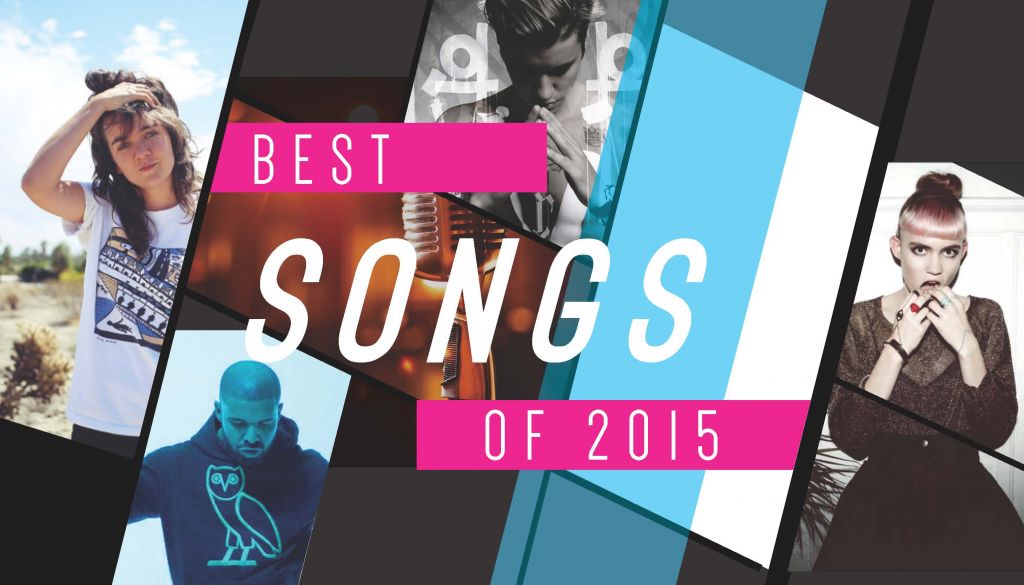
Although released in November, this second single released from Bieber’s new album Purpose, “Sorry” is likely to remain a hit for the rest of the year and into the summer. The success of “Sorry” largely goes to hit-making Producer and DJ, Skrillex, but Bieber’s matured voice carries the track above and beyond similar club anthems. A catchy hook and a beat faintly rooted in salsa make the track endlessly danceable. “Sorry” is evidence that Bieber has left his days of simplistic crooning firmly in the past.
9. “Don’t Wanna Fight” – Alabama Shakes
The second song from Alabama Shakes’ sophomore record, Sound and Color, encapsulates the variety of sounds, skills, and singing techniques that encapsulate the band’s first Billboard number one album. Brittany Howard’s vocal expertise impressively squeals the song to start, and through the course of the track, she runs through a litany of falsettos, screams, and whispers that notably display her Motown influences and cements her among the most powerful voices in modern music. The song’s central riff showcases a refreshing combination of intricate jazz chords coupled with a steady rock beat that proves for a relatively simple, yet satisfying, listen.
8. “Really Love” – D’Angelo
The most most mesmerizing track off an entire album filled with mesmerizing soul cuts. During the 15-year gap between the release of D’Angelo’s last album and Black Messiah, he apparently taught himself how to play guitar—boy, does it show. The blistering flamenco solo that opens “Really Love” is a nice instrumental flourish, but what comes next is even better. In contrast to the heavy vocal overdubbing of his previous work, D’Angelo uses only a single track here, sounding tender, intimate, and almost vulnerable over the sleepy groove of his backup band. Even by his unattainable standards, this track is gorgeous.
7. “California” – Grimes
While it’s hard to pick one particular as a standout on Art Angels, “California” has to be one of Grimes’ finest songs to date. “California / You only like me when you think I’m looking sad,” she shrieks. It is both a finger-point and heartbroken confession on her rise to fame. She follows this up with “California / I didn’t think you’d end up treating me this bad” over one of the catchiest melodies released this year. “When you get bored of me I’ll be back on the shelf” she says, firmly tongue-in-cheek, but with this song—and the entirety of this record—it’ll be a while before people get bored of her.
6.“Love/Paranoia” – Tame Impala
Everything about “Love/Paranoia” pierces directly into the heart of anyone who has experienced a breakup. The frank title and lines like “I’ve heard those words before, / Are you sure it was nothing? / ‘Cause it made me feel like dying inside” encapsulate the intense hurt, regret, and remnants of love that follow a broken relationship. Add some sweeping synth work and a powerful bassline and you have the perfect breakup song. Yet, the song is neither overly-dramatic nor cold; the pop sensibilities of Tame Impala frontman Kevin Parker ground the track in reality, where life goes on.
5. “I Know There’s Gonna Be (Good Times)” – Jamie xx
This was definitely the song of the summer. Built around a mixture of ‘70s soul and Jamie’s typically buoyant production, “Good Times” is a blast of pure sunshine to the ears. Young Thug’s verses are borderline incomprehensible as usual, but his playful style suits the production perfectly. Perhaps the most impactful thing about the song is its versatility. There’s something in “Good Times” for everyone from old-school ravers to modern-day trap queens. You could bump it in the club or play it lounging by the pool. Mostly though, it just sounds like summer.
4. “Depreston” – Courtney Barnett
On her debut album’s standout track, Australian singer-songwriter Courtney Barnett deals with things that are all too familiar for the average 20-something: Hipsters, urban sprawl, and the question of how many cars can fit into a garage. “You said we should look out further / I guess it wouldn’t hurt us / We don’t have to be around all these coffee shops.” But as Barnett and her partner look around a potential bungalow she learns that it’s a deceased estate, prompting her to recognize the many lives being lived around her that she’s totally blind to. “Depreston” is the most millennial song ever written.
3. “Complexion (A Zulu Love)” – Kendrick Lamar
In the middle of an album that’s entirely about how the world functions in the present, Kendrick Lamar audaciously jumps back 200 years to tell a love story about a relationship between a field slave and a house slave on a cotton plantation. It unabashedly embraces its soul and R&B influences, with its thumping basslines and funky hook bringing a feeling of romance and levity to an otherwise heavy album. Despite its subject matter, it might be the most optimistic track on the album, extolling the virtues of love, no matter the cost.
2. “The Only Thing” – Sufjan Stevens
“Should I tear my heart out now? / Everything I feel returns to you somehow,” sings Sufjan Stevens in memory of his mother. He’s both wishing for her to return whilst also contemplating the possibility of ending his own life because living without her is simply too hard. “The Only Thing” captures the emotion of the entire record perfectly: It’s both longing and forward-looking; finding the tiniest light of happiness in an otherwise dark room; accepting and dealing with loss in order to fix a broken heart and live life fully.
1. “Sunday Candy” – Donnie Trumpet and the Social Experiment
2015 was not a good year. In the United States, police brutality, gun violence, and domestic terrorism crippled national trust and inspired the coast-to-coast “Black Lives Matter” movement. It was in this volatile climate that Donnie Trumpet and the Social Experiment released “Sunday Candy,” an upbeat sermon of song featuring Chance the Rapper’s sunshine verses and Jamila Woods sugar sweet chorus. The song is a welcome contrast to the atmosphere it was created in—simple but full of love. It inspires Chance’s lyrical Sunday best: “I am the thesis of her prayers / Her nieces and her nephews are just pieces of the layers / Only ones she love as much as me is Jesus Christ and Taylor.” Featuring both heartwarming lyrics, gospel-esque trumpet, and excellent production, “Sunday Candy” affirms itself as the best song of the year. It’s a celebration of family, tradition, and most importantly, love.
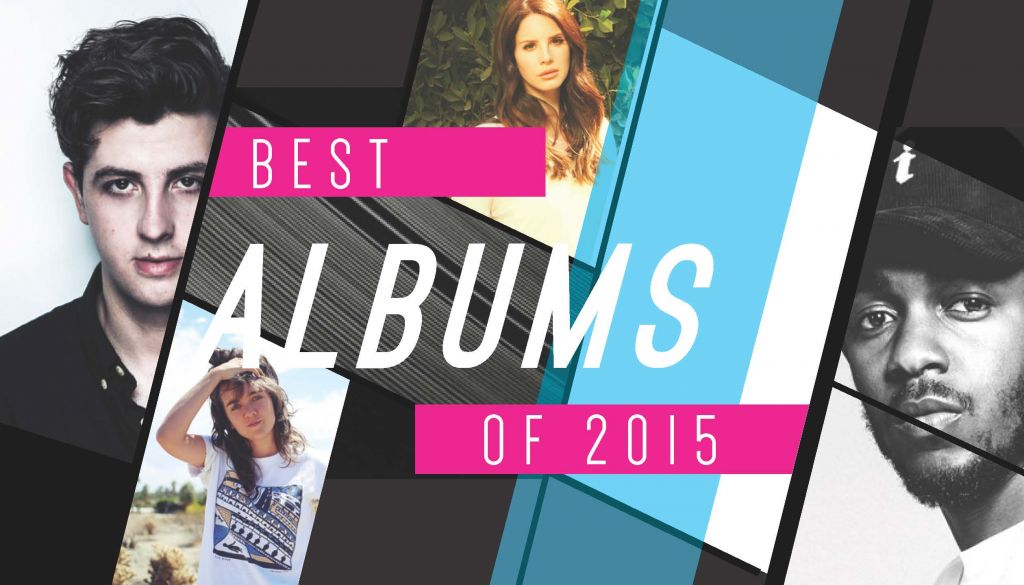
Dramatically toning down the gritty sound of her previous album, Ultraviolence (2014), in favour of a more layered, ethereal, and timeless aesthetic, Lana Del Rey—one of pop music’s most divisive artist—takes the listener on an exquisite journey of love, drugs, and existential poetry. Del Rey’s vocals soar over sparse, skittering beats and heavy strings, whilst her lyrics tackle themes of being misunderstood, getting high, and escaping reality. She flips the concept of the male gaze on its head during the brilliant “Music To Watch Boys To;” she’s a menacing mistress on “24,” and a reminiscing Hollywood starlet on “Terrence Loves You.” Most of all, she’s a pop voice like no other.
Dan Bejar, the ubiquitous troubadour hero of Canadian indie rock, once again delivers an album that is truly unique—both from his previous work and from other artists. Incorporating a luscious string section and drawing on influences from Bruce Springsteen to orchestral chamber music, Bejar creates a record even more impactful than his 2011 classic, Kaputt. Full of songs about “cities and girls and injury,” the album spins hyperverbal tales of urban decay and budding love, realistic and fantastical in equal measure. It’s the perfect music for a long evening drive.
8. D’Angelo — Black Messiah
Nearly 15 years after the release of his neo-soul opus Voodoo, D’Angelo finally returned late last year. Needless to say, he didn’t disappoint. In Black Messiah, D’Angelo produced a record that’s every bit as ambitious, challenging, and downright groovy as its predecessor. The political overtones on “1000 Deaths” and “The Charade” prove that D’Angelo’s learned a couple things during his hiatus. Nevertheless, like any D’Angelo record Black Messiah is about the groove first and foremost. Working with a virtuosic rhythm section of ?uestlove on drums and Pino Palladino on bass, on this record D’Angelo’s crafted a pocket so deep no light can escape.
7. Alabama Shakes — Sound & Color
Sound & Color marks the second studio endeavoir of Southern rock band Alabama Shakes, but don’t let their geographic origins fool you. Debuting at number one on the U.S. Billboard 200, Sound & Color explores a myriad of genres and atmospheres that really complicate a simple labeling of the band’s genre. “Don’t Wanna Fight,” for example, showcases the band’s successful and refreshing modern spin on traditional soul/blues rock, while only two tracks later, “Gimme All Your Love” takes this soul formula and amazingly injects it with an electronic ‘space-ness’ that bridges generally unacquainted genres. Brittany Howard, composer, lead vocalist, and guitarist on most tracks, truly shines on this record, and will definitely be a musical force in the coming years.
Art Angels is a glorious showcase of Grimes’ versatility and far-reaching artistic vision. Tracks like “California” and “Flesh Without Blood” could easily find their way on popular radio stations right beside La Roux or even Selena Gomez, while “SCREAM” harkens back to her more experimental work on Visions. Art Angels seamlessly blends Grimes’ bubblegum-bright voice with ‘90s pop guitar in anthem after anthem celebrating female autonomy. The album is evidence that Grimes is blossoming from a somewhat fringe artist into a skilled producer and performer. Catchy tracks and complex production make Art Angels an excellent album.
5. Courtney Barnett — Sometimes I Sit and Think… And Sometimes I Just Sit
With effortless vocal delivery and gritty guitar melodies, Courtney Barnett’s debut album offers some of the most meticulously crafted, lyrically-genius songs this year. On “Dead Fox” she examines the simple things in life, “Pedestrian At Best” deals with a perceived risk of not delivering to societal expectations once becoming ‘famous,’ while standout track, “Depreston” narrates the disappointing and expensive reality Barnett faces when trying to purchase her first home. Her songwriting is witty; her lyrics often tongue-in-cheek, but there’s no denying the quality behind her ‘girl-next-door’ façade and lyrical themes.
4. Jamie xx – In Colour
Jamie xx’s LP is the best electronic record in an underwhelming year for the genre. From the squelching garage of “Gosh” to melancholic “Obvs,” In Colour is a record that boasts every hue in the electronica rainbow. The LP also shows some solid collaborations with Jamie xx’s bandmates on “Stranger in a Room” and “Loud Places,” as well as the scorching “I Know There’s Gonna Be (Good Times)” featuring Young Thug and Popcaan. Though it doesn’t try to reinvent the wheel, In Colour is a satisfying listen from front to back.
In Currents Kevin Parker wastes no time with simplicity; each song is wrought with layers that feel like waves of psychedelic magic. Yet in this complex swirl of sound, meticulous drum and bass lines emerge, showcasing Parker’s talent for pop riffs. Parker borrows from funk, disco, noise rock, and dream pop to create a pop/rock record that runs wider in scope than any other alt rock project of this year. Sentimental yet upbeat, the record has the melancholy tinge of a breakup album while maintaining the euphoric anything-goes attitude of someone with nothing to lose and something like endless youth ahead of them.
Growing up is never easy—especially when the death of a loved one and a troubled childhood are involved. On his seventh studio album, Detroit-based singer-songwriter, Sufjan Stevens reflects on both earlier and easier times in his life, contrasting them with the devastating and traumatic events that led him to writing the songs he finds himself including on his latest record, namely his complicated relationship with his mother both before and after her death Despite the heartache behind the songs, the achingly beautiful Carrie & Lowell provides one of the most understated, but encapsulating listens of the year.
Every few years an album comes out that manages to take the pulse of an entire culture and perfectly verbalize its sentiments to the world. Just as rare is an album so personal and singular that no other artist could have released anything like it. To Pimp a Butterfly is both of those albums. Eschewing the narrative of his previous album, Lamar raps about everything on his mind—his crippling self-doubt and arrogance, religion, the way black people are treated in America, his complicated relationship with his past, and more. This is a dense album, both lyrically and musically, tightly winding influences from every genre under the sun around Kendrick’s typically insightful, spitfire lyrics filtered through his incredibly versatile vocal timbre. The result is an album that is almost defiantly idiosyncratic—a jazz-soaked tone poem that serves as both a ‘fuck you’ to society and a song of hope for the future in a tense, uncertain present.
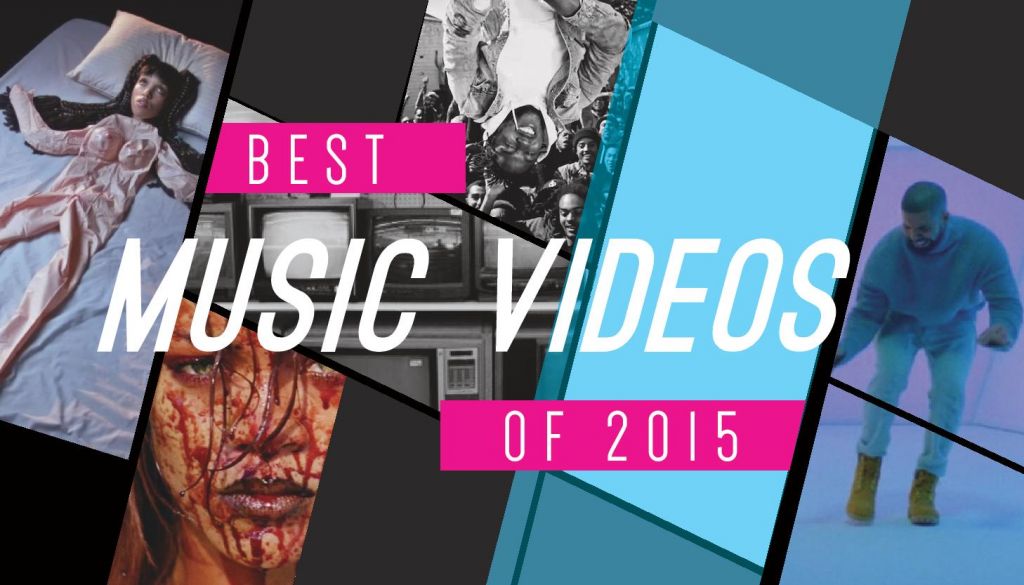
Here is our list of the 10 best music videos of 2015:
10. Childish Gambino — “Sober”
Choreographed by Ian Eastwood, Childish Gambino’s single from the Kauai EP tackles and subverts the oft-depicted ‘guy approaches girl’ scenario in a music video that comically comments on both itself and other videos of its ilk. The video features Donald Glover, accompanied by his traditional mix of geekiness and swag as he attempts to woo a fellow diner. By playing with the separation of music from video, “Sober” also calls into question the potential one-sidedness a music video narrative can convey, and powerfully posits more of an outsider, ‘third person’ perspective for observation.
9. David Bowie — “Blackstar”
David Bowie could have taken it easy. With a massive back catalogue of hits and the wealth that comes with it, he could have spent the rest of his career releasing down-the-middle dad rock and nobody would have faulted him for it; however, the video for “Blackstar” serves as a reminder that Bowie is only content when he’s acting completely fucking bonkers. Heavily influenced by the occult, the video goes on a kaleidoscopic tour of astronauts, ritual, and Bowie’s terrifyingly creepy smile. It manages to draw sly parallels to his previous material while further cementing his place as the godfather of the avant-garde.
8. Sia — “Elastic Heart”
One of the most divisive music videos to be released this year, Sia’s “Elastic Heart” is a stunning and thought-provoking experience that brings new meaning to the concept of ‘art.’ It is an emotional comparison of youth against age, complete with intricate choreography between Shia LaBeouf and child dance-star, Maddie Ziegler. The video artfully explores the lyrical themes spread throughout Sia’s latest album, This Is Acting, which explores toxic relationships and vices muddled by infectious pop beats. The highly-conceptual video ultimately captures the essence of growing up and the limits it has on one’s imagination and, thus, freedom.
7. Hayley Kiyoko — “Girls Like Girls”
Set in a depressing suburban home somewhere in the U.S.A., the video revolves around the tumultuous beginning of a romance between two best friends amidst the hot and wasted summer days where doing nothing is doing everything. Cinematically stunning, the video captures the exciting nuances that only come with being in the state of a possibly reciprocated love: The intriguing glances, the twinkling in the eyes, the knowing smiles. But it’s not all sweet. To put it shortly: This music video is a masterpiece and deserves its own feature length film. Going through all the steps of an epic poem, the video ends with an emotive finish proving that love always wins.
6. Justin Bieber — “Life Is Worth Living”
Bieber pulled a Beyoncé when he simultaneously released 12 music videos to accompany 12 of the 13 songs from his new album, Purpose, but only a few of these videos feature Bieber himself. The majority, like “Life is Worth Living,” are impeccably choreographed dance pieces. The video features the contemporary dancer Emma Portner in a minimalist pas de deux. Portner’s painfully, achingly beautiful expression of finding hope in love gives depth to Bieber’s relatively simple love song. The video is an excellent example of interdisciplinary collaboration in art; the song and the dance combined make for a stellar video.
5. Tame Impala — “The Less I Know the Better”
Sex, basketball, and gorilla suits collide in another stunning offering from Spanish director collective, Canada. Viewers might remember the group from their other bonkers music videos such as El Guincho’s “Bombay” and Phoenix’s “Trying to Be Cool.” At any rate, “The Less I Know The Better” is arguably their most ambitious effort yet. They use every trick in the music video book here, mixing computer and hand-drawn animation with live action choreography to dazzling effect. It’s a perfect mixture of side-splitting ridiculousness and visual magic. You’ll never be able to look at your high school mascot the same way again.
4. Rihanna — “Bitch Better Have My Money”
This seven-minute thriller has Bad Girl RiRi and her posse torturing an accountant’s wife for money. It’s a shocking contrast to the stripped down, black and white “FourFiveSeconds,” ending with a blood-soaked Rihanna lighting up in a suitcase full of cash. It’s deliberately shocking and disturbing, introducing the fully-fleshed 'no fucks given' Rihanna that audiences only got a taste of with the videos for “Disturbia” and “S&M.” Maybe not an obvious contender for best music video, the flawless production and uniquely creepy yet sexy content makes it a piece that has earned its place in music video history.
3. FKA twigs — “M3LL155X”
Mysterious and mesmerizing, “M3LL155X” takes a big step away from the music video genre and into performance art. The 16-minute video transforms four songs from twigs’ EP of the same name into a saga of womanhood, and twigs isn’t shy in her visual interpretation of these subjects. The powerful and ethereal clarity of twigs’ voice beautifully accompanies images of female autonomy, including pregnancy, birth, sex, and voguing. In her video, as in her music, twigs blends R&B with considerably more experimental choreography into a thought-provoking and visceral experience unlike anything else produced this year.
2. Drake — “Hotline Bling”
It’s no use describing Drake’s “Hotline Bling” because everyone has seen it, or at least seen a clip of it in a parody meme. Featuring dad-level dance moves, Drake’s idea of a sex hotline center, and multiple beautiful women posing on neon dance floors, producer Doctor X perfectly crafted “Hotline Bling” into the viral video of the year. This music video utilized neon minimalism to bring Drake’s grey turtleneck sweater and jazz hands to the forefront, making horribly uncomfortable dancing cool again. The vibrancy of the set and the awkward relatability of Drake’s dance moves would affirm the video a place in one-hit history.
1. Kendrick Lamar — “Alright”
How do you make a music video for “Alright”? More than just a standout track on the best record of the year, “Alright” has become a rallying cry. During a turbulent 2015 you were almost more likely to here “we gon’ be alright!” at a protest than at a concert. With this in mind, perhaps it’s only natural that Colin Tilley’s video had to match the colossal scope of this giant of a song. Clocking in at almost 7:00 minutes, the video is a requiem and celebration rolled into one. At the centre of it all is Kendrick, who flies through Oakland in glorious high definition. Despite its unflinching depiction of police violence, the video for “Alright” is relentlessly optimistic, an optimism that not even bullets or ignorant Fox newscasters can stop. In a 2015 wracked by tragedy and injustice, maybe it’s just what the doctor ordered.
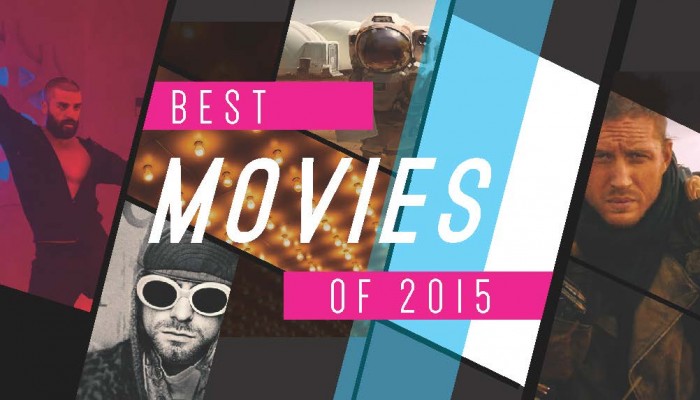
Here are our picks for the 10 best movies of 2015:
10. The End Of the Tour
A film about two authors driving around the midwest on a book tour could have been a exercise in pseudo-intellectual masturbation, even when one of them is legendary author David Foster Wallace (Jason Segel). Instead, Donald Margulies’ script and a pair of career-best performances from Segel and Jesse Eisenberg tease out the humanity crackling beneath their surface-level egos. Rolling Stone writer David Lipsky (Eisenberg) attempts to profile Wallace for an issue of the magazine while barely masking his professional jealousy of his subject’s talent, while Wallace resents Lipsky’s ability to easily connect with others. This push-and-pull is a greater wellspring of narrative tension than some action films, even when it’s just two people driving through the countryside.
9. The Diary Of a Teenage Girl
“This is for all the girls, when they have grown,” says Minnie Goetze, the protagonist and designated teenage girl of The Diary of a Teenage Girl. This is a film about a girl growing up, but it is no simple coming-of-age story. Through imaginative animation and achingly relatable moments of teenage adventures, the film explores the oft-neglected topic of sexuality in teenage girls. It’s about a girl discovering and owning her sexuality, which is so often denied to women of all ages. At times hilarious and overall heart wrenching, this film is peppered with poignant and inventive surprises.
8. Amy
The 2015 documentary surrounding Winehouse's troubled personal life carefully and respectfully sheds light on the stars’ dark rise to fame. It’s not just drugs and disorders, but instead an intense pressure to perform, and lack of ability to reach out to others for help. It’s incredibly well done, and by focusing primarily on her strengths, and not revolving solely around her very public downfall, Amy is a true masterpiece that shows Winehouse as a personable, relatable, and truly down to-earth individual. “I’m not a girl trying to be a star; I’m just a girl that sings,” she says—a sad juxtaposition to the emotional journey she never intended to embark on.
7. It Follows
Sex and death have never been closer in It Follows, by far the best horror film in recent memory. Tracking a group of teens who fall under the wrath of a mysterious, constantly pursuing entity transmitted through sex, the film evokes true terror on both an existential and visceral level. While it may seem like a blatant movie-of-the-week STD metaphor, it wisely shies away from moralizing of any kind, instead using the supernatural as an opportunity to examine the things one loses forever by growing up. Shot on location amid the crumbling facade of suburban Detroit, it provides some of the year’s best filmmaking and cinematography.
6. Going Clear
Since the Church of Scientology is notoriously litigious, this documentary exposing their indoctrination process and cult-like rituals almost never happened. Relying only on information that could be validated by the film’s stringent legal team, Director Alex Gibney methodically unpacks the Church’s history from its birth as the get-rich-quick scheme of a speed-addicted science fiction writer to the litany of abuse allegations and mysterious disappearances that plague it today. Interviews with former members carry a huge amount of emotional weight, and give straightforward explanations of why any rational person could get tied up in such an organization. The Church responded with full-page newspaper ads denouncing the film, ironically contributing to its success.
5. The Martian
In a world where blockbusters tend to gloss over any scientific inaccuracies in the name of telling a straightforward story, The Martian stands out as a testament to cinema’s ability to balance science with genuine human catharsis and exciting narrative. Based on Andy Weir’s bestselling novel, the film follows astronaut botanist, Mark Watney in the days after he gets inadvertently stranded on Mars and has to figure out how to get home. The film eschews tradition and instead focuses on the fascinating procedural elements of staying alive on a desolate wasteland where the nearest human is millions of kilometers away.
4. Ex Machina
Ex Machina is a sci-fi movie that feels decidedly real. Office drone Caleb Smith (Domnhall Gleeson) wins a contest to spend a week with reclusive tech billionaire Nathan Bateman (Oscar Isaac). What happens next makes for a brilliant psychological thriller. Instead of opting for the clichéd 'evil robot' trope, Ex Machina explores the ethical implications of artificial intelligence. Its cast is aces across the board, especially Isaac, who is quickly becoming one of Hollywood’s best actors. Gleeson and Alicia Vikander (who plays Batemen’s AI, “Ava”) are no slouches either: The movie boasts the best man-machine chemistry since Her.
3. Montage of Heck
The music industry pre-Grunge was a spotlight contested by a few staple genres. Nirvana, with Kurt Cobain as their public image, was the sparkplug that ignited the vast nebula of sub genres we come to associate with the music industry today. With access to Cobain’s personal and familial archives, Brett Morgan’s Montage of Heck provides the first family backed documentary on the 90’s cultural icon. Bound with stunning remixes of Nirvana classics, animations of Cobain’s diary, and never before seen home footage, Montage of Heck will never let you hear Nirvana’s lyrics in quite the same way again.
2. Inside Out
Following the anthropomorphized emotions of a young girl whose life is thrown off balance after moving to a new town, Inside Out explores fundamental aspects of the human mind—the subconscious self, dreams, memory recall—in a way that feels novel and exciting. It’s brought to life in the brilliant colour and attention to detail typical of a Pixar production, with an added layer of formal experimentation that shows animation is truly capable of anything. Beneath the impeccable production is a poignant, complex message about the value of sadness as a means of empathizing, personified in a way that people of of all ages can understand.
1. Mad Max: Fury Road
Mad Max: Fury Road, the newest installment of Max Rockatansky’s survival story, leaves blockbuster tropes in the dirt. The dystopian/post-apocalyptic series hasn’t failed yet to satisfy an audience hungry for wild car chases and fight scenes in its characteristic steampunk style. In Fury Road, the franchise is amped up with the budget and CGI capabilities of every modern action blockbuster, but when accompanied by creator George Miller’s signature macabre style and culturally relevant themes, the film stands apart from others in the genre. Feminism and resource conservation subtly underscore the exaggerated explosions and car chases without getting lost in the noise of spitting engines. The film is almost bereft of character development, but that’s a virtue in this case, not a flaw. Fury Road is unapologetically simple: A return to the do-or-die morality of classic action-adventure films.
Suspenseful, sexy, and seriously entertaining, How to Get Away with Murder may be Shonda Rhimes’ best work to date. The plot twists at the end of each episode avoid the deus ex-machina tropes, adding to the overall plot that has maintained throughout the past two seasons. Add the excellent production quality to the talent and diversity of the cast—Viola Davis is the first African-American woman to win an Emmy Award for Outstanding Lead Actress in a Drama Series—and viewers are left with a thrilling drama that hooks people in from the start.
9. Mr. Robot
It wasn’t perfect, but Mr. Robot was an entertaining companion to the dog days of summer. The show tells the story of Elliot Alderson, a socially-awkward, morphine-addled, hacker extraordinaire who attempts to bring down E-Corp, the world’s largest corporation. Rami Malek shines as Alderson. In fact, the show’s often at its best when it eschews its fierce anti-corporate rhetoric and we get to learn more about Elliot, one of the more fascinating protagonists on television today. Despite a couple minor blips, Mr. Robot’s first season was definitely promising.
8. Mad Men
The ’60s ultimately came to a close this past summer, with the final season of Mad Men tying up the stories of Don Draper and company. Never one to pander to fans, series creator Matthew Weiner delivered an ending that drew parallels to the end of The Sopranos in terms of how ambiguous it made the fate of its central character. The season showed the gradual dismantling of the Don Draper persona and the masculine ideal he represented, culminating in a final mission statement for the series that could either be read as hopeful or despairing depending on your outlook.
7. The Americans
How much of your life are you willing to sacrifice for a set of ideals? Your career? Your safety? Your children? On The Americans, Philip and Elizabeth Jennings (Matthew Rhys and Keri Russell, both phenomenal) give up all three in the name of the Soviet Union, choosing to spend their lives as undercover spies amid Cold War tensions in Ronald Reagan’s America. Equal parts white-knuckle spy thriller and Chekhovian family drama, the series methodically examines what we give up for god, country, and each other, and the secrets we keep from ourselves.
6. Broad City
Broad City is Comedy Central’s response to Girls and Sex and the City: Instead of young women struggling to find freelance employment or a suitable bachelor, we find two friends searching for the best frozen yogurt flavor to cure their munchies. The former web series has turned into something of a cult classic because the show appeals to the unorthodox, hilarious realities of young working girls, not their distorted fantasies. Abbi Jacobson and Ilana Glazer star as two best friends who struggle to achieve personal and professional success but thrive in the antics of their friendship. Below the surface of this hysterical comedy lies an appreciation for the simple joys in life: Friendship, food, weed, and sex.
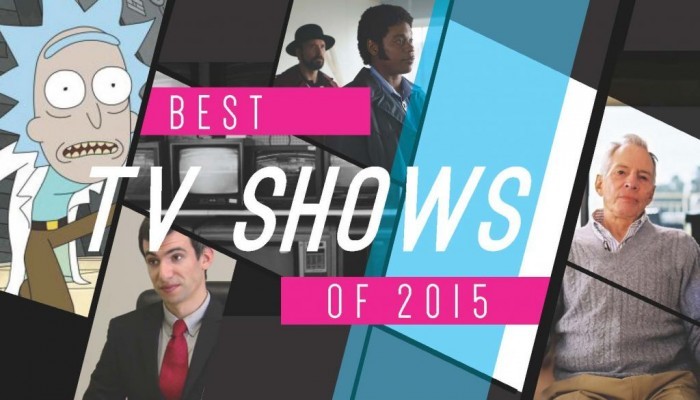
5. Nathan For You
This is the best reality TV show on air by some distance. Produced by cringe kings Tim Heidecker and Eric Wareheim, Nathan For You is part gag show, part biting consumerist satire, and part psychological character study. More than anything, the show perfectly captures the absurd conditions of capitalism in 2015. Much of the credit has to go to director, creator, and star, Nathan Fielder, who provides help to struggling businesses through a combination of byzantine legal manoeuvring, awkward negotiations, and straight-up evil genius. Sometimes his schemes pay off, but most of the time they don’t. Whatever the case, it makes for outstanding TV.
4. Fargo
Inspired by the Coen Brothers’ film of the same name, Fargo examines midwestern life from the perspective of two warring gangs in the 1970s and the bystanders that get sucked into their orbit. It’s shot in beautiful widescreen, showcasing the beauty and desolation of wilderness, and uses period-appropriate split-screens to connect characters from its sprawling cast, or highlight the distance between them. Fargo wears its historical influences on its sleeve—economic stagnation, second-wave feminism, and corporate greed play a prominent role in the story. But it never feels didactic or forced, instead adding a deep thematic rooting to the violence and inviting parallels to the present-day.
3. The Jinx: The Life and Death of Robert Durst
The most gripping documentary in a year full of gripping documentaries, The Jinx transcended its true-crime subject matter and became an unflinching look into the idea of personal guilt and its ability to erode the soul. Starting as a standard, well-made documentary about millionaire Robert Durst, and the three murders he is accused of committing, the series becomes truly special when director Andrew Jarecki somehow gets Durst to give an extended interview about his alleged crimes. What follows is a series of fascinating contradictions, with Durst appearing simultaneously monstrous and sympathetic, and the different threads of the murder case pointing both to his guilt and his innocence.
2. Bojack Horseman
Often absurd, sometimes sad, and surprisingly poignant, BoJack Horseman once again delivers a good dose of reality in comedic form. BoJack, the title character, thinly veils his self-doubt and self-hatred with drugs, alcohol, and narcissism. When this veil drops, we see a sympathetic and even relatable character; no small feat coming from a talking horse and former sitcom star. It’s not hard to suspend one’s sense of reality in BoJack Horseman; despite the abundance of animal characters, because these characters are as multifaceted as any in more conventional comedy series. BoJack Horseman’s commentary on celebrity culture and dry wit transcend genres.
1. Rick and Morty
Driving on the border of existentialism and comedy, the latest brainchild of Dan Harmon, creator and co-producer of Community, and notable voice actor Justin Roiland rightfully stands as this year’s best TV series. Morty, a typically persuadable and horny teenager, constantly finds himself in sci-fi shenanigans orchestrated by his alcoholic scientist grandfather, Rick. Their interdimensional adventures never fail to bring bittersweet tears caused by both laughter and sadness. Laden with numerous references to contemporary issues of race, religion, and the nature of life itself, the show never shies away from exposing the dark underbelly of humanity. The fact that each episode generally tends to explore the various philosophical implications bound in quantum theory only augments the show’s often comically veiled sophistication. Rick and Morty is ultimately a show that makes you appreciate the tiny, insignificant, and random speck of cosmic dust we call Earth… and then proceeds to ‘Get Shwifty.’
In recent years, many universities, including Brock University, Western University, and McMaster University, have implemented Fall reading weeks. The University of Toronto’s Mississauga campus will have its first Fall reading break in 2016. McGill currently does not have a Fall reading week, although the idea has been discussed several times in the past few years.
This year, however, administrative headway has been made. Last June, a working group published a consultation draft of a Fall reading break proposal. Since then, there have been several rounds of discussion between students, faculty, and administrative staff. According to Executive Director of Enrolment Services Kathleen Massey, the proposed reading break would add two extra days of holiday in the Fall term. Although no models have yet been finalized, one includes extending the Thanksgiving holiday to include the Friday before Thanksgiving weekend and the Tuesday after. Another model includes incorporating the two days of break into a weekend in November, creating a long weekend.
Although further consultation and revision of the proposal is required, it could be implemented by the 2018-2019 school year.
One proposed model for a break in October
Results of the a national student survey conducted by Enrolment Services
Benefits and trade-offs
According to Arts Senator Erin Sobat, who is a member of the working group, a Fall reading break would have positive mental health outcomes for students.
“The mental health benefits of an added break seem intuitive,” Sobat said. “However, we do have data from other Canadian universities showing that a Fall break generally decreases stress levels and improves academic performance, particularly for first-year students. More and more schools are moving towards a Fall reading break as a proactive response to concerns around student mental health and well being.”
In order to accommodate the extra days off, several adjustments to McGill’s calendar were proposed. Sobat underscored that the proposal aimed to preserve course time—McGill currently allocates 39 hours of meeting time per semester per course.
“When consulting students, we knew that there [were] going to have to be trade-offs,” Sobat said. “We knew that we couldn’t compromise too much on the teaching days, because that has been a concern, certainly, from faculty members in the past. [This is also a concern] of some students who don’t necessarily want to get less for what they’re paying for, for example, in terms of the course.”
Other trade-offs that were proposed included having Saturday exams and beginning the Fall semester before Labour Day.
“Saturday exams […] wouldn’t happen every year, given the calendar,” Sobat stated. “It would depend on the calendar dates […] maybe once every three years. We thought it was a reasonable compromise, and students took that as the least bad.”
Holding Saturday exams would also cost an additional $25,000 per year.
“These are the Enrolment Services’ costs for opening rooms, paying for porters and cleaners, and exam staffing,” Massey said. “It doesn’t take into account any additional costs that may be incurred by the faculties. I don’t know what those costs may be yet.”
Renee Sieber, associate professor in the Department of Geography and a council member of the McGill Association of University Teachers (MAUT) explained that faculty members were generally in favour of a Fall reading break, but they were against starting the semester before Labour Day.
“The one thing that we didn’t favour is […] a Fall reading break forcing classes to start before Labour Day,” Sieber said. “We’ve had [experiences where] students don’t tend to come to class if it’s held before Labour Day.”
Sieber continued to highlight the need to re-evaluate the current structure of McGill’s course calendars.
“Why do we have 13-week courses?” said Sieber. “[…] A number of Canadian universities are moving to shorter semesters.”
Another point of discussion was the potential date of the Fall reading break. Although most students favoured incorporating the days off into the Thanksgiving weekend, Massey underscored the concerns about holding the break in October.
“While the students prefer Thanksgiving, some faculty believe believe that that’s too early in the term, [and] that not enough has happened yet to make it a worthwhile thing to do that early,” she said. “By November, you’ll have experienced more work as a student.”
Another concern was how a Fall break would affect scheduling of classes with lab components.
“The variety of class types across the university is staggering,” Sieber said. “For classes that have labs, [a Fall break] could affect a considerable number of labs in the course. A student may have a Friday [or] Monday lab—there’s two labs that disappear from the schedule.”
Faculty and student consultation
Deputy Provost (Student Life and Learning) Ollivier Dyens, explained the process of introducing the proposal to the McGill administration.
“The first thing [the working group did was], we brought it to [the Enrolment and Student Affairs Committee (ESAC)],” he said. “ESAC is a sub committee of the Senate. ESAC is an advisory committee. The people who sit on ESAC, most of them are associate deans from all the faculties [….] We brought the idea of the Fall reading week to ESAC and they thought it was an interesting.”
Last semester, the Students’ Society of McGill University (SSMU) additionally released a survey to consult students about a Fall reading break. MAUT also conducted a survey amongst its members, and the Faculty of Arts is currently conducting a survey for its students.
Results of the SSMU survey
Sieber explained that MAUT was displeased with the level of consultation they had received from the McGill administration.
“[MAUT] was asked by the administration to investigate [the proposed Fall break],” Sieber said. “This was long after they talked to other organizations so we were not pleased that they spoke to us, what seemed to be after the fact [….] Some faculty were [consulted early on], but that's not the way MAUT does things. MAUT was hoping that as an association, we would have been consulted because we represent the faculty.”
Pending further consultation and revision of the proposed Fall reading break draft, the proposal will have to get approved by Senate.
“We were hoping that it would be able to go through [Senate] this term, with the goal of bringing a revised calendar to senate to actually revise the 2017-2018 year,” Sobat said. “It’s not looking like that’s going to be possible at this point, I think we’re too late. So we’re probably pushing [it] to 2018-2019, which is too bad, most of us will still be around.”
Nevertheless, Massey remains hopeful that the proposal will pass.
“People are in favour of a fall break in principle,” Massey said. “It’s just about figuring out that ideal set of tradeoffs and addressing these challenges. I feel very positive about it, particularly since I’ve seen positive survey feedback from [students and] the faculty.”