


Latest News

Features

Beyond the Bottle: Craft Beer and Community in Quebec

Exploring passion, community engagement, and sustainability in microbreweries

When I first moved to the Plateau, I started to encounter craft beer in what felt like every store I went to. Microbreweries are very visible in the neighbourhood. You can find their fare all over the place: Beside the register on coffeeshop counters, through the windows of Lejeune & Frères on Duluth, piled high in dépanneurs. I remember the first time that I visited the Intermarché on Mont-Royal; I was surprised to turn the corner of the store’s final, narrow aisle and find a wall of brightly-coloured cans staring back at me.

It can be easy to see craft beer as just another can on the shelf, but I wanted to go a step further and explore the possibilities microbreweries might open up for reorganizing our society. In an increasingly atomized world where large companies dominate over small businesses, how might microbreweries present other ways of relating to workers, communities, and the environment?

Crafting “The Good Stuff”

L’Association des microbrasseries du Québec (AMBQ) is an organization that aims to support the work and represent the shared interests of member microbreweries to the government. Éric Grypinich, a project manager at AMBQ, explained in an interview with //The Tribune// that an important feature that sets microbreweries apart from larger ones is the sense of passion that brewers bring to their product. Grypinich believes that this passion not only enhances the beer itself, but also serves to better connect breweries to their workers and customers.

“The passion is felt in the quality of the beer, in the way that we talk about beer, and how we engage about people,” Grypinich said. “You go to a brewery, you go see the brewers. They’re always proud of their product. They’re always talking about beer, and […] relating to people [….] Because we’re not into mass marketing, so our best marketing is how we get in touch with people.”

For Vice Presidents of McGill Brewing Club Haley Janvrin, U4 Engineering, and Laura Hebert, U5 Engineering, the intention that goes into craft beer is a key takeaway from their time with the club. The group brews small batches of fermented drinks like beer, wine, and kombucha and regularly partners with microbreweries in Montreal for events. Most recently, the club participated in Saveurs de Génie, a competition at l’École de technologie supérieure where students create a recipe and collaborate with a local microbrewery to brew it. The McGill club’s brew—made in partnership with Benelux—will soon be available for purchase in the brewery’s location on Sherbrooke. 

Janvrin and Hebert told //The Tribune// that getting the chance to learn about how to achieve certain flavours through the brewing process is a highlight of working with microbreweries. In this way, the craft-beer-tasting experience stands in contrast to beer consumption at many other student events, where the priority is often drinking large quantities of brew for cheap. 

“I think we’ve come out of it with a much better understanding of not only the work that goes into beer, but how what you do really changes the flavour of it, and how it creates this kind of experience of tasting beer, as opposed to, say, binge drinking,” Hebert said. “I think it’s given me more of an appreciation for the beverage, and also an appreciation for the [microbrewery] community.”

“If the craft beer drinkers saw someone chugging a craft beer, they’d be like, ‘Oh my God, what are you doing?’” Janvrin said later on. “‘You’re wasting the good stuff.’” 

“It’s a lifestyle”

The sense of community Janvrin and Hebert discuss is something that Anne Claude Thivierge, a sales representative and event coordinator at Microbrasseries COOP, emphasized in an interview with //The Tribune//. Microbrasseries Coop is an association that supports cooperatively owned microbreweries in Quebec. The group is a part of Réseau COOP, a larger network that promotes cooperatively-owned businesses (coops) and offers resources to help create them. 

As Thivierge pointed out, microbreweries frequently collaborate to organize events and brew beers together. Many also source local produce for brews or for food at restaurants attached to their breweries. She noted that having a cooperative structure further connects a brewery to the local community in several ways: Sharing decision-making power amongst workers, providing livable wages, and allowing employees to reinvest their earnings in other local businesses. Thivierge stressed that supporting the community is a crucial value for coops.

“It’s not only beer, it’s what beer is made with, and it’s how the profit or the wealth generated can provide salaries, and it also make other local businesses benefit from the dynamism that it brings to a community,” Thivierge said. “It’s not just alcohol.”

For small communities, breweries do not only draw local residents together, but they also bring visitors to the area. Crowds of visitors come to St. Tite each summer for Festival Western, but Thivierge believes that local breweries such as À la Fût can also bolster the community economically throughout the rest of the year. 

“It’s amazing to see that the breweries sort of have replaced the church, where everybody would gather and meet one another,” Thivierge said. “Breweries have this role as well in smaller communities in this gathering of people.”

These appeals to the local community can also affirm their authenticity to consumers. Daphne Demetry, an associate professor in McGill’s Faculty of Management who studies organizational authenticity, explained in an email to //The Tribune// that authenticity hinges on the notion that “an organization’s claims align […] with what they are actually doing.” Demetry also confirmed that appealing to a sense of local identity is a “major” way many businesses earn this attribution from consumers. 

“Terroir and wine is a classic example,” Demetry wrote. “The idea is that a product gains some sort of ‘essence’ from a location.” 

According to Grypinich, it’s this sense of community and love of brewing that motivates people to continue working in the industry, despite the increasingly crowded beer market in Quebec; in 2002, there were just 33 breweries in the province. In 2024, there were 332.

“Unfortunately, there’s no money [in the market] [….] but there’s some friendship. There’s a way of building your life and having satisfaction towards brewing nice product, the community that supports you, your family, your friends,” Grypinich said. “It’s a lifestyle, basically.”

Many microbreweries reflect the same community-oriented values, though not all follow the coop business model. Thivierge went on to explain that one of the mandates of the Réseau Coop is to promote coops as a viable business model, not just as an “alternative” model chosen by few businesses and often overlooked at business schools. 

“[The coop model] goes well with values that [microbreweries] already have,” Thivierge said. “They just don’t know that there is a structure that would allow them to be [consistent] in their business structure.”

At the same time, Thivierge stressed a distinction between microbreweries and what she calls “fake craft breweries.” These businesses owned by large beer companies are designed to appeal to the values that craft beer espouses despite their lack of commitment to community, such as by brewing products outside of Quebec. 

“The small craft breweries always try to educate the consumer, to say, ‘Well, it’s not only about drinking a good IPA. It’s about a beer that also brings wealth to a community that is respectful of sustainable development and that has care for the people that make the product.’”

Sustainable Brewing

Thivierge noted that among the microbreweries Brasseries Coop represents, environmental efforts can differ depending on their unique needs. Les Grands Bois, located in Saint-Casimir, limited the brewery’s transportation emissions by increasing their warehouse space. La Chasse Pint in L’Anse-Saint-Jean uses heat produced by the compressor during the brewing process to warm the brewery during winter, diverting this heat from the building during the summer. 

Breweries also share strategies for common sustainability dilemmas. One example concerns how breweries dispose of cleaning chemicals that may harm the environment if sent directly down the drain.

“One thing that they share a lot is, ‘What do you do to make your water with chemicals easier on the environment in the city water installation?’” Thivierge said. “There are ways to [dispose of] less chemicals, either by using them more than once, or by neutralizing the chemicals before putting it back into the environment.”

For Grypinich, a commitment to sustainability is a key way that microbreweries distinguish themselves from larger breweries. While the latter simply seek to stay within government parameters, Grypinich believes microbreweries take more active steps to minimize their environmental footprint. Among the AMBQ’s sustainability efforts is an initiative which allows microbreweries to use 500-millilitre reusable glass bottles instead of aluminum cans, cutting down emissions. 

“We have internal committees that are really working on the process and helping all the microbreweries to be better,” Grypinich said. “There are many gestures that you could do to lower your emissions, even though you’re smaller [….] It’s about willingness to make a difference.”

This is not to say that microbreweries are idyllic, communal fantasy lands where people can escape the realities of neoliberal life. Microbreweries cannot fix our world’s growing wealth disparity or solve climate change. However, in prioritizing local engagement and sustainability, they normalize alternative ways of doing business that foreground responsibility and prioritize care for workers, the community, and the environment. These values even go hand-in-hand with business models based on collective ownership, which stand in stark contrast to the nested subsidiaries you might find with big beer companies. Considering this, perhaps we can look to microbreweries for ways to move towards broader, more just social and economic arrangements. 

The work of craft breweries, then, is not just visible on the shelves of coffeeshops, grocery stores, and depanneurs—it’s in the streets.


Editorial, Opinion

Healthcare for all? Not if you’re 2SLGBTQIA+ at McGill.

A recent study revealed that discomfort among Quebec youth regarding friendships with 2SLGBTQIA+ individuals has doubled since 2017, highlighting an alarming rise in anti-2SLGBTQIA+ attitudes in the province. A broader, growing shift toward conservatism has fueled this surge in intolerance and serves as a threat to the safety of 2SLGBTQIA+ people. Homophobic microaggressions and casual transphobia are increasingly common, often perpetuated by online “alpha male” content creators and their “anti-woke” rhetoric. The corresponding resurgence of traditionalism, a trend rooted in modern economic instability and nostalgia for the rigid norms of the past, scapegoats 2SLGBTQIA+ individuals and makes meaningful discourse on their rights—in Quebec and abroad—taboo. 

At McGill, the growing momentum of conservatism and anti-2SLGBTQIA+ attitudes has coincided dangerously with the temporary leave of Dr. Hashana Perera, who is reportedly the only doctor at McGill’s Student Wellness Hub (SWH) willing to provide Hormone Replacement Therapy (HRT). HRT is a critical form of care that allows individuals to align their physical selves with their gender identity. Perera has also identified gaps in support for transgender students at the university, making her presence crucial to the well-being of 2SLGBTQIA+ individuals. In her absence, students seeking HRT face referral to the Hygea endocrinology clinic, where wait times can be up to a year long.

The fact that gender-affirming care at McGill relies on a single doctor is particularly egregious, as it creates a precarious system where a single practitioner’s leave disrupts access for the entire student body. Furthermore, even when such staff are available, McGill’s health insurance policy requires 2SLGBTQIA+ students to jump through unnecessary hoops to access care for treatments, even outside of HRT. For example, diagnosed gender dysphoria is a prerequisite for most gender-affirming care, but few doctors are willing to provide this diagnosis

The lack of urgency and support, compounded by an overloaded SWH, forces competition for appointments, exacerbating financial strain and hindering students’ ability to engage fully with their communities. Even once students are finally able to access treatments, the costs—including those of repeated HRT or gender-affirming surgery—are not fully covered by insurance.

The fragility of the gender-affirming healthcare system reflects a lack of institutional commitment to equity and inclusion. To truly serve its 2SLGBTQIA+ students, McGill must do more than vocalize its support; it must listen to organizations advocating for gender-affirming care and invest in training more practitioners, expanding healthcare access, and addressing systemic barriers across the board. The university must enforce protections against transphobia, deadnaming, and discrimination to create an environment where all students feel supported.

McGill’s Public Health Masters program also plays a critical role in this process in their duty to prepare future healthcare professionals to work inclusively and effectively with diverse populations. Students in this program should be trained not only to provide sensitive care but also to identify and challenge implicit and explicit biases that uniquely impact the health of marginalized communities. Courses on medical racism, transphobia, homophobia, and implicit bias should be core components of the curriculum, even starting at the undergraduate level. Healthcare students must be taught how to engage with patients in vulnerable moments and to advocate for policies that ensure equitable care. This interdisciplinary approach, which combines technical skills with social and ethical considerations, will better equip future healthcare professionals to address the complex needs of 2SLGBTQIA+ individuals.

Gender-affirming care is not a luxury; it is a right that can save lives, allowing students to feel like themselves and succeed in school and beyond. Until the university prioritizes employing more doctors capable of offering gender-affirming care, offering further guidance for accessing this care, and expanding insurance coverage to these treatments and procedures, the SWH will remain an unreliable and inequitable healthcare provider. This moment calls for collective action to address the barriers faced by 2SLGBTQIA+ communities and to counter rising anti-2SLGBTQIA+ biases through education and advocacy. By fostering a healthcare system and campus culture rooted in inclusion, awareness, and solidarity, McGill can combat rising intolerance and, in turn, pioneer meaningful change for its 2SLGBTQIA+ community, and that which extends beyond McGill’s gates.

Martlets, Soccer, Sports

Two McGill Women’s Soccer alumni sign with Montreal Roses FC

Montreal Roses FC, one of the inaugural clubs of the newly established Northern Super League (NSL), announced the signings of McGill Women’s Soccer alumni Mara Bouchard (BA ‘24) and Stephanie Hill (MSc ‘24, BSc ‘23) on Jan. 9. 

Both Bouchard and Hill initially planned to pursue professional soccer following their McGill graduation, either in Europe or elsewhere. However, the announcement of the NSL—as well as the news that one of its teams would be based in Montreal—opened up a new pathway for them.

“[The announcement] hyped me up,” Hill told The Tribune, when asked about her initial reaction to the NSL’s creation. “It gave me hope and made me think about it for real […] would I have gone and played in Europe if not for this league? Probably, but that comes with a lot of secondary and tertiary thought processes. Now that there is a Canadian league, it makes that thought process a little more simple.”

The scouting procedure started while the players were still at McGill, with scouts attending Martlets games since the start of the season. Hill noted that NSL teams have appeared to be very committed to securing university talent, with scouts present at university games both in Canada and internationally.

Bouchard and Hill both expressed their excitement to meet more of their teammates and the Roses staff, especially as both the roster and the staff list continue to evolve. The players’ first few days as Roses included a quick meeting, but at the time of their interview with The Tribune, Bouchard and Hill had otherwise met very few people associated with the team, as their signing was announced a couple of days before the weekend. 

“I’m just excited to see who the Roses are, and to get to become a team and feel like a team,” Hill said.

The Roses currently have a 10-player roster that includes French international Charlotte Bilbault and former SC Freiburg goalkeeper Gabrielle Lambert. NSL teams will kick off their season in April 2025.

As the start of the season approaches, Bouchard shared her hopes for her first professional contract.

“As it’s my first pro contract, I am not putting any expectations on myself, because I don’t know what to expect,” she said. “It’s mostly about bringing this Québecois side of playing at home and bringing these people in [….] creating this strong bond with fans is a main goal for me, in my first season especially.”

Similarly, Hill explained her desire to foster what she described as a “sentiment d’appartenance” (‘sense of belonging’). She aims to bring everything she learned from playing at McGill into her professional career and give it her all this season.

With the establishment of the NSL, Canadian university graduates now have a stronger pathway to professional soccer, reducing the need to move abroad, especially in the early stages of their careers.

“The league in the United States is not really looking at university players here in Canada,” Bouchard said. “[The NSL is] creating this opportunity for people here to have this experience, and then eventually, if you want to, take the step to go [abroad].”

“It was about time to demonstrate just how much talent there is here, and the fact that there is a league has really made that tangible,” Hill added. “The potential of women’s sports, and of us, as soccer players, to reach that higher level, makes it possible.”

There are also several Canadian players in the American National Women’s Soccer League who have returned home to sign for an NSL team—most notably, former Seattle Reign FC player Quinn, who has over 100 caps was part of the gold-winning Canada side during the 2020 Olympics

These Canadian players now have the opportunity to represent their home cities and to play in a local setting. Furthermore, soccer fans and players growing up in the country have women’s players to look up to, even beyond the national team.

“When going pro in another country, you are mainly going there for soccer, and not thinking very largely about inspiring people,” Bouchard said. “But with staying here—yes, there is playing, but there is also inspiring the generations under us.”

Album Reviews, Arts & Entertainment, Music

Bad Bunny’s new album fuses Puerto Rican music, culture, and politics

Rating: ⭐⭐⭐⭐⭐

Released on Jan. 5th, Bad Bunny’s sixth studio album, DeBÍ TiRAR MáS FOToS (“I Should Have Taken More Photos”), has been celebrated as an “unabashed,” “determined,” “resonant,” and “triumphant” tribute to Puerto Rico. Beyond critical acclaim and chart-topping success—it currently holds the top position on Spotify’s Top Albums Chart—the album is Bad Bunny’s vibrant and impactful testament to loving his home, capturing the spirit of Puerto Rico in every track. 

The album opens with NUEVAYoL (the Puerto Rican pronunciation of “New York”), a lively track beginning with a sample of “Un verano en Nueva York,” the 1975 classic by El Gran Combo de Puerto Rico, before layering on an infectious Dembow beat. This fusion of sounds is a defining feature of the album, where traditional Puerto Rican genres like salsa, plena, and jíbaro music are seamlessly interwoven with contemporary reggaeton, Dembow, and hip-hop beats. This artistic ambition and innovation has sparked intergenerational connections, with many TikTok users posting videos of their parents and grandparents reacting to the album, pleasantly surprised that younger artists and audiences are enjoying these sounds. The album also exclusively features Puerto Rican collaborators, including RaiNao, Chuwi, Dei V, Omar Courtz, Los Pleneros de la Cresta, and students from the Escuela Libre de Música Ernesto Ramos Antonini in San Juan, the territory’s capital.

Lyrically, DeBÍ TiRAR MáS FOToS reflects Bad Bunny’s immense pride in Puerto Rico while shedding light on the challenges the region faces. As residents of an unincorporated U.S. territory, Puerto Ricans do not benefit from the same rights as other American citizens. Since “comedian” Tony Hinchcliffe referred to Puerto Rico as a “floating island of garbage” during a Donald Trump rally in October 2024, Bad Bunny’s pride in his island and support for its independence has only strengthened. In “LO QUE LE PASÓ A HAWAii(“What Happened to Hawaii”), he criticizes the destructive effects of American imperialism on nature, culture, and communities in both Hawaii and Puerto Rico. Despite these challenges, Bad Bunny celebrates his Puerto Rican identity with gratitude and pride, declaring in “LA MuDANZA”: “De aquí nadie me saca, de aquí yo no me muevo” (“No one will take me from here, I’m not moving”). 

The visual elements accompanying DeBÍ TiRAR MáS FOToS further reinforce its cultural, historical, and political depth. The album cover, which may appear simple at first glance, has evoked profound nostalgia among Latin American and diasporic communities, as seen in yet another viral TikTok trend where users showcase pictures of family or community gatherings centred around these white plastic chairs. The album’s Spotify visuals further extend this theme, featuring animated videos of the sapo concho, a toad native to Puerto Rico that is now endangered. These symbols serve as poignant reminders of the need to protect and cherish the elements that make Puerto Rico so special. Additionally, in the lead-up to the album’s release, Bad Bunny debuted a short film starring legendary Puerto Rican filmmaker Jacobo Morales. The narrative follows Morales as an elderly man reflecting on life in his native country, with the central scene taking place in what was once a local cafe, now replaced by an American chain restaurant. There, the man encounters a cashier who speaks only English and sells “cheeseless quesitos” for $30. When he learns that the establishment doesn’t accept cash, a fellow Puerto Rican steps in to pay for him, before proudly declaring: “¡Seguimos aquí!” (“We’re still here!”). This striking short film serves as a powerful commentary on the realities of gentrification in Puerto Rico, whilst simultaneously celebrating the resilience and solidarity of its people.

DeBÍ TiRAR MáS FOToS fuses music, culture, history, and politics to serve as a touching and lively tribute to all that Bad Bunny’s home island embodies. To produce such a proudly Puerto Rican album at the height of his career is perhaps the artist’s most ambitious decision yet. 

McGill, News, Private

McGill implements new room booking procedure in wake of controversial speaker

Following a five-week pause on room bookings for speaker events, McGill has released an updated procedure for event bookings on campus. The room booking pause was enacted after a talk featuring Mosan Hassan Yousef was moved online in response to a death threat—which came as part of backlash against the talk due to the speaker’s prior Islamophobic comments on social media. The procedure, which went into effect on Jan. 1, involves a new form for room booking requests and codifies the security measures McGill may implement in response to concerns about safety at an event. 

The guidelines centralize the room-booking process, using a single form to book any McGill-administered space. The new process also requires a room booking request to be submitted 10 days in advance, rather than the previous five-day window. The guidelines do not explicitly state that McGill may modify or cancel an event on the basis of its content or the speaker’s past statements, although they do note that “Requestors are responsible for ensuring that their events’ proceedings, speakers, etc., remain in accordance with applicable laws and university policies.”

Students’ Society of McGill University (SSMU) Vice-President (VP) University Affairs Abe Berglas commented on the policy’s lack of language outlining a path to cancel an event based on the past statements of invited speakers or the content of the event in an interview with The Tribune

“I think maybe [the policy] is trying to depoliticize the issue, and that’s why it’s framed in terms of security alone and not reasons why people may be protesting a speech,” Berglas said. “I’m […] waiting to see what McGill does in its actions, like what events it tries to cancel or make more difficult to happen, and then what events it facilitates.”

Additionally, the revised room booking procedure states that, in response to security concerns, McGill reserves the right to require organizers to implement ticketing, limit attendance to McGill community members, or relocate to a different room. Should these adjustments fail to resolve the security concerns, McGill also reserves the right to move an event online. 

Although she has not yet had any experience with McGill implementing security measures through this policy, Arts Undergraduate Society VP Internal Sophie Nguyen has used the new booking form and told The Tribune that it has been an improvement so far. 

“It has been smooth sailing this semester,” Nguyen wrote in an email. “There have been a couple of kinks that needed tinkering but otherwise the system seems to be faster and more efficient.”

Despite this, several members of the McGill University Senate have raised criticisms about McGill’s communications around their pause on room bookings this November. In a written statement to The Tribune, the McGill Media Relations Office (MRO) stated that the decision to pause new room bookings was taken seriously and announced in response to the severity of the security concerns, which included reports of a death threat, surrounding the talk featuring Yousef. 

“In the interests of security and stability, notably for students heading into the examination period, a pause was announced […] for five weeks, more than three of which fell in the examination and winter holiday period,” the MRO wrote. “We saw this as the only viable option in the circumstances.”

SSMU Arts Senator Vivian Wright submitted a question at the Jan. 15 McGill Senate meeting alleging that many students interpreted the phrasing of McGill’s initial email announcing the pause in room bookings as including events like final exam review sessions and end-of-semester parties. The university did not clarify until several days later that it was only intended to apply to speaker events. SSMU Arts Senator Anzhu Wei spoke with The Tribune about this confusion. 

“Amongst the student senators and the Senate caucus, we had heard a lot of complaints from different student departments about how this really had a very big negative impact for a lot of their events,” Wei said. “It sounded like this really was a breakdown of communication where the administration either didn’t fully think through the full impact of their decision, or that they just didn’t communicate it effectively.” 

Science & Technology

When a DNA test doesn’t go the way you expected…

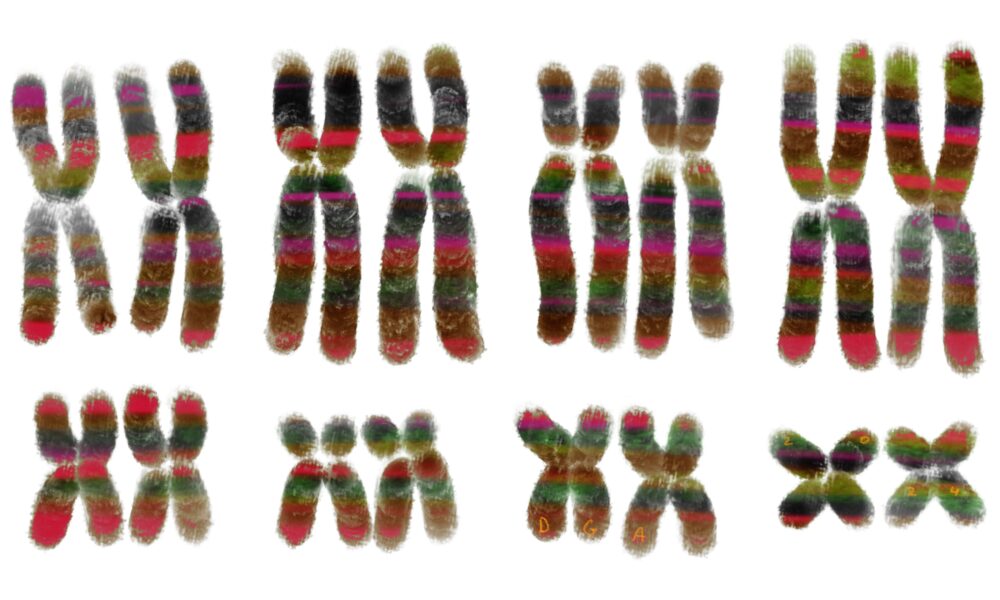
Imagine taking what appears to be a harmless DNA ancestry test, expecting to uncover more information about your heritage, only to be met with the discovery that your assumed parent is not biologically related to you.

Direct-to-consumer DNA tests—such as those provided by 23AndMe and Ancestry—typically provide three pieces of information: The consumer’s ethnic heritage, an estimation of certain phenotypical characteristics, and a computation of the consumer’s biological relationships to other users within the database. With nearly 30 million people having taken these tests worldwide, it is estimated that nearly one million of them receive a “Not Parent Expected” (NPE) result, accounting for three per cent of all users. 

In a recent publication in the journal BMC Psychiatry, Juliette Careau, a research assistant at the Douglas Research Centre and a recent graduate from McGill’s Master of Science in Mental Health program, investigated the mental health experiences of individuals who received NPE results from their DNA ancestry test.

“This sort of news out of the blue can be very shocking and stressful for participants,” Careau said in an interview with The Tribune. “To them, it was like losing half of themselves; it was like losing half of their family tree.”

Careau also emphasized that this experience is heavily under-researched, leaving people who discover this news with a lack of resources and no established strategy to help navigate this distressing period of time.

“Our goal was to learn more about this topic and how it can affect people, with the hopes of potentially producing resources for this population, as […] there is a lack of appropriate resources,” Careau said.

Careau collected data from 52 participants by conducting in-depth interviews, yielding qualitative data for the study. In 51 cases, participants learned that their assumed father was not their biological father, with the other case being a participant who learned that neither assumed parent was biologically related to them.

The results suggested that there were five overlapping themes at play. First, participants typically describe the experience as an extraordinary shock with a negative impact on their mental health. “I’m trying to figure out who the hell I am,” Participant 41 said in their interview with Careau.

Second, participants reported a severe disruption to their self-identity. 

“Other studies I’ve read found similar results in terms of the feelings of grief experienced by self-identity loss,” Careau said.

Next, it was commonly reported that the NPE news often ruptured relations with the mother specifically. This impact was often more damaging in cases where the participant was revealed to have been conceived through an affair. 

“Often in psychological studies, we see that we tend to blame our mother more than our father for different life events [in general],” Careau noted.

The fourth theme was that participants often sought social support through friends, spouses, or online groups through platforms like Facebook. 

“These groups were typically very useful for them, as it was very helpful to share their experiences and [be] validated by others,” Careau explained.

Lastly, a common theme across participants was seeking out mental health professionals. Interestingly, the study’s findings showed that not all participants found this support helpful.

“Some people did consult with mental health professionals [….] The experience with these professionals was a big mix,” Careau said. “[Participants said] they were not appropriately trained for the specificities of their situation.”

Careau stressed the importance of establishing future implications and guidelines for this population, with her research group working towards developing resources for clinicians to use in these specific situations.

While NPE results may appear to be a rare occurrence, they nevertheless affect one million people globally. Moving forward, examining the impacts that this type of news can have on genealogical test-takers through a more quantitative approach may help to establish better resources for those dealing with the aftermath of taking a ‘harmless’ DNA ancestry test.

Basketball, Soccer, Sports

The Tribune’s sports highlights of the week

From stunning McGill Martlets home games to historic soccer rivalry matches, The Tribune Staff Writers share their sports highlights of the week

McGill: Martlets Basketball secures a comfortable win at home against Concordia Stingers on Jan. 16

With the Stingers pressing high and the Martlets looking to reset, Emma-Jane Scotten, U5 Arts, saw it coming before it happened. Concordia’s #23 telegraphed the pass, and Scotten jumped with perfect timing to get a fingertip on the ball. The deflection sent it flying toward midcourt, and that was all the invitation Daniella Mbengo needed.

Mbengo, U2 Social Work, plays guard for the team and has already racked up 16 points for the Martlets this season. 

Already in motion, Mbengo turned on the jets and scooped up the loose ball in stride. The crowd roared; Mbengo surged forward, the open court ahead of her. She left Concordia’s Nelly Owusu behind quickly and easily. First two hard dribbles, then three, before she laid the ball off the glass.

The ball dropped through clean, and McGill’s bench erupted. Concordia’s frustrated defence was disarrayed.

Mbengo shouted, triumphant, as she turned back toward her teammates. Scotten was there first, and they met in an explosive chest bump. Erica Simeone, U1 Science, sprinted over, clapping Mbengo’s hand approvingly. The Martlet energy surged.

That single play—Scotten’s anticipation, the speed and poise of Mbengo—was more than just two points. It was a momentum-pin, and Mbengo’s strength of presence may well have won McGill the game. A spark that ignited the Martlets, as they ricocheted into the next possession, already in control of the game.

The game closed out 69-62, and put the Martlets above 1,000 points recorded this season. With an 11–7 record, the Martlets have continually impressed and made McGill proud—despite suffering a loss away against Concordia Jan. 18, two days later. 

The Martlets will play the Bishops Gaiters on Jan. 23 at Love Competition Hall.

International: Barcelona’s five-star fiesta in El Clásico comeback stuns rickety Real Madrid

In a historic Spanish Super Cup final in Jeddah, FC Barcelona mounted a stunning comeback to dismantle Real Madrid 5-2, securing their record-extending 15th title. The match epitomized everything great about El Clásico: Goals, intense rivalry, and moments of individual brilliance.

Madrid struck first through Kylian Mbappé, who showcased his trademark pace by breaking free from the halfway line after regaining possession on account of Vinícius Júnior’s defensive acumen. The French forward made no mistake, clipping the ball past Wojciech Szczesny to give Los Blancos an early lead. However, Barcelona’s response was swift and decisive.

Seventeen-year-old sensation Lamine Yamal equalized the match with a brilliant individual effort, cutting in from the right and finding the near post with a precise low finish. The momentum shifted further when Eduardo Camavinga’s late challenge on Gavi resulted in a penalty, which Robert Lewandowski calmly converted to put Barcelona ahead.

The floodgates opened as Raphinha added a third, connecting with a cross to head home. Before halftime, Barcelona’s counterattacking excellence was on full display as Yamal and Raphinha combined to set up for the fourth. After the break, Raphinha notched his second, completing Barcelona’s five-star performance.

The drama was not over, as Szczesny received a red card for his reckless tackle on Mbappé outside the area. Rodrygo offered Madrid a glimmer of hope with a well-executed free kick past substitute keeper Iñaki Peña, but it proved merely a consolation. Despite Madrid’s numerical advantage, Barcelona’s commanding lead proved insurmountable. Carlo Ancelotti’s post-match assessment was telling: “We defended badly and that cost us the game.” For Barcelona, this victory not only secured silverware but also reinforced their dominance over their eternal rivals, following their 4-0 triumph in October’s league encounter.

Student Life

Soft power in hard times

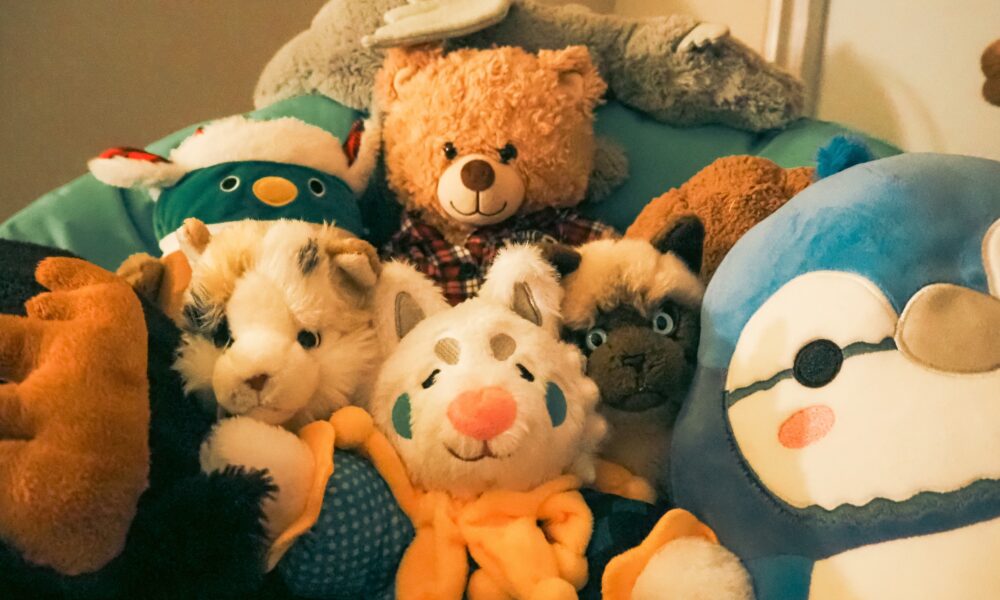
Over the holiday, I visited the New York Public Library’s Polonsky Exhibition, a permanent collection of “treasures” that includes the original Winnie the Pooh stuffy—a surprisingly familiar Farnell Alpha bear model donated by Christopher Robin himself. Though nearly a century older, the plushy beared resemblance to my own childhood teddy. While we think of time as fixed in sepia tones, the reality of history is dynamic—relentlessly and perpetually “in the happening.” Stuffed animals have always occupied the heart-shaped, rose-tinted blindspot in our rearview mirror, capturing moments of sentimentality that transcend time. 

Though Richard Steiff of the Steiff company made the first stuffed bear in 1902, they had not come to be known as “Teddy Bears” until a historical moment involving renowned sportsman and American president Theodore Roosevelt. Roosevelt had gone on a bear hunting trip in Onward, Mississippi, with Governor Andrew Longino. While many people in his party managed to find game, Roosevelt was down on his luck. Hoping to uplift the president’s spirits, the group’s guides captured a bear to present to him. Upon finding the defenseless bear tied down to a tree, Roosevelt refused to kill the animal, declaring it unsportsmanlike. His act of mercy was quickly immortalized in newspaper headlines and political cartoons. The bear, depicted as increasingly small and more endearing with each iteration, perfectly framed Roosevelt as a tenderhearted, everyman-father archetype. Inspired by Clifford Berryman’s Washington Post cartoon of the story, Morris Michtom, a Brooklyn candy maker, manufactured a popular series of toy bears called “Teddy’s Bear” in honour of Roosevelt’s compassion

Stuffed animals surged in popularity around the Great Depression, when resources were scarce and the United States grappled with widespread economic hardship. Unlike the utilitarian woodblock toys typical of the time, plushies offered something more human: Unconditional love, soft solace and a friendly face—a much-needed emotional refuge from the harsh realities of a then-insecure world.

Today, stuffies occupy a similarly special, bear-shaped hole in the hearts of students navigating the pressures of academia. For science students especially, balancing rigorous coursework, intensive labs, and the emotional weight of studying a world in perpetual crisis can be overwhelming. Sukaina Haider, U0 Science, suggested that these challenges make moments of plush respite all the more necessary.

“In science, we’re going through the trenches. I think if anything, we’re more inclined to run home to something comforting,” she said in an interview with The Tribune.

Jorey Alharbi, U0 Engineering, reflected on how their beloved teddy bear brought familiarity and sentimental warmth to their bare-walled dorm room.

“I don’t have a lot, just one big teddy bear that my grandmother gave me before she passed. It’s the first thing I move; it helps establish home,” they shared. 

It’s integral to recognize that stuffies aren’t just inert toys—they’re transformed by the process of play. Naiya Delprat, U2 Arts, has a massive collection of 106 stuffies, nearly all named—of which she brought 28 from New York to Montreal.

“When you play with your stuffies they become your friends, you never outgrow your friends,” she said.

For some, stuffed animals provide a sense of companionship. Grace Caldwell, U1 Arts, reflected on her relationship with her stuffies, highlighting that wanting the best for them is a form of self-care.

“I feel like we take care of each other,” she told The Tribune. “A stuffy is a false hug and real hope. Every kid should have a stuffy, whether or not you want to hold onto it is your decision, but everyone is entitled to comfort.”Born and raised in Winterpeg, Manisnowba—where the grass isn’t quite greener, it’s probably just dead or dying—I’ve always had a soft spot for Winnie the Pooh. Named after her Manitoban caretaker Harry Colbourne’s hometown of Winnipeg, “Winnie” was a real black bear who served as the inspiration for Christopher Robin’s stuffed animal, and the timeless children’s character it became. The humble origins and international success of the character along with all its plush peers represent a whispered promise: Even the smallest things in life have their way of leaving a mark on this big world.

Science & Technology

Think you know how your friends feel? Think again

Can you always accurately tell how your friends are feeling? What about the stranger across from you on the metro? Can you differentiate between someone smiling out of happiness, excitement, or contentment? 

If you think “yes,” recent research may come as a surprise.

Alexandrija Zikic, a graduate psychology student working in McGill’s Child and Adolescent Social Competence Lab (CASC Lab), recently published a paper in Personality and Individual Differences. This paper explores the relationship between measured empathic accuracy—one’s ability to accurately interpret the thoughts and feelings of those around them—and self–reported levels of cognitive empathy, which is defined as the ability to recognize and understand someone else’s emotions.

“Both of these things should theoretically measure the same thing, [but] they don’t always— they’re not always associated with each other,” Zikic said in an interview with //The Tribune//. 

Zikic’s team investigated this discrepancy, attempting to understand the relationship between empathic accuracy and cognitive empathy. First, the team had participants complete a survey to self-report their levels of cognitive empathy. 

They answered explicit questions like, ‘I can often understand how people are feeling even before they tell me,’ [and other] things like that,” Zikic explained. 

Then, the researchers measured empathic accuracy using two different methods: Once through an interaction with a friend they brought to the lab, and a second time by watching six short films of adult strangers speaking about an emotional experience.

Surprisingly, the results of the cognitive empathy and empathic accuracy tests—which one might expect to align perfectly—had no association. 

“My ability to read the emotions of one adult often has nothing to do with my ability to read another adult. It also has nothing to do with my ability to read my friend,” Zikic said.

These findings indicate that the ability to read others’ emotions depends not only on empathic ability but also on how much others are expressing themselves and how accurately these expressions reflect their feelings.

The study also questioned if and how levels of empathic accuracy change between speaking with a friend versus a stranger. One might expect higher levels of empathic accuracy when participants were speaking to friends rather than when watching a video of a stranger. However, this was not the case.

“[Participants] did better with the six adults every single time,” Zikic said.

This may be partly because the researchers presented the videos of the strangers in a uniform, controlled environment, and the strangers were prompted to display their emotions prior to being filmed.

“[The strangers in the videos] have to do this whole visualization procedure beforehand to really get themselves in the zone to re-feel those emotions and communicate them,” Zikic described. 

The interactions they had with friends were much more natural and spontaneous, providing a better representation of everyday life. 

“[When talking to a friend] you’re not just paying attention to how the person’s feeling. You have to think of responses in your head. You’re thinking, ‘Am I being supportive? What should I say next?’ There’s a lot more things going on that you have to think about,” Zikic explained.

The study’s findings also showed that gender significantly predicted empathic accuracy, with women being measured to have higher levels of empathic accuracy than men. However, the study found that men report their levels of empathic accuracy more accurately than women, who tend to overestimate their ability. Combined, these findings highlight the social pressure women feel to be empathetic.

Zikic’s work shows that being able to accurately express yourself and communicate your feelings is critical to being understood. So, don’t assume you and your friends know how each other feel; talk about your emotions and clarify what has been lost in translation. 

“We can’t necessarily assume people are reading our minds,” Zikic said.

Behind the Bench, Sports

Football fan’s misogynistic tirade caught on camera sparks social media outrage

For many sports fans, the National Football League (NFL) playoffs are the best time of the year. In many parts of the country, a chill in the air and a dusting of snow on the ground can only mean one thing: The race for the Super Bowl is on. Philadelphia and Green Bay, home to National Football Conference (NFC) powerhouses the Eagles and the Packers respectively, are two of those places. These two cities—while more than 1,500 kilometres apart, and with Philadelphia over 10 times larger in population—have more in common than you might think, with passionate fanbases and high expectations coming into the playoff season. 

This passion, while admirable, can cause serious issues if it boils over. A major concern in sports viewership is the well-being of women spectators in stadiums. In a survey conducted by Sportsbook Review, 44.7 per cent of women reported feeling unsafe being alone in their home football stadiums, let alone being a visiting fan. Being surrounded by rowdy football fans, especially in intense situations, can be a threat to the safety of women fans. For one fan, this threat became reality on Jan. 12 in Philadelphia’s Lincoln Financial Field, when the hometown Eagles played the Packers in a heated Wild Card battle. Ally Keller and her fiancé, Alex Basara, attended the game in support of the Packers. Being an away fan in a hostile environment is a difficult undertaking, but typically, the home fans stay civil. However, at the Sunday game, tensions came to a high when the Packers were ruled short on what would have been a crucial touchdown. Basara made a comment that while the Packers may not have scored, they were still within a yard of the end zone and likely would score a touchdown on the next play.

That’s when the conflict, which has since been seen by millions on social media, began. Eagles fan Ryan Caldwell seemingly took issue with Keller and Basara’s reaction to the play, saying that the Packers “were still not in [the end zone].” After Basara explained his reasoning for being optimistic, Caldwell proceeded to go on a misogynistic rant against Keller, calling her (amongst other remarks) an “ugly dumb c***.” In statements to the press, Basara noted that the comments had begun as soon as the couple sat in their seats, with the occasional playful jab turning into more serious insults, culminating in the video posted to Basara’s X account. Internet sleuths quickly discovered Caldwell’s identity, and his employer, consulting firm BCT Partners, announced in a statement on their X account that Caldwell was let go from the company.

While the Eagles went on to defeat the Packers 22-10 and look to face the Los Angeles Rams in the NFC Divisional round, the incident between Caldwell and the two visiting Packers fans left a sour taste in the mouths of Philadelphia fans who have been fighting to restore the image of their city. Hard-working and blue-collar, Philadelphia has long held a reputation for belligerent fans itching for the chance to get into fights with anyone who will oblige. Some of these stereotypes are not entirely unfounded: The Eagles’ former home, Veterans Stadium, had its own jail for unruly fans, a feature added to Lincoln Financial Field during its construction that was later scrapped. However, passionate fans do not lead to conflict, and this incident should not further the negative opinions people may have about Philadelphia and its fans.

The unfortunate reality faced by countless women who simply want to attend games in peace is that sports fandom can be a “boys’ club,” and this incident is a telling example of how gender can be a barrier to entry for women sports fans. Not one person stepped in to help Keller against Caldwell’s stream of misogyny besides her fiancé. If just one of Caldwell’s friends seen beside him in the video cautioned him, Keller may have had a positive game day experience and Caldwell may well still be employed. This behaviour will continue unless it is made clear that it will not be tolerated by fellow man sports fans. The fact that Caldwell was punished for his actions is encouraging, but it is abundantly clear that there is more work to be done.

Read the latest issue

Read the latest issue