

Latest News

Commentary, Opinion

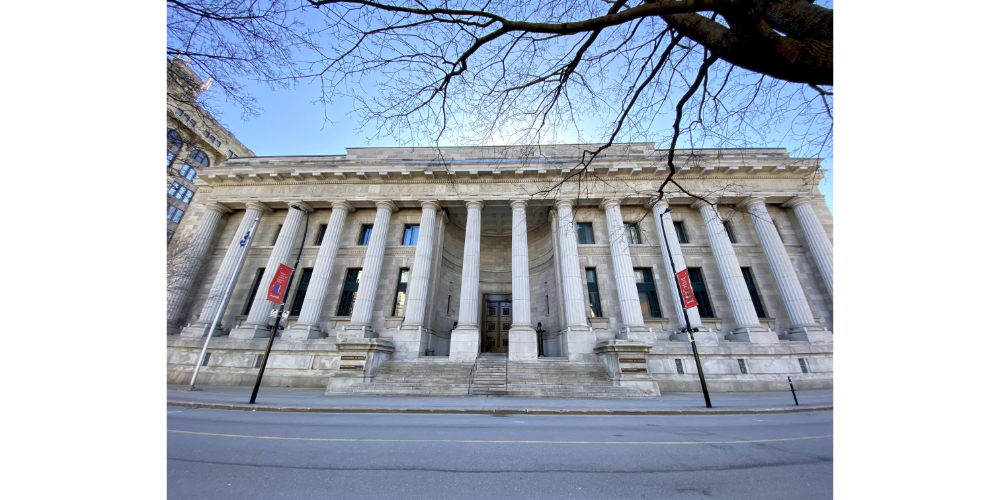
McGill is responsible for confronting anti-Asian hate

On March 27, my girlfriend and I were on our way to pick up sushi when a random man approached our parked car and raised his middle finger at us. As we crossed the street toward the restaurant, I heard, “F**k China! F**k Japan!” I turned around to see that same middle finger pointed at me, my ethnicity, my race, and my heritage. Blatant racism is nothing new to me—I first experienced racism at the age of six, before I could even speak English, days after my arrival to the U.S. from Wuhan, China. At that moment, I did not know that only an hour later, the same man would be filmed harassing and threatening Rebecca Ng, an Asian woman riding the Metro.

The TikTok video of the assault is hard to watch—not only because of the man’s hand gesture of a gun pretending to shoot her in the face or the Nazi salutes, but also because no bystander stood up for her. No one helped her. After viewing the video on Facebook, I recognized that it was the same man who harassed me. I knew I had to do something; I knew that this time, I could not just forget about it, as I have done so many times in the past. 

Ng and I have now both filed police reports with the hate crimes unit of the SPVM, not just to hold the man responsible for his racist actions, but to encourage others from the Asian community to stop tolerating anti-Asian racism. It is time to call it what it is, and ignoring racism only allows it to fester. The video also made it painfully evident that Montrealers can witness such horrific attacks and choose to remain silent.

The surge in blatant anti-Asian racism during the pandemic is simply a continuation of historic racial injustices and a manifestation of systemic anti-Asian discrimination. Western science has tried to categorize humans, with the white man always portrayed as superior to other people. These ideas, when combined with Darwin’s natural selection and implemented in governmental policies, directly harm minorities through Social Darwinism, eugenics, and Nazi race theory. Academia, then, helped develop and maintain social hierarchies through its imaginary objectivity and scientific authority, which has historically served as one of the founding principles of white supremacy. The history of McGill University is seeping with eugenics. Even to this day, some scientists, including Armand Leroi––who was invited as a seminar speaker in the Department of Biology on April 1––are strong advocates for the revival of race science.

“What gives a Han Chinese child the curve of her eye? The curve I read once described by an eminent Sinologist as the purest of all curves. What is the source of that curve?” Armand once wrote in a blog post.

The curve of my Han Chinese eyes come from the way I cringe when I think about how statements like “science is apolitical”—which Leroi claimed during the seminar—are used to defend the racist, imperialist, and misogynistic roots of science. Scientists are not absolved of responsibility simply because they are unaware of the ethical implications of scientific pursuits like modern neo-eugenics. Science is inherently political and continues to be used as a weapon by those privileged enough to wield it.

McGill has a large proportion of Asian students, staff, and faculty. Our ancestors were head taxed, discriminated against, segregated into urban slums, and killed. Yet, we persist. McGill’s reluctance to adequately condemn ongoing anti-Asian racism and systemic injustices is glaring. I hope that my personal experience can catalyze McGill to confront the distress of its Asian communities and create a concrete anti-Asian racism action plan to be implemented as soon as possible. The Asian community is beginning to find its voice, and it is about time we started using it.

News

Undiagnosed ADHD in women poses extra barriers to remote learning

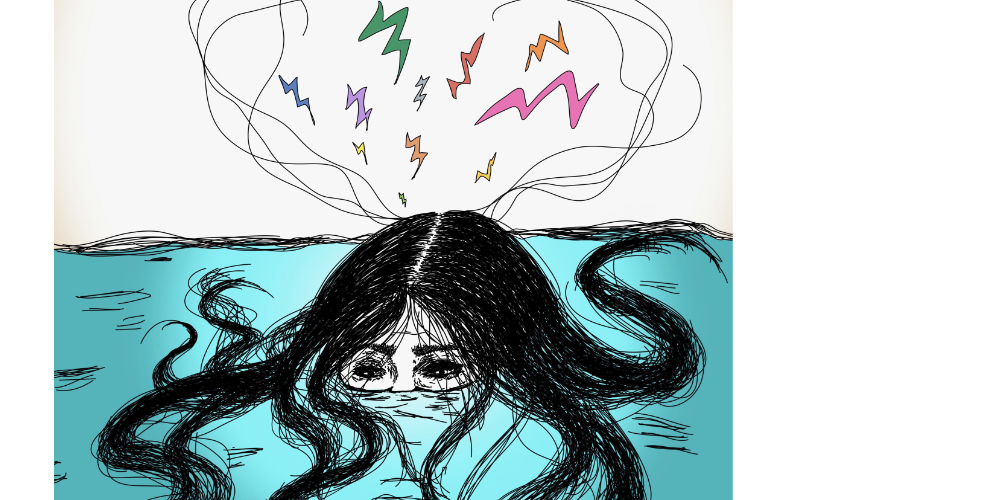
As the Winter 2021 semester comes to a close, many McGill students have reported a range of challenges in finishing the academic year. One challenge in particular affects some students more than others, and often does so without their awareness: An undiagnosed mental disorder. Attention Deficit Hyperactivity Disorder (ADHD) often goes under-diagnosed among women, largely due to differences in the way symptoms present themselves across genders and the gender-bias present in the medical field. With McGill’s mental health services coming under strain over the pandemic, some students allege that diagnostic services have become harder to access.

ADHD is listed among the Diagnostic Statistics Manual of Mental Disorders (DSM-5), and is characterized by pervasive issues with executive functioning—which include activities like attention, organization, time management, and self-control.

While individuals with ADHD often struggle academically, Tina Montreuil, assistant professor in the Department of Educational and Counselling Psychology and associate member of the Department of Psychiatry at McGill, emphasized that the difficulty is not due to a lack of cognitive ability.

“ADHD, a lot of [the] time, affects the individual not at the cognitive level,” Montreuil said. “So when we assess individuals [with ADHD] cognitively, there are people that do really well. But, when you look at their functioning at the executive level, in terms of attention, concentration, focus, there seems to be some difficulties or deficits.”

There are two common types of ADHD: Inattentive and hyperactive-impulsive. The inattentive type is characterized by concentration issues, such as an inability to focus during a lecture, and the hyperactive-impulsive type—which is typically more present in boys—is characterized by poor impulse control and restlessness. 

Steven R. Shaw, associate professor in the Department of Educational and Counselling Psychology at McGill, explained that ADHD symptoms present differently in each individual.

“ADHD is one of those topics that everyone thinks they know a little bit about,” Shaw said. “But in fact, it is very difficult to make a diagnosis, and everybody who has it is very different […] It is not something where there is a typical case.”

While many students report struggling with mental health issues, an important step to treating a mental disorder is getting a diagnosis. According to Teri Phillips, the director of the Office for Students with Disabilities (OSD) many students have struggled to access diagnostic services this year.

“Anecdotally, and particularly during the COVID-19 pandemic, it seems that accessing assessment services have been measurably more difficult due to the need for certain in-person activities as part of a thorough assessment process,” Phillips wrote. 

Statistics show that for every two males, one female is diagnosed with ADHD. Montreuil believes that gender biases present in the medical field are part of the reason behind the diagnosis gap.

“Sometimes, because of gender biases, these [symptoms] will be excused in males with the assumption that males are just less calm than females,” Montreuil said. “That is just a construct and a stereotype we are assuming. That can also impact referrals, diagnosis, and just helping in general.”

Juliette Vermes-Monty, U2 Arts and Science, spoke with The McGill Tribune about her personal experience in receiving an ADHD diagnosis and the impact that it had on her. 

“I did not get diagnosed for many years, so there was this constant battle of being too loud but not hyperactive enough to have ADHD,” Vermes-Monty said. “When I got diagnosed […] my life completely changed because […] although I did not fit the stereotype of ADHD, it made sense all of the struggles I had gone through in the past.” 

Certain symptoms of ADHD, such as hyperfixations, can be exacerbated by rigid teaching styles. Hyperfixations are a non-specific symptom of ADHD which manifest as a total engrossment in  a particular activity or interest. Phillips explained that there is a fine line between productivity and exhaustion when dealing with one’s hyperfixations.

“Counting hyperfixation as a superpower rather than an obstacle is definitely doable, […] however balance is the key,” Phillips wrote. “While focussing on an assignment for five hours straight might seem like a good idea, this neglects all the other things your mind and body need to be balanced.”

Vermes-Monty spoke about the complicated power of immersing herself into a hyperfixation, noting the importance of taking breaks.

“I sing and I play the ukulele, and also I sew,” Vermes-Monty said. “Those are things that once I start, I do not stop for hours [….] Last semester, […] I really did not have the time, and I would feel like I was wasting my time focussing on these hobbies. When you allow yourself to take breaks, it is fun to be so immersed in something.”

According to Shaw, professors who follow status quo teaching styles—often characterized by rigid grading structures, similar lecture styles every week, and rigorous academic workloads—may contribute to learning procedures that do not benefit students with ADHD.

“The undergraduate instruction can be quite uneven in terms of acceptability,” Shaw said. “You will have some professors who are wonderful in […] providing a scaffold for which things can be developed, [and] really helping students to develop skills. But you will also have other professors who may really have a difficult time avoiding the cookie cutter approach, [and] they tend to be more comfortable with that [approach].”

Vermes-Monty encouraged students with ADHD to embrace their own learning styles when navigating the learning structures in place.

“I wish that I had not been pathologized by the school system,” Vermes-Monty said. “The [educational system] is so narrow that you are bound to not fit into it, and it is totally okay. It is hard to believe that and tell yourself that […] because so much of our lives are based on how well we do in school [and] how well we fit in with the system [….] At the end of the day, if you do embrace the way that you learn and listen to your mind and your body and your intuition, it is going to help you.” 

Vermes-Monty added that students with ADHD exemplify the importance of prioritizing mental wellbeing and seeking help when struggling—two key ways to being resilient in the face of stress.

“I feel like in the past my ADHD has not been that big of an issue,” Vermes-Monty said. “Because I have had my accommodations [and] with my medication, I have been able to focus for the most part. But [last semester] was the first time that that was no longer enough for me, and I just did not really know what to do about it. This semester I just learned to prioritize myself.” 

Despite the dealing with the hurdle of dealing with undiagnosed ADHD, Montreuil urged students to continue to push forward in their journeys through university.

“We want [teenagers and young adults with ADHD] to feel as though ‘this is who you are,’” Montreuil said. “With the right environment, the right strategies, and the right accommodations, some people go on to being very successful. But it first starts with [individuals] acknowledging this and then advocating for what [they] feel [they] need to really optimize [their] potential.”

Off the Board, Opinion

Music as a way of remembering

People listen to music for three distinct purposes: To escape from their thoughts, change their mindset, or use as a narrative medium—something that can speak to one’s physical and mental situation first-hand. There is a time and place for each of these ways of listening to music: I will put on a certain album when I want to take my mind off something, but there are playlists made up of my friends’ favourite songs that are perfect before a Friday night out. Most of the time, though, music is just something that follows me around in my ears while I ride the Metro or wait for my clothes to dry at the laundromat. 

The past four years of my undergraduate degree were some of the most eventful in my life. I like to think that I have learned more about myself through the adventures that come with moving out of my childhood home to start a new chapter of my life in a different city. And during all the changes and growing pains, I found solace in the music in my library, my collection providing a soundtrack to help me through my day-to-day life. 

My spring 2018 playlist is marked by tunes that accompanied me through my first heartbreak, while my summer 2020 playlist consists of what I listened to on my solitary nighttime walks and socially-distanced park hangouts. My playlists are my life experiences catalogued by music and organized into months or seasons. Music amplifies how I am feeling at any time and reflects weeks or months of my personal narrative. To me, music functions as both a way of narrating and remembering. In the moment, it comforts me; but after the fact, it serves as an encrypted diary entry. Each playlist is a time capsule containing artifacts that only I can understand. 

With the advent of social media, the way we listen to music has also become increasingly socialized. Services like Spotify allow users to follow each other, see what other users are listening to, and collaborate on building playlists. Now, listening to music as a way to draw meaning from our experiences is something we can do together, the process helping to create shared life narratives. 

Amid the barrage of electronic communication I receive in the form of promotional emails, social media notifications, and spam calls, I always look forward to a friend sending me a playlist. In my relationships, sharing music is a show of love and inclusion in the life we are building together. It is a way of inviting each other into our lives and keeping each other in our minds. Songs on my playlists often find their way onto my friends’ playlists and vice-versa. Our bonds are strengthened by the music we share.

I am currently building the last playlist of my undergrad, which is both exciting and unsettling. I am looking forward to the adventures that lie beyond McGill, but I am also scared of saying goodbye to the student life I am familiar with. In the face of a rapidly changing world filled with uncertainty, I find myself latching onto the songs that guided me through the past four years. Just by putting on my headphones and clicking the play button, I can relive my frosh week, meet my best friend again at a pre-game for a Kacey Musgraves concert, and remember what it was like to warm up with other members of my dance company. I am sure I will revisit this music occasionally, the same way I sometimes listen to my now private high school playlists, but for now, it’s time to focus on the future and find music to narrate a new chapter. 

Research Briefs, Science & Technology

Deadly pollutant PM2.5 is lacking regulations worldwide

Particulate matter (PM) 2.5 is a group of airborne particles smaller than 2.5 micrometres found in ash, dust, vehicle exhaust, smoke, and sometimes the air we breathe. A micrometre is roughly one-millionth of a metre—about 30 times smaller than the average diameter of a human hair—and is only visible with a state-of-the-art electron microscope. With such a small size, these particles are deadly to humans: In 2015, they were responsible for an estimated 4.2 million premature deaths worldwide, 60 per cent of which occurred in Asia. The regulation of PM2.5 is a pressing concern to scientists as this form of pollution is on the rise globally. 

The minuscule size of a PM2.5 particle allows it to penetrate deep into human airways, where it can cause a plethora of health issues including cancer and pulmonary disease, which is usually induced by tobacco smoke or asbestos. Long-term exposure to PM2.5 was involved in more than four million deaths in 2019 alone—even higher than that of COVID-19, which, as of April 3, 2021, has a death toll of 2.85 million worldwide. If no action is taken to reduce the presence of PM2.5 in the air, this form of pollution will continue to be a major threat to those who are more vulnerable to respiratory illness.

In a recent study, a team of McGill researchers compared PM2.5 regulations globally, and found that 3.17 billion people live in countries without restrictions limiting the concentration of PM2.5 in the air. The study also reported that in countries with restrictions in place, the limits are often higher than what is considered safe by the World Health Organization (WHO). The researchers offered policy suggestions on how to prevent these microscopic particles from moving into human airways.

In many countries, air pollution constitutes a leading cause of death. In the United Kingdom, for example, a coroner made history by ruling that air pollution was the reason for Ella Kissi-Debrah’s death. Kissi-Debrah was a nine-year-old girl from South-East London who lived less than 30 metres away from one of the city’s busiest roads where thousands of cars expelled exhaust daily.

McGill researchers found that the concentration of PM2.5 stayed below the limit in countries where regulations are stricter, such as Canada and Australia. However, pollution limit violations were most frequent in countries with more relaxed regulations, such as China and India. Yevgen Nazarenko, the study’s co-author and a postdoctoral fellow in the Department of Atmospheric and Oceanic Sciences, believes that tighter regulations and standardized methods of measurement are needed to mitigate the dangers of PM2.5. 

 “We need tools that give us a benchmark allowing us to gradually reduce air pollution, disease incidence, and premature mortality,” Nazarenko said in an interview with The McGill Tribune.

The study recommends implementing universal standards of PM2.5 measurement worldwide, as well as unified global limits and clearer enforcement mechanisms. There are existing techniques such as short-term averaging, which allow for closer monitoring of spikes in pollution by recording PM2.5 concentrations for 20 minutes to one hour.

Nazarenko compared the challenges of global PM2.5 regulation to the COVID-19 vaccine distribution, explaining that keeping people safe requires international cooperation to ensure the same standards of protection for everyone—whether it be through vaccines or pollution regulation. 

“If we do not work on vaccine distribution globally, COVID-19 will keep spreading and new variants will arise that vaccinated people aren’t protected against,” Nazarenko said. “The same goes for controlling air pollution […] you need to intervene globally if you want to save people in your own country.”

After all, if there is one resource that transcends global borders, it is the air we breathe.

Student Life, Word on the Y

Word on the Y: Zoom edition

One year into the pandemic that turned students’ lives upside down, The McGill Tribune’s Student Life team reflects on a tumultuous, yet occasionally triumphant, year. 

Holly Wethey; Contributor

For the past two semesters, I have been living in my Plateau apartment, watching Montreal go from the orange zone to the red zone, and back again. The ongoing isolation has led me to develop a habit of taking walks to decompress—leaving me with ample time for reflection. The loneliness of being the only people from my friend group in the city has made me realize how much the people in Montreal make the city so special. Though nostalgia for normalcy has certainly defined the past six months, so too have small pleasures, new experiences, and unexpected adventures. I made new friends, spent time missing distant ones, founded a magazine, drank a lot of bubble tea, and even started learning Portuguese. 

Wendy Zhao; Staff Writer

I have spent the last three semesters in my childhood home, passing most days alongside my grandmother. Our routines have come to mirror one another’s. Drinking hot water and venturing out for slow neighbourhood walks are new fixtures in my life. She prepares the same eggplant dish almost everyday, while I have found equal comfort in preparing endless oatmeal variations. I am grateful to have this time with her before I move back to Montreal for my third year at McGill. Even while surrounded by memories of a younger self, it has become difficult to feel like a kid again. I am unsure what the next year will look like, but am hopeful that a time of hugs and reunions will come soon. 

Maya Mau; Staff Writer

I have looked forward to attending university for a long time. It was strange to start my experience as a McGill student from my home in New York, but I still learned a lot from my professors and the peers I have met through remote student life. I am unsure what the future holds, but I am relieved that the vaccine rollout is underway, and thankful that I have received my first dose. While I have grown this year as a student and as a person, I look forward to experiencing in-person campus life in the near future.

Lucy Keller; Staff Writer

Everyone always says that university will be the best four years of your life. As my time as a McGill student comes to an end in these uncertain times, this phrase increasingly scares me. While I had an incredible time at McGill, I find comfort in the idea that I still have many years ahead of me to grow intellectually, make new friends, and have exciting nights out. This past year, I spent too much time on the couch pondering the years ahead of me. While thinking about the changes to come frightens me, it has made me more excited for what the future holds. 

Josephine Wang; Staff Writer

I remember the plans my friends and I had laid out for our senior year: Go to hockey games, attend concerts, try out new restaurants. Our plan looks different now––to see each other again someday. It did not dawn on me until recently that I had no idea when I would see my best friends again. This uncertainty made me feel lonely and lost, but it also prompted me to reflect on the relationships that I valued the most, and the ones I wanted to keep. So, I am okay with not knowing exactly when we will all be able to see each other again—just knowing that we will eventually is enough. 

Alaana Kumar; Student Life Editor

For many years, an acceptance to McGill was all I could think about, so seeing it end so abruptly hurts. Despite the current circumstances, I am incredibly grateful to have spent the last four years in Montreal and to have met such a unique group of friends both in-person and virtually. While my university experience was like nothing I could have imagined four years ago, I learned a lot—both academically and personally. I am graduating now with a greater understanding of what it means to work hard, be a good friend, and roll with the punches, and I think that is what makes it all worth it. Congratulations to my fellow graduates; it is quite fitting that the 200th class did it a little differently. 

Leyla Moy; Student Life Editor

To be totally honest, I am glad I will not have to worry about tripping while walking across the stage at graduation—that might be the only upside to graduating via YouTube video. Lately, I have been wondering how much the pandemic has really changed these pivotal moments in our lives: Whether all the fanfare of graduation makes the monumental change seem real, or whether all college graduates are left standing in the dust of these four years, marvelling at how it all happened so fast, and, more worryingly, pondering what happens next. Looking forward, I will know not to take anything, even the seemingly mundane—like the joy of a lukewarm samosa wrapped up in a printed newspaper—for granted.

Kennedy McKee-Braide; Managing Editor

While I have always been involved in a number of extracurricular activities at McGill, I spent most of the first two years of my degree too anxious to fully immerse myself in some of the more social aspects of campus culture. I would make excuses, telling myself that the next week, month, or year would be the one I would finally work up the nerve to branch out. During the first months of the pandemic, I beat myself up for not taking advantage of the opportunities I had when life was normal, but recently, I have come to terms with the fact that I cannot change the past. Instead, I look forward to making the most of my post-COVID life. While my last year of university next year may not look exactly like what I once imagined it would, I hope to have more opportunities to take advantage of all that student life at McGill has to offer––in person this time. 

Campus Spotlight, Student Life

McGill clubs and student groups reflect on the 2020-2021 school year

The COVID-19 pandemic forced student organizations to redesign their events this year. Nevertheless, many of McGill’s student groups found ways to adapt to these challenges, even spinning some of them into positives—a testament to the strength and resilience of the McGill student body.

McGill Students’ Chess Club

During the pandemic, the McGill Students’ Chess Club joined forces with the University de Montreal’s Club d’Échecs to organize joint meetings and tournaments. Roman Sarrazin-Gendron, a PhD candidate in the Department of Computer Science at McGill and the club’s president, sees the community as a place where students can share their love of the game.

“We are proud of still being able to have weekly meetings in which people can come [online] and play chess,” Sarrazom-Gendron wrote in an email to The McGill Tribune. “Most of the fun of the game, at a casual level, comes from interacting with people and talking as you play.”

These virtual meetings and online games have been so successful that the club is planning on continuing online play even as campus activities transition back to in-person.

“There is a wide group of players who […] prefer to play online,” Sarrazom-Gendron wrote. “Going forward, we cannot wait to meet in person again, but we will also keep hosting online events.”

McGill Girls for Ghana

McGill Girls for Ghana, a philanthropic club that raises money for girls in Ghana living in poverty, was founded in Fall 2020 by Elizabeth Rampersad, U1 Arts, and Anne-Clara Sanon, 1Law. During the pandemic, the club’s membership base grew to over 40 students and surpassed their initial fundraising goal of $1,000, raising over $3,500 since the club’s inception.

“This year, we were able to take advantage of the online context by opening our events to family members and students from other CEGEPs and universities,” Sanon wrote in an email to The McGill Tribune. “We learned that families are a great asset to our club not only in terms of donating, but also as a support system.”

Despite the challenges of coming up with new fundraising ideas during the pandemic and creating incentives to attend events, Rampersad said the club hosted a series of successful trivia nights.

“With the help of our general members and fantastic [executive] team, we were able to […] secure over 85 attendees for our most recent Trivia Night,” Rampersad wrote. “We more than [doubled] our initial goal of $500 and ended up raising over $1,000.”

McGill Students for Greenpeace 

Although environmental activism often depends on in-person action, Mariana Lebrija, U3 Arts and vice-president external of McGill Students for Greenpeace, explained that the group has managed to grow their online presence this year.

“Before COVID-19, our club did not even have a website,” Lebrija wrote in an email to The McGill Tribune. “Shifting to an online model has been a challenge because it meant basically starting from scratch, keeping members engaged, and learning how to attract new students without the possibility of meeting in person.”

The club has focussed on building their website and growing their community. They are currently planning a variety of virtual events for the upcoming months, including trivia nights and workshops.

“Even with [our] larger ambitions to contribute to a large-scale movement, this year has shown us the value of community,” Lebrija wrote. 

McGill Yoga Club

The McGill Yoga Club has found ways to bring the joy of yoga to students’ homes. Maggie Sessenwein, U3 Arts and the club’s co-president, explained that the organization improved attendance at club events by using social media. 

Sessenwein was pleased that the club has followed a weekly schedule all year, and hopes to sustain momentum in the Fall.

“This year, we’ve definitely realized just how important it is to stick to a schedule and practice self-care,” Sessenwein said to The McGill Tribune. “We […] have a weekly yoga class schedule that we are really proud of, [and we] do our best to cater to people of all skill levels.

Campus Spotlight, Student Life

Three student organizations take advantage of $11,000 from IRL Events

This year’s monumental shift to online learning has forced student clubs to adapt their event planning. As many clubs transitioned to virtual recruitment and meetings, the IRL (In Real Life) Events app kicked off its #irl11k contest in December 2020. The contest encouraged student organizations at universities across North America to propose virtual campus event ideas, with the winning campuses receiving a reward. At the start of 2021, McGill was awarded $11,000 to be distributed between three organizations on campus. 

After a competitive evaluation process, events submitted by the McGill Hellenic Students Association (MHSA), Engineering Undergraduate Society (EUS), and McGill Formula Electric (MFE/FSAE) were selected by IRL to split a prize of $11,000. Campus ambassador for IRL Events, Ionna Tzima, U3 Arts, explained the contest. 

“The competition split $11,000 between three clubs, adjusted to the budgets appropriate for virtual events,” Tzima said in an interview with //The McGill Tribune//. “Three McGill clubs won on the basis of the number of RSVPs.”

The EUS used the prize money to make admission to E-Week, an annual event that promotes friendly competition between engineering departments, free for the first time. This year’s E-Week saw virtual events like Escape Rooms and Scavenger Hunts spread out over the month of February. Tzima described how organizers used the prize money from IRL Events to make E-Week more accessible. 

“After the [IRL] sponsorship [of prize money] in January, E-Week used the funding to make admissions free, and gave back all of the tickets to participants,” Tzima said.

MHSA’s February Trivia Night saw similar benefits, with an impressive lineup of guest speakers inaugurating the event. IRL’s financial contribution allowed event organizers to distribute gift cards ranging in value from $20 to $100 to trivia winners. Tzima, who is also the VP Internal of MHSA, explained how #irl11k helped the event come to fruition. 

“[The IRL prize money] definitely had an impact on feasibility for the MHSA,” Tzima said. “We wouldn’t have been able to do this without IRL and have the gift cards [and the] the prizes [to] make it as grand as it was.” 

The MFE plans to use the funds to ensure that the entire team can attend international races over the summer. Budget restrictions often limited the number of team members that can participate in competitions and events abroad. 

“Usually, the MFE has difficulty in adjusting their budget to include travel for the car and the members,” Tzima said. “The funding from IRL gives them the opportunity to transport every member, which hasn’t happened in previous years.” 

While collaborating with IRL Events, the three student associations were mindful of the ever-changing circumstances surrounding planned events due to the pandemic. Tzima elaborated on the accommodations that MHSA and EUS made for event participants not currently in Montreal. 

“It’s obviously very different to not have in-person events, especially in terms of funding,” Tzima said. “To adjust to the virtual format, gift cards were a huge part of everything [….] Everyone can use them no matter where they are.”

In light of this uncertainty, MFE has prepared for the possibility of cancelled international competitions. Team co-captain Benjamin Munt, U3 Engineering, described an alternative plan for the summer break in the case of unforeseen circumstances. 

“If we are unable to compete internationally, we are hoping to spend [the money] organizing a local race for some of the schools in Ontario and Quebec,” Munt said. 

Noting the success stories coming from the #irl11k competition, IRL Events looks forward to continuing and expanding its involvement and outreach within the McGill community. 

“IRL is always looking for new event ideas, and they have a lot of cards up their sleeves in terms of student events,” Tzima said. “I think they’re an excellent resource for the deserving clubs on our campus.” 

Arts & Entertainment, Music

Lana Del Rey grapples with fame on ‘Chemtrails Over the Country Club’

Chemtrails Over the Country Club is abound with Lana Del Rey’s signature wry wit: The album’s title references the chemtrails conspiracy theory, adding a sinister undertone to the otherwise pleasant visual of a sprawling green country club with planes flying overhead.

The album is an atmospheric, 45-minute wash of sound that contains all the familiar components of a Lana Del Rey album: Her fragile falsetto, nostalgic perspective, and yearning for living and loving with wild abandon, all woven through with self-criticism and dolefulness.

Returning collaborator Jack Antonoff compliments Del Rey’s vocals with his understated, blurry production, reminiscent of his recent work on Taylor Swift’s folklore. On Chemtrails, Antonoff’s lo-fi sound features record-crackling that contributes to the album’s analog sound. This effect is especially prominent on the opening track, “White Dress,” which also introduces one of the album’s major themes: Del Rey’s burgeoning doubts over her fame and success. She reminisces on working as a waitress when she was 19 years old: “It made me feel, made me feel like a god / It kinda makes me feel, like maybe I was better off.”

Del Rey explores the isolating effects of fame further on “Dance Till We Die,” a track that expresses the solace she finds in the companionship of fellow female music legends Joan Baez, Stevie Nicks, and Courtney Love. Del Rey shares personal relationships with all of them, and she establishes herself as their musical successor while she continues to build her own persona as a serious artist.

Chemtrails finishes with Del Rey and featured singers Zella Day and Weyes Blood covering Joni Mitchell’s piano ballad “For Free.” While the multiple vocalists jazz up the original version with a few harmonies, Del Rey forgoes any significant changes—and for the better. Mitchell’s lyrics shine through the track and capture the essence of Chemtrails despite debuting some 50 years ago: “And I’ll play if you’ve got the money / Or if you’re a friend to me / But the one-man band by thе quick lunch stand / He’s been playin’ real good for free.”

Chemtrails is consistent with Del Rey’s past discography, and is sure to be reliable fan-fodder. However, listeners are left wondering whether she will choose to evolve stylistically or continue churning out sonically similar tracks—not that one is necessarily better than the other.

McGill, News

McGill Policy Association workshop explores diversity of public policy

The McGill Policy Association (MPA) hosted a Zoom workshop on March 30, featuring discussions on topics related to policy such as the policy-making process, cybersecurity, and municipal government. The webinar was moderated by Teresa Lee, U3 Arts and Science, and included presentations from three master’s candidates from the Max Bell School of Public Policy: Ellen Rowe, a cyber security policy analyst from the Department of National Defense of Canada, Mikayla Zolis, a social innovator working to address urban issues, and Mariel Aramburu, a policy professional with previous experience in intergovernmental and international relations. 

Rowe began the discussion by imparting the importance of studying policy-making, noting its use in helping people understand political decision-making processes and how those decisions affect the lives of citizens. Rowe then elaborated on the topic of policy-making with a focus on cybersecurity and phishing, a fraudulent way of accessing personal information.   

“We need to have policies in place that can mitigate cyber attacks [and make] sure our workplace […] is up to par,” Rowe said. “The policy side of things […] details what technical experts and people within an organization [are responsible for]. You [have] to make sure that you are aware […] of what phishing emails look like.” 

Lee asked Zolis about the policy decisions implicated in municipal government issues. Zolis delineated the closeness of municipalities and citizens, indicating that certain issues, such as taxation, were more local than those at the federal and provincial levels. 

“Cities are the closest to the people which means that the politicians and the people that live in cities often have a closer relationship than they may do with the federal level,” Zolis said. “Politicians and civil servants are responding to more localized issues.”  

Zolis elaborated on one of the fundamental challenges in municipal governance—property taxes—emphasizing the frustration of citizens when there is a proposed increase. 

“One of the major challenges that cities face is that they can only collect their revenue through property taxes,” Zolis said. “People do not like when they get raised [….] That limits what municipalities can do with their large scope and limited resources.” 

According to Zolis, issues surrounding property tax increases could be managed quicker than the same issues concerning provinces or territories.

“[Municipalities] can address those issues and we can see […] that they are able to try things out and implement things a lot quicker than other jurisdictions that are higher,” Zolis said.

Aramburu argued that academic research could better shape federal policy decisions and in turn, a country’s political agenda.     

“In my role with post-secondary education, sometimes policy comes from your research and what you are looking at,” Aramburu said. “It does not necessarily mean that it [is] on the government agenda, but through your research [….] You [could] have the ability to influence what might be on the political agenda.”

Aramburu explained that policy-making is a broad field that encompasses many ways to address issues at different levels of government.

“One of the things that I am hoping to convey is that policy can be really big […], but it can be a lot smaller. You could [be] making big differences for the citizens you are serving.” Aramburu said. 

Aramburu said that policy work on cabinet documents—which she claims constitute a substantial and lengthy task—are not the only way to contribute to the field of policy.

“I think that [cabinet documents] can be a very traditional idea of what policy might look like, but it can also be on the ground, working with relationships and partners and thinking about different ways you can […] improve your province, your city or your country,” Aramburu said.

Student Life

The unique student network of McGill Free and For Sale

Last year, my roommate and I hauled a dresser all the way from Avenue Coloniale to Rue Saint-Urbain. Struggling to carry it, we lugged it down the crowded sidewalk as the people lined up outside of Schwartz’s Deli watched. Like many McGill students, we had relied on McGill Free and For Sale—a Facebook group that takes you across the city for the cheapest finds on anything ranging from textbooks, to mattresses, to vintage dresses to record players—since moving into our apartment in second year.

The Facebook group was created in 2015 and now boasts over 18,000 members. It is no surprise, then, that many other students share my love for the group. Christal OuYang, U2 Arts, who joined the Facebook group in her second year, remembers carrying a lamp she bought across downtown Montreal last year.

“When I bought my lamp during Christmas break, the streets were super busy,” OuYang said. “I went all the way to Concordia and my friend and I carried it all the way back to our apartment in the Plateau. It was this five-foot-tall lamp and we had to lift [it] above our heads because there were too many people on the streets.” 

Travelling around the city to pick up cheap finds is a quintessential part of the McGill experience. While many use the group to furnish their apartments, the group is also known for its hidden treasures. OuYang recalls finding a creative gift for her friend among the listings. 

“For Christmas, I ordered a bunch of gifts online that never showed up, so I went on Free and For Sale and found a mini Winnie the Pooh waffle maker,” OuYang said. “My friend loves Winnie the Pooh so I got it for her [….] It was the furthest I had trekked in Montreal by myself.”

Students can find virtually anything while scrolling through the numerous items for sale. Eve Cable, U3 Arts, found her pandemic companion—a giant 50-pound teddy bear—while browsing the McGill Free and For Sale page. 

“I bought my eight-foot-tall bear Bearnie last March for $30,” Cable said. “He is normally about $300 in stores, so we got a sweet deal for him at a tenth of the price. He has been more than worth for the novelty factor of having an eight-foot bear in my house.”

Marketplace, a Facebook platform connecting buyers and sellers in the same region, shares a similar purpose to Free and For sale. On both platforms, users often bargain for better deals, since buyers communicate directly with the seller.

While both groups are great places to find hidden gems, there is a special feeling tied to purchasing an item directly from a fellow student—an experience the intimate McGill Free and For Sale group offers. Buyers may even feel more connected to their community in the process. 

“It’s nice to see [other students’] faces,” OuYang said. “I felt less worried going into their house. It is cool to see where everyone’s living […] and to hear their stories [….] I like knowing that the things I’m buying used to belong to a McGill student.”

The McGill Free and For Sale group speaks to the nature of the McGill community, which manages to remain tight-knit despite the vast amount of students who attend the university. In a time when students are scattered across Montreal, and the world, having a sense of community is more important than ever. Online platforms have provided an important opportunity for individuals to maintain bonds with their peers, even without the usual campus experiences. We may be somewhat dispersed, but we are still connected, too.

Read the latest issue

Read the latest issue