

Latest News

Commentary, Opinion

The City of Montreal is letting down its most vulnerable

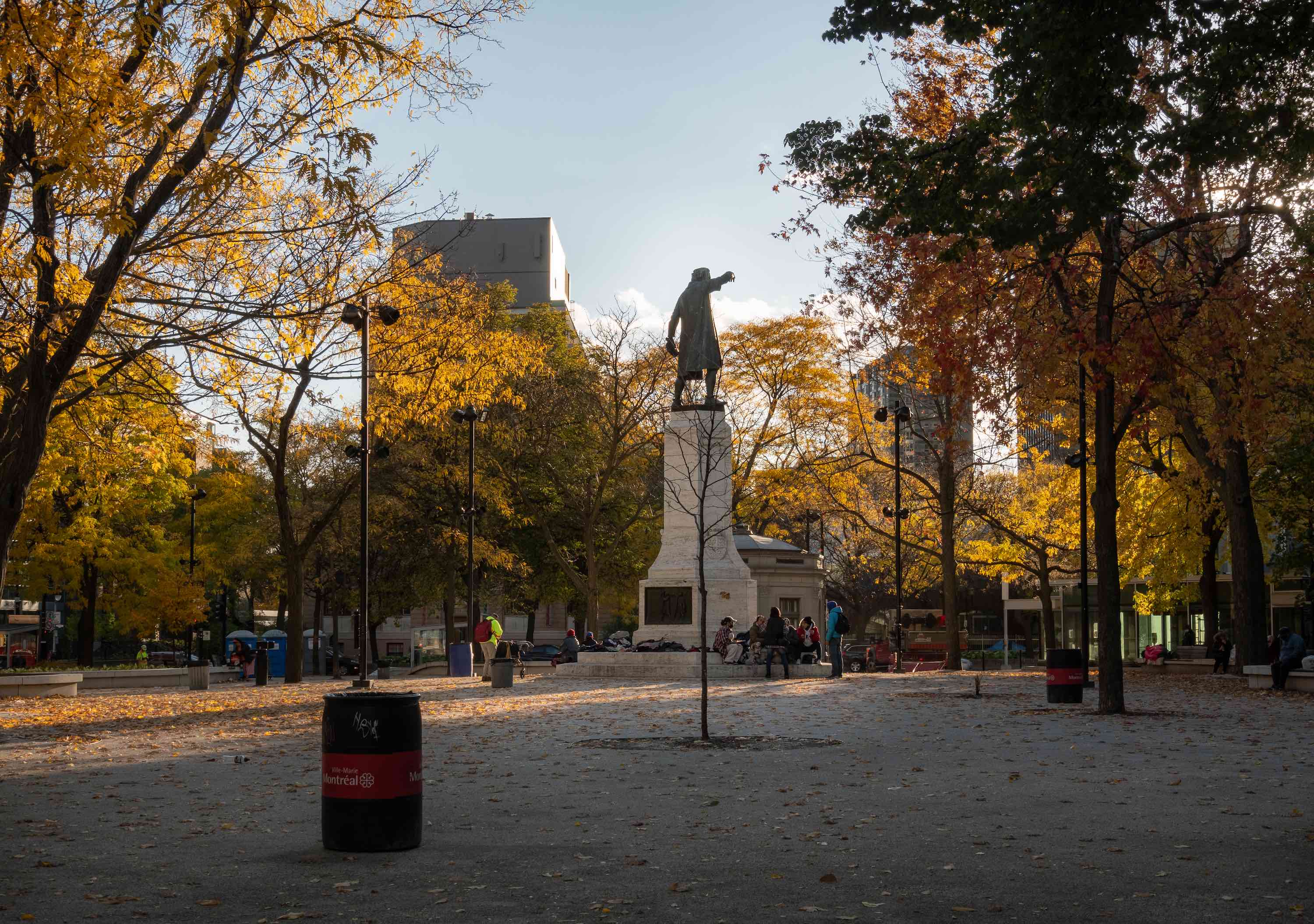
Ask the average McGill student to point you in the direction of Cabot Square, and not many can. You may have better luck with a Concordia student considering the square’s proximity to their campus. To many Indigenous people in Montreal, however, the urban square holds a special significance. As a long-established informal meeting place of the Inuit and First Nations Peoples who have travelled to Montreal seeking medical care, today Cabot Square comprises a diverse community that includes people experiencing homelessness and the city’s most at-risk populations. Ironically, its monument and namesake hails from an Italian colonizer who serves as a reminder of the far reach of settler colonialisma system that has placed so many structural barriers upon Indigenous Peoples living in urban centres. This paradox, as well as the neglected state of Cabot Square itself, serves as a reminder that Montreal has failed to meet the numerous calls for justice set out by the National Inquiry into Missing and Murdered Indigenous Women and Girls (MMIWG).         

Released in June of 2019, the report stresses the need to combat the disproportionate levels of violence directed at Indigenous women and girls. The calls to action propose mandatory anti-racism and cultural safety training for public servants in policing, justice, education, health care, and social work. Despite this, just last month, the country witnessed another egregious and glaring example of systemic racism in Quebec’s healthcare system with the death of Joyce Echaquan. This certainly is not an isolated incident in the province. A 2019 independent report on law enforcement found that Indigenous women were particularly overrepresented in street checks carried out by Montreal police. Data like this makes it obvious that the recommendations set out to protect Indigenous women are not being actively addressed.           

Shelters like Resilience Montreal, located at Cabot Square and run by the Native Women’s Shelter, have begun working towards these calls to justice. Resilience Montreal works to reach out to and support the Inuit community in particular, by providing everything from housing, mental health services, and traditional Inuk food in an effort to create a safe space for at-risk Indigenous women. While these services have had a tremendous positive impact on the area, it is not enough to turn the tide of systemic racism and sexism city-wide. The municipal and provincial governments must step up and implement change in all administrative sectors—though this goal seems remote considering the Quebec Premier’s refusal to even acknowledge that systemic racism exists. Unfortunately, the future of projects like Resilience remains uncertain, with the funding and lease location currently up in the air. The COVID-19 crisis has only exacerbated this uncertainty, requiring costly sanitary measures and reducing capacity, making action by the city all the more crucial.                             

Here at McGill, non-Indigenous students can show support by educating themselves on issues affecting Indigenous people in the country that they study in and take account of nationally significant days of reflection such as Orange Shirt Day, which is held on Sept. 30 every year to raise awareness of Canada’s residential schooling system. After all, being aware of the bystander effect is the first step in overcoming it. The next step is speaking out and getting involved. Students can help Resilience and the Native Women’s Shelter through volunteering time and by making physical donations of anything from homemade sandwiches to clothing items. 

As the next generation of progressive voices, it is up to young people and students to change the paradigm we live in and hold our institutions accountable. It is no longer acceptable to live in a city where your gender and culture determines your access to a humane living environment, the type of healthcare you receive, and your safety. The future of Indigenous women starts today, not tomorrow.


Artistic Swimming, Sports

Appreciating the art of artistic swimming

Artistic swimmingrenamed from synchronized swimming in 2017is often portrayed as a combination of swimming and gymnastics. However, the sport deserves to be considered in its own right. Artistic swimming is affectionately referred to as “synchro,” and individuals who participate in the sport have good reason to love it. Being an artistic swimmer requires a unique combination of strength, endurance, speed, and flexibilityboth physical and mental.

Artistic swimming is undeniably niche, which can make it difficult to find local teams. However, McGill has one of Canada’s strongest collegiate artistic swimming programs, consistently medaling at the Canadian University Artistic Swimming League (CUASL) championships. In February, the Martlets received the CUASL Gerry Dubrule Trophy, which is awarded to the best overall team each year. The artistic swimming team also won McGill’s Harry Griffiths Trophy for non-U SPORTS varsity team of the year.

There are three main events in artistic swimming: Solo, duet, and team, though only duets and teams are featured at the Olympic level. Teams routinely feature eight athletes who often compete in multiple events, each requiring a separate skill set. At the junior and senior levels, there are two types of routines for each of these events: Technical and free. 

One example of a stellar routine is Jacqueline Simoneau and Karine Thomas’s 2015 Canadian national technical duet. The program was so creative, one might forget the complexity required. Technical routines must include Fédération internationale de natation (FINA)-regulated sequences or elements and, with few exceptions, all swimmers must perform the movements in unison. 

Free routines, on the other hand, have no limits and exude creativity. The possibilities are endless and filled with surprises. There is no other sport where one would see a team lifting an athlete while they spit out pool water, as the Canadian national team at the 2012 Olympics in London did. Canada has traditionally been dominant on the Pan American artistic swimming stage and is the only country in the Americas to have already qualified both a team and duet for the 2021 Tokyo Olympics. 

Routines in artistic swimming generally range from two-and-a-half minutes to four minutes. This may not seem like a long time, especially to the audience, but when choreography comes down to the millisecond and requires constant motion, each routine can feel like a lifetime for the athlete. The sport also requires extreme attention to detail in the routine’s movements. To perfect the small details, conditioning, both on land and in the water, is a regular part of athletes’ training programs. Athletes and coaches spend hours working on synchronizing movements in preparation for competition.

Even at the highest level, many artistic swimmers balance these hours of intense practice with other obligations such as academic work. Although artistic swimming may not receive the same spotlight as other sports, artistic swimmers still put in intense hours of training. 

Since artistic swimming is such an under-appreciated sport, it can be difficult to find coverage even of competitions at the highest level. Inside Synchro and Fishtail Magazine work to fill that void in sports reporting as the two artistic swimming-focused publications currently in print worldwide. Especially during the pandemic, these news sources provide a crucial means of highlighting the artistic swimming community, which is small and dispersed, yet very collaborative. In many ways, the special nature of the community encourages such collaboration. That solidarity, combined with the beauty and diversity of skills required to do the sport, is what makes artistic swimming special.

Editorial, Opinion

McGill must address a growing mental health crisis

Since the pandemic struck Montreal seven months ago, McGill students’ lives have changed drastically. Classes are now online, many students are studying from home, and those residing in Montreal are once again subject to strict restrictions on social gatherings to curb the second wave of COVID-19. 2020 has been a year of nearly unimaginable stress, leading to a mental health crisis across all age groups, but particularly young people. Now, students are experiencing the added pressure of an academic workload that is just as heavy, if not heavier, than a semester under normal circumstances. All the while, McGill has failed to adapt to the pandemic in a way that prioritizes student well-being. The university must make mental health a top priority by investing in adequate virtual services and rethinking its expectations of students as well. 

Being a student is difficult at the best of times. McGill is known for being an academically rigorous university with high standards for its students; many jeopardize their mental or physical health to succeed in their classes. Usually, though, students have mechanisms to cope with stress and manage their responsibilities. They can study with friends, look forward to a weekend of socializing, or go to the library or a café for a change of scenery. 

However, the pandemic has made these activities impossible, with students confined to their homes all day. Poor internet service, differing time zones, or difficult home environments make the semester all the more stressful. Further, many McGill students have reported an increased workload as some instructors fail to address ongoing concerns from students regarding remote learning, with many unwilling to accommodate students needing extra help or time to complete assignments. First-year students face the particularly daunting task of adjusting to university life with very little help or support. 

The effects of COVID-19 on mental health go beyond academics. Many students live in unhealthy home environments and have reported increased feelings of loneliness. Rates of substance abuse have also climbed. As winter approaches, it will become more difficult to go outside, leaving students even more isolated should the second wave persist. Yet, the ongoing stress of university can lead one to put these concerns aside for fear of falling behind. Even during an unprecedented global crisis, the competitive, capitalist nature of academia continues to make students feel as though they must operate at their full capacity at all times. Although this is indicative of a larger issue within academic culture, McGill and its professors must nevertheless be more understanding of how difficult it is for students to perform as normal.

To make matters worse, McGill’s mental health services remain inadequate at best. Right now, investing in better services and hiring more mental health professionals should be the university’s primary focus. While some one-on-one Wellness Hub services are available online, its website pushes students to join group workshops or access online resources to be used on their own time. These services create the illusion of support, but in many cases do next to nothing to tangibly help. Amid a crisis, it can be nearly impossible to work on one’s own mental health without professional aid. This is especially true when under immense academic pressure. While some student-run services like the Peer Support Centre do valuable work, they cannot be expected to fill the role of licensed professionals. McGill expects students to work as though nothing is wrong, yet provides them with few tools to adequately address their needs when it comes to mental health. 

Despite a supposed commitment to its students’ mental health, McGill’s approach continues to fall flat.  Rather than insisting that its services are sufficient, the university must be conducive to change and use its resources and capacity to properly adapt to this crisis. Should it fail to do so, McGill will once again have proven its total lack of regard for the well-being of its student body. 

Science & Technology

MUHC to begin trial of ciclesonide for alleviating COVID-19 symptoms

While the race for a COVID-19 vaccine continues, scientists around the world are exploring the possibility of repurposing existing drugs to effectively treat COVID-19 patients. Recently, researchers have seen a number of breakthroughs. One of these successes is dexamethasone, a corticosteroid hormone with anti-inflammatory and immunosuppressive properties. 

The conclusions of one research group, published in The New England Journal of Medicine, suggested that orally or intravenously administered dexamethasone was effective in treating severe cases of COVID-19, particularly improving survival in very ill patients requiring supplemental oxygen. 

Following the success of dexamethasone, in mid September, a team of researchers from the Research Institute of the McGill University Health Centre (RI-MUHC) began to examine whether other drugs within the corticosteroid family could treat milder cases of COVID-19. 

Nicole Ezer, assistant professor in McGill’s Faculty of Medicine and lead investigator of the new MUHC study, drew inspiration from previous dexamethasone trials. She wrote to The McGill Tribune about the promises of ciclesonide in COVID-19 treatment.

“Ciclesonide is a type of inhaled steroid and nasal steroid, and it is currently used for asthma and allergic rhinitis,” Ezer wrote.

Typically, steroids like dexamethasone and ciclesonide are used to treat inflammatory conditions such as allergic disorders, skin conditions, and other illnesses that affect the respiratory tract. COVID-19 shares some of the adverse effects of other inflammatory diseases, making these steroids a viable option for treating respiratory symptoms that arise from the virus. 

There are multiple advantages to using ciclesonide as a treatment for COVID-19. The side effects of ciclesonide are relatively rare and mild: The most common side adverse effect is oral thrush, also known as candidiasis, which only occurs in one per cent of patients. Candidiasis occurs when candida, a mouth fungus, grows and causes white blotches on the tongue and throat as a result of corticosteroid exposure. 

Another advantage of ciclesonide is that there is already evidence of its efficacy. Studies have shown that the drug decreases damage to lung tissue by inhibiting the replication of SARS-Cov-2, the virus that causes COVID-19. Even in moderate cases of COVID-19, lung  damage can cause breathing difficulty and lead to inflammation in the respiratory tract. Inhaled drugs like ciclesonide act directly on the nose, airways, and lungs, the primary sites for the viral replication of SARS-Cov-2. 

Ezer and her colleagues are keen to further explore the treatment possibilities of ciclesonide through a randomized trial. So far, the trial has been unusual in that its design is both remote and “touchless.”

“This is a very pragmatic randomized control trial,” Ezer wrote. “[It is pragmatic] in that patients are at home, have medications sent to their home by courier, and answer questions online without visiting the hospital.” 

Participants must register on an online platform where doctors can then follow up with them. Eligible participants are randomly assigned to a control or experimental group. As in any randomized trial, only a select number of participants will receive ciclesonide, while the rest receives a placebo.  

The study is currently in the recruitment stage. Participants need to be over the age of 18 and must have been recently diagnosed with COVID-19. They must also exhibit symptoms such as fever and shortness of breath within five days of enrolment. 

For now, the study is geographically limited to Quebec. However, the team hopes to expand the study.

“We’re working with [officials in] Alberta and British Columbia to offer [ciclesonide] to other provinces as well,” Ezer said in an interview with the Tribune.

The work of Ezer and her colleagues is crucial to treating COVID-19 cases in the immediate future, as widespread vaccines might not be available until mid-2021.  

“Vaccines will not be the only solution for COVID-19,” Ezer wrote. “Vaccines may not have 100 [per cent] efficacy, so we will still need treatment options for those who do get COVID. At a population level, we need inexpensive treatments for mild patients that are well-tolerated.”

More information regarding the study, eligibility criteria, and registration information can be found on the study’s official website.

Off the Board, Opinion

I love ‘Shrek 2,’ hear me out

I love Shrek 2. It is one of my favourite movies of all time. Most people who have met me know this about me because I manage to work it into every conversation that lasts five minutes or longer. 

Shrek 2 follows Shrek and Fiona, two ogres fresh from their honeymoon, as they visit Fiona’s still-human parents and negotiate a myriad of obstacles in their marriage. The film is classic Shrek: It has fairytale characters, family drama, sensational rescue scenes, and amidst all of that, a layer of social commentary. But, the beauty of Shrek 2 lies in the fact that the audience can take in as much or as little of that social commentary as they like. 

Most digital media today is divided into two categories: Serious and obviously trying to address a current and pervasive societal ill, or completely and absurdly detached from anything serious at all. Teen dramas and reality television offer escape to worlds where systemic injustice does not exist and 16-year-olds do not have acne, while gritty documentaries, biopics, and political dramas try to shed light on the reality of current affairs. Not only is there no middle ground in the movies and shows being produced, but there is also no nuance in popular perception of these categories. Reality TV and teen dramas are trashy, while biopics and documentaries are high-brow and intellectual. 

I thoroughly enjoy movies and shows that fall into the “trashy” category. They may not be intellectually stimulating or well-made, but they are entertaining. In my mind, if a show or movie succeeds in entertaining the audience, it holds value. Of course, this comes with the caveat that if it perpetuates or encourages bigotry or systemic inequity, it is no longer acceptable as a piece of entertainment. Despite my firm belief in the inherent value of the media I consume, I find myself feeling the need to justify my choices to watch low-brow content. I tell people that I like it as a joke or think the incredibly low-quality scripts and acting are actually funny. While these are not always outright lies, I do also just genuinely enjoy what I am watching, and that is fine.

Shrek 2 bridges the gap between cheap laughs and social commentary almost perfectly. Corruption at the highest level of politics, individual self-esteem issues, and police brutality are all present, but anyone watching could also ignore these points quite easily. How someone chooses to perceive and watch Shrek 2 is entirely up to the viewer and their own level of social awareness. 

There is no right or wrong way to enjoy Shrek 2, though. If someone wants to watch it and unpack the discussion of toxic masculinity and men’s self-esteem issues, they can do that and find value in doing so. If someone just wants to watch a giant, sentient gingerbread man have hot milk dumped on him as he dissolves into a moat, that is equally valid.  The pressure to explain or justify enjoying preferences to appear smarter or more ‘woke’ can be deeply ingrained, especially for young women. For decades, products and media marketed to women have been dismissed as frivolous and low-quality. Now, more than ever, it is important to let people enjoy things that make them happy. Shrek 2 does lend itself brilliantly to more in-depth analysis, but I should not have to explain that every time I tell someone that it is my favourite movie because my love of the dumb jokes is just as justifiable and rational a reason as any other for me to love it.

Arts & Entertainment, Theatre

Players’ Theatre proves that the show must go on

Theatre-lovers everywhere are mourning the days of live performances with sold-out venues, elaborate production designs, and most importantly, a sense of collective belonging. COVID-19 has caused major disruptions for McGill’s theatre community, especially since Montreal moved into its Red Zone earlier this month. 

Understandably, theatre clubs at McGill have struggled to adapt to the new restrictions. The Arts Undergraduate Theatre Society (AUTS) announced on Facebook on Sept. 22 that this year’s intended production of A Chorus Line would be cancelled. While many clubs initially planned to rehearse and perform in person, these plans have since been derailed. Despite the setbacks, some clubs at McGill are taking innovative approaches to reimaging theatre during a pandemic.

Basile Guichard, U2 Arts and production manager at Players’ Theatre McGill, spoke with The McGill Tribune about how the club has altered their plans as restrictions have intensified throughout the semester. 

“[Originally] we were thinking of having an outdoor show on the McGill campus, because events were allowed before the red zone,” Guichard said. “Then we thought that filming it would be a better idea, but obviously that’s not possible anymore with the very strict restrictions.”

Guichard explained that despite the various obstacles, the club’s directors and cast members have been willing to adapt to the ever evolving changes in order to put on a show. Even though the executive team prefaced every audition by telling the applicants that there was a chance that the show could be cancelled at any moment, many applicants still wanted to start the production process. 

Since the province announced the new restrictions in place for Red Zone, Players’ Theatre has taken a new approach to producing its October shows This is a Play and Life is a Dream. One show will be a live play on Zoom and the other will be a radio play with visual imagery. 

Despite the altered formats of their upcoming programming, Guichard said that the resolve of club executives and members is strong and that students are still eager to produce shows.

“There’s definitely a drive still present,” Guichard said. “I know from talking to other execs from other theatre clubs at McGill […] that every single team has some people who are still interested in creating and collaborating and growing together.” 

Players’ Theatre hopes to keep the momentum going for next semester as they plan for the annual McGill Drama Festival (MDF) which features student-written, produced, and performed one-act plays. Though Players’ is uncertain as to what shape MDF will take during the Winter 2021 semester, Guichard feels hopeful that the greater community will still support student theatre on campus.

“People are definitely willing to show up and put in the work despite everything,” Guichard said. “People are still showing a lot of interest [.…] It’s a good break for living in the pandemic world or going to school online.” 

Life is a Dream and This is a Play will be premiering on October 29th, 30th, and 31st.

Art, Arts & Entertainment

‘A Harlem Nocturne’ showcases triumphs of Black Canadian art and history

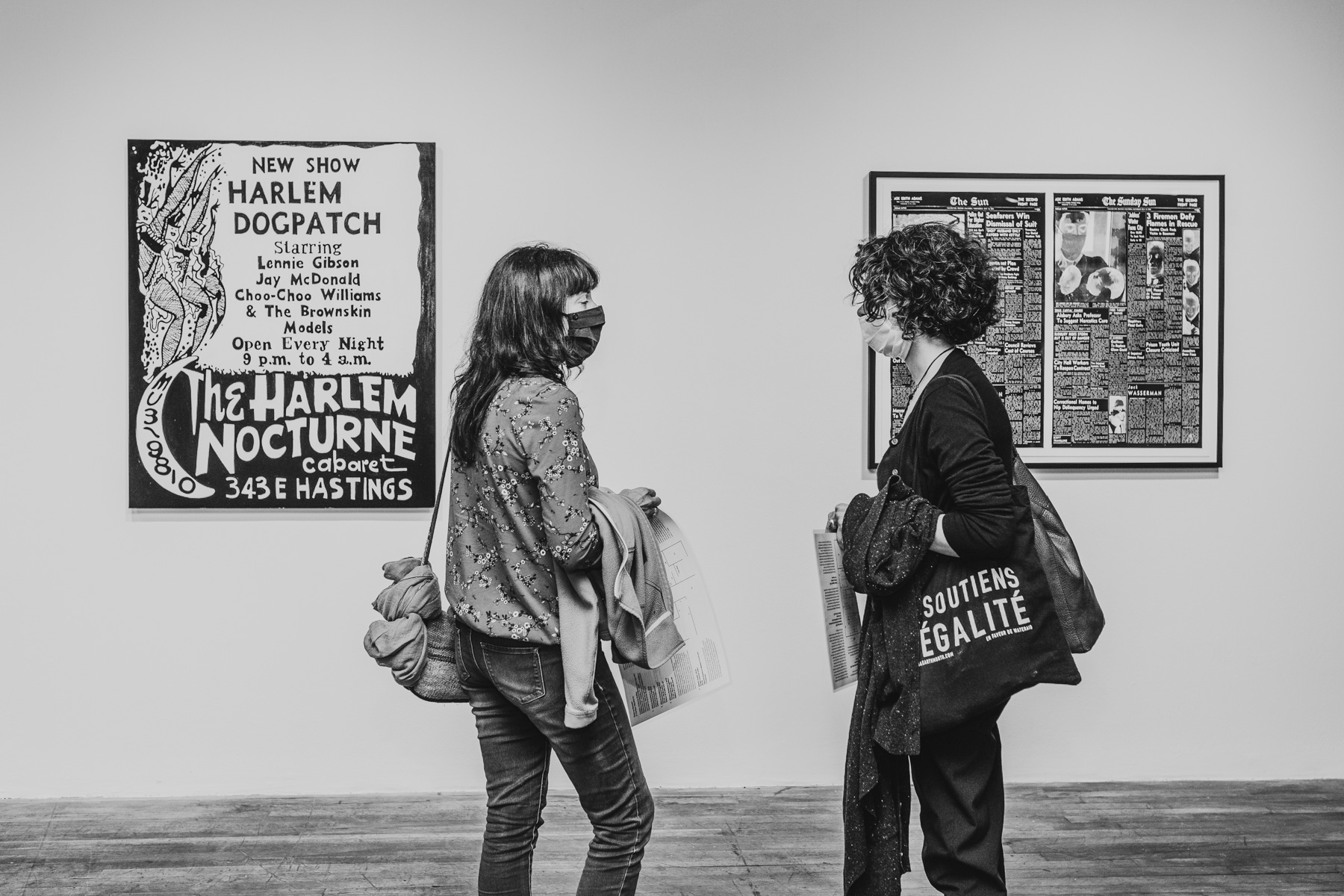
On Oct. 15, OBORO art centre hosted a virtual conversation between two esteemed members of the Canadian art community, Deanna Bowen, a Governor-General award-winning artist, and Kimberly Phillips, director of Simon Fraser University Galleries. The discussion delved into Bowen’s exhibit, A Harlem Nocturne, which focussed on Black Canadian history and its representation in art.

Bowen, a Vancouver-raised, interdisciplinary Black artist, traces Black migration across North America through her work. As a descendant of Black pioneers in Alabama and Kentucky, A Harlem Nocturne is Bowen’s effort to document her own family history. Bowen noted how conversations about Black settlers and city builders in North America have rarely factored into our contemporary notions of Black history and urban history at large. 

Both the exhibit and the history for which it is named are a marvel. A Harlem Nocturne is inspired by the famed Harlem Nocturne, Vancouver’s only Black nightclub during the 1950s and ‘60s. To this day, the Nocturne’s influence spans generations of performers, from famous trumpeter Charles Ellison, to Eleanor Collins, the first Black North American artist to host a weekly national television series, The Eleanor Show. Bowen’s exhibit is an excavation; her forensic investigation of the histories of Black performers transforms her art pieces into a curated display of archival evidence. 

Bowen’s pieces include postcards of the Stratford Hotel in Vancouver’s Eastside, a gathering place for Black Vancouverites, and a poster of a play starring her great-uncle Herman Risby and dance legend Len Gibson. A striking point of the exhibit is a black print of the title card of the musical episode, “The Promised Land” starring Gibson and his family on the subject of formerly enslaved, Black American settlers in Canada. The exhibit maps Black presence in Canada, in public and in private, showcasing the tension between the nation’s idealized progressivism and the oppressive anti-Black racism innate to the country.

To find her place in the context of her art, Bowen explained how she needed to listen to the silence of the past. 

“It’s difficult for prior generations to articulate their history, especially when they come from viewpoints that other people are seeking to destroy,” Bowen said.  

Whether through focussing on her family or the media, Bowen strives to create art that accurately reflects her worldview. 

“Being a descendant of a body of people that experienced trauma, one has to be a witness out of necessity,” Bowen said. 

Phillips, the curator of A Harlem Nocturne, is interested in the visibility and the perseverance of women artists, particularly those from marginalized communities.

“The complexity and rich histories of Black performers are only visible in shadow ways […] in the very specific granular elements like teeny editorials,” Phillips said. 

Bowen expressed her desire to illuminate the “dark matter,” or the figures, events, and histories that remain largely ignored by the white majority in the midst of systemic racism.

“I’m interested in the less-than-important documents, [the] messages in shoe boxes […] the documents that are rich, full, outside the white, Western archive,” Bowen said.

Due to the inaccessibility of Black Canadian history, the exhibit required restoring, translating, and magnifying original materials in order to showcase the work of this community. For example, one piece features a series of light boxes with Gibson’s original choreography in dance notation intending to transcribe the movement of Black dancers. In consulting the Canadian Broadcasting Corporations’ (CBC) archives, Bowen further realized the importance of the work she was doing.

CBC’s decision to digitize its archives of Canadian history but to trash original copies of Black content only spurred Bowen’s efforts in A Harlem Nocturne. Through her exhibit, Bowen situates Black history into the public consciousness, repositioning and rearranging it for accuracy and access.

“An exhibition is the most publicly accessible way to put forward what people need to know,” Bowen said.

Bowen’s work and the stories—famous and erased—that it depicts take no specific locale. A Harlem Nocturne is a triumphant call to expand the common, oversimplified narratives of Black Canadians and their complex and vibrant stories.

Arts & Entertainment, Internet, Pop Rhetoric

Let meme explain: Christian Girl Autumn

In August 2019, Twitter user @bimbofication, real name Natasha, tweeted a now-iconic photo that garnered nearly 50,000 likes and a combined 20,000 retweets and quote tweets. The photo features two young white women wearing coordinated blue skinny jeans, brown ankle boots, and leather handbags. It is the kind of photo that immediately makes viewers assume that the two subjects just left their weekly brunch and are on their way to get pumpkin spice lattes at Starbucks. 

“Hot Girl Summer is coming to an end, get ready for Christan Girl Autumn,” Natasha wrote in the caption. 

As far as viral tweets go, Natasha’s is not particularly noteworthy; its engagement numbers are on the lower end of the viral tweet spectrum and there are plenty of similar jokes poking fun at harmless stereotypes on Twitter. However, Natasha’s tweet presents a fascinating snapshot of an online cultural moment wherein social discourse, pervasive misogyny, and meme culture all intersect.

The women in Natasha’s tweet are Caitlin Covington and Emily Gemma, two lifestyle bloggers from North Carolina and Oklahoma, respectively. While the viral tweet did boost engagement on Covington and Gemma’s social media accounts, it also triggered a landslide of replies on Twitter in which users expressed their assumptions about the bloggers’ stances on a variety of social issues, particularly 2SLGBTQIA+ rights. 

“The first girl[’s] face says ‘conversion therapy[’ and] it scares me,” Twitter user @NFRnSEXORCISM wrote in a reply

This reply is just one of many that encapsulates the cultural crossroads that Natasha’s tweet occupies. Things typically enjoyed by women and femmes, especially young girls, have long been mocked and used as punchlines. From Twilight to One Direction to Starbucks, trending media enjoyed primarily by young women are often immediately derided as being lowbrow trash. This is not to say that there are no problems with any of these things; Starbucks is a massive corporation that has been linked to gentrification, and Twilight is a case study in romanticizing unhealthy relationships. Yet, the criticism around them is often instead targeted towards the audience of young girls, rather than the nuanced structural issues of these topics at hand. 

The replies to Natasha’s tweet highlight this nuance in criticizing traits that have been coded feminine, especially online. Many of the replies poke fun at Covington and Gemma’s supposed stances on legitimate current social issues as white women, including racism and homophobia

Recently, the ignorance of many cisgender white women has also become a common joke on the internet, with terms like “Karen” being brought into the mainstream. The subjects being mocked in these jokes are usually bigotry, ignorance, and unacknowledged privilege, rather than femininity. Being mean to someone because they are racist is obviously not the same as being outwardly misogynistic to women enjoying innocuous things. The replies to Natasha’s tweet, however, have revealed a bizarre conflation between a “basic” aesthetic, and how systems of oppression become internalized in our everyday interactions. The premise of many jokes in the replies was that racism or homophobia share an aesthetic with the women in the photo, and it is difficult to tell whether the punchline is Covington and Gemma’s ankle boots, or the beliefs that Twitter users assumed they hold. 

It can be difficult to dissect all of the cultural subtleties that exist in a 280-character tweet. Covington and Gemma have both responded to Natasha’s tweet with good humour and have since been in contact with her. Covington shared and donated to Natasha’s GoFundMe for her gender affirming surgery and replied to tweets to confirm that she does support 2SLGBTQIA+ rights as well as the Black Lives Matter movement. 

Social media platforms simultaneously offer current news and fuel for escapism through humour and memes, so every joke or throwaway comment becomes multi-layered and meta-referential. In this online era, it has become increasingly important to be conscious of unintentional biases, while also not taking everything too seriously and remembering to appreciate the joy of a fall colour palette.

McGill, News

MISC talk describes Marshall McLuhan’s role in the Quiet Revolution

The McGill Institute for the Study of Canada (MISC) invited Jonathan Slater, a professor of public relations at State University of New York Plattsburgh (SUNY) on Oct. 14 to give a lecture exploring the influence of Canadian philosopher Marshall McLuhan on the role of mass media in Quebec’s Quiet Revolution and the October Crisis. The webinar was part of a formal partnership between McGill University, Bridgewater State University, and SUNY Plattsburgh.

Slater’s talk drew on research for his upcoming book on the role of mass media in Quebec’s Quiet Revolution, a period of socio-cultural change in the province. The October Crisis culminated in the Front de libération du Quebec’s (FLQ) kidnappings and attacks of two diplomats in the fall of 1970

Slater lectured about Canadian philosopher and professor of literature Marshall McLuhan (1911-1980), who is often heralded as the father of communication and media studies. During the Quiet Revolution and October Crisis in Quebec, McLuhan observed and commented on the cultural changes in Quebec from his home in Toronto, where he was director of the Centre for Culture and Technology. In her introduction of Slater, Blair Elliot, MISC Communications and Events Associate, highlighted how some of McLuhan’s contemporaries saw his role in the crisis.

Two of McLuhan’s contemporaries, his Toronto colleague Northrop Frye and Montreal author Hugh MacLennan, accused McLuhan of stirring up trouble in Quebec,” Elliot said. “McLuhan’s open friendship with Prime Minister Pierre Trudeau ostensibly was behind Frye’s assertion that McLuhan was interfering in Quebec’s affairs. MacLennan believed McLuhan’s contentions about mediated environments were abetting French nationalist sentiment in the province.”

Following World War II, Quebec rapidly industrialized and many rural francophones migrated towards Montreal’s urban center. Despite a growing intellectual class, Quebec francophones were prevented from seeing the full benefits of economic development due to English language requirements while at work. 

“The Quiet Revolution of 1960 reversed years of stagnation,” Slater said. “French Canadians, by and large tolerated their subordinate relationship [to anglophones] and accommodated their own oppression. The chasm separating French and English in Quebec, therefore, emerges as a drama of colonization and defeat.”

Slater described how McLuhan was in tune with the political climate and the impact of new media. Prime Minister Lester B. Pearson launched the Royal Commission on Bilingualism and Biculturalism in 1963 to address growing tensions between French Canada and English Canadians.

“In that same year, Marshall McLuhan sent [a paper] to the Royal Commission drawing attention to the extent to which [English and French Canadians] already appeared to be polarized,” Slater said. “He also reflected on the way the fairly new electronic medium of television would further abet the deterioration of relations between them.”

McLuhan’s observations on the role of media proved to be popular in the aftermath of the Quiet Revolution. Slater describes how McLuhan’s translator, Jean Paré, reflected on McLuhan in hindsight. 

“There was a commonly held belief in the decade following the Quiet Revolution that television permitted Quebec francophones to take stock of their majority standing in their own province and appreciate their role as a distinct people within Canada as a whole,” Slater said. “[They were] not merely an ethnic minority stuck in a one-down position in greater English speaking Canada.”

McLuhan’s insights into the period were not only related to media studies. Daniel Béland, Director of MISC and host of the event’s Q&A session, discussed the relevance of Marshall McLuhan’s observations to wider discussions about nationalism. 

“McLuhan influenced the study of nationalism in a big way,” Béland said. “Benedict Anderson [an influential Irish political scientist], for example, who wrote Imagined Communities, based his work largely on McLuhan’s insight.”

For those interested and who were unable to attend, the full lecture and Q&A will be available on the MISC McGill Youtube channel next week.

Campus Spotlight, Student Life

Queer History Month highlights BIPOC advocacy

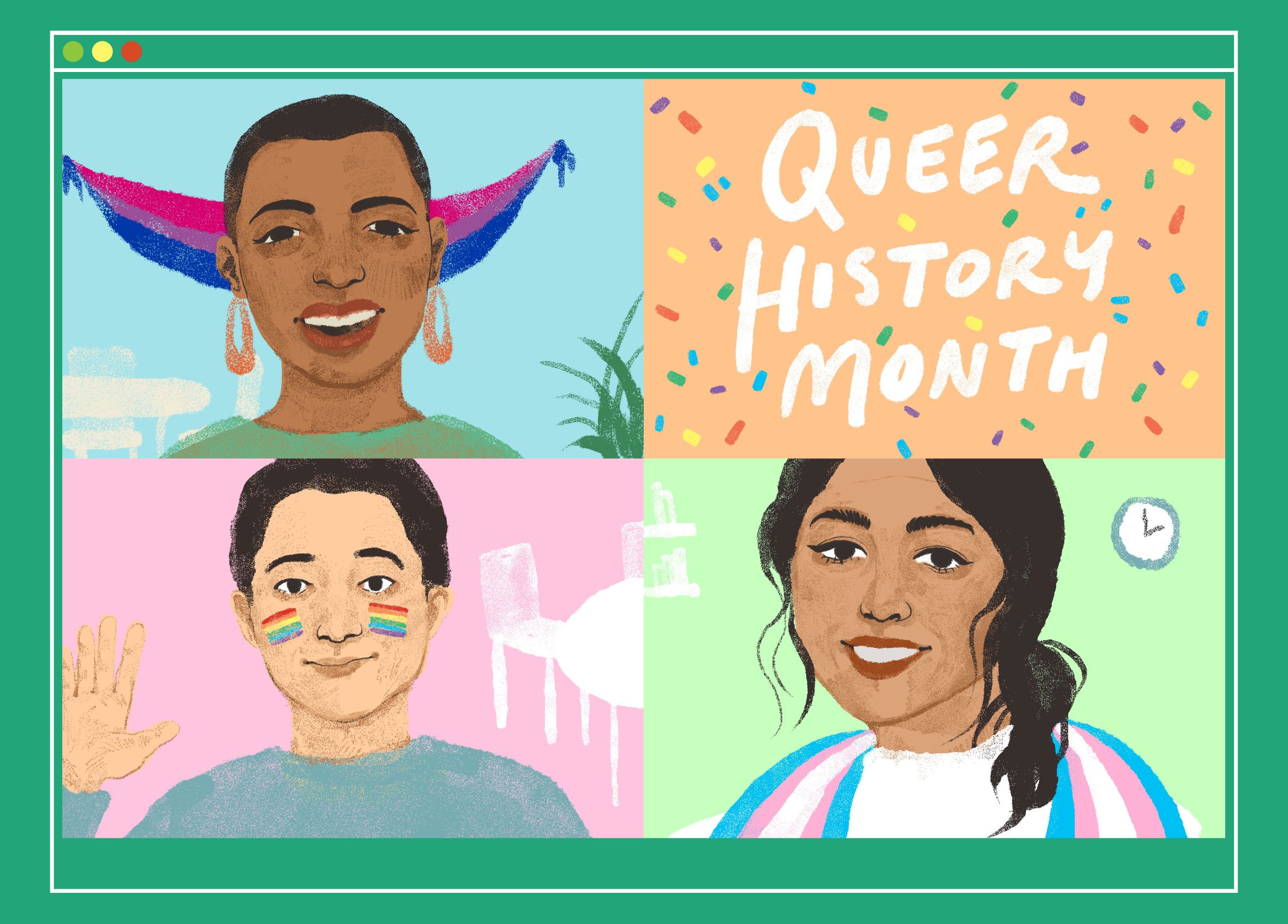
Despite Red Zone restrictions in Montreal, McGill’s Queer History Month is still in full swing. Created in 2018 by the Associate Provost’s Equity and Academics office, this year will mark its third edition, centred around the theme of “Love stories of solidarity and resilience.” For the first time, all of the events are taking place online.

Meryem Benslimane, coordinator for Queer History Month and Equity Education Advisor, has worked to make the best of this year’s limitations. However, Benslimane believes that going fully online has broadened the impact of Queer History Month’s events. 

“[Organizing online] had the positive impact of making our events more accessible. Anyone in the world can actually register and attend our events, [and] we are not limited in space or capacity,” Benslimane said. “We have a maximum of 500 attendees on Zoom. In the past in-person editions, we could only hold events for 100-120 people at a time.”

Events this year include collaborations with McGill’s Black Students Network, McGill’s Institute for Gender, Sexuality, and Feminist Studies, and the Simone de Beauvoir Institute at Concordia on a panel specifically dedicated to Black queer and trans activism, which will take place on Oct. 20. This year, Queer History Month will feature keynote speaker Dr. Chamindra Weerawardhana, a transfeminine scholar and international 2SLGBTQIA+ rights activist from Sri Lanka. Tickets are still available for several events on the Equity McGill Website.

Around 40 people, including volunteers, organizers, and speakers, are involved in planning this year’s Queer History Month. Angela Campbell, Associate Provost (Equity & Academic Policies), looks forward to contributing to this year’s events.

“I am delighted to be part of McGill’s annual Queer History Month celebrations this October,” Campbell said. “While equity work is necessarily forward-looking with a view to ongoing advancement, we cannot lose sight of the importance of knowing our histories. This knowledge of the past will equip us to move forward in our efforts centring on the goals of equity, inclusion, and justice.”

Another emphasis of Queer History Month is intersectional solidarity, or solidarity between individuals with distinct experiences of oppression, especially when it comes to the specific issues that 2SLGBTQIA+ BIPOC individuals face. Benslimane also reiterated the integral and extraordinary work of Black queer and trans activists in advocating for 2SLGBTQIA+ rights.

“[Everyone involved in Queer History Month] wants to create online spaces of connection and community, of support and solidarity, especially in the global context of anti-Black and anti-Indigenous racism,” Benslimane said. “It is very important to remember that Black queer and trans activists, especially Black trans women, have always been and still are at the forefront of advancing 2SLGBTQ+ rights throughout history.”

During her keynote presentation on Oct. 7, Dr. Weerawardhana also emphasized the importance of intersectional activism in light of the Black Lives Matter movement, as well as the role of non-Black members of the 2SLGBTQIA+ community in addressing anti-Black racism in Canada and across the world.

“In our own lives, many of us have fought or are fighting tougher battles than the ongoing pandemic,” Dr. Weerawardhana stated. “Those of us who are non-Black simply cannot afford to water down our activism as the news cycle moves on. We need a strong focus on intersectional feminist advocacy. In Canada, this means a commitment to challenge all forms of intersecting racial, gender-based, and other injustices, with a special focus on Indigenous Peoples’ struggles for justice and dignity.”

Ultimately, Queer History Month is not only about history, but about the future of 2SLGBTQIA+ communities. Especially this year, when many people are facing social isolation, it is imperative to maintain and foster connections so that these communities may continue to thrive. Benslimane emphasized the importance of belonging and fundamentally, the freedom to love, that lies at the heart of Queer History Month.

“While we cannot be together in person this year, we hope people do find that sense of belonging, love, and resilience through our events and beyond Queer History Month,” Benslimane said. “The goal of Queer History Month [has always been] to raise awareness, advance education, and increase visibility of 2SLGBTQIA+ communities by recognizing their history and contributions, building bridges, and bringing together McGill students, staff, faculty, and alumni and Montreal community members, and that is what we hope to do this year again.”

Read the latest issue

Read the latest issue