


Latest News

Science & Technology

In ‘The Invisible Man,’ not seeing is believing

Leigh Whannel’s film The Invisible Man, based on H.G. Wells’ 1897 novel of the same name, tells the story of a young woman, played by Elizabeth Moss, who escapes an abusive relationship with a tech-savvy millionaire. After faking his own death, Adrian, Moss’s on-screen ex-boyfriend, devises a bodysuit using optical technology that allows him to become invisible and continue his reign of psychological torment over her. 

In Wells’ day, the notion that science could render a person invisible was absurd. Now, over 100 years and innumerable advancements later, Whannell’s recent adaptation with a feminist spin makes technology-assisted invisibility feel achievable.

Today, scientists have already had some success in making objects appear invisible. In a YouTube video, John Howell, a physics professor at the University of Rochester, explained that achieving “invisibility” requires the precise manipulation of light at different angles.

“‘Cloaking’ is essentially just an optical illusion, and people have been doing that for hundreds of years,” Howell said. “There have been many high-tech approaches to try and achieve cloaking. The basic idea […] is to take light and have it pass around something as if it isn’t there.” 

The device they built, aptly named the “Rochester Cloak,” consists of four lenses positioned at just the right angles to make an object placed between them appear invisible. Together, the lenses create a focal point—the point where light rays from a source converge after being reflected from the object. In the case of the Rochester Cloak, the normal movement of light is changed around the object, bending light around whatever object is placed at the focal point.

“The rays focus and diverge out, so it actually bends the light around the object,” Joseph Choi, a then-Ph.D. student at Rochester’s Institute of Optics, said. “We have slightly more complicated designs where an object can be cloaked entirely, but we’ve tried to simplify our design.”

Choi and Howell’s set-up allows an object to appear invisible as the viewer moves several degrees away from the optimal viewing position. The illusion remains constrained, however, by the ability of angles to mask the object. Move too close, too far away, or look at the object from outside the lens, and it will no longer appear “cloaked.”  

More recently, researchers have been able to apply these basic principles to larger subjects, like humans. This further confirms the theory that it is possible to use cloaks to perfectly hide an object at specific wavelengths. Hiding an object in an area containing different wavelengths of light, however, becomes more challenging as the size of the object increases. 

The medium in which the object exists will also have an effect on the ability of cloaking technology to mask it. In The Invisible Man, Oliver Jackson-Cohen, who plays Adrian, fights Moss while remaining mostly invisible through a climactic shootout in the rain. Light slows down when it travels from air to water, causing it to change direction slightly in a process known as refraction. Soaking wet, it is unlikely that the visual properties of the optical suit used by Adrian to stay invisible would persist. 

Scientists have been able to effectively cloak objects from detection by physical waves other than light. Using a skin-like device that looks eerily similar to the one Jackson-Cohen wears in the film, engineers at Iowa State University have created a wearable device that makes objects invisible on radar. It works through the use of metamaterials, which can absorb radio frequencies rather than reflect them back to sensors.

In the world of science fiction and fantasy, invisibility has become a mainstay—an iconographic symbol of technology currently beyond human means of production. The Invisible Man joins other famous depictions of cloaking, from The Lord of the Rings to Harry Potter—all but proving that CGI remains the best tool for rendering humans invisible.
McGill, News, SSMU

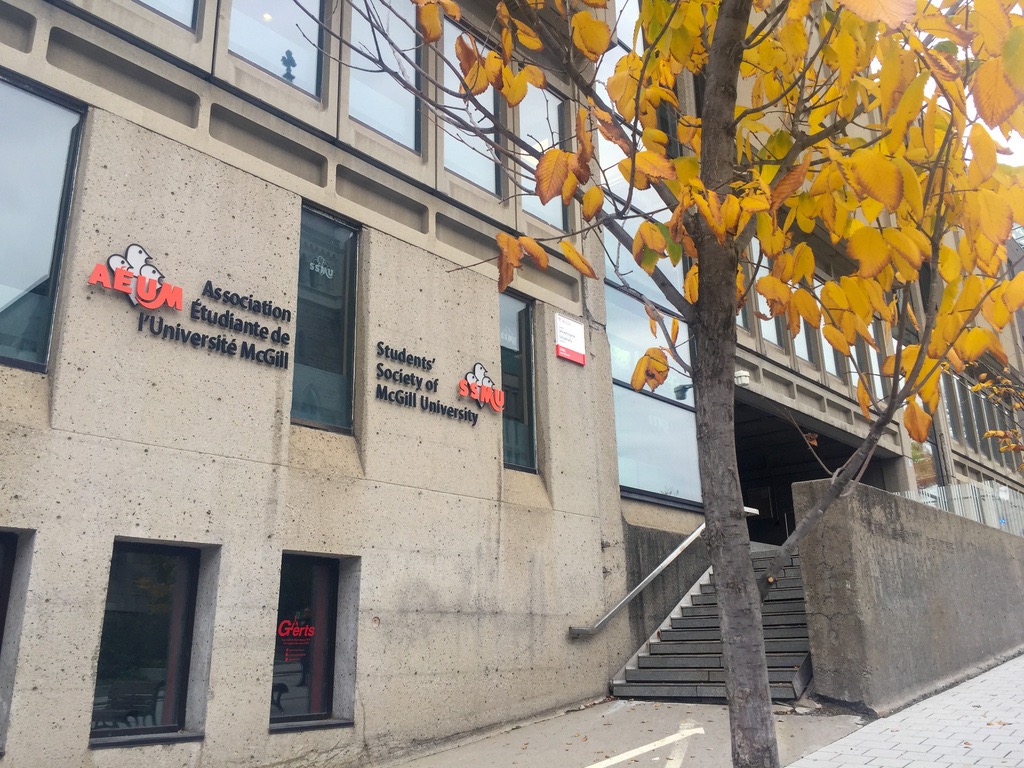
SSMU VP University Affairs proposes motion to pay SSMU Councillors

Students’ Society of McGill University (SSMU) Vice-President (VP) University Affairs Brooklyn Frizzle submitted a motion to pay Legislative Council members for their work to the SSMU Steering Committee for the Oct. 8 Legislative Council meeting. While councillors and senators are expected to attend Council meetings, hold office hours, and work on motions for submission, which often require up to four hours per week, executives work full-time, and are already paid. The Steering Committee, which sets the agenda for Legislative Council meetings, determined that more consultation was necessary and subsequently delayed it to Winter 2021.

As the VP University Affairs, Frizzle is responsible for overseeing equity initiatives and complaints. Frizzle attributes their focus on employment equity to their experience doing unpaid work for Queer McGill.

“One of the biggest problems we faced [working at Queer McGill] was a lack of contract hours,” Frizzle said. “[We often had to] work unpaid just to keep the organization running. At the end of the day, SSMU wouldn’t exist without […] student labour, and that’s equally true for councillors and senators.”

Frizzle plans to put forward this motion to the Winter 2021 referendum that, if ratified, would salary SSMU councillors and senators. The fee amount would be determined using SSMU’s pay equity scale, a system based on job responsibilities outlined in the organization’s governing documents. The exact budget for the new “Representative Fees” has not yet been confirmed.

Frizzle worked with SSMU VP Finance Gifford Marpole to determine the financial feasibility of the motion. Marpole stressed the need to compensate councillors and senators, especially given SSMU’s stance against unpaid labour as articulated in its governing policies.

“I believe that not paying councillors and senators makes those positions somewhat inaccessible, especially for individuals who have to work throughout their undergrad,” Marpole said. “Providing pay will hopefully open the door for more students to run for these positions.”

According to Frizzle, this is not the first time that a motion to compensate Legislative Council representatives has been introduced. Although many individuals within SSMU have proposed ways to compensate senators and councillors, Frizzle noted that the recurring issue of needing a supervisor to prevent conflicts of interest has prevented each attempt from being successful. 

Arts Senator Darshan Daryanani, who served as the Arts Undergraduate Society’s (AUS) VP of External Affairs last year, explained why he supports the motion.

“With meetings that can go up to nine hours long, [being in this position] comes at the expense of academics, physical and mental health, as well as foregoing other paid opportunities like research positions and working part-time,” Daryanani said. 

Daryanani emphasized the advantages that implementing the motion would have for SSMU.

“Not only will the Representative Fee alleviate the financial barriers for those who wish to be involved in student government, but it also will serve as an added incentive for us to prioritize their roles in serving our constituents and have a healthier lifestyle,” Daryanani said. 

The motion would have to be approved by the Council to be included in a referendum. Although the current councillors would not benefit from the funding as it would be implemented after their terms end, Frizzle, like the steering committee worried that the policy might be considered a conflict of self-interest. 

“I think input and approval from regular members are especially important for a project like this, so I decided to pursue a student-initiated question by petition, instead,” Frizzle said. “Unfortunately, that means the question has to be delayed until I’m able to put together a petition and collect enough signatures, which I might not be able to accomplish before the Fall referendum deadline.”

Frizzle hopes to present the fee for a referendum in the Winter semester in order to be available for the next set of councillors and senators in Fall 2021.

Formula One, Point-Counterpoint, Sports

Point-counterpoint: The greatest Formula 1 driver

The greatest Formula 1 drivers of all time come in pairs: Schumacher and Ferrari, Hamilton and Mercedes, and Senna and McLaren. To understand the magnitude of their greatness, one has to consider not just the stats but also the context behind each driver’s success. Looking at all of Formula 1 history, there are two standouts: Lewis Hamilton and Michael Schumacher.

Michael Schumacher

In Formula 1, the greatest evidence of a driver’s raw pace is often their performance against their teammates in a qualifying environment where cars are pushed to their very limits. Schumacher’s performances in this department were outright dominant compared to Hamilton’s, as Schumacher was rarely out-qualified by any teammate. If this wasn’t a testament enough to his skill behind the wheel, Schumacher is perhaps the best rain driver in F1, accumulating a record 19 victories on the wet tyres. 

However, Schumacher’s greatest asset wasn’t his pace or skill, but rather, his ability to transform any team he joined into perennial competitors for the title, something Hamilton has never had to do at McLaren and Mercedes. When Schumacher arrived at Ferrari in 1996, they had not won a title in 17 years. But by 2000, Schumacher had built the foundations of a team that would go on to win the world title for five consecutive years. In fact, such was their dominance that it required the FIA to introduce rule changes that deliberately sought to pull Ferrari back into contention with the rest of the sport. Finally, Schumacher’s ability to push seemingly average cars to title-contending spots is something Hamilton has failed to accomplish in his career thus far. 

Lewis Hamilton

When Lewis Hamilton made his Formula 1 debut in 2007, and after a second-place season finish with 12 podiums with Vodafone McLaren Mercedes, fans knew that he was something special. Since then, Hamilton has won six world championships with two teams and asserted himself as the most dominant, technical, and consistent driver of the era.

Hamilton’s six titles are second only to Michael Schumacher’s seven, and based on the way things are going this season, it is likely that Hamilton will be tying that record in December. When comparing the two, it is important to remember that Hamilton’s career is ongoing, and he is likely to maintain his dominant streak for at least three or four more seasons. Hamilton’s consistency is unrivaled, especially in his years with Mercedes. Since Schumacher retired, there have been several shifts in the sport. The technical aspects of driving have changed—cars have become increasingly intricate since the era of Schumacher, and it is more difficult than ever to drive the jet-engines on wheels that F1 cars have become. Hamilton is also the most technical driver of all time, taking each turn to the maximum, only pushing the engine when it needs to, and consistently out-qualifying every other driver on the grid.

Editor’s pick:

Despite Hamilton’s dominance in recent years, it is clear that Schumacher had a better racing career. Building a team from the ground up is extremely difficult, and Hamilton, despite all his accolades, has always had the best car on the best team. Schumacher will go down in history as the best driver of all time for fighting the odds and pulling out wins.

Student Life

COMunity continues to connect commuter students

COMunity has been working hard to connect off-campus students together through the years, and that goal has only evolved and expanded with McGill’s recent shift to remote learning. The program is part of McGill’s Off-Campus and Commuter Student Support office, and on Oct. 14, they held a speed-friending event to help off-campus students safely meet new people.

This speed-friending event is not the first of its kind for COMunity. In past years, they have hosted a similar event for Valentine’s Day as a way to foster connections during the colder winter months. Kirsten Vanderlinde, U4 Arts and COMunity program manager, explained the unlikely partnership with some Australian connections that allowed for the transition of this popular event to an online platform.

“I coordinated with some individuals at the University of Queensland because I went online and saw they had hosted an online speed-friending event,” Vanderlinde said in an interview with The McGill Tribune. “They were happy to share the logistics […] with me.” 

Since August 2020, COMunity has facilitated three speed-friending events. The first two were run during orientation week by the Campus Life and Engagement department and the Off-Campus Connects events. Vanderlinde said she felt fortunate to be part of such an accessible and adaptable program that was so easily transferred online.

“We quite like hosting events online because it is allowing us to connect with off-campus students who live really far away from campus, like in Chambly or West Island, who we usually have a harder time reaching with our events and programming,” Vanderlinde said.

There were people from all across the island of Montreal in attendance during the Oct. 14 event, which is one of the main benefits of COMunity’s transition to an online format. Around 20 people, ranging from first year to graduate students, joined the Zoom call. As opposed to the one-on-one chats one might be accustomed to in speed events, breakout groups were formed based on attendees’ boroughs. In successive breakout rooms, people first met peers living in their own neighbourhoods, and then with residents from different neighbourhoods, each time sharing stories and participating in icebreakers. Laurie Chan, U1 Arts, believes that such events are crucial for fostering connections between first year students like herself.

“I wanted to go because it’s been so difficult to meet people and build any kind of meaningful connection [right now],” Chan said. “It’s so important to be connected and inspired by those around us, and that has been […] lacking. I think [remote learning] makes us all get stuck in our own heads and hinders us from doing our best. So many people feel this way and so there are so many people who are down to meet others and do things. The hardest part is actually finding them.”

For students like Chan who have just moved to Montreal, COMunity provides a way to meet people who are similarly isolated and seeking connection. For students who have previously called Montreal home, COMunity’s initiative is still a great way to engage with peers in a new context. In past years, there has been an in-person lounge area for off-campus students to attend events where they can meet fellow commuters. Now that COMunity’s events are online, those students are able to have more regular programming than they would have had in person. After many successful online events so far this year, COMunity is looking forward to continuing their mission and bringing students together as the semester unfolds. 

Every Tuesday from 10-11 a.m., COMunity hosts a drop-in Zoom meeting, COMon Ground, available to all students who want to connect with their peers.


McGill, News

McGill COVID-19 case tracker counts positive cases present on campus

Recent outbreaks in McGill’s residences and in Quebec have called into question the functionality of McGill’s COVID-19 case tracker for students and employees. Since Oct. 4, the tracker has reported eight positive cases of COVID-19 on campus, an increase since mid-September. 

Deputy Provost (Student Life and Learning) Fabrice Labeau explained how the Regional Director of Public Health (DRSP) has helped the university enact safe and sensible policies.

“[The numbers] we report in that case tracker are really the [McGill students and employees] who have [self-reported] having a confirmed COVID-19 positive test and have been present on campus [in] the seven days prior,” Labeau said. 

Labeau explained that McGill contacts all individuals who self-report a positive test result to find out their whereabouts on campus in the last seven days.

“The idea is really to do contact tracing [….] The [DRSP] will also warn us when they know about a case on campus,” Labeau said. “What we do is try to determine […] who their contacts were, so we can actually trace back [and find individuals] who are low, medium, and high-risk […] and tell them what [they] have to do.”

Labeau outlined the DRSP’s assessment of infection risk as follows: High-risk contacts are those who have been living with a person who tested positive, moderate-risk contacts have been less than two metres from a positive case for more than 15 minutes without a mask, and low-risk contacts are everybody else who has likely been in contact with a positive case.

“If you’re a low-risk contact, you’re told [to] watch your symptoms like you do every day,” Labeau said. “When you’re [at a] moderate or high-risk level, you’re [going to] be told to self-isolate, get tested and continue isolating until you get the result.” 

The tracker is intended to help students evaluate the risk of being present on campus each week. Some students living near campus criticized the tracker’s narrow scope, claiming that the university downplays local severity by not reporting cases in the densely student-populated areas surrounding the campus.

Christopher Buddle, Associate Provost (Teaching & Academic Programs), explained why the tracker does not account for off-campus cases.

“We can’t really gather data from outside of what we actually know,” Buddle said. “That’s why there’s always a lot to talk about [involving] the Milton-Parc area, and other [areas] where lots of students are living, but the risks of publishing information that’s not of the right quality is really high.”

As social distancing restrictions in residence have tightened since Montreal entered the red zone, stricter enforcement by residence staff has followed suit. Carrefour Sherbrooke resident Pryor Sohn, U0 Arts, believes that the intervention of residence authorities when they suspect a violation of rules is invasive of students’ privacy.

“While I do understand you don’t want […] students going from room to room, and while […] [prohibited activity] should be punished […], there is something [invasive about] purposely listening in to see if [students are] having a conversation or demanding to be let into a room to double-check even when there’s not really any proof of rule-breaking,” Sohn said. “It very much has the vibe of ‘guilty until proven innocent,’ which is not great.”

Quebec registered more than 5,000 new COVID-19 cases last week, breaking a new record on Saturday, Oct. 17 with 1,279 new cases in 24 hours. Despite the increase in cases, Labeau believes in the continuity of campus life, explaining McGill’s tentative contingency plans for residences. 

“There are all sorts of possibilities in terms of what could happen […] depending on the nature of the outbreak,” Labeau said. “[Even though] we are at the maximum alert level now, it doesn’t mean that we empty out residences.”

________________________________________________________

If you are a member of the McGill community and believe you have been exposed to COVID-19, go here

McGill, News

SSMU advocates for affordable textbooks and Open Education Resources

Prior to the outbreak of the COVID-19 pandemic, the Students’ Society of McGill University (SSMU) began promoting Open Education Resources (OER), which makes textbooks more accessible by providing them free of charge. Despite rising tuition and textbook costs since the 1970s, the digitization of academia due to the pandemic has not appeared to slow price hikes of education material. In an email exchange with The McGill Tribune, SSMU Vice-President (VP) Student Affairs Brooklyn Frizzle wrote about the student union’s continued efforts to advocate for OERs.

“Open Educational Resources are basically open-source, free-for-use material (think Khan Academy or OpenStax) that can supplement or even replace traditional course materials like textbooks,” Frizzle wrote. “My predecessor, Madeline Wilson, actually kickstarted SSMU’s OER project and we’ve seen the project grow tremendously in the past few months.”

Frizzle noted that several McGill classes already have complete OERs: CHEM 110 and 120, MATH 140 and 141, PHYS 101, and ECON 208.

“At this point, there are six courses where we’ve compiled OERs that can completely replace the textbooks, and we’re adding new courses to that list every semester,” Frizzle wrote. 

The last report on Open Educational Resources (OERs) at McGill was published in 2017. SSMU’s OER coordinators have launched a new students’ textbook experience survey on Sept. 26 to gather information on the cost of mandatory course materials and the current use of OERs. The OER team behind the survey plans to prepare a report for SSMU later this academic year with the information gathered in the survey. 

Frizzle added that SSMU has collaborated with university administrators on possible methods to reduce the dependency of McGill courses on textbooks.  

“SSMU has also been working with McGill to encourage professors to reconsider their current dependence on physical course materials or paywalled digital textbooks,” Frizzle wrote. “In the meantime, SSMU is continuing our #textbookbroke campaign to advocate for a shift from expensive textbooks to open-source material.” 

McGill librarian Katherine Hanz is optimistic about the future of textbook accessibility, stating that the decision to join the HathiTrust Emergency Temporary Access Service (ETAS) has expanded the library’s capacity for digital resources and boosted their ability to digitize items that were previously less accessible. 

Joining ETAS [allowed] us to provide over two million books from the library’s print collection (including in-copyright materials) online for all McGill students,” Hanz wrote in an email to The McGill Tribune. “[Including ETAS], the library now has over 3.5 million books available electronically.” 

Frizzle highlights how the McGill library has committed to making course materials more affordable to students by providing more free coursepacks.

“We’ve actually made some solid progress lately,” Frizzle said. “Starting in Winter 2021, the library has committed to offering upwards of 75 per cent of all coursepacks free of charge through myCourses.

The McGill library’s Rare Books and Special Collections section now offers a Digitization on Demand service of their collections, print materials via the Library Pickup Service, digitization of physical course reserves, and has plans to allow students to receive physical items in the mail.

The library’s move to make textbooks more affordable and accessible online comes at a time where the university has had to rapidly transition to online learning.

Jeff Noh, Ph.D candidate and lecturer in the English Department, explained that people interact with physical and digital versions of texts differently.

“It’s possible to engage with a digital edition in ways that you can’t with a physical copy, from being able to do a ‘control-F’ of a text to track word usage to the kind of computational methods employed by researchers in the digital humanities,” Noh said. “But the opposite is true too: There are literary analysis techniques that are encoded to the printed book [like] annotating a page while performing a close reading and, flipping backwards in a novel to verify our intuitions about its narrative structure.”

The SSMU and the library’s efforts to curb McGill’s dependence on physical course material and make textbooks more affordable are underway. Whether there will be any long-term change when McGill eventually transitions back to in-person learning remains to be seen. 

Arts & Entertainment, Film and TV

‘Emily In Paris’ is poised off of an idealized Paris

Netflix’s latest release, Emily In Paris, is a plethora of generic tropes, teeming with cultural stereotypes, questionable outfits, and overused plot lines that induce eye-rolls from even the most charitable of viewers. I binged it in two days. 

The show revolves around 20-something-years-old American marketing extraordinaire Emily Cooper, played by Lily Collins, who, over the course of 10 episodes, is sent to her company’s Paris branch and becomes enamoured with the city of love. When I started the series, I did not realize that I would embark on a tumultuous journey: One that began with skepticism and second-hand embarrassment of my American citizenship, but ended with my undying devotion to every character and a desperate hunger for season two. 

I consulted with Parisian resident and subsequent Paris expert Louise Lienhart, U4 Arts, to learn more about what the show portrays correctly about Paris, and what it misrepresents. 

“I think [the show] exaggerates a lot of stereotypes that have been said about Parisians,”
Lienhart said in an interview with The McGill Tribune. “It’s obviously romanticized. It’s always the fancy, polished streets of Paris [that are shown].”

Indeed, while Emily is pictured strutting in front of the Louvre, lounging in cafés, and strolling along the Seine, it appears as though Paris’ more mundane and dilapidated environs, like its metro, simply do not exist. On social media, the show’s beautified city has ignited Parisian viewers’ creativity and meme-making, as they laugh at the absence of Paris staples like manic drivers, overpriced odd jobs, and street pick-pockets

Although the city itself is hyper-idealized, the show’s Parisians are far from it. Emily In Paris’s French characters are essentially built from oversexualized and heteronormative stereotypes. It appears that Paris’ charm lies in its overabundance of drop-dead gorgeous men and women at every turn, be it in Emily’s apartment building, workplace, or even local cafés. 

“You think about ‘Paris, city of love’ and the show is making it this whole hypersexualised affair,” Lienhart said. “[The show’s] Parisians seem to always be ready to choose pleasure over work, and have a hard time separating their private life from their professional one, which is not [true in] my experience.” 

Emily’s boss, a Miranda Priestly-like executive named Sylvie, is depicted as a snobbish, stubborn antagonist, constantly attempting to sabotage Emily out of sheer spite. Sylvie flirts with clients, has an affair, and meddles in Emily’s own love life. Although obviously an exaggeration for entertainment purposes, this storyline feels distinctly questionable for Lienhart. 

“French people are more subtle than this in terms of their private affairs. I actually think they Americanized her a little bit,” Lienhart said, drawing on the outlandishness and rudeness of Sylvie’s characterization. 

Lienhart especially notes that Paris is actually more modest than it appears, as she recalls the juxtaposition between Parisian and Montrealaise cultures. 

“I had the contrary effect coming to Montreal, where I felt people were more overt about their appearances and private lives, whereas in Paris, I find myself dressing more modestly,” Lienhart said. (Lienhart has declined all requests to start a @LouiseInMontreal blog.)

Emily In Paris’s cultural ambivalence is not-quite-Parisian, yet not-quite-American. It commits itself to a French aesthetic, yet depicts its French characters through an Americanized lens of exaggeration and drama, resulting in a hybrid Paris with a Sex In The City-esque tone. Regardless of questionable stereotypes and inaccurate portrayals, Emily In Paris still manages to charm and entertain. Full of fashion and sex, the show creates an escapist fantasy of an idealized Paris. It makes fun of itself, bringing laughs rather than offense, and reminds viewers not to take life too seriously. Ultimately, it is not the accuracy of American or French culture that viewers will remember, but the endearing fantasy and silliness of Emily, her boss, and the labyrinth of romantic relationships they navigate. According to Emily In Paris, charm and goofiness will always override accuracy—and viewers will adore it.

Student Life

Tribune Tries: Wine Tasting

On Oct. 14, the McGill Wine Society held WINE 101: Intro to Wine Studies, a virtual lecture for beginners on the intricacies of wine tasting. After the original McGill wine tasting club dissolved in 2016, Noah Gundermann, U3 Management, and Zachary Goldenberg, U2 Management, founded the McGill Wine Society in February 2020. During the “course,” the Wine Society provided students with supplemental readings and a course materials list for the at-home lab portion, which involved wine tasting.

“I hope the students learned something new about wine and the industry,” Gundermann said in a message to the Tribune. “As most students have very basic to no knowledge on the matter, we wanted to supply them with an introductory and interactive experience with the help of former LCBO [Liquor Control Board of Ontario] director and wine expert Michael Fagan.” 

The turnout for this virtual event exceeded expectations, and each student had a unique experience with their chosen bottle of wine. Members of The McGill Tribune’s Student Life section share their thoughts from the tasting. 

Willm Alsace Riesling 2019, Leyla Moy

Noting the course materials section of the Wine 101 event page, I opted for the only riesling at my local Société des alcools du Québec (SAQ). This French wine was remarkably smooth and easy to drink, a far cry from the acidic depanneur wines I’m accustomed to. It was also a relatively safe choice: As Fagan mentioned, many less-experienced wine drinkers start with sweeter white wines. I detected fruity, citrusy notes immediately, and deeper apple and grape flavours with more scrutiny. 

Le Réservoir Pinot Noir, Alaana Kumar

Though I gravitate toward sweeter white wines, in the interest of higher education, I chose to try a dry red wine—and it was a mistake. During the lecture, Fagan explained how younger red wines are often criticized. His explanation summed up my entire experience perfectly. 

“If you’re drinking red wines that are young, they can be really tannic, really sharp, and maybe not all that pleasant,” Fagan said.  

In the wine-tasting portion of the afternoon, Fagan demonstrated the correct way to extract the maximum amount of flavour from a bottle of wine with our senses. I knew his techniques were working when my terribly flavoured wine only got worse. I learned a lot from Professor Fagan, particularly how unadventurous my personal wine habits are. I look forward to using these new skills again—preferably with a fruity, sparkling, and sugary white wine. 

Les Artisans du Terroir Prémices d’Automne 2018, Katia Lo Innes

Luckily, letting this SAQ steal swish around my tastebuds for an extended period did not—in my case—bring out any unpleasant flavours that the wine might have hidden upon a quicker gulp. I went with this Quebecois white wine, mostly because of the price tag, but was pleasantly surprised by how much I enjoyed my choice. Based on what I could understand from the presentation, I could detect notes of licorice and some sort of zesty fruit—or maybe this was simply just a really cheap, overly sweet wine.

For the sober/underaged, ET Wu

Though the “course” was open to all McGill students, the tasting “lab” component was not. Instead, Fagan suggested drinking tea as a way to transition into the wine tasting hobby. He compared the transition from smoother to more bitter teas to the transition from off-dry to dry wines. I started with smoother teas such as Jasmine tea or chamomile, and transitioned to more fragrant teas such as chrysanthemum or earl grey. I even developed a liking for Japanese sencha and Iron Buddha (tieguanyin in Chinese). After developing a taste for teas at this level, I moved on to Vietnamese green tea, which is highly potent. I still have trouble with the potency of Vietnamese green tea.

The McGill Wine Society hopes to host more cultural and social events around wine, including in-person events when it is safe to do so. For upcoming events, check out their Facebook page.

McGill, News

Robin Beech announced as new Dean of Students

McGill’s Board of Governors has appointed Robin Beech as Dean of Students, though his five-year term is not set to begin until Nov. 1 2020. Beech will be replacing the current interim Dean of Students Glenn Zabowski, who has held the position since the departure of the former Dean of Students, Christopher Buddle, in January 2020. Zabowski will resume his role as Associate Dean of Students upon Beech’s appointment.

Christopher Buddle, who left the Dean of Students position after being appointed to Associate Provost (Teaching & Academic Programs) at the end of 2019, worked on revising  the Charter of Students’ Rights and the Code of Student Conduct and Disciplinary Procedures during his term. Notably, he broadened the definition of the “university context” and removed intent as a requirement for accusations of harassment. 

Following in Buddle’s footsteps, Robin Beech received his Joint Honours BSc in Genetics and Biochemistry from the University of Nottingham and a Ph.D in Molecular Population Genetics from the University of Edinburgh. He joined the McGill Institute of Parasitology in 1992 and assumed the position of Associate Dean of Graduate and Postdoctoral Studies in 2015.

In a statement to the McGill community, Provost and Vice-Principal (Academic) Christopher Manfredi expressed that Beech’s previous role as an associate dean is a key factor for his selection. 

“In addition to [Beech’s] extensive experience in student advising, supervision, discipline and policy, he is skilled in conflict resolution, mediation and creative problem solving,” Manfredi wrote. “Following interviews and deliberation, the Committee unanimously agreed to recommend the appointment of Prof. Beech.”

Beech was then appointed by McGill’s Board of Governors on Oct. 1, a decision supported by Zabowski. 

“Prof. Beech […] brings the graduate student perspective along with a wealth of experience as an Associate Dean and Disciplinary Officer in Graduate and Postdoctoral Studies,” Zabowski said.

Beech agrees with Zabowski on this point and believes that his previous work as an associate dean has given him the necessary tools to succeed in this new position. In an interview with the Tribune, Beech explained what he learned in his former role. 

“I found many problems could be solved by paying attention to what people say, and listening,” Beech said. “I believe this experience can be a great asset.”

The Office of the Dean of Students (ODoS) plays a vital role in student life: It oversees issues concerning student rights, academic advising, academic integrity, the student disciplinary process, and crisis management. The ODoS has been behind many McGill initiatives such as the Sexual Violence Education program, the Indigenous Affairs Work Group, and the Mary H. Brown Fund. In addition, the office acts as a referral service for students who need mental health support, financial assistance, and academic accommodations. 

Beech is entering this position during an unprecedented era in global history as the COVID-19 pandemic and the subsequent transition to online learning has presented new challenges for the ODoS. While Zabowski has laid the groundwork in shifting ODoS services to remote delivery, some of the biggest challenges for Beech, such as the looming mental health crisis, financial problems facing students, and changes to the disciplinary procedures, still are yet to be addressed. 

“I will certainly need some time to learn how [to] best serve the McGill community,” Beech said. “We are learning together how to make the most of these [circumstances], and some of our most talented people with creative ideas are students.” 

In a statement to the Tribune, Manfredi made clear that despite the switch to remote learning, the mission of ODoS remains intact. 

“They will address all issues brought to their attention—big or small.”

 To get in contact with ODoS or to learn more, visit their website.

McGill, News

Tribune Explains: SSMU’s Judicial Board

What is the Judicial Board?

The Judicial Board (J-Board) is the official dispute resolution body of the Student Society of McGill University’s (SSMU) Board of Directors (BOD), the body responsible for the supervision of the management of SSMU. The committee is made up of seven student representatives, the majority of whom are students in McGill’s Faculty of Law. These seven justices are appointed by the Nominating Committee and serve for a one year term or until their successors are appointed.

What falls under J-Board’s jurisdiction?

All members of  SSMU have the right to petition the J-Board on matters falling within its jurisdiction. The J-Board’s duties include interpreting the SSMU Constitution and its Internal Regulations and policies. The board also has authority over the SSMU Legislative Council’s motions and resolutions, procedures, questions and results of all elections and referenda, the constitutions of clubs and services of the Society, the interpretation of any other governance documents of clubs and services of the SSMU as requested, and any equity complaints.

As the J-Board is a committee of  SSMU’s Board of Directors (BOD), it does not have the authority to bind the Board of Directors through its decisions. After the J-Board makes a ruling and communicates the results through a motion at a BOD meeting, the BOD must ratify the J-Board’s decision before it can come into effect.

For instance, although the J-Board ruled that the SSMU constitution students voted on in Winter 2020 was invalid, the SSMU BOD ultimately decided not to ratify this ruling. 

‘Governance Appellate Committee’ or J-Board?

The current version of the SSMU Constitution, ratified in Winter 2020, refers to the J-Board and the Bylaw Appellate Committee interchangeably. 

The Comprehensive Governance Review Committee (CGRC) submitted the initial report to the SSMU legislative council, outlining the proposed amendments to the constitution. As justification, CGRC cited that changing the name to Governance Appellate Committee would better recognize the J-board’s non-binding power and be more truthful to its function as a legal counselling body.

On Oct. 16, ballots closed for the 2020 SSMU special referendum. One of the three amendments proposed to officially change the name of the Judicial Board to the ‘Governance Appellate Committee’. 

However, with only 12.8 per cent of SSMU members3,117 out of 24,278casting a vote, the election did not reach the required quorum of 15 per cent. Therefore, the results do not stand and the changes to the constitution were not ratified. 

Filing a Petition

The bureaucratic structure of J-board can make the process of filing a petition inaccessible for students. While the board does not entertain what it determines to be petitions of a frivolous nature, the process is still available to all members of the McGill community who may wish to voice their concern about the operations of SSMU or its subsidiaries. 

When filing a petition to the board, the petitioner must agree to submit the petition only to the J-Board and to abide by its ultimate ruling on the matter. A petitioner can change their mind at any point before the hearing and withdraw their petition by written notice to the J-Board. 

Recent Rulings

On Jun. 6, the J-Board made its final ruling in a case concerning the Education Undergraduate Society (EdUS). In this case, the petitioners asked the J-Board to review EdUS’s decision to disqualify their candidacy for Vice-Presidents (Academic) of the EdUS, a disqualification made on the grounds of alleged violations of the society’s bylaws by the petitioners. The J-Board sided with the petitioners on this matter. 

On May 19, a petitioner argued that improper procedure was taken following the resignation of Moses Milchberg from his position as Science Undergraduate Society (SUS) representative to SSMU. The J-Board ruled that sending proxies to fill Milchberg’s vacancy was invalid and that the SUS should have appointed a new representative or held elections.

Erratum: An earlier version of the article stated that “The Judicial Board (J-Board) is the official dispute resolution body and legal counsel of the Student Society of McGill. University’s Board of Directors.” In fact “The Judicial Board (J-Board) is the official dispute resolution body” and not the legal counsel for the Student Society of McGill. University’s Board of Directors. The Tribune regrets this error. 

Read the latest issue

Read the latest issue