Latest News

Science & Technology

The levitating power of quantum materials

The Redpath Museum hosted Tami Pereg-Barnea, an associate professor in McGill’s Department of Physics, on March 12 as part of the Cutting Edge Lecture in Science series. An expert in nano-scale materials, Pereg-Barnea discussed her current research, in which she applies quantum mechanical properties to understand the behaviour of superconductors.

Pereg-Barnea started by giving a crash course on quantum mechanics, highlighting the revolutionary concept of wave-particle duality, the idea that materials can be described as either a particle or a wave.

“Quantum mechanics is a theory that we use for microscopic scales,” Pereg-Barnea said.

Interactions between subatomic particles such as electrons are better described by quantum physics than classical physics: While larger-scale objects do not usually act as waves, physicists have found that small particles at the quantum level do. However, unlike ocean waves, quantum-level waves are not made of any material constituent; rather, they are mathematical functions, called wave functions, that describe the probability of finding a particle at different positions. 

Just as normal waves can be superimposed to cancel or amplify one other, quantum materials, such as electrons, can interact to produce wave functions with peaks and plateaus. The probability of finding an electron in these peaks is high, and almost nonexistent in the plateaus. This wave-particle duality is what distinguishes quantum mechanics from Newtonian physics, which considers objects only as particles.

Quantum mechanics helps explain the behaviour of superconductors, which are materials that can transport electrons between atoms with no resistance. Usually, the current of electrons through a material is slowed by their collisions with each other. However, by being cooled down to extremely low temperatures, a superconductor minimizes these collisions. According to Pereg-Barnea, lowering electron collisions can be used to avoid economic costs.

“Hydro-Quebec is losing about six per cent of the energy that it is sending us even before it arrives at our homes,” Pereg-Barnea said. “This is because of these collisions.”

Superconductors play on the force of magnetism, too. 

“A superconductor is not only a perfect conductor, [it] also repels magnetic fields from its interior,” Pereg-Barnea said. “This is the Meissner effect.”

The Meissner effect refers to the ability of a superconductor to repel a magnetic field. This effect is possible because of the coordinated nature of electric currents inside superconductors.

To show superconductors in action, Pereg-Barnea prepared a track made of magnetic material and demonstrated how a superconductor playing the role of a train would levitate above this track. Since the superconductor levitates, there is no friction. Therefore, given an initial push, the levitating train would theoretically continue forever.

“This looks like magic,” Pereg-Barnea said. “But it’s actually just physics.”

The mechanism behind this macro-scale event is quantum mechanics. When exposed to a magnetic field, the material creates a well-coordinated flow of electrons that bring a magnetic field opposing that of the track. Based on the wave-particle duality proposed by quantum mechanics, electrons do not have to actually hit each other in a collision but can rather ‘go through’ each other. 

“You should not think of them as particles,” Pereg-Barnea said. “You should think of them as waves.” 

When a system is cooled, the electrons in the system want to be at the lowest energy level, or ground state. In ground state, all electrons move in a coordinated way. Therefore, the cooling effect combined with the quantum mechanical collision of electrons allows the superconductor to produce a magnetic field exactly opposite to what it experiences from the track. 

While quantum mechanics requires a great deal of abstraction, it has many real-world applications, such as electrical conductance, lasers, and MRI scanners. Quantum materials also hold great potential in the realm of sustainability, though Pereg-Barnea made clear that scientific advance cannot be impactful without real-world insight. 

“I think we have enough materials nowadays to tackle sustainability issues,” Pereg-Barnea said. “However, this is still an engineering problem of making it more affordable and more efficient.”

Science & Technology

Learning about the brain through science podcasts and fantasy worlds

The term ‘science education’ often brings to mind stressful chemistry labs, memorizing biology facts from a textbook, or struggling to read dry, confusing research papers. Such learning methods may work for those specializing in a particular field, but do little to convey the ideas to a broader audience. Morgan Sweeney, U3 Arts & Science, has a plan to change how science, particularly cognitive science, is communicated. 

Through her new podcast, Magic of the Mind, Sweeney aims to introduce intriguing cognitive science topics and ideas in two steps. First, she and her friends play an adapted Dungeons and Dragons (D&D) game that introduces cognitive science ideas through their story. Similar to how science fiction often bases its technology off of real scientific concepts, Magic of the Mind builds its key plot devices based on real cognitive science topics, like memory or language. After each episode’s adventure concludes, Sweeney interviews a prominent female scientist on the issue to learn more about the topic. These two-part episodes come out roughly every two weeks on magicofthemind.ca, Spotify, and Apple Music.

In an interview with The McGill Tribune, Sweeney explained that it was her encounters with podcasts that led her to want to create one.

“I wanted to make a podcast after listening to all these different podcasts while travelling,” Sweeney said. “At the end of last year, I thought about what […] I wanted to do in a podcast. I love learning about the brain, […] it is so pertinent to everyone’s life [.…] So, it seemed really natural to center it around that.” 

Magic of the Mind’s unique format was also guided by the podcasts that Sweeney listens to. In particular, Sweeney cited Radio Lab for its ability to weave together journalism and storytelling and Dungeons and Daddies for illustrating how D&D can provide the basis for a comedic fantasy adventure with friends. The end product of incorporating such influences is a rich soundscape of Sweeney and her friends voicing their characters with emotion and dramatic pauses. 

“As a kid, I loved fantasy [and] plot-driven narratives,” Sweeney said. “[…] A lot of other [book genres] were a little more boring. I personally have always been drawn to storytelling and more complicated narratives.”

In the first episode, the adventurer Quest reveals that she is bilingual and only knows the word ‘home’ in one of her languages, foreshadowing a source of conflict later in the episode and bringing attention to the interesting way that bilingual minds can work.

To further explore how these bilingual minds work, Sweeney interviewed Dr. Debra Titone, director of the McGill Language and Multilingualism Lab. Through Titone’s work, listeners learn that bilingual people sometimes heavily compartmentalize words for certain objects between their languages but can often recognize more clearly that many labels could be applied to a variety of objects. Beyond bilingualism, Titone and Sweeney delved into the world of semantics and the differences between spoken and written language. 

Future episodes will feature experts at McGill tackling several themes on topics like memory and attention. Encouraged by the great interviews that she has had with scientists so far, Sweeney is excited to highlight more female scientists going forward.

“[If there is] anything I can do to showcase the awesome work of female scientists, of course I will do it,” Sweeney said. “Representation is so important, […] and there are so many female scientists to share their great experience.”

Sweeney has the format, resources, and ideas to keep this podcast going strong, and she hopes that it can reach a wide audience at McGill and beyond. 

“I mostly just want people to listen to it,” Sweeney said. “I want people to view science as a human endeavour, especially if there are other people [at] McGill who want to do science communication.”

Creative

Reflections on two years at SSMU from the Indigenous Affairs Commissioner

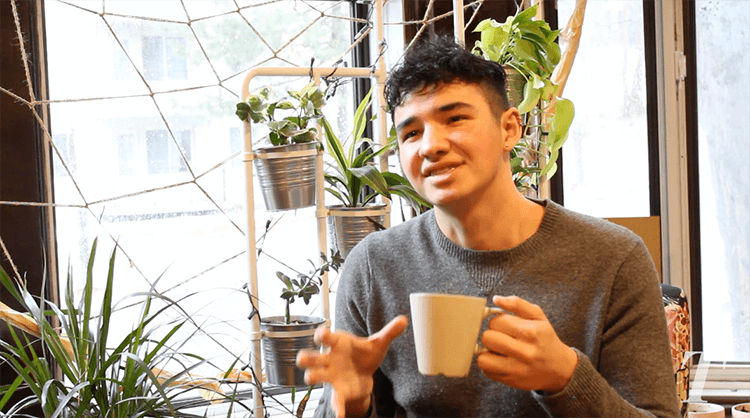
We sat down with Indigenous Affairs Commissioner Tomas Jirousek as he looks back at his time with SSMU.

Video by Sarah Ford and Aidan Martin.

McGill, News

McGill students abroad face challenges returning home amid COVID-19 pandemic

Every semester, members of the McGill community travel outside of Canada to study abroad, take part in field research, or engage in other educational opportunities. In an email addressed to students abroad on March 14, McGill Abroad recalled all students currently on exchange due to the ongoing COVID-19 epidemic. The university’s announcement followed the Public Health Agency of Canada’s decision that same day to identify all countries as Level 3 (avoid non-essential travel outside Canada) on the level-of-risk scale, which ranges from Level 1 (practise usual precautions) to Level 4 (avoid all travel). 

On March 16, Prime Minister Justin Trudeau announced that Canada would ban entry to all people who are not Canadian citizens or permanent residents as of noon on March 18, prompting McGill to urge all foreign nationals who wish to return to Canada to make travel arrangements immediately in an email on March 16. Furthermore, the Canadian government announced the creation of the COVID-19 Emergency Loan Program for Canadians Abroad, aimed to provide financial assistance in the form of an emergency loan to Canadians needing to purchase airline tickets home. 

All McGill students on exchange had to decide whether to go home to their families or remain at their host universities. 

Daniel Minden, U2 Arts, was on exchange at Sciences Po in Paris, France when he was recalled by McGill. He returned to his family in Toronto on March 16. In a message to The McGill Tribune, he explained the financial burdens associated with booking flights on such a short notice.

“Since both universities and governments are urging Canadians to get home as soon as possible, flights are extremely expensive,” Minden wrote. “I paid $2,000 for a flight from Paris to Toronto (via Montreal), and I have friends who have paid up to $4,000. It’s an enormous, unexpected sum of money to pay as a student.”

Others have arranged their flights home and will be departing shortly. This is the case for Zoe Babad-Palmer, U3 Arts, who had their exchange in Norway cut short. They booked a flight home to New York this week, which they had to rebook a couple times due to the cancellation of their connecting flight. Babad-Palmer messaged the Tribune about the concerns they had about taking this trip. 

“I am very very worried, especially about the wait times,” Babad-Palmer wrote. “I’m worried about extra border controls, if I can reach my connection in time or if it’ll mess up my baggage. Everyone’s seen that photo of people packed in like sardines at Chicago O’Hare[,] and I’m very worried about that[,] because we’re trying to not get sick[,] and being squished in with hundreds of people for hours and hours is not the best way to do that.”

Due to these concerns, some exchange students have chosen to stay at their host universities. Twyla Schran, U2 Arts, is staying in Brisbane, Australia to continue their research at the University of Queensland on the Great Barrier Reef. 

“The entire point of coming to Australia in the first place was to get field opportunities that McGill does not provide anymore,” Schran wrote to the Tribune. “If I return home without completing the research, I would most likely have to go abroad [again] later on for the same reasons [….] Overall, it’s literally safer for me to be here than at home, and the fact that McGill wants me to return anyways shows that they care more about their control than the individual situations for each student.”

The recurrent sentiment expressed by exchange students has been disappointment with McGill’s handling of the crisis, pointing to the lack of communication with students abroad specifically. 

“Originally I was just gonna wait it out, and then things got worse so I decided to leave,” Babad-Palmer wrote. “That was a decision that my family and I made on our own, not really with anything from McGill. We waited so long to hear anything, […] especially [since] Norway and the UK and the Netherlands were all taking different precautions, and McGill put them all under the same umbrella of ‘wait and see’.”  

Meanwhile, some exchange students have found McGill’s response more proactive than their own host university, as Emma Ayache, U3 Management, told the Tribune

“I think that they sent a lot of emails and are very responsive to the ones I sent,” Ayache said. “[…] I know that I am back home but that’s not going to be a problem and I’m going to be able to finish my semester, and I regularly talk with my advisor who’s very responsive. So, I think that McGill is really doing a good job, especially when I compare it to my university in Spain that barely gives any news.”

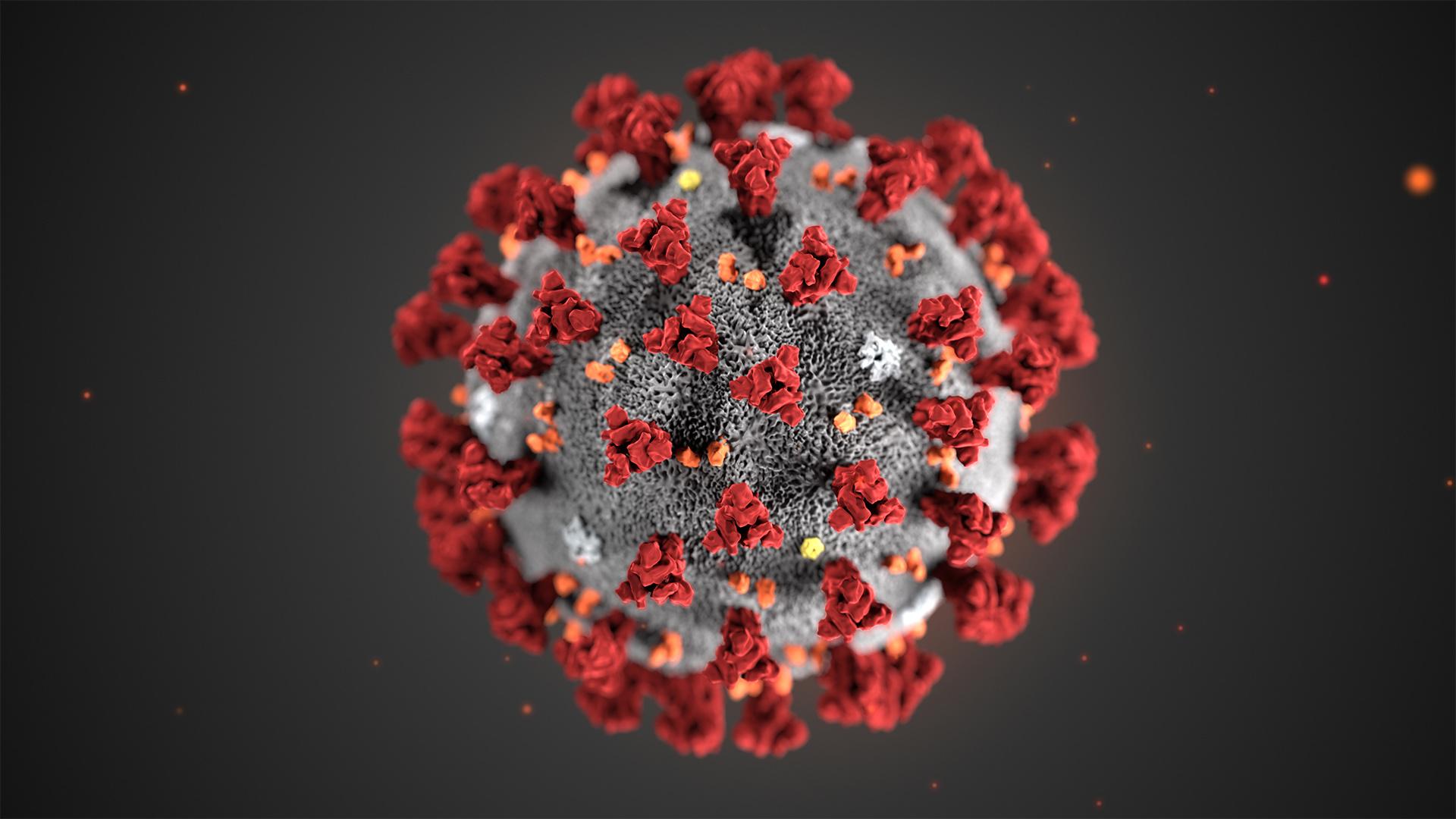
covid-19 illustration
McGill, News

Students in residence urged to return home amid COVID-19 pandemic

SHHS requests that residence dwellers move out

According to an email co-signed by the Senior Director of Student Housing and Hospitality Services (SHHS) Marisa Albanse and Deputy Provost (Student Life and Learning) Fabrice Labeau, practicing social distancing during the COVID-19 crisis in large student residences is difficult due to the nature of co-living. As a result, students residing in McGill housing have been asked to return home in a March 18 email. While usually students commit to paying rent for the duration of their leases, Frédérique Mazerolle, Media Relations Officer for McGill University, said that the SHHS will not penalise students for moving out early.

“Students who move out of residence will have their lease cancelled effective their departure date,” Mazerolle wrote in an email to the McGill Tribune. “Rent will not be charged from the day students move out.”

In a subsequent email, SHHS cancelled all gatherings and parties in residences. Further, guests have been banned in all residences, and all athletic centres in residence halls have been closed per provincial directive.

The letter acknowledged that international students living in residence may be unable to return home, given new travel restrictions from various national governments. Students that are not moving out are asked to continue practising social distancing; students who believe they have been exposed to SARS-COV-2 are asked to report themselves to their residence director so that they can be provided accommodations such as food during self-isolation.

All in-person exams cancelled; no term extension

McGill has announced in a Facebook post that no exams will take place in person for the Winter 2020 semester. As well, the academic term will not be extended: Classes will end on April 14, and the exam period will end on April 30, both as scheduled.

“The alternative assessment plan will be communicated before the end of March,” the post read.

US border closed, international travel banned

In a joint agreement between Canada and the US, people will no longer be able to cross the border for non-essential travel, such as tourism or business. Canadian citizens will still be allowed to return home. These restrictions will not apply to international students, workers on visas, and those who must cross the border to do essential work and maintain supply chains.

Starting March 18, anyone who is not a Canadian citizen or permanent resident will be barred from entering the country. Exceptions apply for diplomats and aircrews. Anyone with flu-like symptoms, regardless of citizenship, will not be allowed to board a plane to Canada.

McGill, News

McGill students on geology excursion in Morocco nearly return home after being stuck for five days

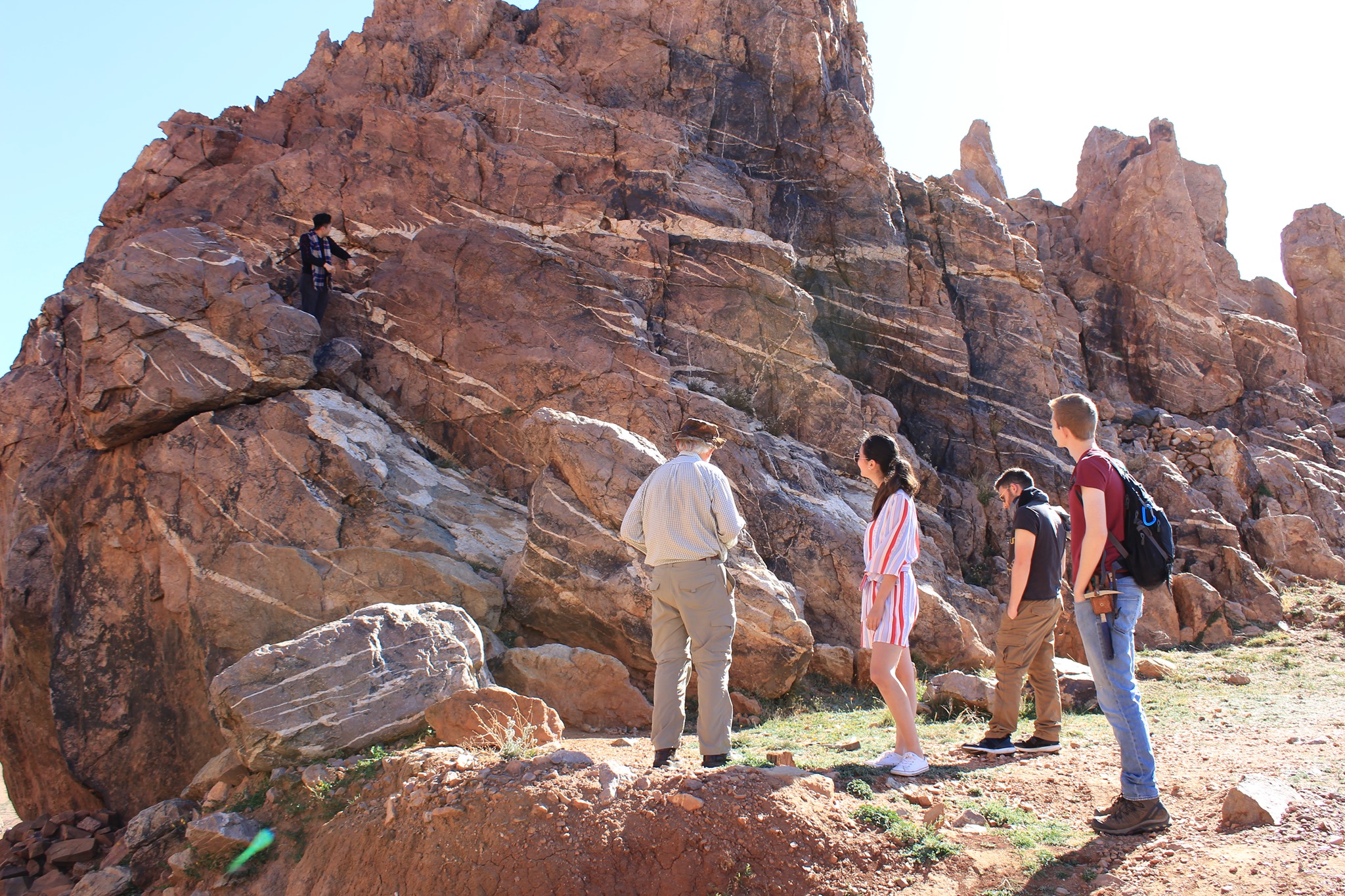
As exchange students have their semesters abroad cut short and return to Canada, five students from the Department of Earth and Planetary Sciences and their professor were stuck in Morocco for five days after travelling there for a two-week geology field research excursion on February 27. After several complications, the group was able to secure one of the last outbound flights out of Morocco and is currently making their way back to Montreal. However, the two international students in the group have been denied plane boarding even though the government of Canada announced that visa holders are allowed back into the territory.   

The students—Julia Morales-Aguirre, U3 Science; Robert Collar, Masters Science; Joshua Wasserlauf, U2 Science; Kaiyuan Wang, U1 Science; and Emilie Saucier, U2 Science, along with their Professor Anthony “Willy” Williams-Jones—were prevented from leaving the country on March 14 as a result of recent travel restrictions and flight cancellations. 

Due to the remote nature of the trip, the group only learned of the severity of the pandemic on March 13, when they were making their way to Tangier airport to fly back to Montreal through Casablanca. The government of Morocco cancelled flights to select countries on March 14, including Canada, so the group secured a new trip to Montreal but all inbound and outbound international flights were suspended on March 15. After the group successfully booked a direct flight from Casablanca to Montreal for March 21, it was cancelled on March 17. 

Julia Morales-Aguirre, U3 Science, wrote to The McGill Tribune that the group has been in constant communication with their departmental chair at McGill, receiving moral and financial support. 

“The chair of our department, Professor Jeffrey Mackenzie, has been in contact with us since the initial flight ban to Canada on Saturday night,” Morales-Aguirre wrote. “He immediately told us that the department would pay for everything: Flights, accommodation, [and] food, [and] that the priority was to get home. The entire Earth and Planetary Science Department has been providing moral support. They have also been making arrangements should we remain stranded, such as giving us credit for receiving lessons while here.”

The group consisted of four Canadians, one American, and one Chinese citizen. Without knowing how much longer they would have to stay in Morocco, they booked an Airbnb until mid-April so that they could stock up on food. 

“Essentially, our professor [had] been paying most of [our expenses and will be] reimbursed by McGill,” Morales-Aguirre wrote. “We [were] in an AirBnB in Casablanca […] There [was] no quarantine yet [there] for everyone, but the city now [had] a curfew.”

The group garnered media attention after creating a Facebook, Twitter, and Instagram page dedicated to their situation. Getting them home was a team effort between Professor Williams-Jones’ sons and others close to the group and the EPS department at McGill. EPS Outreach Administrator Kristyn Rodzinyak wrote to Tribune about the close-knit nature of the department and how they were able to provide moral support to the group all the way from Montreal. 

“With the closure of McGill, […] I started a virtual cookie time where students, faculty, staff and alumni can join a virtual meeting on zoom as a way to connect during social isolation,” Rodzinyak wrote. “During a virtual cookie time[,] two of the students in Morocco checked in from a restaurant where they were picking up food for the rest of the group. They were in good spirits, [and] were excited to share their favourite sites and rock collecting adventures. […] It was really nice for faculty and students back in Montreal to get to see their smiling faces and hear about their adventures.”

Professor Anthony Eric Williams-Jones’ son, Glyn William-Jones, a geology professor himself at Simon Fraser University, spoke to The Tribune about how they were able to coordinate a big group of people to work together across time zones through social media. His Montreal-based brother, Bryn, also started a petition which reached over 13,000 signatures in three days. The goal was to urge the Canadian government to repatriate the group, as well as other Canadians who are still stuck abroad.

“I think one of the really crazy [things], and why I’ve been ranting on LinkedIn and Twitter and my brother [has been] doing the same thing on Facebook, is that Canadians have had to do it themselves,” Glyn William-Jones said. “[…] The Canadian Embassy [in Rabat] wasn’t doing anything. They were just like, ‘You’re on your own, get yourself home however you can, not our problem’.”

Before the group’s return trip had been secured, Morales-Aguirre also expressed her frustrations regarding the Canadian government to The McGill Tribune

“The passivity of the Canadian government vis-[à]-vis their people abroad is upsetting,” Morales-Aguirre wrote. “[…] It is absurd to tell people to come home when airports and borders all over the world are closing. People literally cannot get on commercial flights, which is the only thing that the Canadian embassy has been recommending. Flights are getting cancelled left and right, and bookings are disappearing everywhere you look.”

On Facebook, the group indicated that they had contacted Nolinor Aviation, an airline providing rescue missions for Canadians abroad, but the tickets from Casablanca to Montreal set to leave on March 20 would have cost the group $8,000 each.

Eventually, the group was able to catch one of the last flights out of Morocco to London with Ryanair on March 18, from where they were able to depart for Montreal on a British Airways flight on March 19. 

“Even on the drive to Marrakech [on March 18], they found on the internet that apparently the flight had been cancelled but they just decided […] to push through and the flight hadn’t been canceled,” Glyn Williams-Jones said. “This is a happy ending for this small group and I’m super happy, this is family. But at the same time, it’s one tiny drop in the bucket of all the other Canadians that are trapped.”

Currently, Professor Anthony William-Jones and the two international students in the group are stuck at Heathrow Airport in London because border control there is refusing to let the American and Chinese student board, even though they have Canadian study permits to study at McGill. 

“We are incredibly frustrated,” Glyn William-Jones wrote to the Tribune. “[…] The McGill team that made it onto the flight (Canadian students) feel guilty for being forced to leave their friends. Instead of returning home together and triumphant after such an ordeal, they are divided and distraught.”

Follow the group on Facebook for the latest updates. 

Creative

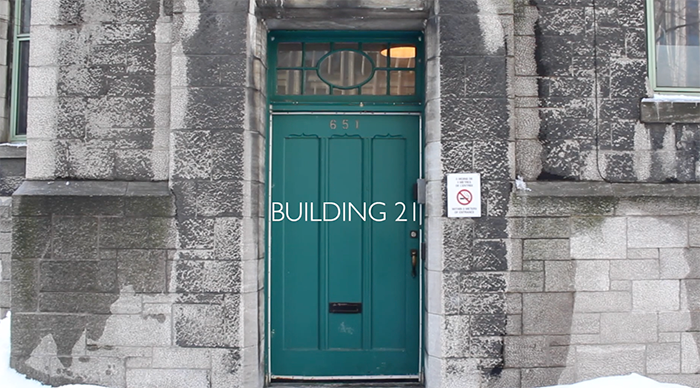
A look into Building 21

Our multimedia team stopped by Building 21, a research and community space on McGill campus and talks to their team about their initiatives, projects, and visions.

Video by McGill Tribune Multimedia Team.

Features

Toward healing, with help

I grew up as an athlete, playing competitive basketball and soccer on school and community teams. I never thought much about my body or what I ate until I tore my anterior cruciate ligament (ACL) in 2015 while playing basketball. During the rehabilitation process after my knee surgery, I committed to a rigorous physiotherapy routine and felt compelled to go to the gym every day. I desperately wanted to be back with my teams as soon as possible, and as a result, found myself absorbed into a vicious routine of fitness and dieting. I thought I was making healthy choices, however, those choices, along with pressures from social media, soon began to dictate my life.


Science & Technology

Montreal researchers propose a treatment for COVID-19

The World Health Organization declared COVID-19 a global pandemic on March 11. As of press time, the coronavirus had rapidly spread to more than 175,000 people in 162 countries and caused nearly 7,000 deaths. 

Doctors Michel Chrétien and Majambu Mbikay, senior researchers at the Montreal Clinical Research Institute (IRCM), have proposed the use of a plant-based compound called quercetin to treat COVID-19. Clinical trials to test its effectiveness are scheduled to start in China within the next few weeks.

Chrétien and Mbikay say that quercetin, which some research suggests can protect against the Ebola and Zika viruses, may be able to treat the coronavirus. Working with Chinese health officials, they will supervise clinical trials for testing the drug on patients in China. They will use the drug produced by the Swiss company Quercegen Pharmaceuticals, which, according to Chrétien, produces the purest available quercetin. The trials will last around four months.

Present in many fruits, vegetables, seeds, leaves, and grains, quercetin is a compound that originates from flavonoid plants. It is non-toxic for humans and can be purchased over the counter as a dietary supplement.  

Chrétien and Mbikay’s interest in quercetin started in the 1990s, when they screened for mutations in gene PCSK9, a master regulator of cholesterol in circulation. They realized that children with less functional PCSK9 are less susceptible to malaria, which motivated them to look for a natural oral compound to inhibit PCSK9 functioning.

“We were looking for the compound […] that could be ingested and inhibit PCSK9 and cause a decrease [in] blood cholesterol,” Mbikay said. “What we observed is that [quercetin] was a very potent inhibitor of PCSK9. In other words, it could lower cholesterol.”

They then investigated quercetin’s inhibiting effects on parasites, bacteria, and viruses, especially after the outbreaks of the SARS-CoV and Ebola viruses in 2003 and 2018, respectively. These investigations unravelled the pivotal role of quercetin not only as an anti-metabolic compound through affecting PCSK9 and lowering cholesterol but also as a potential antiviral agent that targets the entry process of viruses.

During the last decade, research by Chrétien, Mbikay, and colleagues has suggested that quercetin can protect mice from Ebola and Zika viruses. After the recent COVID-19 outbreak, they proposed quercetin to Chinese health officials as a potential wide-spectrum antiviral drug.

“A cell has a lock, and the virus has a key [to enter and infect the cell],” Chrétien said “But quercetin puts glue in the lock.”

As of Feb. 15, China planned to run more than 80 clinical trials to treat COVID-19, testing a variety of potential remedies, such as HIV drugs, stem cells, and traditional Chinese medicines. Chrétien explained that quercetin has three advantages over other candidate treatments: It is taken orally; it is a natural, plant-based product; and it is relatively cheap. 

“[Quercetin] costs peanuts compared to the antivirals that are on the market, which cost sometimes $1000 [per] shot,” Chrétien said. “Two months ago, you could have a one day treatment [of over-the-counter quercetin] for two dollars.”

On March 4, the Lazaridis Family Foundation contributed $1 million to support this project. Chrétien says that this suffices for the first one or two months of the project but estimates that they will need $5–6 million per year. 

“We are asking our government to give us money to guide the Chinese,” Chrétien said. “I think our government will gain a lot […] not only on the health of people, but [in] their relationship with China.”

However, the world must wait four months to know whether quercetin cures or prevents COVID-19. 

“The worst thing in medical science is to give false hope,” Chrétien said.

Read the latest issue

Read the latest issue